Turkey Tracks: A Quiet Sunday in June

Turkey Tracks:  June 14, 2010

A Quiet Sunday in June

Yesterday was filled with small pleasures.  It was a soft day.  The clouds sat right down on the mountain tops, and the fog bank drifted in and out over the land.  We went for a little ride in the car to poke around and pick up a few things, like ice cream cones in town.  Here is Shirttail Point, our swimming hole on the river.  Note the clouds on the mountain beyond:
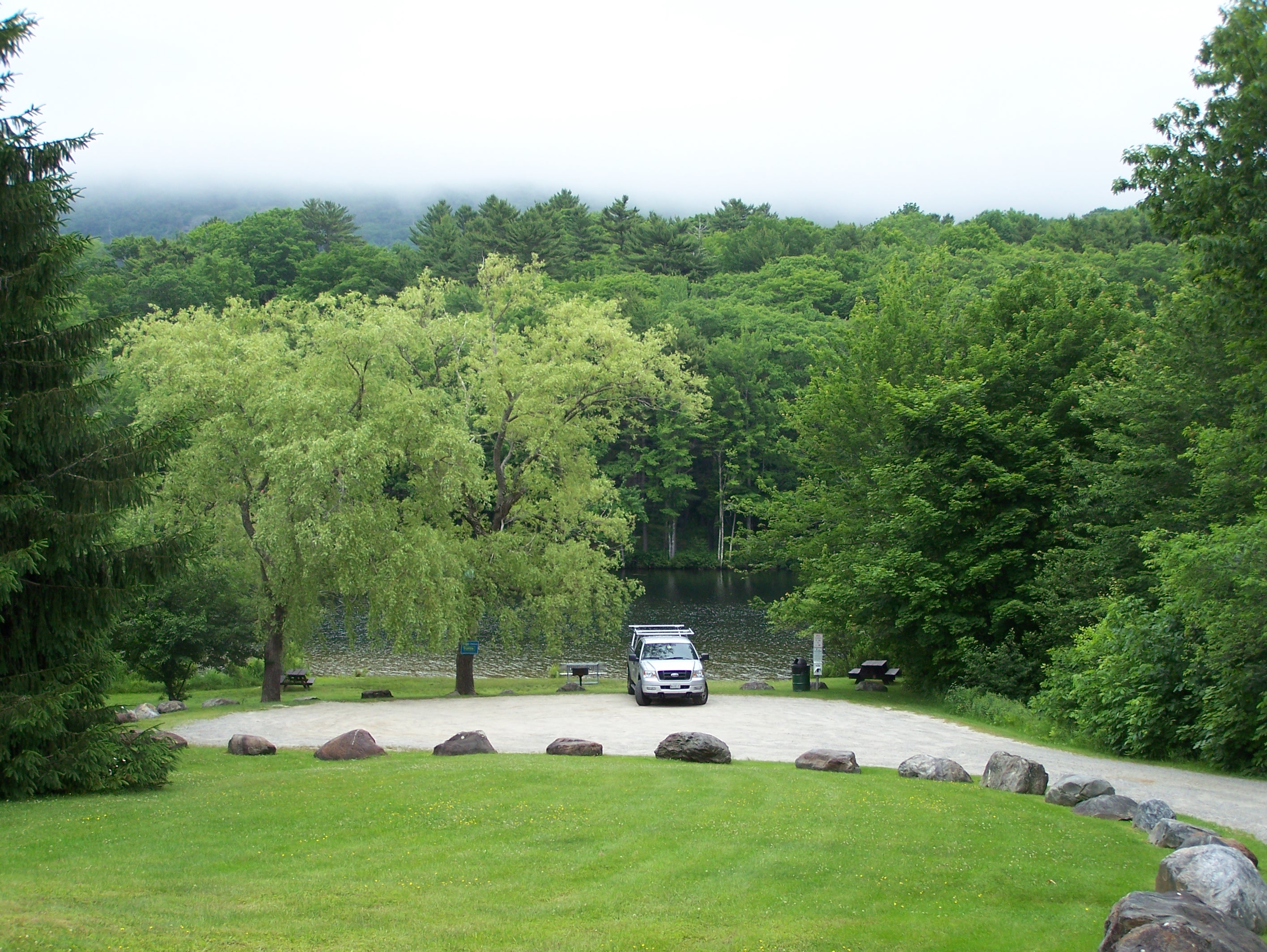


The truck belongs to three people in a canoe who came up just after I took the picture.

The garden is doing well.  Here is a picture of what it looks like now, with the chicken fence down:

The pea trellis is filling up.  The garlic (on the right) looks good.  In the distance, you see flowering kale.

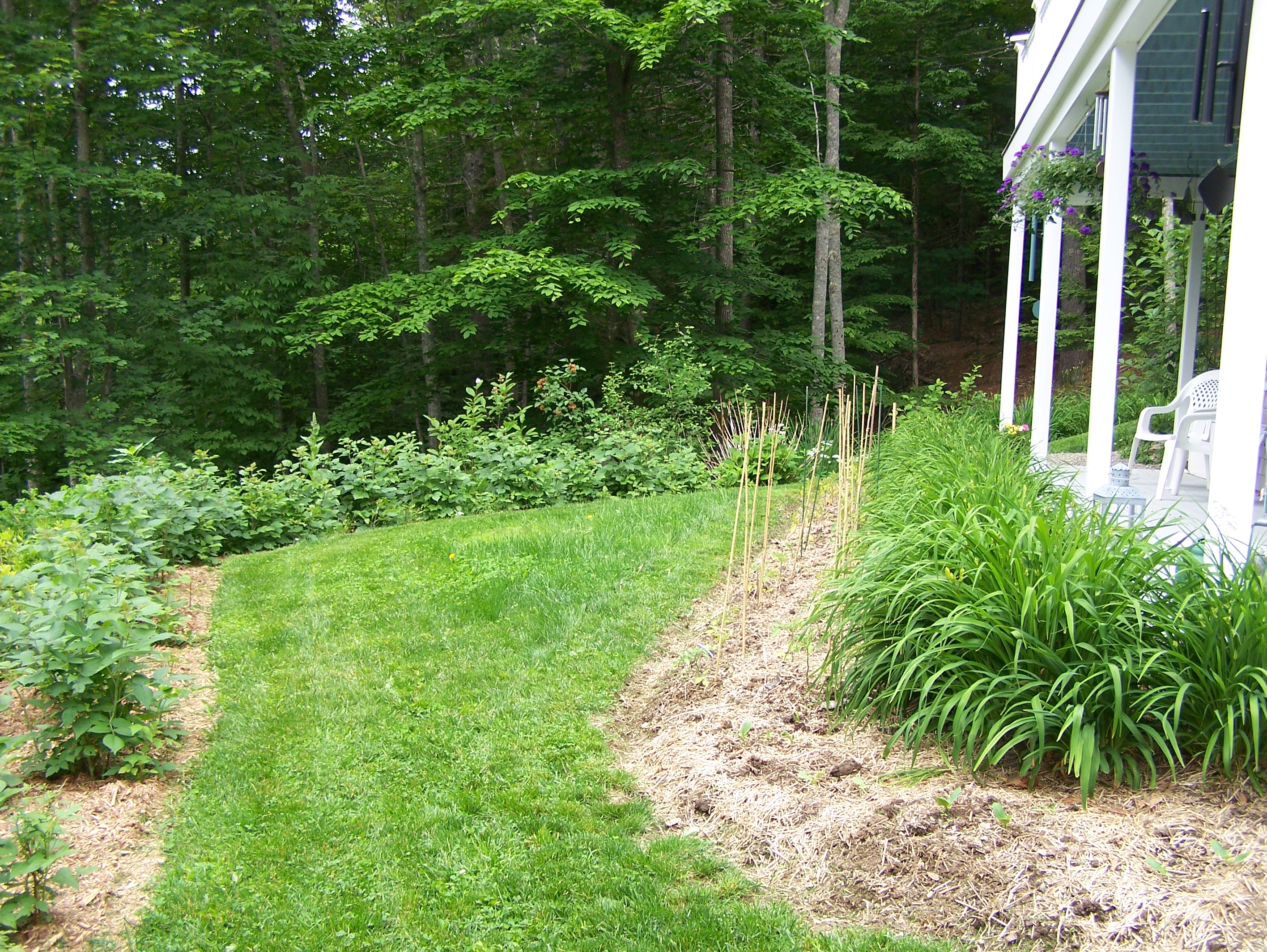
Here is a picture of the tomato bed, which currently houses 20 plants, and along the curve, our raspberry plants.
Our strawberries are also starting to show color.  We planted them last year, but knocked off their blooms for the first year so the plants would establish themselves. 

This year, the red poppies finally bloomed.  I initially planted them in a spot that quickly grew too shady and had to move them.  This is their third year, but their first to bloom.  The blue flowers are, I think, Cantebury bells.  My shadow, Miss Reynolds Georgia, who is 8 this year, gets in the picture.

Penelope, Penobscot Bay (PenBay), Penny cannot stand to be left out:

I put alyssum into the steps every year.  And, Lady’s Mantle (the light green) grows like a weed in Maine.

One of our errands was to pick up some trout worms, meant for fishing, for the chickens.  Twenty-four (24!!!!) worms sell for $3 at Megunticook Market.  I justify this outrageous expense because of the pleasure it brings and because I can no longer drink wine, unfortunately.  I also tell myself that one of our fabulous local products, an ice cream sandwich called a Dolcelino, sells for $3.50.  I’m not sure I’m forgoing those in order to buy some worms though…  Here are the chickens eating the worms.

Nappy, the rooster, calls the hens to come, come, come eat this thing she has brought.  He stands over the treat and bobs his head up and down, trilling the call.  The hens come running, running.  (One of the Marans is broody, so she stays in the coop; one of the Wheatens was laying an egg and missed the treat.)  The Marans try to run off the Wheaten, so she only gets a few unless I throw some to her especially.  Today I just threw the whole lot into the pen.  I don’t think Nappy ever gets any of the worms.  He gives them all to the hens while he guards them.  I’ve tried to offer him some just for him, put to the side, but he just calls the hens for those.   

This morning, for the first time in a month, the broody hen (May May) came out of the coop with the others.  I’ve been having to lift her out and to put her in front of food before she will eat.  She goes into a kind of zone where her feet don’t work, so you have to pick her up and down until she, gradually, walks to the food. 

They don’t seem to mind being penned, but they are much quieter and less active.  They miss their walks.

Interesting Information: Cancer Rates, Delmarva Peninsula

Interesting Information:  June 14, 2010

Cancer Rates, Delmarva Peninsula

The Maine Organic Farmers’ and Growers Association quarterly journal came last week some time.  The journal always list up-to-date information about toxins.  This issue had a piece of information that I’ve searched for, off and on, for some time–cancer rates on the Eastern Shore.   

The area where my niece Catherine died, called the Eastern Shore, is part of a larger geographical structure called the Delmarva Peninsula–for the states of Delaware, Maryland, and Virginia which make it up.  The Delmarva peninsula is known for chicken production (growing and slaughtering) and for truck gardening.  The produce goes to neighboring urban areas, among them DC and Baltimore. 

Catherine lived just downwind from a chicken processing plant.  Neighboring fields were covered routinely with chicken manure.  These plants pumped bloody water into the bay.  Indeed, pfiesteria piscicida was discovered in the Chesapeake Bay very near her home south of Onancock.  Pfiesteria piscicida kills, massively kills, fish.  And, it has been associated with both the handling of pig and chicken manure in large, industrial practices, as a quick google search demonstrates.  See http://en.wikipedia.org/wiki/Pfiesteria_piscicida  and http://www.grist.org/article/last/

Anyway, here is the article from the June-August 2010 MOFGA journal, pages 9 and 10.  I’ve just retyped it exactly as it appears:

“Sheila Pell reports in Emagazine that some 70 percent of U.S. broiler chickens, as well as turkeys and swine, are given the arsenic-based growth promoting feed additive roxarsone.  While some of that organic arsenic remains in chicken meat, most is excreted and breaks down into inorganic arsenic, a strong promoter of many cancers.  In Prairie Grove, Arkansas, which is surrounded by large poultry factory farms, and where manure from those farms is used extensively as fertilizer on area fields, incidences of rare cancers are high.  A decade ago, the town’s 2,500 residents learned that 17 children there suffered from cancers including brain and testicular cancer and leukemia.  Likewise, the  Peninsula, another area with factory poultry farms, has one of the highest cancer rates in the United States.  Manure that isn’t used as fertilizer is added to cattle feed.  The National Chicken Council claims that roxarsone, an antibiotic, contributes to “animal health and welfare, food  and environmental sustainability.”  (“Arsenic and Old Studies–Pressure Is On to Ban a Hazardous but Profitable Feed Additive,” by Sheila Pell, Emagazine, March-April 2010; http://www.emagazine.com/view/?5064). 

High cancer rates on the Delmarva peninsula…  It’s nice to see it confirmed…

When Catherine was dying, and we all started at looking at why she might have gotten such an aggressive cancer–it killed her in a year despite every medical intervention tried, including a stem-cell transplant at Duke–we wondered about all the cancer in young people where she lived.  We wondered about the water.  We wondered about the truck gardening.  We really wondered about the chicken industry.

The Eastern Shore in perfectly suited for large industry, in that while there are some wealthy people who have vacation homes, most of the area is poor.  The chicken and produce industries provide jobs–though many of them, I suspect from looking at who was working in the fields, are going to illegal immigrants.  Anyway, no one locally will fight what is happening to the environment–even though many families have been struck with the nightmare of cancer.

Arsenic has never been banned in the United States, and it is still used agriculturally.