Monday Design Wall Update

It’s Monday again!

Here we go into another week.

I’ve been “playing” with two new projects and making a Quilt of Valor donation quilt using the 8-inch Cat’s Cradle ruler.

Years ago, I saw a pattern that intrigued me called “Flower Pop”designed by the talented women at Sew Kind of Wonderful. The pattern was in Simply Modern magazine, which is now defunct. The pattern uses a special ruler that cuts the curves used in the pattern, and back then, curves were just getting popular in the quilty world.

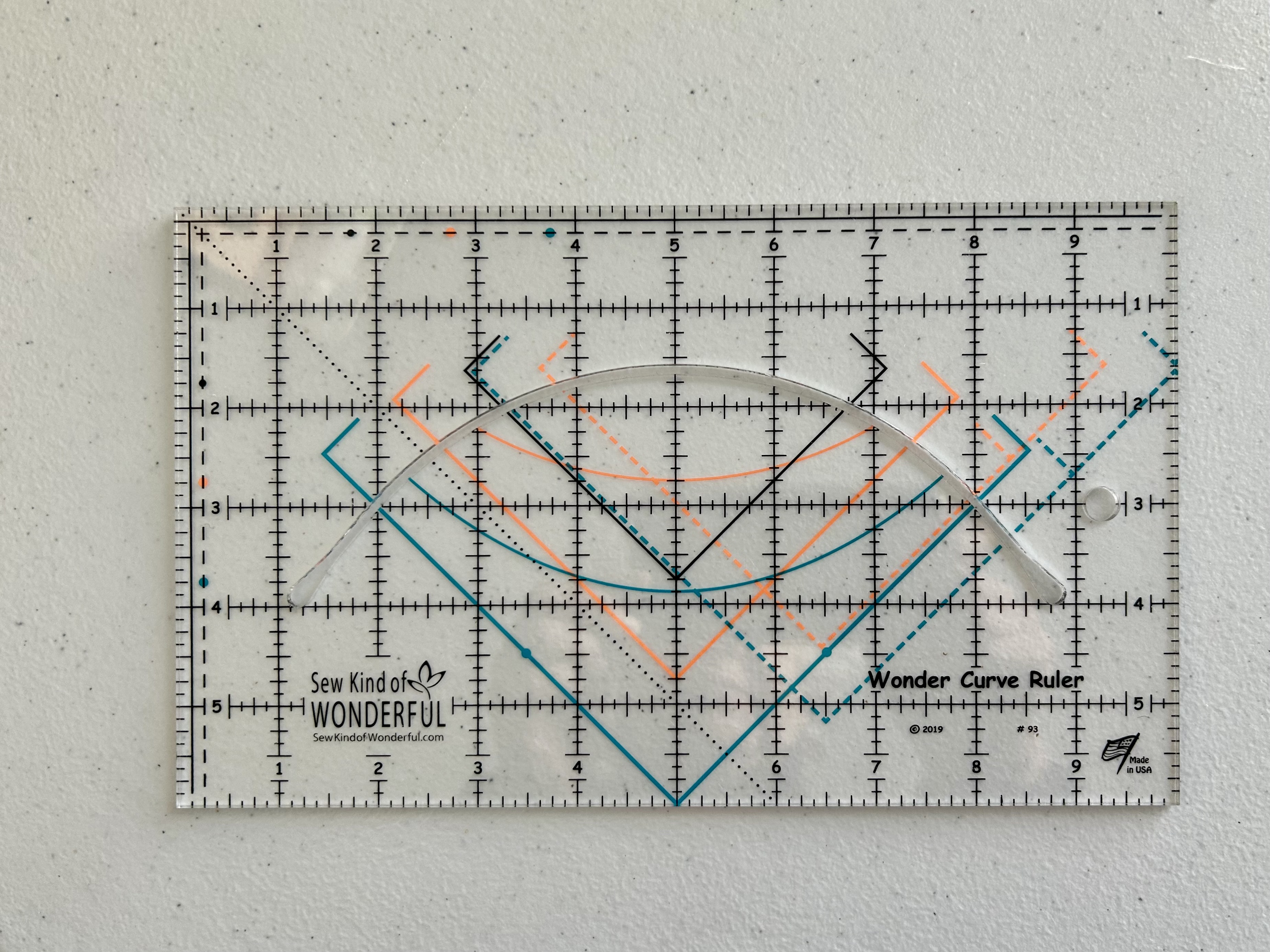
I ordered the ruler, but until a few weeks ago, it and the pattern waited for me as I moved from Maine to South Carolina and got reorganized here. Now I’ve been on a mission to use the rulers I have not yet trialed. The other day I pulled out this ruler and the pattern information as I still have that magazine. Here’s the ruler one uses to cut all the curves–and it does make that process easier, but there is a learning curve on how to use the ruler AND how to angle the cutter blade within the cutting strip.
My trial block was a steep learning curve for me as well, though I’m good at sewing curves. But I was still intrigued despite the problems I encountered while getting to know this block. Pressing is, of course, precise at various points.
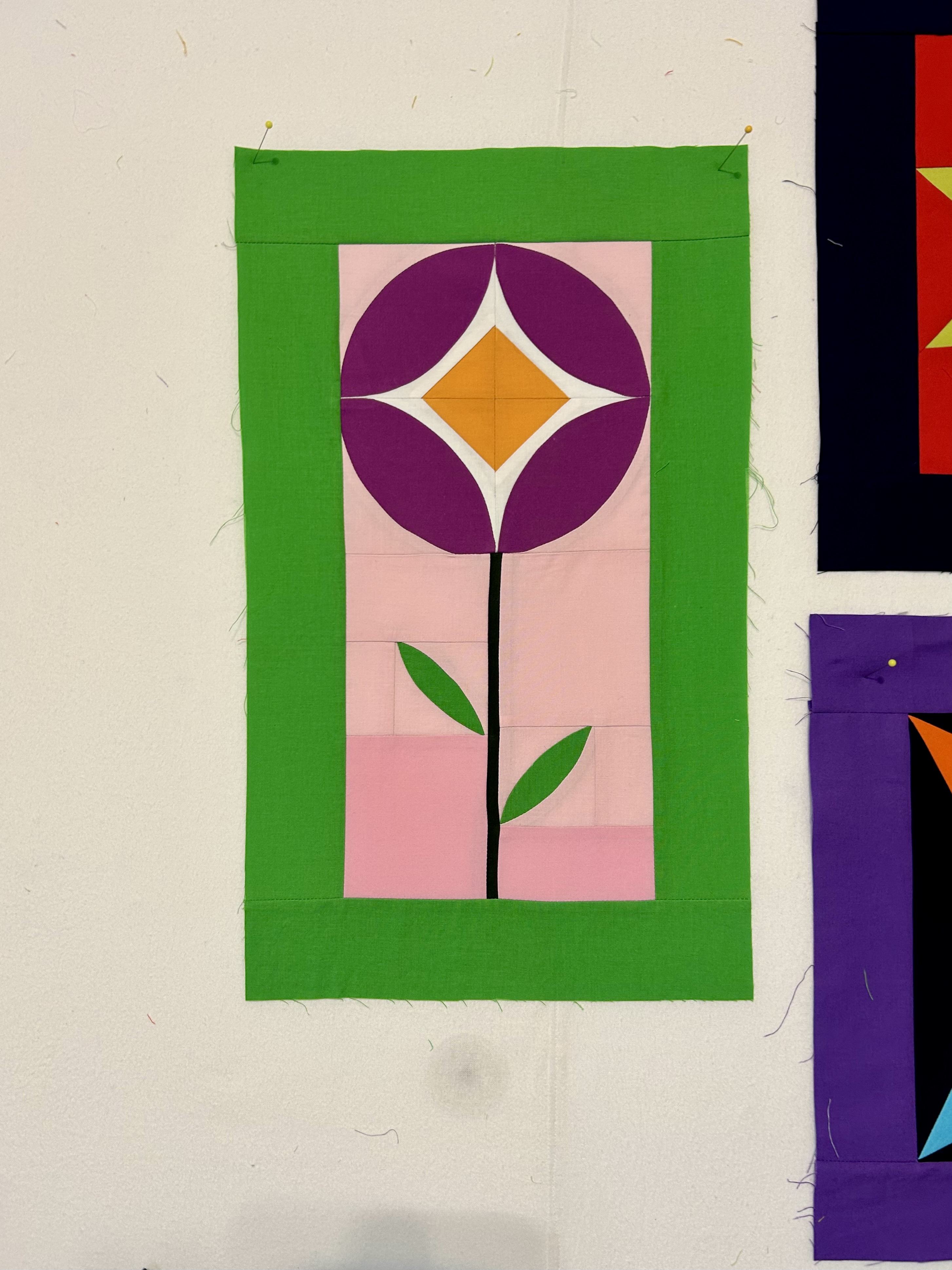
I ordered the pattern itself from the Sew Kind of Wonderful web site as my magazine pattern was missing information that I needed. And I watched a really good video made by Sew Kind of Wonderful, available on YouTube. I am happy to say I’ve learned how to sew mild curves without using glue or pins.

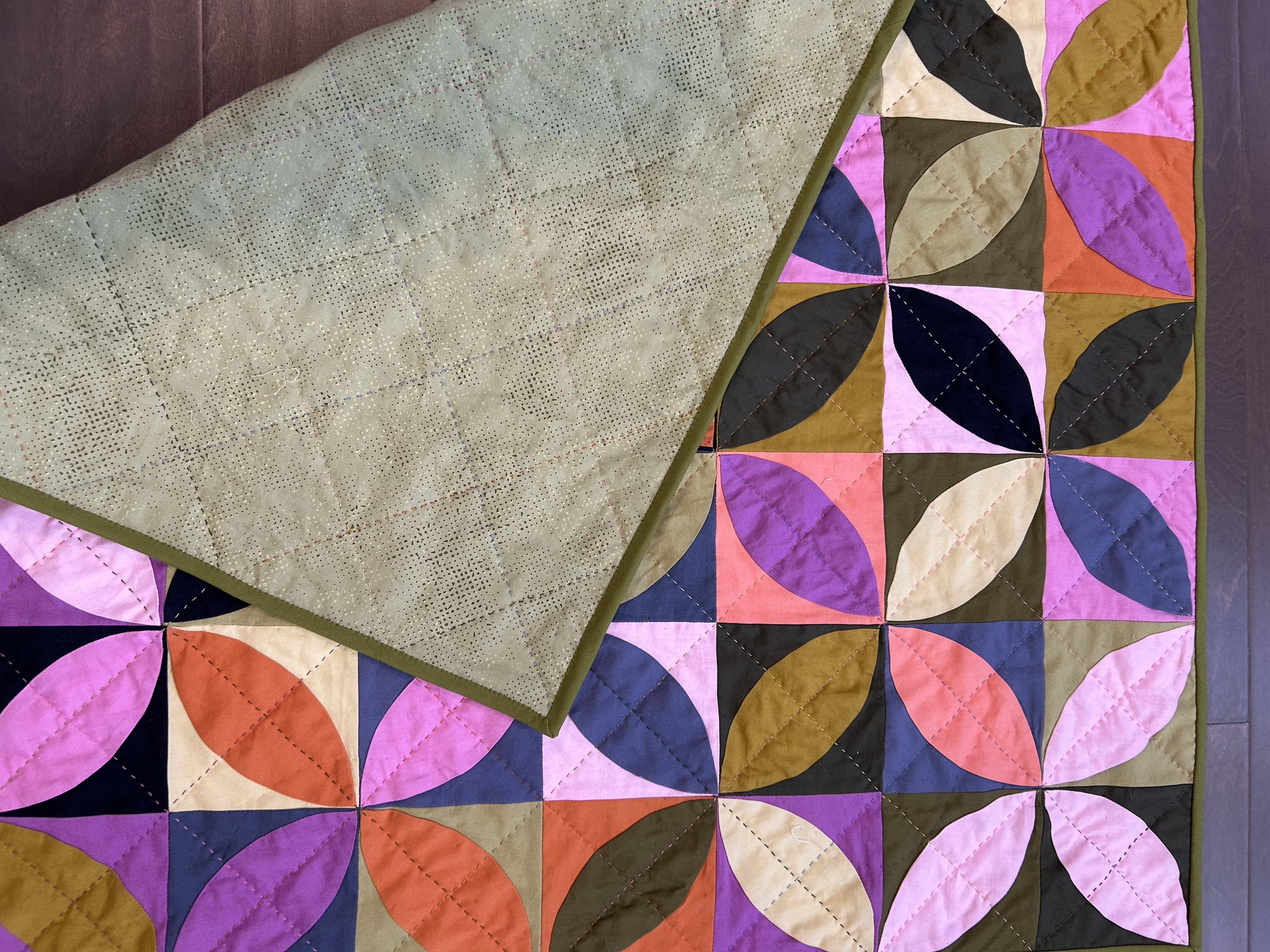
Here’s my second effort, using print fabrics. And I’m much happier with it.
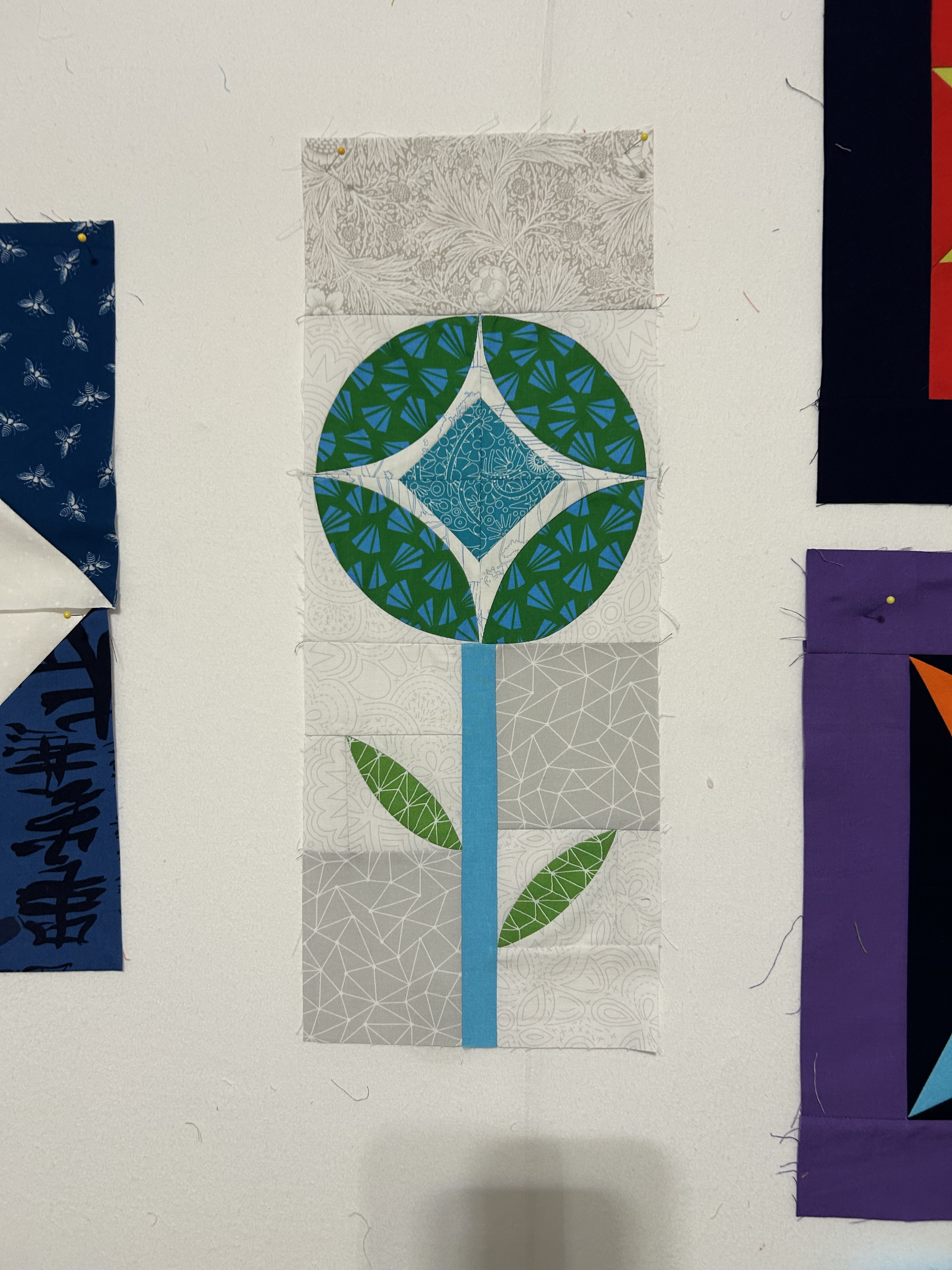
The current pattern now shows all neutral backgrounds, but I very much liked one version shown in the magazine that has some darker backgrounds. OK, a lot of darker backgrounds.

So, I’ve cut parts for the next block with a medium blue print for the background. I have no idea where this effort will go. I am using stash fabrics for this project–assuming it becomes a project.

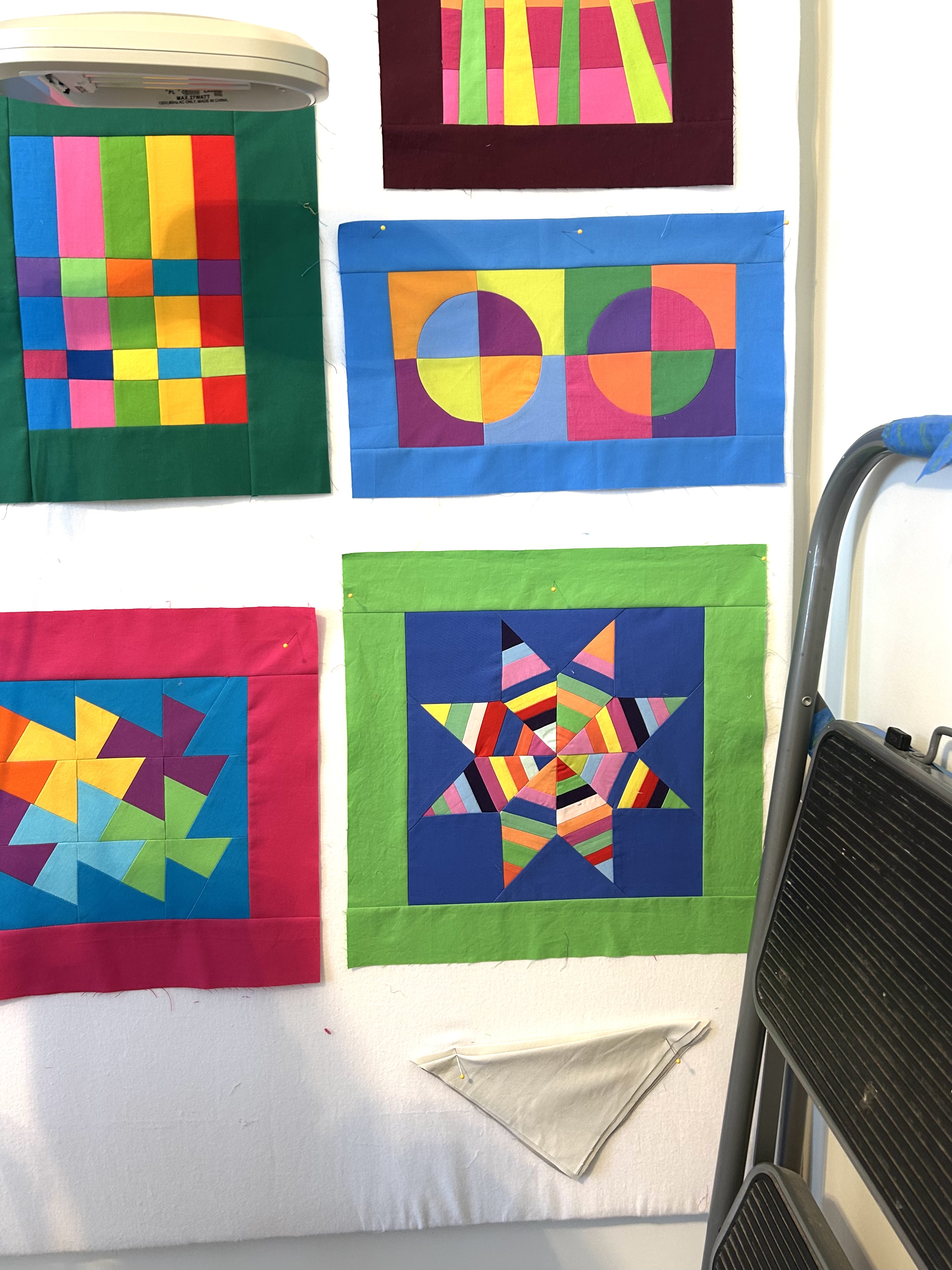
Meanwhile, the templates I ordered (a splurge) for the 4th block for my ongoing Tara Faughnan Blocks3 class arrived, and yesterday I made a trial block using the 4.5-inch templates. (I love the templates with their thinner outside piece.) The block idea, designed by guest designer Jen Carlton Bailly (bettycrockerass.com), is named “Shattered.” I used less colors than the designer used in her demonstration videos (we have 12 colors in a month’s palette) as this 4.5 inch block would make a bigger piece. It still felt incoherent to me, so I used circles that would calm my eye movement.
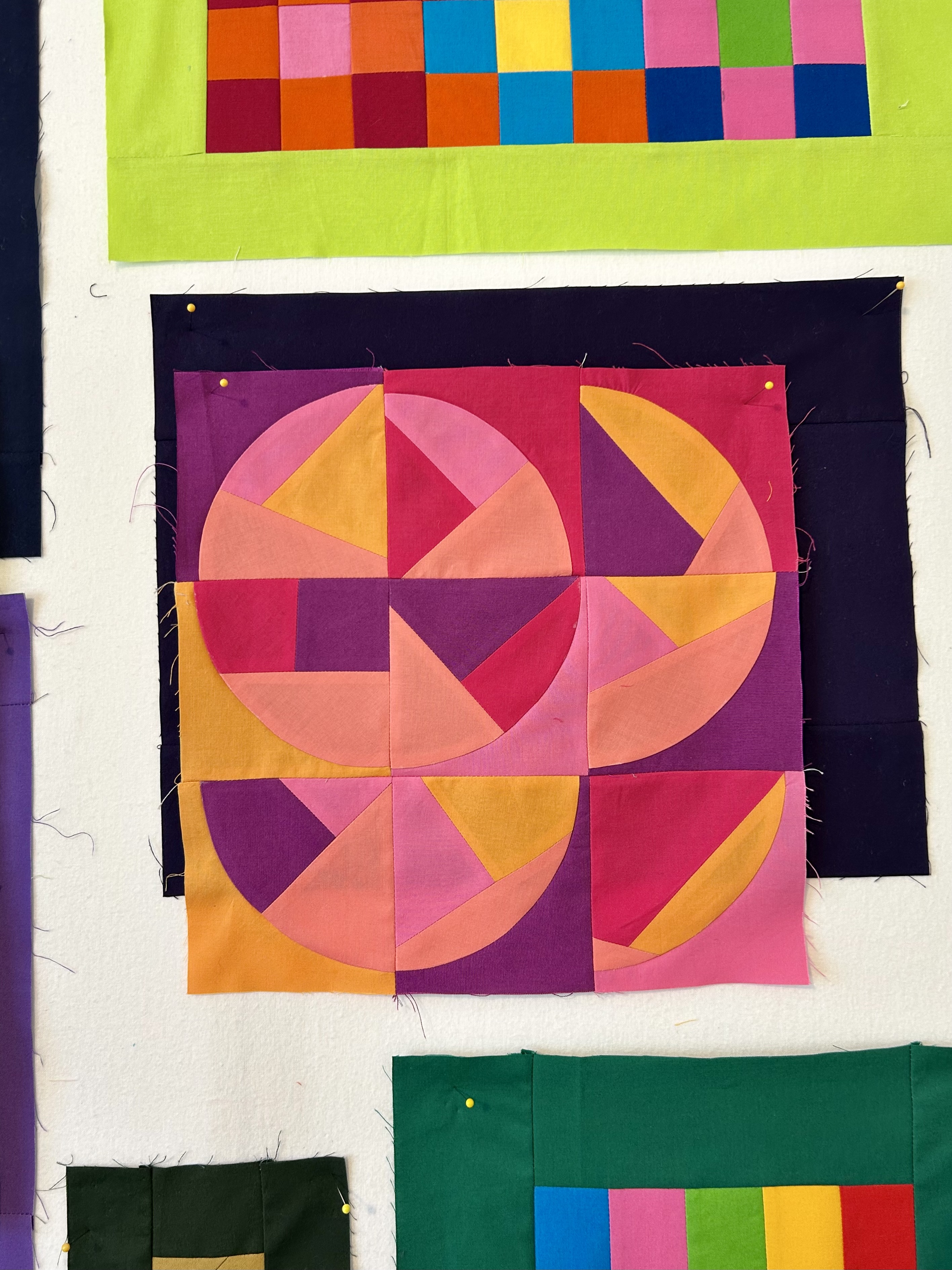
I discovered that using ONE color (light orange) for half of the block that gets cut limits the block. I can sort of see making a big block like this one and using very wide neutral sashing to make a quilt.

Later today I’ll try the 3.5 inch templates and will use more colors. When combining blocks, one is meant to look for what kind of interesting shapes and color blocks emerge. It’s “improv,” of course.

I’ve wanted to make a donation Quilt of Valor for my Patchwork Gals group. So that is now happening.
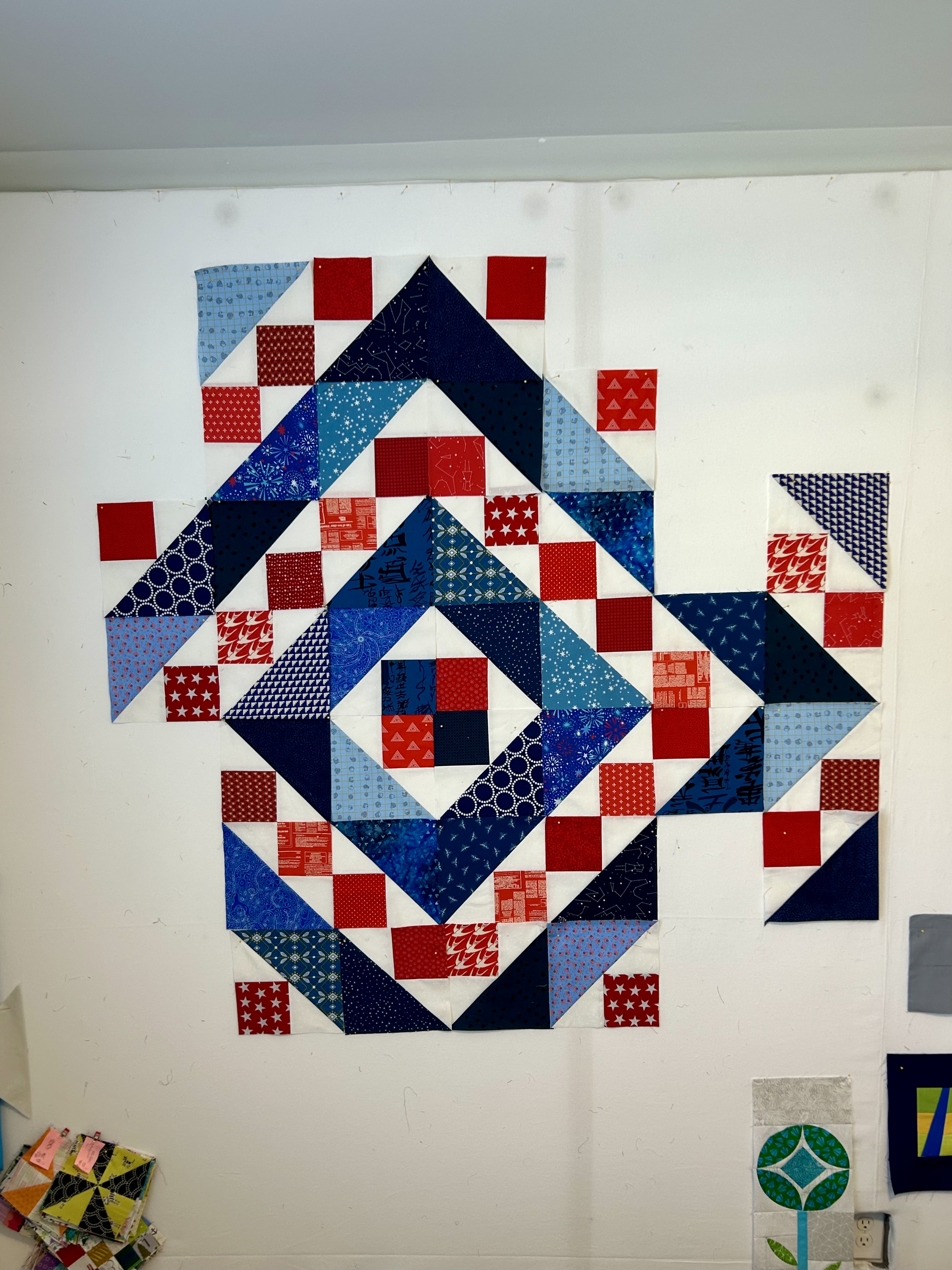
Bold. Graphic. What’s not to like?

I had to buy a few light blue fabrics, but all other fabrics are from my stash.

Have a great week everyone!
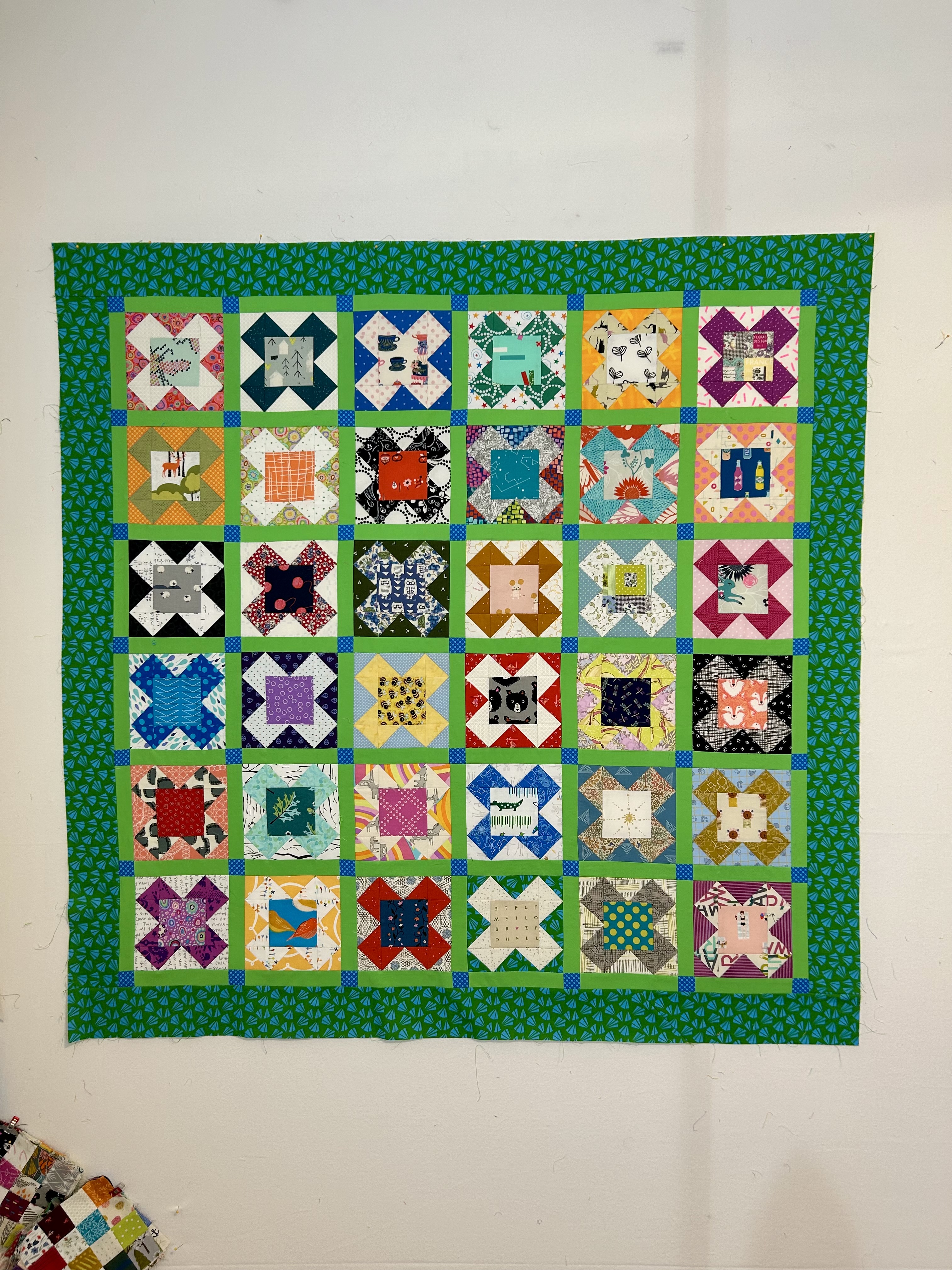
“Pistachio” And “Star Brite”

‘Pistachio” is smiling at me on the design wall, and I got her a backing the other day. So, now she will go on the longarm.

I was going to donate this quilt, but it has turned out so, so cute that I’m saving if for a great grand baby or some other baby I personally know.

Bonnie Hunter is presently working with this X-block as well, and I was able to figure it out from her posts. She designed it for her Quiltmaker magazine column some years back, but I couldn’t find it in their archive.

I made these blocks as leader/enders for some months. It’s 50-inches square.

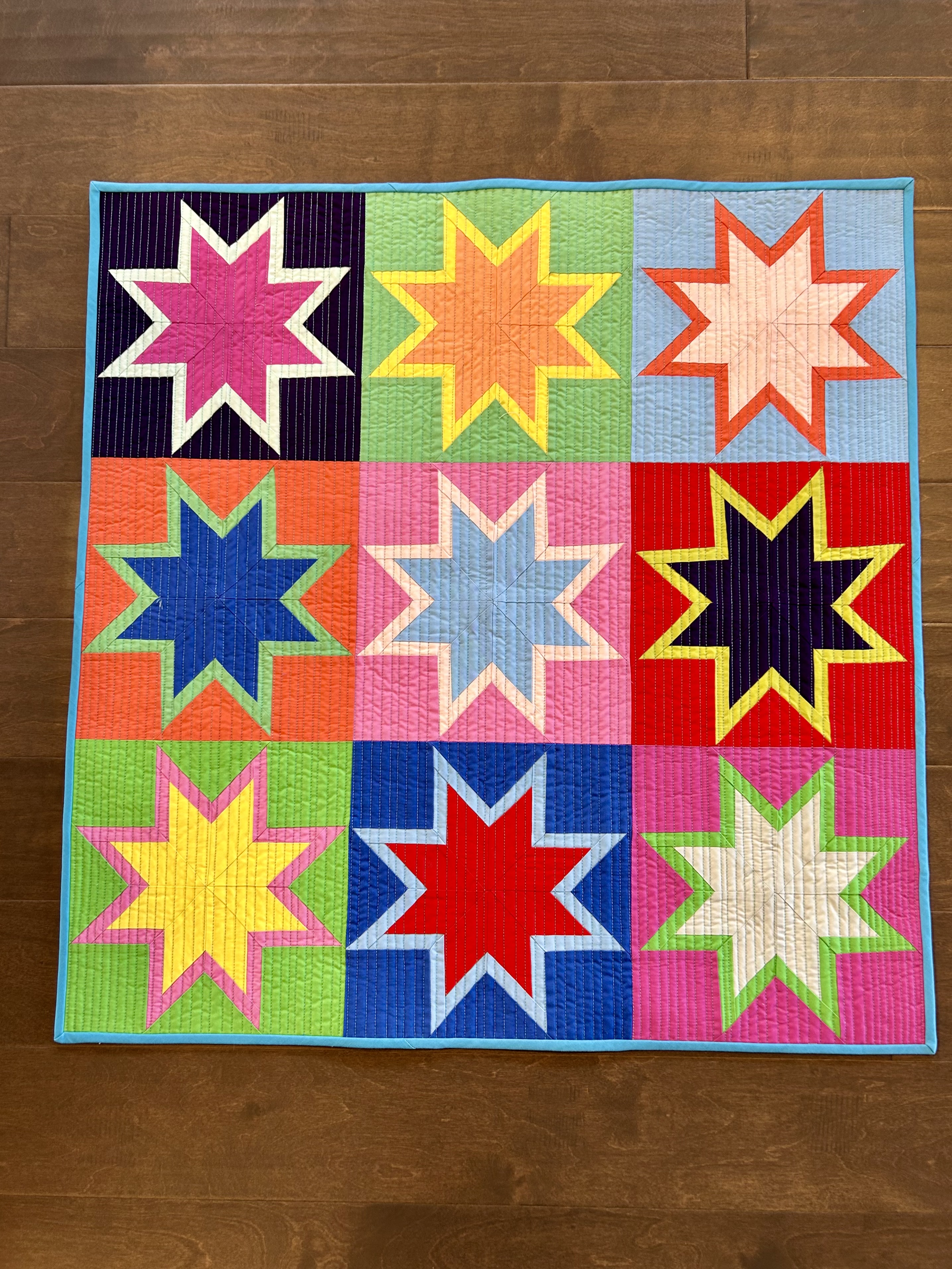
“Star Brite” is finished.

This block was one among many Tara Faughnan gave us for the third month in Blocks3. It is an exercise in how to sew “Y” seams. I liked this block version the best with its medium trim. I added a bright red to Tara’s palette, and the binding is a color I had in my solid stash.

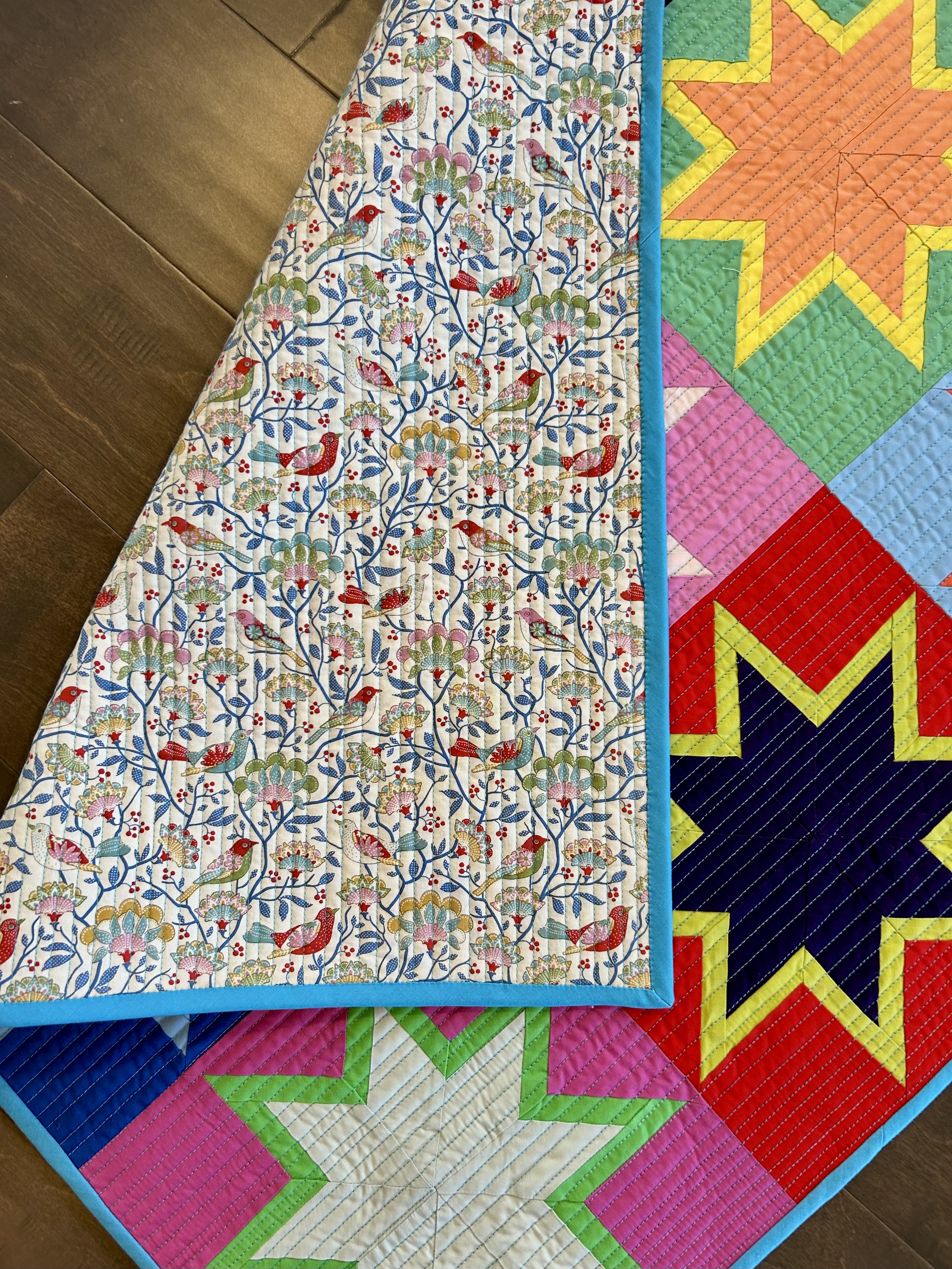
I quilted it on the longarm with “matchstick” lines, which I won’t do again as it is too time-consuming to walk from the front to the back of the machine for each row in order to engage the channel blockers that hold the line straight. (I don’t have a computer system.) AND, it was hard to line up the lines at a consistent width. A domestic machine is a better choice, especially for a small quilt. This one is 30 by 30 inches.

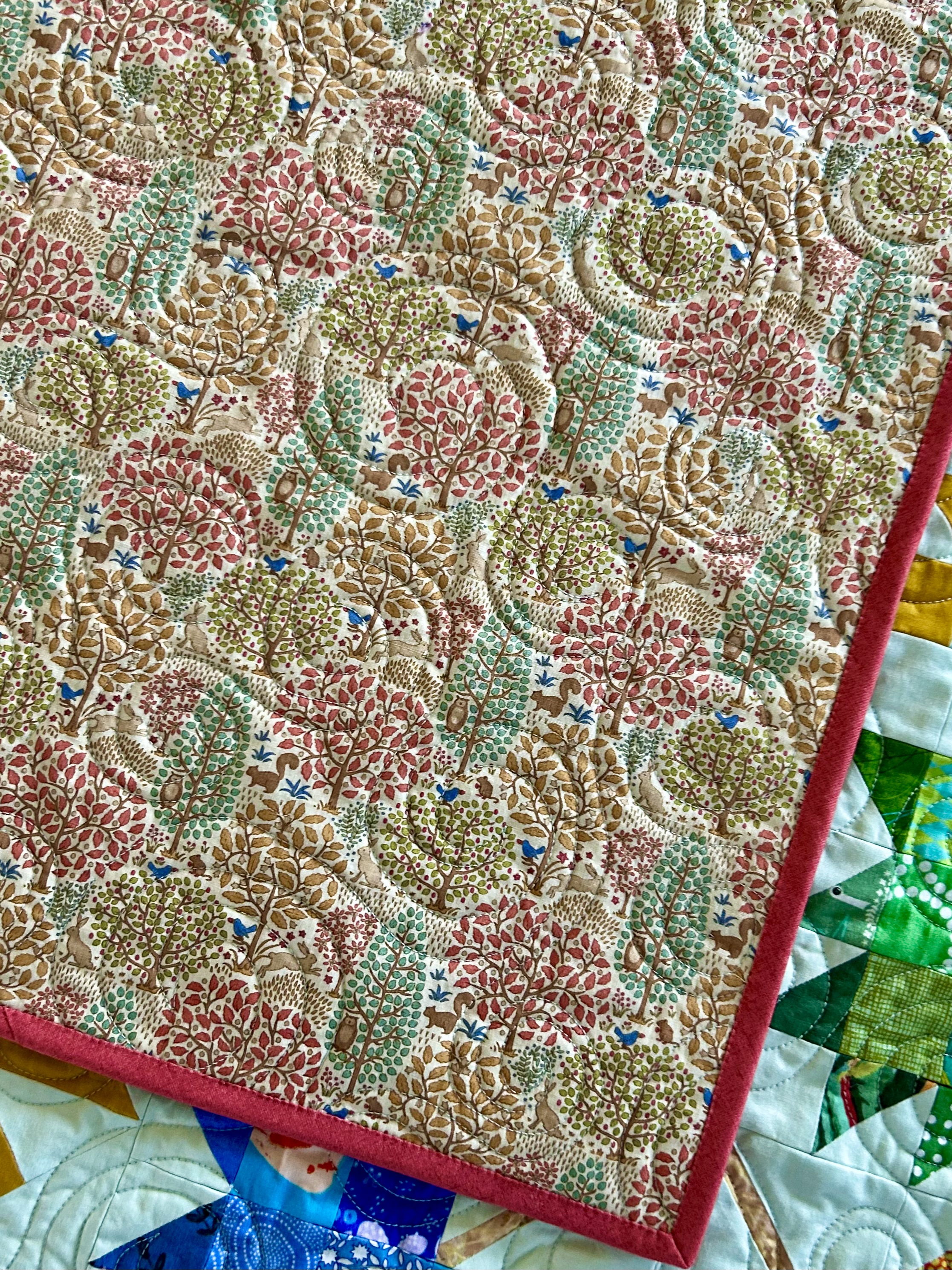
I had leftover Tilda fabric, Jubilee Birds in Trees in cream, for the backing. I do love the Tilda fabrics.

Another “What Is This Bird?” Post

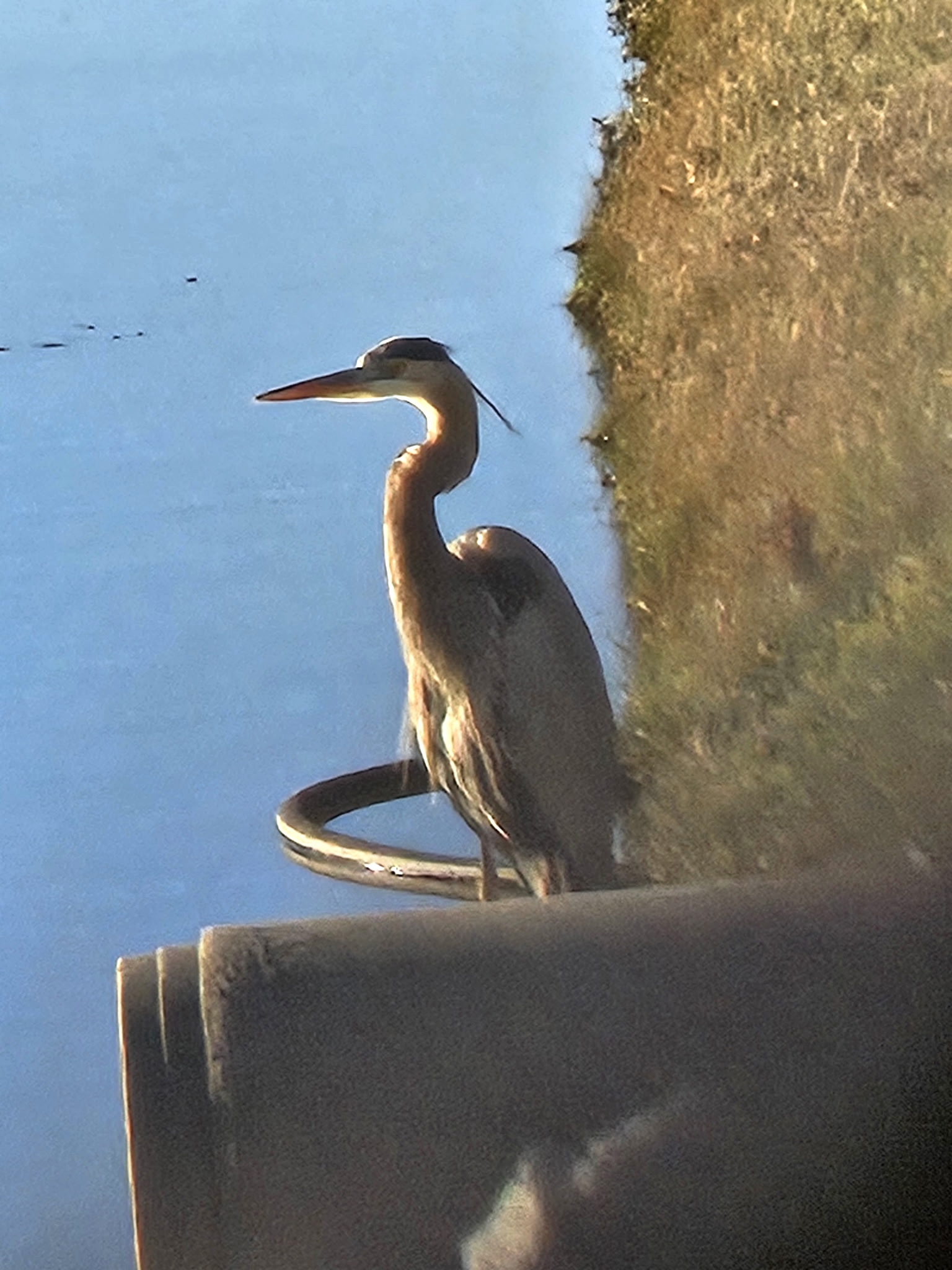
Beloved neighbor and I saw another big wading bird when walking the other day.

What is it?

Note the black on the head and on the belly area (folded wings?), the chestnut area on the neck, the yellow bill, the pale legs.

And in this picture, the long neck is folded down:

It’s a Great Blue Heron.

There are some beautiful pictures on the Kiawah Conservancy web site:

Great Blue Herons

And below is information from the online AI search site that appears when you search Great Blue Heron:

The Great Blue Heron (Ardea herodias) is a large, grayish-blue wading bird common in South Carolina’s wetlands, marshes, and coastal areas like Hilton Head and the Sea Islands, known for its patient hunting of fish and frogs in shallow waters, often seen near lagoons and tidal flats, and building large stick nests from December to March. These graceful birds, standing up to four feet tall with a six-foot wingspan, are a beloved part of the Lowcountry’s ecosystem, easily spotted due to their distinct blue-gray plumage, long legs, and S-shaped neck. 

Key Characteristics in SC:

  • Appearance: Large, grayish-blue body, white head with a black stripe, long legs, and a dagger-like bill.
  • Habitat: Found year-round in various watery environments, including marshes, rivers, mangroves, and coastal areas.
  • Behavior: Solitary hunters that stand still or wade slowly, using their long toes to attract prey before striking quickly.
  • Diet: Primarily fish, but also frogs, reptiles, small mammals, and insects.

• • Nesting: Build large stick nests in trees, with mating and nesting occurring from December to March in the Lowcountry. 

End of Year Quilt Report

Oh my! I spent some time yesterday going over my 2025 archive of quilts and was surprised to find that I made 25 quilts, 2 quilt tops, 18 placemats, and LOTS of projects installed on stretch canvases.

Note that you can find detailed information on each of these projects on the blog posts for the year.

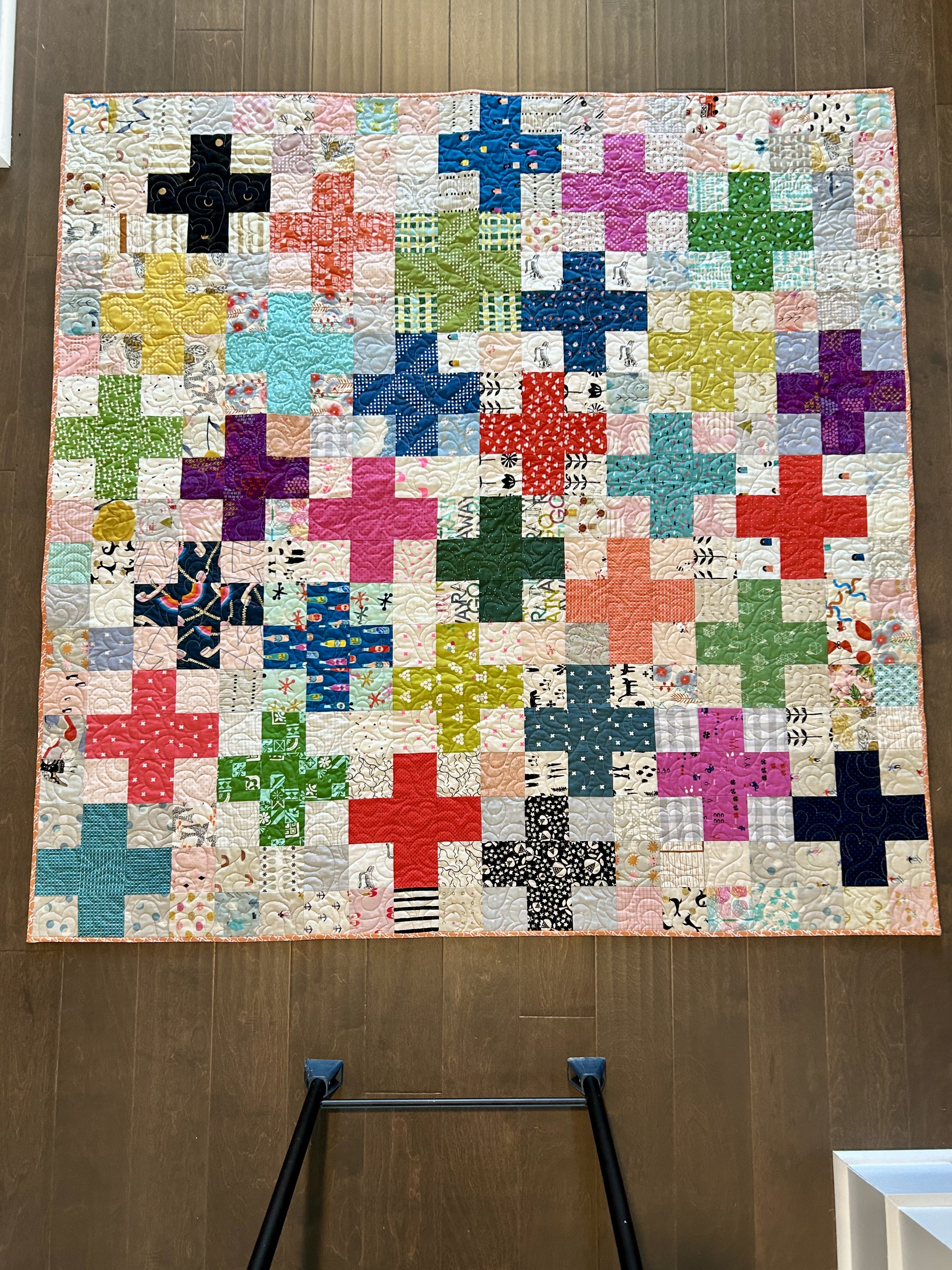
Here’s my first quilt of 2025: Pot Pour 5: Crosses:

Here’s my last quilt: a donation quilt made for a Charleston Modern Quilt Guild “color” challenge that is due in January 2026. I will post more on this quilt soon as it has a story.

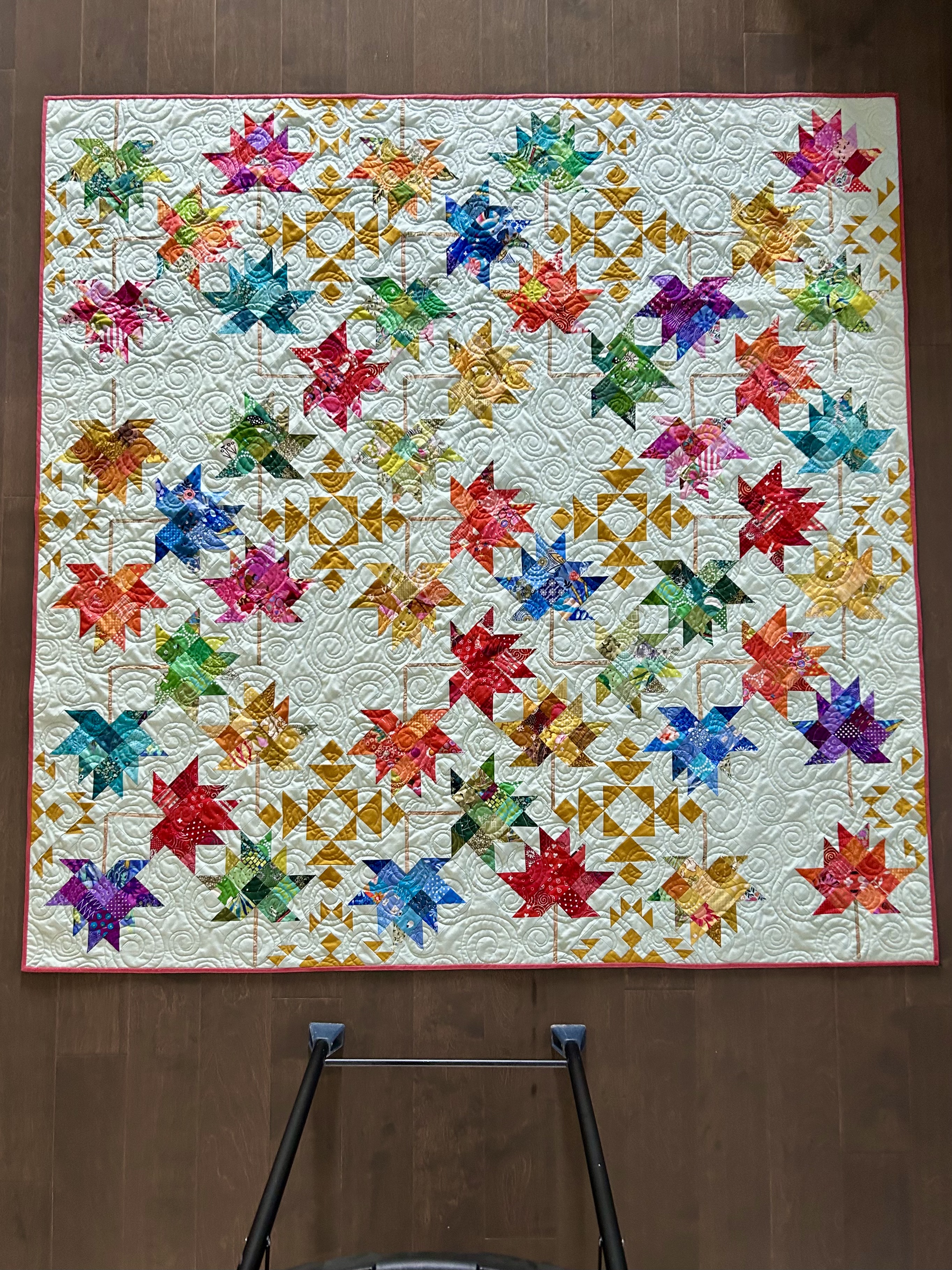
I had such fun making this year’s quilts, and it is hard to pick out a favorite, but if pressed, I’d say it is “Under the Maple Tree,” designed by Rachel LaBour (Stitched in Color blog) and made during a fall sewalong she organized.

Here’s an example of the 18 placemats–made using 2-inch cut blocks from that bin with the “leader-ender” process.

Here’s my largest stretched canvas piece, which is hung in my home. This piece emerged from Tara Faughnan’s Blocks2 yearly online class with a block idea she called “Gridwork.” I am deep into this year’s Blocks3 class.

I worked on two quilt series: one with 4 quilts and one with 3 quilts.

Here’s a quilt from the 4-quilt half-rectangle block series, made with playing with Latifah Saafir’s “Hurty” ruler: “Dancing Hourglass Diamonds.”

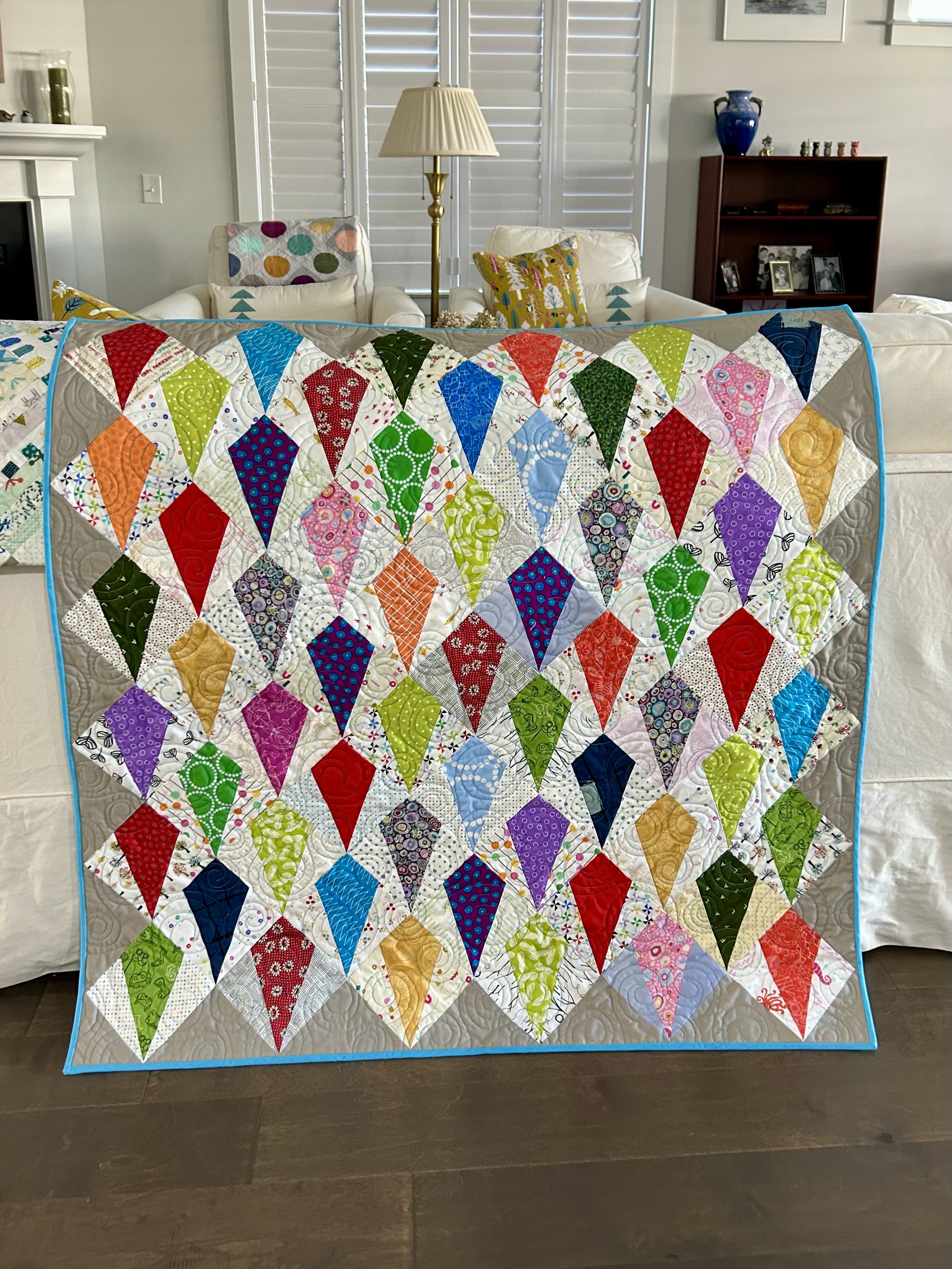
Here’s my favorite quilt from the 3-quilt series made with the Cat’s Cradle ruler, but they are all 4 very handsome quilts.

I made a quilt top for beloved neighbor who fell in love with a local quilt kit featuring iconic Charleston “Rainbow Row” houses, and after it was quilted by a longarm quilter here who also installed the binding, I hand-sewed the binding.

AND, I have a small quilt top that I’ll put on the longarm later today–made from the Blocks3 class block: “Star Brite.”

I made and gifted 4 new-baby quilts to my neighbors here, made and donated 5 quilts to the outreach work my two quilt organizations do, and gifted 4 quilts to friends and family. That is 13 quilts, or close to half I made.

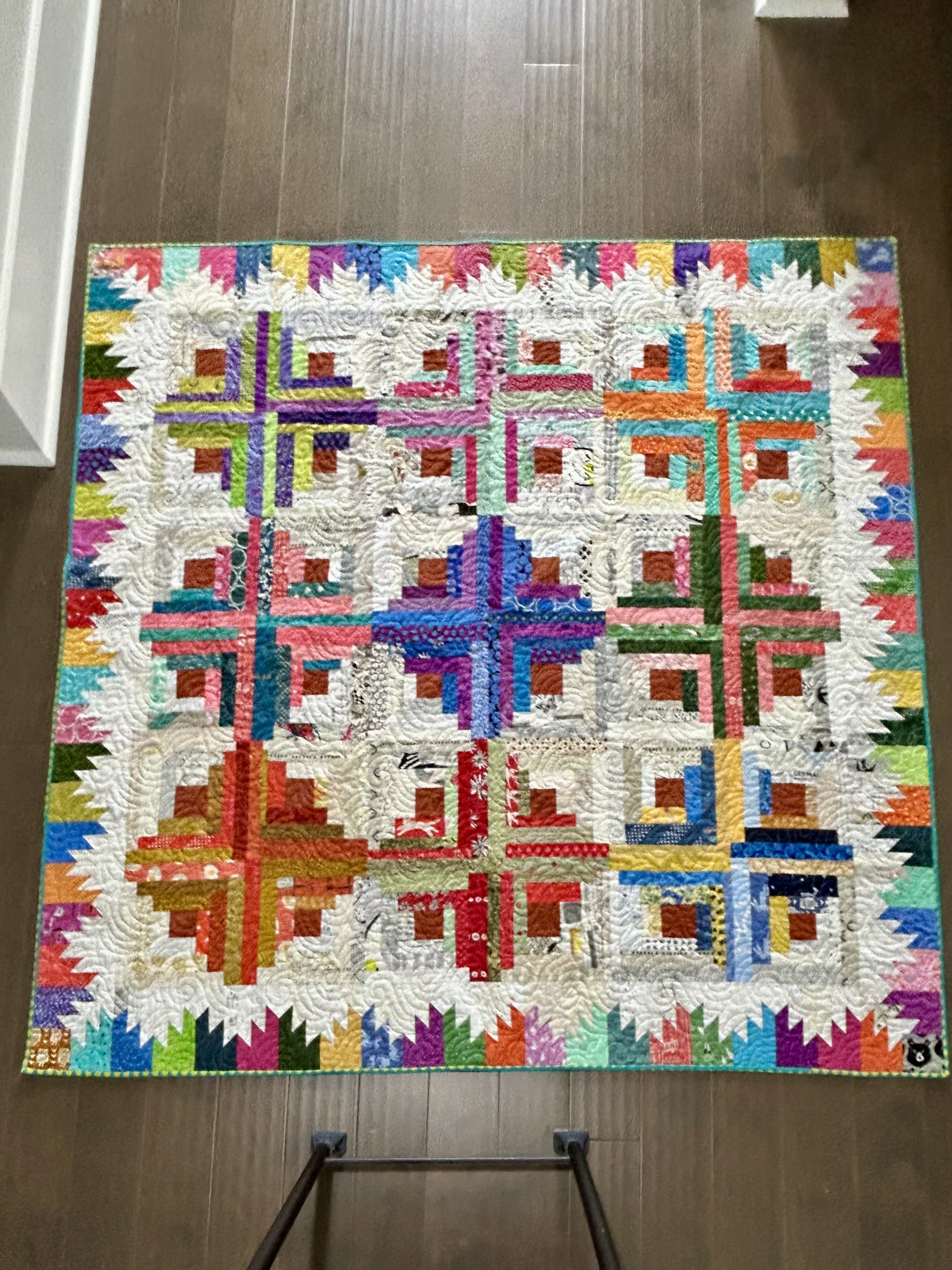
“Scrap Cabin” was such a gift–made to one of my oldest friends who visited in May. This quilt is another Rachel LaBour (Stitched in Color blog) pattern and online sewalong.

I stored 7 quilts for my grands to get someday, and I have here 3 quilts made this year to give away when someone claims them.

Two small table topper quilted projects will stay here with me–LOL–for the moment anyway. Like “Garnish,” made in my Blocks3 class this fall and hand quilted.

I am so grateful for this work that I do. And that I have the time and the health at my age (81 in March 2026) to do this work. I fully see these life gifts for what they are–a chance to create beauty and many quilty hugs.

Now, Happy New Year everyone! And on to 2026!
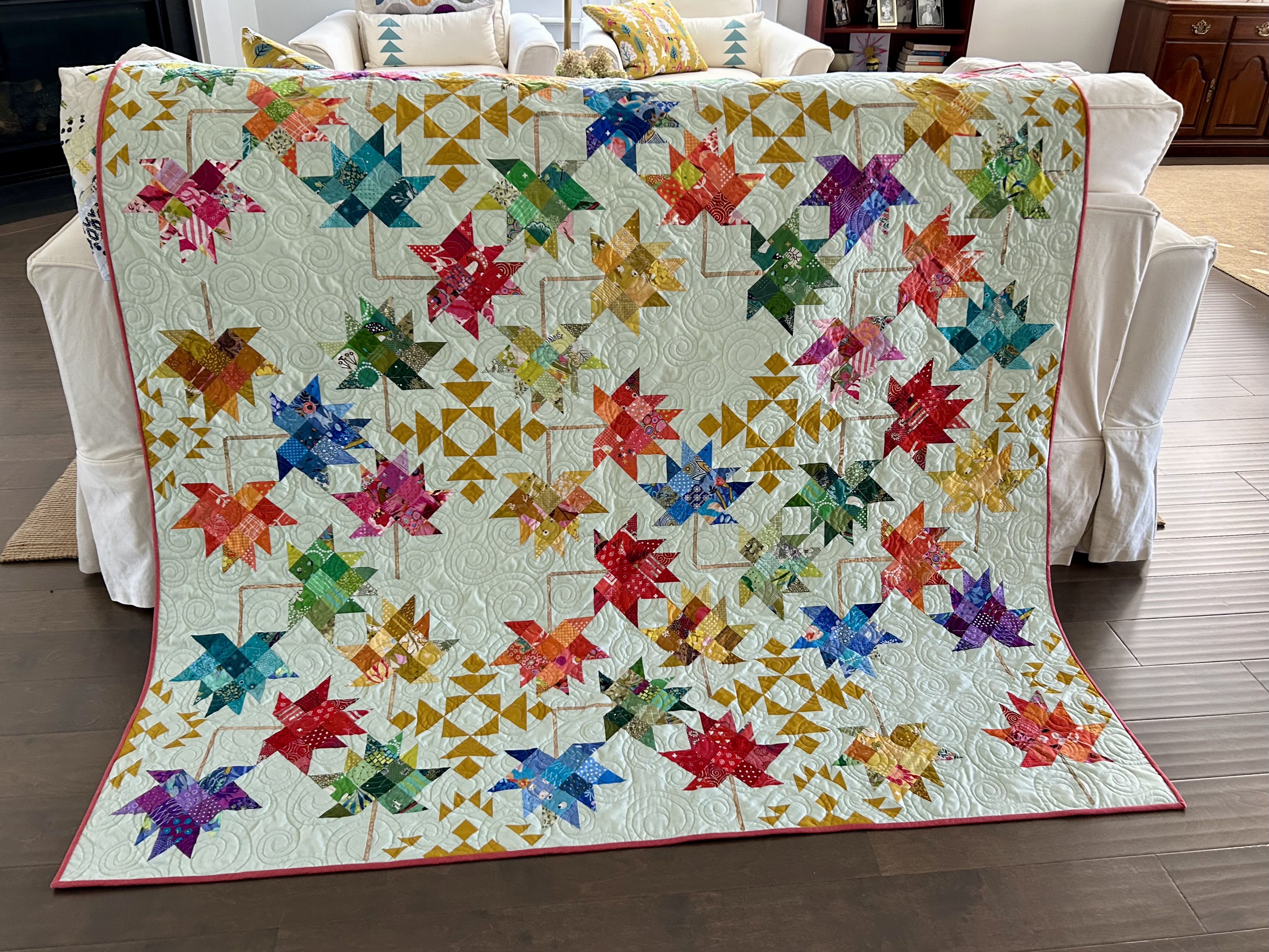
My “Under the Maple Tree” Quilt Is Finished.

And it is one of my most favorite quilts I’ve ever made.

It was a pleasue to make, from start to finish.

Rachel LaBour of the blog “Stitched in Color” designed the pattern and did a sewalong to make it this fall.

The leaf blocks are all from my stash. As I made them, I realized they were getting very bright, but you know, the fall leaves in Maine ARE very bright.

I loved Rachel’s choices for her first Maple Tree quilt, so used those as well. The setting background is Tilda’s Soft Teal solid. The gold blocks are Spark Gold from Free Spirit. And the luscious backing (my choice not Rachel’s) is Tilda’s “Sanctuary in Warm,” designed by Tone Finnanger. The warm reddish binding is Andover 2022428, “Cottage Clash” by Renee Nannenon of Need’l Love.

Here’s a better picture to show the size of this lap quilt and to show the colors and texture in a better light.

I loved it when I realized that the points of the bigger gold blocks in the middle of this quilt use a small Cat’s Cradle block to make the points.

This quilt is earmarked for a beloved granddaughter who was born on Thanksgiving day 15 years ago, so she is of the “falling leaves” time of the year.

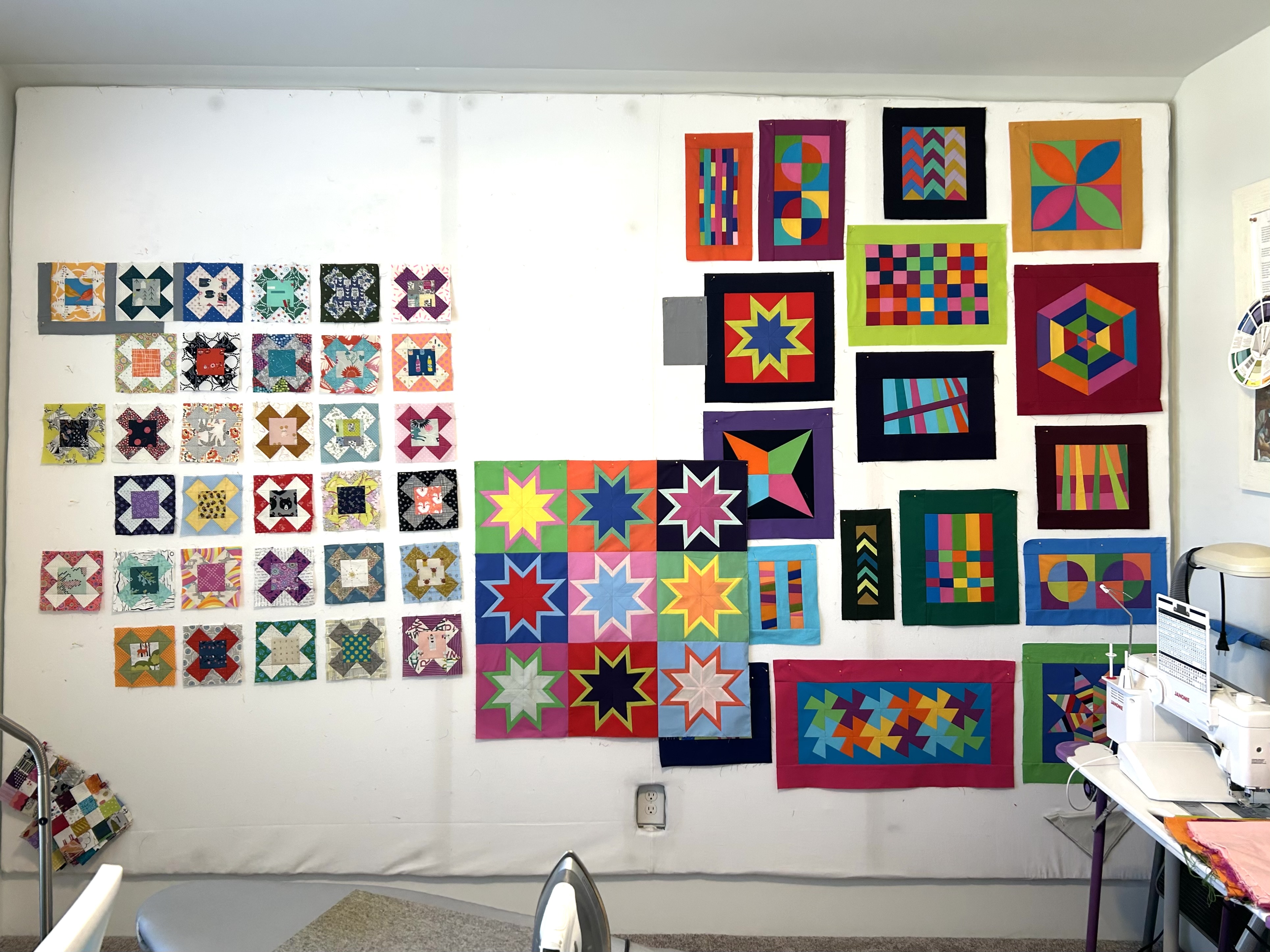
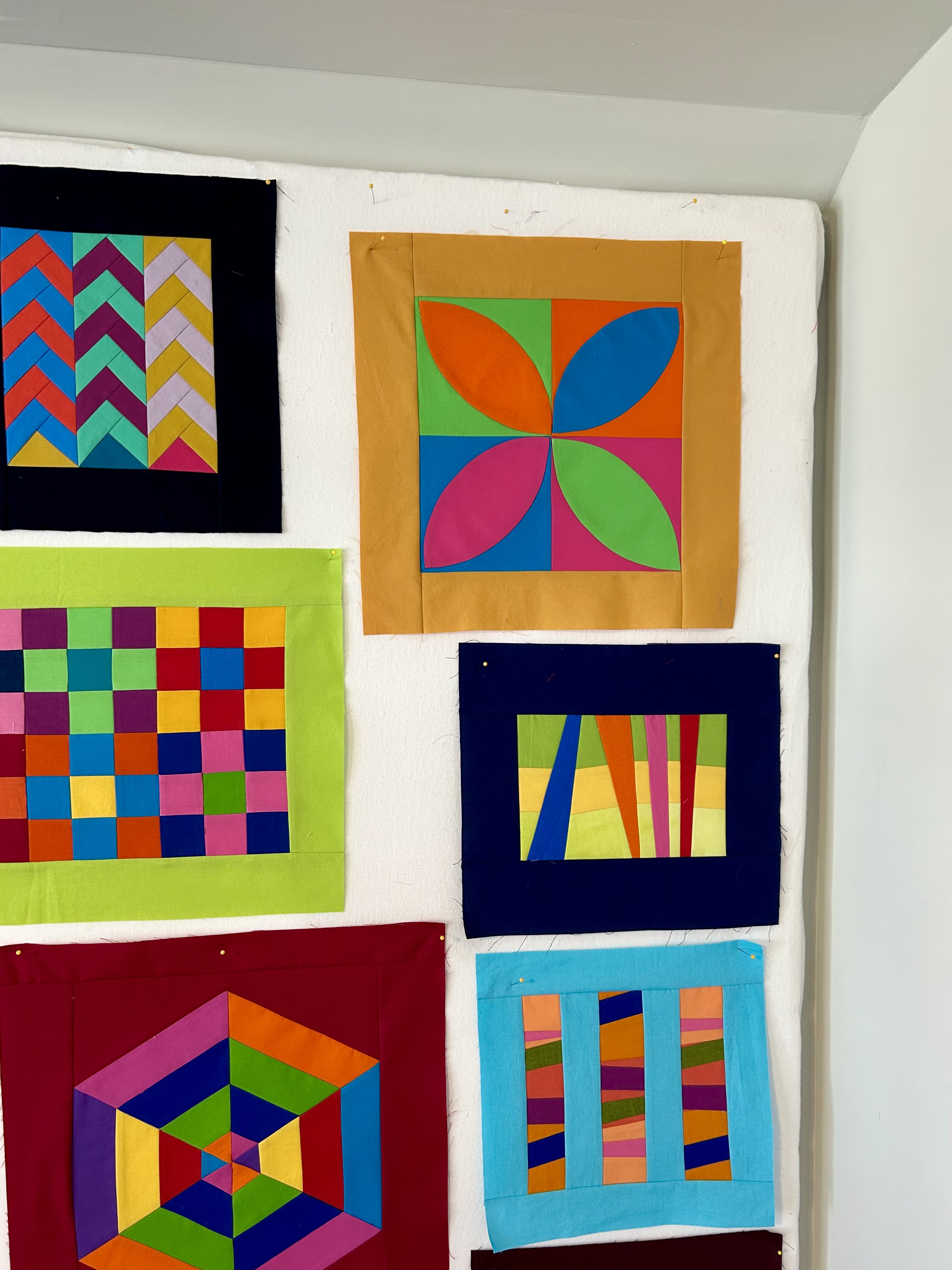
My Design Wall is FULL!

The improv quilt on the right is…growing. I’m going to use a medium grey solid (Kona’s Titanium) to set the blocks–but I’m not finished making fun blocks yet.

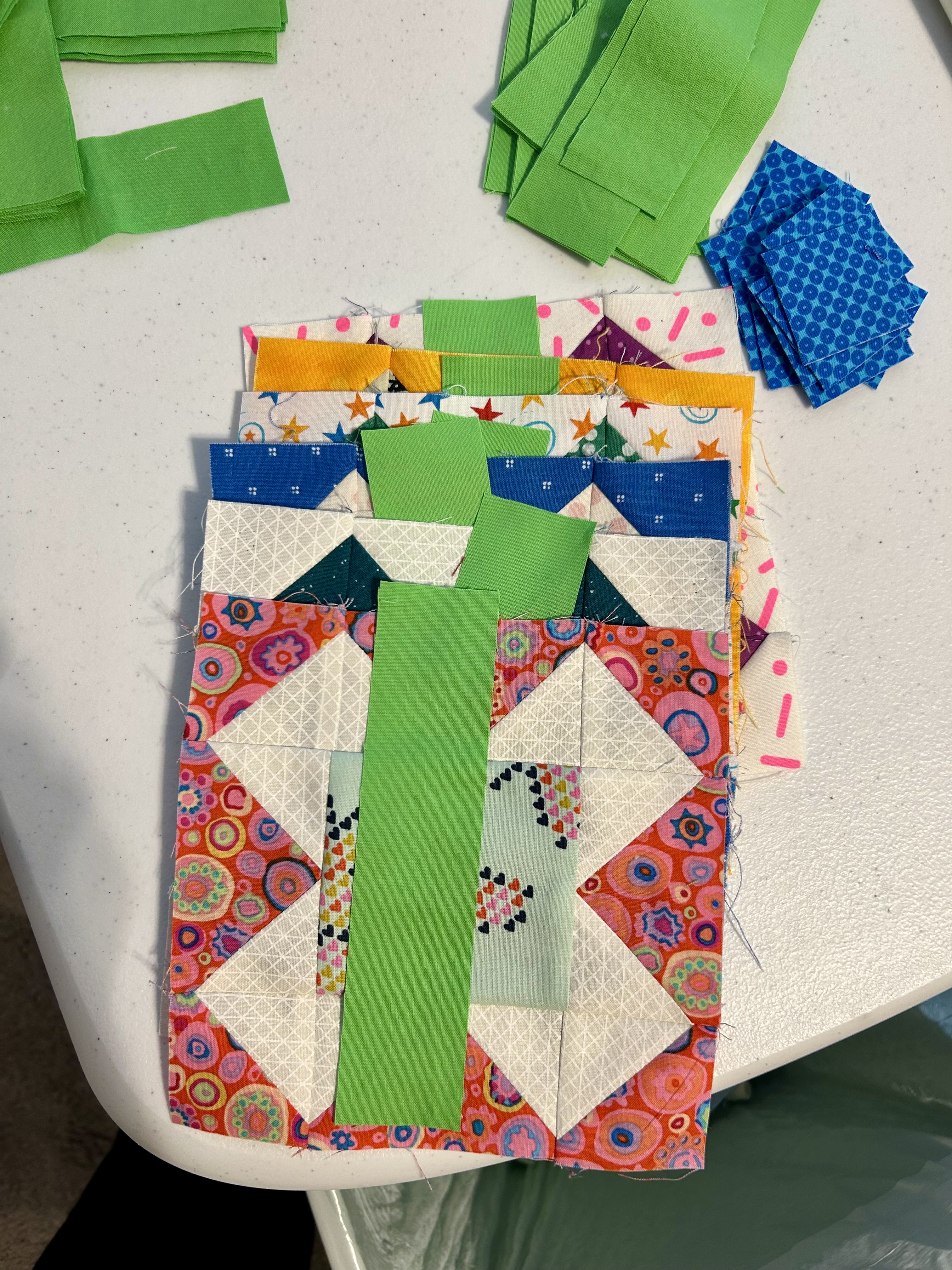
On the left, a “leader/ender” project is now getting its sashing as all the blocks are now made. More on that later. The block is from Bonnie Hunter, who created it for Quiltmaker magazine some years back. I can’t find the link to the pattern but it isn’t hard to figure out. Bonnie is no longer doing that column, and there have been big changes at that magazine with regard to their archive, so there’s that. Bonnie has been making some of these blocks this past year, which is where I saw it, but she’s, at present, moved on to other projects.

And in the middle, where it doesn’t have any space, is a small “Star Brite” piece that will be a table topper. “Star Brite” is Tara’s block for December in her Blocks3 online class. I have organized a backing and will try matchstick quilting on the longarm. This little project just needs something plain for quilting.

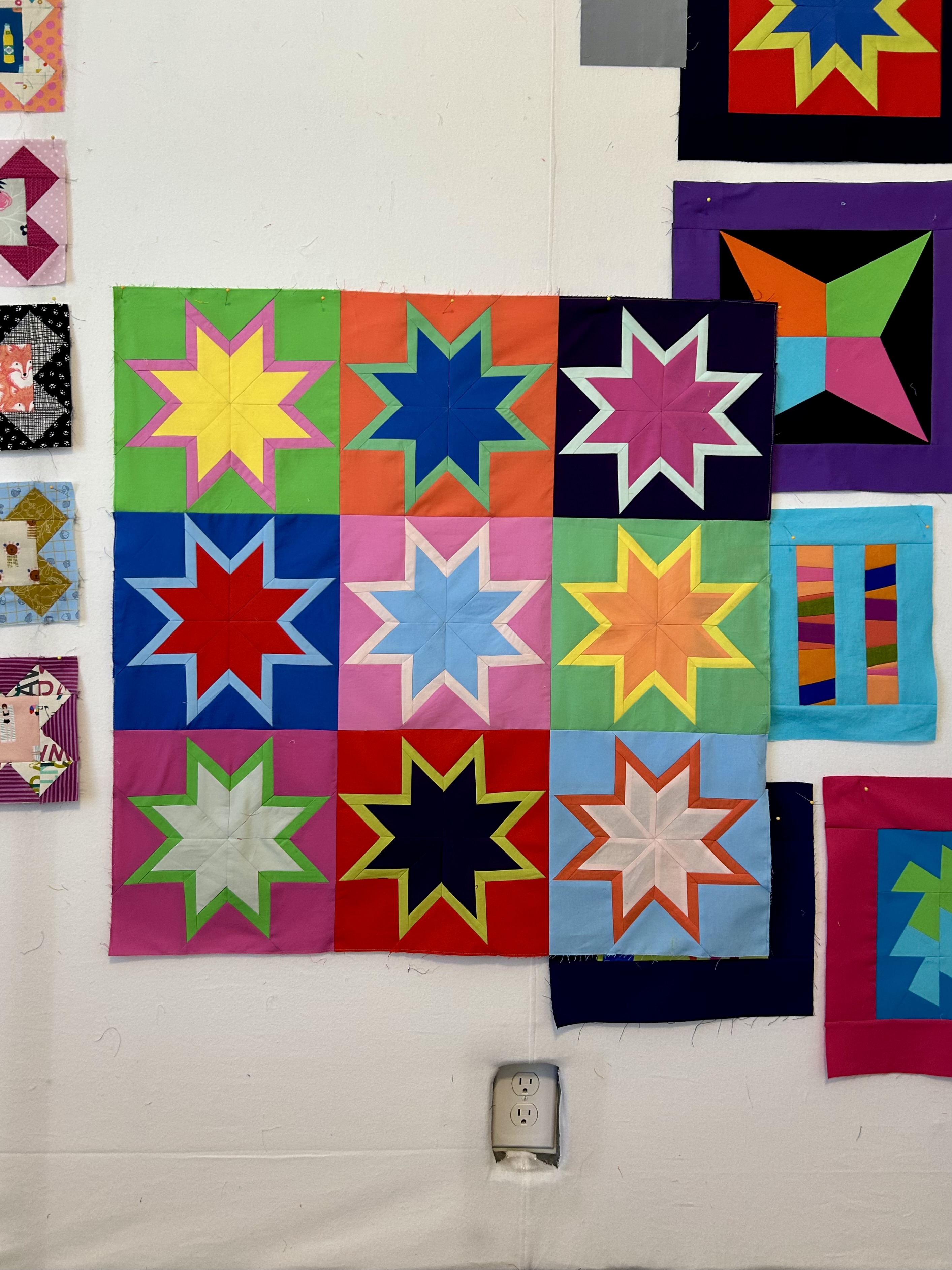
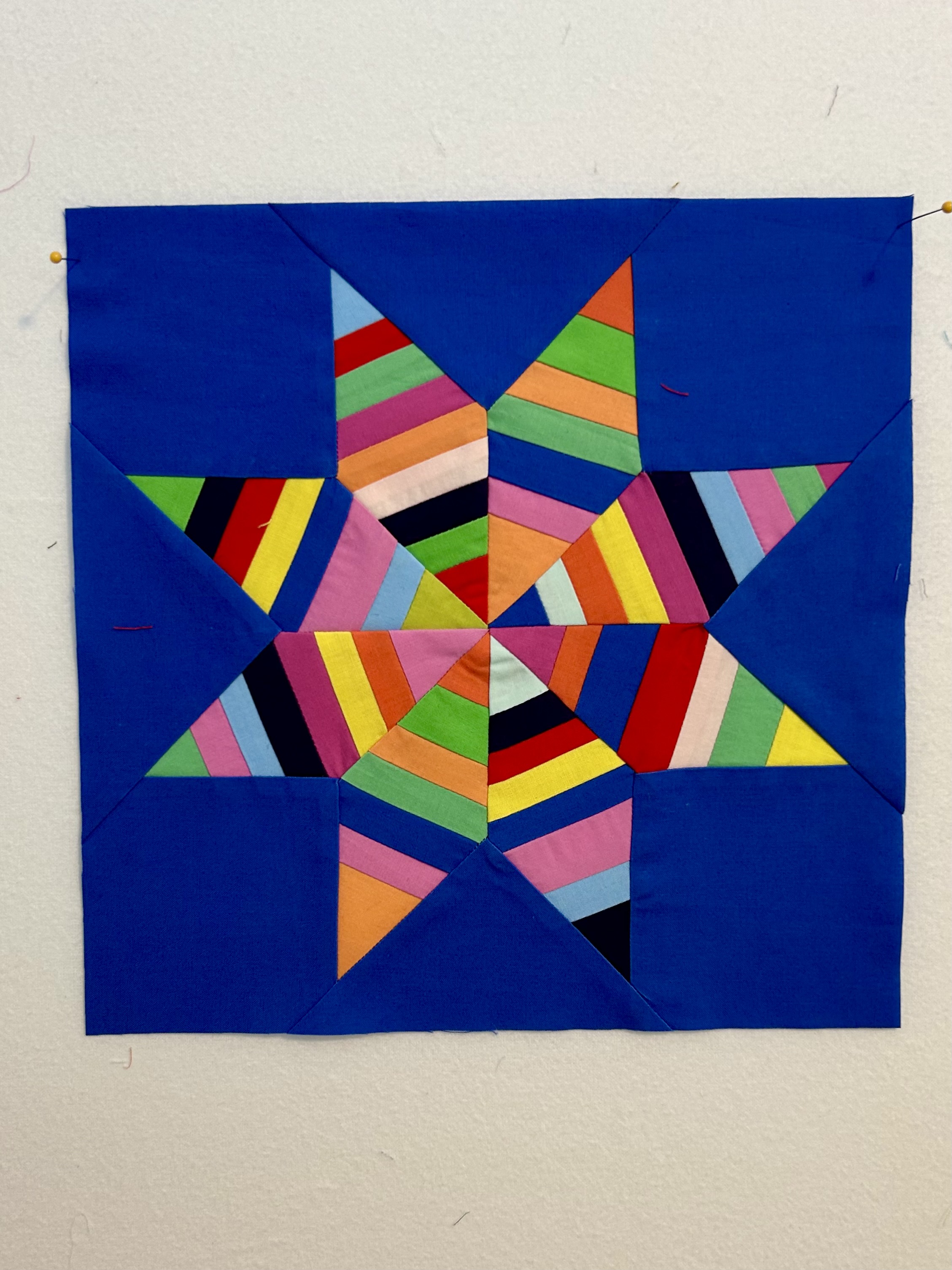
Tara, as usual, gave us all sorts of ways to make a star block made from 45 degree angles and “Y” seams. I liked this version, with it’s medium outer trim. Above, on the right in the improv quilt you can see one of these blocks made with the wider trim. It was my trial block.

I’ve wanted to make a scrappy version of this star block for some time, so after making the stars in the improv quilt and the table topper, I felt I was ready to try the scrappy version. And what a handsome block it is, if I do say so myself.

Yeah! It’s going into the improv quilt.

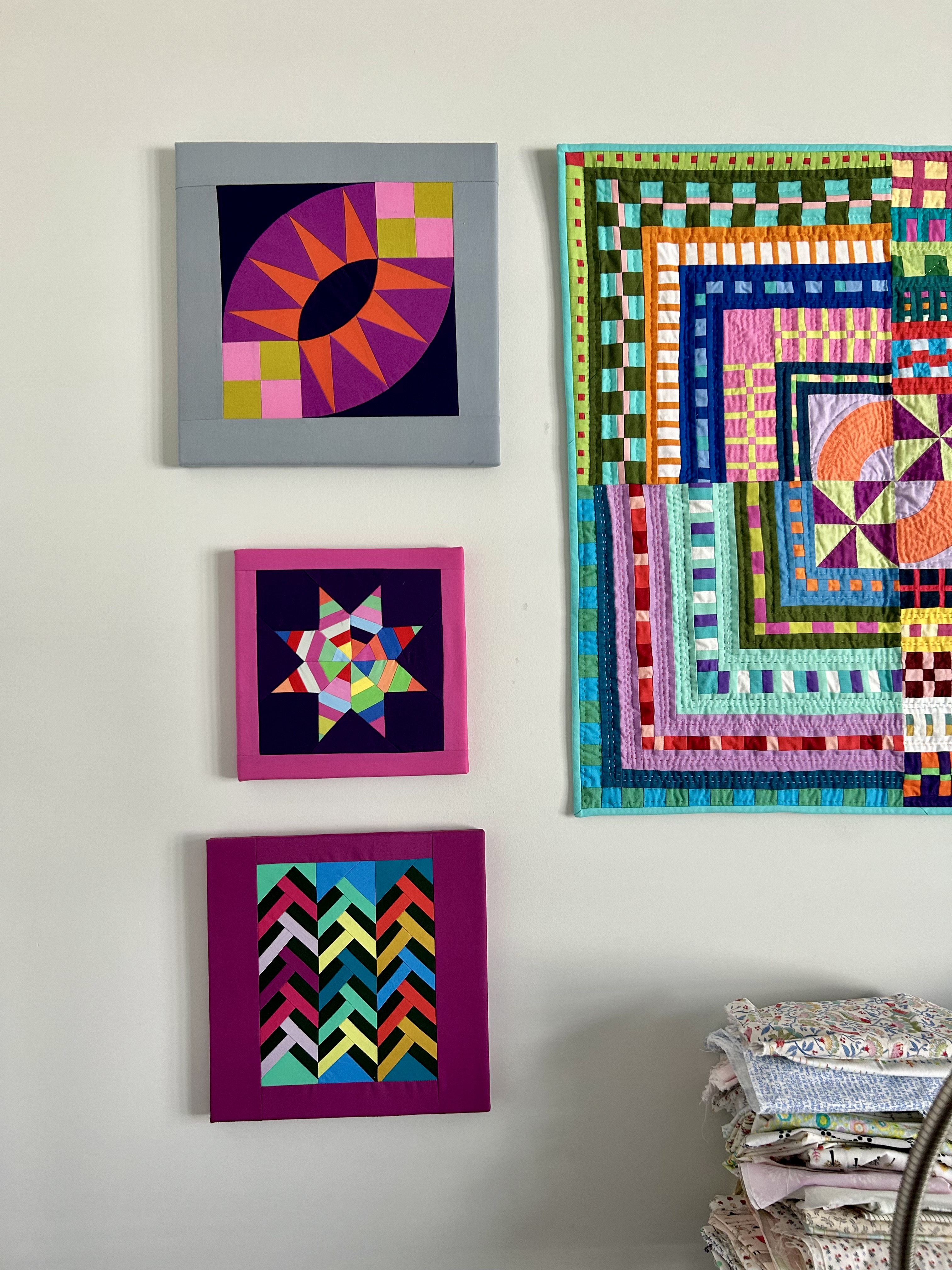
I made a smaller one too and put it on a 10-inch stretched canvas. I promptly fell in love with it and hung it in my quilt room.

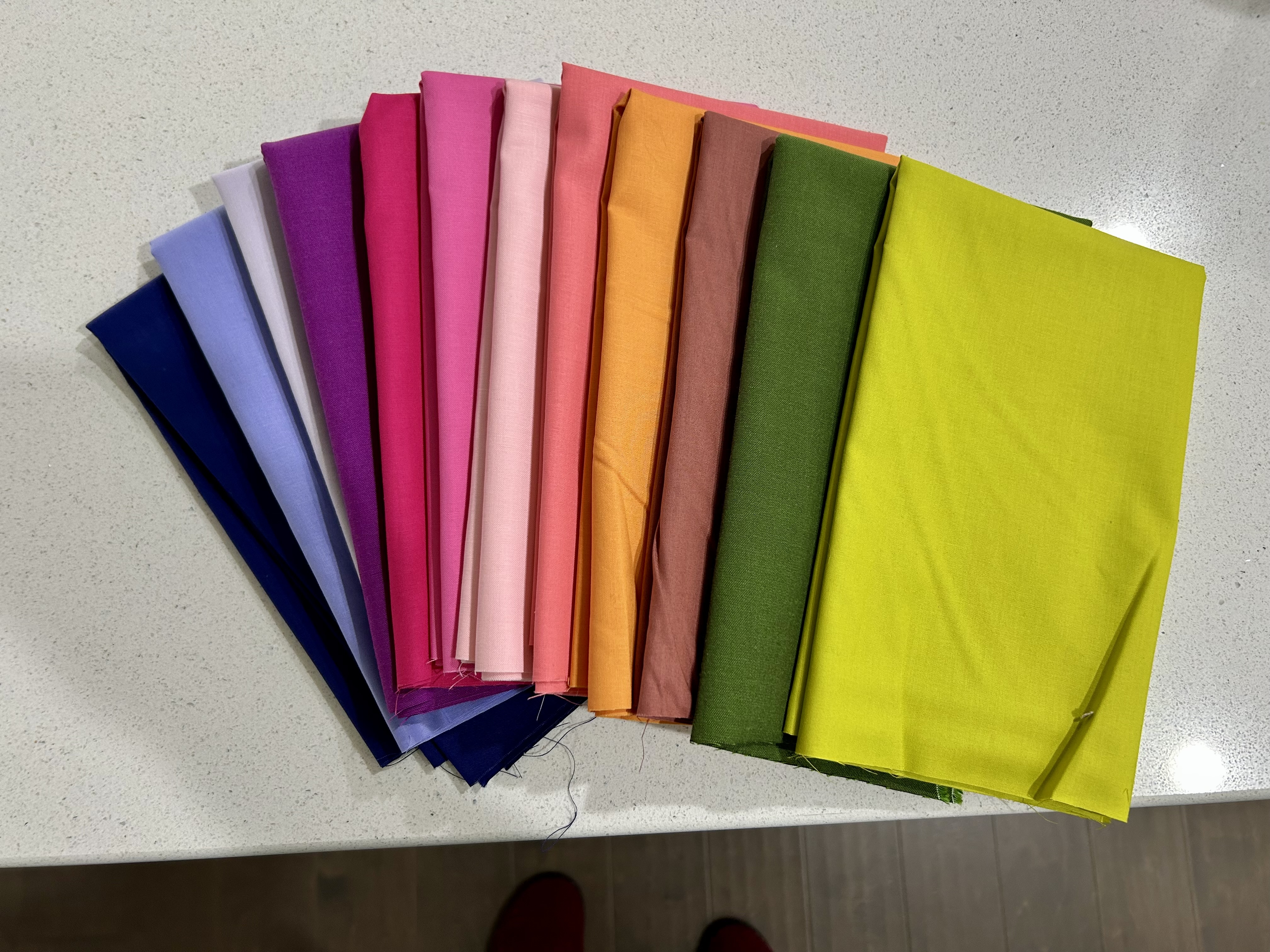
I got the January fabric palette for this Blocks3 class, and it is…luscious…and is already washed and ready for January’s prompt.

Have a great week everyone, as we head into New Year 2026. And all my very best wishes to all of you.

Muhly Grass

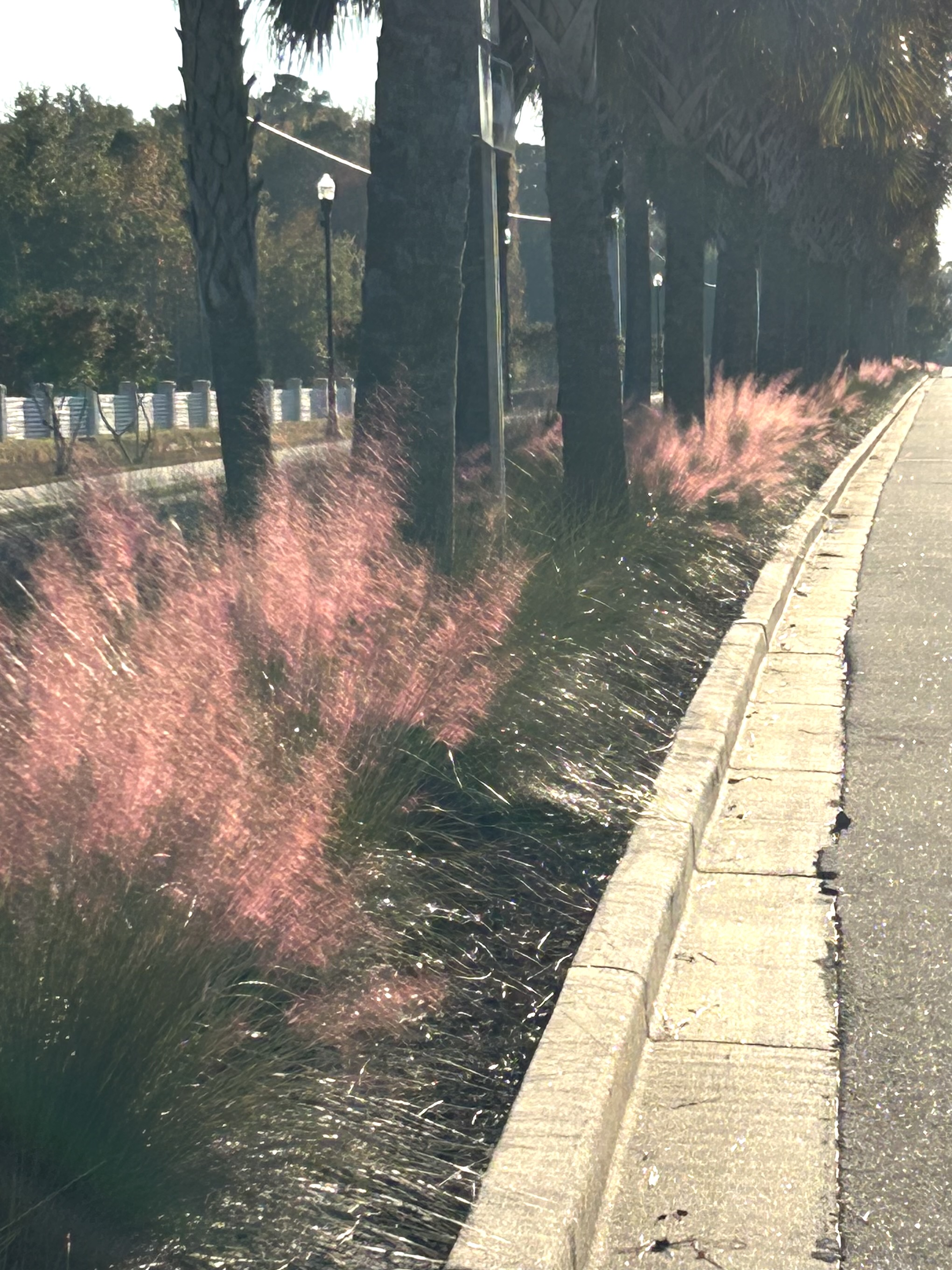
The Muhly Grass here has been blooming for about 2 months. I love it when the rising or setting sun lights it up.

The sun makes it glow.

I took these pics yesterday when I walk late afternoon.

The strands from this grass are used by the sweetgrass basket makers, so in some public places, the plants are seriously trimmed to supply fodder for the baskets. Stealthily, of course.

Yesterday I put protectors on the two camellia bushes as we were expecting temps in the 20s last night. Here in SC, our water heaters are OUTSIDE, attached to a house wall, and houses are either on the ground or on high supports. Either way, pipes are…exposed or on the ground. And they will freeze easily.

When I woke this morning, it was 28 degrees on my porch. It’s a good thing I dripped water upstairs and in two faucets downstairs.

I brought in the Kalancho plant, which is going to bloom again. And the geranium which is on its second year and going strong. The hibiscus on the porch took a hit. Time will tell.

It will be very cold again tonight. Cold for SC, that is.

What Is This Bird?

Beloved neighbor and I saw this very interesting, very big bird while walking the other day. Neither one of us had a clue as to its identity. It was not alarmed by our presence, unlike the usually wary wading birds.

It continued to stroll slowly along the ditch, which is part of the elaborate system of flood management in the “Low Country.” Water in ditches like this one is channeled out to the coastal marshes. This bird’s strolling involved standing momentarily on its left leg while using its right foot to wiggle and scratch the botton of the ditch.

And:

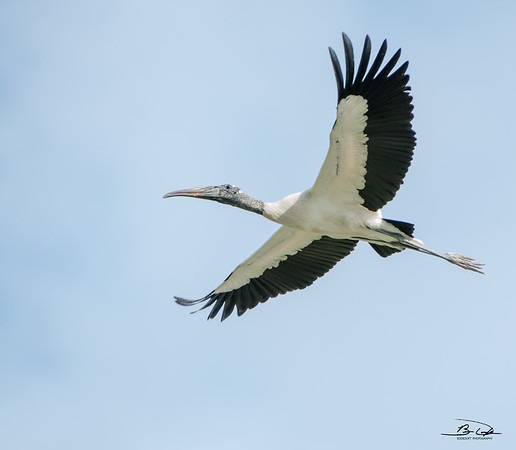
Neither of us surfaced the word “stork” to identify this bird. We were more focused on heron, crane, ibis, egret, and so on. Note the bald dark head, the sturdy dark beak that turns a kind of tan at the end, the black legs, the black feathers at the tail and along the bottom of the folded wings.

It took me a little time, but I finally identified this fascinating bird. And I learned that the black on the wings is much more prominent that one might expect when they are folded.

Here’s some more info on “Wood Storks” from the Cornell Lab of Ornithology:

“Large, white Wood Storks wade through southeastern swamps and wetlands. Although this stork doesn’t bring babies, it is a good flier, soaring on thermals with neck and legs outstretched. This bald-headed wading bird stands just over 3 feet tall, towering above almost all other wetland birds. It slowly walks through wetlands with its long, hefty bill down in the water feeling for fish and crustaceans. This ungainly looking stork roosts and nests in colonies in trees above standing water.”

And for Cornell labs:

“Wood Storks occur only in a few areas in the United States, so to get a look at one, head to a wetland preserve or wildlife area along the coast in Florida, South Carolina, or Georgia. Wood Storks tend to be busily foraging with their head down and body held horizontally, but their large size should help them stand out amongst the other pale herons, ibises, and egrets in wetlands even if you can’t see their hefty bill. If they aren’t foraging in areas with standing water, check nearby trees for groups of roosting Wood Storks, or look up in the sky for soaring birds with black-and-white wings. They are mostly silent, but during the breeding season, sounds of begging chicks might help you find a colony.”

This Wood Stork was our gift of the day from…nature.

“Garnish” Table Topper Quilt

“Garnish” is the second month block in Tara Faughnan’s six-month Blocks3 online class.

Here’s what happened as I played with the block and with the palette Tara chose for this month. I am very partial to greens and oranges, so I was happy with this palette that was very much in one of my color comfort zones. (I love color.)

I hand quilted “Garnish” with the collection of 12-weight cotton threads I have amassed over the years of hand quilting. The center join of the “flower” made hand quilting tough in that area, but the rest was a joy.

The backing is “Spotted” by Brigitte Heitland (#1660 Moda), whose selvage came with the sweet message “Life is Art, Live Yours in Color.”

This block is a pickle quilt block form, and as usual Tara Faughnan gave us many options, like block sizes for instance, with which to play. My trial block is on the upper right of my developing improv quilt and was a 6-inch version, as I recall.

The form of this block that drew me strongly was the circle that formed as a secondary pattern. So I went on to make a stretched canvas version, which I hand quilted and hung in my quilt room. (Above a “Crosswalk” block, the first month block in Blocks3.

Like Tara Faughnan, I think a glue stick makes sewing curves so much easier. So this “Garnish” piece will need to be washed to remove the glue, which will make the piece wrinkly, of course. I don’t mind that look.

Month 3 in Blocks3 is a Star form, and I’m having fun with it now.