The Cornell Bird Lab is a treasure trove of information on birds. The videos are…amazing.
Enjoy!
https://www.allaboutbirds.org/news/hummingbirds-flight-beauty-costa-anna-california
Information I want to share in a non-essay form
The Cornell Bird Lab is a treasure trove of information on birds. The videos are…amazing.
Enjoy!
https://www.allaboutbirds.org/news/hummingbirds-flight-beauty-costa-anna-california
Here in coastal South Carolina, local melons have been filling our markets.
But, how to tell if one is ripe and ready to cut?
For watermelons, look to the skin to see if the melon is starting to turn more yellow. Then make a fist and thump the melons in the storage bin. Move then around as needed. A ripe melon has a deep satisfying sound, not a sharp higher sound. You will be able to tell the difference immediately when you thump a ripe melon. Sometimes I go through a number of melons before I hear that deep sound. Also, inspect the melon to make sure it is not overly ripe so that it has too-ripe places starting to soften on the outside–which is more easily seen with cantaloupes.
Look at this gorgeous, deep red, sweet watermelon!
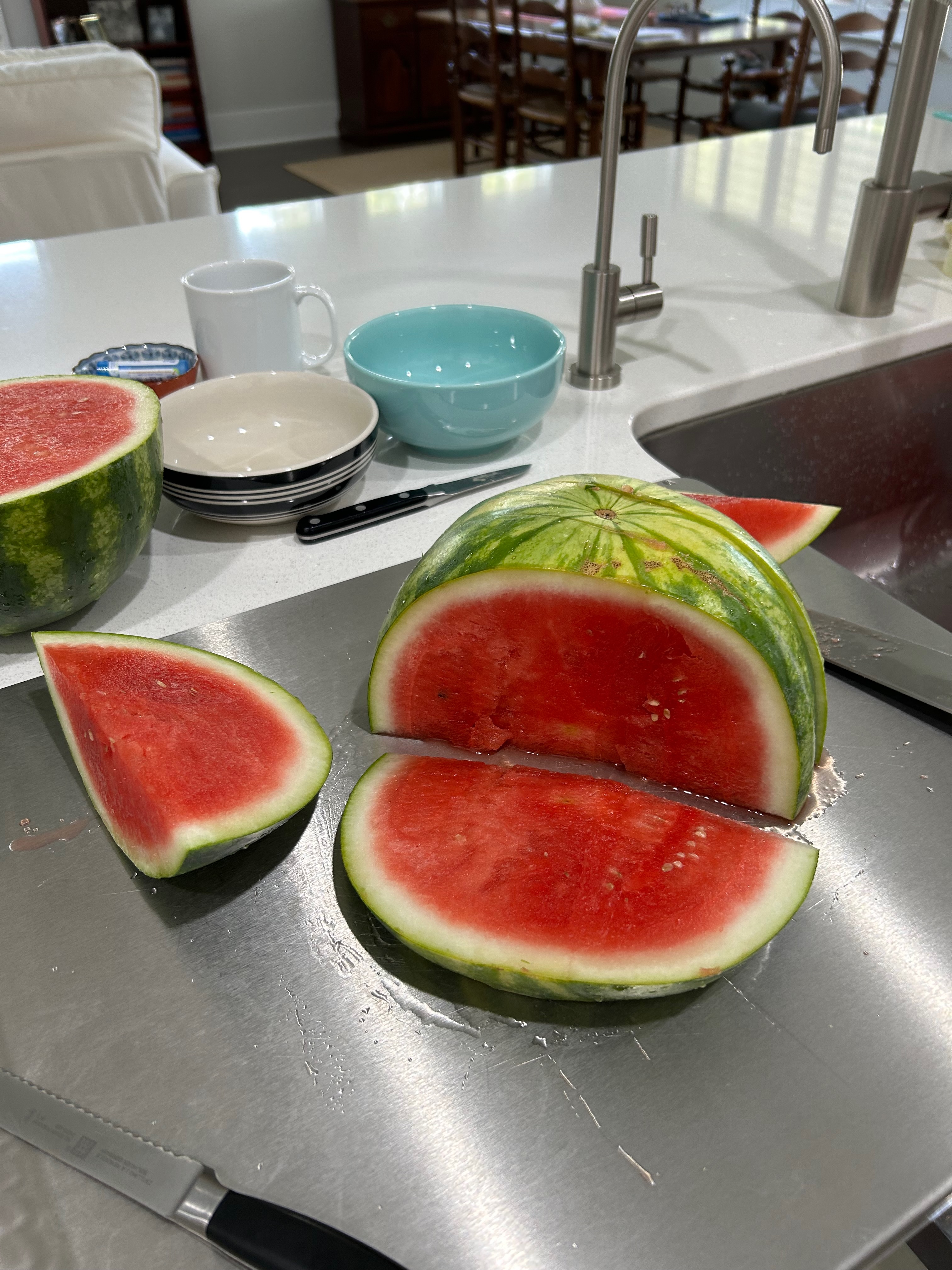
Cut whatever melon you have bought in half and then into slices. Take a small knife and cut away the rind of each piece. Then, cut the half-round pieces into bite-size pieces. For a big melon, I often just cover the top of the uncut half and store it in the refrigerator until I am ready to cut it up. It stores better that way.
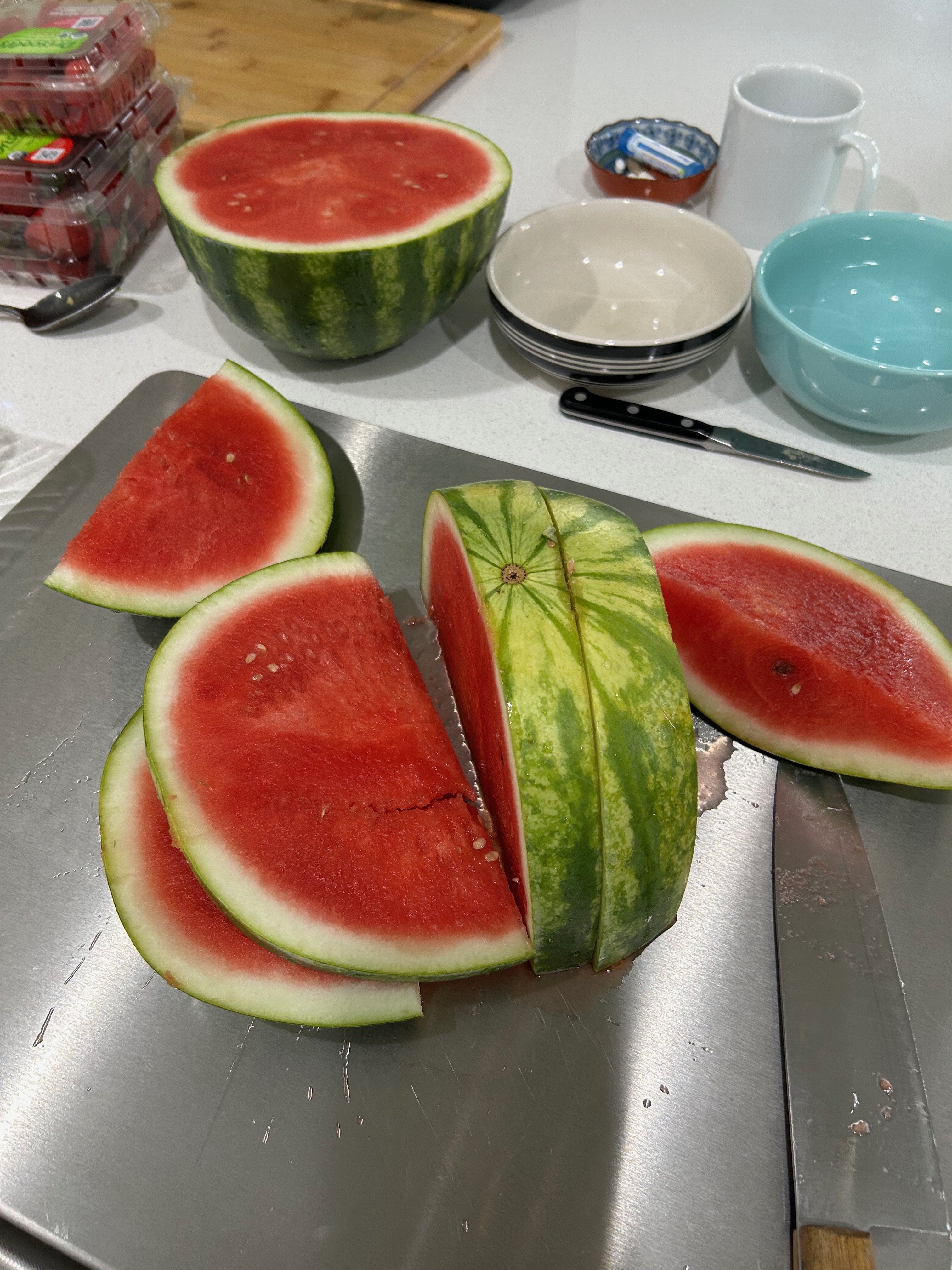
I store my cut pieces in a covered glass container in the refrigerator.
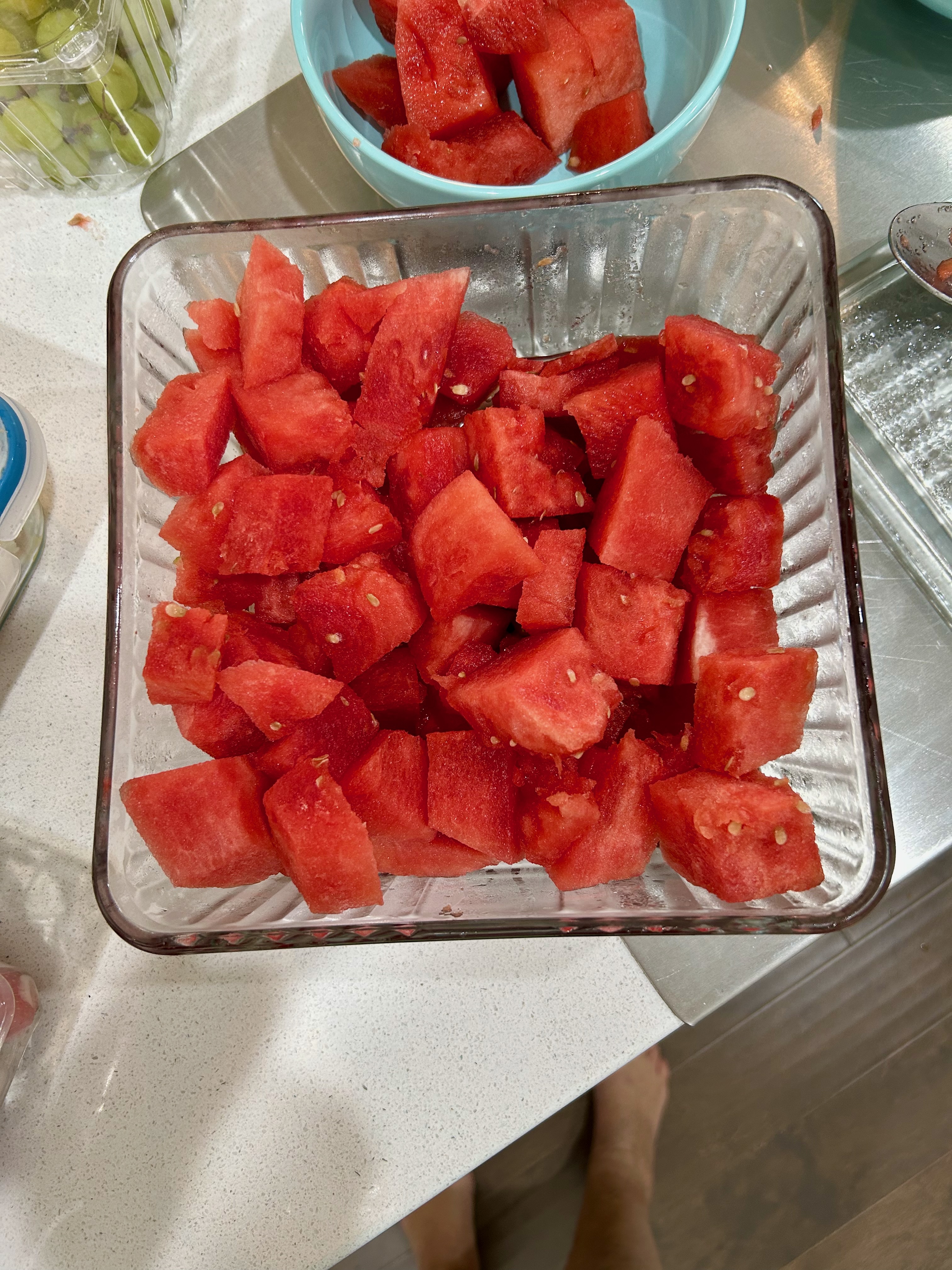
What a gift these local ripe melons are!
Enjoy!
The Cornell Lab’s information on birds is…so fun. This little video arrived in my inbox this morning, and I was entranced for the length of the 4-minute video.
https://www.allaboutbirds.org/cams/top-moments-from-the-2026-barred-owl-cam-season
I hope you enjoy it as much as I did. And note that this site has many videos of birds that are fun to watch.
Here’s a Sunday morning treat from the Cornell Lab of Ornithology.
https://www.allaboutbirds.org/news/gallery-bird-quilts-tracy-mclellan
Enjoy!
We are now getting plenty of rain as the typical tropical weather pattern has kicked in: hot with afternoon thunderstorms filled with wind, lightening, and impressive thunder. The humidity is high these days. It’s like a warm blanket surrounding me on my early morning walk which avoids the heat that starts to crank up mid morning. Still, for a few days, we’ve had temps in the 80s for most of the day. (July is our hottenst month here.)
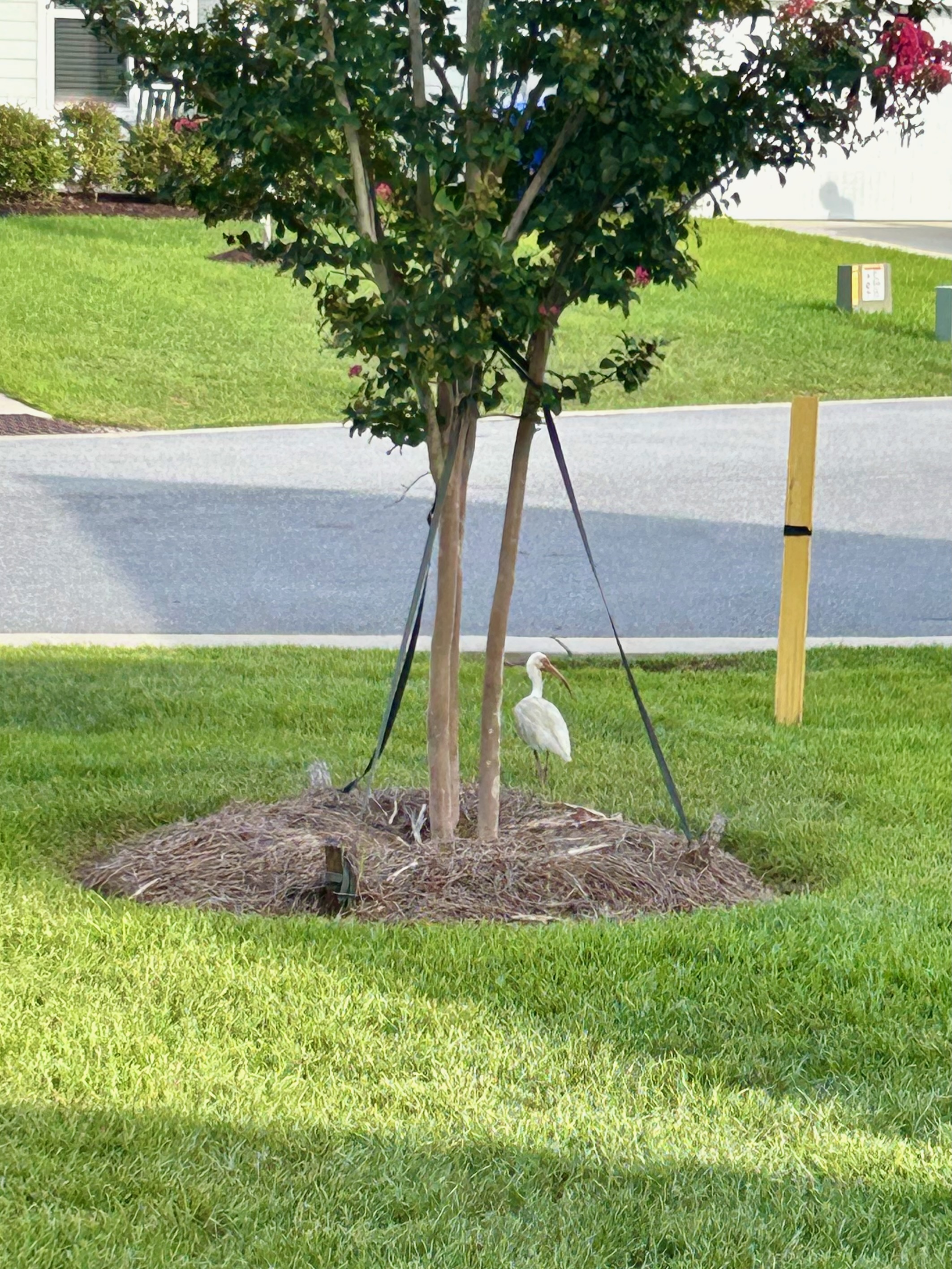
All the rain has driven lawn grubs and other lawn critters to the surface. The White Ibis are delighted with this outcome, and we are delighted that nature is culling the harmful critters. White Ibis eat grubs, mole crickets, and earthworms. I’m fascinated with the curved bill.
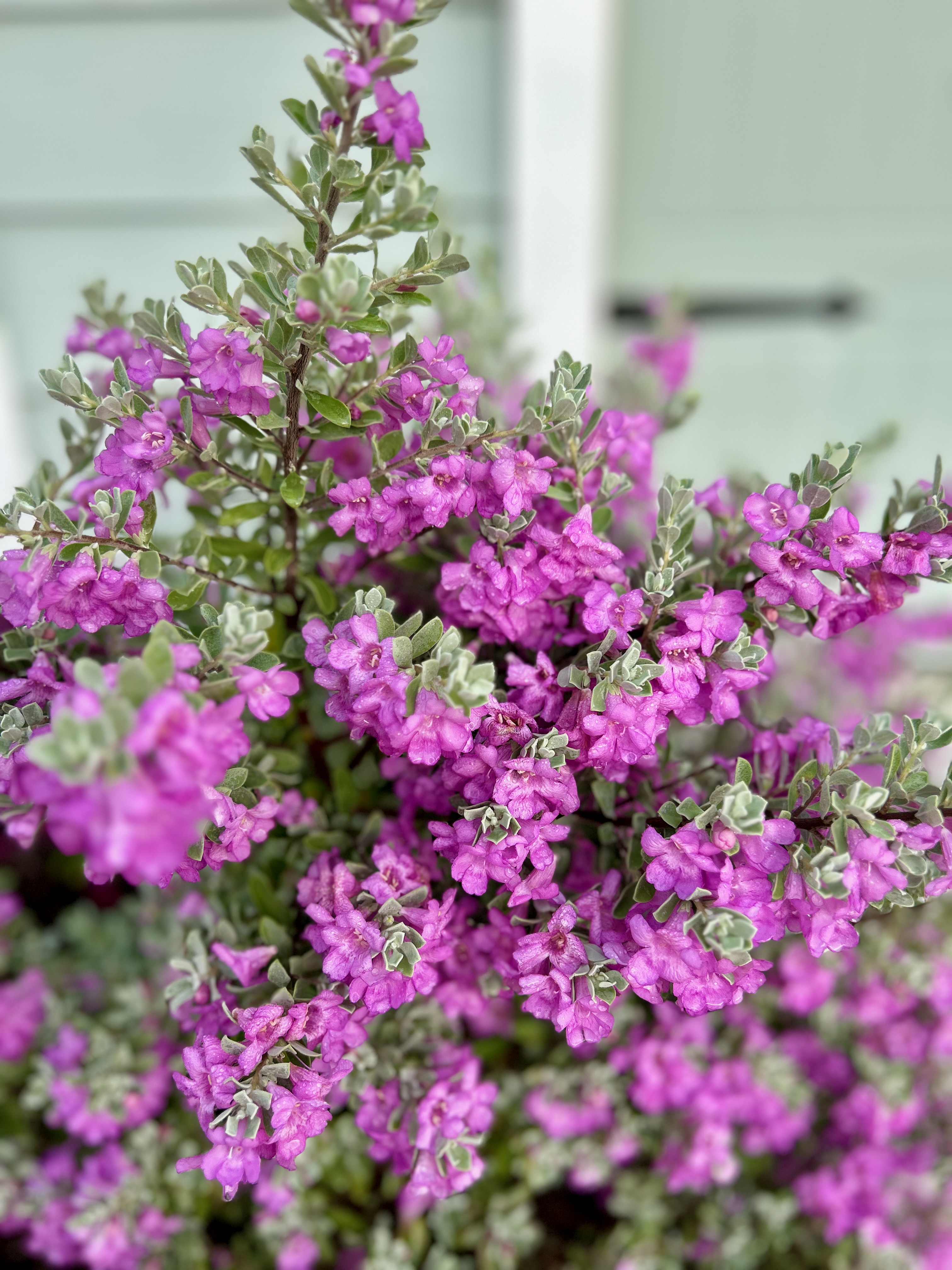
My Texas sage, planted a year ago, has burst into bloom. It’s gorgeous.
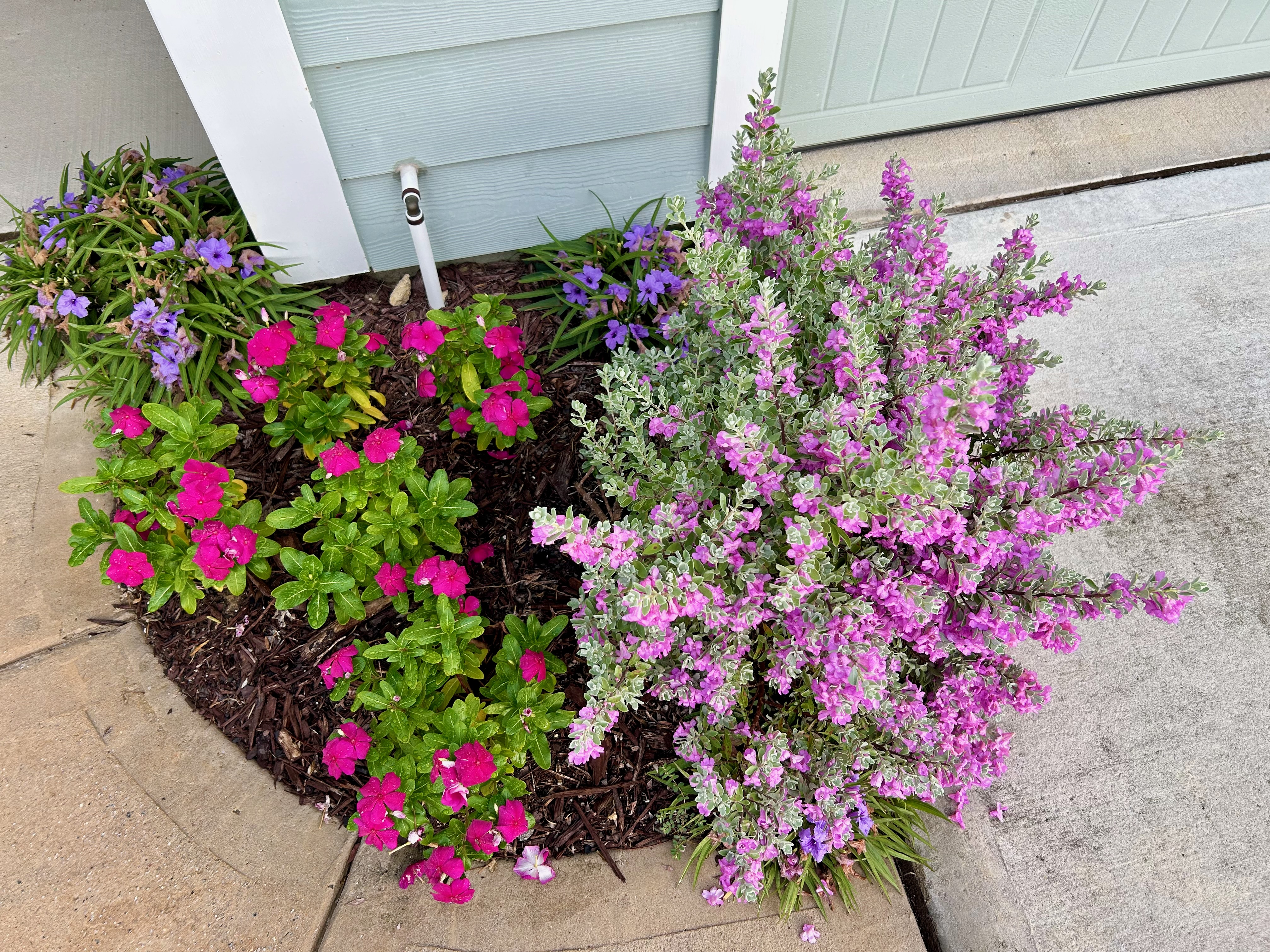
I love the silvery sage leaves too.
I’ve been struggling with what is called “hot mouth” or “burning mouth.” It’s caused in part by sleeping with one’s mouth open for some of the night so the mouth tissues dry out. I’ve done that my whole life, so why this problem now? I think I have an allergy to xylitol in chewing gum (which can clean teeth) and in some dental products. Mint flavorings are also part of the problem, or at least make my scalded mouth feel worse.
I love to chew gum when I’m sewing or at night after my dinner. There are very, very, very few mainstream gum products easily obtained that do NOT have xylitol or aspertame. (Xylitol is a wood alcohol product that does sweeten quite nicely. Note that it is wildly poisonous to dogs.) I can’t do the mint choice, and the chemicals in Juicy Fruit smelled up my whole pantry and upstairs sewing room. Ugh!
I finally found this product, but beware, some flavors do use xylitol. It’s a good find. There are lots of flavors. The flavor is mild, very lightly sweet, and the gum chews pleasantly. BUT, LOL, don’t attempt to take it out of your mouth with your fingers as the natural gums will stick to your fingers like mad. That’s what the little tissue papers included in every pack are for, as it turns out. I had to use “Goo Gone” to remove the gum. And I retrieved the little tissue papers from the trash.
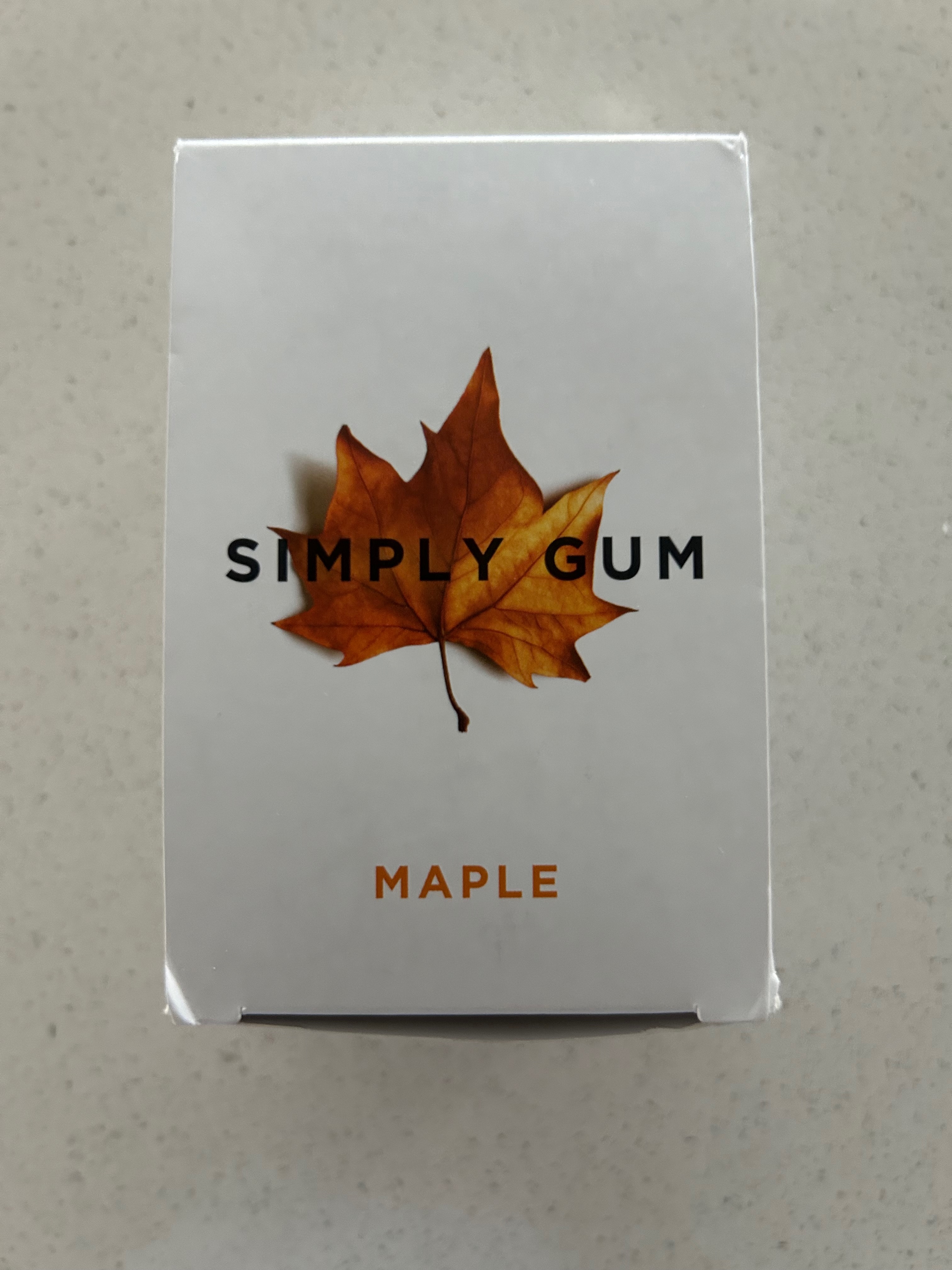
This product does not use synthetic plastic in the gum base. It uses a tree sap called “chicle.” Here are the ingredients in the maple flavor: organic raw cane sugar, natural chicle base (chicle, candelilla wax, citric acid), natural flavor, organic vegetable glycerin, organice rice flour, Tapioca starch.
So, I am happily chewing gum to my heart’s content again.
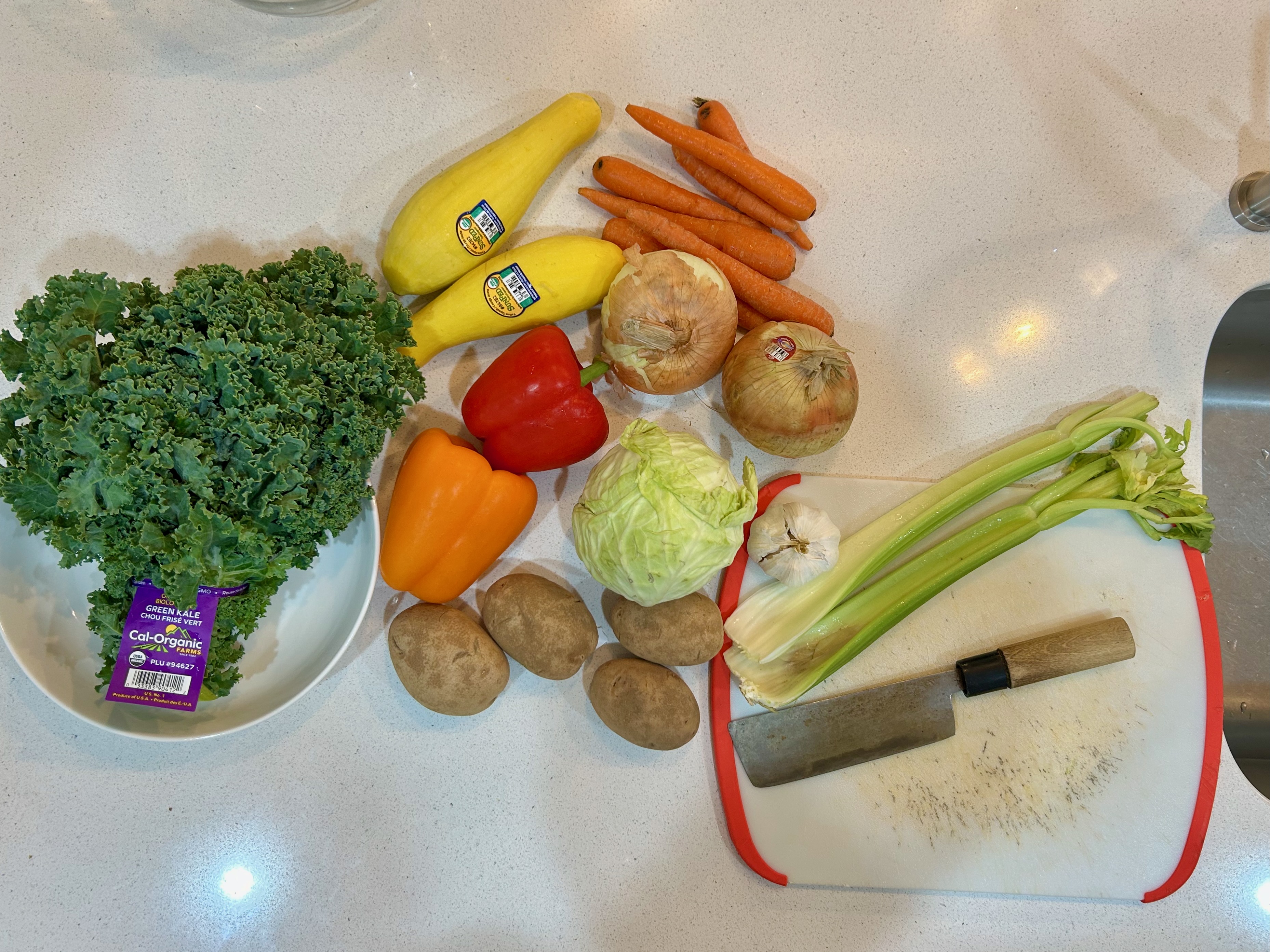
Today is going to be a soup making day, with boned chicken thighs included.
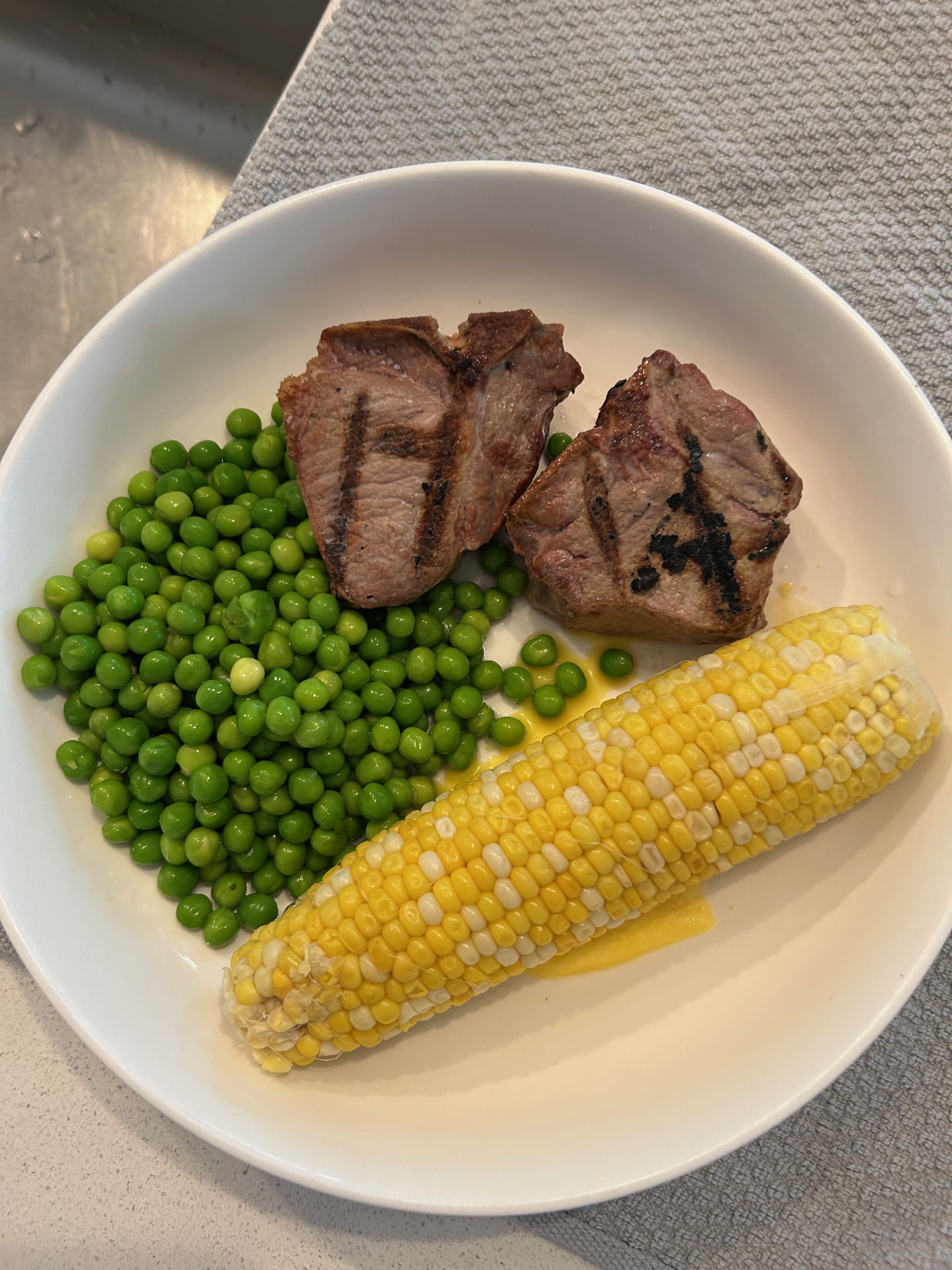
But my main meal, eaten around noon, will be the reheated lamb chops I grilled yesterday, leftover fresh corn, and frozen peas defrosted from the freezer. AND, cut up seedless watermelon and a handful of very pricey organic green grapes. And a glass of raw milk after the fruit to neutralize the acid in the fruit, which also disturbs my mouth.
Did you know that you should NOT brush your teeth after eating fruit, especially high acid fruit like citrus? The fruit acid softens the enamel on your teeth, so brushing can damage the enamel. One is told to wait 30 minutes before any brushing after fruit. Who knew????
My washing machine and dryer are singing with jobs assigned to them.
And I now have to go and…chop veggies and chicken thighs.
Have a great week everyone!
My son’s family is visiting Iceland this week. He sent back this picture the other day, taken as they did a car trip to see some special sites that included so many, many gorgeous waterfalls.
Lupines!
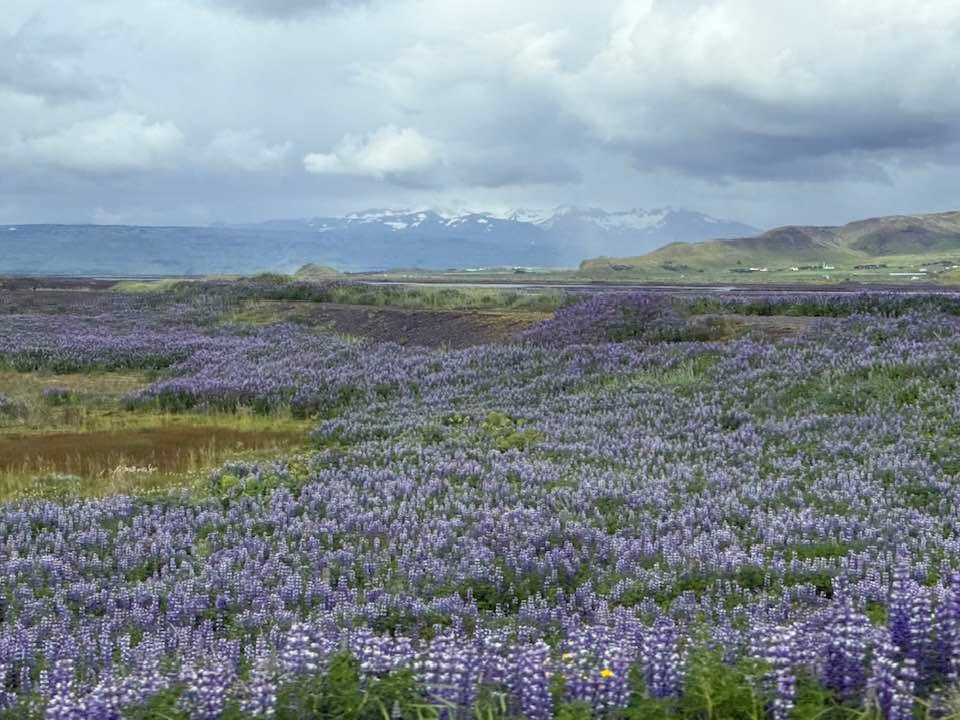
I miss the Lupines in Maine. They were spectacular in the spring.
But here in The Low Country of coastal South Carolina, we have many special plants that are also spectacular.
Nature puts on a show for us that we don’t always slow down to appreciate.
Have a good week everyone!
I’ve been busy with a BIG project outside–more on that later. But here we are with the start of another week. It has been beautiful weather here–cool, but temps will gradually rise now as July is our hottest month. And now we need rain again.
No sewing for the past 3 days–which is very unusual for me, as you know. But I’ve come inside every day tired and happy from all the physical work.
Beloved neighbor and I saw this very unusual moth on our morning walk about a week ago. Neither of us had ever seen one like this one. Beloved Neighbor took this picture.
It’s a Giant Leopard Moth.
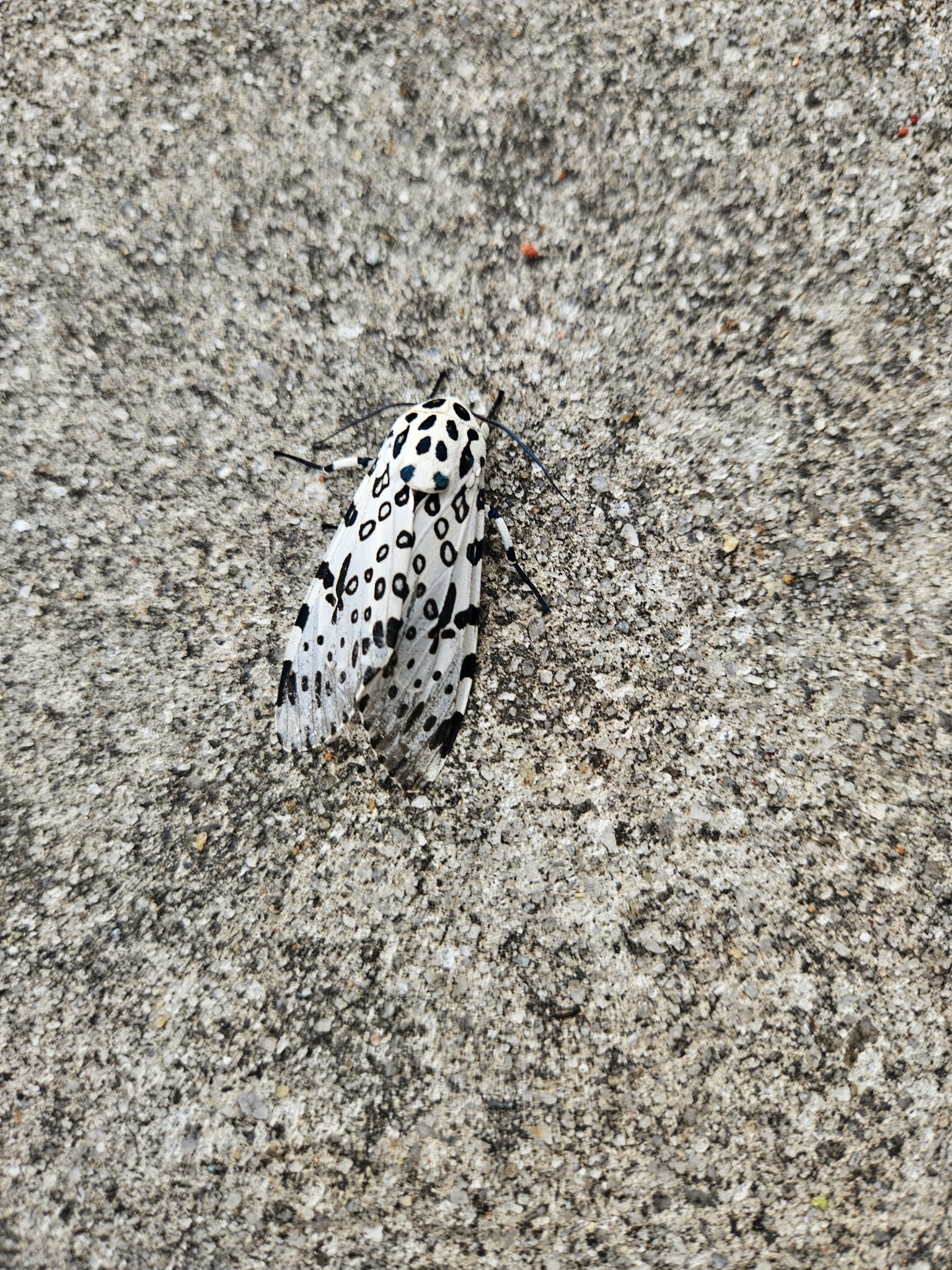
The underside is black with that rust-colored stripe. This one is small, so likely female. We think she was camouflaging on the grey of the sidewalk. But we moved her to the side anyway as we almost stepped on her.
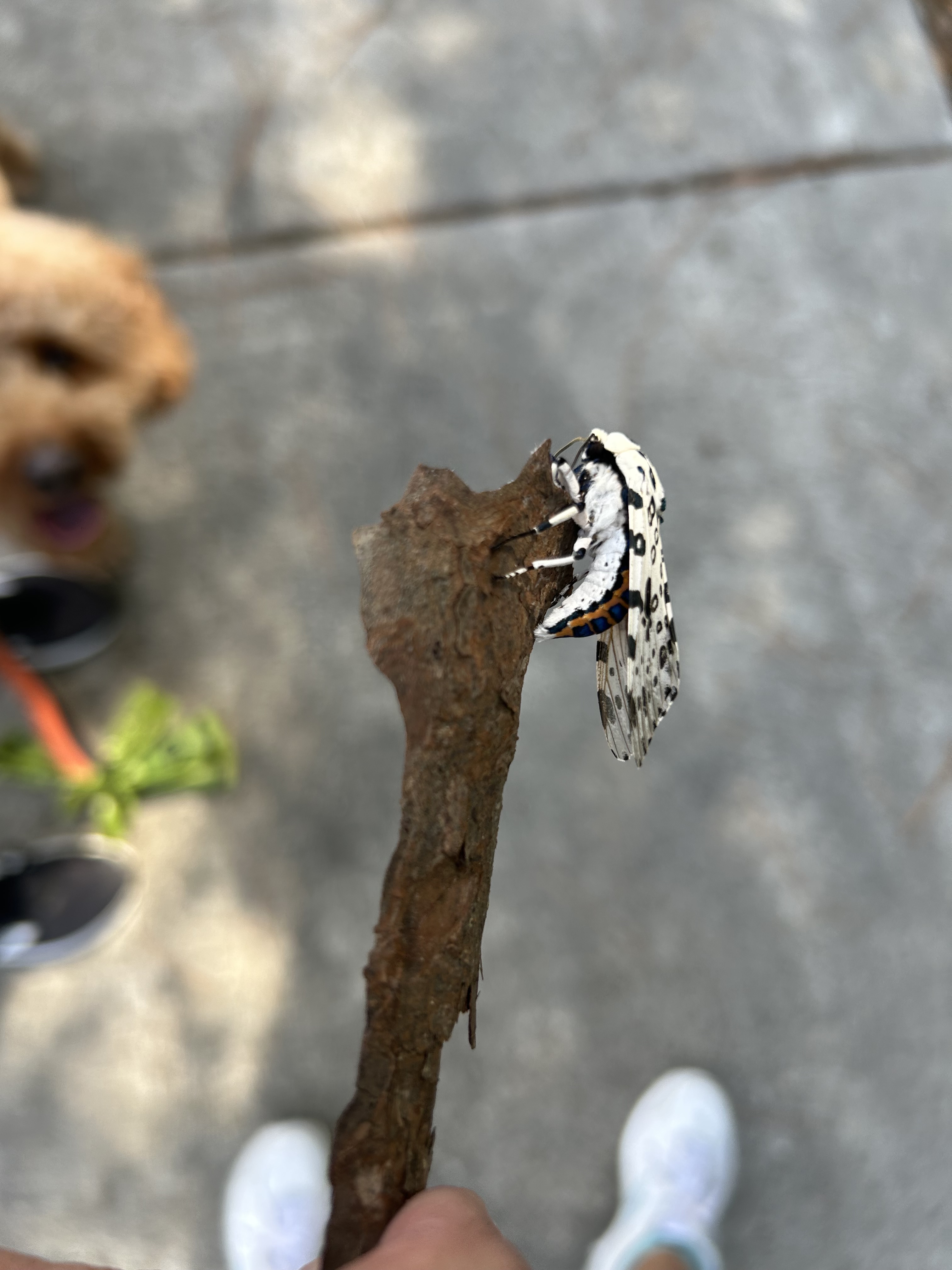
Here’s a picture I found of the caterpillar form.
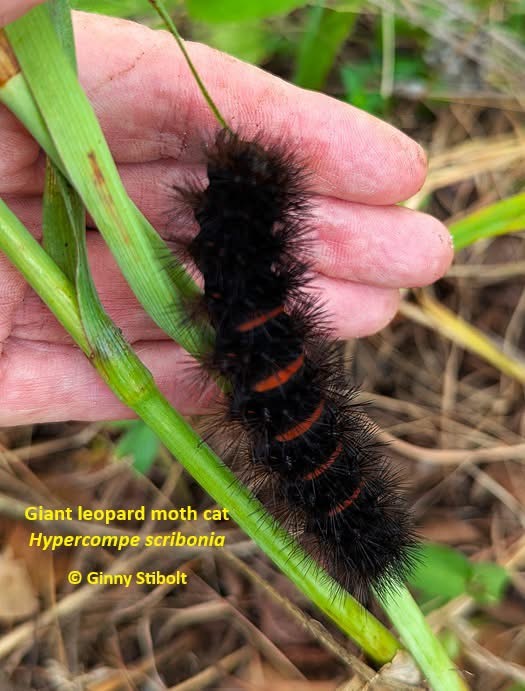
And here’s a quote about this moth on wikipedia:
“This species has a notable sexual dimorphism in size, with the adult male reaching about 51 mm (2 in) in length, while the adult female grows up to 30 mm (1.2 in). The leopard moth requires two years to complete its round of life.[5]“
And:
“The giant leopard moth (Hypercompe scribonia) is a moth of the family Erebidae. They are distributed through North America from southern Ontario, and southern and eastern United States through New England, Mexico, and south to Colombia.[2][3] The obsolete name, Ecpantheria scribonia, is still occasionally encountered.
They are known to be attracted to bitter, unripe vegetables and broccoli flowers.
This moth species has a wingspan of 76 mm (3 in). Its wings are bright white with a pattern of neat black blotches, some solid and some hollow. The overside of the abdomen is dark blue with orange markings, while the underside is white with solid black spots, and males have a narrow yellow line on the sides. Their legs have black and white bands. Adult moths are strictly nocturnal and do not generally fly before nightfall.[4]“
AND, from AI overview about “what does it mean” to see this moth:
Seeing a Giant Leopard Moth (Hypercompe scribonia) is a lucky, entirely harmless encounter. Biologically, it means you are likely near a wooded area, meadow, or garden in North America, as this nocturnal insect relies on local host plants like dandelion, cherry, and willow. 
Culturally, encountering one of these striking creatures is often interpreted as a positive spiritual or symbolic omen.”
Beloved neighbor and I have been good about walking earlier in the morning this week. We were moving along at a good pace when…wow…we both stopped short to gander…
Wow! Beautiful birds, about a dozen, lined up along the pond edge up by the schools. I had to try to take a picture over the top of the fence–and I include it here so you can get an idea of the size of this bird. They are not large.
But what are they??? I’ve never seen this bird. We started reciting what we were seeing: bright orange short bills, pink legs, swimming feet, black underneath and a warm beautiful brown on the upper body and neck.

Beloved neighbor had an ID almost as soon as we got home.
Black-bellied Whistling Ducks. What?? This one was totally new to both of us.

I found this picture of one in flight.

Here’s a link so you can read more–and there is a link to the high-pitched whistling call they make. These ducks can and do sit in trees. Truly they are very different from other ducks.
What a gift to see them on our morning walk.
https://www.allaboutbirds.org/guide/Black-bellied_Whistling-Duck/overview
Beloved neighbor and I saw this bird the other day while walking. I went home to figure out what we saw.
She’s (yes, she is female) an Anhinga, a member of the Darter family of birds as she spears her fish prey with her bill, detaches the fish by throwing it in the air, and then swallows it whole.
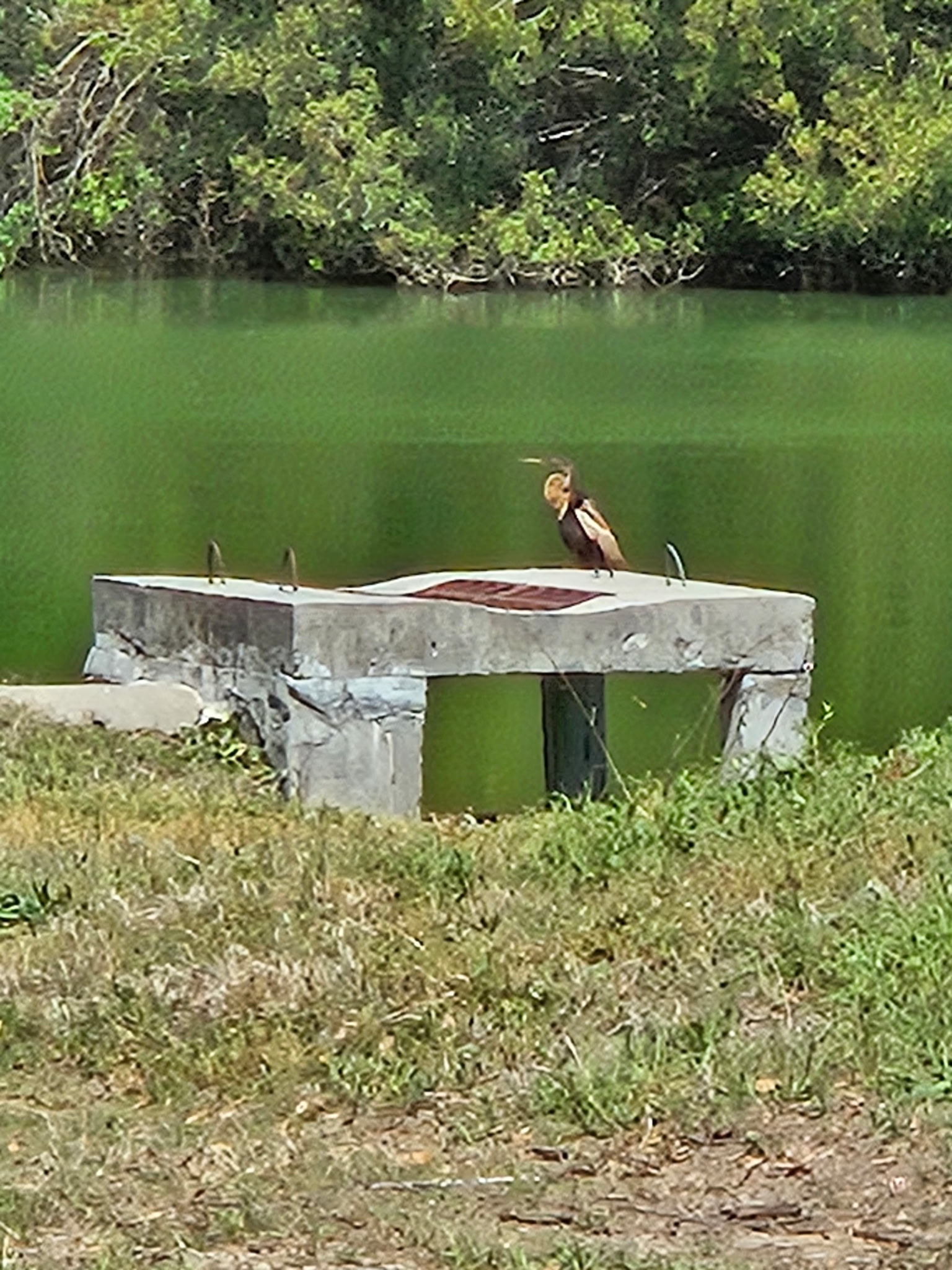
Here’s a good picture of the males and females.
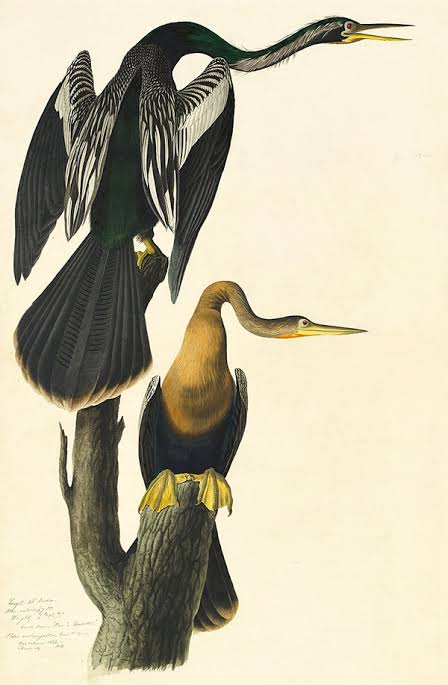
See how she swims with her body underwater?
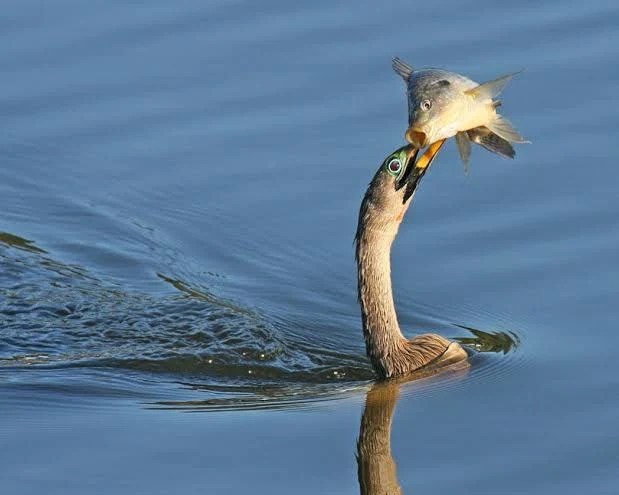
I found this really interesting video online, but can’t get the link to copy. Search for the following as the search is worth it:
Navarre’s Wild Shots on You Tube: Anhinga Facts
And here’s more information:
The Anhinga, also known as the “snakebird” or “water turkey,” is a large, dark water bird with a long, thin neck and a pointed bill, found in warm parts of the Americas. It hunts fish by spearing them underwater and swims with only its head and neck visible, which resembles a snake. After hunting, it spreads its wings to dry its waterlogged feathers, a behavior that helps it warm up and is often mistaken for a cormorant.
Appearance
Part of moving to a new region involves hearing new bird calls. And me being me, I love to find out what bird is making that call–like what calls do the Red-Shoulder Hawks that live in the trees in my neighborhood make?
It’s spring, so there are so many birds calling when I walk or when I’m just sitting on my porch. Figuring out what these birds are makes me feel like I’m more connected to my environment. Besides, I’m endlessly curious.
You can get a free app from Cornell University for your phone called MERLIN BIRD ID.
I love it.
And it allows me to identify and save bird calls it records as I walk. It’s easy to turn on when I hear birds I don’t know.
Here’s what a user posted online about this app:
“The Merlin Bird ID app (by Cornell Lab of Ornithology) is a highly recommended, free, and accurate tool for identifying birds via photos, sounds, or 5 simple questions. Its standout “Sound ID” feature acts like “Shazam for birds,” identifying species in real-time. While occasionally misidentifying sounds in noisy areas, it is an essential tool for beginners and experts. 
Merlin also can identify a bird from a picture you take. You can also save the bird calls you easily record which can remind you what each bird’s calls sound like. Or you can explore what you have not heard, like what do Blue Birds sound like? Cornell sends informational emails off and on that educate you about birds and that are fun to see and read.
I’ve already learned a lot about the local bird calls I hear in my area, and for me, at least, that is a very fun thing.
Merlin is easy!
Try it. You’ll like it.
PS: Merlin is addictive…
 Louisa Enright's Blog