Turkey Tracks: November 8, 2010
The Fall Garden
Our beautiful, beautiful fall has moved into early winter here in coastal Maine. We are still wearing our shoulder season clothes, which involves cotton fibers, but the day will come soon when we’ll be hunched over in the dry storage areas locating the bins with wool and cordoroy. We’ve had a really warm, balmy fall–which has been full of ticks–once unknown in Maine. No No Penny, who is a wood rat kind of dog, has really suffered with ticks this fall. Here is a picture John took of the wetland down the hill from our house, but somehow, other than this one picture, we didn’t get any really good pictures of this year’s spectaclarly brilliant foliage. And, this picture was taken early in the fall before the yellows really burst through. I have this picture as my screensaver for the momet.

Our garlic came from FEDCO, so I cleaned up the garden and planted it. Planting garlic is really easy. You just separate the bulb into cloves, dig a shallow trench (about 3 inches deep), put a clove about e very 4 or 5 inches, cover the cloves, and later, after a freeze, cover them with some organic matter–straw or hay. I also sprinkle azomite over my garlic bed. And, I work all year to add organic matter to the garden beds, including, now, composted chicken manure. I don’t add too much manure as too much nitrogen isn’t good for the plants. And, chicken manure is really strong. I’ve also been reading that commercial farming has really depleated our soil of magnesium, which we humans need and are not getting in our food. Since kelp and sea salt are good sources, I will pay more attention to amending with seaweed now. One clove of garlic yields a whole bulb next fall and a tasty garlic scape about May when last year’s garlic is going or gone from our stockpiles.
Cleaning up the garden involved harvesting the remaining beets and most of the carrots. I left one row to winter over, which makes the carrots really sweet. We will think about that row off and on during the winter. Here’s what came inside:

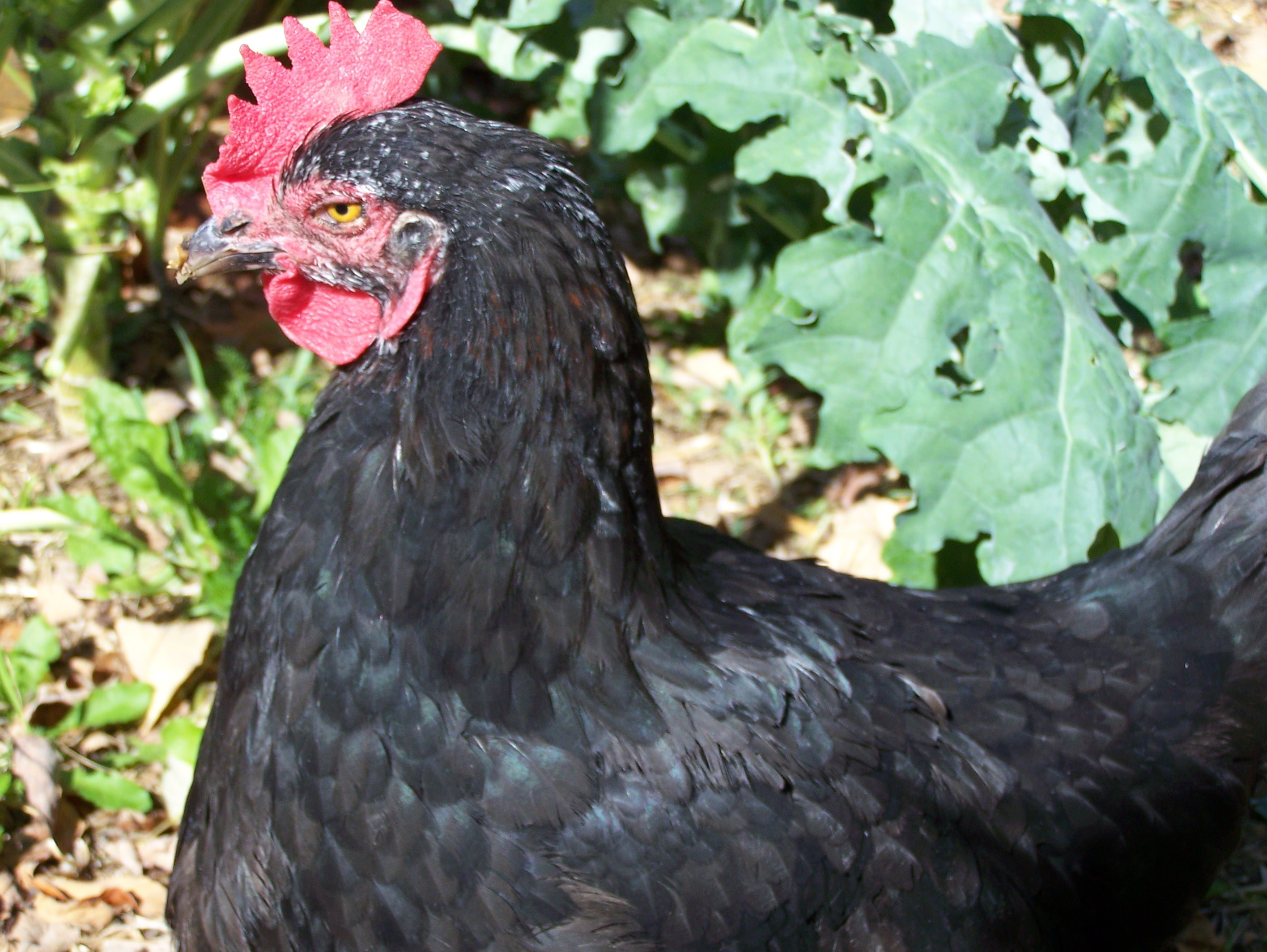
I had a great deal of help planting the garlic. I only have to appear outside and all the chickens come running. If I have a trowel (overturned dirt! worms! worms!) they stick close to me like glue. In the end, I had to put some chicken wire over the new patch to keep them from scratching at it. Here is a picture of May May sticking close. The white spots around her head are, I think, new feather quills coming in after her yearly molt. You can see the color of her comb and waddle are not as intense a red as they were in the spring. She’s two years old now, and the faded color is a sign that all the eggs she’s laid have taken a lot out of her. She will, likely, rest a bit over the winter and regain her strength. We do not plan to augment with light this winter to keep our chickens laying artificially. Nature knows best, and we people need to learn to eat what nature offers us in season. Easter is celebrated because the days grow longer, and the chickens start laying strongly again. The eggs provide much-needed nourishment after a long winter, and are nature’s plan for replenishing the flock. Look though at how healtlhy her feathers look–that’s the meat and milk–good protein sources–I give the chickens each morning. The chickens love to camouflage themselves under the big kale leaves, and they love to nibble on it too. More than once I’ve been surprised by a chicken hiding under garden plants.
KJ and Jake, from last year’s graduating class at The Community School have stayed in the area. They came and helped us winterize one Saturday. We emptied out all the flower pots and stored them away, put away all the lawn furniture (3 porches worth!), put away all the garden decorations (St. Francis, bird baths, etc.), moved the chicken coop, and got out the winter boardwalk John made just before our second winter. The boardwalk makes it easy to sweep snow from our paths–unlike the gravel path beneath, which is hard to shovel. And, the boardwalk makes it easier to walk from the house to the car. Here’s what it looks like:


Kale stays in the garden. It only gets sweeter in cold weather,and I’ve dug it out of snow banks many a time. Chard, too, will take the cold, though it is not as hardy as kale. Here’s some Lacinto kale that friend Margaret gave me last spring. Behind it is our asparagras patch, which will be three years old next spring, which means we can harvest some of it. The chard is “rainbow” chard, which I love. (Even the stems are good to eat.) I plant marigolds all over the garden as they deter many garden pests and provide polka dots of bright color in the fall.

Another task is to cut and freeze the Italian parsley. Friend Rose told me that she trims back the big stems, shoves it into a freezer baggie, and throws it into the freezer. She says it defrosts as if it’s just been picked, and she chops it up and uses it for whatever she needs at the moment.
I always think I’m done for the year and then remember something left to do. I need to layer the garden beds with straw. Margaret buys it in bulk, so I can get 5 or 6 bales from her. Right now it’s raining, so I’ll wait until it dries out a little. And, we’ll have to move the chicken coop one final time. Right now it’s right where we get a snow mountain from shoveling the back paths and porch!

 Louisa Enright's Blog