Turkey Tracks: January 11, 2011
Pomegranate Ploy, Clementine Bliss, and Bioregion Efforts
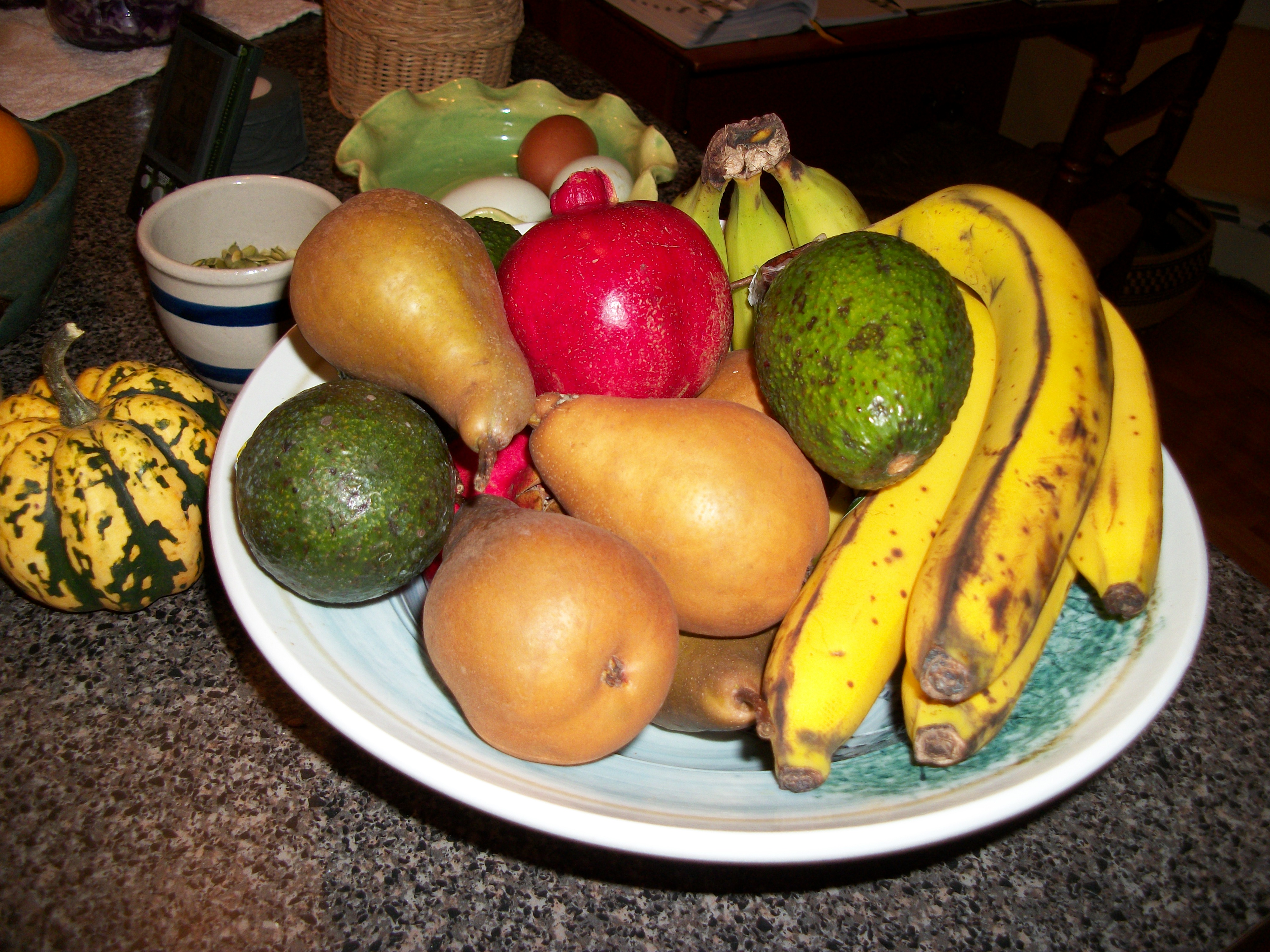
That big red fruit in the middle is a pomegranate. It’s actually a berry with seeds. It’s full of vitamins, minerals, and fiber. The seeds are delicious. About the only thing wrong with it is that the only place it can grow in the United States is California–which means I’m eating food out of my bioregion, shipped here from many miles away. Actually, pomegranates are from a really hot-weather plant that grows in the tropics and in, I think, places like the Middle East and India. Nevertheless, I buy one or two a year for the sheer pleasure of eating the seeds. They pop in the mouth, releasing a juice that I love.
For years, I didn’t know how best to clean them. It’s really easy when you know how. Just cut them in half–top to bottom–and put the halves in a large bowl or pot filled with cool water. Push the leathery back of the fruit into the center where the seeds are, while pulling at the sides. The seeds will begin to pop out, and the rind and white fibrous bits inside will float to the top where you can skim them off. When you’ve got all the seeds free and the debris scooped off, strain the seeds. I often put them on a towel to soak up excess water. They refrigerate well for some days, if they last that long. Children love this whole process.
Another fruit that is NOT in my bioregion is the clementine. And, I love them to distraction. They begin to appear in our market in mid-fall. And I cannot seem to resist buying them. They come in little wooden boxes that are a composter’s nightmare. What a waste of wood and effort. Here’s a bowl of them on the kitchen counter:

And here’s what happens to them in short order as both John and I eat them as if they were cheeries:

What else falls into the “out of my bioregion” conundrum? Avocados. Almonds. Bananas. (Enjoy those because industry reduced bananas down to one variety which now has a disease that will wipe them all out in a predicted number of years. I forget exactly why–it has something to do with establishing root stock since the plant maybe does not grow via seeds–but there isn’t much of a viable solution to the problem. Here’s a real important lesson about monoculture agriculture.) Coconuts. Dates. Olive oil. Lemons. The pears in the fruit bowl came from Washington state. As do a lot of the apples in the local, non-supermarket stores where I shop. That’s a shame because Maine has really good apples.
Mercy!
I am trying to improve how I can stick closer to my bioregion in the winter. I freeze local fruit, and my freezers are full of it. It’s so yummy in yogurt smoothies. I freeze raw apple cider when I have room. More and more of our farmers are raising winter greens in hoop houses now. Even my cold frame is full of them. Instead of olive and coconut oils, I can make better use of animal fats (chicken and duck fat, lard, tallow, and BUTTER!!!). I put up fermented cabbage (sauerkraut) which makes a little raw-food salad on the plate for us.
Here’s what a recent dinner plate looked like:

The green beans and lemon came from away, of course. I could have used my own frozen green beans, but we usually put them into soups. The sauerkraut is from the jars I showed you in an earlier blog. The butter on the beans, squash, and very-lean grass-fed sirloin steak is local and made from real cream (not pasteurized). Our bodies need fat to process lean meat. If you don’t supply the fat, your body will have to pull its own enzymes to process the lean meat, which robs the body of needed nutrients. The squash was locally grown and was delicious.
So, I’ve gotten this meal at least half-way into my bioregion. It’s a start.
What I absolutely refuse to buy is any produce coming from outside the United States. Right now there are all sorts of fruits and vegetables in our markets from far-flung places like Israel and the Phillipines. That carbon footprint is way to deep for me. And, I’m highly suspicious about the quality of that food anyway. That kind of food makes the Florida and West Coast food seem a little more appealing.
But, in the end, I want to support our local farmers. I want to create an interdependence in my own community as much as I can, because I do believe that the days are numbered when we can afford (in many more ways than just our pocketbooks) a food system that ships food all over the country and the world.
Now I understand why my mother talked about the joy of getting an orange or some almonds in her Christmas stocking.
 Louisa Enright's Blog
