Turkey Tracks: January 18,, 2012
Cheryl Wixson’s Kitchen CSA Postscript
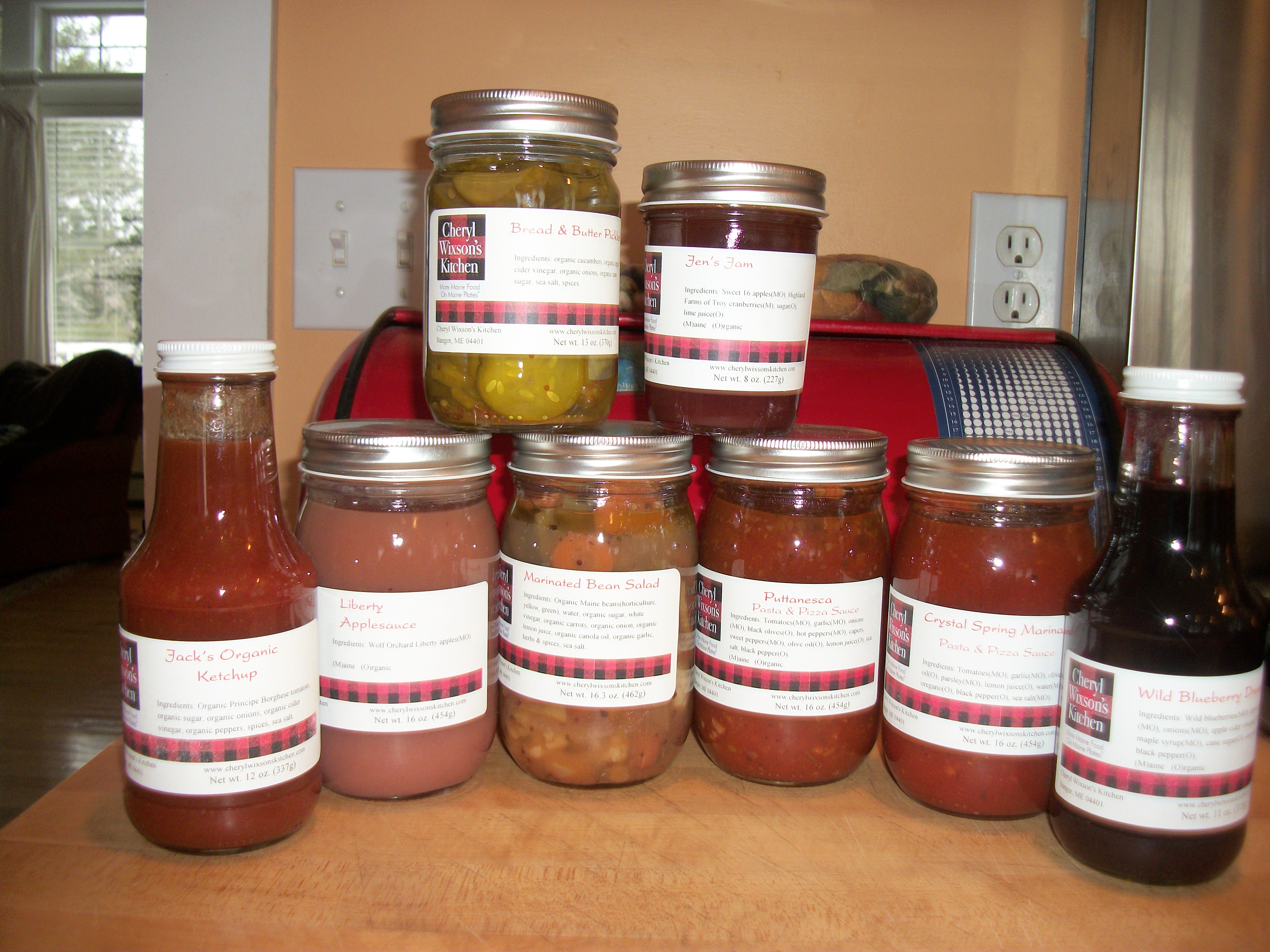
Here’s our January CSA order:

How Cool is THIS!
Turkey Tracks: January 18,, 2012
Cheryl Wixson’s Kitchen CSA Postscript
Here’s our January CSA order:
How Cool is THIS!
Turkey Tracks: January 18, 2012
Blue Tango Quilt
To continue my scrappy quilting saga and the using up of cut scraps…
At least four years ago, for a Coastal Quilters’ program, I made a set of blocks to illustrate “how to make” and the versatility of half-square triangle blocks. On the “how to make” side, I can tell you I learned early on from my Virginia quilting buddies to cut the light/dark squares you’re going to layer a bit bigger–as much as a half-inch bigger–layer the blocks, draw a line down the center diagonal, sew a quarter-inch from the center line on each side, and cut apart your blocks on the center line, press, and trim them to exact size.
At the meeting, people could place the blocks into a design on the portable design wall we had set up. There are, literally, dozens of beautiful combinations. I took those blocks, added to them, and made one of my favorite designs:
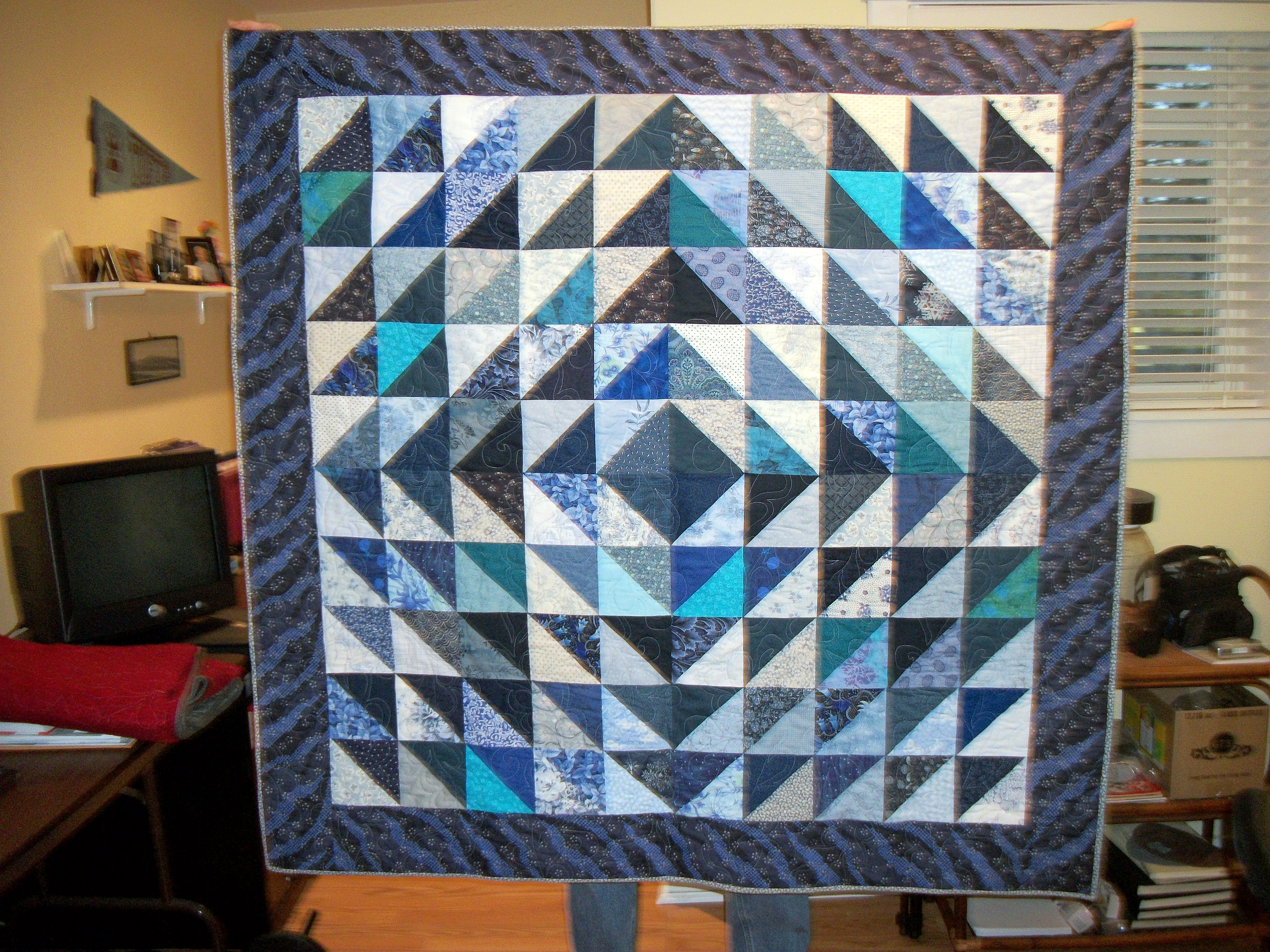
I called this quilt Blue Tango.
I had a large piece of fabric that has been in the stash for years and years that worked perfectly for both the border and the backing. I really like the very lively movement it brings to the quilt. And, here’s another light binding–something different for me as I tend toward dark bindings.
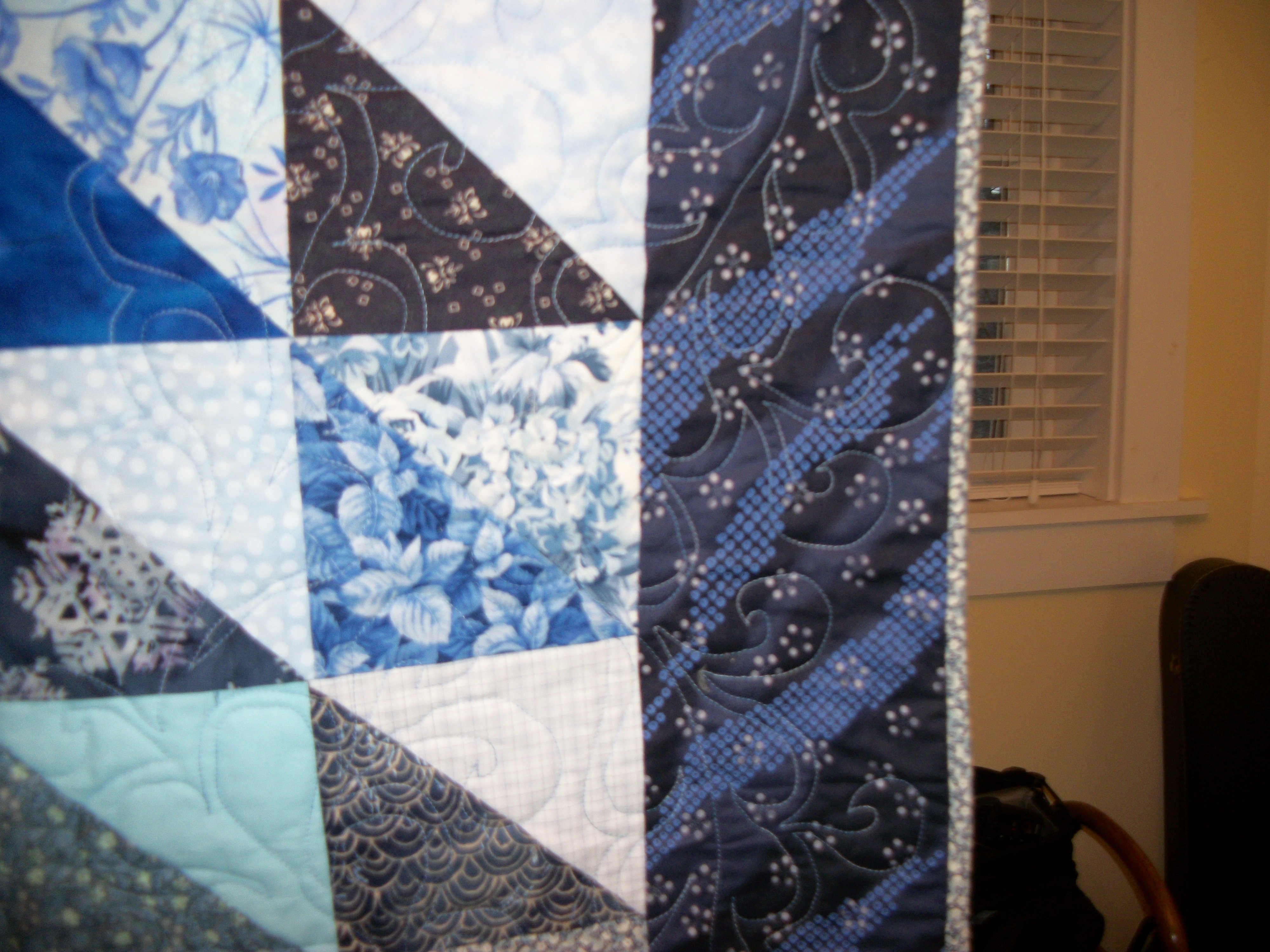
I quilted Blue Tango with the “Chocolate Feather” pantograph. I’m getting slightly better, but learning to have complete control with the machine while using a pantograph is still hard, and it’s been nice to have all these quilts to practice on.

I’m going out today to get backings for four quilt tops that are finished or nearly finished. How fun is that?
Interesting Information: January 18, 2012
Pepperidge Farm Hot Dog Buns
I bought a package of Pepperidge Farm hot dog buns when Mike and family were here in mid December. I found the leftovers yesterday–the package had fallen behind a straw basket filled with onions that sits in the front of the cabinet. The expiration date said December 18. They were still good. Still plump, soft, pristine… No sign of mold. No sign of decay of any kind. Hot dog bun Twinkies.
I’d put in a picture to prove it, but I immediately threw them in the trash–which went out to the garage this morning.
Mercy!
Turkey Tracks: January 17, 2012
Rose’s Pretty Eggs
Rose Thomas has the prettiest eggs in the whole world.
I got some over Christmas as our own flock was mostly resting and as Mike, Tami, and the four kiddos were coming.
Here’s what one sees when one opens one of Rose’s egg cartons:

The really dark brown egg is from a Copper Black Maran. The white egg on the far left is from a Barbanter. The blue eggs are from Americaunas. The rosy tan eggs are from Red Sex-Links or Freedom Rangers. I’m not sure what the other darker brown eggs are from–maybe Marans who are not painting so dark. And, that little olive egg on the far lower right is from a Cooper Black Maran and Americauna cross.
They’re like Easter Eggs, right?
And the yolk color is a deep, amazing orange.
Rose feeds organic feed grown and sold in Maine–which has some soy–since she has a big flock–but she supplements with milk when she can get it, seaweed, whole grains, greens from her hoop houses, and household leftovers, including meat and fat. On cold winter mornings, she takes her flock some warm mash–made from grains.
Please Maine farmers, grow and mix us some feed that is SOY FREE!
With a small flock, I can mix my own whole grains–and there is a good recipe elsewhere on this blog–but those with larger flocks cannot afford to do that.
Turkey Tracks: January 17, 2010
Pearl’s First Egg
Pearl was born in early May. Rose Thomas hatched about 40 “blue egg” chickens in incubators. Among the batch were some pure Wheaten Americaunas, and Pearl was one of those. Rose gave her to me in late summer when we decided she was big enough to leave home. She was part of the young flock–including the Copper Black Marans from Georgia that Rose raised for both of us–I put together in late summer and early fall.
Pearl became the “low man on the totem pole” in the flock. She was the most timid and the last to meld with the group. She was very attached to me, and whenever I came outside–once I let the flock free range for the fall and winter–she found me and stayed right with me, talking away all the while. Here’s a picture of Pearl–she’s the tan chicken standing in front of the raspberries next to Rosie, a Copper Black Maran, and Pierre, the new, young rooster, also a CBM:

By early December Pearl was at least seven months old and had not yet layed an egg. Our two other Wheatens were molting, so we had had no pretty blue eggs for some months.
One early morning a day or so before Mike, Tami, and the four kiddos came for two weeks in mid-December, Pearl flew up from the ground and landed on my shoulder as I was standing in front of the coop. I picked her up, loved on her a bit, and put her down. Later that day she laid her first egg–on the mat in front of the back, kitchen door.
Here it is:

Pearl is laying regularly now, still comes to greet me in these cold mornings, and seems more comfortable with the whole flock.
Turkey Tracks: January 17, 2011
Cheryl Wixson’s Kitchen CSA
We have a new CSA: Cheryl Wixson’s Kitchen.
Cheryl is dedicated to making foods from locally grown, organic ingredients. And, she’s associated with MOFGA–the Maine Organic Farmers’ and Growers’ Association. I will get eight jars, each filled with something wonderful, as you can see below.
I’m picking up our first order later today, I hope. Driving to Belfast today to the COOP will depend on whether or not it stops snowing. Not to worry though. The COOP will hold the order until I get there.
Here’s a description of what I’ll be getting this month:
CSA NEWSLETTER
JANUARY 2012
WHAT’S IN YOUR SHARE THIS MONTH
CRYSTAL SPRING MARINARA Pasta & Pizza Sauce: Crystal Spring Community Farm is a certified organic farm located in Brunswick. The farm does a large summer CSA in the Portland and Brunswick area. Seth Kroeck was one of the first farmers I visited when I started my work for MOFGA six years ago. When Seth attended one of my Farm Food Safety workshops in early April last year, and told me that he would have some extra capacity in sweet bell peppers, we were really excited. As it turns out, in addition to peppers, we were able to purchase sweet onions, jalapeño peppers, and Genovese basil. Then one day, Seth called to see if we needed more tomatoes. Seems that he had grown one variety in his hoop house that was quite prolific…we were fortunate to receive over 2000 pounds. When cooking down these tomatoes, we decided to make them into a single variety sauce. Crystal Spring Marinara is crafted in true Italian fashion. The garlic is sautéed in olive oil until fragrant, and then the tomato puree, herbs and seasonings are cooked until the sauce becomes thick. We love the fresh tomato taste of this sauce, and hope you will also! And the good news is, next year, Seth will be growing even more food for us…we’re meeting soon to talk about varieties and quantities…go Maine farmers!
PUTTANESCA Pasta & Pizza Sauce: We’re getting lots of feedback on this spicy, olive-laced sauce, and it appears to be a love-hate relationship. Puttanesca is supposed to be hot and spicy, but some folks don’t care for that much kick. If your family falls in this category, try using it as a pizza sauce, and spread it lightly over the dough. The cheese on the pizza mellows the flavor of the sauce. Or if you’d like, let us know, and we can swap it out for another variety. Besides a sauce for pasta, Puttanesca goes great over chicken, and adds kick to black beans and beef. For our vegetarian friends, try Puttanesca with portabello mushrooms…nice and meaty!
MARINATED BEAN SALAD: Looking for a serving of vegetables in a jar? Marinated Bean salad fits the bill! In this “pickled” vegetable creation, we use horticulture beans and yellow beans from Horsepower Farm in Penobscot, green beans from Peacemeal Farm in Dixmont, carrots from Snakeroot organic Farm, garlic from Green Garden Farm in St. Albans, onions from Crystal Spring Community Farm, and cauliflower from Kousky Farm. The vegetables are cooked slightly in the brine, and then refrigerated overnight so the flavors can marry. Then we return the mixture to the kettle, bring it to a boil, and bottle it. I’ve been making this salad on a home basis for years, and my family loves it. When I’m pressed for time, this is a quick and easy vegetable. It also is great to take on a picnic, and makes a nice complement to bread and cheese.
LIBERTY APPLESAUCE: The Liberty variety of apple is often cited as one of the best recently developed “disease-resistant” varieties grown in the Northeast. It was developed in New York in 1978, and has a complex parentage that includes Rome Beauty, Jersey Black, McIntosh, Wealthy, and M. floribunda. Wow! Try keeping that lineage straight! We find that it makes into a tart sauce, some may like to sweeten it a bit with maple syrup or sugar. We eat it right from the jar, and cook with it. Your Liberty apples were organically grown by Howard Wulf from Unity. Howard’s orchards are works of art, and he is extremely interested in your feedback on his apple varieties. Thanks to folks like Howard, we can enjoy apples in Maine year round. Go Maine farmers!
BREAD & BUTTER PICKLES: Back by popular demand, some folks have told us they eat a whole jar of these pickles in one sitting! This is the last of these classic pickles, but we will do lots more next year. Can’t live without them? Call the kitchen and get on the case list for next year.
WILD BLUEBERRY DRESSING: Maine organic wild blueberries are packed with antioxidants, vitamins and minerals…they are a super fruit! Our wild blueberries come from the Blue Hill Berry Company. Owners Nicolas Lindholm and his wife Ruth Fiske also grow certified organic vegetables on Hackmatack Farm in Penobscot. In this salad dressing and marinade, we cook organic wild blueberries with onions and extract a puree. This puree is then slowly simmered with organic cider vinegar from Sewall Orchard, Rabbit Hill organic apple juice, and Kinney Farm organic maple syrup. Wild Blueberry Dressing is vegan and fat free. Mix it with olive oil to make a salad dressing, or use it straight from the bottle. We like it on a Spinach, Goat Cheese and Fruit salad. Marinate chicken or pork tenderloin in Wild Blueberry dressing, or for a treat, make Duck Breast with Wild Blueberry Dressing. Be creative and please share your ideas with us!
JACK’S ORGANIC KETCHUP: Our signature product, Jack’s Organic Ketchup is made exclusively from one tomato: the Italian heirloom Principe Borghese. These tiny, almost cherry-sized tomatoes, are high in natural sugars and are traditionally dried. Our tomatoes were grown on Green Garden Farm in St. Albans by Allen Reynolds and Jose Vega. It takes over two pounds of tomatoes to make one jar of sauce, and Allen and Jose will both attest to the fact that these little guys are not easy to pick! Because the tomatoes are so high in natural sugar, we add very little sugar to the ketchup, less than 5 grams per serving. And yes President Reagan, Jack’s Organic Ketchup can qualify as a “vegetable”! Try a meal of Cheryl’s Sloppy Joe’s made with Jack’s Organic Ketchup.
JEN’S APPLE CRANBERRY JAM: The inspiration for this jam comes from my sister Jen. Early this fall, she gave us a box of bright, red cranberries harvested from Highland Farms of Troy, the farms she and her husband Stan own. As we were cooking up a batch of sweet sixteen apples, the idea of a jam that combined the tartness of cranberries with the sweetness of apples was born. The texture of this jam, like our others, is smooth, almost like a butter. We cook the fruit in the kettle, and then extract the seeds, skins and stems. The extract is then returned to the kettle and slowly simmered with organic cane sugar. As we don’t use pectin in our jams, the natural sugars and flavors of the fruit are much more intense. We hope you enjoy Jen’s Jam! Try it on dessert pizza, spooned over vanilla ice cream, or in Orange Goat Cheese Danish.
.
Turkey Tracks: January 16, 2012
Happy New Year!
Happy Quilting!
Happy New Year!
This post is the first post of 2012.
The first two weeks of 2012 have been a period of intense creativity which has taken the form of quilting madness. Thus, no computer work, no columns written, no blog posts, no fancy cooking. Just quilting and maintenance tasks like laundry and feeding us and the animals.
I’ve noticed that I have a habit of reorganizing in the quilt room in January. Two years ago I sorted books, moved the room around, and went through bins of supplies. Last year I reorganized my stash–recoloring, refolding, pulling out small pieces, and so forth. This year I went to scrappy heaven–after days of cutting up the unruly pile of fabrics that were not big enough to “file” in the stash.

Since I first started quilting in earnest in 1999, I have been cutting up leftover scraps into what I thought might be useable future pieces–starting with the biggest square I could get–6 inches. The sizes went down from there to 2-inch squares, to 3 1/2 by 2-inch rectangles, to 1 1/2 inch strips. I now have BAGS of cut scraps, and this year, I pulled them out and started piecing, sorting, and piecing some more. I’ve completely finished and quilted two quilts, have 2 other tops ready for backings that I need to purchase since I don’t have anything quite right in the stash, have a quilt pieced on the design wall, and can see 3 or 4 quilts still in the scraps which have now been sorted by color.
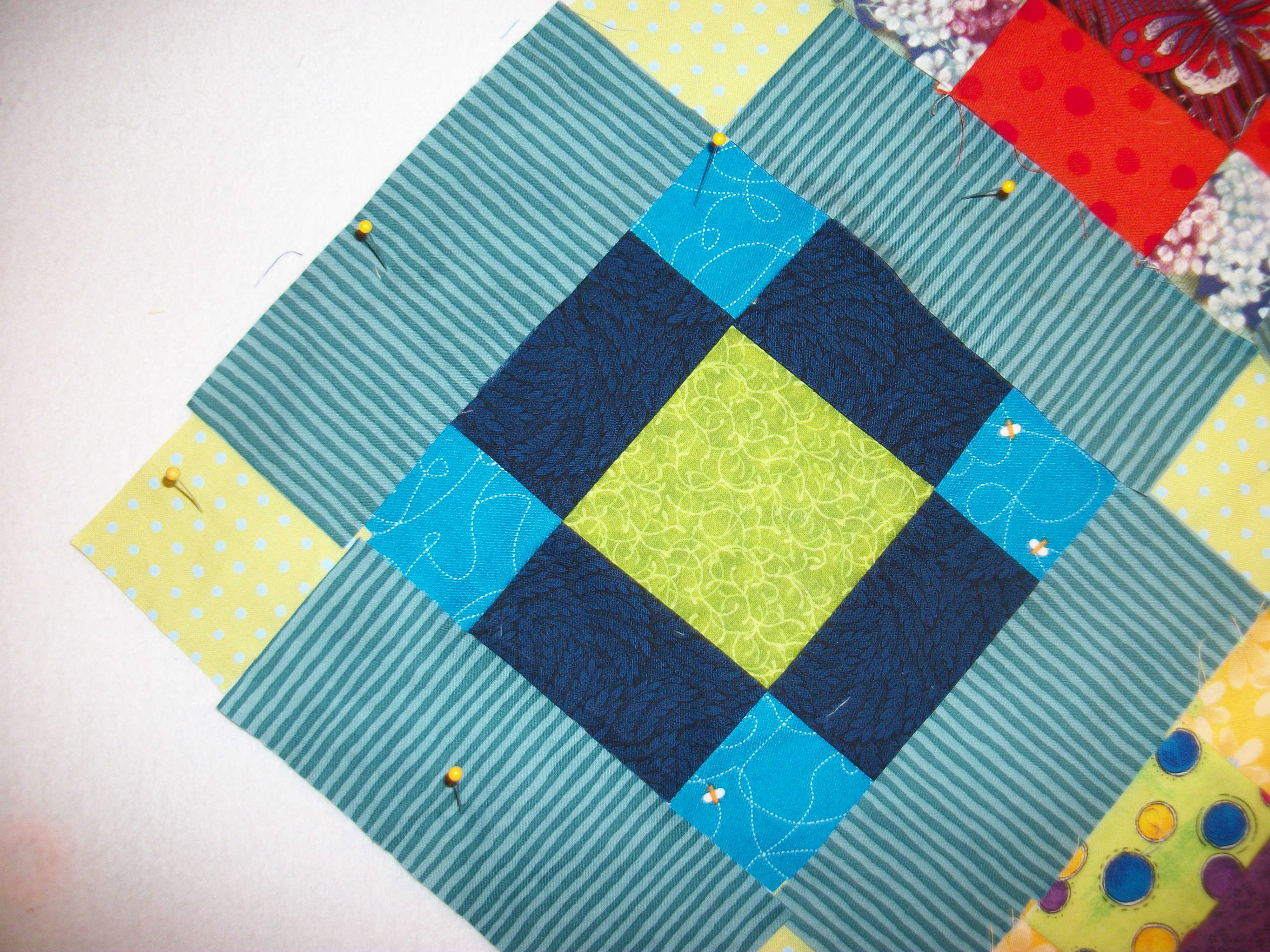
Along the way I’ve realized that from now on I’ll probably just cut 5-inch squares, 3 1/2-inch squares, 2-inch squares, 2 by 3 1/2-inch rectangles, and the 1 1/2-inch strips. The 3 1/2-inch squares, 2-inch squares, and the rectangles can be combined in all sorts of ways to make interesting blocks.

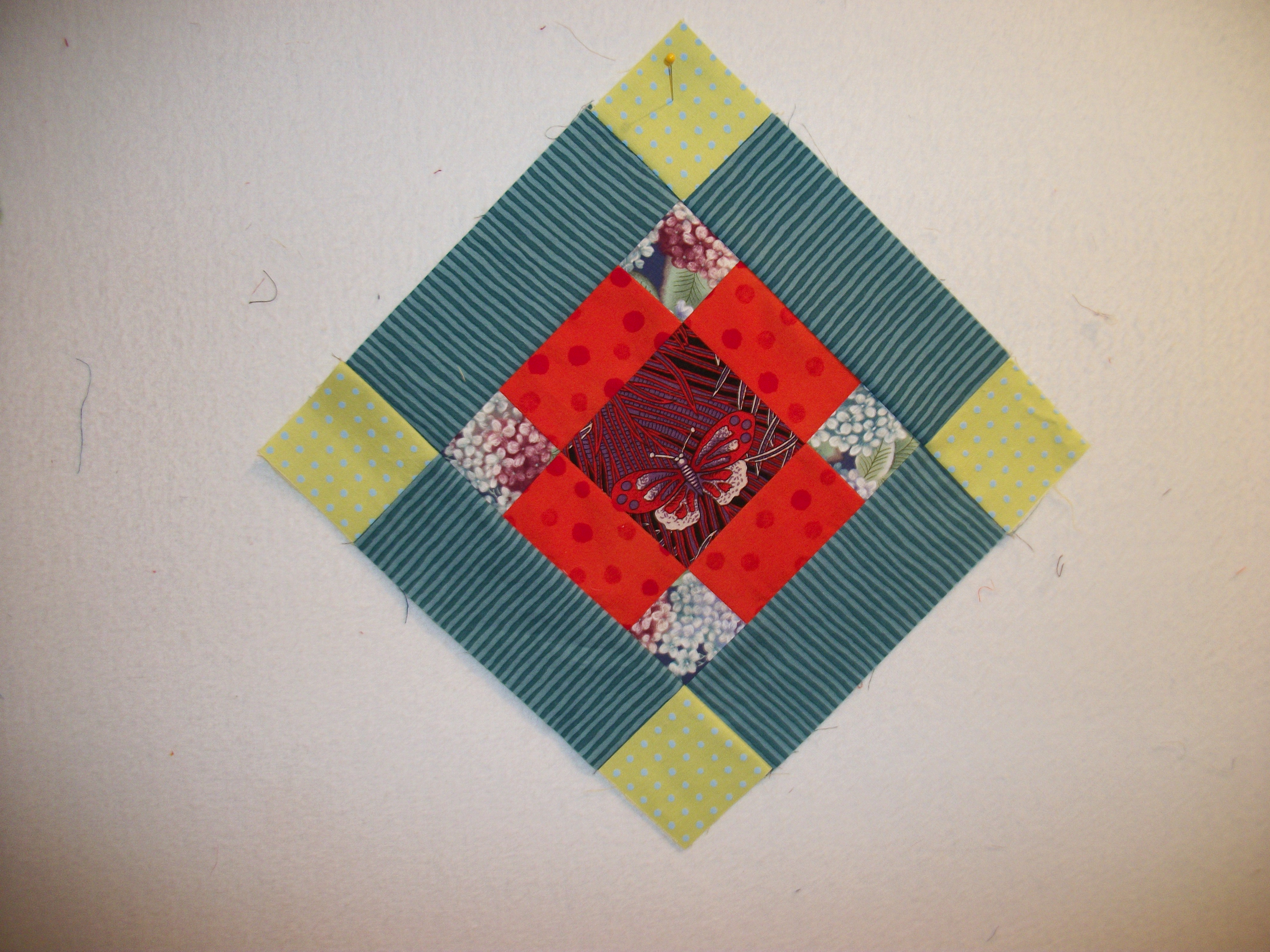
For instance, here’s a block made from this combo–set inside a striped fabric that helps control the wild blocks:
And I really love this one where the center is made with leftover 3 1/2-inch blocks from an earlier quilt:
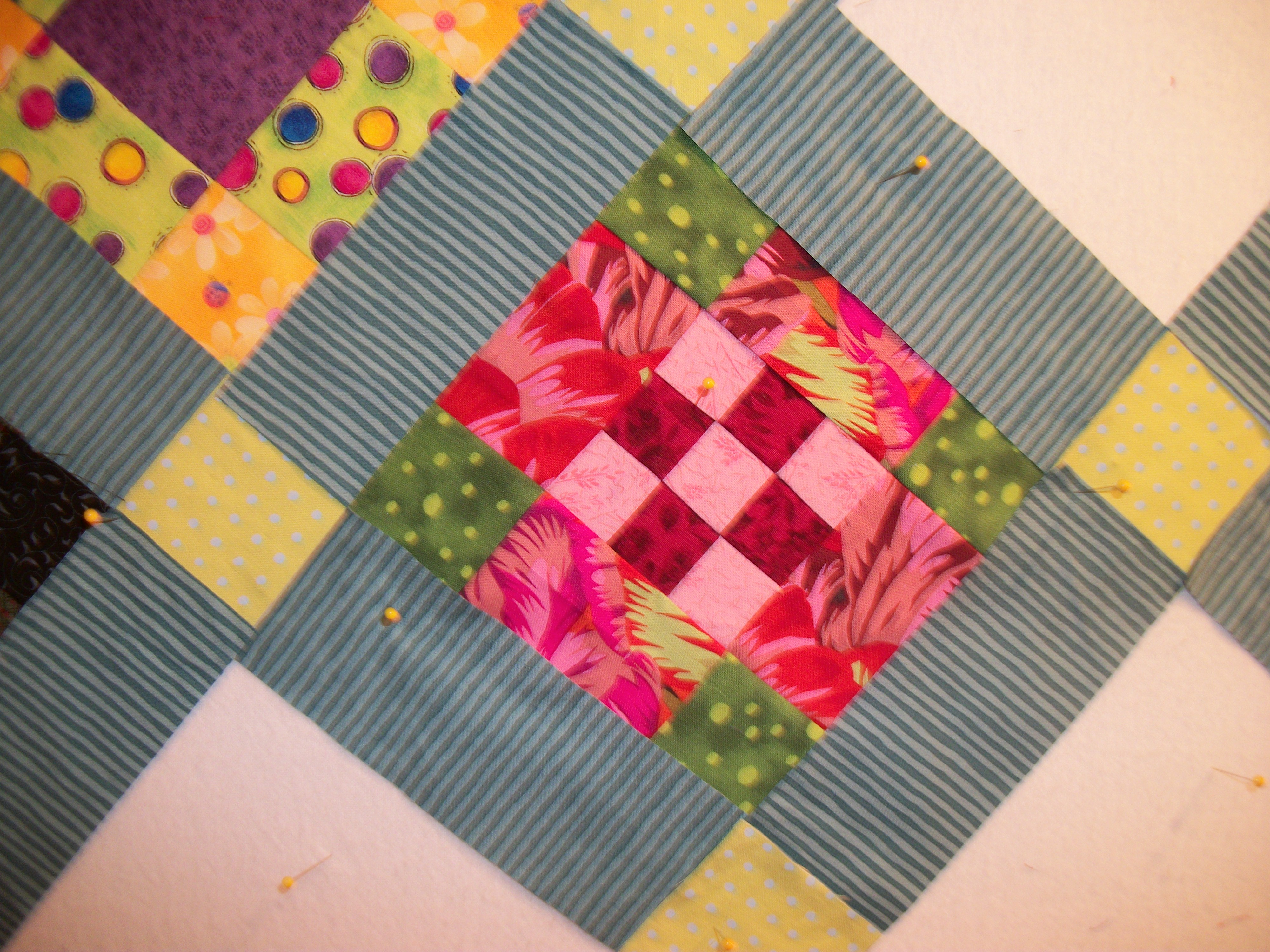
I first chose a different surrounding stripe, but it didn’t play nicely with all the blocks. But, not to worry, I’ve got LOTS of purple, blue, and green fabrics in my stash–so here’s another quilt from the scraps that will be really pretty.
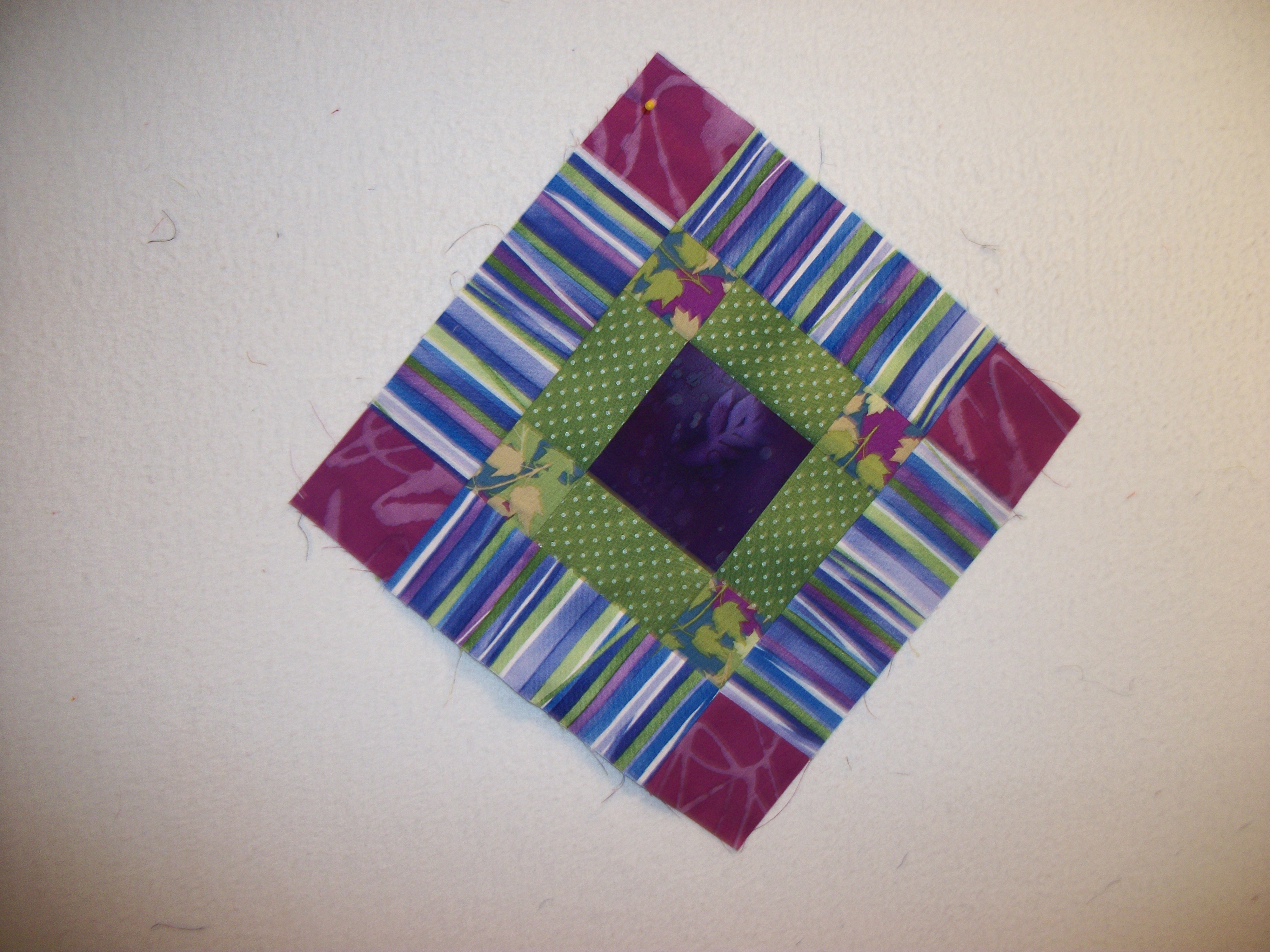
I particularly loved this block and started seeing them all set on-point:
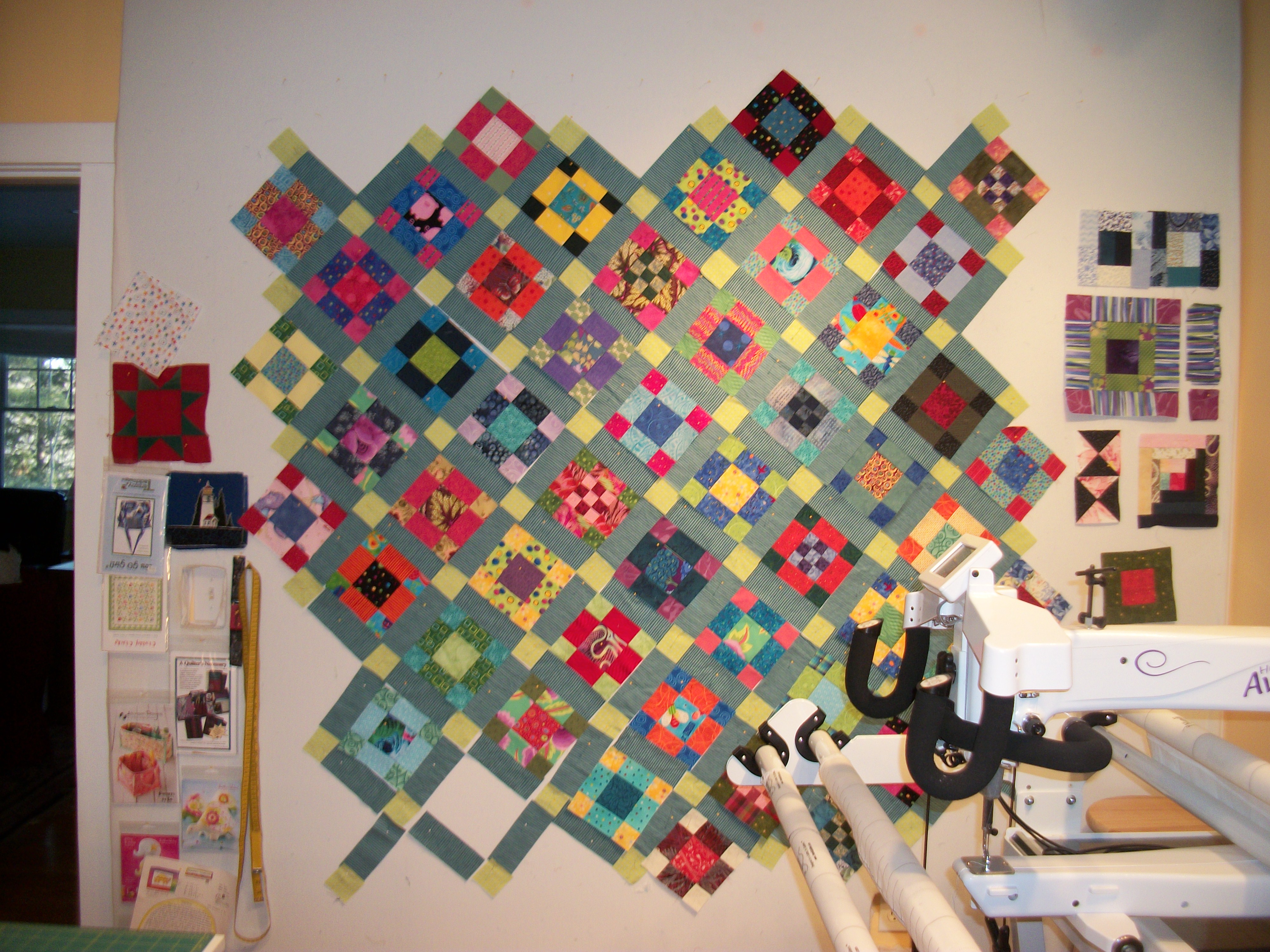
Here’s how this wild, colorful quilt is shaping up–the outer blocks will be trimmed just beyond their centers to square the whole thing up:
The rectangles alone can be used in all sorts of ways. Here’s one example with blue rectangles and an alternating light and dark center/edge:
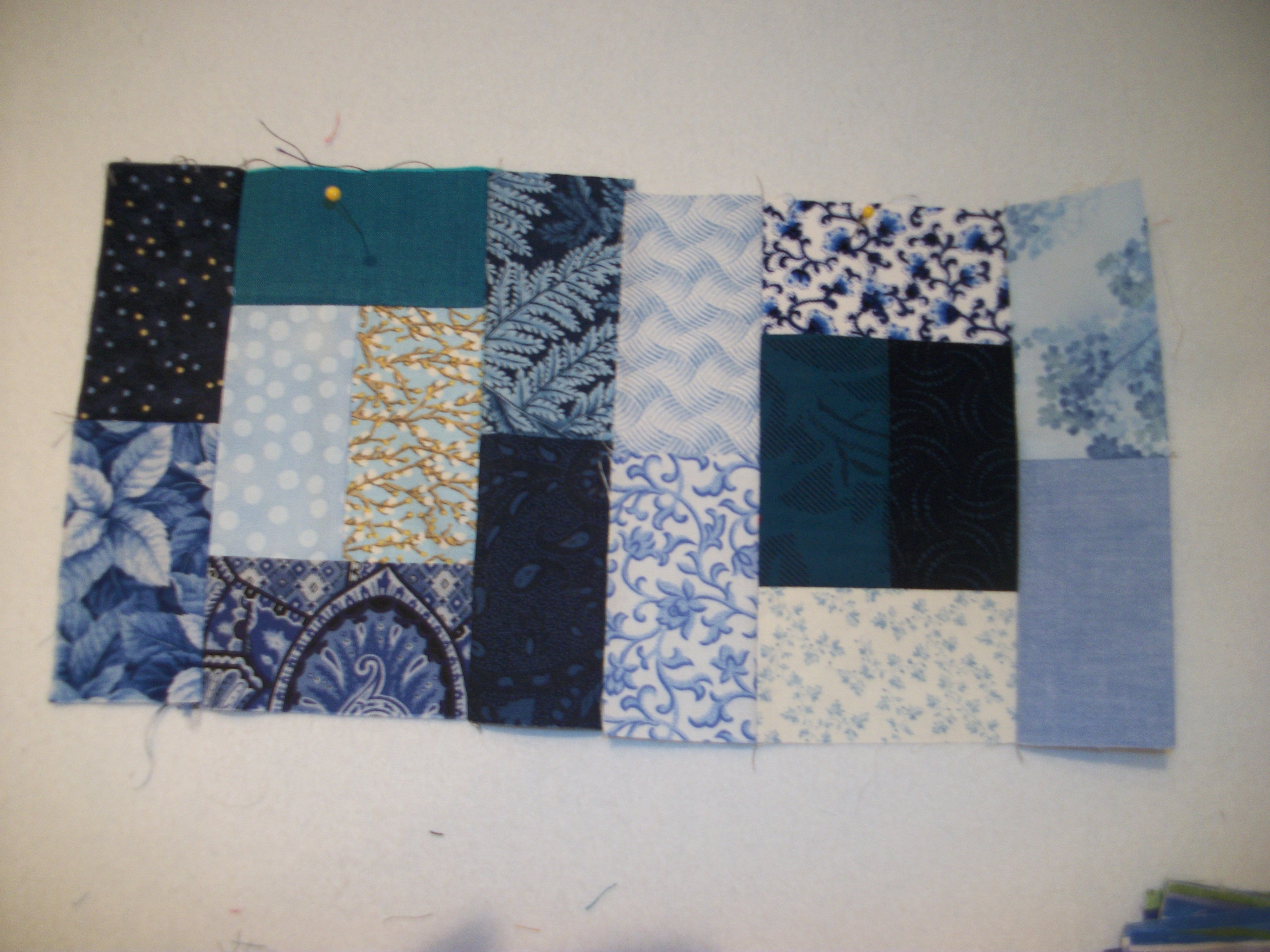
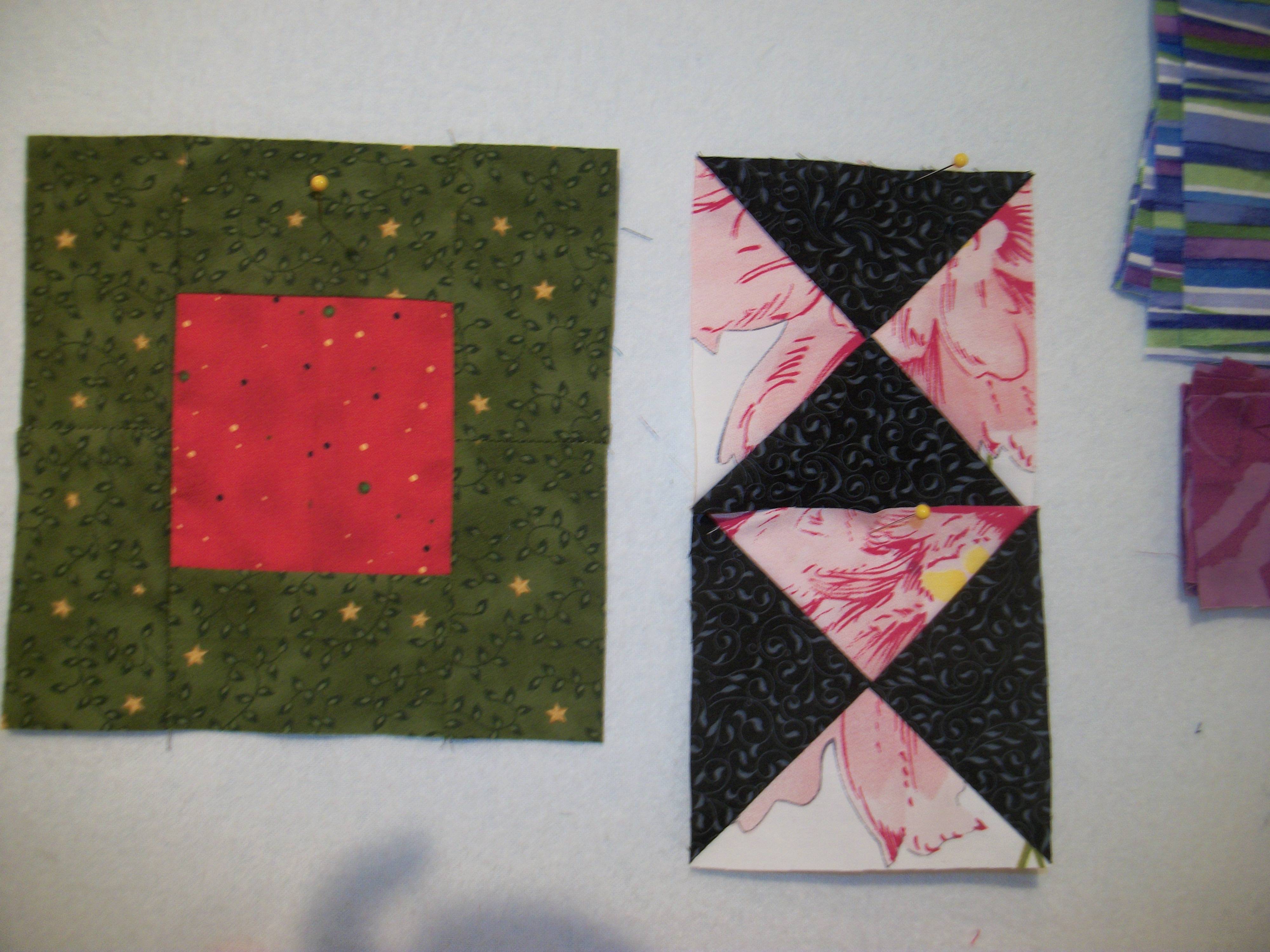
The center of this block can be either 2 rectangles or one 3 1/2-inch square. The pink and black blocks on the right are the Broken Dishes pattern made from 5-inch light and dark squares. The 5-inch square finished to 4 inches trimmed. (I always cut slightly larger for ANY half-square type block and trim to size since I have never in my life sewed perfectly enough to make the measurements come out correctly.)
One of the completed quilts is made from the BAGS of 2-inch squares. I’ll show it and one made from 5-inch half-square triangle blocks separately in another post. And another top is a La La Log Cabin version made from the 1 1/2-inch strips–also to be shown separately. And there is a rather nice blue and white quilt made from leftover blue and white blocks from earlier projects–I have yet to take a picture of it.
And so, 2012 begins!!
 Louisa Enright's Blog