Turkey Tracks: April 30, 2012
The Flopsy Bunnies Quilt
Two years ago when I was in Williamsburg with my dearly beloved quilt buddies who live in Virginia, on our last day, I bought some adorable Peter Rabbit-type fabrics from a local quilt store–whose name I am not going to recall. (But if you are in Williamsburg, it’s near the college, and it’s very nice.) The panels were meant to be made into fabric books. They tell a story. But, I thought them perfect for baby quilts. I bought two sets, and each had a panel, some border fabric, and some backing fabric. Quick quilts, I thought. Ha!
So, when my niece, Lauren Howser Black, got close to having her baby, Owen Wallace Black, born in mid April, I pulled out one set and started to work. These fabrics had beautiful border prints. Only, I didn’t buy enough of them to go all the way around the blocks. And, when I cut the panel into separate blocks, I had some narrow borders where the pages would have joined. So, I had to make the blocks a bit larger by adding an additional border. It’s the cream fabric.
I found a gorgeous paisley fabric in my stash that was so interesting with the blocks. And, another stash print worked well with the paisley as sashing blocks and as an outer border.
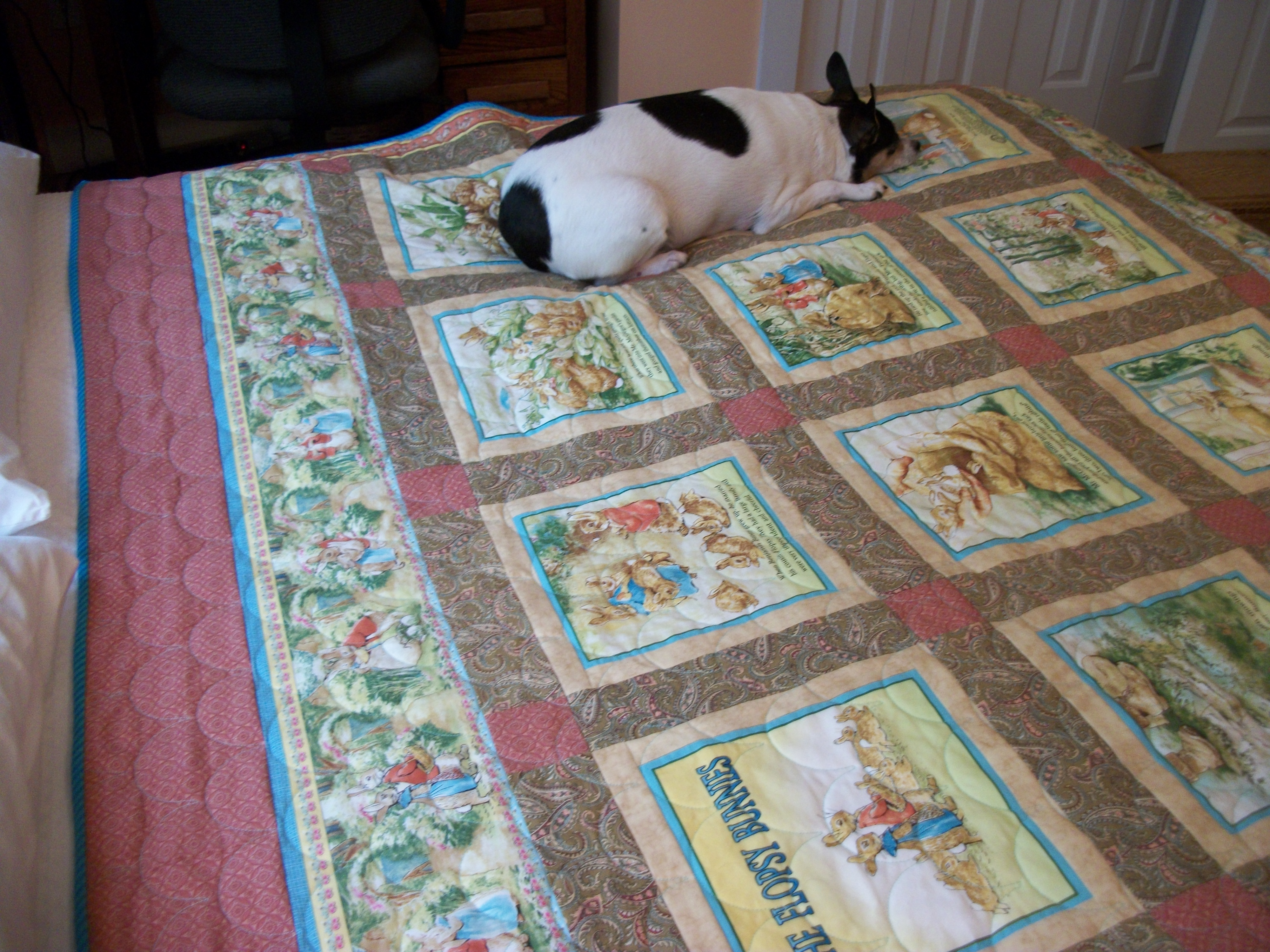
Anyway, here’s the quilt that got mailed to baby Owen this past week. (Sorry for the overexposed picture.)

Here’s another view:
[I don’t know why The Beauty Queen (aka as Miss Reynolds Georgia) wanted her picture taken with this quilt. But, she clearly did. I could not dislodge her as she ran from one end of the bed to the other when I suggested she remove herself. I can tell you she missed the grandchildren and that she loves babies. Maybe she was putting her own special energy into this quilt.]
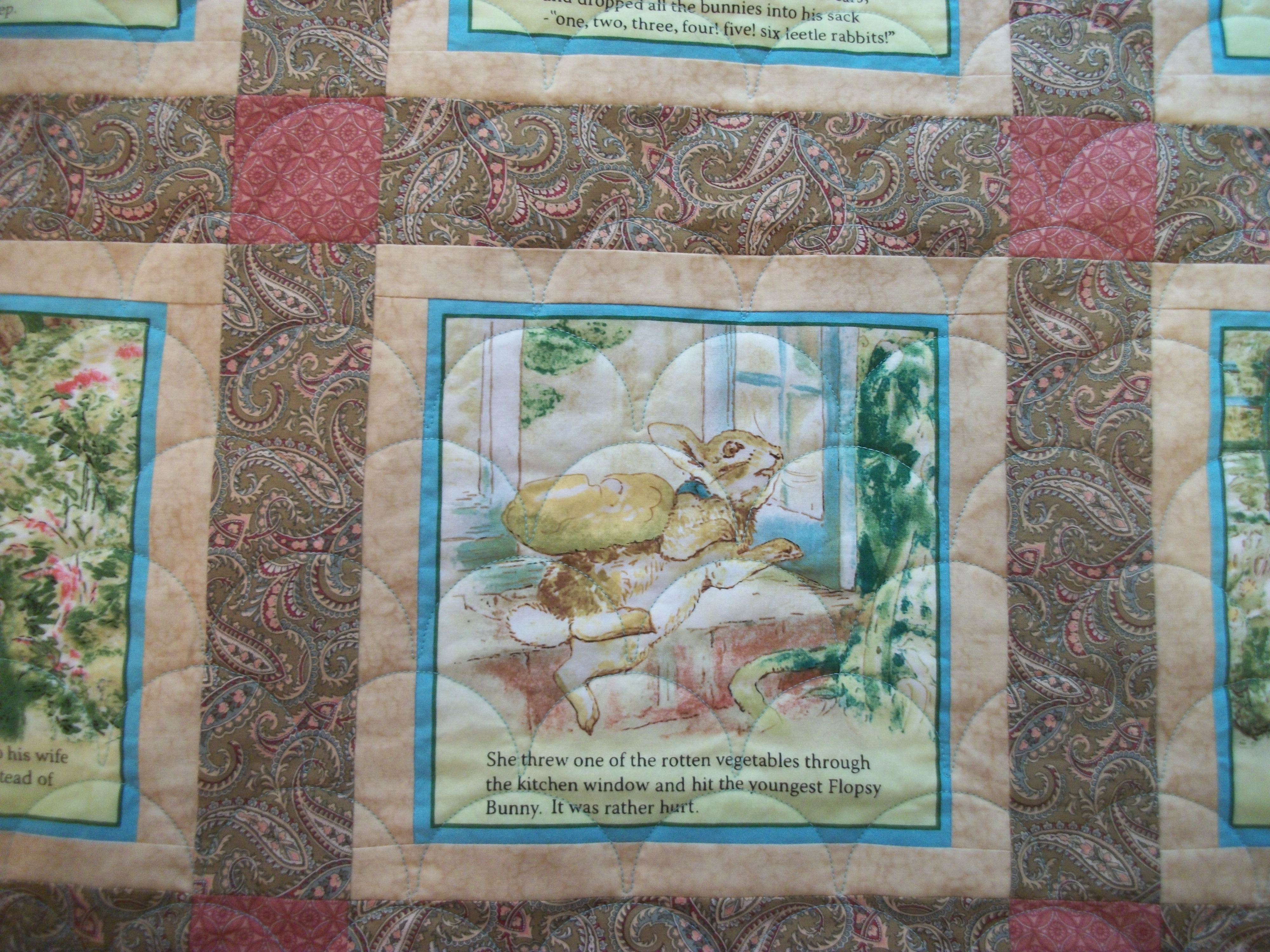
Here’s a close-up of one of the panel blocks. Aren’t they sweet?
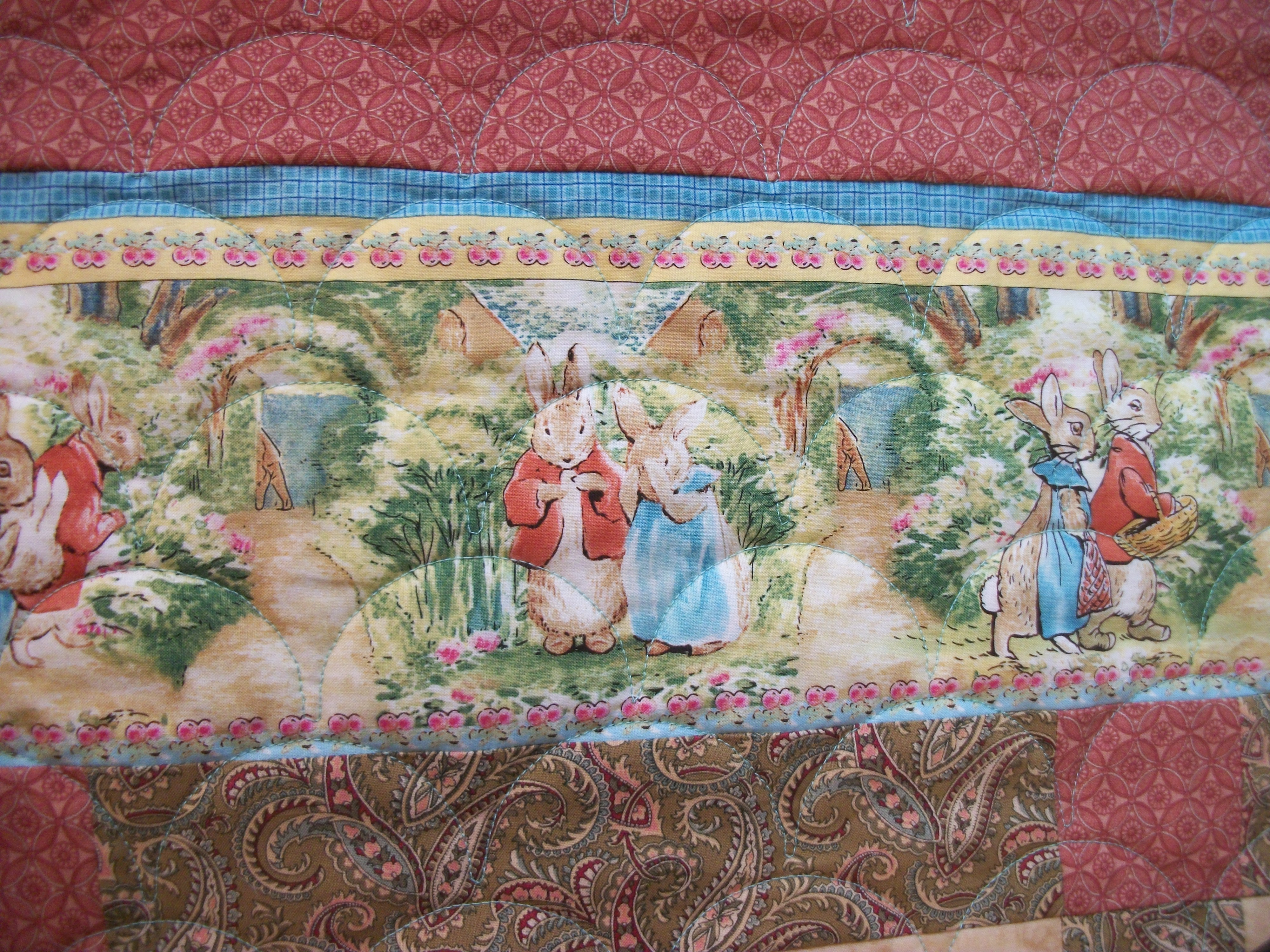
And, here’s a close-up of the border. I trimmed it and used part of it as a side border.
This suite of fabrics came with a blue print that I was going to use for the backing. I, of course, didn’t have enough, since I had miscalculated how big the quilt would be when I got the blocks ready. So, I found a coordinating fabric and used it to surround the suite fabric:

I quilted with a clam shell groovy board, which I LOVED!!! Can’t wait to use it again.
Here’s a picture of the whole back:

Here’s what the backing, binding (a great blue stripe cut on the bias), and the front look like together:

So, there you have it: THE FLOPSY BUNNIES QUILT.
I’m very pleased with how it came out. Truly, it’s a “one of a kind.”
 Louisa Enright's Blog