South Carolina is rice country.
Yes, there is corn here too (think grits, for instance, and the fabulous dish called “shrimp and grits”), but corn has been more of a staple. At one time–and for some still now in this region–rice is also a staple. Many would choose rice at a holiday meal over dressing of any kind.
There is a heritage variety of rice here that almost got lost in time: Carolina Gold Rice.
I first bought this “supermarket” version, only to find it isn’t the “real deal.”

It isn’t organic, but it made a very nice rice with a nutty flavor, as you can see. It does have a different taste than the white rice I’ve always eaten.

So now I’m on the hunt for the “real deal,” the heritage rice that is grown by Glen Roberts of Anson Mills. I have a call into the retail number of that company to see if I can buy some, but so far, they have neither answered their phone or called me back.
So when is the rice harvest anyway? Ah, early fall, so I will keep trying. And I’ll check Whole Foods for Carolina Gold Rice that is organic and must be refrigerated or frozen.
I found a really good article by Ari Weinzweig on the history of this heritage rice, linked below, which concludes with a recipe. This rice does not cook like other rice types cook, so recipes have to be adjusted.
Roberts of Anson Mills actually mills his heritage rice on Tuesday and ships the rice frozen or cold-packed, in order to preserve the inner sprout that provides more nutrients than other kinds of rice. Additionally, the rice is hulled only partially, which is said to mimic how it was processed back in the day and which adds to its unique flavor.
Here’s a quote about when this rice came to America:
“The original Carolina Gold rice is believed to have come to the Carolinas in roughly 1685 arriving from Madagascar in the form of a bushel brought back by Dr. Henry Woodward of Charles Town. From that single sack the rice grew to cover the land of hundreds of commercial plantations stretching down from the Cape Fear River basin of North Carolina all the way to the northern end of Florida. The bulk of the production though stayed in South Carolina, where by 1691 it was so well established that the state legislature allowed for planters to pay their taxes in rice. Rice was originally milled as it was elsewhere in the world, with wooden mallets. (More about this technique in a minute). The first water-powered rice mill was built in 1787.”
The article traces the history of this rice up to the point where it more or less disappeared in this region.
“For most of the 20th century Carolina Gold was nothing more than a trademark owned by a large rice company that didn’t even grow Carolina Gold rice but liked the name. But now . . . wow. . . the stuff that Glenn is growing and milling for Anson Mills is something spectacular, head and shoulders above what we were getting, which, again, was already really good. All of which has absolutely nothing in common with the supermarket “Carolina Gold” rice, which has even less in common with the real article than cultivated wild rice has with really wild, wild rice.”
But what makes Roberts’ rice so different: “For opener’s Glenn’s rice is grown organically, and he’s insistent that raising rice without sprays isn’t just the right thing to do for environmental reasons but also because it has huge positive impact on the flavor of the rice. Beyond that he’s making sure the rice is fully ripened in the field before being brought in. As it does with any other produce proper field ripening is a huge factor in getting full flavor development into our food. (Because it’s very difficult to feel or see the difference with grains I think this issue hasn’t gotten much attention. But as it does with the Anson Mills grits, the field ripening radically enhances the flavor.) Additionally, the newly harvest rice is stored frozen in the husk until we order it, at which point Glenn mills it with a small rice mill brought over from Japan…especially designed for Glenn, in order to emulate the 19th century hand-pounding which, at that time, was the way that slaves husked the rice and broke off most of the bran to prepare it for cooking in the kitchen.”
https://www.zingermansroadhouse.com/2019/11/carolina-gold-rice/
So, I’m now now on the hunt for some version of “the real deal” and not the supermarket version I bought.
I’ll let you know…
Meanwhile, I still love the sprouted brown rice that I have on hand–though all I have to do is to walk by the bag of rice to put on several pounds–so rice, for me, is a treat, not an every day or even often treat. Here’s one version.
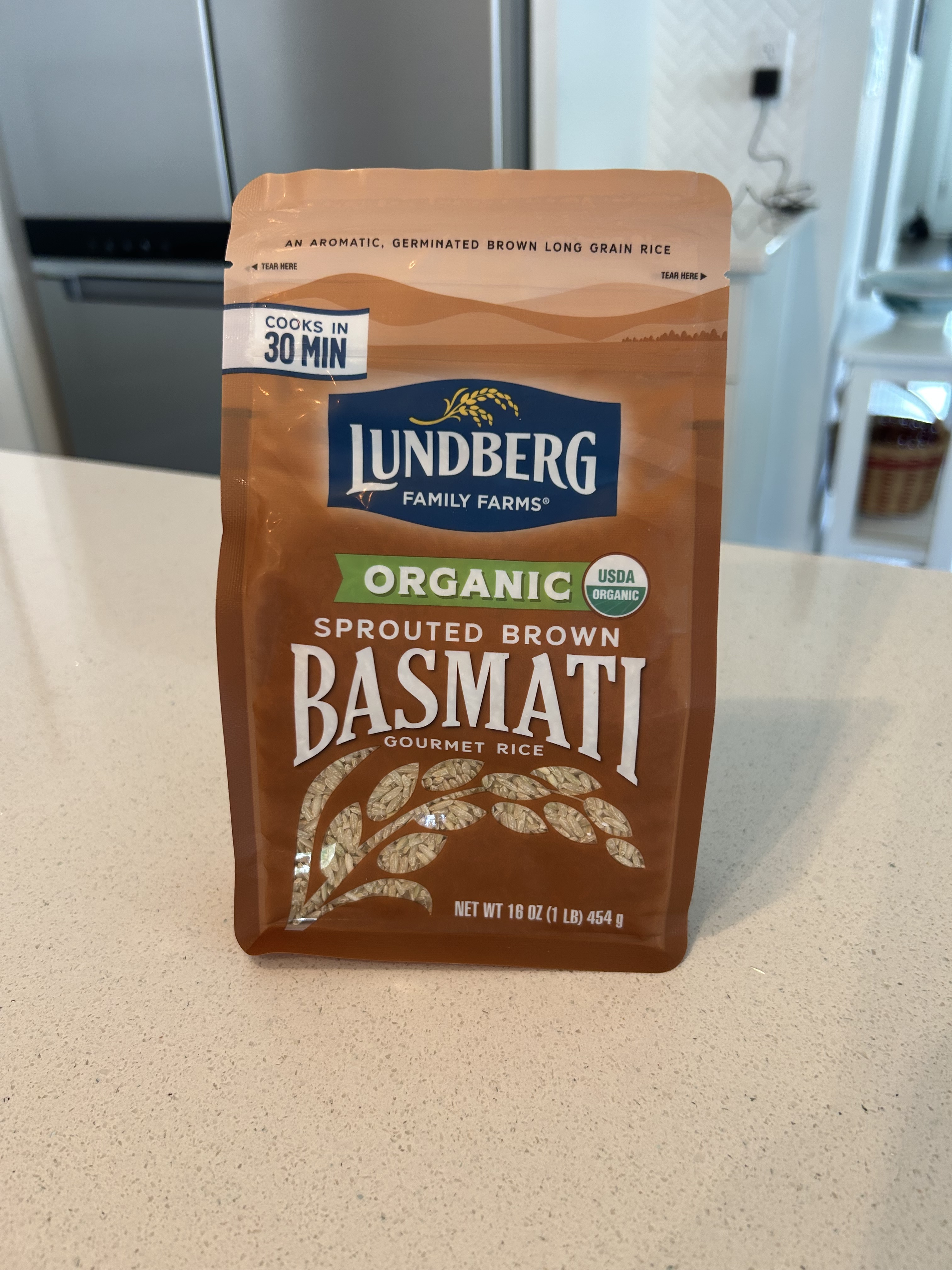
Sprouted brown rice has more nutrients available to the human body, according to the Weston A. Price Foundation nutritional materials.

 Louisa Enright's Blog
I had no idea rice was raised in South Carolina! Wow! And organically! That is the best, no spray is the right way when you are going to eat it! But, sadly, 600 acres of crop land would be pretty hard. That’s what I like about a garden. The only weed control is the hoe. Hope you had a nice thanksgiving. We are having our family get together tonight. My house still smells like the turkey I baked yesterday. We gave the bones and skin to the kitties. They were happy! We woke up to a skiff of snow.
Hi Louisa, I just typed in “Anson Mills” and there is an order form under the retail section to order all kinds of grains. Have you tried that? The shipping was pretty high so I haven’t placed an order yet, but I’d really love to try this rice. It’s just terrible that most rice (other than grown in CA) is sprayed with arsenic! I’ve tried rinsing and then cooking my rice in lots of water and then draining it but yuck, it was terrible. Like cream of rice. It’s very sad. Keep reminding us that there are healthier ways to eat! Jan in MA
I did try the order section on the web site. It didn’t react. I will try again. So, thanks for that!
Why call them when you can just order from their website? I’ve been ordering from them for years. https://ansonmills.com/products/103
Good to know. Thanks so much. I tried once before and the site didn’t work. I will try again and report back here.