It’s the biggest darn flying wasp-like critter I’ve ever seen. Some are close to almost 2 inches long. And they have set up shop in my red roses.
It took me some time the other morning to get some pictures–without risking being stung–and some time researching with pictures to figure this one out as there are other similar insects out there. One is now moving into South Carolina, and it is a problem.
It’s a Cicada Killer Wasp. And they are not true wasps or hornets as they don’t bite or sting.
Yes, the females are up to 1 1/2 to 1 3/4 inches long. The males are smaller, but are very active as they are “guarding” the underground nest the female digs for her eggs. Males aggressively patrolling a nest location can be scary if you don’t know anything about these highly colored insects and encounter one. All one sees is the size and the waspy colors.
This picture is of the smaller male on guard. He’s very active so it took me some time to get a resting picture.

Here you can see the distinctive yellow dot on the front of the face–and the dull red markings around the head and on the legs. There are three yellow bands on the lower body, on the upper part. The rest is black. The wings are stationary and lie flat when at rest.

The HUGE females are much harder to capture with my camera. She has what looks like a stinger protruding from her rear, but it is used to sting her only prey, a cicada that she ceaselessly hunts down as she uses it for food for her eggs. If one tries to capture her and brushes the stinger, it can leave a very mild sting, but that’s all. Research says that the sting is less than that of a mosquito bite. Mostly these insects eat sap and nectar.
Here’s a quote from the informative link below:
“Female adults often dig their tunnels in a backyard sandbox, a sand trap on the golf course or in a nice sandy picnic area outdoors. Lawns, gardens, flower beds and athletic fields are other preferred nesting sites. They excavate noticeable amounts of soil around their tunnel entrances and create unsightly mounds. Large soil particles are removed with mouth parts and then shoveled through their legs in a dog-like manner.”
I now remember that I saw these piles of dirt obviously excavated from my rose garden beds last year. At the time I was puzzled by what dug out the dirt. A frog maybe, I thought? I just put the dirt back with my trowel and called it a day.
But…
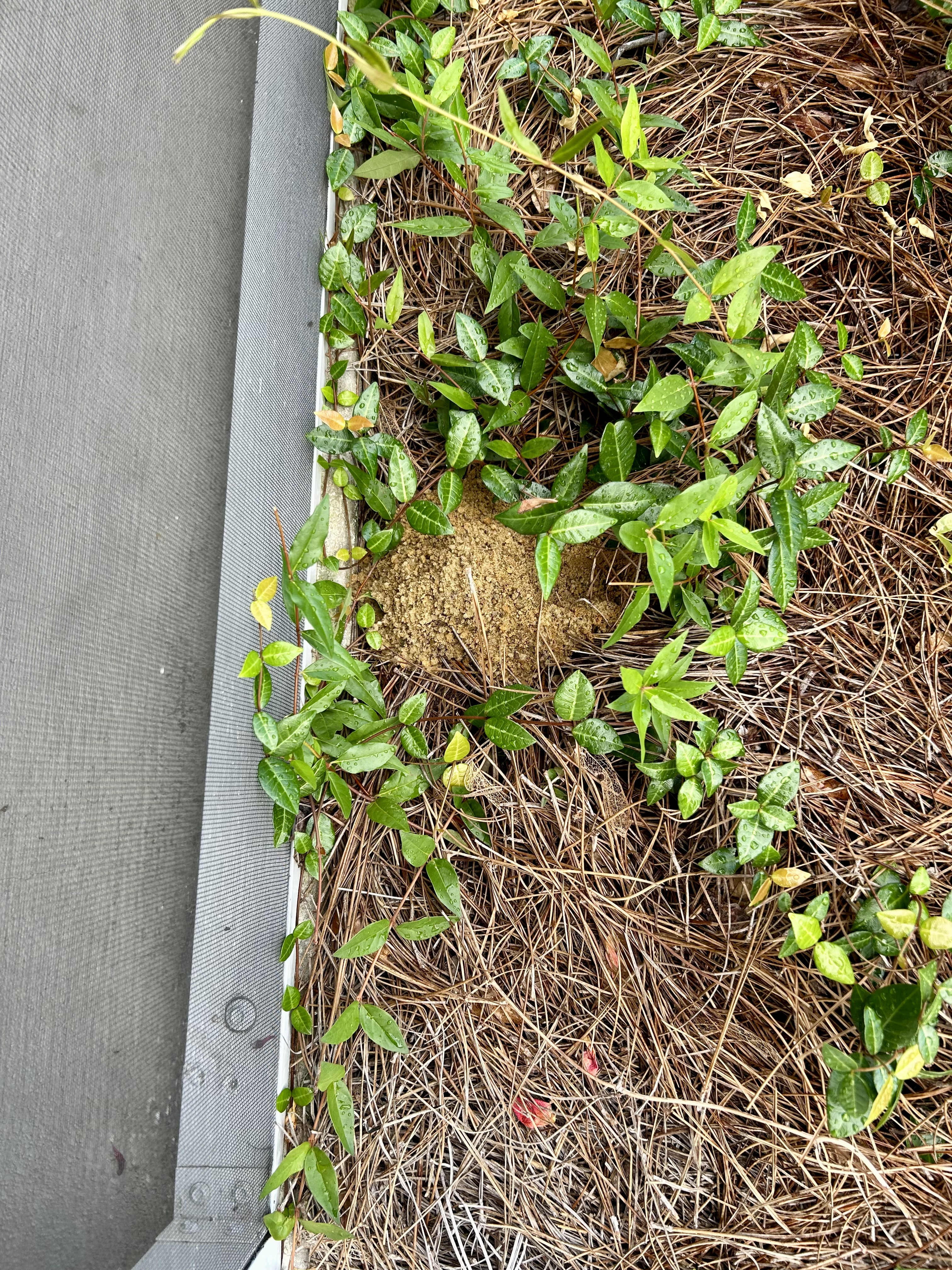
Here’s one of the dirt piles I found this morning–and look how well the Asian Jasmine (which is not a jasmine) ground cover is spreading now. That is a LOT of dirt for an insect to remove with her mouth and shovel backward with her legs.
The adults only fly around for about 2 months, and now that I know what they are, I’ve enjoyed watching their antics in my roses. I’m not worried about having them around. At the very least, their tunnels and underground nests will aerate my very very poor soil.
Please don’t kill these harmless creatures. Instead, enjoy the show and the other benefits they provide. You can’t miss them. They are HUGE.
 Louisa Enright's Blog