I have two types of sewing needles that I use the most often: John James embroidery size 7 or 6 (7 is smaller and more pliant) and Richard Hemming & Sons Milliners Large Eye Milliners size 11. (I also have Tulip embroidery needles, but they are stiffer and less flexible than the John James embroidery needles.)
The embroidery needles have a larger eye, but the size 7 whichI like best is sometimes hard to thread with size 12 cotton thread, much less a Pearl size 8 Thread. The Milliners size 11 are long and so flexible, but the eye, even for the “large eye” version is…TINY. I really struggle to thread it with 50-weight thread when I sew down bindings. Aurifil thread is thinner, so that helps.
Anyway, I went on a hunt recently for needle threaders. For the Milliners, I need help all the time unless I’ve been lucky. For the embroidery needles, just some of the time. (I use the Milliners to sew down binding or with English Paper Piecing.)
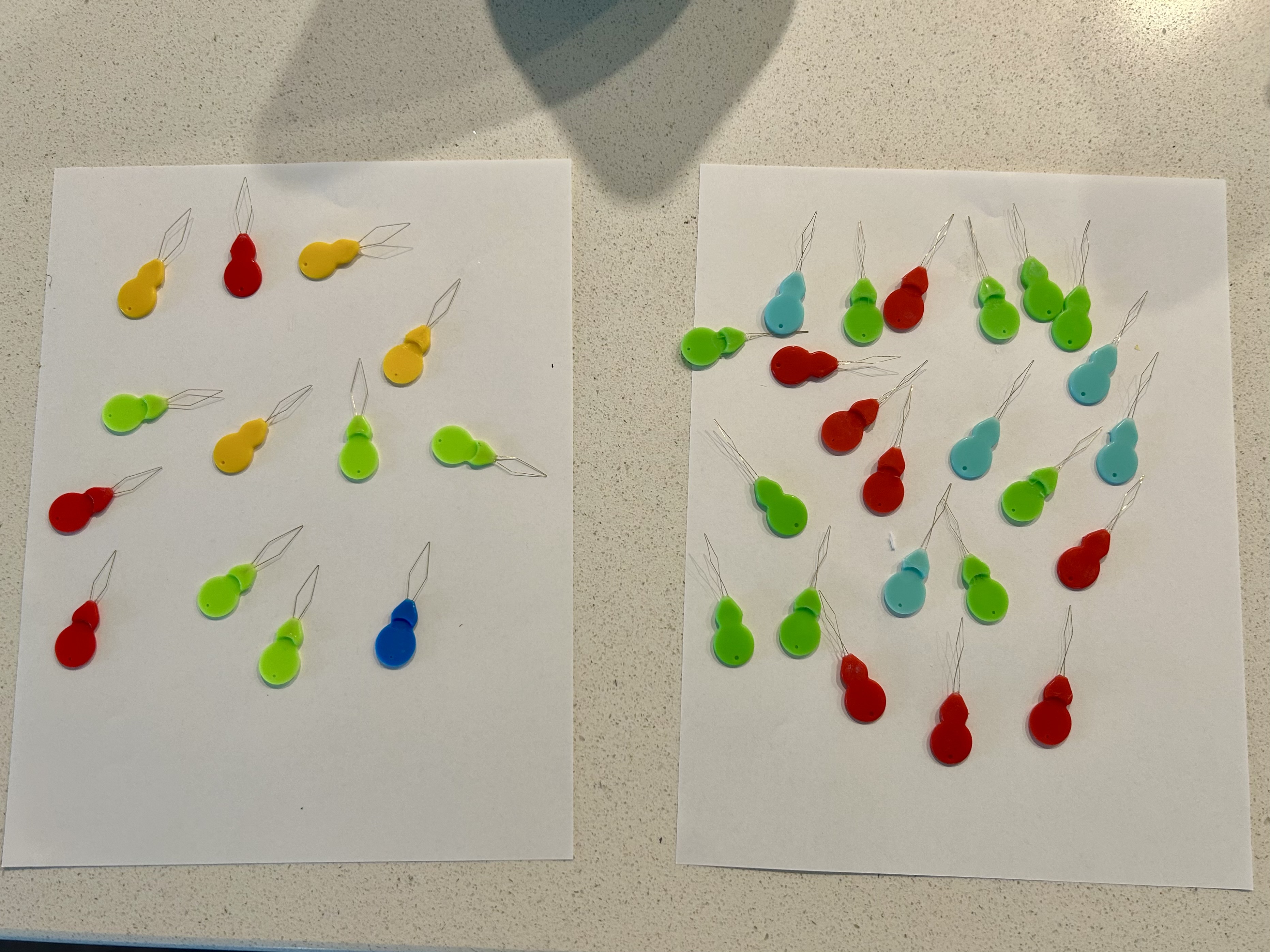
So, I have gotten two kinds of these threaders below–AND after reading comments on Amazon (you can learn a lot from comments), I got some Krazy glue and put a drop on the top of all the threaders where the “wire” extensions are embedded and let them dry overnight. I’ll let you know… But, these threaders have actual wire threaders, not plastic, which commenters were saying were sturdier. Again, I’ll let you know.
On the left are Beadnova threaders that will fit the Milliner eye. Or the right are Phinus, which will fit the size 7 embroidery needles I have–and likely the size 6 embroidery needle with thicker threads. The Phinus are bigger and sturdier.
Below, see more threaders I found. On the left is a threader that would work well for thicker threads and needles with bigger eyes. Perhaps for embroidery work? It does not fit into my needles. The little humming bird threader in the middle works for my embroidery needles, but has a tendency to shred the thread. And it is clumsy to use. The Clover 8611 works for the embroidery needle, but I don’t know how it will stand up to wear and it is pricier.

So, I’m hoping the plastic/wire threaders will prove to be a good choice–with the extra help of the Krazy glue.
*One other tip is when you unspool a length of thread you are going to use, insert the top piece of your thread (as it came off the spool) into your needle as that works best with how the thread is twisted on the spool. And cut on an angle to reduce the thickness of the end. AND, when your thread gets “twisty” as you sew, let it unwind by dropping the threaded needle down so it can spin the twists away.
And if you don’t use a threader, hold the piece of thread in your right had and bring your needle eye down over the top–as sometimes magic happens. Sometimes it also helps to moisten (read with spit) the end of the thread.
Good luck!
 Louisa Enright's Blog