A Color Challenge From The Charleston Modern Quilt Guild

The Charleston Modern Quilt Guild issued a challenge that will be due in our January 2026 meeting.

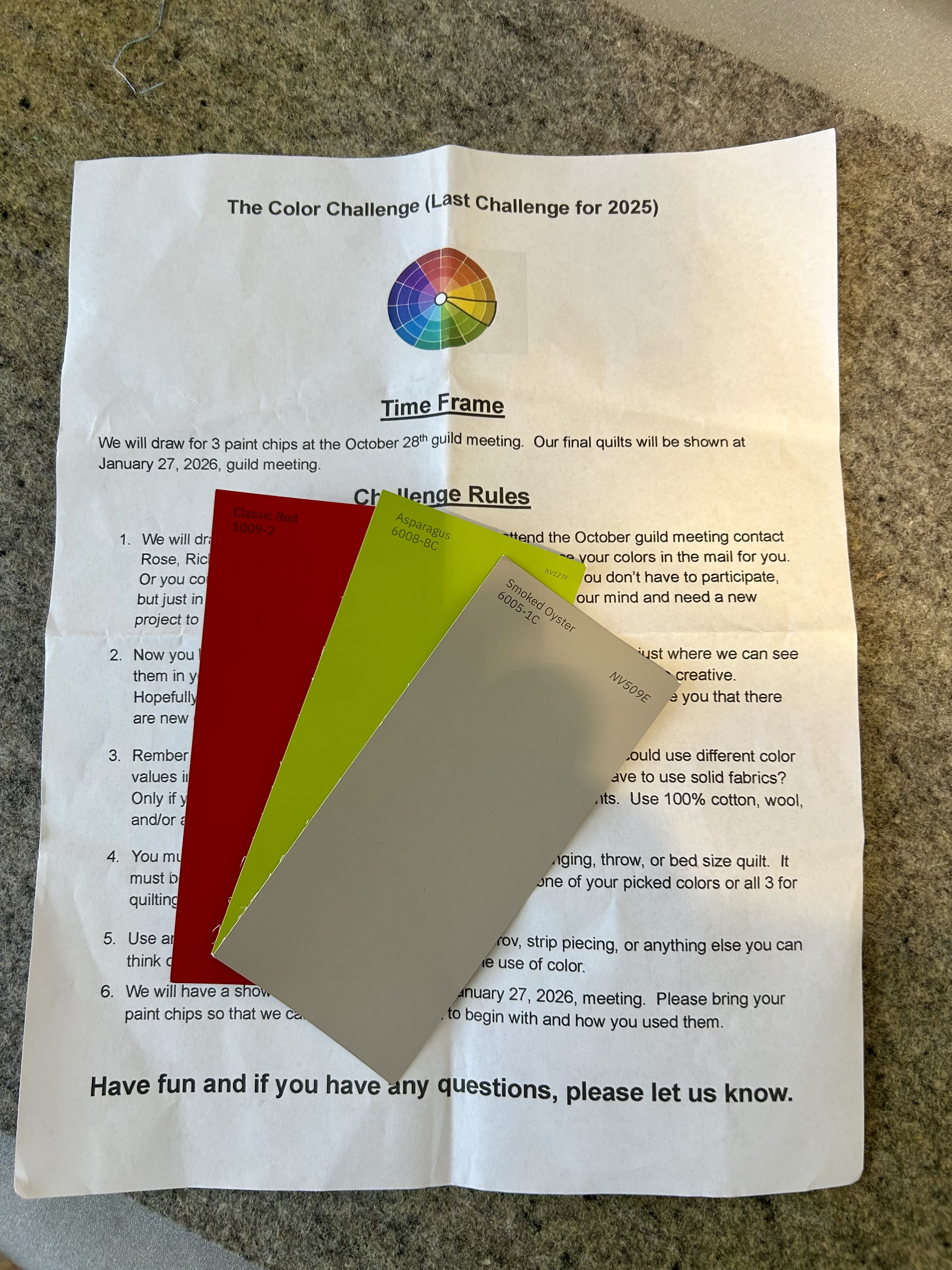
We each drew an envelope with 3 colors in it. We had to make a quilt using ALL those colors at least once in said quilt.

Here are my colors–and it turns out that everyone got the “Smoked Oyster” color.

I didn’t want to make a Christmas quilt with the red and green colors as I knew I would make this quilt a donation gift for this group’s foster children outreach project.

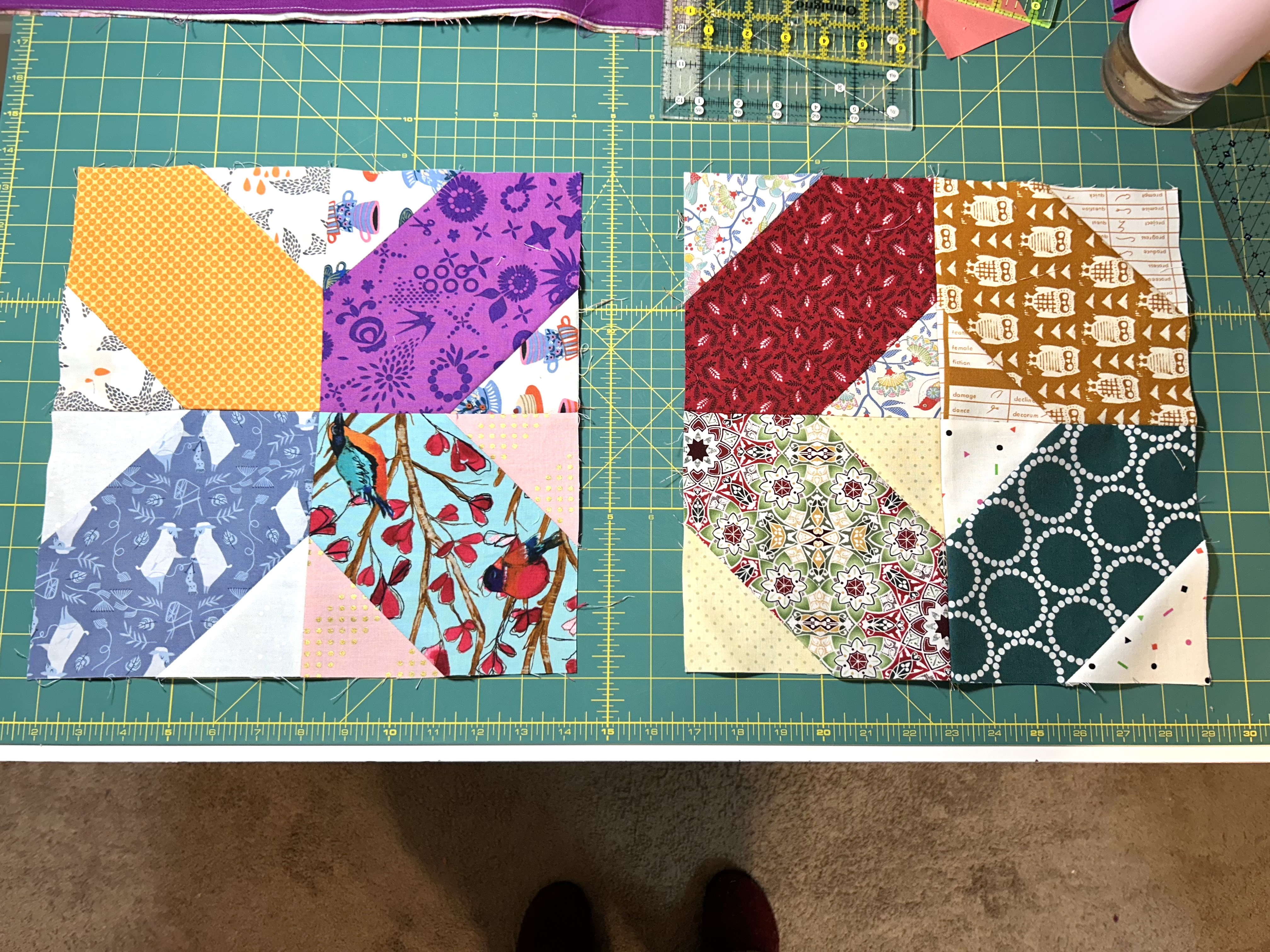
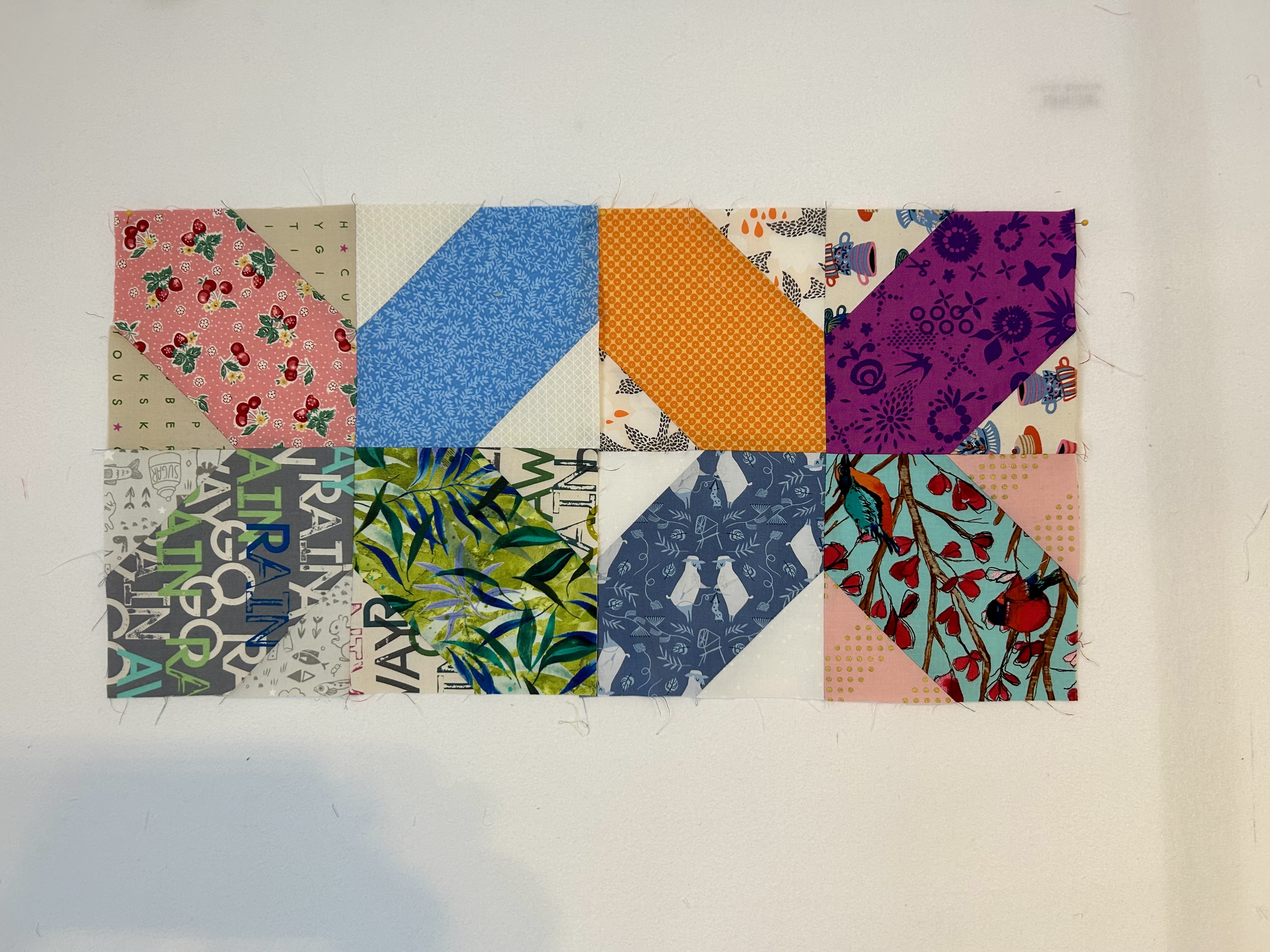
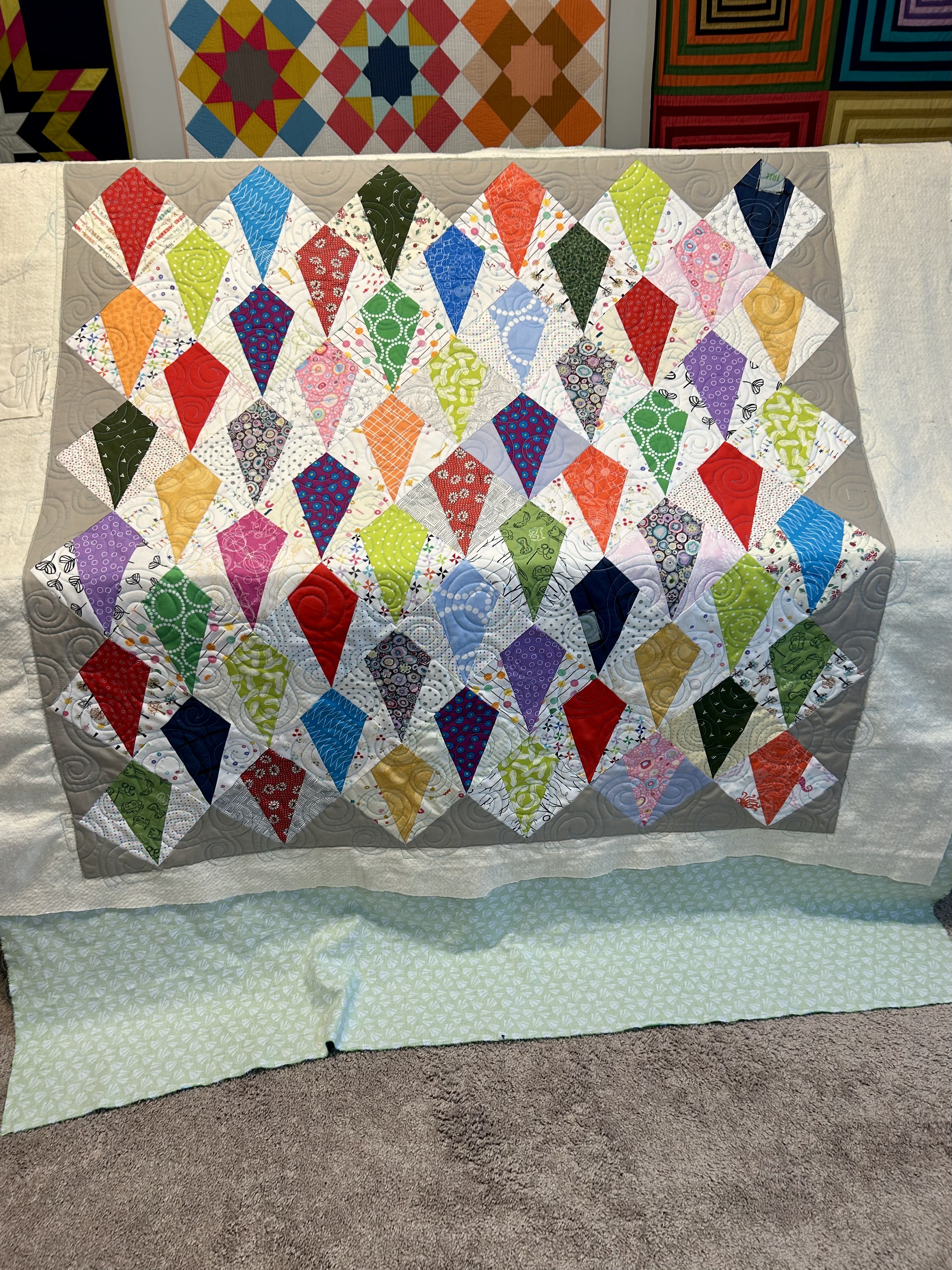
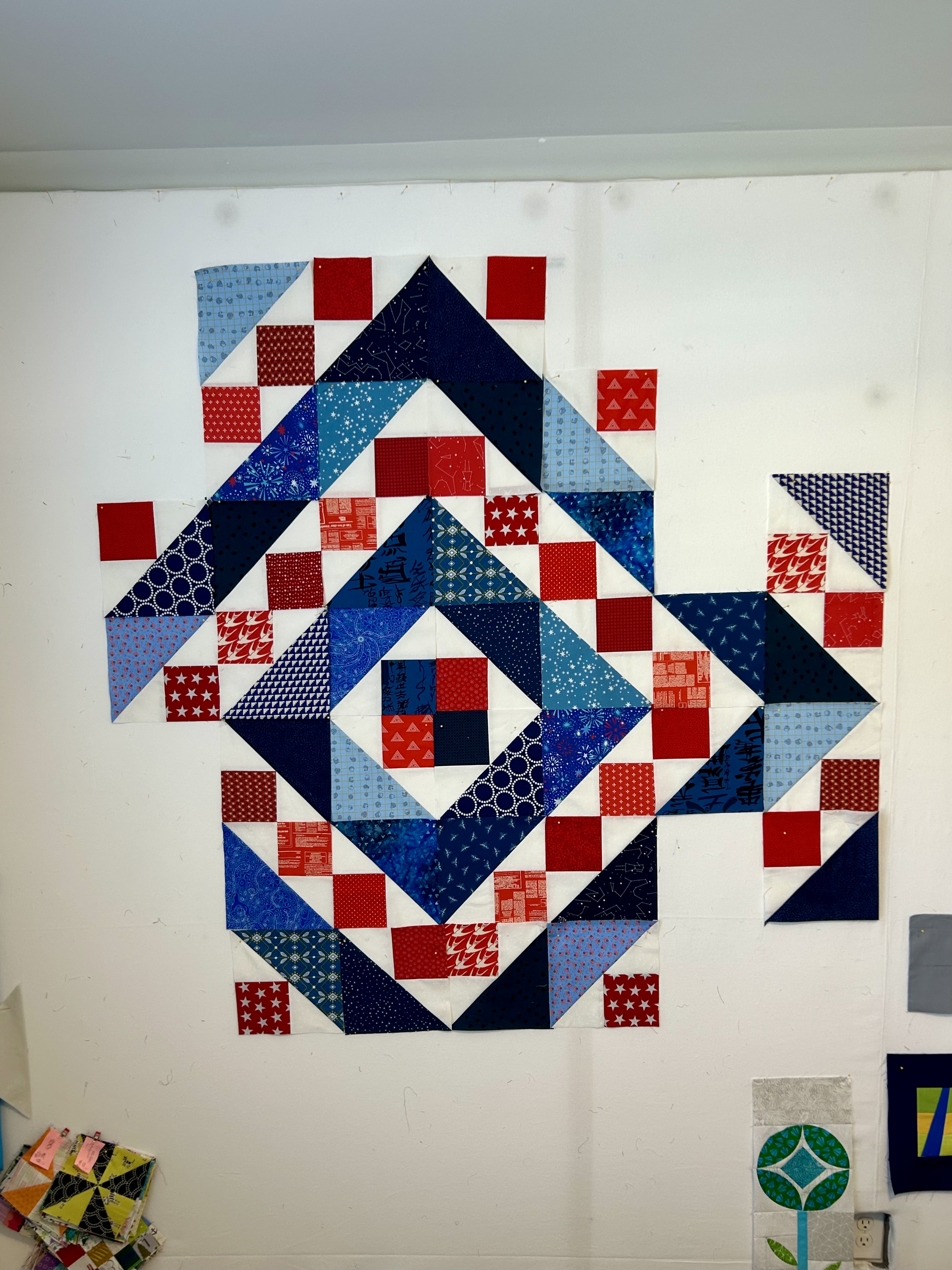
I found the “Smoked Oyster” color to be a real challenge with the clear red and spring green colors. Here’s my solution, which is scrappy, of course. To hide a color that is a problem child, just isolate it somehow. And, knock it back by surrounding it with lots of other colors. The block is a 5-inch kite block cut using a template for that block.

I played with turning some blocks like kites blowing and turning in the end, but I could not make it work. So I settled for putting the blocks on point and figuring out the outer border size. The formulas online for that process are excellent.

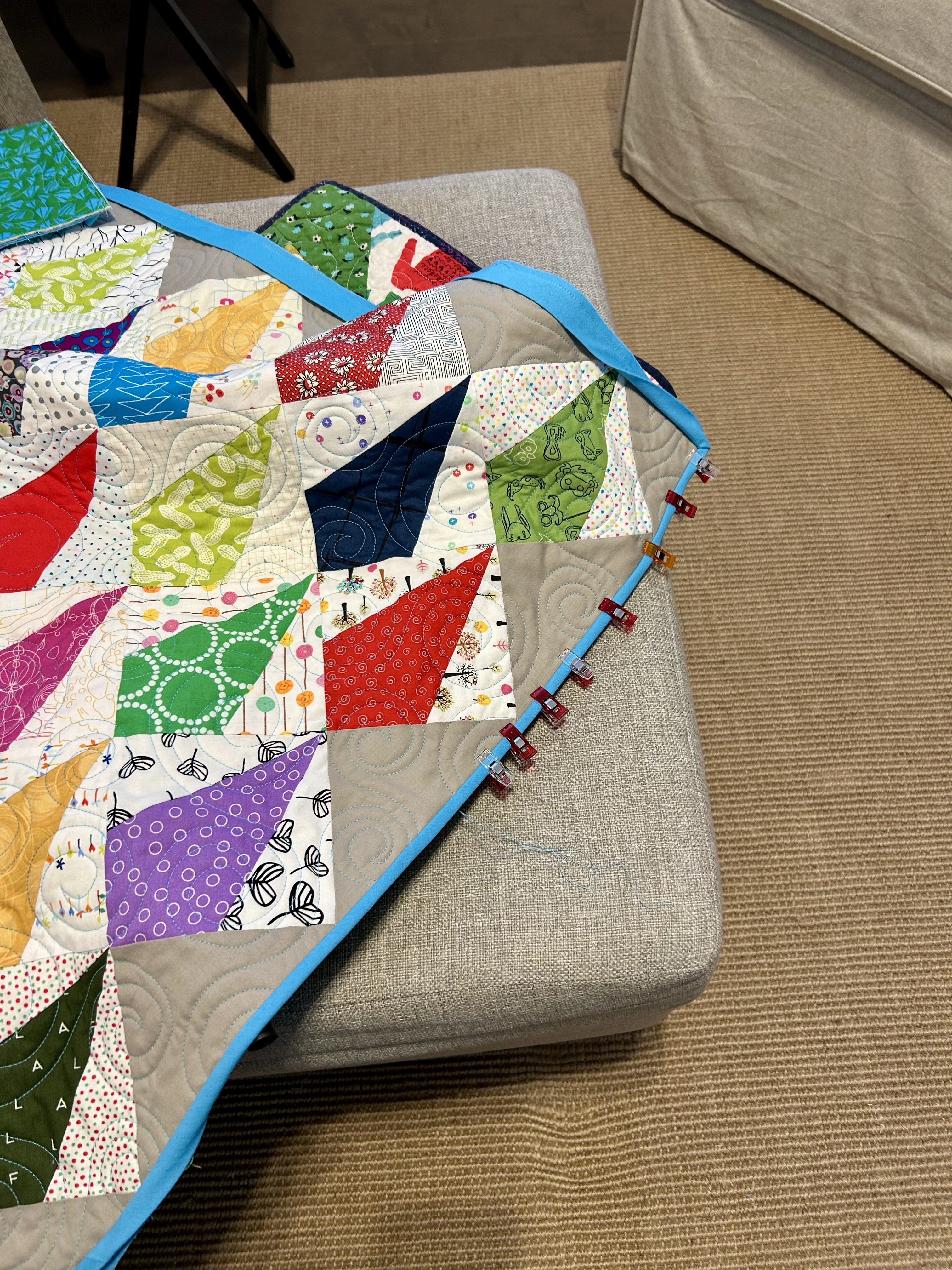
I chose a solid bright blue binding as it furter toned down the Smoked Oyster color:

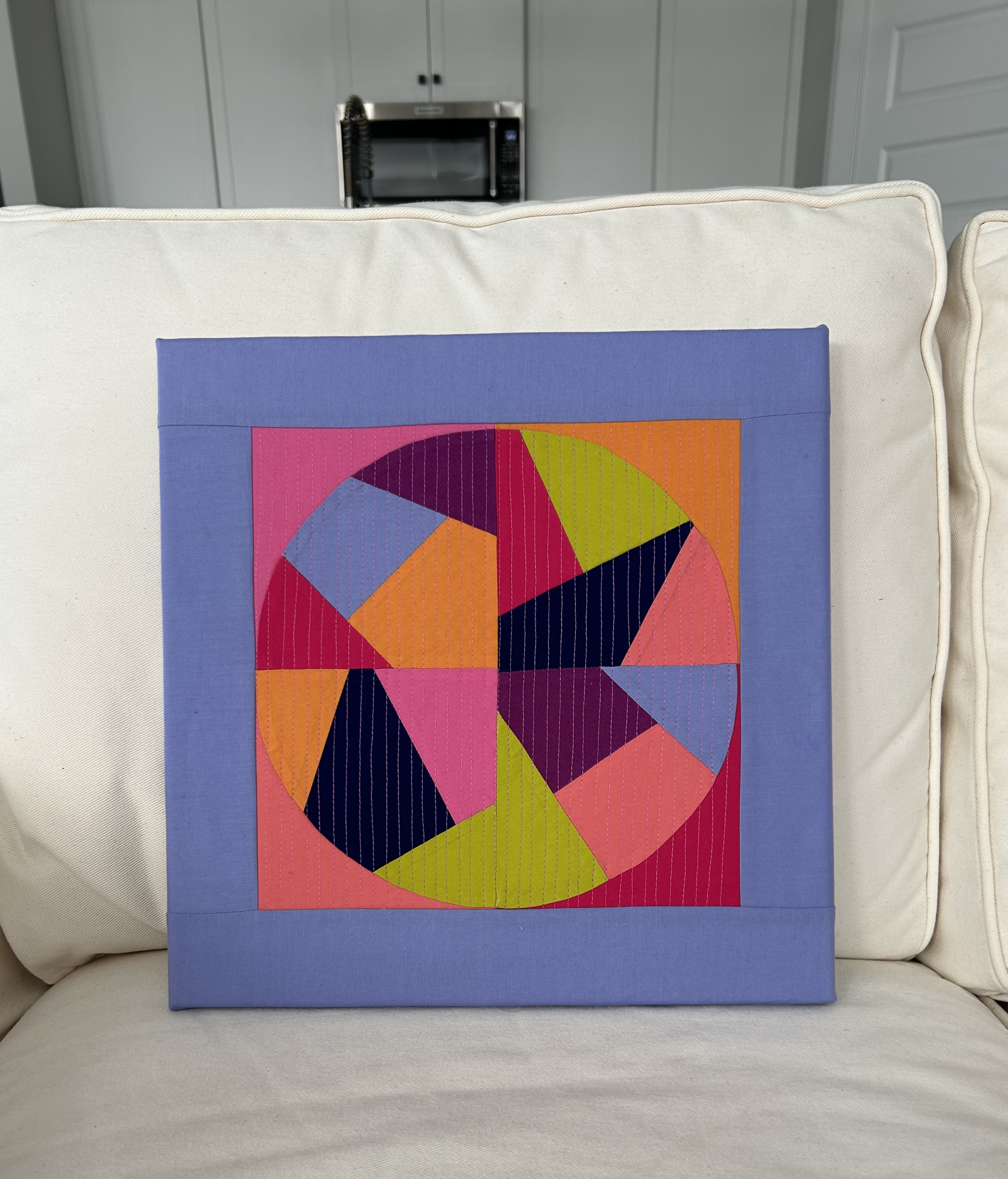
I tried this orientation of this kite block at first, and I really like it. But not with the “Smoked Oyster” color for a whole quilt’s setting background. I turned that block into a hot pad for the counter, and it has two layers of batting and one of Insul-Brite–which makes it very chunky to make. The other hot pad is one I made 3 years ago, and I use it all the time for a hot dish on my kitchen counter.

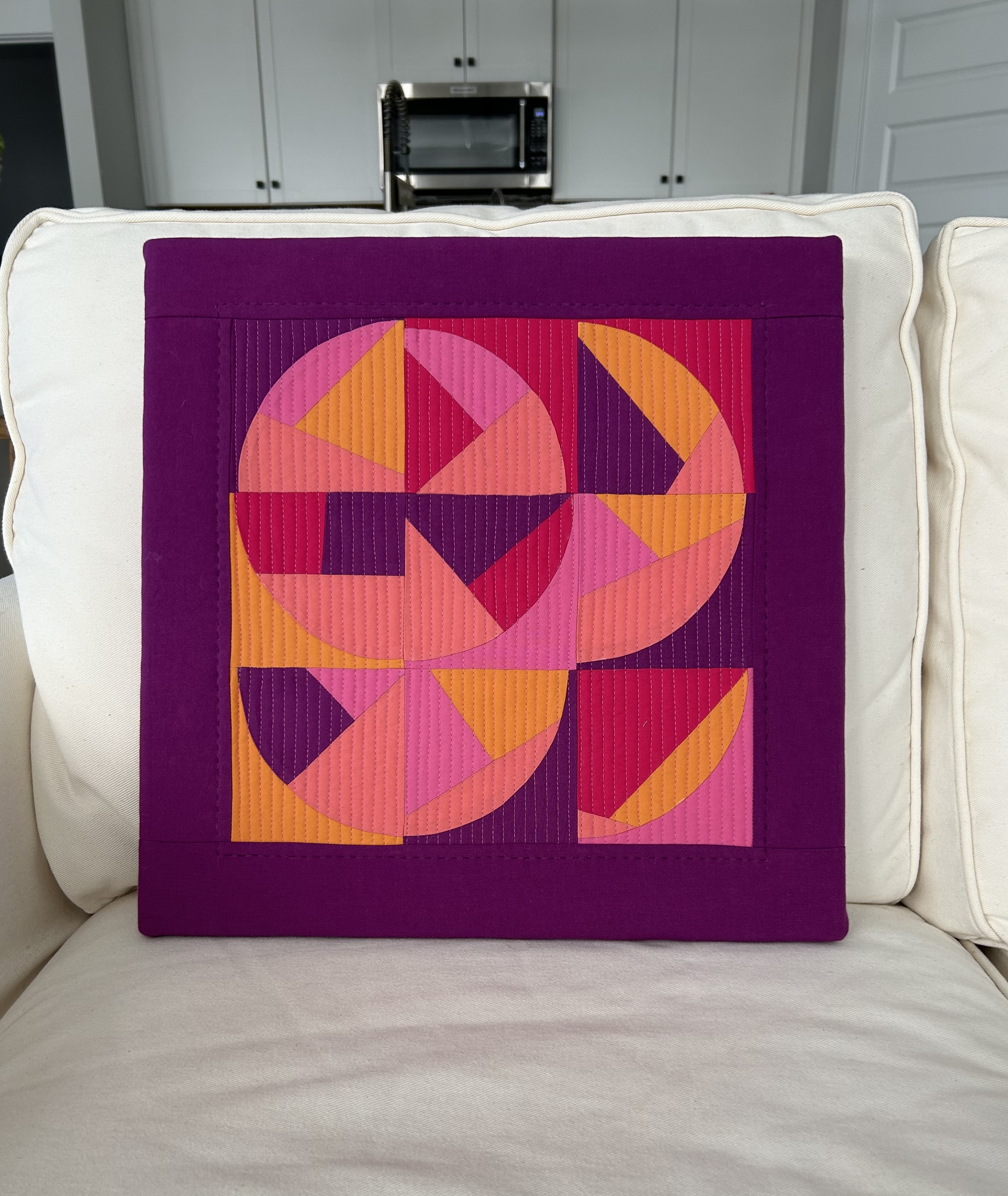
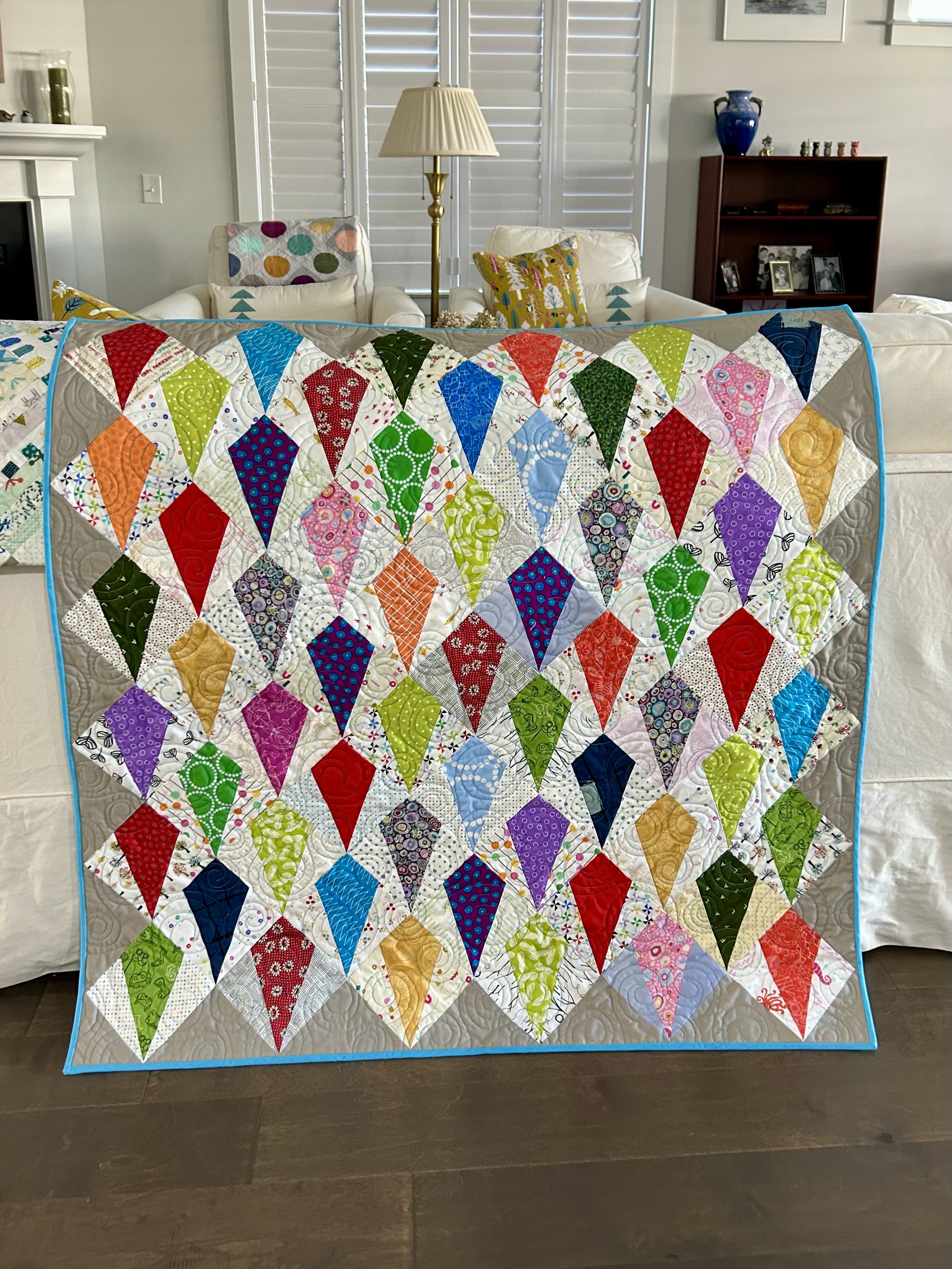
Here’s the finished quilt:

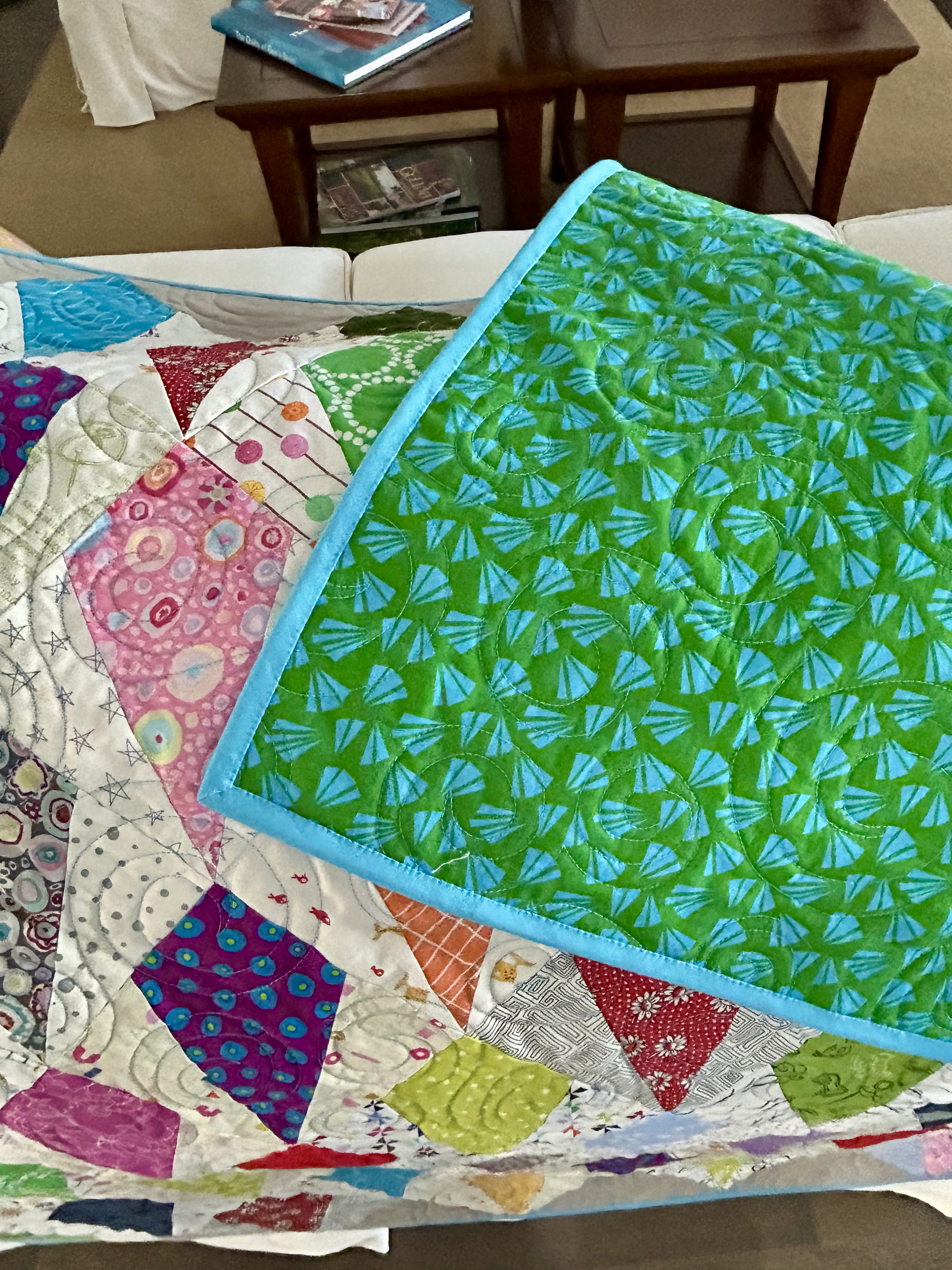
The backing is “Glade Fans,” designed by Faye Guanipa for Dear Stella, DFG2998. I quilted with a blue the color of the binding (Signature, Soft Cyan) that melted into the backing and looked, actually, green (which was fascinating). (I always quilt with cotton thread.) The panto felt like swirling wind; Denise’s Spirals.

And that’s that!

Monday Design Wall Update

It’s Monday again!

Here we go into another week.

I’ve been “playing” with two new projects and making a Quilt of Valor donation quilt using the 8-inch Cat’s Cradle ruler.

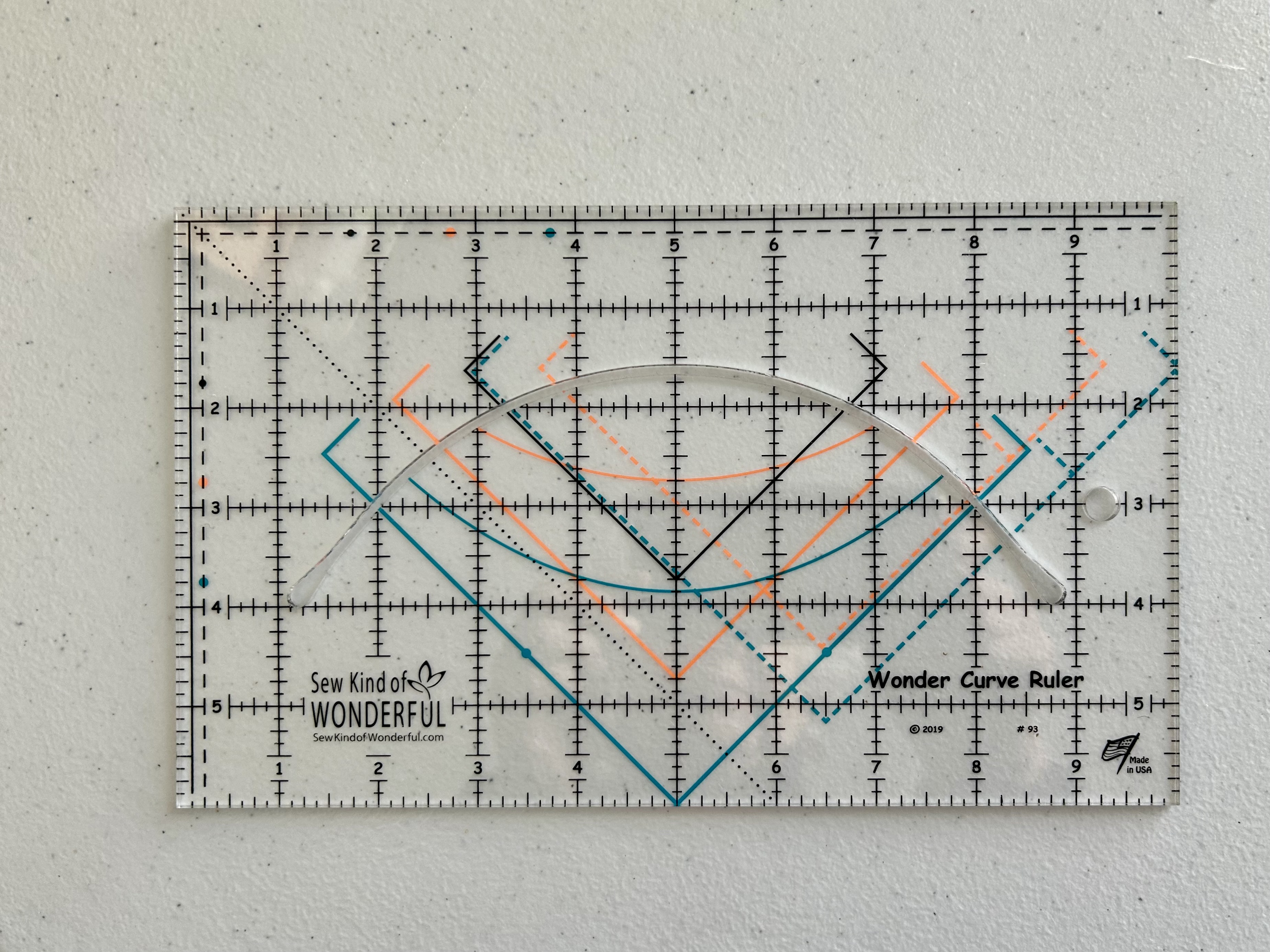
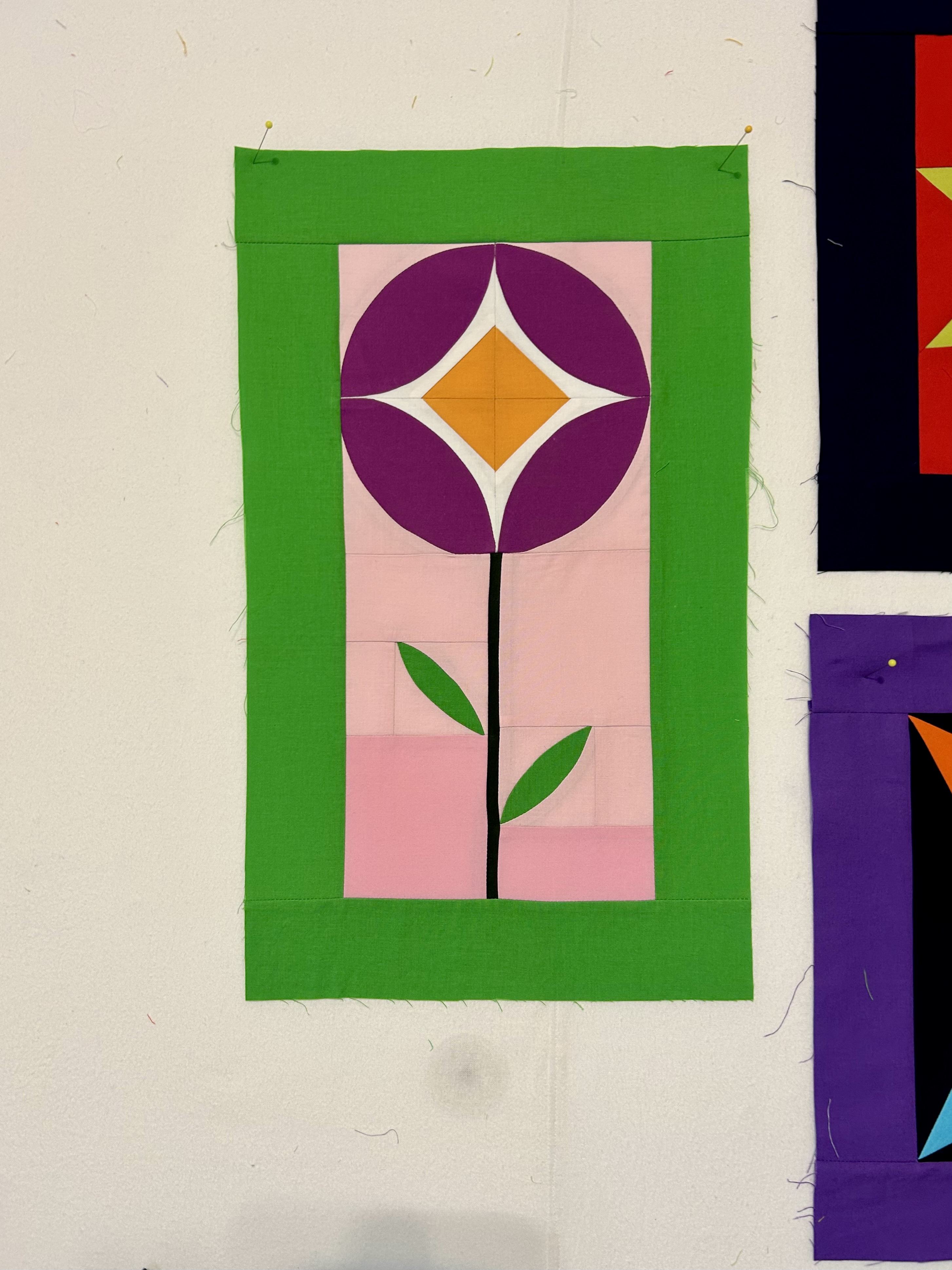
Years ago, I saw a pattern that intrigued me called “Flower Pop”designed by the talented women at Sew Kind of Wonderful. The pattern was in Simply Modern magazine, which is now defunct. The pattern uses a special ruler that cuts the curves used in the pattern, and back then, curves were just getting popular in the quilty world.

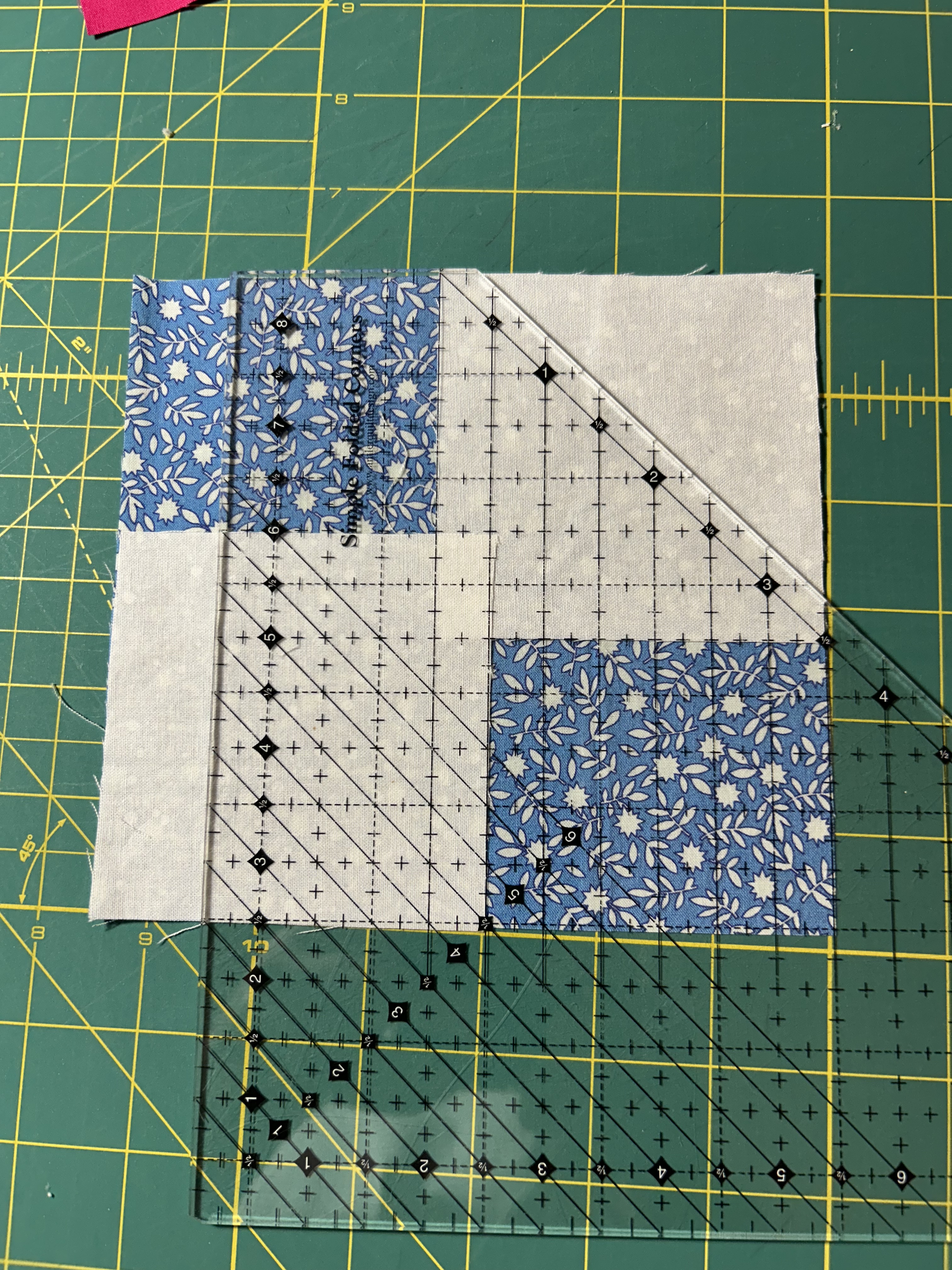
I ordered the ruler, but until a few weeks ago, it and the pattern waited for me as I moved from Maine to South Carolina and got reorganized here. Now I’ve been on a mission to use the rulers I have not yet trialed. The other day I pulled out this ruler and the pattern information as I still have that magazine. Here’s the ruler one uses to cut all the curves–and it does make that process easier, but there is a learning curve on how to use the ruler AND how to angle the cutter blade within the cutting strip.

My trial block was a steep learning curve for me as well, though I’m good at sewing curves. But I was still intrigued despite the problems I encountered while getting to know this block. Pressing is, of course, precise at various points.

I ordered the pattern itself from the Sew Kind of Wonderful web site as my magazine pattern was missing information that I needed. And I watched a really good video made by Sew Kind of Wonderful, available on YouTube. I am happy to say I’ve learned how to sew mild curves without using glue or pins.

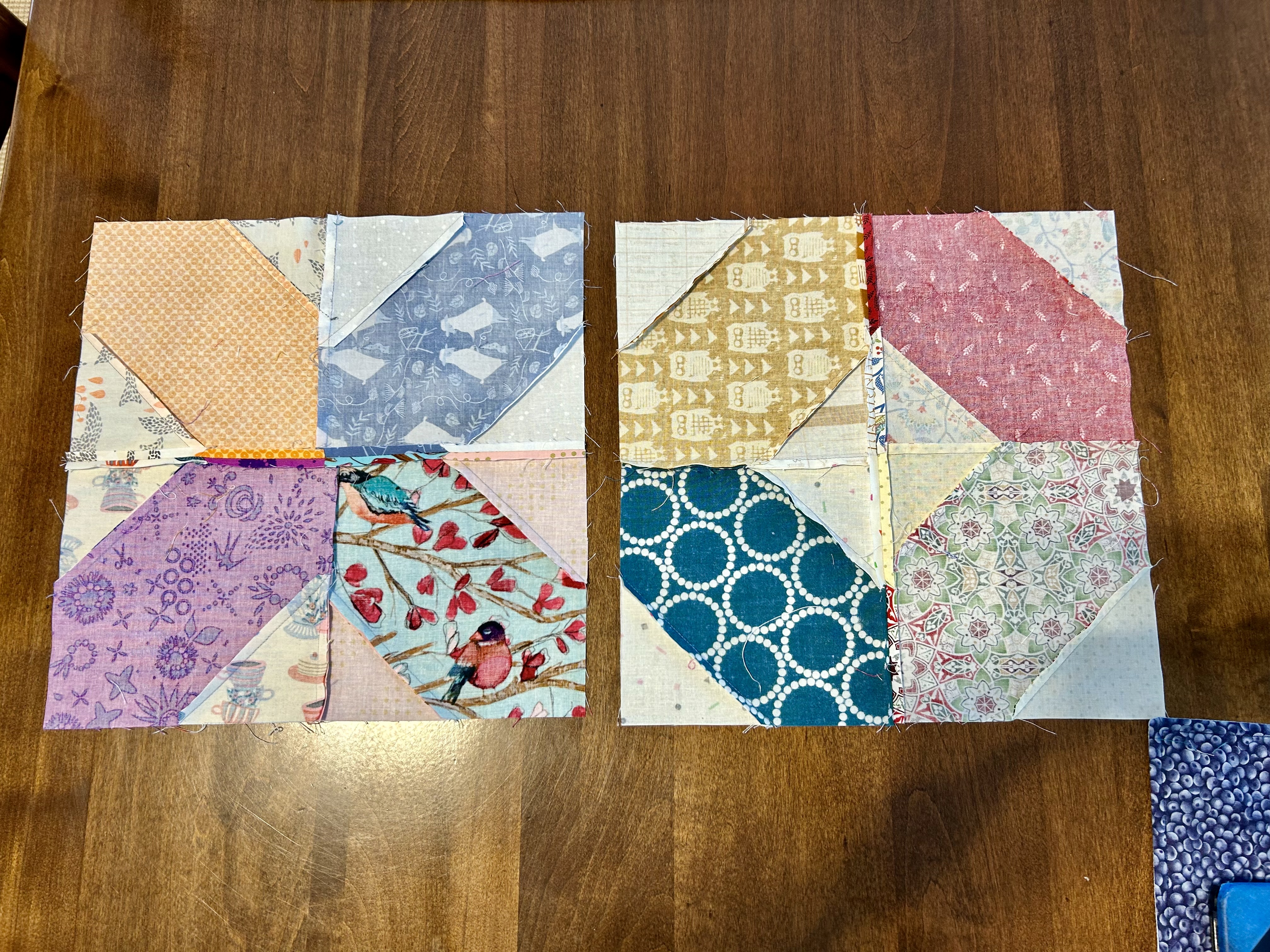
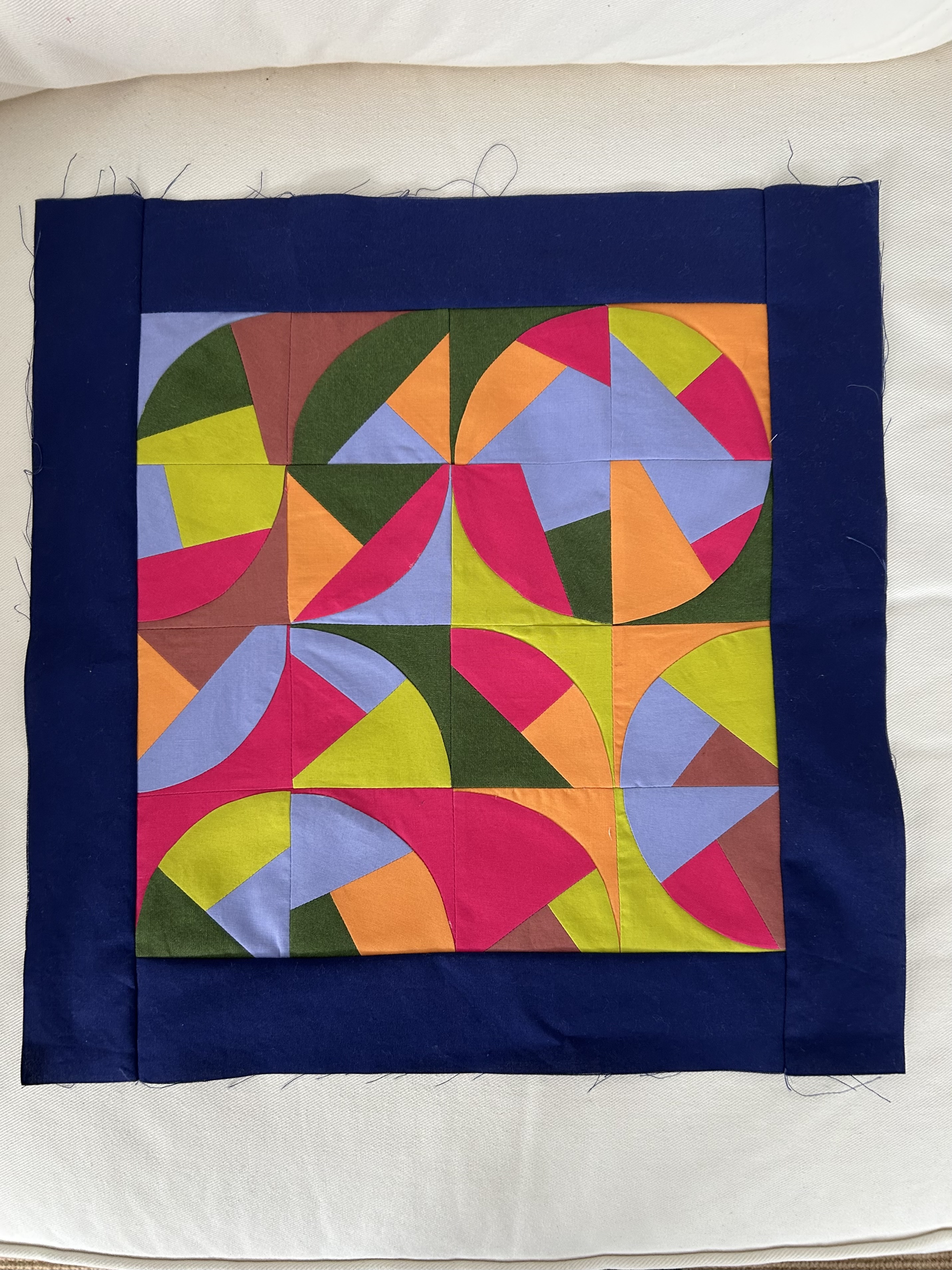
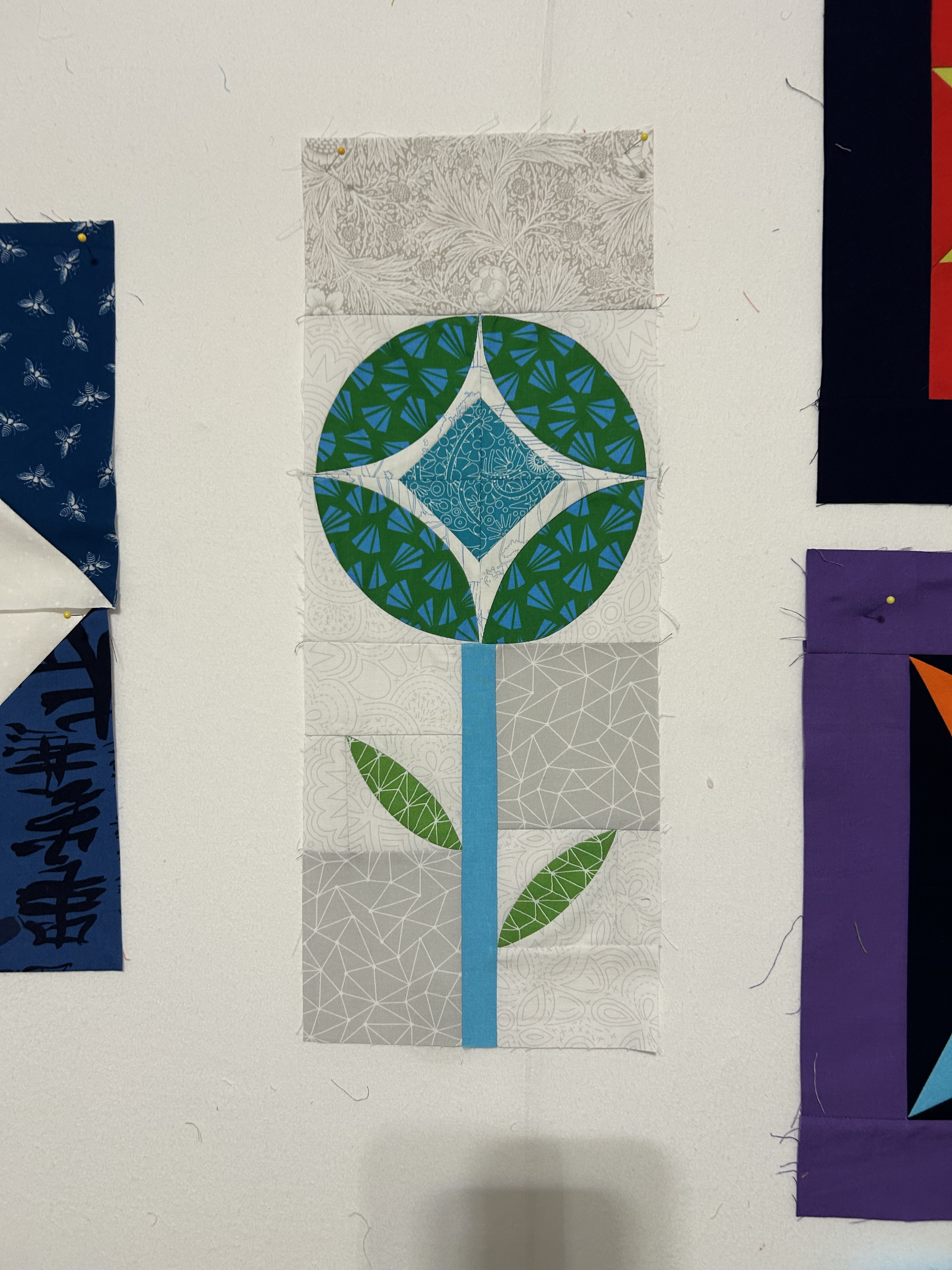
Here’s my second effort, using print fabrics. And I’m much happier with it.

The current pattern now shows all neutral backgrounds, but I very much liked one version shown in the magazine that has some darker backgrounds. OK, a lot of darker backgrounds.

So, I’ve cut parts for the next block with a medium blue print for the background. I have no idea where this effort will go. I am using stash fabrics for this project–assuming it becomes a project.

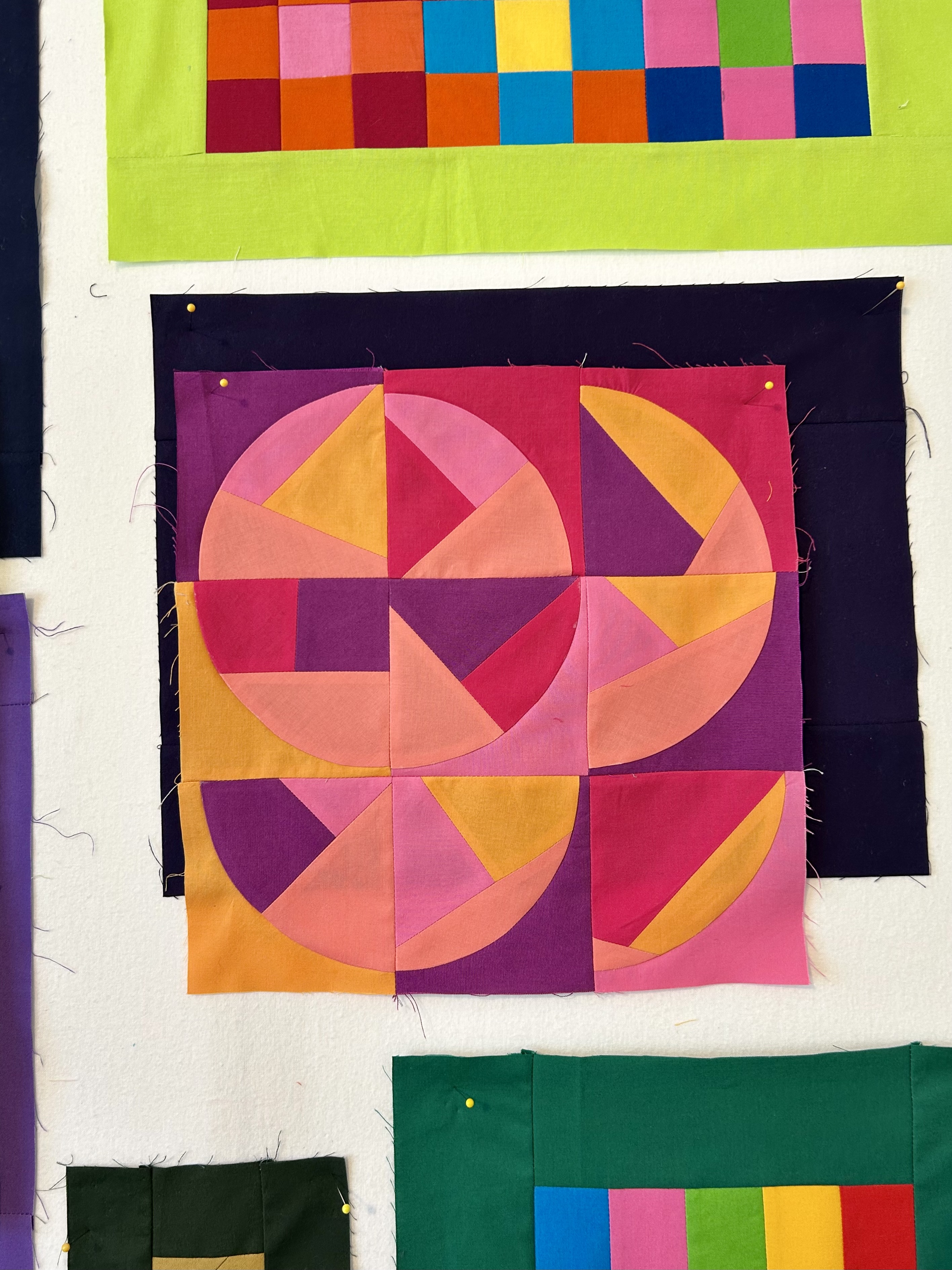
Meanwhile, the templates I ordered (a splurge) for the 4th block for my ongoing Tara Faughnan Blocks3 class arrived, and yesterday I made a trial block using the 4.5-inch templates. (I love the templates with their thinner outside piece.) The block idea, designed by guest designer Jen Carlton Bailly (bettycrockerass.com), is named “Shattered.” I used less colors than the designer used in her demonstration videos (we have 12 colors in a month’s palette) as this 4.5 inch block would make a bigger piece. It still felt incoherent to me, so I used circles that would calm my eye movement.

I discovered that using ONE color (light orange) for half of the block that gets cut limits the block. I can sort of see making a big block like this one and using very wide neutral sashing to make a quilt.

Later today I’ll try the 3.5 inch templates and will use more colors. When combining blocks, one is meant to look for what kind of interesting shapes and color blocks emerge. It’s “improv,” of course.

I’ve wanted to make a donation Quilt of Valor for my Patchwork Gals group. So that is now happening.

Bold. Graphic. What’s not to like?

I had to buy a few light blue fabrics, but all other fabrics are from my stash.

Have a great week everyone!

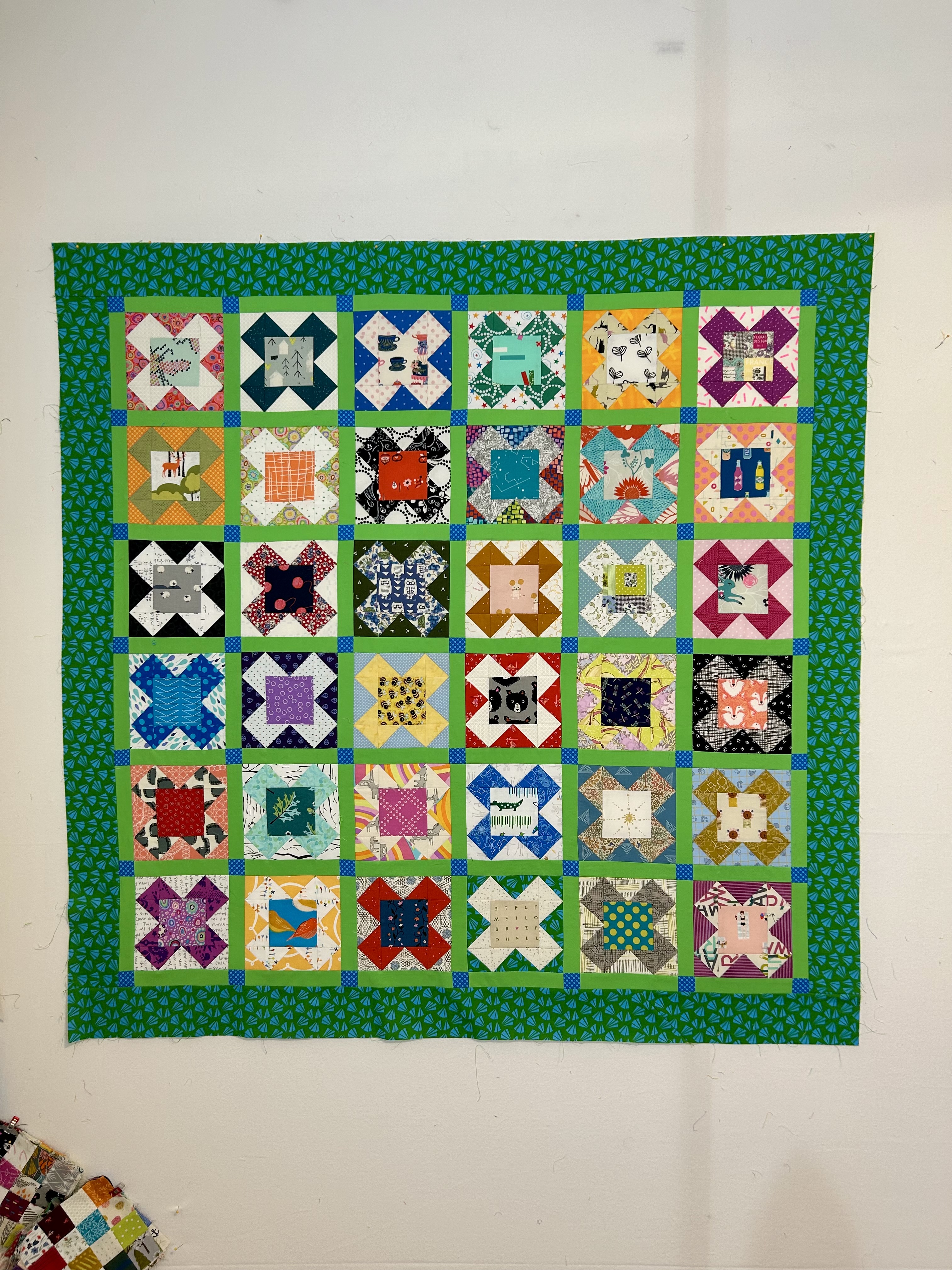
“Pistachio” And “Star Brite”

‘Pistachio” is smiling at me on the design wall, and I got her a backing the other day. So, now she will go on the longarm.

I was going to donate this quilt, but it has turned out so, so cute that I’m saving if for a great grand baby or some other baby I personally know.

Bonnie Hunter is presently working with this X-block as well, and I was able to figure it out from her posts. She designed it for her Quiltmaker magazine column some years back, but I couldn’t find it in their archive.

I made these blocks as leader/enders for some months. It’s 50-inches square.

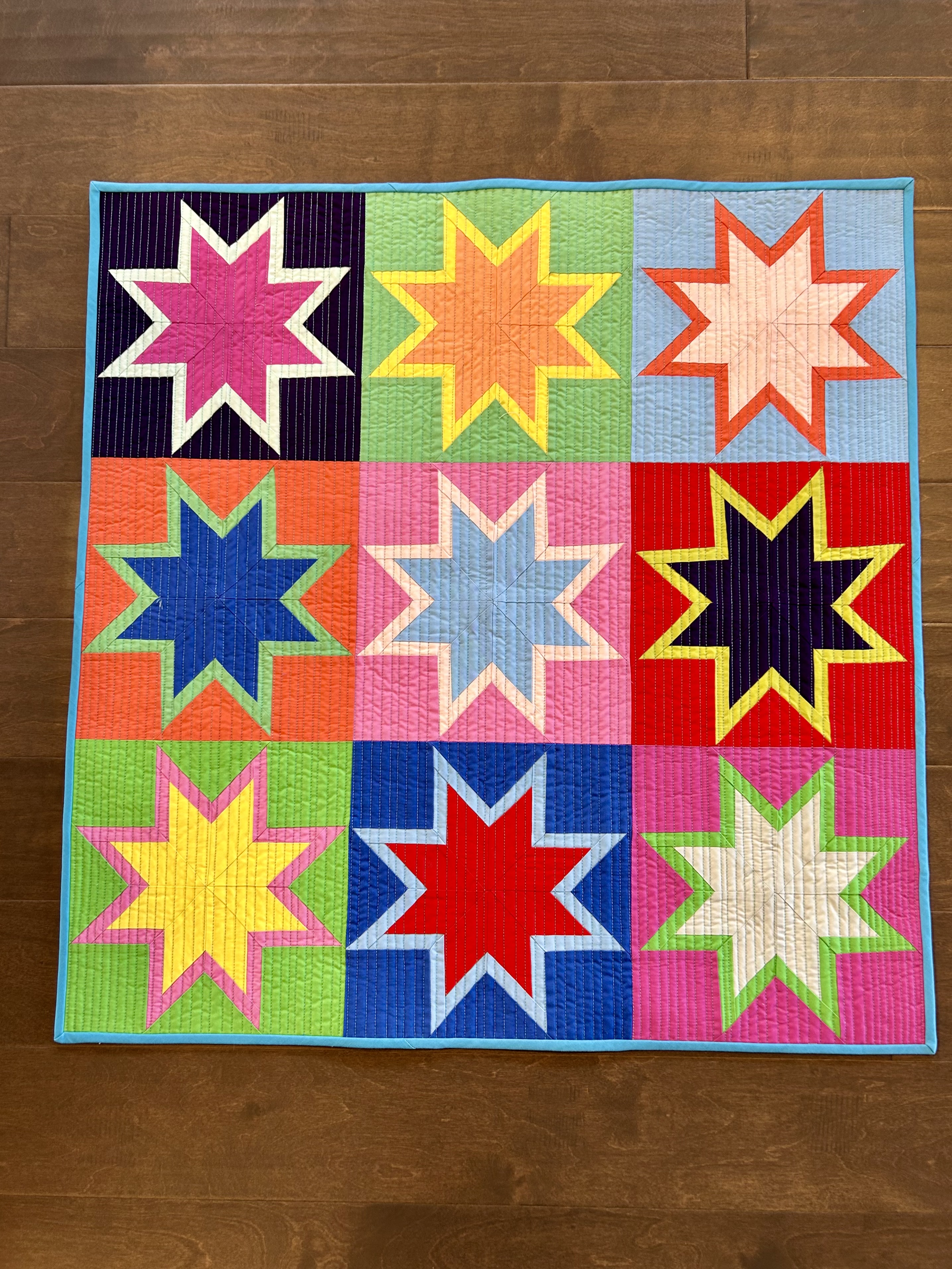
“Star Brite” is finished.

This block was one among many Tara Faughnan gave us for the third month in Blocks3. It is an exercise in how to sew “Y” seams. I liked this block version the best with its medium trim. I added a bright red to Tara’s palette, and the binding is a color I had in my solid stash.

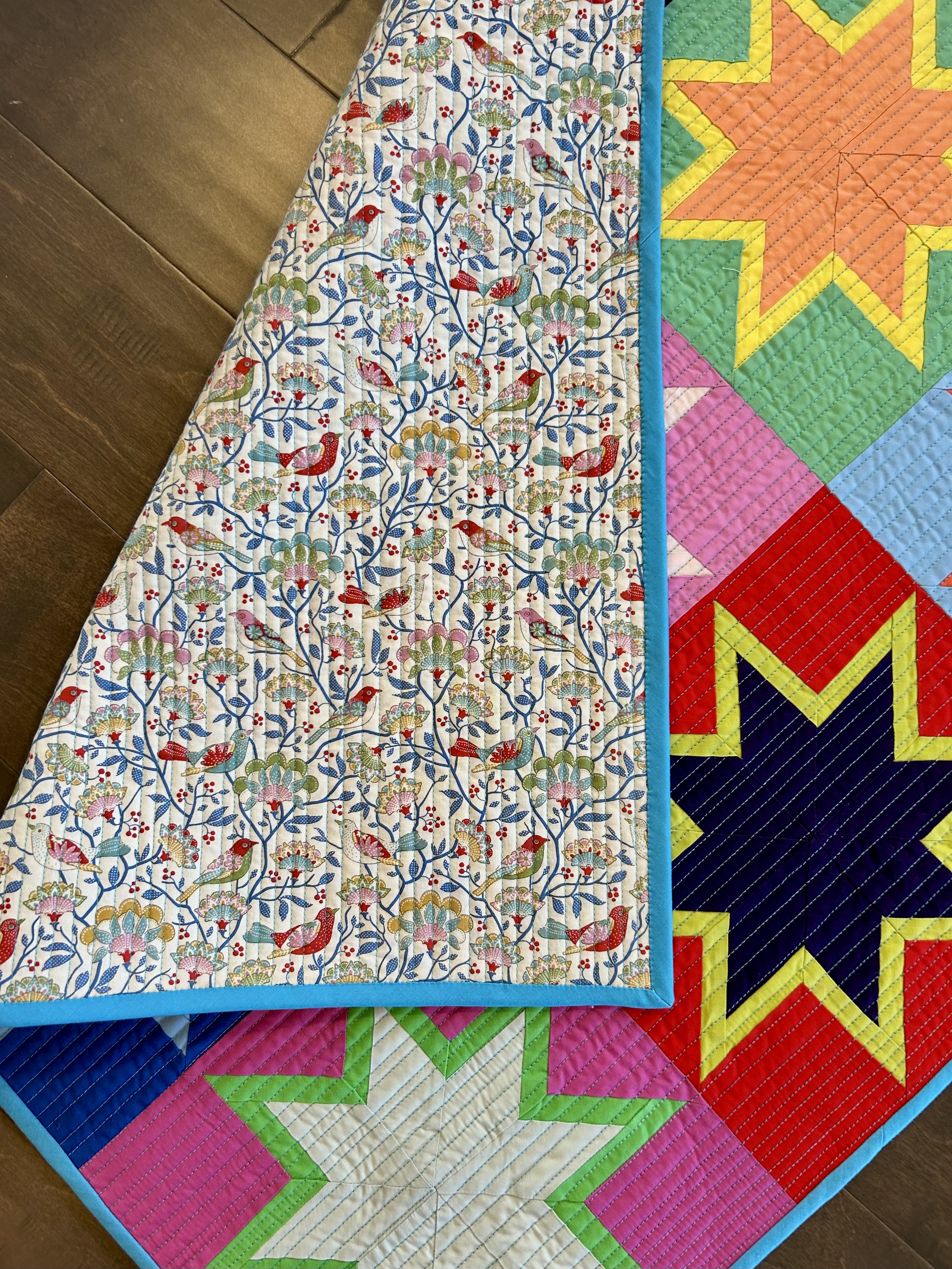
I quilted it on the longarm with “matchstick” lines, which I won’t do again as it is too time-consuming to walk from the front to the back of the machine for each row in order to engage the channel blockers that hold the line straight. (I don’t have a computer system.) AND, it was hard to line up the lines at a consistent width. A domestic machine is a better choice, especially for a small quilt. This one is 30 by 30 inches.

I had leftover Tilda fabric, Jubilee Birds in Trees in cream, for the backing. I do love the Tilda fabrics.

Another “What Is This Bird?” Post

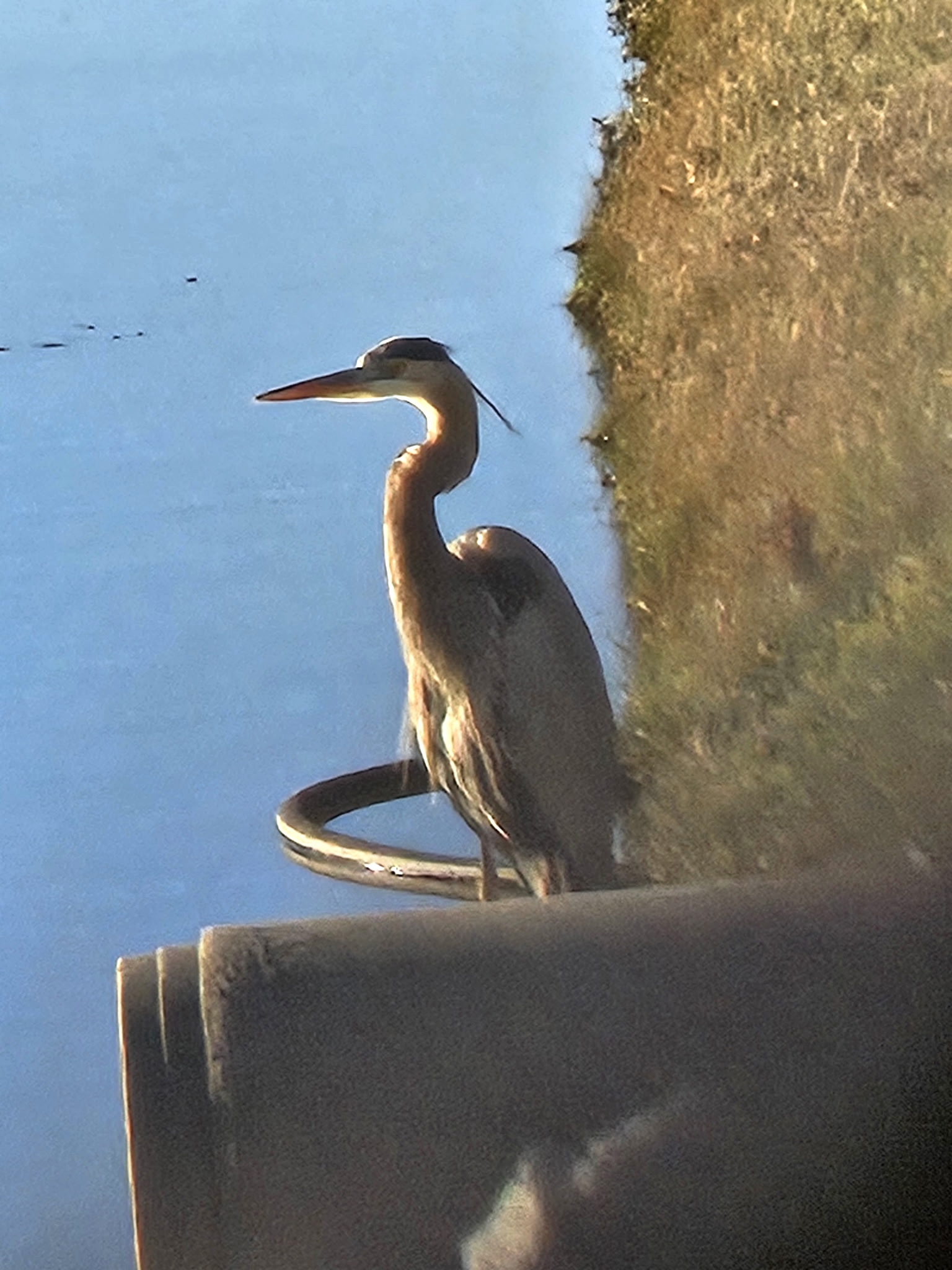
Beloved neighbor and I saw another big wading bird when walking the other day.

What is it?

Note the black on the head and on the belly area (folded wings?), the chestnut area on the neck, the yellow bill, the pale legs.

And in this picture, the long neck is folded down:

It’s a Great Blue Heron.

There are some beautiful pictures on the Kiawah Conservancy web site:

Great Blue Herons

And below is information from the online AI search site that appears when you search Great Blue Heron:

The Great Blue Heron (Ardea herodias) is a large, grayish-blue wading bird common in South Carolina’s wetlands, marshes, and coastal areas like Hilton Head and the Sea Islands, known for its patient hunting of fish and frogs in shallow waters, often seen near lagoons and tidal flats, and building large stick nests from December to March. These graceful birds, standing up to four feet tall with a six-foot wingspan, are a beloved part of the Lowcountry’s ecosystem, easily spotted due to their distinct blue-gray plumage, long legs, and S-shaped neck. 

Key Characteristics in SC:

  • Appearance: Large, grayish-blue body, white head with a black stripe, long legs, and a dagger-like bill.
  • Habitat: Found year-round in various watery environments, including marshes, rivers, mangroves, and coastal areas.
  • Behavior: Solitary hunters that stand still or wade slowly, using their long toes to attract prey before striking quickly.
  • Diet: Primarily fish, but also frogs, reptiles, small mammals, and insects.

• • Nesting: Build large stick nests in trees, with mating and nesting occurring from December to March in the Lowcountry.