Beloved neighbor and I saw this bird the other day while walking. I went home to figure out what we saw.
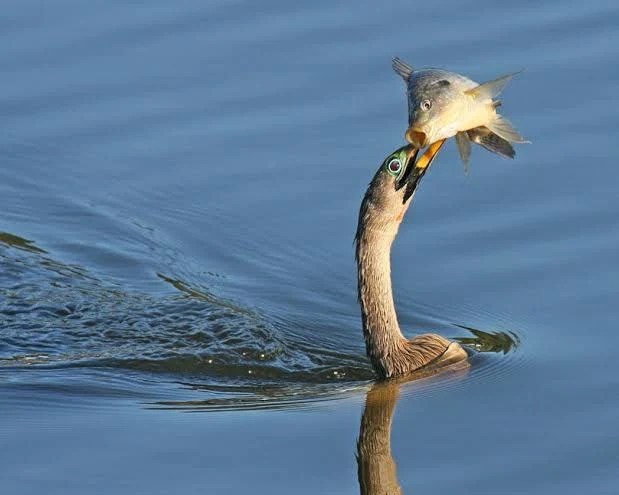
She’s (yes, she is female) an Anhinga, a member of the Darter family of birds as she spears her fish prey with her bill, detaches the fish by throwing it in the air, and then swallows it whole.
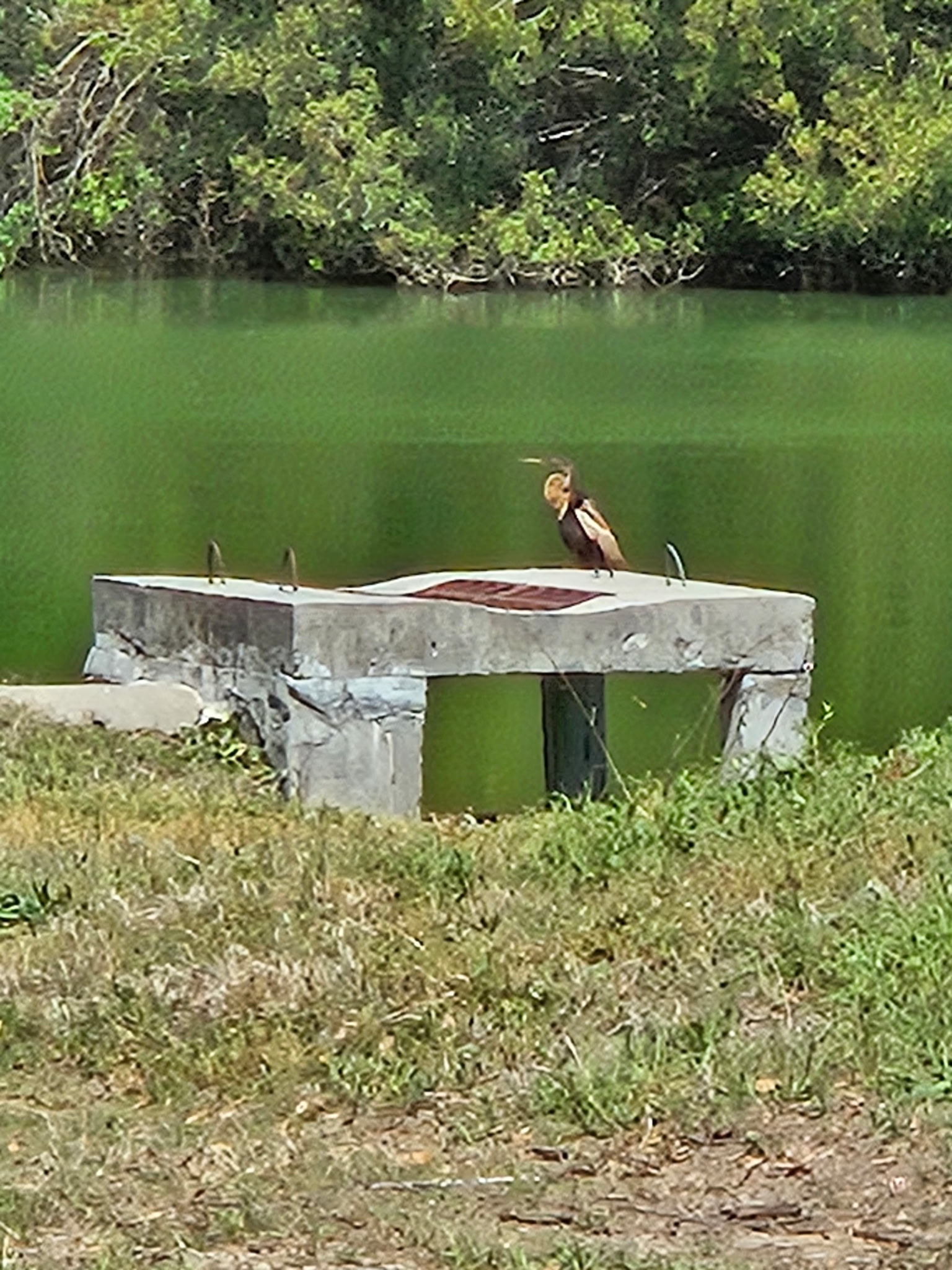
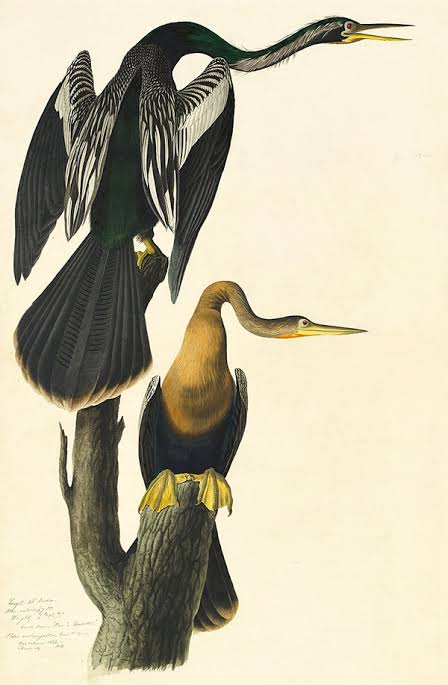
Here’s a good picture of the males and females.
See how she swims with her body underwater?
I found this really interesting video online, but can’t get the link to copy. Search for the following as the search is worth it:
Navarre’s Wild Shots on You Tube: Anhinga Facts
And here’s more information:
The Anhinga, also known as the “snakebird” or “water turkey,” is a large, dark water bird with a long, thin neck and a pointed bill, found in warm parts of the Americas. It hunts fish by spearing them underwater and swims with only its head and neck visible, which resembles a snake. After hunting, it spreads its wings to dry its waterlogged feathers, a behavior that helps it warm up and is often mistaken for a cormorant.
Appearance
- Males: Glossy black with silver/white patches on the wings and tail.
- Females: Have buff-colored heads and necks.
- Bill: Long, sharp, and pointed, used as a spear.
- Eyes: Blood-red, surrounded by blue skin during breeding season.
Behavior & Habitat: - Habitat: Freshwater swamps, lakes, rivers, and coastal lagoons.
- Hunting: Dives and uses its sharp bill to spear fish, which it swallows whole.
- Drying: Sits with wings outstretched to dry its feathers after diving.
- Flight: Soars on thermals, often with its neck and tail held straight out, resembling a cross.
Key Distinctions (vs. Cormorant): - Bill: Anhinga has a pointed bill; cormorant has a hooked bill.
- Tail: Anhinga has a longer, broader tail.
- Feathers: Anhinga’s feathers get wet, making it a better diver; cormorant’s are waterproof.

 Louisa Enright's Blog