As reported by Meterologist Ed Piotrowski, from WPDE tv weather, Myrtle Beach, SC, and shared on Facebook by a local friend:
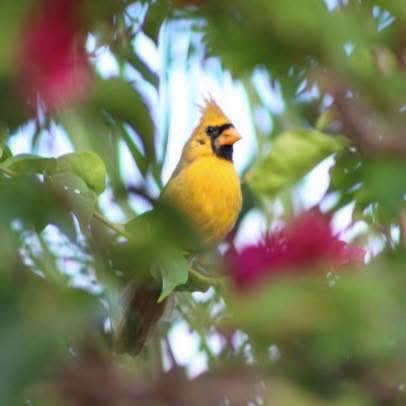
“Your eyes are not deceiving you. That is an extremely rare yellow cardinal seen in Port St. Lucie, FL. Tracy Workman stepped out of her home, saw the bird at one of her feeders, and captured this amazing photo. Auburn University biology professor Geoffrey Hill says the cardinal is in the same species as the common red cardinal but carries a genetic mutation that causes what would normally be brilliant red feathers to be bright yellow instead. Hill calls it a ‘one in a million mutation’ and estimates that in any given year there are two or three yellow cardinals at backyard feeding stations somewhere in the U.S. or Canada.”
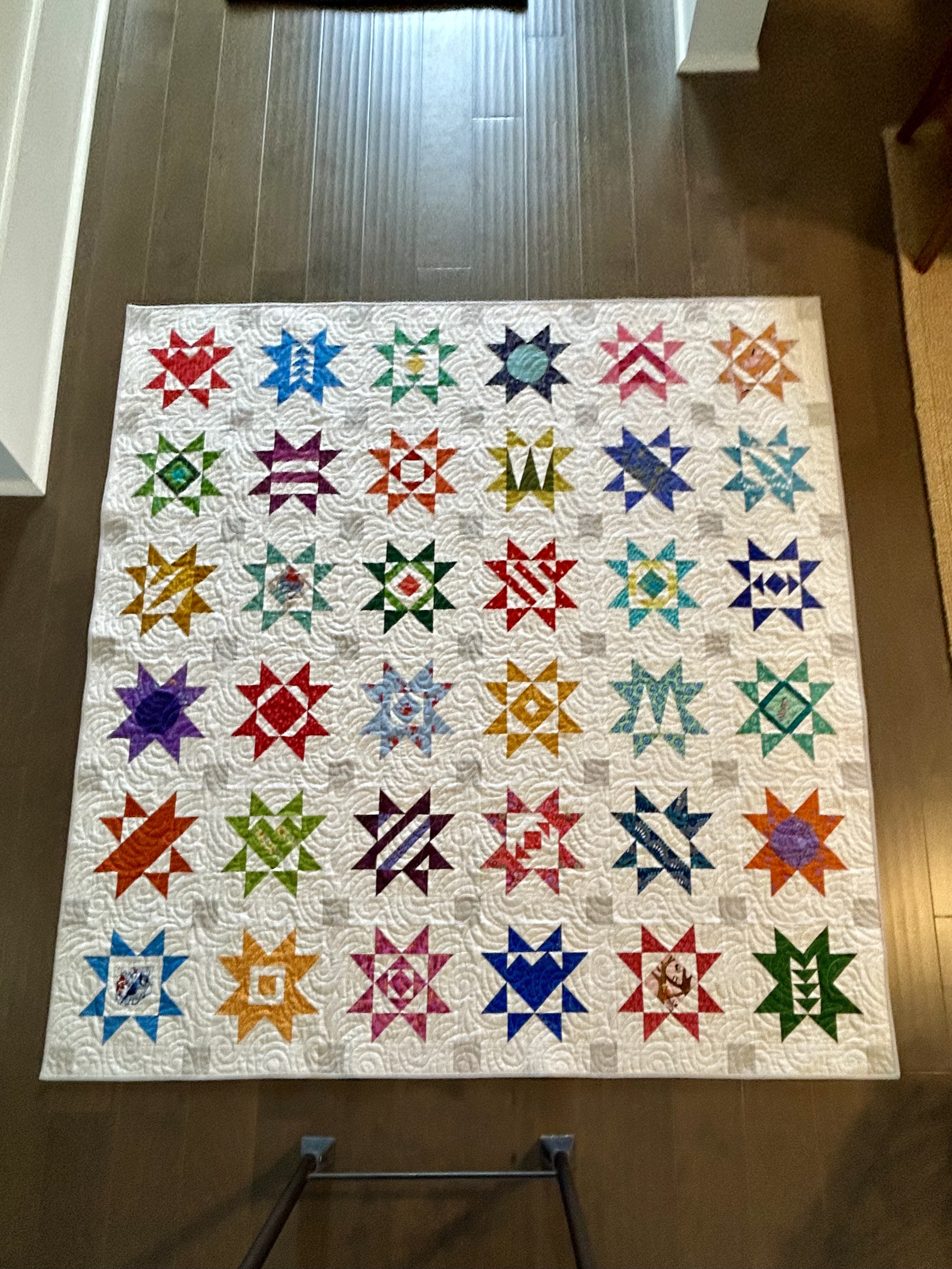
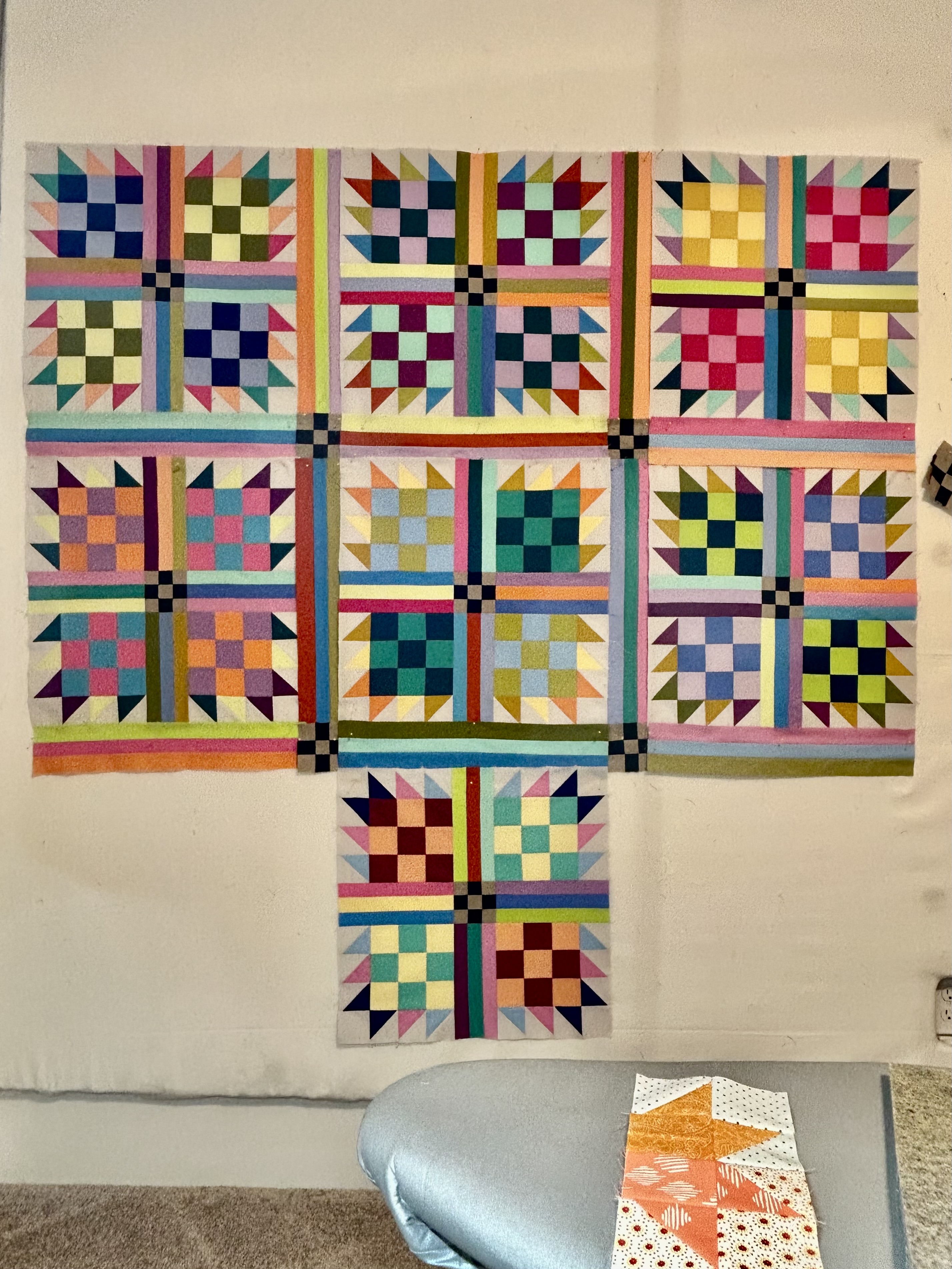
These 8-inch blocks were made using Leila Gardunia’s “scrappy stars” foundation piecing patterns, and the fabrics are from my stash. I bought 25 patterns and chose the 8-inch size. Leila has many sizes and different block amounts to buy. “Circus Stars” measures 62.5 inches square as I used sashings and corner stones to link the blocks.
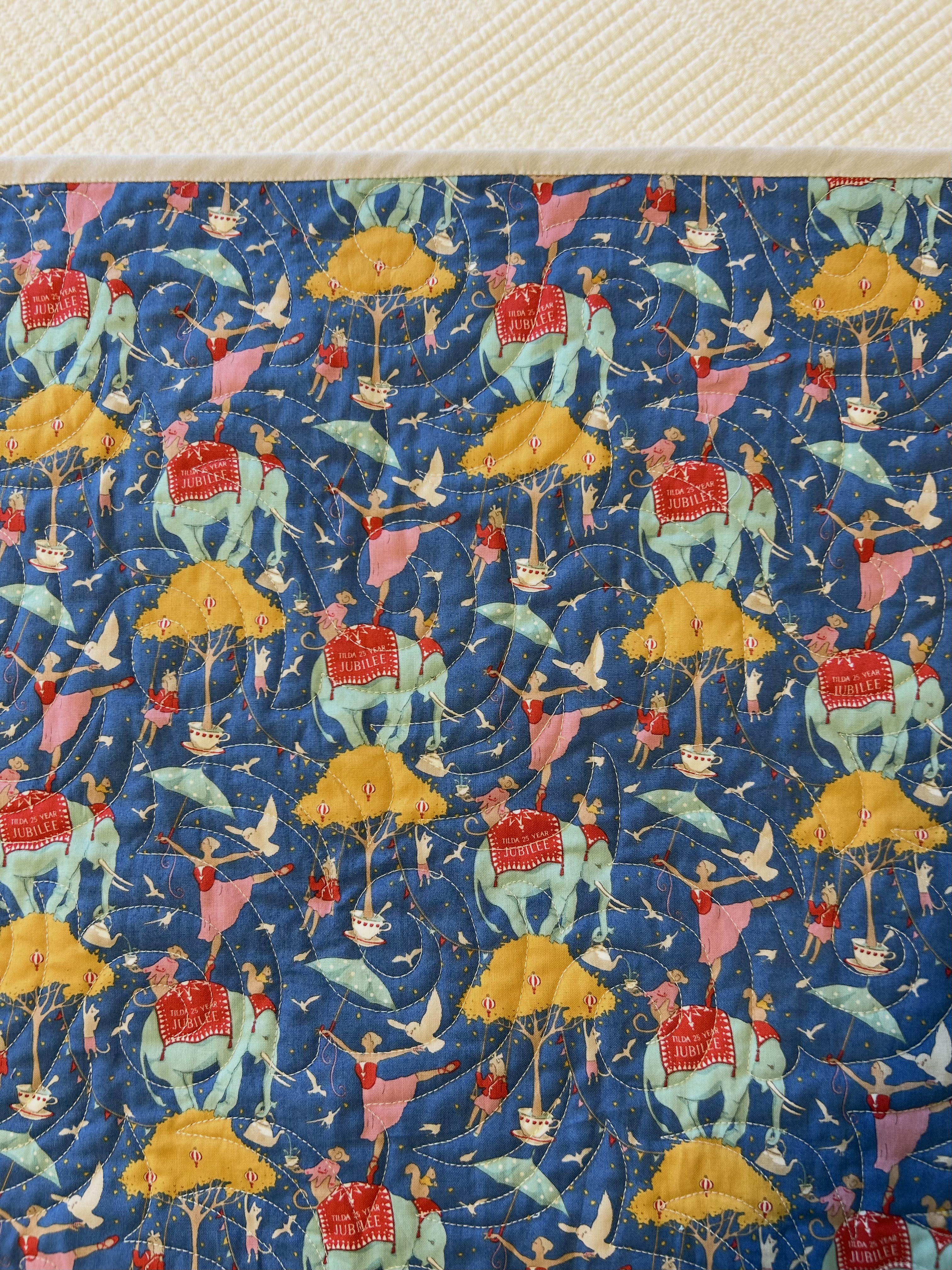
I had a really hard time figuring out how I wanted to quilt “Circus Stars.” Should I longarm it or baste it and do straight-line quilting on my domestic? And what on earth thread color to use that would also work with the adorable Tilda darker backing?
I loaded the backing on the longarm, and laid the batting and top on it. Then it sat there for over two weeks as I delayed making a decision.
Finally, I chose to longarm and to use the Check and Chase pantograph (Lorien Quilting) as it has great texture and curves that would work well with all the straight lines in the quilt. I used a parchment colored thread instead of a stark white as I thought it would be less intense on the darker back and with the colored fabrics in the blocks.
The quilting texture is awesome–and is perfect for this quilt. I am happy.
The backing is Tilda’s World “Jubilee” in “Circus Life” in Jubilee Blue (100E53). And the binding and the corner stones are Kona’s Silver.
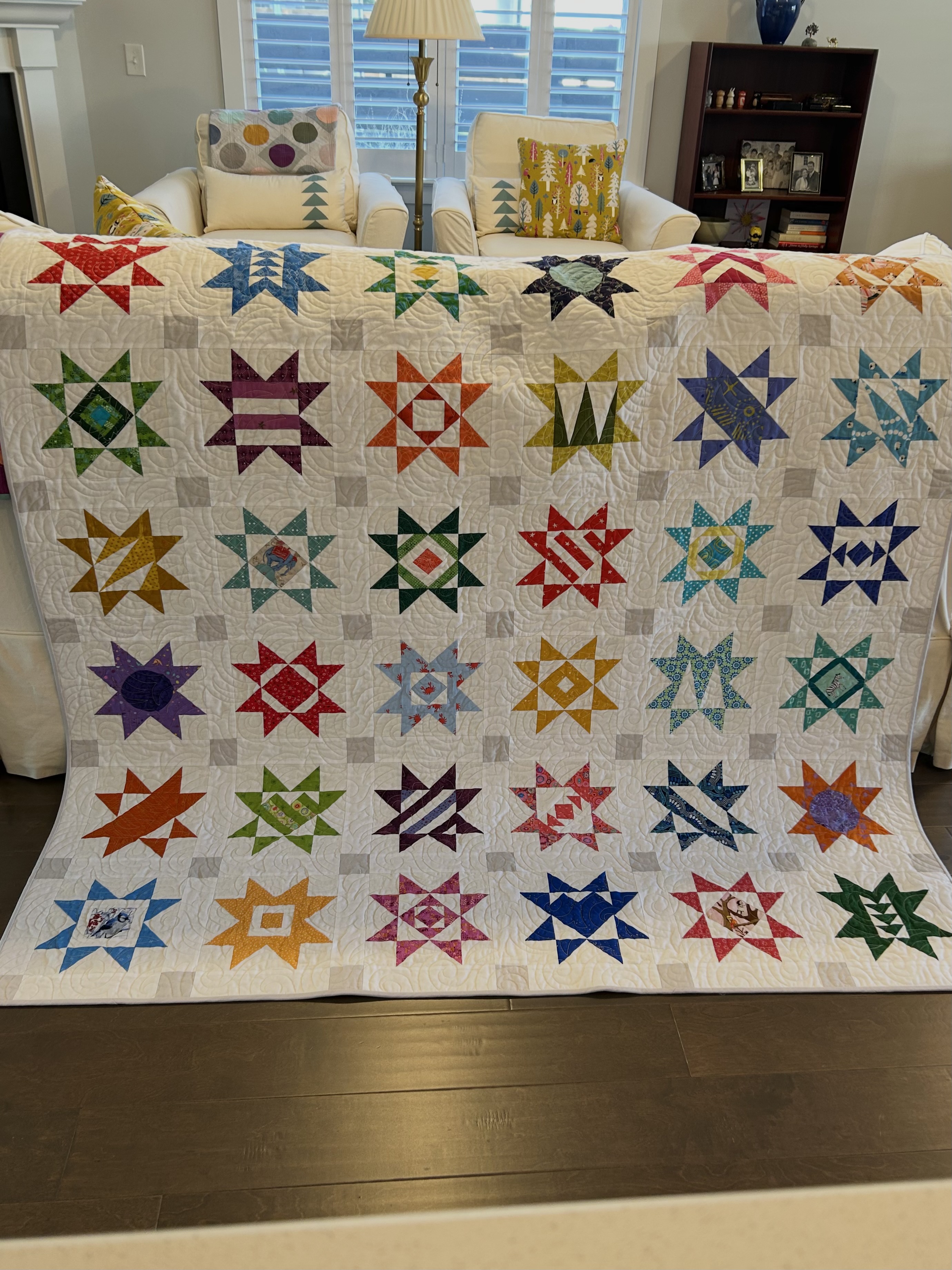
Here’s a picture that shows the size on my 3-person couch.
Leila Gardunia now also has designed scrappy diamonds, if you are interested in that kind of project.
I really enjoyed making these blocks and each was a “play break” until they took up too much room on the design wall so the quilt became a primary work until it was finished.
“Circus Stars” is a happy, handsome quilt. I’m pleased.
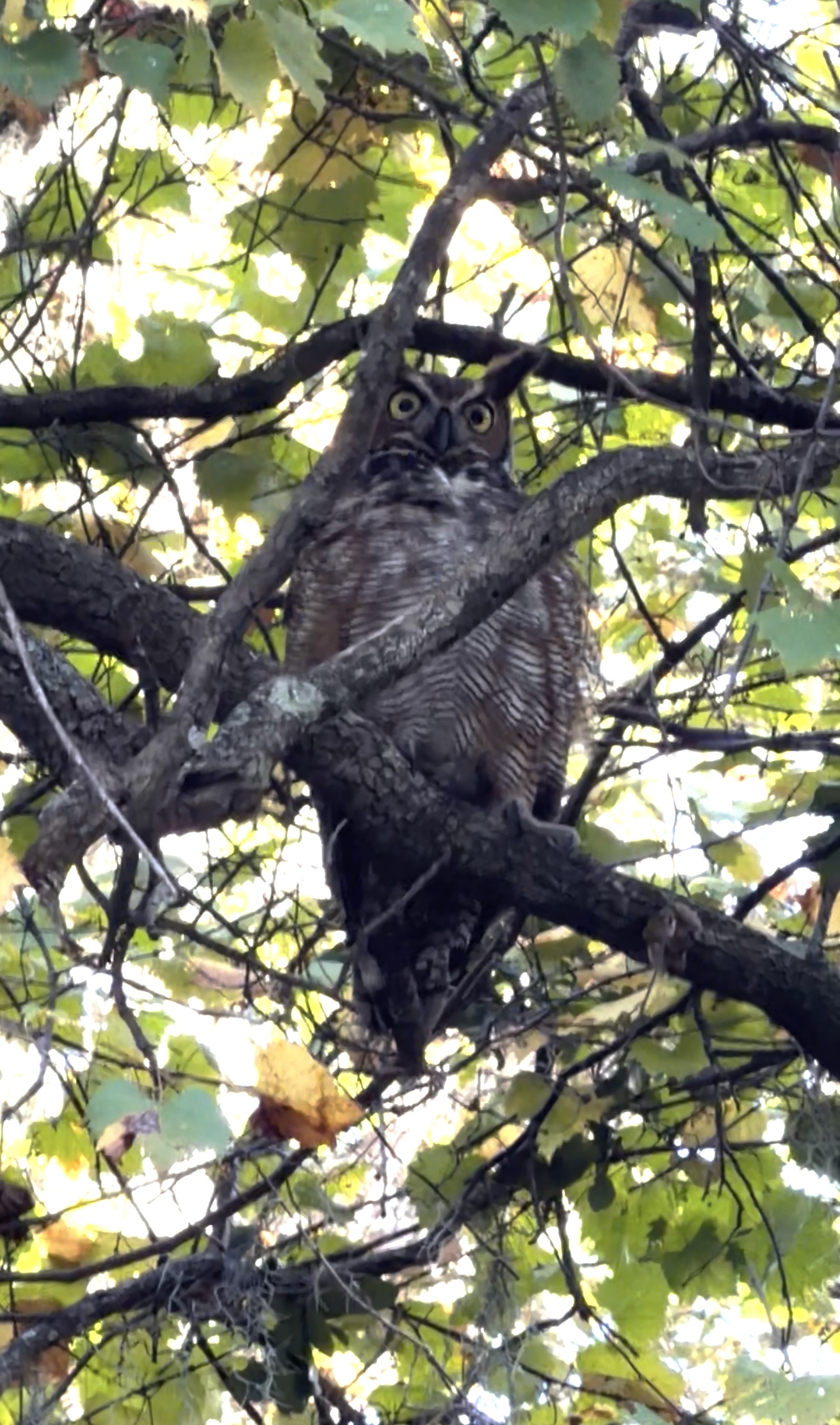
I slowed down yesterday to identify this owl who visited my son and DIL’s yard the other day–and who appears in the video I posted yesterday.
Screenshot
It didn’t take Grok any time at all to identify this owl:
This is a Great Horned Owl (Bubo virginianus).
Key identification features visible in your photo:
• Prominent ear tufts (“horns”)
• Bright yellow eyes
• Large, robust body with mottled brown, gray, and white plumage
• Heavily barred chest and belly
• Distinct facial disc with a white throat patch
These traits rule out the Barred Owl (no ear tufts, dark eyes) and the smaller Long-eared Owl (proportionally longer, closer-set tufts and a more slender build).
Great Horned Owls are common year-round residents across the southeastern U.S., including the Charleston/Mount Pleasant area, and they frequently roost in wooded neighborhoods and wetland edges like the one in your photo.
This week Cornell Labs sent me the video of the online program they did that covers some really interesting information about crows.
I finally slowed down to watch it while I sewed binding on “Circus Stars.”
The program is indeed very interesting, and I learned all sorts of new information on crows. I knew they were smart, but they are, and so much more too.
Here’s the link. The video is a little over an hour, and there is an introduction about Cornell Labs location you can scroll past if you like in order to get to the actual program.
And as an extra treat, DIL Tami Enright sent me this video of an owl in her backyard on Isle of Palms–complete with all the local crows sounding the alarm that an owl has appeared. The owl is so, so handsome.
Enjoy! And have a great week next week. Plan at least one thing that is fun.
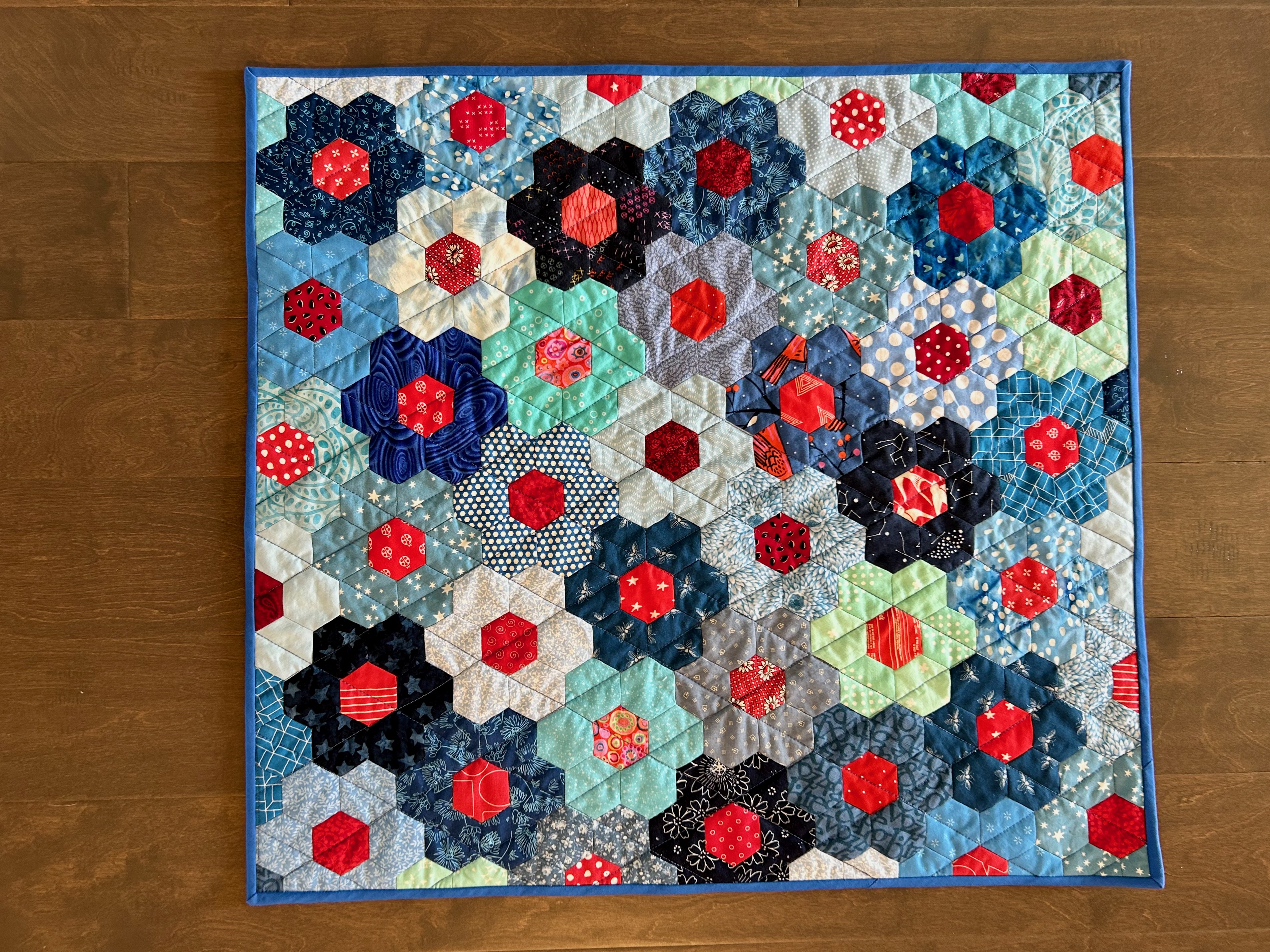
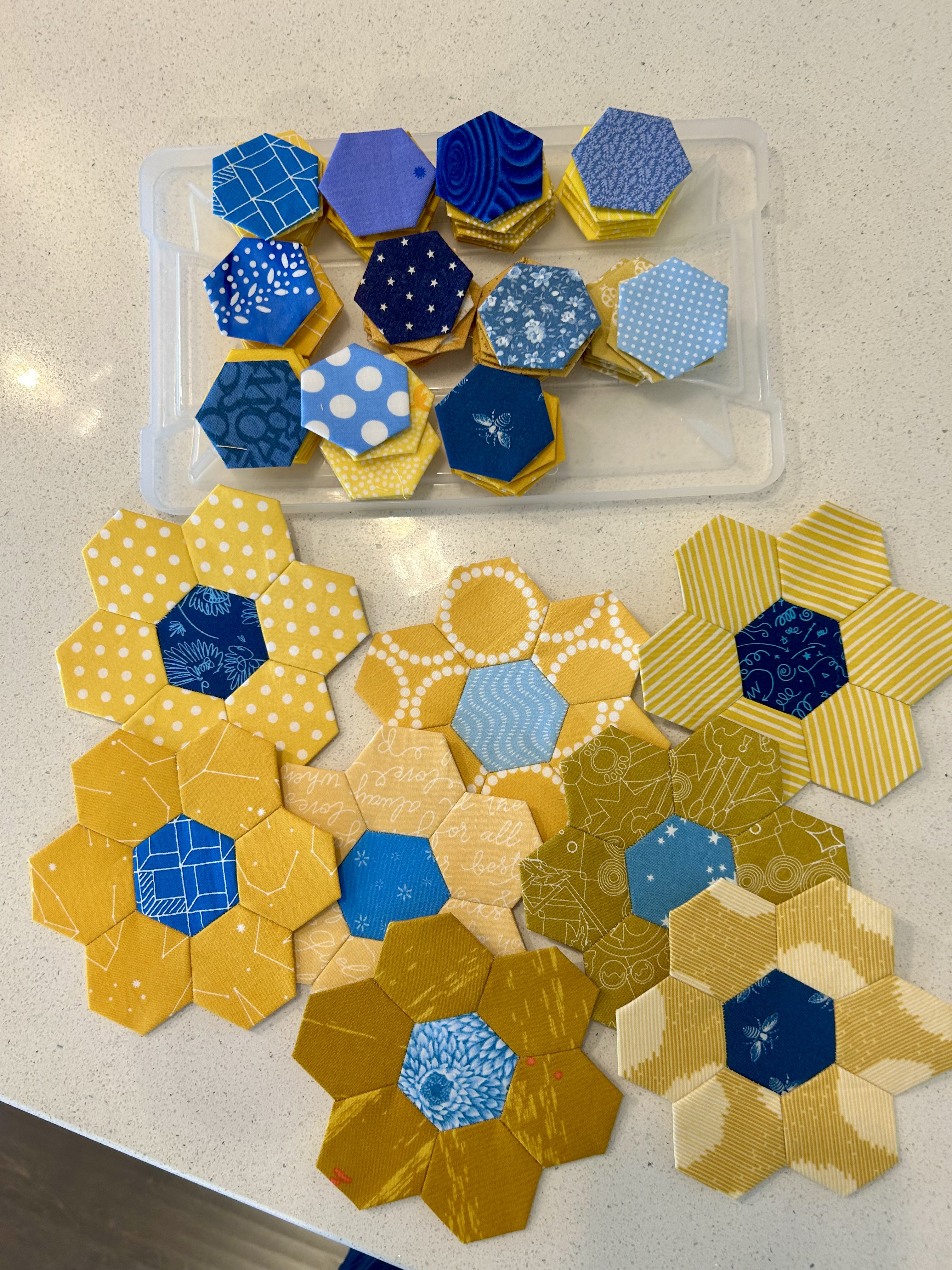
I’ve made quite a few full size quilts using English Paper Piecing–enough that I burned myself out for several years. Then at a monthly quilt meeting a month or so back I sat next to another member who was setting up 1-inch hexagon EPP pieces using the basting method to secure fabric to the paper templates. (I always used glue in the past.)
I could feel my fingers itching, and I didn’t have any night sewing at the moment. The next I knew, I had started “Bluebells,” which was (and is) intended to be one of my 12 monthly “table toppers.” And, yes, I used the basting method, which goes faster than I expected and is way less messy than removing the paper templates that are glued to the fabric–though sometimes less secure.)
At one point I had to take apart the work I had done as it wasn’t going to nest so that the center red pieces stayed in line with each other. I learned that the line of blocks HAS TO BE on a diagonal line–otherwise you get holes as the pieces don’t all nest together.
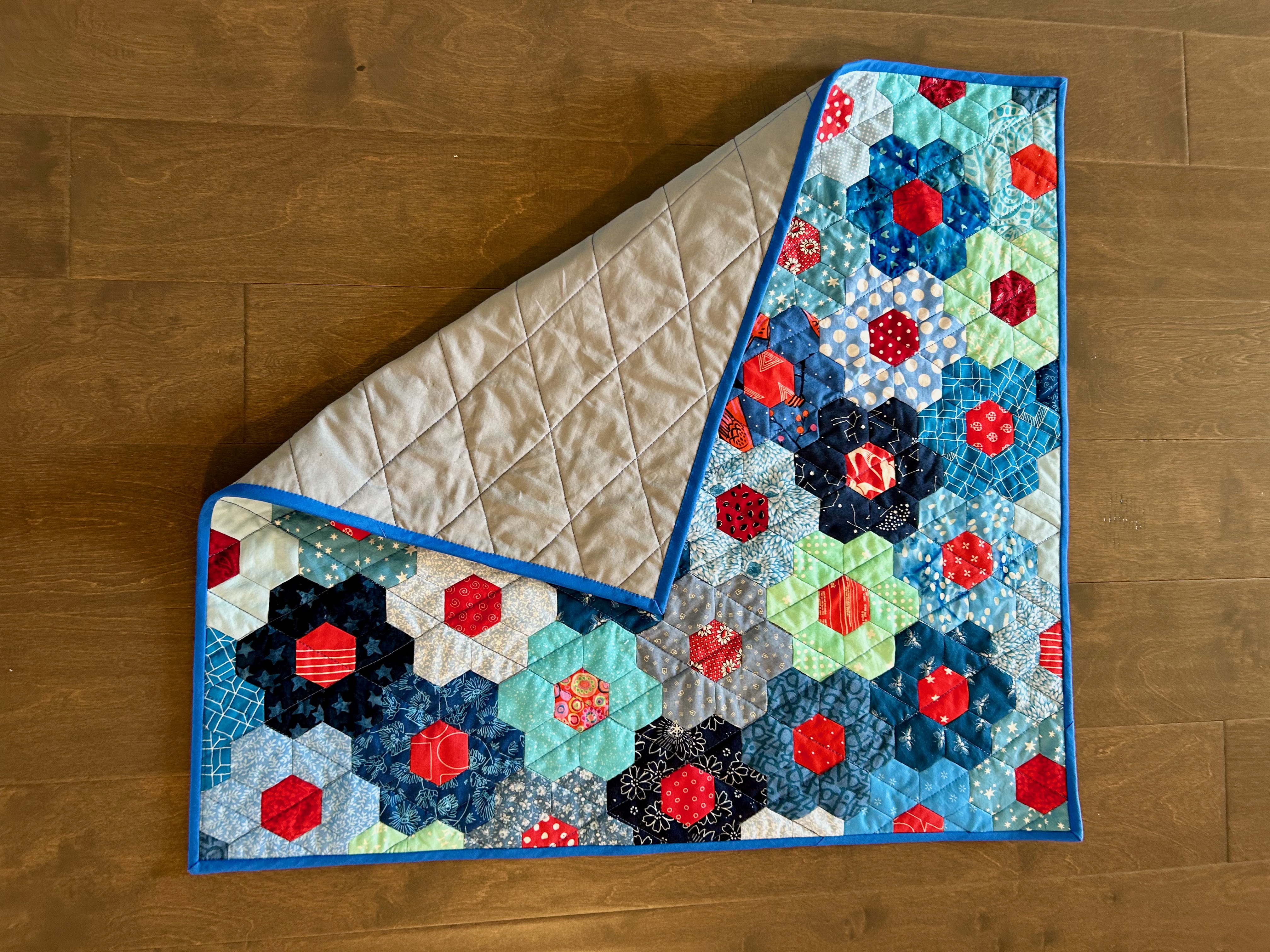
I cut the sides straight in the regular way after I machine quilted with a simple diamond pattern. I thought hand quilting would be difficult due to the bulk of the hexagons. It measures 25 3/4 by 28 1/2, which is a good size for a table topper. The backing is Kona Titanium from my stash. Indeed, all the fabrics are from my stash.
And look what is happening now:
How fun are these cuties!!
“Goldie” by Then Came June only needs two more blocks, and one of those is cut. It has been a bear to make as every single unit has to measure perfectly, but it will be a handsome quilt and has been good practice for me.
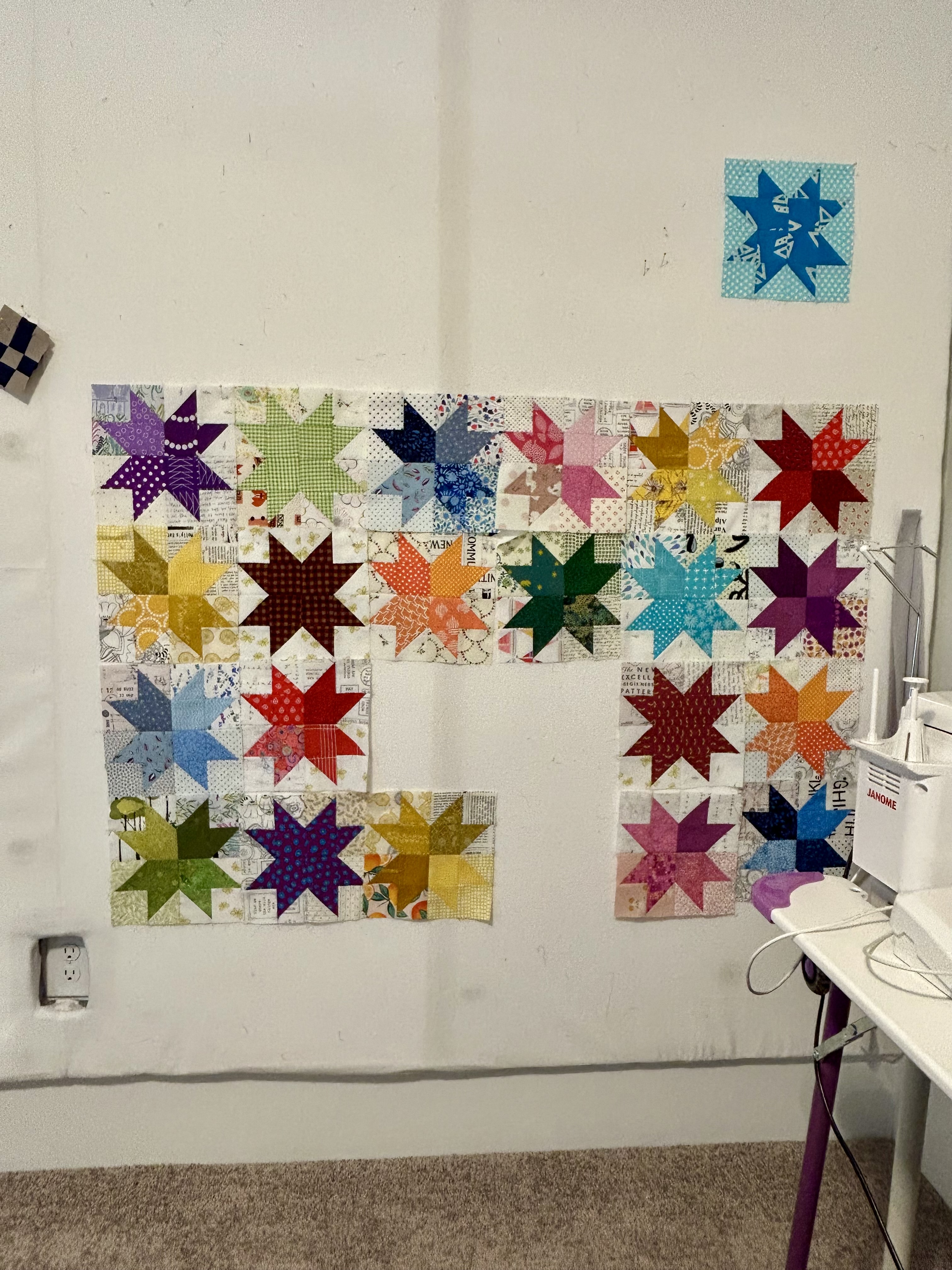
My current leader/ender is growing–made from Bonnie Hunter’s 2026 leader/ender free block, “Tulip Swirl.” It will be 8 by 8 rows I think, but maybe I’ll separate the stars with neutral blocks. I’ll decide later. This is the second quilt using this block–the first top has a different layout and is going on the longarm next. Later today I’ll set up its backing and, maybe, load it on the longarm.
Leila Gardunia’s Scrappy Stars blocks (I bought 25 of them) project is quilted, trimmed, and bound. I’ll do a separate post on “Circus Stars” soon as I still need to take pictures. It is adorable!
It’s already November 7th, and I don’t have a December table topper. Oh my…
I hope this finds you all having a good weekend. We got rain last night–1.5 inches, which was desperately needed. And due to the onging very dry weather, my azaeleas on the side of the house have a bad infestation of lace bugs, so I have to deal with that today.
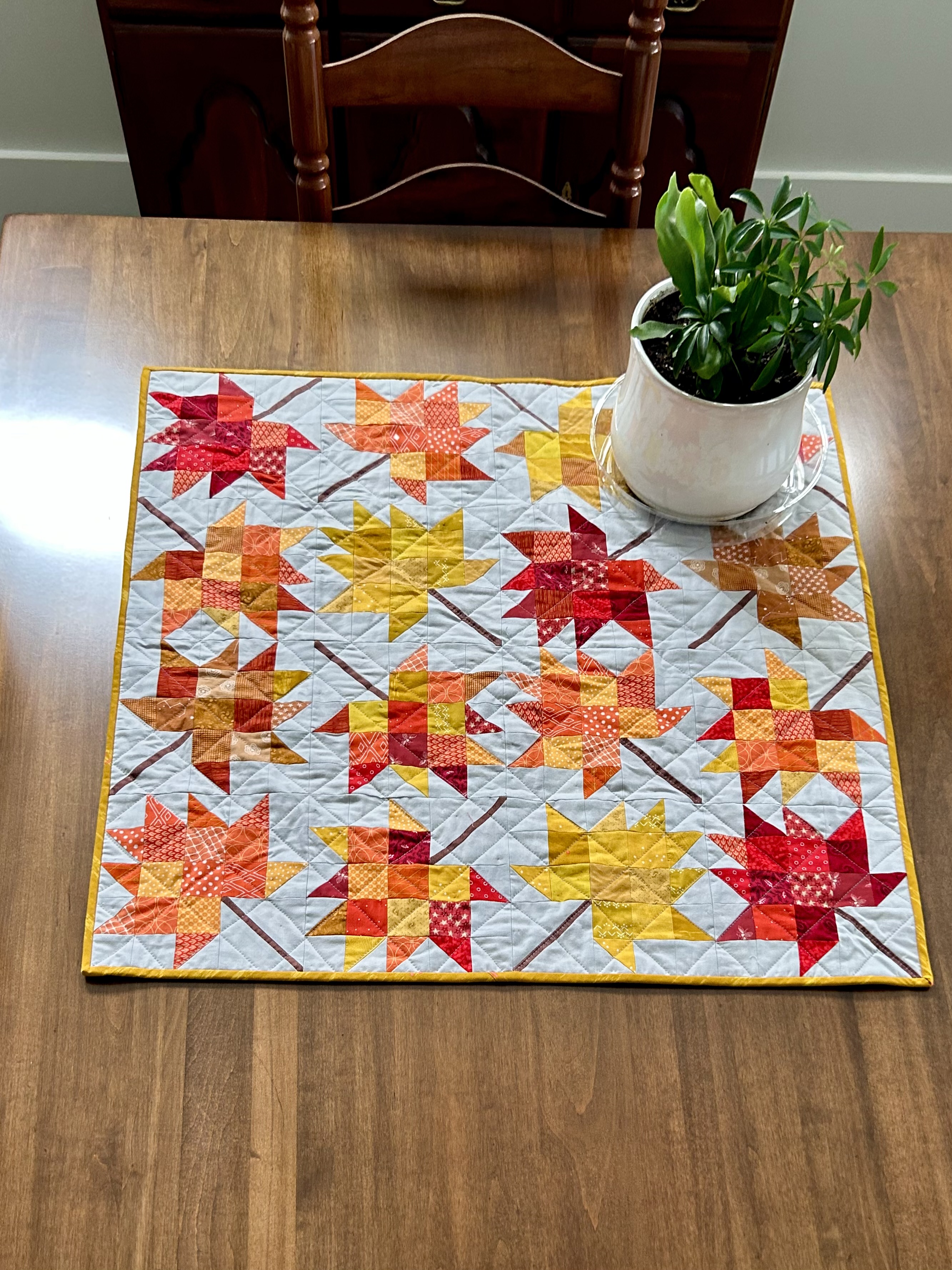
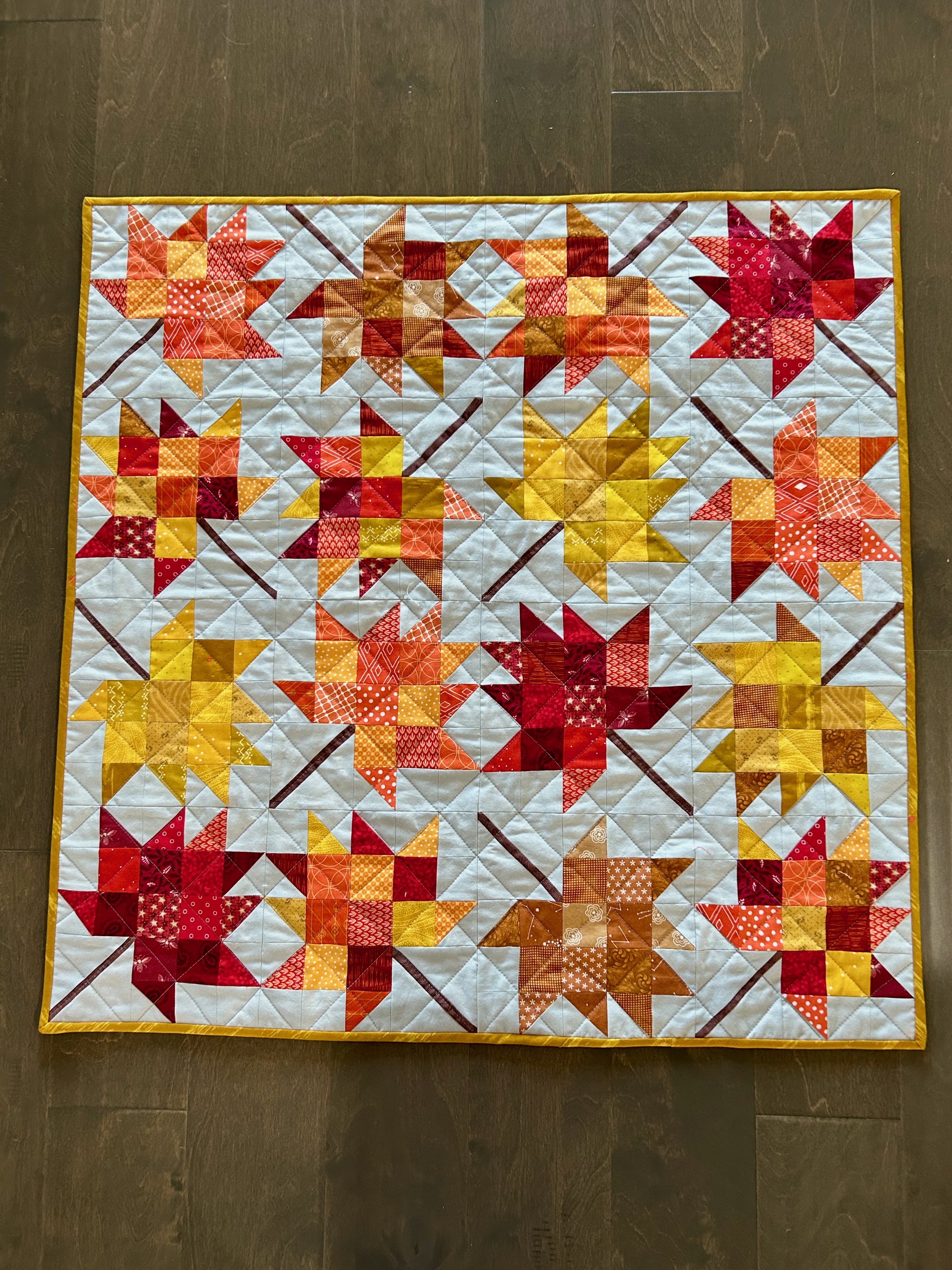
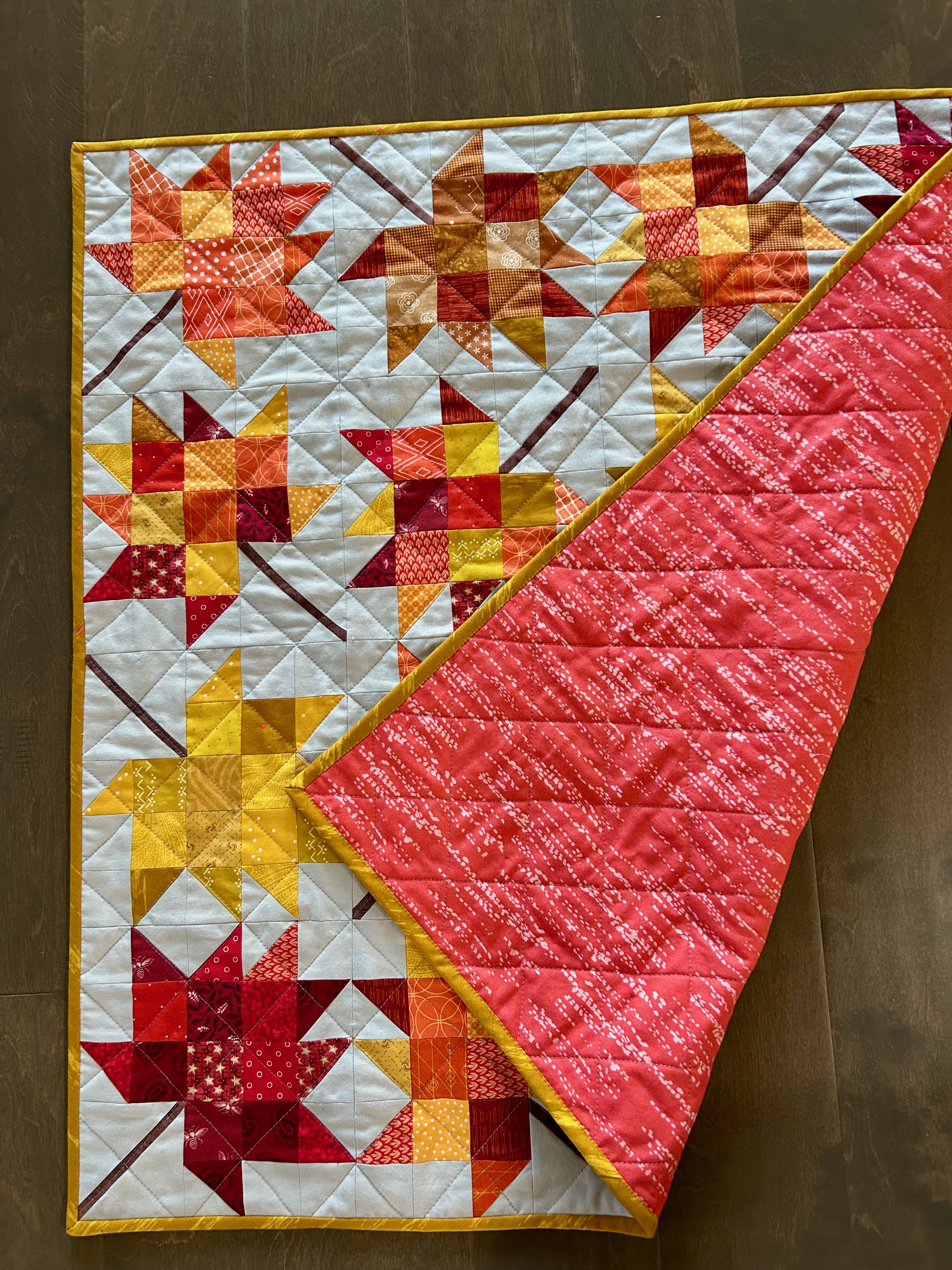
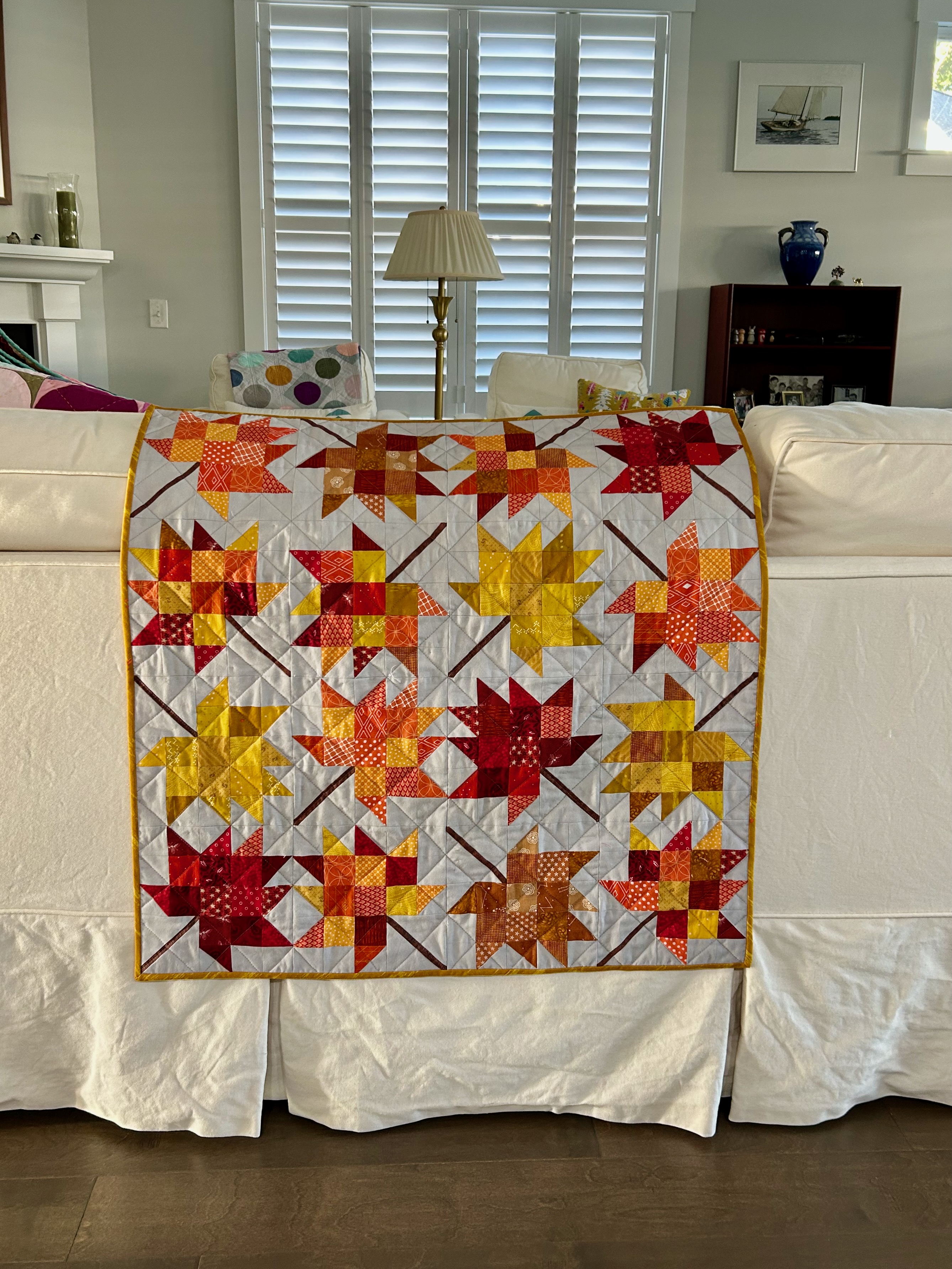
The “leaves” are from Rachel LaBour’s pattern, “Under the Maple Tree,” which I made some months back. Rachel’s blog is “Stitched in Color.” I love her patterns.
I had this backing fabric in my stash, leftover from another quilt backing. But what was its name? My archive came to the rescue: it’s “Seams” by Figo Fabrics, Ghazal Rabaul, 92017, in coral.
The binding is “Canvas Gold,” Sun Print Textures, Alison Glass, #1284. (No, it is not canvas, that’s just the name.
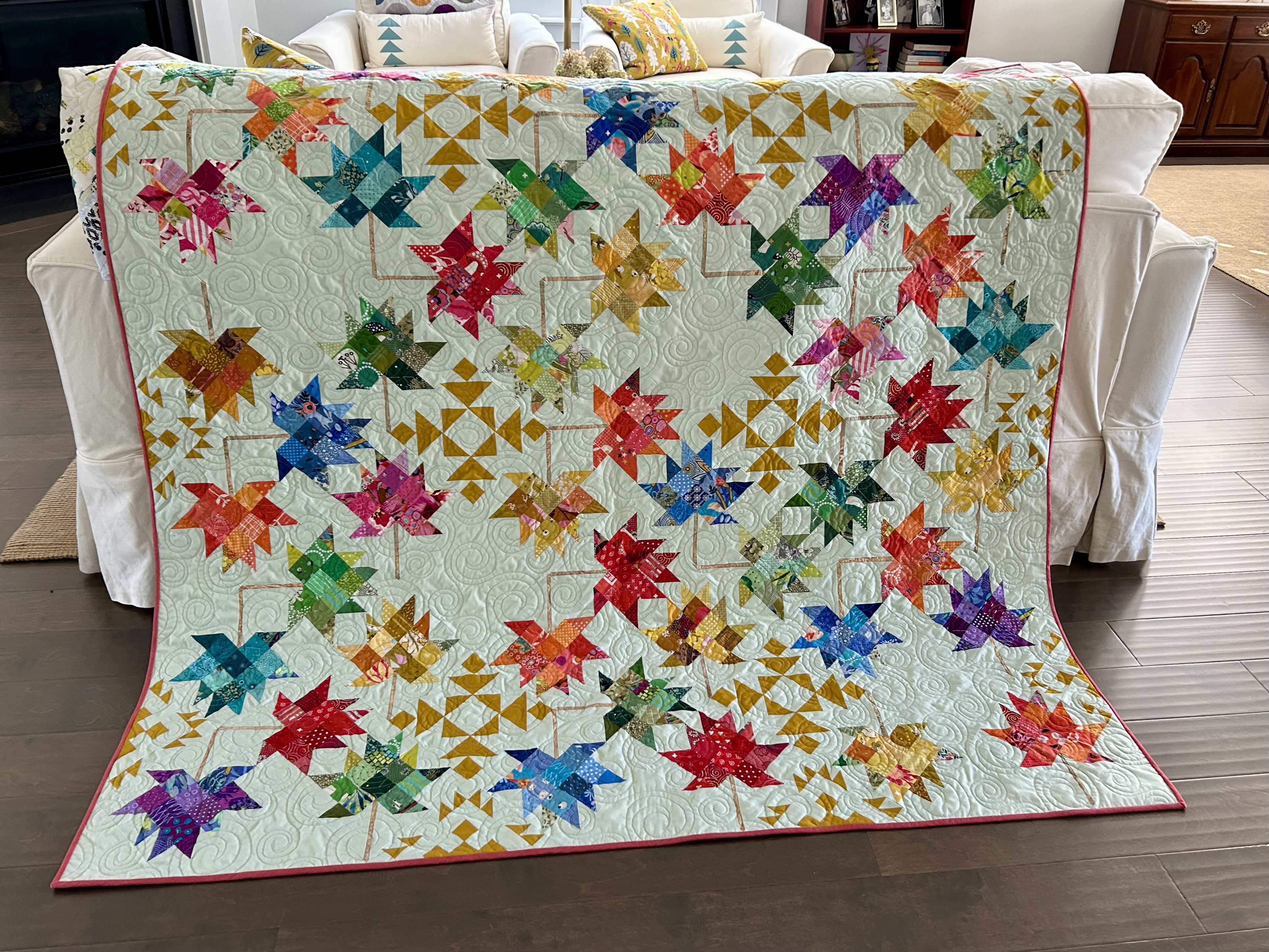
And here’s a reminder of “Under the Maple Tree.”
Have a great week everyone! It’s warmer than usual here for November, but we are not complaining. These days and cooler nights are reminding me of summer in Maine. We need rain though, and that might come here and there in the next few days.