Books, Documentaries, Reviews: Vinalhaven Trip and Great Reads This Summer

Books, Documentaries, Reviews:  October 17, 2013


Vinalhaven Trip and Great Reads This Summer


I have belonged to a book club here in Camden for eight or so years now.

I treasure my book club in many ways, but perhaps one of the best reasons I do is that I wind up reading books I would not have discovered or, even, chosen on my own.

We don’t always agree on which books we like–and that enriches our discussions.

We are NOT all on the same political page either, though we are all caring, good people.  Those differences adds to the discussion, too.

There are six of us at the present time:  three sets of neighbors.  I was invited to join this book club by my neighbor Sarah Rheault, and I am grateful to her for that invitation.

In the summer for many years now, Sarah has us out to her summer house in Cushing.  There are pictures elsewhere on this blog of some of the views from her house.  We sit outside, snack on savory tidbits, eat lunch together, and talk and talk.  This year was no exception, and we all look forward to this summer event.

This year, we upped the ante.  Book club member Sally Burnett-Lessor and her husband Norbert bought an old house about three years ago on Vinalhaven–one of the offshore islands.  They’ve been summering out there, and this year rented their Camden house and spent their whole summer on the island.  And, loved it.

Sally invited the book club to come and see the house, walk the island, and have lunch.  We took her up on her offer, rode out on the ferry, and had a wonderful day with her and Norbert.  I wish I had taken pictures of all the beautiful work this couple has done on their old house–to include adding an astonishing glass room which they built themselves off the redone kitchen.  (Next time, for I hope we have just established another summer tradition.)  They are both amazing craftspeople, and the house shows many loving restorative touches.  The tiled bathrooms are beyond belief.  It’s exactly the sort of house I treasure–two stories; narrow, old stairway going upstairs; painted, wide-planked, crooked wooden floors; a great front porch, and on and on.  The house is furnished with woven rag rugs, old pieces of furniture collected with love and delight, and many of Norbert’s own photographs.  (He has a great eye.)

Here are some pictures from our day–but not ONE of the house.  How dumb was that?

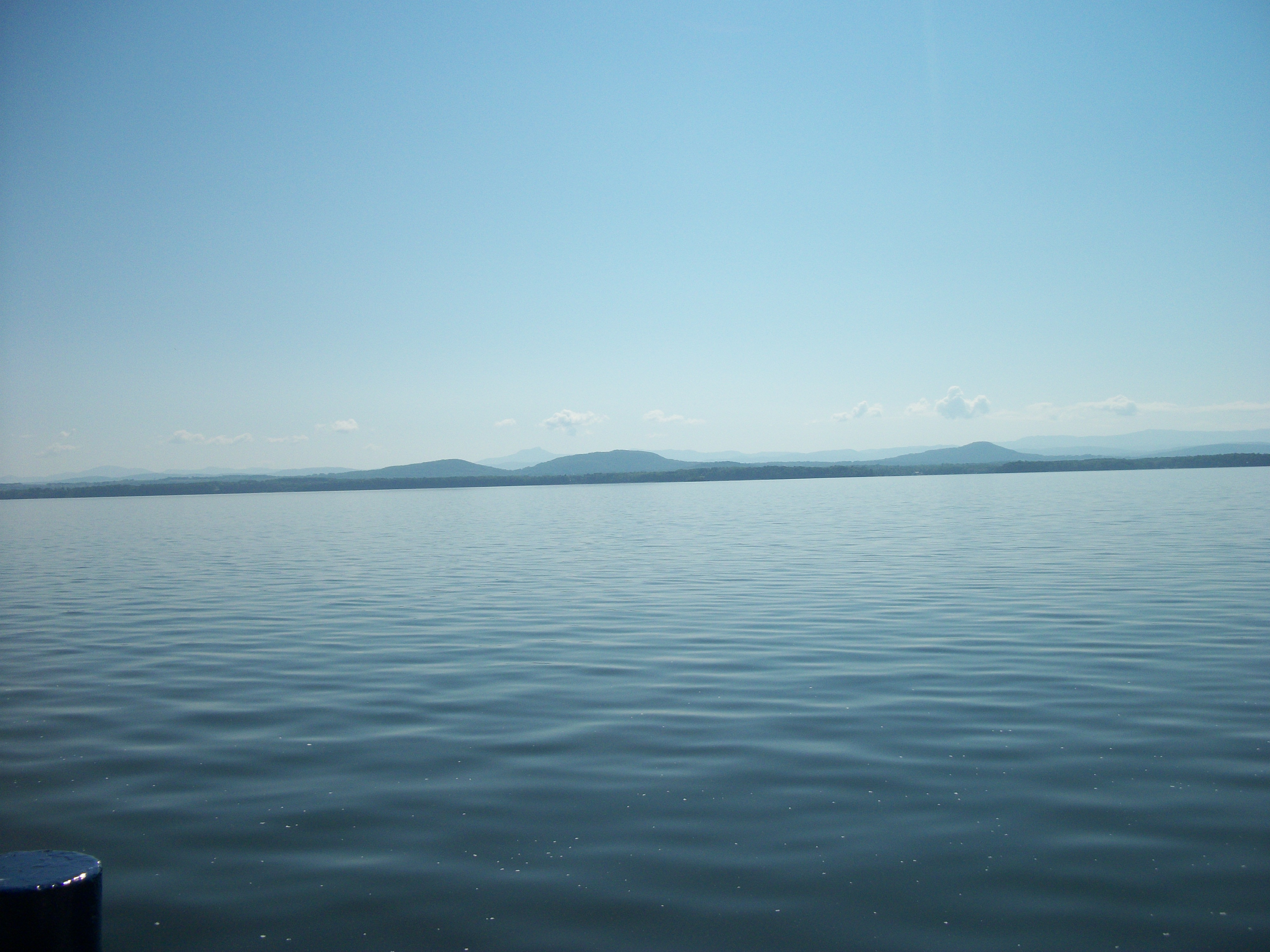
First, as we came up to the Vinalhaven harbor entrance, I looked back to see the Camden Hills where we started.  This look back is a beautiful part of this ferry trip:

Vinalhaven ferry view going

Vinalhaven is a working fishing village.  There are some stores and a sturdy restaurant.  One can walk to some interesting places, like the local refuge we visited, which is lovely.  But Vinalhaven is a working fishing community first and foremost, and that’s why one might want to visit and see what that’s like.

Here’s a video I took as we came into Vinalhaven harbor.

Here’s a picture taken from the far side of the harbor as we walked to the preserve.  The main part of the village is beyond the spit of land.  I think this creek in the foreground is called Indian Creek.

Vinalhaven from Indian creek

Here’s a shot from inside the preserve.  It does capture how very blue the Maine water is on a sunny day.  That’s open ocean beyond the island shore.
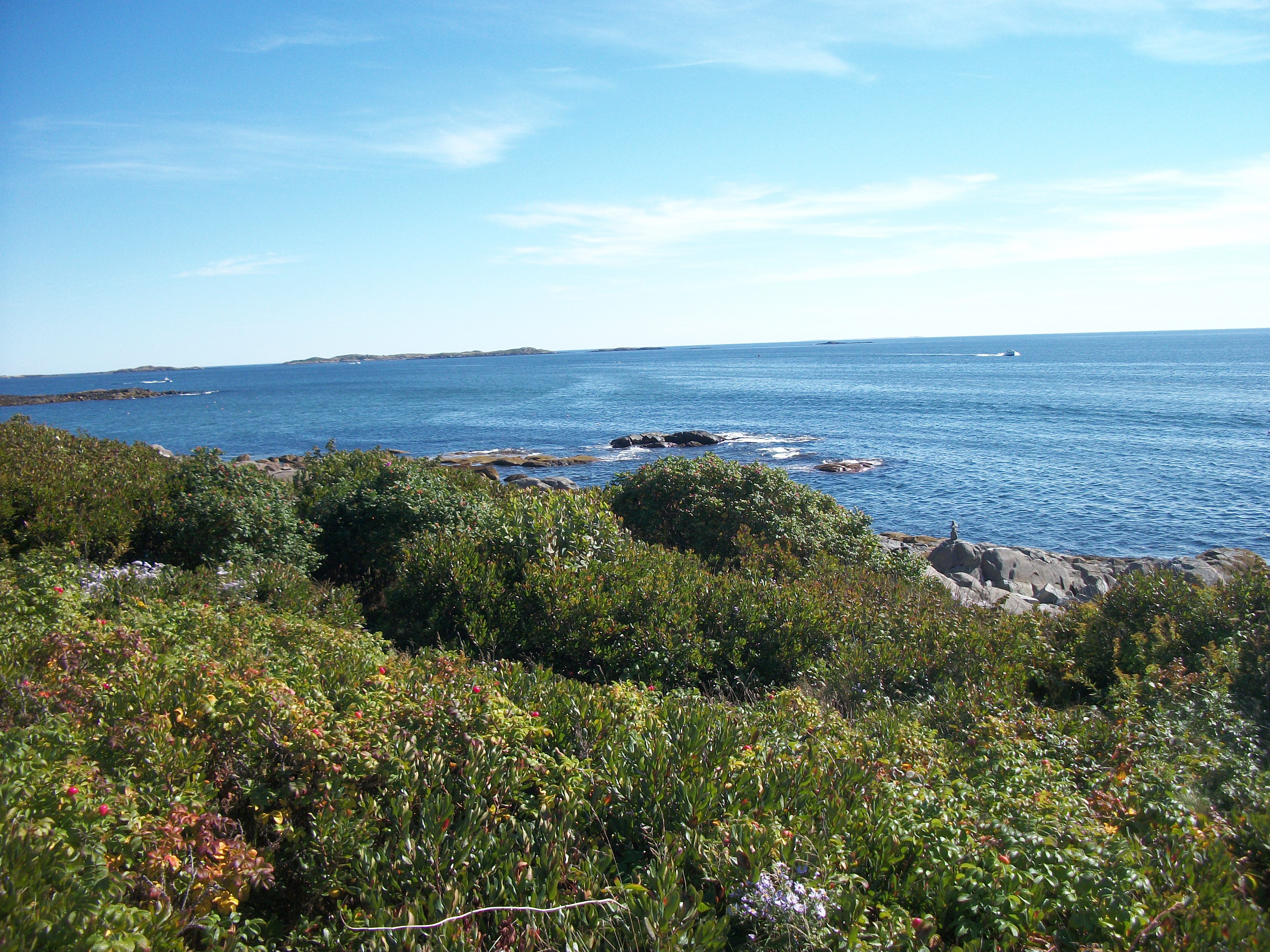
Vinalhaven 4

Bayberry bushes covered this hillside.  The smell of them was heady and rich.  And in the background are the firs that writer Sarah Orne Jewett called “pointed firs”–as in her novel The Country of the Pointed Firs.  Jewett was the same vintage as Willa Cather, who also lived on the Maine Coast.  And, Lura Beam, who wrote A Maine Hamlet, which was a very good sociological study of what happens as families expand and dividing the land their parents owned became more and more difficult.

The other gal in this list is Ruth Moore, and I read every one of her books I could get when I first came to Maine.  Especially after I was told that people used to put bumper stickers on their cars saying “I read Ruth Moore.”  She chronicles that moment when local people begin to leave the islands and the coast because they want to buy things.  They want money.  So they work in fish factories to get money.  And they lose their purchase on the land–and their health–just as wealthy people start coming to Maine and buying up the coast and the high places with views.  Today, access to coast and water is a problem for many traditional fishing families.

Vinalhaven bayberry

Here’s the book club, save one member who had to work today.  From the left:  Sally, Sarah at  the rear, Elinor in the pink sweater, and Susan in the cloth hat.
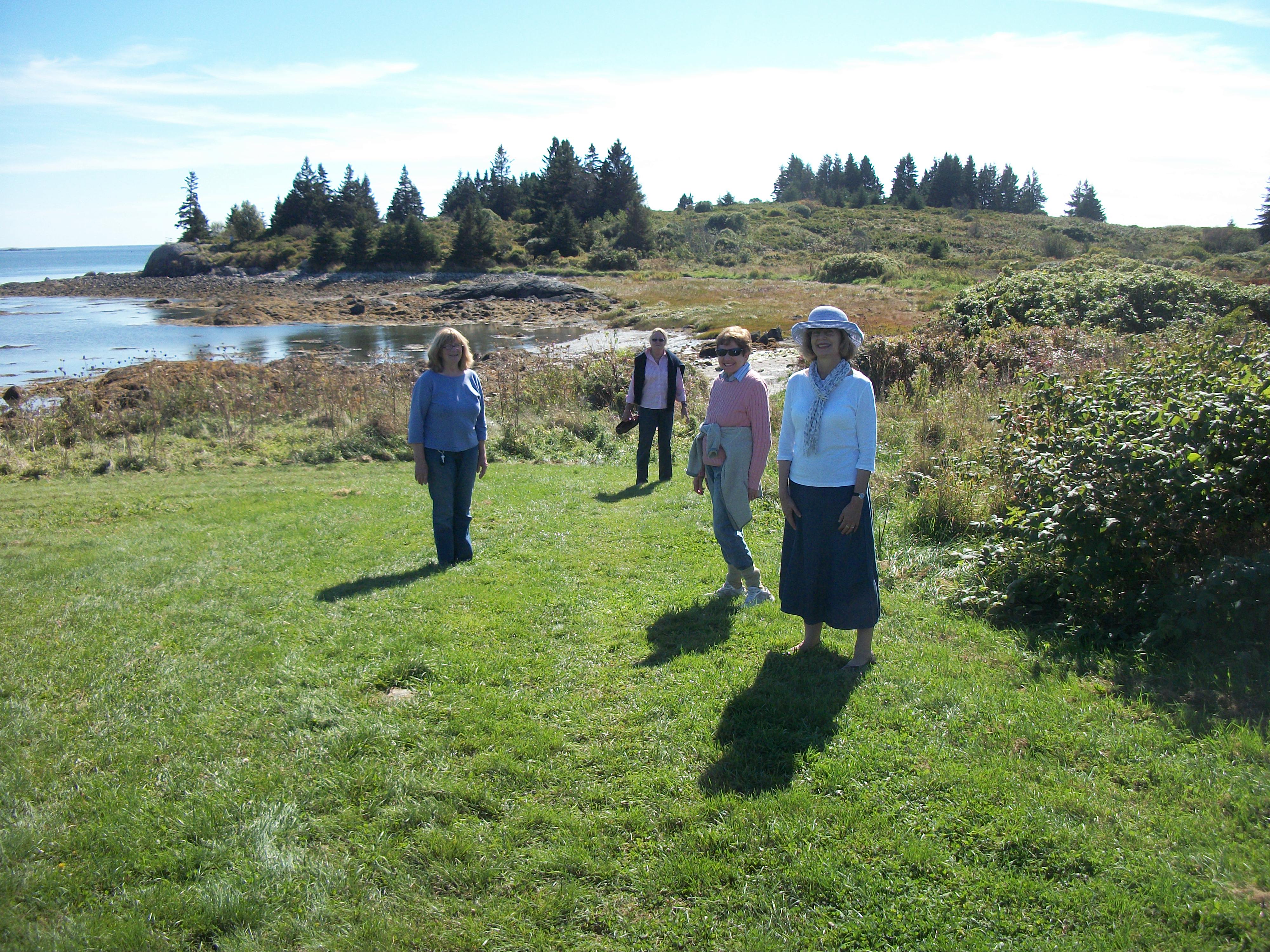
Vinalhaven, Lane Island 3

The purple asters are one of the last wildflowers to bloom.  When we see them along the roadsides, we know fall, and pumpkins, and glorious leaves are not far behind.  Here’s one of the prettiest clumps I saw all year.  They were everywhere on Vinalhaven.
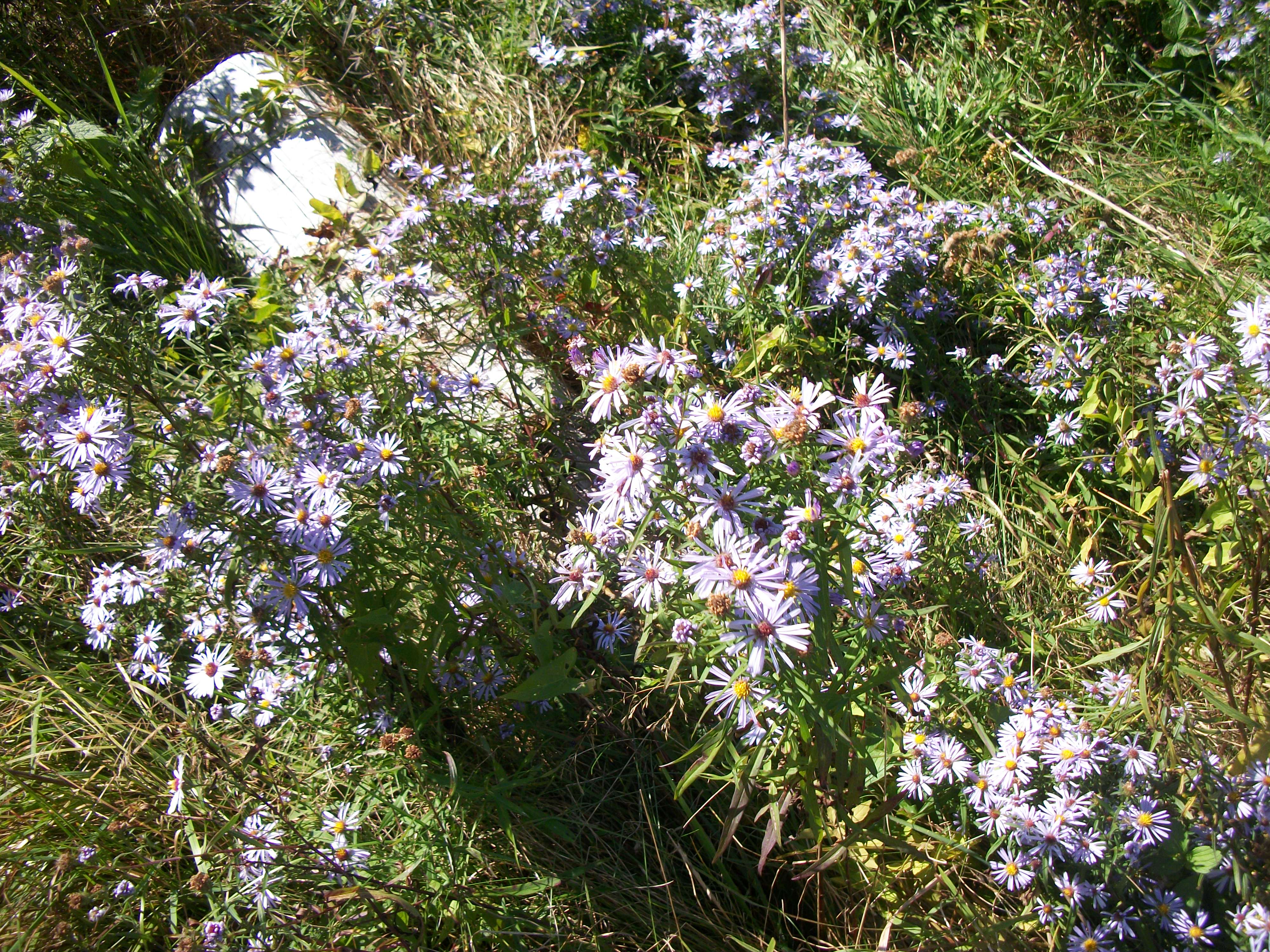
Vinalhaven purple asters

On the way home, we had a clear view of the wind mills on Fox Island.  They are supplying all the electricity for Vinalhaven, Fox Island, and North Haven–as I understand it.  The blades of these windmills are huge.  I was in Rockland one day when they were trucking the blades out to the island.  I was blown away by their size.
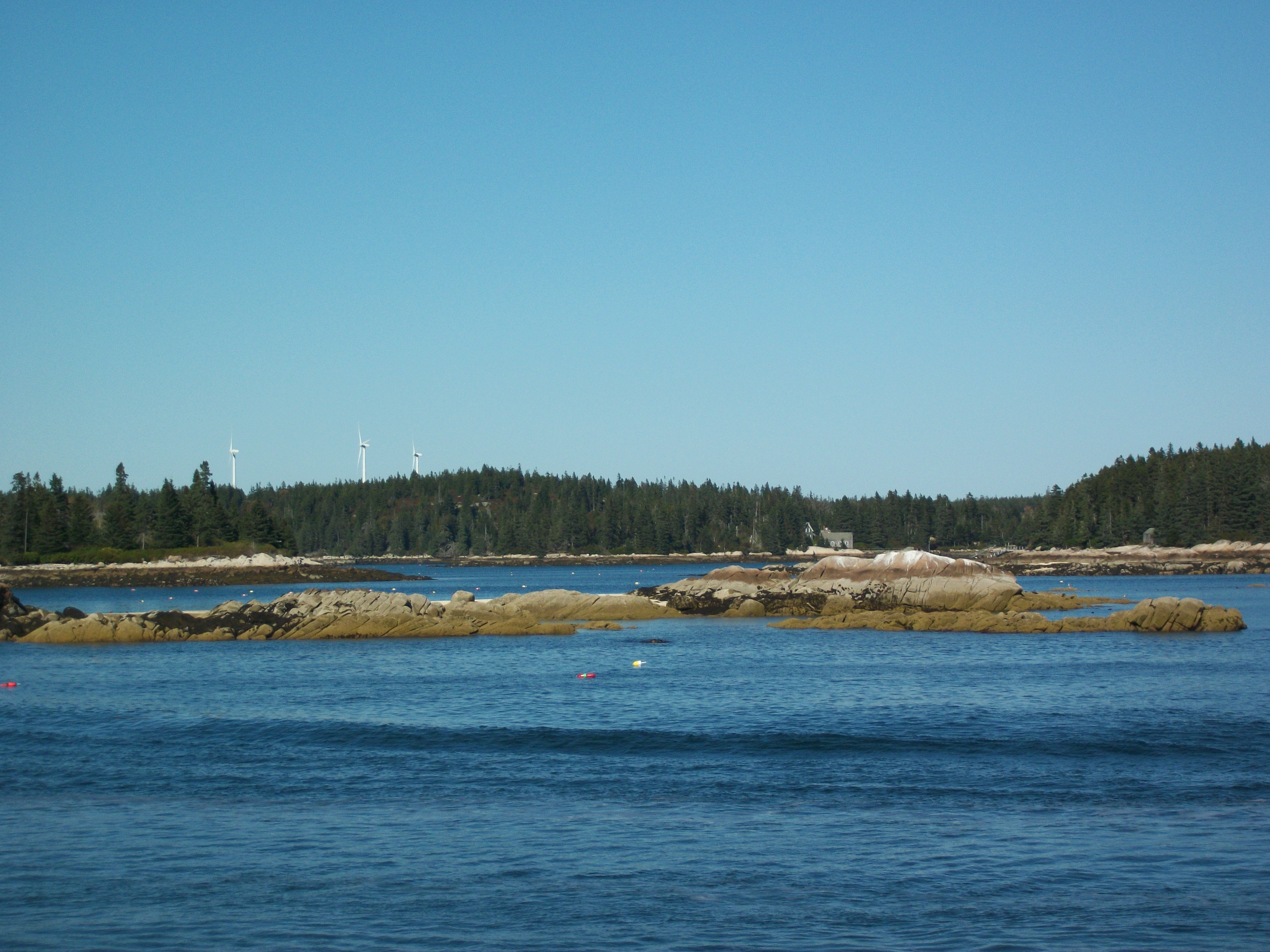
Vinalhaven, Fox Island windmills

The wind mills have been hugely popular with everyone but a few families who live near them.  They say the noise is bothersome.  And, I know these blades can throw ice in the winter.  But…properly positioned–as Europe has done–out in the ocean–or away from homes–they are a good thing.

On entering Rockland Harbor, I got a lovely shot of the Breakwater lighthouse from the water.
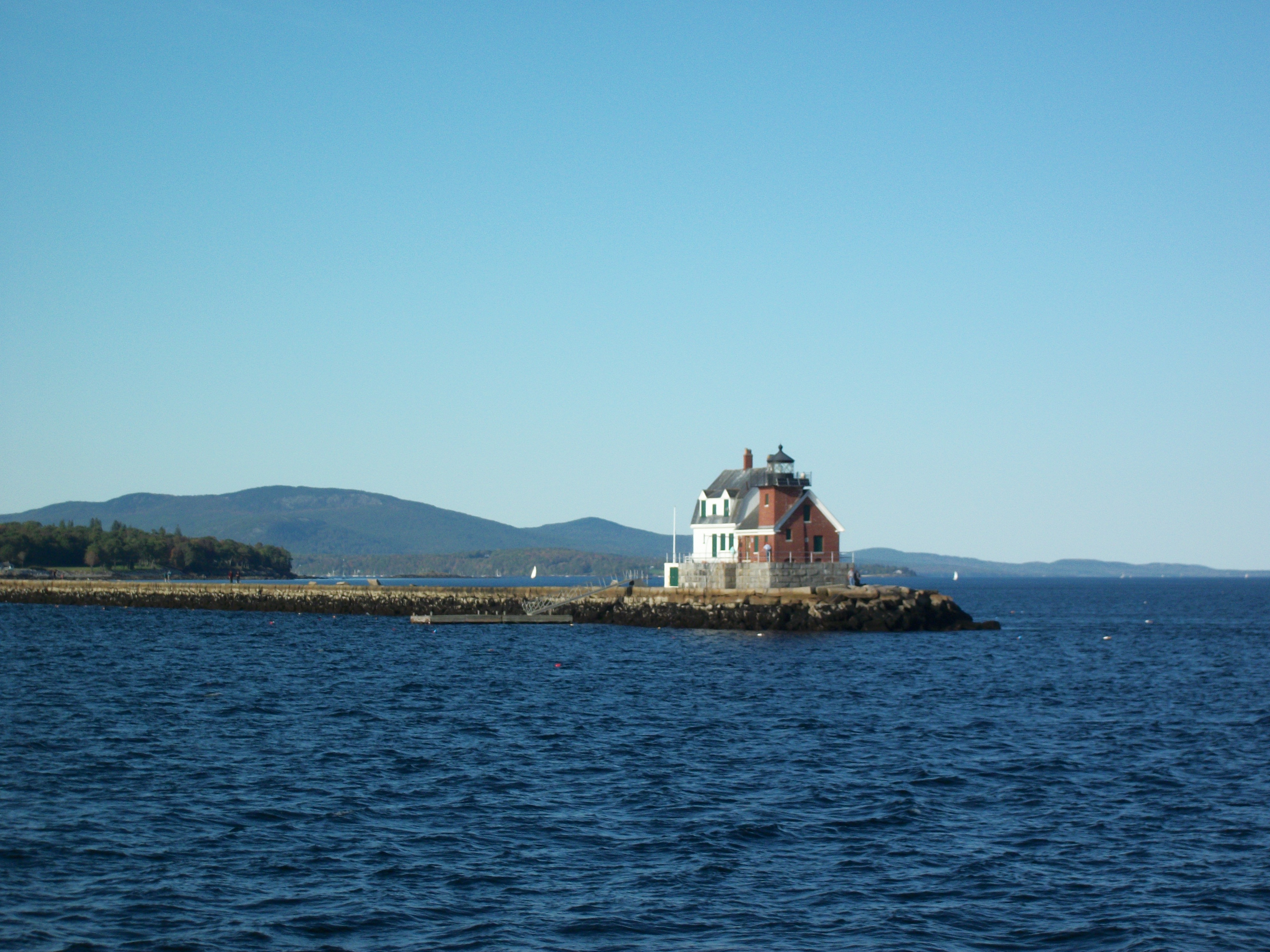
Vinalhaven, Rockland Light House 2

So, here are my most favorite books read this summer–in no particular order of importance:

Maine writer Bill Roorbach’s award-winning Life Among Giants made me want to go and read all his other books.

Maine writer Monica Woods My Only Story is a lovely little novel.  She also has an award-winning memoir out that Maryann Enright is going to bring to me on her next visit.  I think it’s called When We Were The Kennedy’s.

Martin Walker’s latest Bruno story, The Devil’s Cave.  Bruno is a policeman in a small town in the Perigord region of France.  The books always explore a serious issue, have a mystery at their heart, and are filled with the lovely life of a small town–from meals to showing the complexity of relationships.  They are just plain fun.

Michael Oondatje, The Cat’s Table–a novel with depth, wisdom, mystery, and so much more.  It’s a lovely read.

Ann Patchett’s State of Wonder.  I inhaled this one.  It’s set in the Amazon jungle.  I will now go get Patchett’s Bel Canto, which won all sorts of prizes a few years back.

I am now reading Steward O’Nan’s Wish You Were Here, which is very good if a bit painful to read.  The patriarch of the family has died and his wife and grown children and his sister are all struggling to handle and understand their relationships in the wake of his death and the selling of the vacation cottage that united them at least once a year.

And I will move next to Curtis Sittenfeld’s Sisterland.  The book club read her novel American Wife a few years back, and we all liked it.  Sittenfeld’s American Wife is Laura Bush, and the novel treats her gently and with great compassion.


Books, Documentaries, Reviews: Don McLean: American Troubadour

Books, Documentaries, Reviews:  August 26, 2013


Don McLean : American Troubadour


A remarkable new documentary about the Don McLean story produced by multi Emmy-award  winning film director Jim Brown due to air across the PBS network in March 2012.

* * *

A few months back, the Strand theater in Rockland, Maine, screened the new documentary about Don McLean, AMERICAN TROUBADOUR.  Both Don and Patrisha were present and hosted a question and answer session.  Both are treasured members of our community–they do so much really good work here.

I missed this event at the time and was sad to do so as Patrisha McClean is a friend.  Barb Melchisky went and told me that she really enjoyed the film and the time with Don and Patrisha.  “It was,” said Barb, “a lovely and interesting evening.”

So, I treated myself.  I ordered the DVD, and one night when Mike and the boys were here, we watched it.  And we had a “lovely and interesting evening, too.”

Don McClean’s music was iconic for my teenage and young adult years.  (Who in my generation could forget the plane crash that took the life of Buddy Holly?)  Don’s music was apparently iconic for my son Michael as well.  As we watched, and smiled, and laughed, and said “oh, I didn’t know that,” we began to realize that ten-year old Bo was fully engaged with the film as well.  And, indeed, Bo went around for days afterwards singing the refrain to “Bye Bye MIss American Pie” and kept asking “well what do those lines mean?”  And, it turned out that Michael had done a paper on this very famous song in college and had never forgotten it.

Perhaps more importantly, Bo could see that he could learn to play the guitar well and could do that own his own if he wanted to badly enough.  He also took home the idea that he could write songs for himself.  And, others.  Important songs that capture an era.  It will be fun to see how all the tropes in Don’s life percolates in Bo’s head.

I plan to watch the film again this winter–and to maybe will invite some friends to watch it with me.  Maybe we will do that even sooner as other visitors and family are coming who would be interested in this man and his music.

In any case, I recommend this documentary to you.  And I thank Don for being who he is and for all the gifts of his music.


Books: Barbara Kingsolver’s FLIGHT BEHAVIOR

Books:  June 16, 2013

Barbara Kingsolver’s FLIGHT BEHAVIOR

For a while I could not decide if I liked this new Kingsolver novel or not.


Kingsolver's Flight Behavior

Then whammo!   All the threads come together in ways that made me walk away with renewed respect for this author who is writing at the top of her game about a subject for which she cares passionately.

I care passionately about his subject, too, and I was afraid early on that Kingsolver was being too didactic, too pat–in ways that would turn off too many readers who really need to understand the basic science of how wrong things have gotten on this planet.

Kingsolver locates her main character in a small southern town where inhabitants just try to get on with living, just try to keep earning money, just try to face and survive really difficult economic issues.  Dellarobia is a high school graduate who had wanted to go on to college; who got pregnant; who married the earnest, sweet father; who struggles daily not only to try to keep her life together, but to find the meaning of it.  She’s at a point where she is going to cut and run when she goes up on the mountain behind her home and sees millions of monarchs who have unaccountably come to winter in southern mountains instead of in Mexico where they have wintered for thousands of years.  There are so many that the sides of the valley seem to be on fire.

The “why” of the monarch move forms the backbone of the book, but Kingsolver never for one  moment forgets to flesh out her characters and show them to be the complicated, struggling beings that they are.  The “flight behavior” is about far more than the monarchs’ flight patterns.

There are no comic book good guys and bad guys in this novel.  There are people who grow and change and acquire new understanding of the world and of each other.  These are, for the most part, people you would want to be among if trouble comes.  And, Kingsolver makes more than clear, trouble has come.  Yet, she leaves us with hope that things can be different, that we can make changes in our lives that will work better for each of us and for all of us.

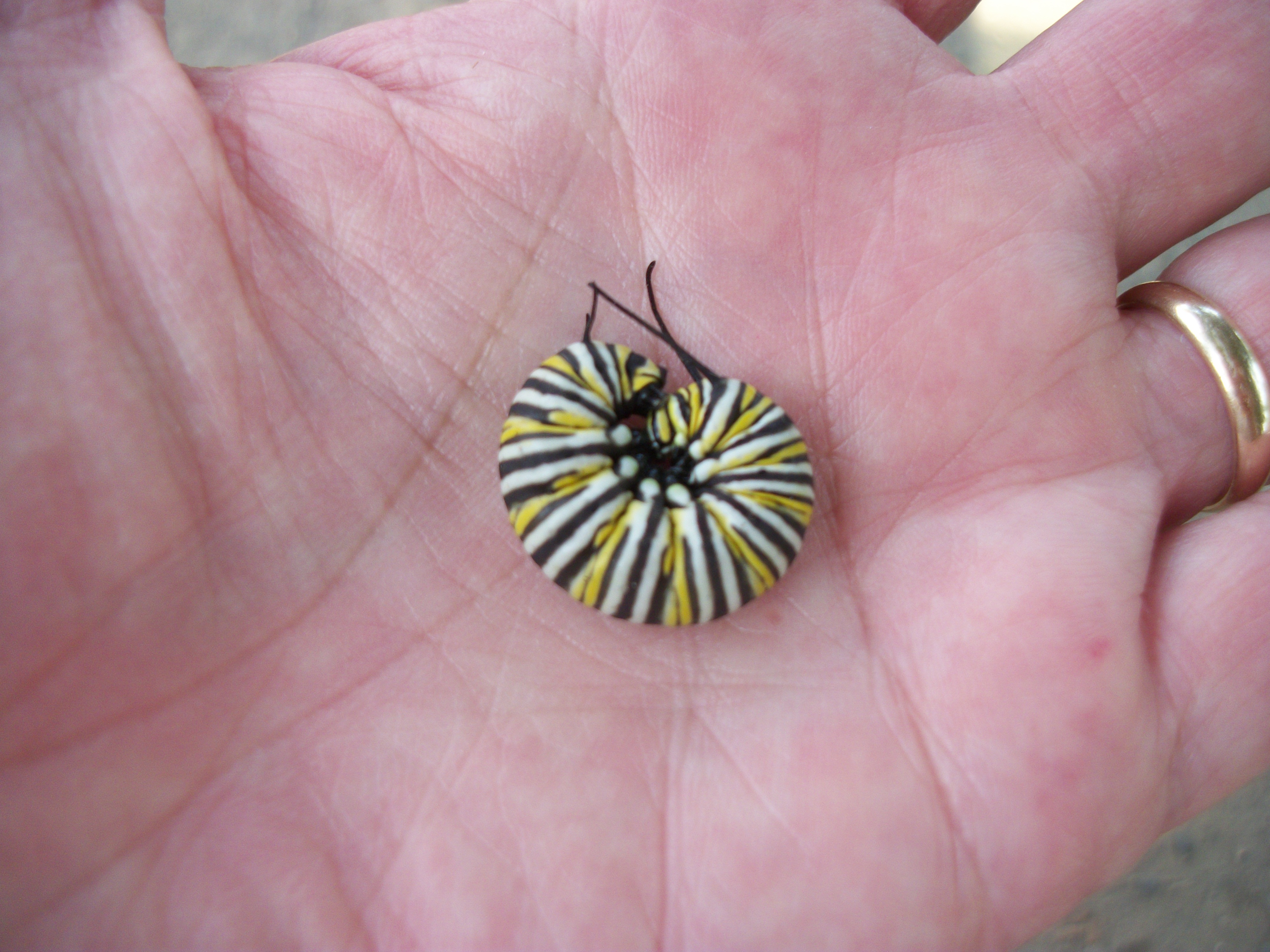
Monarchs are very present in Maine in the summer.  They arrive, lay eggs on milkweed plants, which we have in abundance, and, I think, die.  Their babies hatch into gorgeously outrageous caterpillars, which eat milkweed, form a chrysalis, and turn into the monarchs which are the generation that make the long flight to Mexico.  (I think I have that right.)

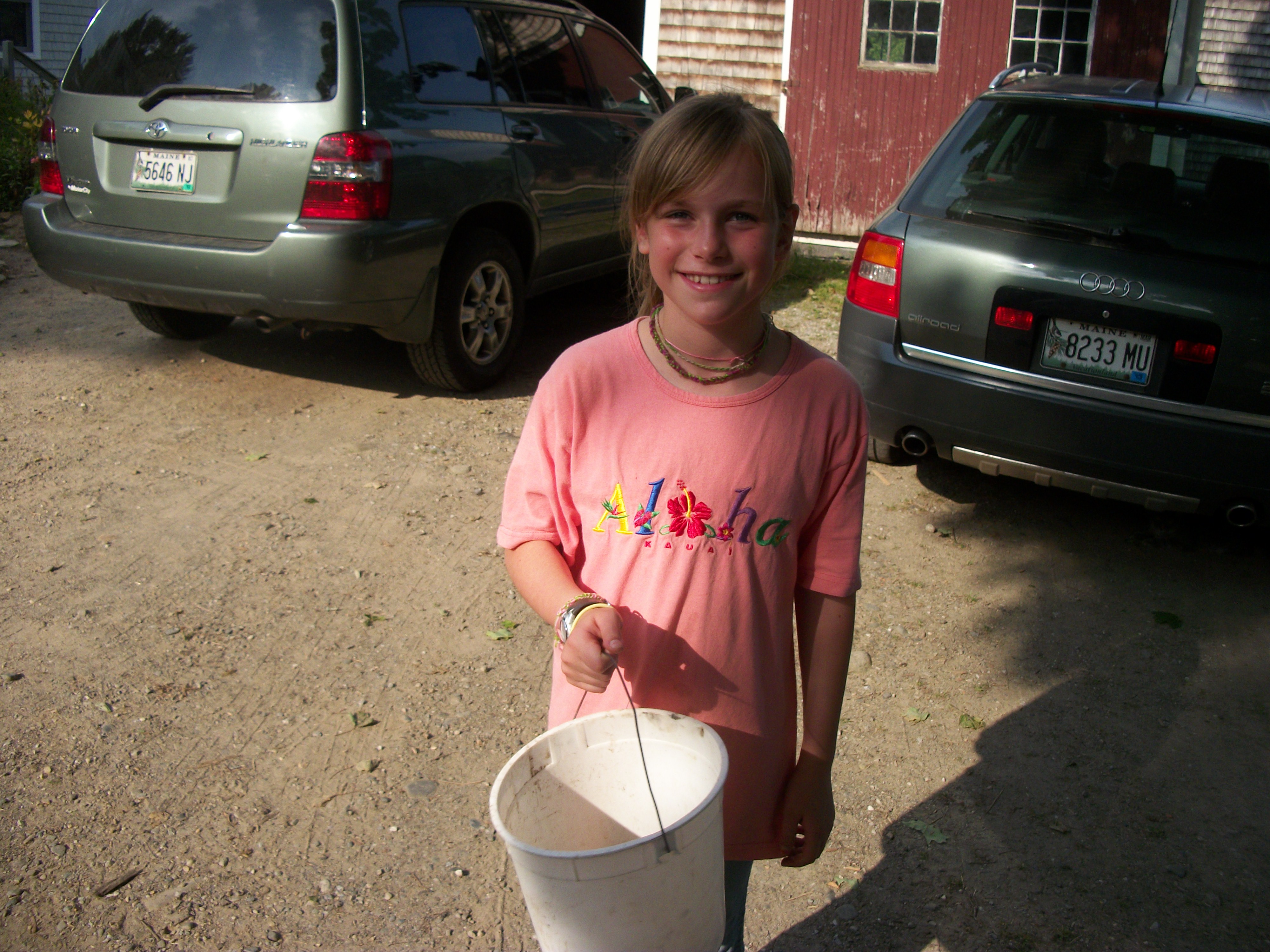
Last summer, young neighbor Margaret Richmond of Golden Brook farm had a pail with about 10 or 12 monarch caterpillars which she offered to share.

Margaret with monarch caterpillars

We declined as the grandchildren were leaving for home shortly.  But Margaret put the caterpillars on milkweed and watched them until they became butterflies.

Here’s a caterpillar in my hand:

Monarch caterpiller, Aug. 2012

We came home and Kels found a chrysalis in our yard and, the next morning, watched it hatch into a butterfly.

Review: Excellent Movie: Incendies

Review:  June 15, 2013

Excellent Movie:  Incendies

I watched a netflix movie that has haunted me for two days now.

By haunted, I mean that I am still thinking about it and having insights about it popping into my head.

I think this movie is especially powerful because of the situation in Syria, where once again, a kind of civil war is unleashing unspeakable, unthinkable violence on innocents who just want to live their lives in peace and joy.

Incendies is set in the Lebanese civil war of the 1970s.  It is a mystery–where twins, raised in Canada, are tasked in their mother’s will to go back to her past so that, we discover, they can move forward into their futures.  It is the story of an amazing, brave, unbreakable woman–caught up in civil war.  It is a story, in the end, of healing and of hope.  And of love.  Great love.

Incendies is tough to watch at times.  It pulls no punches about how war changes people in all kinds of ways and how ugly war is.  There is no comic book good guys/bad guys neat polar opposites here.  War makes bad guys of everyone.  The ending, however, is worth it.  The loose ends are tied off–and not in neat, tidy ways.  We are left with hope–and the certain knowledge that war leaves in its wake ripples that keep rippling out and touching innocent lives.

I won’t say “enjoy,” though there is a great deal of pleasure in watching something so wonderfully executed, so rich with ideas, so beautifully acted.  I will say “learn.”

Here’s a quote from Wikipedia:

Incendies is a 2010 Canadian mystery drama film written and directed by Denis Villeneuve. Adapted from Wajdi Mouawad‘s play, Scorched, Incendies follows the journey of twin brother and sister as they attempt to unravel the mystery of their mother’s life. The film premiered at the Venice and Toronto Film Festivals in September 2010 and was released in Quebec on 17 September 2010. In 2011, it was nominated for the Academy Award for Best Foreign Language Film.

The film won eight awards at the 31st Genie Awards, including Best Motion Picture, Best Actress (Lubna Azabal), Best Director, Best Adapted Screenplay, Cinematography, Editing, Overall Sound and Sound Editing.[4] Incendies was named by the New York Times as one of the 10 best films of 2011.[5]

Books, Documentaries, Reviews: Maybe We Still Have A Democracy

Review of the Election:  November 8, 2012

Maybe We Still Have A Democracy

I had my doubts.

I was really afraid for what could happen.  After all, Hitler got elected in an economic downturn when people wanted more and were scared…  He promised to make the trains run on time…

There was so much money pitted against what’s left of our democracy.  So many lies made in order to win at any cost.  So many ads that lied.  So much fear-mongering.  So much hatred.  So much voter suppression.  So much media that portrayed the sides as equal, when they were anything but equal, especially in terms of money.  Rachael Maddow reported on November 7th that Romney’s side spent two-thirds of the campaign money, versus Obama’s one-third.

The media portrayed the election as a horse race and totally ignored any role to reveal what is true and what isn’t.  The mainstream media didn’t cover the voter suppression story or point to the awful racism, like the ads that lied that Obama had banished work under welfare.  Or, that  the auto bailout didn’t work because Jeep was taking all the jobs to China anyway.  Why should we be surprised?  The media is now big business; their plutocrat owners made a fortune off this election.

And, then, there was the alternative reality created by Fox Commentary, for even they say they don’t do “news.”  In the process truth, science, real polling data, and on and on just got erased, smeared, stamped on, eradicated.  They create a horse race every day between so-called conservatives and liberals, and they laugh all the way to the bank.

I went to bed Tuesday night after 2 a.m. and could hardly sleep.  The people “got” it.  They voted.  Some of them stayed in line for 8 and 9 hours to do so.  And, they shellacked the Romney ticket.  They said “no” to the buying of this election by the 1% who have so much money they can’t even spend it all.

I don’t want to call the Romney organization the GOP, because these folks are not the GOP I’ve always known and, many times, admired.  (I even worked for Ronald Reagan at one point in my life as a political appointee and have long cherished folks who conserve, who care about their community, who build businesses that are ethical and moral, who fear foreign entanglements, and who will fight for their country when it is needed.)  The folks in command of the GOP right now are Far, Far, Far Right Ideologues.  Most of them are wealthy and don’t have a clue what a worker in America faces every day–witness Romney’s 47% and Ryan’s 30%.  Nor have most of them served in the military.  What I realized Wednesday morning is these folks will never win in this country as long as women and workers can vote fairly.

I woke up feeling profoundly grateful for the American people, for their willingness to act on their belief that we are all so much better off when we work together then when we go it alone, for their belief in the need for the kind of government that “has their backs” when something like a storm like Sandy hits, for their refusal to let wealthy men buy this country, for their refusal to believe the lies–and on and on.  They knew Romney couldn’t produce jobs because he does not have that kind of work experience–he only knows how to get rid of good American jobs by eliminating them or sending them to China.

Because of the American people, health care will become a right and pre-existing conditions won’t stop people from getting medical attention.

Because of the American people, women will retain the rights to their bodies and will have equal pay for equal work.  (No more vaginal probes please!)

Because of the American people, workers will retain basic civil rights to organize in the workplace.  If workers don’t operate to balance owners’ excesses, we all suffer.  And if workers aren’t paid fairly for their work, they don’t have enough money to buy owners’ goods.  It’s simple math.

Because of the American people, gay people will gain civil rights across the country faster–to include being able to marry legally.  That law passed in a number of states this election.

Because of the American people, we will all enjoy a more stable economic possibility.  The GOP’s Austrian School of Economics practices (called erronously “free” market principles when it is anything but) blew out our economy.  Doubling down on it would crash the world system AND would create a hell for workers worldwide.  We would have chaos and anarchy in our streets.  Read my earlier blog entry about Crony Capitalism to see, in part, what I mean.

Because of the American people, Obama will be the one to appoint two and maybe three Supreme Court Justices.  The Supreme Court will get turned around from its ideological, pro-corporate stance.  The hollowing out of laws so that they favor corporations and stop people from being heard in our courts can be stopped.  Roe V. Wade will stand.  And, maybe, Citizens United will be stopped.

Because of the American people, something will be done about the difficulty of voting and voter suppression.

Because of the American people, Americans will stand a much-improved chance at getting real, good jobs, especially in the energy sector, in the rebuilding of our roads and bridges, and, maybe, in a return to the land as we turn toward healthy, clean food.

Because of the American people, our soldiers will come home from TWO unfunded wars.  And, when they do, they will be taken care of properly.

Because of the American people, real science will be valued.  Climate change will be recognized.  Rape will be rape.  Fetuses will remain fetuses and not persons until they have brains and can breathe.  Hopefully, toxic chemicals will be banned from the environment.  And GMOs will be labeled.

Because of the American people, FEMA will not be privatized.  Nor, our schools.  Nor any more sectors of our economy that should remain in place for the common good.

Because of the American people, maybe we are done with giving Donald Trump a stage.  And, John Sununu, who is a vicious, racist bigot.

Because of the American people, we will continue to be led by a person who is not perfect, who does not claim to be, but who is steady, careful, reliable, dignified, and who tells the truth.  We will be led by someone with real strength and character–not someone who is a shill for the plutocrats, who thinks he is strong when he mindlessly, ruthlessly, and rudely attacks, and who cannot open his mouth without lying.

Because of the American people, we will continue to have a Democracy, not a Theocracy run by Plutocrats.

I am deeply grateful and have renewed faith that maybe we do still have a democracy, however flawed it is.

Books, Documentaries, Reviews: COME SPRING

Books, Documentaries, Reviews:  July 30, 2012

COME SPRING

by

Ben Ames Williams

Friend Gail Nicholson realized one day a few months back that I had never read COME SPRING by Ben Ames Williams.  She appeared the very next day with a brand new copy for me.  I finished all 866 pages last week–published by the Union Historical Society–and enjoyed the read.

Ben Ames Williams wrote COME SPRING in 1940.  It’s a specific story of how in 1776 (the same year the Declaration of Independence was signed), the first settlers moved up the St. George River of what is now called mid-coast Maine, and cleared and settled land in an area now called Union, which is just above the coastal town of Thomaston and the next settled village up the river, Warren.

COME SPRING is a general story also of how settlers dug in, cleared land, and made a life all across New England.  Or, not, as not all settlers were successful.  Some didn’t have the temperament to be in what was wilderness for long periods of time; others just had bad luck–spouses who died, barns that burned, crops that failed, game that couldn’t be found in the winter, and so forth.  And COME SPRING is a story of how all of these people related to the ongoing Revolutionary War and, after the war ended, how newly formed civil organizations started making laws and levying taxes, when these early landowners had no hard money or paper money to give.

COME SPRING is also a love story–written by a man and with a woman heroine (Mima).  .  It’s the story of Mima’s love of the man she chose and for whom she waited, of her desire for a family with this man, and of her love and deep connection to the land she intended to work hard to settle and to hold in her family forever.  Mima is much more interested in intimately knowing her own surroundings then she is in outside political realities and forces, which she believes she can do nothing about and which just get everyone all upset when learning of them.

Settlers could use the river to travel back to the coast and civilization–except when the ice wasn’t firm.  Otherwise, they had to walk everywhere they went.  Early settlers were lucky to have a pair of oxen or a few chickens or some sheep which would mean wool for clothing.  Mostly all the clearing work was done without such help.  Several barn raisings are described in the story; it takes a lot of strong men to raise a barn, so such an occasion brought the community together for the day of the raising.

What’s fun, if you live in this area, is the name recognition–many of these original families are still here and place names taken from these first settlers abound.  Union’s quilt chapter is “Come Spring.”  There’s also a Union diner called “Come Spring.”  And, this summer, someone wrote a kind of short play taken from COME SPRING featuring some of the key characters that was read by people dressed in period clothes in the center of Union.  When spring came in this early Maine, green food returned as the snow melted, animal babies were born, crops could be planted, hope of survival could be renewed.

Union is also the home of today’s week-long Union Blueberry Fair in mid-August, which has 4-H contests, animal pulling contests of all kinds, farm demonstrations of all kinds, a midway, and harness racing where you can make $2, or more, bets.  We LOVE this fair and go every year.

When one of the main protagonists, Mima’s father, dies in 1816 at age 86, he is survived by, writes Williams, “six children, fifty-one grandchildren, eighty-five great-grandchildren, and five great-great-grandchildren.”  Only three of his children and fifteen of his grandchildren died before him.  These numbers were needed for survival in the wilderness, for creating a town, for moving on to create a nation that stretched from shore to shore.  These kinds of numbers make me pause to think about some of our current rhetoric of how long we’re all living.  We may be reaching this age, but are we reaching it with the same kind of health that Mima’s dad enjoyed?  He moved to the wilderness of  Maine when he was 45 years old.

Near the end of the book is this memorable passage from Mima’s mother, while holding Mima’s second newborn child.  Mima and Joel hav just realized that Mima’s parents still love each other in the same way that Mima and Joel do:

“I think sometimes getting old is like a candle burning down.  A young one grows up and the first thing he knows he’s in love and marrying; and you can see something new in his eyes, deep and strong.  That’s like a candle when first you light it, standing up so straight and white and slim and fine; and the flame’s real pretty to look at.

“But the candle burns on.  Maybe it melts crooked, but the flame stays just the same shape and brightness.  Maybe if the wind blows, the flame flutters some; but when the wind stops, the flame’s just the same again.  The candle keeps a-burning, and the tallow runs down the sides of it, and it gets all lumpy and out of shape like a woman after she’s had babies for twenty years, or a man that likes his victuals.

“But the flame still burns bright and pretty.  The candle gets shorter and stumpier till there ain’t hardly anything left of it; but the flame’s still there, burning bright, clear and brave and fine, right down to the very end.”

She met their eyes.  “That’s the way it is with the right kind of people,” she said.  “Rheumatism can cripple them and tie them upo in knots, or the outside of them can change other ways so you’d hardly know them to look at them.  But their insides don’t change.  The flame in them keeps burning clear and fine.  If you just look at the flame and not the candle, you’ll see it never does change–until one day the candle burns down, and all of a sudden the flame gets small and then it’s gone.”

Like all historical fiction, the story tells a reader much more about William’s 1940s than it does the 1780s.  Williams does use archival materials to write this novel.  There are several journals that derived from this area, for instance.  But the sentiments he overlays onto Mima et al are very much those of the 1940s–which is why historians view historical fiction with a skeptical eye and argue that this overlay does a kind of violence to the real people who lived those very real lives.  Nevertheless, it was fun for me to read what was of concern to Williams, what he wanted his characters to think and feel, and to compare how those values have shifted so enormously today–and not in good ways, I’d say.

So, thank you so much Gail!

Books, Documentaries, Reviews: July 2012 Read Pile

Books, Documentaries, Reviews:  July 26, 2012

July 2012 Read Pile

Here’s my current read pile:

Actually, I’ve been working this one since May, when I took this picture.

I’ve finished THE AMERICAN WAY OF EATING, COME SPRING, and HERBAL RECIPES.  I’m going to start THE LOST LANGUAGE OF PLANTS next.

I’m also reading THE TIGER’S WIFE, Tea Obreht, which I’m really enjoying.  It was ranked one of the top ten books of 2011 by the NY Times.

John just finished IN THE GARDEN OF BEASTS, Erik Larsen, the memoir of Ambassador Dodd’s family in Hitler’s Germany, just before WWII, when the Nazi’s come to power.  He loved it, and half my book club has read it and did, too.  We read Larsen’s earlier book, THE DEVIL IN THE WHITE CITY, I think.  It was really good too.  It was about a serial killer operating in the time of the huge world fair held in Chicago, as I recall.

QUIET was a gift from John.  It’s about the special place introverts occupy in society.  He gave it to me because I am an full-blown introvert, and he’s a full-blown extrovert.

Interesting Information: First State-wide Ban on Plastic Bags

Interesting Information:  July 26 2012

First State-wide Ban on Plastic Bags

Hawaii is the first state to pass a state-wide ban on plastic bags, effective July 1, 2015.

YEAH!!  Go Hawaii!!

I hope all of you are NOT using store-used plastic or paper bags when shopping.  Both are environmental nightmares and about equal in terms of harm.  Get yourself some bags and take them with you when shopping–for ALL your shopping.  Start asking for your purchases to be put in your own bags everywhere you go.

I have been using bags for food purchases, but now I’m going to up the ante and start taking clean bags for all purchases.

There is a film that is referenced in the Mercola article I saw this morning:  BAG IT.

I found it on Netflix and could instantly download it on the Roku.  I’ll take a look at it soon, though I am so far behind on watching documentaries.  Sometimes the psychic burden of watching all that’s wrong with our world–there’s so much–is just too much, and I have to take a break.

Here’s the whole article if you want to read it:  http://articles.mercola.com/sites/articles/archive/2012/07/26/no-to-plastic-bags.aspx?e_cid=20120726_DNL_artNew_1

Books, Documentaries, Reviews: WHEAT BELLY

Books, Documentaries, Reviews:  July 21, 2012

WHEAT BELLY

by

William Davis, MD

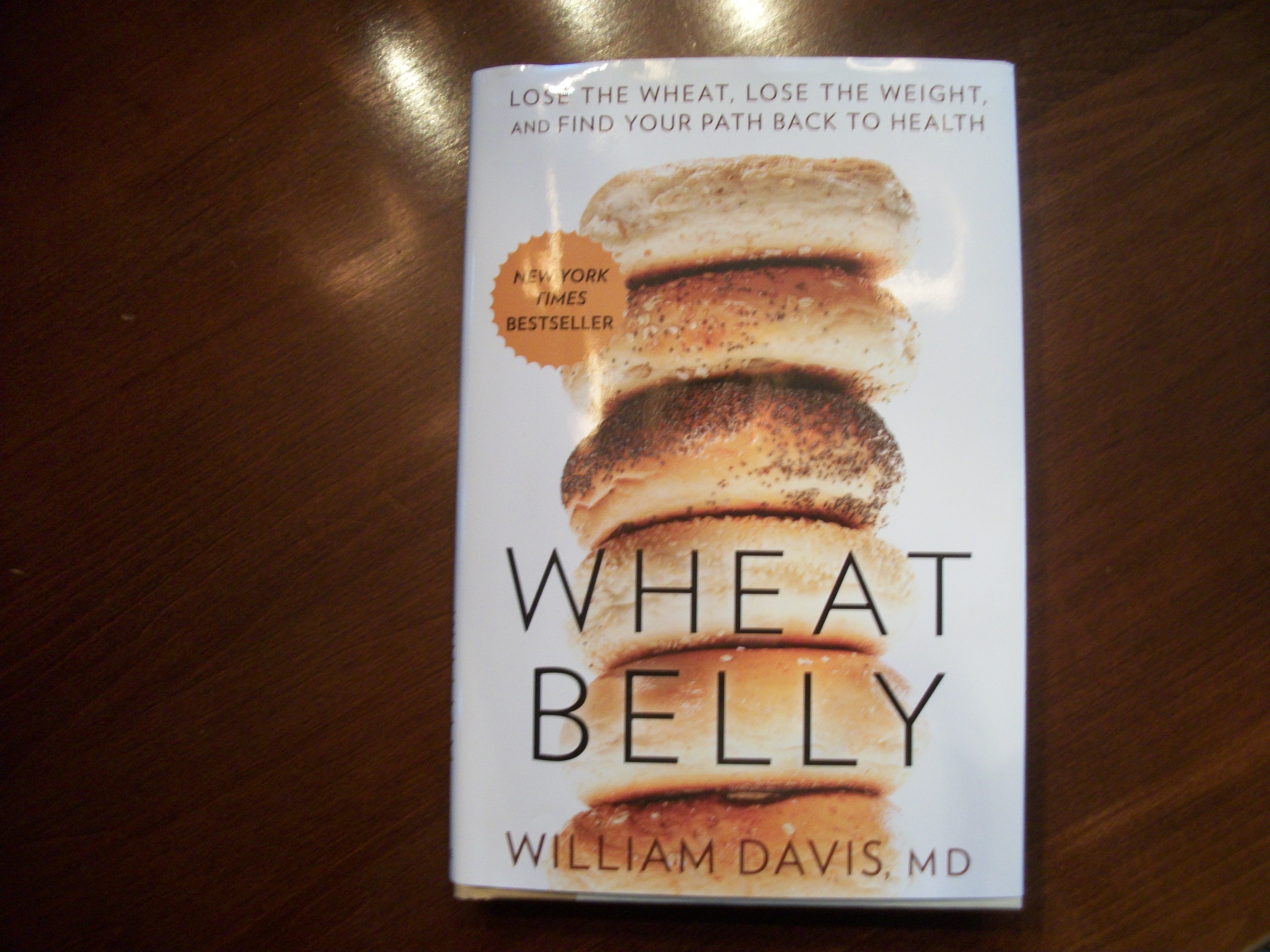
William Davis, MD, a preventive cardiologist in Wisconsin, published WHEAT BELLY in 2011.  The book became a New York Times best seller (No. 5) right away and continues to sell strongly.  Davis has put more than 2000 patients on a wheat-free regimen and claims he has seen “extraordinary” results in their health.  Many of these patients were really sick with a wide range of health problems, including neurological problems.

Davis defines a “wheat belly” as “the accumulation of fat that results from years of consuming foods that trigger insulin, the hormone of fat storage” (4).  This wheat belly fat is “visceral” fat that is “unique” in that “unlike fat in other body areas, it provokes inflammatory phenomena, distorts insulin responses, and issues abnormal metabolic signals to the best of the body.  In the unwitting wheat-bellied male, visceral fat also produces estrogen, creating “man breasts.”  Wheat consumption can “reach deep down into virtually every organ of the body, from the intestines, liver, heart, and thyroid gland all the way up to the brain” (4).  Wheat consumption “is the main cause of the obesity and diabetes crisis in the United States” (56).  And the fat of the wheat belly lies over organs that have, themselves, become abnormally fat, which makes the body struggle.

Davis argues that modern wheat is the root cause of much of the chronic health conditions people are experiencing today.  Modern wheat, he claims is NOT wheat at all–but “the transformed product of genetic research conducted during the latter half of the twentieth century.”  Two ancient forms of wheat were crossed hundreds of years ago, and that wheat has been eaten by humans without many of the health effects that today’s wheat produces.  (The Paleo diet folks would disagree with this premise on, I  think, good historical and medical grounds.)

Wheat has the rare, in the plant world, ability to transfer ALL of its genes when crossed–unlike other plants which might only transfer some of the genes from each parent.  When scientists started to breed wheat to increase its yields and to make it shorter (so it would not blow over as easily), they created a “law of unintended consequences”–in that they produced a product that is “hundreds, perhaps thousands, of genes apart from the original einkorn wheat that bred naturally” (22).  (Like modern corn, modern wheat cannot grow on its own in the wild.)

Assumptions were made:  “With wheat it was likewise assumed that variations in gluten content and structure, modifications of other enzymes and proteins, qualities that confer susceptibility of resistance to various plant diseases, would all make their way to humans without consequence” (25).

Modern wheat has a higher carbohydrate component than ancient wheat, which has more protein.  The specific carbohydrate in wheat is amylopectin A, which is so easily digestible in our bodies that eating “two slices of whole wheat bread is really little different ,and often worse, than drinking a can of sugar-sweetened soda or eating a sugary candy bar”–information that has been known since 1981 when the University of Toronto “launched the concept of the glycemic index” [GI] which compares “blood sugar effects of carbohydrates” (33-34).

Davis posits that many people today are dealing with what he calls “immune mediated gluten intolerance,” and celiac disease would be a subset of this condition.  Because this response can damage the gut so that it leaks food particles, the body forms antibodies that began to circulate in the blood stream.  If these antibodies lodge in particular organs, they can produce problems in that arena.  These antibodies can also breech the blood-brain barrier, so that some neurological conditions that seem like MS or Parkinson’s actually can be effects of this disorder.  This array of conditions has served to mislead doctors from the true cause of the problem:  immune mediated gluten intolerance caused by modern wheat.

Davis uses Denise Minger’s analysis of T. Colin Campbell’s THE CHINA STUDY to show the correlations between wheat and human disease.  Minger showed, by recrunching Campbell’s data, what Campbell missed because of his belief that consuming meat produces disease.  Minger’s analysis shows the “astronomical correlations wheat flour has with various diseases”–prompting Davis to ask if the “staff of life” is really the “staff of death” (160-165).

Davis discusses how addictive wheat is and how it is an appetite stimulant–along with many other seriously bad effects of wheat on the human body.  He illustrates his argument with case studies from his practice and with clinical studies.  The picture Davis draws of the downsides of wheat are much more involved, serious, and intense than I can repeat at length here.

So what grains have gluten?  Rye, barley, triticale, spelt, bulgar, and kamut share a genetic heritage with wheat.  Oats can cause some people problems as it “will cause blood sugar to skyrocket.”  Quinoa, millet, amaranth, teff, chia seed, and sorghum “are essentially carbohydrates without the immune or brain effects of wheat.  While not as undesirable as wheat, they do take a metabolic toll.”  Eat them in moderation only after weight has been normalized (212).  Avoid “gluten-free” foods as “the only other foods that have GIs as high as wheat products are dried, pulverized starches such as cornstarch, rice starch, potato starch, and tapioca starch”–all used heavily in “gluten-free” products (63).

There are critiques of WHEAT BELLY.  As near as I can tell, they are coming mostly from the Paleo folks.  The book’s cover pitches it as a “diet” book–“lose the wheat, lose the weight”–and the Paleo folks argue that cutting out wheat won’t do that trick and that eating wheat has far more dangerous implications.  The Paleo folks aren’t wrong, but Davis does a good job of showing that wheat consumption–especially in the amounts Americans are eating it–is very dangerous–and something Luise Light, who was hired by the USDA to create the 1980 food guide, cautioned against, saying we should only eat 2 to 3 servings of grains a day.  ( A serving is 1/2 cup, and women and children should only eat 2 servings.)

I can tell you that since I cut out wheat, I have lost my own “wheat belly.”  I can also tell you that like Davis, when I eat wheat, the impact on my body is immediate and not very nice.

So, do you have a “wheat belly”?  Most Americans I see out and about today do.  If so, you may want to take a longer look at what Davis has to say about losing the wheat and regaining your health.

Turkey Tracks: Black Kettle Farm Barn Dance, Essex, NY

Turkey Tracks:  June 15, 2012

This is Part 4–and the final entry–of an ongoing entry, scroll down for the beginning…

Black Kettle Farm Barn Dance

After leaving Kristin Kimball and Essex Farm (read THE DIRTY LIFE by Kristin), we went back to the Essex Inn, regrouped, had tea on the porch, and set out for a local fundraiser for a local Waldorf School held at Black Kettle Farm–dinner and square dancing.

Wow!  Here was a whole community–people of all ages–all gathered together to have some fun and to raise some money for a good cause.

Dinner was served outside this amazing, gorgeous, wonderful barn–a barn with a wooden floor and a soaring roof–and it was all local food that people had made for this event.

Tables were set up inside the barn for eating.  Musicians were gathering at one end of the barn, and we could see at least two fiddlers–one of whom had an adoring dog with him who never left his side all night long.  A silent auction has some really amazing items–one a quilt from a local artist, another a HUGE basket of many Mason jars of homemade jams, pickles, and so forth

After eating, people rose to put away tables and chairs and the dancing began–starting with the children, who were patiently taught several dances by their parents and a square dance caller.

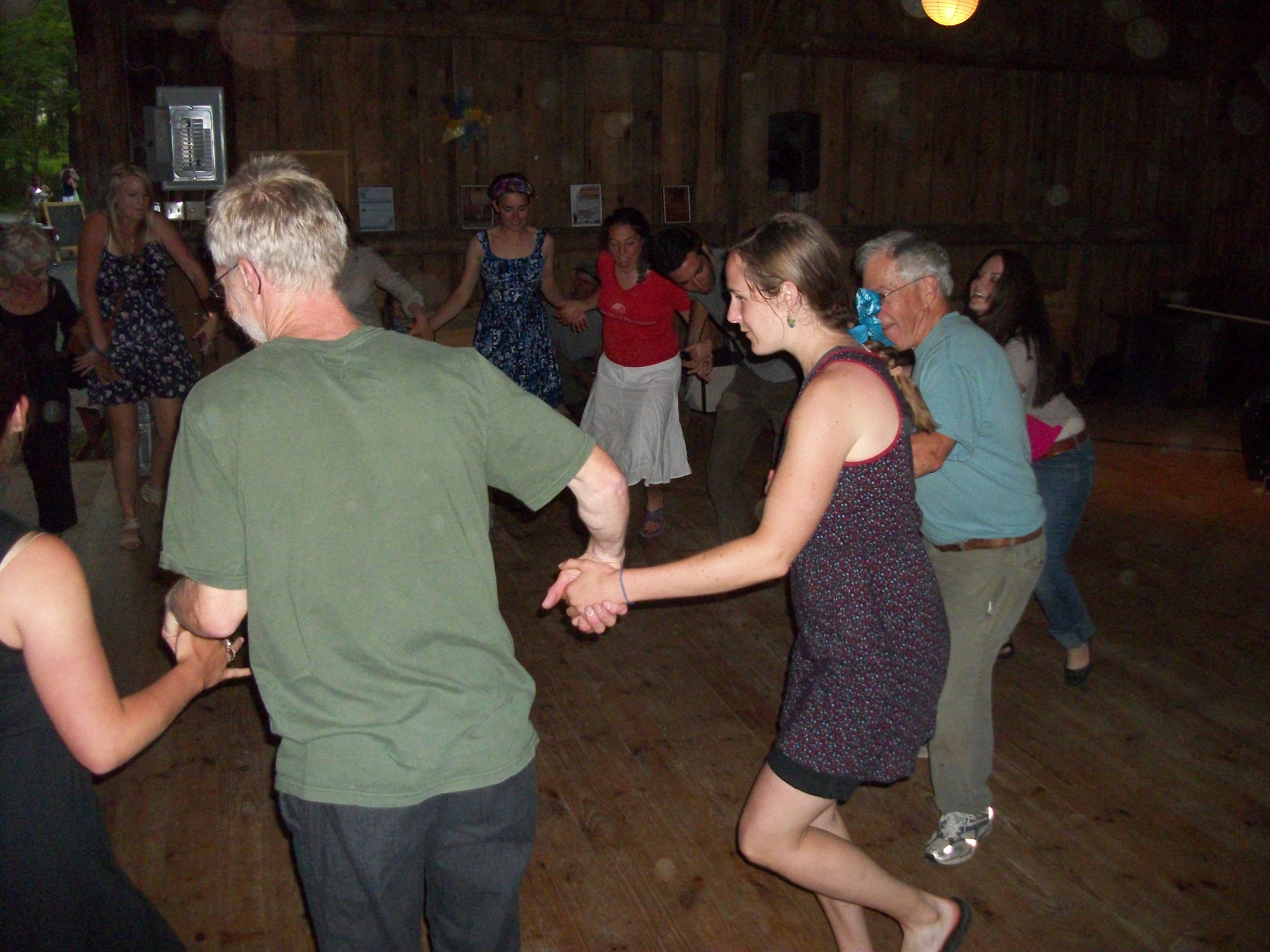
Then the real dancing began.  There were at least three sets of circles–and sometimes lines–depending on the dance being called–and as darkness fell, the energy in the barn reached whole new heights.  Dancers of all ages whirled and twirled and laughed and moved–sometimes so fast you could hardly see them.  Here’s a very tame picture of one dance.

A group of foreign students appeared and were immediately pulled into one of the rings.  The students caught on quickly and were soon laughing and…yes…sweating–for there is a lot of movement in this kind of dancing.

We called it a night about 9 p.m., but it was plain that the dancing would go on for some time to come.

We had breakfast with Tara on Sunday morning at the Essex Inn–before we went our separate ways.  We would drive home to Maine, and Tara would drive back to Accord, finishing packing, and on Tuesday, head to Charleston, SC, to start her own farm.  As I write, I know she and Leighton have arrived, the animals made the trip ok, the small barn is up, the fencing in place, and our son Mike’s family will take food to them tonight.

As we boarded the ferry,  here was our view:

The White Mountains beckoned, and Maine and home awaited us.

We need a year-round CSA in Maine!