Poem: November 27, 2017
Haiku 9
9.
November 25, 2017
Books, Documentaries, Reviews
Poem: November 27, 2017
November 25, 2017
Poems: November 25, 2017
November 25, 2017
And it did. We had rain the next day,
Poems: November 26, 2017
November 24, 2017
It’s a rainy day.
I’m working on the Bonnie Hunter 2017 mystery quilt—alongsides friends near and far—and listening to a Jo Nesbo book (downloaded from the Maine state library system).

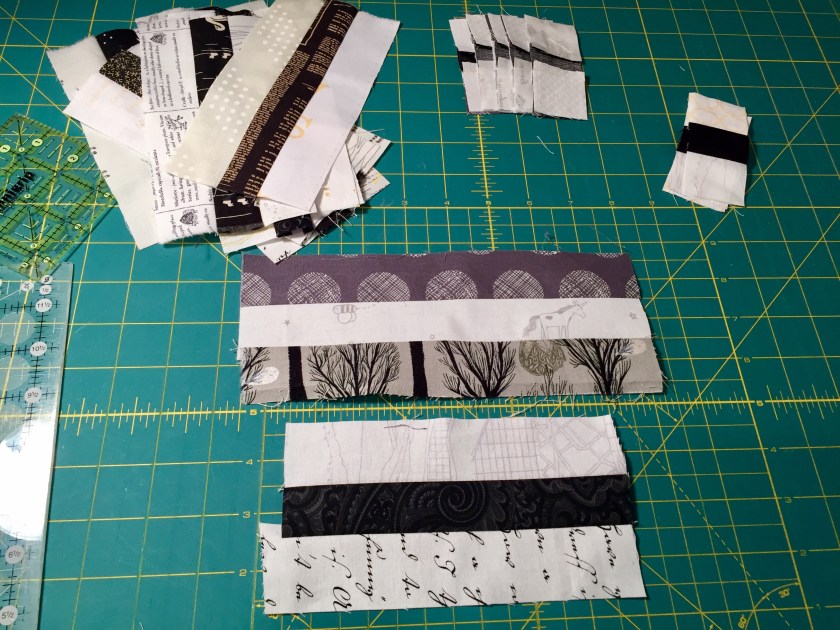
More pics of finished clue to follow later.
Turkey Tracks: November 25, 2017
November 23, 2017
Thanksgiving day No No Penny and I walked our “lake” walk. It’s one of the areas where she can be off-leash, which pleases us both.
The following pictures illustrate what happens when one just sees, hears, and feels on a walk…
…because then an attachment to nature emerges.
The lake is still low from the summer and early fall drought:
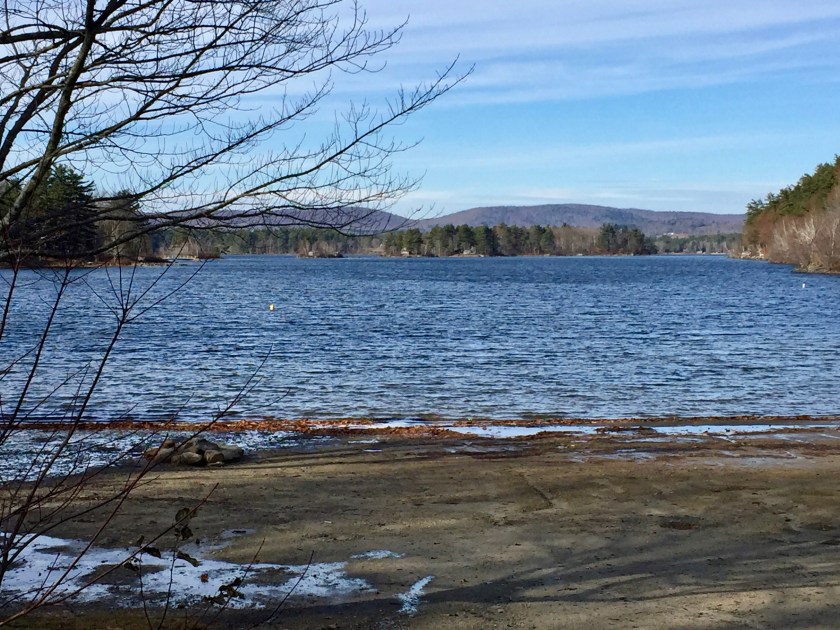
The wind over the water is cold so I don a hat and gloves and tighten my neck scarf and zip up my coat. The cold wind is bracing though and clears out one’s head.
I am reminded of friend Giovanna McCarthy when I feel the warmth of the scarf she made me around my neck.
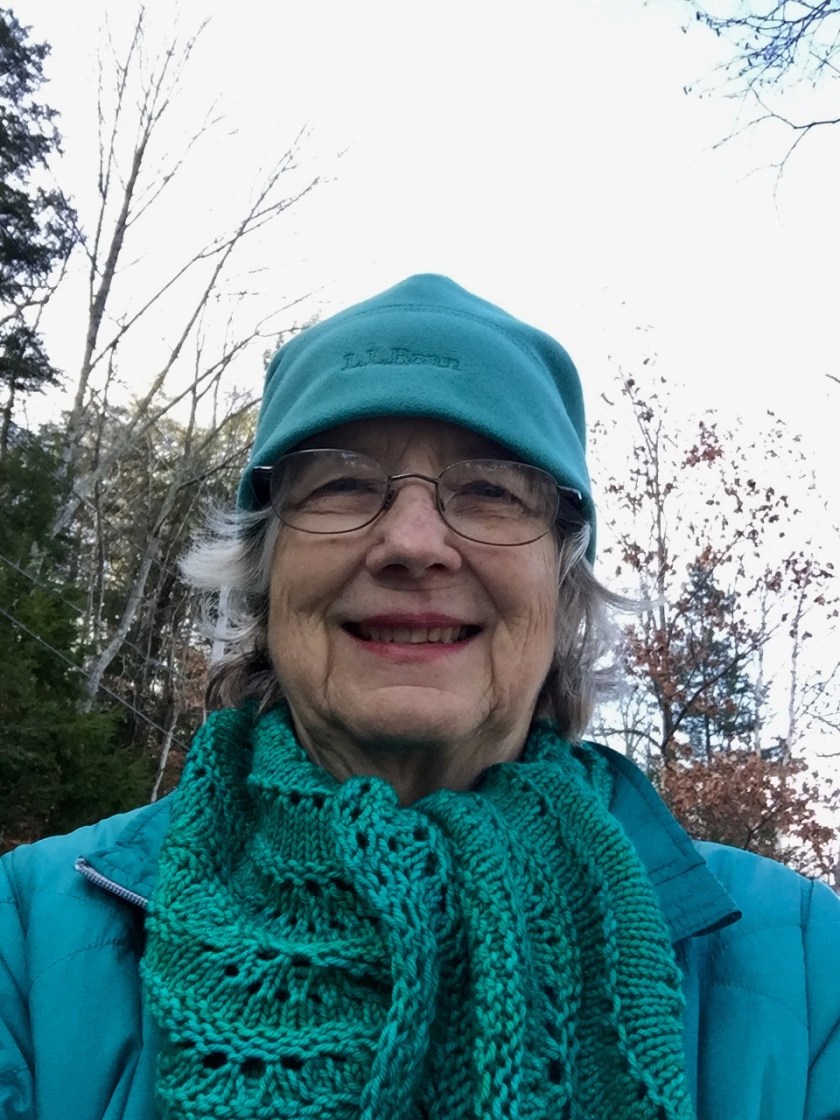
Penny sets a good pace for us. But she wanders, too, and that’s what a walk is about for her. If she gets too far behind, two whistles bring her running to touch my palm. It’s a game she likes.

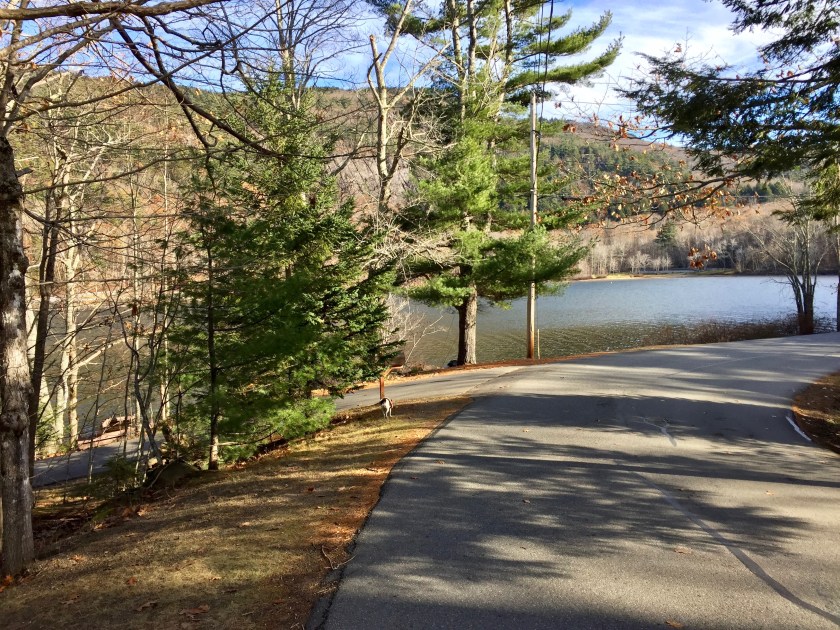
The leaves are all gone now. Look at the color of the sky. It’s so blue. It’s not unusual to see rock climbers scaling that cliff.

A view of the lake in the bend of the road. the white speck at the left edge of the road is Penny.
A small group of mallards comes close enough to get a picture. The blue sky’s reflections dance across the water.

When I get back into the car, my head is full of haikus.
November 22, 2017
November 21, 2017
November 20, 2017
November 20, 2017
November 16, 2017
November 13, 2017
November 15, 2017
October 2017
Reviews: May 3, 2017
Margaret Atwood published THE HANDMAID’S TALE in 1985. I read it some time in the mid to late 1980s as part of a text-in-community program at George Mason University–where all the liberal arts classes read it as part of the core curriculum classes–each class exploring the novel from within its educational scope. (I was so lucky to teach in this program of “linked” courses that explored the same chosen novel later in my own educational journey.)
The first reading of this novel was totally mind-blowing–as much of Margaret Atwood’s prescient work can be. In the late 1980s too many Americans, me included, just did not know how bad things were for some people around the world. Oh, we knew about the horrors of Nazi Germany. I forget now how much we knew about the Taliban in Afghanistan. But few of us thought about how absolute power could be used to control most everyone in a nation in extreme and disturbing ways because “that would never happen in America.” That would only happen in places like Russia and China. Everything that happens in HANDMAID’S was happening in real life when Atwood was writing, somewhere in the world of human beings. But, again, back on the mid 1980s none of us would have ever thought that in the democratic United States of America the controls for managing a government showing total disregard for rules, the laws, precedents set for decades to protect our civil rights and environment, would be so weak against powerful forces seeking self interest.
Books: April 3, 2017
I recently listened to this book on our Maine Library download system, where all the books are FREE.
I really enjoyed it.
It’s a saga of sorts, multi-generational, interesting, SET IN MAINE, beautifully written.
Here’s a review:
 Louisa Enright's Blog