What Is This HUGE Wasp/Hornet?

It’s the biggest darn flying wasp-like critter I’ve ever seen. Some are close to almost 2 inches long. And they have set up shop in my red roses.

It took me some time the other morning to get some pictures–without risking being stung–and some time researching with pictures to figure this one out as there are other similar insects out there. One is now moving into South Carolina, and it is a problem.

It’s a Cicada Killer Wasp. And they are not true wasps or hornets as they don’t bite or sting.

Yes, the females are up to 1 1/2 to 1 3/4 inches long. The males are smaller, but are very active as they are “guarding” the underground nest the female digs for her eggs. Males aggressively patrolling a nest location can be scary if you don’t know anything about these highly colored insects and encounter one. All one sees is the size and the waspy colors.

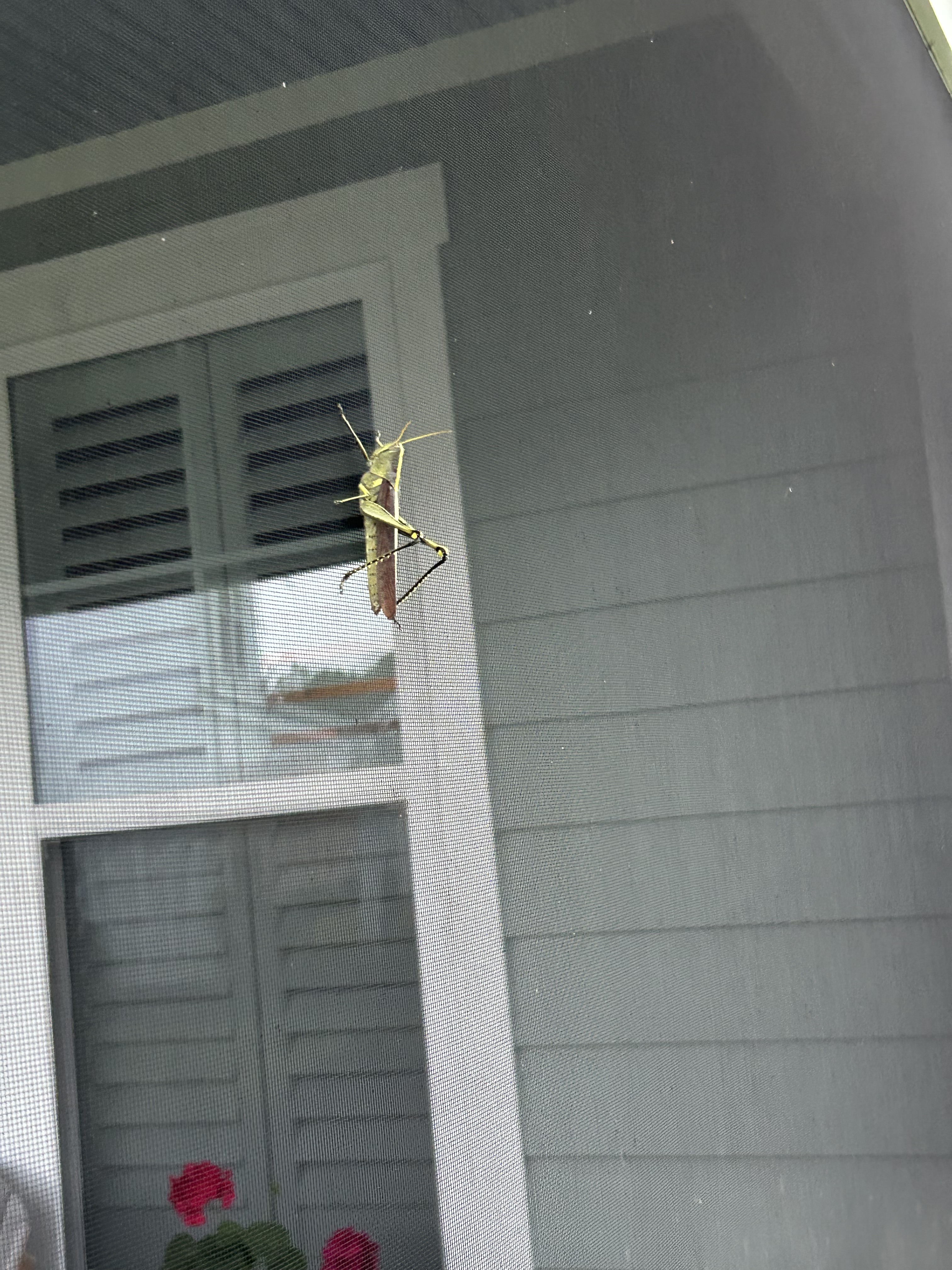
This picture is of the smaller male on guard. He’s very active so it took me some time to get a resting picture.

Here you can see the distinctive yellow dot on the front of the face–and the dull red markings around the head and on the legs. There are three yellow bands on the lower body, on the upper part. The rest is black. The wings are stationary and lie flat when at rest.

The HUGE females are much harder to capture with my camera. She has what looks like a stinger protruding from her rear, but it is used to sting her only prey, a cicada that she ceaselessly hunts down as she uses it for food for her eggs. If one tries to capture her and brushes the stinger, it can leave a very mild sting, but that’s all. Research says that the sting is less than that of a mosquito bite. Mostly these insects eat sap and nectar.

Here’s a quote from the informative link below:

“Female adults often dig their tunnels in a backyard sandbox, a sand trap on the golf course or in a nice sandy picnic area outdoors. Lawns, gardens, flower beds and athletic fields are other preferred nesting sites. They excavate noticeable amounts of soil around their tunnel entrances and create unsightly mounds. Large soil particles are removed with mouth parts and then shoveled through their legs in a dog-like manner.”

I now remember that I saw these piles of dirt obviously excavated from my rose garden beds last year. At the time I was puzzled by what dug out the dirt. A frog maybe, I thought? I just put the dirt back with my trowel and called it a day.

But…

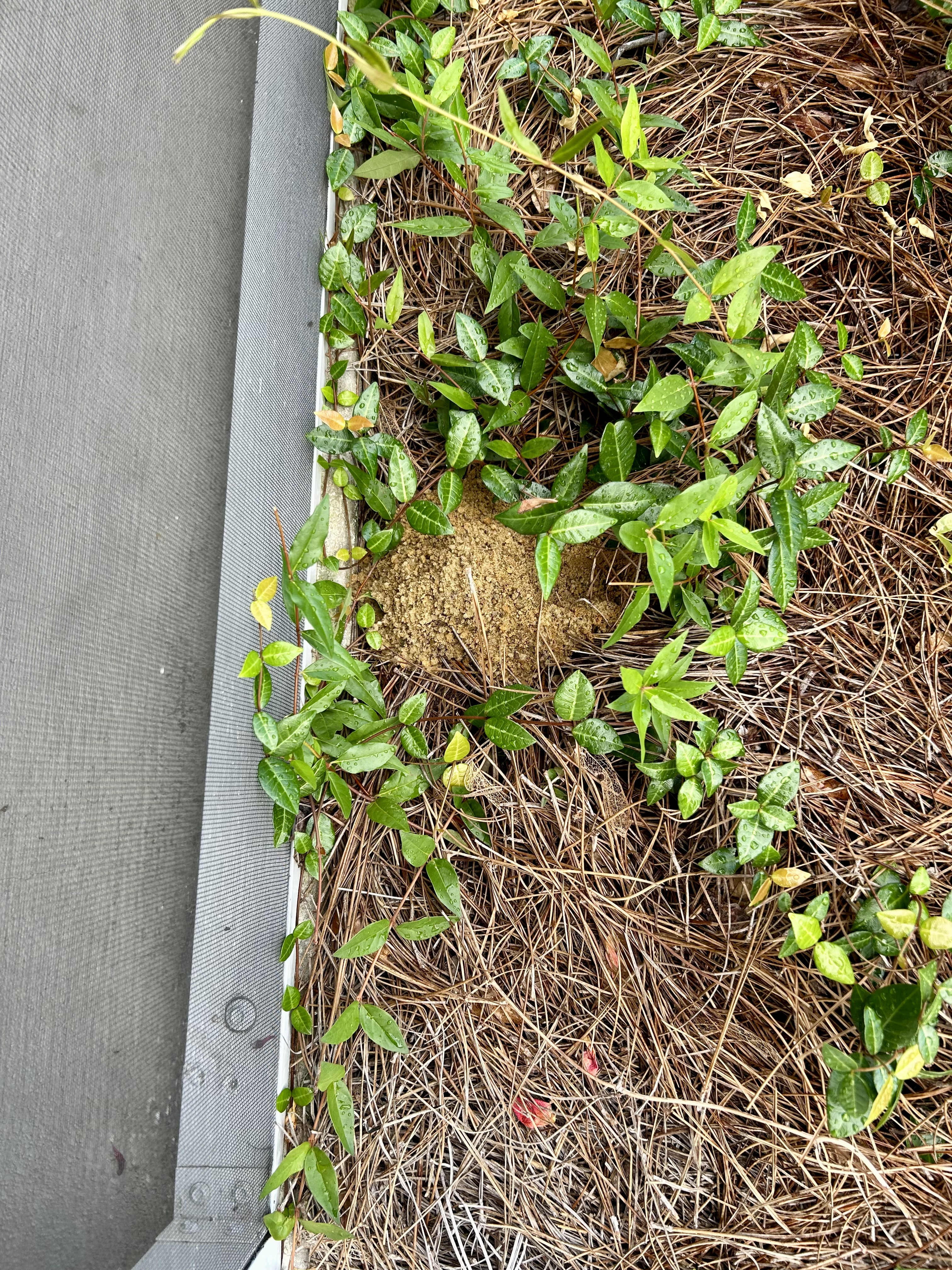
Here’s one of the dirt piles I found this morning–and look how well the Asian Jasmine (which is not a jasmine) ground cover is spreading now. That is a LOT of dirt for an insect to remove with her mouth and shovel backward with her legs.

The adults only fly around for about 2 months, and now that I know what they are, I’ve enjoyed watching their antics in my roses. I’m not worried about having them around. At the very least, their tunnels and underground nests will aerate my very very poor soil.

Please don’t kill these harmless creatures. Instead, enjoy the show and the other benefits they provide. You can’t miss them. They are HUGE.

https://njaes.rutgers.edu/fs040/#:~:text=Cicada%20Killer%20Wasps%20have%20a,the%20rear%20section%20(abdomen)

A Shasta Daisy and A Butterfly Bush

It is Saturday morning, and I’m up early as the modern quilt group has a Sit and Sew this morning, starting at 9:30. It’s held monthly at a local wonderful quilt shop about 40 minutes from me: Five Eighth Seams. The store has a strong collection of quilt fabrics, but also garment fabrics. They also teach a lot of classes on how to make both quilts and garments. And they have a big sewing room with lots of tables and plugs for machines people bring.

Look at the Shasta Daisy! It not only came back, it is bigger and is blooming like crazy. Yesterday I deadheaded the spent blossoms and, yes, I’m picking off the June bugs that have shown up now–several times a day. I’d like to think I’m making a dent in them. That is Lantana on the right and a Russian sage on the left.

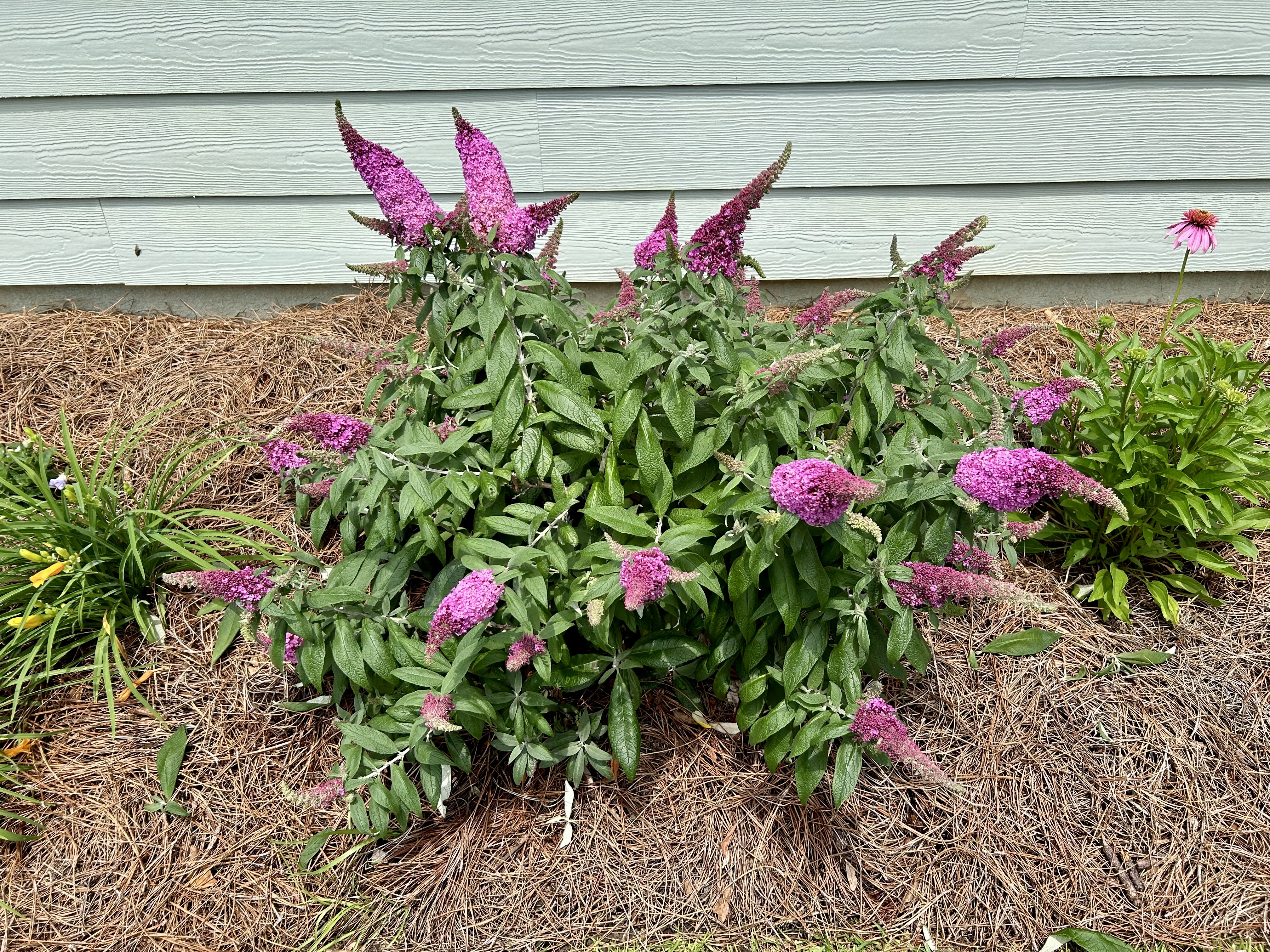
The dwarf butterfly bush is back in full force too, and this year its blossoms are way bigger. I filled a nearby hole in this long bed recently with a white butterfly bush which looks like it is now setting blooms.

So now I have a mixed grouping of flowers to bring inside as I trimmed back the red roses, and they are setting up again to bloom again soon.

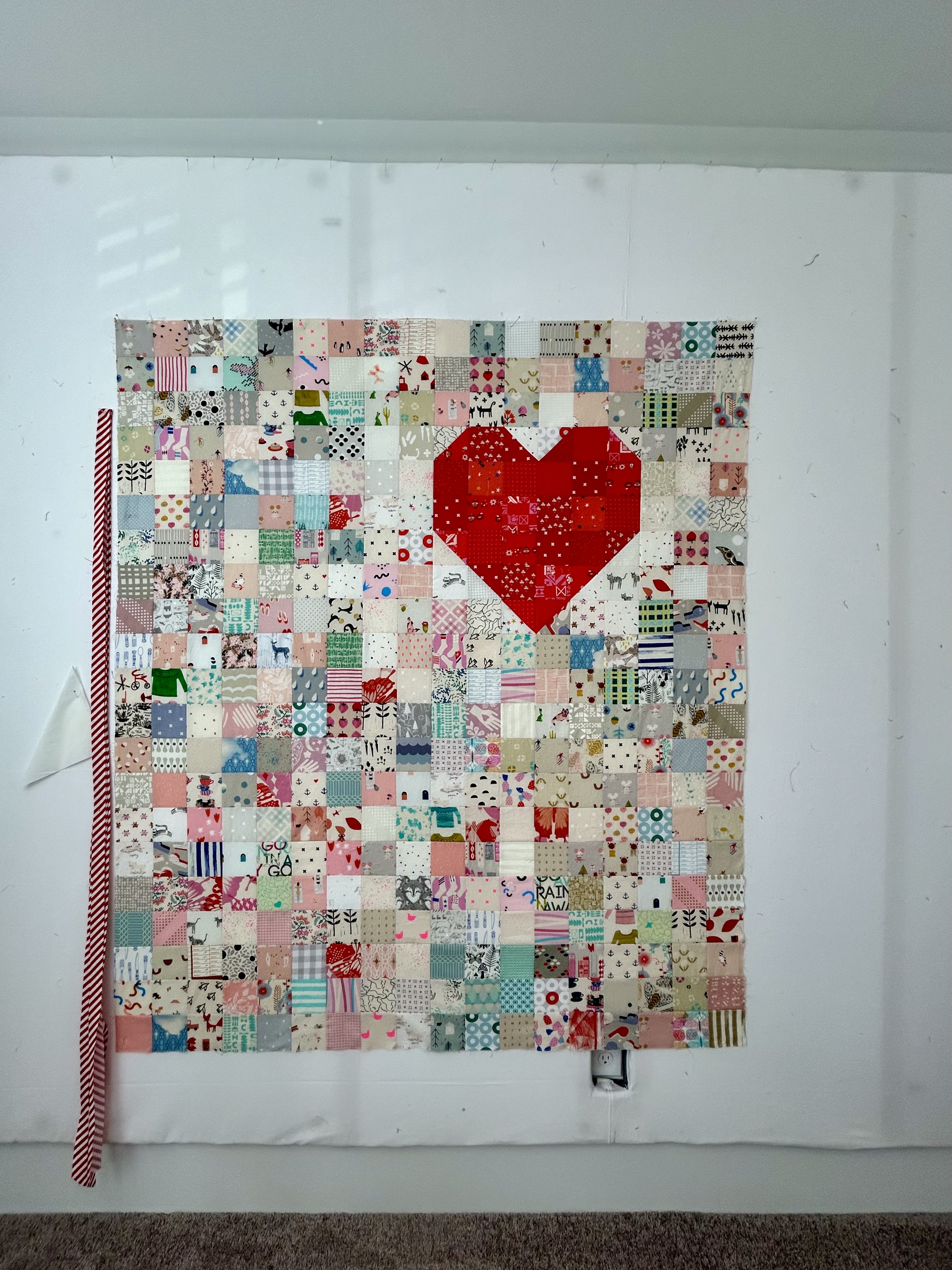
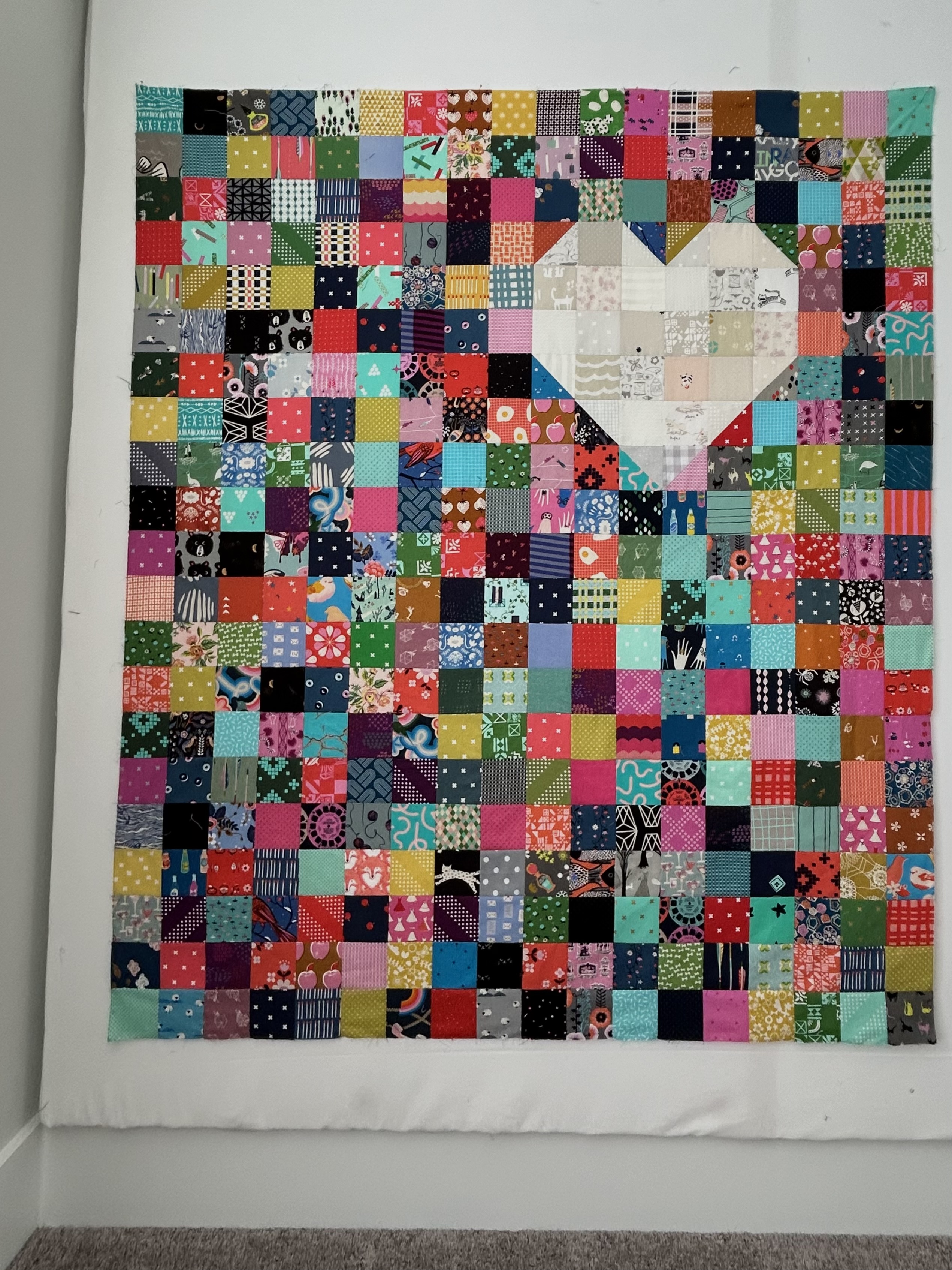
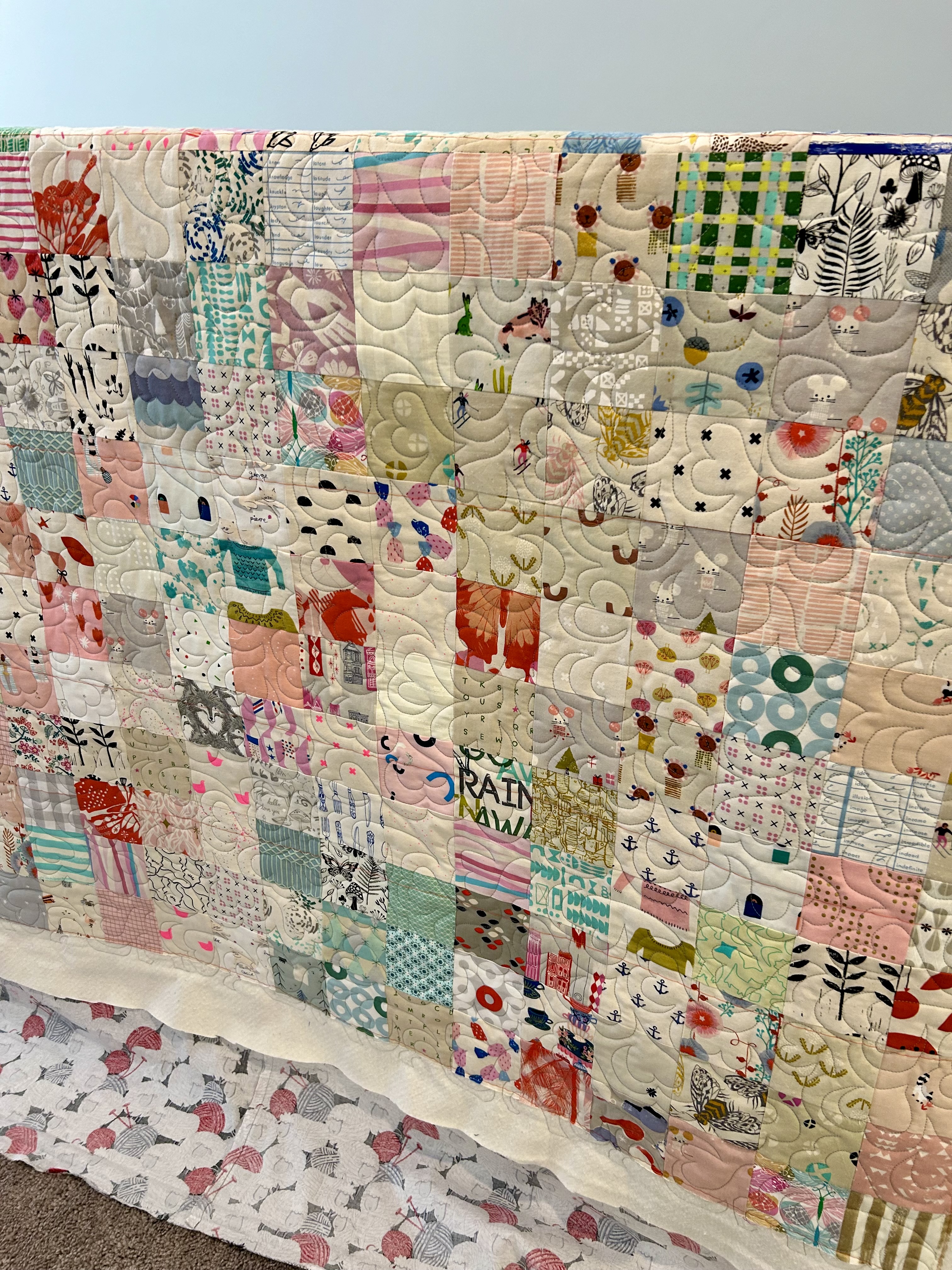
I’m on THE LAST ROW of the quilt “Happy.” THE LAST ROW. But, yes, there is the border, but it will sew fast.

Have a lovely day everyone! And a lovely weekend!

Bits and Pieces

What a busy week it has been so far.

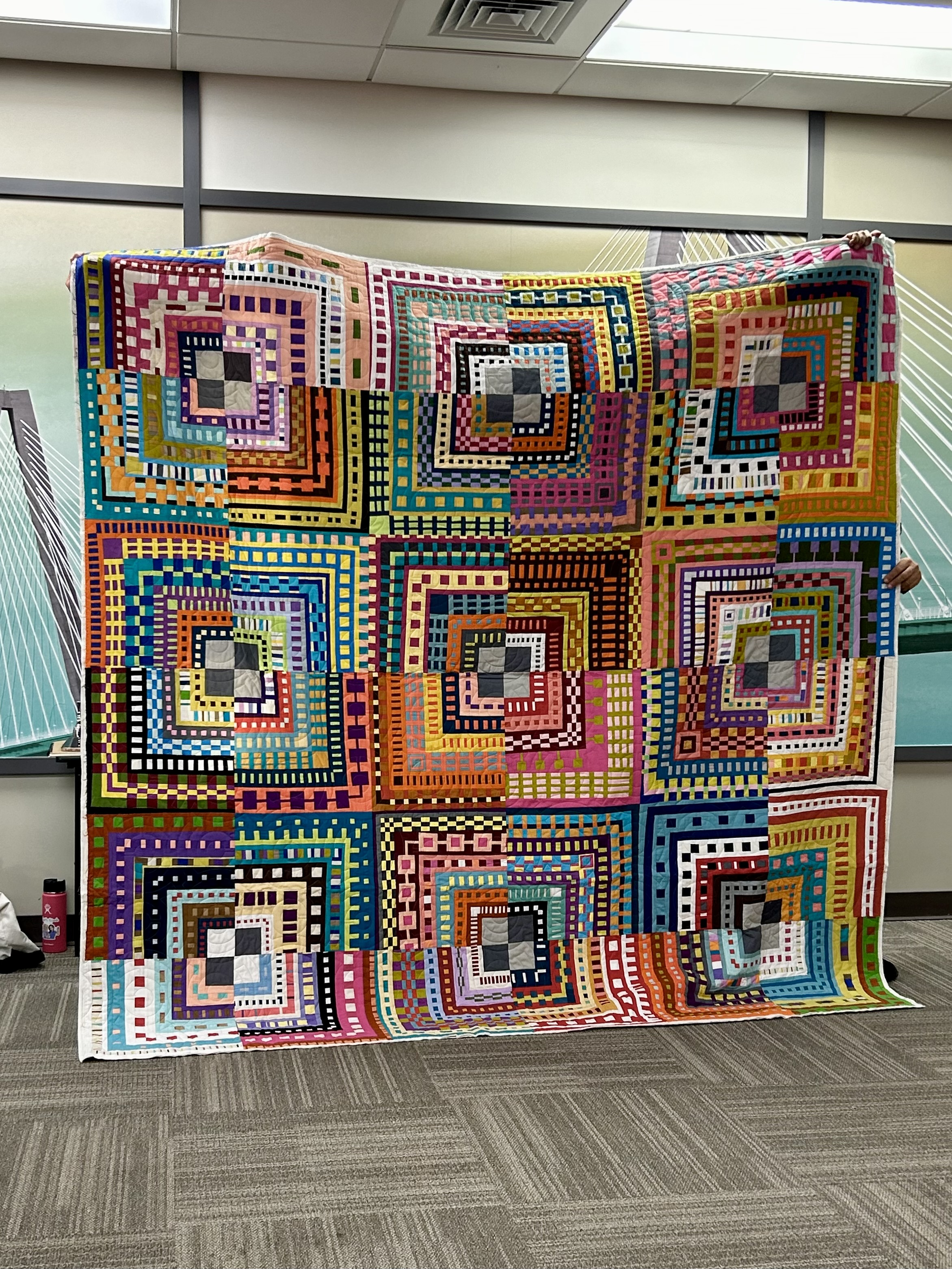
Tuesday night’s meeting of the Charleston Modern Quilt Guild was a lively, fun meeting. Among the many visual treats, Cathy Beemer showed us the quilt she had just picked up from her longarm person. Cathy is teaching us how to make these blocks at our monthly Sit and Sew meeting. I have 1/4th of one of these blocks made and need to slow down and make at least one other 1/4th. They are so fun to make and use up solid scraps. Cathy has taken many classes with Maria Shell, and this quilt shows that influence. After it is bound, this quilt is meant to be a gift for Cathy’s nephew, which is “Wow” What A Gift of Love and Care.

I went back to Hidden Pond Nursery also on Tuesday, to look for a plant for this vacant spot in the garden. I came home with this rose–a floribunda called “Popcorn”–and three perennial Lantana that are the same color. All these plants will spread out–but not get higher than 2 feet.

It took the Maddox and a shovel and lots of will power and energy to dig the hole for this rose as there was a large vein of black clay running right through where I wanted to put it.

Hidden Pond has BEAUTIFUL container pots these days. I came home with this one so I could repot these Kalanchoe plants (Calandiva is a hybrid) my sweet neighbor Teri gave me for my birthday. They have NOT stopped blooming since mid-March.

And, I had a visit with the three hens that were loose in the Hidden Pond gardens today. Like most hens, these were very social and started hanging out with me as I walked around–making me miss the days I had some chickens of my own in Maine. These gals were very vocal and encouraging about keeping on walking.

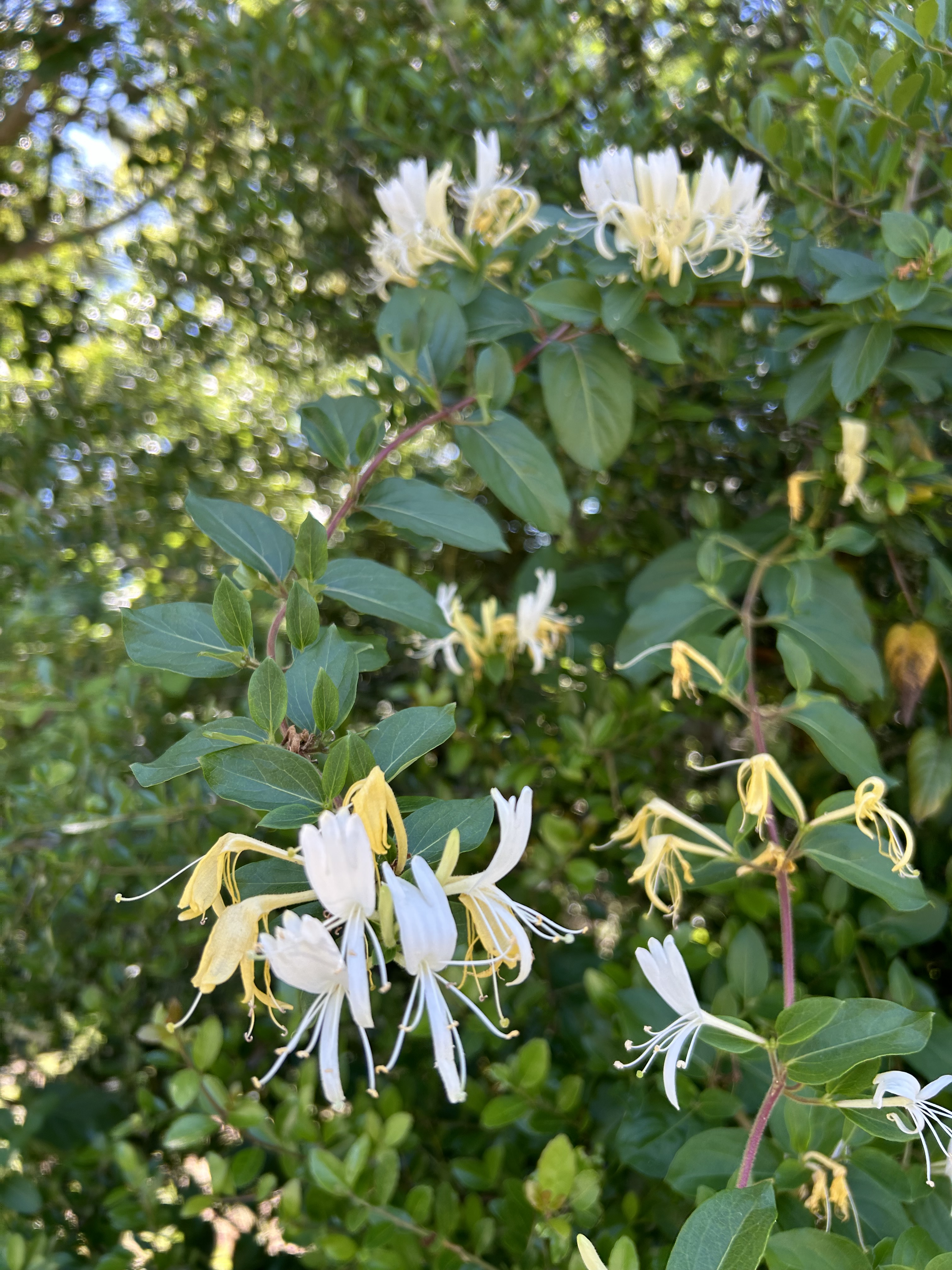
The honeysuckle is blooming in the woods now. On my Tuesday walk, I stopped to smell this honeysuckle plant. It was heavenly–and qualifies as savoring one of the quiet moments in one’s day.

This little wildflower is growing along the sides of the path here and there. I can’t figure out what its name is.

And the very fragrant Ligustrum shrubs are blooming now. Some like this plant’s strong smell; some don’t. I do.

Wednesday was a dreaded dental day–but all went well.

And today I spent the whole morning outside–planting “Popcorn” and the Lantana and repotting the Calandiva. I fertilized, trimmed, and watered the roses and the new plants. When I came in, I showered (boy did that shower feel good) and had my dinner on the porch with my book (Jan Karon’s second in the Mitford series, A Light in the Window). Neighbor Teri came over for a porch visit catch-up, which was nice.

And now I’ll sew.

The New Camellias

Several of you have asked about the new plants.

My Georgia grandmother had several big camellia shrubs in her garden–one was a gorgeous red. Camellias bloom in the fall and over the winter here in South Carolina. I remember times when my Air Force dad needed to fly to keep his flight hours current, and he’d fly to Warner Robbins AF Base, which is near my mother’s Georgia home place. He’d come home with boxes into which my grandparents had placed local food treasures (like lovely smoked bacon) and, if blooming, an array of the red camellias would be nestled into the top of the box. When we were in Omaha, Nebraska, in the middle of winter, the sight of these beautiful flowers was a sight to behold.

I remember, too, once in Shreveport, Louisiana, at Barksdale AF Base, my mother putting one of these red camellias into her curly hair just before they left for a formal party.

The camellia Bryan and Corinne gifted me with is a fragrant camellia (kind of rare) that will get tall and wide and is called “High Fragrance.” She’s going to go to the shade side of the house that gets morning sun.

I added a deep pink/red camellia that will get wide and not so tall: Shi Shi Gashira (Red).

I planted Shi Shi at the front corner of the house, and it will fill this space over time. (I first moved the white azalea that was here to the other side of the house, where it joined the ones that were moved from the front bed.) Shi Shi is small now, but it will…grow. Here it will get morning sun and afternoon filtered sun and shade.

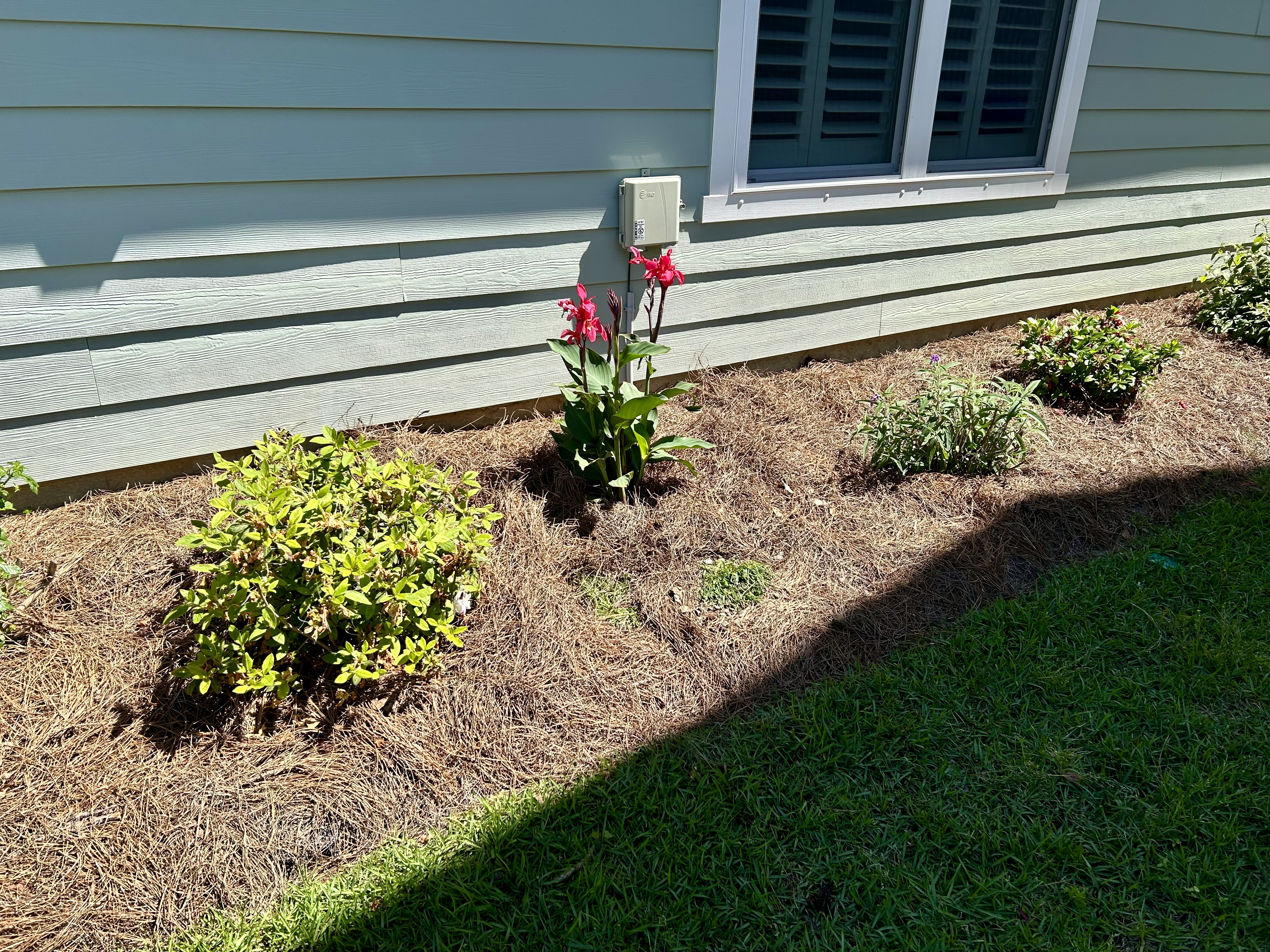
Here’s the Canna Lily–which is a really unusual color. Most Cannas are yellow or a bright orange or red. It, too, will fill this spot over time.

The blossoms are unusual–smaller and more tropical looking. I fell in love with it, and it jumped into my flower cart.

So, there you have the new plants.

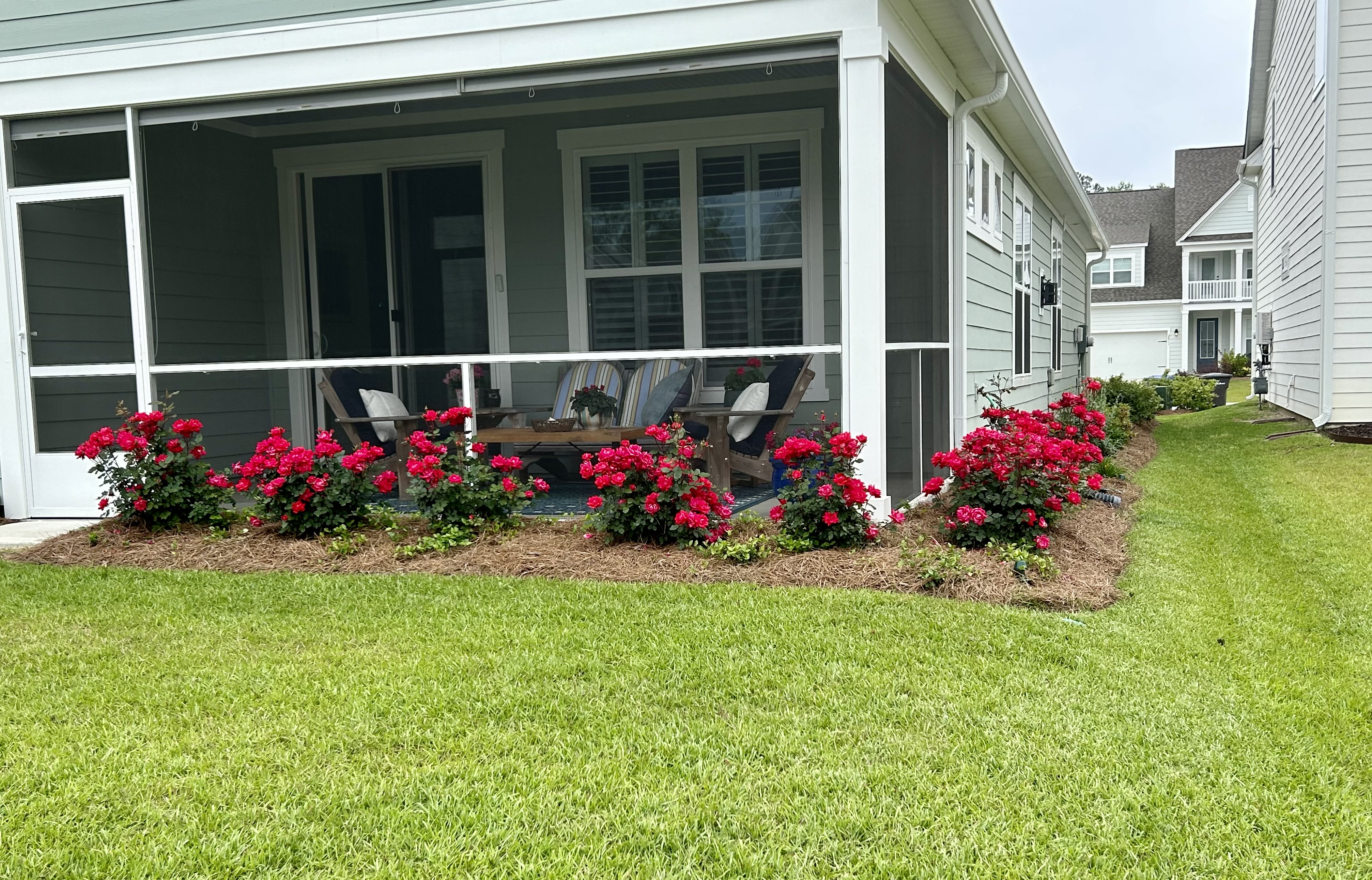
And, I can’t leave without showing you, again, the roses, the roses, which are real show stoppers.

Have a great day!

Camellias, Koi, and Donkeys

Bryan and Corinne gifted me with a camellia for my birthday this year, and yesterday Corinne and two granddaughters took me to buy it at a local nursery not far from me: Hidden Ponds Nursery in Awendaw.

We found a beautiful red camellia, and another one (pink) jumped into my cart, along with a pink canna lily.

There ARE hidden ponds on this property. And I so enjoyed seeing the koi begging for food.

There is also a large collection of other animals–a beautiful black duck roaming free, hens in a very cute coop, rabbits, goats, a BIG rooster in a separate pen, and…DONKEYS.

At the donkey pen, a very kind woman had come to visit with the two donkeys (a mother about 8 years old and her daughter)–which is something this very kind person said she does frequently–and she passed us carrots, apple slices, and peppermint treats made for horses–all of which the donkeys happily took from our hands.

This woman also had a beautiful dog–half Springer Spaniel and half poodle–who was enjoying chasing a ball people threw for him. But, sadly, I didn’t get a picture.

Anyway, in a few minutes I’m putting on old clothes and going out to plant the canna lily. Bryan will come sometime in coming days to help me with the camellias as they are large for me to plant.

Hmmm…

Maybe I will move an azalea that is not thriving to where the rest of those azaleas were moved–and I will put the pink camellia in that spot. It gets morning sun and afternoon shade. Perfect!

Wisteria In The Woods

Wisteria is so beautiful in the spring. It can and does escape confinement in formal plantings (where it makes a nice shrub or vine on some part of a house or trellis)–and when it does escape, it decorates the woods in the spring.

Here it is along the walk I take every day. This particular vine is just one among three or four that are running through the woods and are blooming now.

Here’s more of the wisteria in the woods.

There are at least three types of vines here that can get loose in the woods that I know about. One is the Yellow Jasmine, which is the South Carolina state flower. While beautiful and so cheerful in the spring, every part of this vine is poisonous and can cause skin irritation if touched.

Here’s some information on Carolina Jasmine from Clemson University.

The other vine is Kudzu, which in my mind is like “the little shop of horrors” plants. It can take over whole woods and totally cover whole swaths of trees.

Here’s some information and pictures on Kudzu–from an article entitled “Kudzu: The Invasive Vine that Ate the South.”

https://www.nature.org/en-us/about-us/where-we-work/united-states/indiana/stories-in-indiana/kudzu-invasive-species

Oh my!

Ruby Loropetalum

This shrub/small tree is new to me. On my walk, it lines the highway along both sides for long stretches. Along highway 17, it is trimmed back to the size of trimmed boxwoods–forming neat rectangles that line the sides of the highway and glow pink. In my neighborhood, it is a common planting beside and in front of the houses.

I finally slowed down to see what it was–deciding it was not an azalea form.

The feathery blooms are different–and pretty.

See?

As near as I can tell, this plant blooms for rather a long time.

Wikipedia says this plant is in the witch hazel family.

https://en.wikipedia.org/wiki/Loropetalum

Here’s a quote from an online nursery:

“The Ruby Loropetalum is a great shrub for screening and adding rich, red color to the landscape. If you’re looking for a shrub that’s hard to kill, this one’s for you! The Ruby Loropetalum is the most popular Loropetalum! This Ruby Loropetalum produces bright, pink flowers in the spring and pushes out new growth. As the new growth hardens off, it turns from red to ruby. Loropetalums are evergreen! They hold their leaves throughout the winter months still adding ruby color to your otherwise barren landscape. The Ruby prefers full sun. The more sun it gets, the more color you will have.

This loropetalum will reach 6 feet tall and about 6 feet wide. In the landscape, this Loropetalum is great for hedges, natural areas, small privacy screenings, and berm plantings. They break up all the green and function well. Use this loropetalum in the back of the landscape. They get large in size, so close to your house is not a good idea. We suggest planting out in the yard or in natural area where they can grow.”

This plant can handle full or partial sun. It attracts birds, bees, and butterflies. It is drought tolerant when established. And the flowers are FRAGRANT.

What’s not to like?

The redbuds have been blooming for some weeks now:

And the azaleas are in full bloom. I’ll have to drive some neighborhoods to get some pictures. Or, visit one of the plantation gardens where azaleas will be featured.

Camellias and Glue

Good morning!

It is a rainy Saturday morning, and today I will finish the final top of my series of 3 tops made with the 1920-30’s reproduction fabrics. So, pics tomorrow most likely.

AND, the new and final block, the 6th, of my online class with Tara Faughnan dropped yesterday. It’s called “Wheels,” and I can’t wait to try to make it. My improv project with the other blocks on the design wall could use some round blocks. I have so enjoyed this class. Friend Betsy in Vermont is already at her sewing machine this morning as she sets out to start this new block.

Camellias bloom in South Carolina in the winter months. Son Bryan and DIL Corinne have the prettiest white one in the front of their house, and this year it is loaded with blooms. It is backed by a pink one that is also blooming this year, but there wasn’t an open bloom when I took this picture.

These plants are so pretty with their glossy green leaves.

I have one spot on the shady side of my house. I could put a camellia plant there. Hmmmm…

I listen to books upstairs when I sew. And my little iPod that fits into my Bose speaker started to come apart at the seams. The humidity? I don’t know. Anyway, I thought it worth a try to try to glue it, so off to Home Depot I went and came home with a Gorilla glue gel that would work with plastics.

With paper towels and plastic gloves, I glued around the edges and clamped them shut. YEAH!! It did work and the iPod will keep going for a while now.

With that success I thought to try to glue the top of my cheap sunglasses back to the frame. Clamps wouldn’t work, so I tried a rubber band.

Yep. That worked too. Only somehow I got glue on the lens–probably from the gloves–those baggy thin clear ones painters use–and when I cut the rubber bands off I scratched the lens. Ugh!

Still, the glue did work fine. The glasses were fixed except for the glue and the scratch.

New glasses from the drug store are now back in the car. I do need sunglasses here with the rich sunlight and my cataract/lens eyes.

Now, on to that quilt top upstairs. Then I have to quilt all 3 of them on the longarm and sew down the binding. The hand quilting project on “Happy” is coming along. That will take some time though.