“Improv Blocks” is Done

What a journey!

This quilt started with Tara Faughnan’s six months online “Blocks” class in the fall of 2023 and into 2024. Tara presents beautiful fabric palettes, but this time I had the idea that I might want to make an improv quilt with my work in this class–so I chose a large palette that I kept intact for the six months. The palette, I thought, might be able to provide some coherence down the road.

I posted about the blocks along the way so many of you saw that process–which was so much fun. After the class ended, the blocks sat on my design wall for months as I moved around the larger pieces and tried to make an improv quilt come together.

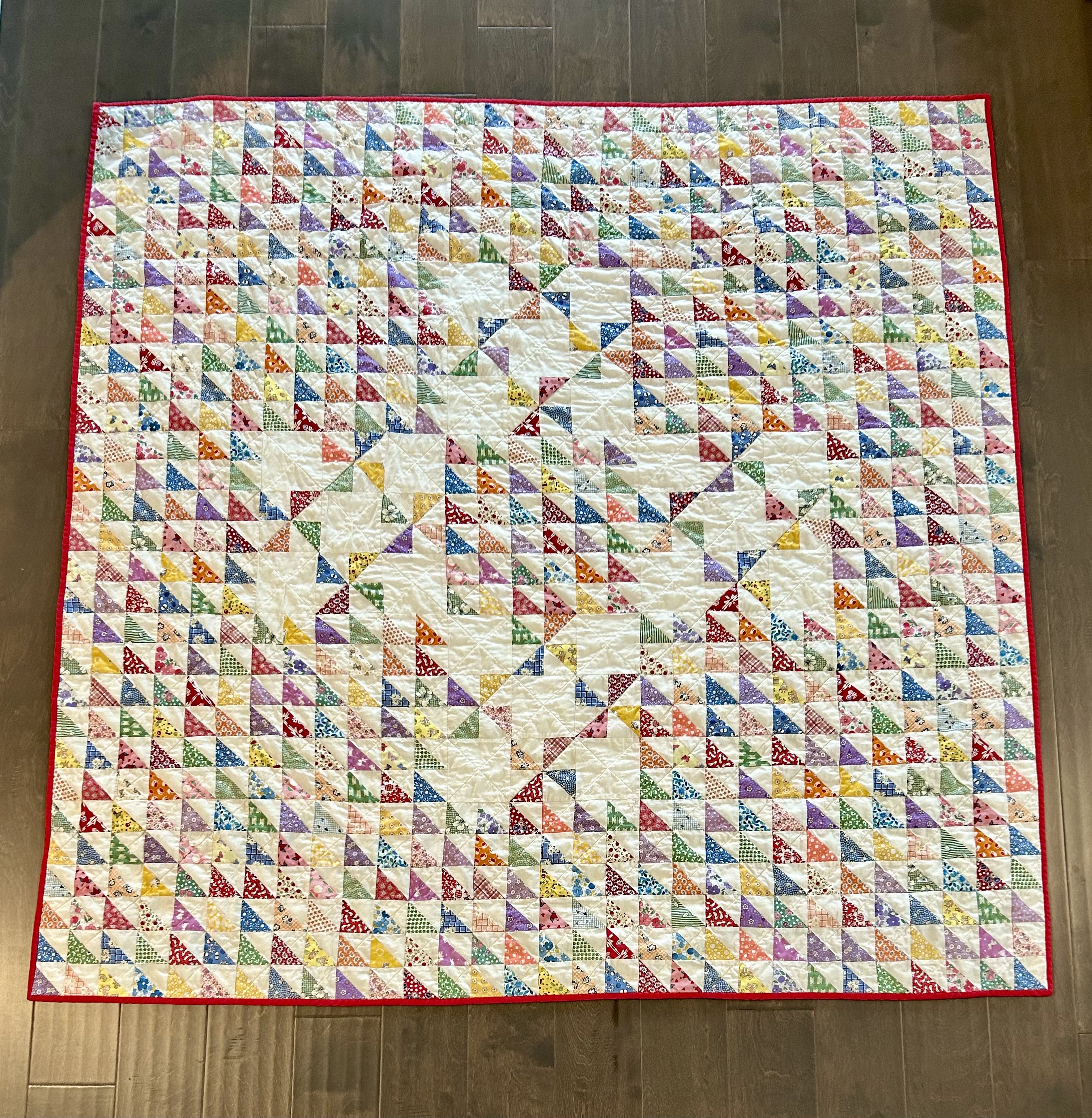
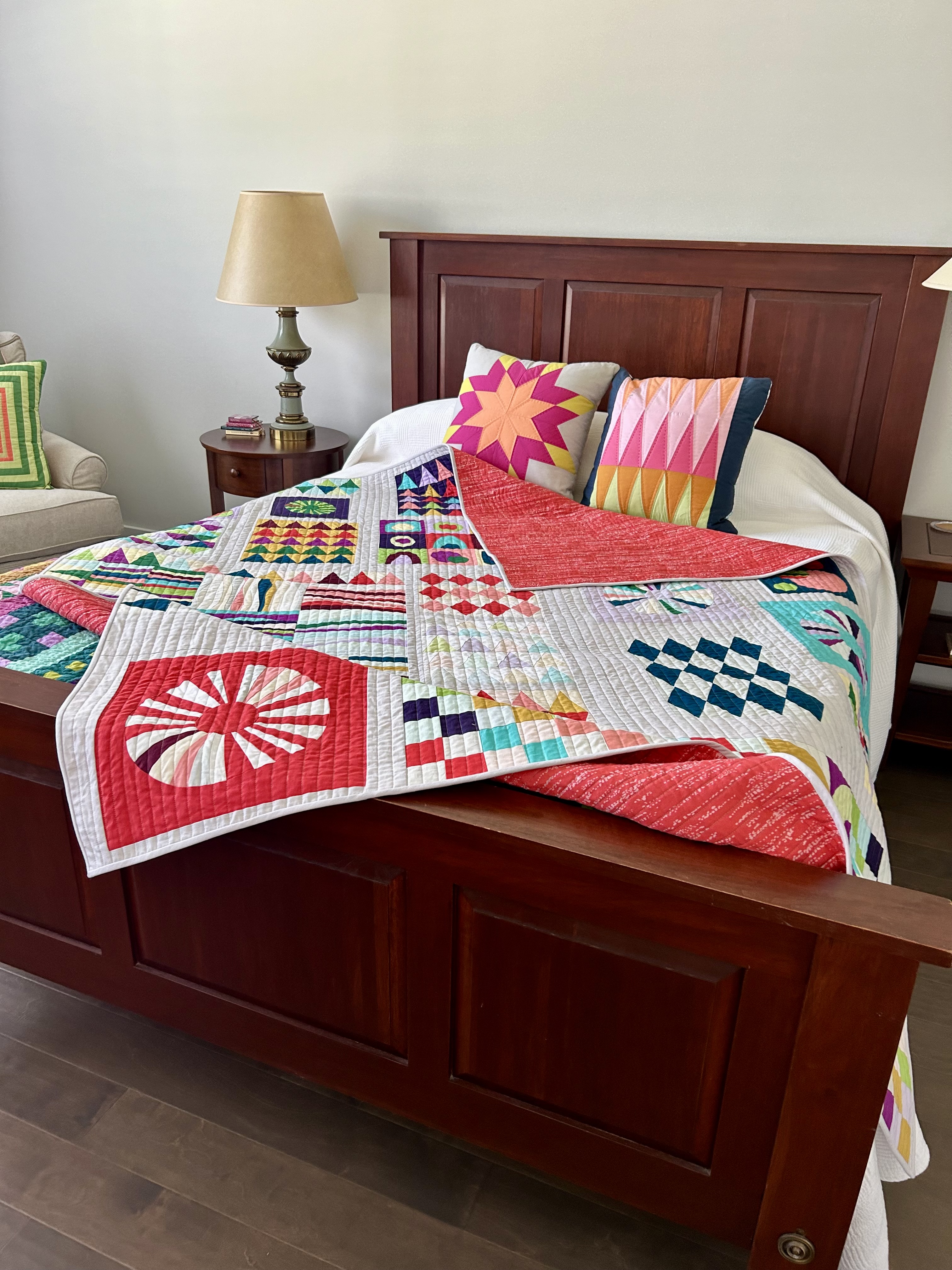
Finally, I had what I liked. Here’s the first view of the resulting top. I used Kona silver as my field fabric. I hated the borders though–and there were places where some adjustments were needed to make the quilt lie flat. The first step was to take off the borders.
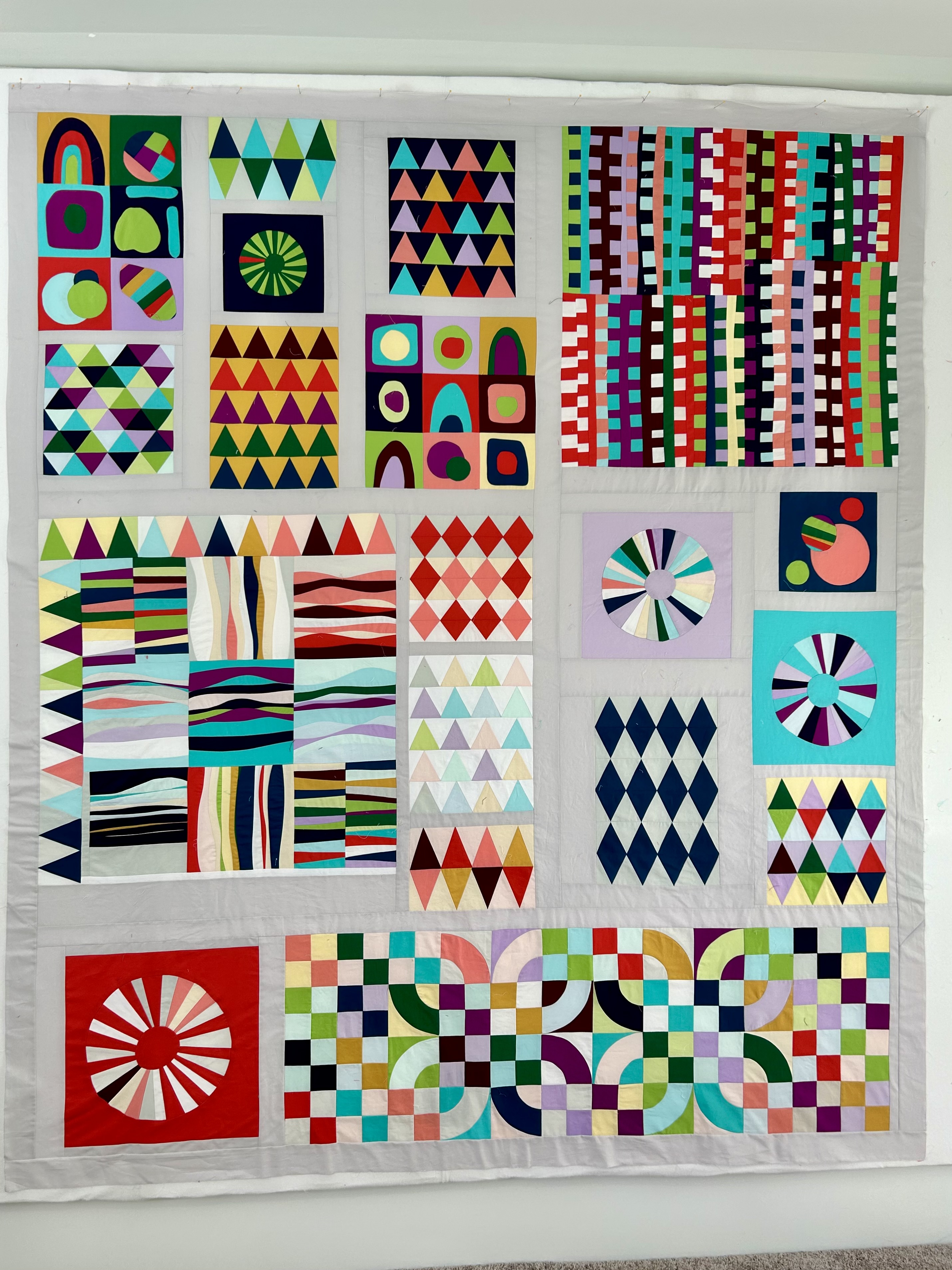
Here is the top without the borders. Yes, I liked this top much better now. And while I had it on the floor I measured and corrected to make the top absolutely square before putting it on the longarm.

I wanted to try using my longarm to do straight line quilting down the length of the quilt, so I put it on lengthwise–and made sure my machine, with the channel locks set in place–would quilt a true line with the correct distance between lines every time.

Yeah! That was working really well…
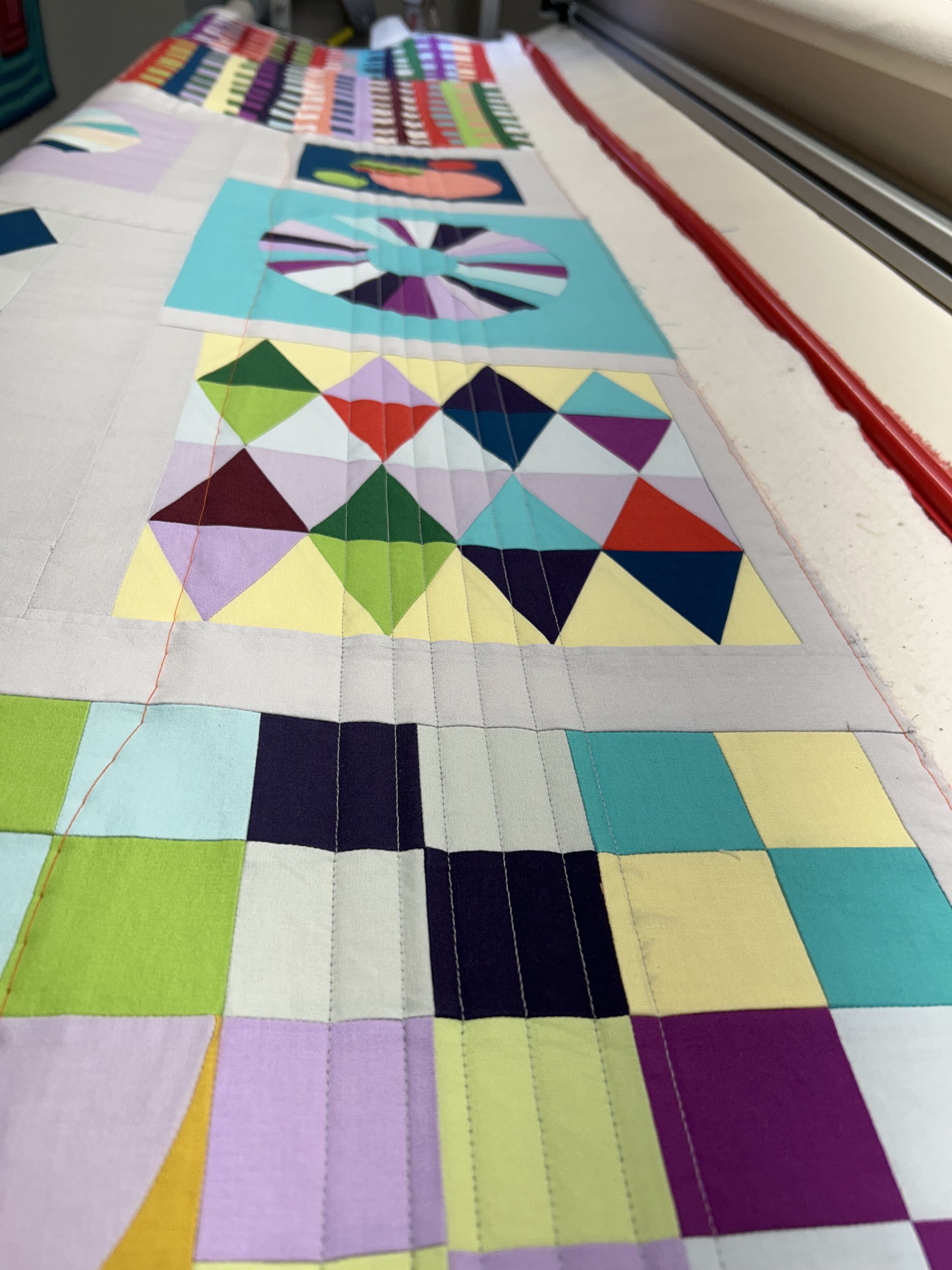
…until it didn’t. My channel locks were not holding properly.

So, I took the quilt off the longarm, took out two lines of stitching, and set up all sorts of tables and an ironing board around my domestic machine so I could finish the quilting there. It took three days! (Meanwhile, my Innova dealer was already coming to take the wheels off my long arm as it was too high for me, so I put in a call to him about the channel lock issue. Yes, he came and all is well again.)

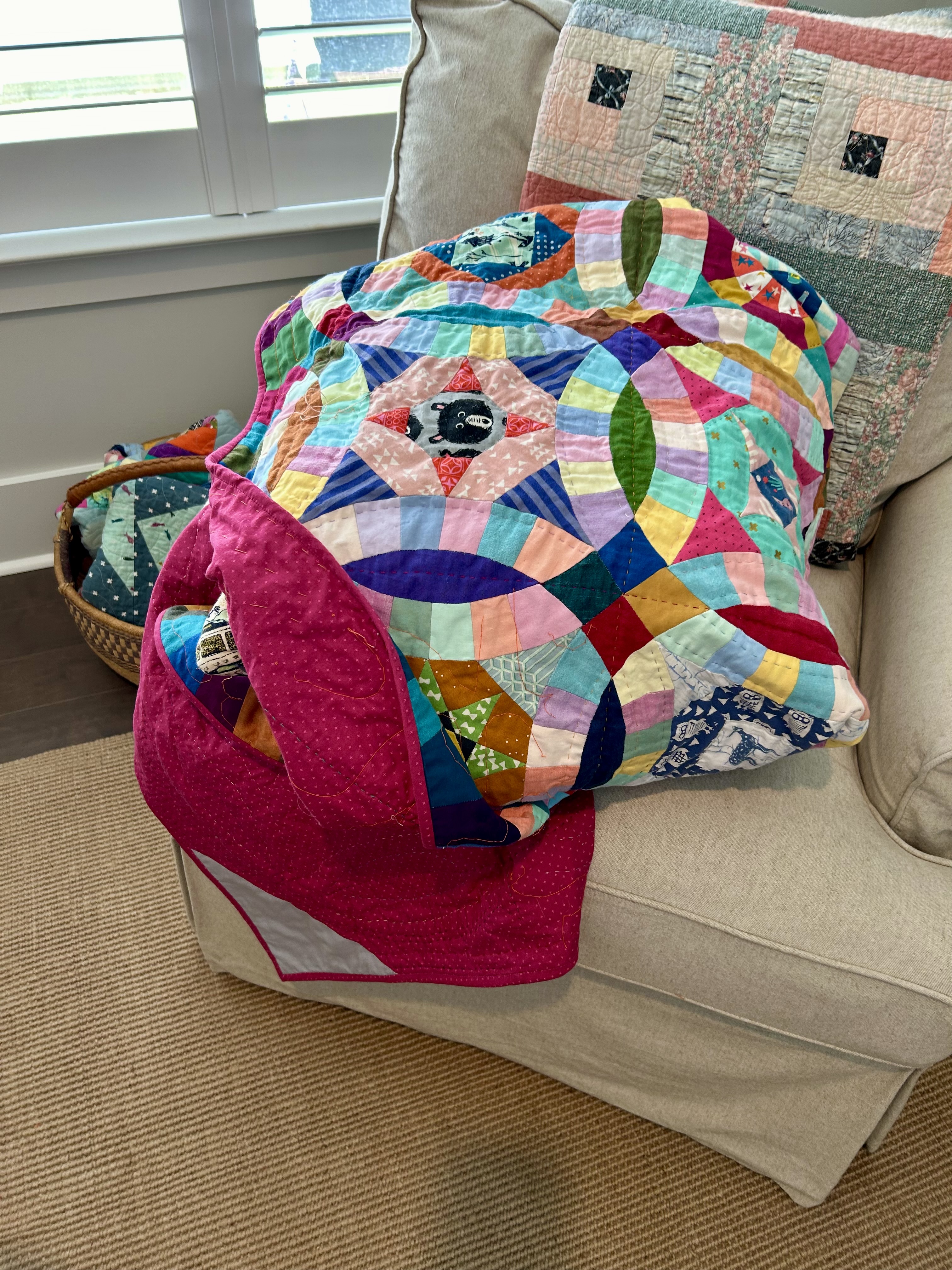
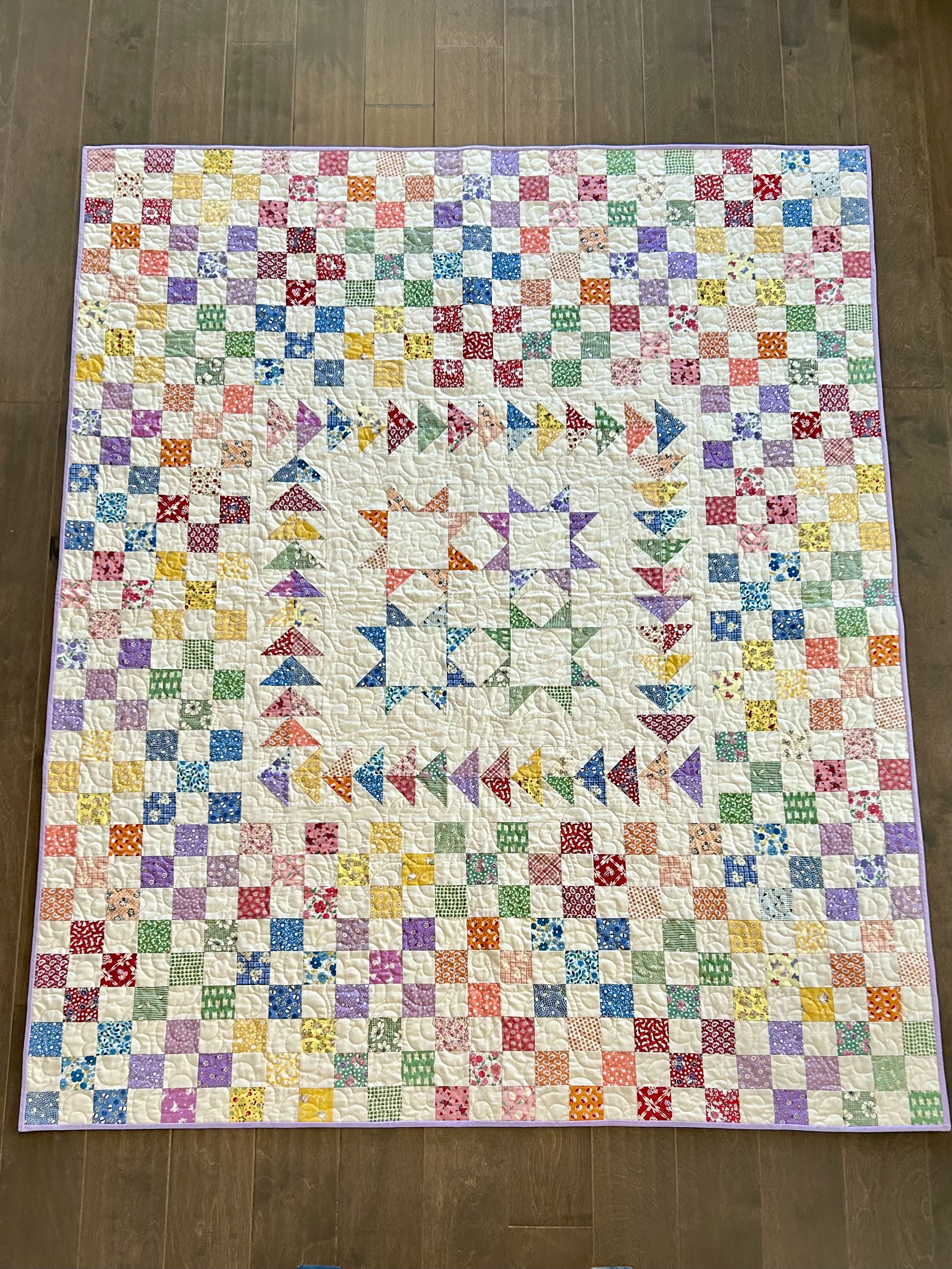
The problem with using a domestic on a big quilt with straight line stitching is that the fabric can (and does) get out of square as the walking foot pushes the fabric in a way that the longarm does not. But, I coped with trimming, and the quilt is…GORGEOUS!

Here it is on the floor, but this pic is distorting the quilting I think.
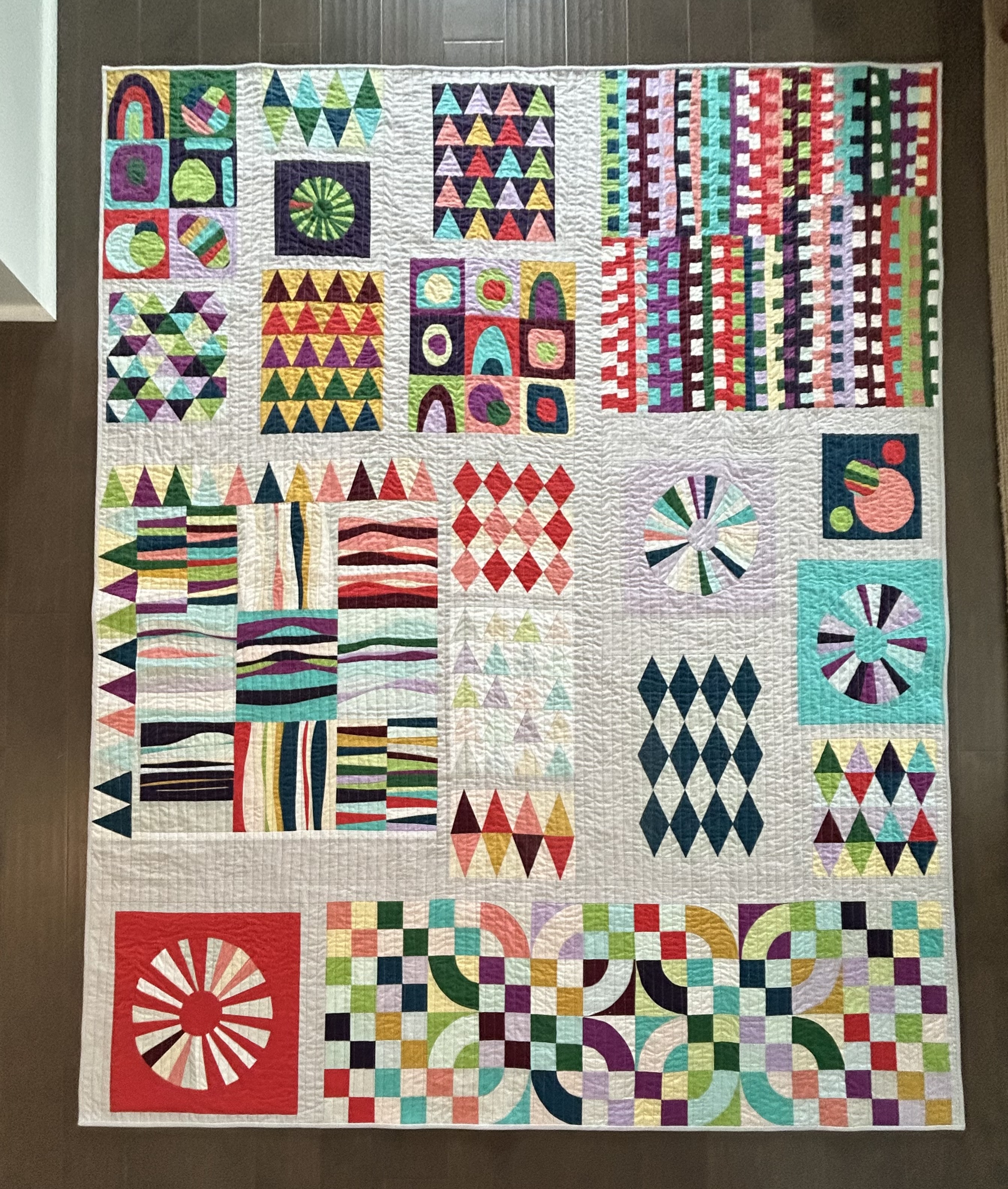
So I put it on the design wall upstairs to try for a better picture.

For the backing, I found a gorgeous coral from Figo at Five Eighth Seams that works really well with the Kona coral in my palette. And it makes this quilt I already love so much so lively and fun.

I will need to wash it to get out all the glue in the blocks. And I already washed the backing and all the stash fabrics. I want to show it to my two local quilt groups first though. I am a little hesitant about the washing as I used color catchers with the backing, and the dye did run more than a little. So, when I wash this quilt, I will use lots and lots of color catcher cloths in the wash and probably cold water.

There are two projects on the design wall and ironed fabrics waiting to be used in a third quilt. One of these projects is a leader/ender project, and that is working out well in lots of way to be shared later.

“Improv Blocks” is begging to be touched and used:
It’s Friday!

And I have more bits and pieces to share.

MY IMPROV QUILT IS GETTING BINDING!

Here’s a sneak peak–I use a pillow to elevate hand work as it takes the stress off my arms and neck. The backing is AWESOME! It’s a Figo print. And it is PERFECT for this quilt.

I am loving how this quilt turned out. When it is finished, I’ll do a whole post on this “improv” process–which did involve a bit of trauma as the channel locks on my longarm decided not to work properly so I had to finish the quilting lines on my Janome 6700 surrounded by LOTS of tables and an ironing board. (Jimmy Hernandez from Carolina Quilt Studio in Greenville, NC, was already going to come here on Sunday for another client, so he’s going to take off my longarm’s wheels (it’s too tall–I have to stand on tip-toe some times), so he can show me how to tighten the channel locks–and believe me, quilting lines on the longarm was way, way more easy than on the domestic.)

The hand quilting (big stitch) on “Happy” is down to the LAST BLOCK (after 10 more minutes of sewing on the penultimate block–and then the border, which will go fast as it is easy quilting.

I’ve have had an ongoing project that will be a 30-inch wall hanging or pillow–the second of the 4 blocks is almost done but needs some tinkering to measure properly. I’m going to shorten the white strips as they are too wide–it is too much white–and that will give me some room to add a final dark border around the purple/green/orange piece–where I still have to make the last bottom piece. (Cathy Beemer has been teaching us how to do this work.)

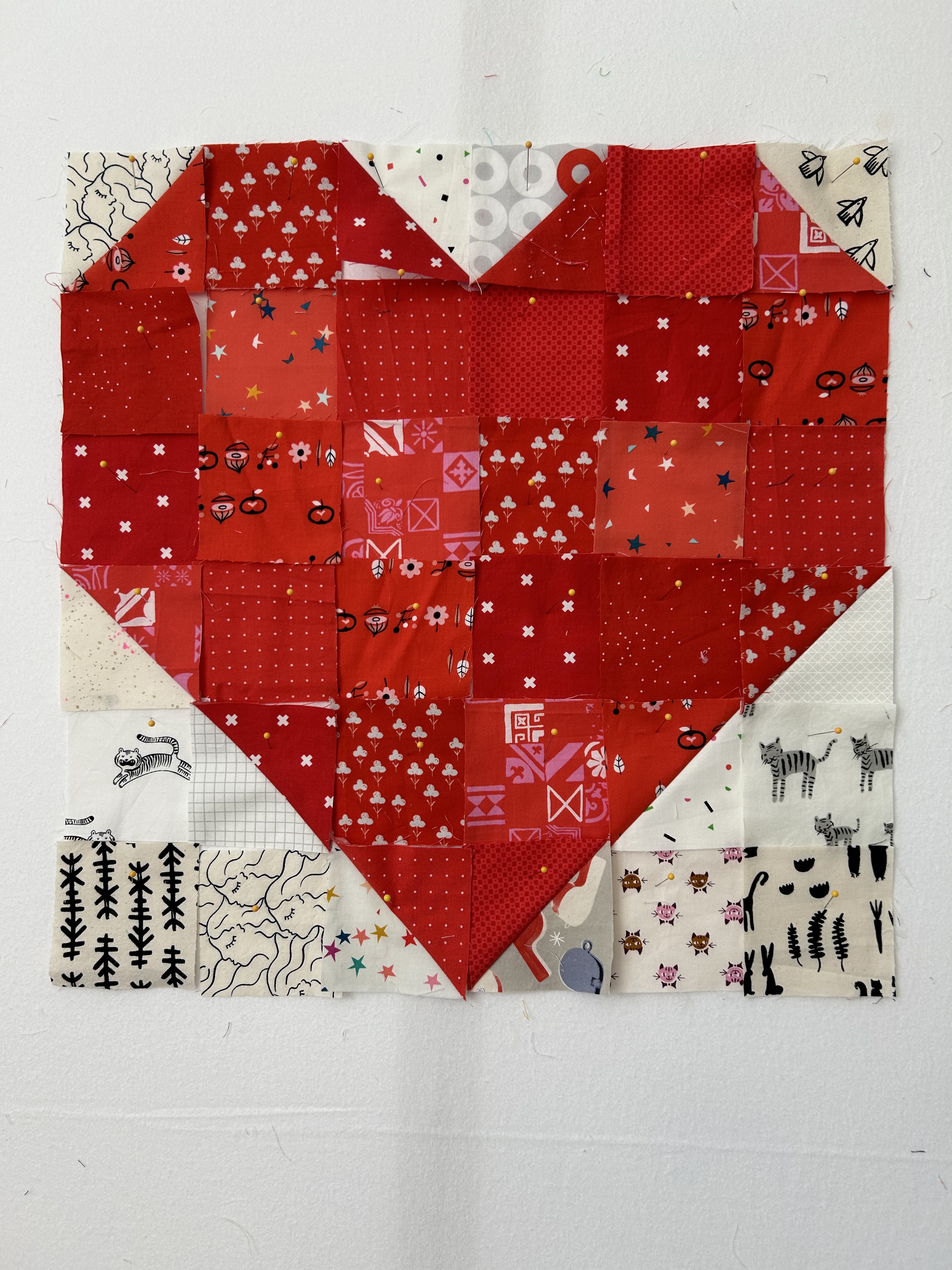
I’ve started a lap quilt using as many of the 3 1/2-inch squares as I can from the bins holding the cut-up Cotton+Steel/Ruby Star Society squares. There is ONE red heart and the rest of the quilt is low-volume. Easy Peasy.

AND, I’m ironing the saved fabrics from season 4 of The Color Collective where guest designer Annabelle Wrigley gave us her “Prickly Pear” quilt. The fabrics are from her own collection of solids, Ruby + Bee.

Screenshot

So, gradually, I’m catching up with those Season 4 TCCollective project.

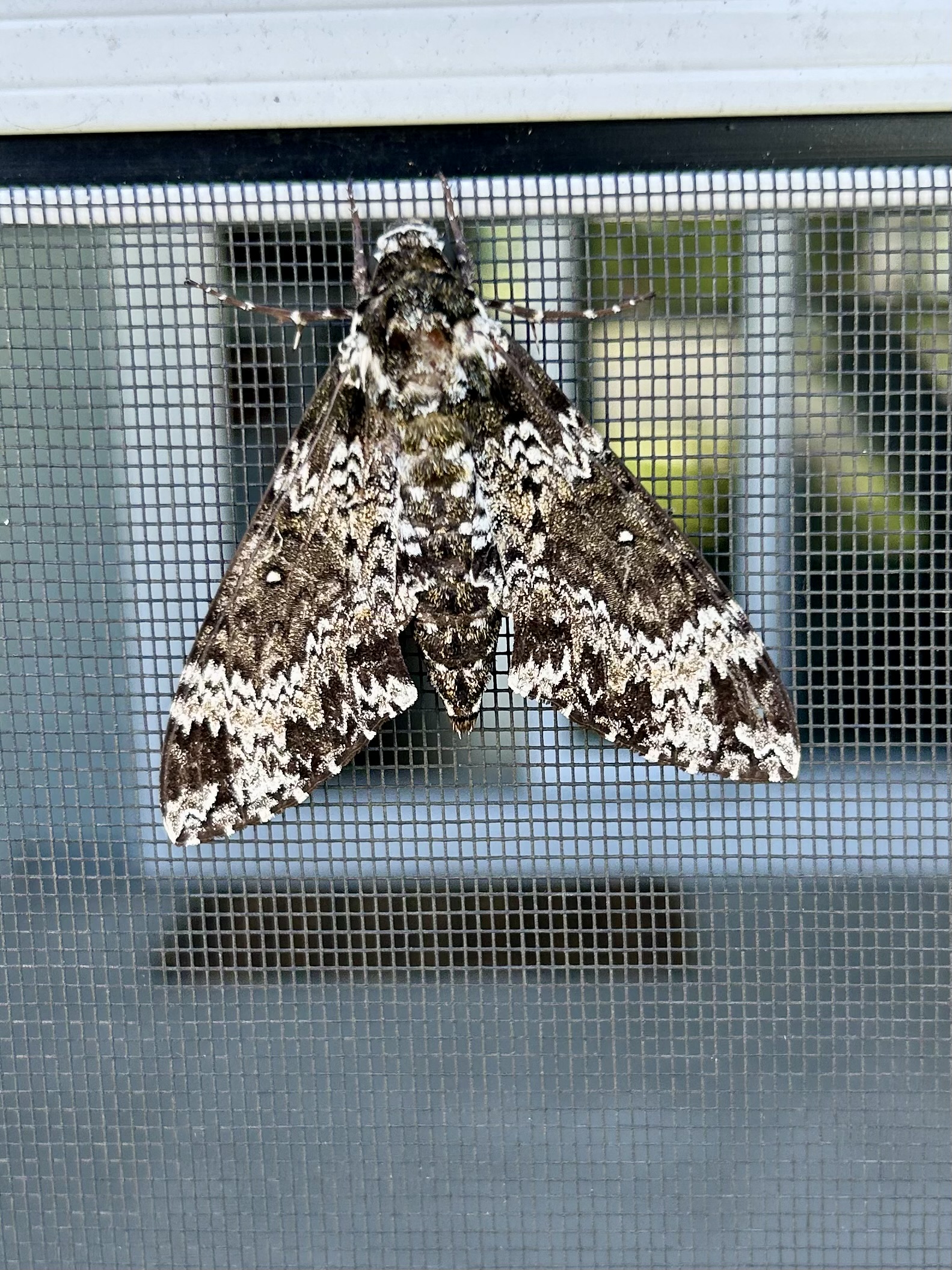
Holy Moly! Look at this HUGE moth that is now resting on my back screen door! She’s 3 1/2 inches or so if you count the wing length.

It is a Waved Sphinx Moth. She lays her eggs in the ground, and the caterpillars eat tree leaves and other vegetation. The adult moth may not eat. Scorpions eat the eggs if they find them, which is why the moth is sometimes called a “Scorpion Moth.”

Do we have scorpions here? Google, google–yes, there are scorpions here but they don’t seem to be a huge threat.

https://www.insectidentification.org/insect-description.php?identification=Waved-Sphinx-Moth#google_vignette

https://www.butterfliesandmoths.org/species/Ceratomia-undulosa

I will walk my mile in the early evening–I’ve only missed 3 days this month–two of which were due to rain. I love my mile walk.

There will be dinner on the porch today.

And the recycle truck came today as I misled the whole neighborhood about our 2-week pickup of recycling after the holiday!!! So, I’m super happy the system worked with me to get our recycle picked up!

Have a great weekend everyone!!

Bits and Pieces

Yesterday while waiting for son Mike, DIL Tami, and granddaughter Mina to pick me up for an outing to see the building lot they have purchased south of Charleston, on the Kiawah River, I saw this strange and awkward insect on front porch wall.

It is a Crane Fly and is said to be a very timid little insect.

https://citybugs.tamu.edu/2016/03/15/crane-flies/

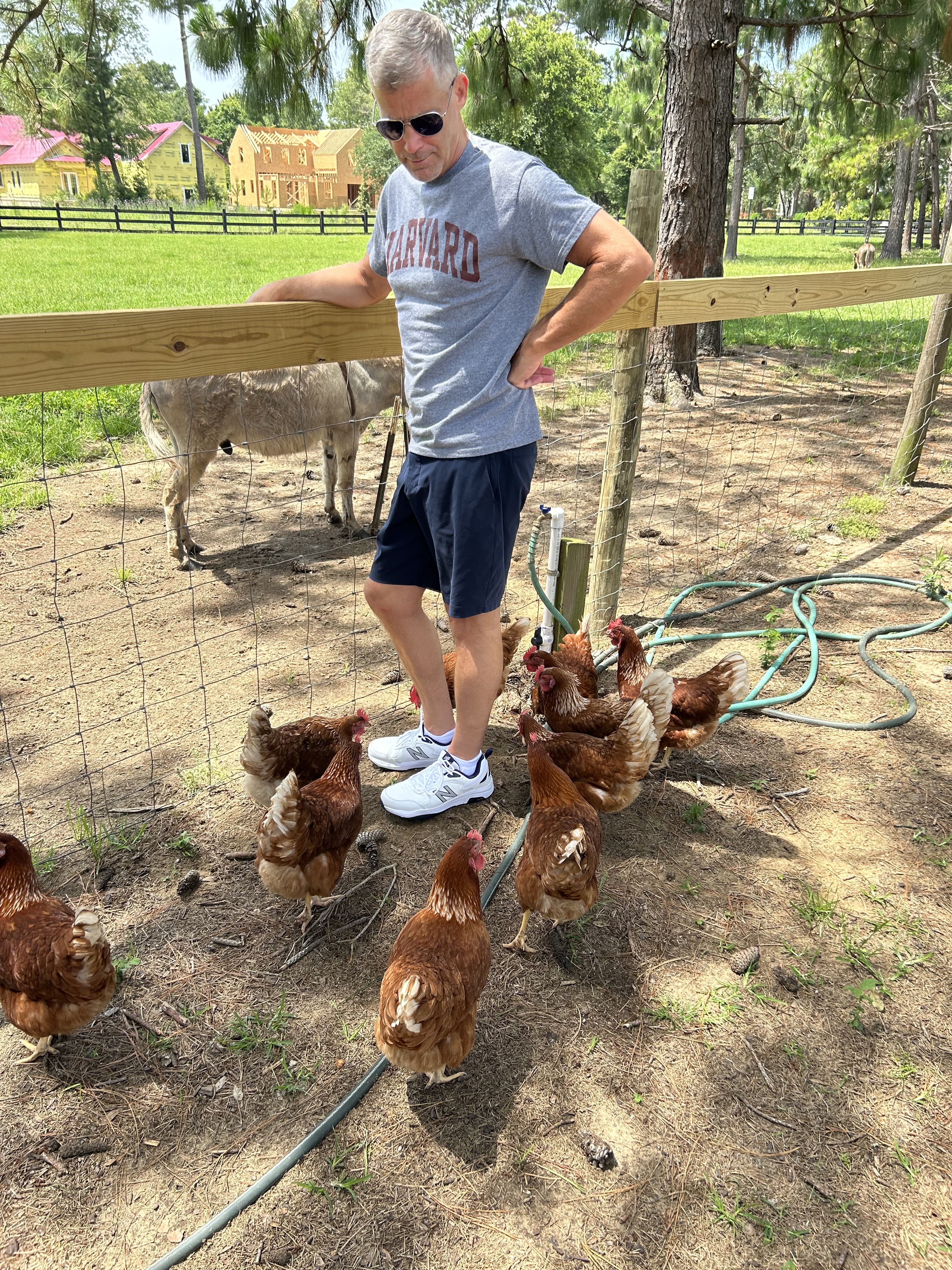
There is a farm on the greater property where the new building lot is located. We stopped in to visit the farm animals: laying chickens, milk goats, donkeys, and “Oreo” cows (Belted Galloways).

The chickens come right up to everyone’s feet, illustrating how very social chickens are.

m

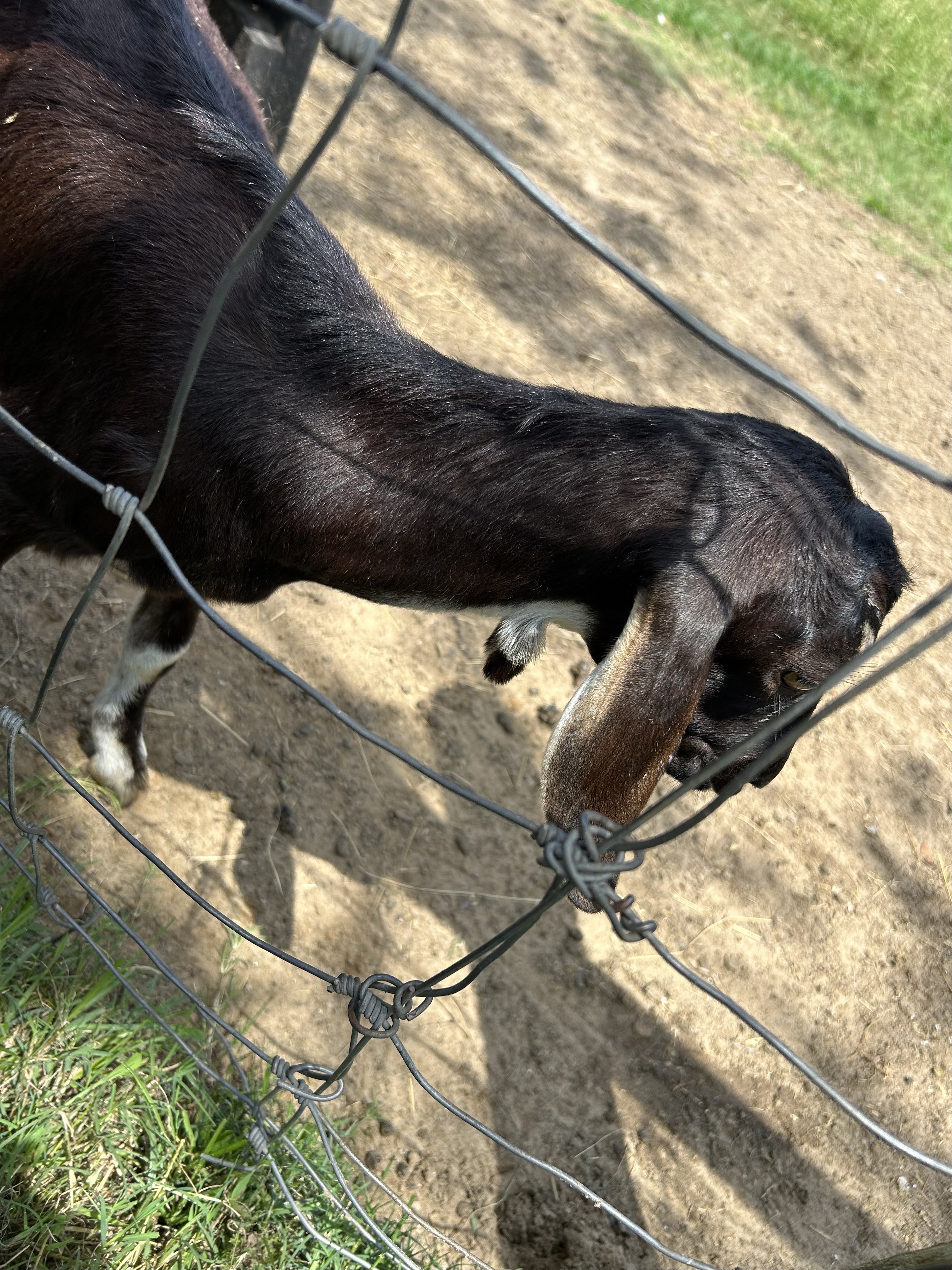
The goats, too, love to be petted and come to the fence seeking attention:

Some goats have two “wattles” on their throat. These appendages apparently serve no apparent purpose. It is thought that perhaps they once served a purpose, but one that goats no longer need.

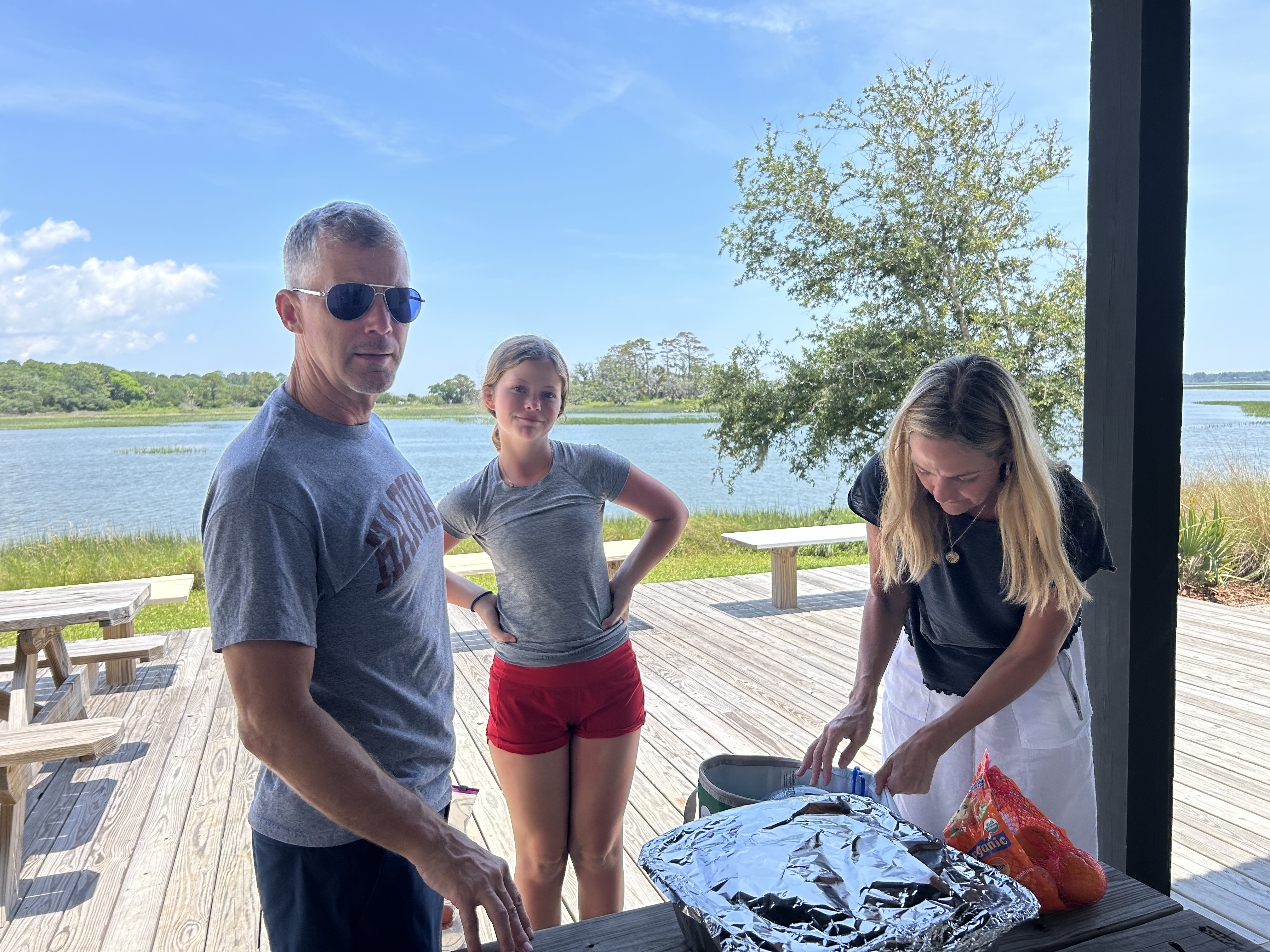
We had a picnic in one of the development’s club house areas, all of which are right on the river.

It was a lovely outing, and I could see what is drawing Mike and Tami in this direction. Their Isle of Palms current house is now for sale. It is a big, wonderful house and has served them well. But their children are fast fledging from the nest, so this is a good time to downsize.

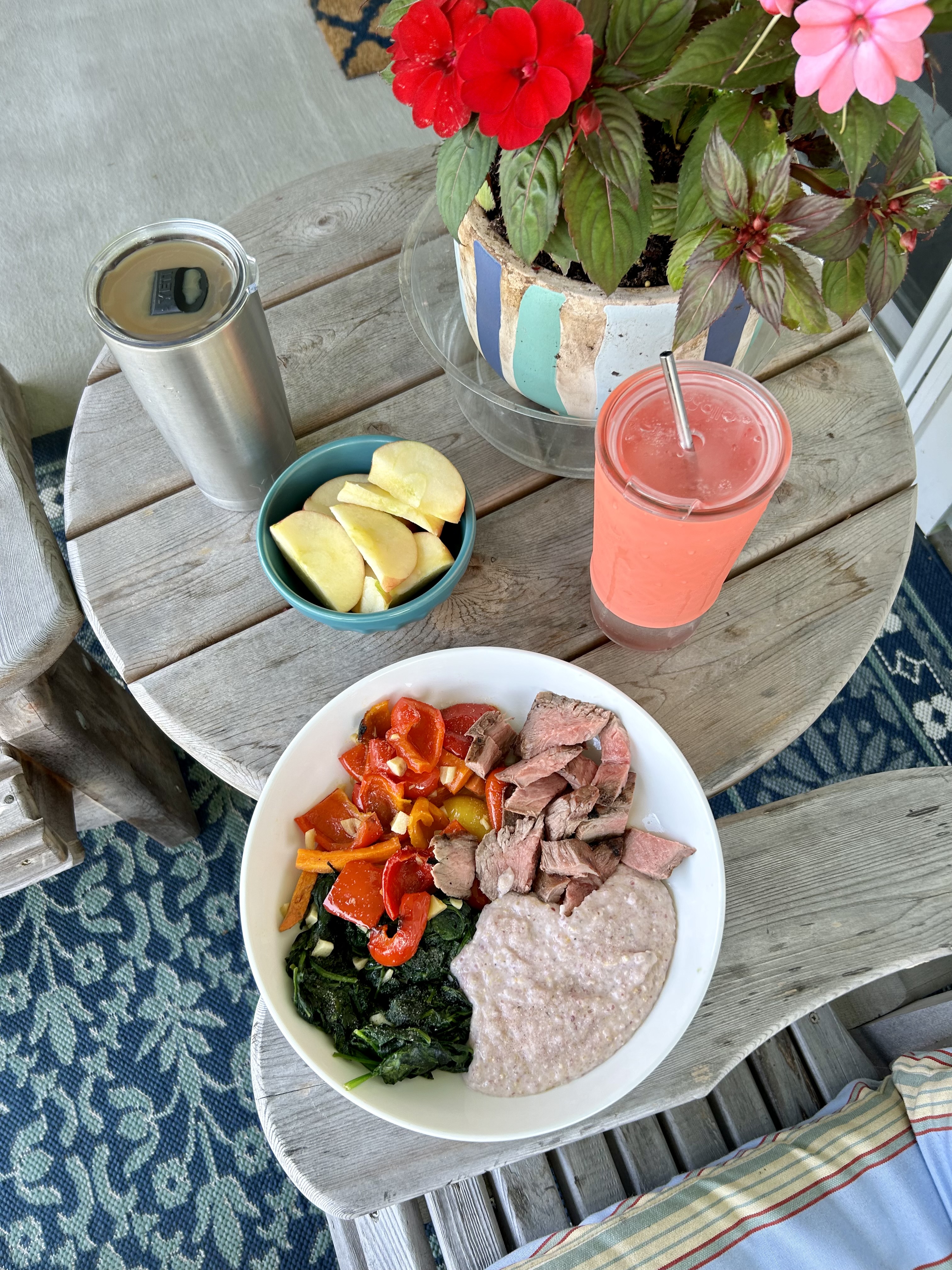
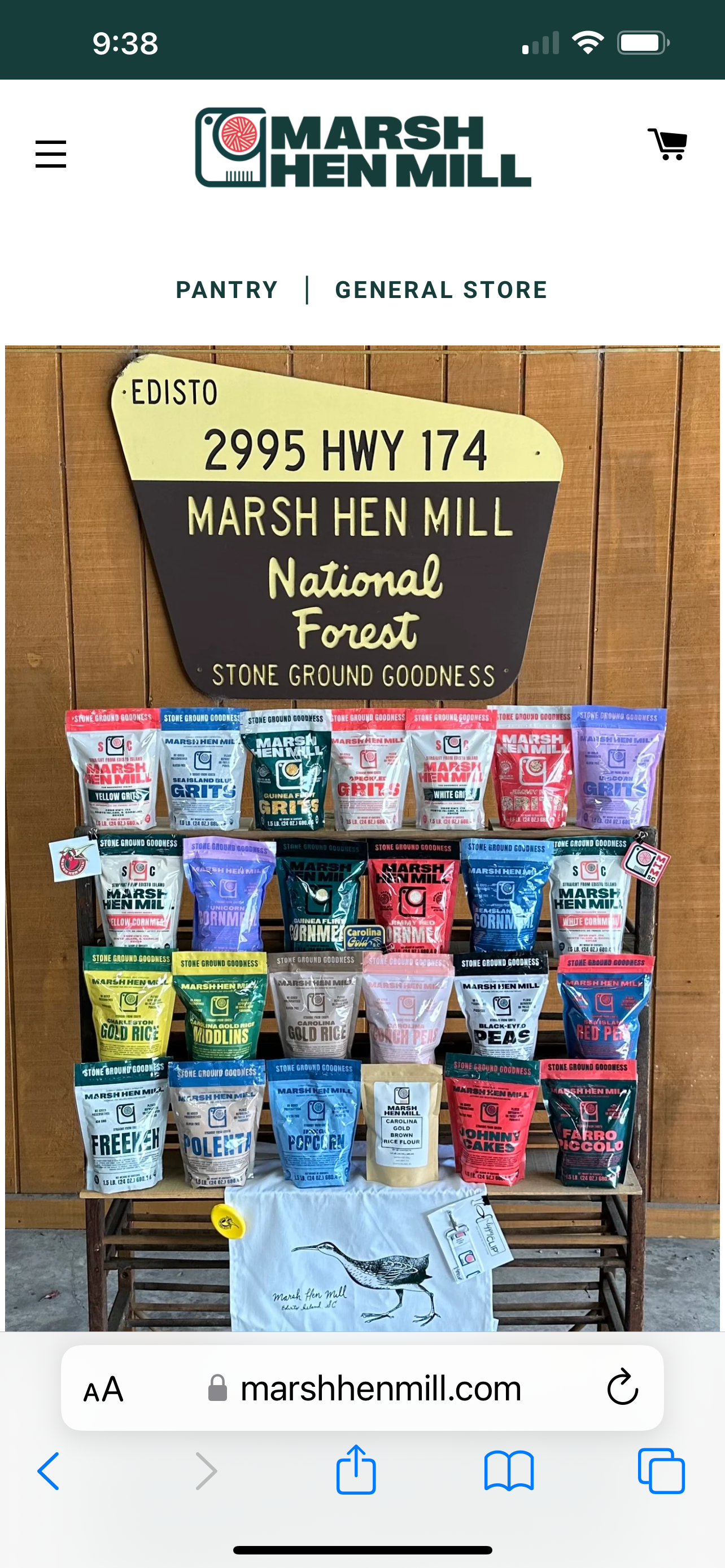
I cooked “pink” grits the other day–from the Marsh Hen Mill brand of grits, a farm on Edisto Island. The pinkness comes from the type of corn used. They cooked faster than the Anson Mills rough cut grits, but they were also much milder. And, not organic. (Organic corn is a hard act to raise, actually.) Marsh Hen Mill has several types of grits and also raises the Carolina Gold rice so special to this Low Country area.

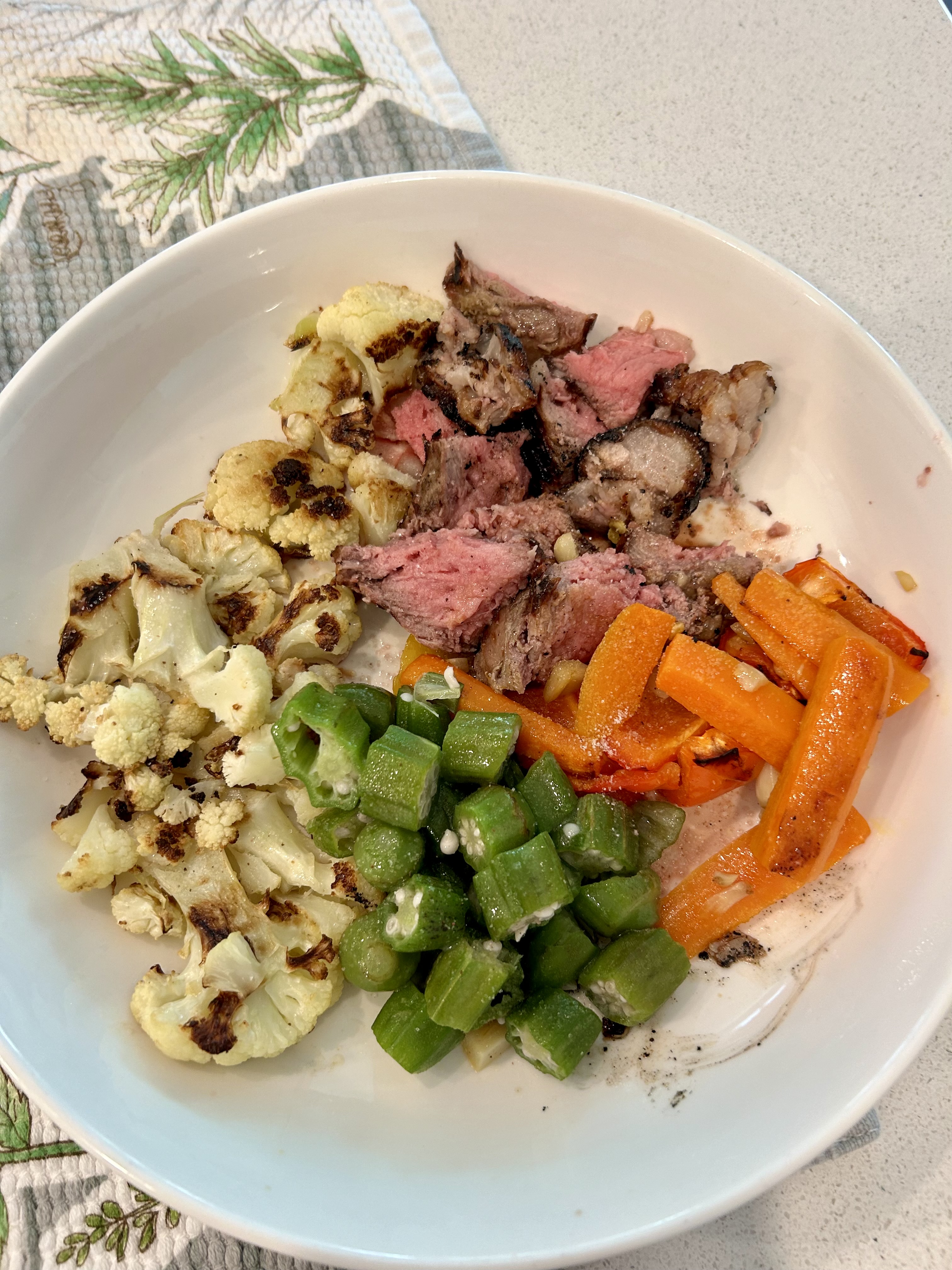
Here, leftover grilled flank steak, roasted sweet peppers/carrots, spinach and garlic sautéed in butter, and the “pink” grits:

Marsh Hen ships their products if you are interested. Here’s a screen shot from their web site:

Enjoy this holiday Monday!

When One is Endlessly Curious

I walk a mile a day out on the road just outside our subdivision. I listen to music, often singing along, and note what is going on around me.

This little plant is blooming now in the dry ground alongside the walking path. What is it.

Thanks to the plant identity app on my phone, I can take a picture and when I get home, see what it might be. It is a “Cutleaf Evening Primrose,” oenothera laciniata Hill. A primrose…how cool is that?

This plant is growing in the drainage ditch next to the path–the Low Country has lots and lots of little retention ponds and drainage ditches. The red leaves are from the Loropetalum bushes that line parts of the path, and I wrote about those a while back. They are spectacular right now, btw. But what is this plant?

It’s “Lizard’s Tail,” Saururus cernuus. What a cool name. I had wondered if it was something in the loosestrife family, given the bent white flower part.

The Pickerel Rush is also blooming in the ditches–its purple spikes and pretty leaves are distinctive. In Maine, along the wet edges of ponds, the Pickerel Rush forms a mass that was purple with its lush blooms. Here it grows in the wetlands and ditches.

Pickerel Rush: https://en.wikipedia.org/wiki/Pontederia_cordata

And here is a tall plant I’ve been watching grow tall, and duh! Could it be a cattail? It is in the bottom of a drainage ditch that fills with water easily when it rains.

Yes, it could. The distinctive “cattail” top means it is a cattail and not a “Bulrush.” This plant is probably a hybrid of two types of cattails and is called a “hybrid cattail,” Typha x glauca Godr, for Type and Glauca Godr.

Native Americans used this plant in all kinds of ways, from weaving things with it to eating parts of it to using it medicinally, and so on. I first read about native use of cattails in the native scholar Robin Wall Kimmerer’s book BRAIDING SWEETGRASS, which is a delightful and instructive read.

But here’s a link to a quick read about the uses of cattails if you are interested:

https://patch.com/connecticut/woodbury-middlebury/cattails-native-american-culture.

https://www.britannica.com/plant/cattail

And…the above is what happens when one is endlessly curious. Rabbit holes happen.

The Quilt Series

I thought it might be useful to show all four quilts in this series, now that I’m done with this project.

As readers may recall, there were two events that sparked this project: I had a good quantity of the 1920-30’s reproduction feed sack fabrics (fat quarters) gathered together in my stash for a bit more than 15 years, bought when a local store in Maine went out of business. And, I saw the end results of a “series” challenge at my first Charleston Modern Quilt Guild meeting and loved seeing those quilts.

The first quilt started the series for me: “Vintage Feed Sack Wedding Rings.” The pattern is “Modern Vintage” by Camille Roskelley and Bonnie Olaveson, and I found it in the Better Homes and Gardens QUILT LOVERS FAVORITES, vol. 16, pages 86-89–before I donated the book to the Wando library. This block is actually a traditional block, which a Maine friend told me. It’s easy to find online if you like it: single wedding ring quilt block. The secondary patterns are quite awesome and interesting, I think.

Next, I took the circle of the wedding ring block and played with that in “Bubbles.” I wanted to make the circles float over the quilt as if they were rising upward. This quilt is smaller–baby quilt size.

I’ve always wanted to make a quilt from small half-square triangles. But I also wanted to add an element: pinwheels–made from the already made half-square units. The result was “16 Pinwheels,” which is more of a lap size. The half-square triangles are in the original wedding ring block.

I had thought to stop at the third quilt, but I had the units in the center already cut and I still had fabric in all the colors I had used all along AND units were on the design wall where I could see them. So, “Four Stars” came along for the ride.

So, there you have all four, and I had a really good time making this series. One of these quilts has already gone to a new baby in the family.

“Four Stars” Quilt is Done

This quilt is the 4th and last in the 1920-30’s reproduction series I seemed to have worked on this past winter. I’m liking it a lot. The leftover fabrics are broken up now and are in my stash.

I had leftover units from the other three quilts and fabric in all the color ways on hand, so I started playing around with the units, and this quilt happened. Maybe they are the best kind? A quilt born of play and creativity?

The panto is Garden Frills Too, and it looks so pretty on this quilt. As do the beautiful Innova quilt stitches. Since Jimmy Hernandez from Carolina Quilt Studio, my nearest Innova dealer, fixed the timing (remember I sewed a nail?), replaced the tension wheel with the newer version, and did all sorts of other refinements, Innova is so happy.

I’m putting together the improv quilt that’s been growing on the design wall all winter too, and as of yesterday, I’m liking it. A lot. But… We’ll see about how square it is and so forth probably today.

The household water filtration system technician is “on the way,” so that’s it for today with the blog.

A Busy Weekend

And a fun weekend too.

On Saturday morning I was the host for the Charleston Modern Quilt Guild monthly Sit and Sew as the usual member who organizes this event had another commitment.

We meet at a local quilt shop, Five Eighth Seams, which so generously shares their sewing/gathering space with us once a month,

This store is so colorful and lively. It is a pleasure to visit it. All over the store are so many beautiful hanging quilts.

This picture looks into the main part of the building where most of the fabrics live. And I somehow didn’t get a picture of that main room

This picture below shows the size of the meeting room–which on Saturday morning was divided into two sections by that purple divider. Tables with plugs are set up everywhere toward the back of this room. There are also several cutting tables and ironing boards. It’s a perfect place to “sit and sew.”

It rained Saturday morning, so my granddaughter’s tennis matches were cancelled.

But Sunday morning, the play commenced again. My granddaughter won this US Tennis Association (USTA) competition for 12 and under girls just before a gully washer rain hit us hard. And after, in the semi-final match (a nail biter), defeating the number 1 seed.

Between matches, I dashed home to fix some food–as the week was busy, and I had to cook something.

I’ve never grilled a steak and roasted veggies so fast!!

And now I have food for today.

The gully washer put down 4 inches of water in about an hour! And the rain continued lightly into the early evening, so I sewed and missed my daily 1-mile walk, which has only happened twice this month.

Tomorrow the whole house water filtration system gets installed, with reverse-osmosis water in the kitchen.

And today I have some food errands to run, among some other housekeeping chores. And there will be sewing. There is always sewing.

A Shasta Daisy and A Butterfly Bush

It is Saturday morning, and I’m up early as the modern quilt group has a Sit and Sew this morning, starting at 9:30. It’s held monthly at a local wonderful quilt shop about 40 minutes from me: Five Eighth Seams. The store has a strong collection of quilt fabrics, but also garment fabrics. They also teach a lot of classes on how to make both quilts and garments. And they have a big sewing room with lots of tables and plugs for machines people bring.

Look at the Shasta Daisy! It not only came back, it is bigger and is blooming like crazy. Yesterday I deadheaded the spent blossoms and, yes, I’m picking off the June bugs that have shown up now–several times a day. I’d like to think I’m making a dent in them. That is Lantana on the right and a Russian sage on the left.

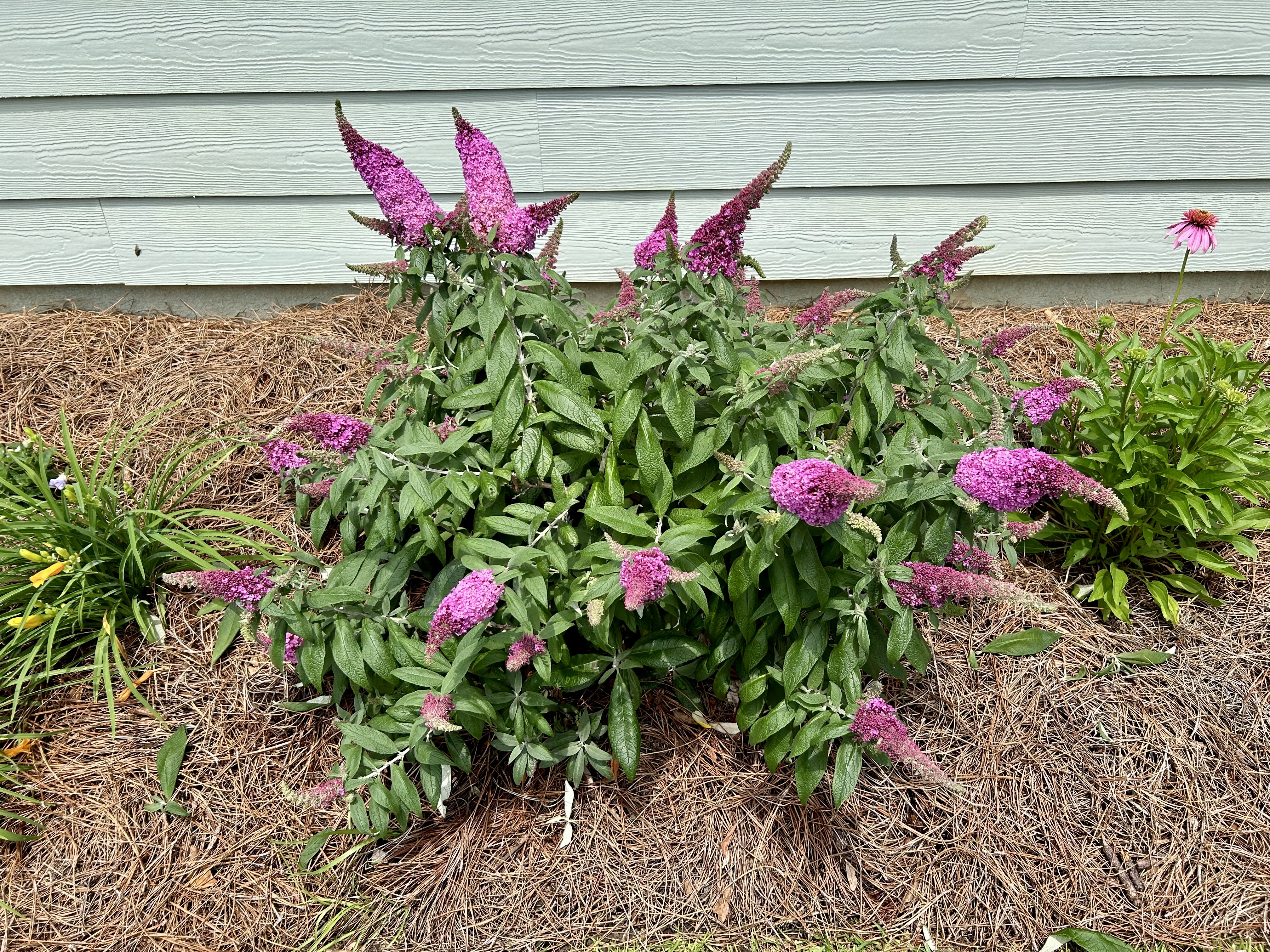
The dwarf butterfly bush is back in full force too, and this year its blossoms are way bigger. I filled a nearby hole in this long bed recently with a white butterfly bush which looks like it is now setting blooms.

So now I have a mixed grouping of flowers to bring inside as I trimmed back the red roses, and they are setting up again to bloom again soon.

I’m on THE LAST ROW of the quilt “Happy.” THE LAST ROW. But, yes, there is the border, but it will sew fast.

Have a lovely day everyone! And a lovely weekend!

Let’s Make Chicken Salad

I have been so hungry for some fresh chicken salad for days now. So, Wednesday I came home around noon from the very fun Patchwork Gals monthly meeting so hungry and longing for chicken salad. So, instead of making a quick omelet, I started making a fresh chicken salad.

What do you need? Chicken meat (freshly cooked and warm is best as it absorbs the mayo better), homemade mayo, an assortment of veggies, and herbs and salt. It doesn’t hurt to have a base to put the salad on either, like lettuce.

The chicken takes the longest, so I put it in a big pot, covered it with water, added onion, celery, carrots, garlic cloves, and some herbs and salt and started it to cook–as that part would take about 40-45 minutes. I was able to cook it covered so that helped cook it faster–and the veggies in the broth meant I’d have a nice broth when I was done that could be used for soup, a stew, or to cook a grain.

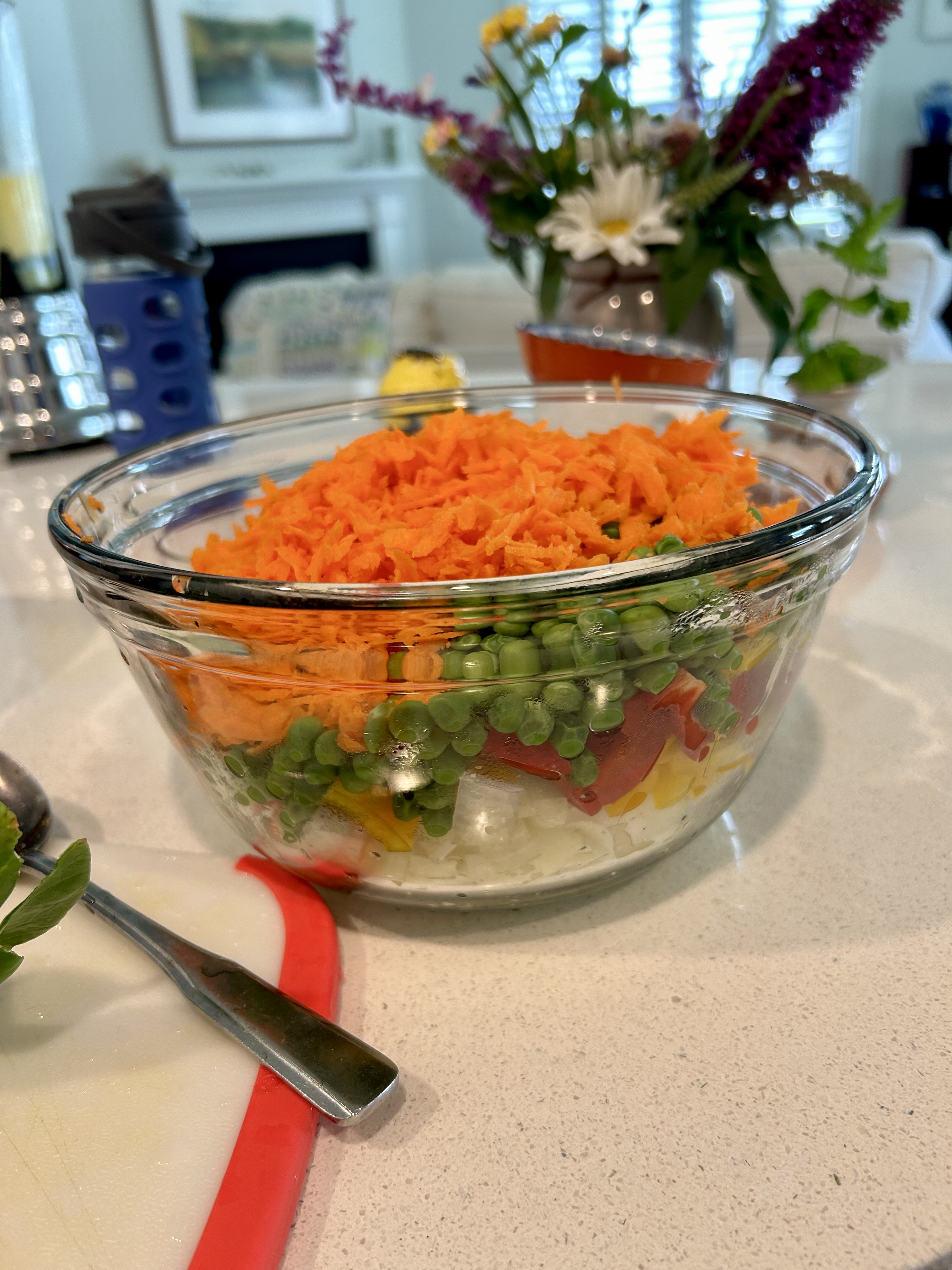
Meanwhile, I prepped the veggies I wanted: grated carrots, chopped celery, onion, red and yellow sweet peppers, and I put some frozen little petit peas in a small pot to cook. The amounts of each totally depends on what you like and how much of it you like. I like a lot of crunchy celery and the sweetness of the carrots. And, for me, the little peas are a must–they provide the pretty green color and are delicious.
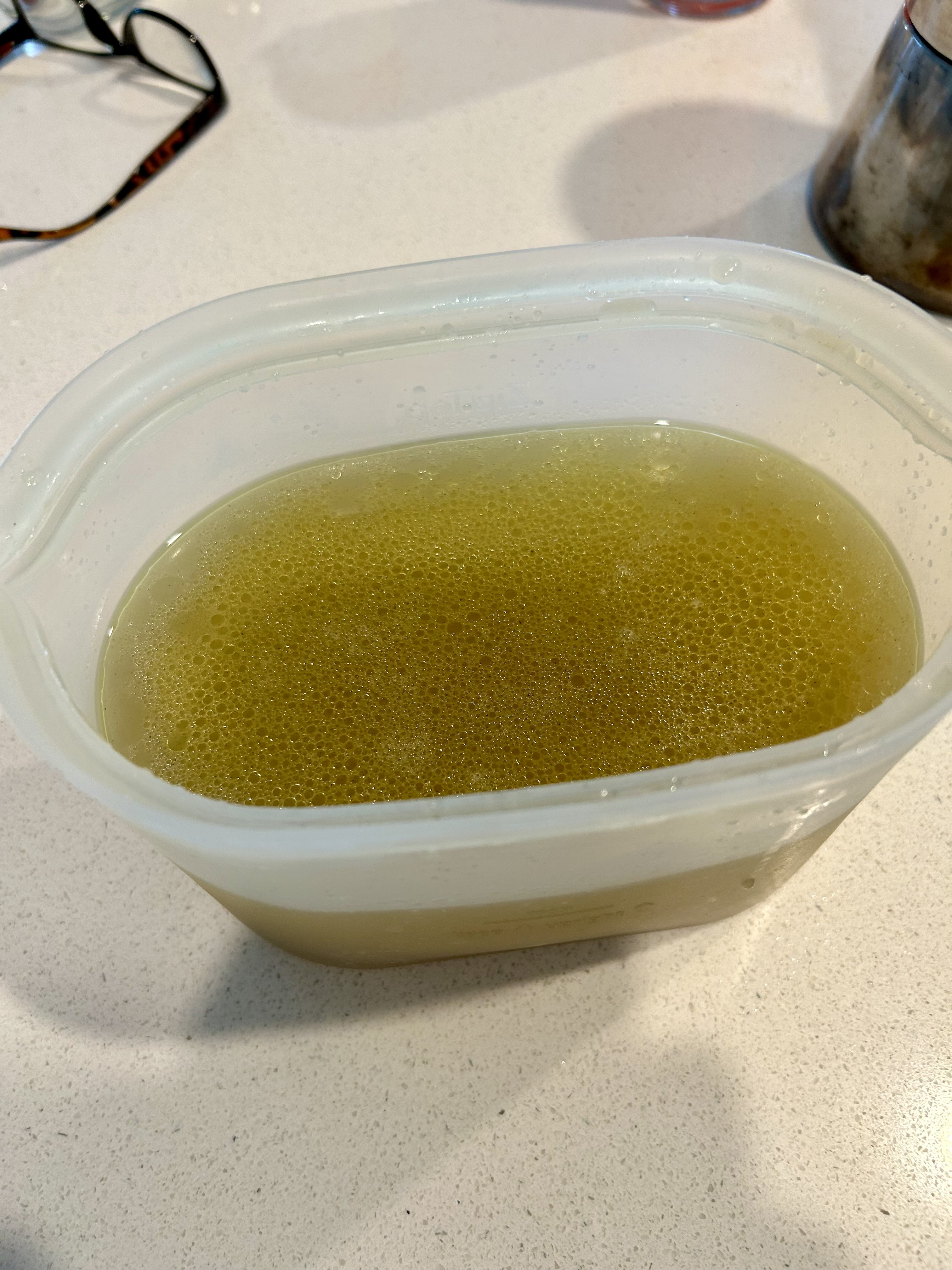
Here’s the homemade mayo, which is dead easy to make in a blender. Break at least one egg into the bottom of the blender (I used two today–you could also just use the yolk in the second egg), add 1 or 2 tablespoons of something acid (lemon juice, mustard, vinegar), add salt and if you like some herbs, and have on hand EVOO olive oil for the next step. Turn on the blender (low is best) and start adding the olive oil in a thin stream until the whole mixture congeals, which just takes less than a minute. You could make a double batch, actually, and having homemade mayo on hand to drizzle over foods and this salad is a good thing. (Note to self!)

I also had on hand some baby bok choy that needed cooking, so I cleaned it and rough chopped it and dropped the bits into my simmering broth. It only takes a very few minutes to cook bok choy until the bottom thicker parts are still not totally soft. Remove with a slotted spoon and put aside. Here’s the base for my salad.

Before chopping, isn’t it pretty? So green. And using what I had on hand that needed cooking is how I like to cook.

When the chicken is deemed to be done–remove it to a big bowl and cut the carcass into parts so it will cool faster. If any parts are not quite done, drop them back into the simmering broth. Take the meat off the bones.

Then tear or cut (kitchen scissors) the chicken meat into chunks. And while I did this part, I allowed the broth to cook itself down a lot so it would be really concentrated and would take up less room in the freezer.

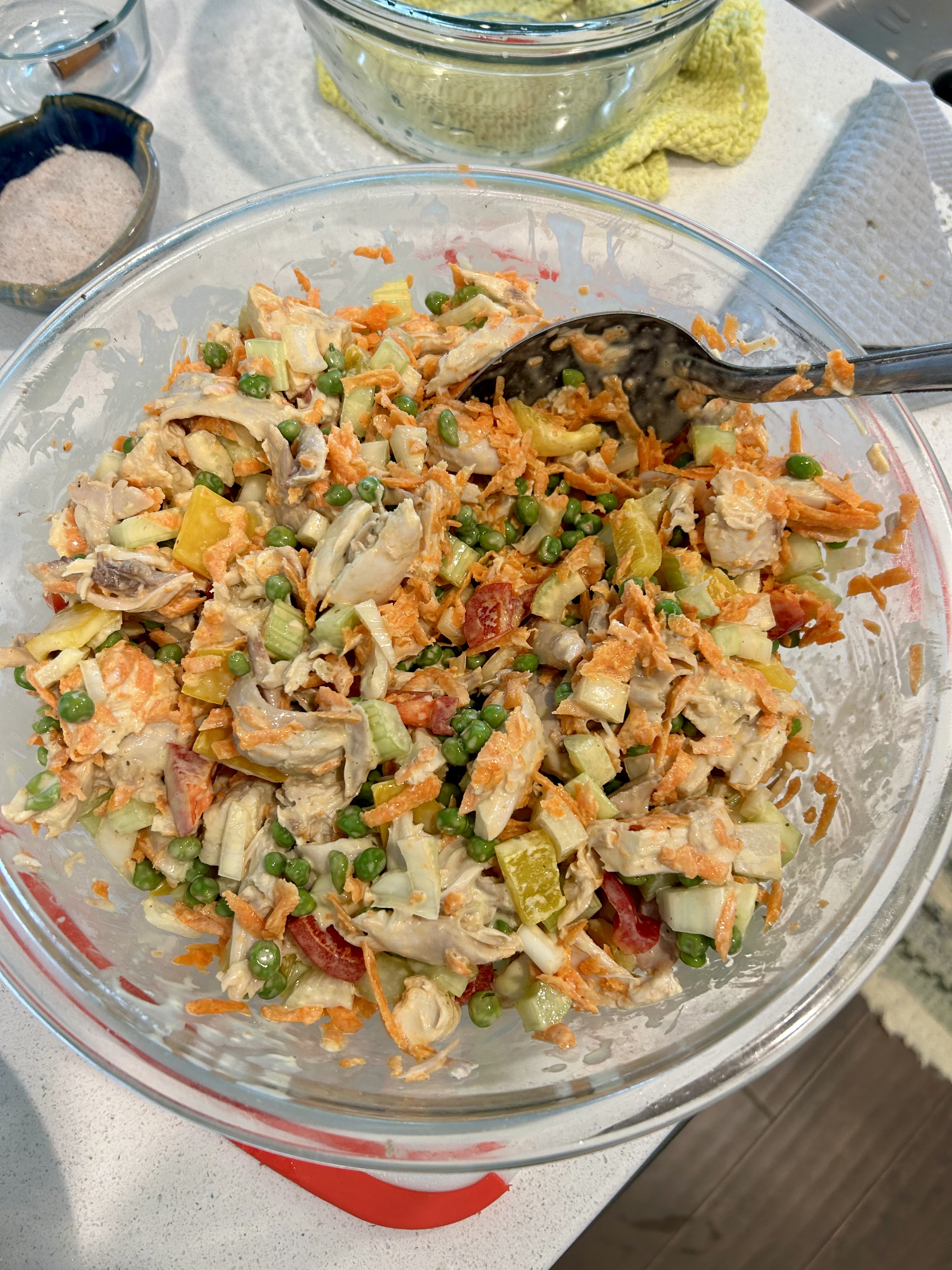
Next, just mix up all the ingredients and taste to see if you have enough salt.

AND, now YOU CAN EAT. For me, that’s porch time. Fruit is delicious with this savory chicken salad. Cantaloupe might be my favorite, but it isn’t quite in season yet.

Don’t forget the broth on the stove! I almost did.

And now I have delicious food for a few days, which frees me up to do other things.

Stuffed Peppers, South Carolina Heirloom Gold Rice, and A Specimen Magnolia Tree

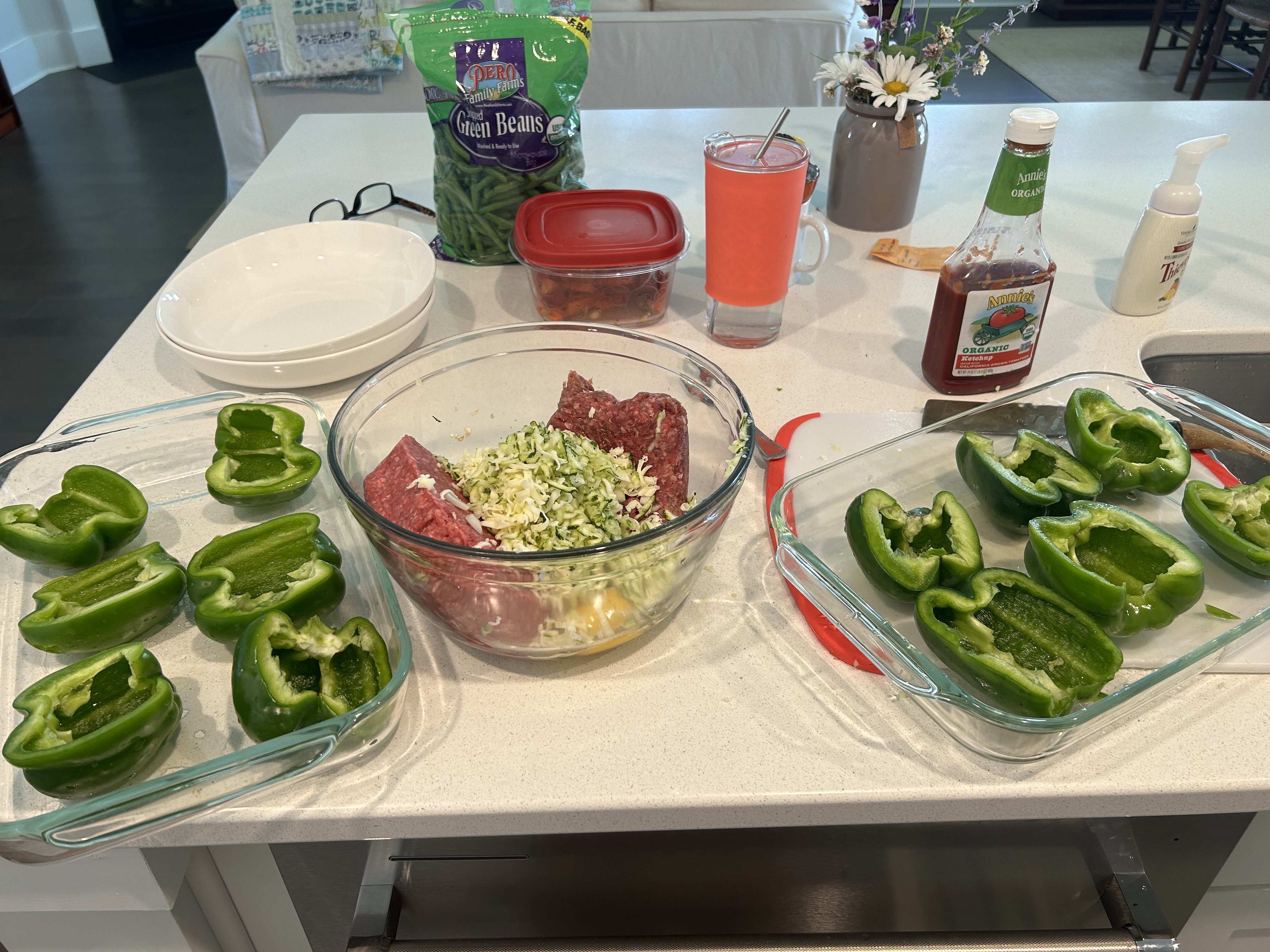
I got hungry for stuffed peppers. So, six for me now and six for the freezer.

That’s one pound of organic beef hamburger and a package (not sure how big) of local grass-fed beef hamburger mixed with liver, heart, and gizzards. That’s a great way to eat these important organ meats that can be strong tasting.

This meatloaf type batch has a handful of rolled oats, an egg, some grated mozzarella cheese, some chopped onion, a grated zucchini (adds moisture), a splash of milk, some saved lamb fat, and some dried herbs and salt. I topped each stuffed pepper with some ketchup, which is about the closest I can get to tomato.

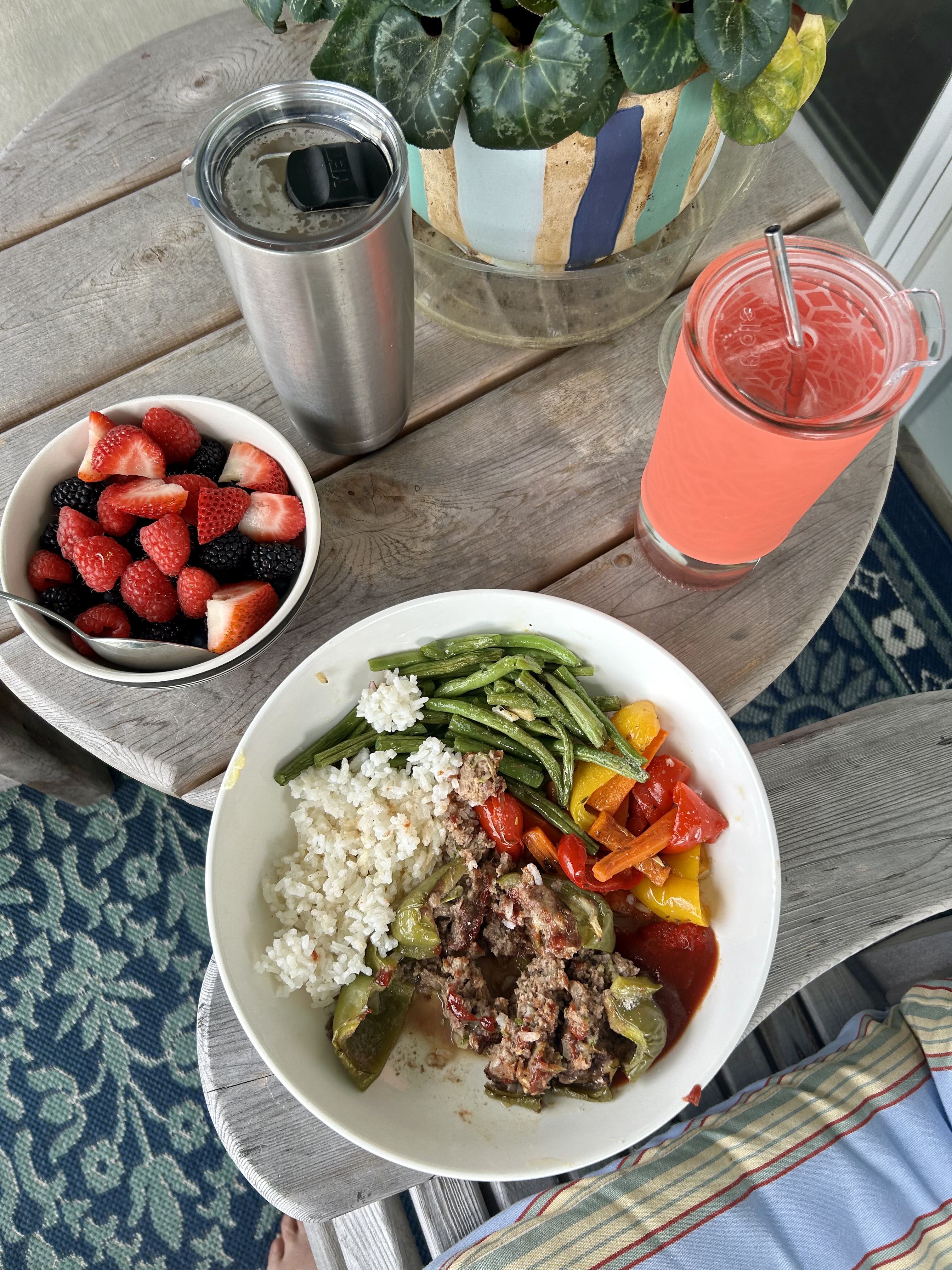
I cooked a batch of the Anson Mill’s organic Gold rice–only I didn’t do their method of boiling it, draining it, and drying it in the oven on a parchment covered cookie tin. This rice is naturally starchy, but this boiling/drying method takes away from the flavor of the rice in my opinion. I just cooked it and let it steam a bit.

I roasted some fresh green beans with added garlic and had some “asset” roasted sweet peppers and carrots.

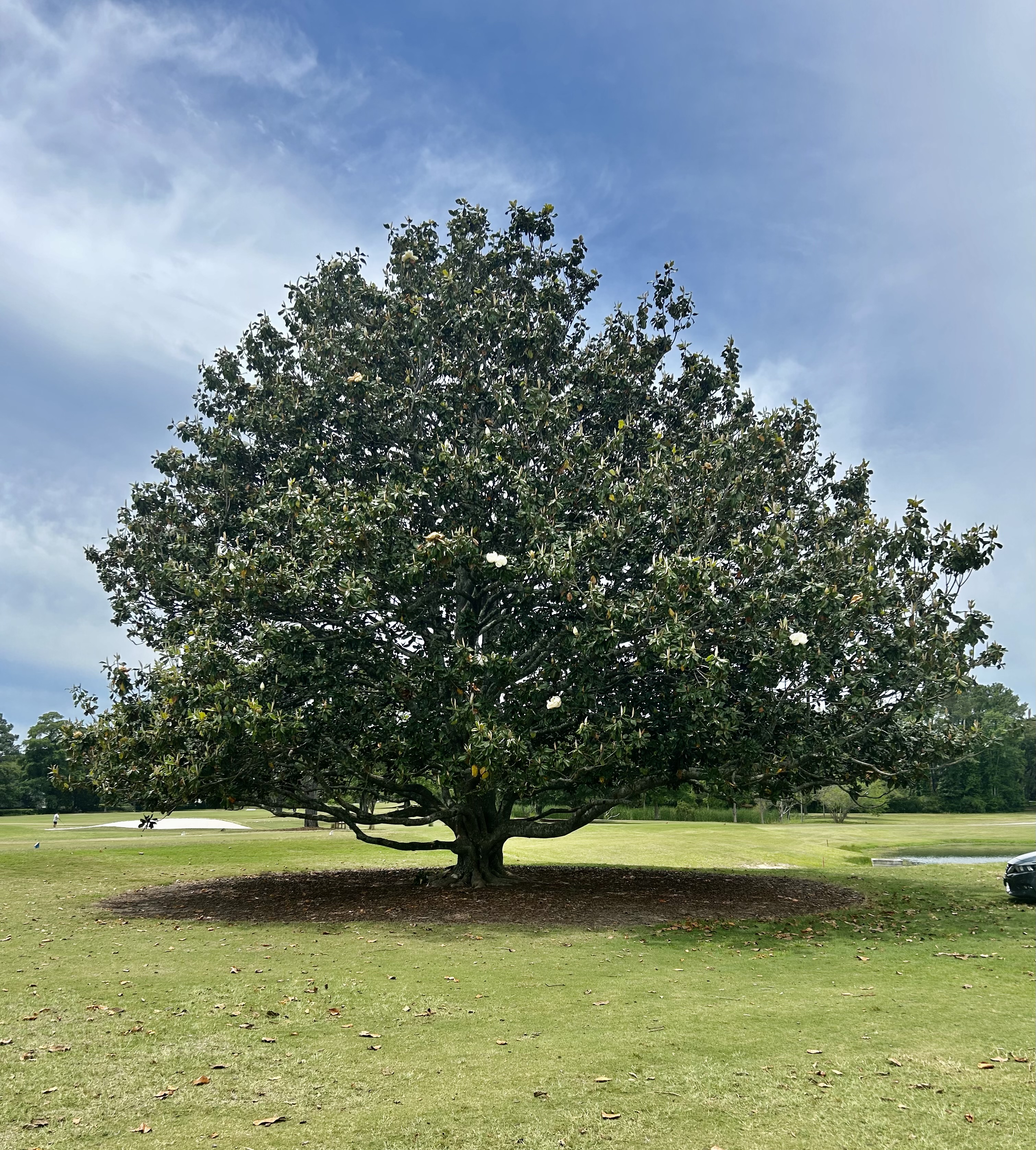
On Sunday, I watched a granddaughter’s tennis match and saw this glorious magnolia tree.

The trunk was especially interesting–a child’s invitation climb up in the branches. And sure enough, when I got back to my car, there were children nestled along the limbs.

It’s a rainy day today, so I’m doing rainy-day home events.