Turkey Tracks: Bottled Sunshine

Turkey Tracks:  September 7, 2010

Bottled Sunshine

Fall is here.  The light is changing again, and it is unlikely we’ll feel like swimming any more with the arrival of cooler weather.  The trees have not really started to change much, though a few are tinged with color.  The beans and summer squashes are slowing down, but the tomatoes are coming in.  In Maine, September is the red month.

Our solo chickie, Orphan Annie is 2 months old this week.  Here she is, perched on her inside box, which she is rapidly outgrowing.  I put a screen over the top, and we are up to two books now to weight it down.  She was “OUT OUT” to be with us, but she is NOT reliable about pooping.
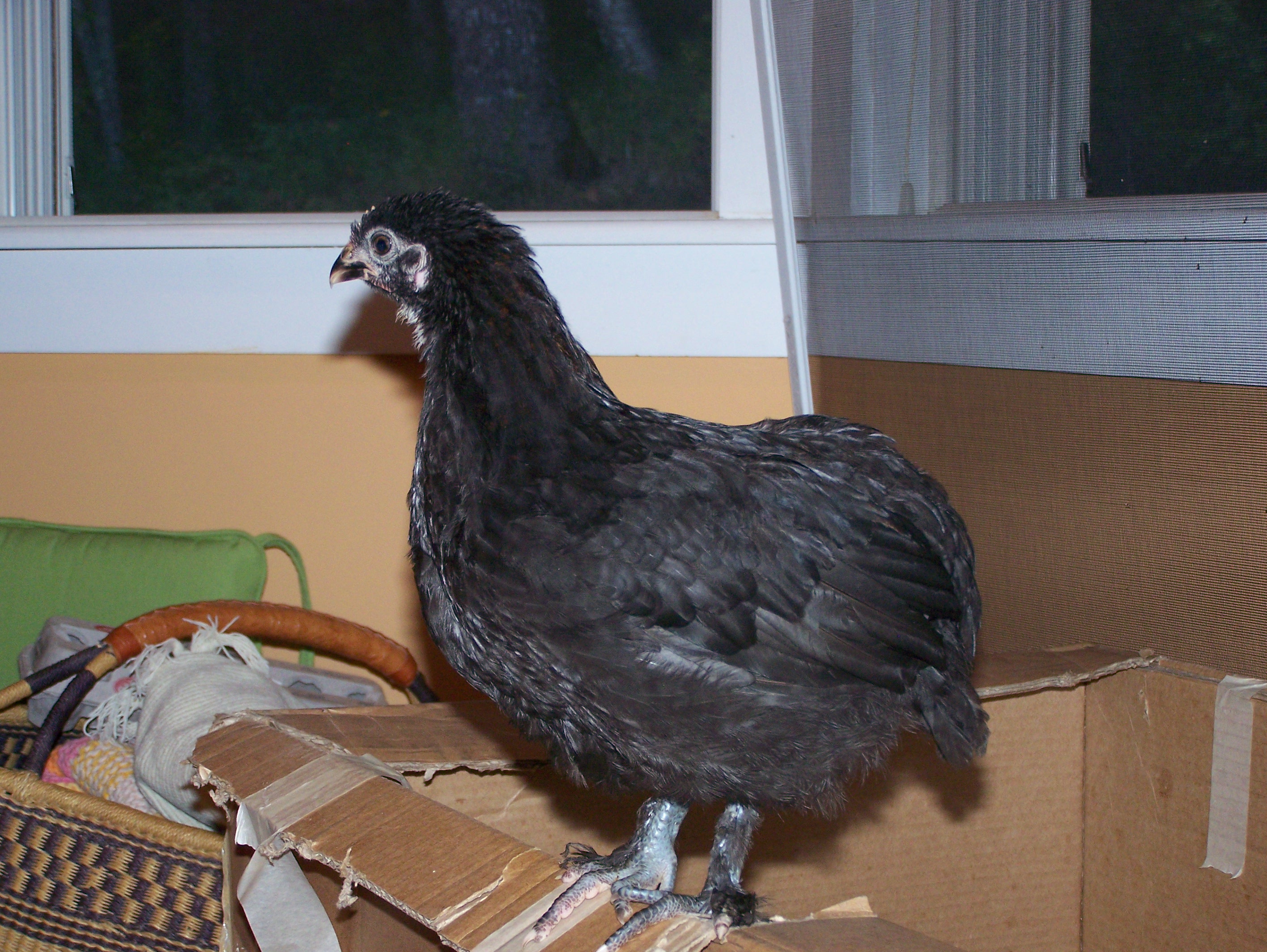
 

 She still looks like a female.  And, she scratches like one.  There are some little bumps where spurs might grow, so I have to get one of the big hens down and see if they have marks there.  I’m letting her loose more now with the big hens, as long as John or I are there to run interference.  The Wheatens are not aggressive with her, but her mother and the others are.  Especially if she is eating something they want.  She spends the day outside in a smaller pen that Rose lent me, and she hates it.  Maybe I’ll try penning her under the big coop later today.

We visited Rose and Pete last Sunday.  I wanted to see how the Barbanter chicks were developing.  They are about 3 weeks older than Annie.  Rose has mixed them into her flock, but they have a protective mother–the large Copper Black Maran to the right.  There are 4 chicks:  the fourth is in the upper right part of the picture.  Look for the speckles.  The red hens are Red Sex-Links.  And, they are egg-laying machines and very sweet.  Their beaks have been cut though; I think I wrote about that in an earlier post.  They lay a dusty rose-brown egg.
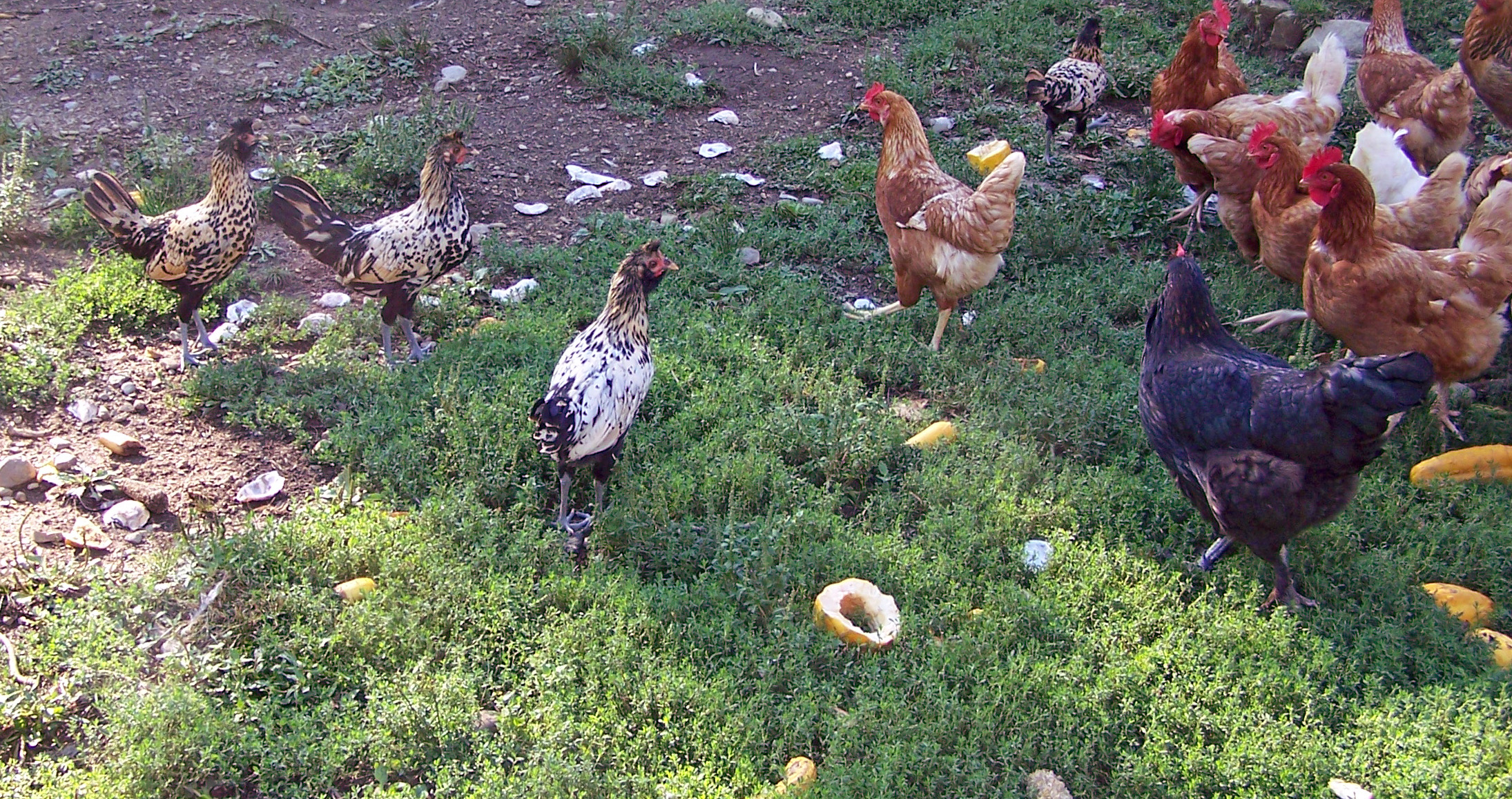
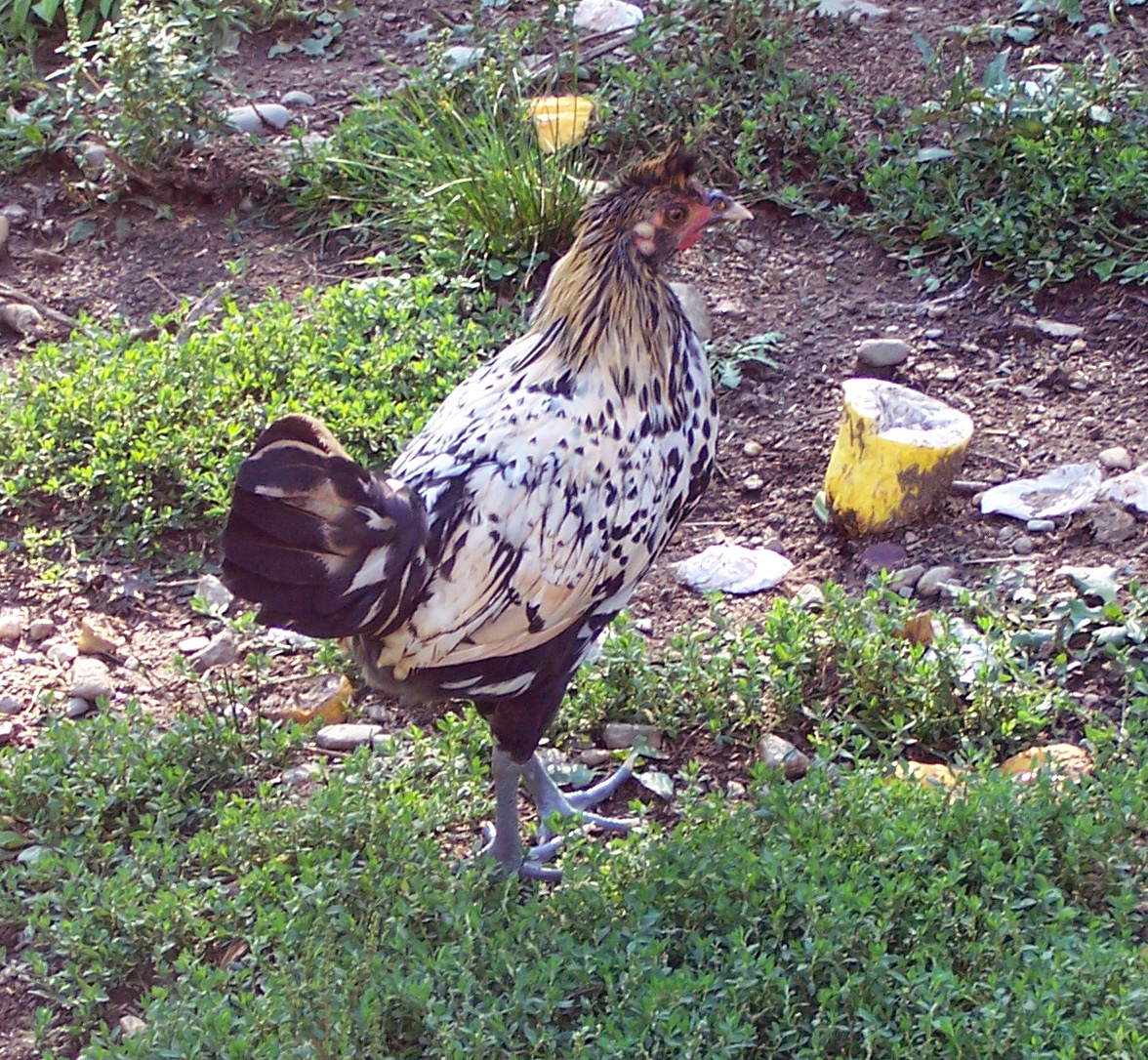
Rose and I first saw the Barbanters when we picked up the Marans and the Americaunas last March.  They are clean-legged and long and slender, with fluffy top-knots on their heads.  They lay a white egg, which in an egg box, can just bring the other colors alive.  Rose thinks one of these four chicks is a rooster.  Yeah!!  That means there will be more next spring… 

Here is a close-up of one of the chicks so you can see the coloring better.  The top knot is not yet fully developed.
 

I spent most of yesterday processing food.  I had enough tomatoes to make 2 quarts of sauce.  I have to freeze my sauce since it has oil in it.  The recipe mostly comes from Anna Thomas’s THE VEGETARIAN EPICURE. 

Tomato Sauce:  Bottled Sunshine

I scald the tomatoes, skin them, cut them into chunks and throw them into a WIDE stainless steel skillet that’s about 5 inches deep.  You want to spread out the sauce as much as possible.  I add a good 1/4 cup of REALLY GOOD olive oil, some salt (I only use minimally processed sea salt), and turn on the heat.  When the tomatoes have broken down, I add 5 or 6 garlic cloves–just smashed or cut into big pieces and a handful or two of fresh basil leaves.  Cook down the mixture until the excess water has cooked off and the olive oil is starting to pool on the top.  At the end, you have to stir more frequently.  Spoon into canning jars, turn upside down on the counter until cool, then freeze.  Remember to leave enough room for freezing expansion.  Now you have bottled some sunshine for a cold winter day. 
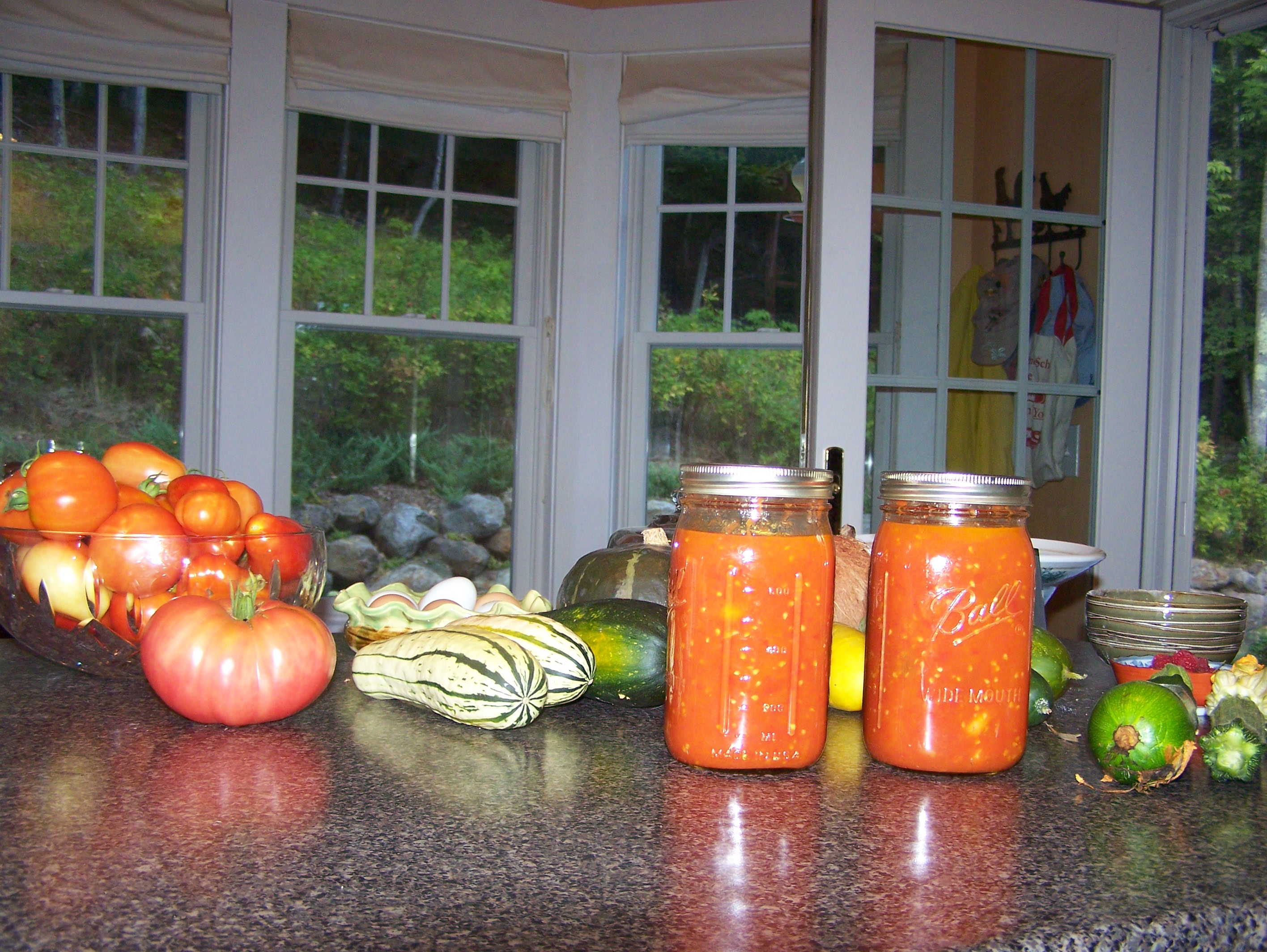
 

We don’t eat pasta very often, so it’s quite a treat to reheat one of these quarts, spoon it over penne pasta, and top it all off with freshly grated Parmesan cheese.  It’s a complete meal with some French bread to sop up the sauce and a salad.  But, perhaps a better use is to add one of the jars, especially pint jars, to a chicken bone-broth soup. 


Roast Chicken Bone Broth

Bones have disappeared from American supermarkets.  But, bones are full of fabulous minerals.  It’s one of the healthiest things you can make.  And, it’s dead easy.

I roast a chicken about once a week.  Remember that we raised our current chickens with Rose and Pete Thomas, and we got a slower-growing type that we didn’t slaughter until they were 12 weeks old.  That meant that their bones had fully developed–unlike chickens raised to be 4 to 5 pounds in 6 to 8 weeks.  Having seen this process first hand, I can tell you that raising a chicken to be that big in that period of time is so not ok on so many levels besides the obvious one involving what nutrients they possess. 

I use about a 3-inch high roasting pan, and I make a layer of chunked vegetables:  celery (not too much; it’s strong), onion (the more the sweeter), carrots, and garlic.  I salt it and drizzle fat over it.  I used to use olive oil, but I’m moving toward using coconut oil or rendered duck fat, or chicken fat since they take high heat better.  (I’m saving the olive oil for colder uses.)  Put the chicken on top–after drizzling it with salt and pepper inside and out.  You can put some lemon and herbs inside the cavity.  Use whatever seems good to you and what you have on hand.  Sometimes I sprinkle dried herbs over the top, though I vastly prefer fresh herbs.

After you’ve roasted the chicken and eaten your first meal, take the meat off the bones and put ALL the bones (yes, the ones you’ve gotten from people’s plates), the roasted veggies, and the juices into a bowl for overnight storage.  Put some water into the roasting pan and scrape up the dark bits and pour that into your bowl of bones.  The next day, or the day after that, put the bone mixture into a kettle, fill it with water, salt it, and simmer it for 6 to 8 hours or so.  Replenish water from time to time.  Pour off the liquid through a strainer.  Pick out the used-up meat bits and carrots for the dogs, and throw out the bones.  Let the broth cool before putting it in the refrigerator.

You’ll have enough for a delicious soup, for drinking as a hot drink, and/or to freeze. 

You know, the other thing that is missing from American supermarkets is something that Europeans take for granted.  When they buy a chicken, they get the head/neck and feet attached.  In other words, they buy the WHOLE bird.  We butchered our chickens this way, and let me tell you, the broth made with the neck, head, and feet added back in insanely delicious.  All the neck bones have so much good stuff in them, and the feet are full of gelatin that makes the broth chill out as thick as jello. 

Start asking for slower growing chickens from your LOCAL farmers (Silver Cross or, even better, Freedom Rangers, which are better foragers).  And, ask for the WHOLE carcass.  And USE IT ALL.  The cost of an organic chicken only seems prohibitive until you start using the whole thing.  John and I get–from about a 4 1/2 pound whole chicken–4 meat meals and 6 soup meals.  The cost of the chicken divided by 10 meals makes it seem more reasonable.  It’s definitely healthier, which subtracts from the cost of chronic illness.

Green Bean Overflow

We had at least 3 pounds of beans to process this week after picking up our food from Hope’s Edge, our CSA, and picking our own garden.  I have Dragon’s Tongue beans–the seeds were a gift from Mike and Tami last year.  They are a colorful, lavender and cream striped bean that is big, flat, and very nutty sweet.  I also have the old green, bush bean standby, Provider.  From Hope’s Edge, we got purple beans (they turn green when cooked), yellow beans, and a tender green bean.  Here’s a picture of a mixture of all these beans ready to be steamed.


 Aren’t they pretty?

But, it’s a LOT of beans.  So, after we eat some steamed and with fresh lemon juice and fresh butter, I freeze some in smaller packets.  They are not great to eat as they tend to get a bit mushy.  But, they are great in soups in the winter.  I throw them in a few minutes before the soup is ready, just to heat them through.  I save a few handfuls from the batch, refrigerate them, and use them to make a cold salad that’s quite delicious and that I discovered while combining leftovers with fresh produce.

Cold Green Bean Salad

Combine the cold beans with some freshly cut-up cucumber, some halved SWEET cherry tomatoes (we have Sun Gold here), and some garlicky, mustardy herbed vinaigrette.  The dressing is simple:  smash a garlic clove with some salt  in a mortar with a pestle or a bowl with the back of a spoon.  Add in some Dijon mustard (I’ve grow to love the extra bold kind)–say a tablespoon–some red-wine vinegar–say 3 tablespoons–and slowly stream in some REALLY GOOD (extra virgin, first cold pressed) olive oil while whisking with a whisk or a fork.  When the mixture thickens, taste it to see if you need more olive oil.  Add herbs–whatever you have–and pepper.

Zucchini

The zucchini are finally slowing down.  I’ve got at least one more pile to grate and freeze today.  Like the beans, small grated batches are good to throw into winter soups.  Grated zucchini can also be used to thicken a soup, much like the French use potato to thicken their vegetable soups.


Turkey Tracks: Swimming Through The Heat Wave

Turkey Tracks:  September 4, 2010

Swimming Through the Heat Wave

This week has been sooooooo hot!

I know we’re spoiled in Maine with regard to heat.  When heat and humidity strike, we are wimps.  We wilt, and we wilt fast. 

Our personal strategy is to don swimming suits, drive down to the river (4-5 minutes), swim until we’re cool, go home and keep our swimming suits on until we have to go back to cool off again.  Some people bring chairs and just sit in the water, forming groups of people who visit and laugh and splash water.  Others bring blankets and books and picnic lunches and spend the day.  There always seems to be room for everyone.  You can swim as far as you want upriver, which is a good workout.  Or, you can just get deep, tread water, and visit with a friend you’ve called and said “I’m soooo hot; meet me for a swim.”  I put a picture of Shirttail Point in some posts back, if you want to see our swimming hole.   

The river is glorious.  It’s clean and clear; you can see all the way to the bottom all the time.  The top few inches are warm, but not far down, the water is deliciously cool or, even, cold.   The water feels silky on your skin and leaves it soft and supple.  It does not dry you out like a chlorinated pool.  It’s living water.  I’ve thought a lot about swimming in natural water this summer.  I’m reading more and more about the dangers of all the chemicals we use.  And, how our skin is not a barrier at all, but a tremendous absorber of all these chemicals–which are not mediated by the body, but go right into our bloodstreams.  Our bathing and drinking water, for instance, is loaded with chlorine and fluorides.  Both are deadly for humans.  And, I don’t think anyone really knows how much is too much with repeated exposures.  Or, what the impact is on children who are still developing. 

I’ve just finished Dr. Natasha Campbell-McBride’s GUT AND PSYCOLOGY SYNDROME–or, GAPS, which is primarily about the connections between gut health and neurological disorders.   But, it’s also about the connections between gut health and food allergies, which is, apparently, a big part of my food allergy issues.    McBride argues that swimming in chlorinated pools is dangerous on two levels:  immersion in poisoned water and the layer of gas just over the water that we breathe into our lungs when swimming.   I’ve had two bad, foolish exposures to cleaning in an enclosed environment with chlorine, and I know that I injured my lungs both times.  It took months for them to heal.  McBride also argues that we are not getting access to needed bacteria–such as is found in natural water, around pets, on farms, etc., that we need to develop strong immune systems and to populate our guts.   

I love to swim.  I love everything about being in water.  I am a Pisces, after all.  And I come from a family of swimmers.  But, I don’t think that I’m going to swim in any more chlorinated pools.  I don’t like the way they make me feel.  I can never get the chlorine off of me, so I smell it all day.  It dries out my skin and hair terribly.  And, I seem to have a constant running nose and cough when I use a chlorinated pool.  I’ve learned mucus production is a clear sign of a struggling body. 

In the little town in Georgia where my mother grew up, they swam in a pool fed by three artesian wells–so that the pool had new water every 24 hours.  And, we’ve found enzymes for our hot tub that work just fine.  Surely, with all our technological abilities, we can figure out ways to clean water without dumping poisonous chemicals into them.  Meanwhile, I’m going to enjoy swimming in season and finding other ways to exercise off season.

Hurricane Earl backwashed through here this morning, so things have cooled off a little.  I hope we get more swimming time though, before it gets too cold.


Turkey Tracks: The Union Fair 2010

Turkey Tracks:  September 4, 2010

The UnionFair 2010

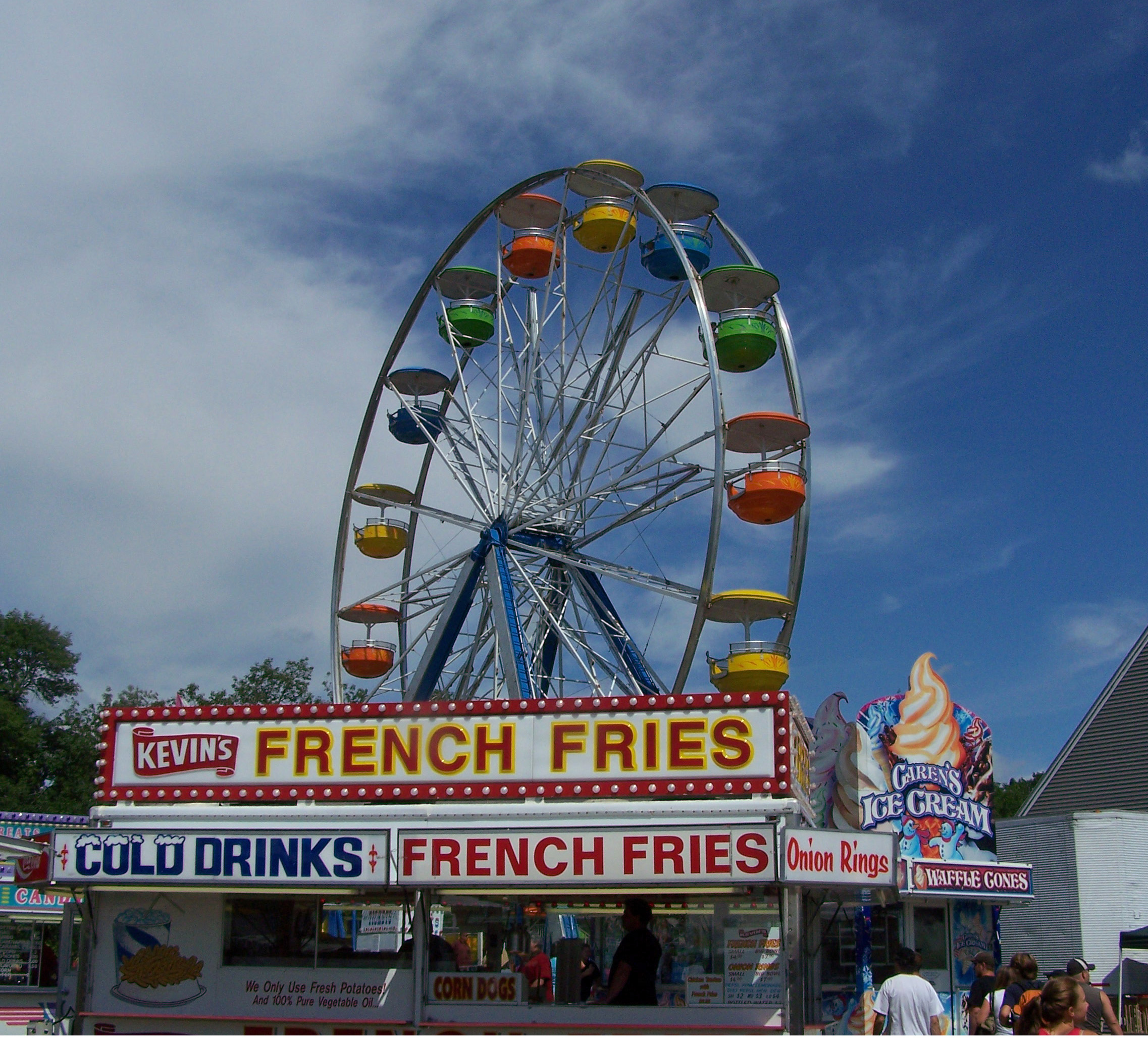
The local agricultural fairs begin in mid to late August.  For us, the Union Fair kicks off the season, followed by the Windsor Fair and The Maine Organic Farmers and Growers Association (MOFGA) fair, better known as The Common Ground Fair.  Union and Windsor have TONS of food, carnival rides, entertainers, 4H competitions, serious oxen and horse pulling competitions, pie throwing and pig chasing contests, and all sorts of produce demonstrations and contests–from food to handwork like quilts.  MOFGA celebrates the union of man and the earth and glories in its abundance.  It falls in late September, and I’ll likely post about our trip there this year.         

One highlight of the Union and Windsor Fairs is the harness racing.  Usually, there are 8 to 9 races, and you can place $2 bets.  We go, take healthy food for snacks, and no more than $20 each, and spend a lovely afternoon contemplating racing horses.  John’s sister Maryann loves to come from Boston and go with us.  Usually we go early to see the farm animals, but this year, with one thing and another, we got there nearly at post time.

Here’s the first picture I took, as it is emblematic of one side of the fair:

We did pass the chicken house before the races.  We saw a new heritage turkey breed called Royal Palm–quite a gorgeous fellow.  You can see more information on this breed at http://www.efowl.com/Royal_Palm_Turkeys_p/1302.htm.   He is “displaying” and his head is showing blue, if he’s like wild turkeys, because the thinks the female next to him is a real charmer.  Turkeys are quite social and will talk to you as long as you stand and talk back. 


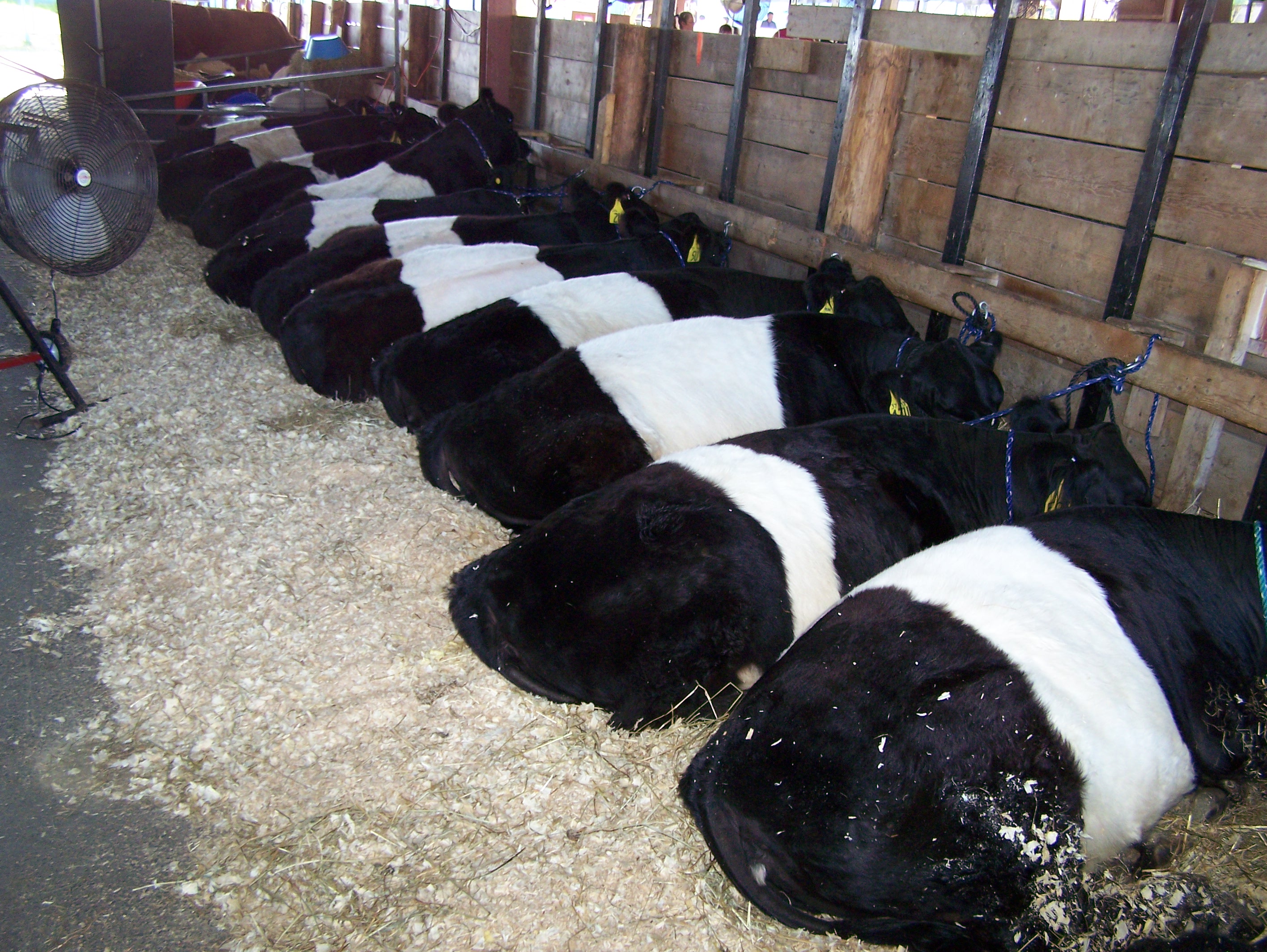
And, from last year, a picture of local celebrities:  Belted Galloway cows, or the “Oreo” cows.  They are a meat cow, and every single one has these exact markings.


 Here’s a pair of the most amazing pair of horses we watched win the pulling contests from last year.  You can’t imagine how determined they are, how they work together, how they want to do the job.  Sometimes I can hardly watch, especially when they get to weights that they cannot pull. 

Here is a picture of one race, seconds before crossing the finishing line:

We didn’t make any money.  We never do.  But we didn’t lose all that much either.  And, we had a glorious, sun-filled afternoon, fun afternoon.

We’re not going to Windsor this year as, sadly, due to the economy, they are not running live harness races, but are showing “simulcast” races piped in from somewhere else.  For us, the races are about much more than the betting, so we aren’t drawn there just to bet.

Turkey Tracks: Blackberries

Turkey Tracks:  August 14, 2010

Blackberries

“I want that jelly with the berries in it,” Talula announced this summer.  She’ll be 4 in a few weeks, and she loves to be in the kitchen with me.  She loves to eat, is discerning about food tastes already, and asks to help cook at every step. 

The jelly with the berries was blackberry jelly–an older jar made before I figured out how to get rid of the seeds with a food mill.  So far, Talula only uses it on morning toast.  She has not yet discovered the way my grandmother and I eat it:  spread on pancakes with lots of butter.  Or, a dab of it on a hot, short biscuit dripping with butter.  (Southern biscuits are not high and puffy; they’re “short” and flat, more like a pie crust. 

I’m down to one jar of blackberry jelly, and today I went and picked 4 1/2 gallons of fresh blackberries.  It took about two hours.  I was ecstatic since you never know from year to year if you’ll get more.  Last year, for instance, we didn’t get any tomatoes, so we went for two years on what I had put up year before last.  (I used the last jar of roasted tomatoes this past week.) 

It takes a LOT of berries to make a pint jar of blackberry jelly–something most people who take jelly for granted don’t know.  Homemade blackberry jelly or jam, made from wild blackberries, is a thing of joy.  It bears no relationship to what you can buy in a store.  And, it has no added “help,” like pectin.  You just have to pick a red berry or two as you go along for the pectin.  In my family, blackberry jelly was prized, and one never wasted it or ate a lot of it at one time.  One conserved blackberry jam, one treasured it, one let each bite linger on the tongue, because one pint jar of it represented not only a lot of work, but the luck of finding a blackberry patch where one could pick enough berries to make a pint jar of jam.     

Blackberries are part of my childhood.  I learned BLACKBERRY in the summers when we were in Reynolds, Georgia, the home of my mother’s parents.  When blackberries were in season, the adults would organize all the visiting cousin children and would drive us to a patch one or the other of them had found.  We had to pick until there were enough for, at least, a cobbler for dinner, which was eaten in the middle of the day.  There was always great drama since copperhead moccasin snakes love blackberry patches, and we were always scared to wade too deep into the bushes.  After dropping off the berries at the house for the cook, the adults took us swimming in the local pool at the edge of the swamp where free-flowing artesian water that was ice cold cleaned us up, soothed scratches, and made us really hungry for dinner.  

I’ve never found a recipe for those cobblers.  The crust was more like pie crust, crunchy and flakey.  And I don’t think the cobbler was lined, like a pie.  I don’t remember the inside being too watery.  I don’t remember the kind of dish they used either.  I don’t think it was a pie plate.  They used either whip cream or ice cream, but mostly, whip cream.  My father loved blackberry cobbler, and he was always a chief organizer for picking them.

Because the family gathered in the summer in Reynolds, there could be a crowd at dinner.  I remember 10 or 12 people at the table.  And, sometimes the children had to overflow to the kitchen table.  There were probably not enough berries left after the cobbler for jelly making.  Grandmother’s cook made the dinner and the cobbler.  But grandmother always made the blackberry jelly and, at holidays, special cakes and fudge.  I think the recipe I’ve evolved is pretty close to hers.  When my mother was sick with cancer, I picked, cooked, and made two jars for her, which I mailed to her with special packing.  She knew how special they were, what a gift I was sending her.  She didn’t want to take the jars to the dining room in the home where she was living.  No one else would understand, but mother knew BLACKBERRY, and she was not going to share with anyone who thought they were eating plain old jelly.   

I’m so lucky to have access to a dynamite wild blackberry patch.  I’ve been checking up on it over the past few weeks, and today was the day where the stars aligned so I could go pick.  I donned heavy pants, found my wellie boots (I only tripped and fell down once in them this outing), found an old hat, organized a pail I could line with big baggies, a rope to tie the pail to my waist so I could pick with both hands–something Maine friend Margaret taught me–filled up my water bottle, and headed out.  The patch is about 40 minutes away from our house. 

I’ll make the jelly in small batches, starting tomorrow.  I froze 3 gallons so they won’t go bad until I get to them since the full bounty of summer food is pouring forth right now. 

Next summer, I’ll have to try to teach Talula BLACKBERRY.  It’s harder when she can’t learn to pick them.  Their school starts in mid-August, so they miss the full richness of the Maine harvest.   


Turkey Tracks: Hope’s Edge, Our Community Shared Agriculture Farm

Turkey Tracks:  August 14, 2010  

Hope’s Edge:   Our CSA (Community Shared Agriculture) Farm  

We’ve belonged to Hope’s Edge, our CSA farm, for at least five years now.  Our pick-up this year is on Friday, and I look forward all week to driving out to the farm.  It’s a beautiful, serene space.   

What’s cool about Hope’s Edge is that Farmer Tom does not own it.  The owner and her daughter live in the farmhouse, and they have allowed Tom to build a CSA and his own house on it.  There are horses, some rescue ponies, a milk cow and a new calf, and chickens.  Sometimes there are some sheep as well.     

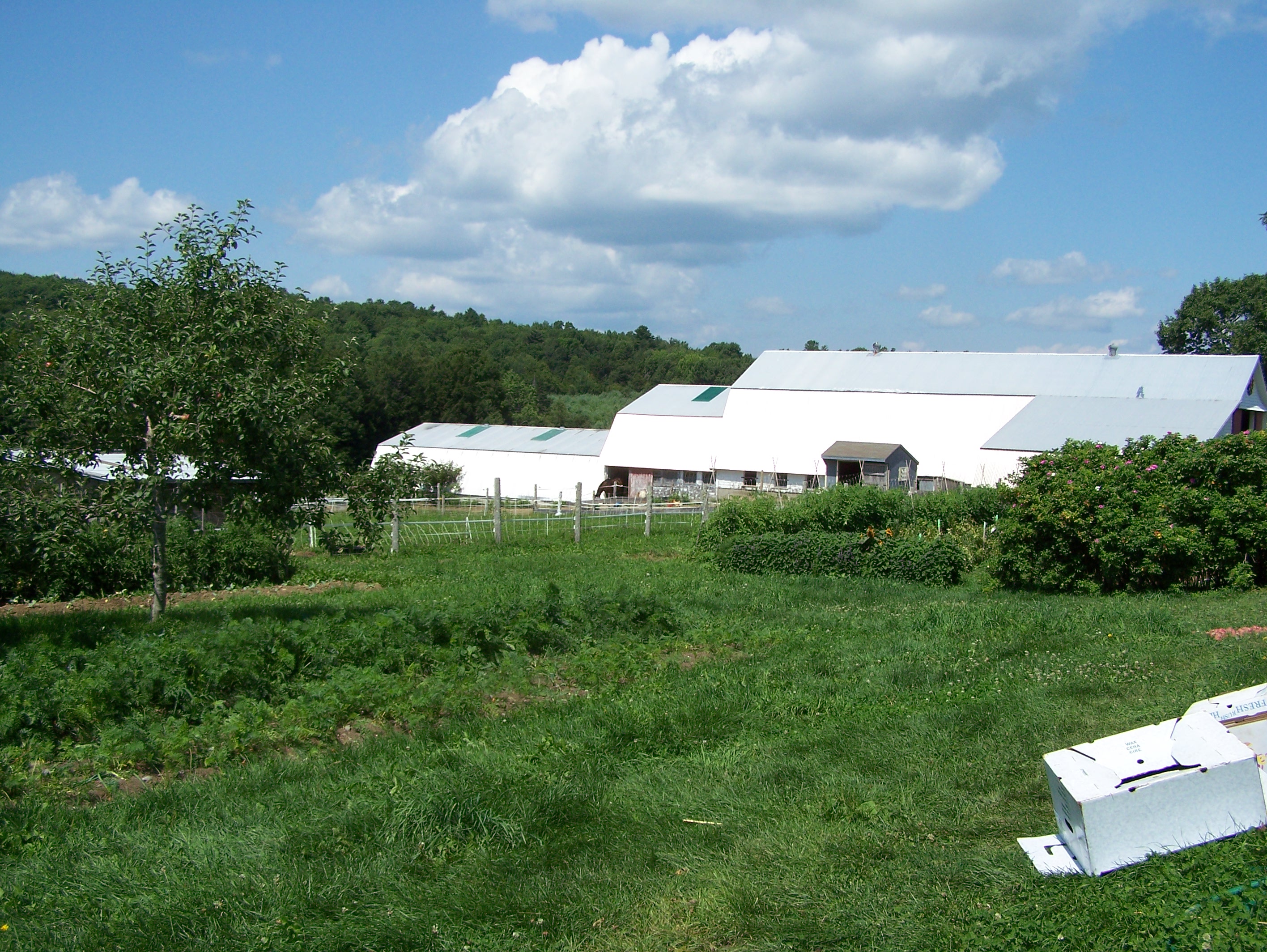
Hills circle the fields, barns, farmhouse, the CSA sheds, and Farmer Tom’s house.   A pond nestles down the hill from the barn, providing a cooling off place for hot CSA workers.  This is a view of the barn and stables from the CSA shed.  Look at how blue the sky can be in Maine.  The old farmhouse is on the far side of the barn.  In the foreground are some garden beds and the first of a line of apple trees.  


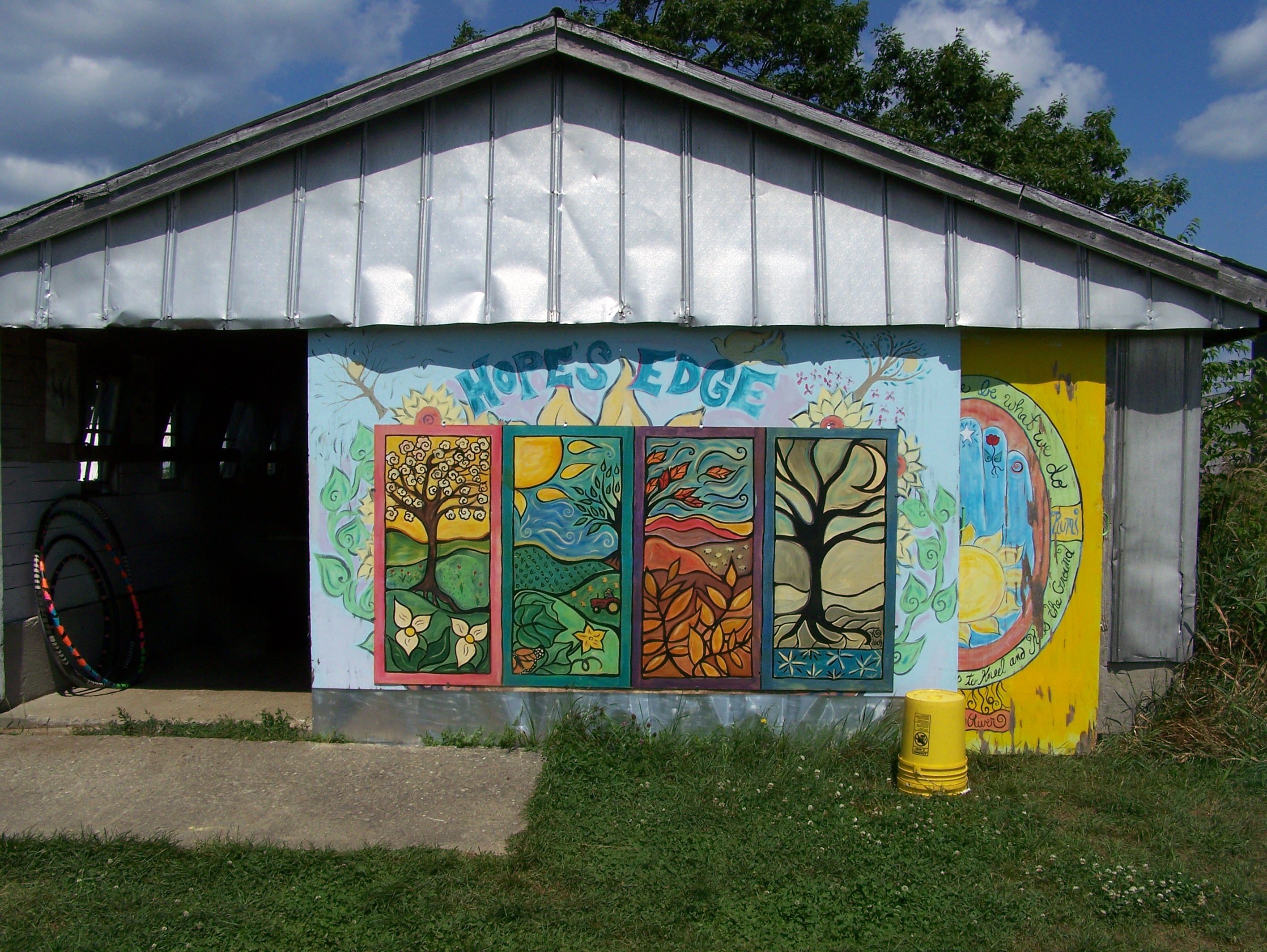
Here’s the CSA shed where we pick up our food.  Inside are refrigerators, some cooking equipment, tables, and LOTS of food.  Behind the shed are more garden beds, a huge oak with a tire swing, and a frog pond that drove our grandchildren quite crazy.  To the right there is another small barn and the entry road.  Across that road are planted crops, including a strawberry bed that gets bigger each year.   


Here’s a bigger picture of the mural.     


We picked up over 12 pounds of food this past Friday.  I could not resist putting it in my garden/mushroom basket and taking a picture:  


Cukes, zukes, tomatoes, cauliflower, broccoli, two kinds of beans (regular and Romano flat), lettuce, herbs, potatoes, an eggplant, a cabbage, carrots, and garlic.  I could have cut a flower arrangement as well, but we were tired after a morning in Augusta, and we have lots of flowers in our own garden.  

It doesn’t get better than this kind of food, does it?  It nourishes our bodies and our spirits.  

Ratatouille, I think.  But with some of the mint I brought from Maine.  And, some basil from our herb garden.

Turkey Tracks: Zucchini Fritters

Turkey Tracks:  August 9, 2010

Zucchini Fritters

One of my neighbors called me a few days ago.  “Would you like some zucchini?” he asked.

Certainly not!!!!  We are swimming in zucchini.  But, I was more polite.  “No thanks, but thanks for asking.”

Later in the week I stopped by and saw that some of their zucchini had gotten away from them.  About 12 zucchini, the size of zeppelins, were stacked on a counter.  I felt very superior since I ruthlessly go through my plants and pull the zucchini when they are still young and tender. 

Between Hope’s Edge, our CSA, and our garden, we have tons of zucchini.  I get out the food processor and grate them and freeze them into small baggies.  The grated flesh is great in soups all winter, especially with a dollop of frozen basil oil or, even, pesto.  Summer comes rushing back in the first mouthful.  (For basil oil, just process wads of basil with enough olive oil to make an oily mixture and freeze in a small container with a little oil on top.)

Years ago, friend Barbara Melosh gave me a recipe for zucchini fritters, and John asks for it often.  It’s dead easy.  Here it is:

Zucchini Fritters

3 cups shredded zucchini (approximately 2 medium)

2-4 Tablespoons scallions, minced

2-4 Tablespoons parsley, minced

3/4 cup AP flour

1/2 teaspoon baking powder

1/2 teaspoon salt

2 eggs, lightly beaten

Mix together zucchini, scallions, and parsley.   Combine flour, baking powder, and salt.  Add to vegetables and stir.  Add eggs.

Saute in mixture of butter and olive oil until browned–approx. 2-3 minutes per side.  I’ve decided that it’s best to make small-sized fritters as they cook through a little faster.

ENJOY!

On the way to run an errand this morning, I pawed through the zucchini and Lord!!!!  There was a zeppelin zuke.  How did that happen???

Here is Maryann Enright with our zeppelin-sized zucchini:


Turkey Tracks: Granddaughter Quilts

Turkey Tracks:  August 6, 2010

Granddaughter Quilts

I’m behind on making quilts for the people I love.

Indeed, Mike and Tami and Bryan and Corinne have never gotten wedding quilts.   I do have those planned and in one case, fabric collected.

But, while Talula, who will be 4 this September, has a drag-around quilt, she has never gotten a special quilt from me.  And, Wilhelmina has nothing.  She will be 3 this September.

So, I started this past winter to remedy this situation, and I gave both girls their quilts when they came to Maine in early July.

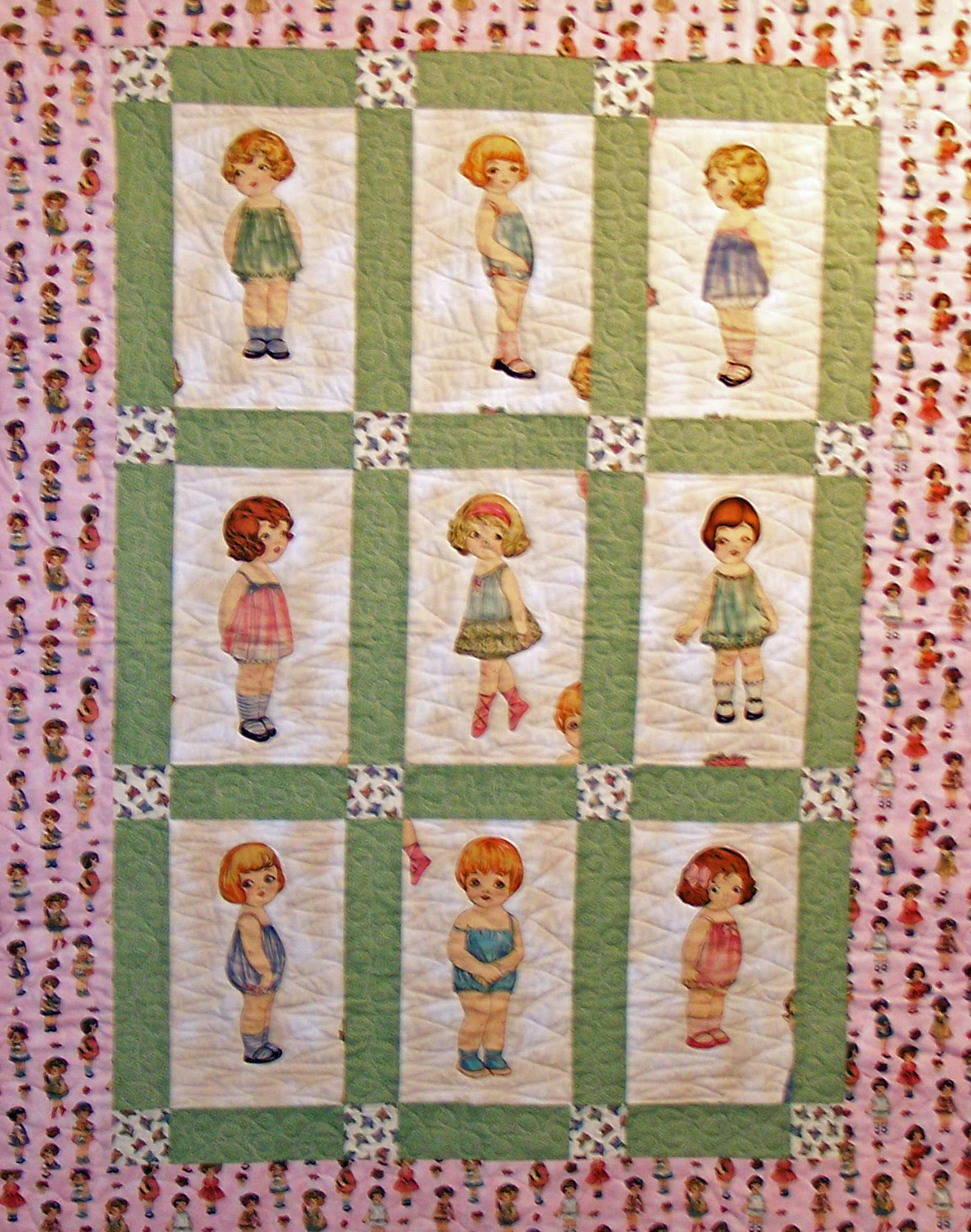
Talula’s quilt has dolls in their underwear.  I made separate clothes for the dolls, fused them with fusible fleece, and they stick to the dolls beautifully.  Talula likes dressing the dolls.  So do I. 

Here’s a picture:  it’s not a great picture as it makes the quilt look crooked, and it isn’t.


Here’s a close-up of some of the dolls dressed with dress, shoes, and a hat:


The  kit came from Fons and Porter–eventually–because apparently the market underestimated the popularity.  When it came, unlike the photo in the magazine, other dolls and decorations intruded on the individual doll blocks, as you can see.  Did they air brush those out?  Or, did they just get greedy?  And, you have to decide which line of dolls to cut, as you cannot cut one line without ruining the adjacent one, which has different dolls.  So, you have to buy more fabric to get to both sets.  Bah Humbug Market!!!

Wilhelmina’s quilt is called “Nursery Rhymes,” and was also from a kit.  Sewing with kits has been a new thing for me and is undoubtedly due to the influence of my Virginia friend, fellow quilter, Rosie Pilkerton.  Rosy loves kits, and she makes the cutest quilts, especially for children.  She and I bought the Nursery Rhymes kits together at the Mid-Atlantic Quilt Show in Williamsburg, VA, a few years back.  I took mine to our quilting trip this past February, and Rosie was offering to sell me hers after a few days.  This kit has a million tiny pieces.  I worked on it night and day all week and had to bring it home to finish it.

I love the prairie points.  They’re my first believe it or not.   


Now you can see all the tiny, tiny pieces.

So, Bryan and Corinne are expecting a girl around Thanksgiving.  Corinne and I had a terrific time one day while she was here picking out fabrics for receiving blankets, the backing for what will be a colorful babyl quilt, and very upscale and interesting fabric for a diaper bag. 

The wedding quilts are on the back burner again!!!!

Turkey Tracks: Birthday Quilt

Turkey Tracks:  July 16, 2010

Birthday Quilt

I love my birthday.  It’s March 17th, and I look forward to it every year. 

This year, the grandchildren sent me a special present:  a paper quilt.

I loved it on sight.

And, I propped it on the wall in our craft/laundry room area, but didn’t get it hung until just before they came.

Here’s what it looks like:


You can see their names at the top.  I love the colors.  And, I think it’s the coolest quilt ever.

Turkey Tracks: Mid-July

Turkey Tracks:  July 16, 2010

I’m not sure where the past month has gone.  We are in full summer in Camden, Maine, so we are outdoors a lot.  And, the grandchildren came in early July (almost 7, 5 1/2, almost 4 and almost 3), so we are preoccupied with spending time with them.  They arrived just as our first strawberry patch ever was closing down, and they picked out the rest over the next few days.

Our strawberries are “Sparkles.”  John had some years back announced that he didn’t like strawberries and wasn’t eating any more.  Home grown, heritage strawberries turned him around, and he couldn’t get enough of them.  These berries bear no resemblance to commercial strawberries that are the size of golf balls and are sour and which are coated with up to 8 or 9 heinous chemical mixtures.  Sparkles fill your mouth with the taste of warm sunshine and sweetness.  I was able to freeze a fair amount of them, and we have been making ice cream with them.  If you have a food processor, it’s dead easy.

Food Processor Ice Cream:

Put several cups of real heavy cream (if you can’t get it, don’t waste your time or waistline eating the pasteurized stuff as it has no vitamins or enzymes in it, only empty calories) or plain yogurt or keifer (hopefully made from real milk) into the bowl of a food processor.  Add something sweet to taste–honey or maple syrup.  If you use stevia, make sure you aren’t using one with rice maltodextrin as that stuff is bad for you and nasty tasting–it’s a fake chemical food.  Add at least 1 Tablespoon of Arrowroot (buy it in bulk; it’s way cheaper)–it’s what makes the mixture smooth.  Turn on the processor, pour in at least 3-4 cups FROZEN fruit, and voila!  Lovely, soft ice cream.  If you have leftovers, add a Tablespoon of some liquor to keep it soft.  We never have leftovers…

Raspberries are coming in now, and mine are going to produce enough for all of us to eat and share.  We’ll probably go to a local organic farm to pick raspberries to freeze for winter.  There’s a pie I want to try as well, from one of Ruth Reichl’s memoirs.  (If you have not read the three memoirs and love food and cooking, you may want to read them:  Tender At The Bone, Comfort Me With Apples,  and Garlic and Sapphires.)  

Blueberries are around the corner.  I’ve ordered 15 pounds of organic berries to freeze for winter smoothies and cobblers.  Commercial blueberries, even the heralded small “wild” berries of Maine, which are by far the tastiest, are sprayed with an array of chemicals–some of which get into the local water and kill the fish and amphibians.  Some kill birds, bees, butterflies, etc.  If they kill those living things, they can kill you!  Or, make you really sick.  In fact, blueberries made the Environmental Working Group’s list of foods to avoid this year at position No. 5.

Here’s what the garden looks like now, with Bowen (almost 7) in front:

The plant on the right with yellow blooms is Beedy Parker Kale.  That’s garlic on the left, with celery and radish in front.  The potatoes are coming up well to the right of Bowen’s shoulder.  We’ve picked peas until we’re tired of them.  Beans are coming on strong.   That’s a yellow squash up front.  And, we’ve got broccoli to cut in the middle of the garden.

Here’s the dreaded zucchini, with lush tomatoes in front of the day lilies and raspberries fringing the yard:


 We have 14 winter squash and pumpkin hills in the meadow and Brussel Sprouts, cabbage, and more broccoli along the driveway. 

The chicken report is a bit different.  Our broody hen has given up trying to sit on eggs, though I suspect one of the Wheatens is starting to get the urge.  Here’s a picture of the chicks Rose Thomas incubated in June:

These chicks are Americana/Wheaten and Maran.  None of the Marans made it. 

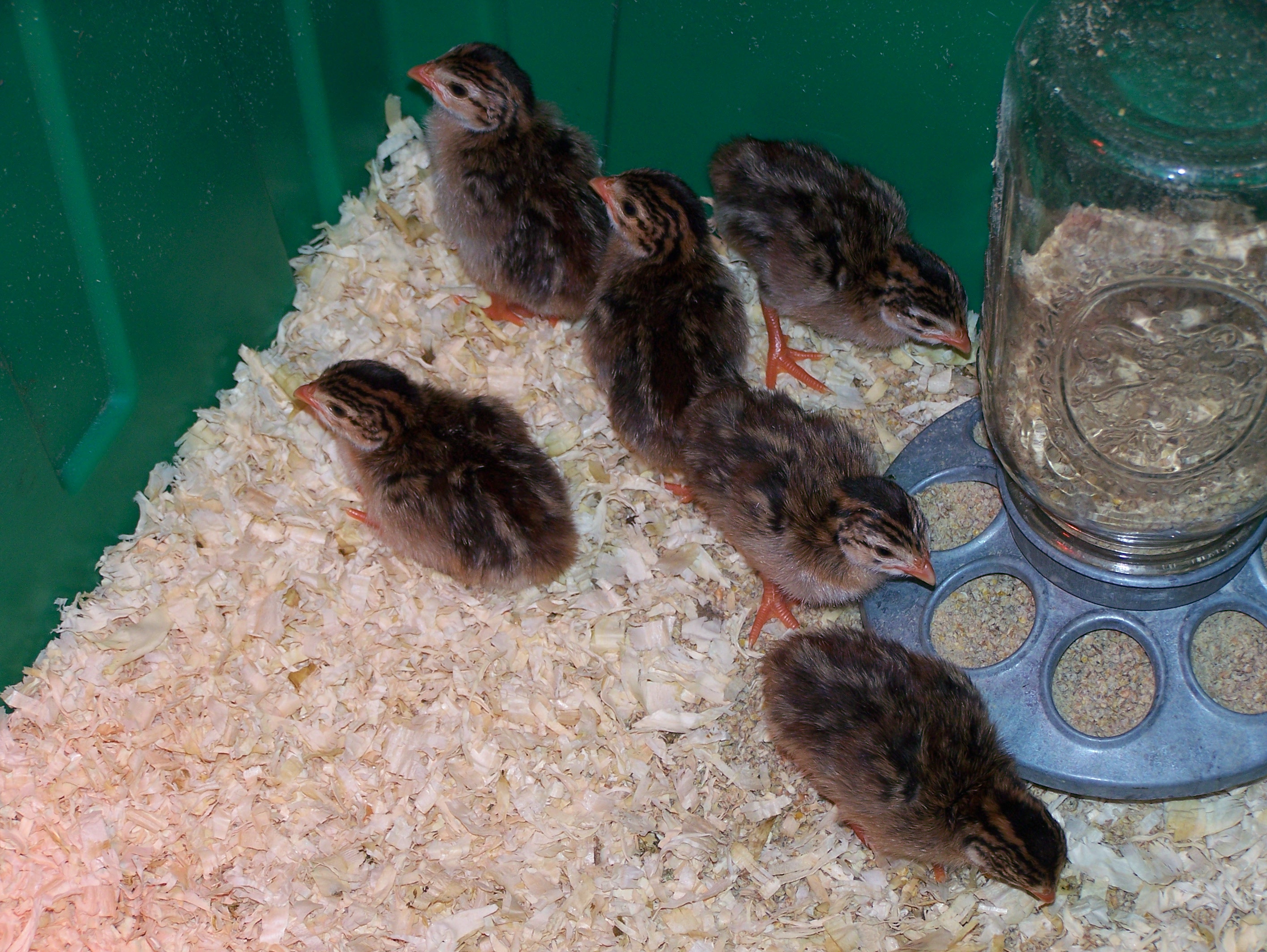
Here’s a picture of the six Guinea hens she also incubated:

Guinea hens take 26 days to hatch.  Chickens take 21.  So, Rose was quite proud of these babies.  She also had a hen sitting on eggs in the middle of the chicken pasture.  That hen will stay there 26 days, with the male close by.  Guineas lay eggs communally, but only one hen will sit the eggs.  I wonder if something like that goes on with chickens as our broody hen gathered all the eggs underneath herself out of our two boxes, and the other hens seemed to be cooperating. 

I started over 20 eggs timed to hatch July 14th.  One caught me by surprise on the 12th and tried to hatch in the egg turner with the humidity too low.  It didn’t make it out of the shell.  One hatched.  The rest are dormant.  We will open them later today to see what the story is.  Were they unfertilized?  Did something go wrong? 

The Marans are proving hard to hatch…  But, the one chick we have, named Orphan Annie, seems to be thriving.  Rose thinks her Maran, who recently hatched a brood, might take her.  But, she is rapidly becoming a pet…

So, everything is growing well:  veggies, fruits, chickens, and grandchildren.

Turkey Tracks: A Quiet Sunday in June

Turkey Tracks:  June 14, 2010

A Quiet Sunday in June

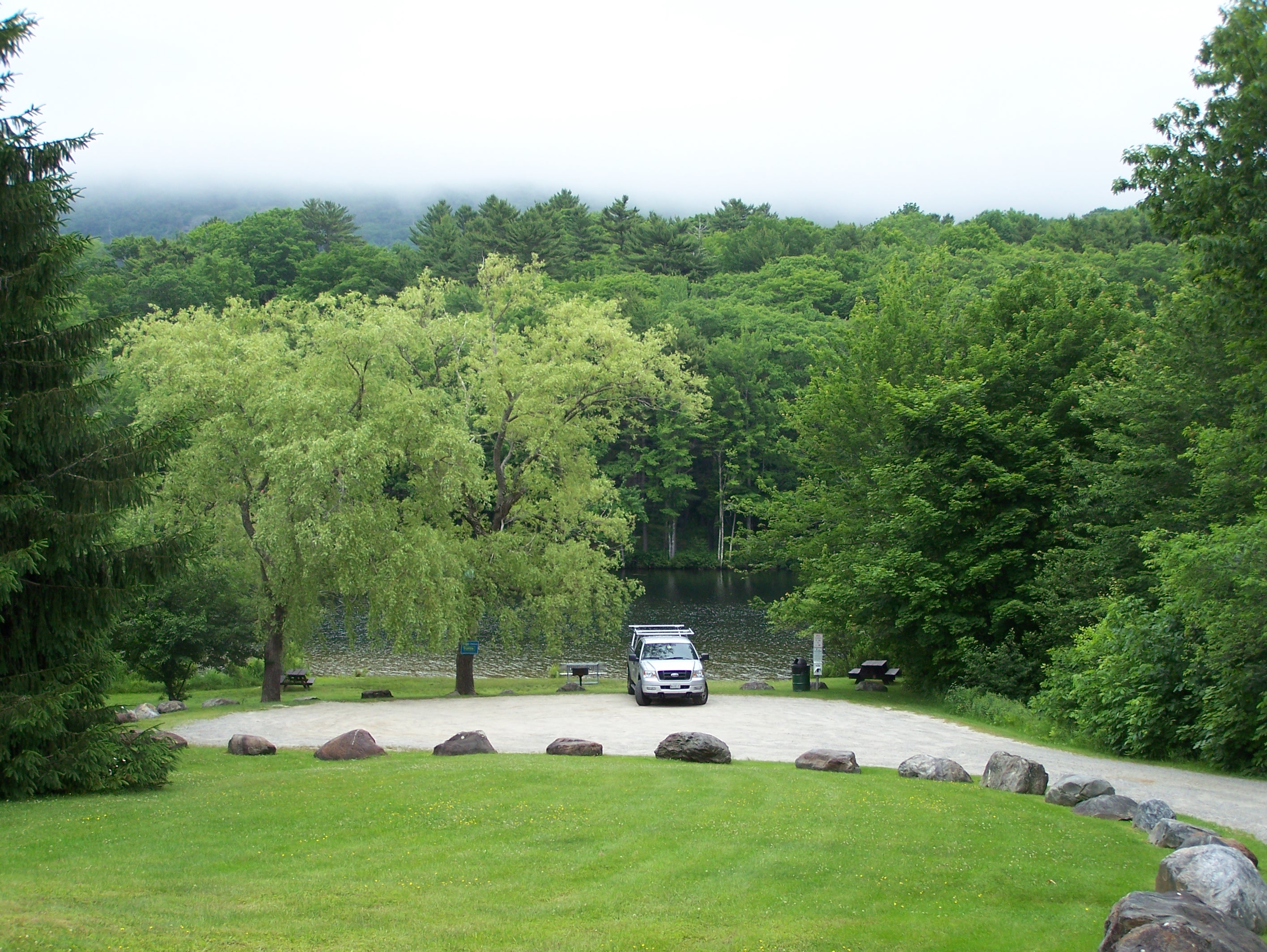
Yesterday was filled with small pleasures.  It was a soft day.  The clouds sat right down on the mountain tops, and the fog bank drifted in and out over the land.  We went for a little ride in the car to poke around and pick up a few things, like ice cream cones in town.  Here is Shirttail Point, our swimming hole on the river.  Note the clouds on the mountain beyond:


The truck belongs to three people in a canoe who came up just after I took the picture.

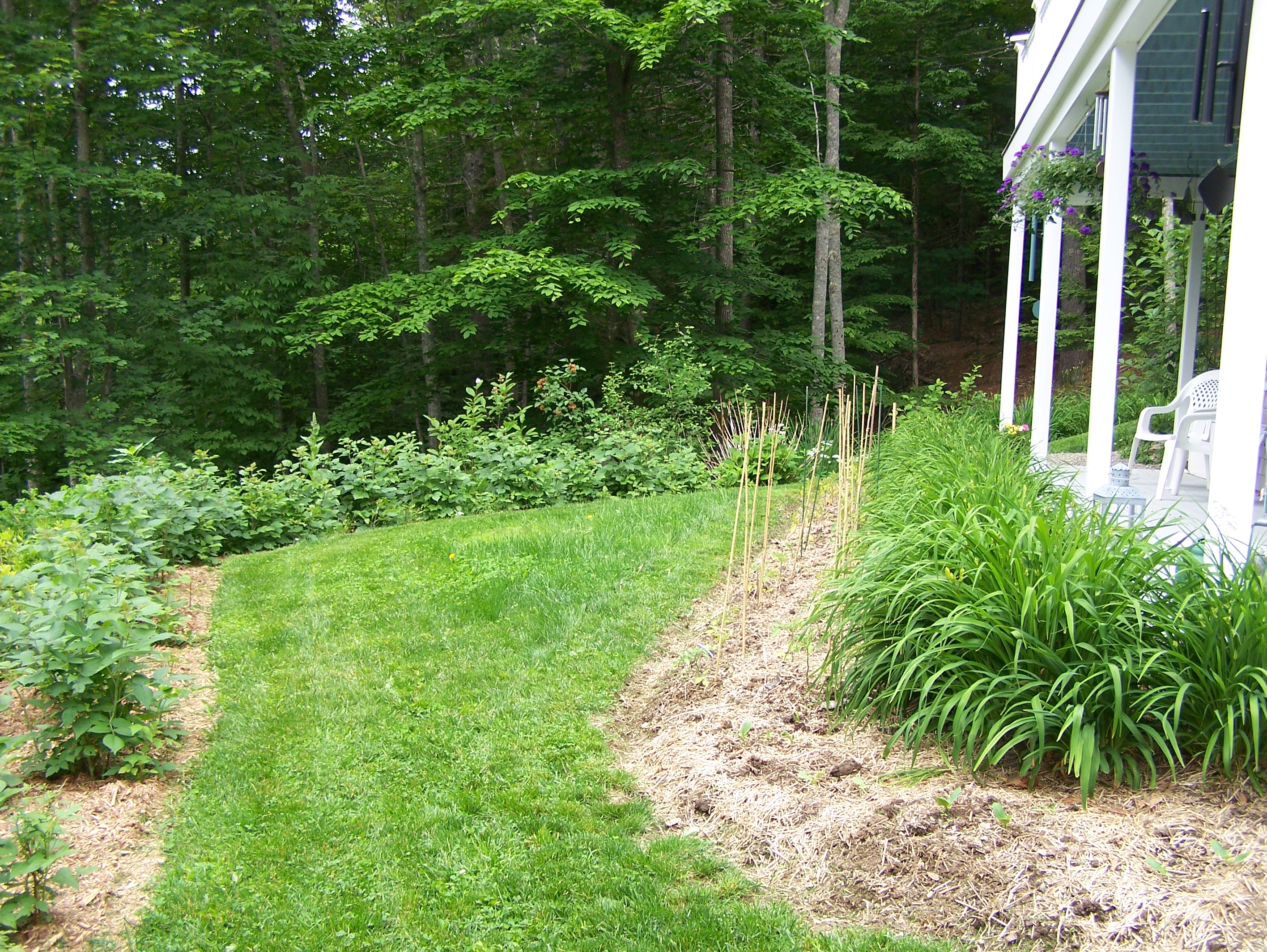
The garden is doing well.  Here is a picture of what it looks like now, with the chicken fence down:

The pea trellis is filling up.  The garlic (on the right) looks good.  In the distance, you see flowering kale.

Here is a picture of the tomato bed, which currently houses 20 plants, and along the curve, our raspberry plants.

Our strawberries are also starting to show color.  We planted them last year, but knocked off their blooms for the first year so the plants would establish themselves. 

This year, the red poppies finally bloomed.  I initially planted them in a spot that quickly grew too shady and had to move them.  This is their third year, but their first to bloom.  The blue flowers are, I think, Cantebury bells.  My shadow, Miss Reynolds Georgia, who is 8 this year, gets in the picture.

Penelope, Penobscot Bay (PenBay), Penny cannot stand to be left out:

I put alyssum into the steps every year.  And, Lady’s Mantle (the light green) grows like a weed in Maine.

One of our errands was to pick up some trout worms, meant for fishing, for the chickens.  Twenty-four (24!!!!) worms sell for $3 at Megunticook Market.  I justify this outrageous expense because of the pleasure it brings and because I can no longer drink wine, unfortunately.  I also tell myself that one of our fabulous local products, an ice cream sandwich called a Dolcelino, sells for $3.50.  I’m not sure I’m forgoing those in order to buy some worms though…  Here are the chickens eating the worms.

Nappy, the rooster, calls the hens to come, come, come eat this thing she has brought.  He stands over the treat and bobs his head up and down, trilling the call.  The hens come running, running.  (One of the Marans is broody, so she stays in the coop; one of the Wheatens was laying an egg and missed the treat.)  The Marans try to run off the Wheaten, so she only gets a few unless I throw some to her especially.  Today I just threw the whole lot into the pen.  I don’t think Nappy ever gets any of the worms.  He gives them all to the hens while he guards them.  I’ve tried to offer him some just for him, put to the side, but he just calls the hens for those.   

This morning, for the first time in a month, the broody hen (May May) came out of the coop with the others.  I’ve been having to lift her out and to put her in front of food before she will eat.  She goes into a kind of zone where her feet don’t work, so you have to pick her up and down until she, gradually, walks to the food. 

They don’t seem to mind being penned, but they are much quieter and less active.  They miss their walks.