Turkey Tracks: “Neil Berg’s 100 Years of Broadway”

Turkey Tracks:  February 12, 2012

Neil Berg’s 100 Years of Broadway

Friday night held a special treat for us, besides dinner with good friends:  Neil Berg’s “100 Years of Broadway,” a Bay Chamber winter concert.

WOW!

Neil Berg is a very successful composer/lyricist–“The Prince and the Pauper,” “The Twelve,” “The Man Who Would Be King,” “Time and Scrooge,” “Heidi,”  and on and on…   He oozes music and knowledge about the history of Broadway.  He puts together this show where he asks major Broadway stars to join him in singing and dancing many of the songs/dances that they, themselves, have sung “on broadway.”  Along the way, we all learned a little Broadway history and some “insider” tales.

Berg played the piano, and there was a drummer and an electric guitar player.  And boy could Berg play the piano!

This show started with Natalie Toro singing some of the major songs from “Evita,” in which she starred.  She also had major roles in “A Tale of Two Cities,” “Les Miserables,” “Cats,” and “A Christmas Carol.”  Her gorgeous voice is laced with passion.

Rita Harvey is a major Broadway star, probably best known for five years as Christine in “The Phantom of the Opera.”  She’s married to Berg, and she has an astonishing soprano–clear and true.

Danny Zolli is probably best known for “Jesus Christ Superstar,” and he blew us out of the Camden Opera House with some of that music–but not before singing “Sherry,” from “Jersey Boys,” which made us all want to sing along and get up and dance.

Ted Louis Levy is a master tap dancer with a mellow voice and a soft-shoe pleasing manner onstage.  He made his Broadway debut in “Black & Blue.”

David Elder danced and sang “Singing in the Rain,” a la Fred Astaire style.  He’s been in “42nd Street, “Kiss Me Kate,” “Once Upon A Mattress,” “Damn Yankees,” “Guys and Dolls,” “Titanic,” “Beauty and the Beast,” and “Curtains.”

Were we ever spoiled or what???

One of the joys of living in a small town with a huge cultural component is that we get to see traveling shows like this one.  The Camden Opera House was sold out.

It’s Sunday now, and we’re still walking around humming bits of songs we heard Friday night.  And, we’ve checked our stash of Broadway CD’s to see what’s there.

The show ended–after three hours with an intermission– with “Seasons of Love” from “Rent.”  We think we’ll order some of the Broadway DVDs and have some fun on these cold winter nights.

If this show comes to a place near you, GO!

Turkey Tracks: Moving the Bees

Turkey Tracks:  February 9, 2012

Moving the Bees

Last Thanksgiving, we were in Charleston, SC, with our children.  Both of our sons and their families live within two blocks of each other, so we stay a chunk of time with each family.

My daughter-in-law, Tami, has been a backyard bee keeper for the past year.  And, by year’s end, she had harvested her first honey:

Tami’s hive was in a shady part of the yard, however, and had acquired a worrisome kind of little beetle that can harm the hive.  So, just after Thanksgiving, she and her bee mentor, with the help of her fellow beekeeper Kay, decided to move the hive to a sunnier spot in the yard.

Here’s Kelly, all ready for the move–see the hive alongside the back fence?

Here’s Kay and Tami with the children, starting the smoker:

The boys are ready for the next step of the move:

The bee mentor and his wife arrive, and here’s the whole crew, moving the bees.  Notice Kay’s daughter standing nearby without any protection.  Bees really are not aggressive unless you directly threaten the hive and/or its honey.  They are especially not aggressive if they’ve been smoked.

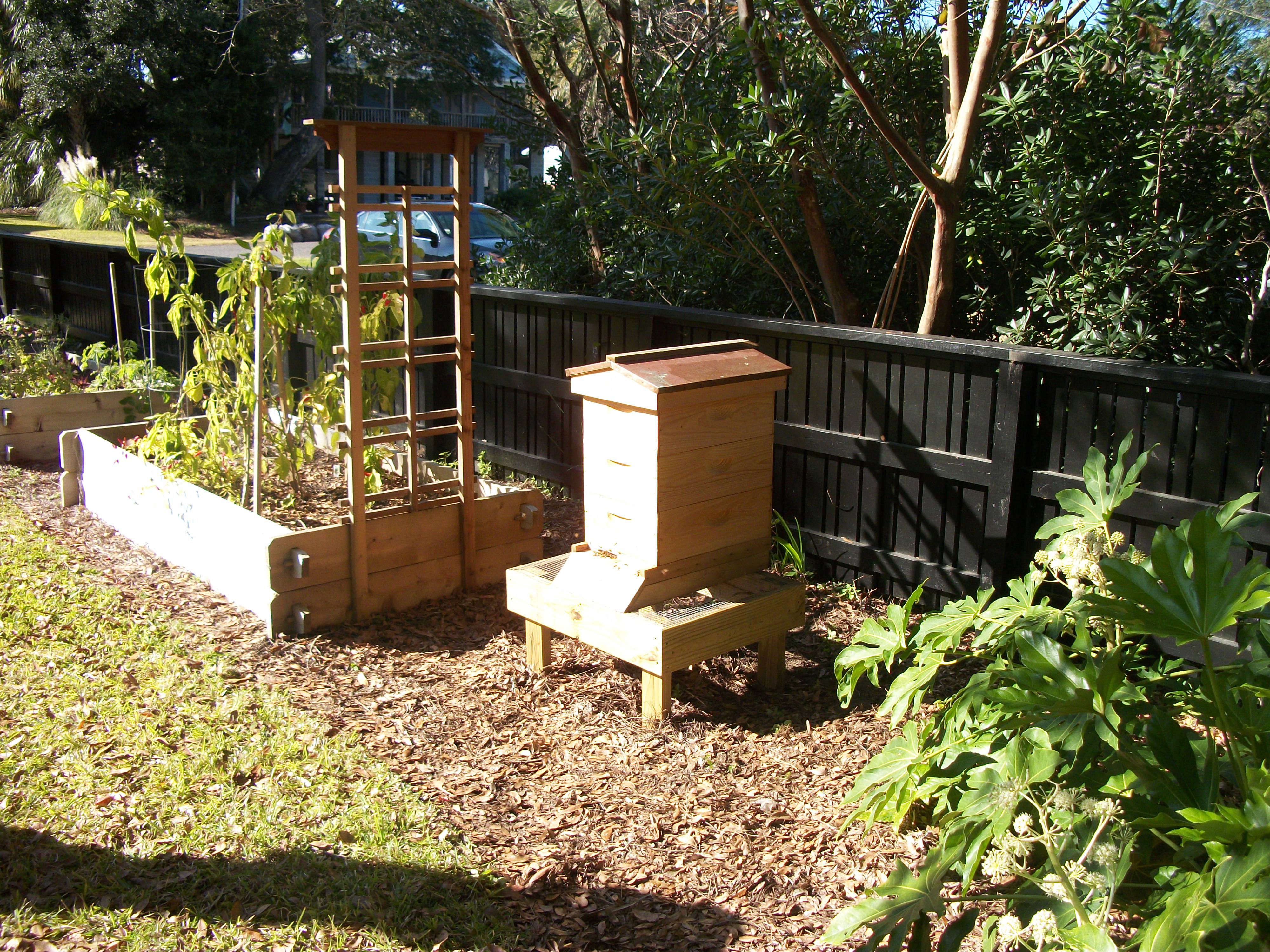
Here’s the new site–note the sun:

Here’s the hive in its sunny new site alongside Tami’s raised vegetable beds:

But, this picture isn’t the end of the story.

There are two other pieces.

First, all the bees that were out foraging came home to find no hive where they left it.  Hundreds of them swarmed around the spot where the hive had been.  By nightfall, they lit on the fence and on the ground below the fence.  Tami and I couldn’t bear it; our hearts were breaking.  We donned gloves and took a flashlight and scooped up as many as we could with sheets of newspaper and slid them into brown paper sacks.  We then put the sacks, open, next to the hive.  By morning, the bees were gone.  Rejoined, we hoped, with their hive.  We had “saved,” we hoped, hundreds of bees.

Second, Tami thought the bees were ok in their new spot.  There was a lot of activity at the hive.  Bees were coming and going.  But, when she returned from Christmas in Maine, something didn’t seem quite right.  She donned her gear and opened the hive–something one does not do much in the winter.

The hive was empty.  Not a bee in sight.  And all the honey was gone–though she had left two flats of honey for the bees to use over the winter.  The bee activity she had seen were robber bees from another hive, taking all the honey.

She does not know what happened.  Was the queen damaged in the move?  Did a nearby automatic water sprinkler wet the hive?  There was some mold on the bottom layers…???  Was it colony collapse disorder?  Or, had her bees, simply, departed.

She’s ordered more bees and a new hive, since the old one has to be destroyed in case there was a disease present.

She loves her bees, and this loss was huge.  For us, too, as we loved her honey.

Turkey Tracks: Making Greeting Cards

Turkey Tracks:  February 9, 2012

Making Greeting Cards

Greeting cards have become REALLY expensive.

For a long time now, I’ve been making my own.  I sew on some, I glue things on some, I stamp some, and so forth.

Perhaps one of the easiest is to put a photo into a card.  Swarthmore, for instance, sells 40 photo greeting cards and envelopes with deckle edges, for $20.  That’s 50 cents a card.  (They’re for 4 by 6-inch photos.)  You can order these photo cards online from lots of places.  The last batch I got had modified the slot for the photo so that it’s like a little envelope into which you slide your photo.  Mine have not needed any additional sticking (with the enclosed stickers) to hold them into place without sliding.

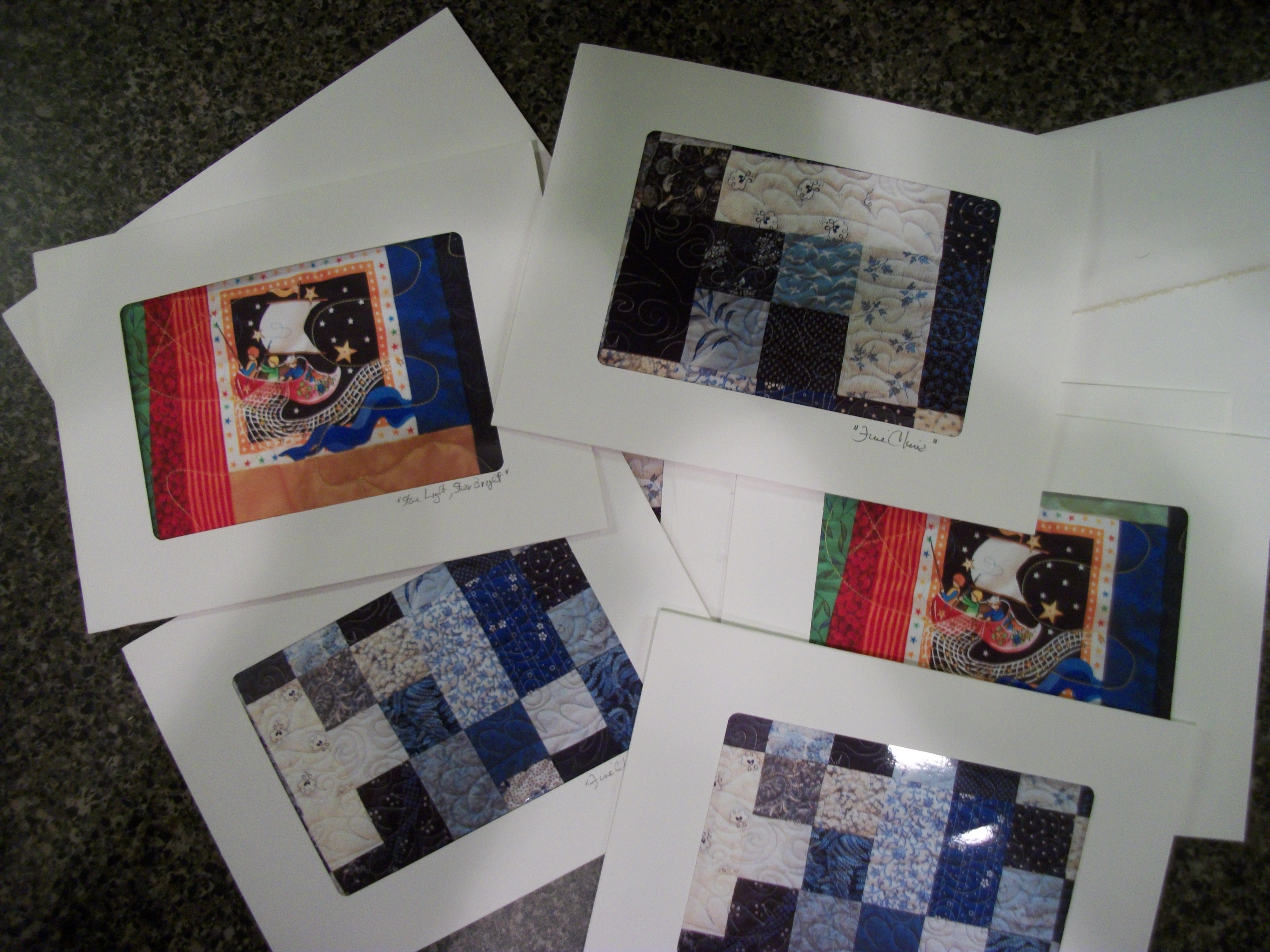
Lately, I’ve been using photos of pieces of my quilts.  Here’s what a recent batch looks like:

I write, in pencil, the name of the quilt on the right-hand corner of each card.

I like them a lot!

Turkey Tracks: Cheryl Wixson’s Homemade Ketchup

Turkey Tracks:  February 9, 2012

Cheryl Wixson’s Homemade Ketchup

In our Cheryl Wixson’s Kitchen CSA last month, we got some homemade ketchup:

I keep thinking about pouring some into a spoon and just eating it.  Seriously, this ketchup leaps into my mind on a regular basis.  I find myself thinking about what I can cook that I can put it on.

Next year, I’m definitely going to try to make some for our winter eating.  But, I doubt mine will ever be as good as this one is!

Eat your heart out Kelly Enright!

PS:  Cheryl just sent the list of goodies in our February box which I’ll pick up next Tuesday at the Belfast Coop.  I can hardly wait!

Turkey Tracks: Leftover Sock Yarn

Turkey Tracks:  February 7, 2012

Leftover Sock Yarn

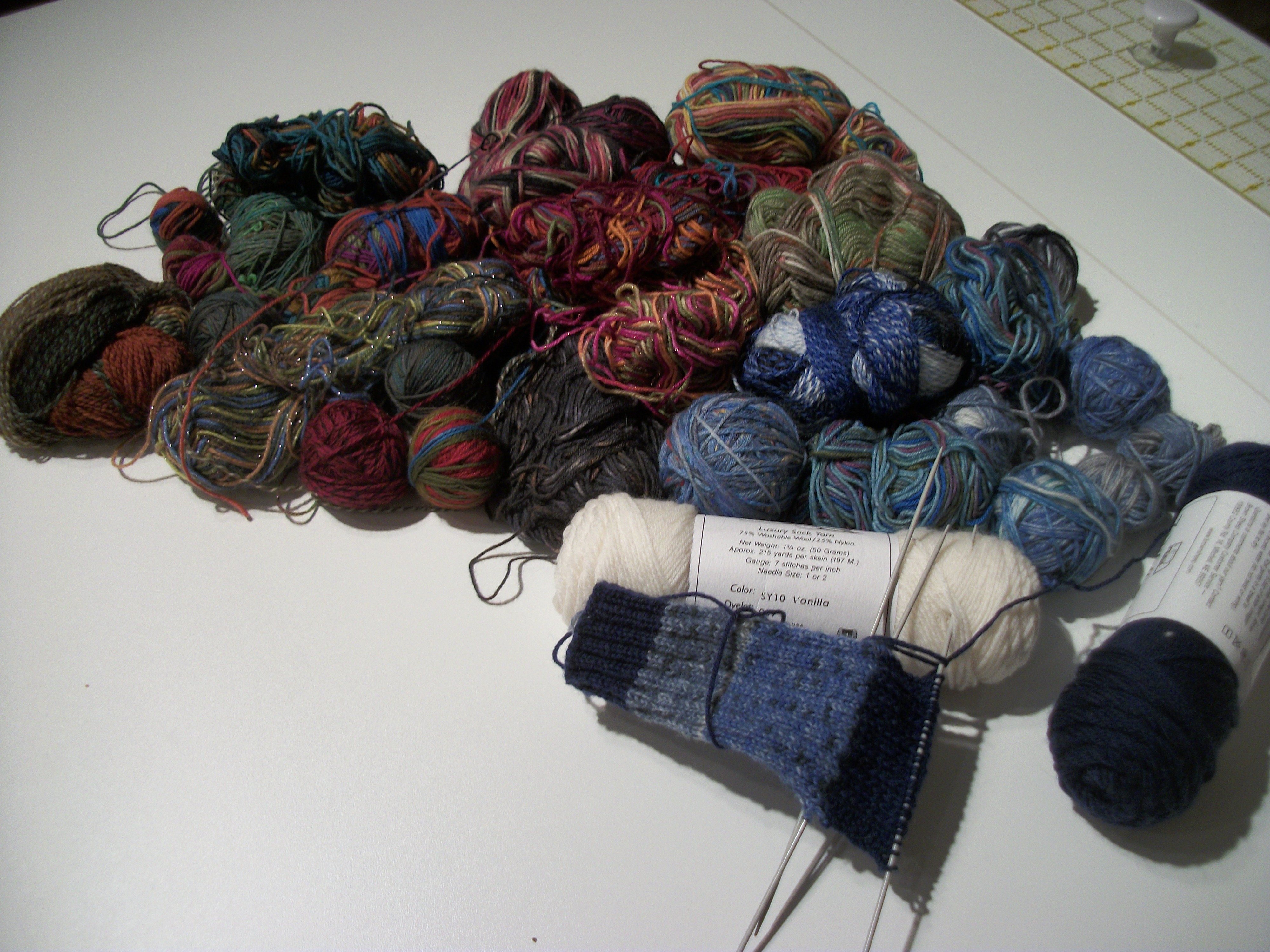
Here’s what my leftover sock yarn pile looks like now:

I was shocked when I rummanged through the yarn bin and saw how much there was.

It’s the same problem as the leftover quilt fabrics.

Last week I bought two sock skeins:  navy and cream.   I’m going to use them to unify these yarns (cuff, heel, toe?) so I can make all the grandchildren socks for next winter.   You can see a pair for Kelly shaping up.  The blues will be easy I think.

I don’t know.  Maybe I need a soft green too?

Yikes!

Turkey Tracks: More Socks

Turkey Tracks:  February 7, 2012

More Socks

Yes, I’m still knitting socks.

Here’s a pair given to daughter-in-law Corinne at Thanksgiving.  Though she lives in Charleston, she travels to Philadelphia and to Maine in the winter.

I particularly like this yarn because it has little glitter bits woven into the yarn.  It seems so festive:

Here’s a pair started in Charleston over Thanksgiving and given to daughter-in-law Tamara when she came to Maine for Christmas this year.  This yarn was so yummy to work with–I recall it had something added–aloe?  lanolin?:

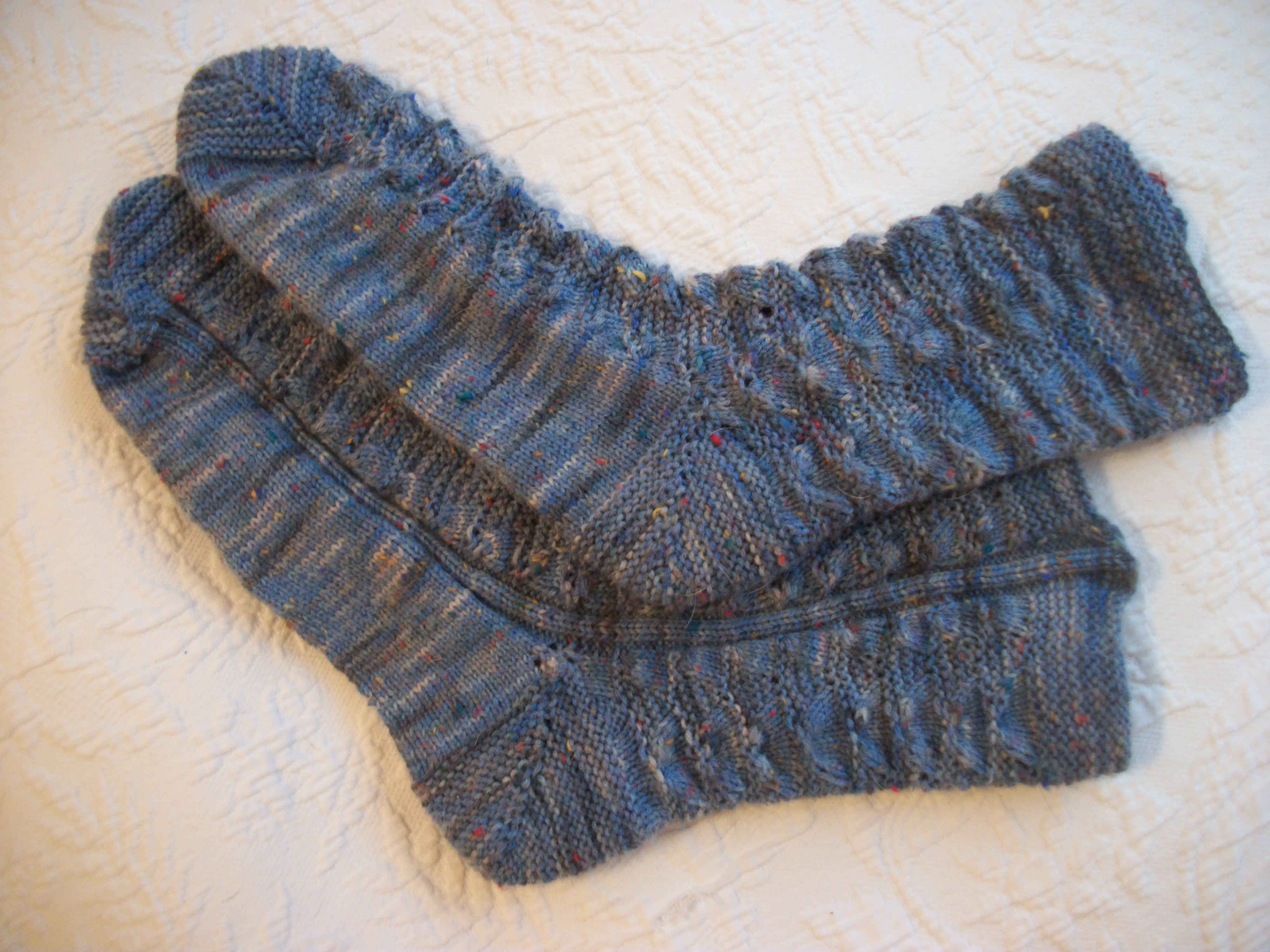
 And, here’s a pair I made for myself, using Cookie A’s pattern, “Lindsay.”  This one was a bit easier as it repeats consistently over 8 rows.  And, it had a short-row heel and toe, which was so fun to make.  My first time with a short-row.  The column that runs down the sock is only on the outside of each sock.  That’s the kind of detail about which Cookie A thinks.

Here’s what the pattern looks like when stretched out a bit:

These feel great on my feet.

Turkey Tracks: Valentine Roosts Outside

Turkey Tracks:  February 7, 2012

Valentine Roosts Outside

About two weeks ago, when I counted chicken heads in the coop prior to locking them up for the night, Valentine was missing.

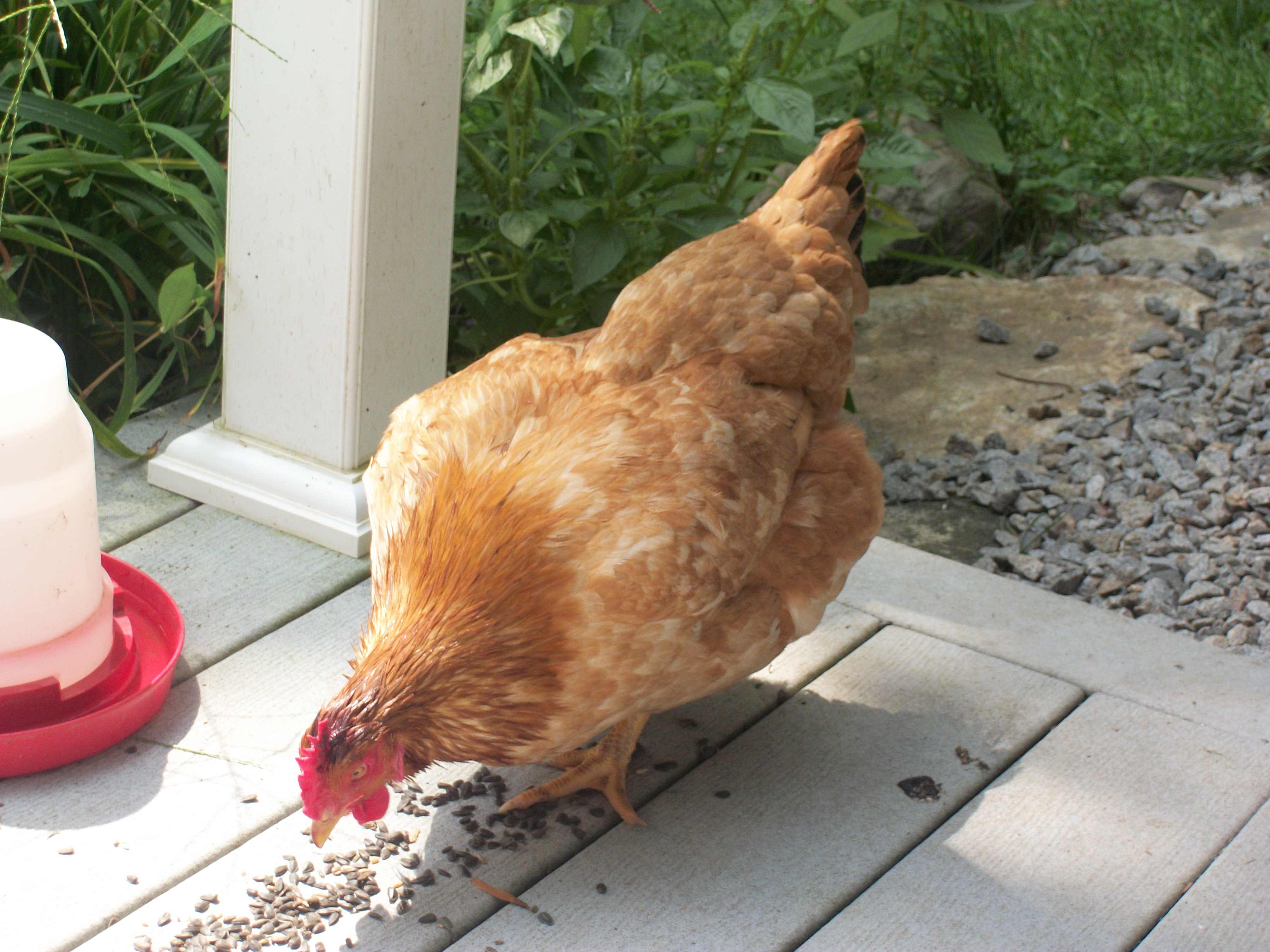
Valentine is a Freedom Ranger meat chicken.  But FRs also lay gorgeous, big eggs.  When Valentine first started laying, almost all her eggs were double-yoked.  Rose raised her last spring/summer, and I reached into the pen one day and pulled up the first hen I could lay hands on to bring home for our coop.  Valentine.

Here’s a picture of her late last summer.  Her head, back of her comb, is covered with antiseptic cream since she had some altercation or other with one of the other hens or the rooster.  She’s was so BIG at this stage that she scared the rooster–whom she tried to follow everywhere.  She’s too heavy to fly up on the coop  perch to roost with the other chickens:

Anyway, that night two weeks ago, she wandered up out of the dark just as I realized she was missing.  I picked her up and put her into the coop for the night.

Last night, she was nowhere to be found when I went out to lock up the hens.  It’s important to lock that coop down tight.  On several mornings now, I’ve had racoon tracks all over the fresh snow on the egg box cover.

I took a flashlight and looked all over the yard, in the garage (did she go in and we didn’t see her?), and down the driveway.  I looked everywhere every space I could possible think of into which a fat chicken who can’t fly might tuck herself.  No luck.  I was encouraged that I had not seen feathers anywhere.  When a chicken gets attacked, there are always a lot of feathers.  But, the flock has been spending a lot of time up on the warm hillside, where the snow has melted and the leaves show.  Feathers might not show up in the dark on the leaves…

I told John, and he immediately grabbed a flashlight and went out to look.

No luck either.

This morning as I was fixing all the animals some food, I saw Valentine stroll down the back path.  When I went out, food bowl in hand, she came running to me like a young chicken–wings out and clucking.  I put it on the ground for her.  She was starved.  And vocal.  After she had eaten a bit, she started telling me some long tale, and she followed me around, still talking, the whole time I was outside fluffing up the coop, changing out the water, and making sure the grain bowl had grains in it.

I can’t imagine where she slept.  I hope she does not do it again.  But, she is a…Freedom Ranger.

Turkey Tracks: “Grandma’s Hands”

Turkey Tracks:  February 6, 2012

Grandma’s Hands

I’ve been wanting to hear a song I used to remember called “Grandma’s Hands.”

I was pretty sure that the singer was Lacy J. Dalton.   But, that wasn’t right.

Sunday morning I decided to tackle the pile of garlic on my kitchen counter–see my earlier post on brining garlic so you don’t lose it.  And, I was thinking about how I could find “Grandmas’s Hands.”  Alongside musing that it’s kind of cool that one harvests garlic in the fall so one has it to ward off winter colds and so forth.

In the 1980s, we all made a lot of music tapes for our own use and for gifts.  Some of my favorite music is on those old, dried-out tapes now–many songs were taken from records that we left behind when we moved to Maine since records were outdated technology.  It suddenly occurred to me that I might find “Grandma’s Hands” on one of the old tapes, so I left the garlic and, sure enough, I still had the tapes.  They were crammed behind the CDs in the lower drawer of our music center.

I haven’t listened to much music lately since I have trouble hearing it.  But, my new hearing aids are wonderful, so I found the tape with “Grandma’s Hands”–and a whole lot of other songs I love–plopped it in.  It’s scratchy and old, but it played.  And I have renewed interest in getting an ipod and downloading these favorite songs to it.  I’ll get advice from my children now and get about doing this new project.  I can stream the ipod into my hearing aids and will have fabulous clarity of sound.

Turns out Barbara Streisand sang “Grandma’s Hands” on my tape.  And some google searches discovered that the song was written by Bill Withers.  Both artists have their versions on utube, so you can hear it if you like quite easily.

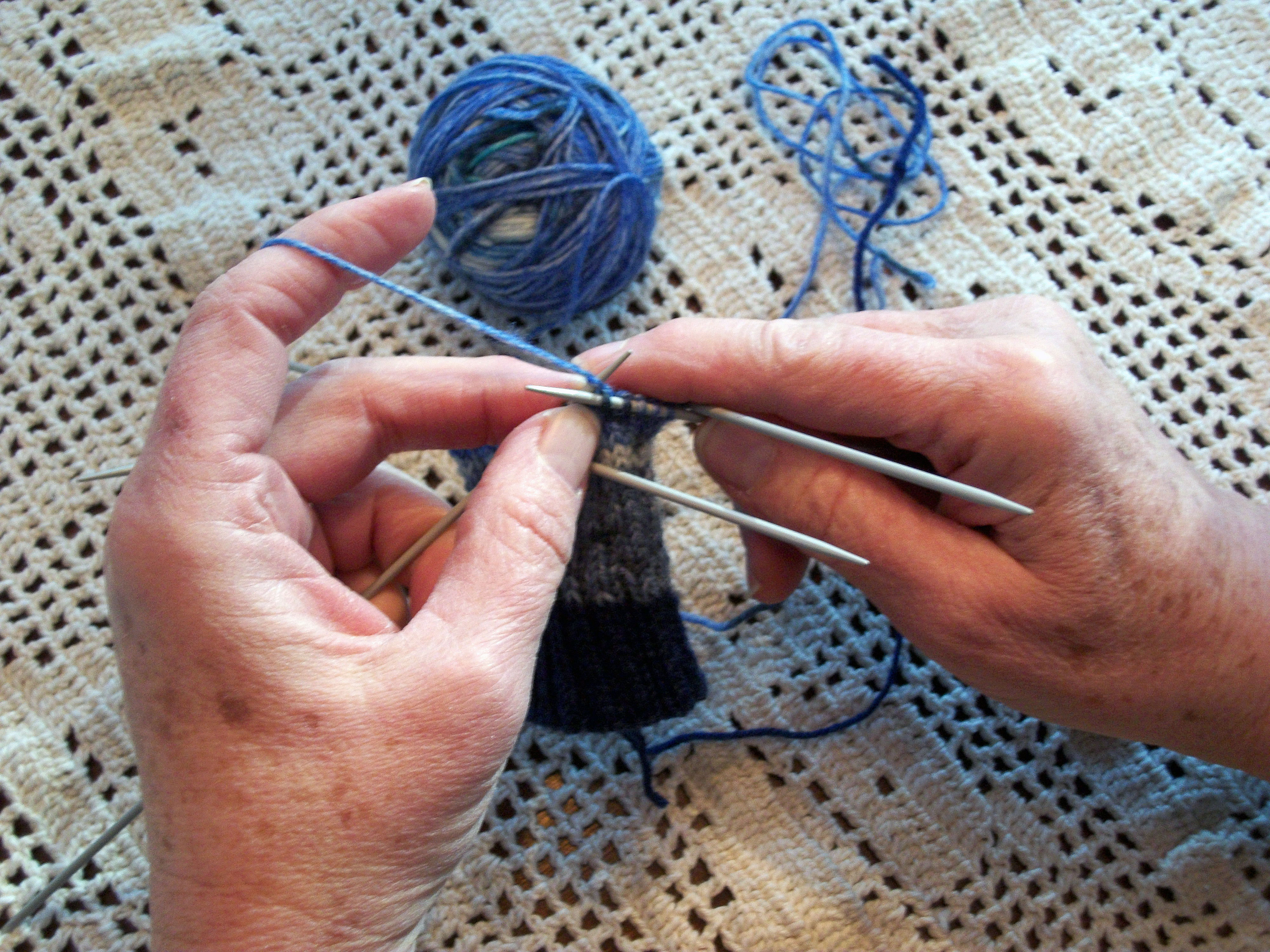
And, here’s a picture of this Grandma’s Hands–at rest:

And, at work:

I am never so happy as when I am using my hands to do something–write, plant, weed, sew, knit, cook, paint.  My hands are such a huge part of my life.

PS:  The garlic pile produced–all together–four quarts of brined garlic and some leftovers to keep fresh for another week or so.

Turkey Tracks: Chickens in the Window

Turkey Tracks:  February 6, 2012

Chickens in the Window

Chickens are very social.

We are indoors a lot these days, winter being winter.  I love this time of quilting, knitting, cooking hearty foods.  It’s so restorative.

We’d get out more, but we’ve had a lot of ice with all the fluctuating temps melting the little bit of snow we have and then freezing it back into treacherous, mirror-like sheets of ice.  Two dear friends have already fallen and hit the back of their heads and are suffering with concussions and wrenched muscles.

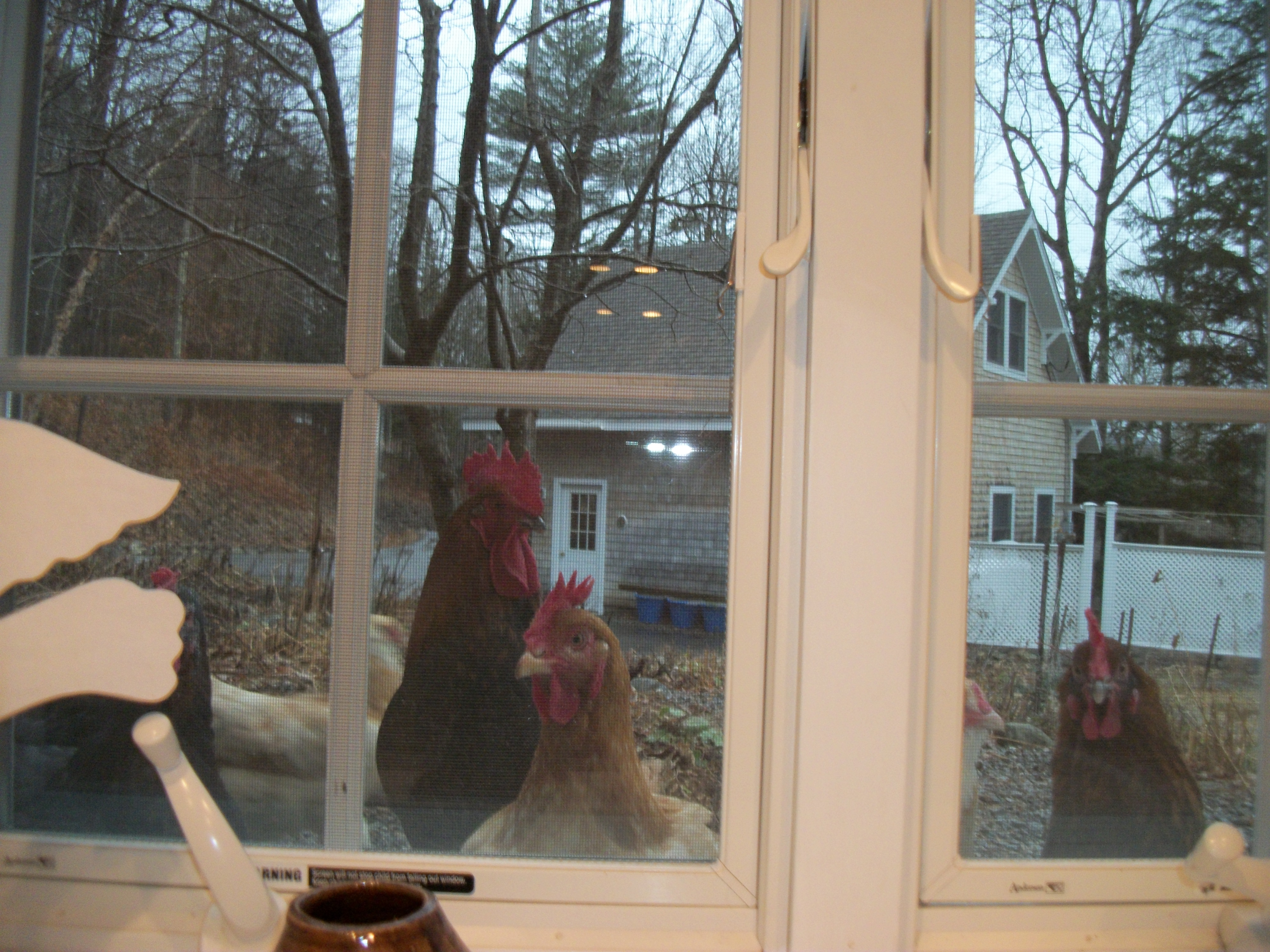
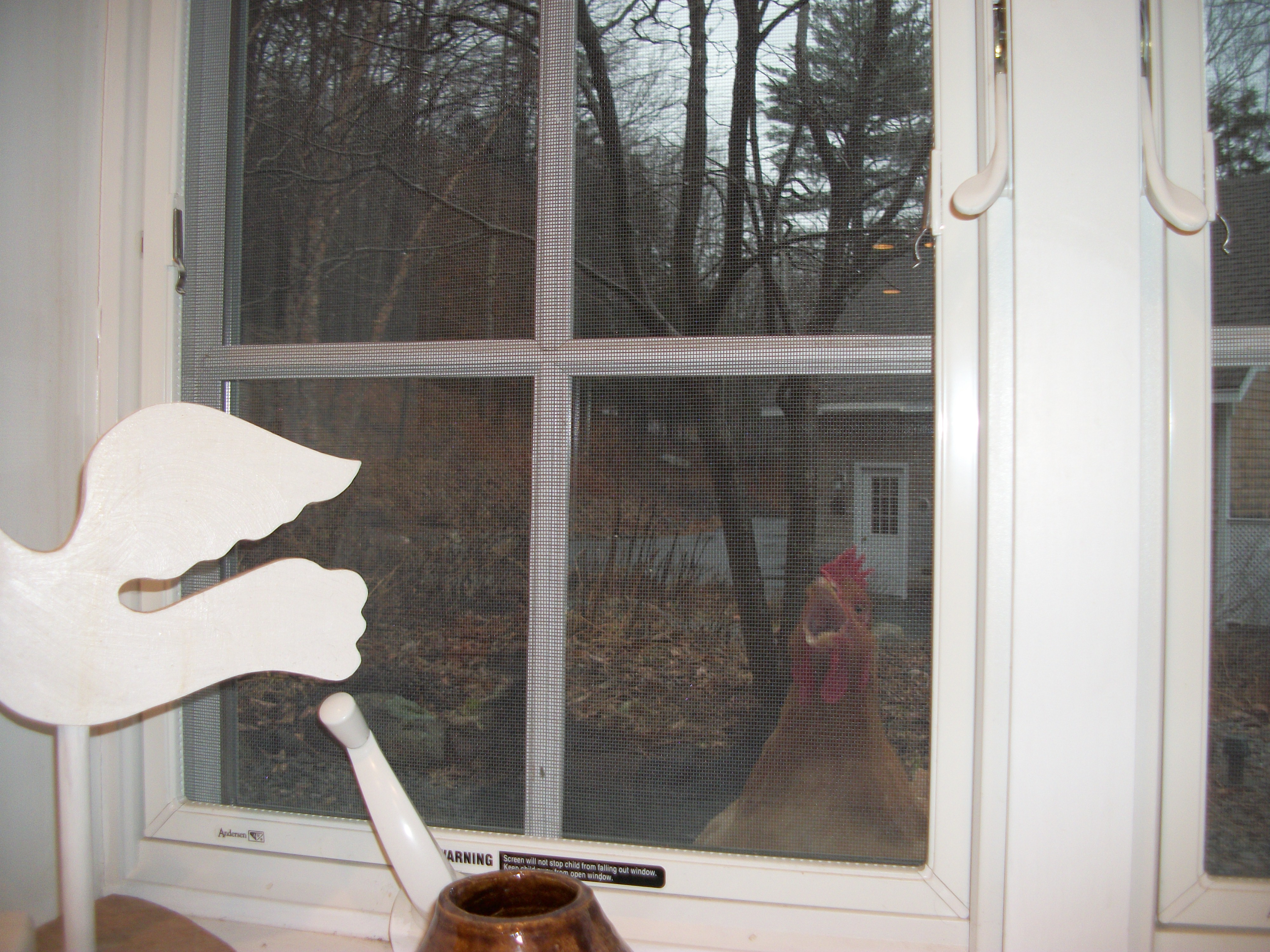
Anyway, I can be working away at something in the quilt room or the laundry room, and I’ll get this feeling of being watched.  Sure enough, some of the chickens–or all of them–will be gathered in a window and looking at me.

Here are some chickens in the window earlier in the winter–before we had snow:

That’s Pretty Pierre to the left, the roo; Valentine next to him, a Freedom Ranger, and Rosie, a Copper Black Maran hen with beautiful neck markings.

If you talk to them, they crane their heads and, often, talk back.

Here they are not long ago–at the front door.  John was so enchanted he took pictures and sent out a Facebook entry about “the girls coming to tea.”

Don’t let anyone tell you chickens are dumb.  They’re not.  They know exactly how to get you to come give them some sunflower seeds or millet.  They know they’re sitting ducks in the snow, so stay in their coop.  And they know what to eat and what isn’t so good for them.

I love my chickens!  Even when they poop on all the porches.

Books, Documentaries, Reviews: A HIDDEN WHOLENESS, Parker J. Palmer

Books, Documentaries, Reviews:  February 3, 2012

A HIDDEN WHOLENESS:  THE JOURNEY TOWARD AN UNDIVIDED LIFE:

Welcoming the Soul and Weaving Community in a Wounded World

by

Parker J. Palmer

Parker J. Palmer is a Quaker and is someone who suffered what was, apparently, really serious depression.  Gradually, he began to realize that his inner life was sharply divided from his outer, lived life–and that divide was making him sick.  Using practices from his Quaker heritage, he devised and recommends taking part in a guided (by a trained practitioner) “circles of trust” practice.  These circles are manned by trusted companions and can meet one time when someone needs to sort out a life problem or can form and meet  over a stated cycle, like four times a year.  The circles allow participants to be heard and to hear themselves, and from that practice, ways emerge to handle problems or worries.  Palmer would say that participants learn to speak their “truth.”  No one “fixes,” advises, etc.  Circle participants just listen.  Also, what occurs in the circle, stays in the circle, so only people with the integrity to keep this pact should take part.

Palmer is deeply interested in creating, nurturing, and maintaining viable communities, and he believes that to do that, we must be able to hear each other.  Here’s how Palmer describes what happens when we try to fix and advise (116-117):

  So what do we do in a circle of trust?  We…speak our own truth; we listen receptively to the truth of others; we ask each other honest, open questions instead of giving counsel; and we offer each other the healing and empowering gifts of silence and laughter.

This way of being together is so countercultural that it requires clear explanation, steady practice, and gentle but firm enforcement by a facilitator who can keep us from reverting to business as usual.  But once we have experienced it, we want to take this way of being into other relationships, from friendship and the family to the workplace and civic life.

If we are to embrace the spirit as well as the letter of the law that governs a circle of trust, we need to understand why the habit of fixing, saving advising, and setting each other straight has such a powerful grip on our lives.  There are times, of course, when that habit is benign, when what grips us is simple compassion.  You have a problem, you share it with me, and wanting to help, I offer you counsel in the hope that it will be useful.  So far, so good.

But the deeper your issue goes, the less likely it is that my advice will be of any real value.  I may know how to fix your car or help you write a paper, but I do not know how to salvage your failing career, repair your broken marriage, or save you from despair.  My answer to your depest difficulties merely reflects what I would do if I were you, which I am not.  And even if I were your psychospiritual clone,  my solution would be of little use to you unless it arose from within your soul and you claimed it as your own.

In the face of our deepest questions–the kind we are invited to explore in circles of trust–our habit of advising each other reveals its shadow side.  If the shadow could speak its logic, I think it would say something like this:  “If you take my advice, you will surely solve your problem.  If you take my advice but fail to solve your problem, you did not try hard enough.  If you fail to take my advice, I did the best I could.  So I am covered.  No matter how things come out, I no longer need to worry about you or your vexing problem.”

The shadow behind the “fixes” we offer for issues that we cannot fix is, ironically, the desire to hold each other at bay.  It is a strategy for abandoning each other while appearing to be concerned.  Perhaps this explains why one of the most common laments of our time is that “no one really sees me, hears me, or understands me.”  How can we understand another when instead of listening deeply, we rush to repair that person in order to escape further involvement?  The sense of isolation and invisibility that marks so many lives–not least the lives of young people, whom we constantly try to fix–is due in part to a mode of “helping” that allows us to dismiss each other.

When you speak to me about your deepest questions, you do not want to be fixed or saved:  you want to be seen and heard, to have your truth acknowledged and honored.  If your problem is soul-deep, your soul alone knows what you need to do about it, and my presumptuous advice will only drive your soul back into the woods.  So the best service I can render when you speak to me about such a struggle is to hold you faithfully in a space where you can listen to your inner teacher.

Palmer’s take on “fixing” is especially interesting to me as I come from a family of “fixers.”  And, have been a “fixer” myself.  Hmmmmm.  I don’t think “fixing” works too well.  I read this book before Christmas, and I’m still thinking about many of the things Palmer poses, especially the strong place he holds for developing community through nourishing the inner life, the soul, of each person–which works to heal the cultural divide we seem to have created between values that foster humanity and values that foster the market.