THE MOTH IN THE IRON LUNG

A history of what we call “Polio.”

I remember the summer when I was 9 or 10, when we lived on Barksdale Air Force Base in Shreveport, Louisiana. That summer, my mother packed us up and took us to her home in rural Georgia as she deemed we would be safer there as polio struck mostly children and mostly in the summer heat.

As an adult, I’ve always been curious about what caused “polio” to erupt in that time frame which included that summer in my life, especially after reading that polio, the virus, had never spread so widely before that time. And I know two people of my age who had polio as children and suffered horribly then and have had permanent problems with their legs and feet their whole lives.

When I saw someone I follow online recommend this book by Forest Maready, I thought, ok, I’ll take a look and ordered it. Reading it was like following the plot of a murder mystery, and I was fascinated.

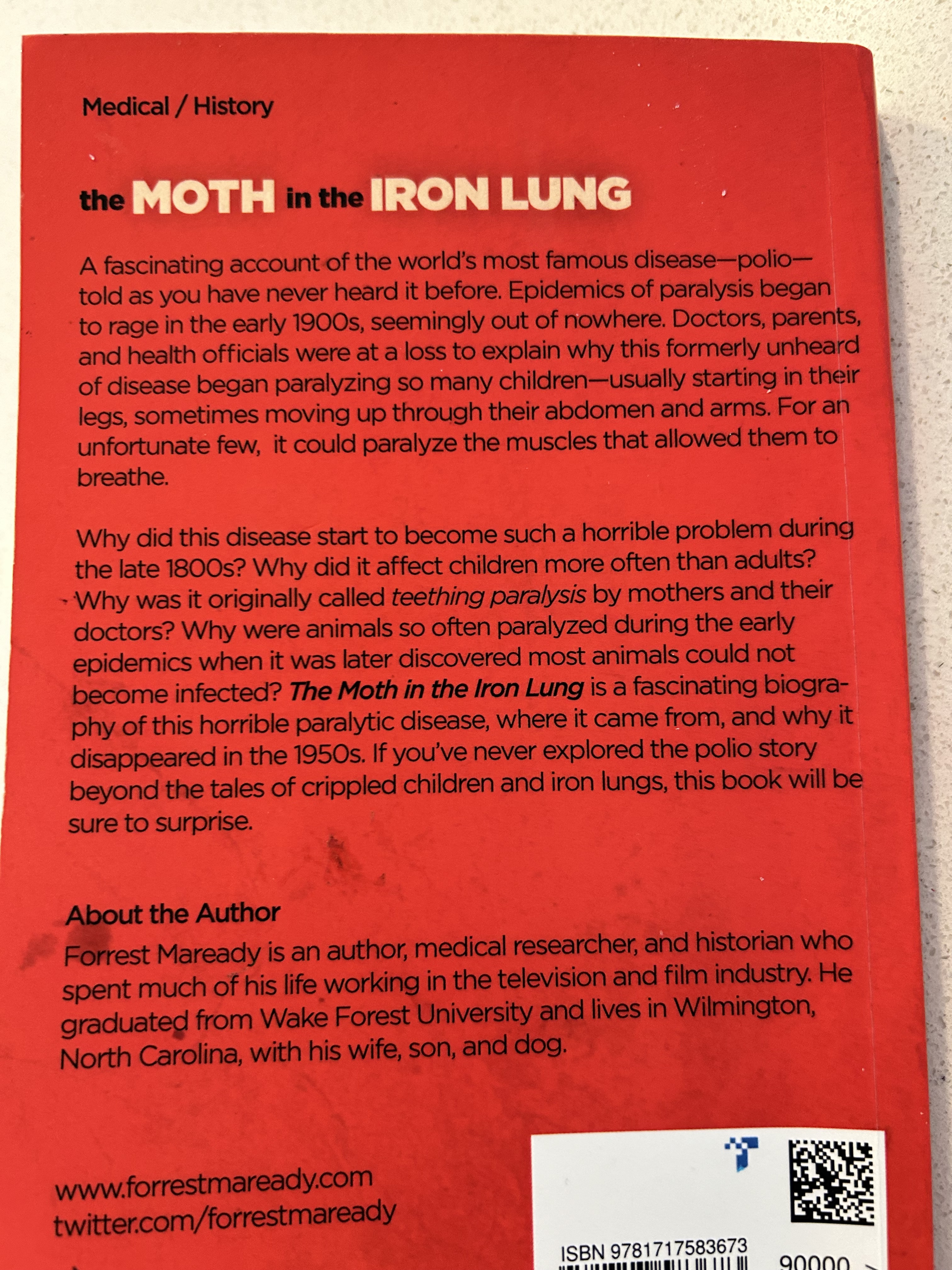
The back cover:
Maready starts with chronicling the first-recognized cases of “infantile paralysis” in the early 1800s in Europe and America. The paralysis always struck children about the time they were “teething” their first molar teeth. Horrifically, remedies involved deadly mixtures of mercury and arsenic. It is now known that mercury causes paralysis, so these remedies only made these children worse. But, why did only children get “polio” in the first place?

In 1856, Etienne Trouvelot arrived in Boston from France, bringing with him moth eggs as he raised silkworms and wanted to improve the line of silkworms he had. One type of the moth eggs he had were those of the Gypsy moth–which he dropped by accident in the yard of his American home. They hatched, and the saga of the utter destruction the gypsy moth created over time on the East Coast is now well known. By the spring of 1889 in Boston the Gypsy moths were devouring plants, starting with oak trees, and moving to food crops and fruit trees and anything they could eat. The moths were everywhere–on plants, on houses, even underfoot on the streets. Each spring, the moths spread outward in their search for food.

“Polio” means “grey.” And “myelitis” means lesions on the spinal cord. We know now that neurons inside the spinal cord come in two categories: grey matter in the center of the cord and white matter on the outside.”Poliomyelitis” means lesions in the grey matter of the spinal cord–which could only be seen in these early medical times during an autopsy. Further, lesions in the front half of the grey matter of the spinal cord cause muscle paralysis in the lower extremities, but if also in the back half, cause a loss of sensitivity/feeling. If the problem remained in the lower spine, paralysis was the problem. If the inflammation traveled up the spine, breathing problems start–and that produced the need for the iron lung that comes along eventually.

Meanwhile, people tried an arsenic poison called Paris Green to kill the Gypsy moths and other destructive insects, like the potato beetle which was impacting food production by 1874. Paris Green was sprayed directly on insects–and on food plants. Arsenic can and does cause lesions on the spinal cord. But Paris Green didn’t work well, so a mixture of lead arsenate was used on all plants, including garden vegetable plants. Later, investigators found residue from these poisons on foods, and industry hired “scientists” to do “studies” that said these poisons were not harmful.

Polio cases increased, and the term “epidemic” started being used. The first “polio epidemic” was in Rutland, Vermont, in 1894. But not all those who got this “polio” or who died from it, had the typical “polio” paralysis or other typical polio symptoms.

We now also know that many other things can cause a poliomyelitis paralysis condition. The polio virus is an enterovirus; it thrives in the gut. The coxsackievirus, echovirus, other enteroviruses (intestinal), and bacterial (like streptococcus) infections can causes poliomyelitis and its ensuing paralysis. But an infection has to get inside the nervous system to do its damage. And the question remains, how does that happen? Maready discusses some possible ways.

So why did children of teething age become sick first? One answer is that when little, their gut is next to their lower spine. As they grow, that proximity changes. But no one knows for sure.

As history advances, man invents better and better ways to spray poisons on insects and plants. After World War II, even planes are used to spray crops. And poisons, like DDT, come into the market. But this environmental situation and growing knowledge of other causes for “poliomyelitis” is ignored by “modern” medicine, which tries to find a vaccine that can prevent the polio virus itself. Meanwhile, poliomyelitis infections make the jump from rural areas to urban areas alongside the spraying campaigns and the better supply lines for fresh foods into urban areas.

My opinion: this whole story is a fascinating history. The end result is that there really is not much of a consensus on what actually happened back in the day. But true polio today from the actual virus is rare–unless it is caused by a live “polio virus” vaccine used outside of the US, which banned those vaccines for use here as they do shed and cause polio.

Plus, the famous iconic photo of dozens of iron lungs in a hospital environment was staged. There were never more than 1,157 iron lungs in operation in the United States in the 1950s. And an irony for me, also, is that when my mother took us to rural Georgia that summer, she may well have put us into more danger. I remember watching small “dustcropper” planes spray poisons over crops. But, we lived in town, and the family farm was outside the town.

Still, this journey we are on to manage crops and insects with poisons that are dangerous to mammal lives, continues unabated today. We are all living with a roulette wheel in terms of health outcomes. And “medicine” and public health are still ignoring environmental poisons while looking for vaccines for individual diseases.
My First “Sit and Sew” in South Carolina

I spent Saturday morning with some of the Charleston Modern Quilt Guild members at their monthly Sit and Sew at the very fun fabric store Five-Eighth Seams (quilt fabrics and much more) over in North Charleston.

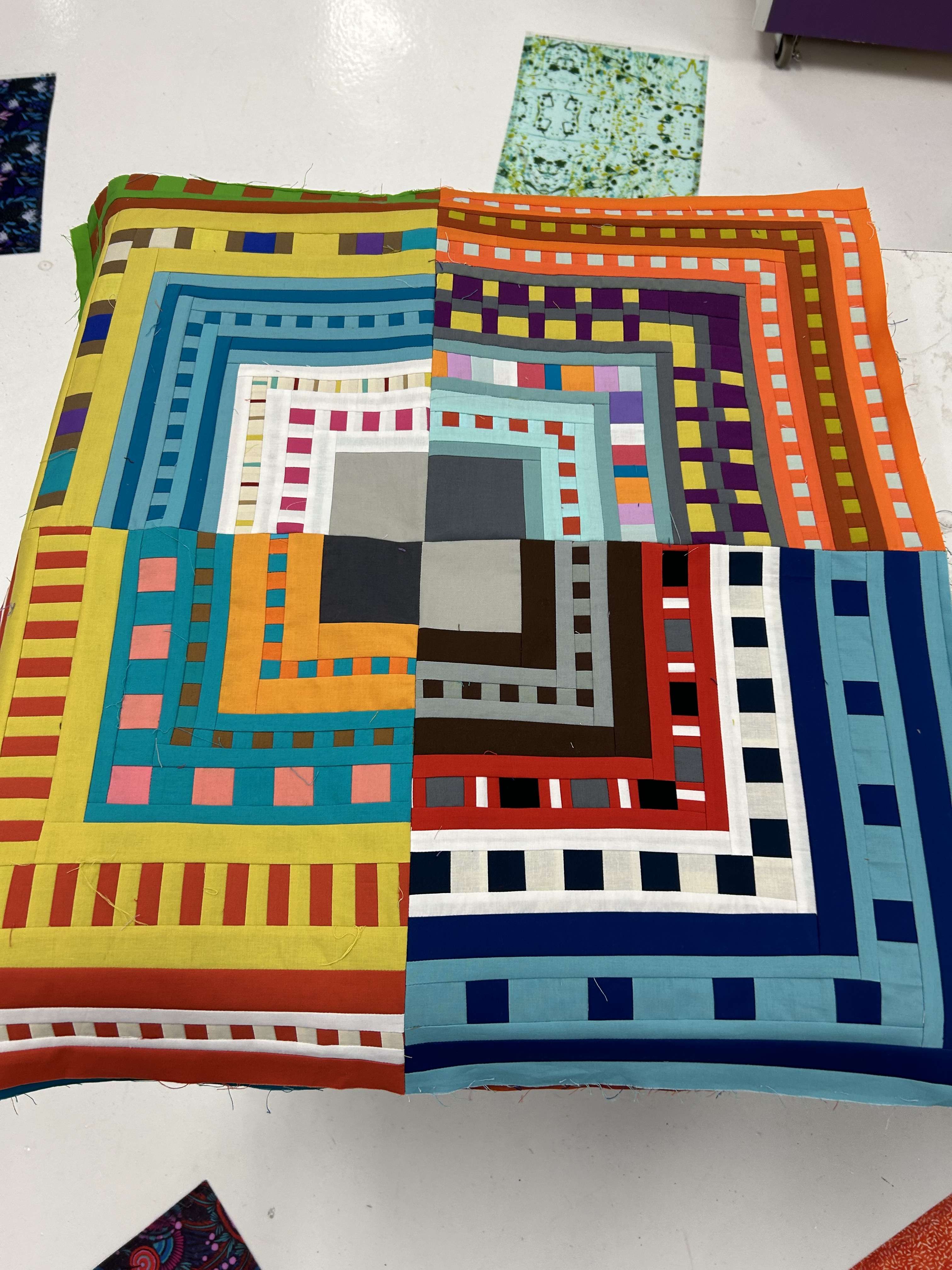
Cathy Beemer started teaching us how to make an incredible scrappy block that she is also making. Cathy is a MASTER piecer and quilter. This block is 30 inches square, and she will be making a quilt that is 90 by 90 with her scrappy blocks. Each block quarter piece will be scrappy and different.

Here’s an alternative center she showed us.

And a purple “lollipop” pattern.

More strip pattern ideas here–I could have taken more and more pics as Cathy showed us how to start off.

Cathy loves quilter Maria Shell’s work, of course. But she very much does her “own thing” too.

This quilt hung at Houston–I think she told me. And she has at least one quilt in this year’s QuiltCon, going on right now in Raleigh, NC.

I came home to the rest of my seafood chowder–cooked in the oven and made the day before.

And I keep meaning to show this picture of roasted veggies, just because they are so pretty. And, were delicious.

I’ve already color sorted my solid fabric strips and have cut out pieces for my first center. I’m going for the pinwheel!

But first, first…the last 1920-30’s reproduction quilt in the series of 3. It’s coming along.

“Triangles” Blocks

I’ve been having so much fun playing with the 5th of 6 block studies in my online class with Tara Faughnan.

This month Tara taught us a foundation piecing method where one does not sew INTO one’s paper pattern. I learned this method from Tara some years back, but then she used freezer paper. However, today’s freezer paper does not hold its “stickiness” for repeated use past 5 or 6 uses–so Tara figured out how to print a pattern onto regular printer paper and to get the needed “stick” with some glue.

I could not make my Sewline pen’s glue stick strongly enough–so I’m using the washable Elmer’s glue that is purple, but dries clear. I use the SMALL stick, not one of the larger ones. And it does not take much glue at all to get the result I need. Too much glue makes the paper stick to the fabric so that it’s hard to get the paper separated from the fabric–which results in the destruction of your paper patter.

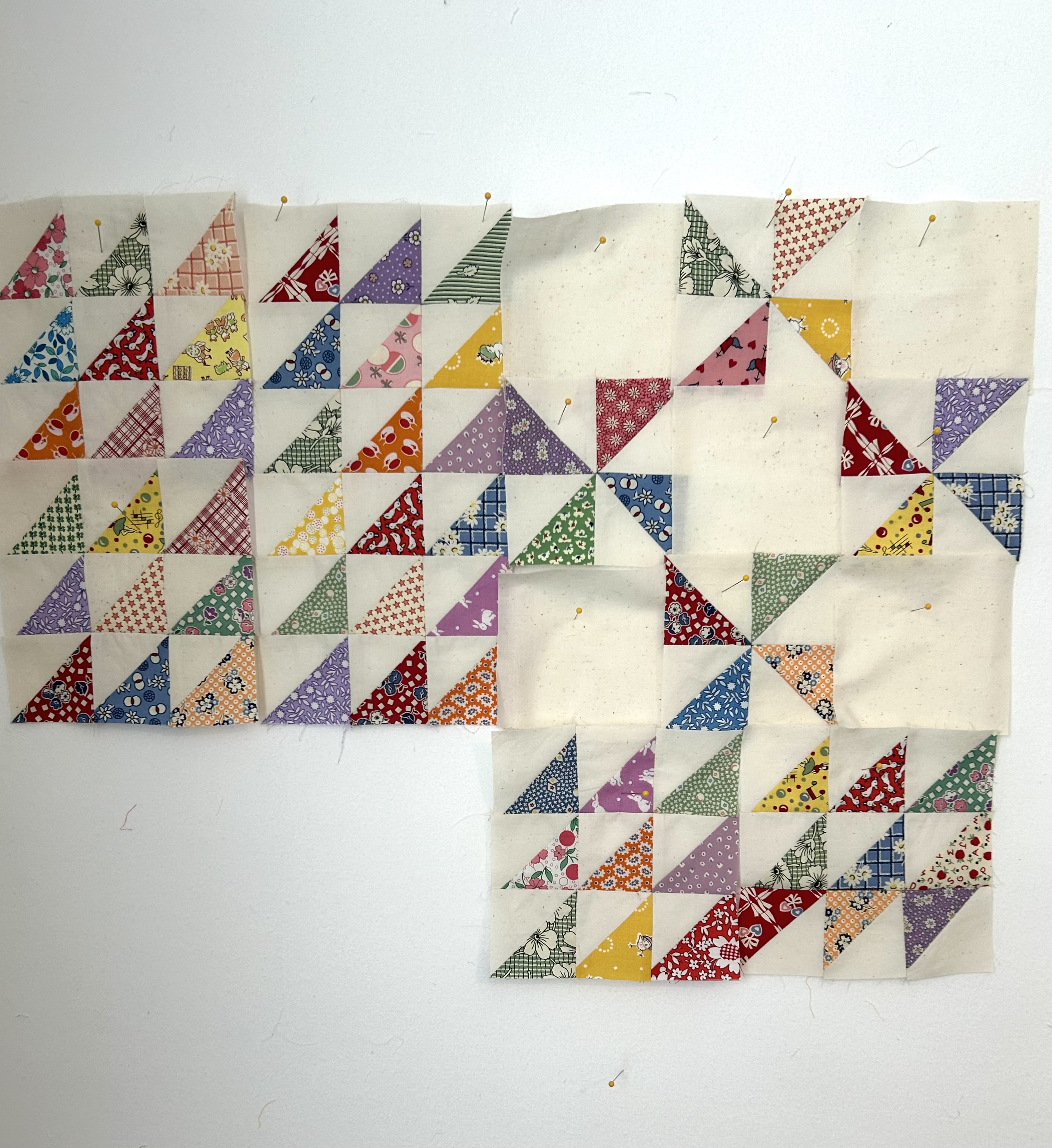
Anyway, here’s my design wall now–after I spent days playing with three different sizes of triangles. I made big ones, medium ones, and smaller fat ones. And I put some around two sides of the “Lines” 9-patch block, which was fun.

The blocks won’t stay this way on the design wall of course. And the final, 6th block coming March 1 will alter things again. But I’m seeing that I do have three big pieces that can anchor a possible improv quilt.

Time will tell.

Making a Quilt Series

I’ve been busy…sewing.

The Tara Faughnan online block class released the 5th of 6 blocks February 1st, and I’ve been having such fun playing with this “triangles” method Tara teaches. But more on that in a few days when I make myself…stop.

When I visited the Charleston Modern Quilt Guild a few weeks ago, I was entranced by a guild challenge that many had finished and showed that night. They each made a series of quilts: fabric and units from the primary quilt then were used to make the second quilt, followed by the first and second quilts being used to make something creative for the third quilt.

Ah, I had finished this as yet unnamed and unquilted quilt top using reproduction 1920-1930 fabrics I had in my stash (for 20 years). And I still had a lot of fabric left.

So, this smaller top happened. It’s a good baby size, 48 by 48. I’m calling it “Bubbles.”

What to do for the third quilt in my series?

This, I think.

I’ll likely keep it to a baby quilt size, but you never can tell. There is still a fair amount of fabric left.

I can’t wait to show you my design wall whenI finish up with the “triangle” project in a few days. Then I will return to the above quilt project until I can “call it a day” for using up these fabrics.

South Carolina Bird Beauties

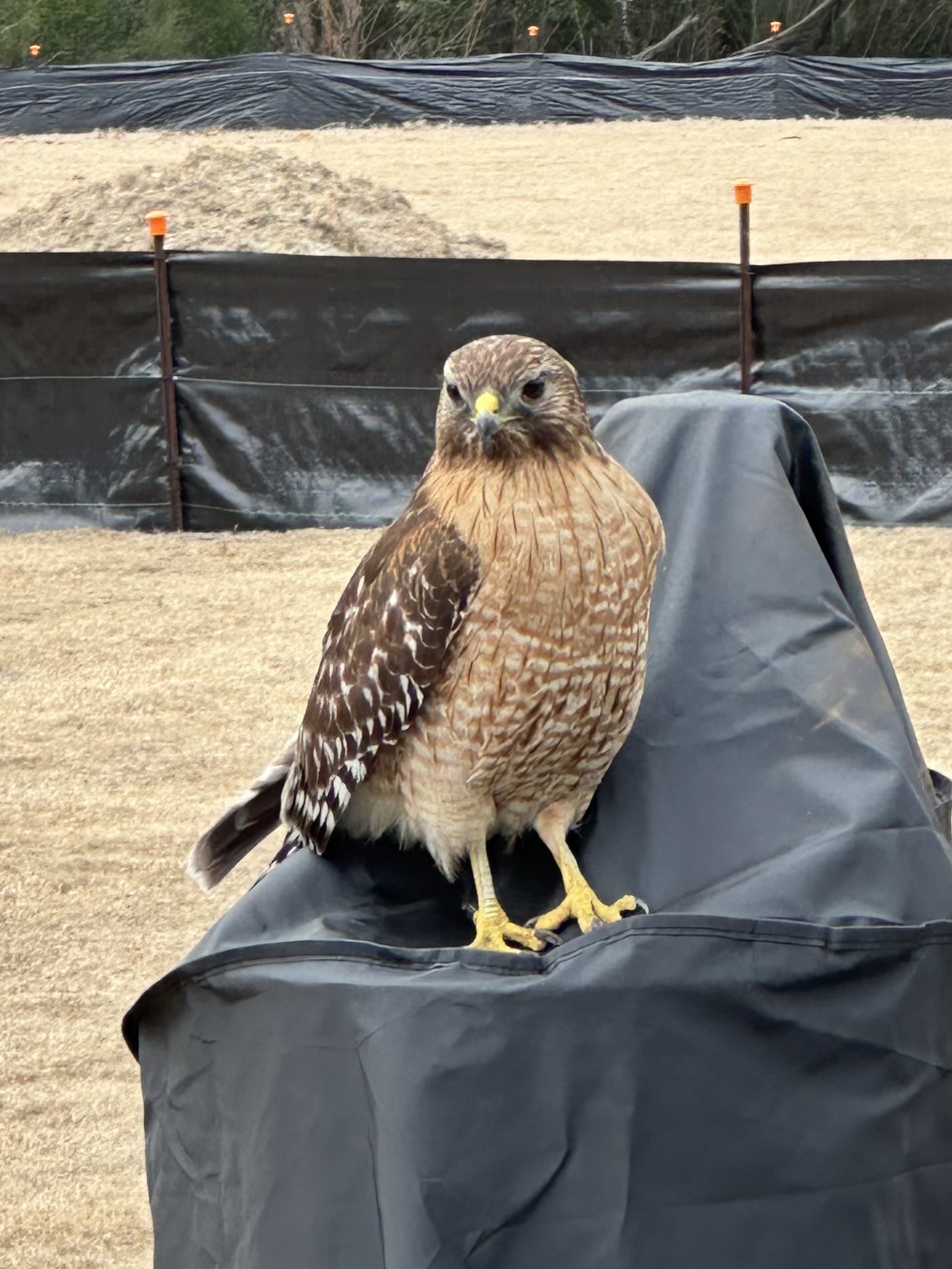
DIL Corinne took a picture of this beautiful hawk recently. There was a pair, but one flew off before she could get a picture. I think it might be a red-shouldered hawk, but I could be wrong. Corinne thinks it is a broad-winged hawk. There is a link below if you want to explore further. Two hawks seen together could also be a parent and an offspring? Who knows?

When I walk, I pass two water retention ponds, and they team with birds. I have often seen a pair of hawks here too, and on my last walk, one circled above me and cried as it…hunted? The call is distinctive–a shrill kind of “whee.” 

https://www.allaboutbirds.org/guide/Red-shouldered_Hawk/id

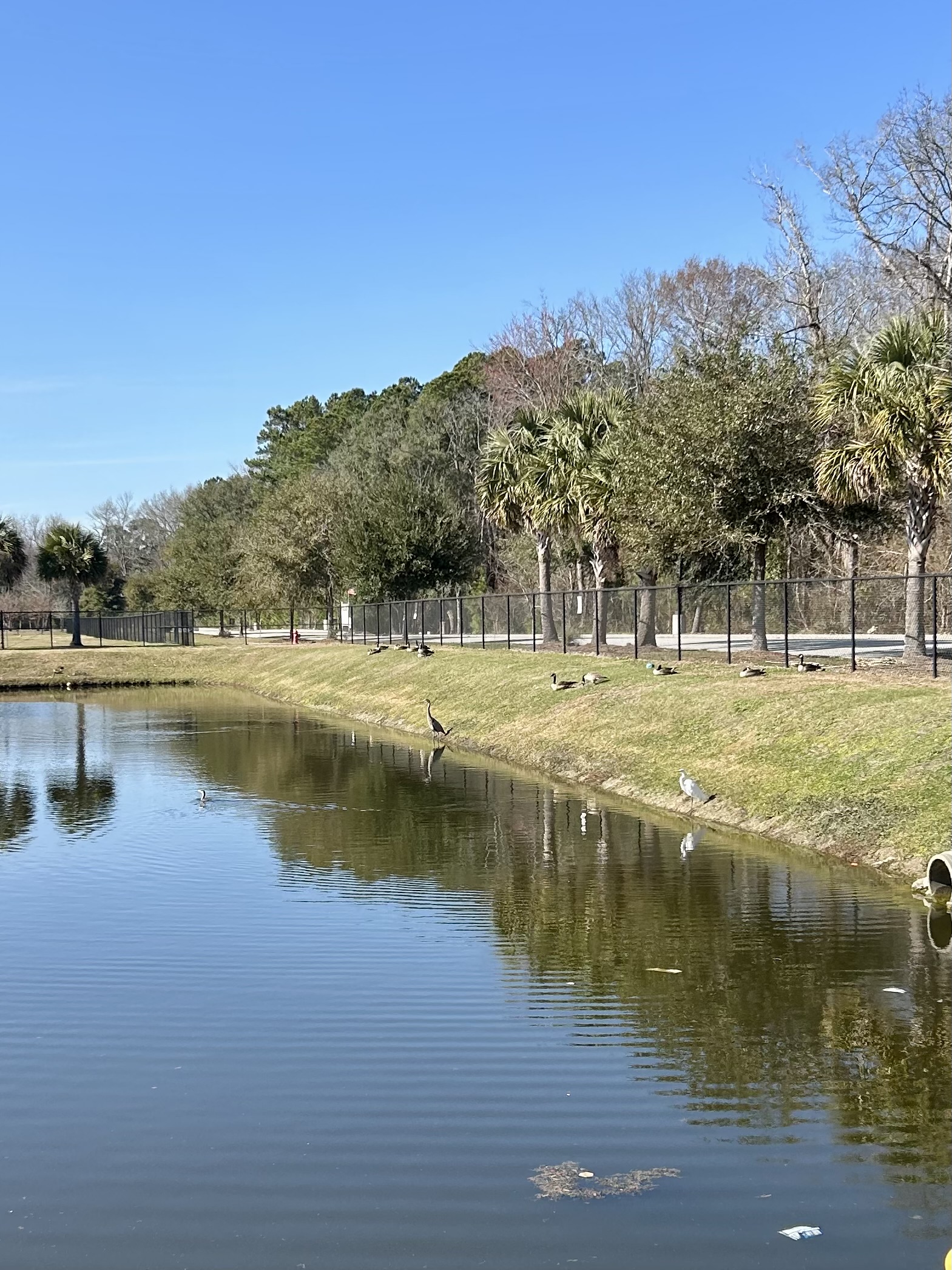
This pond is on school property, is fenced, and is full of Canadian geese. But along the side you can see a big heron ( a Great Blue?) and a Snowy Egret. In the water, a cormorant swims. Often, outside the fence, a flock of White Ibis, with their distinctive long curved beaks, gather to fleece the grass for bugs.

The woods to the right are both firm and wet lands–and are the buffer between these two schools and my neighborhood. A buffer for now anyway–this land could get developed.

I’ve begun to wonder if, when the geese mate and raise babies, how they will “walk their broods to water,” given the fence.

How Cute!

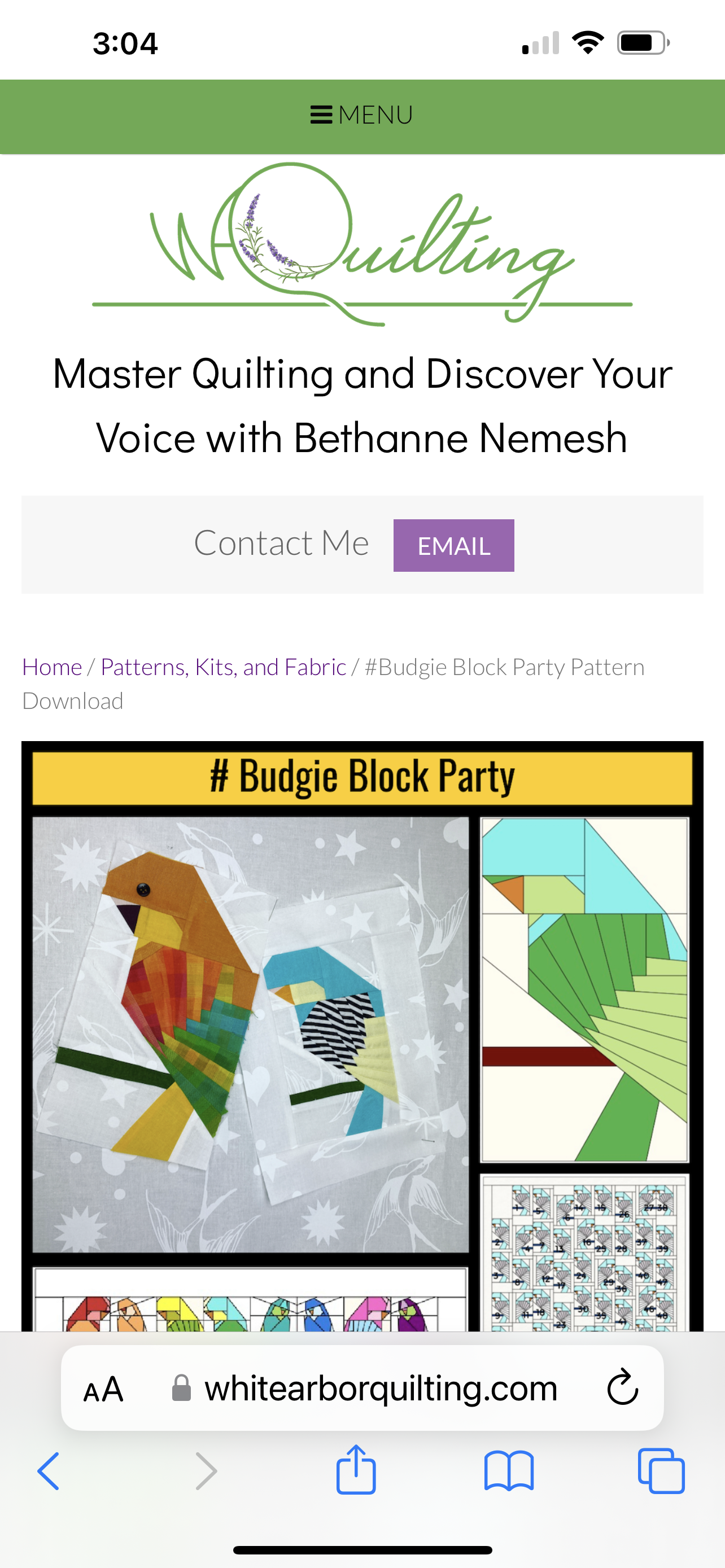
Budgies, as created by a pattern by Bethanne Nemesh and shared on one of the Aurifil thread posts–see link below. These posts are always inspiring and fun to see. I like seeing them each week.

And you all know I love that “Love” fabric and use it a lot–Carrie Bloomston, “Newsprint.” These budgies are made by @ladydisews, or Diana Z on Instagram.

Screenshot

m

I am admiring from a distance as I already have enough projects going and planned.

Bits and Pieces, January 31st, 2024

Good morning all!

Tomorrow Block 5 in Tara Faughnan’s “Block” class will arrive. It’s “triangles.” How fun is that?

I’ve walked 5 miles in the past three days–2, 1, and, yesterday, 2. What will today bring? It’s rainy, so whatever will happen will happen when things dry out a bit. But it is cool and that makes for wonderful walking. I play music and sing along some of the time.

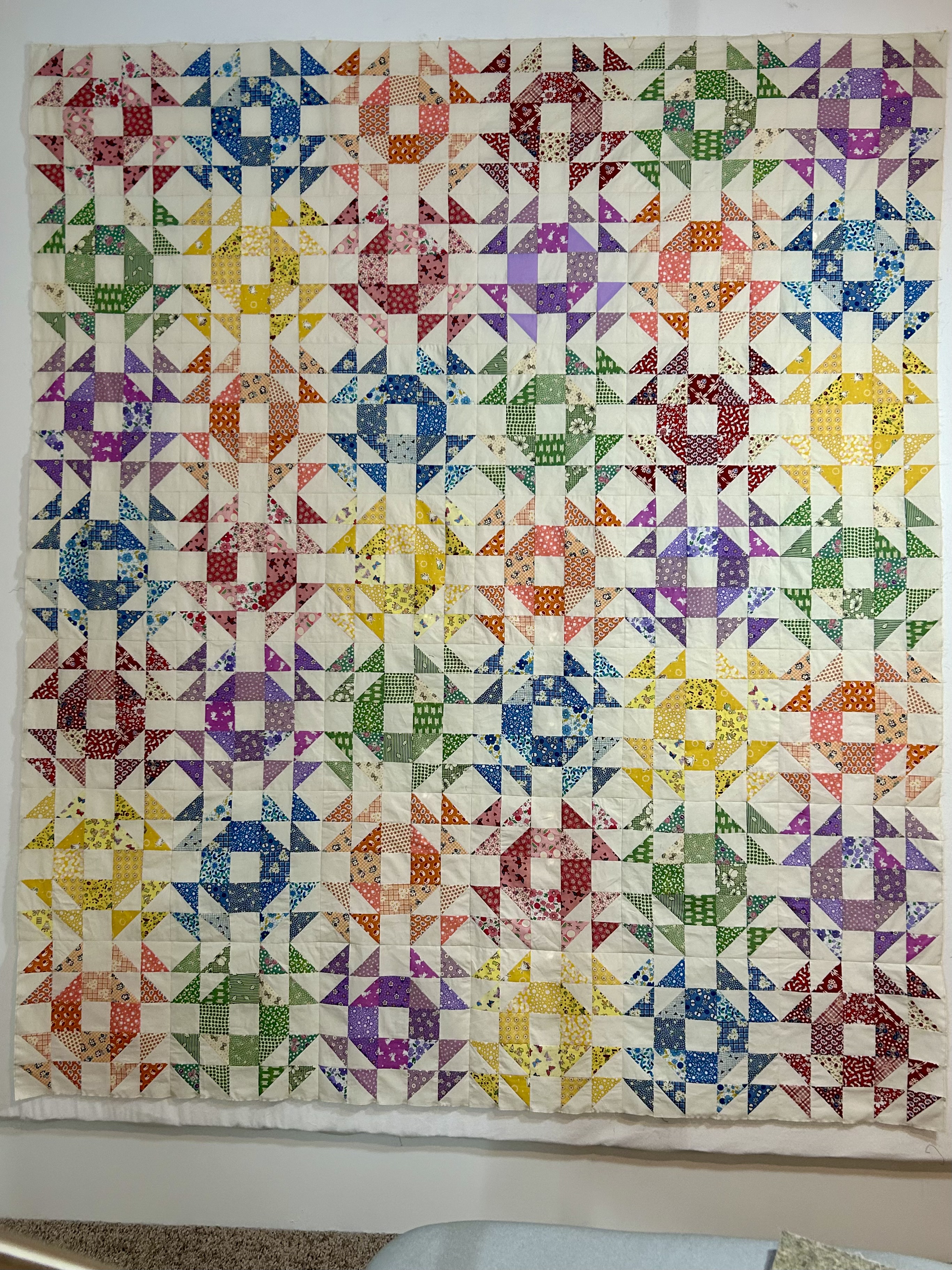
I finished this top yesterday, and I love the secondary patterns. There is a feeling of, I don’t know, lace, in this top. I’ll back and bind with the neutral–so next I have to put together the backing and put her on the longarm to be basted so she stays straight while being quilted–and so I don’t have to worry about the needle apparatus catching wrong in a loose edge. I have no idea what pantograph to use on this quilt.

I would not choose to buy these 1920-30 reproduction fabrics today–but as you know, I’m on a mission to use up fabrics in my stash. And I do think these fabrics have worked well in this quilt.

I have a fair amount of fabric left over in all the colors I have–so, I’m playing with blocks on the design wall. When I attended my first Charleston Modern Quilt Guild meeting last week, five or six members showed their 3 quilts each in a challenge to “riff” on fabrics and layout choices in a series. Is that what is playing in my head? Maybe… Those series of 3 quilts were really fun and inspiring.

BTW, the talent in this modern group is fabulous. One member has two quilts accepted into the big modern QuiltCon meeting in late February, held this year in Raleigh, NC. And, she had quilts in last year’s show as well. This member is a MASTER quilter–and it was so, so fun to see her work. Plus, she is so generous with her time with fellow members–and has a suggested project for our next Sit and Sew for an upcoming Saturday morning. I can’t wait.

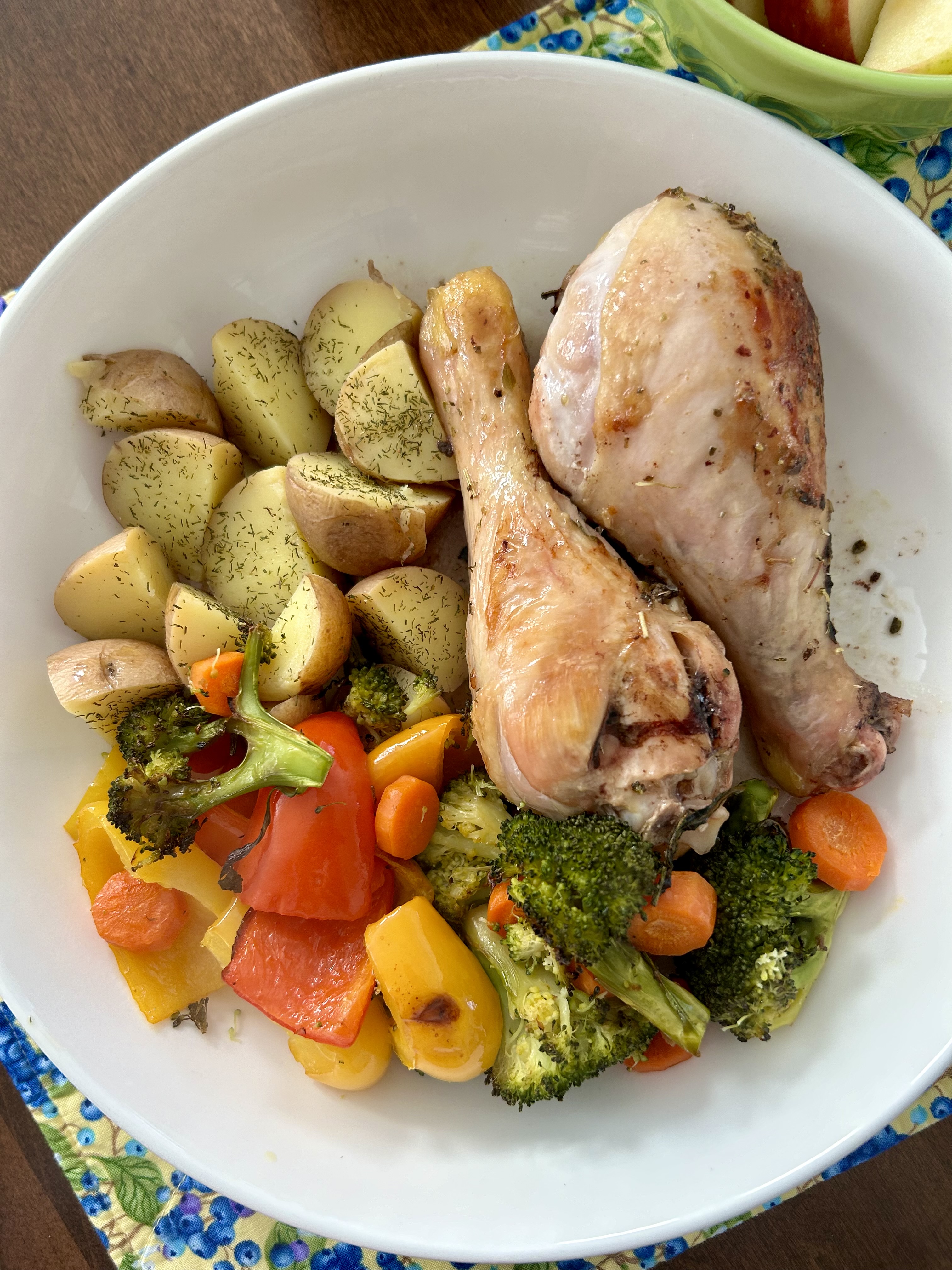
I never get tired of seeing bright vegetable colors combined in a pan and ready to be roasted.

Here’s my main meal yesterday–which I didn’t get to until about 2 pm.

The potatoes with dill, salt, and drizzled with the nuevo olive oil from Organic Roots were leftovers and are now gone. So today I have to cook something starchy to go with the roasted veggies and chicken. Maybe French Fries in the Air Fryer. Now, there’s a treat! But maybe only if I walk 2 miles.

And, later, I’ll play more upstairs with those developing blocks. And still later, I’ll finish season 5 of Fargo and hand quilt on “Happy.” I’m assuming most of you know Fargo is funny, funky, and can be violent. It’s the Coen brothers and Noah Hawley, so be warned.

Cecilia Koppmann

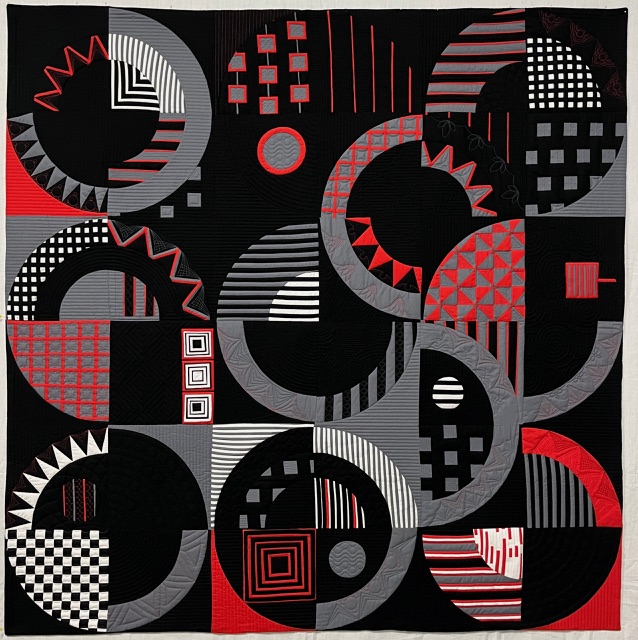
Here’s a quilt from Cecilia Koppmann, a quilter from Argentina. Her work was featured in Simply Moderne magazine, one of two quilty magazines I get each year. (See citation info below the picture.)

I’m especially interested in this quilt, which is 60+ inches big, as I think she may have used the inset method I just learned from Tara Faughnan in the online “block” class I’m taking. That method is Dale Fleming’s “6-minute circle.”

“Eclipse”

Simply Moderne magazine, Issue Number 35, pages 40-47

I think it’s ok maybe to use this pic from the magazine since this quilt image is available to see on both Pinterest and Koppmann’s web site.

Pinterest: https://www.pinterest.com/pin/166773992423906364/

http://patchworkycia.blogspot.com/2014/05/

What I like about Simply Moderne is that it covers the quilting of people from all over the world. There are, also, projects included, and I’ve made quite a few of the over the years. This magazine’s issues are quarterly–so 4 a year.

My other favorite magazine is American Patchwork and Quilting.

Giovanna’s Shawl Patterns and Yarns

For those of you who have contacted me seeking information about Giovanna’s Shawl patterns and yarns, here you go:

Pattern: WRAP IT REAL GOOD by Ambah O’Brien
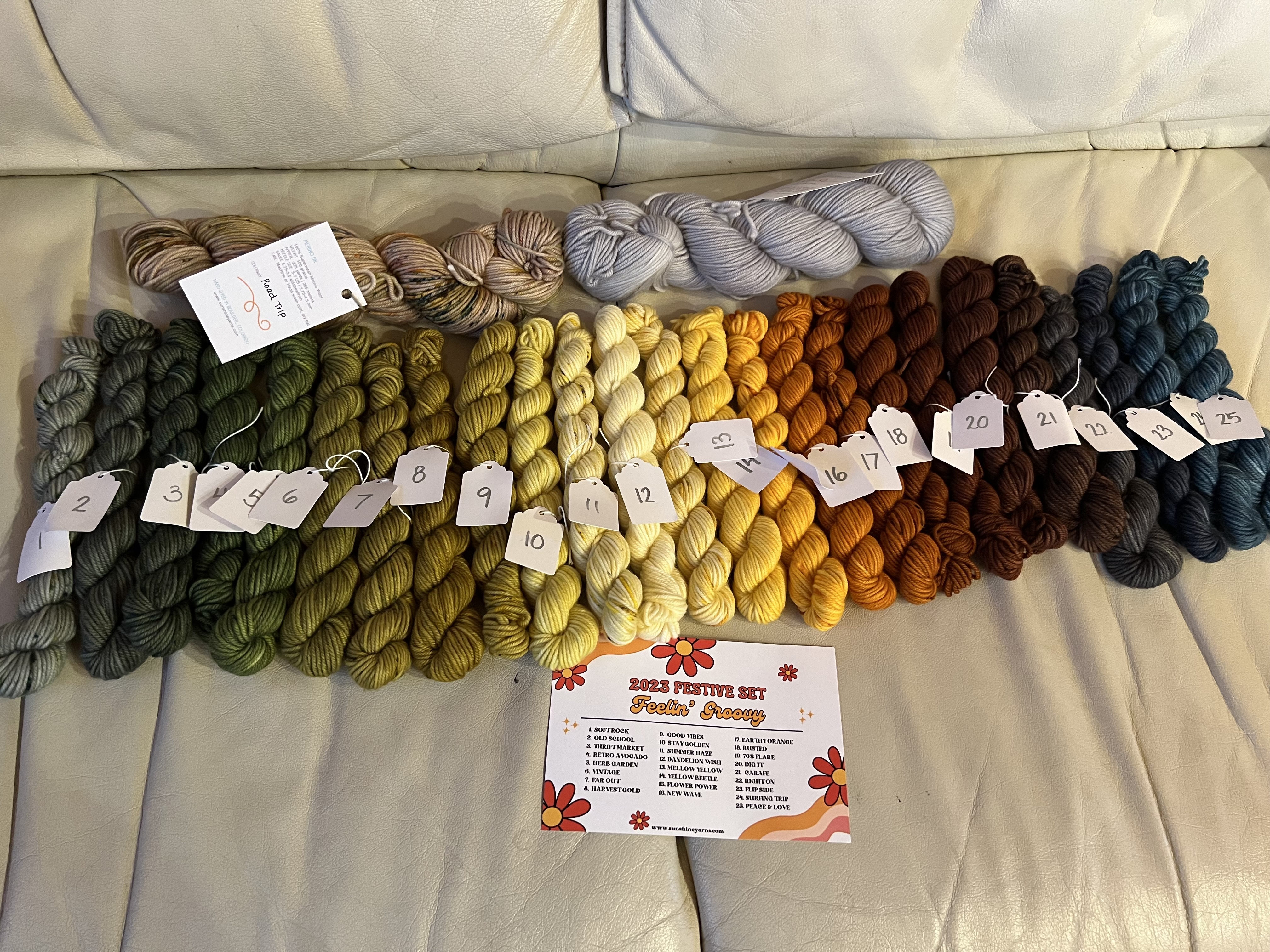
Yarn : Sunshine yarns FEELING GROOVY advent set

Pattern: Sherbert Fizz by Ambah O’Brien. This one I made two and joined them together.
Yarn: SUNSHINE YARNS, Fade into you advent set

Giovanna added the following:

“Just in case people ask. Advent sets a.k.a Festive sets come in twenty-four or twenty-five mini skeins and could be fingering or DK weight. Every year designers come up with new patterns that many people will knit during the first 24 days of December.”

And:

Enjoy!