The Mystery Plant And A Garden Update

I finally figured out what this plant is. I found a place to park the car near the nearby traffic rotary where it lives, walked over, and got some good pics. I was surprised to see that the plant also comes in white and a pale pink.

It’s a Dwarf Ruellia, or Mexican Petunia, which is not a petunia. The parent plant grows 3 feet tall and is very invasive. But the dwarf will spread, but is more easily controlled. And it is so darn cute. It is a perennial.

This dwarf plant will do sun or shade, and it can manage some cold winters. They will die back in cold weather, like a lot of perennials, and emerge in the spring.

I ordered 20 plants in the violet color, and they are now on the way here. I’m going to put them in the front bed, where they will make a nice border line and will be backed by the taller azaleas (white) that bloom in the early spring. I have the sand, compost, and fertilizer all ready for them.

Look at this fancy Cone Flower! I’ve never seen anything like it and couldn’t resist bringing it home when I started planting this bed. It’s thriving, and I hope it will come back next year. Sometimes fancy cone flowers are more fragile in terms of winter.

The Limelight hydrangea is covered with blooms. This plant will get much bigger and will fill the space around it. The blooms will turn rust red in the fall. And the viburnum to the left has flower heads and has doubled in size with new growth.

Lantana thrives here–and I found one I really like. There are perennial and annual forms of Lantana. This one is perennial. I cut it back regularly as it can get very rangy–and I do like to bring the cut pieces inside. The flowers last quite a while in a vase.

The Russian sage is happy. Time will tell about the daisy and the clay soil. But it has had two bloom flushes this year. I just deadheaded it again yesterday.

The vitex is also happy. This one can get big too, so I’ll trim it carefully to encourage sideways growth. I don’t want it to be a tree, but will let it be a tall shrub.

The dwarf Butterfly Bush is happy. I didn’t realize it was a dwarf when I bought it. If it doesn’t survive the winter, I’ll replace it with a standard size. The blooms are so pretty, but these blooms don’t last long in the house anyway. So I suppose it does not matter about the dwarf size that has no long stems involved.

I have three of the azalea/rhododendron hybrids that will bloom all summer and into the fall: this white one and two red/orange ones (different colors) scattered among other plants in this long bed. And they are all starting to bloom now. My back door neighbor has a long row of these plants down the size of her house, and they are starting to bloom too. Hers are a kind of deep rosy pink. What a find!

Here’s a long view of part of this bed–which is filled with blooming plants to encourage and support pollinators in this new neighborhood. And, yes, the roses continue to thrive and bring joy. I cut back the spikes they were sending up, and now they are branching out to the sides and are about to bloom in earnest again.

The grass is also thriving now and all the care and amendments are working. Whew! It is now covering remaining bare spots and is sending up seed stems every week. This grass is a real water hog though, so I keep an eye on the dryness. We’ve gotten good rain recently so I have not had to water. It is sitting on clay soil which turns to cement without water.

Walking on it is like walking on a deep, thick rug. And the apple green color is so pretty.

The Crepe Myrtles Are Blooming

And I want one.

They come in white and various shades of pink, from dark to light.

I stopped to take this picture over on Isle of Palms.

And this pic is from Isle of Palms, too. But crepe myrtles are everywhere here and range in size from big trees to shrubs–size depends on how one prunes them. I have seen them cut off in a straight line about 10-15 feet up in the fall, and in the spring they form a new, compact top.

Crepe Myrtles bloom for most of the summer and into the fall here in South Carolina.

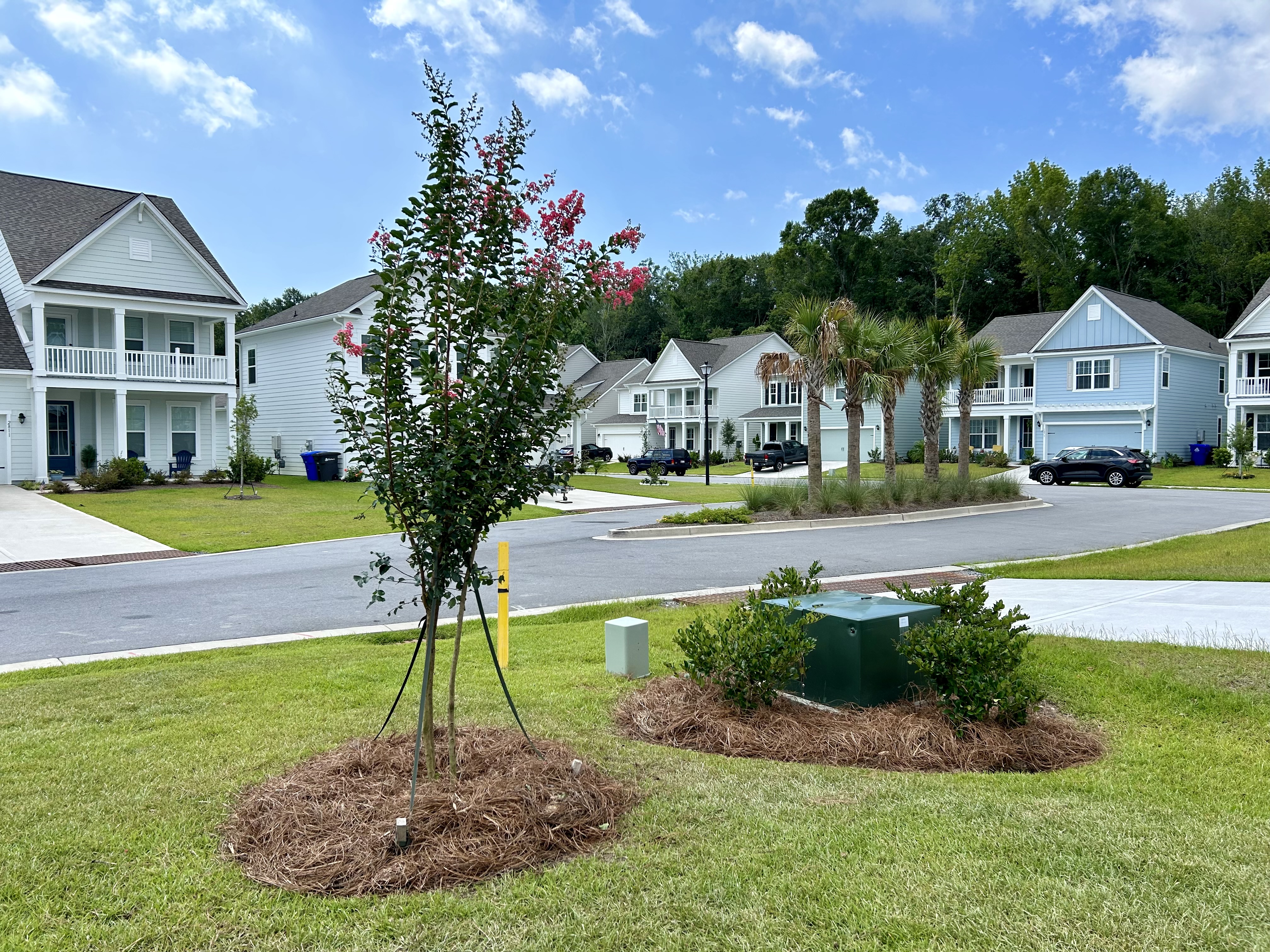
The tree planted out front by the builder is a Willow Oak. It’s doing well, but eventually it will get really tall and big. While it is very hardy here, I think it is likely too big for the scale of my neighborhood and house.

So, I’m exploring replacing it with a Crepe Myrtle, where the scale of the tree would be much better.

Look down by the stop sign beyond the tree. That cute little fire plug was recently installed in my neighbor’s yard. My heart fluttered when I saw it as in Maine, my house was rural and there was no city water. I had a well. The only water I might be able to count on with a house fire would have come from the pumper fire truck–assuming it could even get up my challenging, curving driveway.

On the way home from Isle of Palms last Friday, I could see a full blown house fire on Goat Island, a small island sitting between IOP and the mainland. Access to Goat Island is only by boat, and of course there is no fire engine. Flames rose into the sky, along with plumes of black smoke. SMALL emergency boats with flashing red lights were racing up the channel toward the house. It burned to the ground, of course.

https://www.counton2.com/news/local-news/crews-responding-to-house-fire-on-goat-island/amp/

There are several pics in the above link. And here’s a pic from my granddaughter.

Yep. I love that little red fire hydrant.

A Quilty Catch-Up

I’ve been sewing every day. It’s great to have that work in the 90+ degree days we have been having.

Of course I have been sewing every day. “I sew” should be on my car’s license plate!

Here are the “Summer Camp” mystery blocks from last week, and I’m working on the 5th set of blocks now. (Next week is the 6th and final set and the reveal.) The bottom blocks, with their contrasting little “windows” nearly did me in. Every piece of that block had to be spot-on perfect for the block to measure out at 5.5 inches. Every piece, from cutting to sewing. That requirement is harder when you are working with a thicker solid cotton–which I am with mostly all Kona cotton. But…I persevered, though it wasn’t fun. And the green block with yellow “windows” is not perfect. I may redo it…later. It measures ok; it’s just a bit “wonkier” than I like. (Yes, I’m a perfectionist.)

With thicker fabrics, one must find the magic place where a skinnier seam accounts for the fold of the seam when pressed. Remember–it is NOT the making of a perfect 1/4 inch seam that makes a unit perfect, because a perfect 1/4 seam might not create perfection. You always want to sew, then measure your unit to see if you’ve hit the magic seam spot.

The Modern Quilt Studio “Summer Camp” designers are using a much thinner cotton (Bernartex Superior Solids) and are pressing their seams open–which makes a block like this difficult one easier. For sure. But each piece in the block still needs to be absolutely straight and perfect, or it will throw the rest of the block off. And let me just say that these folks make gorgeous quilts! I am so happy to find this web site. And I’m so enjoying making this mystery quilt.

But, I make, for the most part, functional quilts, so I don’t want to be pressing seams open if I can avoid it–as they weaken a quilt. My quilts get used and washed and dried. Or, I hope they do. And I have a lot of Kona solid cottons after four years taking the online “The Color Collective” class with Tara Faughnan, so I want to use what I already have on hand. And, in general, I’m not a fan of these thinner quilting fabrics. But, that’s just me.

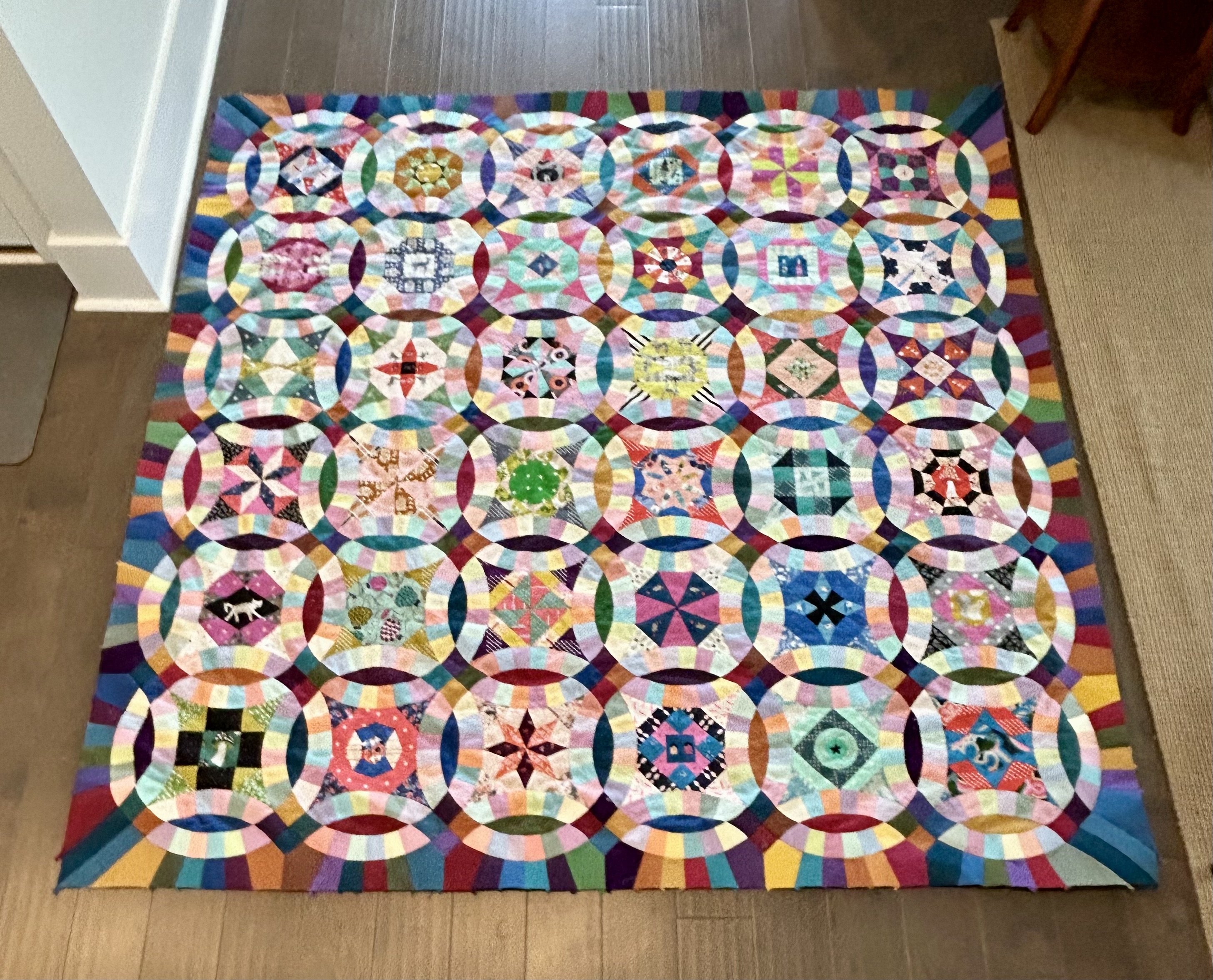
Here’s a sneak peek at the corner where two sides of the border in “the quilt from hell” meet. I’m working on sewing together the third border side now. This darker border is so perfect for this quilt. But like everything else with this quilt, I’m sewing around the circles to install the border, which is…hard. But, I can see the end. And I have a backing fabric (a Ruby Star Society blender fabric) and a thinner batting in case I want to hand quilt it.

The Traverse quilt is all basted and ready for me to hand quilt it, which I will do when “the quilt from hell” border is done and installed.

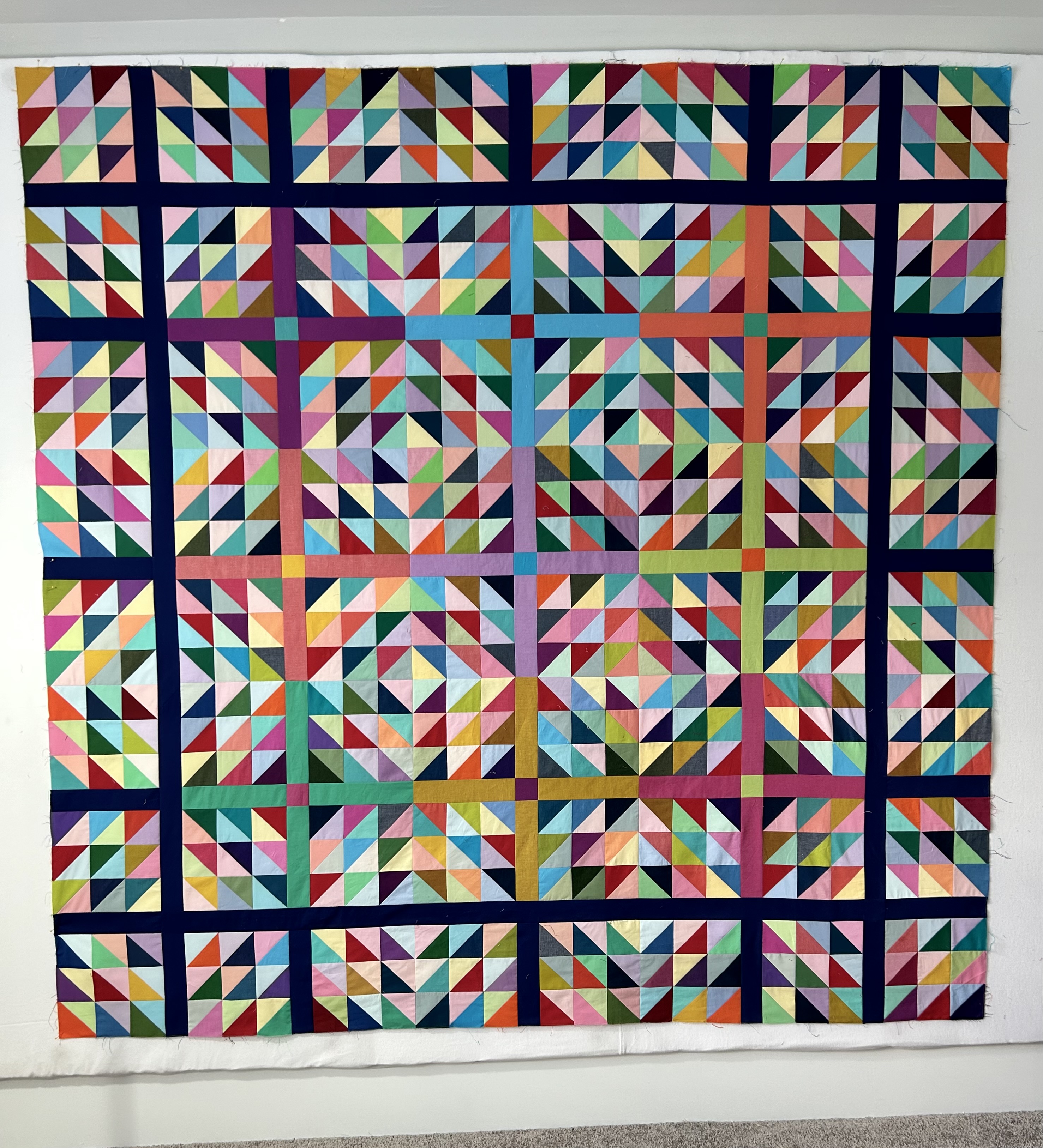
And oh my gosh!! This half-square triangle quilt continues to be so, so much fun. I need to make A LOT more half-square triangles to complete the border, which is gobbling up the solid fabric stash. This quilt has grabbed most of the design wall now. The center and outer border (that’s a midnight blue/purple color) are all sewn together now. The outer border is just pinned to the design wall. The quilt will be just under 80-inches square when finished.

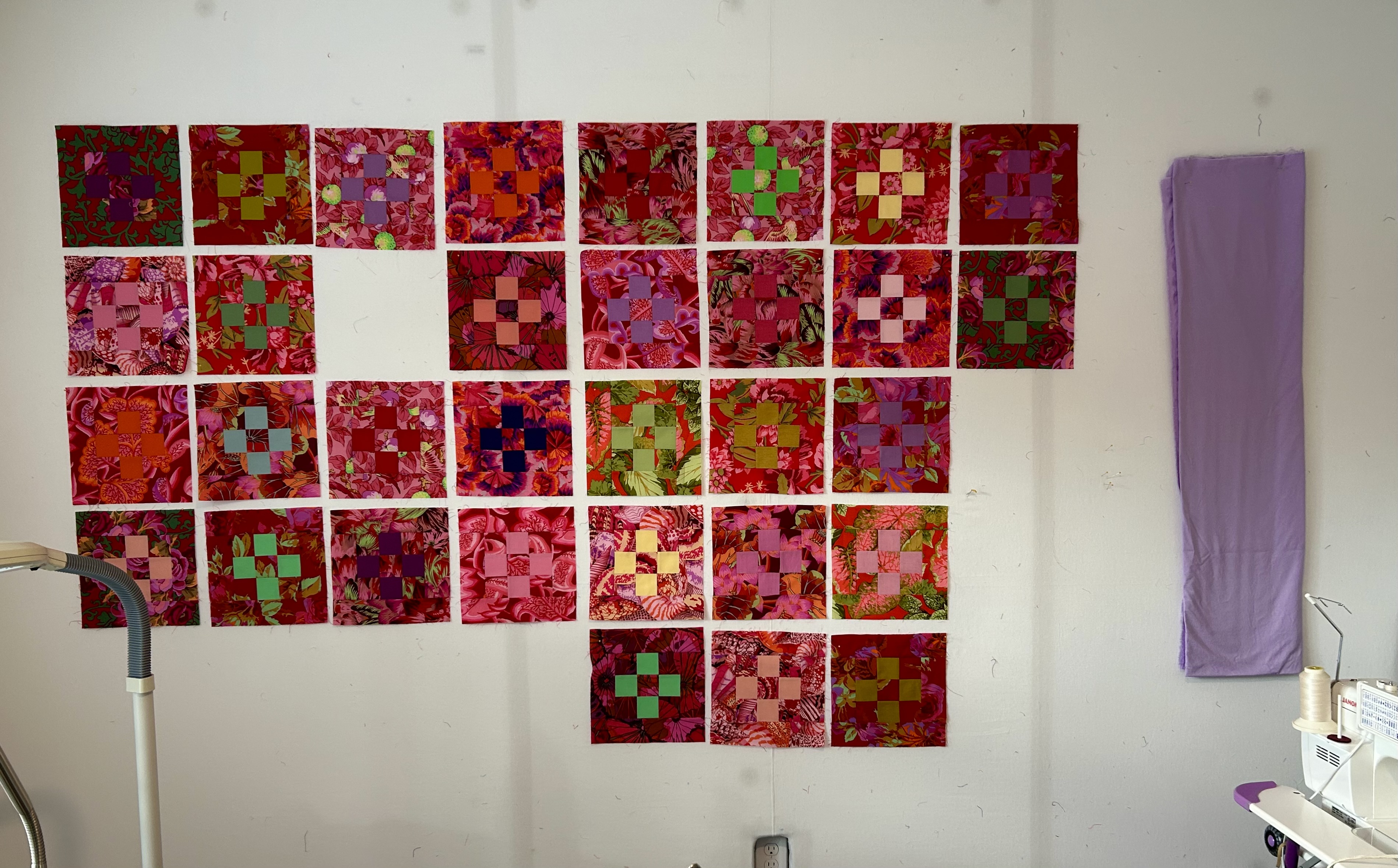
The big red blocks are pushed to the side now. That’s ok. They will come before any other project. Yes, even the mystery quilt blocks after the reveal.

So, you see that I have, as usual, LOTS of fun projects happening. Five, to be exact: Traverse, the quilt from hell, big red, half-square triangles, and the mystery quilt. And, there are other projects stored and waiting for me. But I’m making a dent in those too. Big red is one of those stored projects.

Roasted Summer Squash and Chicken Soup

Hello Blog Readers!

I’ve not posted recently, but I’ve been busy and happy over the July 4th period of time.

Recently, I made this roasted summer squash soup. I had bought a package of organic yellow summer squash and green zucchini at the local grocery store. And I hadn’t done anything with it, and it needed to be used. So, I roasted all of it in the oven–cut in rounds, sprinkled with herbs, salt, and good olive oil. I had some for one meal with a grilled steak.

But…

What to do next? There was a lot of it to eat in a few days.

I put all of it in a pot, covered it with water, brought it all to a hot stage, and “boat-motored” it.

Here’s my “boat-motor,” which I truly love. I like that it plugs in so there are no battery issues.

I sautéed the usual suspects (carrots, onion, garlic, celery, half of a red pepper I had on hand), and added the chicken. Of course I used duck fat as my sauté fat.

Isn’t this half of a red pepper pretty? When I cook, as you know from reading my blog, I like to use what I have on hand. I think of these things as “assets.”

I also had some fresh corn I had taken off the cob. When they have multiple fresh corn for sale, like 6 for X dollars, I buy the 6, cook them all, and remove the kernels from the extra cobs.

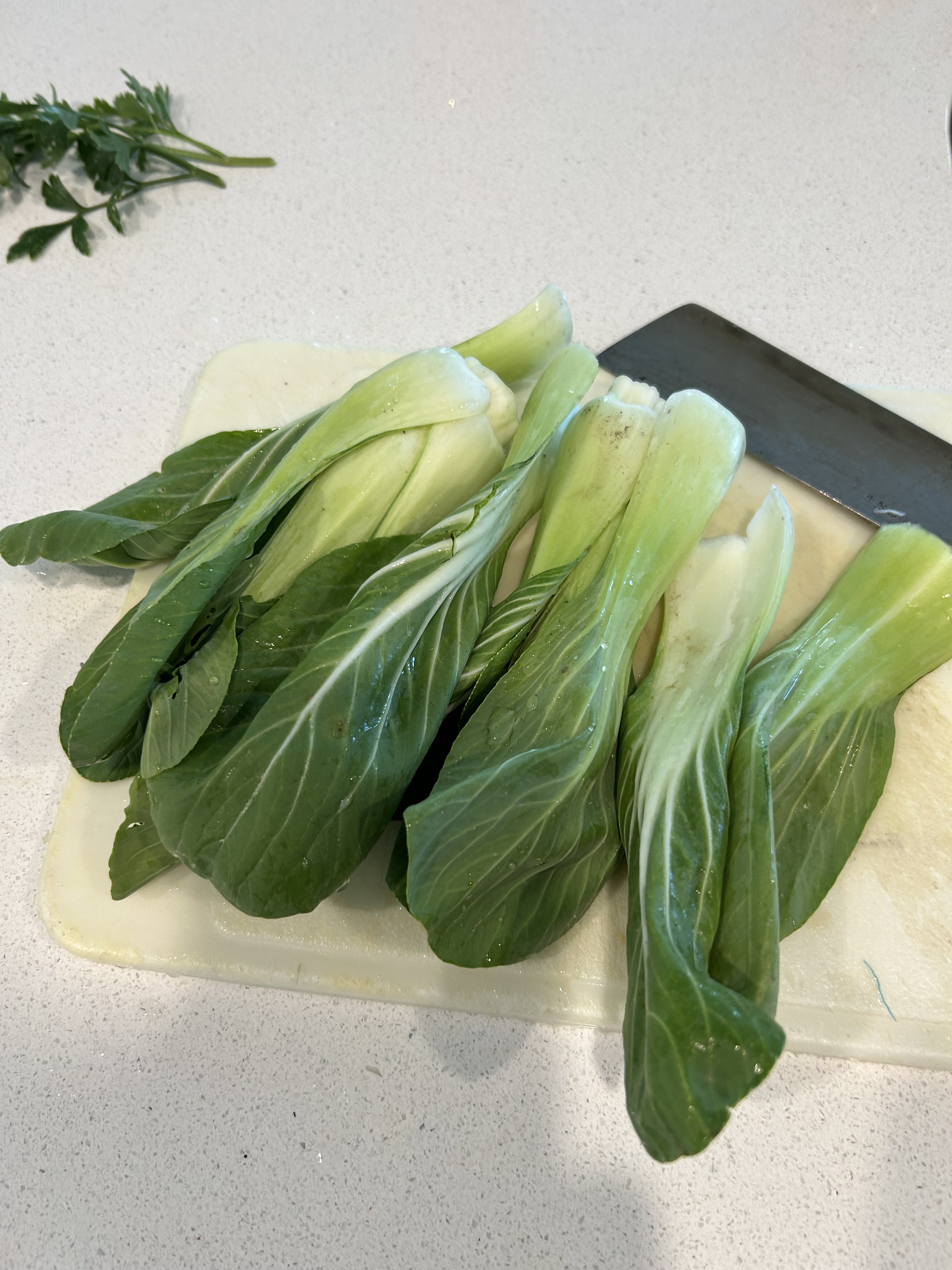
I also had some collards that needed to be used. I had wanted to blanch them, stem them, and have them as wraps for a chicken salad I had made, but that didn’t happen.

I washed and stemmed the leaves and rolled the leaves together and cut them.

Then I cut those rolls in the other direction and put them into the pot on the stove.

I like this brand of chicken. I was able to get it in Maine too. I was only able to get these boned and skinned breasts on July 4th weekend, so I made do with it. I had wanted thighs which have more flavor. To me, today’s chicken breasts taste like sawdust. They are tasteless.

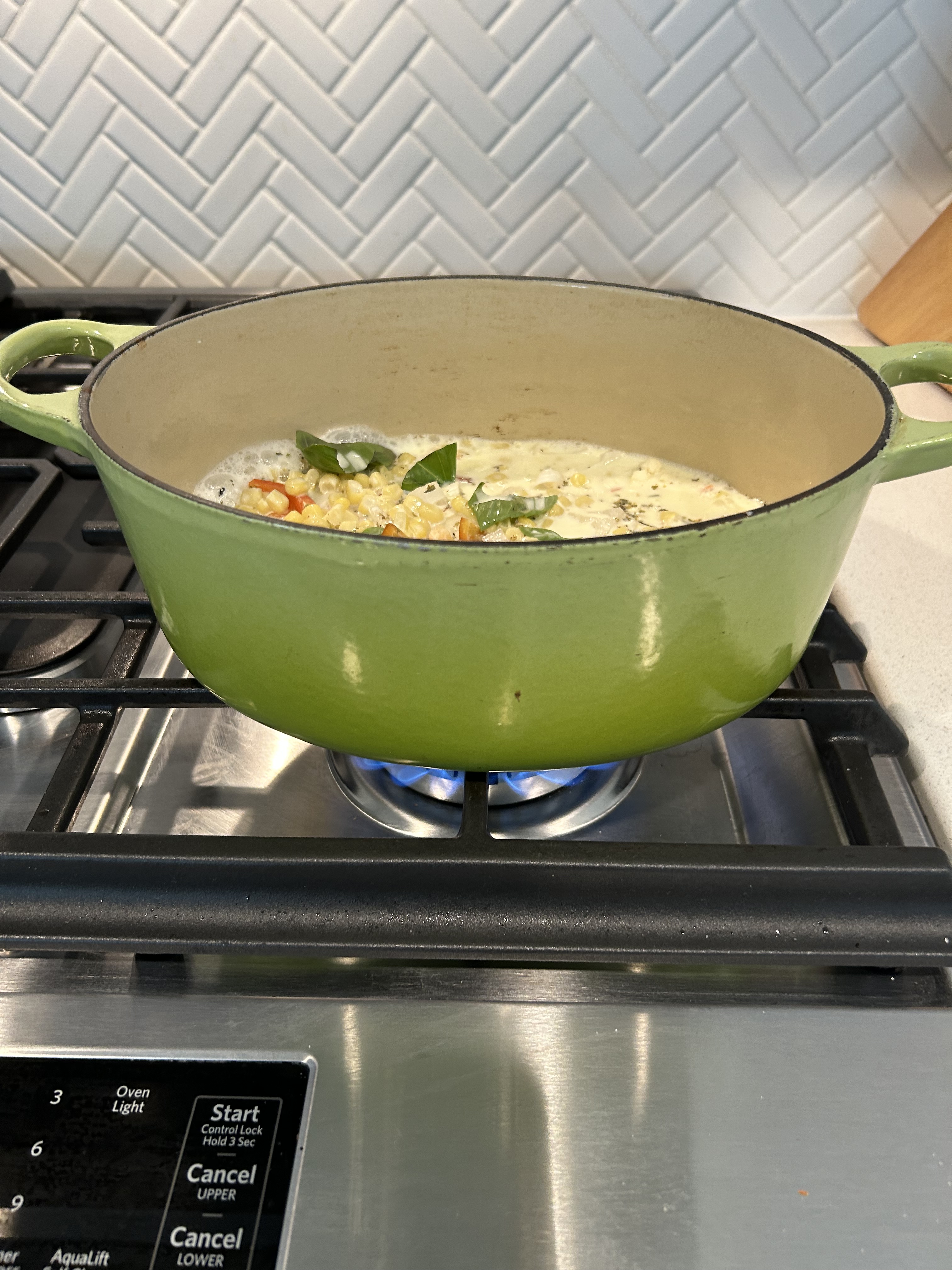
Here’s everything together now–and I had some frozen/defrosted broth from cooking the chicken for the chicken salad I recently made. So I added that to the pot. I had cooked that broth down a bit for storage so it was strong.

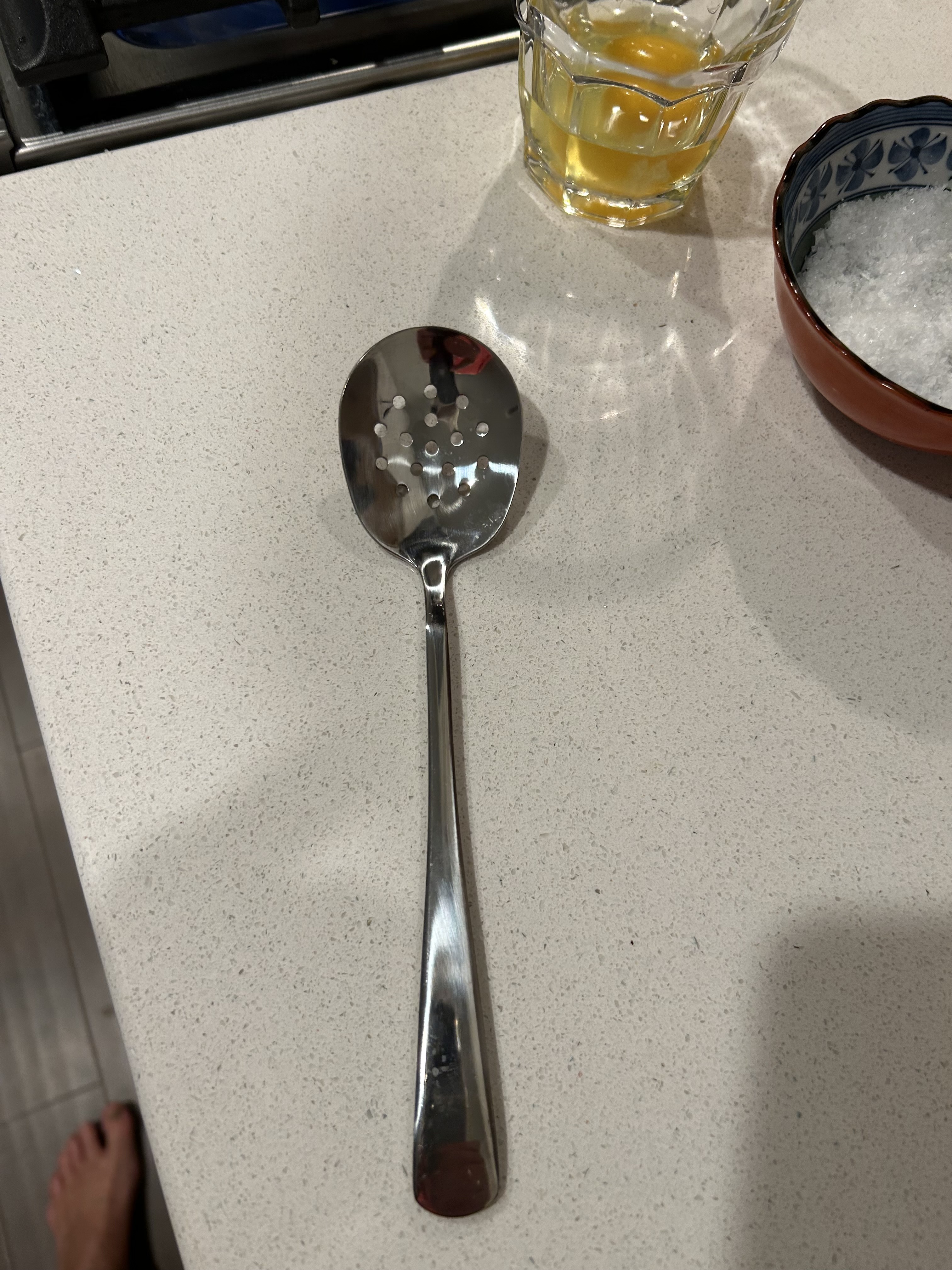
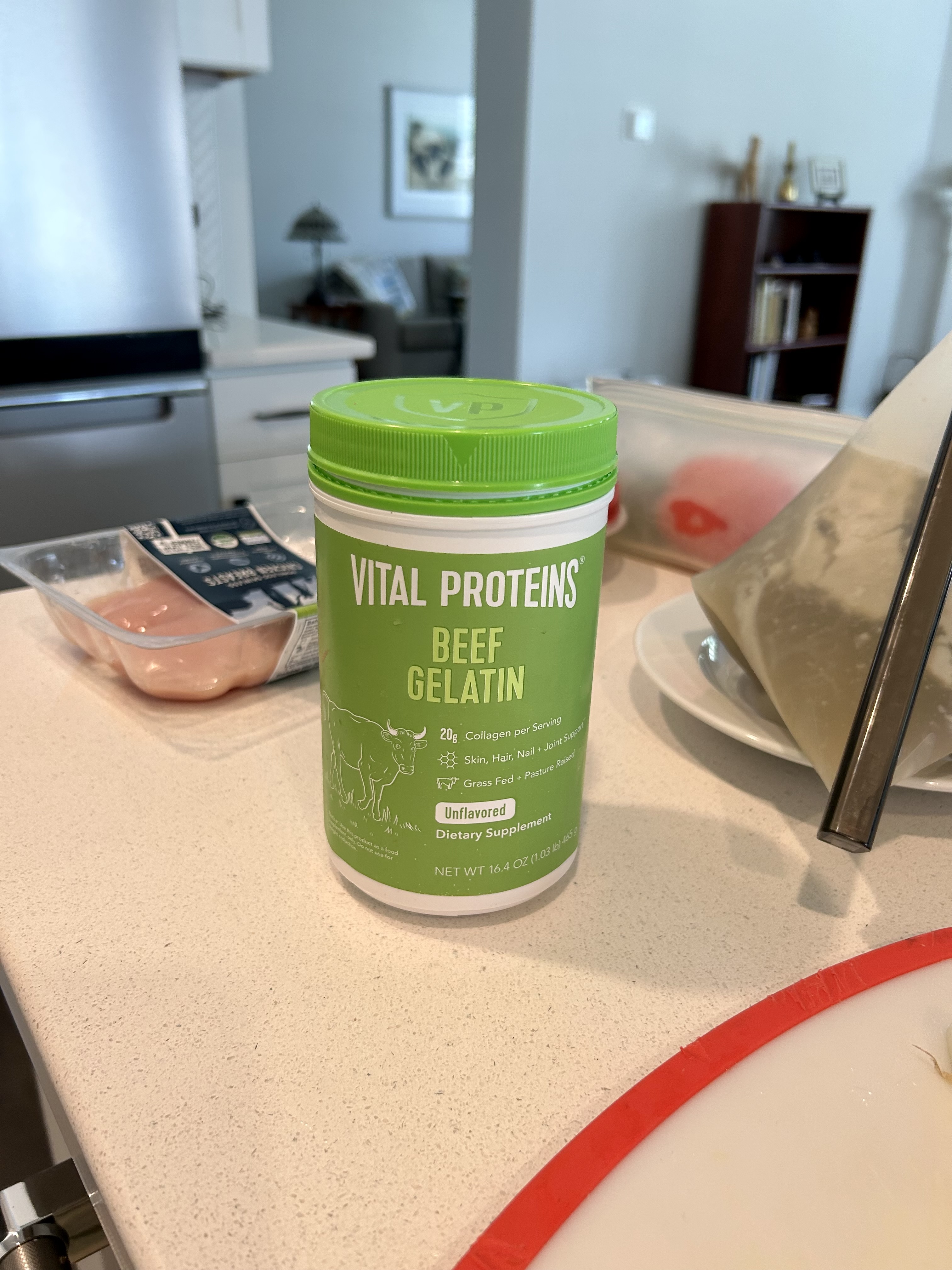
Americans no longer eat nose to tail any more. Instead we buy muscle meats. And we are missing all the glycine we would get from animal ligaments that are not present in lean muscle meat. When I make a soup, I add one scoop of gelatin powder to it. First you put the soup in a short glass (or something like that), add some liquid (I used milk this time). In a bit the gelatin reconstitutes, so I add some of the hot broth to it–BEFORE ADDING IT TO THE SOUP.

The last thing I added was the squash puree.

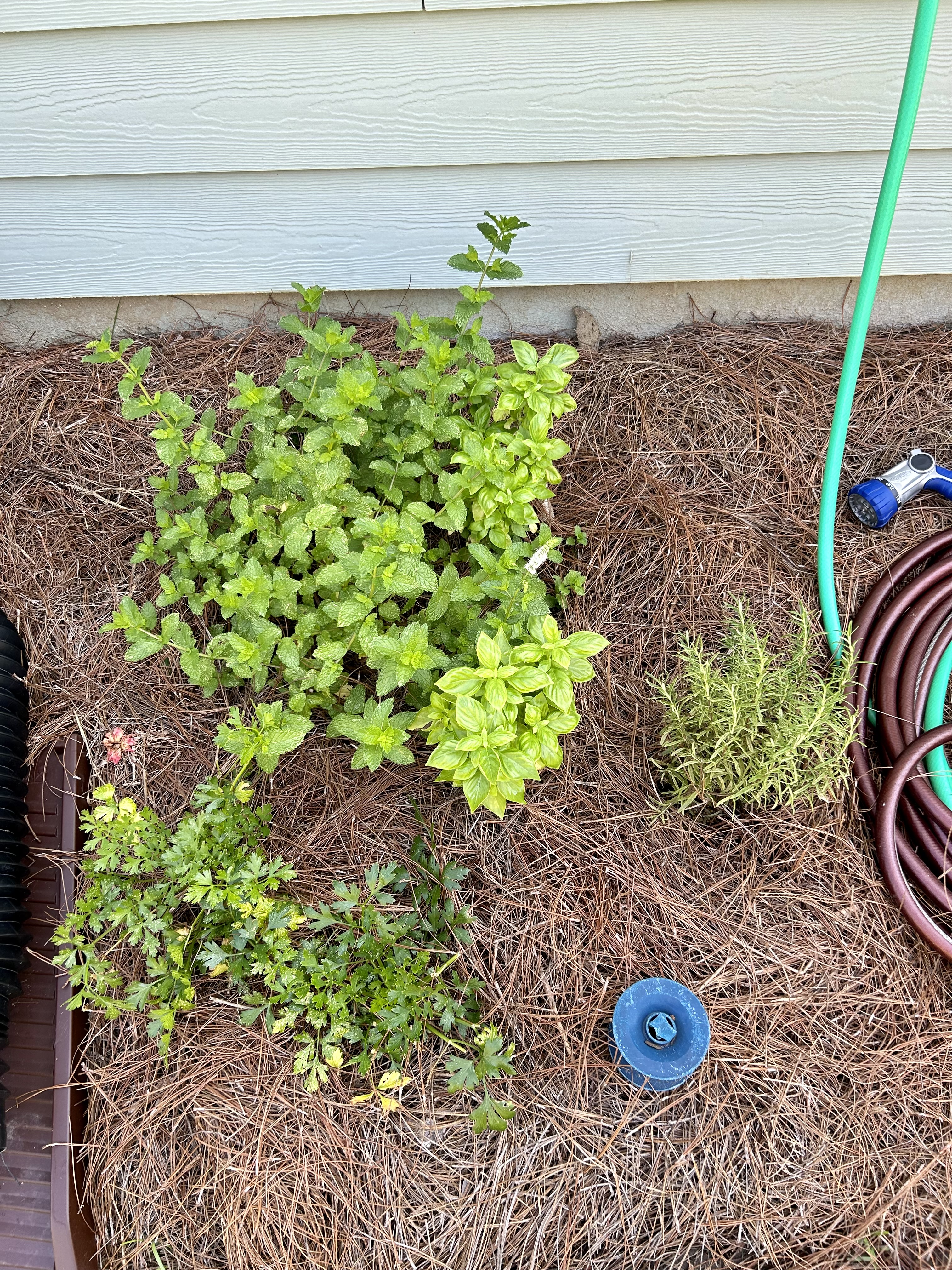
And here you have it–a gorgeous soup that is FILLED with awesome tastes. There were so many flavors to enjoy–to which the fresh herbs added on top added. I buy dill, but I have basil, Italian parsley, thyme, mint, and oregano planted here. (I didn’t add the garden sage, lavender, rosemary, or chives for this soup.) Go slow with fresh oregano as it is a very strong herb.

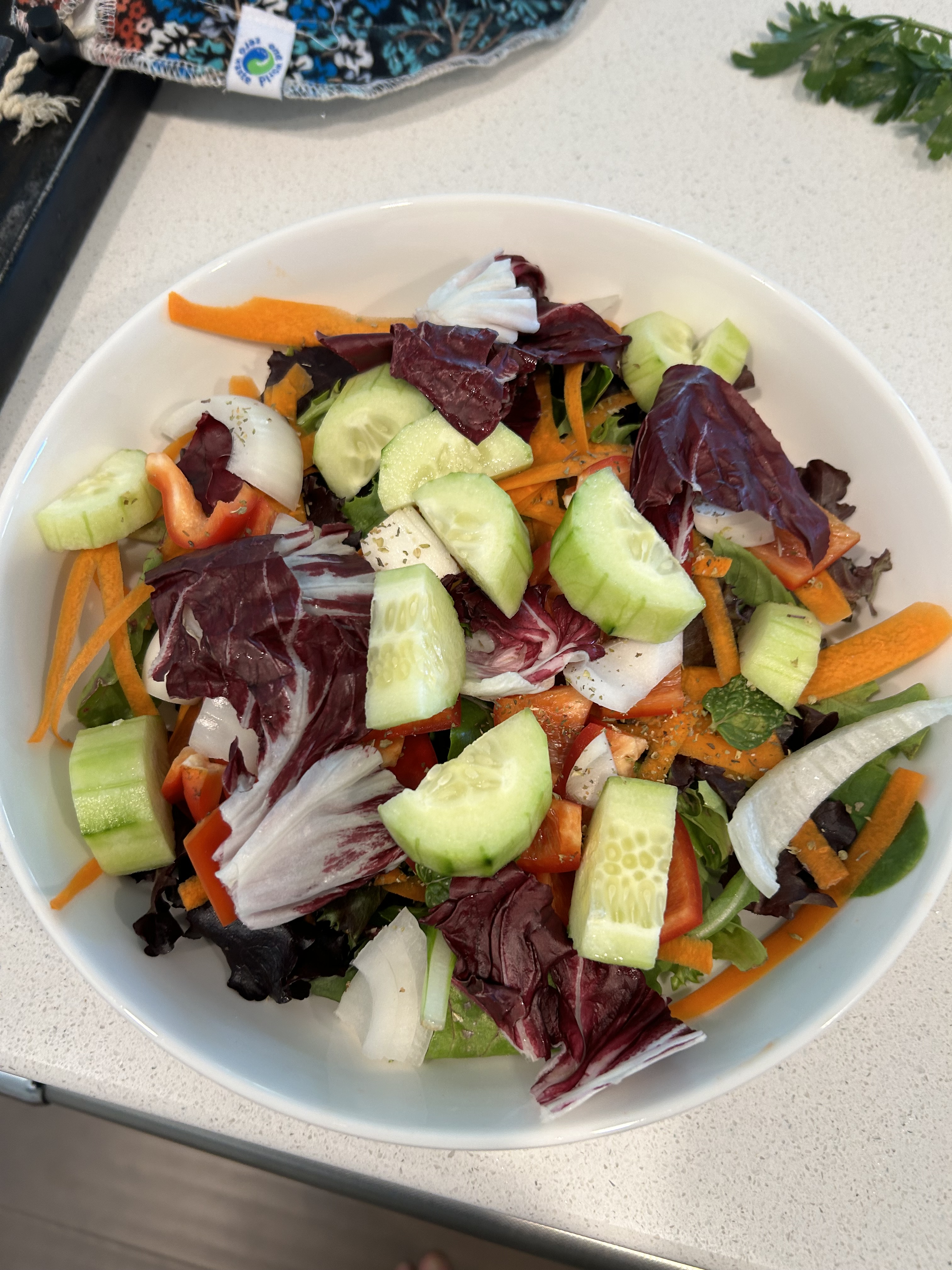
And about that practice of having fresh corn on hand. Here’s a salad I made using some of the leftover grilled steak and corn prior to making the soup.

All of this food was so yummy. I don’t mind spending some time cooking as I have food for future meals, which gives me more time to do other things AND the enjoyment of beautiful, tasty food.

Happy July 4th

And it will be a scorcher of a day here

I am reminding myself that the other 10 months of the year are delightful in comparison to July and August. The humidity is definitely a factor in the heat.

But everyone copes–we stay inside in the heat of the day for the most part. Or at least I do. And in the early evenings, everyone emerges and there are neighbor visits to enjoy while watering or checking the mailbox. My AC is mostly keeping up, though yesterday upstairs, the heat overran the AC system for a bit of time. The downstairs remains cool.

I’m quite happy grilling outside (which keeps the kitchen cool and clean) and puttering away at household chores and my quilty projects. So being inside is fine. I miss my porch at noon though. Yet, granddaughter Mina suggested we sit out there for our Friday night meal, and that was lovely.

At night I’m sewing on the second border row of the quilt from hell.

The papers are out except for the edges where I still need them in order to sew on the borders. Maybe this close-up will show you how tricky it is to sew these curves.

I can FEEL the end of this quilt top being finished–and the rest of the quilting process (layering, quilting) will be a joy in comparison to making this top. I’ll set up the third border pieces later today.

I’m off to run some errands before it gets too hot. And my morning coffee is finished now, so it is time to mosey along.

I’m looking forward to finishing the 4th set of the mystery blocks today–then it will be back to the half-square triangle quilt I’m so enjoying watching take form.

July, Here We Come!

I’m working on the 4th set of blocks for the Modern Quilt Studio “Summer Camp” mystery quilt. Per the weekly video suggestion, I pulled a random sample of some of my blocks and put them on my “field” (background) fabric to see if my color palette is working to my satisfaction. I was worried about the dark magenta, but it’s fine. Whew!

I have found the videos really helpful, though I am good with color and have been quilting steadily almost 25 years now. And, sewing, in general, long before what I think of as my “serious” date where my serious quilting started. The video on selecting one’s palette stressed NOT to go darker in the palette than the field background fabric and to include some fabrics in each color family that are lighter than the medium fabrics chosen. I’m glad I included those lighter fabrics.

To remind, here’s my palette for this quilt:

Here’s something different than Maine that I have encountered here. Bins of fresh, local corn (and no, sadly it is NOT organic) have a table and trash can where one can strip off the husks before leaving the store. We all know how very messy this job is at home…

My Wyoming niece sent me this picture of her daughter’s quilt from me–which was held and gifted to her on her birthday a few weeks ago. Word is that she loves it. I named it “Wyoming Mountain Crossings,” and there is a blog entry on it.

My younger son’s family has now returned from an exploratory hiking trip to Tennessee–as I am no longer in Maine. They had a terrific time and will go back next summer most likely. There were lots of waterfalls on creeks that had deep pools that encouraged swimming–and crawdads to capture and inspect. There were also lots of caves and caverns that intrigued them. One day’s hike was 11 miles to and from a summit with an awesome view. Even the 8-year old did not get too tired. They are so active, this family.

My older son’s family is gathering for “Sunday Night Dinner” tonight, so I will go over late afternoon. Hopefully the traffic out to the island will be less intense by about 5 pm. It was last Sunday. Grandson Kelly made it home from Old Miss after getting stranded in Memphis overnight Friday.

Granddaughter Mina (16 this fall) spent most of Friday and the night with me. I taught her to make homemade mayo (with fresh herbs from the garden) and how to use it on a chicken salad, which we ate on the back porch, per her suggestion. It’s too hot most days to eat lunch out there.

We need rain!

Spiders Are Part of the Natural World

And THIS very interesting critter has been living on the outside screen of my back porch for the past three to four days. Her/his legs make this spider about 2 inches big.

I posted this picture to our local neighborhood Facebook group, asking if anyone could identify what kind of spider this one is. I thought maybe a Wolf spider as it is one of four big spiders in South Carolina. But the coloring was…wrong.

In due time, a neighbor identified this spider, and it is NOT a Wolf spider. S/he is a White-Banded fishing spider (Dolomites albineus). Measurements for spiders are kind of confusing–in that some seem to use just the body length, while others use the whole length, including the legs. The inclusion of the legs can make a bigger profile, of course.

By this morning, another neighbor said she has had two around her house as well.

We have a lot of cache water basins here (low-country drainage methods)–and some have sprinkler/fountains in the middle (beauty, yes, but also mosquito control). But there is standing water in drainage ditches, too, and water plants grow there. Likely this area is a good habitat for this spider.

This spider literally can “walk on water” to hunt prey. They have hairs that can repel water, and they can capture an air bubble on their abdomen that allows them to swim and dive (Wikipedia).

This spider can build webs, but the webs are not used for catching prey since they hunt their prey. The webs are used by the female as a sac to protect her eggs, which she carries nestled beneath her head, held secure in her fangs. Thus, if female, she is part of the “nursery egg” grouping of spiders.

But, why is this critter NOT in or near the water right now? Is s/he a she, and is she working currently on laying eggs? In a typical year, this spider can create and carry multiple egg sacs in warm weather. She can and will try to eat her mate. Freezing temperatures kill them, but the eggs can overwinter and hatch in the spring.

Ah, these spiders can and do venture far from water. They can and do capture and eat other insects, including “flies, moths, beetles, mayflies, and other insects.” Thus, s/he is using my porch screen as a perch from which she can strike. And she is a help for control of insects in my garden, as she is when she kills insects on a tree that are harming it.

Here is a nice site that contains much more information about this spider.

https://mdc.mo.gov/discover-nature/field-guide/whitebanded-fishing-spider

By the way, the Wolf spider is the South Carolina state spider. Who knew? The Wolf spider is also a predator who does not rely on a web to capture its prey. And if carries a web sac on its back. Local information on the Wolf spider:

https://www.islandpacket.com/news/state/south-carolina/article265506996.html

Webbing A Block

Bonnie Hunter pioneered the “webbing” method for sewing units into a block.

Go Bonnie! I LOVE this method.

It took me a bit of time to understand this method because I was making it harder than it needed to be. It is pretty simple when you understand the concept, and it makes keeping units in a block in the right order and orientation so much simpler. I

am using Bonnie’s webbing method to make the blocks for the current half-square triangle quilt now on the design wall. OK, it has taken over the design wall and pushed aside the red quilt blocks–though I made a bunch of those yesterday. But, it would be SO EASY to get these individual units going in the wrong direction, which means unsewing activity. So I am grateful for Bonnie’s method.

First, lay out your units in the correct order. Then sew the top 2 units on the top row together, left to right of course, leaving aside for the moment the third unit. Chain down and sew the next two blocks (the second row) WITHOUT cutting the thread to the first row. Then do the next two blocs (the third row down). NOW you can cut the thread or chain piece something else so you can cut off your string of blocks that are “webbed” together.

Now, sew the third row down–the blocks that are waiting to be joined–BUT DON’T CUT the threads between the rows. See how the last block is just layed across it’s mate–which is just how you would sew it webbed or not.

Now you have your block all webbed together and ready to be sewn together.

Now I press the rows so the seams will but up nicely before I join the two rows. I am pressing the two outer rows one way and the inner row the other way.

Here’s a finished block, now sewn into its place in the quilt. It’s perfect, as you can see, after each unit was trimmed with the Bloc-Loc ruler.

Bonnie’s tutorial is for a 16-patch block. Do take a look as the 16-patch is just as easy as this 9-patch above is. And, it’s a fast method.

https://quiltville.blogspot.com/2022/12/two-over-one-is-how-its-done-block.html

The Bloc-Loc Rulers for Half-Square Triangles

Online friend Wendy Currie (Wendysquilting) blogged about the Bloc-Loc rulers some time ago–before I moved to South Carolina. These come in different sizes and I bought a 3-size package–so I have a range of choices of which size to use. Wendy, by the way, is an outstanding longarm quilter who lives in Thunder Bay, Canada.

I LOVE these rulers! For this project, I’m using the middle-sized ruler. My resulting blocks are so perfect I don’t really have to measure my bigger units when I sew them together.

But, first, here are the 3rd set of blocks for the Summer Camp Mystery from the Modern Quilt Studio. There will be 6 installments, and the next set comes next Friday. After the 4th set, I may pin all the blocks so far to the design wall to just…admire them? Yes, admire and pet, but also to see how my palette is working together and if I need to make any changes.

The unit for the solid scrappy quilt on the design wall–is a 3 1/2 inch half-square triangle made from TWO 4-inch light-dark squares cut from my solid scraps, layered together. Tara Faughnan uses this method. I also love Bonnie Hunter’s ruler for cutting triangles from strips of fabric layered together, but here I am cutting from scraps too small to use strips, for the most part. And I want more variety than the strip method affords, unless one uses shorter strips.

I layer the two squares and use a quarter-inch ruler strip (I love these rulers too) to mark the sewing lines on the light square. This method is more labor intensive, but also makes a clean unit that never needs resewing as the trick is in the sliver trimming with the Bloc-Loc ruler, not in the perfect sewing of two triangle units.

I put the dark fabric on the bottom and the Bloc-Loc ruler’s ridged edge fits along the seam to hold the unit perfectly in place. You want the ruler lines to be just ON THE FABRIC–not off of the fabric. Sliver trim. I trim ALL of the units I’ve sewn on the dark side first, and rotate each trimmed unit so the other side is facing up. It is satisfying to see the pile growing as I trim each unit.

Turn the pile of units so that the remaining notch is on the right, pointing up, and the light, untrimmed side is down.

The ruler now fits so the name is upside down. Remember to put the ruler’s lines ON YOUR UNIT or your unit will trim too small.

And, voila, you are DONE and have a whole pile of new units to use.

I’ve cut a TON of 4-inch squares to get color variety, so will use them up in making half-square triangle units via chain piecing. You can see I’ll need to keep cutting for the light units. If I don’t use all of these squares, I’ll save them for another project down the road. Meanwhile, my scrap pile is disappearing. And there is a long way to go on the scrap quilt, so, yes, many of these squares will get used.

I think piecing is my most favorite part of the quilting process.

Girlie car is coming home tomorrow as of right now. So I’m off to put gas in the rental, have lunch on the porch, and…SEW. There needs to be a walk in the day at some point. Maybe late afternoon, with music, when the day cools off a bit. Temps are now in the high 80s and low 90s. Summer has arrived.

Blue-Eyed Grass

I planted five little blue-eyed “grass” plants yesterday. Turns out this perennial is NOT a grass, but a form of iris.

I saw what I think is this plant in the rotary planting area of a Rifle Range road rotary near me. It’s low, and the little blue-violet blooms are so sweet. I’m pretty sure it is a variant of blue-eyed grass, but I am not dead sure. It turns out there ARE various forms of it. And if “they” are planting it in a rotary center, it’s hardy. Plus, it will spread. The “leaves” look like mondo grass–spiky and short. Turns out mondo grass is a lily relative, not a true grass either.

BUT, I couldn’t find any blue-eyed grass plants locally, so I ordered 5 little plants from Amazon to try them out–and planted them in the round curve of the bed border on the left side of the front of the house–where the bed turns to go along the long side of the house where I’ve planted so many plants now. (Those plants are blooming and filling in that bed beautifully now, and I may bore you with pics soon.)

Who knew Amazon sold plants? Son Michael says he’s been ordering plants from Amazon for some time. And I can tell you they came BEAUTIFULLY packed and were really healthy.

Here’s a description of blue-eyed “grass”–and there are pictures of this perennial at this site:

“Despite its common name, blue-eyed grass is not a grass. The genus Sisyrinchium is a large group of annuals and perennials in the iris family (Iridaceae). But many species are low growing with narrow leaves that appear grass-like and many grow in grasslands. All are native to North or South America. Most are not well known and only a few are used as ornamentals. The taxonomy of the group is quite confused, so the number of species varies from 50 to 150, depending on which classification system is used. Some species have many natural variants that were likely mis-named as species – so more research is needed to figure out the true relationships.” (From Wisconsin Horticulture web site: https://hort.extension.wisc.edu/articles/blue-eyed-grass-sisyrinchium/ )

And here are some images of various forms of this plant:

The plant I ordered is the “Lucerne” variant. The one in the rotary has flowers that are low to the ground and don’t seem to have the higher stem that Lucerne has. It is probably a variant.

Maybe someday I’ll get a better picture of the plants in the rotary–when there is no traffic.

Fat chance of that though!