Turkey Tracks: The Common Ground Fair 2010

Turkey Tracks:  October 10, 2010

The Common Ground Fair 2010

I’m a bit behind on blog entries.  It’s been busy at Hillside House this fall.  But, we attended the Maine Organic Growers’ and Farmers’ Association (MOFGA) Fair, called The Common Ground Fair, on Saturday, September 25th.  As always, this fair is a highlight of our year.  The Common Ground Fair celebrates rural living, and we so enjoy spending at least one day a year formally doing just that kind of celebrating.

This year, my first cousin, Martha Louise Bryan Epton, aka Teeny, and her partner Lori Soles, embarked on a road trip from Georgia.  I was delighted that they came to see us and that they took our word about the fair and came with us–since they had so many wonderful things to see in Maine in a short period of time.  (They have assured me that they will be back, and we hope so!)  I was 11 years old when Teeny was born, so I have known her, literally, her whole life.

Here they are:  Teeny is on the left; Lori on the right.

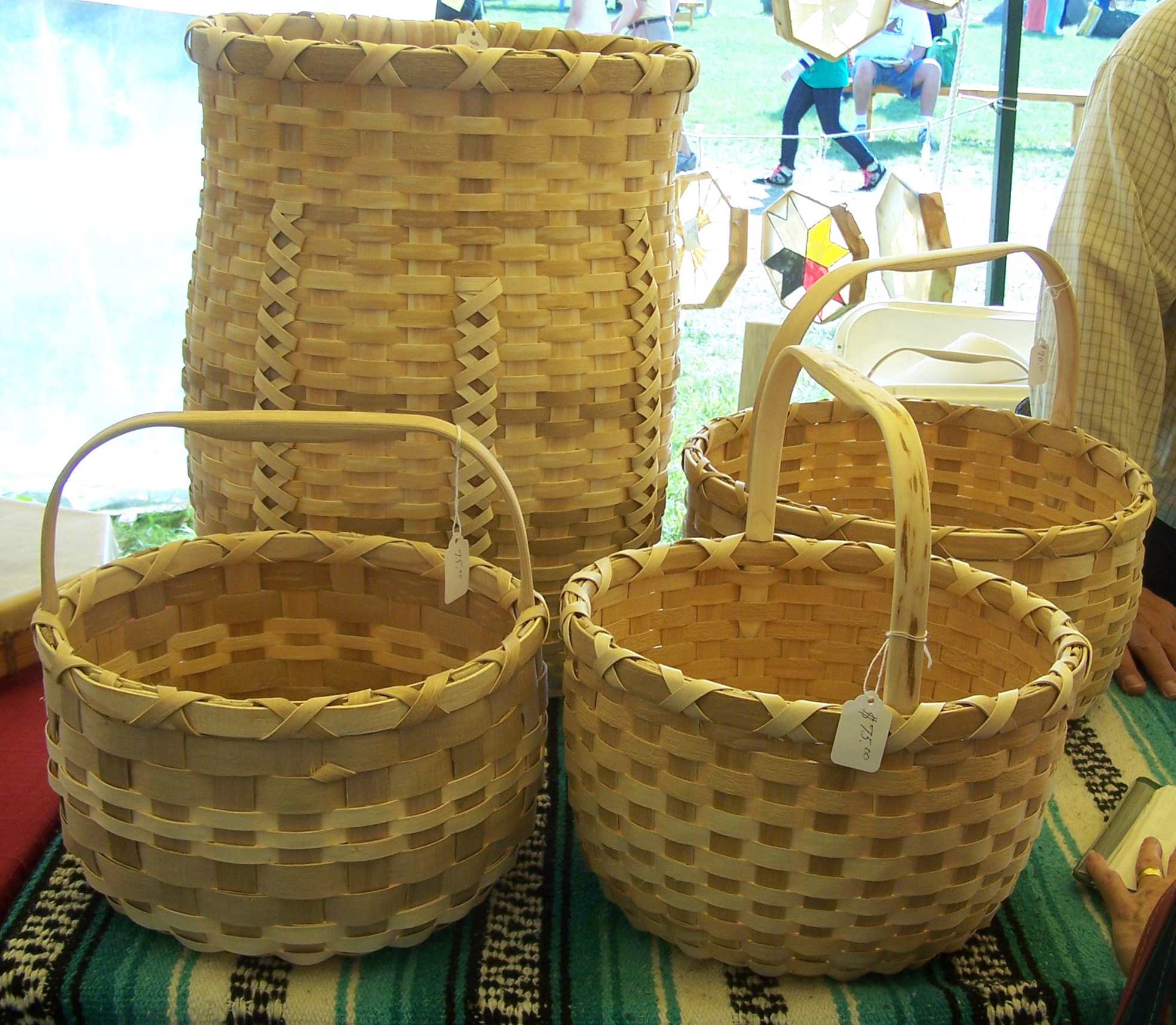
The fair abounds with educational speakers, farm animals of all kinds, informational tents and demonstrations of all kinds, products for sale [solar panels, heating products, food, farm implements, fiber of all kinds (wool, angora from rabbits, sweetgrass, yarn), crafts, etc]), and delicious organic food to eat and drink.  It’s impossible to cover everything in one day, but we do our best.  Here are Indian baskets for sale:


We always try to see the sheep dog demonstration.  It’s John’s favorite I think.  Each year the sheep herder pits children against the sheep dogs to see which group can move and hold sheep, goats, and ducks the fastest.  This year it was really hot, the sheep and goats  were tired and hot, and the children won!  They couldn’t get the ducks into the circle of cones, however.  In any case, the audience was suitably impressed!  And I somehow do not seem to have a good picture of the dogs working.


I always go to the chicken house first.  Here is a shot of a little boy taking a good look at a bantam rooster and his mate who were somehow on the floor.  Most of the demonstration chickens are in eye-level cages.  The rooster was crowing like crazy, and the little boy was fascinated.  He was sitting in a sea of adult legs as the chicken house is a big draw for everyone.  It’s fun to see how many different kinds of chickens there are.


We saw jumping mules.  (I love mules.)   There’s a man who brings 10 mules to the fair ever year, and he harnesses them all up in beautiful harness, and has them pull something–a wagon, I think.  It’s quite something.  He says getting a mule is like eating potato chips:  you cannot have just one.  They live to be very old you know–30 to 50 years.   They don’t get a running start to jump.  They stand in front of the stake and just…jump!  This big boy with the glossy black coat–a beautiful creature–didn’t like this event.  He took one look at didn’t see the point, which is a very mule-like thing to do.  They are very, very smart.  The smaller mules went jumping over, and one of those won. 


And paired oxen teams.  Here are some good boys:

Here are other pairs of beautiful animals.  These horses are giving anyone who wants one a ride around the fair.  The blondes are, I think, work horse from Scandinavia.  I need to refresh on the name.  Maybe they are Haflingers?  A few years back we saw one of this type being really agitated in his stall because his partner was working and he was not.  When you watch these working animals, especially the horses, you begin to see that they love to do reasonable work.


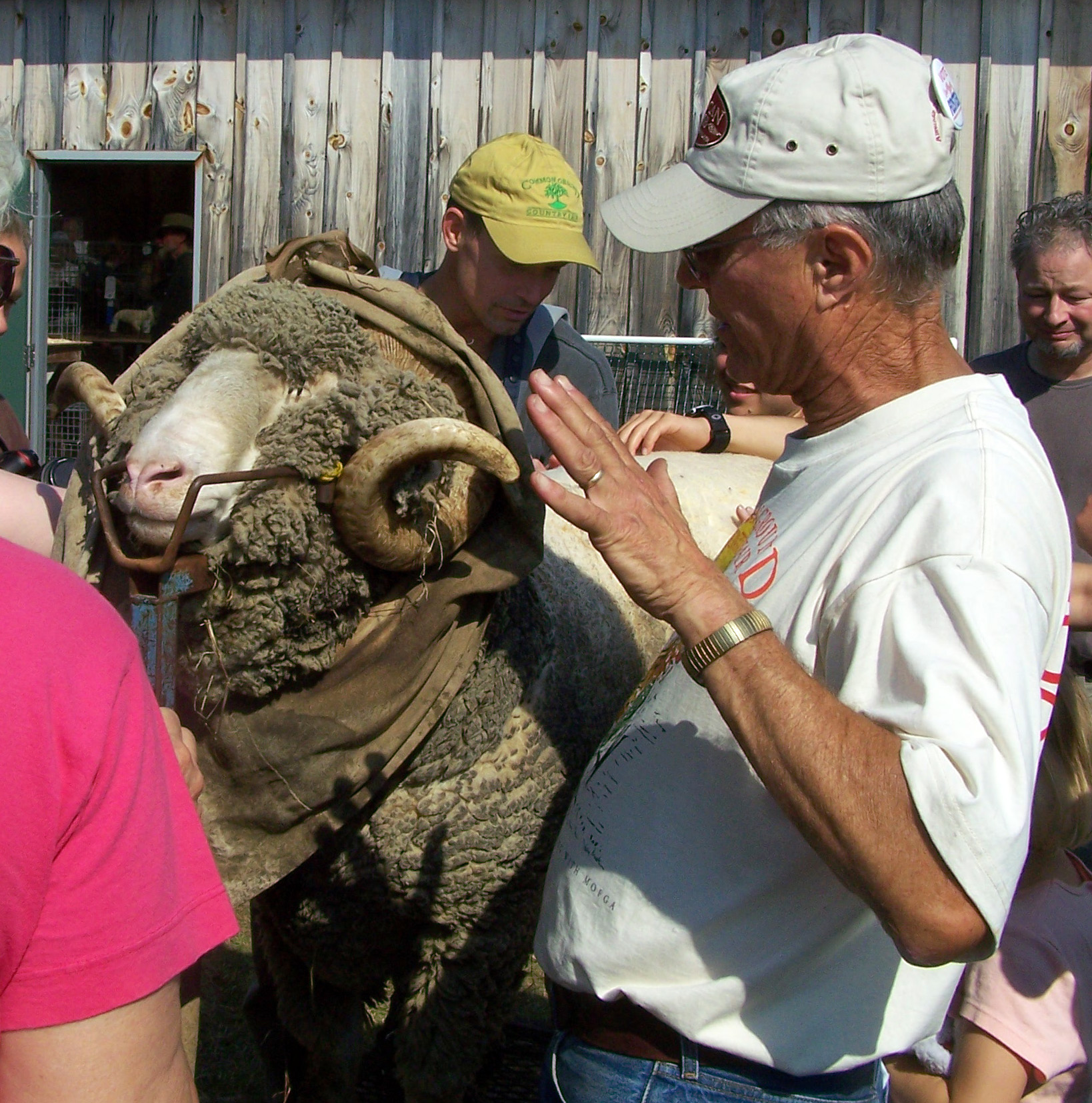
And, here is a gorgeous merino ram from Rivercroft Farm in Starks, Maine.  They cover the sheep with burlap coats to keep the wool from being disturbed.  This boy won all sorts of prizes and is now the farm’s primary breeder.  Joe Miller showed us how he trims the wool from around the ram’s eyes so he can see well–which he must do as another of the rams might butt him and hurt him if he cannot see.  The horns are quite spectacular, aren’t they?
We saw people gathered together and singing for fun.  We recognized many of the songs used in the movie Cold Mountain, which, of course, are songs people used to sing together for fun in places like church.  It was really fun to hear the harmonizing and the quick beats and chants.

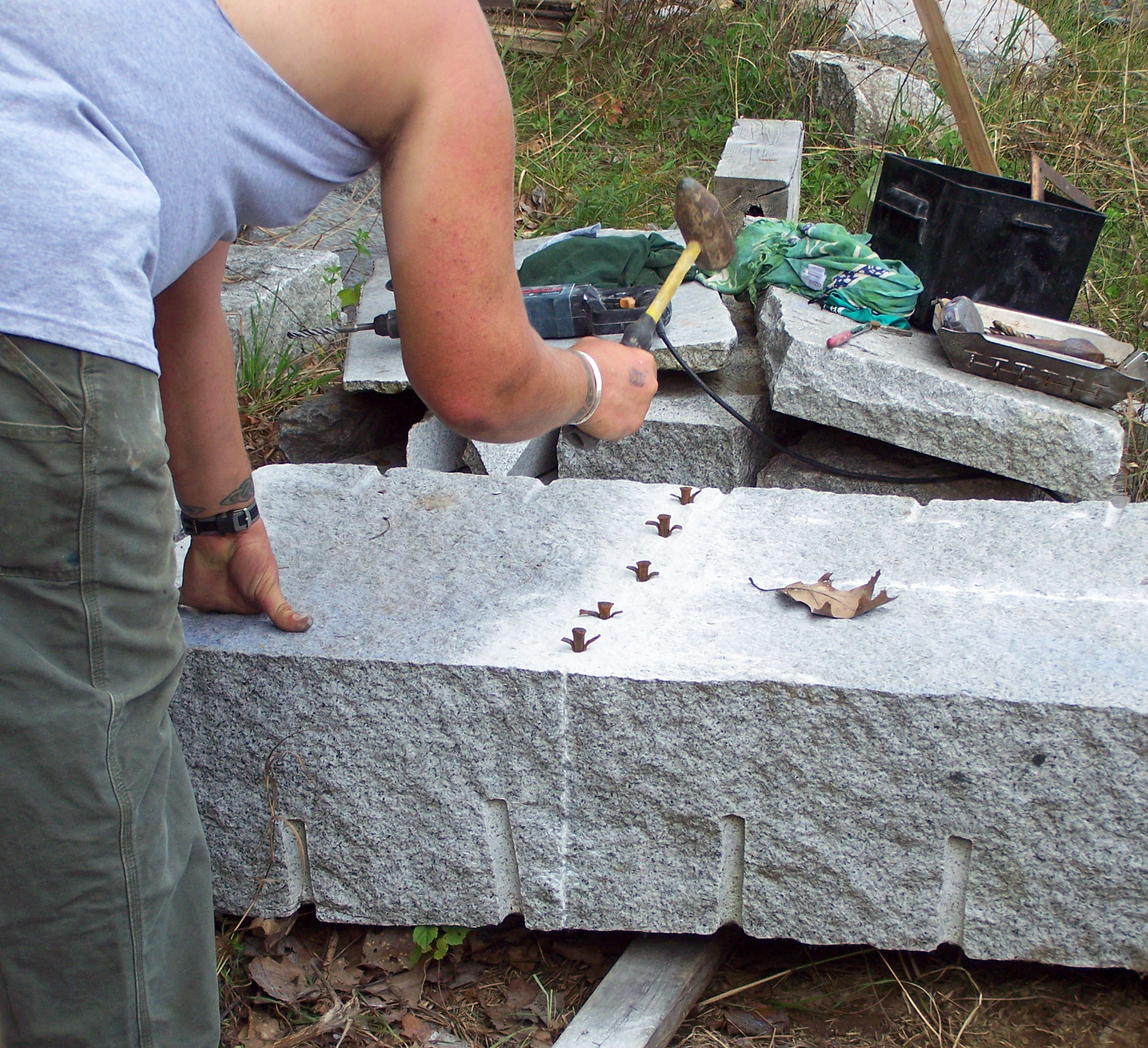
The stone masons are always at the fair.  Here they are demonstrating how to cut granite into blocks.  Once small holes are drilled and metal pegs are inserted, the mason has only to gently tap on the tops of the pegs in rotation for the stone to–amazingly–break apart in a clean line.  Drilling the holes takes time and really good drill bits.  The masons were also demonstrating how to build stone walls with an arched opening, outdoor ovens, and sculpture tools and work in progress. 
The wood workers also had all kinds of demonstrations, to include how to debark felled timber and how to cut it into planks by hand.  Boat builders were also demonstrating how to build sailing boats and canoes.

I love, too, the whimsey at the fair.  Here’s what I mean:
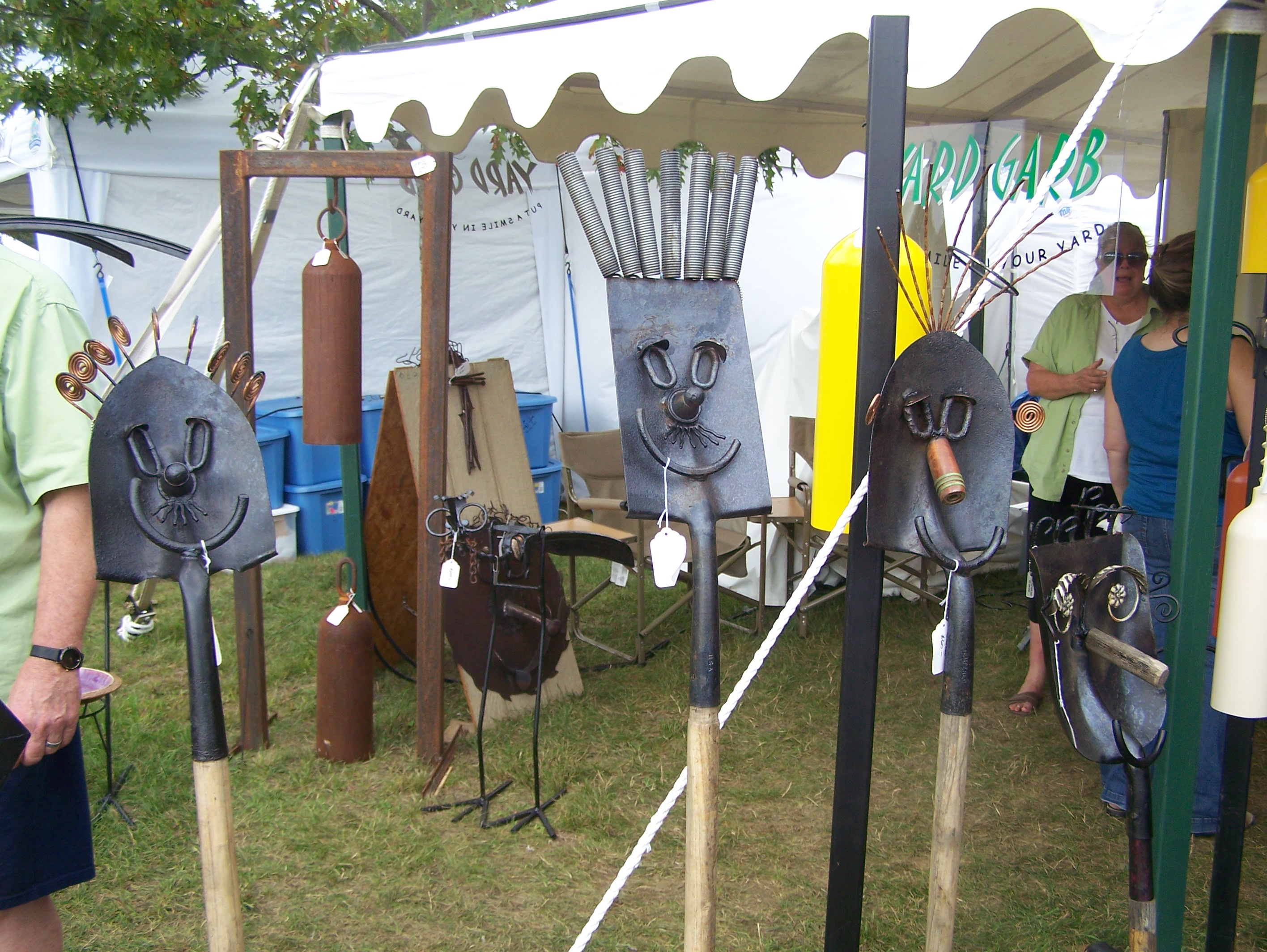
Grinning shovels (a welder demonstration) and awesome birdhouses!  

I’m always powerfully interested in what is growing at MOFGA and how they are growing it.  Each year the hoop houses get more interesting.  Here is a traditional hoop house–which, with inside row covers, allows for 4-season growing in the cold Maine climate.  The pioneer of this method is Eliot Coleman, who lives further north than we do–on the Blue Hill peninsula. 


Here is a “giraffe” hoop house that fascinated me.  It does not take up much space–a prime consideration for me with my tiny growing space, it’s easy to assemble, and it allows 4 paste tomato plants to fully ripen fruit.  We had a great tomato season this year, but even so, I brought in about 50 pounds of green paste tomatoes that just did not have enough time and warmth.  Here’s a solution. 

And, finally, the best for last:

Many, many varieties of fall pumpkins and squash–aren’t the white pumpkins interesting?

And, GREENS!  Collards and different types of kale:

LONG LIVE THE MOFGA, COMMON GROUND FAIR!!!

Turkey Tracks: Cider Pressing Potluck

Turkey Tracks:  September 30, 2010

Cider Pressing Potluck

Boy am I bummed!

We were invited to our neighbors’ annual Cider Pressing Potluck, and I did not take my camera.

What a mistake!

Chris Richmond and Susan McBride live just up Howe Hill from us, and it has been really fun to watch how they have added to their family (three children now) and slowly and patiently improved their house, barn, and land.  The farmhouse and barn are especially lovely in the way that old New England properties are.  The house has pumpkin pine flooring that is at least a foot wide and is the color of…pumpkin.  I envy them the barn, and they are just now finishing repairing the lower section–which has been a major project for them.  They have laying chickens, geese who are keen watchdogs, and, sometimes meat chickens and turkeys.  Susan is expanding the gardens every year and now has two hoop houses.  The second one came this summer and is large.  Already there are strips of green plants beneath the plastic roof.  I will be able to get winter greens from her, and I’m excited about that possibility since she embodies what I hope will happen more and more:  small growers will grow beautiful food for their neighbors and friends and enough of them will do it so that we don’t have to eat food shipped here from Florida and California.

There is an apple orchard on the uphill side of the farmhouse, and that’s where the cider pressing and potluck took place.  What a fun day they made for us!  The people who pressed the cider had made all their own equipment.  Truly, this kind of knowledge needs to be preserved, and it was so generous of them to share it with everyone who came to the potluck.  Here’s where my camera was sorely missed!  There were three  buckets where the apples got washed three times, a piece of simple equipment that gobbled up the apples and cut them into small pieces, a straining system with some kid of heavy cloth in a box that let some of the immediate juice come out, and a press where the boxed apples in fabric got…pressed.  The cider was delicious!

Yes, the cider was unpasteurized.  If you think drinking unpasteurized cider dangerous, here are some of my thoughts.  Real cider is a whole food that is filled with enzymes, nutrients, and, best of all, great flavor, especially if several varieties of apples are used.  It bears no relationship to the sugary hit you get with commercially made apple juice.  Of course, as with all foods, you have to trust that your cider presser is not using bad/rotten apples, has cleaned them properly, is not using anything but organic apples, and so forth.  We always try to save freezer space for at least a few quarts, and when I defrost them in the spring, the juice is like a spring tonic for us.

Consider, too, how so-called “safe” juice is made–a process approved by our FDA.  Let’s take orange juice as an example.  Industry puts the whole oranges into a machine so as to get as much oil as possible out of the skin.  But, commercial oranges are a heavily sprayed crop–most often sprayed with cholinesterase inhibitors and organophosphates, which are neurotoxins that cause degeneration of the brain and nervous system.  It amazes me that intelligent people can think they can eat/drink food sprayed with neurotoxins and not experience any damage.  Or, that the poisons magically go away in time.  They do not.  Also, there is a fungus in fruit that is resistant to both pressure and heat, so pasteurization does not kill it.  Raw fruit juices, as is also true of milk, contain enzymes that can sometimes destroy this kind of contaminant.  Some strains of E. coli are also resistant to pasteurization processes.  Additionally, treating juice with industrial process involving heat and great pressure can produce intermediate products that are mutagenic and cytotoxic.  In other words, treated juice can have cancer-causing compounds.  The sugar load of treated juice, without the natural enzymes and nutrients, is hard on teeth.  And, industry adds soy protein and pectin to keep juice looking cloudy and to prevent solids from settling.

Commercial orange juice is a highly-processed, adulterated product that you are drinking at your own risk.  Better to eat a whole orange.  Or, to drink fresh cider from a presser you trust.   Here’s a web site with more of this kind of information:  “Dirty Secrets of the Food Processing Industry”:  http://www.westonaprice.org/modern-foods/567-dirty-secrets-of-the-food-processing-industry.html

Susan and Chris had set up tables outside for the potluck, and soon the yard was filled with running, laughing children, adults drinking cider and eating delicious food–for everyone had brought special dishes.  I brought my favorite meatloaf.  Here’s a picture (taken by Tami) and my recipe, developed over 45 years of cooking:

Louisa’s Meatloaf

2 pounds of ground meat–if it’s very lean, add several tablespoons of fat (butter, coconut oil).  You can use combinations of meat if you like, like a bit of pork with beef or buffalo.  I don’t eat veal since I disapprove of how baby calves destined for veal are treated.  I also would use meat from organic, pastured animals.   Lamb meatloaf is also delicious!

a handful of rolled oats or cubed leftover bread to absorb juices

2 GOOD eggs

1/4 cup finely chopped onion

about 1 1/2 cups of a grated veggie to keep the mixture moist (carrots, zucchini, mushrooms)–or a combo–use what you have around or what is in season

1 cup of grated cheese–whatever you have on hand that needs using or what you especially like

A dash of cream or milk to help bind the ingredients

Seasons:  salt, pepper, herbs (chopped fresh herbs are lovely, especially thyme and/or Italian parsley.  A dried fresh mixture of Italian herbs or Provencal herbs (with lavender) are also nice.

A topping to be put on after shaping (below):       sliced tomatoes with some basil leaves in summer, or slices of zucchini with a good tomato sauce that does not have a lot of ingredients.  Meatloaf seems to ask for a tomato sauce of some kind.  I really try to stay away from cans because of the lining chemicals (phthalates and BPA), but here is where I might buy a small can of good-quality tomato sauce.  You could also use one of the good ketchups–not Heinz, etc.  Get one without a lot of “spices” (MSG) and with ingredients you know and understand.  Look in the health-store section of the store.

Don’t overmix.  With your hands just combine the ingredients.  I use something like an open 8X8 pan, or a more rectangular, bigger shape, and form the meatloaf into a football shape.  It cooks faster than trying to put it into a loaf pan.  Cook at 350 degrees for about an hour.  I also don’t worry if it’s a little pink in the middle as overcooking beef takes away many of its enzymes, nutrients, etc.

Let the meat cool for about 5-10 minutes before cutting–letting meat sit and cool a bit allows juices to stay in the meat and not flow out into the pan when you cut into it.  Also, the meat continue to cook, so pull it out at the pink stage so it does not overcook.

 ENJOY

(Cold meatloaf sandwiches are fabulous!)