Turkey Tracks: I Like My Bread

Turkey Tracks:  November 8, 2010

I Like My Bread

Take a look at what came out of my oven last night:


The loaf on the left is a wild yeast sourdough bread that is cranberry, pecan, and chocolate.  The one on the right has dried cherries and walnuts.  I froze the latter and ate a slice of the former for breakfast.  Yummo!

I’ve had this wild yeast sourdough starter for about 4 years now.  I forget quite how I started it–starters aren’t all that hard.  Sally Fallon and Mary Enig have recipes in Nourishing Traditions.  Any good bread book does, actually.  I never add commercial yeast to it.  It took a while to really get going, but now, you can see it’s popping up beautifully. 

I have developed a sponge method that takes about 2 days.  Sometimes, 3, like yesterday when the mixture sat covered on the counter bubbling for 2 days and picking up more yeast because I forgot it.  I feed the starter one day and pull off  half for next time.  Then I mix up a sponge and let it sit for a day.  Then I knead and bake.  It takes me 3 minutes to mix in more flour, 10 minutes to knead it, and it sits and rises for at least two hours, and bakes for an hour.  Clean-up is about 10 minutes.

My bread is probably very close to an older European bread.   It’s just wild yeast, flour, and water.  I don’t add salt as that draws moisture and makes it mold quicker.  Rather I slather it with salted butter or unsalted butter and REAL sea salt (grey, moist) sprinkled over the butter.  I can add fats, or sweeteners, or eggs, but I rarely do.  This time I added the dried fruit, nuts, and, as an adventure, the chocolate.  And, I only eat one piece a day at the most as I really control the amount of grains I eat.  This bread, too, is fermented with the sourdough starter, so the phytates, which can and do cause chronic illnesses, are managed.  Everyone used to soak grains, nuts, and seed before eating them, but we’ve forgotten how, and we’re eating a ton of grains these days–which is a big factor in all the chronic disease we have going on. 

My bread is best sliced and toasted.  It’s too heavy for sandwiches really.  And I’ve mostly given up sandwiches anyway.  Too much bread.  I just eat the innards of sandwiches. 

I’m looking forward to breakfast tomorrow!

Turkey Tracks: The Elegance of the Hedgehog

Turkey Tracks:  November 8, 2010

The Elegance of the Hedgehog

Muriel Barbery is a French professor of philosophy.  Her novel The Elegance of the Hedgehog has been enormously popular in her native France, England, and in America. 

I do not see why.

I believe the novel’s success to be partly due to a lack of critical reviews.  The reviews on-line are all laudatory.  So is the novel’s popularity due to some popular idea that this is a philosophical novel that produces cultural capital if one has read it because it does discuss various philosophical ideas along the way?   But, for me, Barbery’s philosophical stance in the novel is incoherent.  And, Barbery shocks the reader by killing her protagonist just when the three central characters have come together in an interesting way.  It’s as if Barbery does not know what to do with them once she’s set their stage.  And, I found it very difficult to capture the large cast in my head as I read.  I kept having to page back to see “who is that again?”

But, let’s look at how Barbery handles philosophy.  She, as is customary, divides the subject into two major camps:  idealism and materialism.  Idealism comes from the mind of the individual interacting with the world, as in Descartes “I think, therefore I am.”  And, phenomenology, a subset of idealism and the subject of a debunking discourse in the novel– is the belief that the real world in inaccessible  because all that exists is perception formed in the mind.   Materialism, on the other hand, believes that there are bones, dates, and observable constructs in the world.  Marx, for instance, is from the materialistic camp.  But, Barbery dismisses Marx on the first page of the novel.  Not all of materialism, but Marx, who writes of capital and its impact on class–a major subject in the novel as the main protagonist is a concierge in a fancy apartment filled with rich people. 

With idealism dismissed and Marx dismissed, what remains?  For Barbery it’s a particular material moment of viewing Beauty.   ART, thus, gives us the power to erase desire because we can look at beauty/art without wanting the objects portrayed in the art.  Further, the still life, or the objects within art, hold beauty in a timeless moment.  Barbery describes other such timeless beautiful moments of beauty in the novel.  So, all of materialism is reduced to beauty held in a moment seen only by the observant–like the petal of a flower falling that one of the protagonists sees. 

But, but, but–isn’t beauty in the eye of the beholder.  And, aren’t notions of beauty formed by one’s culture and by the context within which one lives?  History shows shifting notions of beauty.  Yet, a key scene that sketches out Barbery’s philosophy is when the concierge visits the apartment of a wealthy Japanese man and sees a western still life from several hundred years ago.  Together the two people–one Asian and one French–salivate over this very Western picture.  Would the Japanese man really have this notion of beauty?  Would the concierge really enjoy esoteric Japanese movies that display Japanese notions of beauty?  This is the great bourgeoise move that makes all people alike under the sun.  By drawing a notion of universal beauty that can be seen by all, Barbery erases the very real differences that exist between cultures, between ages.  What has followed that idea around the world has been a violence carried out by those with the power to do so.  The different are made to want the same things as the conqueror when their culture was/is very different. 

Aha, but maybe that’s where the popularity lies.  It’s the same old Western story told yet another way, isn’t it?  And, isn’t the viewing of ART actually a moment of idealism, not materialism.  Isn’t that moment mediated by the mind and the cultural knowledge of the mind?  So, what’s really going on here is an entrapment within the idealistic circuit which maintains the status quo of… class reality, for instance.

Yes, that’s it.

Turkey Tracks: October Book Club

Turkey Tracks:  November 8, 2010

October Book Club

It was my turn to host our book club.

We meet late afternoon for tea and discussion.  This month the book was The Elegance of the Hedgehog by Muriel Barbary,which I want to discuss in a separate entry.

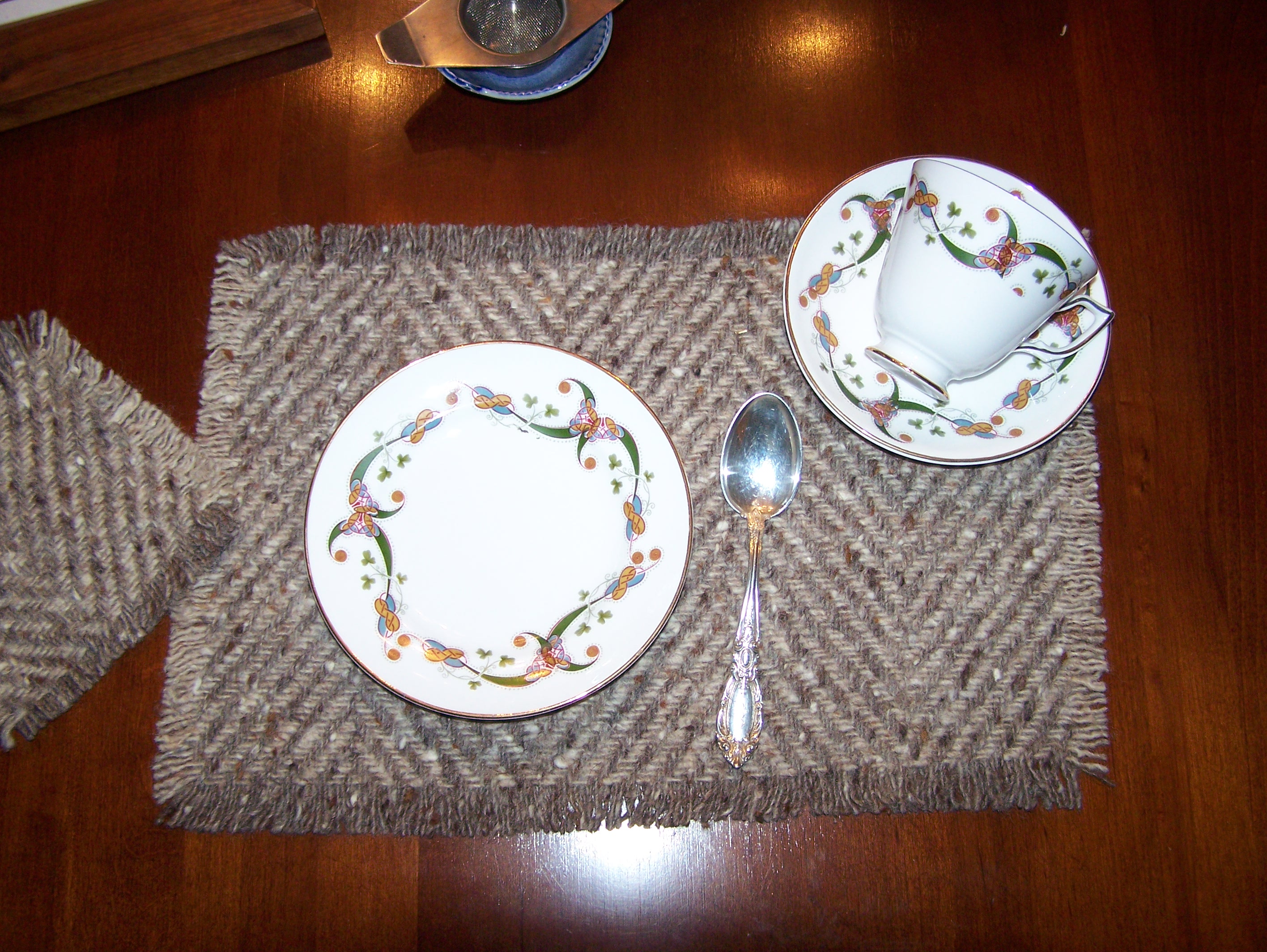
For some reason I was thinking about John’s mother.  Norah gave me so many pretty things over the years.  Among them this Royal Tara tea set:


The wool placemats and napkins were a wedding present 44 years ago.

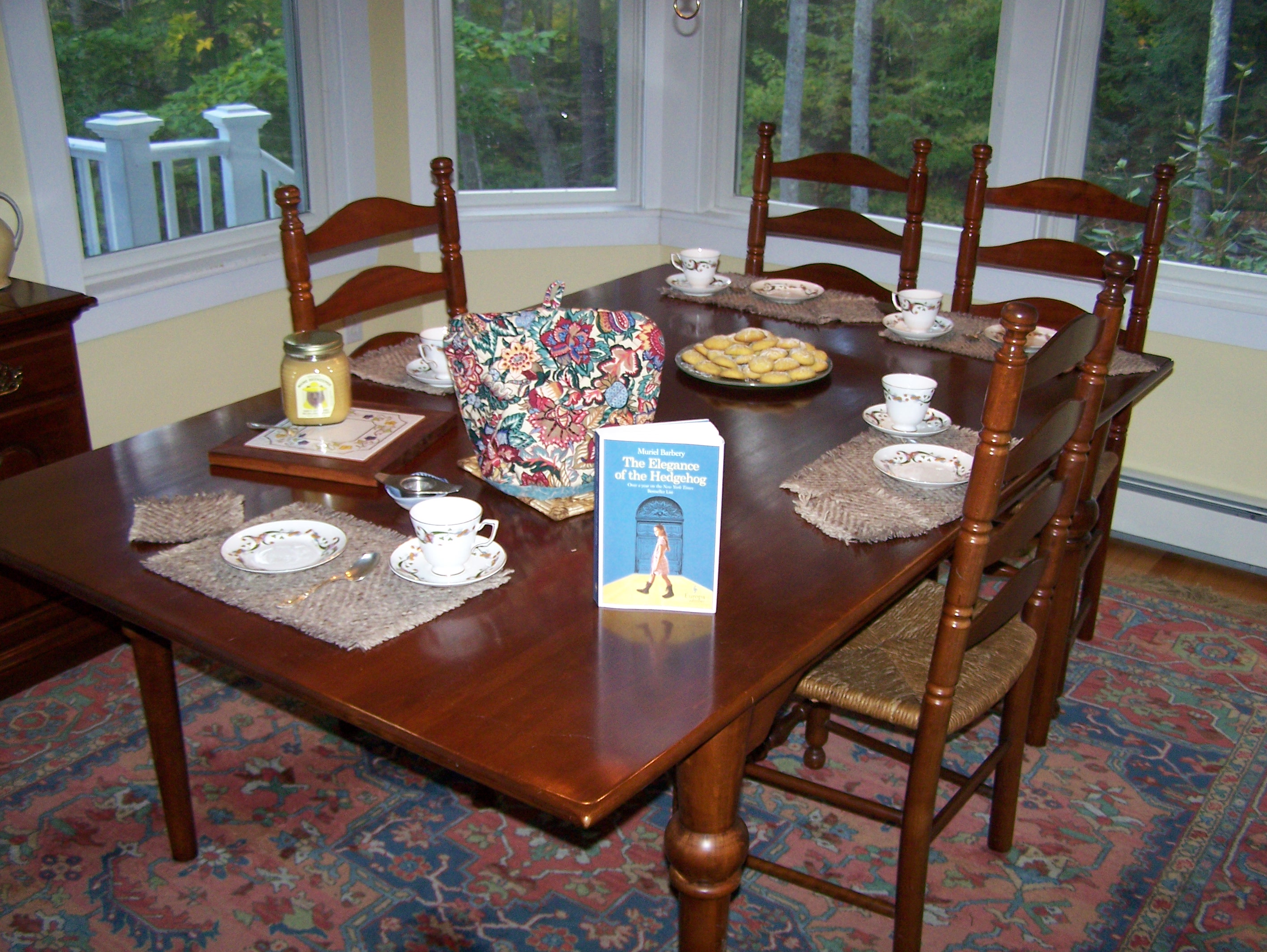
Here’s what the table looked like.  Not too fancy, but comfy feeling on a cool day.


I made two kinds of cookies.  A buttery saffron one from the Pensey’s Spices catalog that had just arrived:


They were quite good, but are still hanging around since we really don’t each much white flour and sugar.   Because of that I made macaroon cookies that are almost healthy.  They do not have any white flour, have healthy coconut meat, limited sweetener, and some good nuts and dried fruit.  It’s a recipe I’ve evolved from one in Sally Fallon Morell and Mary Enig’s book–a mainstay in my kitchen–Nourishing Traditions.   OK, so the chocolate isn’t great, but, there you have it, I love chocolate in the winter.  I don’t seem to have a thing for it in the summer.

Louisa’s Healthy Macaroons

Preheat the oven to 300 degrees and  line two cookie sheets with either the new silicon sheets or parchment paper.  (I’m afraid to ask if these silicon sheets are ok to use as they make baking cookies so easy.)

4 egg whites (I use the yolks in yogurt fruit smoothies)

pinch of sea salt (the wet grey kind with minerals intact, not the white dried kind in the grocery store)

 2 Tablespoons arrowroot

1/2 cup maple syrup or honey–or less (the honey cooks faster than the maple syrup)

1 teaspoon vanilla (Fallon/Enig call for 1 tablespoon, but I find this too much since I have added more ingredients and since I was using Penseys’ double vanilla)

2 cups dried, unsweetened coconut meat (I order on-line from Coconut on-line and get a BIG jar which lasts about a year)

Add extras:  nuts that have been soaked in salted water and dried in a dehydrator to remove the phytates, dried fruit, chocolate bits.  Good combos are pecans and apricots, dried cherries and chocolate and nuts.  I just chop a high-quality chocolate bar into chunks.  I probably add a good 2 cups of extras. 

So, whip your egg whites and pinch of salt until you have firm peaks.  Add the arrowroot and sweetener and vanilla.  Add the coconut and mix with a big spoon.  Add the extras.  Do not overmix and break down the egg white mixture.

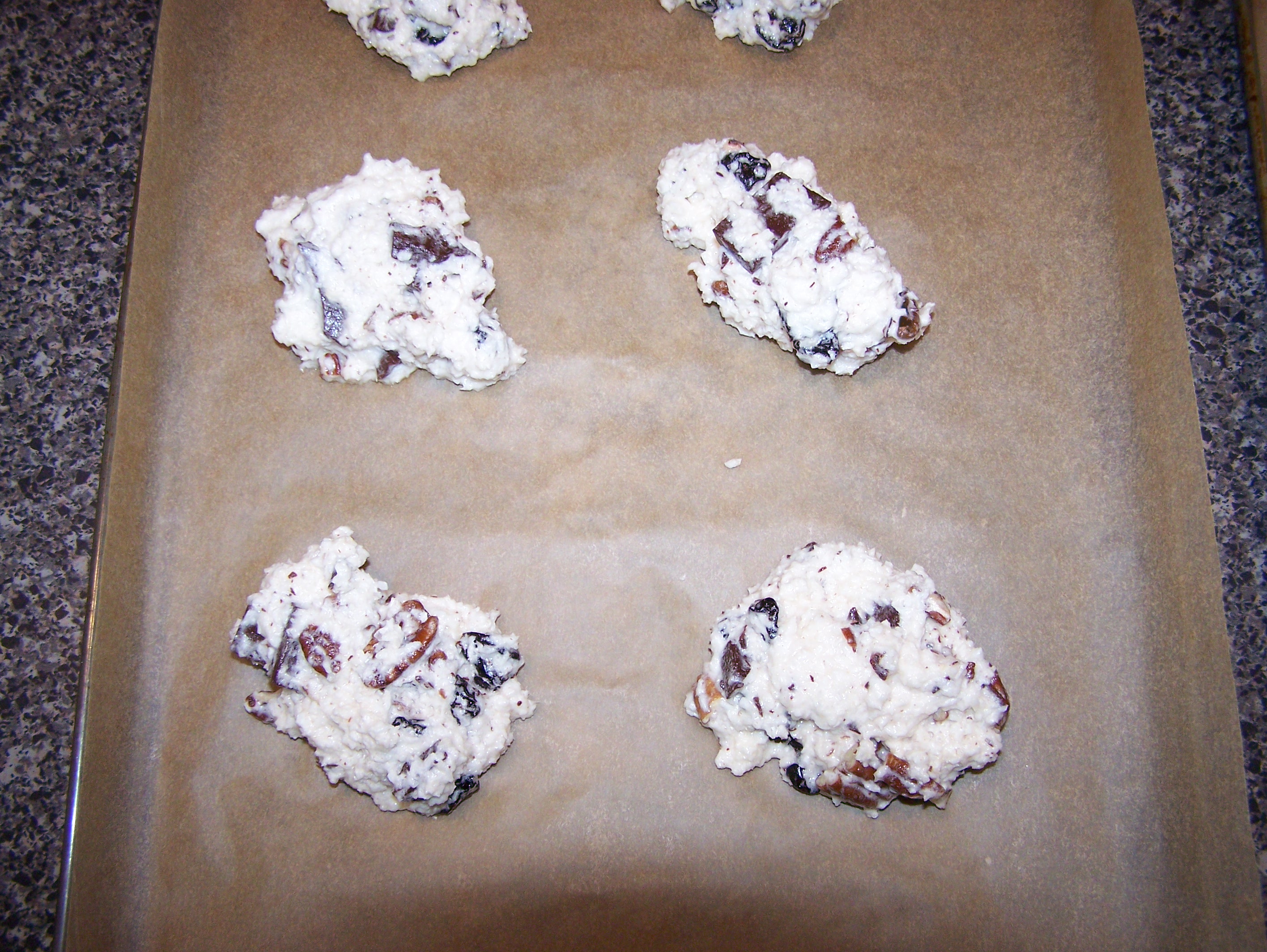
Put big gobs of the macaroon mixture onto the sheets.

Like this:

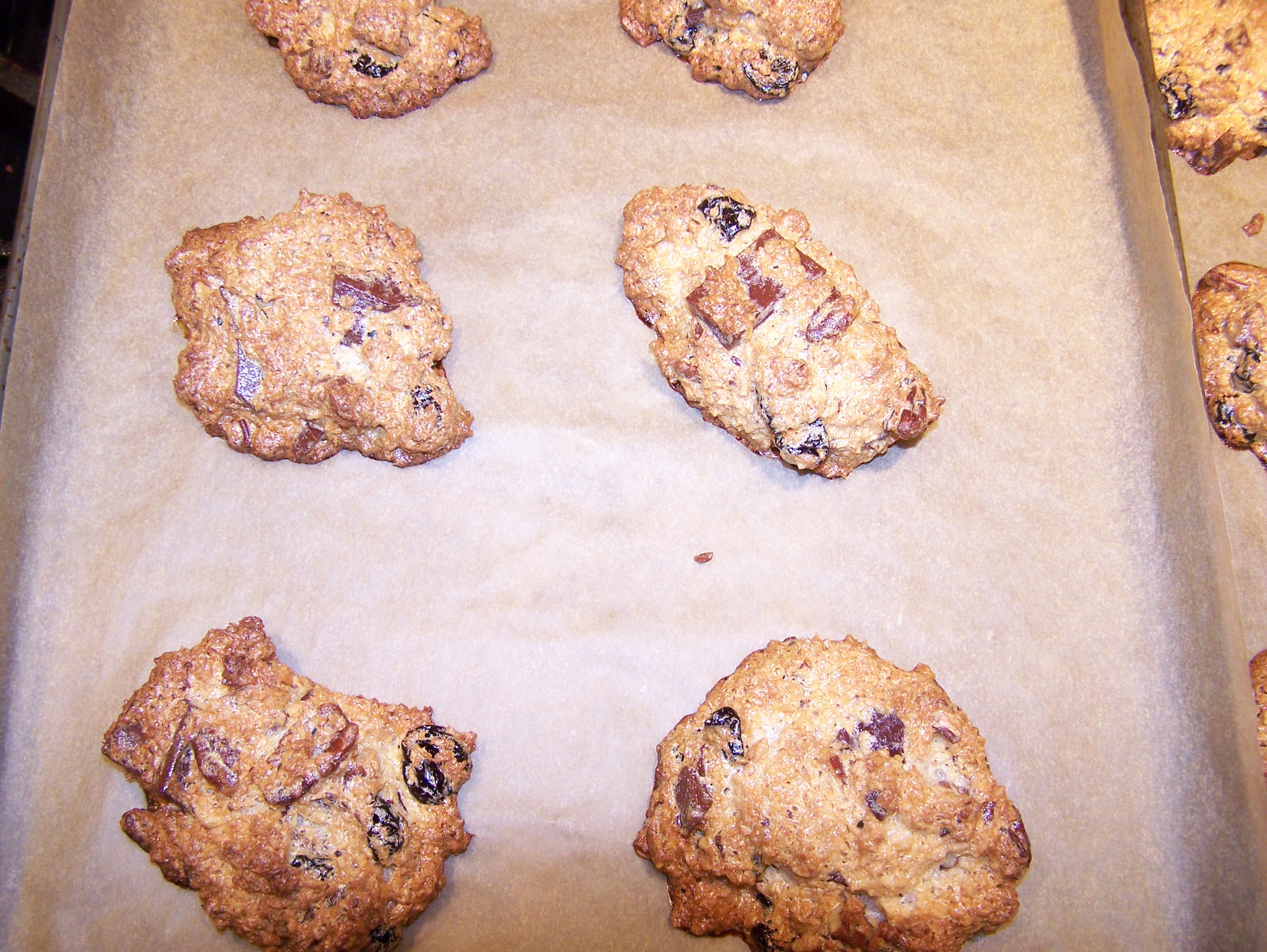
Bake at 300 degrees for 30 minutes and then turn down the oven to 200 and let the cookies dry out a bit for…about 30-40 minutes.  Taking them out early does not hurt them–they just get too sticky.  You want them to be nicely brown and a bit dry.  Here’s a picture of them done just right:

 ENJOY!!!   And put in an airtight container as they pick up humidity.

Turkey Tracks: John Buys Me A New Camera

Turkey Tracks:  November 8, 2010

John Buys Me A New Camera

My camera broke.  I can’t imagine why.  It just started eating batteries and, gradually, just stopped working.

No one dropped it.  Or, mistreated it.  It just…stopped.

That halted progress on my blog, of course.  I find text so much more interesting with pictures added.

John came to the rescue.  He bought me a new camera.  A slim little thing that is very powerful.  I love it already. 

He also spent hours fixing my computer when the new camera software caused the printer to stop working.

I find technology to be endlessly frustrating.  It can reduce me to tears and temper tamtrums.  And I feel like it wastes so much of my time since when things go wrong, it takes forever to sort everything out again.  I feel like I’ve missed several generations of learning with technology.  And nothing seems to be written down reliably so I can follow instructions.  My intuition is so NOT the intuition of technology.

Anyway, I’m all set to go again.  Thanks to John, who patiently comes to my rescue again and again.

Here’s a picture of–and thanks to–John with the new camera:

Turkey Tracks: New-Baby-Coming Projects

Turkey Tracks:   November 8, 2010

New-Baby-Coming Projects


We have a new granddaughter coming in early December.   We might even be in Charleston, SC, when she arrives.    

Anyway, when her mother Corinne and my son Bryan were here in the summer, Corinne and I took a day and picked out fabrics for some special projects.

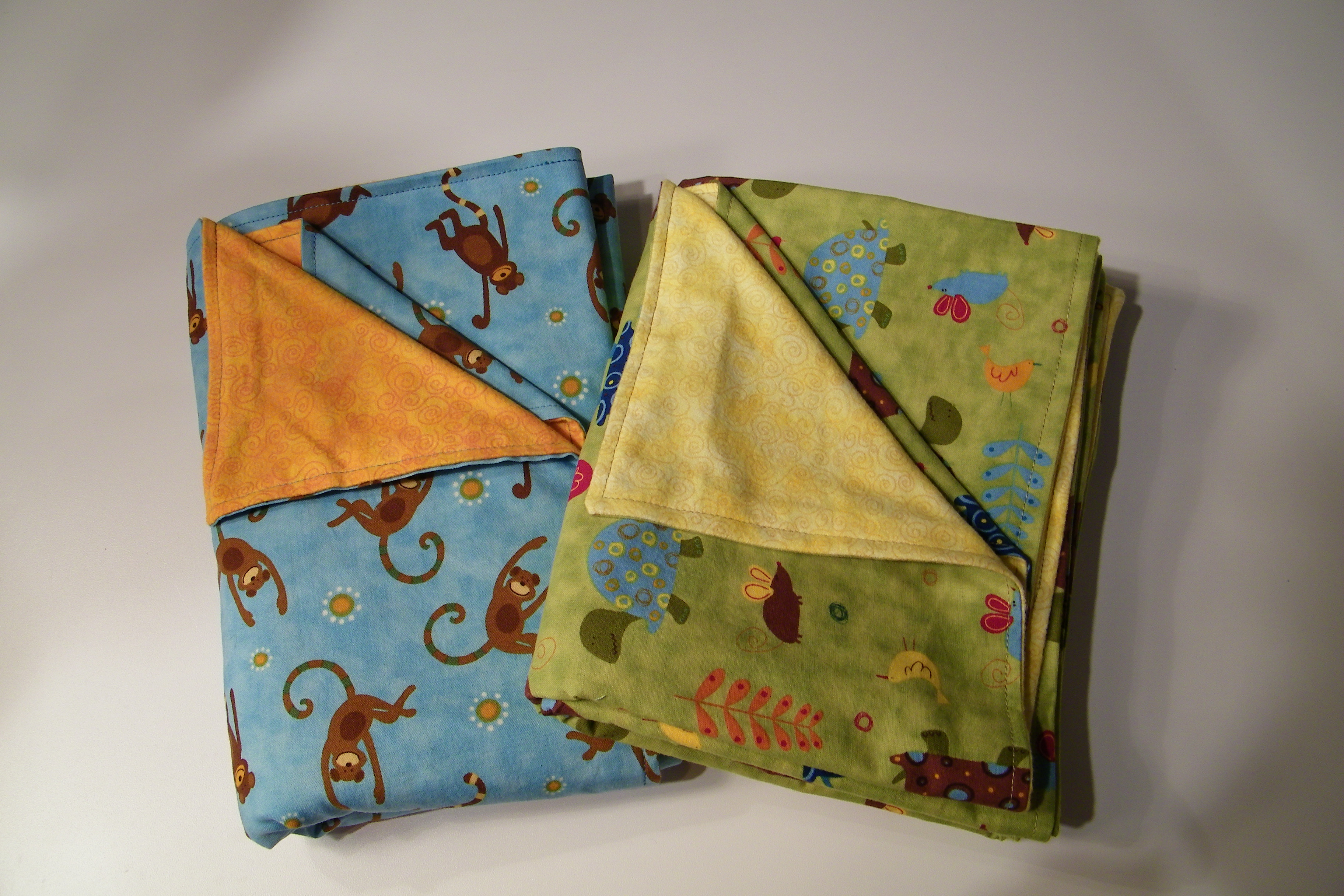
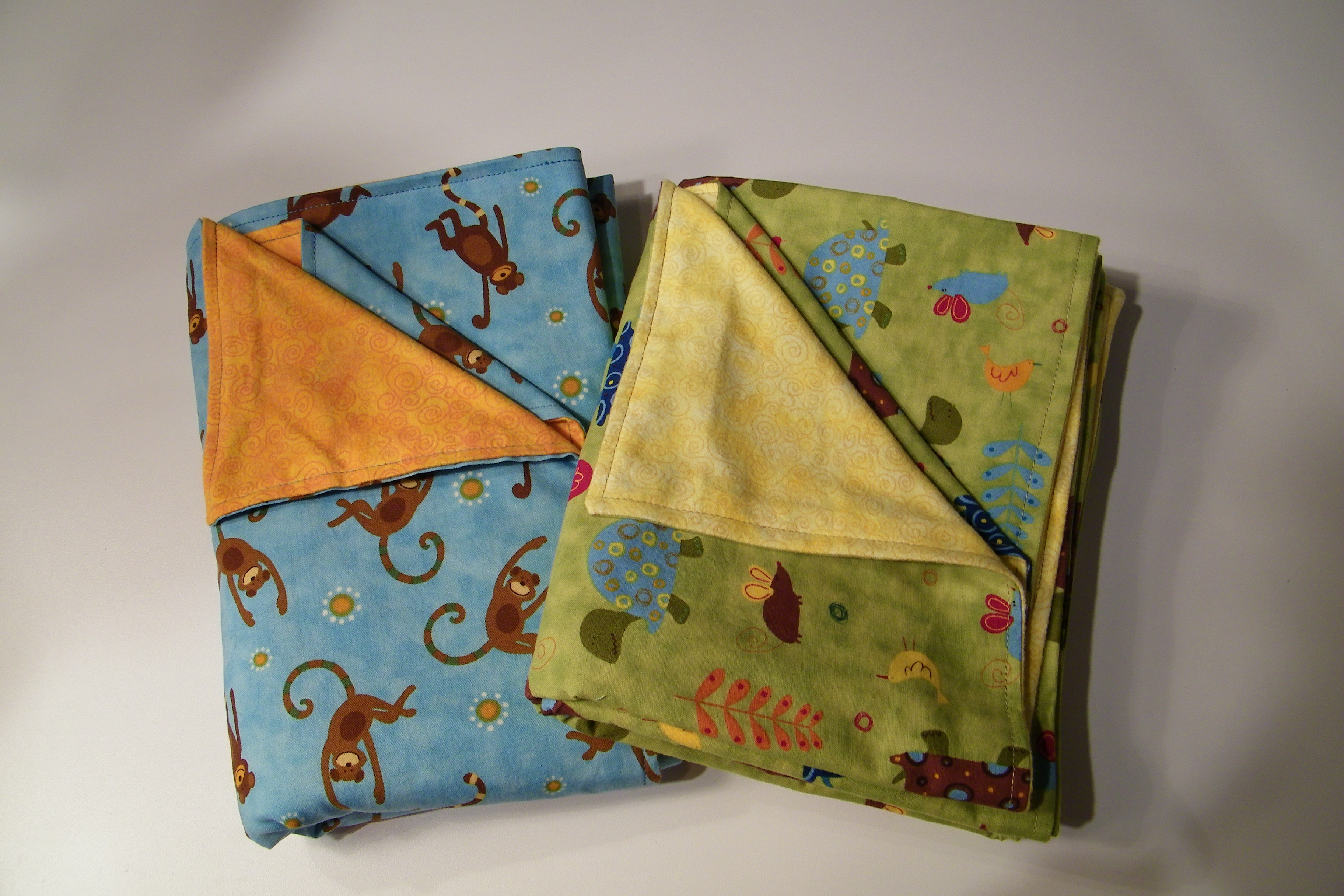
We picked out fabrics for two soft blankets:


These blankets are flannel on one side and a cotton fabric on the other.  Corinne loved all the bright, lively children’s prints on the market now and chose these two.  These blankets wash and wear beautifully and get used in countless ways.  I gave our other daughter-in-law two for each new child (for a total of 8!), and Tami put them under a baby’s head in a crib to catch spit-up (saving washing the whole sheet), on the changing table, on the floor, over a sleeping baby, and so forth. 

I buy 1 1/4 yards of each fabric, rip the selvages and edges to get straight grains, lay the two layers together right sides together, and trim where needed (the flannel piece is often larger), and sew around the edges (1/2-inch seam) leaving a turning space.  I trim down the corners and push them out.  Then, turn the fabrics right side out, iron, sew down the edges, and fold them prettily to show both layers. 

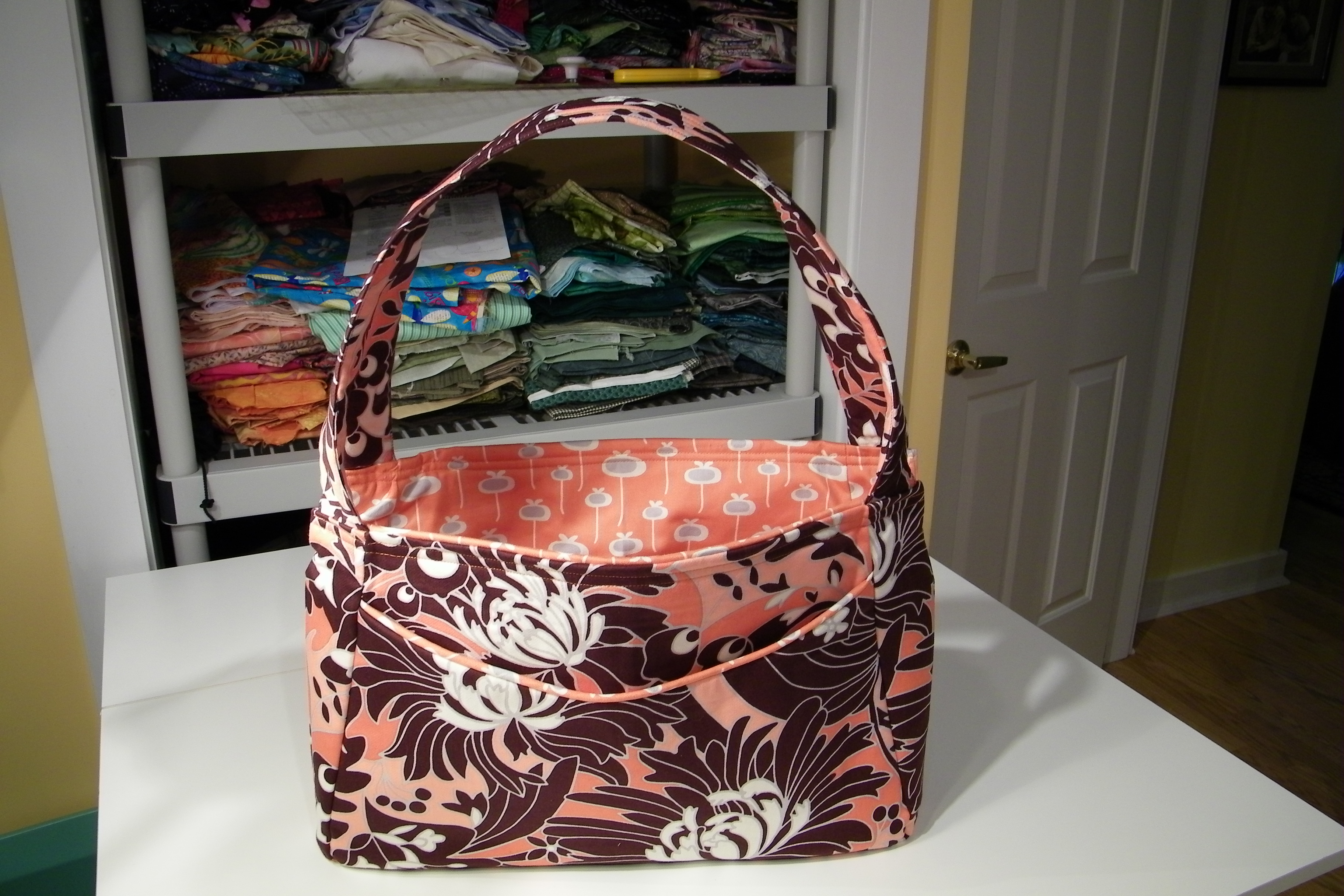
Corinne also picked out an Amy Butler pattern for a diaper bag and fabrics to make it.  Here’s what the finished product looks like.  There are big pockets on both sides and lots of pockets inside, which I divided on one side for bottles: 

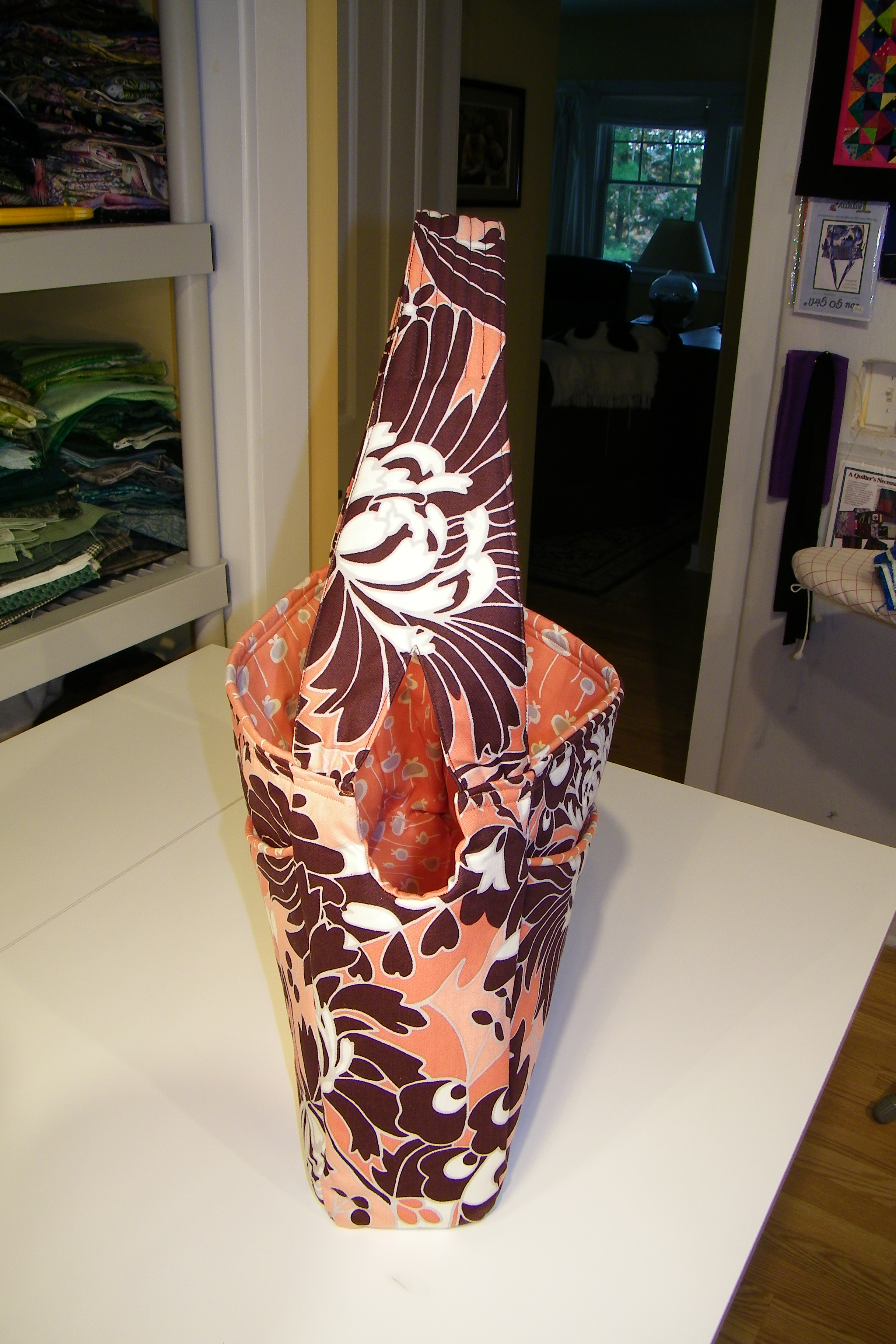
Here is an end view of the handle detail:

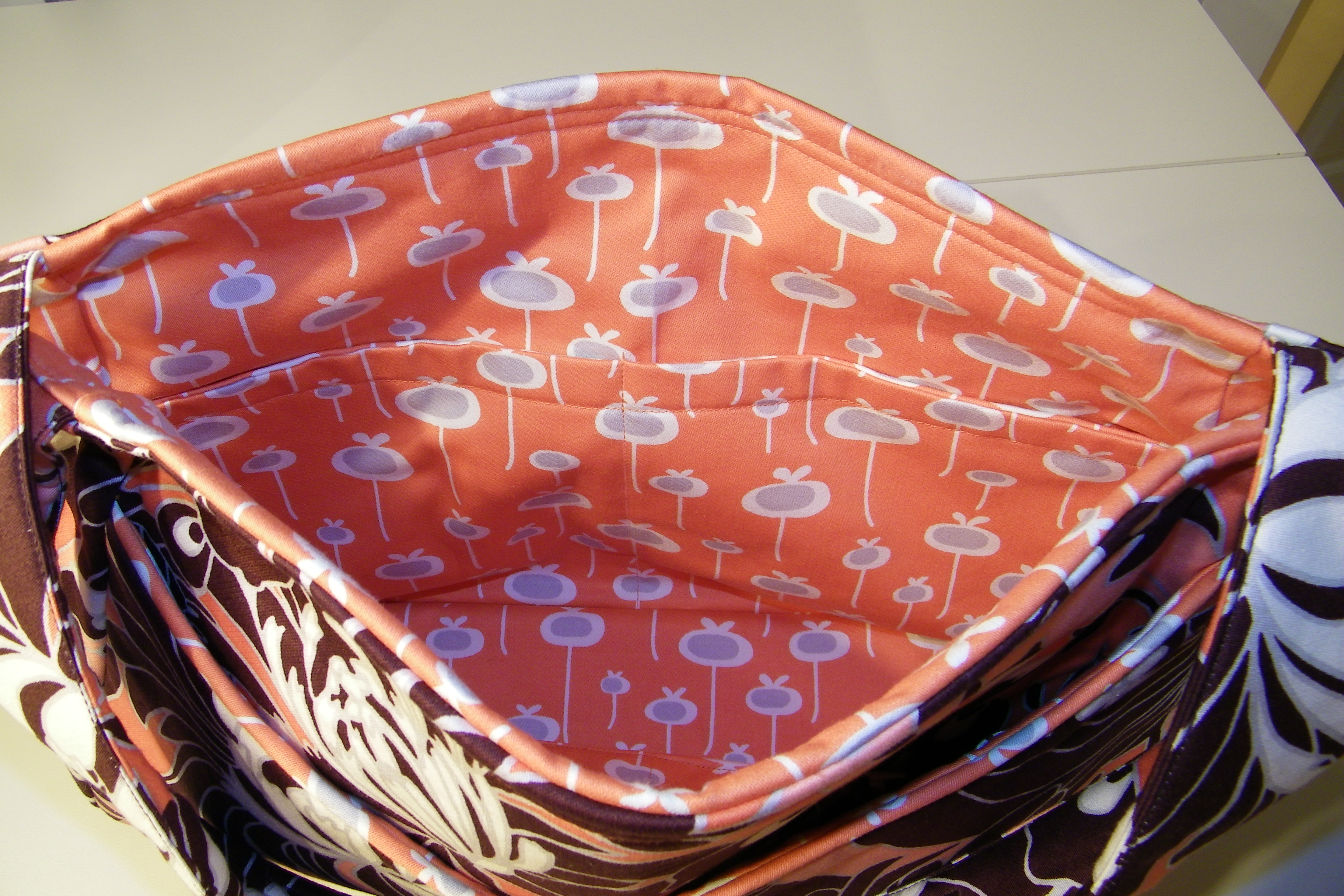
And, one of the interior:

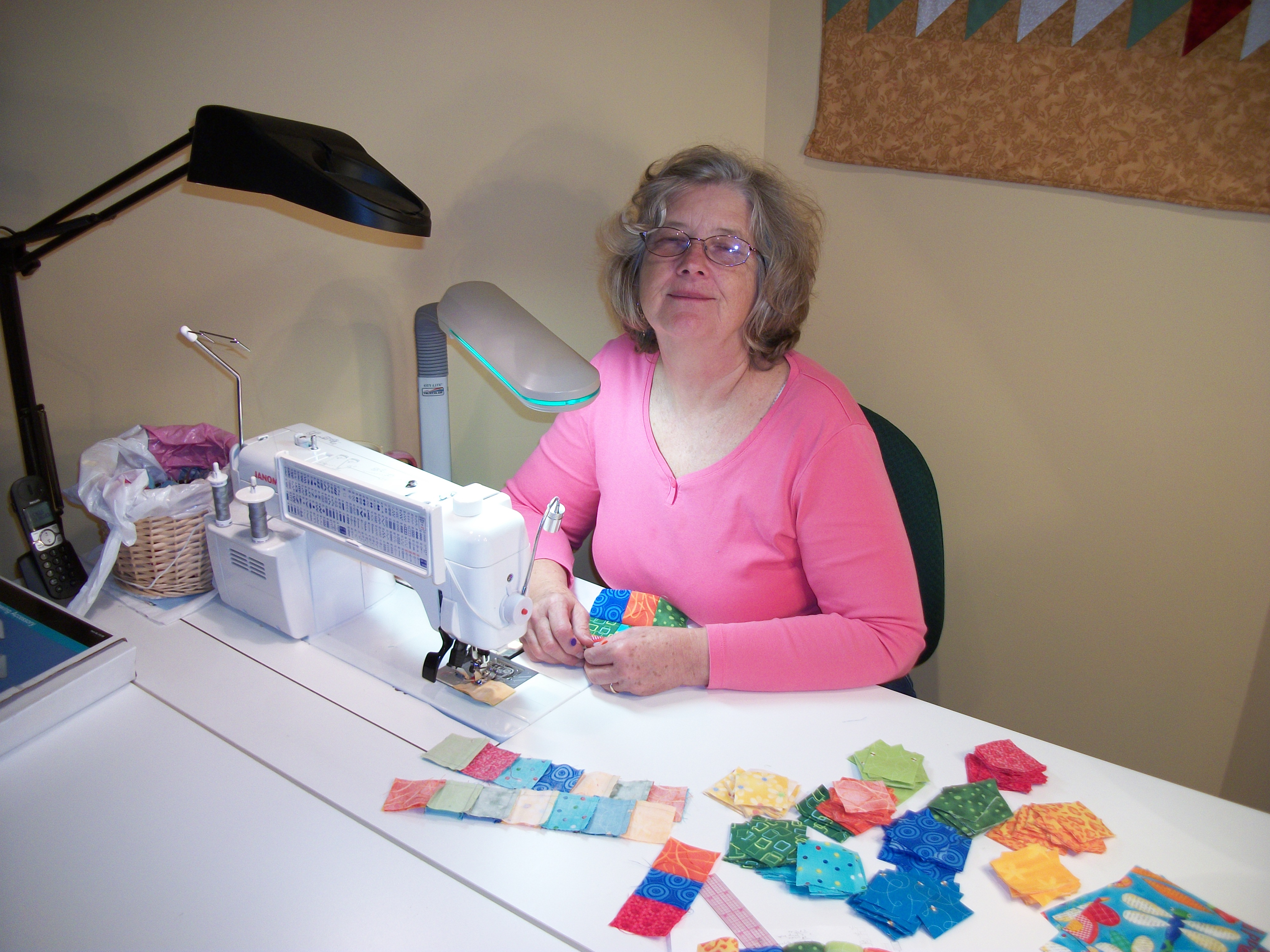
And, Corinne picked out an adorable bug fabric for the baby’s quilt backing.   She left the rest to me, and here I am, beginning work on the quilt for my new granddaughter:

And here’s a hint of what’s going on:

Turkey Tracks: Finished Rug

Turkey Tracks:  November 8, 2010

Finished Rug

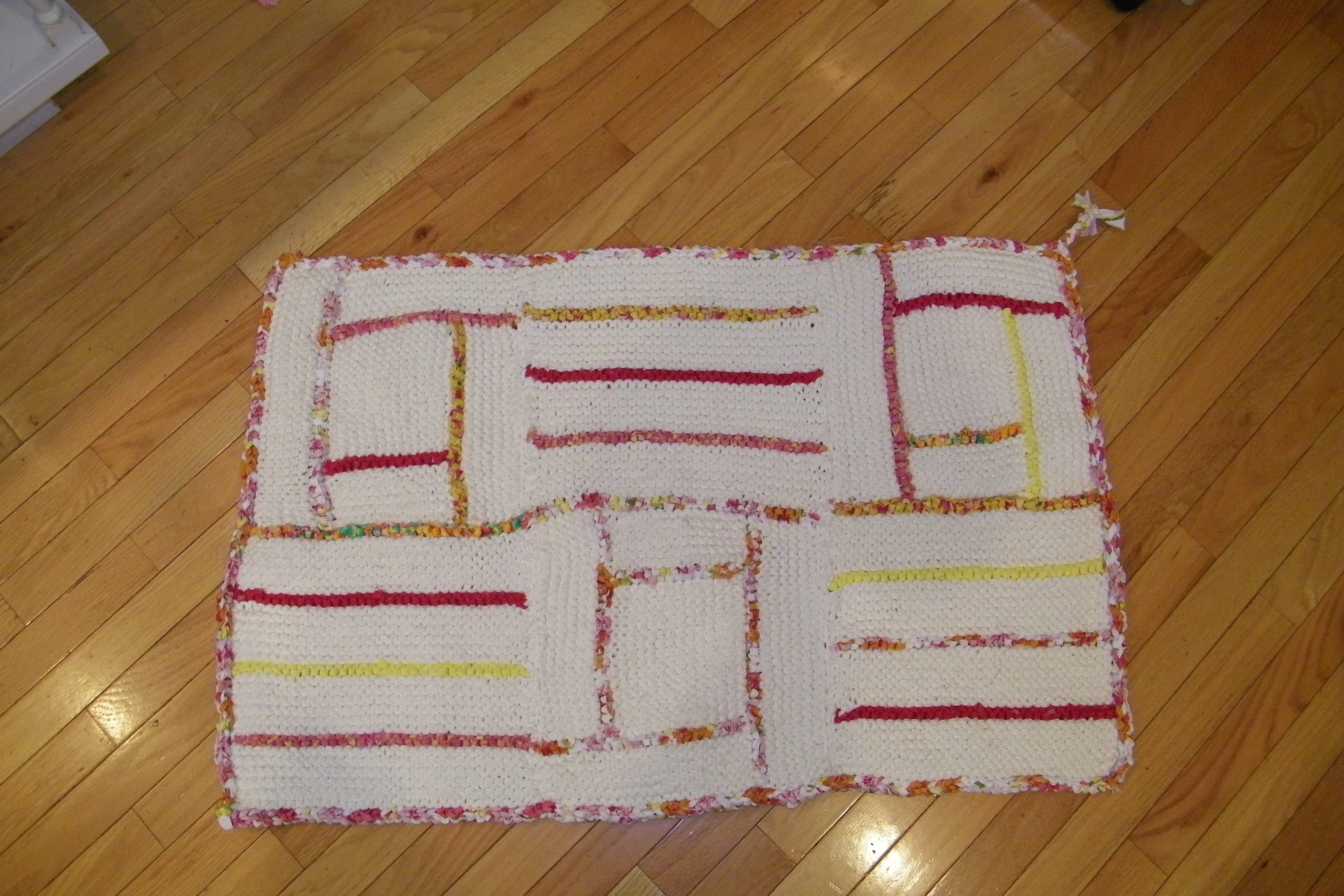
I finished the knitted rug I wrote about a few posts back.  It came out really pretty, don’t you think?  The colors are perfect for the kitchen–clear and bright.

I have enough cotton yarn and fabric left to make one more, which I likely will do.

I could have done a neater job on joining the three sections.  I need to review the mattress stitch again.  The joins are sturdy, however, and are not going to come apart.  Thank you Mason-Dixon quilters!


Turkey Tracks: Long-arm Sewing Machine, “Lucy”

Turkey Tracks:  November 8, 2010

Long-Armed Sewing Machine, “Lucy”


I’ve wanted a long-arm sewing machine for a long time, as I said in an earlier post.  But I was not sure what kind to get, who would service it, how to set it up, what kind of table would be sturdy, and could I really learn to be as good on it as Joan Herrick is.  (Joan is a fellow member of Coastal Quilters, a chapter in the Maine state quilters’ guild, Pine Tree Quilting Guild.)  Joan is an amazing long-arm quilter.  When I got some money from my mother’s estate, I took the plunge.  John named the daunting looking machine “Lucy” after we set her up.  Mother would be pleased as she had a secret desire to quilt but never took the plunge.

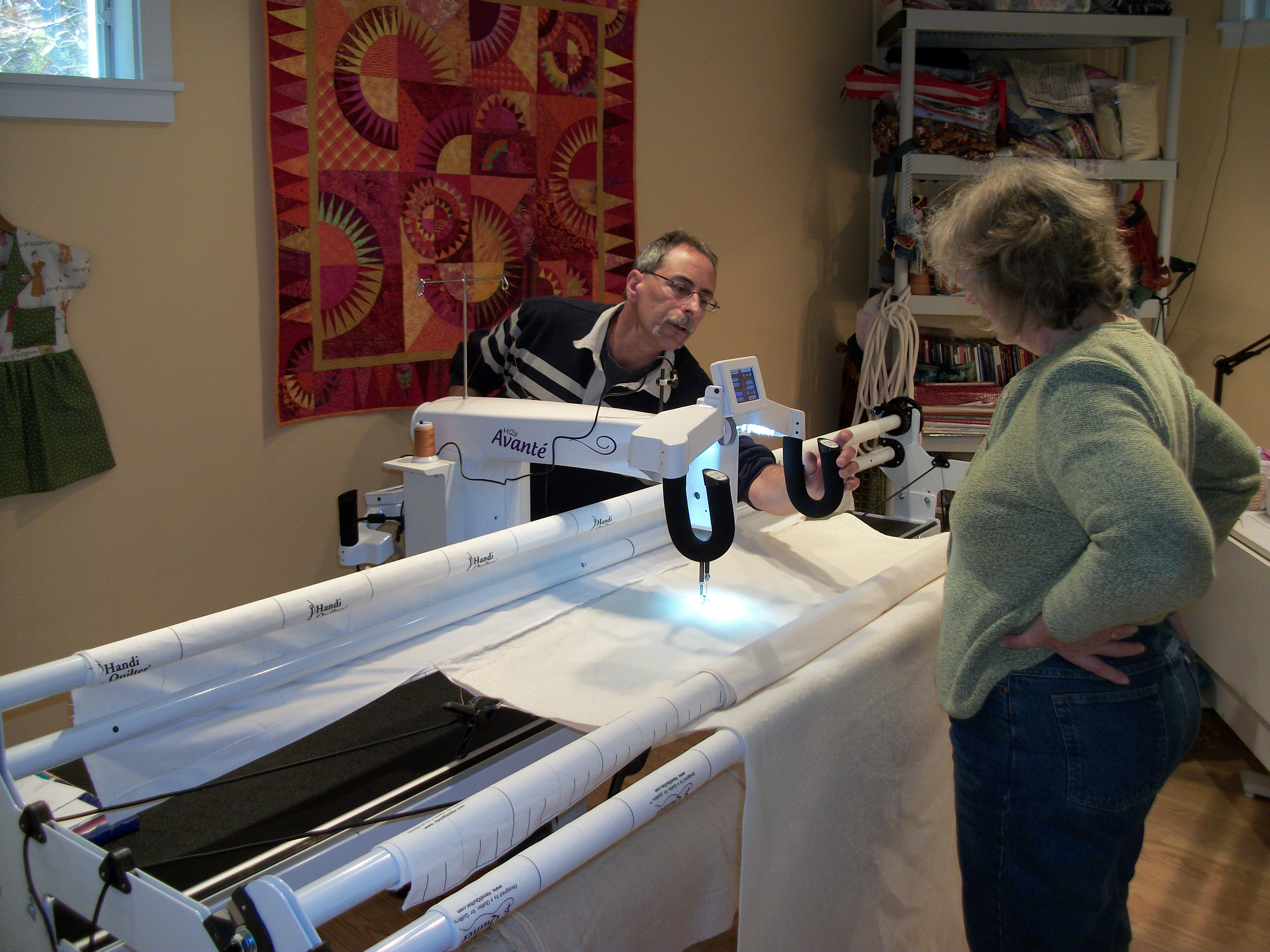
I got a Handi Quilter Avante, and it came to me from Utah.  I’ve tried all the machines in this class–made for the home hobbiest–and kept returning to it.  It has an 18-inch throat, which means I have an 18-inch strip to quilt before I have to roll up the quilt top.  For those of you who don’t know, a long-arm sewing machine slides back and forth on tracks, so you quilt from side to side on the quilt.  You roll the top, batting, and backing onto rollers, so you don’t have to pin all the layers together.  And, long-arms today have stitch regulators that keep stitches even across the quilt.  Even my first halting practice session made my work look beautiful.  But, there is a learning curve.  Free-motion stitching on a domestic machine involves using small muscles.  The long-arm requires you to learn to harness big muscle movements down to fine work.  There are, also, extra handles that can be installed for close, fine work.  With those, you sit on a stool.  For everything else, you stand and have at it. 

Also, you can operate the machine from the front or the back.  The back handles are used when you want to use a pattern you trace with a laser beam or grooved boards that a stylus fits into to trace a pattern.  I got two of these board patterns which I’ve never been able to manage on a domestic machine:   Bishop’s Fan and a Clamshell patterns.  And I came home with a few laser-traced patterns, but I was terrible at those when Gerri showed me how to do them.  More practice there for sure!  And, I’m partial to my own designs anyway. 

John and I spent a very fun day putting together the elaborate and sturdy table Lucy inhabits–a real learning experience for me.  We were able to get 8 feet of the possible 12 feet table set up, so I can handle quilts up to about 83 inches wide.  That’s a pretty big quilt.  But, it turns out Lucy has had TWO bad computer boards and does not work, so she is in Sanford (3 hours south) getting new innards.  I went down to Sanford for training for 2 days (a fabulous experience–thank you Gerri Waitte) and made another trip back to take Lucy to be fixed when it became clear that there was another bad board involved.  (I didn’t want to ship Lucy down to Sanford.)  Karen Johnson, or KJ, who just got her learner’s license, drove most of the second trip which was great practice for her, especially as it was pouring rain .  Sanford Sewing Machine has been terrific about getting Lucy fixed.  Tim Sansevieri even made a trip up to change out the first board, but it also was bad, as we discovered when he had been gone about an hour.  All of this board business is just a bit of frustrating bad luck and a fluke for both Handi-Quilter and Sanford Sewing Machines, and Lucy will be off and running shortly.  Likely we will pick her up when we fly back home from Charleston in early December.   

Here’s a picture of Tim and Lucy in my quilt room:

Turkey Tracks: The Fall Garden

Turkey Tracks:  November 8, 2010

The Fall Garden

Our beautiful, beautiful fall has moved into early winter here in coastal Maine.  We are still wearing our shoulder season clothes, which involves cotton fibers, but the day will come soon when we’ll be hunched over in the dry storage areas locating the bins with wool and cordoroy.   We’ve had a really warm, balmy fall–which has been full of ticks–once unknown in Maine.  No No Penny, who is a wood rat kind of dog, has really suffered with ticks this fall.  Here is a picture John took of the wetland down the hill from our house, but somehow, other than this one picture, we didn’t get any really good pictures of this year’s spectaclarly brilliant foliage.  And, this picture was taken early in the fall before the yellows really burst through.  I have this picture as my screensaver for the momet.

 Our garlic came from FEDCO, so I cleaned up the garden and planted it.  Planting garlic is really easy.  You just separate the bulb into cloves, dig a shallow trench (about 3 inches deep), put a clove about e very 4 or 5 inches, cover the cloves, and later, after a freeze, cover them with some organic matter–straw or hay.  I also sprinkle azomite over my garlic bed.  And, I work all year to add organic matter to the garden beds, including, now, composted chicken manure.  I don’t add too much manure as too much nitrogen isn’t good for the plants.  And, chicken manure is really strong.  I’ve also been reading that commercial farming has really depleated our soil of magnesium, which we humans need and are not getting in our food.  Since kelp and sea salt are good sources, I will pay more attention to amending with seaweed now.  One clove of garlic yields a whole bulb next fall and a tasty garlic scape about May when last year’s garlic is going or gone from our stockpiles.     

Cleaning up the garden involved harvesting the remaining beets and most of the carrots.  I left one row to winter over, which makes the carrots really sweet.   We will think about that row off and on during the winter.  Here’s what came inside:

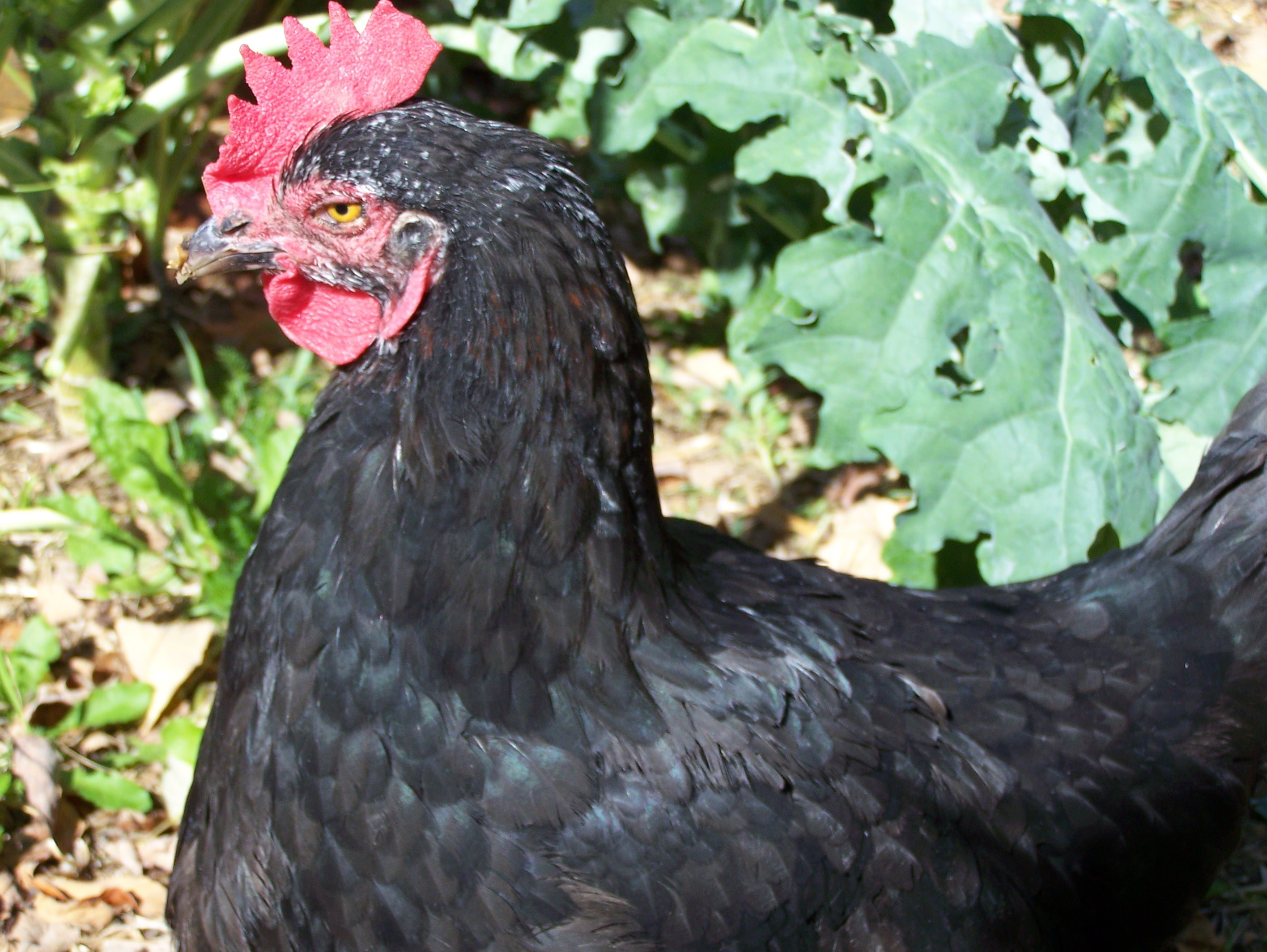
 I had a great deal of help planting the garlic.  I only have to appear outside and all the chickens come running.  If I have a trowel (overturned dirt! worms! worms!) they stick close to me like glue.  In the end, I had to put some chicken wire over the new patch to keep them from scratching at it.  Here is a picture of May May sticking close.  The white spots  around her head are, I think, new feather quills coming in after her yearly molt.   You can see the color of her comb and waddle are not as intense a red as they were in the spring.  She’s two years old now, and the faded color is a sign that all the eggs she’s laid have taken a lot out of her.  She will, likely, rest a bit over the winter and regain her strength.  We do not plan to augment with light this winter to keep our chickens laying artificially.  Nature knows best, and we people need to learn to eat what nature offers us in season.  Easter is celebrated because the days grow longer, and the chickens start laying strongly again.  The eggs provide much-needed nourishment after a long winter, and are nature’s plan for replenishing the flock.  Look though at how healtlhy her feathers look–that’s the meat and milk–good protein sources–I give the chickens each morning.  The chickens love to camouflage themselves under the big kale leaves, and they love to nibble on it too.   More than once I’ve been surprised by a chicken hiding under garden plants. 


KJ and Jake, from last year’s graduating class at The Community School have stayed in the area.  They came and helped us winterize one Saturday.  We emptied out all the flower pots and stored them away, put away all the lawn furniture (3 porches worth!), put away all the garden decorations (St. Francis, bird baths, etc.), moved the chicken coop, and got out the winter boardwalk John made just before our second winter.  The boardwalk makes it easy to sweep snow from our paths–unlike the gravel path beneath, which is hard to shovel.  And, the boardwalk makes it easier to walk from the house to the car.  Here’s what it looks like:


Kale stays in the garden.  It only gets sweeter in cold weather,and I’ve dug it out of snow banks many a time.  Chard, too, will take the cold, though it is not as hardy as kale.  Here’s some Lacinto kale that friend Margaret gave me last spring.  Behind it is our asparagras patch, which will be three years old next spring, which means we can harvest some of it.  The chard is “rainbow” chard, which I love.  (Even the stems are good to eat.)  I plant marigolds all over the garden as they deter many garden pests and provide polka dots of bright color in the fall.

Another task is to cut and freeze the Italian parsley.  Friend Rose told me that she trims back the big stems, shoves it into a freezer baggie, and throws it into the freezer.  She says it defrosts as if it’s just been picked, and she chops it up and uses it for whatever she needs at the moment.

I always think I’m done for the year and then remember something left to do.  I need to layer the garden beds with straw.  Margaret buys it in bulk, so I can get 5 or 6 bales from her.  Right now it’s raining, so I’ll wait until it dries out a little.  And, we’ll have to move the chicken coop one final time.  Right now it’s right where we get a snow mountain from shoveling the back paths and porch!

Tipping Points 20: Chemical Brews: Non-Nutritive Sweeteners

Chemical Brews:  Non-Nutritive Sweeteners

The American Dietetic Association groups sweeteners into two major categories:  nutritive and non-nutritive.   Nutritive sweeteners provide energy to the body; non-nutritive sweeteners do not, which means they sweeten without calories.  Thus, non-nutritive sweeteners have been the backbone of the diet industry. 

The FDA currently approves five non-nutritive sweeteners:  aspartame, saccharin, acesulfame K, sucralose, and neotame.  The FDA banned cyclamate in 1969 and has never approved alitame, which is similar to aspartame.

Aspartame, or 1-aspartyl 1-phenylalanine methyl ester, was discovered by accident when James Schlatter, while working on creating new drugs to treat ulcers, accidentally licked his fingers in order to pick up a piece of paper.  Aspartame is 80 times sweeter than sucrose, or table sugar.  And, according to Jim Earle in “Sugar-Free Blues:  Everything You Wanted to Know About Artificial Sweeteners,” February 2004 (http://www.westonaprice.org/modern-foods/570-sugar-free-blues.html ), aspartame            is the most widely used non-nutritive sweetener.  By 1992, Earle writes, Americans were using 8.4 million pounds of aspartame yearly, which represents 80 percent of world demand.  About 70 percent of aspartame is used in soft drinks, but it is added also to “more than 6,000 foods, personal care products, and pharmaceuticals.”  Aspartame is sold under several brand names, including NutraSweet, Equal, Spoonfuls, Canderel, Bienvia, NatraSweet, and Miwan.

Earle explains that during digestion, aspartame degrades into methanol, or wood alcohol, and two amino acids:  phenylalanine, the largest component by weight, and aspartic acid.  Methanol is a known, lethal poison that can cause, Devra Davis notes in THE SECRET HISTORY OF THE WAR ON CANCER (2007), blindness and brain damage.  And, she notes that methanol content of aspartame is “a thousand times greater than most foods under FDA control” (421). 

Phenylalanine, Earle notes, is dangerous to people with phenylketonuria (PKU), an inherited condition.  And, he notes that the FDA recommends that pregnant and lactating women, people with advanced liver disease, and phenylketonurics avoid aspartame.   

The FDA admits also, writes Earle, that “aspartic acid has the potential to cause brain damage,” but the FDA limits the danger to very high doses.  Earle notes that Dr. Christine Lydon, an aspartame researcher, explains that phenylalanine and aspartic acid are amino acids found naturally in foods, but in foods they are eaten alongside other amino acids.  Separated, each enters “the nervous system in abnormally high concentrations, causing aberrant neuronal firing and potential cell death”—which, in turn, is linked to “headaches, mental confusion, balance problems and possibly seizures.” 

Earle notes that Dr. Lydon warns that phenylalanine decomposes into diketopiperazine (DKP) a known carcinogen, when exposed to warm temperatures or prolonged storage.  At cold temperatures, methanol “spontaneously gives rise to a colorless toxin known as formaldehyde.”  Jim Turner’s timeline detailing the history of aspartame’s approval by the FDA notes that aspartame’s unstable nature prompted The National Soft Drink Association (NSDA) to petition the FDA in July 1983 to delay approval “pending further testing because aspartame is very unstable in liquid form” (http://www.swankin-turner.com/hist.html).     

Dr. Mary Enig and Sally Fallon Morell, in NOURISHING TRADITIONS (2000), write that “aspartame…is a neurotoxic substance that has been associated with numerous health problems including dizziness, visual impairment, severe muscle aches, numbing of extremities, pancreatitis, high blood pressure, retinal hemorrhaging, seizures and depression.  It is suspected of causing birth defects and chemical disruptions of the brain.”  And, Enig and Morell report that in 1992 Utah State University researchers reported “that even at low levels aspartame induces adverse changes in the pituitary glands of mice.  The pituitary gland is the master gland upon which the proper function of all biochemical processes depend” (51).     

Davis notes that the U.S. military, in two publications, “warned that aspartame can cause serious brain problems in pilots” (422).  And, Davis points to the flaw in tests that kill and exam rats before they have lived out their natural lifespans—an important factor since cancer can often take decades to develop and killing rats early derails detection of cancer formation.  She cites test results in 2001 showing the development of cancer in multiple organs of rats allowed to live out their natural life spans–even though dosages were well under those allowed in America (50 mg daily).  Davis notes that one can of diet soda contains 200 mg of aspartame (424-425).  She further notes that there is “no evidence at all” that those who use aspartame actually lose weight.  Actually, there is “some indication” that aspartame “creates a sugar deficit” which leads “people to seek more sugar from other sources” (423). 

Earle reports that as of 1995 over 75 percent of the adverse reactions reported to the Adverse Reaction Monitoring System (ARMS) of the FDA were due to aspartame.  Davis notes that the FDA stopped gathering adverse reaction reports in 1995 (422). 

Saccharin, from the Latin for “sugar,” is 300 times sweeter than sugar.  Saccharin, Earle notes, was also discovered by accident in 1879 when a Johns Hopkins scientist spilled some and noticed the sweet taste.  Saccharin, until 1915, was first used as an antiseptic agent and food preservative.  In 1901, John F. Queeny, started the Monsanto corporation, manufactured saccharin, and shipped it to a Georgia company,  Coca-Cola. 

Saccharin is “the holy grail of the artificial sweetener industry,” writes Earle, because it “is not metabolized by the human body and is excreted rapidly through the urine.”  This kind of compound, Earle explains, tastes sweet, is stable in prepackaged foods and beverages, is thought to be “so foreign to the human diet that our digestive systems cannot metabolize them to create any dietary calories,” and is “dirt cheap to produce in bulk.

World War II brought sugar shortages, but cyclamate, discovered in 1937 when a graduate student at the University of Illinois working on anti-fever drugs accidentally tasted it, came to the rescue and was the chemical of choice.  Saccharin’s original chemical classification lists it as an O-toluene sulfonamide derivative.  Toluene is a colorless liquid hydrocarbon distilled from coal tar, which may, Earle suggests, account for saccharin’s “bitter, metallic aftertaste.”  In 1958, Maryin Eisenstadt mixed saccharin with cyclamate and introduced Sweet’n Low, which we have today, without the cyclamate.    

Dr. Nathanael J.  McKeown, a medical toxologist, writes that “toluene (methylbenzene, toluol, phenylmethane) is an aromatic hydrocarbon (C7 H8) commonly used as an industrial solvent for the manufacturing of paints, chemicals, pharmaceuticals, and rubber. …Toluene is found in gasoline, acrylic paints, varnishes, lacquers, paint thinners, adhesives, glues, rubber cement, airplane glue, and shoe polish.  At room temperature, toluene is a colorless, sweet smelling, and volatile liquid” whose fumes are highly toxic (“Toluene, Toxicity,” http://emedicine.medscape.com/article/818939-overview).  (These fumes, sniffed by some to get high, as with glue, affect the Central Nervous System.) 

Saccharin is now, Earle explains, manufactured by a more cost-effective method developed in 1950 that begins with synthetically produced methyl anthranilate.  Wikipedia explains that anthranilic acid successively reacts with nitrous acid, sulfur dioxide, chlorine, and then ammonia to yield saccharin.  Another route, Wikipedia continues, begins with o-chlorotoluene

And, Wikipedia notes that saccharin is also known as ortho sulfobenzoic acid.  Earle notes that as saccharin is a sulfonamide, some people have allergic reactions to it.  Further, saccharin-sweetened infant formula has produced severe, largely muscle, reactions in some babies. 

In 1969, the FDA proposed banning saccharin with cyclamate until its safety was proved, but, Earle notes, significant opposition from a public now concerned with calories saved saccharin.  Canada, however, did ban saccharin in 1977 as a carcinogen.  The US Congress put a two-year moratorium on any ban, but mandated a cautionary label warning of possible health hazards, including cancer.  For the next 26 years, numerous studies (2374) have been performed to prove or disprove saccharin safety until, in 1991, the FDA gave saccharin, as Earle notes, “something of a probationary status,” though the FDA still classifies saccharin as an“anticipated human carcinogen.” 

Acesulfame-K, or acesulfame potassium, or 5,6-dimethyl-1,2,3-oxathiazine-4(3H)-one-2,2-dioxide, or ACK, was also discovered by a German chemist in 1967 when he licked his fingers to pick up a piece of paper.  ACK is, Earle writes, 200 times sweeter than sugar and is thought not metabolized by the body so is excreted unchanged in the urine.  The FDA approved ACK  in 1988 for use in” baked goods, frozen desserts, alcoholic beverages and candies” and, in 1998, for “all other general sweetening purposes.”  ACK has been marketed under the brand names Sunett, Sweet One, Swiss Sweet, and Sweet & Safe.  Pepsi used it in Pepsi One upon its FDA approval.  And, ACK is often blended with aspartame, as it is in Twinsweet. 

Earle notes that there is very little information about ACK.  The Center for Science in the Public Interest (CPSI), he writes, concluded that the safety tests were of mediocre quality.  And, that “large doses of acetoacetamide, a breakdown product, have been shown to affect the thyroid in rats, rabbits and dogs.  ACK, he notes, stimulates insulin secretion which can possibly aggravate hypoglycemia, or low-blood sugar.    

Sucralose, or 1,6-dichloro-1,6-dideoxy-BETA-D-fructofukranosyl-4-chloro-4-deoxy-alpha-D-galactopyranoside, was discovered, Earle writes, as a sweetener in 1976 when a grad student misunderstood “testing” for “tasting” and discovered that “many chlorinated sugars are hundreds or thousands of times sweeter than sucrose.”  Splenda is the brand we know. 

Johnson & Johnson claims sucralose is exceptionally stable and that sucralose passes through the body without being broken down.  But, Earle notes, sucralose “has the fewest independent scientific tests to its credit of all non-nutritive sweeteners.”  And, “independent reviewers of Johnson & Johnson’s tests have found them to be inadequate and methodologically flawed.”

Earle notes that “several pre-approval tests still indicated potential toxicity.”  And, research is now showing some alarming physical reactions, including  shrinking of the thymus gland, enlargement of the liver and kidneys, decreased red blood cell count, and decreased fetal body weights.   Earle notes that the FDA’s “own research has shown that 11 to 27 percent of sucralose is absorbed in humans.”  Japanese tests show that as much as 40 percent of sucralose is absorbed.  And, the FDA considers sucralose to be “weakly mutagenic” in some mouse studies.

These effects, Earle notes, are “not fully understood.”  But, detractors are pointing to the chlorinated molecules, which are also “used as the basis for pesticides such as DDT” and which “tend to accumulate in body tissues.” 

Nor is sucralose stable.  Prolonged storage, especially at high temperatures, causes breakdown into chemicals which have not been “specifically tested in terms of safety for human ingestion.” 

Neotame is produced by The NutraSweet Company and is known as “superaspartame.”  It is synthesized from a base of aspartame and 3,3-dimethylbutyraldehyde.    It’s chemical name is N-[N-(3,3-dimethylbutyl)-L-a-aspartyl]-L-phenylalanine 1-methyl ester.  It is 8000 times sweeter than sugar.  Earle poses that The NutraSweet Company is positioning neotame to replace aspartame whose patent rights expired in the 1990s. 

None of these accidentally discovered chemical brews have been shown to be safe for humans.  Many may be, in fact, quite dangerous.  The pattern of FDA approval fits the pattern Davis establishes in THE SECRET HISTORY OF THE WAR ON CANCER:   a profitable but potentially dangerous product appears; industry denies and demonizes science pointing to problems; industry produces flawed studies that obfuscate the safety issues; industry manipulates the legal and political mechanisms meant to protect citizens; industry buys massive advertising to sell the product; and industry achieves a profitable status quo.

Here’s three things you can do.    Stop eating these products.  Buy local, organic, whole foods and cook them yourself.  And recognize that we have to change the values that put profit before people.

Mainely Tipping Points 19: The History of Aspartame: An American Story

The History of Aspartame:  An American Story 

 The Food and Drug Administration (FDA) approved aspartame in 1981.  The decision was made solely by a political appointee, Dr. Arthur Hayes, Jr., despite the fact that since 1973 FDA scientists had consistently and repeatedly refused to recommend aspartame because industry safety studies were inadequate.  Indeed, since the early 1970s the research of scientists not connected to industry has demonsed that aspartame is seriously dangerous for humans in multiple ways.    

Devra Davis, a preeminent cancer epidemiologist and environmentalist, tells the aspartame story in her book The Secret History of the War on Cancer (2007).  For Davis, the aspartame story is yet another illustration of how successful American corporations have been in their quests to sell products they know to be poisonous for humans, but which can and do make huge profits.  The story of how industry got aspartame approved without demonstrating conclusively its safety is worth reviewing because it is, unfortunately, a common story in America, though not one many Americans know since they assume wrongly that their government organizations are acting to protect them.    

Mr. James Schlatter created Aspartame in 1965 while working on new drugs to treat ulcers.  Schlatter licked his fingers to pick up some papers and tasted the intense sweetness of the chemical compound he had just created.  G. D. Searle of the pharmaceutical company G. D. Searle & Company owned the patent, and Searle’s company did the original research on aspartame—research which claimed to show aspartame to be safe for humans (Jim Earle, “Sugar-Free Blues:  Everything You Wanted to Know About Artificial GSweeteners,” February 2004, http://www.westonaprice.org/modern-foods/570-sugar-free-blues.html).      

The context surrounding the battle to win approval for aspartame includes the fact that in November 1970, cyclamate, the most commonly used low-calorie sweetener, was removed from the market because some scientists had associated it with cancer.  At the same time, the safety of saccharin was being questioned.  Aspartame, thus, could become a replacement artificial sweetener for a market searching for lucrative diet products (Jim Turner’s timeline, http://www.swankin-turner.com/hist.html). 

In February 1973, Searle applied for FDA approval of aspartame.  But, Davis reports, Martha Freeman, an FDA scientist, determined that “the information submitted on the safety of aspartame was not adequate.”  Freeman recommended that aspartame not be allowed on the market.  Nevertheless, in July 1974, the FDA gave its first limited approval to aspartame for use in dry foods (420).  Searle called the product NutraSweet. 

Immediately, in August 1974, two men filed an objection against aspartame’s approval:  Jim Turner, a consumer advocate who had helped remove cyclamate from the market, and Dr. John Olney, a research neurologist and psychiatrist whose pioneering research with monosodium glutamate (MSG) enabled removing it from baby foods.  Turner and Olney’s protest spurred an FDA investigation of the Searle studies (Turner). 

Turner’s timeline notes that Searle knew that Olney’s research had shown that aspartic acid, an ingredient in aspartame, caused holes to develop in the brains of infant mice because Olney personally told him so.  And, that one of Searle’s researchers had “confirmed Dr. Olney’s findings in a similar study.” 

Davis writes that Dr. Olney told her that in 1969 Searle asked Harry Waisman to study aspartame in seven infant monkeys.  In one year, one monkey died and five had “suffered severe epileptic seizures.” Waisman died in the spring of 1971, so his research was not completed.  Olney’s research, however, showed that aspartame paired with monosodium glutamate (MSG) produced brain tumors in rats (420).

In January 1977, the FDA Chief Counsel, Richard Merrill, formally asked the U.S. Attorney’s office to convene a Grand Jury to investigate G. D. Searle for knowingly misrepresenting the material facts about the safety of aspartame. This request marks the first time in FDA history that the FDA requested a criminal investigation of a manufacturer (Davis).  

In March 1977, Searle hired politically powerful Donald Rumsfeld as CEO of G. D. Searle & Company.  Rumsfeld had been Chief of Staff and Secretary of Defense for Gerald Ford and would become Secretary of Defense for George W. Bush.  In July, Samuel Skinner, the U.S. Attorney in charge of the Grand Jury investigation, took a job with Searle’s law firm.  His replacement, William Conlon, joined Skinner fifteen months later.        

 In August 1977, the FDA released the Bressler report on Searle’s studies claiming the safety of aspartame.  This report, notes Davis, “depicted a stunning number of irregularities”—an assessment senior FDA investigator Jacqueline Verrett, a toxicologist, later seconded in 1987 testimony to the U.S. Senate (420-421).  Verrett’s summation was that it “ `is unthinkable that any reputable toxicologist…could conclude anything other than that the study was uninterpretable and worthless, and should be repeated’ ” (Verrett in Davis, 421).  Turner writes that the “report finds that 98 of the 196 animals died during one of Searle’s studies and weren’t autopsied until as much as one year later.”  And, that growths found in the animals were neither reported nor diagnosed. 

Mark D. Gold of the Aspartame Toxicity Information Center, in a January 2003 request to withdraw approval of aspartame, covers the full range of the Searle safety studies’ irregularities:  http://www.fda.gov/ohrms/dockets/dailys/03/Jan03/012203/02P-0317_emc-000202.txt.  Gold’s history of the aspartame history is worth a look.

In December 1977 the Grand Jury investigation was dropped.  Skinner’s withdrawal and Conlon’s inactivity stalled the investigation sufficiently that the statute of limitations ran out.  Davis writes that “expert legal advice” from former FDA officials who now worked for Searle helped “Searle run out the clock.”  She notes that on October 12, 1987, United Press International reported that “more than ten American government officials who had been involved in the decision to approve aspartame were now working in the private sector with or for the aspartame industry” (422).  Davis further notes that “scientific evidence became irrelevant” in the FDA’s approval process (422).     

In June 1979, the FDA established a Public Board of Inquiry (PBOI) to rule on safety issues surrounding NutraSweet.  In September 1980, the PBOI concluded that NutraSweet should not be approved pending further investigations of brain tumors in animals (Turner, Davis 421-422). 

The turning point came in November 1980 when Ronald Reagan won the Presidential election.  Rumsfeld told a Searle sales meeting that he would get aspartame approved within the year (Davis 422, Turner Timeline).  Turner writes that Rumsfeld said he would use his political pull in Washington to get the job done rather than using scientific means.

In January 1981, Rumsfeld was part of Reagan’s transition team.  Turner writes that Rumsfeld “hand-picked” Hayes to be the new FDA Commissioner.  The day after Reagan’s inauguration, Searle reapplied to the FDA for approval for aspartame.  Hayes was appointed to the FDA in April 1981.    

In March 1981, Gold writes, a five-person FDA commissioners’ panel was created to review issues raised by the PBOI.  Three members were going to vote for disapproval, so Hayes brought in a toxicologist to the panel, and the members split 3 to 3.  Gold takes this part of the story from an investigation done by Gregory Gorden of United Press International that included the irregularities involved in this panel’s determinations. 

In July 1981, “as one of his first official acts,” Hayes overruled the PBOI and ignored the intent of the original five-member FDA commissioner’s panel.  Gold notes that Hayes ignored  ”the law, Section 409(c)(3) of the Food Drug and Cosmetic Act (21 U.S.C. 348), which says that a food additive should not be approved if tests are inconclusive (Federal Register 1981, Farber 1989, page 38).”  Davis writes that the initial approval is for use in dry products, but that approval was extended for liquids and vitamins within a year (422). 

Turner writes that in September 1983 Hayes resigned from the FDA “under a cloud of controversy” regarding taking ”unauthorized rides aboard a General foods jet.”   Hayes winds up at Burston-Marsteller, the chief public relations firm for both Searle and Monsanto, which, in 1985, buys Searle’s aspartame business, The NutraSweet Company.   

Turner writes that when Hayes approved aspartame for dry use, he said that aspartame “has been shown to be safe for its proposed uses” and that “few compounds have withstood such detailed testing and repeated close scrutiny.”  Davis, however, repeatedly demonstrates in her book that tests performed by industry are not reliable—which is a key factor in what is wrong with our regulatory process.  Davis describes, also, how  in 1996 Ralph G. Walton, a professor of clinical psychology at Northeastern Ohio University, for the news show 60 Minutes, surveyed 165 separate aspartame studies published in medical journals over a twenty-year period.  Walton, writes Davis, found the following:  “All of the studies that found aspartame safe happened to be sponsored by industry” and “every single one that questioned its safety was produced by scientists without industry ties” (423).

You must decide if aspartame is safe or not, if the approval process was corrupt or not, or if all of the information above is just a huge conspiracy theory, as the government and industry claim.  I’m going to believe Davis, especially after reading her book about this old, repeated American story of the collusion of our government and industry.   

(Note:  There are at least three aspartame timelines online.  The most complete—and the one the other two likely use–is Mark D. Gold’s, which was submitted to the FDA in 2003:   http://www.fda.gov/ohrms/dockets/dailys/03/Jan03/012203/02P-0317_emc-000202.txt).  Jim Turner and Rich Murray have the other two timelines.