Mainely Tipping Points 31
I FEEL IT IN MY GUT
Some of you might remember that I got into researching and writing about food issues because suddenly I developed food allergies that caused me to pass out with little or no warning. I suffered dozens of unpleasant food-related allergic episodes; experienced several rescues from our local emergency crew; underwent one trip to the hospital; endured a growing list of problem foods; and still negotiate with friends and family who are scared to feed me.
So, rejoice with me when I tell you that I’ve had a breakthrough—one that could impact also your health. I discovered that the root cause of my food allergy problems was a malfunctioning gut—something that likely affects many Americans. It isn’t that I am allergic to specific foods, but that foods I was eating were not being contained properly within my digestive system. Because my gut had been perforated by out-of-control opportunistic microbes that live in my gut, undigested food particles were leaking through the gut walls and were being attacked as foreign invaders by my body—which explained the growing list of “problem” foods.
My breakthrough began with an article by British physician Dr. Natasha Campbell-McBride: “Food Allergies: A Holistic Approach,” in the journal WISE TRADITIONS, summer 2010, 26-34, which is available at www.westonaprice.org. In addition, Campbell-Mcbride has published the very comprehensive GUT AND PSYCHOLOGY SYNDROME, which she revised and expanded in November 2010. And, there is an excellent web site with information on the well-credentialed Campbell-McBride; the Gut and Psychology Syndrome, or GAPS, diet; and resources: http://gaps.me. Here’s a site listing the recommended/forbidden foods: http://www.gutandpsychologysyndrome.com/wp-content/uploads/2009/11/GAPS-Diet-Foods.pdf. But, it’s a good idea to read about how to manage the diet on the main GAPS web site.
Campbell-McBride got into the GAPS arena because she has an autistic son, so the web site is targeted to people with serious neurological issues. However, the GAPS information is really important for anyone with either allergies (all types) or any gastrointestinal issues. For instance, Campbell-McBride explains that food allergies/intolerances are symptoms of underlying digestive problems and that other symptoms most commonly include pain, diarrhea, constipation, bloating, indigestion, and urgency. But, symptoms can also include “migraines, fatigue, PMS, painful joints and itchy skin” as well as “depression, hyperactivity, hallucinations, obsessions and other psychiatric and neurological manifestations” (27).
In GUT AND PSYCHOLOGY SYNDROME, Campbell-McBride explains that if opportunistic gut microbes become too prevalent and too powerful in a struggling gut, in addition to harming the lining of the gut, they begin to produce toxic wastes of their own. These toxins affect the brain; they create behavioral problems and can cause or intensify neurological disorders like autism, schizophrenia, ADD, ADHD, dyslexia, dyspraxia, and depression (41-48). (Additionally, I’ve read that some cancer researchers are looking at the relationship of these opportunistic microbes, like the yeast candida albicans, and cancer.)
Gut dysfunction is caused by ongoing poor nutrition and by not having normal gut flora. Gut dysfunction causes malabsorption, which, in turn, causes malnutrition and other disturbances in the incredibly delicate chemical balance of a healthy body. Poor nutrition includes highly processed foods like white flour, sugar, and high fructose corn syrup, and complex carbohydrates from grains and starchy vegetables—all common components of the Standard American Diet (SAD).
Dr. Thomas Cowan, an MD homeopath, revealed in a recent newsletter that Current TV, Al Gore’s television network, is planning to produce a documentary about the GAPS diet which will suggest that it could be a factor in healing many of our country’s chronic health problems (http://fourfoldhealing.com/2011/03/18/march-17-2011/). And articles about the importance of having a healthy gut microbial community are appearing in mainstream magazines on a regular basis. For instance, a January/February 2011 article in “Discover” magazine noted that Jeffrey Gordon of Washington University in St. Louis, who is studying the importance of gut microbes, called the gut microbes a community that is “`an organ within an organ.’ “ The article notes that “the mix of microbes inside you affects how you metabolize food and probably has substantial impact on your health” (51).
In “Food Allergies,” Campbell-McBride explains that flora and fauna imbalances can begin at birth since a new baby has a sterile gut and picks up the mother’s microbes during her/his passage down the birth canal. If the mother has microbe imbalances, the baby will be born with them. If the baby does not pass through the birth canal, as in a Caesarean birth, the baby struggles with the abnormal development of not only gut flora, but other microbe populations within the body, which leads to malnutrition and illness. And, to behavioral and neurological issues.
Bottle-fed babies, continues Campbell-McBride, “develop completely different gut flora than breast-fed babies,” which predisposes them to “asthma, eczema, other allergies and other health problems.” Many modern practices harm our gut flora and fauna. Antibiotics damage the “beneficial species of bacteria in the gut, leaving it open to invasion by pathogens that are increasingly resistant to antibiotics.” Contraceptives, too, “have a serious damaging effect on the composition of gut flora” (28-29). I suspect the array of drugs many of us take daily damage gut microbes.
Campbell-McBride’s GAPS diet is predated by the Specific Carbohydrate Diet (SCD) developed by pediatrician Dr. Sidney Valentine Haas and his son, Dr. Merrill P. Haas, both of whom followed in the footsteps of colleagues working with celiac disease and other digestive disorders. Campbell-McBride notes that Haas et al discovered that “patients with digestive disorders could tolerate dietary proteins and fats fairly well.” But, complex carbohydrates from grains and starchy vegetables—often craved by patients–made the problem worse,” as did sucrose, lactose, and other double sugars. Some fruits and vegetables were “not only well tolerated…but improved…physical status.” Haas cured over 600 patients with his SCD diet.
Campbell-McBride describes the “something terrible” that happened next—celiac disease was “defined as a gluten intolerance and a gluten free diet was adopted,” but the new diagnosis “excluded a great number of various other gut problems….” Haas’s SCD diet was forgotten and “all those other gut diseases, which didn’t fit into the category of true celiac disease, were forgotten as well” (32). Meanwhile, the food market has heavily invested in gluten-free products.
Elaine Gottschall was a mother who, when all else failed, took her very sick child to Haas in the early 1950s. When Haas cured Gottschall’s daughter in two years, Gottschall became a biochemist and dedicated her life to helping children like her daughter by promoting Haas’s SCD diet. Her book BREAKING THE VICIOUS CYCLE is both interesting and useful as it contains recipes, though some use artificial sweeteners.
Here’s what Gottschall wrote about this bizarre turn of medical history after one report was published in 1952 in the British medical journal “Lancet” : “A group of six faculty members of the Departments of Pharmacology and of Pediatrics and Child Health of the University of Birmingham, after testing only ten children, decided that it was not the starch (carbohydrate) in the grains that so many had reported as being deleterious, but it was the protein, gluten, in wheat and rye flours that was causing celiac symptoms” (36). Six physicians and 10 children were all it took to create a new “scientific” understanding.
Both Campbell-McBride and Gotschall agree that the gluten-free diet does not work permanently and that Haas’s SCD diet does. Campbell-McBride updated the SCD diet and called it the GAPS diet as her clinical practice continues to prove the connections between food, the gut, and the brain. (There are American physicians working also in this arena.)
Much of what we’ve learned is healthy lives in the GAPS diet: bone broths; nutrient-dense whole foods like good fats, good meats, eggs, cheeses, and cultured dairy like yogurt and kefir; appropriate vegetables and fruits; probiotics; and fermented foods. It is interesting that the GAPS work is a fit with Gary Taubes’ critique of the role of starchy and sweet carbohydrates in WHY WE GET FAT. And Campbell-McBride’s work is supported and encouraged by the Weston A. Price Foundation.
So, if you feel you have digestive or food allergy issues, follow your gut!

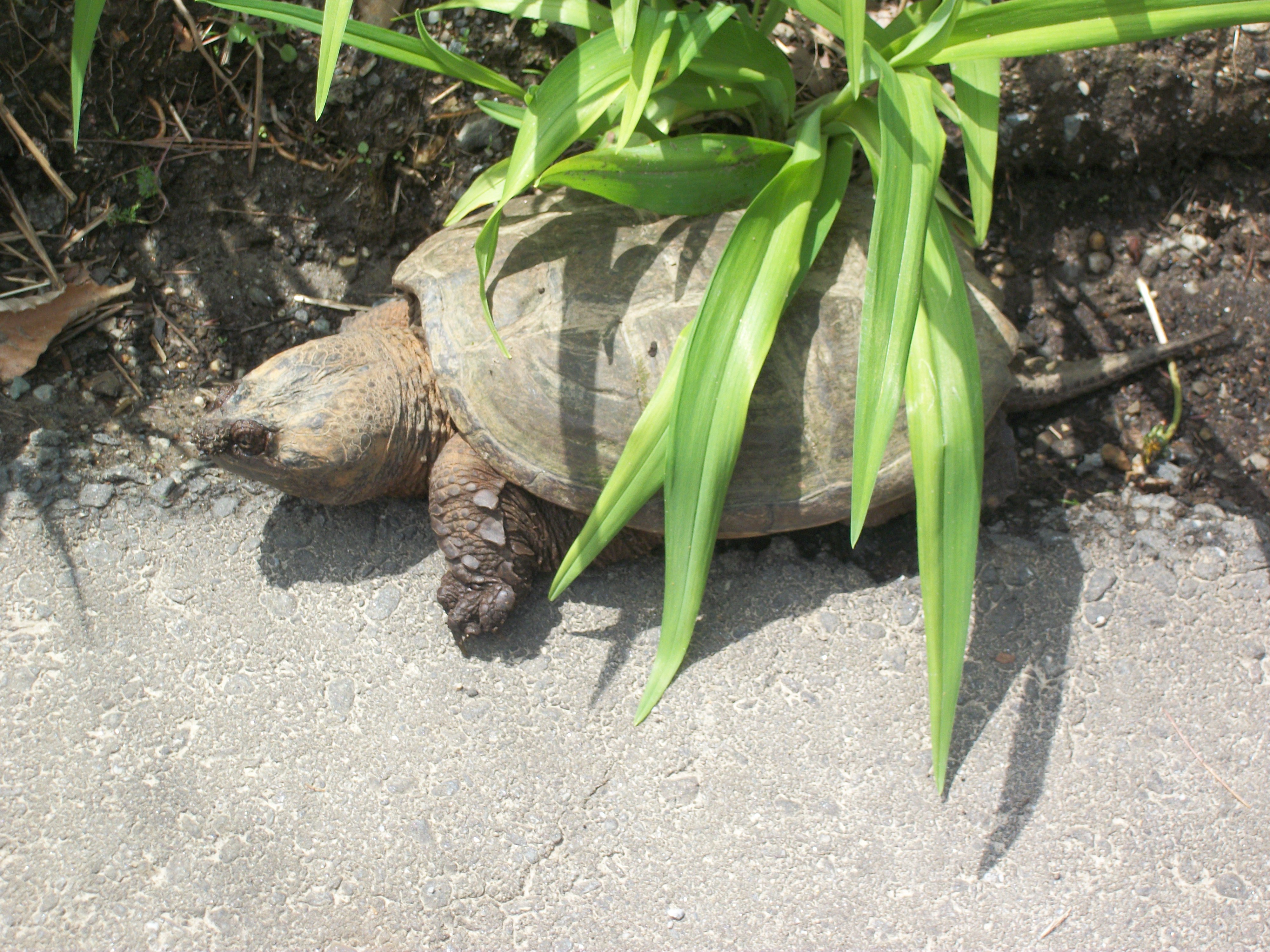
 You can’t see the claws on the front feet, but they’re pretty long. Clearly s/he had followed what s/he thought was a waterway only to land up in our driveway. When left alone, s/he redirected and headed for flowing water downstream from our hill.





 Louisa Enright's Blog