Interesting Information: May 8, 2013
Bees, Bees, Bees
April in Charleston, SC, where my two sons live with their families, is a very busy month for bees.
Tamara Kelly Enright is a beekeeper.
She has two hives in her yard and is teaching her children how to care for them. She helps manage ten other hives with Tara Derr Webb at Deux Peuces Farm in Awendaw, SC. And she supervises two hives at a local school for rescued children, where learning how to care for bees is part of their emotional development via a deep connection to nature. She is deeply involved in placing demonstration bee hives into local schools–a practice started and funded by the Savannah Bee Company.
Tami and Kelly suited up one sunny Sunday afternoon to check the two bee hives in her yard.
Here are the hives, tucked into a corner of the yard. Tami has planted jasmine on the lattices behind the hives, which the bees are going to love.
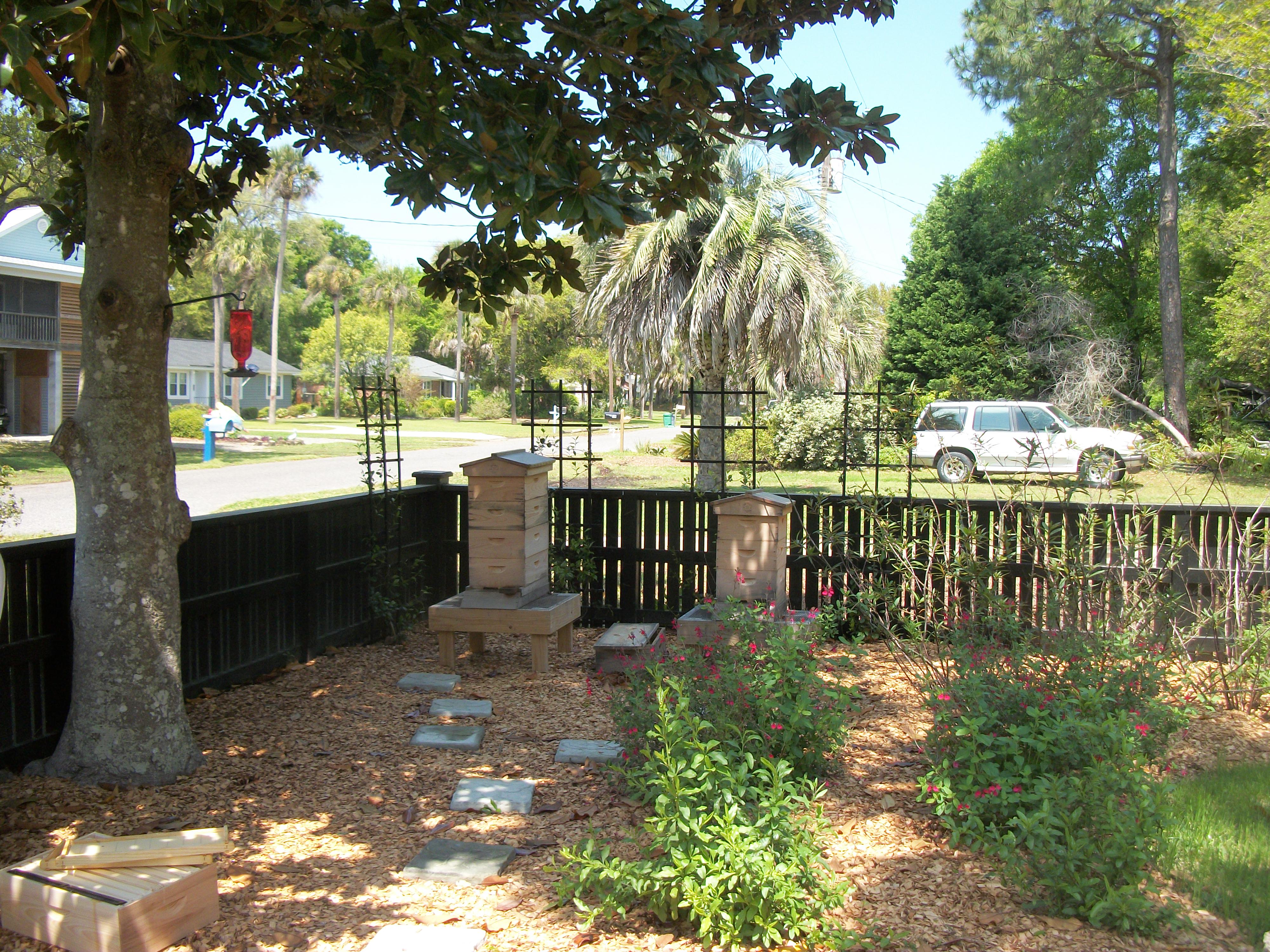
Here’s a video of Tami and Kelly telling you what they are going to do:
Here are Tami and Kelly opening the bee hive. They have to break the insert loose–it is sealed by the bees with a waxy substance called propolis–which has amazing healing properties.

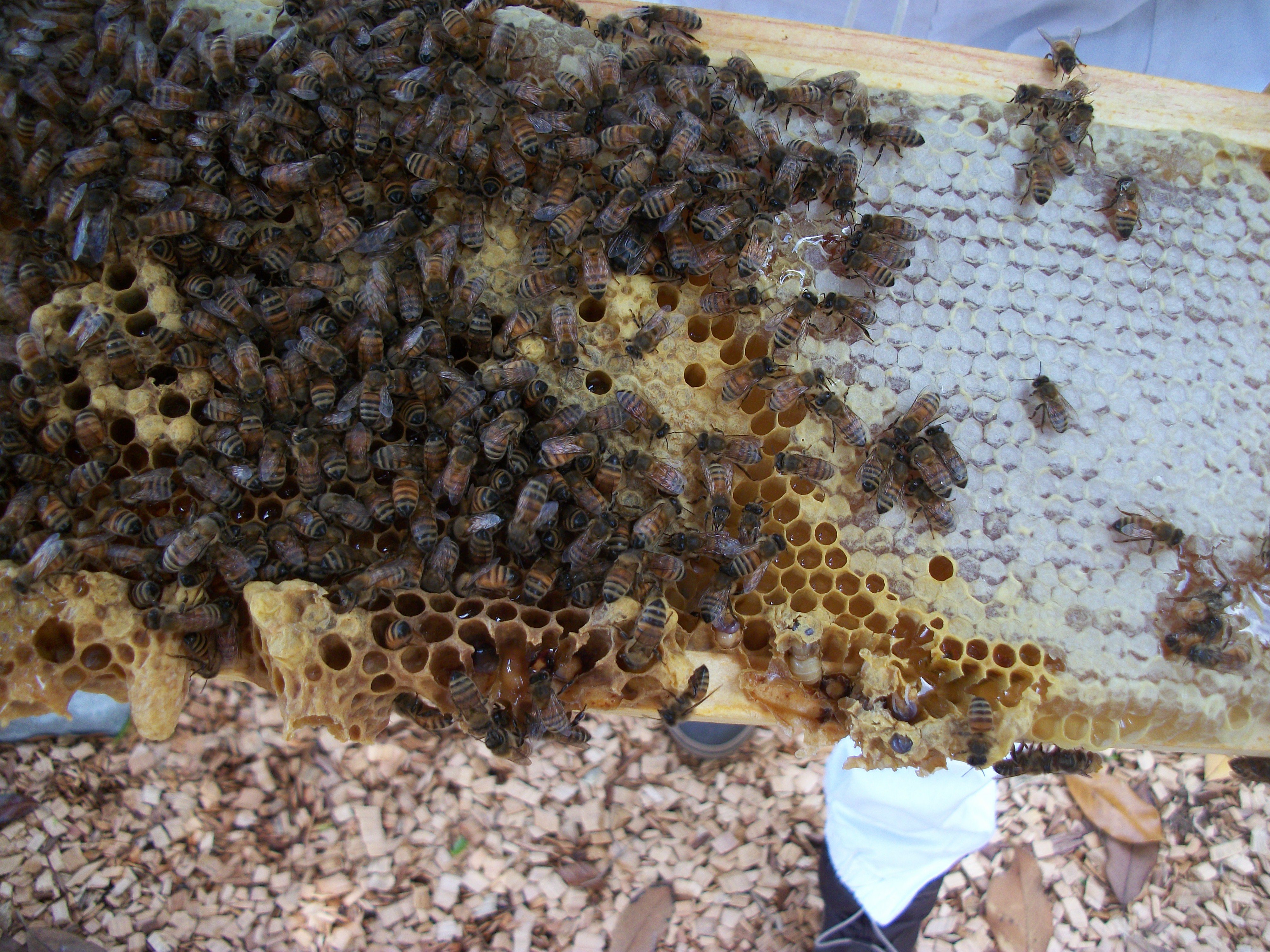
Here’s a close-up of one of the inserts. You can see the waxed cells and the “brood,” which are the cells holding baby bees and developing bees in the foreground. The second picture shows the brood even better.
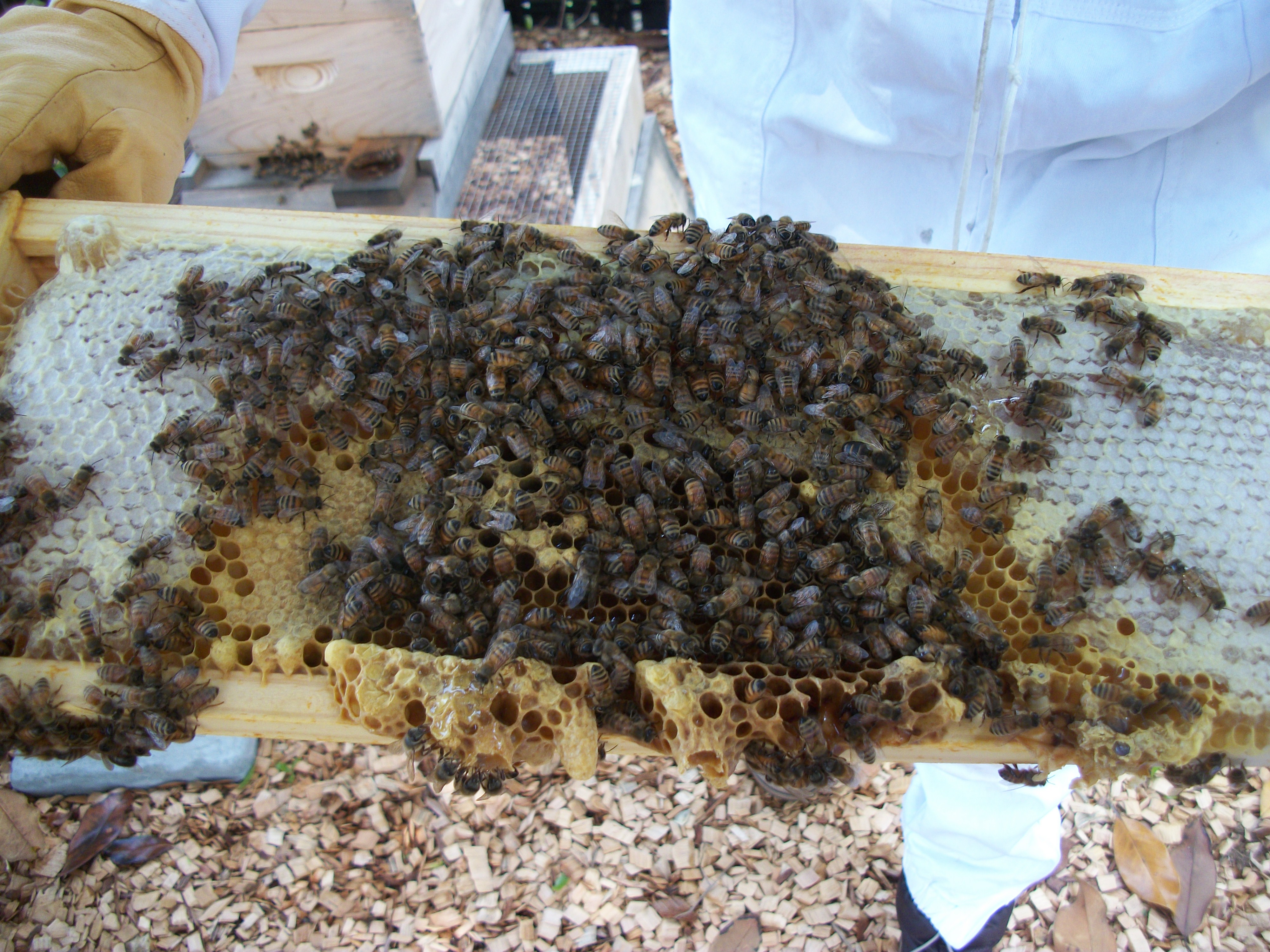
You can see the cells with baby bees hatching in the center front of this picture.
Here’s another video up close so you can see what it feels like to work inside the hive and its panels:
During the time I was in Charleston, Tami rescued two swarms of bees. One swarm came from one of the demonstration hives in Talula and Mina’s school. The school staff sent out a call for help to local beekeepers, and Tami went and rescued the hive. She brought it home and used it to repopulate one of the ten hives on Deux Peuces Farm–which had lost three queens–rendering three of the hives inoperable.
The second swarm Tami rescued landed up next to a local pool. The pool people were going to call an exterminator, but agreed to let Tami come at night and get the swarm, which she did.
A friend told me today that he just heard that America alone has lost over 43% of their bee population. I don’t know if that figure is correct, but I do know that it is a very serious problem for our food supply. Yet we continue to allow chemicals to be used that kill bees. The European Union, while I was in Charleston, banned one of the greatest offender chemicals for two years to see if it helped preserve the bees.

 Louisa Enright's Blog
Louisa – I loved this! Your blogs are always so interesting & informative – usually about topics I am intense about myself (animals, gardening, environment) but even when you write about other subjects I know little about (elver eels, quilting), I enjoy and look forward to reading them. Thank you for sharing.
Fascinating! While I don’t have any interest in keeping bees myself, I am awfully glad someone does and am hopeful someone can
Fogure out why so many hives are in distress.
Actually, I think we know what’s killing bees. Pesticides and herbicides on agricultural fields, especially on fruit crops. The EU just banned one class of chemicals for two years where there has been some very clear science that it kills bees–the neonicotinoids. And, commercial bees are carted all around the country to service monocrops, which is very stressful. A better plan is to plant understory or adjacent crops that can support permanent bee colonies all year. These bees are also fed high fructose corn syrup and drugs to deal with the mites that get on sick, stressed, unhealthy bees. QUEEN OF THE SUN is an excellent, informative documentary to see, and there are others as well.