Turkey Tracks: Maine Summer Pictures July 2011

Turkey Tracks:  July 13, 2011

Maine Summer Pictures July 2011

Time is flying by so fast.  We have hit our summer groove.  Up early.  Breakfast.  Chores (pick the garden, pick the strawberries and raspberries, water plants, change sheets, organize food, wash clothes, etc.).  Fun activity (swimming most days now, hiking, a trip to somewhere fun).  Lunch.  Quiet time.  More play.  Dinner.  More play.  Bedtime rituals (baths, stories).  Sleep.

Here are some pictures I’ve been too busy to post:

On July 4th weekend, we all went to a charming outdoor bell concert, courtesy of the St. Luke Concert Handbell Choir, from Gales Ferry, CT.  The choir was made up of high school students.  They let our kiddos try out a small hand-chime each.

Here are Kelly and Wilhelmina listening to one of the choir’s selections:

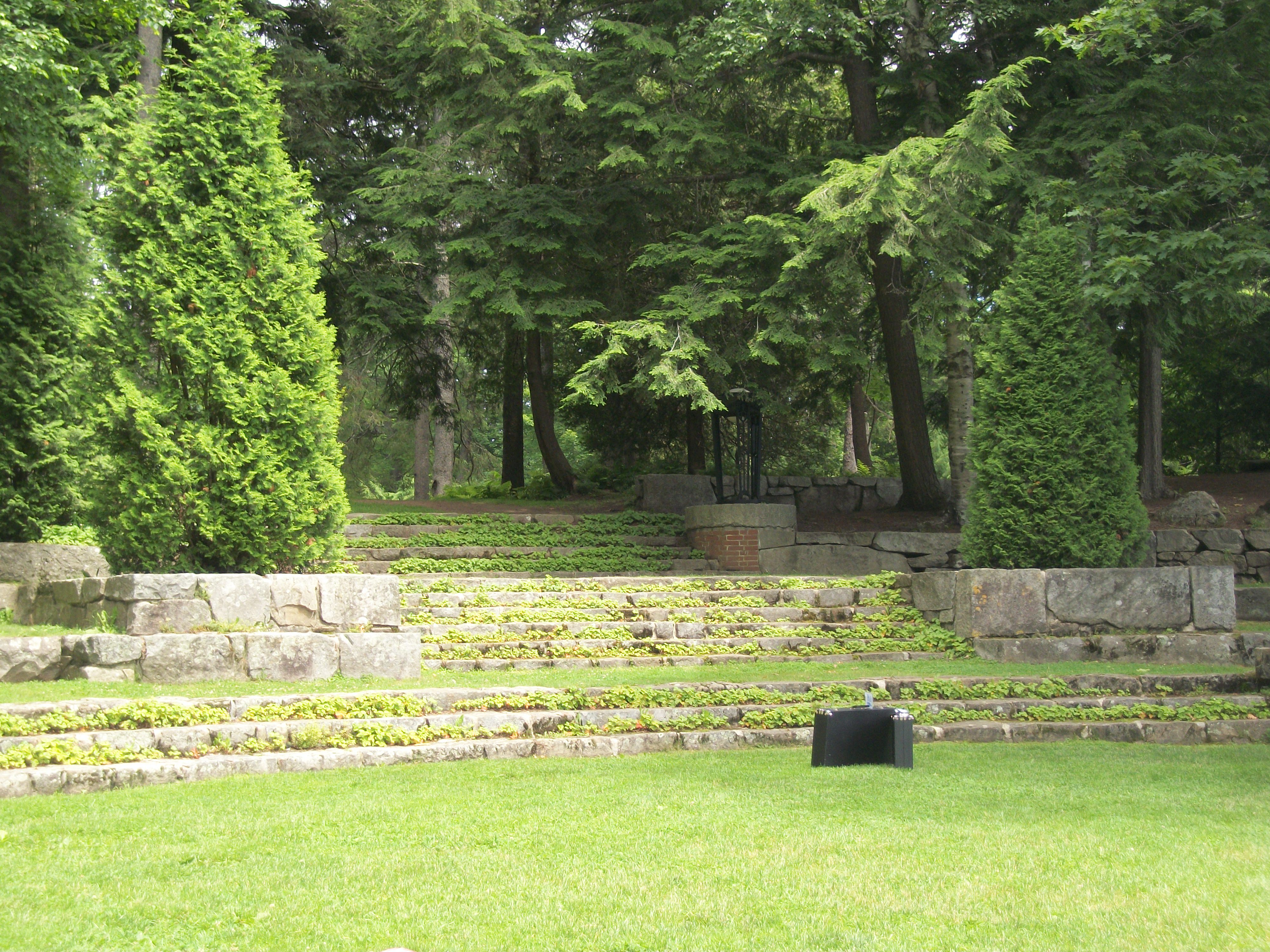
Here is a picture of one side of our amazingly beautiful Camden Library amphitheater where moss and wild strawberries grow in the cracks of the steps:

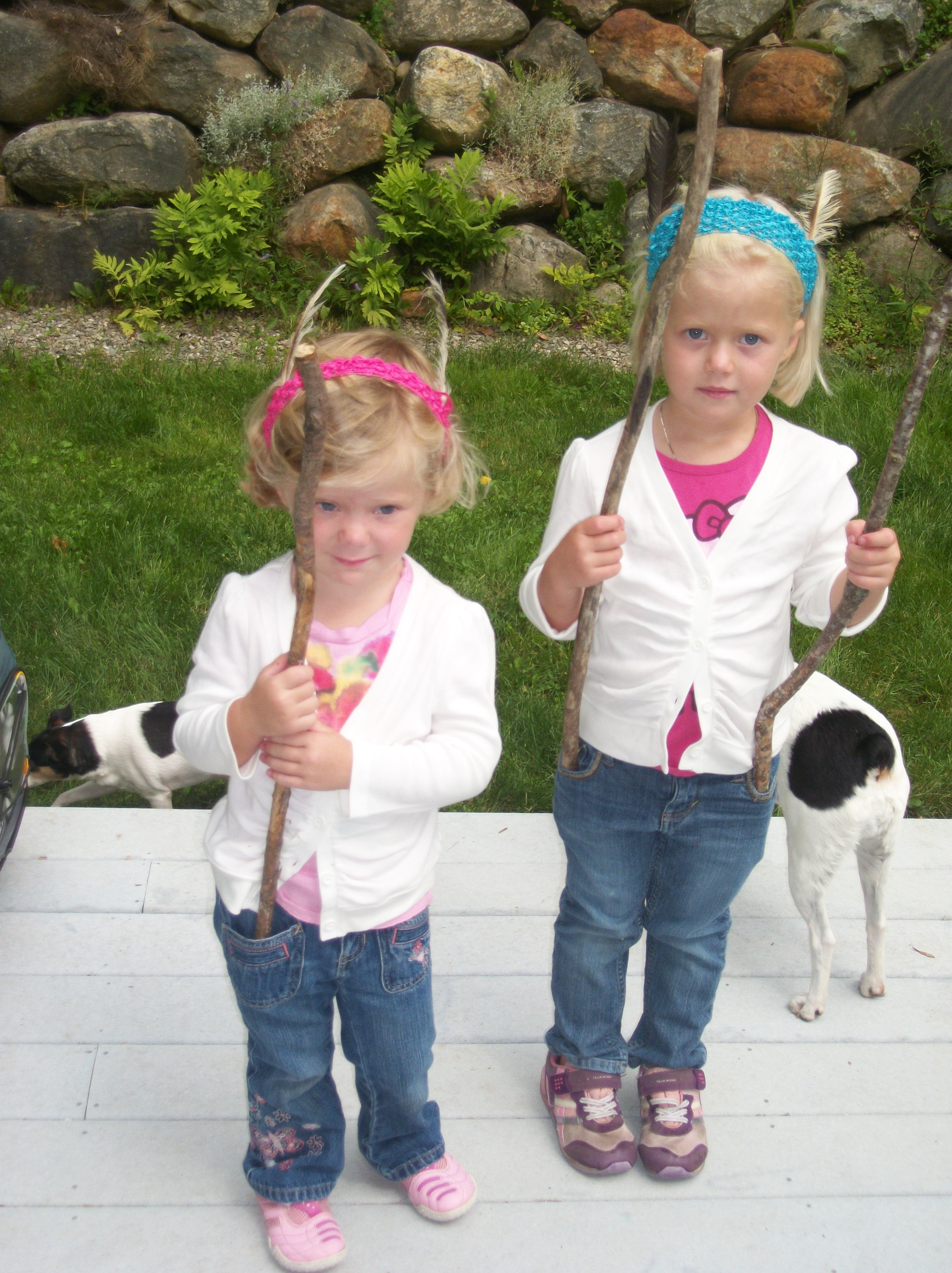
Here are two girly indians and two girly dogs hard at play:

Pop and “the crew” took apart the garden bench and repainted all the metal:

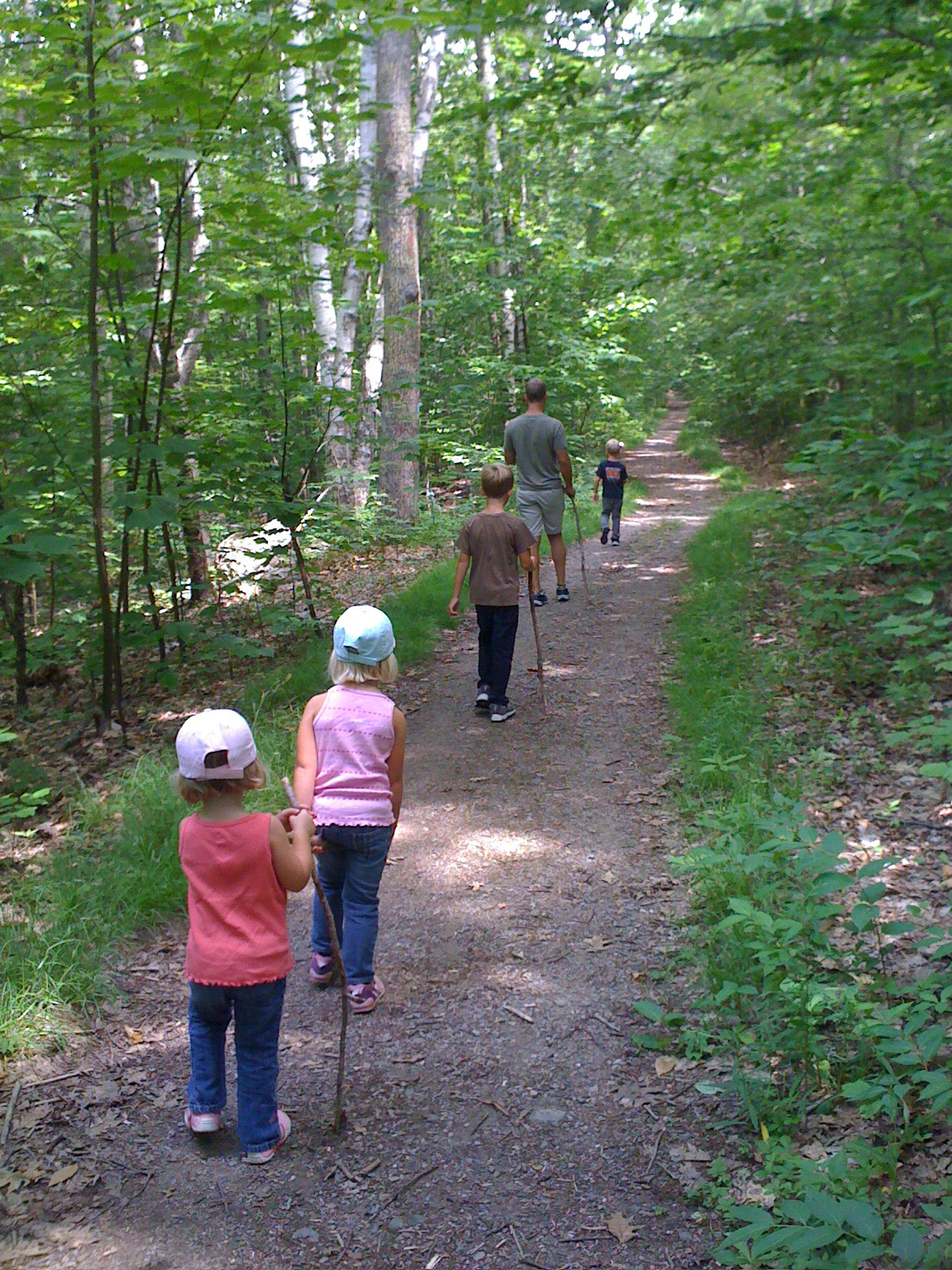
Tami took this picture of “the hikers,” most with a walking stick from the woods:

We got rhubarb in our CSA the first week, so I saved it for when the kiddos came.  We made a rhubarb cake that was delicious from a recipe in RUSTIC FRUIT DESSERTS, Julie Richardson and Cory Schreiber:  http://www.amazon.com/Rustic-Fruit-Desserts-Crumbles-Pandowdies/dp/1580089763.   (A book suggested by Tara Derr.)  I don’t mind making a cake like this one upon occasion when I’m using fruit, real butter, really good eggs, and a limited amount of sugar and white flour.

Finally, here’s a picture of our sugar snap peas putting out the goods.  Often, the children eat them raw as fast as I can pick them.

Interesting Information: “Why Go Organic” video

This little video, done by a child after an experiment, speaks to why you do not want to eat commercial potatoes in any form.

Do take a look?

http://www.geekmom.com/2011/06/a-sweet-potato-experiment-why-go-organic/


Here’s a site discussing the video and chlorpropham, the chemical at issue.  According to PAN (Pesticide Action Network), it is toxic to bees and retards growth in animals–and can kill them.

http://www.care2.com/greenliving/girl-discovers-the-importance-of-eating-organic-video.html


Interesting Information: GMO Foods Have Not Been Tested Properly

Interesting Information:  July 9, 2011

GMO Foods Have Not Been Tested Properly

Philip Bereano, PhD, is a professor emeritus at the University of Washington and an engaged activist concerning genetically modified (GM) foods.  I saw this quote from him in the July/August 2011 issue of Well Being Journal and tracked down the whole interview, which is on Dr. Joseph Mercola’s web site:  http://articles.mercola.com/sites/articles/archive/2011/04/02/dr-philip-bereano-on-gmos.aspx.

Bereano said the following:

The problem with calling genetically engineered organisms safe is that there are no valid risk assessments being done on them. There is no research, really, being done into the health or environmental effects of a genetically engineered organism. Certainly no work that is published in the open peer-reviewed literature, or  that isn’t proprietary. Corporations promoting these things claim that they have done research, but you can’t get any information on it because it’s all claimed to be proprietary.

The whole interview is worth a scan because Bereano is arguing that what is coming clear is that there is a deliberate corporate strategy being carried out with government help to corner the markets on seeds and to drive organic farmers out of the market by the simple process of contamination.

Don’t scream “conspiracy theory” because while there may be some conspiracy going on here, what’s really occuring is the normal working of the logic of unfettered capitalism–which seeks to control all markets, to drive out all competitors, and to colonize any part of the economy so that it functions as a profit center.

Bereano addressed the claims that GMO foods can “feed the world” and that they are cheaper and shows that neither claim is true.

In May 2009, the American Academy of Environmental Medicine called for a ban on the use of GMO foods:  http://www.aaemonline.org/gmopressrelease.html.  Members are seeing increasing levels of serious health problems they believe to be connected to GMO foods.

What’s really disturbing is that GM foods don’t have to be labeled–which is another argument for buying local from people you trust.  Be especially careful with corn–especially corn chips.  Be sure to choose organic corn chips.   And do take  a moment to read about this issue so that you understand what is at stake for you and your beloveds.

Interesting Information: Vanilla Ice Cream

Interesting Information:  July 9, 2011

Vanilla Ice Cream

COOKS ILLUSTRATED, May/June 2010, investigated vanilla ice cream.  Nationwide, there are nearly 40 brands of vanilla ice creamCI chose the eight top-selling brands and taste-tested those.  The winner was Ben & Jerry’s Vanilla.  Next came Haagen-Dazs, Wells blue Bunny, Breyers, Friendly’s, Blue Bell, and Turkey Hill.  Edy’s Grand Vanilla was not recommended.

The criteria included what kind of vanilla was used (natural or synthetic); the tricky business of using stabilizers like carob gum, guar gum, tara gum, and carrageenan (the winner uses two); how much air is pumped into the ice cream to expand volume; and what kind of sweetener is used.

Edy’s, for instance, is a big package with lots of air, while Ben & Jerry’s is a small package with lots of ice cream.  Between the two, Ben & Jerry’s is a POUND heavier than Edy’s, even in the smaller package.

And ice creams using corn syrup tasted “`unnaturally sweet,’ ”  no matter the sugar levels.

Testers discovered that “keeping it simple” produced the best vanilla ice cream:  cream, milk, sugar, eggs, real vanilla, and a minimum of emulsifiers made the best ice cream.

Homemade Vanilla Ice Cream

You can keep it even simpler:  get a pint of some real/raw heavy cream, add 2 or 3 egg yolks (keep the whites for macaroons or meringues) , some real vanilla extract, a tablespoon of healthy arrowroot for creaminess, some maple syrup or honey for sweetness, put it into one of those quart ice cream makers you keep frozen in the freezer, and you have delicious and healthy ice cream in about 20 minutes!

You can also make food processor ice cream out of cream or yogurt and frozen fruit.  That recipe is on the blog in July 2010.

Interesting Information: Greek Yogurt

Interesting Information:  July 9, 2011

Greek Yogurt

A friend gives me her COOKS ILLUSTRATED magazines when she finishes them.  The May/June issue had an article on Greek yogurt I found interesting.

I knew that Greek yogurt was just yogurt with a lot of the whey drained out of it.  Anyone can make it, and the leftover whey is an amazing substance that is full of enzymes that help digestion.   A tablespoon of whey in a bit of water before a meal can really help digestion and can begin restoring probiotics in the gut.  You can also freeze it and use the ice cubes in smoothies, put it in soups, and so forth.  And, of course, there is a whole foodway of lacto-fermented foods made with whey that are chock full of enzymes.  Sauerkraut is an example, and there is a recipe for it in the recipe section of this blog.

I always thought that whey had a lot of protein, so I was skeptical about draining off the whey.  However, COOKS ILLUSTRATED says that whey does not have that high a protein content, so what’s being lost by draining some off to make a thicker yogurt is “only” the enzyme and mineral content of the whey.  (What remains is high in protein.)  If one uses the whey in other ways, no substantial harm is done–unless you are buying the yogurt and are never getting the whey.  (I’m guessing the whey is used to make that dried whey protein powder which, like all dried liquids, has been harmed by the drying process.)  Anyway, do note that you are now dealing with a whole product that has been splintered into parts–which is not a good thing to do as the whole contains all that you need to digest and use the product most effectively.

The market has “caught on” to Greek yogurt and is busily trying to make a buck on it.  So, buyer beware.  Read the labels to see what’s been added to what should just be yogurt with the whey drained off.  Many manufacturers are getting the creamy thickness of Greek yogurt (as they are with regular yogurt) by using thickeners like pectin, gelatin, seaweed, and milk protein concentrate.  These yogurts (Yoplait and The Greek Gods are examples) also have considerably higher levels of carbohydrates than other brands, and we are learning, together I hope, that carbohydrates are the root cause of many chronic diseases in America.

Unfortunately, COOKS ILLUSTRATED bought into the belief system that fat is not good, so they tested nonfat yogurts.  (One needs fat to digest protein.)  CI liked Olympus Nonfat Greek Yogurt the best.  It is imported from Greece.  they recommend Voskos, Brown Cow, Dannon, Oikos, and Fage.  Chobani was recommended with reservations.  And Athenos, Yoplait, and The Greek Gods were not recommended at all.

For me, the best bet is to make your own yogurt from whole real/raw milk.  If you want to make Greek yogurt or, even, some yogurt cheese, drain off some or all of the whey.  But, be sure to use the whey in some other ways in your diet.

If you must buy yogurt, which would be made with pasteurized milk, seek out a whole milk, cream-line one with no additives.  There are still a few left out there.

Turkey Tracks: Camden Inner Harbor, Summer

Turkey Tracks:  July 8, 2011

Camden Inner Harbor, Summer

Sometime last winter, I posted a picture of the Camden Inner Harbor with schooners all wrapped up for winter–taken from this same place.

Here is that same shot in the summer.

 I’m pretty sure the windjammer/schooner in the foreground is the Mary Day.   She would be provisioning to go out again for probably a week.  The equipment next to the water is getting a stage ready for our July 3rd (Sunday night) fireworks and music.  Sunday turned out to be overcast, so the splendid fireworks took place on Tuesday night.  I suspect the music went on as planned, though we wound up doing different things on Sunday.

It’s mid-afternoon, so many of the boats that “sleep” in our harbor are out for the day.  At night, the harbor is jam-packed with boats of all kinds.

The river comes into the harbor on the far right, and there is a lot of activity on that side of the harbor, which is out of this picture’s frame.

On this side, the harbor is surrounded by beautiful green lawns, with the library sitting above them.

Interesting Information: EWG’s Dirty Dozen

Interesting Information:  July 8, 2010

The Environmental Working Group’s

Dirty Dozen List

The EWG’s guide to Pesticides in Produce now lists the following produce, in order of toxicity:  apples, celery, strawberries, peaches, spinach, nectarines (imported), grapes (imported), sweet bell peppers, potatoes, blueberries (domestic), lettuce, and kale/collard greens.  See www.ewg.org/foodnews/summary.

The EWG also warns that the commodity corn crop used for animal feed and biofuels is “almost all produced with genetically modified (GMO) seeds, as is some sweet corn sold for human consumption.”  The sweet corn IS NOT LABELED as GMO in U.S. stores, thanks to our lax and corrupt government oversight agencies.

Both the EWG and NUTRITION ACTION newsletter make the case–as the EWG puts it–that “the health benefits of a diet rich in fruits and vegetables outweigh the risks of pesticide exposure.”

I DISAGREE strongly.

First, the 2009 President’s Cancer Panel report–easily available for you to read online–is very clear that the use of toxic chemicals on our food and in our environment is the cause of much of the cancer epidemic we are experiencing.  I, for one, am really tired of losing so many beloveds to cancer.  When I was a young woman, cancers and heart disease were rare.

Second, more and more data is coming out now that our heavy use of carbs is causing hormonal disorders that are, in turn, causing obesity, diabetes, and metabolic syndrome.  So, a diet rich in produce is likely not be a good thing at all.

Third, our digestive tract does not handle lots of cellulose well.  We do not have the multiple stomachs, digestive chemicals, and so forth to handle so many fruits and vegetables–especially many of the raw ones.  Our digestive tract is set up to eat the animals that do process cellulose well.

(I’ve written about these issues in my Tipping Points essays here on this blog–and will continue to do so.)

I really wish EWG and organizations like it would step up to the plate and start taking a stand that incorporates good science–which would include the information that shows how seriously toxic the chemicals we use on our FOODs are.   Their unscientific repetition of the low-fat, high-carb, calorie in/out belief system is doing a lot of harm, which I suspect is not what they want to accomplish.

Finally, what you can do is to try to find local sources of organic foods.  It’s going to be a bit like “build it and they will come.”  Ask your local farmers to raise this food for you.  Go to farmers’ markets to find them.  Go out into the country and find them.  Plant a garden and raise some of your own food–even it’s only one tomato plant in a bucket.  And, try to eat foods in their seasons and to put them up in some way (canning, freezing) if you want to continue to enjoy them.  You can’t possibly know what’s been done to food raised outside of this country–even if it’s labeled “organic.”  (Take a look at the documentary OUR DAILY BREAD, for instance.)

What you can do is to stop giving your beloveds food that has poison on it and in it.  What you can do is to stop telling yourself that someone else is going to protect you and your beloveds–someone like the government.  It hasn’t.  It won’t.  What you can do is to face squarely the fact that these chemicals are killers and that they will kill you and your beloveds.  The cancer statistics are ample proof of that truth.  These chemicals are especially destructive to your babies, to your children, to teenagers–because they are still growing so fast.  No amount of these chemicals is safe.

Nothing is going to change until we all band together and say “No, we’re not doing it any more.  Give us good food, raised locally and organically, so that it has all the nutrients it should.”

Believe me, whatever money you think you’re saving by buying cheap food can get eaten up in a heartbeat with a cancer patient.  Few people understand the massive resources it takes to manage a cancer patient…

Assess what you can give up in your life to be able to find and pay for good food.  In the end, the time and money will be worth it.

Turkey Tracks: First Strawberries

Turkey Tracks:  Jully 1, 2011

First Strawberries

Our strawberries have been coming in for the past few days–big red and delicious.  John and I have stood in the garden eating the early arrivals, one by one.   Since we’ve had a late spring, the strawberries will go into full production just as Mike, Tami, and the four kiddos arrive–which will be in about an hour now.

Some of the berries pictured below came from our CSA, Hope’s Edge, this morning.  Some are ours.  All are gorgeous.  None taste like what you find in a supermarket which have been shipped in here from across the country.  Supermarket berries are big and red, but there the comparison ends.  They are pulpy sour things that are so acid they make your mouth pucker.   These berries are dead sweet and worth the wait each year!

Too, none of our berries have been sprayed with poisons.

Turkey Tracks/Books: My Current Read Pile

Turkey Tracks/Books:  June 26, 2011

My Current Read Pile

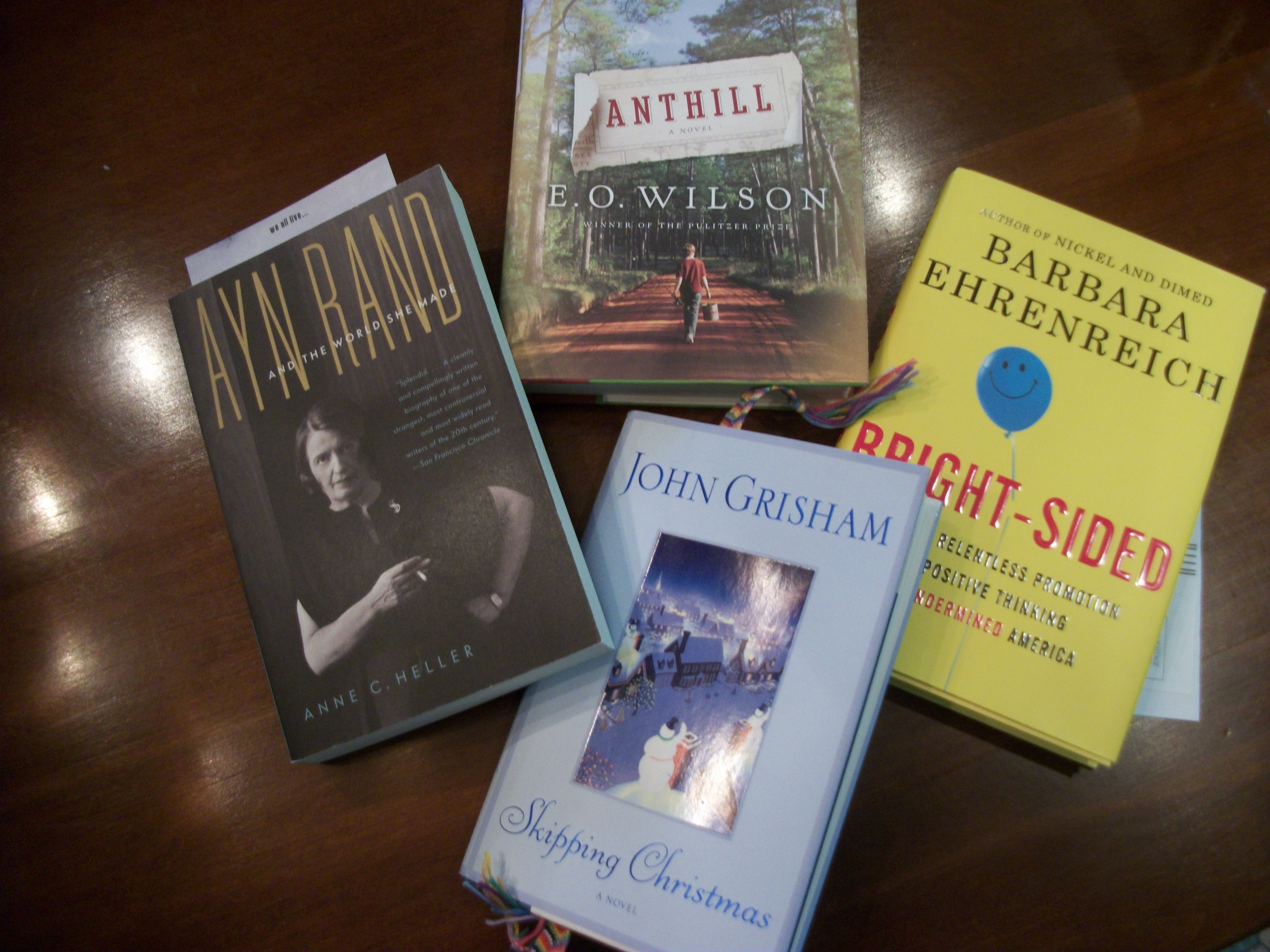
Here’s a picture of my current read pile:

I have, for what is, I’m sure, a brief moment, caught up with my magazines and journals.

Despite the title, John Grisham’s SKIPPING CHRISTMAS might not wind up advocating that stance at all.  So, I look forward to finding out what happens.  This book was a gift from a friend after I wrote a piece about my dislike of–and refusal to participate in–the commercial nature of Christmas.

The biography of Ayn Rand interests me because I’d like to see if she “walked her talk.”  Her economic and social theories have had a powerful impact in this country.  For instance, Congressman Paul Ryan’s budget was derived from Rand’s “objectivism” philosophy.  Her “super man” heroes come too uncomfortably close to the theories that guided Nazism maleness for me.  But, it will be good to refresh my knowledge of her theories.  I read her novels too many years ago–actually when I was in high school.

E. O. Wilson’s book on ants won the Pulitzer one year.  He’s an emeritus scientist at Harvard, and a naturalist to the core.  He’s also a southerner, and he captures a number of southern mindsets in the characters in this book.  The sections on ants are not just about ants; they’re about over population and an unimpeded use of available resources–to the point where nature can no longer support an out-of-synch ant population.  This section is a warning to humans, actually.  As a novel, the book doesn’t quite work–because it isn’t sure what it should be.  But as something else–the inner thoughts of a major scientist, it’s well worthwhile.

Barbara Ehrenreich’s BRIGHT-SIDED was recommended by a Camden friend who knows I think the unbridled optimism of Americans–especially with regard to medical problems like cancer–is a problem that helps us to ignore what we must do to begin to heal our environment, ourselves, our country, and our world.  As long as we can say “the problem is that you aren’t trying hard enough,” we cannot begin to understand what is actually wrong, how we’ve been poisoned, and so forth.

Turkey Tracks: Rabbit Visitor

Turkey Tracks:  June 29, 2011

Rabbit Visitor

Margaret told me that a neighbor’s rabbit was coming down to her garden to visit.  There’s so much activity in that garden now:  meat chickens, layer chickens, and pigs.  The rabbit must be drawn to the activity and life.

John was quite surprised to see the rabbit one morning while we were waiting for the Associated Buyers truck to deliver our joint food order:

Here’s a close-up of said rabbit:

John would like to add rabbits to our place.  I could do that.  Only, he wants pet rabbits, and I would want meat rabbits.

I wonder how that’s going to work out?