Turkey Tracks: Rosie’s Gift

Turkey Tracks:  December 15, 2010

Rosie’s Gift

Our monthly quilt meeting was Saturday, December 11th.  We have a potluck and Christmas party during our December meeting. 

I have, for some years now, volunteered to bring the December door prize.  I collect items for the Christmas door prize all year long.   And, people give me items to put into the box over the year as well.

Last February I made my annual trip to Virginia to be with my old quilting friends in Williamsburg.  We’ve been making this trip together for about 15 years now.  We spend a week in a timeshare that Rose Pilkerton organizes.  We catch up, quilt night and day, take turns cooking, and attend the Mid-Atlantic Quilting Show.  The week is full of sharing:   laughter, jokes, movies watched while quilting, and the work of quilting projects.  These friends help you “unsew” if you need to, sew on bindings, and lend you whatever you need.    

Rose Pilkerton gave me this treasure of a notebook holder she had made for the Coastal Quilters’ December door prize:

Here’s the inside:

She also gave me one for myself that used a red fabric featuring old sewing machines.  AND, a key chain made from the same fabric.  I carry them both everywhere, and I think of her everytime I use either of her gifts. 

Rose’s generosity-and Rose herself–are metaphors for what I love in my quilting friends, of what I aspire to be.

The Maine quilter who won the December gift box loved Rose’s contribution.

And I love Rose!

Mainely Tipping Points 21: Stevia: Is It Safe?

Mainely Tipping Points 21

Stevia:  Is it Safe? 

Stevia is a powerful sweetener, and is virtually calorie free.  But, is it safe for human consumption?  Safety may depend upon how the plant is used.

 Jim Earles in “Sugar-Free Blues:  Everything You Wanted to Know About Artificial Sweeteners” (2004) (www.westonprice.org/modern-foods/570-sugar-free-blues.html), notes that stevia rebaudiana is a member of the sunflower family and is a native of Paraguay where it has been used for centuries.  The leaves are about 30 times sweeter than sucrose, and the whole leaves contain many beneficial compounds.  Traditional societies used whole stevia leaves to sweeten teas and herbal medicines.   

  Beginning in the late 1970s and early 1980s, Earles continues, a number of United States companies began to use stevia leaves, including Celestial Seasonings, Lipton Tea Company, Traditional Medicinals, and a host of smaller firms like Sunrider International.  These firms utilized a provision in federal law allowing the food industry to make a “self-determination of Generally Recognized as Safe (GRAS) status for items with a long history of `common use in food’ prior to 1958, providing that it enjoyed widespread use without any apparent adverse health effects.”    

  In 1985, writes Earles, apparently prompted by protests from the NutraSweet Company, maker of aspartame, the U.S. Department of Agriculture forced Sunrider International to burn its supply of stevia, calling it “adulterated.”  The Food and Drug Administration (FDA) refused to even test stevia samples from Wisdom Natural Brands.  Earles reminds that NutraSweet’s newly acquired patent on aspartame was extremely lucrative and that no patent would be awarded to a naturally occurring substance.

 Next, Earles continues, the FDA targeted Celestial Seasons and refused to process that company’s petition to give stevia GRAS status.  And in 1991, the FDA banned the importation of stevia.  The FDA began raiding health food stores “suspected of selling stevia products” and ordering “the confiscation of books which refer to stevia’s potential use as a natural sweetener.”

 The Traditional Medicinals herbal-tea company, the American Herbal Products Association (AHPA), and the Lipton tea company all tried to present studies to the FDA to no avail.  The FDA “ignored their usual protocol and refused to even file the petitions for approval.”  Earles writes that this action “would have left the FDA in the position of having to publicly defend its actions, something which they were unwilling to do.”

Meanwhile, Earles continues, scientists discovered individual sweet compounds (called glycosides) within the plant, to include stevioside, steviobioside, rebaudiosides A, B, C, D, and E, and dulcoside.  These purified substances are between 50 to 450 times sweeter than sucrose.  But, these extracted substances no longer contain the many nutrients present in whole stevia leaves.   

 Earle relates that the Japanese, beginning in the early 1970s, “began to take a distinct stand against artificial sweeteners, especially aspartame, due to their possible health risks.”  They conducted “extensive tests on stevia and stevioside” and “accepted it as a safe alternative.”  By 2004, stevia had “reportedly captured over 50% of the Japanese sweetening market, even though the Japanese technically classify it as a food additive.”  Earle does acknowledge that FDA officials, occasionally, when pressed,  indicated that they were worried about two issues:  toxicity and a “possible adverse effect on fertility.”  Earle discounts these allegations because he cannot find studies that prove them.    

 In 1995, Earle relates, after efforts from many parties, the FDA revised their 1991 import alert and allowed stevia to be imported, but limited its use to a dietary supplement, which meant that stevia could not be used as a sweetener.  And, the FDA granted stevia GRAS status in late 2008, which allows stevia to be used as a no-calorie sweetener in foods and beverages.

 Why?  My guess is big industry saw stevia’s sweetener potential when their existing non-nutritive chemical brews were increasingly being questioned.  Both Pepsi and Coke immediately introduced zero or low-calorie beverages featuring the stevia   extract rebiana, a highly purified rebaudioside A.  Coke’s rebiana is called Truvia, and Pepsi’s is called OPureVia.  One of Coke’s stevia products is Sprite Green.  Pepsi introduced a grouping of stevia-flavored waters called SoBe Life.     

 At this point, the story, like the FDA’s stance on stevia, flips.  Apparently there are reasons to worry about stevia purified extracts and, maybe, the leaves.    

 The Glycemic Research Institute (GRI) delisted and banned stevia in 2008 because “various scientific commissions have determined that Stevia’s potential for toxicity renders it an inappropriate sweetener in humans” (www.glycemic.com/SteviaReport.htm).  The GRI cites a 2007 study published in “Food Chemistry Toxicology Journal” showing that stevia glycosides exhibit genotoxicity, which means the substance can affect the well-being of a cell’s genetic structure, causing the genetic material to mutate, or, be mutagenic.  The GRI cites a National Academy of Sciences concurring determination. 

 Further, the GRI notes that the European Commission’s Scientific Committee on Food issued an “Opinion on Stevioside as a Sweetener” in 1989 and 1999, which found that “stevioside extracts from Stevia rebaudiana leaves “ to be considered as toxicologically not acceptable” because existing tests have not followed “Good Laboratory Practice,” because tests for fertility and teratogenicity (fetal malformation) have not been done, and because questions about the metabolism of stevioside and the mutagenicity of metabolites remain. 

 The GRI determined also that “beverages that contain stevia and/or steviol glycosides do not qualify for the `Certified Natural Beverage’ mark.”

 The GRI report on stevia includes information from the Center for Science in the Public Interest (CPSI) and refers to a report by toxicologists at the University of California, Los Angeles (UCLA), showing stevia sweetener causes “mutagens and DNA damage, which raises the prospect that it causes cancer.”  Both CPSI and the UCLA experts wrote the FDA asking the agency to call for more independently conducted tests and noting that “the FDA’s guidelines advise testing prospective major new food additives on two rodent species, usually rats and mice.”  Rats have been tested, but not mice.  CPSI and the UCLA scientists recommended a lifetime study of mice in order to fully evaluate risks.  Current tests accepted by the FDA have been performed by Cargill, which owns Coke. 

 Additionally, CPSI’s statement on stevia safety notes that current tests on rats demonstrated the reduction of sperm production and an increase of cell proliferation in the testicles.  Tests on pregnant hamsters demonstrated fewer and smaller offspring.       

 The Mayo Clinic web site notes that stevia’s side effects are “generally mild”:  nausea and a feeling of fullness.  Mayo cautions that stevia is likely safe in moderate doses, but acknowledges that more research is needed and that until “we have more research, women who are pregnant or breast-feeding should probably avoid using stevia.”  Mayo further cautions that “people taking diabetes or blood pressure drugs should use stevia with caution because of the risk that it might cause hypoglycemia or hypotension when combined with these drugs” (www.mayoclinic.com/health/stevia).

 So, is Stevia safe?  We don’t know. 

I, personally don’t like the taste of stevia, which is a problem many people have.  If I did like it, I think I’d grow the plants, which are in most nurseries in the spring now, and harvest and dry the leaves for use in tea because of its nutrients.  That way I’d be using a whole food, which is how the plant is used traditionally.  In the end, I much prefer a local, nonheated honey in my tea for sweetening.      

 Beware the small sweetening packets of stevia.  That form is highly processed and adulterated with additives like maltodexterin, which is a highly processed carbohydrate, usually from corn, that raises insulin levels.  Often, maltodexterin is the first ingredient, which means you’re only getting a whiff of stevia.  Or, as with Stevita, xylitol is added as a “flowing agent”; yet, xylitol is a wood alcohol sugar, so I’m suspicious as to its inclusion.  Perhaps it’s there to improve the taste?

Turkey Tracks: Kelly’s Potholder Loops Rug

Turkey Tracks:  December 14, 2010

Kelly’s Potholder Loops Rug

Last summer, days before the Mike and Tami Enrights were to drive back to Charleston, Kelly (5 1/2) began asking me multiple times daily to learn to knit.  I promised him I would come prepared Thanksgiving.

How to teach a younger child to knit?

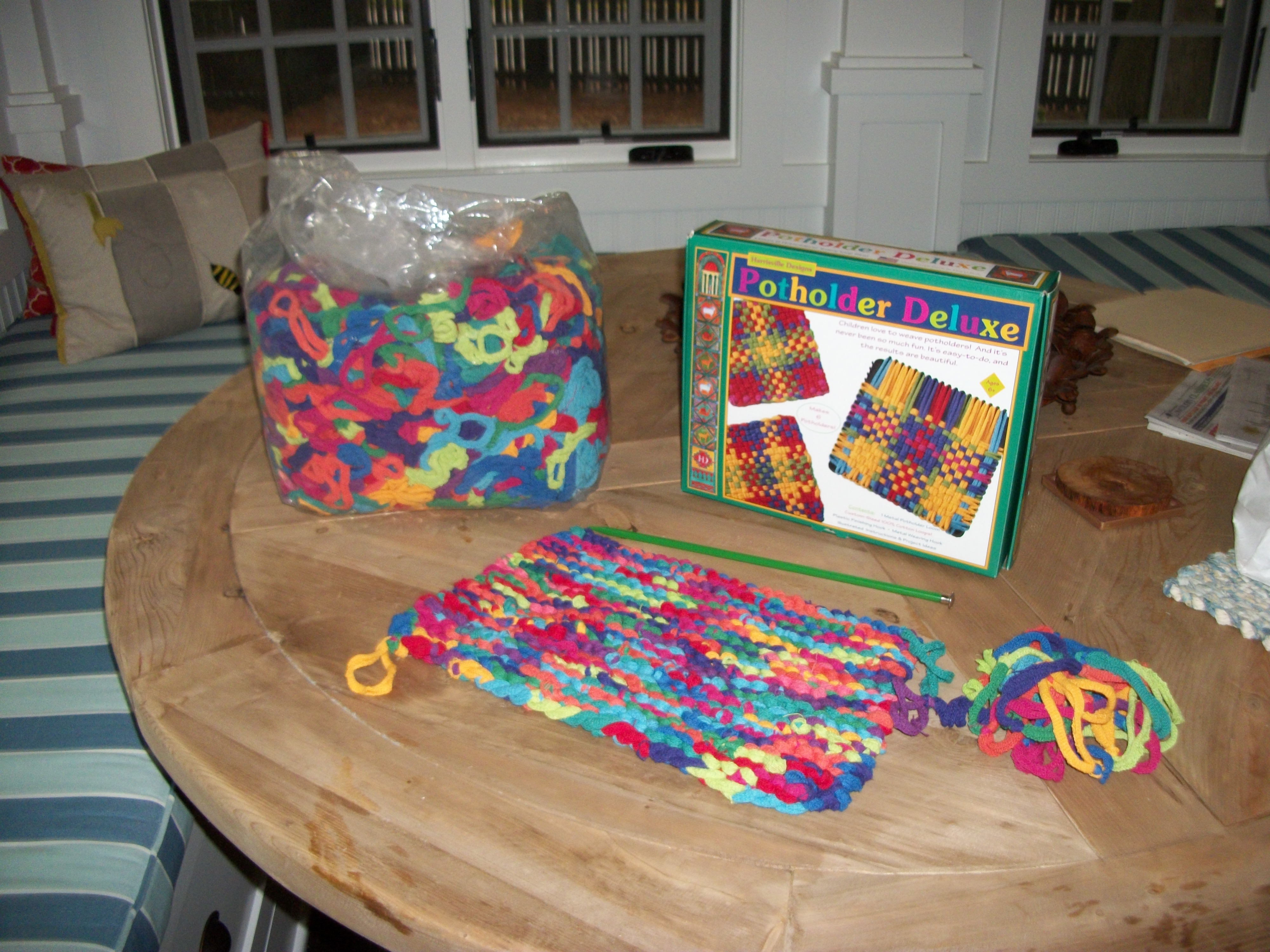
I fell back on Kay Gardiner and Ann Meador Shayne, MASON-DIXON KNITTING, for ideas.  They recommend a potholder loops rug.  Aha!  All the kiddos had gotten into making potholders while they were here last summer.  Gardiner/Shayne also recommend Harrisville Looms for high quality, beautifully colored, potholder loops.  (The loops we worked with over the summer were a nightmare–poly blends that stretched all out of shape, etc.)  I went online and ordered GOBS of loops and, because they looked really good,  two high-quality boxed potholder loom/loops sets for any kiddo who wanted to make potholders.  (They would make great teacher gifts.)  I had them shipped directly to Mike and Tami.  I was ready to keep my promise to Kelly.

The loops and looms were indeed very high quality.  I HIGHLY recommend them.  The loop colors are beautiful, and you can order isolated colors if you like.

Here is a picture of our beginnings:

Along the way, we made a HUGE ball of the potholder looops–and all the kids participated in that effort.

Kelly could knit, but required supervision to ensure he didn’t drop loops, or get the needle into the wrong part of a knitted loop, and so forth.  We both liked the closeness of this collaboration.  His attention span, though, was only good for 5 or 6 stitches at a sitting.  Nevertheless, he was amazed at how his efforts made his rug grow and grow.  It grew especially at night.  So when he waked in the morning, he checked it first thing.  He decided he wanted a LONG rug to take to school for naps, and we measured and measured each day until the rug grew to be as long as he was.

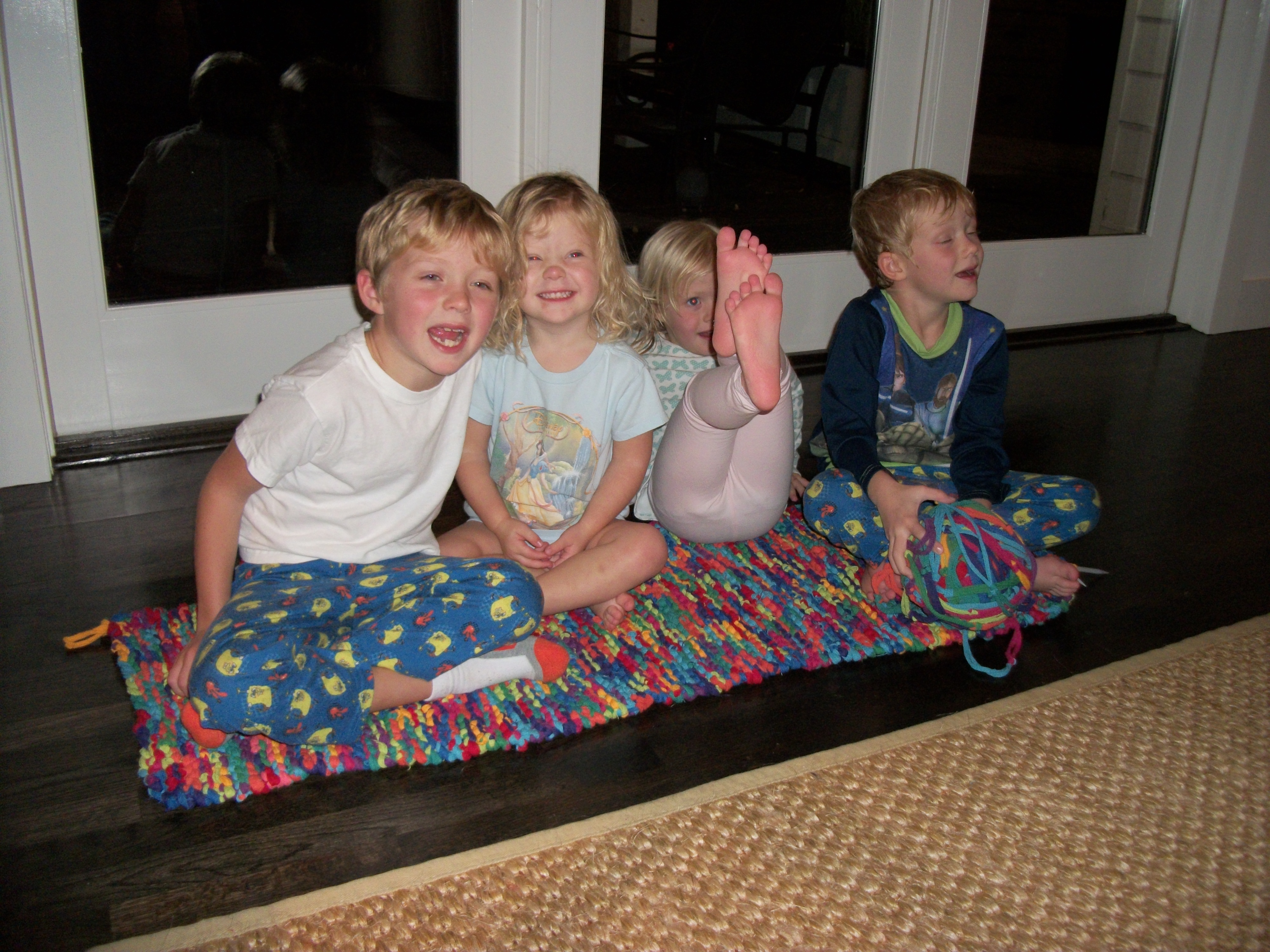
Here’s the finished rug with, left to right, Bowen, Wilhelmina, Talula, and Kellly.  It is VERY hard to get four active children to sit still.  Kelly has the remnants of the loop ball we made in his hand.

Note:  You  need either VERY long needles or a circular needle of at least 25 inches, and bigger would be better.  This project would make great placemats, especially if you ordered specific potholder loop colors.  You could make potholders to go along with placemats to keep drinks off of a nice table.

Meanwhile, the kiddos first cousin Ella Monahan made a potholder and took it home to Florida with her after the holidays.

And, Bowen, who is now 7, announced he’d really like to learn to knit as well.   Tami drove, and I got him some needles and some Peaches & Cream cotton thread to make himself a yellow scarf.  He could master knitting, though he worried himself to death that he wasn’t doing it right.  But, he was.  And, he’s the only person I have ever taught that grasped the left hand European style at once.  (It’s so much faster, but harder to master.)   Bowen’s attention span was good for about a 25-stitch row.   Thus, the scarf became a wash cloth as Bowen grasped the full appreciation of his task.  And, he asked me to take it home and finish it so he could give it to neighbor Leeola, who, in her late 80s, tragically fell in her front yard and broke a hip a few days after Thanksgiving.

Here’s Bo’s washcloth finished:

These Peaches & Cream wash/dish cloths wear like iron.  I use mine all the time, and some of mine are two or three years old now.  There is a famous, fancy-looking, but easy Peaches & Cream dish cloth pattern.  It’s featured in the MASON DIXON QUILTING book and is on many of the Peaches & Cream labels.

I remember crawling into my grandmother’s bed in Reynolds, Georgia, on winter mornings.  She’d be sitting up in bed, knitting.  I can still hear the clicking sounds of her needles as I snuggled down next to her.  She made us hats and gloves and scarves, and when they would arrive at our far-flung Air Force base homes, we’d feel her love for us.  She also made us beautiful dresses on a tredle sewing machine in her bedroom and boxed them up and sent them to us.  When a box came, we could hardly wait to open it.  At that time, materials were expensive, and bought clothes very expensive–especially on Air Force officer salaries.  Later, I learned to sew on her machine.  I tell this story because these influences stuck with me and appeared down the road of my life.  I hope they do with my grands.

Turkey Tracks: Tami’s Placemats

Turkey Tracks:  December 13, 2010

Tami’s Placemats

Last summer, Tami told me she’d love to make some of the placemats I had made using a simple hand loom and fabric strips.  About two years ago, I took a class at Alewives Fabrics, Damariscotta, Maine, to learn this technique.  The book that contains directions for both the looms and how to weave the rugs is RUGS FROM RAGS, by Country Threads.  I think even I could make one of these looms. 

I have two looms, a placemat size and a rug size that is about 2 feet by 3 feet.  I got the rug-size loom first, and my first project was a rug for our kitchen door.  We had just painted the kitchen a color called “beeswax,” from Benjamin Moore paints.  It’s a warm, soft color in the orange family.  So, I wanted kitchen rugs to have warm colors. 


What I learned with this project is that my muslin inner fabric strips (warp?  woof?) should have been in the color palette, not the ususal off-white muslin suspect.  But, but, let me tell you that this rug washes frequently and gets popped right into the dryer.  It takes on mud, snow, and rain without a fuss, and I love it.  Ditto the 8 placemats and the upper side door rug I made after finishing this first rug.  The placemats and other rug are made from “on-sale” fabrics, and they are not batiks.  They ravel more, and it’s harder to weave them because you have to pay attention to keeping the outer, colored part of the fabric turned out so that the inner, bland side does not show.   

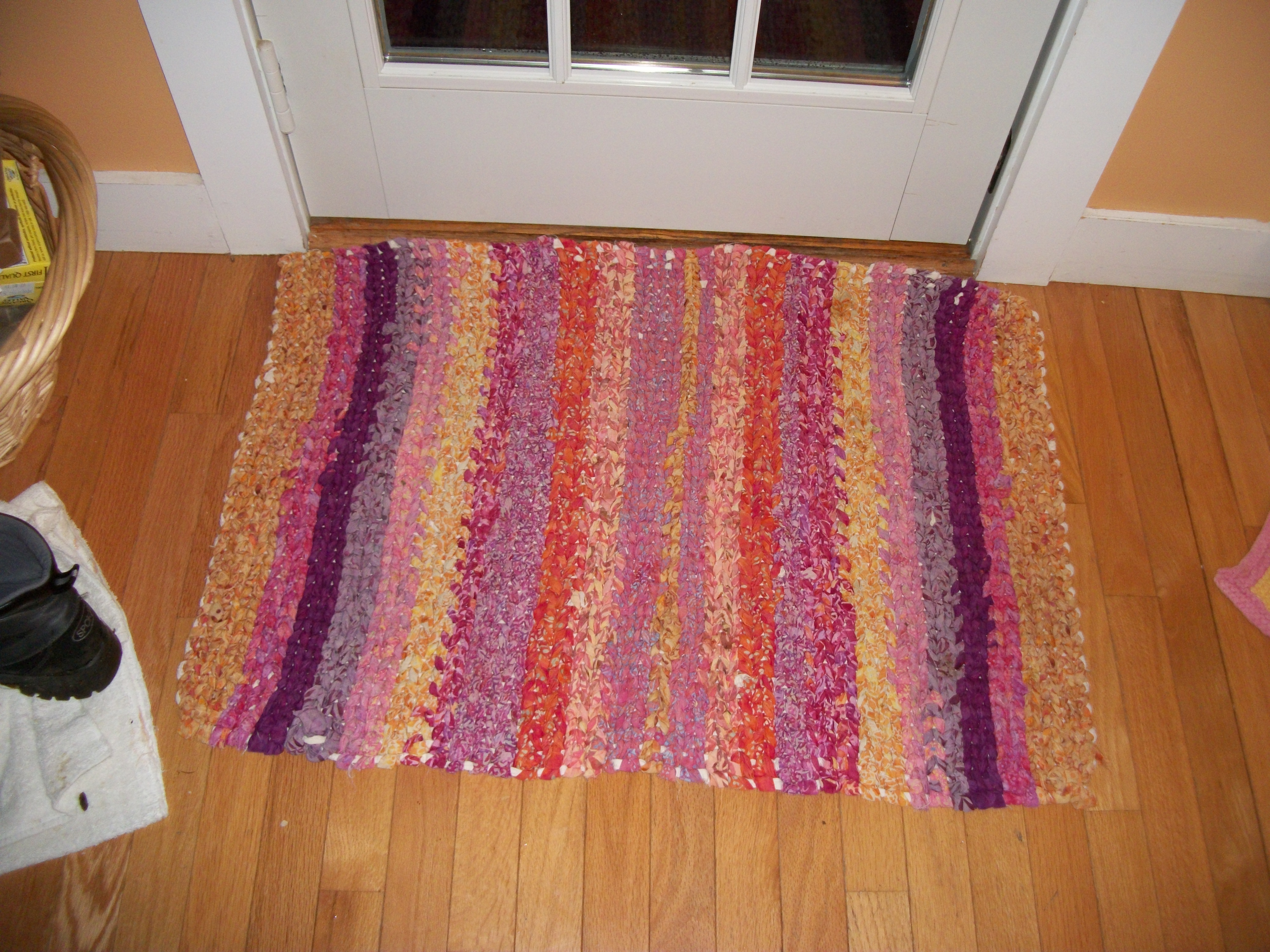
Here’s a picture of the upper side door rug so you can see how different it is.  That’s the door stopper Bryan and Corinne sent to us as a housewarming gift when we moved to Maine.

Here’s a picture of one of the placemats.  Each one is different.  And, I trim off unraveled threads every so often.  Again, they are wearing like iron and get popped into the washer and dryer without a backward glance.

Tami and I left the next morning to pick out fabric for her project.   John, upon hearing of her project, offered to make her a loom.  Meanwhile, after choosing batiks in soft creams and blues (beachy colors she said), she cut her fabric strips and started a placemat on my loom.

Tami and I always get into crafts toward the end of their month in Maine with us, so she did not have time to finish this first placemat and went home with both my loom and the one John made for her.  She did have time to master the technique and finished one of the placemats in short order.  Here it is:


I, meanwhile, made the six napkins with fabric she left with me and mailed them to her.

Tami and Mike, after looking for the kind of home they wanted to buy in Charleston, bought a home in August.  Thus, she was preoccupied with her third move in three years and with some changes to the new home throughout the fall.  (They bought a simple, beautiful home that works to keep them together as a family–along the lines of the “not so big” home idea.)  And now, both of my sons and their families live on Isle of Palms, a barrier island just north of Charleston’s harbor.  They live two blocks from each other and within two blocks of the beautiful Isle of Palms beach. 

Together over Thanksgiving, we finished three placemats, so now Tami has four completed.  She has materials for two more.

Here’s what the loom looks like, with a placemat in progress:

And, here are three placemats with their matching napkins:

Some time this winter I would like to start a rug using an old light green duvet color and some old sheets. 

I warn you:  this craft is addictive.

Turkey Tracks: Tami’s Birthday Socks

Turkey Tracks:  December 13, 2010

Tami’s Birthday Socks

Tami’s birthday is in February.

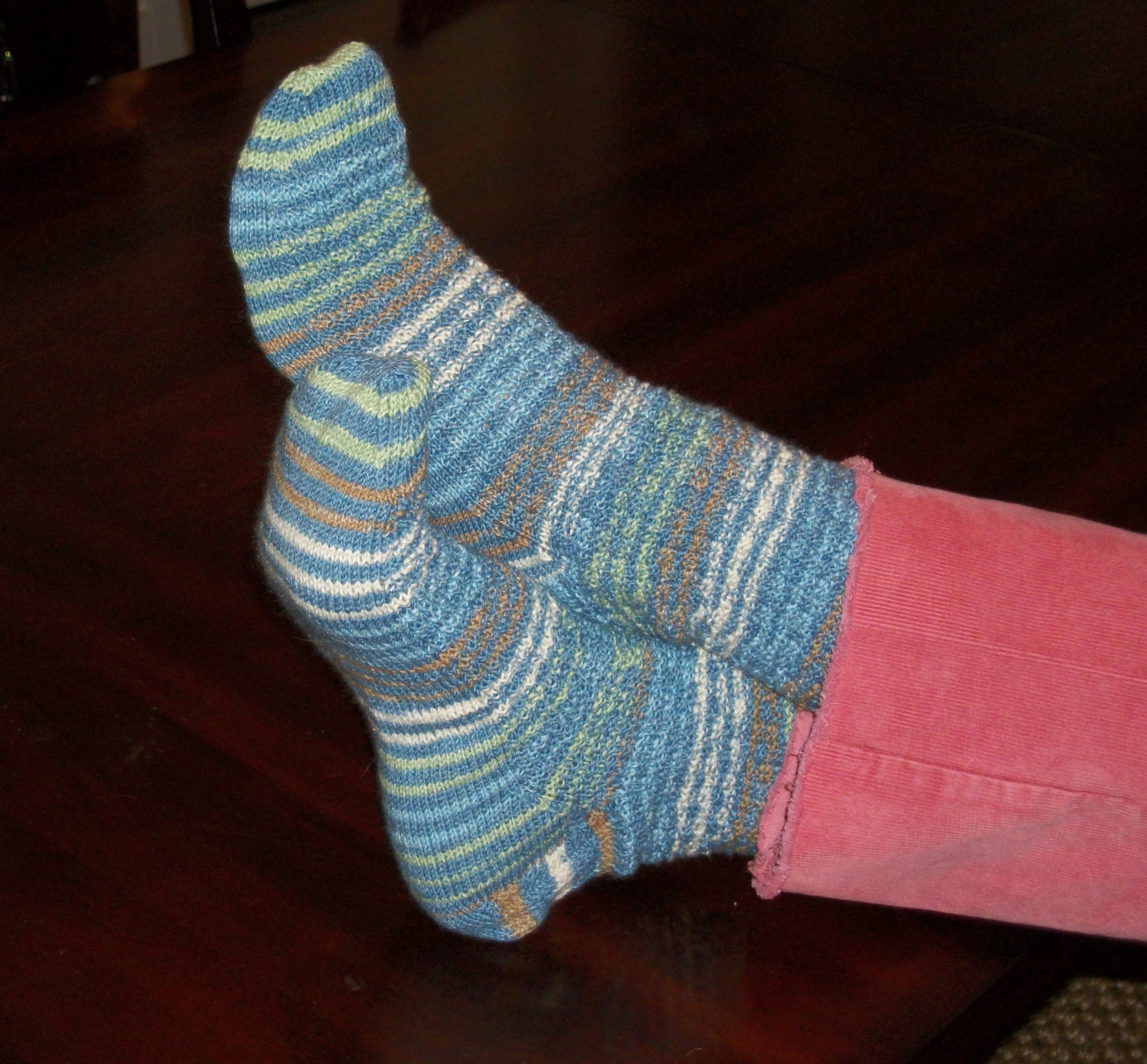
Here are the socks I was making for her.  They are a cotton-wool-nylon blend as all wool is too hot for Charleston, SC.  I finished them in while we were in Charleston over Thanksgiving.

They are the 4-stitch, double moss pattern from Charlene Schurch’s SENSATIONAL KNITTED SOCKS.  I really like the rough nature of this particular double-moss pattern.

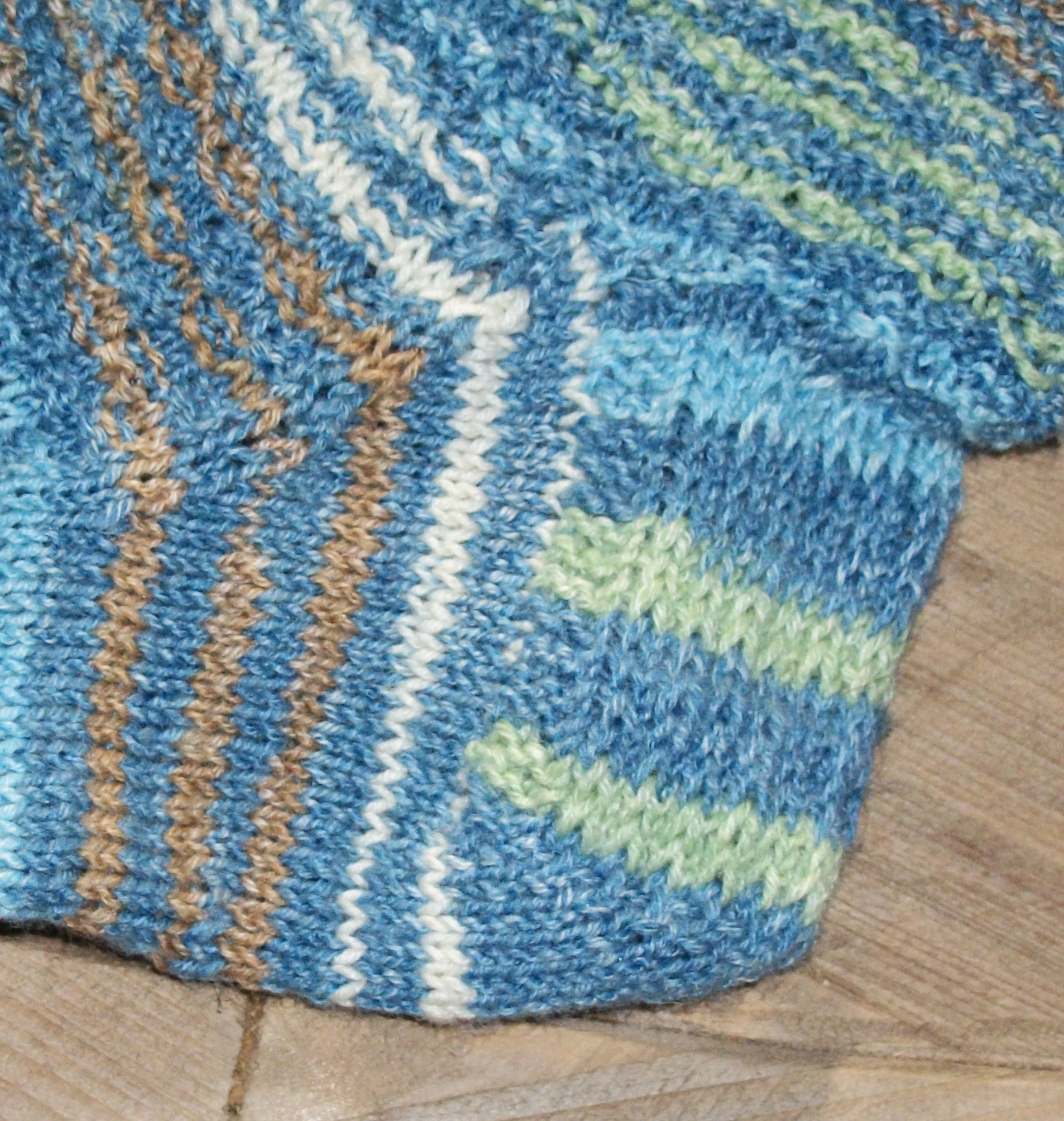
But, I’ve been stuck on the 4-stitch variations for over a year now.  I’m definitely going to try one of the 5-stitch variations next.  One reason I really like the 4-stitch version is the elegant heel treatment with the row of garter stitches along each side of the heel.  Here’s a blow-up picture of what I mean:

Of course I could not resist giving them to her.  And, you can see that the socks fit Tami’s elegant long feet perfectly!  Feet that go with her elegant tall body!

You were right, Barb Melchiskey.  I did have enough yarn.  I had about 20 inches remaining when I was done.  So comforting in the end!!!!

Turkey Tracks: Ailey Sydney Enright

Turkey Tracks:  December 13, 2010

Ailey Sydney Enright

Ailey Sydney Enright came into this world November 25, 2010, Thanksgiving morning in 2010, a few minutes after 5 a.m.

Bryan and Corinne arrived at  the hospital at 4 a.m. and were shocked to discover Corinne was fully dilated.

We were staying with Mike and Tami and the grands, and they called us about 7 a.m.   

Ailey is Gaelic for Helen, Corinne’s beloved grandmother on her mother’s side.  Sydney is for my beloved uncle, Sydney Hoke Bryan of Reynolds, Georgia.  Both Helen and Sydney have been formidable influences in Corinne and Bryan’s lives. 

Ailey looks like a tiny, unfurled rosebud.

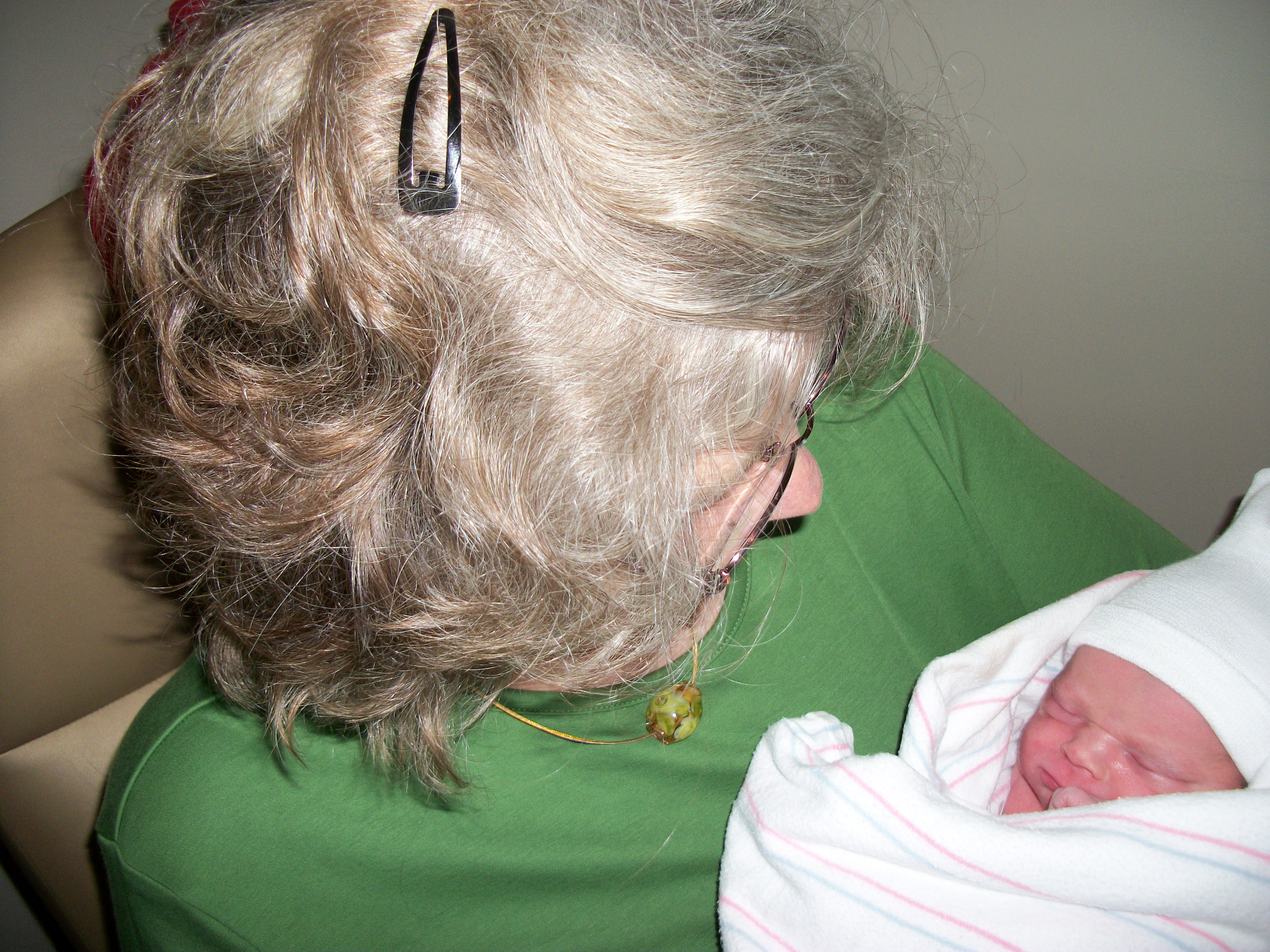
Here’s a picture in the hospital later that morning:

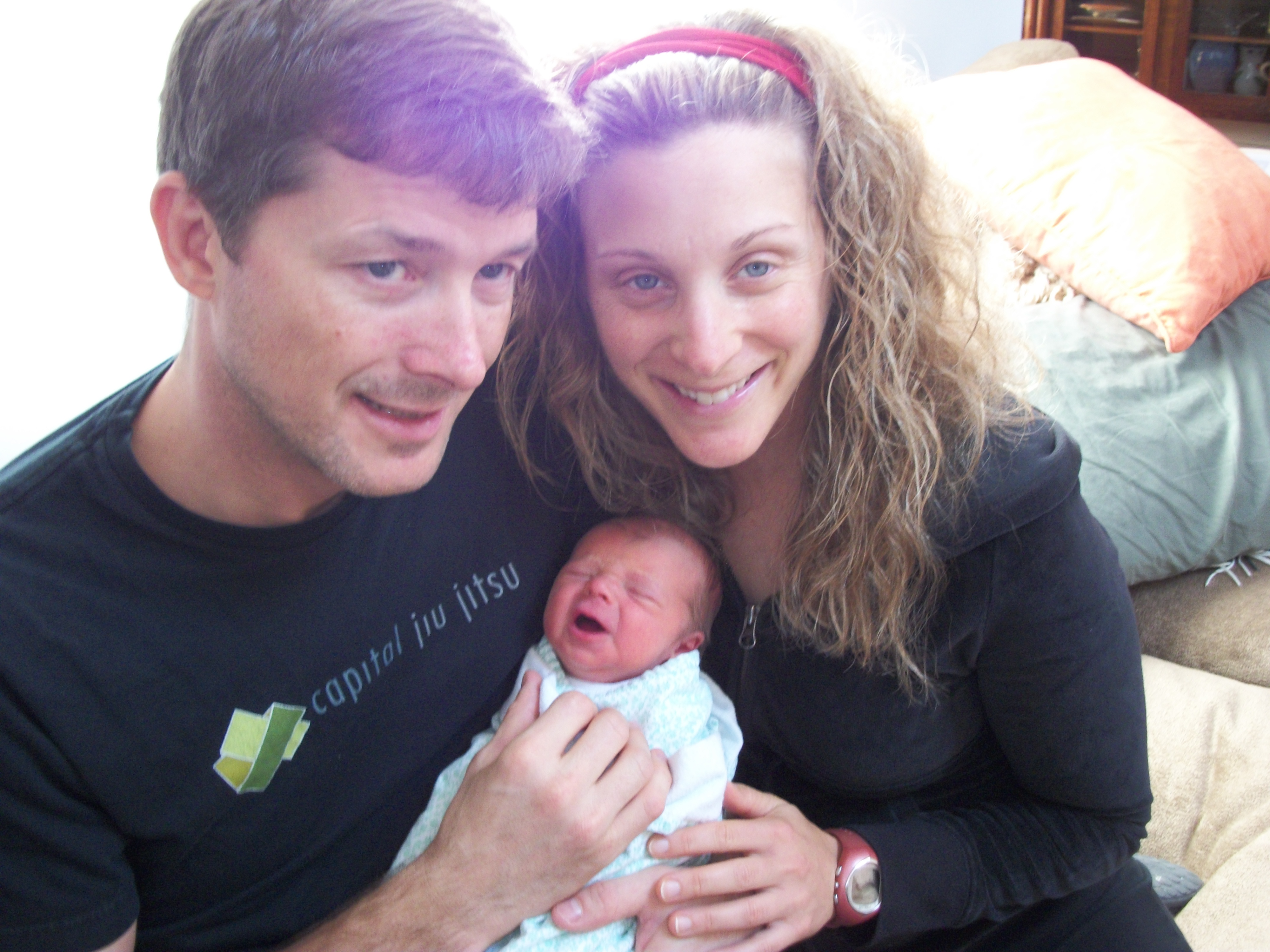
Here’s a picture of the proud parents and their beautiful daughter on the Saturday after Thanksgiving. 

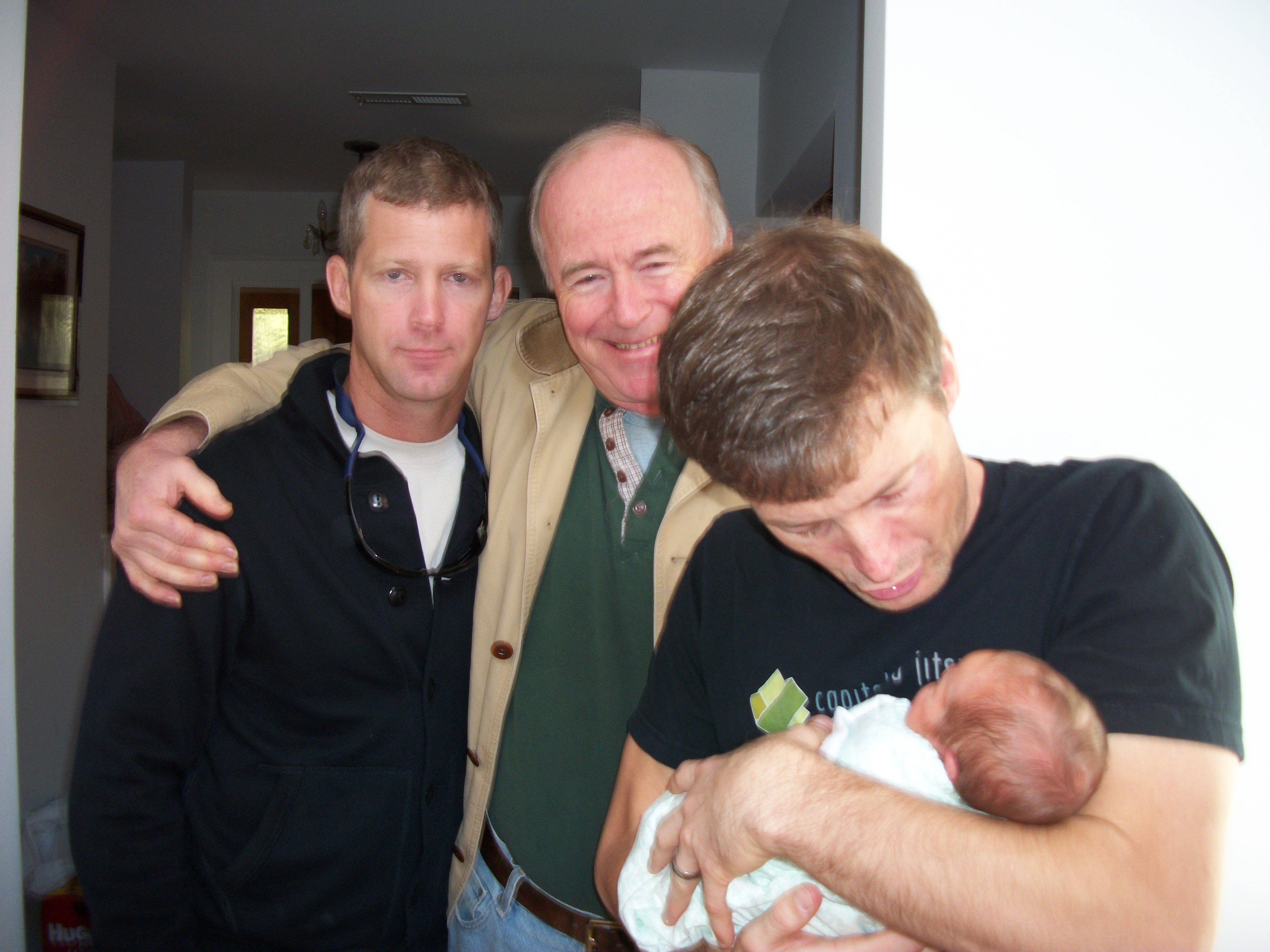
Here’s a picture of my three Enright men with their new daughter/niece/granddaughter.  Because Ailey was born on Thanksgiving, Bryan got that long weekend and the following week off from work.  I think he held Ailey most of that time, which gave Corinne time to rest and recuperate and work on being a new mom who is breast feeding.   Occasionally he’d let each of us hold Ailey, but he’d pace back and forth behind us if she wasn’t completely happy–especially during the time before Corinne’s milk came in and Ailey was hungry and wanted to nurse all the time.  

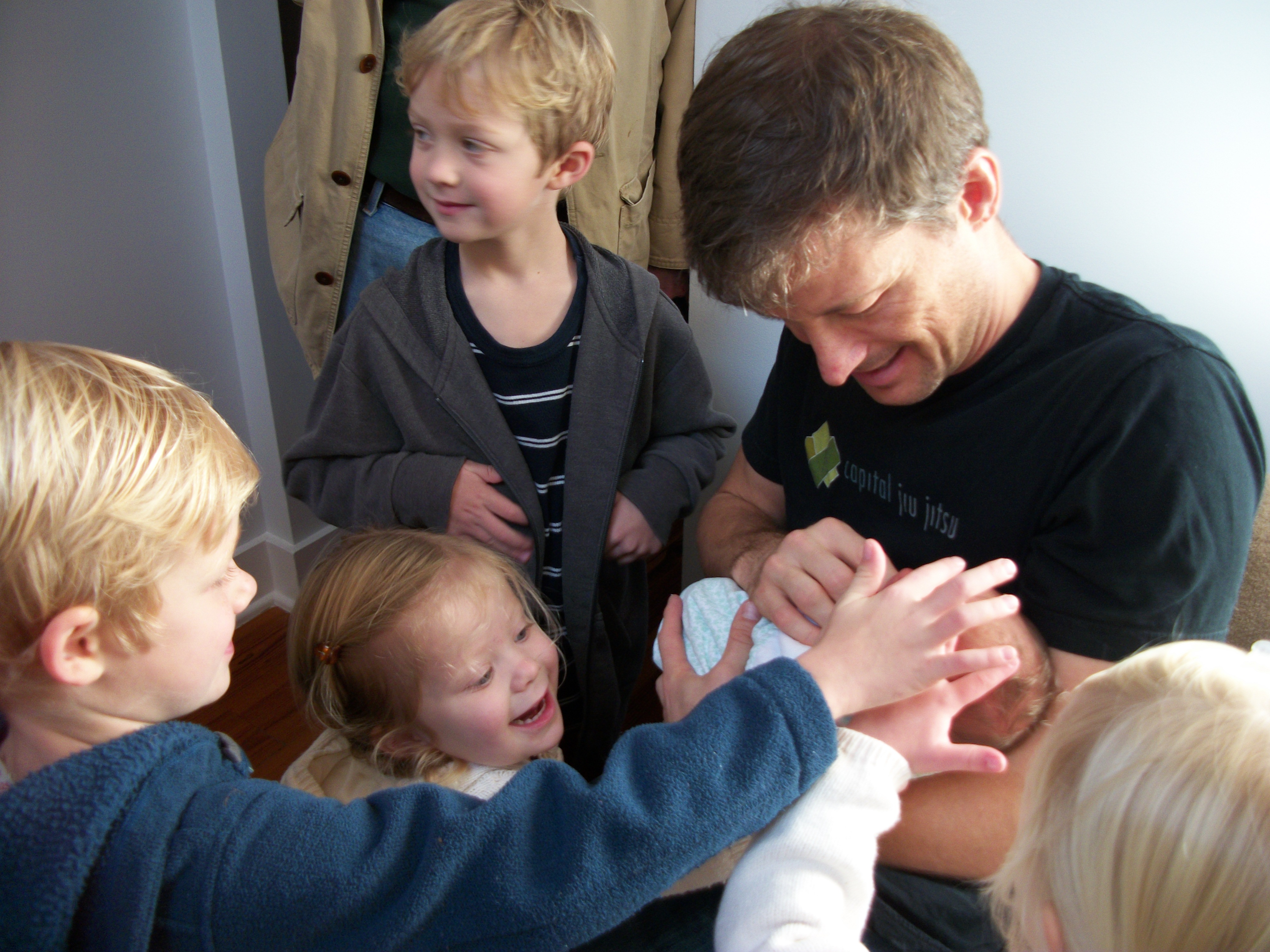
The other grandchildren are completely enchanted with their new cousin.  As is first-time aunt, Tami.   Here’s a picture of the kiddos introduction to Ailey:

And, another:

Corinne and Bryan are going to make excellent parents.  I always knew they would, but it’s nice to see my dreams for them in action.  Like about 25 percent of all couples today, when they decided it was time to have a child, they had trouble.  Corinne quit an engrossing, but killer job in the DC area, and they moved to Charleston and simplified their lives.  They worked with an environmental doctor there, and learned that they had some nutritional imbalances and some serious toxicities (aluminum and mercury).  They set about detoxing and cleaning up their food and cooking habits.  (Aluminum cooking pots, aluminum cans, aluminum foil, too much fish, mercury fillings, etc., are all problems for humans.)  They spent a year getting ready to get pregnant, and when they did, whammo!  Almost right away Corinne conceived.  And, Corinne, because she is so healthy, had a terrific pregnancy, a quick birth, and is now breast-feeding Ailey.  GO CORINNE!

I am so proud of both of them, and of Mike and Tami with their four beautiful children!  Both Tami and Corinne are seriously into learning about and practicing healthy lifestyle choices.  Both are sourcing local, organic, nutrient dense foods in Charleston.  They are the wave of the future!

Turkey Tracks: The Charleston, SC, Farmers’ Market

Turkey Tracks:  December 13, 2010

The Charleston, SC, Farmers’ Market

We flew to Charleston, SC, on November 19th, a Friday.  Son Bryan picked us up at the airport, and daughter-in-law Corinne, who was 9 months pregnant, joined us for lunch.  Bryan and Corinne hosted a gathering for all the family that night, so oldest son Mike, daughter-in-law Tami, and their four children (Bo, Kelly, Talula, and Wilhelmina), and old friends just moved to Charleston, Leighton and Tara Derr-Webb, all came.  We sat on B&C’s  big screened porch and ate Bryan’s beer-can chicken.  Delicious!  The grandchildren have grown so much since last July.

Corinne took us to the Charleston Farmers’ Market early Saturday morning.  This market is ranked as the 5th best in the nation, and it is wonderful.  It sits on two sides of a central downtown green square, which means each leg of the market is nearly a city block long.  Many venders sell on-the-spot freshly cooked food, and the smells from the market are heavenly.  It’s one of my favorite places to go.

We made many purchases for Thanksgiving dinner on the following Thursday.  (We start cooking early in Thanksgiving week.)  I think we go through six or seven dozen eggs while cooking Thanksgiving dinner.  The family dressing alone takes two dozen eggs.  Pies take eggs as well.  And, cornbread.  We were able to get  really good eggs at the market.  And, Corinne was really wanting apple pies, so we loaded up on apples.  And, on greens, particularly kale.  We drank coffee and tea, ate chocolate croissants from a downtown store–a favorite of Corinne’s–and sampled and sampled market offerings.

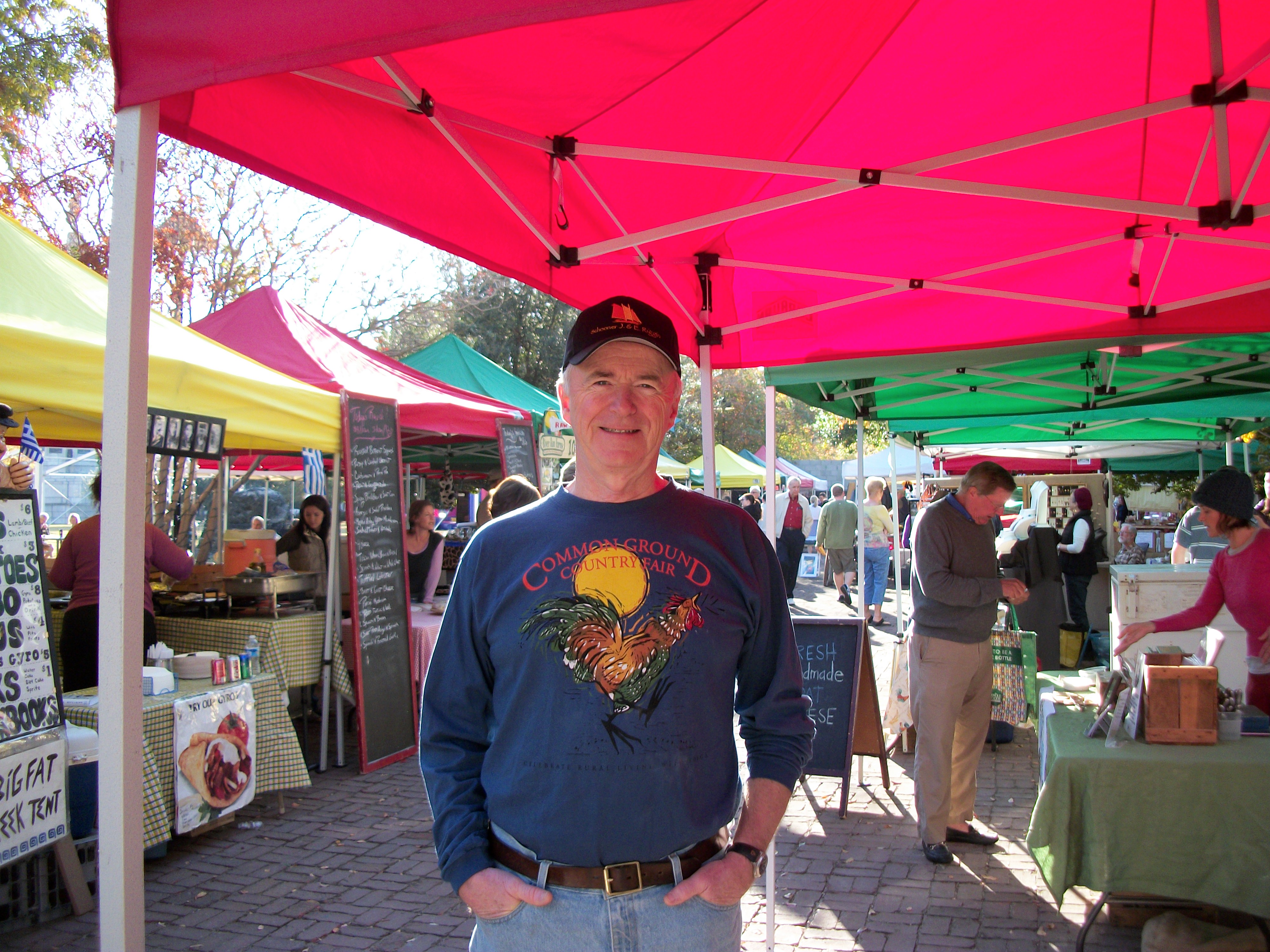
Here’s a nice picture of John at the market:

And, a nice picture of a very pregnant Corinne:

 Ailey Sydney Enright came into this world a few minutes after 5 a.m. on Thanksgiving morning, 2010, on November 25th.

Turkey Tracks: Giovanna’s Shawl

Turkey Tracks:  December 13, 2010

Giovanna’s Shawl

This fall I had the great good fortune to meet Giovanna McCarthy.

Giovanna’s husband, Tom, went to high school with John in Sommerville, MA.  Sometime last year, Tom and John reconnected, and Tom and Giovanna rented a house here in Camden, Maine, for the fall.  They wanted to explore living here, and they bought a home the first week they arrived.   They will move here for good in January 2011, and we are excited about them coming here.  Giovanna has already come to two of Coastal Quilters’ monthly meetings.

Giovanna came to America from Chile as a young woman.  And, Giovanna is a master knitter.  Her hands are always busy with handwork.

Look what she gave me not long ago:

 Here’s a close-up:

 Giovanna used one of the Noro yarns from Japan.  These yarns have the most beautiful colors and fibers.  Noro yarns can be pure wool or blends.  Noros often use a lot of silk and some of the softer animal fibers, like angora.  And, the yars come in various weights.  I made a scarf and matching hat from a silk and wool Noro when I started knitting again here in Maine.   It’s wearing beautifully.  I did a pair of socks, though, that I detest.  I couldn’t match the colors from one sock to the other, and to my eye, they don’t look pretty.  (Friend Amy Fischer loves them though.)  Giovanna, clearly, knows how to use these yarns.  She says this pattern is easy.  Ha!  And, that one works a hole when there is a color change so the colors are even.

I recently bought a book on knitting with Noro yarns that excites me.  There’s a chunky cardigan in it that has my name on it.

This blog will have more on Noro knitting down the road, I’m sure.  And I’m sure there will also be more on Giovanna and her work.

Turkey Tracks: Steve Melchiskey’s Earring Holder

Turkey Tracks:  December 13, 2010

Steve Melchiskey’s Earring Holder

I’m a member of Coastal Quilters, a chapter in the Maine State Pinetree Quilters’ Guild.  CQ is based in Camden, Maine, and it is a lovely group of women.  I treasure knowing each and every one of them.  They are generous to a fault, astonishingly talented, and devoted to this quilting group.  We learn a lot from each other.

Our spouses are no slouches either.  Many of them help us set up our meeting space at the Lion’s Club each month, which involves putting up lots of tables and placing chairs around them.  And, for our annual fundraising auction, one spouse–Steve Melchiskey–made several, very clever, pierced earring holders, using frames and window screen.  I had been searching for something to organize my earrings–especially since I have a new-found passion–making earrings with the help of the staff at Aboca Beads in Damariscotta, Maine, about 40 minutes down the road.

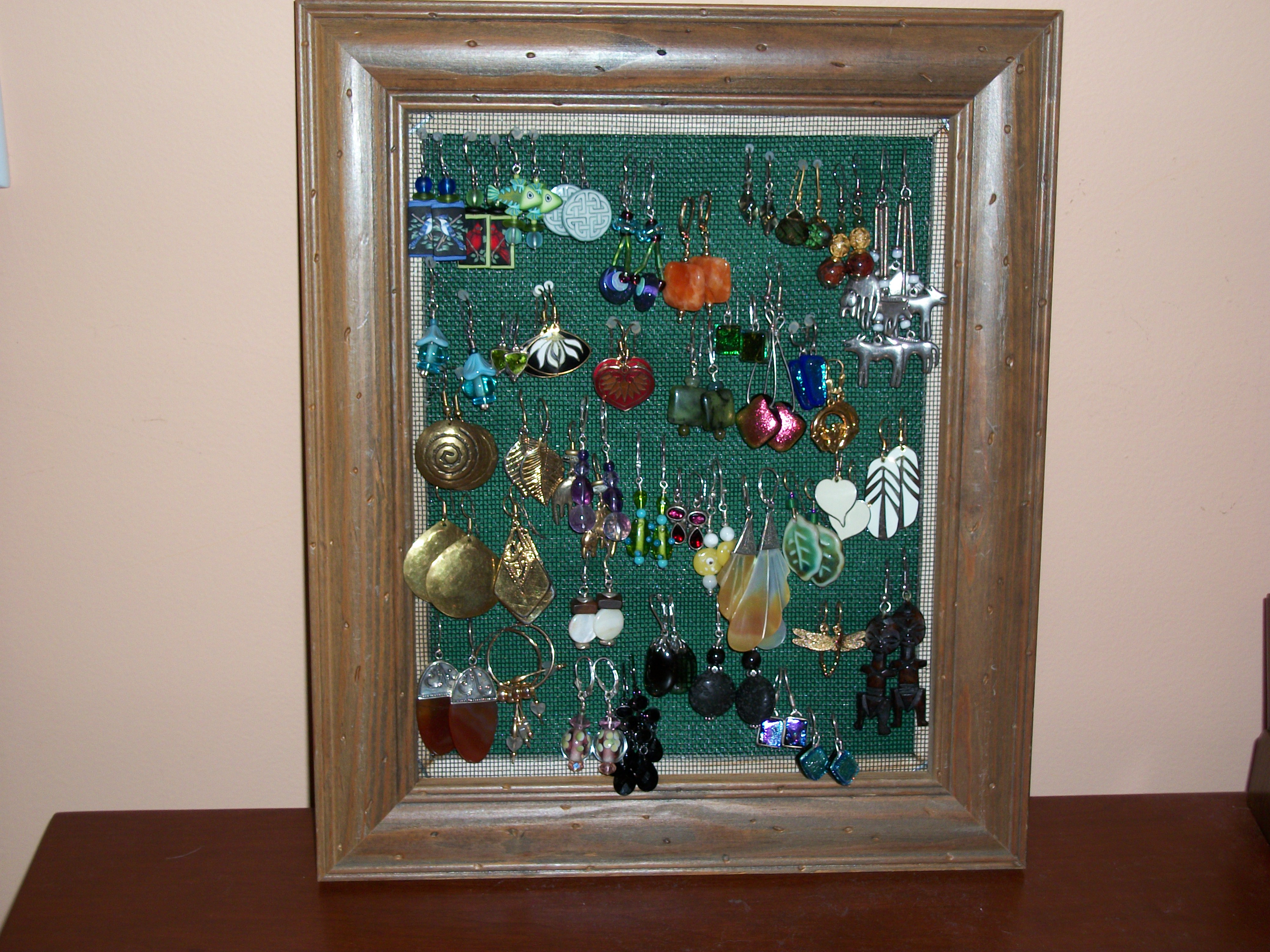
Here’s my terrific earring holder, and my heartfelt thanks to Steve Melchiskey for supporting Coastal Quilters:


Look at all those earrings, both VERY old and new!  The top three on the left are made from folding clay by the most amazing artist who displays at Alewives Fabrics in Damariscotta Mills.  How does she make such intricate pictures????  Some readers will recognize earrings they have given to me.  Some of the earrings I remade from old, outdated earrings, giving them new life.  One of the amber-like ones on the lower left got dropped and cracked.  John glued it for me, and I love it still. 

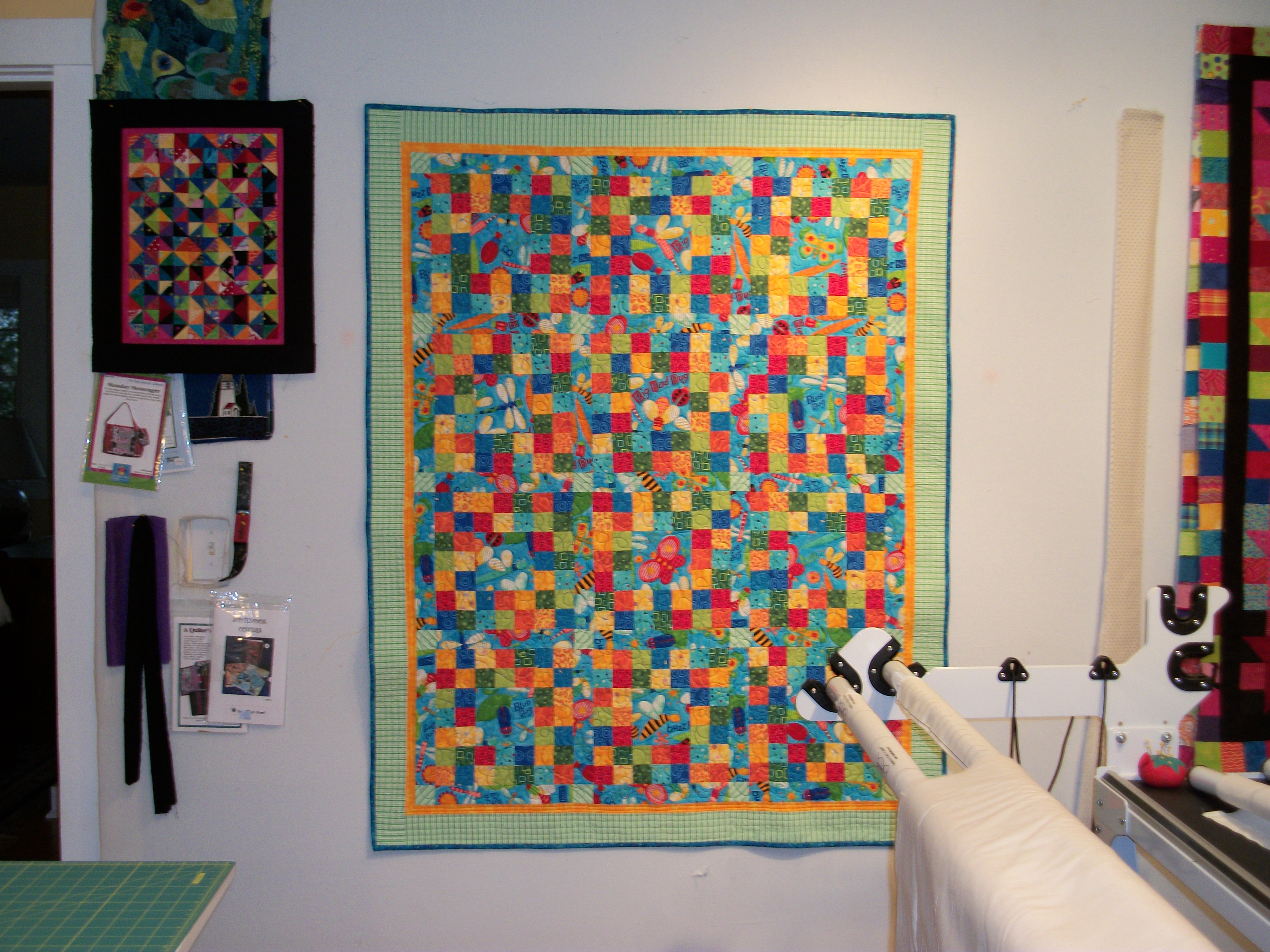
Turkey Tracks: Big Beautiful Bug, New Granddaughter Quilt

Turkey Tracks:  December 13, 2010

Big Beautiful Bug, New Granddaughter Quilt

Before leaving for Charleston for Thanksgiving, I wanted to complete our new granddaughter’s “welcome to this world” quilt.  She was due the first week of December–maybe even while we were in Charleston.  We were due to return December 6th.

Corinne found what would be the backing fabric when she was here this summer, and we both loved it.  There was a limited amount, however, and all the internet fabric searches in the world did not turn up more of it.   For some odd reason, I never did get a picture of the back of the quilt–and the fabric before I cut some of it up for the front.  Here is a BIG picture of part of the front, and you can see the fussy-cut featured bug fabric, combined with lively, bright prints.

Here is border detail:

And, here is the finished quilt:

This is a pattern I clearly love.  I’ve used it three times now.  One for my great-niece Fiona Whittle, and once for my daughter-in-law, Tamara Kelly Enright.  Each quilt is uniquely different.