Books, Documentaries, Reviews: Michael Pollan: COOKED

Books, Documentaries, Reviews:  April 26, 2014

COOKED

Michael Pollan


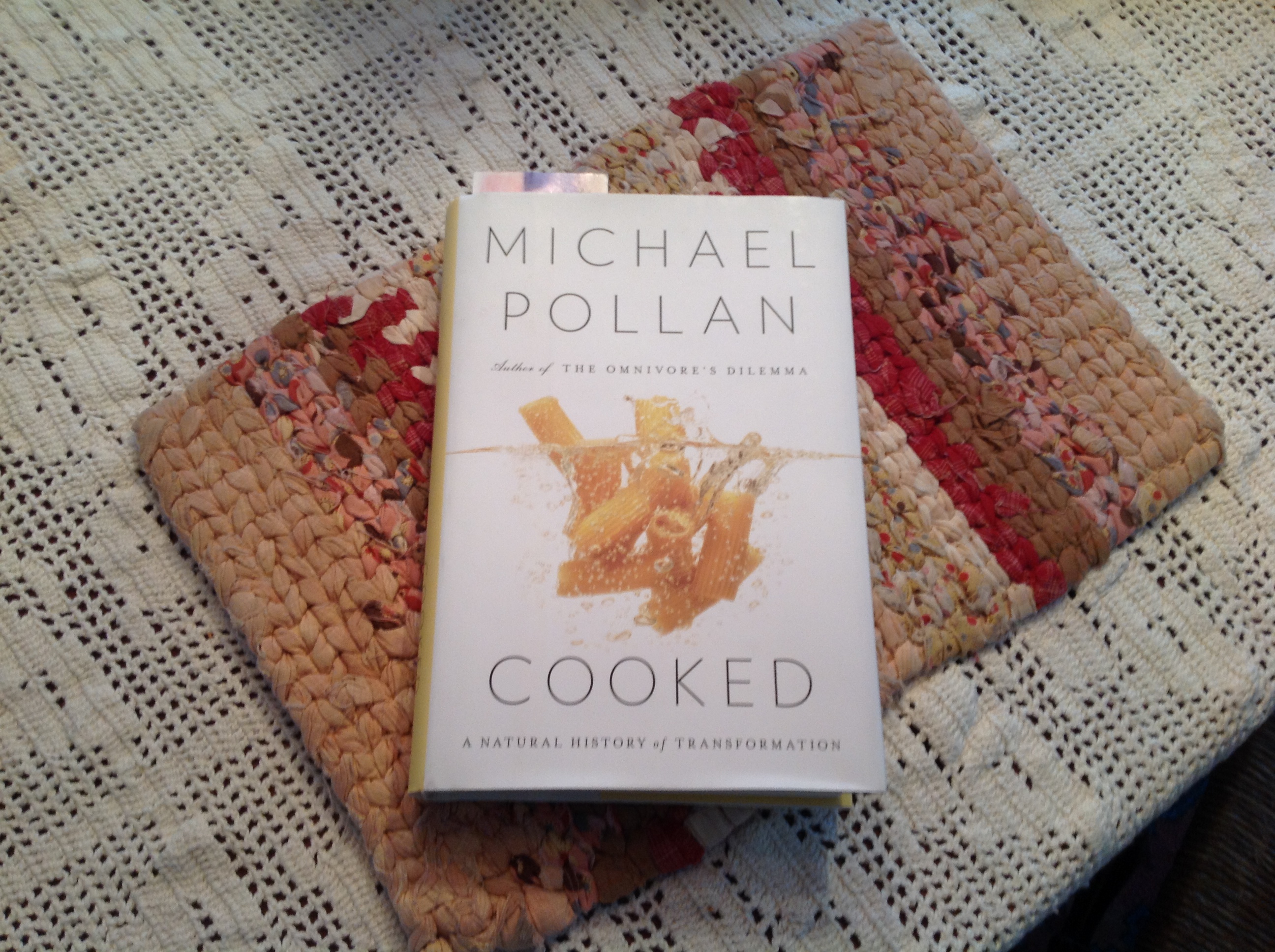
Friend Gina Caceci brought me Michael Pollan’s Cooked a bit ago…

IMG_0251

I’m only into the beginning pages, but am looking forward to reading more.

Pollan begins with describing what he calls the “cooking paradox”:

How is it that at the precise historical moment when Americans were abandoning the kitchen, handing over the preparation of most of our meals to the food industry, we began spending so much of our time thinking about food and watching other people cook it on television?  The less cooking were doing in our own lives, it seemed, the more that food and its vicarious preparation transfixed us (3).

Pollan goes on to note that “the amount of time spent preparing meals in American households has fallen by half since the mid-sixties, when I was watching my mom fix dinner, to a scant twenty-seven minutes a day” (3).

TWENTY SEVEN MINUTES A DAY!!

Cooking, Pollan notes, is magic:  “Even the most ordinary dish follows a satisfying arc of transformation, magically becoming something more than the sum of its ordinary parts.  And in almost every dish, you can find, besides the culinary ingredients, the ingredients of a story:  a beginning, a middle, and an end” (4).

And here’s a bit of philosophy that might explain the “cooking paradox”:

So maybe the reason we like to watch cooking on television and read about cooking in books is that there are things about cooking we really miss.  We might not feel we have the time or energy (or the knowledge) to do it ourselves every day, but we’re not prepared to see it disappear from our lives altogether.  If cooking is, as the anthropologists tell us, a defining human activity–the act with which culture begins, according to Claude Lévi-Strauss–then maybe we shouldn’t be surprised that watching its processes unfold would strike deep emotional chords (5).

Other anthropologists “have begun to take quite literally the idea that the invention of cooking might hold the evolutionary key to our humaness” (6).

A few years ago, a Harvard anthropologist and primatologist named Richard Wrangham published a fascinating book called Catching Fire, in which he argued that it was the discovery of cooking by our early ancestors–and not tool making or meat eating or language–that set us apart from the apes and made us human.  According to the “cooking hypothesis,” the advent of cooked food altered the course of human evolution.  By providing our forebears with a more energy-dense and easy-to-digest diet, it allowed our brains to grow bigger (brains being notorious energy guzzlers) and our guts to shrink.  It seems that raw food takes much more time and energy to chew and digest, which is why other primates our size carry around substantially larger digestive tracts and spend many more of their waking hours chewing–as much as six hours a day.

Cooking, in effect, took part of the work of chewing and digestion and performed it for us outside of the body, using outside sources of energy.  Also, since cooking detoxifies many potential sources of food, the new technology cracked open a treasure trove of calories unavailable to other animals.  Freed from the necessity of spending our days gathering large quantities of raw food and then chewing (and chewing) it, humans could now devote their time, and their metabolic resources, to other purposes, like creating a culture (6).

So, “if cooking is as central to human identity, biology, and culture as Wrangham suggests, it stands to reason that the decline of cooking in our time would have serious consequences for modern life, and so it has” (7).

I will leave you with this quote–which contains much “food for thought”:

The shared meal is no small thing.  It is a foundation of family life, the place where our children learn the art of conversation and acquire the habits of civilization:  sharing, listening, taking turns, navigating differences, arguing without offending.  What have been called the “cultural contradictions of capitalism”–its tendency to undermine the stabilizing social forms it depends on–are on vivid display today at the modern American dinner table, along with all the brightly colored packages that the food industry has managed to plant there (8).


Books, Documentaries, Reviews: THE BOYS IN THE BOAT

Books, Documentaries, Reviews:  April 15, 2014

The Boys in the Boat

Daniel James Brown


Daniel James Brown’s book about the eight-man crew team that won the 1936 Olympics in Hitler’s Germany has been a pleasure to read.

IMG_0249

Like Laura Hildenbrand’s Seabiscuit, Brown’s book uses the story of the University of Washington’s crew teams to tell the wider story of that “dust bowl” era so filled with poverty.  And like Seabiscuit, who won against a big, glossy, stallion from the east, this crew team is not comprised of elite, East Coast young men, but the sons of loggers, fishermen, farmers, and blue-collar workers.  Most of these young men grew up poor and struggled to get purchase in a world filled with poverty and struggle.

This story is also about George Yeoman Pocock, who built, by hand, the 62-foot rowing shells used by most competitive teams in America.  Pocock emigrated from England, was the son of a boat builder, was a self-taught award-winning rower, and struggled to get purchase in American.  Nothing was handed to Pocock for free.

And, there is Al Ulbrickson, the University of Washington’s crew coach, who had been an award-winning rower at the University of Washington.

These men all have bottomless character, bottomless heart, and iron wills.  It is a pleasure to read about them–and about how they could not begin to win until they learned to work together, to work as a cohesive unit, to respect each other, to protect each other, to like each other’s differences.

Here’s a quote from George Pocock:

Every good rowing coach, in his own way, imparts to his men the kind of self-discipline required to achieve the ultimate from mind, heart, and body.  Which is why most ex-oarsmen will tell you they learned more fundamentally important lessons in the racing shell than in the classroom.

Here’s how Brown starts the book:

Competitive rowing is an undertaking of extraordinary beauty preceded by brutal punishment.  Unlike most sports, which draw primarily on particular muscle groups, rowing makes heavy and repeated use of virtually every muscle in the body….And rowing makes these muscular demands not at odd intervals but in rapid sequence, over a protracted period of time, repeatedly and without respite.

Rowing competitively, at some point in the race, I learned, becomes really painful.

Here’s a description of “the boys”–as seen by their freshman coach who goes on to coach at Harvard–Tom Bolles:

And it wasn’t just their physical prowess  He liked the character of these particular freshmen.  The boys who had made it this far were rugged and optimistic in a way that seemed emblematic of their western roots.  They were the genuine article, mostly the products of lumber towns, dairy farms, mining camps, fishing boats, and shipyards.  They looked, they walked, and they talked as if they had spent most of their lives out of doors.  Despite the hard times and their pinched circumstances, they smiled easily and openly.  They extended calloused hands eagerly to strangers.  They looked you in the eye, not as a challenge, but as an invitation.  They joshed you at the drop of a hat.  They looked at impediments and saw opportunities (94).

Brown chooses crew member Joe Rantz as the emotional heart of this book.  And it’s a good choice.  Joe’s mother dies when he’s about five, his father remarries, his stepmother rejects him, and he’s thrown on his own resources from about the age of ten.  Basically, he’s abandoned–and part of the drama of the story is that Joe has to learn to trust his crew mates.  How many five-year olds today would be put on a train in Washington state and make the journey to the East Coast on his own?

And, then there is the story of Henry Penn Burke, chairman of the U.S. Olympic Rowing Committee–and the chairman of and a major fundraiser for the Pennsylvania Athletic Club in Philadelphia–who, when the Penn team comes in second to the Washington team, announces that there is no money to send the Washington team to the Olympics, but that the Penn team has money and will be happy to take the place of the Washington team.

Heroically, the folks back in Washington–many of whom are dirt poor–manage to raise the $5000 needed to send the team to Germany.  And they do it in two days.  Small contributions come in until there is enough.

No wonder westerners were skeptical of the eastern elites…

It’s a good, interesting read.


Books, Documentaries, Reviews: Renata Adler, PITCH DARK review

Books, Documentaries, Reviews:  March 31, 2014

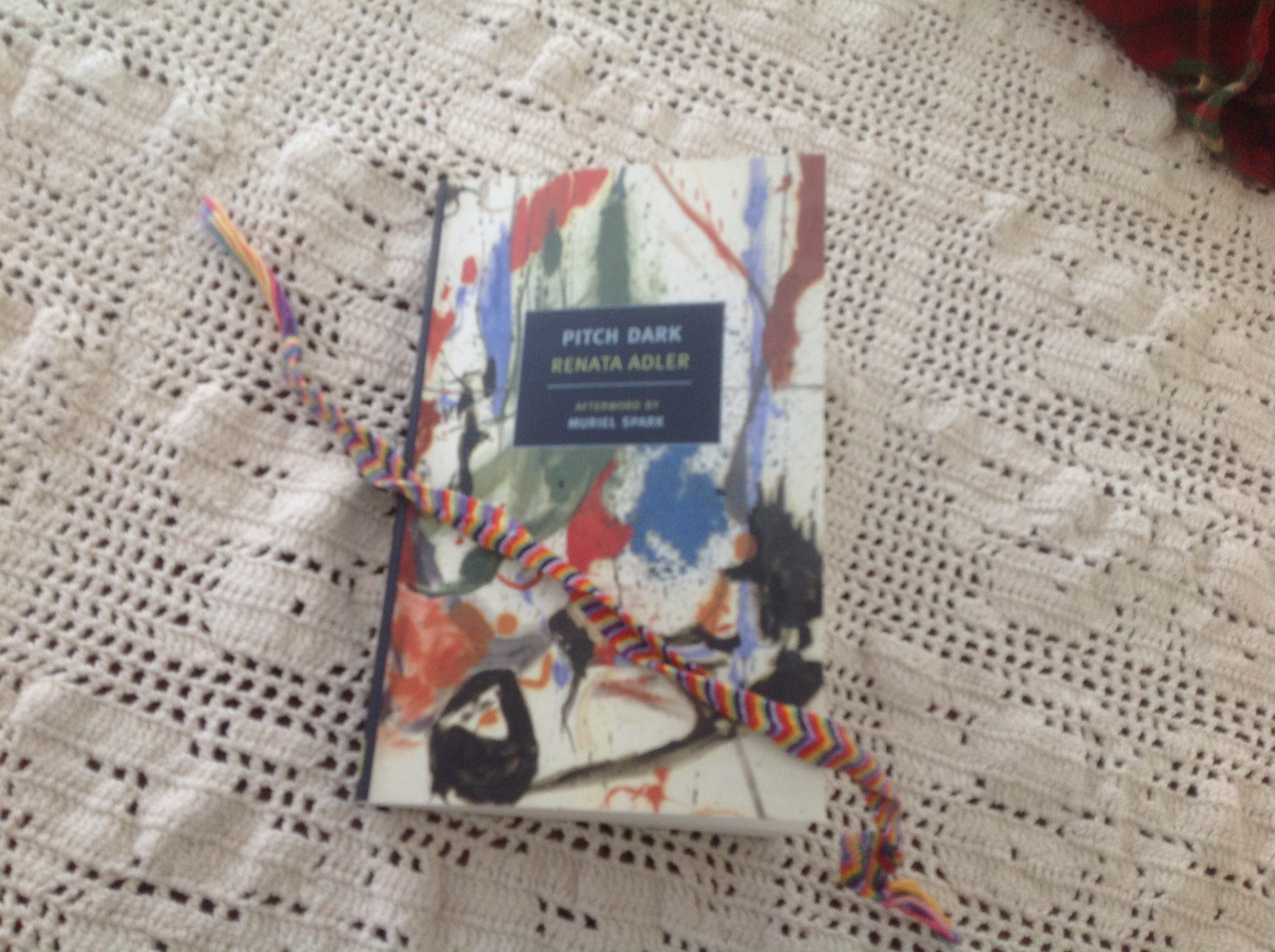
Renata Adler’s PITCH DARK


I promised I’d “let you know” what I thought about Renata Adler’s novel Pitch Dark,  published in 1983.

IMG_0204

You may recall in an earlier blog post that I’d heard this novel recommended during a pre-New Year’s “Best Books of 2013” NPR program.

This novel is a very “modern” novel–in that it is challenging the very form of the novel itself.

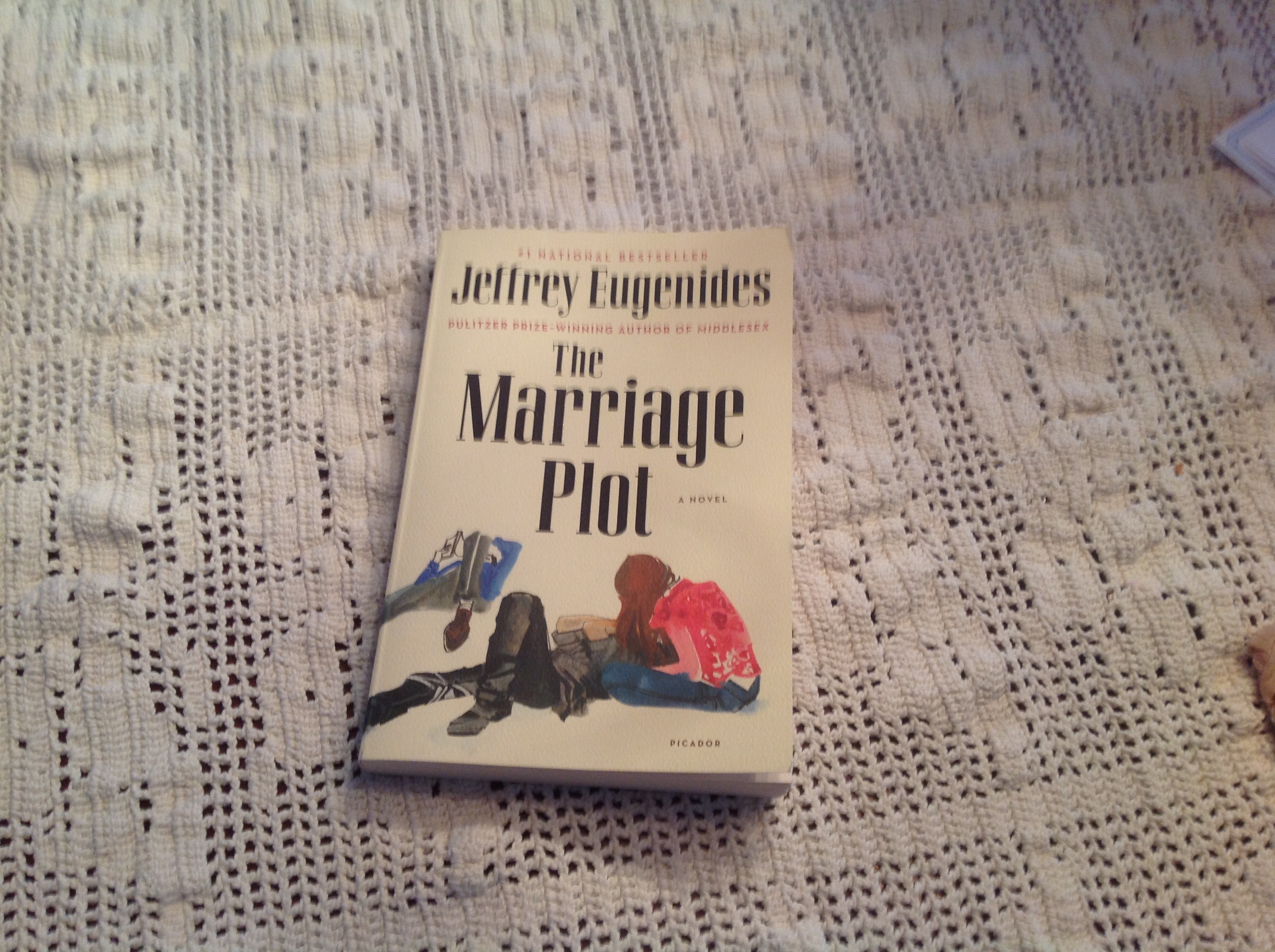
You may recall that I also wrote recently about Jeffrey Eugenides’s novel The Marriage Plot, wherein Eugenides attempts to forge a novel that does not fall back on the “marriage plot” since with divorce, women are no longer tied to marriages they want to abandon.

IMG_0208

But Renata Adler moves light years beyond the still-entertaining story of The Marriage Plot.  Adler does not have a plot at all.  This “novel” consists of a series of vignettes that are not even loosely held together and that are all mixed up in time.  There is no narrative flow.

Is it interesting?

Yes, some of the vignettes are.  And she does circle back to at least one so the reader gets some sense of the final outcome.  And I think she circled back to show just how deep the moral abyss can be in modern society.

I enjoyed the protagonists musings on social and historical events and on how some of our systems work.  These musings certainly provoke one to think a bit more deeply.

But, I do think Muriel Sparks, who wrote the Afterward, is correct:

This, I think is the vision of life reflected in Miss Adler’s fiction.  Nothing evolves, nothing derives.  Effects do not result from causes.  Episodes are recorded without any connection with each other.  Fortunately, they are fascinating episodes.

So, what happens to the moral fabric of society is one can no longer be certain that certain desired effects stem from causes, that if one does bad things they will be punished in some way?  Truthfully, bad people are not always punished.  Some of them make and enjoy a great deal of money.  And good can come out of bad, as we clearly see in Donna Tartt’s THE GOLDFINCH, also discussed on this blog.  What happens if we are all more adrift in society than we ever thought?  What happens if some of us are “disciplined subjects” and follow the rules, but others don’t.  And, prosper.

This novel is not for everyone.  It’s not an easy, enjoyable read with a pleasant narrative that takes us away from ourselves.  No, rather, it focuses on truths and questions most of us would rather avoid because there isn’t anything we can do about them at all.  And that’s not going to change in a modern world where people are so detached from one another, where a community is not viewing the actions of its individual members with an eye toward protecting the health of the community.


Interesting Information and Books, Documentaries, Reviews: Education Uprising — YES! Magazine

Interesting Information AND

Books, Documentaries, Reviews:  March 31, 2014

Education Uprising

YES! Magazine


The spring 2014 issue of YES! Magazine is all about the current state of education in the United States:  EDUCATION UPRISING.

I hope that all parents and grandparents will go online and read the education articles because our public education system is being systematically destroyed.

The good news is that people all over the country “get” what is happening–and why–and are leading successful protests for change.

I will be highlighting some of the stories in this blog post, but here is the url to this free magazine:

Education Uprising — YES! Magazine.


* * *

There are TWO pieces of information that you might want to know that happened in my life:

I wrote my PhD (Cultural Studies) dissertation on the school choice movement–FOR SALE:  SCHOOLS/STUDENTS:  THE SCHOOL-CHOICE MOVEMENT:  AN EFFECT OF NEOLIBERALISM’S PASSIVE REVOLUTION (2002).  I researched this topic deeply for five years and it was crystal clear that “school choice” (vouchers/charters) was not about what’s best for children or offered a way to improve education, but was about the market wanting to colonize schools so they could get at the money pot that funds it.  At the time of my dissertation–ten years or more ago now, this pot of money was bigger than the military budget.  Today this pot is about $600 billion from the federal government alone–as Dean Paton notes in “The Myth Behind Public School Failure,” discussed below.

My sister taught first and second grades in an inner-city Norfolk, Virginia, school that had been deemed a “failing” school until about eighteen months ago.  In the several years before she retired, she was tasked with testing 6 and 7-year olds over FIFTY PERCENT of the entire teaching time of the school year–which she felt was cruel and ineffective.  She was tasked in her final years to teach with a programmed plan that she felt had little success with her children. When experts came to view her classroom, she was touted as a “master teacher” numerous times.

So, it was with real joy that I read the first story in the YES! issue on taking back education:  Dean Paton’s “The Myth Behind Public School Failure.”  BECAUSE Paton “got it.”  Here’s the url:

The Myth Behind Public School Failure by Dean Paton — YES! Magazine.

Paton traces the origins of the myth that American schools have ever been failing–as I did in my dissertation.  Sure, there are schools or districts (usually very poor) that could be said to be “failing,” but IN GENERAL, American schools before NO CHILD LEFT BEHIND were doing a quantifiably (yep, that means via data and math) good job.  The document making claims of failure, “A Nation At Risk,” famously, was, as Paton notes, “remarkably free of facts and solid data.”

The strategy to PRIVATIZE public schools has always already been to pick them off one by one by deeming them FAILING–and along the way a HUGE testing market emerged that created the tests that said a school was failing.  (In 2012, Pearson PLC, “the curriculum and testing juggernaut,” made more than $1 billion, writes Paton.)   Then the teachers got targeted as being responsible for the “failure.”  What got produced was a “manufactured catastrophe,” or what Paton notes Naomi Klein calls “`disaster capitalism.’ ”   

Teachers used to be valued community members, and in order for the market to colonize the schools and get to the pot of money, they had to demonize the teachers.  So, those trying to privatize the schools (or the misguided people who got caught up in this whole business) started proposing that teachers be rated according to their test scores–regardless of the reality of the students in their classrooms.  But, Badass Teachers Association (BAT) co-founder Priscilla Sanstead’s Twitter banner says the following in the article listed below about the Seattle teachers who boycotted the MAP test:

Rating a teacher in a school with high poverty based on their student test data is like rating a dentist who works in Candyland based on their patient tooth decay data.

The turning point for change may have come in 2012 when “then-Texas Education Commissioner Robert Scott” said publicly “that high-stakes exams are a `perversion.’ ”  Following Scott, in January 2013, teachers at Seattle’s Garfield High School “announced they would refuse to give their students the Measures of Academic Progress Test–the MAP test.”  The administration threatened them, but, ultimately, backed down.  And this boycott triggered a nation-wide backlash against high-stakes testing and the current NO CHILD LEFT BEHIND policies that have reduced education to educational bulimia ingested and disgorged on tests.

In “Pencils Down:  How One School Sparked a Nationwide Rebellion Against a Test-Obsessed Education System, Diane Brooks tells the story of how Seattle’s Garfield High School teachers decided to and did boycott the MAP tests.  Here’s the url to this fascinating story:  

These Seattle Teachers Boycotted Standardized Testing—and Sparked a Nationwide Movement by Diane Brooks — YES! Magazine.

So, how are students now being assessed?  

Brooks notes that schools opting out of high-stakes testing are looking to “the New York Performance Standards Consortium, a coalition of 28 high schools across the state…[that] track student progress with performance-based assessments. Rather than take standardized tests, students do in-depth research and papers; learn to think, problem-solve, and critique; and orally present their projects.”  This approach “not only provides more effective student assessment, but also emphasizes critical-thinking skills over rote learning.”  

And, here’s a link to the article about how Diane Ravitch, an architect of NO CHILD LEFT BEHIND, is saying she was wrong, she made a mistake, it does not work:

Architect of Bush Administration’s No Child Left Behind Law: “I Was Wrong” by Scott Nine — YES! Magazine.

 In “The Best Way to Learn About a Tree,” David Sobel notes that KINDERGARTEN used to mean “children in the garden.”  Now, though, high-stakes testing has reached all the way down to Kindergarten, which is now “the new first grade.”  As a result, these children are spending more and more time indoors as kindergarten teachers “are required to focus on a narrowing range of literacy and math skills”  Sobel quotes David McKay Wilson, a journalist who writes in the Harvard Education Letter that studies show that `some kindergarteners spend up to six times as much time on those topics and on testing and test prep than they do in free play or `choice time.’ ”  Additionally, “teachers are required to use scripted curricula that give them little opportunity to create lessons in response to students’ interests.”

So, what’s at stake here?  “The efforts to force reading lessons and high-stakes testing on ever younger children could actually hamper them later in life by depriving them of a chance to learn through play.”

The article goes on to list some really exciting kindergarten programs where children actually learn in gardens/forest/nature.

You Can’t Bounce Off the Walls If There Are No Walls: Outdoor Schools Make Kids Happier—and Smarter by David Sobel — YES! Magazine.

There are MANY other wonderful, thought-provoking articles in this issue.  Some deal with the harm done by current zero tolerance policies in schools today–which are often exercised without any real understanding of what a student is juggling.  The Restorative Justice program is described in detail, for instance.  Start with this article:

Discipline With Dignity: Oakland Classrooms Try Healing Instead of Punishment by Fania Davis — YES! Magazine.

There are more stories in this issue.  Of course there are.

But these can get you started.


Books, Documentaries, Reviews: Denise Minger’s DEATH BY FOOD PYRAMID

Books, Documentaries, Reviews AND Interesting Information:  March 26, 2014

Death By Food Pyramid:

How Shoddy Science, Sketchy Politics and Shady Special Interests Ruined Your Health…

…and How to Reclaim It

Denise Minger


Denise Minger’s book is a very useful book in so many ways and is, in my not-always-so-humble opinion, a really good addition to the ongoing discussion about food knowledge, food history, and food safety.
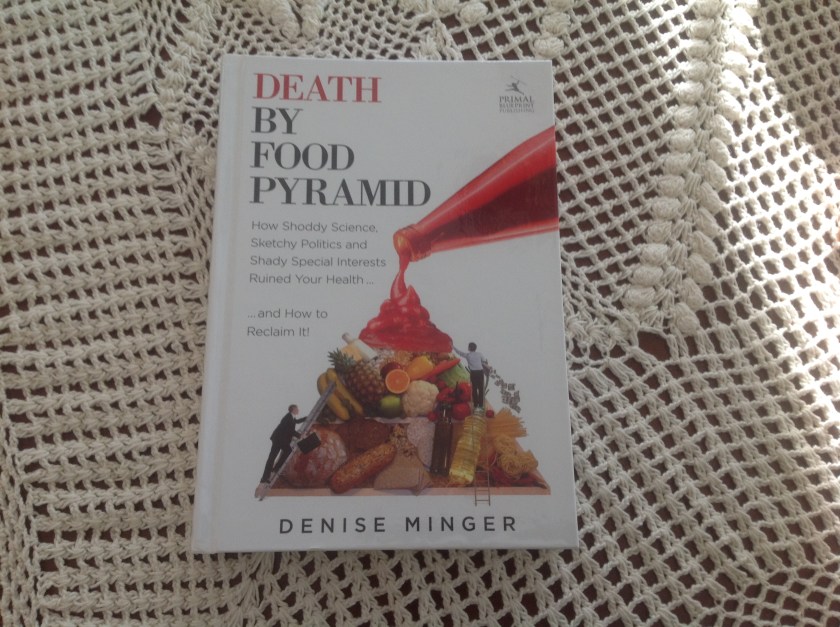
IMG_0060

Minger, as you may recall from earlier posts on this blog, is the young woman who took on T. Colin Campbell’s The China Study by digging deep into his research data and showing that, likely, because his belief system about veganism was so strong that he missed what the data was telling him.  Indeed, in the middle of the movie lauding vegetarianism and veganism, Forks Over Knives, the Chinese doctors Campbell worked with in China announced that health seemed to be determined by “meat and vegetables.”

In addition, Minger has an absolutely wicked sense of humor.  But, more importantly, she has a kind of research worldview that looks objectively at what happened and what is, not what gets driven by belief system so that it becomes “truth” when it isn’t.  Despite the grim title, Minger ends her book with a powerful plan of attack on how to win back, as Chris Masterjohn notes in his forward to the book, “the right to a healthy future.”

Minger begins the book with the tale of her 16 to 17th year of living after falling prey to a raw food diet comprised mostly of fruit.  A trip to the dentist revealed SIXTEEN cavities and the dentist’s observation that he had never seen ” `teeth like this on someone so young’ ” (5)  Later she realized that her “teeth had likely fallen victim to a deficiency of fat-soluble vitamins” (5).  Those are the crucial vitamins that live, you know, IN MEAT FAT.  And here’s an example of a typical Minger bit of humor:  “Although the doctor insisted I’d had low levels of iron and vitamin B12, my most deadly deficiency, I would later learn, was in critical thinking” (5).

Here’s another:

Contrary to popular belief, America’s dietary guidelines aren’t the magnum opuses of high-ranking scientists, cerebral cortexes pulsating in the moonlight as they solve the mysteries of human nutrition.  What reaches our ears has been squeezed, tortured, reshaped, paid off, and defiled by a phenomenal number of sources.  And as my own story proves, the USDA’s wisdom, pyramid and beyond, isn’t the only source of misguided health information out there.  But it is some the most pervasive, the most coddled by the food industry, the most sheltered from criticism, and–as a consequence–the most hazardous to public health (7).

Like I have done in the Mainely Tipping Points Essays, Minger goes back to the history of the USDA Food Pyramid and surfaces the swarmy political history of the early 1980s where Luise Light, hired by the USDA to come up with a good food guide, puts together a team of eminent scientists and nutritionists–only to find their recommendations (especially about grain consumption) undercut and overturned by industry shills in the upper regions of the USDA.  (Science-based food policy needs to be removed from the USDA–their interests are in conflict.)  She goes on to identify other players in how our farm policy got so far off track–if one is trying to grow healthy food.  And, how political theater instituted policies out of belief system (with help from the industries who would profit), so that we wound up with the deadly one-size-fits-all low-saturated fat, high-carb diet that is advocated today.  Look around you to see how well that’s all working for a lot of us.  In any case, Minger does a good job of pulling together the important highlights of this history in a readable, interesting form.

One of the arguments Minger makes is that the current “one-size-fits-all” USDA dietary information is “rubbish.”  (The same should be said for one-size-fits-all medicine, school curriculums, and on and on.)  Minger goes to some length to show that we do not all relate to foods in the same way.  We have genetic differences that control how our bodies take up, or don’t, the nutrients in foods–which explains why some folks can tolerate a vegetarian or vegan diet better than others.  Like me, a vegetarian diet made Chris Masterjohn profoundly ill.  (I am still trying to recover from my vegetarian years.)  But all of us likely know people who don’t eat meat or, even, nutrient dense foods, and they are not visibly sick, have reasonable amounts of energy, and so forth.

But, who should one trust?  To answer that question, Minger notes that “our understanding of diet and health is still too young for anyone to have all the answers.”  So, she writes, “Anyone who’s certain they’re right about everything in nutrition is almost definitely wrong.”  And we should not confuse “certainty” with “an evidence-backed opinion that seem reasonably correct.”  Look for people who keep an open mind and who are willing to “consider and integrate new information.”  None of us should be so certain that we lock all the doors.  Rather “a well-reasoned argument with a dash of humility is an open” door (53).

Minger also cautions that despite their white coats, “doctors tend to be some of the least educated health professionals on matters of nutrition.” Doctors don’t, too often, get their ideas on nutrition from “nutrition journals or other scientific literature, but from profit-driven industries with products to push” (57).

To buttress how to find the “well-reasoned argument,” Minger explains at some length how to vet the myriad number of studies out there claiming to hold truth.  She walks readers through what to look for in a study and what to throw into the nearest trash can.  I personally think that we all need to understand what comprises a genuine, useful study and what is fake science.  Of course she takes on the issue of causation versus the simple correlation that pervades much of today’s government, media, and industry hype about “food science.”  I can’t reproduce this whole section of the book for you, but I can urge you to read it so you can begin to understand how to vet information for yourself.  Just because something comes from a place like Harvard does not mean it has any value whatsoever.  One has to look at the nature of the study and WHO HAS FUNDED IT.  Minger also looks at what’s wrong (or what has been misreported) with the key BIG studies, like the longitudinal Framingham Heart Study–which was never able to prove the high cholesterol, dietary saturated fat, and heart disease theory.  Moreover, “multiple papers spawned by Framingham also link low cholesterol levels with greater risk of cancer….” (146).  And it is fascinating to me that in the news recently is the revelation that a blood test that measures lipids (fats) in the blood is 90% accurate as a prediction for Alzeimers:  LOW lipid levels point toward getting or having Alzeimers.

One really important section of the book walks through the history of Ancel Keyes and the lipid (fat) hypothesis.  Unknown to me was the fact that a competing theory was circulating at the same time arguing that sugar was the leading cause of heart disease.  Since sugar lost this battle in the political arena, the name of the scientist, John Yudkin, also got lost.  Other scientists adopted one or the other theory, but the real problem (and what turns out to be a problem with many of the studies) is that trying to blame illness on one single macronutrient does not consider the bigger, more complicated picture.  (Trying to understand the complicated “whole” of things by viewing one of its parts is the curse of modernity AND the producer of bad science.)  I think it was useful to see Keyes and Yudkin within the CONTEXT of their times–an analysis which makes Keyes less of a “demon” who left out information that didn’t fit his hypothesis and more of a scientist who just tried to simplify a cause (fat) too much.

Of course Minger addresses the rise of the use of trans fats and the PUFAs (polyunsaturated fatty acids) with high Omega 6 levels and chronic illness.  And she notes how major organizations like the American Heart Association (AHA) produce studies recommending the PUFAs that are written by people from industry.  For instance, William Harris the author of such a paper for the AHA “received significant funding from the bioengineering giant Monsanto, in addition to serving as a consultant for them.”  Monsanta is pioneering currently a GMO soybean supposedly enhanced with Omega 3’s while also providing Omega 6 (177-178).

Minger discusses the “modern Trinity” of diets (Paleo, Mediterranean, and Whole Foods/Plant-Based)–showing in the process where these diets deviate from their origins.  Modern Paleo, for instance, calls for the use of lean meats and low fat intakes, though ancient peoples ate a lot of animal fat and gave lean muscle meat to their dogs.  Paleo peoples also likely included some legumes and grains in their diets.  And some ate a lot of dairy.   The original Mediterranean diet was adopted from the island of Crete.  Yet those folks fasted almost 180 days a year for religious reasons and foraged for a lot of wild greens seasonally.  The success of the plant-based diet is unclear as it is always compared to SAD, the Standard American Diet, and not to either Paleo or the Mediterranean diet.  This diet needs longitudinal study as to the impact of the lack of fat-soluble vitamins and other nutrients on fertility and bone development, among other things.  It would be wise to note as well that there is no known primitive culture that has lived for some generations entirely on a plant-based diet.

Where do these diets intersect?  They ALL EXCLUDE  industrially processed vegetable oils; refined grains and sugar; “chemical preservatives and lab-produced anythings”; and “nearly any creation coming in a crinkly tinfoil package, a microwavable tray, or a McDonald’s takeout bag.”  They ALL INCLUDE tubers, low-glycemic fruit, and all non-starchy vegetables (225).

There is a lovely discussion of the work of Weston A. Price, who searched the world for healthy groups of people, to see what kinds of food they ate to produce optimal human health.  Minger highlights many of Price’s groups and concludes that while eating patterns could vary enormously, what they all had in common was the presence of nutrient dense foods.

Minger’s takaway:

Eliminate or drastically reduce intake of refined grains, refined sugars, and high-omega-6 vegetable oils.

Secure a source of the precious fat-soluble vitamins.

Stock your diet with nutrient-dense foods.

When choosing animal foods, limit muscle meat and favor “nose to tail” eating.  (Yes, that means the organs, like the liver and bone marrow which is full of gelatin.)

Respect your genetics.(Some of us thrive on high-fat, low-carb diets and others of us do better on a high-starch diet and it all has to do with genetics that dictate how we process fats and starches.)

Acknowledge that health is about a lot more than what you put in your mouth.

Above all else, stay anchored in your own truth–as long as you have not become ensnared in a “psychological trap that prevents you from following your body’s instincts.”  Remember, “you are not low-carb, or lowfat, or plant-based…” (242-243).

Again, Minger’s book is very useful.  I highly recommend it for a no-nonsense detangling of what we do and don’t know about food.


Books, Documentaries, Reviews: A. S. Byatt’s THE GAME

Books, Documentaries, Reviews:  March 25, 2014

A. S. Byatt’s The Game

I just finished A. S. Byatt’s The Game on audio download from the Maine library system and thought some of it delicious.  Some of it, though, was tedious.

The delicious part is that it is the story of two estranged sisters who started off life playing an imaginary “game” with each other–and here are obvious references to the Brontës.  BUT, Byatt’s sister in real life is the also-famous British writer Margaret Drabble–and they are completely estranged.  So, there is some effort going on here to think about that failed relationship.  Perhaps the “why” of it.

51I5bDR94sL._SY344_PJlook-inside-v2,TopRight,1,0_SH20_BO1,204,203,200_

I will say that this is a “literary” novel, but if you know and love Byatt’s other works, like Possession, or the more recent The Children’s Book, or Angels and Insects, you know there is always a lively interest in science, Darwin, the natural world, and philosophies involving how one might live a meaningful life–driven by adoption/rejection of parts of her family’s Quakerism at least in part.  And I can only explain what has been called “drama” by understanding that Byatt is trying to explain one sister’s actions through the notion that she has a mental disturbance that causes her to reject relationships of all sorts.

Here’s an url with a nice synopsis of The Game:

http://www.complete-review.com/reviews/byattas/thegame.htm

And a history of Byatt’s work, prizes, history, etc.

A. S. Byatt – Wikipedia, the free encyclopedia.

Books, Documentaries, Reviews: Jeffrey Eugenides, THE MARRIAGE PLOT

Books, Documentaries, Reviews:  March 23, 2014

The Marriage Plot

Jeffrey Eugenides

I really enjoyed this novel.

IMG_0208


The setting is Brown University (mostly flashbacks) and the year or so after the three main characters graduate and are trying to get on their feet.

Madeleine loves to read and has majored in Literature.  She loves Leonard, who is brilliant but is just coming to grips with pretty severe mental illness–extreme manic/depressive swings.  Mitchell loves Madeleine and is seriously trying to work out how to live a life of meaning and purpose which may or may not include Madeleine.

Here’s a quote that can orient you a bit:

Her junior year, Madeleine had taken an honors seminar called The Marriage Plot:  Selected Novels of Austen, Eliot, and James.  The class was taught by K. McCall Saunders….a seventy-nine-year-old New Englander….In Saunders’s opinion the novel had reached its apogee with the marriage plot and had never recovered from its disappearance.  In the days when success in life had depended on marriage, and marriage had depended on money, novelists had had a subject to write about.  The great epics sang of war, the novel of marriage.  Sexual equality, good for women, had been bad for the novel.  And divorce had undone it completely.  What would it matter whom Emma married if she could file for separation later?  How would Isabel Archer’s marriage to Gilbert Osmond have been affected by the existence of a prenup?  As far as Saunders was concerned, marriage didn’t mean much anymore, and neither did the novel.  Where could you find the marriage plot nowadays?  You couldn’t.  You had to read historical fiction.  You had to read non-Western novels involving traditional societies.  Afghani novels, Indian novels.  You had to go, literarily speaking, back in time (21-22).

Madeleine’s senior thesis involves the marriage plot in Victorian novels.

Yet, she marries Leonard, knowing he is very ill.  She had walked out on him after he had egregiously insulted her some weeks before graduation, and, perhaps she felt responsible for the hospitalization that followed and for the next year when he is on so many medications that he can hardly function.  Perhaps she was motivated by feeling that he loved her after all–a kind of “I got my man.”  Perhaps she thought she could help cure him–the ancient nurturing role for women.  Who knows?  But it is a “marriage plot” of sorts, isn’t it?  So is Eugenides trying to write a novel about marriage that is still valid?

Mitchell carries Madeleine in his imagination and his desires as his “ideal” woman–which is another form of  the Western marriage plot, one that involves “winning” the woman, loving her forever, ideal marriage, and so on and on.  After graduation, he travels the world, including India, and begins to sort out romance and culture from reality.  He writes Madeleine from India imploring her not to marry Leonard and suggesting they both go back to school and live together.  He will study theology; she will study Victorian novels or whatever she wants.

How does it all end up?

I won’t tell…

Warning:  there is a lot of philosophical discussion about the meaning of life, modern notions of deconstruction, etc., all of which is pertinent and interesting in a college class setting, but which may be off-putting to some readers.  Indeed, I think it was to some reviewers, which is kind of sad, actually.

Books, Documentaries, Reviews: Renata Adler’s PITCH DARK

Books, Documentaries, Reviews:  March 20, 2014

Renata Adler’s PITCH DARK

I’m reading a very different kind of a book:

IMG_0204


I heard about it recommended on one of those NPR programs just before Christmas–the best of the best books of the year.

Only, this book was published in 1983.  Adler was a staff writer for The New Yorker for 40 years or so–and comes with an impressive list of credentials (Bryn Mawr, Harvard, the Sorbonne, Law degree from Yale and an honorary doctoral law degree from Georgetown) and of fiction and nonfiction books.  The recommender said he had recently reread Pitch Dark and thought it a classic in some way.

The book is very modern, very spare–and is written in a kind of stream of consciousness where it takes the reader a few pages to figure out what’s going on–a love affair with a married man.

At first the text is distancing, even off-putting.  But then one runs across a nugget of observation that just pulls one right in.  Many observations concern the nature of the thing we call “love”–and the observations are not confined to the failing relationship at all or even to people–though the ones I’ll cite below are about the relationship:

He knew that she had left him when she began to smoke again….Years ago, he had smoked, but not when they met.  So she stopped, as people do when they are in love  Take up cigarettes, or give them up, or change brands.  As people do to be at one at least in this.  Long after that, she began to smoke again (8).

And:

You can rely too much, my love, on the unspoken things.  And the wry smile.  I have that smile myself, and I’ve learned the silence, too, over the years.  Along with the expressions, like No notion and Of necessity.  What happens though, when it is all unsaid, is that you wake up one morning, no, it’s more like late one afternoon, and it’s not just unsaid, it’s gone.  That’s all.  Just gone.  I remember this word, that look, that small inflection, after all this time.  I used to hold them, trust them, read them like a rune.  Like a sign that there was a house, a billet, a civilization where we were.  I look back and I think I was just there all alone.  Collecting wisps and signs.  Like a spinster who did know a young man once and who imagines ever since that she lost a fiancé in the war  Or an old fellow who, having spent months long ago in uniform at some dreary outpost no where near any country where there was a front, remembers buddies he never had, dying beside him in battles he was never in (9).

And:

Sometimes he loved her, sometimes he was just amused and touched by the degree to which she loved him.  Sometimes he was bored by her love and felt it as a burden.  Sometimes his sense of himself was enhanced, sometimes diminished by it.  But he had come to take the extent of her love as given, and, as such, he lost interest in it.  She may have given him this certainty too early, and not just out of genuine attachment.  One falls out of gradations of love and despair after all, every few days, or months, or minutes.  With courtesy, then, and also for the sake, for the sake of the long rhythms, she kept the façade in place and steady, unaffected by every nuance of caring and not caring.  He distrusted her sometimes, but on the wrong grounds.  He thought of her as light with the truth, and lawless.  And she, who was not in other ways dishonest, who was in fact honorable in his ways and in others, was perhaps dishonest in this:  that not to risk losing him, or for whatever other reason, she concealed, no, she did not insist that he see, certain important facets of her nature.  She pretended, though with her particular form of nervous energy she was not always able to pretend this, that she was more content than she was, that her love for him was more constant than, within the limits that he set, it could be (12).

Interesting.

I’ll let you know the outcome of the read…


Books, Documentaries, Reviews: Toxic Hot Seat Movie

Books, Documentaries, Reviews:  March 20, 2014

TOXIC HOT SEAT


The documentary Toxic Hot Seat is going to be shown FREE at the Strand Theater in Rockland, Maine, on Sunday, March 30th, at 2 p.m.

Maine’s own Hannah Pingree, former state congresswoman and now a young mother, is featured in the documentary.  Hannah Pingree has been instrumental in getting the information in the documentary to the public–which has been largely unaware of how the chemical industry has used fire safety as an excuse to douse so many of our products (furniture, rugs, clothing, etc.) with highly flammable and poisonous chemicals.

Ms. Pingree was raised and lives on a pristine coastal Maine sland.  When she participated in a “body burden” analysis about ten years ago, she was shocked to discover how many chemicals were present in her body.  One of the participants of this study, MOFGA’s beloved Russell Libbey, died last year of cancer, many years before he should have died.  (MOFGA is the Maine Organic Farmers’ and Growers’ Association, and it hosts a yearly fair, the Common Ground Fair, each year in late September.)

I hope that many of you will be able to see this documentary in your own communities and will stop buying products saturated with these chemicals–if you can find them.

Take a look at the trailer and read the information:  Toxic Hot Seat Movie.

Know, too, that this situation is another of what I am now calling a “kool aid” circuit–based on the notion that a group of people followed a charismatic leader into the jungle and willingly drank the poison he gave them.  This fire retardant issue is such a circuit since an entity (in this case the chemical industry) knowingly manufactured, publicized, and used bad information in order to sell a product for you to use.  Often, and it’s true in this case, “safety” is the mechanism being used to promote lethal practices that harm people and that have NO reputable science behind them.  So, yes, there is a conspiracy here.  Here’s a quote from the web site about this documentary:

Set against the backdrop of the award-winning 2012 Chicago Tribune investigative series “Playing With Fire,” TOXIC HOT SEAT threads together an intricate story of manipulation that details how Big Tobacco skillfully convinced fire safety officials to back a standard that, in effect, requires all furniture to be filled with toxic flame retardants. The film continues to untangle how the chemical companies obscure the risks to public health and misrepresent chemical safety data by paying “experts” to alarm legislators and the public about the deadly risk of removing chemical flame retardants from our homes.

AGAIN, know that you CANNOT depend upon the government regulatory agencies to protect you from what industry is doing in this country.

You have got to investigate and act for yourself–and that is where I am trying to help all of us understand where real science exists and where the notion of it is being misused.

Books, Documentaries, Reviews: THE GOLDFINCH, Donna Tartt–and MORE

Books, Documentaries, Reviews:  February 5, 2014

The Goldfinch, Donna Tartt

And MORE

I promised several people I would report back on what I thought about The Goldfinch.

It’s a BIG novel–some 700 pages.

I loved it.  I loved every page of it.  I was sad to see it finished.

Many themes run through this novel.  Some are listed below:

The long-term impact of the sudden, violent loss of the mother for a child.

The long-term impact of being within a sudden, violent episode–being in close proximity of a bomb going off inside a building.

The long-term impact of having an irresponsible parent in charge of you–with no way out really.

The growing up, the life journey to maturity (whatever that is) wherein you come to grips with how much you are like the irresponsible parent you hate and how much you have refused to see that person’s good points.

The role of strangers in our lives–strangers who make a huge difference.

The depth of a friendship forged within situations that neither person can fully control and what is done to survive.  Or, to hide and just make it all go away.

The role of art, of a painting, in our lives.

Where is good really located in our lives?  And, where evil?   And can good come out of bad?

What does it mean to love without judgment?

I could go on.  And on.

* * *

So, I am reading Jeffrey Eugenides The Marriage Plot before going to sleep at night.  And, enjoying it so far.

Here’s a review:  http://www.nytimes.com/2011/10/16/books/review/the-marriage-plot-by-jeffrey-eugenides-book-review.html?pagewanted=all&_r=0

I’m listening to Alice Munro’s Dear Life while I quilt.  I started it yesterday afternoon–I had to wait my turn to download it on the Maine Library Systems audio book downloads.  I sewed until almost 8 p.m. before stopping to organize some dinner as I was enjoying it so much.  I love Munro’s short stories.  They are brilliant.  And, warrant listening to more than once as they are like a movie, in that the first viewing is an assault and you can’t take it all in, so you have to see the movie–read the story–twice.

Dear Life is the book club’s selection this month–and our meeting is Friday, so I’m going to be sewing a lot today.

While waiting for Dear Life, I downloaded another library audio book:  a P.D. James–An Unsuitable Job For A Woman (1972)–one of the Cordella Grey mysteries.  The depth of James is a pleasure to read/hear.

Having someone read a book to me recalls the pleasure I felt when my mother read to us growing up–which she did constantly.  The all-time favorite was Gene Stratton Porter’s Laddie, which I love to this day.  I read it to my mother not long before she died, while she rested on her back porch, and we laughed and pleasured our way through it.