Asian/Asiatic Jasmine

Son Mike suggested a ground cover plant for my rose bed the other day, but could not remember the name. He said he and Tami loved it in their old house. Tami knew the name: Asian or Asiatic Jasmine.

I found 11 plants at Loews Monday and bought them all: $3.48 each.

This plant is actually NOT a jasmine, though it makes a really fragrant little flower in the spring. It basically is a kind of vine, which will put up tendrils that go upwards about 10 inches in height (and ones that spread) and will cover the ground in sun or shade. One article noted that it can cover a bed in a year, two at the most, and will go right up your leg if you stand still long enough. BUT, that it is not hard to control if one pays attention.

I planted it among the roses, and if it does not work well as an understory plant there, I’ll pull it out and put it along the shaded sides of the house. Facing the house, the long strip to the end of my long house is totally in shade. That bed is now covered with pine straw, which I will keep as grass would struggle in that dense shade as well.

Time will tell…

Palmetto “Bugs” and the German Cockroach

Roaches are nocturnal. And there is nothing more disturbing than at night seeing a 2-inch dark brown bug fly up to a wall if you turn on a light in a dark room. In South Carolina, that would be a Palmetto Bug. Or, equally bad, to turn on a light in the kitchen to see a smaller light brown roach run across the floor or a countertop and duck into a crevice or under an appliance (the German cockroach). Or, in the kitchen, to see large dark brown roaches running very, very fast across the floor to hide (American cockroach)–a sight I remember vividly from my Georgia childhood at my grandparents. (And yes, they sprayed constantly.)

But first, let’s understand more about roaches, as they are a very, very, very old species. And that fact alone warrants my interest. (I probably should have been an entomologist or a zoologist.) The German cockroach, for instance, started out in caves in Asia. Here’s a quote from a 2020 Smithsonian magazine article documenting how old they are:

“Cockroaches—among the hardiest of insects—may be among the species guaranteed to outlive us all. But perhaps even more intriguing than the future of these persistent pests is their unusual past. A pair of 99-million-year-old roaches are now the oldest known animals that unambiguously adapted to life in caves, according to a study published this month in Gondwana Research.”

“The discovery earns the bugs the unique honor of being the only cave dwellers ever described from the Cretaceous, the period spanning 66 to 145 million years ago and the final era of the non-avian dinosaurs.”

https://www.smithsonianmag.com/smart-news/99-million-year-old-cockroaches-are-oldest-known-cave-dwellers-180974284/

When humans started trading spices around the world, these cave roaches went along for the ride. The result is roach history as roaches adapted and survived.

Roaches were not a problem for me in rural Maine. Maybe they are in crowded urban areas in Maine, but I never saw one in my house in Maine. But in South Carolina, roaches are part of the terrain. Roaches thrive here. Steps must be taken to prevent them from taking up abode in one’s house.

There are three major roaches that can be a problem for humans in South Carolina: Palmetto “Bugs” and German cockroaches. The American cockroach is often mistaken for the true Palmetto roach, though it does not really fly.

Palmetto “Bugs”–also known as “waterbugs” or as “smoky brown cockroaches”– are cockroaches, not some other kind of bug. Although closely related to the American cockroach, Periplaneta americana, they are different. They are Periplaneta fuliginosa, and they are a kind of tropical cockroach. Palmetto Bugs come into a house seeking water–they dehydrate easily–and then while seeking water, they might take advantage of something like rotting organic matter in a garbage can or dirty dishes in a sink. American cockroaches, too, live outside normally, but clearly will come inside and stay if they find a habitat there that richly supports them.

The German cockroach (Blattella germanica) is smaller, grows to adulthood much more quickly (60 days), and then breeds like crazy. This roach gets to be about an inch and ranges from a very light to a darker brown. It can sort of fly, perhaps gliding if threatened. It inhabits houses. These cockroaches can’t survive in the wild.

The Palmetto Bug can get as big as about 2 inches. They can fly short distances if needed. They have a TWO YEAR lifespan, but don’t breed until they are about a year old. From wikipedia: “P. fuliginosa can reproduce through sexual reproduction and in some cases through parthenogenesis, which is a form of asexual reproduction.[5]

And, “The smokybrown cockroach is a detritivore and can feed off a wide array of organic (including decaying) matter.[1] Like most cockroaches, it is a scavenger, whereby it feeds on many different types of foods including dry earthworms, pet food, pet waste such as feces and urine, paper, and many types of ripe fruits.[1]

In this way, in its natural habitat, Palmetto Bugs help break down organic matter in the woods, so they have a useful purpose. So, the “smokybrown cockroach may come indoors during daylight hours to look for food and even to live; generally, however, in warm weather, it will move outdoors.[3][2] They tend to lose moisture twice as fast as their relative, Periplaneta Americana, therefore requiring environmental conditions with constant moisture to avoid drying out.[4]?

https://en.wikipedia.org/wiki/Smokybrown_cockroach

So, about a month ago, I saw what was likely a German cockroach on my kitchen counter. It probably came in on a grocery bag, as they don’t really live in the wild.

I consulted my son Bryan and bought a really strong gel bait on Amazon with great reviews. It only takes a tiny, tiny bit of this gel in one spot, but one can’t put the bait in any place where it would get mopped or wiped, or near an appliance that gets hot (oven, dishwasher), or in any place where it would get disturbed and spread so that it could harm a human. So, I baited the very back of the cabinet area under the sink and way back of the garbage pull-out cabinet, around the garage door sides, and in an area adjacent to the back screen door.

I have never left dirty dishes in a sink, so that’s not a problem. And now that I’m not composting, I am not using my super nice composting pail. I don’t think a roach could get into it anyway, but… I do not allow any organic matter or bones to sit overnight in my garbage can: I take the whole bag out to the big cans in the garage. And I double bag all organic matter or meat bones.

I have not seen another roach–and I check at night frequently by turning on the kitchen light.

Time will tell…

Biomimicry

Well, here’s an interesting concept.

A friend sent me this newsletter, signed by someone named Krista:

The On Being Project <newsletter@onbeing.org>

The newsletter discussed the book that Janine Benyus wrote in 1999: Bioimicry. Krista writes that the book has “made its way quietly through the world ever since, in ever wider, radical ripples.”

Krista continues: “I invoke that word “radical” in its root sense — of driving back to the core. Consider basic life/design principles around which biomimicry orients — all of them at work in every moment beneath our feet, in the air we breathe, in the sky above.”

“I pay attention when I start hearing about the same thing from disparate corners. Across the last few years, I started hearing the intriguing word “biomimicry” invoked by people doing all kinds of things I would not have immediately connected with modeling from the natural world: sustainable investment; human-centric social media strategy; innovative philanthropy. And they were all also, notably, humans I experienced to be especially creative, expansive, wise — and kind.”

And then she (or the book) creates the following list:

“Nature runs on sunlight, 
uses only the energy it needs, 
fits form to function, 
recycles everything, 
rewards cooperation, 
banks on diversity, 
demands local expertise, 
curbs excesses from within, 
and taps the power of limits.”

Here’s the Amazon link to the book:

And here’s more info on Benyus from Wiki:

https://en.wikipedia.org/wiki/Janine_Benyus

One has to wonder how the battle between contrary forces in our culture will turn out in the end: human acquisition of wealth and power or human survival.

Walking Paths and Trails

Maybe, unlike rural Maine, more urban areas have lots of walking paths. Here it is easy to walk because off-road paths criss-cross this neighborhood and wide paths run alongside the outside roads. These walking paths, wide and level, are EVERYWHERE. (Bikers tend to use the streets.)

And, this is the low country, so there are also water features that are used to drain and hold water everywhere too. At the entrance to Moore’s Landing, my neighborhood, there are two cache basins and fountains that run most of the time. This kind of movement of water helps prevent mosquitoes and, maybe, the growth of algae (?).

Also, unlike where I lived in Maine–which was out beyond the town–there is regular trash and recycling pickup. Big brown trash barrels are collected weekly by Mt. Pleasant town, and the blue recycle barrels are collected every two weeks by Charleston County. Mt. Pleasant town, which is huge, is a part of Charleston County, which is even bigger.

The barrels are placed with the handles facing the street, and the trucks can pick them up and empty them without a person touching them–it can all be controlled by the driver in the truck who operates the levers that lift the bins. This past week, the brown trash barrels were picked up on time and homeowners put them away. But the blue recycle bins remained a few days longer. I think the truck driver forgot our street. Calls to Charleston County produced the eventual pickup, however.

I am looking forward to walking the trails in nearby parks–and to visiting the beach again to walk. I am getting to the point where I will have time for walking in areas beyond my neighborhood–as the moving work load is mostly done.

LED Lights

I am not a particular fan of LED lights. They take some time to heat up, for one thing. At least the LED spotlights in the ceiling of my quilt room take time to fully illuminate.

BUT, a clear pattern has emerged where the non-LED bulbs in the dining room chandelier have pulled a lot of voltage, so over time that high voltage load will burn out the dimmer switch–which first grows way too hot to the touch. It is very scary to touch a switch that is…hot.

This is the third time that I remember where the dimmer switch had to be replaced. And this time the electrician told me to replace the “regular” light bulbs with LED light bulbs.

Off to Home Depot I went, where I discovered a box of eight LED lights in either “daylight” or a softer white–for about $15. I came home with daylight, which may be too bright, but they can be dimmed too.

The lights are bright right away as well, so this light dimmer switch issue may now be solved.

Plus, the lights themselves have this kind of funky, but cute interiors (hidden by the lamp shades) that feature three bars that light up and are very bright–made more bright by the “daylight” choice.

I have learned a LOT during this move I’m making to South Carolina.

Read Food Labels Carefully: Crickets are HERE

Turkey Tracks/Interesting Information: August 26, 2022

Read Food Labels Carefully: Crickets are HERE

I posted recently about industry putting crickets in our food.

In this substack link, Dr. Robert Malone shows that there are already products using crickets in places like Walmart. AND, he discusses some of the downsides of eating crickets and shows there are already “manufacturing” plants growing crickets for this market.

Is this move another failure of the now corporate-owned FDA?

The comment section is instructive.

READ LABELS. Labels change all the time. You have to keep reading them if you buy anything in a box or a bag.

Crickets are NOT meat, and while some cultures eat insects, they don’t rely on insects for all of their protein.

More on Wasps and Hornets

Turkey Tracks and Interesting Information: August 10, 2020

More on Wasps and Hornets

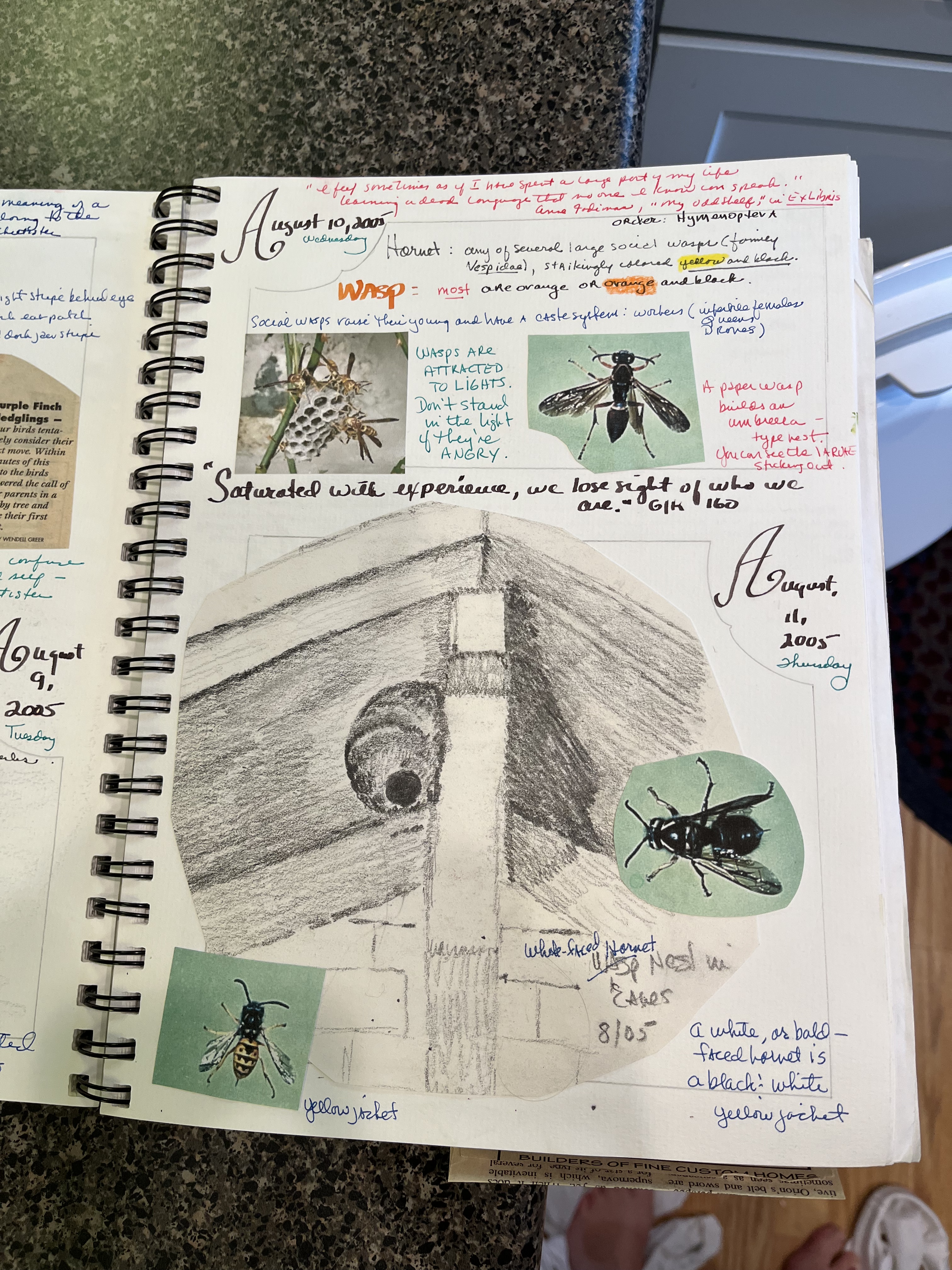
We moved to Maine in June 2004, and in January 2005 I took a class on creating and keeping a picture journal that I successfully kept for a year and that resulted in two volumes. Now one of the volumes sits on a counter downstairs, above my washer and dryer, as I follow along in the year. I turn the pages every day and really enjoy seeing how 2005 compares to what is happening each year since.

Here’s the page I did on August 10th—about wasps and hornets. And it sorts out the hornets and the wasps.

It does not cover the ground types—some of which are bee forms. And I got stung here years ago when I encountered a ground nest on the back hill.

There is an old wives tale that if you get stung, something in your system needs the venom.

For whatever that is worth. But I haven’t been stung again, knock on wood.

Wasp Pollinators

Turkey Tracks and Interesting Information: August 8, 2022

Wasp Pollinators

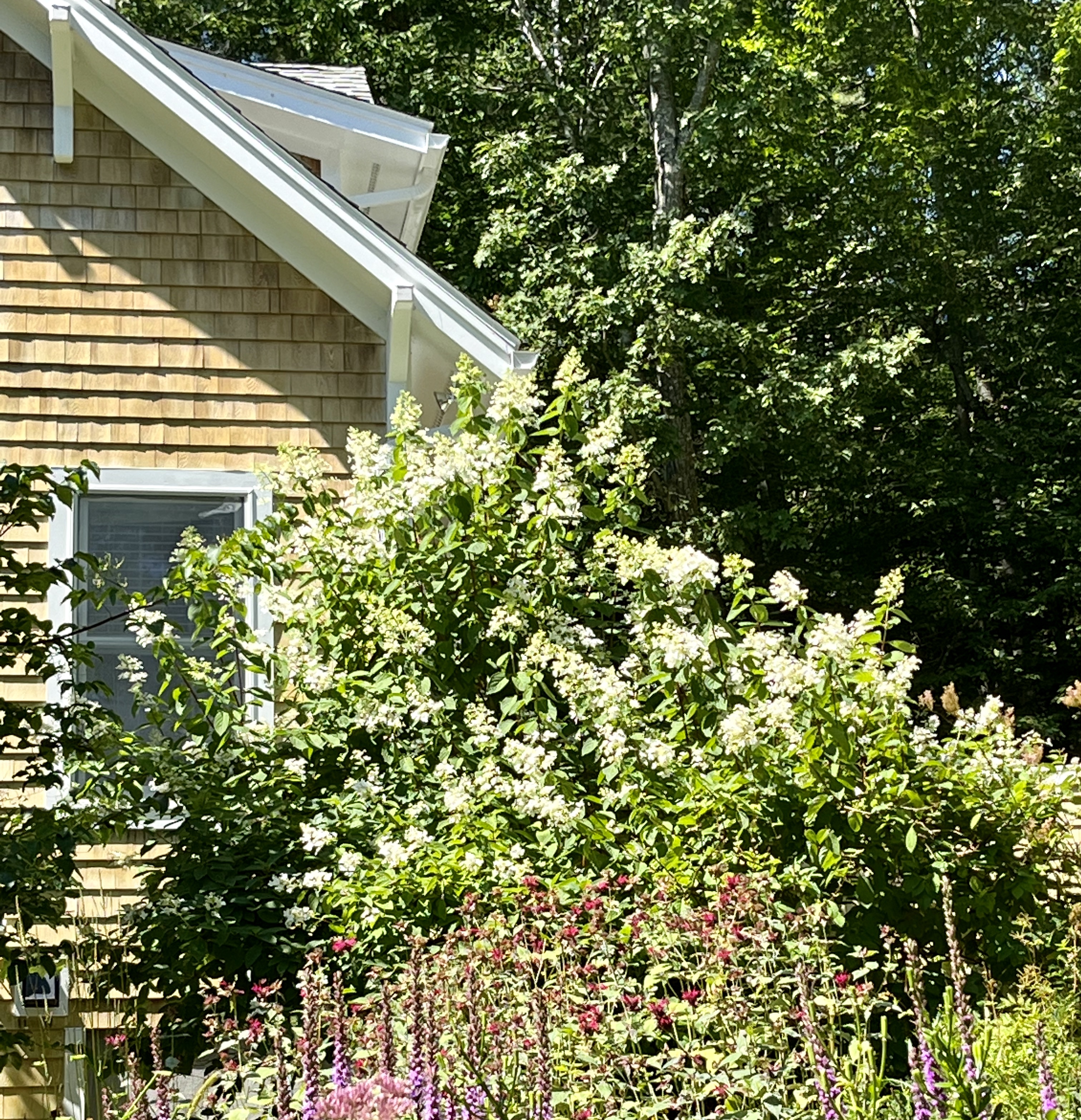
The Pee Gee Hydrangea is in full and glorious bloom.

Pee Gees can and do grow into tree size. I keep mine cut back to a shrub form, but pruning comes in the fall when the white blossoms have turned to deep rusty red.

What has been totally fascinating to me this summer is the huge amount of different kinds of pollinators on all my flowers and the raspberries. I stopped picking the last of the raspberries as tiny wasps were feeding on the ripe berries. Indeed, I have been hesitant about cutting back any of the plants that are now loaded with pollinators—as I do not want to risk a wasp or bee sting—especially as I live alone.

I am astonished to note that in the hum of insects on the Pee Gee blossoms, there is a tiny wasp who is clearly collecting pollen. Who knew?

Wasps, Surprisingly Cool Pollinators

Here’s where the now overgrown Pee Gee is in my poor, dry, deer-eaten garden. Serious pruning will occur this fall—and I’ll bring some of the cut now-rusty red blooms in the house to dry in vases.

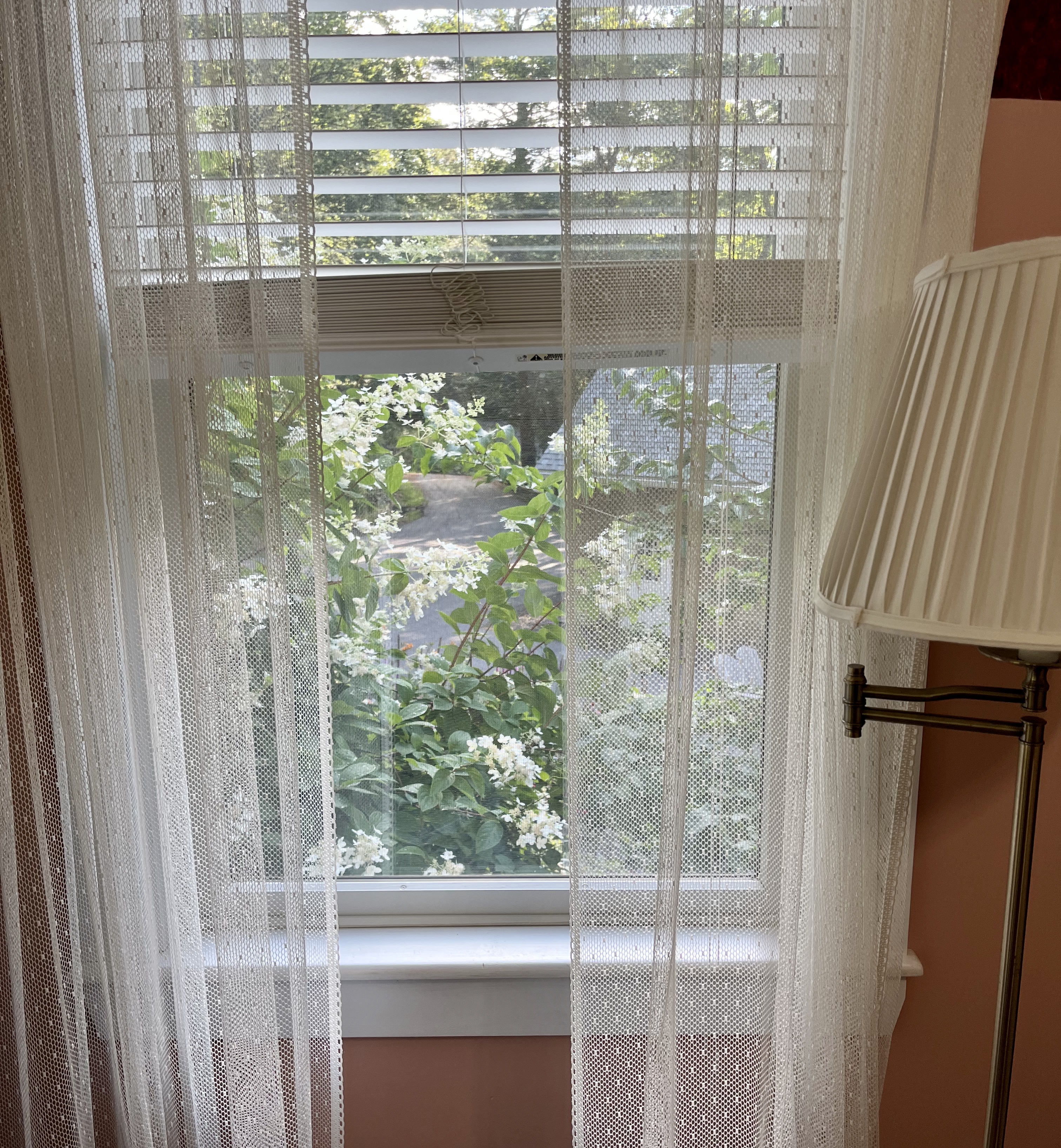
And here’s a view from the guest bedroom inside the house.

There was a thunderstorm late yesterday, but the rain gauge says only 1/4 inch. There may be more rain later today, and it is now cooler and overcast.

What’s Happening With The Daylilies?

Interesting Information and Turkey Tracks: July 24, 2022

What’s Happening With The Daylilies?

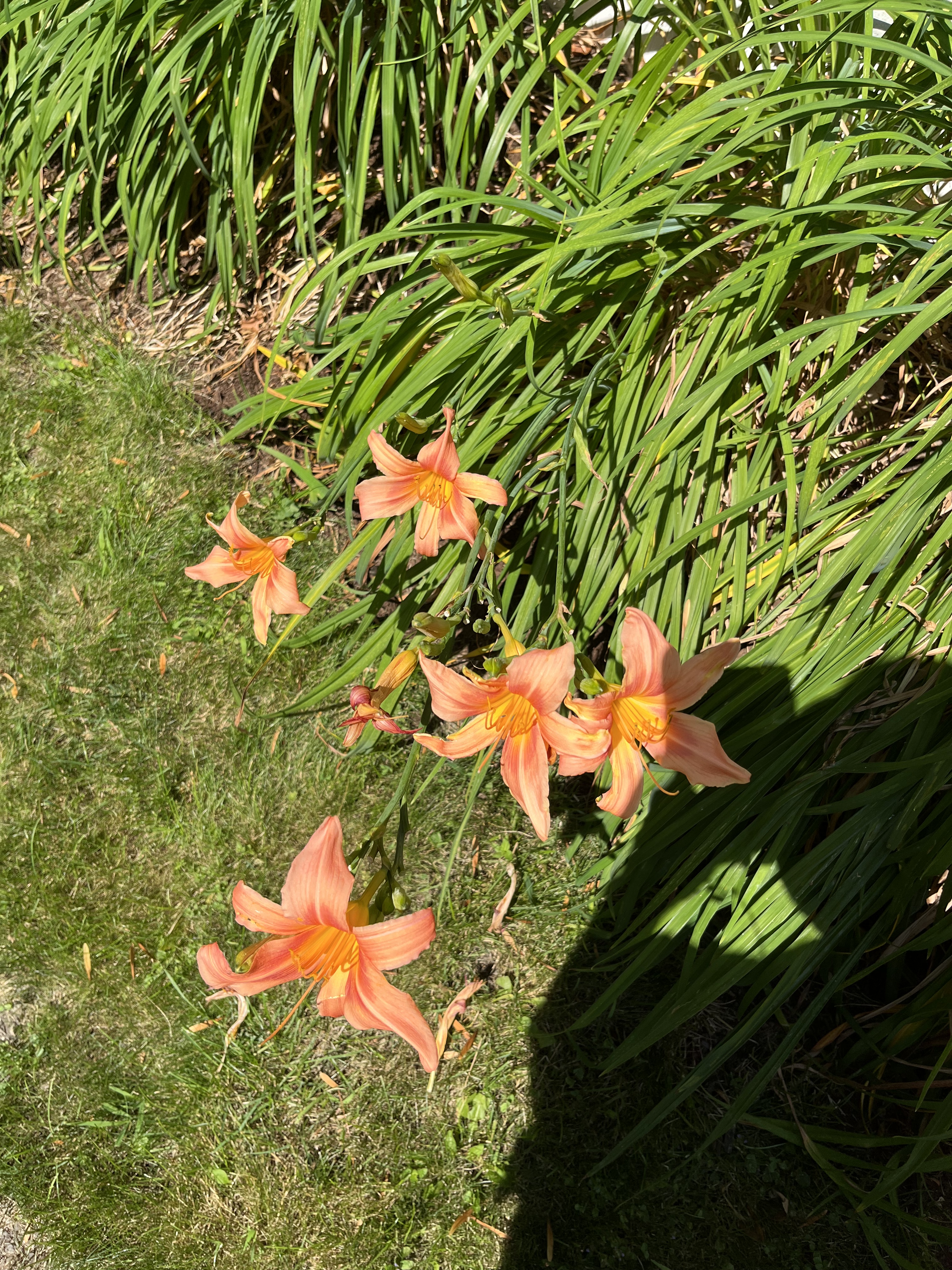
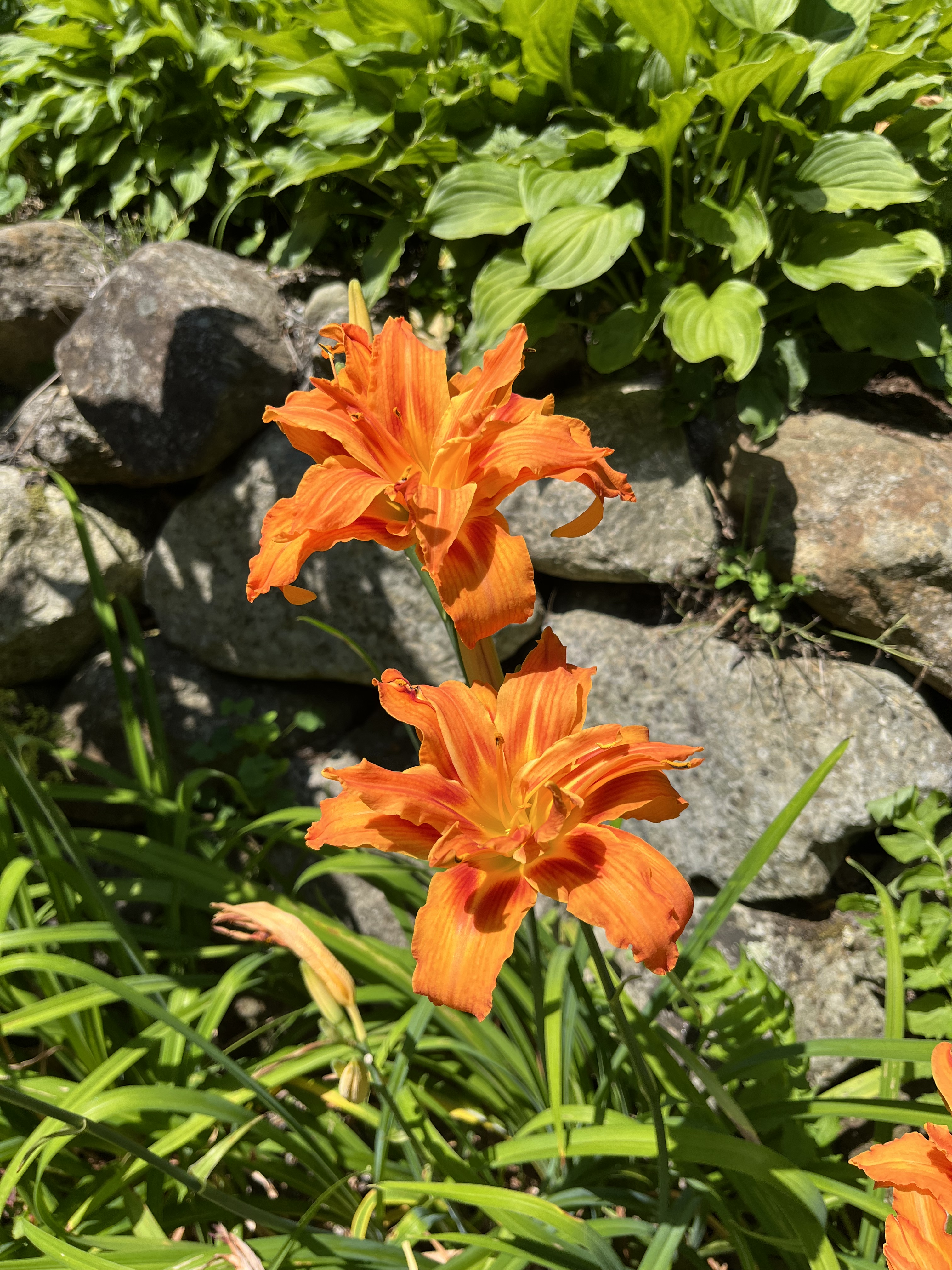
I have A LOT of day-lilies in my garden, including many of the ”wild” orange ones, called ”ditch lilies” by some.

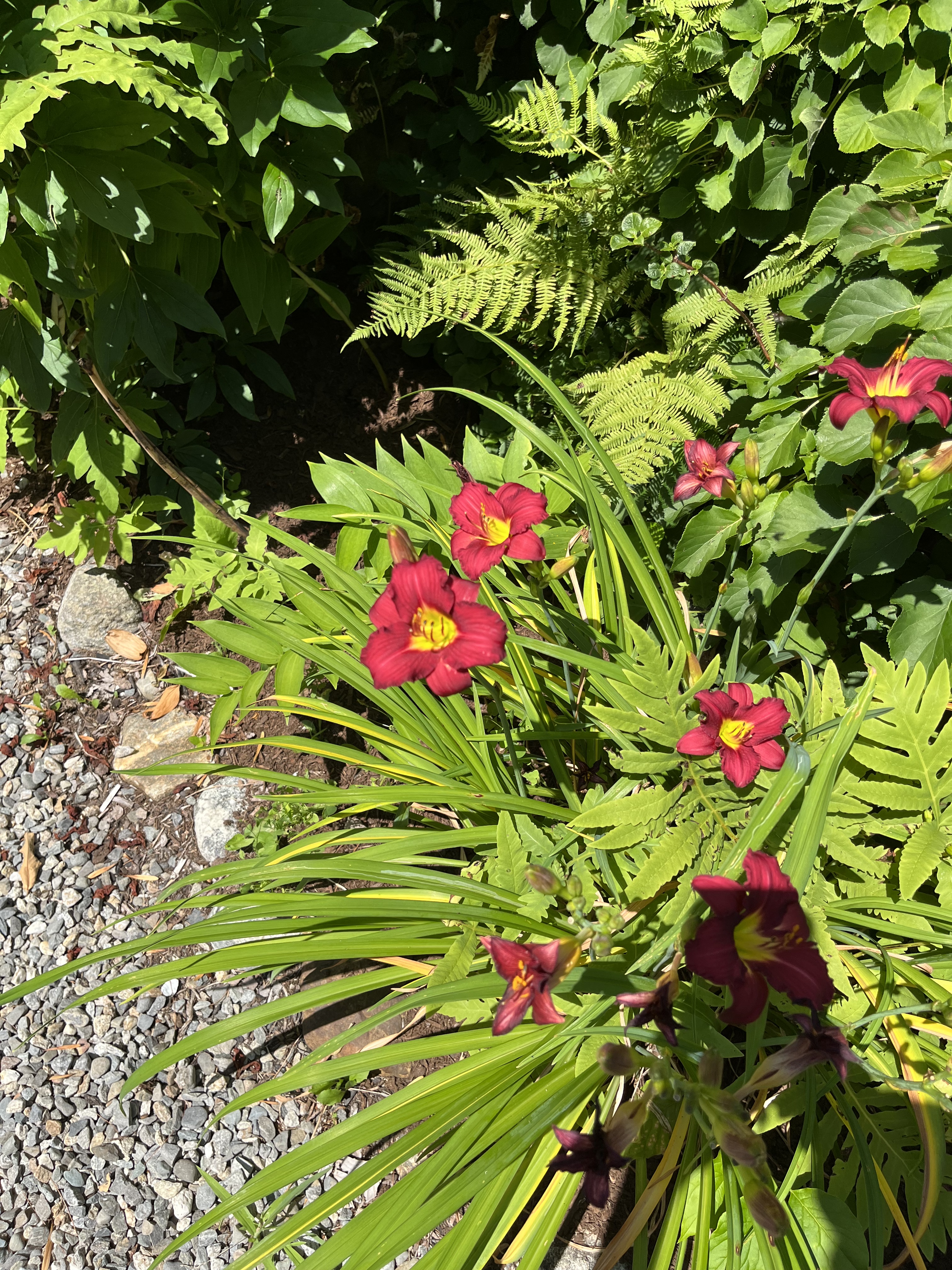
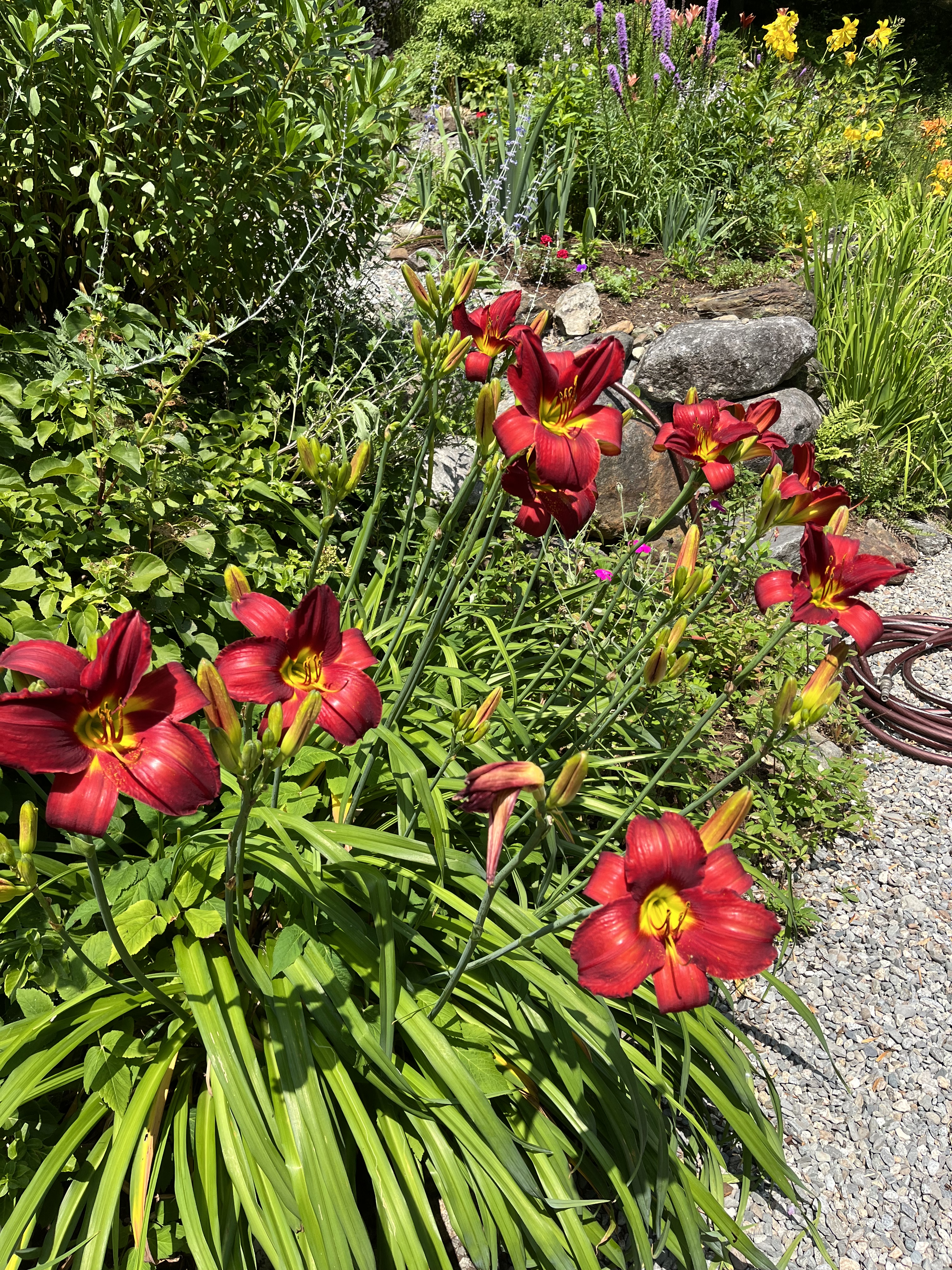
The front porch is lined with the gold Stella D’Ora variety, and they already bloomed. But blooming now are these redder day-lilies in places I did not plant them.

And salmon ones too.

And look what has emerged down on the driveway? I did not plant this ruffled beauty.

I did plant this reddish one—and one similar on the other end of the front deck day-lilies.

And I possibly planted this vivid day-lily along the front path.

And, there is this beauty that has been in this spot on the front path for many years.

What is going on here? I’m also noticing these later-blooming dark day-lilies in other places in the garden—sometimes mixed into the wild orange day-lilies.

Are the current plants being taken over in some way and changed? That is not supposed to happen.

So, off to research I went.

Yes, the day-lilies are ”hybridizing,” but they are NOT changing any of the established plants. What they are doing is seeding hybrids into current day-lily beds—and other places in the garden too.

The hybrids can and might overtake or crowd out the established plants, but meanwhile, they are adding interesting plants into what is already in the garden.

Good to know.

And I can always dig up what I don’t like.

A Quilty Surprise for The Bee Cause

Interesting Information: July 18, 2022

A Quilty Surprise for The Bee Cause

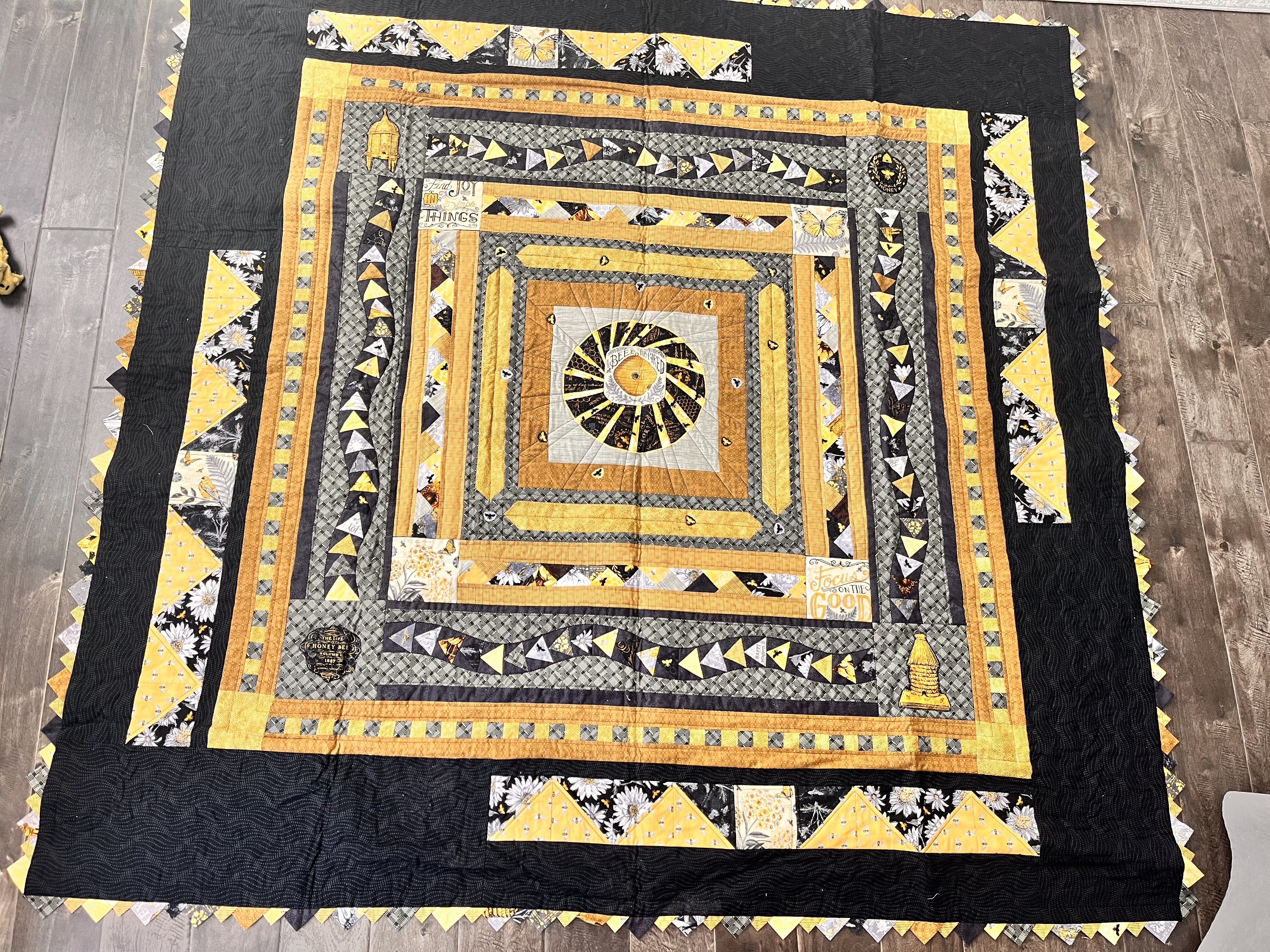
My DIL Tami Kelly Enright is the director of The Bee Cause—an organization that began in Savannah and Charleston, SC, some years back. The Bee Cause’s project is providing viable habitats for our threatened bees and now has hives it has helped pioneer in all 50 states.

Recently Tami received an amazing gift from a total stranger.

A quilty gift.

Now, here’s the story, as told by the person who gifted The Bee Cause with this quilt—to use as they will.

The quilt was made as a ”round robin” project—where the center is started by the person who will be its owner. The quilt travels to other quilters for added rows—and each draws on his/her own creative talents. When the quilt returns, it is a surprise for the originator.

It’s a beautiful quilt, with beautiful workmanship, from some beautiful and talented people.