Interesting Information: Homogenization of Milk and Cheese

Interesting Information:  June 13, 2011

Homogenization of Milk and Cheese

Steve Bemis is a retired corporate attorney who farms hay in Michigan for local farmers.  He is also a founding Board member of the Weston A. Price Foundation’s Farm-to-Consumer Legal Defense Fund–which works to insure greater access to local foods, especially raw milk.  In the Spring 2011 WAPF journal WISE TRADITIONS, Bemis poses an interesting theory about the real need for homogenization and pasteurization of milk (http://www.realmilk.com/cheese-is-serious.html).  The real reason, poses Bemis, might be the dairy industry’s incredibly profitable cheese business.

Let’s back up for a moment.  In my lifetime, one’s milk was delivered to the door in glass bottles.  One judged the milk by the cream line at the top of the bottle–clearly visible for all to see.  But, the dairy industry wanted that cream to make other products.  Ice cream, yes, but also cheese.

So, industry begin figuring out ways to get that cream.   How they did it was to, first, convince women that milk had to be pasteurized as real milk was unsafe–a claim never proven scientifically.  Second, they instituted, over time, a process of fractionalizing milk into parts and reconstituting some of the parts back into milk–minus all the cream.  (Whole milk might not have the whole amount of cream that came from the cow.)   Says Bemis:  “Milk, milkfat, skim milk powder and other fractions of milk are processed into cheese, butter, ice cream, yogurt, kefir, and other industrial component which are ubiquitous in processed and ultra-processed foods.”  Third, they successfully got the federal government to police this new terrain.  This is how industry works:  maximize profits any way possible, including gaming the information.

Processed, fractionalized milk was then homogenized, so no one could ever see the cream line again.  And, the glass bottles disappeared.  But, here’s where Bemis gets really interesting.  Once milk is homogenized, it “will go rancid within a matter of hours.”  Thus, the milk has to be pasteurized to keep it from going rancid.   “Hence,” writes Bemis, “once the dairy industry took the homogenizing step to follow the dollars, it had to pasteurize.”  Bemis continues:  “And the industry will have to stick with the gospel of pasteurizing, since their current economic structure requires it.”

Hmmmm….  Pasteurization came AFTER homogenization.  Pasteurization was NEVER about food safety.  It was about maximizing profits, fooling customers, and extending shelf life.

So, if you can’t get the whole, raw, living, healthy REAL milk, try to find a dairy that produces a cream line, even if the milk is pasteurized.  Homogenized milk is really, really processed.

Bemis then turns his attention to the cheese issue.  He asks an important question:  “Is contamination of raw milk a huge red herring keeping our eyes off a far more important reason for pasteurizing milk?”  Cheese is a keystone product for the dairy industry.  Cheese is a billion dollar business.  Cheese is probably why both the USDA and the FDA have launched even more intense, fear-based attacks against raw milk and against artisan cheese makers.

The good news, writes Bemis, is that “raw milk consumption continues to surge; FDA’s interstate ban is under legal attack, and FDA’s dogma is regularly being shown to be inconsistent, illogical and unscientific–an embarrassing and ever-deepening quandary in which the agency finds itself due to its steadfast refusal even to hold a dialogue on the subject.”

As for the USDA, one part of it promotes cheese consumption while another part (the new food guide) says its unhealthy.  How’s that for mixed agendas?  It’s time to locate any kind of government recommendations on how to eat somewhere other than the USDA and to put science back into the process.

Interesting Information: Culturing Dairy Uses Up Its Sugars

Interesting Information:  April 20, 2010

Culturing Dairy Uses Up Its Sugars

Sugar is bad news for human health.

A little sugar does hurt–especially the highly-processed, white, refined sugars.  And, on average, we aren’t eating a “little sugar” daily.  A lot of sugar is hidden in our foods. 

Jen Allbritton, in “Zapping Sugar Cravings:  Hair-Raising Stats on this `White Plague’ and How to Reduce Your Need for Sweets,” in WISE TRADITIONS, Winter 2010, 53-59–the journal of the Weston A. Price Foundation, notes that “our ancestors likely indulged in around one tablespoon (60 calories) of honey per day (when available), which is stunningly low compared to today’s average sugar intake of one cup (774 calories) per day!”   And, I’d add that our ancestors didn’t eat fruit out of season, unless they dried it, and the fruit they ate had not yet been bred to be big and very sweet.  Also, the honey they ate was unheated, raw honey.

I’m a lover of whole, real/raw  milk, and we can buy it in local markets and our coops here in Maine.  Between the chickens, the dogs, and John and me, we go through about 2 gallons a week and 2 pints of heavy cream.  I don’t worry about the fat or protein in the milk, but it also contains sugars.  So, I was very interested to read in Allbritton’s article that culturing milk (yogurt, kefir, pima, etc.) uses up most, if not all, of these milk sugars.  Yeah!!!  We’ll now move toward eating even more of the yogurt I make and keep on hand and drinking less of the milk form.  (Look in the recipe section of this blog to see how easy it is to make your own yogurt–and it’s light years better than anything you buy., most of which as added junk like pectin, seaweed, and dangerous dried milk).  This morning we had big bowls of fresh yogurt topped with a mixture of “crispy” nuts, seeds, dried fruits, bits of chocolate!, and dried coconut.  (See the blog recipes for how to make crispy nuts.)  It’s 1:37, and I’m still not hungry.  Tomorrow or the next day,  I’ll make us yogurt smoothies with added raw egg yolks, unrefined coconut oil (it doesn’t stick to your body), and some of the fruit I froze last summer.     

By the way, Allbritton has a nice chart with the sugar content in some common products.  You know that labels split up the sugars by using separate names for them, right?  If industry didn’t play this kind of game, they’d have to show that sugar is often the first ingredient in a product.  So, note that 6 ounces of 99% fat-free flavored Yoplait yogurt contains 8 teaspoons of sugar !!!  Isn’t that the yogurt that’s advertised on tv as a weight-loss tool?  I don’t think so.  All that sugar is going to have you hunting for more food in short order, especially since there’s no fat to satisfy and sustain hunger.  You’ll end up eating MORE and feeling guilty.  And, if you eat more sugar, it becomes a vicious cycle. 

Much of that 1-cup daily average is not immediately detectable simply because it comes in bits and pieces added into our foods, which is why home-cooking whole, nutrient-dense foods is a good thing.  (Remember that the 1-cup average means that many folks are eating way more than 1 cup of sugar a day.)  And, Allbritton is just dealing with processed sugars, she isn’t dealing with the further sugar load of the increased use of grains, starchy vegetables, and so forth. 

Allbritton points to the work of Nancy Appleton, PhD, who wrote SUICIDE BY SUGAR.  She has a blog:  www.nancyappleton.com where you can find details of how lethal sugar consumption is.  For starters, it both si connected with cancer development and feeds cancer cells.  It disturbs the balance in your body in countless, disease-causing ways.  It causes obesity.  It also contributes to destructive, aggressive, restless behavior.  It is addictive and can, Allbritton writes, “rival cocaine in its addictive strength” (55).   

We mostly confine daily sugar ingestion to honey, which we both love.  I do, occasionally, make a really good cake with loads of butter and our fresh eggs and, hopefully, limited amounts of sugar and white flour.  They are a real treat, but not something either of us craves these days. 

Here’s the link to Allbritton’s article:  http://www.westonaprice.org/childrens-health/2108-zapping-sugar-cravings?qh=YToxNjp7aTowO3M6NzoiemFwcGluZyI7aToxO3M6NDoiemFwcyI7aToyO3M6MzoiemFwIjtpOjM7czo1OiJzdWdhciI7aTo0O3M6ODoic3VnYXJpbmciO2k6NTtzOjY6InN1Z2FycyI7aTo2O3M6Nzoic3VnYXJlZCI7aTo3O3M6Nzoic3VnYXIncyI7aTo4O3M6ODoiY3JhdmluZ3MiO2k6OTtzOjc6ImNyYXZpbmciO2k6MTA7czo1OiJjcmF2ZSI7aToxMTtzOjY6ImNyYXZlZCI7aToxMjtzOjY6ImNyYXZlcyI7aToxMztzOjEzOiJ6YXBwaW5nIHN1Z2FyIjtpOjE0O3M6MjI6InphcHBpbmcgc3VnYXIgY3JhdmluZ3MiO2k6MTU7czoxNDoic3VnYXIgY3JhdmluZ3MiO30%3D


Interesting Information: Airport Scanner Scandal

Interesting Information:  April 20, 2011

Airport Scanner Scandal

 The winter issue, 2010, of the Weston A. Price Foundation’s journal, WISE TRADITIONS, has an article on the danger with airport scanners (13-14):

In essence, Sally Fallon Morell and Dr. Mary Enig, in “Caustic Commentary” are saying that while these new devices operate at “relatively low beam energies,” the “majority of their energy is delivered to the skin and the underlying tissue.”  The government is claiming that very low doses of radiation are safe, but Morell and Enig are saying that if the “low dose” was distributed “throughout the volume of the entire body,” it would be safer.  However, “the dose to the skin may be dangerously high.” 

Morell and Enig also note that four scientists from the University of California, San Francisco, have written to Dr. John P. Holdren, Assistant to the President for Science and Technology, expressing “concerns about the backscatter X-ray airport security scanners, noting the lack of safety data and the probable increased risk to the elderly, children, and adolescents, pregnant women, and those at risk for breast and skin cancer.”  These scientists specify concern for potential targets for damage, including the cornea, the thymus, and sperm.  They note that comparing the X-ray dose from these scanners to cosmic ray exposure inherent with airplane travel or to a chest X-ray is misleading, in that air travel cosmic ray exposure and chest X-rays “have much higher X-ray energies and the health consequences are appropriately understood in terms of the whole body volume dose.”  The airport scanners deposit energy into the skin and adjacent tissue, which is a “small fraction of body weight and volume, possibly by one to two orders of magnitude,” so “the real dose to the skin is now high.”

In addition, the scientists are worried that TSA personnel, who are already complaining about resolution limits, “might be tempted to raise the dose (www.npr.org/assets/news/2010/05/17concern.pdf). 

Recommendations:  TAKE THE PAT DOWN, REFUSE THE SCANNER, COMPLAIN TO YOUR CONGRESSMEN.       

Scroll down to “Airport Scanner Scandal.”

http://www.westonaprice.org/caustic-commentary/2086-caustic-commentary-winter-2010?qh=YTo1OntpOjA7czo3OiJhaXJwb3J0IjtpOjE7czo4OiJhaXJwb3J0cyI7aToyO3M6ODoic2Nhbm5lcnMiO2k6MztzOjc6InNjYW5uZXIiO2k6NDtzOjE2OiJhaXJwb3J0IHNjYW5uZXJzIjt9


Turkey Tracks: First Freedom Rangers

Turkey Tracks:  April 16, 2011

First Freedom Rangers

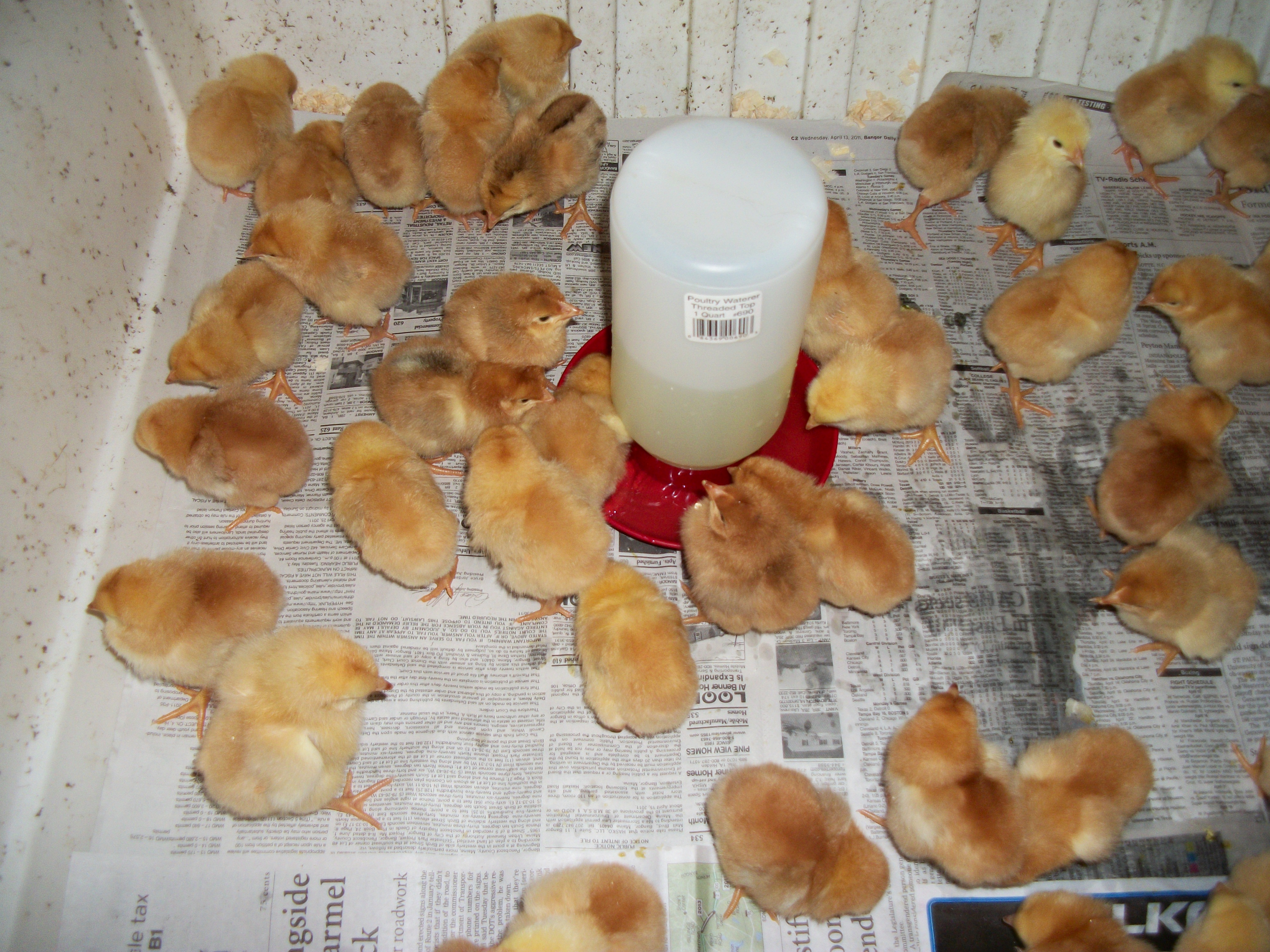
Here they are!

Our first Freedom Ranger chickens!

All 77 (75 plus two extras “in case”…) arrived at the Lincolnville, Maine, post office bright and early on Friday morning, April 15th.  Pete went to pick them up, and I met him at the house.  Margaret was there, too, as she was taking 15 of them.

As you can see, they are big, and lively.  There wasn’t a frail one in the bunch.

.

Freedom Rangers are good layers and good meat birds.  We will have some of each.

Freedom Rangers DO NOT HAVE any Cornish chicken in them, which makes them unique for meat birds.  The market, as I discussed in Tipping Points 9 on meat chickens, settled on meat birds which are all, virtually, Cornish or Cornish crosses.  The Cornish breed grows to over 5 pounds in 6 weeks and has a HUGE white, tasteless breast–produced for a market that went crazy about fat-free meat.  These chickens grow so quickly and are so heavy that their bones and organs won’t support them.  They are Frankensteins.  Their flesh has no texture and melts in your mouth.  Their bones don’t have the minerals they should have, so bone broths made from these bones aren’t as healthy as they should be.

Last year we tried Silver Cross’s–a cross between a barred rock and a Cornish.  The meat texture was lovely–like chicken I remember growing up.  The taste–was wanting.

Freedom Rangers are the same bird as the French sell under their Red label–which is highly sought after in France for taste and texture.

We’ll let you know in about 3 months.  Meanwhile, on Howe Hill, we have one frozen chicken left in the freezer.

Interesting Information: “Autism, Chemicals and Food Additives”

Interesting Information:  March 27, 2011

“Autism, Chemicals and Food Additives”

Jane Hersey’s eldest daughter “showed symptoms of autism until her diet was changed.”  Says Hersey:  “Most parents of autistic children do not realize that help may be as close as their kitchen cupboards.”

Autism in the United States has “increased from 1 in 2,500 children to 1 in 110 children.”

Ben Feingold, MD, a pediatrician and allergist, formed The Feingold Association, which explores the link between diet and behavior. 

“Many parents have seen their children’s behavior and attention improve when they removed synthetic food dyes, artificial flavorings and certain preservatives from their diet.” 

“Children’s increased consumption of petroleum-based food additives may account for some of this [autism] rise, given that there has been a fivefold increase in food dye consumption per person in the United States since 1955.  (They even dye dill pickles yellow according to an article I read on food dyes in the Center for Science in the Public Interest (CSPI) newsletter–“Nutrition Action”  in the past 6 months.) 

“Try to limit your children’s exposure to scented cleansers, germicidal sprays, furniture waxes, room deodorizers, carpet and oven cleaners, insecticides, moth balls, oil-based paint and solvents like paint thinner.”  Also, wash new clothes and linens to stop “the off-gassing of formaldehyde and fire-retardant chemicals used in many fabrics.”

Choose “toothpaste, mouthwash, medicines, vitamins, soaps and lotions that have not been synthetically colored, flavored or scented.”  (I’d say if you have bad breath, eat more probiotics like those found in high-quality yogurt.  Bad breath comes from your gut, not your mouth.  Cavities are a sign of nutritional deficiencies, not unclean mouths.  (See The Weston A. Price Foundation web site for more info.)  (We use a half & half mixture of baking soda and sea salt, with a drop of essential peppermint oil on the toothbrush, to brush our teeth, and my gums have not bled at the dentists since I started using it.) 

The Feingold Association (www.feingold.org, 800-321-32887) publishes a FOODLIST & SHOPPING GUIDE identifying safe products. 

Jane Hersey wrote WHY CAN’T MY CHILD BEHAVE?

Jane Hersey’s article appeared in the March/April 2011 WELL BEING JOURNAL, 33-34.  This issue has an excellent article by Sally Fallon Morell of The Weston A. Price Foundation:  “Dirty Secrets of the Food Processing Industry.”

Interesting Information: “A reversal on carbs”

Interesting Information:  March 27, 2011

“A reversal on carbs”

“A growing number of top nutritional scientists blame excessive carbohydrates–not fat–for America’s ills.”

Walter Willet, chairman of the department of nutrition at the Harvard School of Public Health:  ” `If Americans could eliminate sugary beverages, potatoes, white bread, pasta, white rice and sugary snacks, we would wipe out almost all the problems we have with weight and diabetes and other metabolic diseases.’ “

Dr. Edward Saltzman, associate professor of nutrition and medicine at Tufts University:  “`Now a growing and convincing body of science is pointing the finger at carbs, especially those containing refined flour and sugar.'”

Dr. Frank Hu, professor of nutrition and epidemiology at the Harvard School of Public Health:  “`The overemphasis on reducing fat caused the consumption of carbohydrates and sugar in our diets to soar.  That shift may be linked to the biggest health problems in America today.’ “

Dr. Stephen Phinney, nutritional biochemist and emeritus professor of University of California, Davis, who has studied carbohydrates for 30 years:  ” `However, over time, as our bodies get tired of processing high load of carbs, which evolution didn’t prepare us for…how the body responds to insulin can change.’ ”  Phinney did a 12-week study in 2008 that compared low-fat and low-carb diets.  The low-carb diet lowered triglyceride levels by 50 percent though participants ate 36 grams of saturated fat a day.  (History and evolution show that grain agriculture–in a 24-hour day of human existence–comes in at 23 hours and 53 minutes.)

Dr. Eric Westman, director of the Lifestyle Medicine Clinic at Duke University Medical Center:  “`At my obesity clinic, my default diet for treating obesity, Type 2 diabetes and metabolic syndrome is a low-carb diet.’ “

Naysayers:  Dr. Joanne Slavin, a member of the advisory committee for the failed USDA low-fat diet regime, and Dr. Ronald Krauss, senior scientist at Children’s Hospital Oakland Research Institute and founder and past chair of the American Heart Assn.’s Council on Nutrition, Physical Activity and Metabolism, a believer in the calorie in/calorie out paradigm–which cannot demonstrate success in weight loss because it doesn’t work.  (See Gary Taubes WHY WE GET FAT.)

 Here’s the whole article:  Marni Jameson, “A reversal on carbs,” LA Times, December 20, 2010, http://articles.latimes.com/2010/dec/20/health/la-he-carbs-20101220

Interesting Information: The “Sweet 16,” Living Longer Gene

Interesting Information:  March 27, 2011

The “Sweet 16,” Living Longer Gene

Geneticist Cynthia Kenyon of the University of California, San Francisco, has discovered two genes, one of which helps you live longer with good health (Sweet Sixteen gene) and one of which causes ageing and death (Grim Reaper gene).  Her work has been “successfully repeated in labs around the world,” and “many experts believe [she] should win the Nobel Prize for her research into ageing.”  Eating carbohydrates “from bananas and potatoes to bread, pasta, biscuits and cakes–directly affect two key genes that govern youthfulness and longevity.” 

Ageing, it seems, is NOT caused by wearing out, but by genes affected by insulin.  To turn on the Sweet Sixteen gene, stop eating carbohydrates because they “make your body produce more insulin (to mop up the extra blood sugar carbs produce….”  More insulin means a more active Grim Reaper.  And, Jeff Holly “who specialises in insulin-like growth factor” confirms that the Grim Reaper “is linked to cancer of the prostate, breast and colon.” 

Kenyon herself has cut out all starch (potatoes, noodles, rice, bread and pasta) and eats salads (no sweet dressings), lots of olive oil and nuts, tons of green vegetables along with cheese, chicken and eggs.”  She avoids sweets, except for 80 percent chocolate.

Here’s the whole article:  Jerome Burne, “Can cutting carbohydrates from your diet make you live longer?” Daily Mail, 26 October, 2010:   http://www.dailymail.co.uk/health/article-1323758/Can-cutting-Carbohydrates-diet-make-live-longer.html.

Interesting Information: Asthma Rates Soaring

Interesting Information:  March 25, 2011

Asthma Rates Soaring

From the following article in “Scientific American” magazine, April 2011, “Why Are Asthma Rates Soaring?” by Veronique Greenwood, pages 32-33:

“Asthma rates have been surging around the globe over the past three decades….”

“A reworking of the hygiene hypothesis that focuses on changes in the normal nondisease-causing bacteria that live inside and on the body (in the intestines or the airways or on the skin) has promise.  Studies by [Erika] von Mutius and others have shown that children who live on farms where cows or pigs are raised and where they drink raw milk almost never have asthma, allergic or otherwise.  Presumable because the children drank unpasteurized milk and handled livestock, they have different strains of normal bacteria in their airways that are somehow more protective than those found in city kids.” 

Erika von Mutius is an epidemiologist at Munich University. 

Ha!  It all gets back to having good internal beasties, which commercial milk, which is a highly processed fake, dead food, does not supply or enhance.  Bet the real ingredient for farm kids not having noticeable asthma rates  is NOT handling live stock, but drinking a living, nutrient dense food.  And, maybe, not eating a lot of processed foods made of chemical brews, rancid oils, powdered proteins, etc.  Or, poisoned foods.   Having said that, farm kids living around chemical spraying have high cancer rates…

Turkey Tracks: Blowing My Nose in Style

Turkey Tracks:  March 13, 2011

Blowing My Nose in Style

On January 19, 2011, I wrote a post called “Cutting the Waste Stream and Detoxing the Kitchen.”  One of my issues of the past few years has been how to cut back on the amount of paper we use.  My use of paper towels, napkins, and, now that I think about it, toilet paper, seemed/seems excessive.  So, I’ve been searching for ways to cut back. 

Paper Towels:  I’m happy to report that our paper towel use is practically nonexistent.  So nonexistent that I can’t remember when I used one last.  Putting a bowl of cheap white (so I can see stains) wash cloths on the kitchen counter is working beautifully.  They can be used to where I would have once used paper towels.  (I do not use them to wipe out the cast iron skillet, but more on that in a minute.)  They can also be used inside a bag of lettuce or anything going into the refrigerator than needs a bit of drying.  I could also use them to drain bacon slices, though I’ve mostly just put the cooked slices on a plate.  Once cooled, they reabsorb the fat, and meat fat does not make you fat or hurt your heart, contrary to the low-fat ideology of the past 30-40 years.  As for cleaning the skillet, we pour off extra fat for the dogs and chickens, or for us sometimes, like saving bacon fat or using the glorious fat from a beef or lamb roast on toast the next day–all traditional practices lost over the past 40 years.  A swishing with hot water in the sink takes out the residue in the skillet, and drying the pan with a bit of heat preserves its all-important coating.

I also bought two washcloths for each of our bathrooms, put them under the sink, and use them to spot clean the bathroom.  (Our cleaning woman already uses rags and washcloths to clean the house–she brings them with her.)  That’s working well, too. 

All the washcloths just get thrown into the laundry every week.  If some are dirtier or greasier than others, they go into the pile of dish cloths, etc., that might need either a bit of clorox (winter) or line bleaching (summer). 

Paper Napkins:  We’ve been using our cloth napkins at the dinner table–and reusing them until they are demonstrably dirty.  Growing up, we did not wash cloth table napkins every day.  One had a set place at the table and reused one’s  napkin.  Not doing so saves on water, soap, and energy as well as NOT using paper napkins.  But, for me, who for most of my life has had a chronically runny nose (driven I now realize mostly by food allergies), paper napkins were needed as kleenex just wasn’t strong or thick enough.  So, one day this winter, we had lunch with old Tufts friends of  John’s, Jack and Barbara Moore, of the schooner Surprise, and Jack pulled out a BIG, sturdy, handkerchief from his pants pocket.  It was one of those colored bandanas like we now use to decorate the necks of dogs.  When I said “YES!” and explained my search, he told me he bought them at Reny’s (our local version of a mixed-bag kind of store) for under $2 each.  John and I went that same day and got some.  John got a manly navy blue, and I got these:


They were a little stiff at first, but are now, after several washings, soft as butter.  And, I love them!  They’re so much nicer than paper napkins, and they are so much bigger and sturdier than any of the white handkerchiefs I could find online.

Toilet Paper:   Well this issue is tougher, as Colin Beaven discovered when he started his “No Impact Man” blog and the press became obsessed with the family’s toilet habits.  (Beaven’s blog resulted in a book and a documentary.)  To backtrack, Colin, his wife, and their young daughter attempted to erase or to balance  their energy use footprint for one year, though they lived in New York City.  Toilet paper requires a lot of energy to produce, process in sewage, etc.   And, Beaven points out:  “More than half the world believes that washing their nether regions is far more hygienic than using toilet paper, a practice largely confined to our Western culture.”   I wasn’t surprised to read Beaven’s  information as a few years back, my book club had read Mohja Kahf’s THE GIRL IN THE TANGERINE SCARF:  A NOVEL, wherein the Muslim/American female protagonist does a whole riff on how Muslims view Americans as walking around with and sleeping with dirty nether regions.  Think about it. 

I tried, here at home, to wash rather than to wipe after reading Beaven’s book.  It’s not hard as long as you’re  next to the sink where you can put warm water into a container stored by the toilet.  It’s a bit awkward from lack of practice, of course.  And a container that pours is better than one that doesn’t.  It’s impossible in a public restroom or in someone else’s home.  You do need a container and a drying washcloth or towel–not items one carries around or that friends’ bathrooms supply.  In any case, it is MUCH cleaner, so the half of the world that washes rather than wipes is right about the cleanliness aspect of this issue.

Anyway, I’m pleased with how we’ve been able to curtail our paper use.  It’s a step in a needed direction, a step that refuses to be part of the extraction economy.  And a reminder that sometimes those who live in different cultures or who lived “back in the day” might have better practices than we do.        

Turkey Tracks: How to Sew On a Button

Turkey Tracks:  February 15, 2011

How to Sew On a Button

A friend told me recently that s/he wanted to learn to sew on a button. 

We meant to sit down so I could demonstrate.  There are a few tricks.

But, the internet is a wonderful thing for this kind of information.  Here’s a terrific video showing exactly how to sew on a button, including the bit of information I would have included about creating a thread shank between the button and the material about equal to the thickness of the material that the button will be handling. 

I would also note that sometimes, if I don’t want to see a knot on the inside of my jacket or sweater or whatever, I will start sewing my button on from the front side, so the knot is hidden.  I also, like the demo here, return to the front side to clip off my thread, but, first, I do a quick knot into the thread shank to doubly secure the thread.

http://www.videojug.com/film/how-to-sew-on-a-button