Go no further than Mexican Train–a dominoes type game that is so fun. Indeed, quilter Bonnie Hunter revealed a bit ago in her long-time daily blog that she and her husband and friends spent an evening playing “a cutthroat game of Mexican train.”
My two families here love games: board games and card games of all sorts. And it doesn’t have to be a rainy day for any of this crew to enjoy some time playing a game.
My younger son’s family recently introduced me to Mexican Train, and it is my new favorite board game–mostly because it can be played by younger children who know their numbers and have the attention span to play and by adults who who would play at a more complex level.
My son Bryan Enright is slowly developing a web site called “Shore Things” that is all about the Low Country. (He does work full time so adds to this site when he has time.) He has included a section on “Rainy Day Games” that lists lots of games they like, with links to where to buy them–so you can see what each game costs.
On this “Shore Things” site there are lots of pictures of our beaches, for instance. And, some of this area’s rich history. And, some advice on practical issues that arise here, like handling the humidity.
Know that this effort is a work in progress, but just google “Shore Things.” Or use this link:
Here is a lovely Sunday gift for you–assuming you like quilts. It comes from a friend in Maine who often sends me interesting posts she thinks I will like. I loved this one.
Good Monday morning to all. Here we go to another week.
We’ve gotten a good amount of rain in recent days, for which we are grateful as it has been a long drought this time. I hope this rain will help with our front ponds which are lower than I’ve ever seen them. Their fountains are turned off as a result.
***And I didn’t note in my recent post that ANTS farm Mealy bugs. Guess what is right next to my front plant that is the most infected? A big ant bed. I treated the original nest, which was nearby, but the surviving ants just moved to a new spot around the corner from the original nest.
Nature is fascinating.
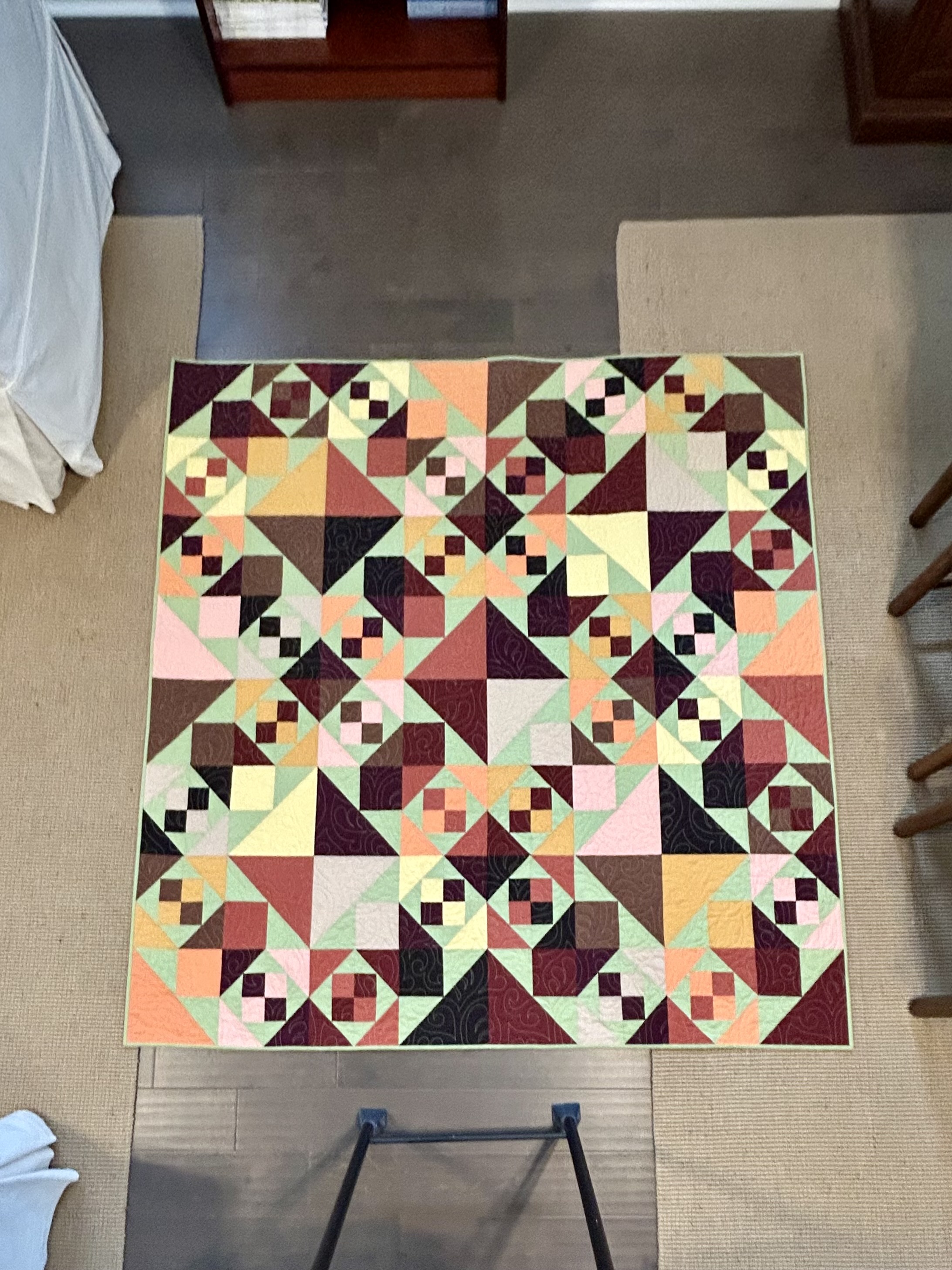
“Spring’s Song” is the second quilt in this series of three quilts, using the same palette and the big and small Cat’s Cradle rulers. The third and final quilt is on the longarm now.
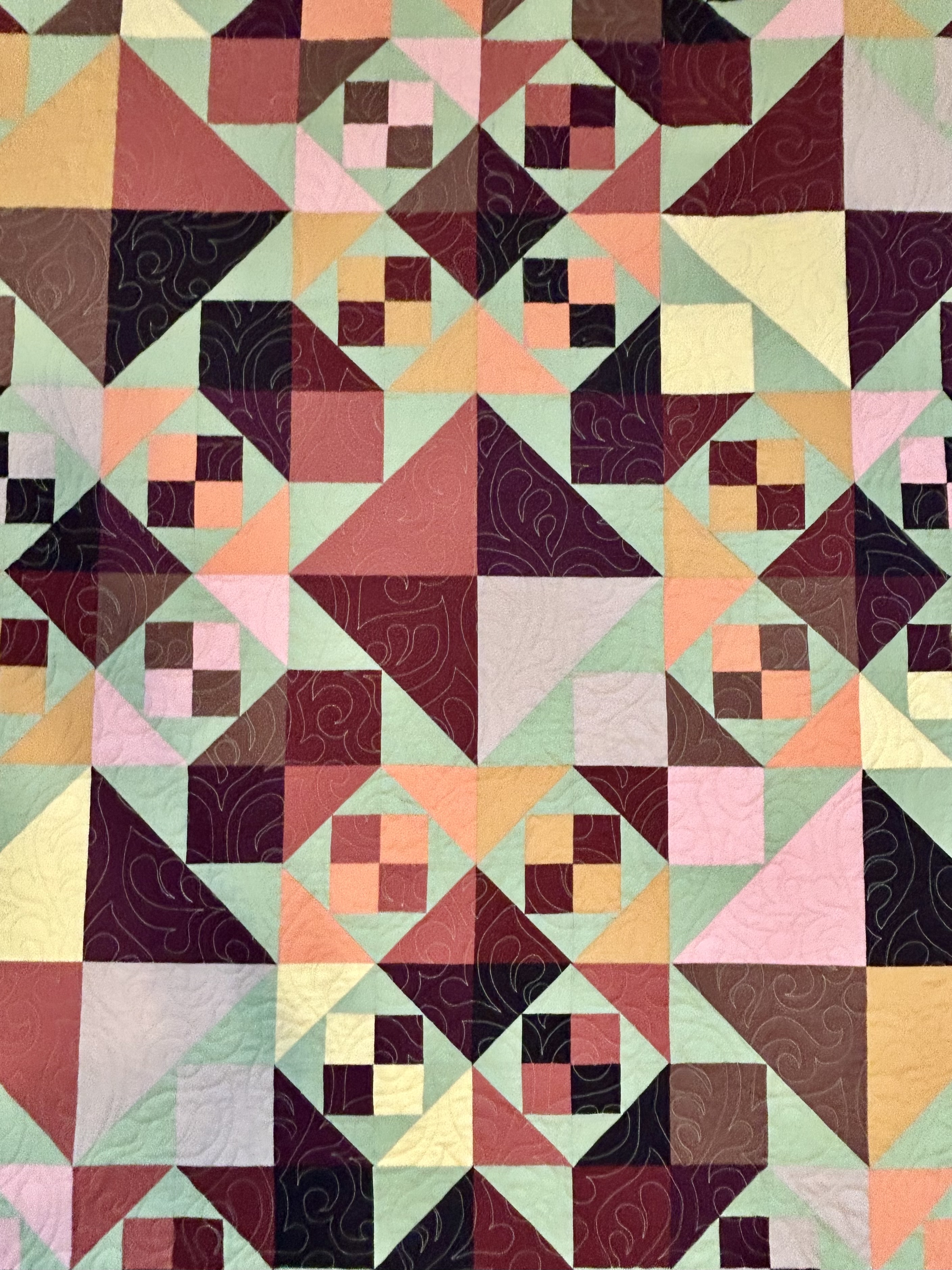
“Spring’s Song” is quilted with a “spring green” color cotton thread, and I really love how it looks on the quilt and on the backing. Cotton thread “stands up” on a quilt, and I like that look, especially with the beautiful Innova longarm’s stitch. The pantograph is Arcadia (Patricia E. Ritter). The quilt is 64 by 64 inches.
This backing of trees in spring helped me choose this quilt’s name. And it also plays off of the first quilt: “Fall’s Splendor.”
Below you can see how the big 8-inch blocks are working with the 4-inch blocks. Basically I just made some of the blocks in both sizes and played on the design wall with them until I saw this pattern start to emerge. Play is everything for me in quilting. That’s where the creativity happens.
And on a new prennial in the new front garden by the porch?
It’s Mealybugs.
Here’s a pic of what they look like that I found online. I sprayed the tops of the infected plants with 50% alcohol and water, but it didn’t get the underside of the leaves on the plant outside–and we’ve had a fair amount of rain that will wash off the alcohol too.
Ugh! I’ve got the Hibiscus on the porch mostly under control. But not the front area plant that is NOT on a porch. So more spray this morning to include trying to get at the areas under the leaves.
Mealybugs, says the video below, can really be a plague in greenhouses.
And here’s more info on the Mealybug life cycle, if you are interested. There is a fly form involved too.
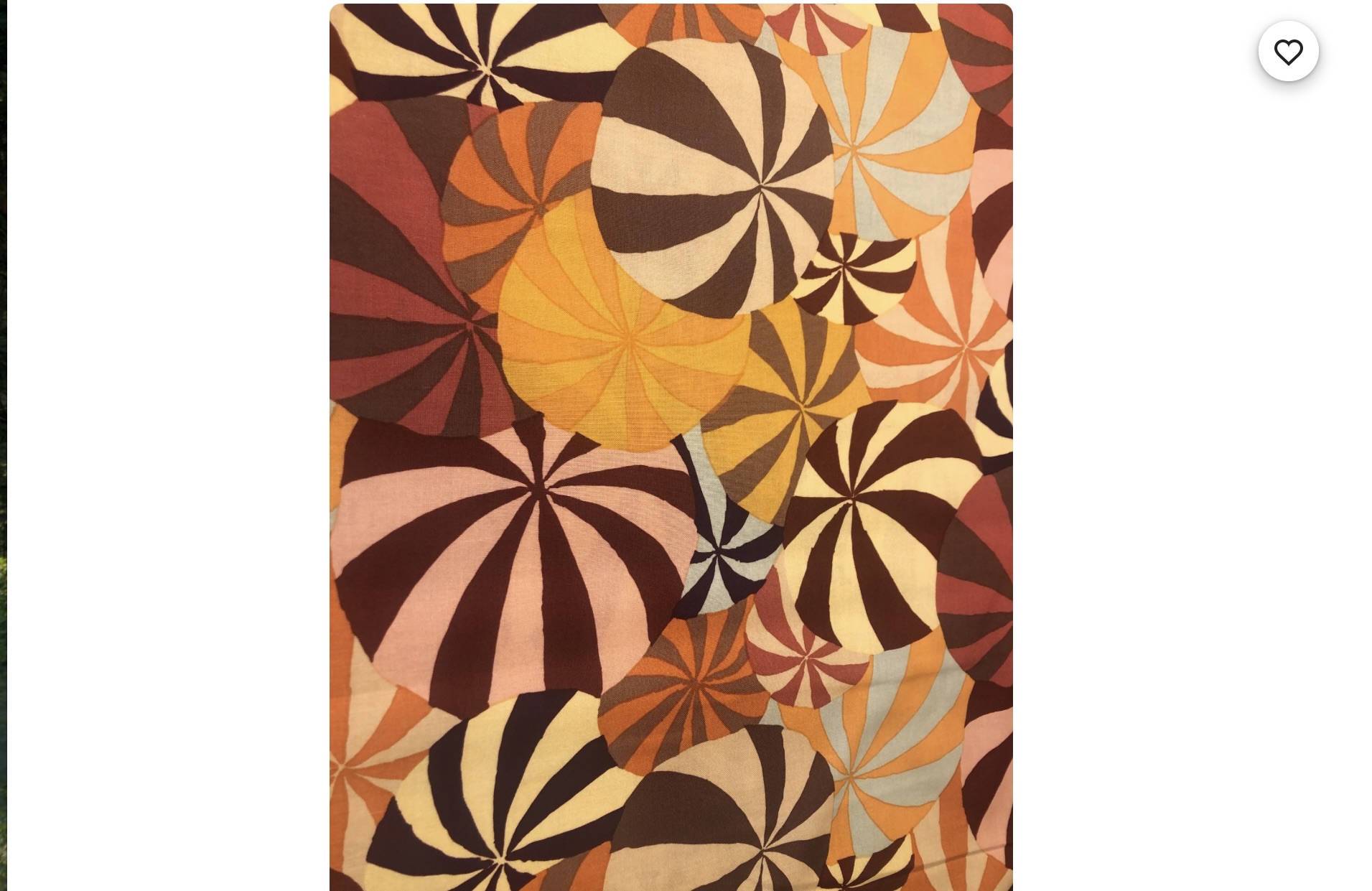
This older Kaffee Fasset fabric (which I saw as winter squashes like one sees in New England in this colorway) of “beach balls” started my recent play time with the 8-inch Cat’s Cradle ruler. This piece of fabric had been hanging out in my stash for, literally, years. I chose the fabrics for this new quilt series from those used in this fabric.
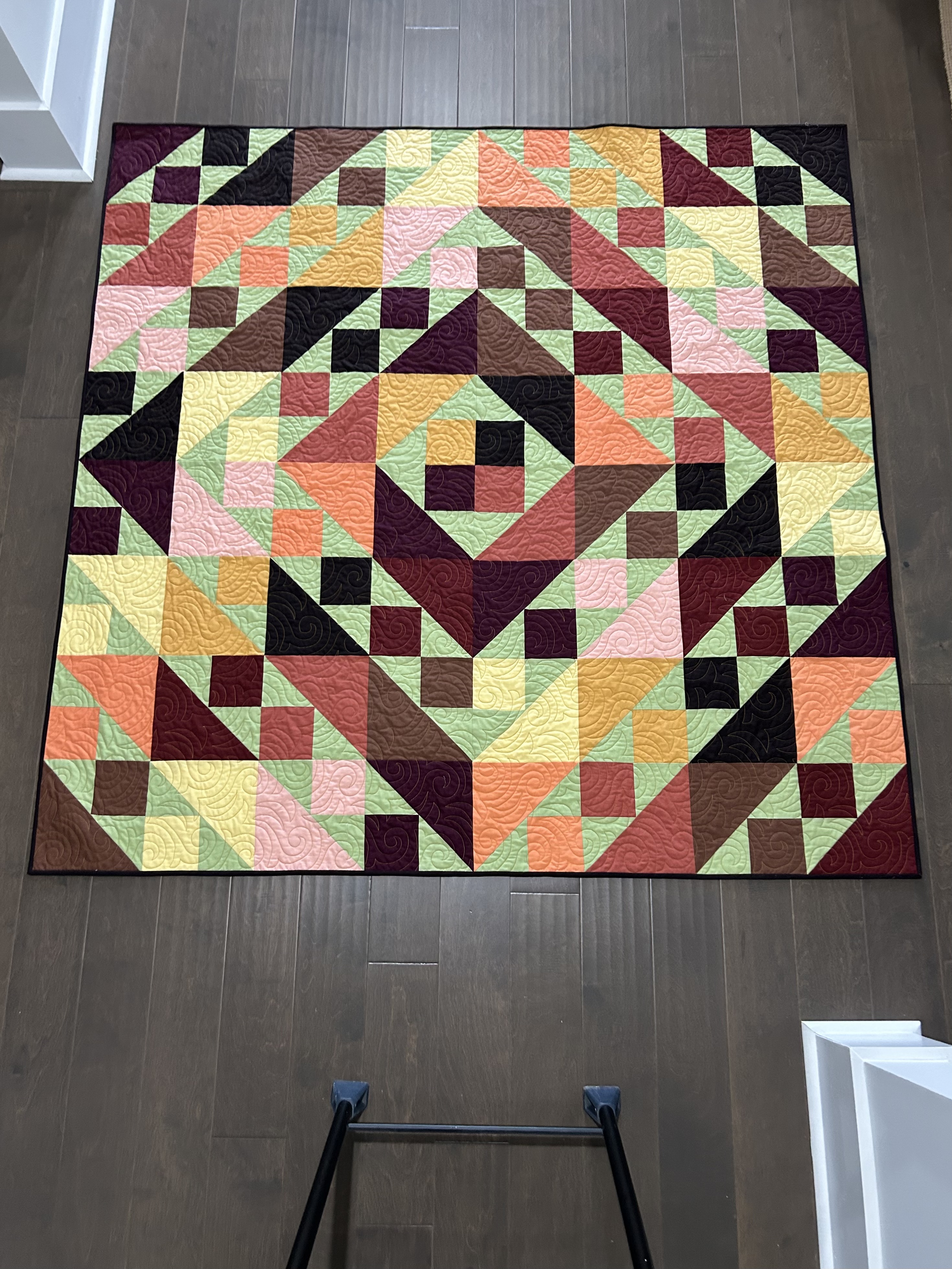
The first quilt is “Fall’s Splendor,” and it is done and bound.
BUT, there is a problem that is driving me more than a little crazy. When I sewed the rows, I didn’t put them back on the design wall as I went. So, I didn’t notice that I had sewn two blocks out of order on the third row from the bottom on the left until the top was quilted and bound. The reversal throws off that pattern of the small squares going up the diagonal line.
Ugh!!!
This quilt is otherwise so handsome. But what to do??
I tell myself that no one is going to hang this quilt on a wall or spread it over a bed. It’s a lap quilt. It’s meant to be hugged and loved. I tell myself I didn’t even notice until it was finished.
I also tell myself that I might be able to take off the binding in that spot and to take out the quilting stitches–which would involve more than those two blocks–and to sew the blocks in correctly and redo the stitching using the pantograph.
Can I do that? I don’t honestly know. It would be tricky–and I don’t want to hurt other parts of the quilt pinning it back on the longarm. Could it just be draped over the longarm rollers.
The current quilting is beautiful, so can I replicate that impact?
Honestly, I don’t know what I’ll do yet. I’m just letting this problem simmer.
Yesterday I ran some errands after 6 pm when it was a bit cooler and the weekend traffic out to Isle of Palms had slowed down.
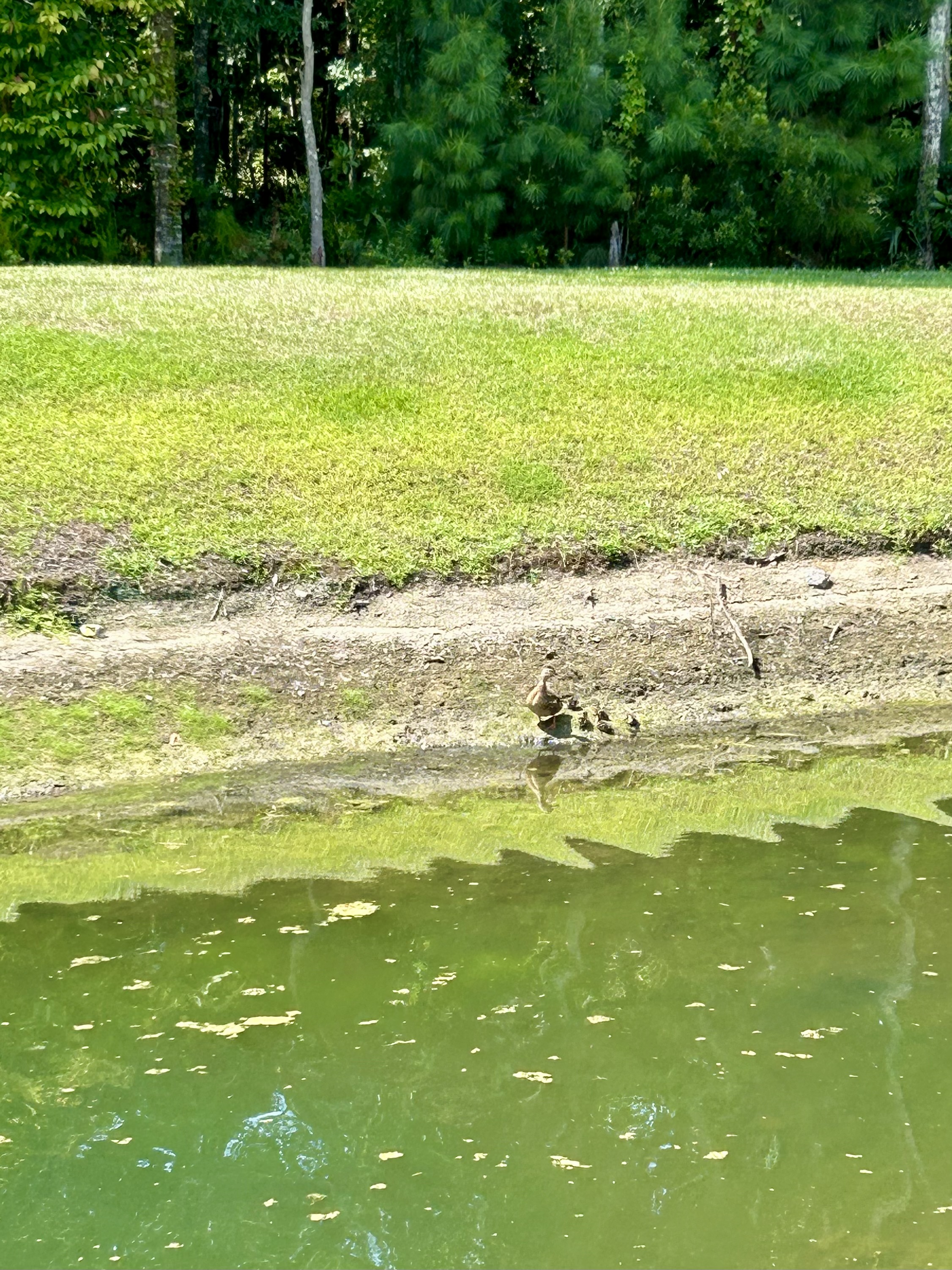
As I came home and turned right onto my street, a young looking female mallard duck was in the middle of the road. I couldn’t see if she had moved away from the car, so I stopped and got out.
Mommy duck had five babies hidden in the grasses on the island. Here I talk to her in what is my “pet” voice–which is way too highly pitched, LOL.
I called my neighbor, and she and I helped the mommy duck to safely walk her babies to the water in our neighborhood’s front ponds. From experience, I know that’s what ducks do. They nest away from water, and when the babies can do it, the mother “walks them to water.”
This task took both me and my neighbor and the mommy duck. The babies were newly hatched and weak, and it was so, so hot. The mommy duck led the parade and kept to places she could hide the babies until we helped her move them along–past front porches and fences and up to the pond.
My neighbor checked this morning, and the duck and her babies are all still in the front pond. So I walked up to take some pictures.
Nope they aren’t in the big pond where she went first yesterday.
Here they are–in the quiet part of this pond away from the fountain–and near the woods. It’s a much better spot for her and her family. At some point she crossed the street with them.
This little family will be very fragile for some time. There are so many predators around then: a passing alligator or river otter, a hawk or owl, and so forth.
We will see. But my neighbor and I did what we could.
PS: And on Friday, when I left Costco, a mother goose was crossing a very busy road with 9 half-grown little ones following her in a straight line. That area is too busy for me to have gotten a video.
I found the name for the very old Kaffe Fasset print that has sparked my ongoing series of three quilts on the Kaffe Fasset web site. It turned out to be remarkably easy.
Screenshot
And this print comes in lots of other color ways. Here are a few examples of some of the other color ways.
Screenshot
Have you noticed the NAME yet?
It’s BEACH BALLS!
The images in the colorway I have is NOT winter squash.
BUT, for me, those are so NOT beach balls. They ARE winter squash.
So that’s my story, and I’m sticking with it.
LOL.
PS: My pring is OOP Kaffe Fasset GP37, Beach Balls.
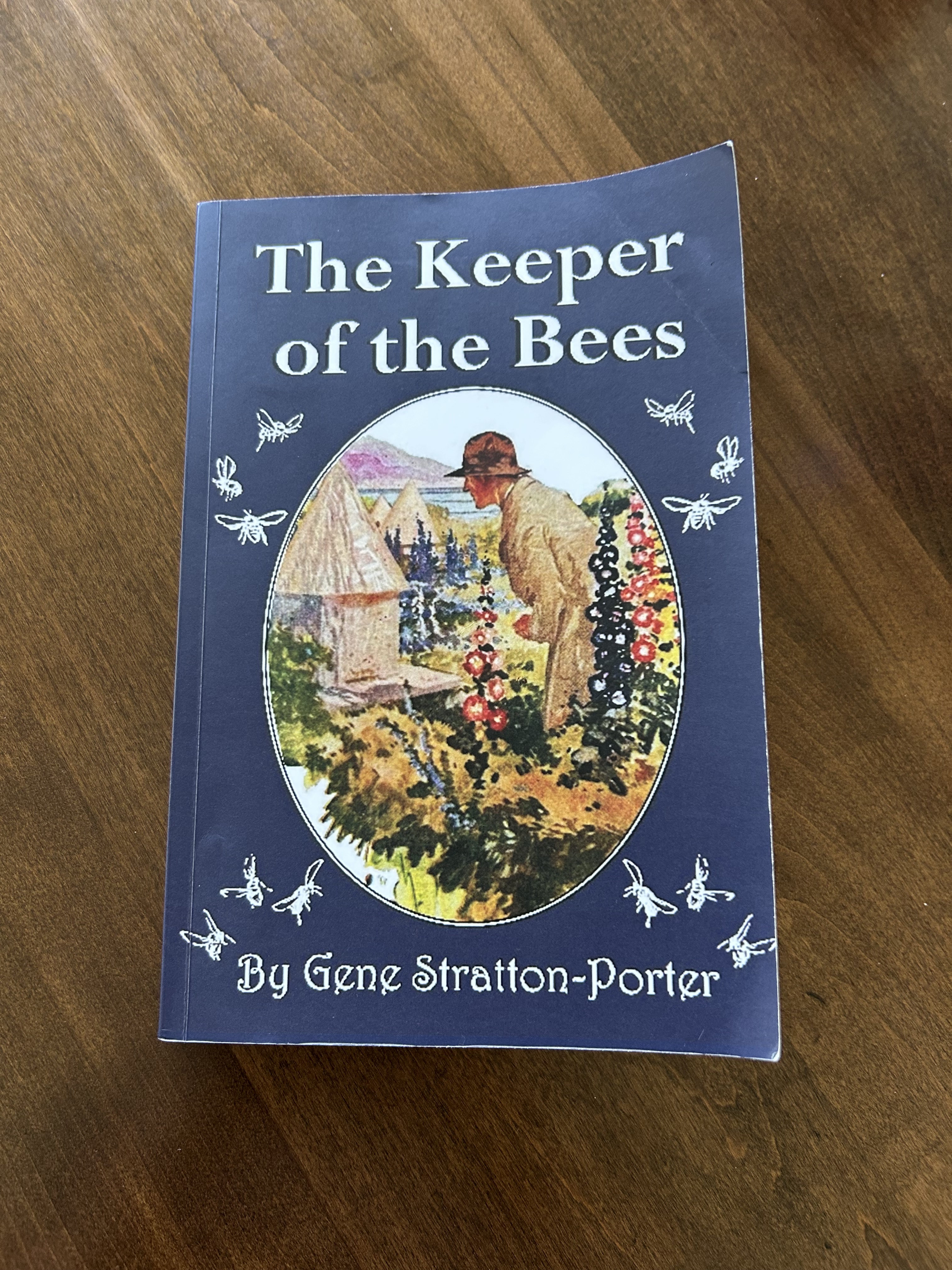
I finished reading a book gifted to me by a long-time friend when she discovered my favorite book in the whole world is Gene Stratton-Porter’s LADDIE–a book my mother read to me an my sisters more than once.
I enjoyed every minute of reading THE KEEPER OF THE BEES which my friend sent to me. This novel was Stratton-Porter’s last novel–written before her automobile was hit by a trolley in Los Angeles in 1924, where she was working in the film industry due to the success of her writing.
My friend and I were born in 1944 and 1945 during WW2, which was only a little over 20 years from Stratton-Porter’s 1924 publishing of THE KEEPER OF THE BEES. Her novel LADDIE was among her earlier books.
My friend and I were Air Force “brats” who lived in military communities that had strong ties to the world Stratton-Porter details in her novels. It was an era of patriotism, belief in God, strong families, sacrificies made for “doing the right thing,” honesty, truth, character, sturdy educations in the classics and reading, and so on. Her protagonists have very strong connections to nature, and she writes in a time when there are a lot of small communities where people are strongly connected to each other. In Stratton-Porter’s novels, bad men and women fail dramatically. And shame does not just affect a person who didn’t “do the right thing”; shame falls too on those nearby–on families, communities, the innocent, and so on.
I miss much about that world, that country.
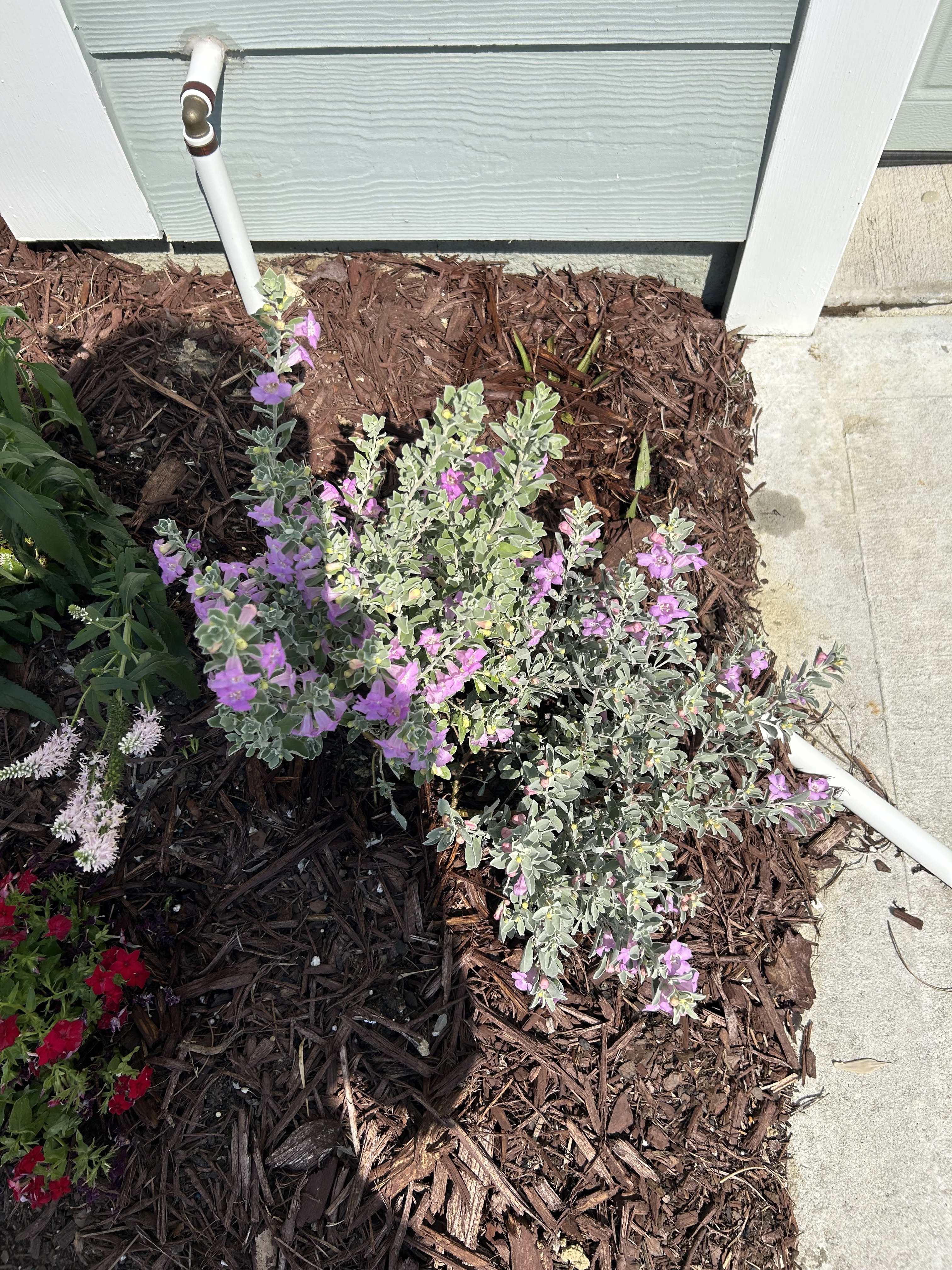
My son and DIL gave me a camellia and a Texas Sage plant for my birthday this year. Both are planted now and are thriving. I went out to water the Texas Sage and its adjacent plants the other day, and it was COVERED with pink flowers!
I had some help digging out the liriope plants in this bed–planted before I bought this house. This bed gets direct, really hot morning sun, and the liriope was so not happy there. While at the nursery with DIL Corinne, I also got a phlox (Intensia) and a Veronica that hopefully will take the heat in this bed. The white pipe is the discharge pipe for my water filtration system. These plants will spread and fill up this space.
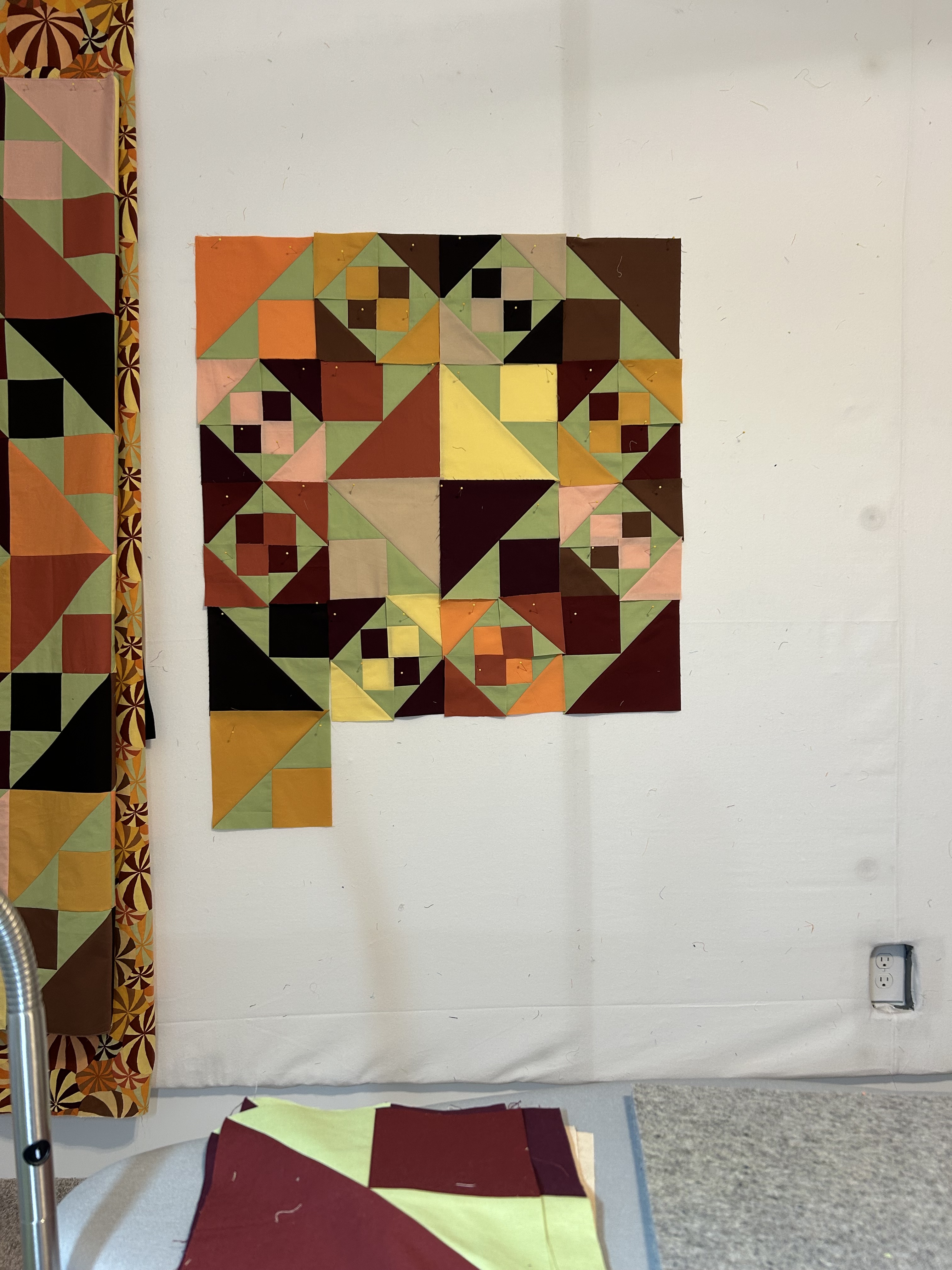
I am still playing with the Cat’s Cradle rulers. I wanted to see if the 4-inch and 8-inch blocks would play nice with each other.
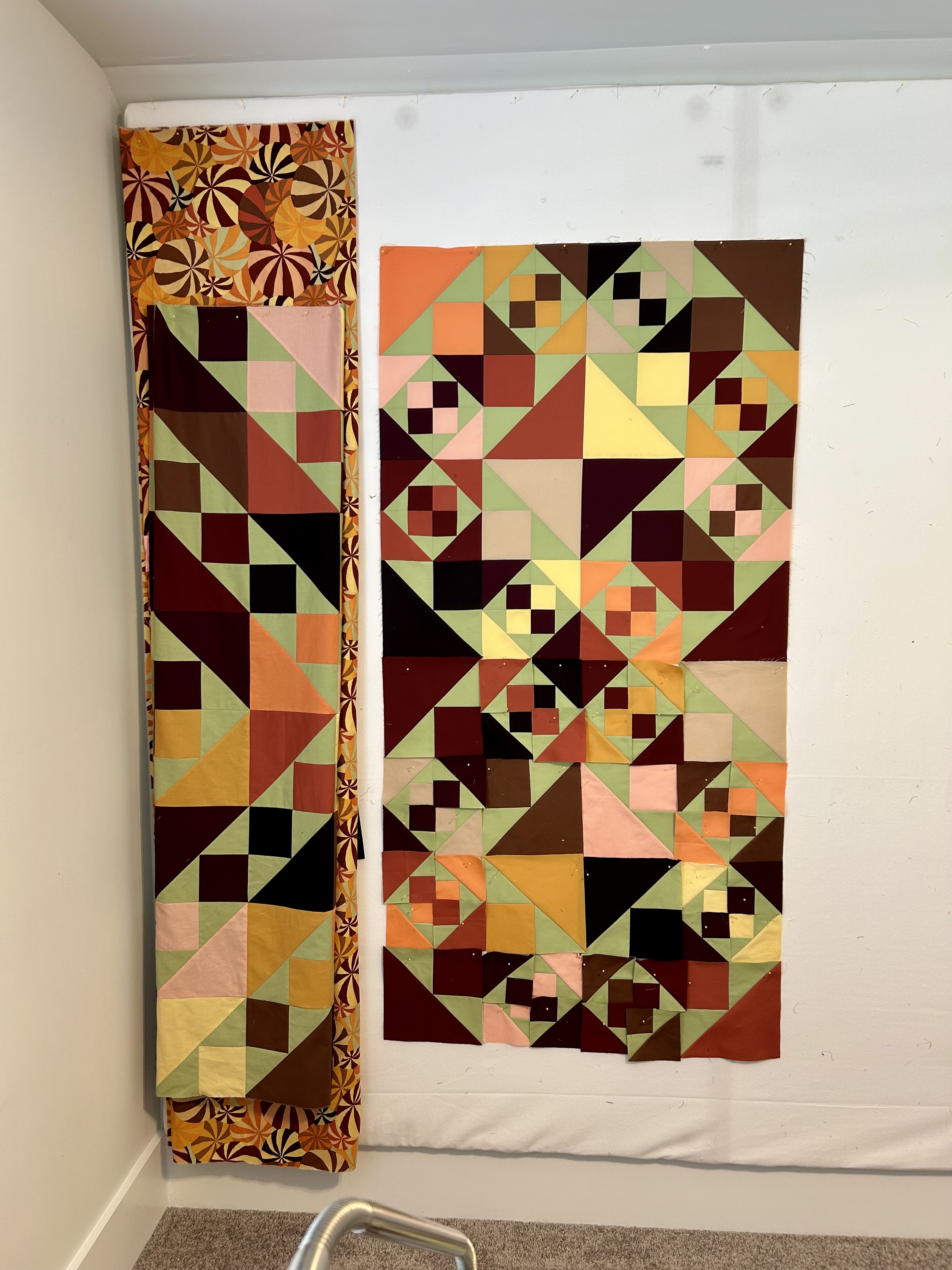
They do. These 4 rows are sewn together and make a big block that will be 1/4th of a quilt top that will meaure 64 by 64, like the first top. Butting up the seams between the blocks has been an issue and I’m exploring whether or not I can press differently when sewing the block parts together. Can all those seams be pressed open?
The second block is now organized, and I’ll sew it together later today and connect it to the first block. (On the left is the finished first top and its backing, waiting for the longarm.). Then it will be on to the other side and its two blocks.
One grandson is now home from his travels (Thailand). The other one landed in Laos yesterday and will be in Asia for the rest of June. My granddaughter leaves on her sail in a wooden boat to Spain this next weekend. Everyone else has their feet on American soil, LOL.
The Japanese beetles seem to be slowing down now. I have picked at least a thousand off my roses and nearby plants. Next spring I’ll put down something around the roses that the Japanese beetle grubs will hopefully eat–Bacillus Thuringiensis, which is a naturally occurring soil bacterium that is toxic to some insect larvae, but not to humans or mammals in general.
The weather is beautiful, though we have storms coming through again. We always already need rain here in the tropics. My grass got fertilized and is thriving. It is so pretty this year.
And now it is time for my main meal on the back porch, where I will start the next book in Jan Karon’s Mitford series: HOME TO HOLLY SPRINGS. I’m baking some cod and stir frying some spinach in butter with some garlic. The seedless watermelon has already been cut up, and my pears on the counter are almost ripe. There will be no starch today as I have picked up two pounds–from all the summer fruit of course.
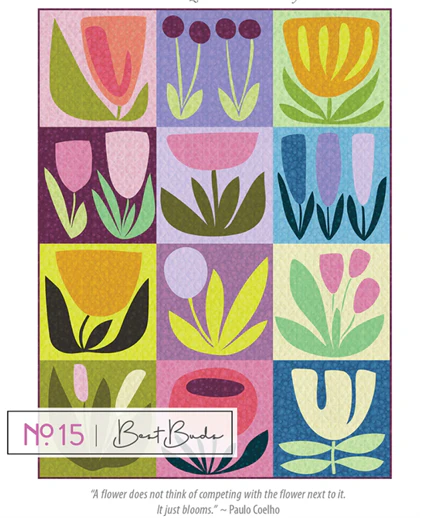
And I don’t like appliqué. I’m not sure why. I love hand work. I can do appliqué well. And I’m not a big fan of machine appliqué either, though I do it well too.
These blocks, though, would make adorable stretched canvas pieces.
One of my blog readers commented about this “Best Buds” quilt pattern, but she had trouble including a picture in her comment. Here is the scrappy version of this very cute pattern. So thanks, commenter! I do like it a lot and will get the pattern and at least make a block for a stretched canvas piece.










 Louisa Enright's Blog