The light these days has changed a lot. There are long shadows everywhere just a little after noon. The winter solstice is coming.
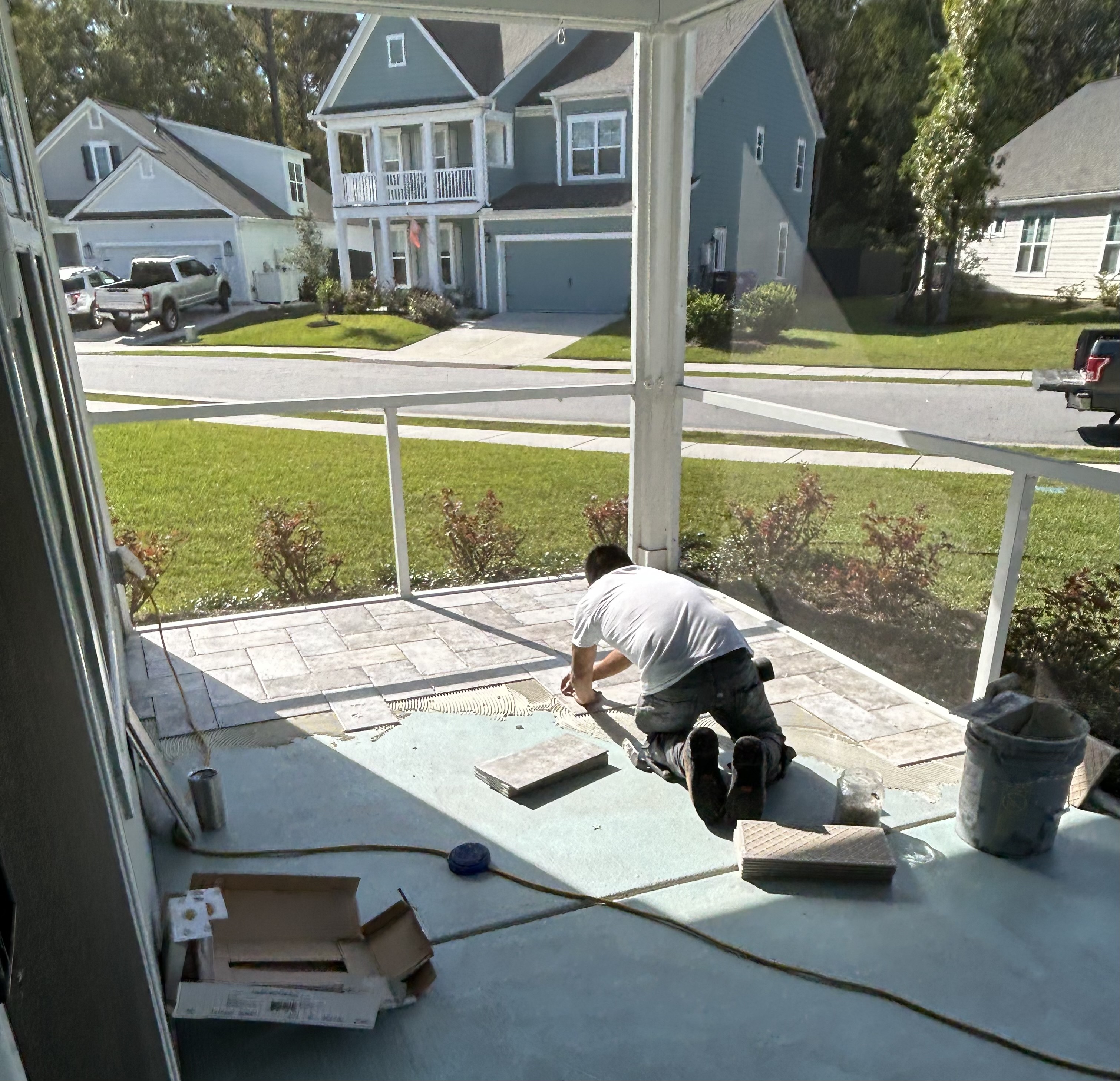
But, here’s Jose starting to tile in the afternoon. The aqua blue (two coats) are waterproofing layers, due to the concrete sitting right on clay–which is like cement when dry, but like soup when wet. Thus, the staining on the concrete.
The tile is done, but grouting will come the next day.
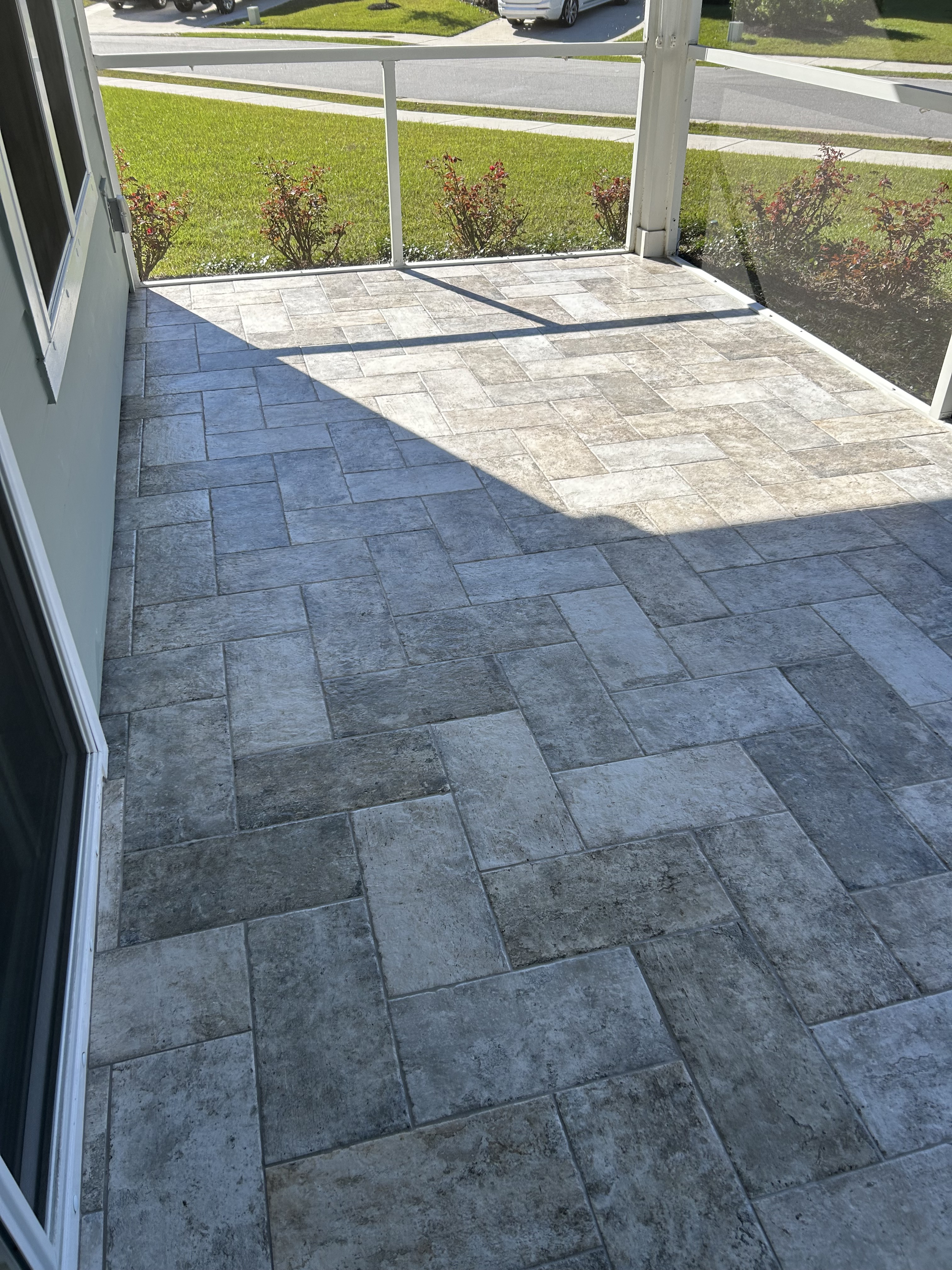
Done!
And my “outdoor room” is ready to go again.
I spend a lot of time in this space.
There was enough tile to do the little outside platform.
I am really happy with this decision and this outcome.
The hesitations I had about moving to South Carolina were primarily three: heat, snakes, and alligators.
I’ve gotten used to the heat, though I do live in air-conditioning, and I do miss the crisp cool air of Maine where windows can be often open for a lot of the year. Here in the tropics, humidity and moisture is an issue, and the AC does control it, but opening a window is not a good idea.
We see alligators in our ponds off and on. They seem to come and go via the underground water drainage system of culverts so common in this Low Country.
You can clearly see alligators should one venture into your…garden…which is highly unlikely in my neighborhood. Alligators do occupy some places and paths in parks and golf courses where ponds or wetlandsare involved.
Wetlands are all around my neighborhood, and I can tell you that I wouldn’t put one foot into those woods without donning boots and snake protectors on my lower legs. Not one foot. LOL. And I’m not especially snake phobic. I just honor the snakes’ privacy in their habitats.
We do have garter snakes here in the neighborhood. And they are WAY bigger than the garter snakes in my Maine garden. Here’s one in my back door neighbor’s garden. When we touched it with a rake, it COILED, which made both of us back off immediately until it got identified as “garter.” In this picture, one can see that the head is not wide and shaped like a triangle wedge, but we weren’t sure.
Here’s another one in another neighbor’s garden.
Garter snakes actually eat garden pests. I would go so far as to say they signal a healthy garden habitat. Or, one in the making. I rather think it has a cute little face, and it looks at one with curiosity, not malignancy.
We also have water snakes that eat things in the water. At least one showed up here on a road after a long dry spell where the creek from the wetland dried up. It eats aquatic creatures. It was dead in the road, and I don’t know if it was killed or run over by accident. And I’m sure, somewhere, there are the types of “black” snakes–rat snakes–that eat rodents. And I’m sure there are many other types of snakes here as well.
But this one! Which was found on a neighbor’s porch that backs up to the woods and wetland…
Our knowledgable neighborhood snake identifier said it was a Hognose Snake or a juvenile moccasin–and to leave both alone.
“Hognose” is used as a kind of a general term for snakes identified by an upturned nose. They are harmless and eat frogs. They are also more prone to being in woods and not wetlands. Some people have them as pets.
Moccasins DO like wetlands. A juvenile would have a green section at the end of its tail. In the neighbor’s picture, we can’t see the tail. They are seriously poisonous, but are not terribly aggressive unless backed into a place where they don’t feel safe. Or, stepped on.
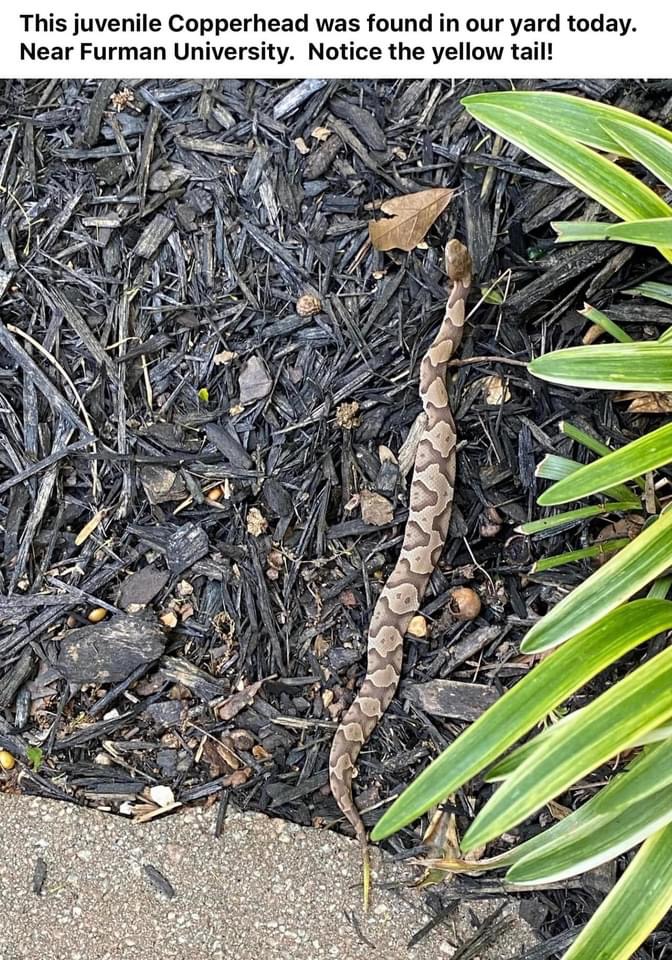
Their close relative is the Copperhead–and you can see the green tail section of a juvenile in the picture below. They are very orange, not dark like a moccasin.
The South Carolina Department of Natural Resources has good information on snakes and on moccasins and copperheads specifically at dnr.sc.gov. Or just search on SC and moccasins and copperheads.
The natural world is an amazing place, filled with wonders and dangers.
You would never know we were worried about a hurricane only two days ago!
The death/damage from Helene inland has been terrible. A dam in North Carolina below Lake Lure broke and devastated a small town below it. Tennessee has also been hard hit. I am feeling so, so lucky this morning.
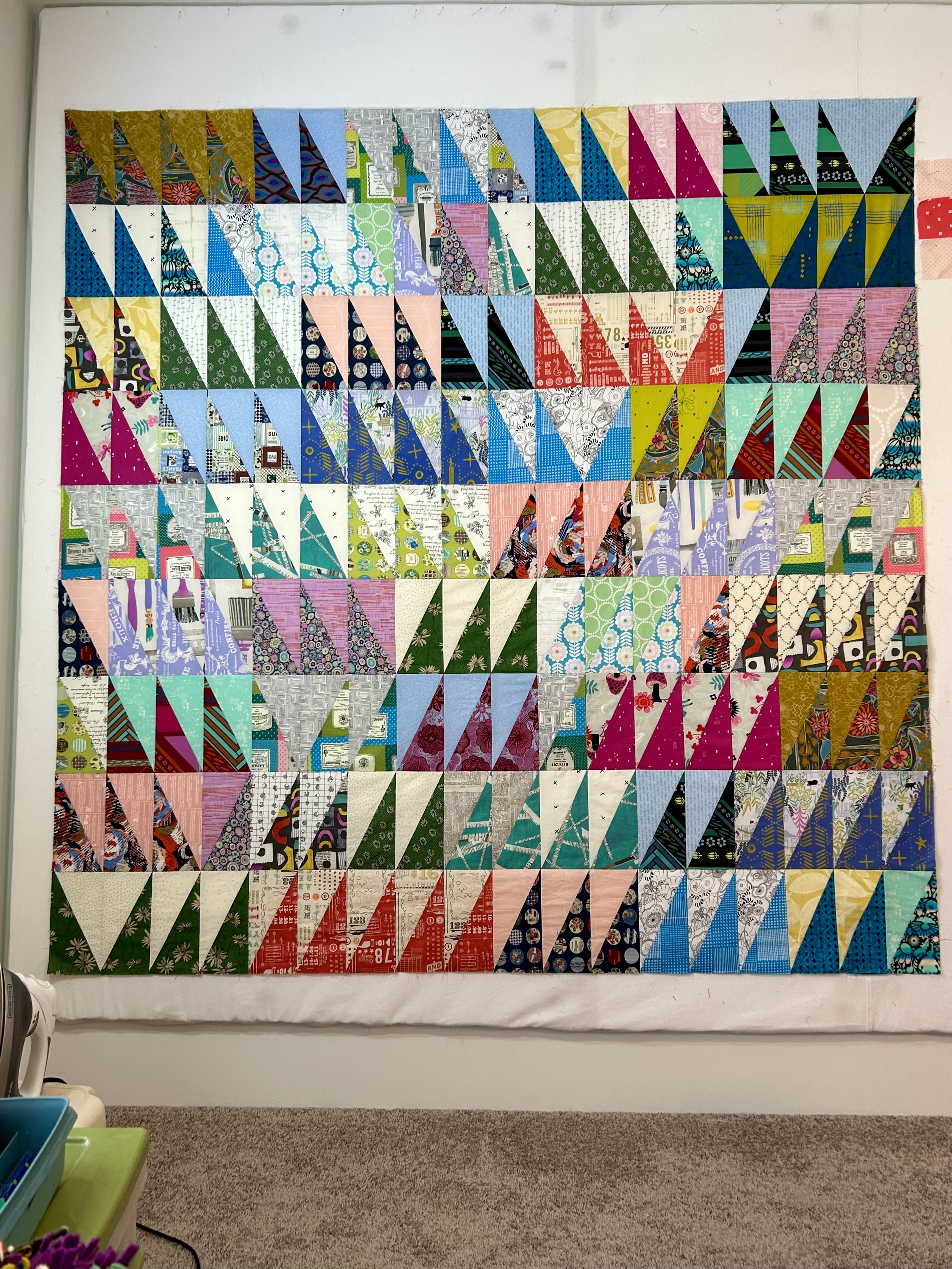
I got “Arrowheads” off the design wall last night–which opened up room for the other projects trying to happen. The arrowheads run from the top right corner to the bottom left corner. Some are more subtle than others, but they do form a line for the eye to hunt for and follow. The “left” or “right” rectangles shift on either side of the arrowheads. Perhaps the line should have been from right to left as that is how we read…but I also wanted this arrangement to be subtle.
I love this quilt top–all made out of fun and not subtle fabrics just sitting around in my stash. I think there may be a series in the making with this large half-square rectangle block made with Latifah Safari’s Hurty ruler.
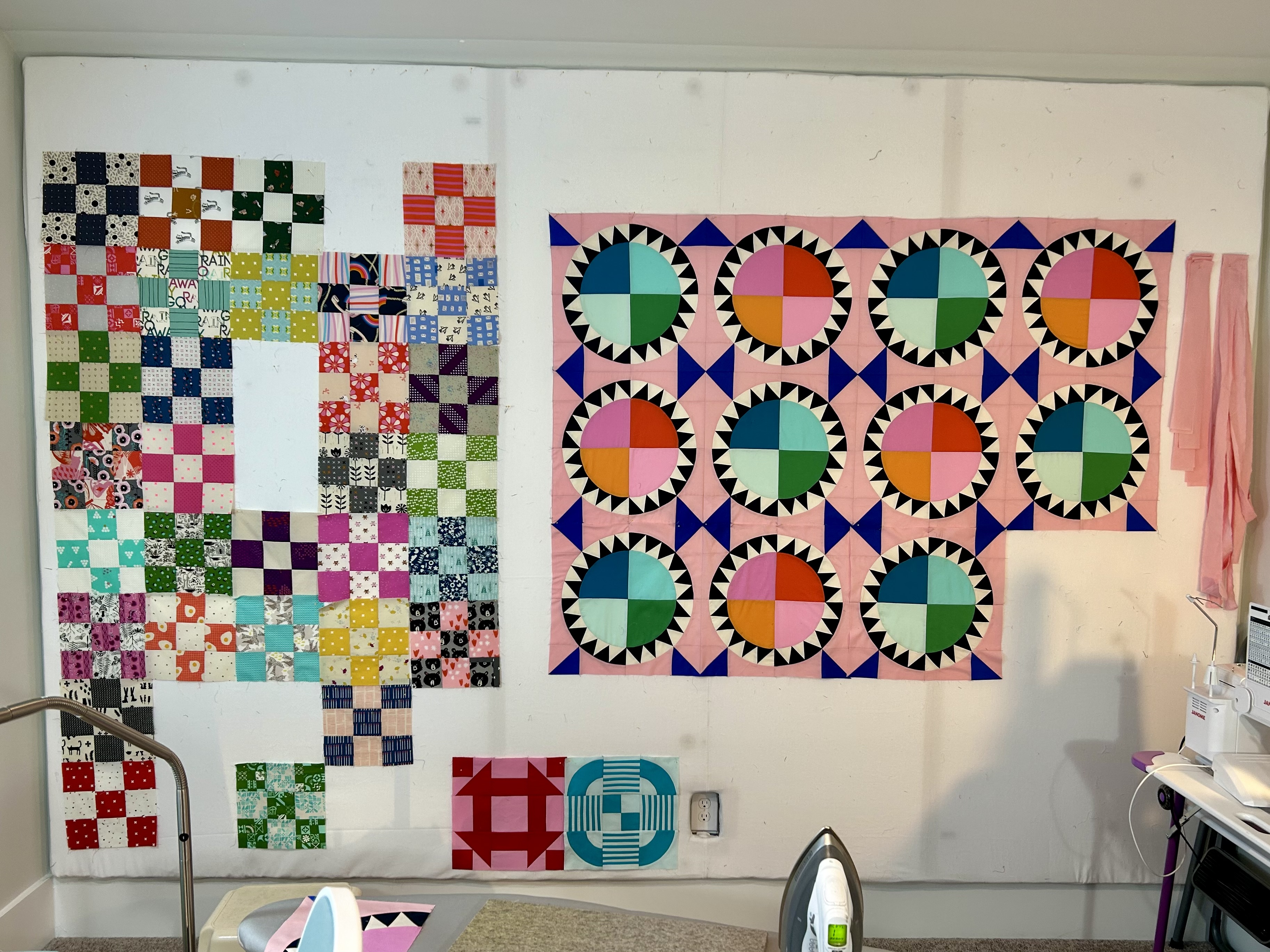
I put the leftovers on the design wall–just to get them up so I can see what I have and what needs to be cut and sewn. None of these blocks will stay this way–but I do want to play with diamonds mixed into rows. Clearly I need to cut and sew more blocks–and to employ better color mixtures than what’s on the wall now. And I’m anticipating LOTS of moving of blocks around.
The “glitter” blocks to the left are a challenge–and I’m not having fun with them. I can’t get the points at either end right–so that there is 1/4-inch beyond them. I’ve measured and redrawn the pattern several times now. It’s a different and exciting block, but… I’ll make one more, sew these together, and call it a day. I’ll probably hand quilt it??? I’ll see what it looks like sewn together. Maybe it will become part of an improv quilt.
The “crosses” leader/ender top made from the bins of 3.5-inch squares (Cotton+Steel/Ruby Star Society) in light and dark colors is growing. I can sew together the row in each block, but not the whole block, so it looks a bit “off” right now as most of it is pinned. The bins ARE SLOWLY going down.
AND yesterday, I made a new pin cushion, using scraps and ground walnut shells for the filling. The shells came with a packet of powdered “emery,” which is an abrasive mixture of some form of alumina. (Emery used to be ground rock. Emery is used on things like stair treads and fingernail boards.) Directions said to make an extra little bag for the emery and to put said bag inside the pin cushion–among the walnut shells–and it will keep your pins sharp.
I recently started pinning my quilt tops on the longarm, rather than using the red snappers–using new-to-me pins (Magic pins). The ones made for using on a longarm canvas are quite sturdy–and mine are now in a pin cushion made and gifted to me years ago in Maine by Linda Satkowski. (It’s going strong Linda!). I used hers as a model for how to make my new pin cushion, which now holds the pins for the design wall. I think the combo of walnut shells and emery I bought on Amazon were too pricey–and not enough of the walnut shells is leftover if I want to make another pin cushion to gift to someone. Well…maybe if I make it smaller???
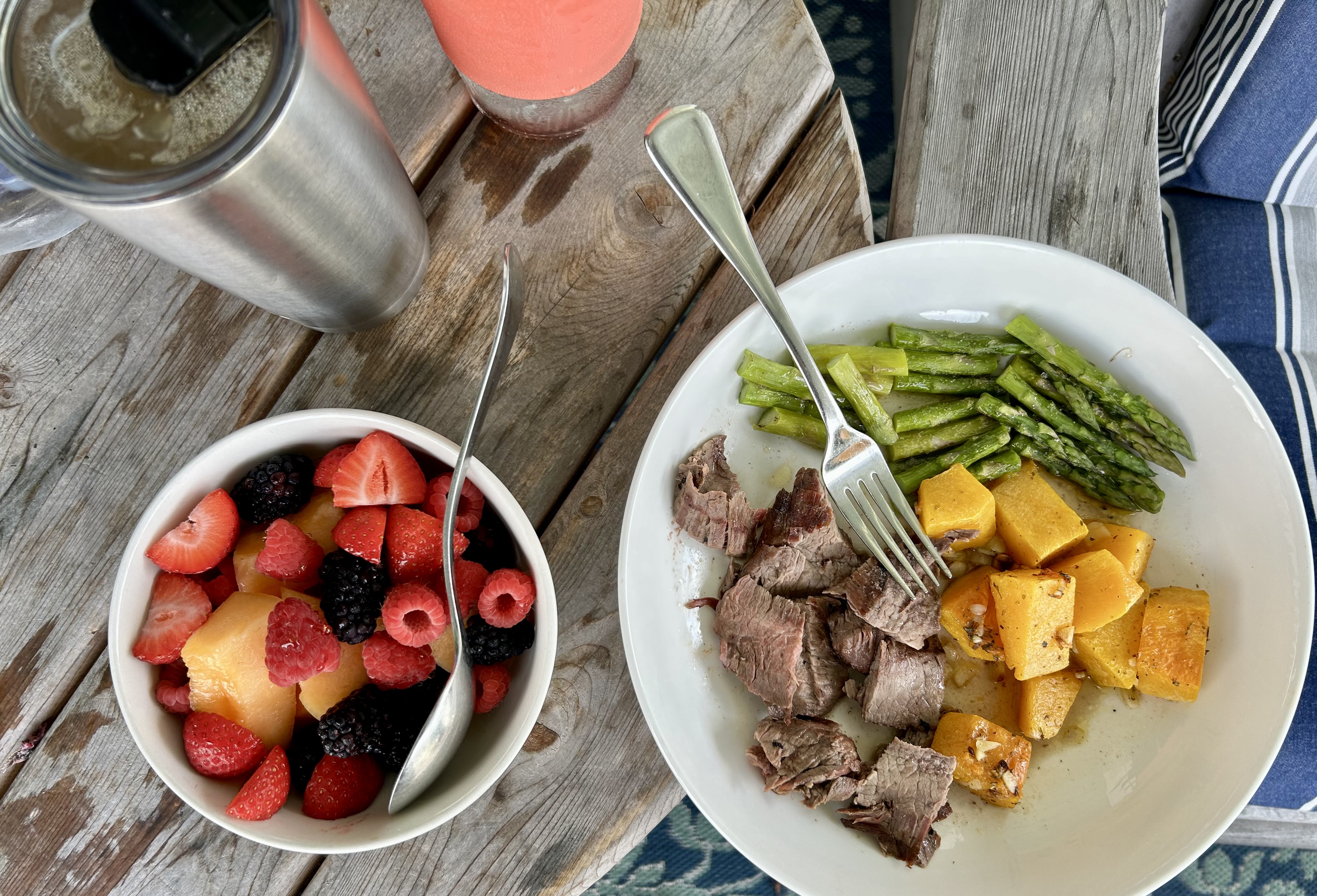
Yesterday I roasted my first fall butternut squash–with garlic, dried herbs, olive oil, and salt. I didn’t use the rosemary in my herb garden which I would prefer for this dish as Mount Pleasant is still spraying for mosquitoes. That spray is said to be GRAS–or “generally regarded as safe,” which means only that no one has done any searching for problems. Here in the USA, we allow thousands of chemicals in our food that Europe does not allow. My take is if it kills insects, it can also kill us or make us sick.
Except for the butternut squash and the fruit, this dinner was from leftover “assets.”
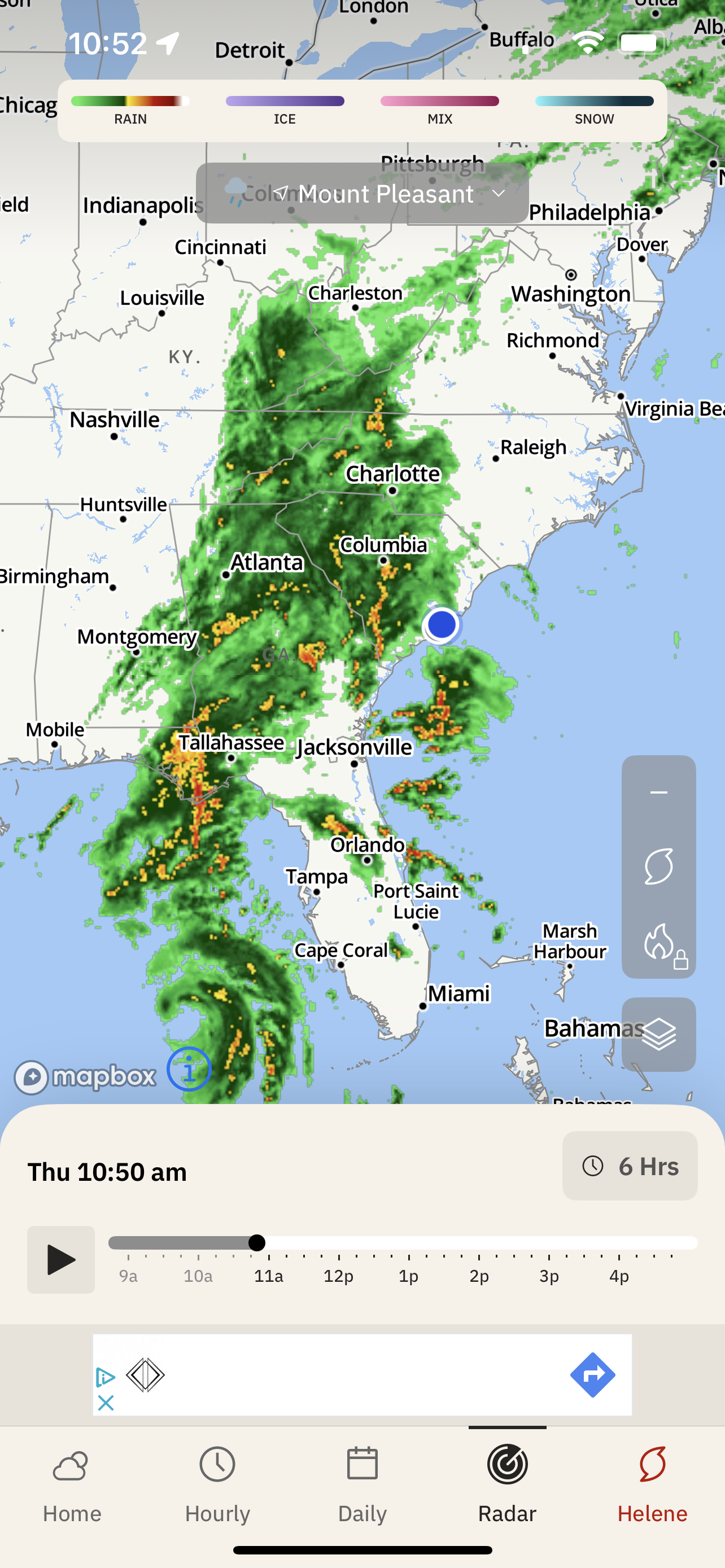
Hurricane Helene hit the Florida coast as a Category 4 storm. But the main part of the cone went mostly a bit to the west of us here in the Charleston, SC, area. There was a hurricane warning in the early morning this morning, which I didn’t hear as I had my phone in airplane mode. My neighbors were NOT happy with me as they worry about making sure I’m ok in the night. And it is good to know that airplane mode stops these warnings.
Younger son and family lost power in the night on Isle of Palms, so they came early this morning with the three granddaughters so they could do their online homework.
This storm is HUGE!
Here is where it is right now:
I don’t want to set up a jinx, but this is the second storm we have dodged in recent weeks. We got 5 1/2 inches of rain yesterday and last night, so I’m happy about that “just right” amount.
Before the rain started in earnest yesterday afternoon, I grilled a beautiful flank steak and air fried a small potato into French fries. I was able to sit on the porch with my meal for quite some time before the wind sent the rain onto the porch and I had to bring cushions inside. The second dish was for supper, so I had time in the afternoon to sew.
Hurricane Helene is hitting Florida as a category 2 hurricane. As you can see, here in the Charleston, SC, area, we are on the outer edge of the track, which as of right now, is projected to curve west and away from the coast.
But, tornado warnings are out, and hopefully we will get some rain but not too much. It is very dry.
For me, it will be a rainy day of sewing and some cooking chores.
It’s been a busy week so far–with the two monthly quilt meetings I attend happening right together, one at night and one the next morning. What a gift these meetings are!! Both are so full of energy and ideas and very nice people.
Here are SOME of the postcards we recently did at the Charleston Modern group–and mailed to the member whose name we got. Once again, the creativity soared. (I did the red churn dash with the little sheep in the middle, and I received the wonderful modern orange and green one on the lower right.)
I LOVE improv quilts, and I really loved this one shown at the modern group. It’s BIG and so fun. I really have to get out my box of orphan blocks and play with them on the design wall. There just isn’t enough time in every day!!!
I should take more pictures at these meetings, but I get involved emotionally with each and every quilt and think about taking a picture too late. Both groups put pics on their online group choices. Patchwork Gals is a private FB group, but you can see photos of quilts shown on the Charleston Modern Quilt Guild website if you are so inclined.
I got the binding on Pot Pourri 4, so I have hand sewing at night. Today I’ll work on the big half-square rectangle quilt to finish sewing it together. Then I’ll have design wall room again. LOL.
And now I need to make a quick trip to the grocery store before the rain and wind start in earnest.
Debbie gave us a break most of yesterday afternoon and much of last night, so I went out to explore in the early afternoon, alongside many of my neighbors, many of whom were walking dogs that had been penned up inside for a long time. My back yard neighbor was really worried about the creek/bioswale running through our property rising up to a level that would come into her house. I wanted to see how all the drainage systems here were working–as this type of Low Country drainage is new to me.
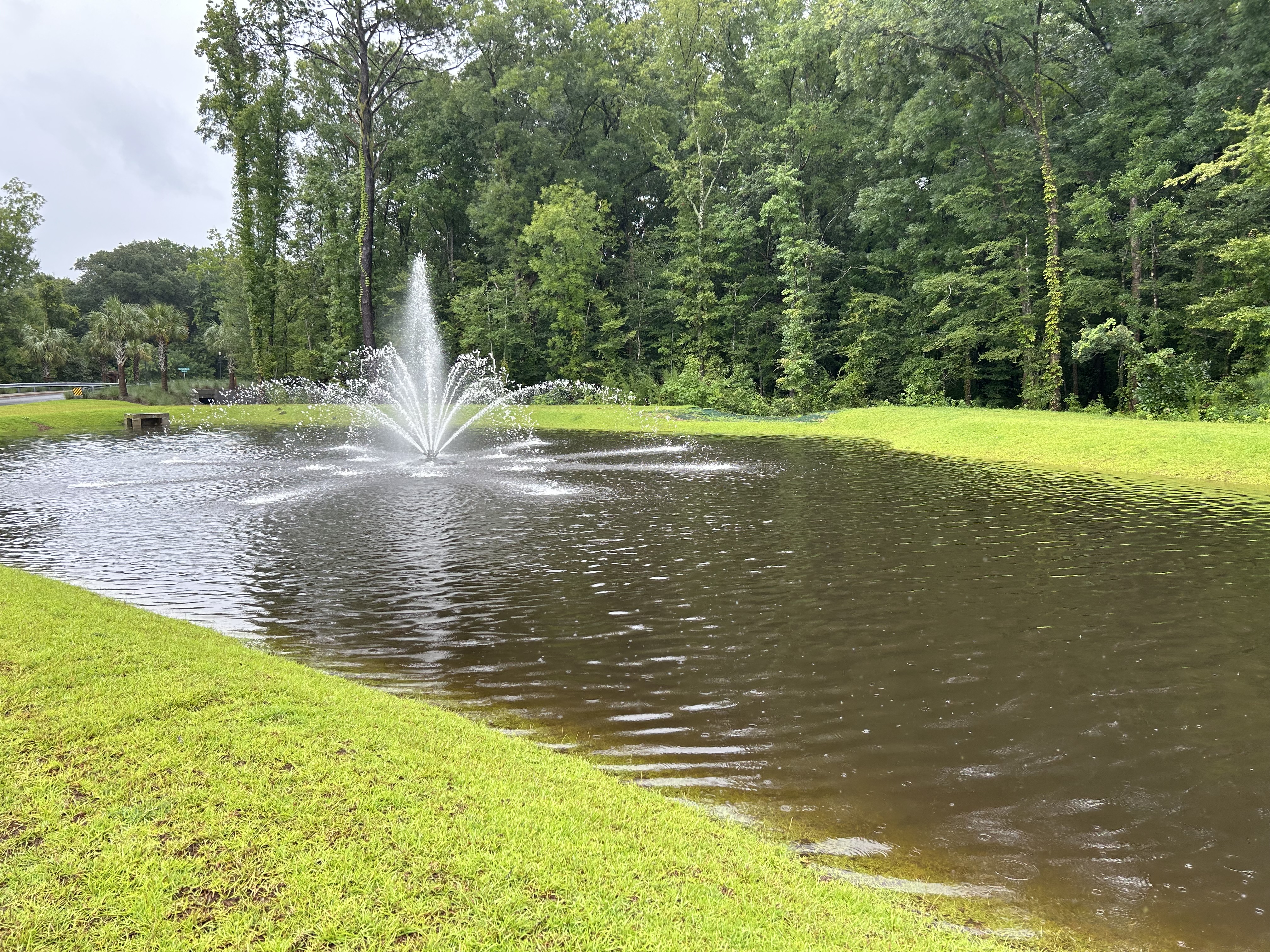
There are two big ponds at the front entrance of this property–the fountains in them are decorative, but the ponds are there to capture rain water. The one on the left is very full–you can see that the drainage platform in the front of the picture is now covered with water. But the steep sides still have a ways to go before overflowing would occur.
**Note that these ponds are also tidal, so at high tide there is much more water. When I went out, it was low tide. ***Many of think that the bigger fish, otters, and alligators travel around via these drainage pipes/platforms and culverts.
Here is the entry pond on the right, and it lies adjacent to the wetland that lies between the property and the road outside the property. That road is much higher than the wetlands that line each side of it–so the road functions kind of like a levee. Drainage culverts run underneath the big road to channel water…elsewhere.
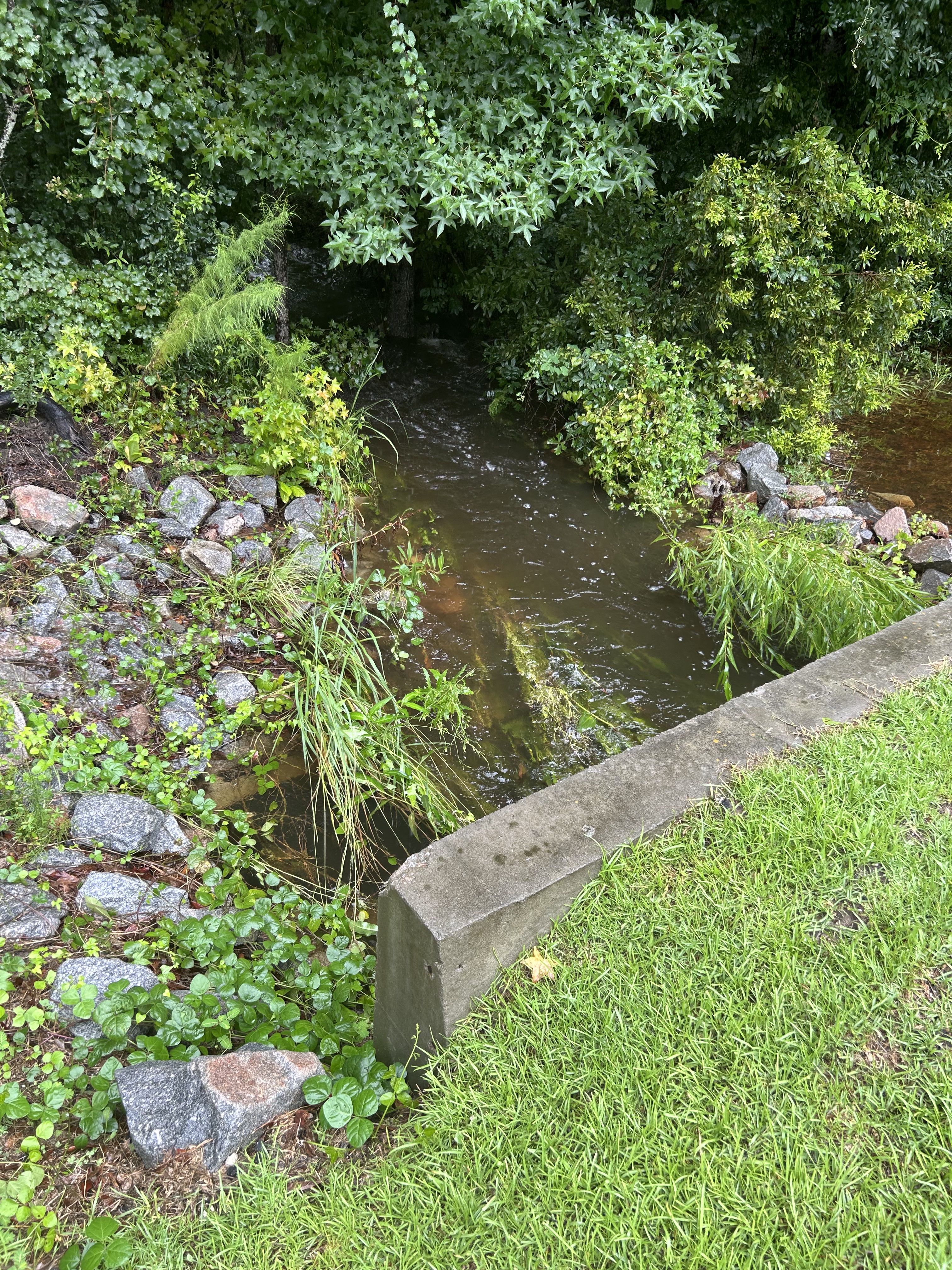
You can see that the wetland is full of water, which is how it functions. On the left is the culvert that runs under our entry road to the wetland on the other side of the entry road.
Out on the big road, there is a big culvert draining water from our property. This big culvert is the tail end of the creek/bioswale that runs through our property. There is a network of other smaller drains all along the road that channel water from the wetlands to the other side of the big road.
Our neighborhood has a LOT of depressions that are “dry” ponds until we have a storm. There are about six or seven of these depressions scattered about the property, and a few hold some amounts of water all the time. This one is by the mail kiosk is usually dry. Now it drains into the creek/bioswale on its far side.
Here is a little video of the creek/bioswale that is worrying my neighbor–from a point where it leaves the property. The head of the creek/bioswale is on the other side of the road where my house is located. You can see where the creek runs under that road.
And here is a video of the head of the creek/bioswale, which has water coming from the wetland that stretches across one side of our property.
Here’s the big back pond, and you can see it has very steep banks, and can take more water. The drainage platform is not covered back here.
***Note that all the ponds are treated by Mt. Pleasant environmental people. They install tiny fish that eat mosquito larvae.
Today we have gotten more rain, but much of Debbie is out to sea right now, where she may get bigger and more organized again. Who knows? The wind has picked up a bit as well, which may move her along up the coast.
In any case, we will not be done with Debby until Friday at the earliest.
…is hanging out over Charleston because she has “nowhere to go” given a weather “high” to the north and northwest that keeps her stationary–and will keep her stationary for some days to come unless some wind develops to move her up the coast.
Meanwhile, while I’m writing, torrents of rain are falling as the bands swirl around over us.
Saturday night we had a thunderstorm that dropped 1.75 inches of rain. Since then the rain gauge has shown 8 inches of water–but it overflowed last night, so there was more. And now there is steady rain, which is often heavy.
A tornado touched down on Isle of Palms last night–where both of my sons live. It damaged a house and took out power lines, so one son does not have electricity at the moment. The electric company has promised to return power very soon now.
The other son and DIL are driving back from the Jersey shore (3 girls) and are about 5 hours out now. Right now they can get back to their house on IOP and they do have electricity. Flooding in this stationary storm is a big issue. If they can’t get home due to today’s rain, they will stay with me.
I took out all the saved chicken bones in the freezer on Sunday and made a huge broth–the packets of bones were taking up way too much room in my small freezer, so it was time.
When the broth cooled, I drained off the liquid and put it in the refrigerator. Yesterday I made the soup–and the broth had jelled so beautifully into consommé. The soup is DELICIOUS! So I’m ready if my son’s family comes here–and if not, I have food so I can “play.”
My noon dinner today–eaten inside, of course. All the porch cushions are inside the house to keep them dry.
Here’s the design wall right now: there are THREE projects on it. How fun is that?
On the left is the snuggly scrappy leader/ender quilt–it will get wider and one more row longer when I finish the 4th row of Prickly Pear on the right. The third row will be done today. Making the triangle rings takes time and I need 16 more.
On the bottom, I’m playing with “modern” Churn Dash blocks and the new Cat’s Claw ruler that came in the mail. These 2 blocks are 12 inches. I love playing, and goal is to see how I can make “modern” alterations to the Churn Dash block. It’s a challenge…from the modern group. And I have no idea where it is going.
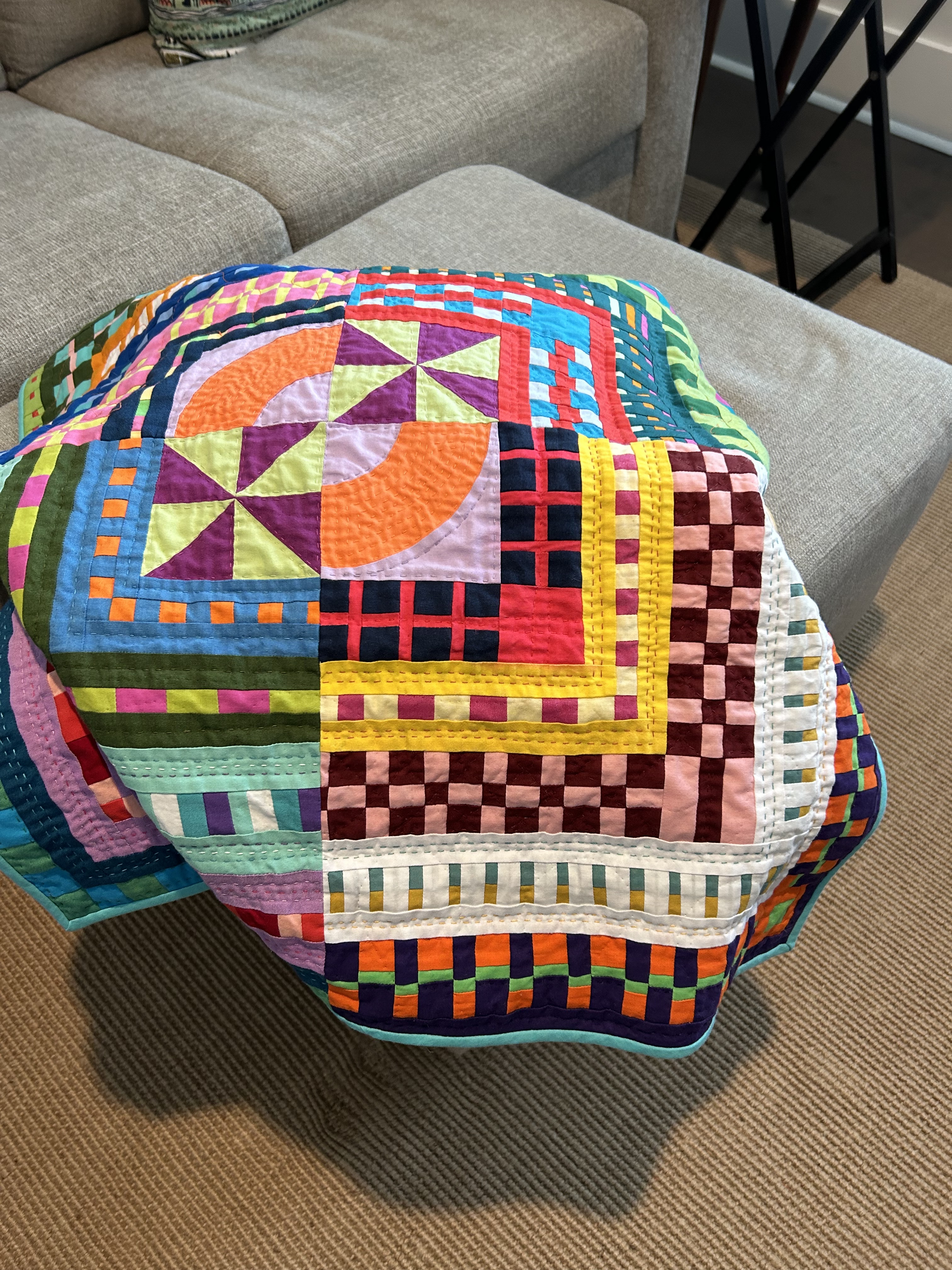
And the hand-sewing (Big Stitch) project is coming along. It will be a wall hanging upstairs–it’s 32 inches square. Cathy Beemer taught us this Maria Shell method in our modern group’s monthly Sit and Sew. She made a whole quilt of these blocks with four quadrants, and I am in awe of that effort.
Now it is almost 1 pm. There are 3 more inches of water in the rain gauge. Folks here are worrying about the dry ponds filling up now, and the creek is about to overflow, which would impact my back door neighbor. Low tide is coming up, but the overflow water just does not have a place to go.
If the lull persists, when I’m done with lunch I’m going to take out my hearing aids, wrap up in my raincoat, and go out for some pictures.
That would be learned behavior from my father… He always wanted to investigate how deep the snow had gotten, or how high the tides were, and so on. And he always took us with him when he went out into the elements.
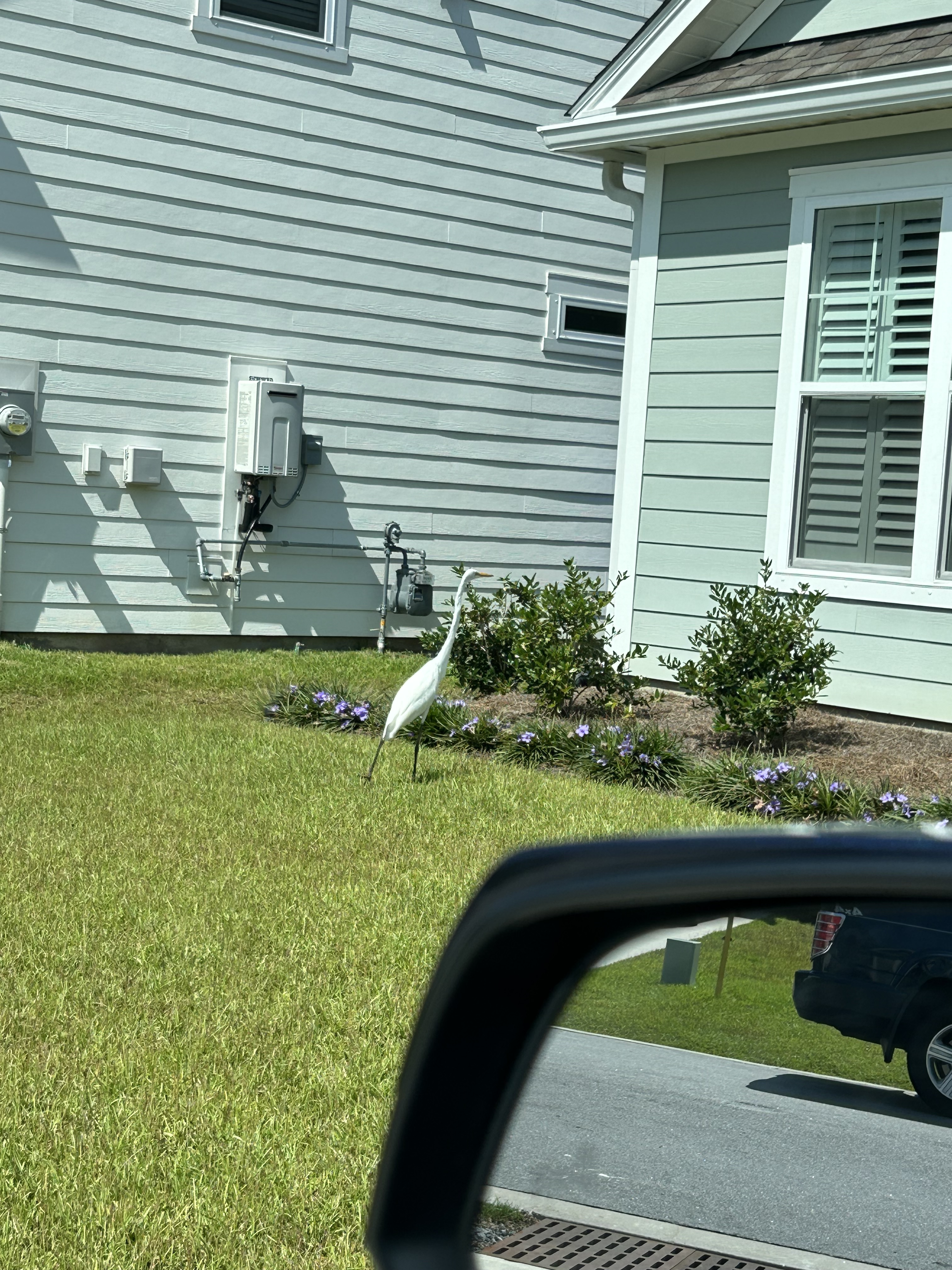
Look what was in my front yard when I came home from an errand yesterday. One of the Great White Egrets that are very common here. Note the short yellow bill, black legs, the long flexible neck, and the height.
S/he didn’t spook when I opened the window to get a better picture.
A quilty friend who came to visit told me that this bird, which was slowly walking around all the house gardens near me, was hunting for the little green anole lizards that also live here. A bit of research shows these birds (who are predominantly waders but who will come onto land for food) eat an array of critters, including “amphibians, reptiles, birds, and small mammals, as well as invertebrates including crayfish, shrimp, dragonflies, and grasshoppers.”
Amphibians…that means the green tree/rain frogs that have grown over the year from being the size of a fingernail to being about four inches. They “perch” on our houses and poop everywhere, and the poop is sticky and hard to clean. BUT, they eat insects, so are a valuable part of a balanced garden environment.














 Louisa Enright's Blog