What on Earth?

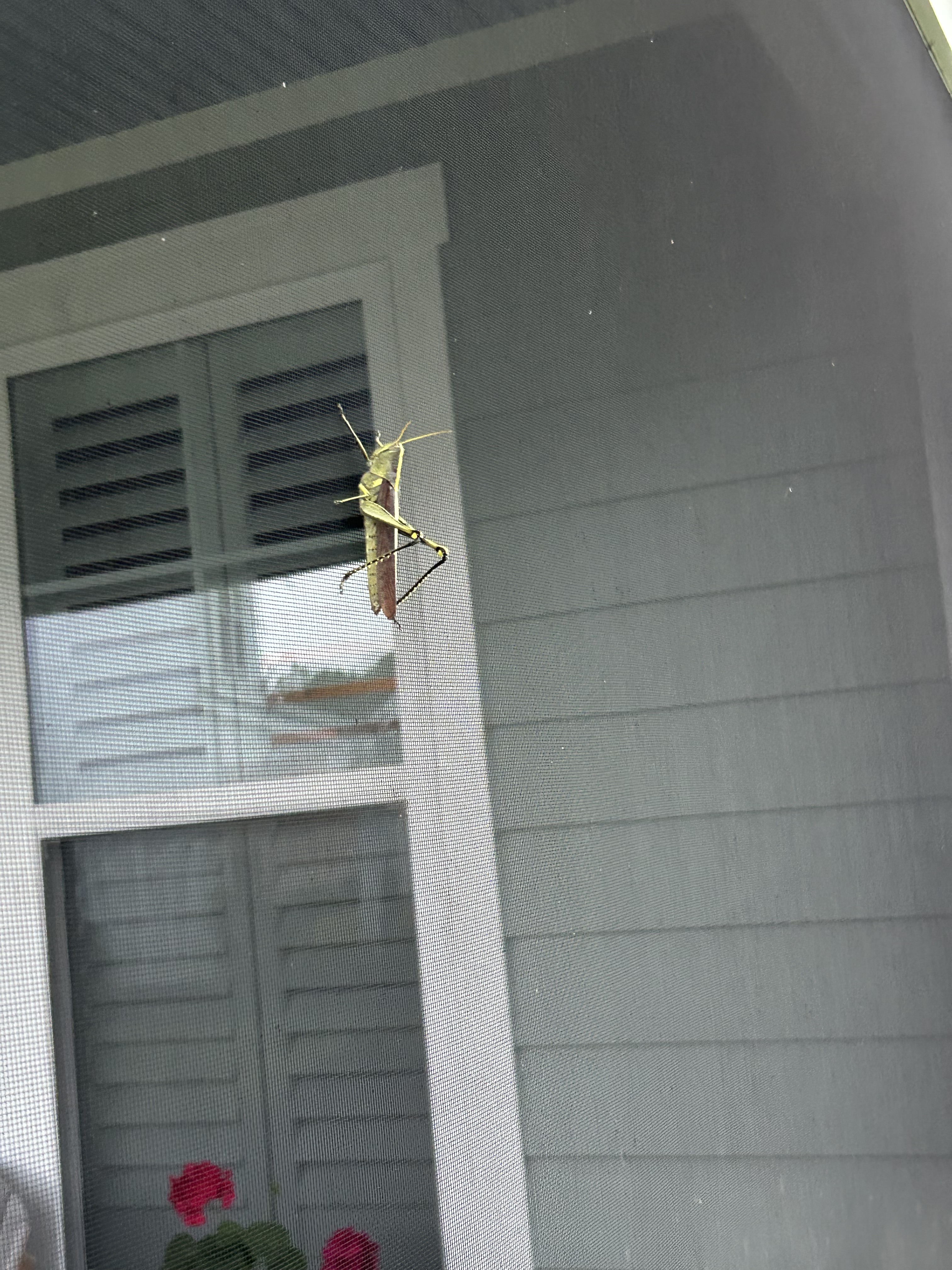
Last Tuesday late afternoon we were about to get another thunderstorm, and I went out to move a plant on the screened back porch and saw a HUGE insect on the outside of a screen. What on earth?

All of you who follow this blog know that I had to immediately figure out that insect.

I’ve never seen a grasshopper like this HUGE creature. S/he is almost 3 inches long! With lightening from the storm already starting, I had to go outside to get pictures.

What on earth kind of grasshopper is this one?

Look at the gorgeous markings too. Huge back legs…

It’s an Eastern Lubber Grasshopper. What does “lubber” mean? Here’s a quote from the information link below:

Lubber” is derived from an old English word “lobre” which means lazy or clumsy. This term has come to mean a big, clumsy, and stupid person, also known as a lout or lummox. In modern times, it is normally used only by seafarers, who term novices “landlubbers”. 

Here’s a stock photo I found that shows the size of this huge creature in a human hand.

But don’t try to pick them up as one will spray a noxious toxic mixture at you–which is why it has few predators.

It can’t fly, so it lumbers along walking.

What kind of damage? Here’s a quote for the informational link below:

“Lubber grasshoppers are defoliators, consuming the leaf tissue of numerous plants. They climb readily, and because they are gregarious they can completely strip foliage from plants. More commonly, however, they will eat irregular holes in vegetation and then move on to another leaf or plant. Lubber grasshoppers are not as damaging as their size might suggest; they consume less food than smaller grasshoppers (Griffiths and Thompson 1952). Damage is commonly associated with areas that support weeds or semi-aquatic plants such as irrigation and drainage ditches, end edges of ponds. Grasshoppers developing initially in such areas will disperse to crops and residential areas, where they cause damage. Thus, as is the case with many grasshoppers, monitoring and treatment of areas where nymphal development occurs is recommended to prevent damage to economically important plants. Also helpful is to keep vegetation mowed, as short vegetation is less supportive of grasshoppers.”

https://entnemdept.ufl.edu/creatures/orn/lubber.htm#:~:text=The%20eastern%20lubber%20grasshopper%20is,central%20Texas%20(Capinera%20et%20al.

We got 6 inches of rain Monday night and 3.5 inches in the late afternoon storm Tuesday. The grass and plants outside are now happy. But the ants aren’t, and that is another story to tell as they are coming inside my house.

PS: It’s Saturday morning now, and the grasshopper comes and goes on my back porch screen. Likely s/he came from the bio swale/stream that runs through our neighborhood or the wetlands above it. I don’t see any apparent damage to the roses though.

Color Catchers

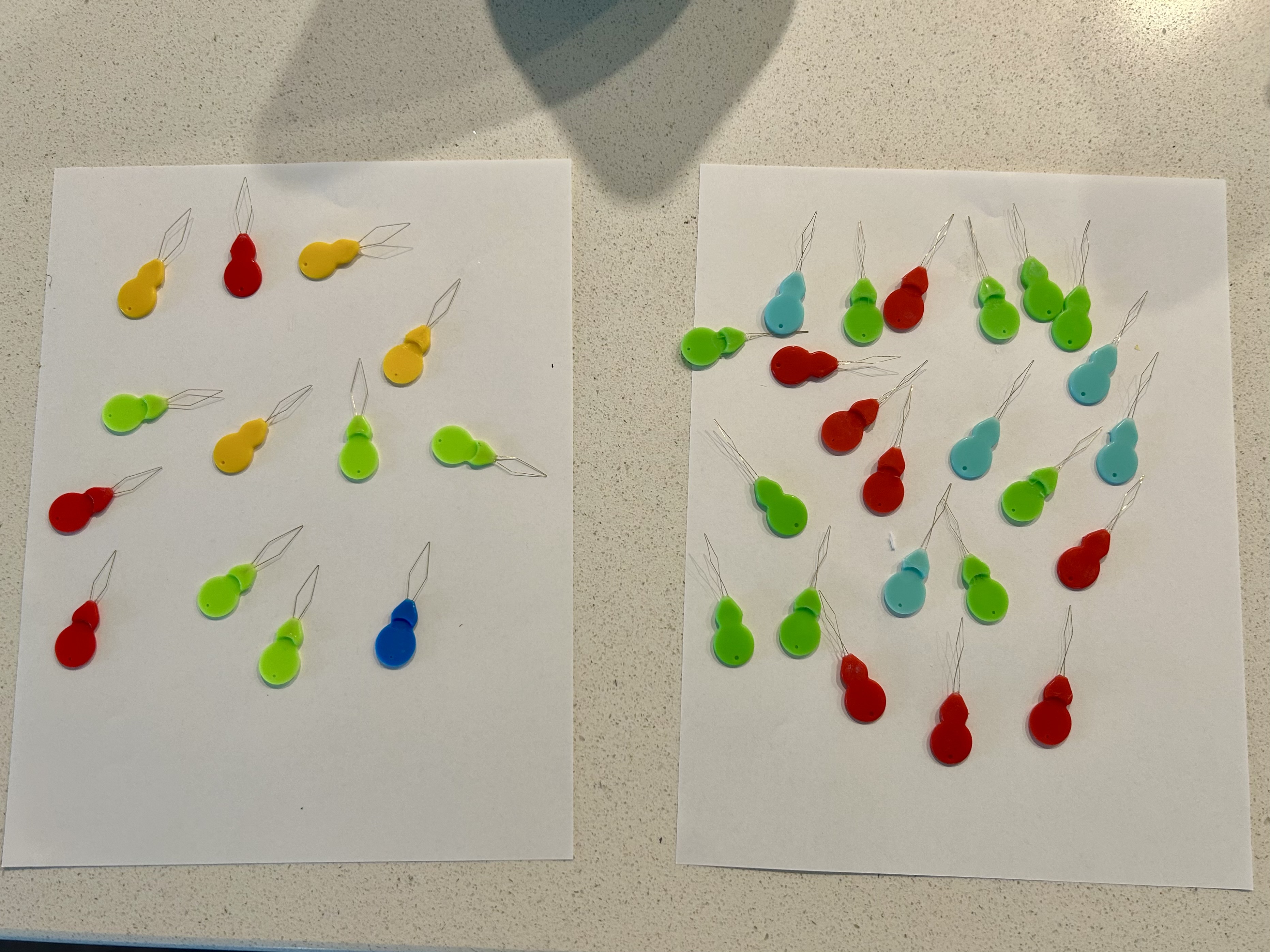
When I washed the finished quilt “Happy,” which had been dragged around for six years while being made, I put in 6 color catcher cloths–even though all the fabrics were washed when they came into the house.

Hmmm….

Enough said, right?

But, maybe I’ll add that I also washed another quilt, I also added color catchers to the wash.

And…hmmmm…

The reds did run a bit.

I’ll always use them for a quilt now…

A Katydid

I saw an insect I didn’t know the other day on the red roses.

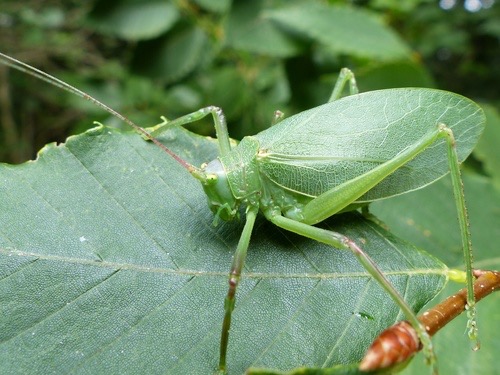
It was about 1/2 to 3/4- inch long, the color of a green apple, and had the longest front antennas I’ve ever seen. The antennas had to be over an inch long, seemed to be iridescent, and had tiny alternating bars of darker/lighter colors.

It didn’t take long to figure out what it was: a katydid, also known as a “bush cricket” in some places. It’s kin to grasshoppers too. It’s a jumper, with big hind legs. Yes, she/he jumped immediately when it saw me looking. And it did look like “a walking green leaf”–the description I found along the identification way.

Katydids are not worrisome pests in a garden as they only eat a tiny part of upper leaves on shrubs and trees. They are prey for a lot of other insects and birds. There are many types of katydids across the world, some do eat other insects and some can be much bigger. But the one I saw is common in tropical/warm climates like the southern United States.

Here’s an image I found:

I mentioned seeing a katydid in my roses to a neighbor, and he laughed and said, “What! You’ve never seen one? We used to try to catch them.”

If I had seen one as a child at my grandparents’ house in Georgia–and there was a big garden–I have no memory of it. Hummingbirds, yes, but not katydids.

The night-time calls from Katydids are VERY loud apparently–and their calls are very distinctive. They make the call by rubbing their wings together. (There is a link below where you can hear them–and I’m now wondering if part of what we have all been calling “frogs” is at least partly Katydids.

Here’s more info:

https://biokids.umich.edu/critters/Tettigoniidae/

For sound:

AND, note there are LOTS of poems that include katydids, which you can find on poetrysoup.com

https://www.poetrysoup.com/famous/poem/a_summer_afternoon_18901#google_vignette

A Summer Afternoon

by James Whitcomb Riley

 A languid atmosphere, a lazy breeze,
With labored respiration, moves the wheat
From distant reaches, till the golden seas
Break in crisp whispers at my feet.
My book, neglected of an idle mind, Hides for a moment from the eyes of men; Or lightly opened by a critic wind, Affrightedly reviews itself again.
Off through the haze that dances in the shine The warm sun showers in the open glade, The forest lies, a silhouette design Dimmed through and through with shade.
A dreamy day; and tranquilly I lie At anchor from all storms of mental strain; With absent vision, gazing at the sky, "Like one that hears it rain.
" The Katydid, so boisterous last night, Clinging, inverted, in uneasy poise, Beneath a wheat-blade, has forgotten quite If "Katy DID or DIDN'T" make a noise.
The twitter, sometimes, of a wayward bird That checks the song abruptly at the sound, And mildly, chiding echoes that have stirred, Sink into silence, all the more profound.
And drowsily I hear the plaintive strain Of some poor dove .
.
.
Why, I can scarcely keep My heavy eyelids--there it is again-- "Coo-coo!"--I mustn't--"Coo-coo!"--fall asleep!

Bits and Pieces, Sunday, July 30, 2024

The palm trees are “blooming” now. I still find their “flower” fascinating.

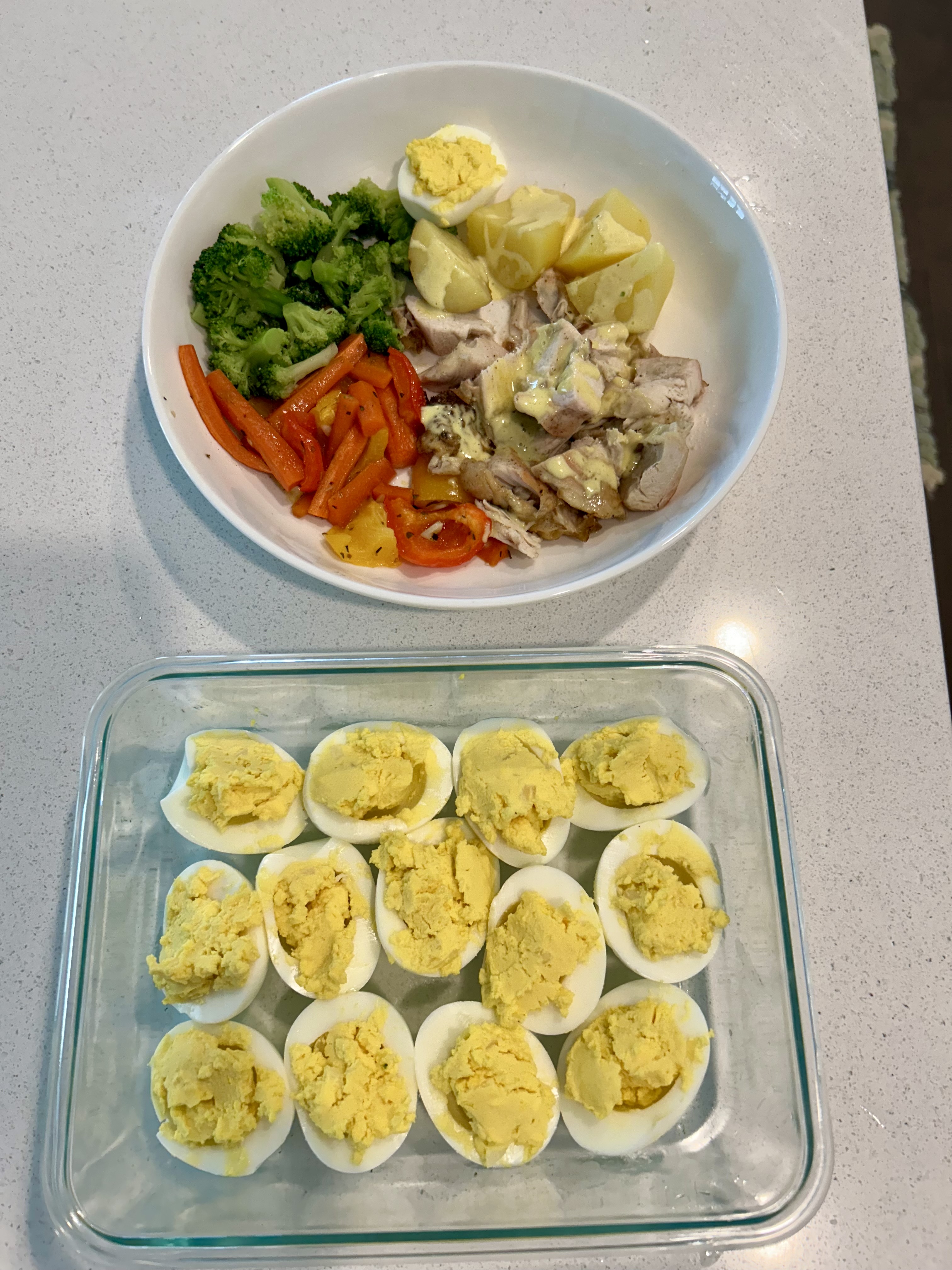
I have been so hungry for deviled eggs for days now. And I realized that I would be fine making some with my local eggs (Chucktown Acres) that don’t have corn or soy in their feed, with homemade mayo with a tiny bit of plain mustard that uses white vinegar for the needed acid to make it jell, some finely chopped sweet onion, and, of course, organic olive oil and salt. I wanted these eggs to be plain, so I didn’t add any herbs to my mayo this time.

It didn’t take but a minute–as cooking the eggs is quick and making mayo is even quicker and easier, and now I have some to drizzle over salads and other things in my bowls, like the chicken and potatoes below. I can’t use cayenne pepper to decorate, but my deviled eggs are DELICIOUS. They really hit that hunger spot I had.

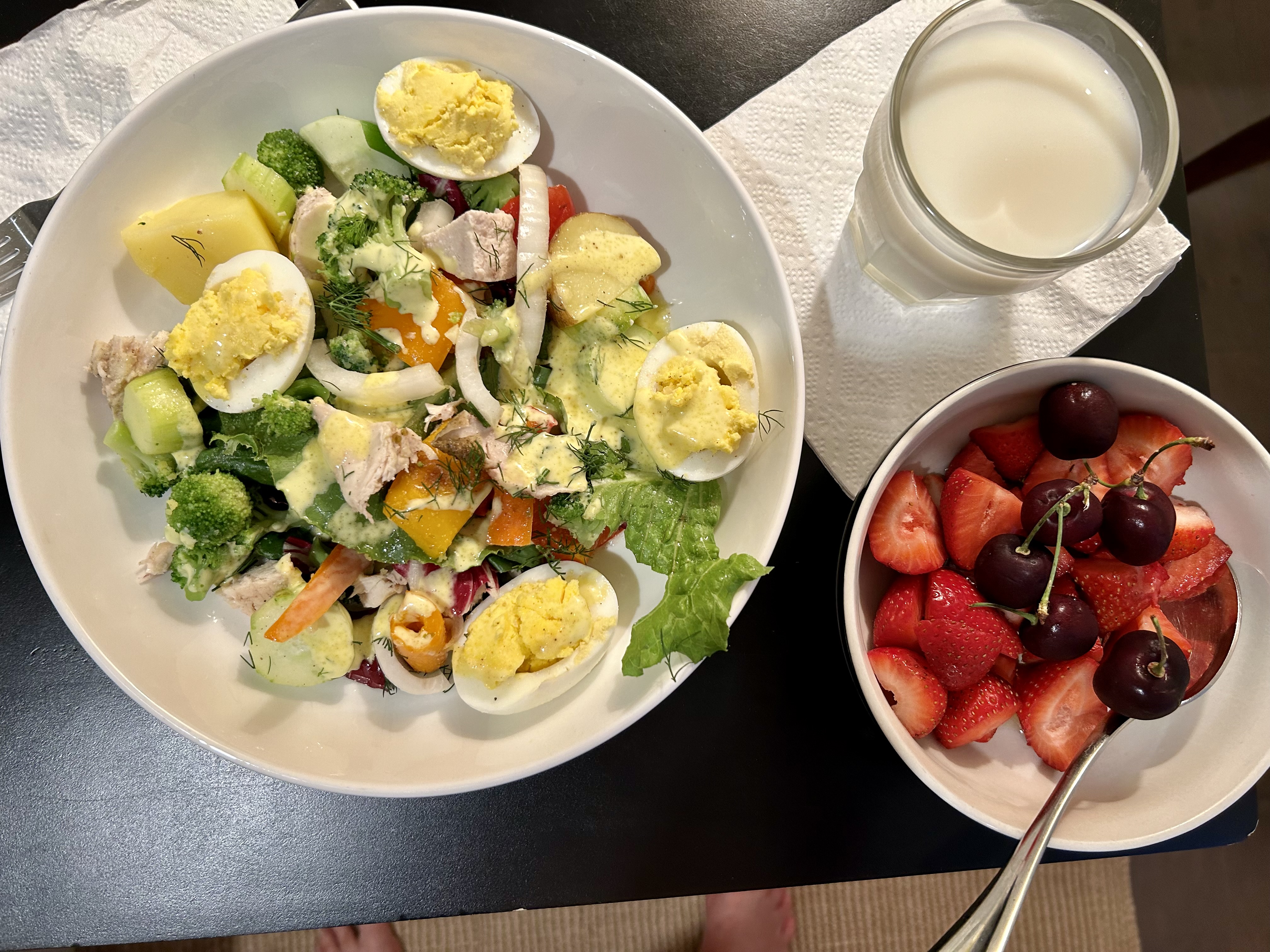
Here’s my dinner salad last night. I had made a big bowl of salad with the last of the roasted chicken, so I just took half of it for my supper and added the eggs.

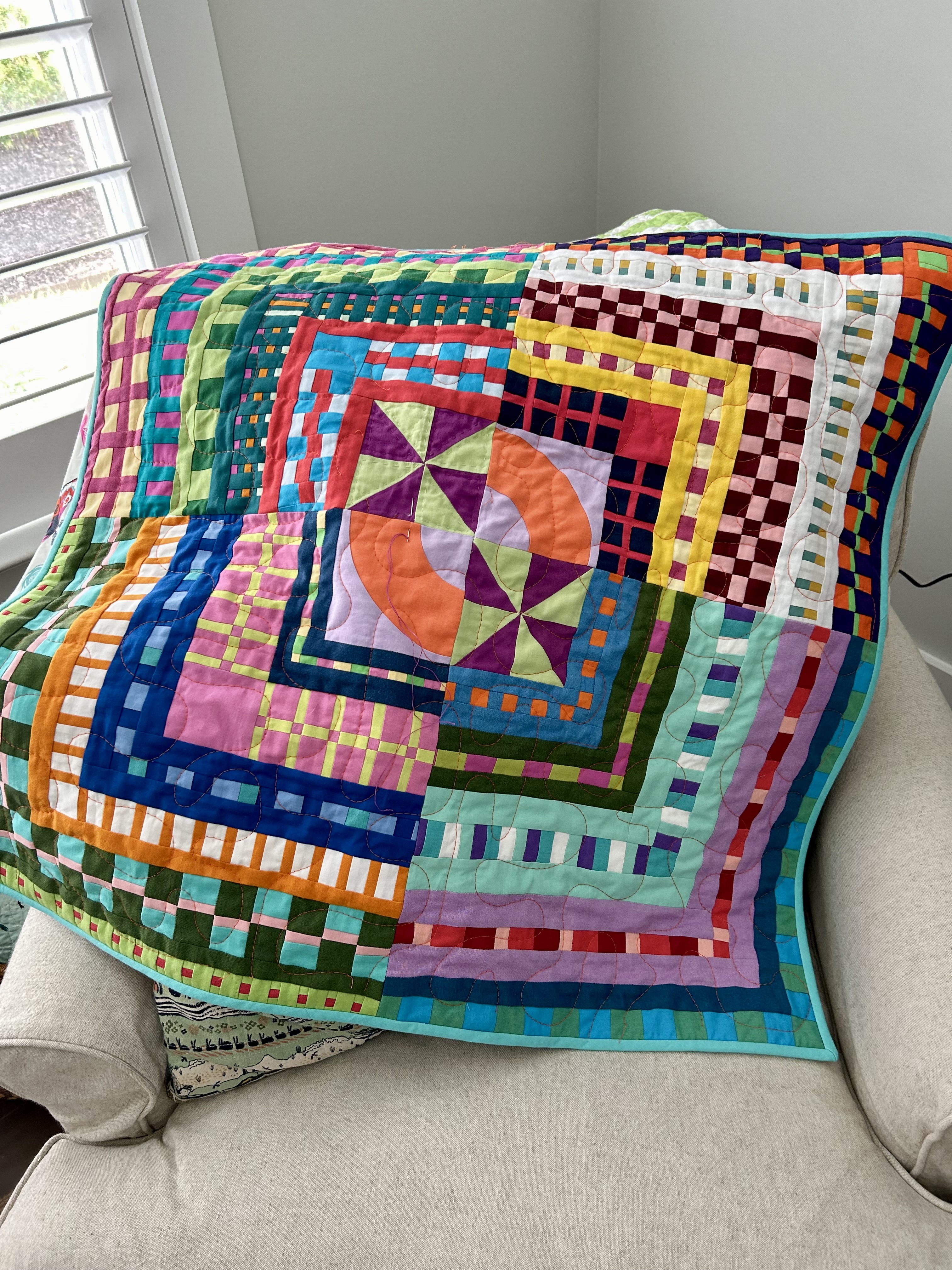
I washed my improv quilt. It has a coral backing that ran when I washed it, so I was nervous about washing this quilt as there are so many light colors on the front. But so many of these fun blocks used glue, so I needed to wash it out. I put 6 color catchers in the wash and crossed my fingers (and toes) as I so love this quilt. She came out beautifully from the dryer, and now is all crinkly and cute.

Right now she is living on a chair in my tv/reading/hand-sewing little room. With different folds, different parts of the quilt show on the chair. Right now it’s the red “wheels” block. (Tara Faughnan is going to do this “block” class again starting in September. If you are interested, go to her web site and sign up for her newsletter.)

So, improv blocks joins “Happy,” where I am working on the final hand quilting of the border. See the big pillow–I found it at Costco the other day so I don’t have to use one of the couch pillows I made to get a hand project up and out of my lap, which is too low for easy hand work. I’ve not had any issues with my neck or shoulders once I adopted this pillow practice a few years back, and as you know, I do a lot of hand work. (The loose orange threads you see are from the longarm basting I did to hold the layers together.)

In line, waiting for its turn, is this recent project which is set up to be a wall hanging and is yet unnamed. You can see the orange machine basting threads, which I will remove as I work.

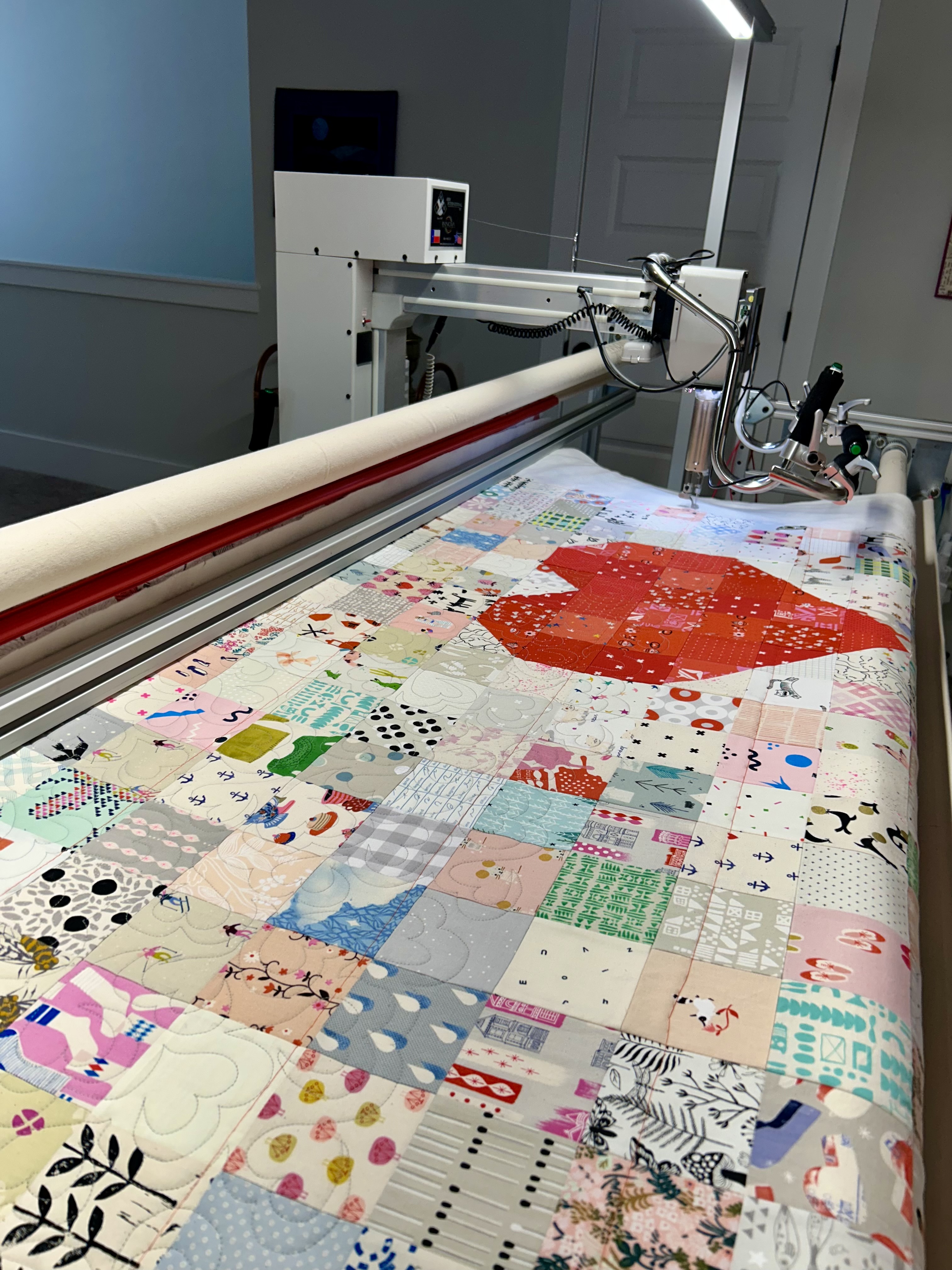
“Pieces of My Heart” (the neutral) is on the longarm. The colored version with the light heart is growing on the design wall, and I’ve been making parts for the “Prickly Pear” quilt designed by Annabelle Wrigley and using her solid fabrics.

This double heart pantograph is new for me, and I’ll use it on both of these “heart” quilts. I am using a soft grey here as it was better for the backing than a neutral thread. There are enough darker “neutral” blocks here to make the light grey work well.

Enjoy your Sunday!

What Is This HUGE Wasp/Hornet?

It’s the biggest darn flying wasp-like critter I’ve ever seen. Some are close to almost 2 inches long. And they have set up shop in my red roses.

It took me some time the other morning to get some pictures–without risking being stung–and some time researching with pictures to figure this one out as there are other similar insects out there. One is now moving into South Carolina, and it is a problem.

It’s a Cicada Killer Wasp. And they are not true wasps or hornets as they don’t bite or sting.

Yes, the females are up to 1 1/2 to 1 3/4 inches long. The males are smaller, but are very active as they are “guarding” the underground nest the female digs for her eggs. Males aggressively patrolling a nest location can be scary if you don’t know anything about these highly colored insects and encounter one. All one sees is the size and the waspy colors.

This picture is of the smaller male on guard. He’s very active so it took me some time to get a resting picture.

Here you can see the distinctive yellow dot on the front of the face–and the dull red markings around the head and on the legs. There are three yellow bands on the lower body, on the upper part. The rest is black. The wings are stationary and lie flat when at rest.

The HUGE females are much harder to capture with my camera. She has what looks like a stinger protruding from her rear, but it is used to sting her only prey, a cicada that she ceaselessly hunts down as she uses it for food for her eggs. If one tries to capture her and brushes the stinger, it can leave a very mild sting, but that’s all. Research says that the sting is less than that of a mosquito bite. Mostly these insects eat sap and nectar.

Here’s a quote from the informative link below:

“Female adults often dig their tunnels in a backyard sandbox, a sand trap on the golf course or in a nice sandy picnic area outdoors. Lawns, gardens, flower beds and athletic fields are other preferred nesting sites. They excavate noticeable amounts of soil around their tunnel entrances and create unsightly mounds. Large soil particles are removed with mouth parts and then shoveled through their legs in a dog-like manner.”

I now remember that I saw these piles of dirt obviously excavated from my rose garden beds last year. At the time I was puzzled by what dug out the dirt. A frog maybe, I thought? I just put the dirt back with my trowel and called it a day.

But…

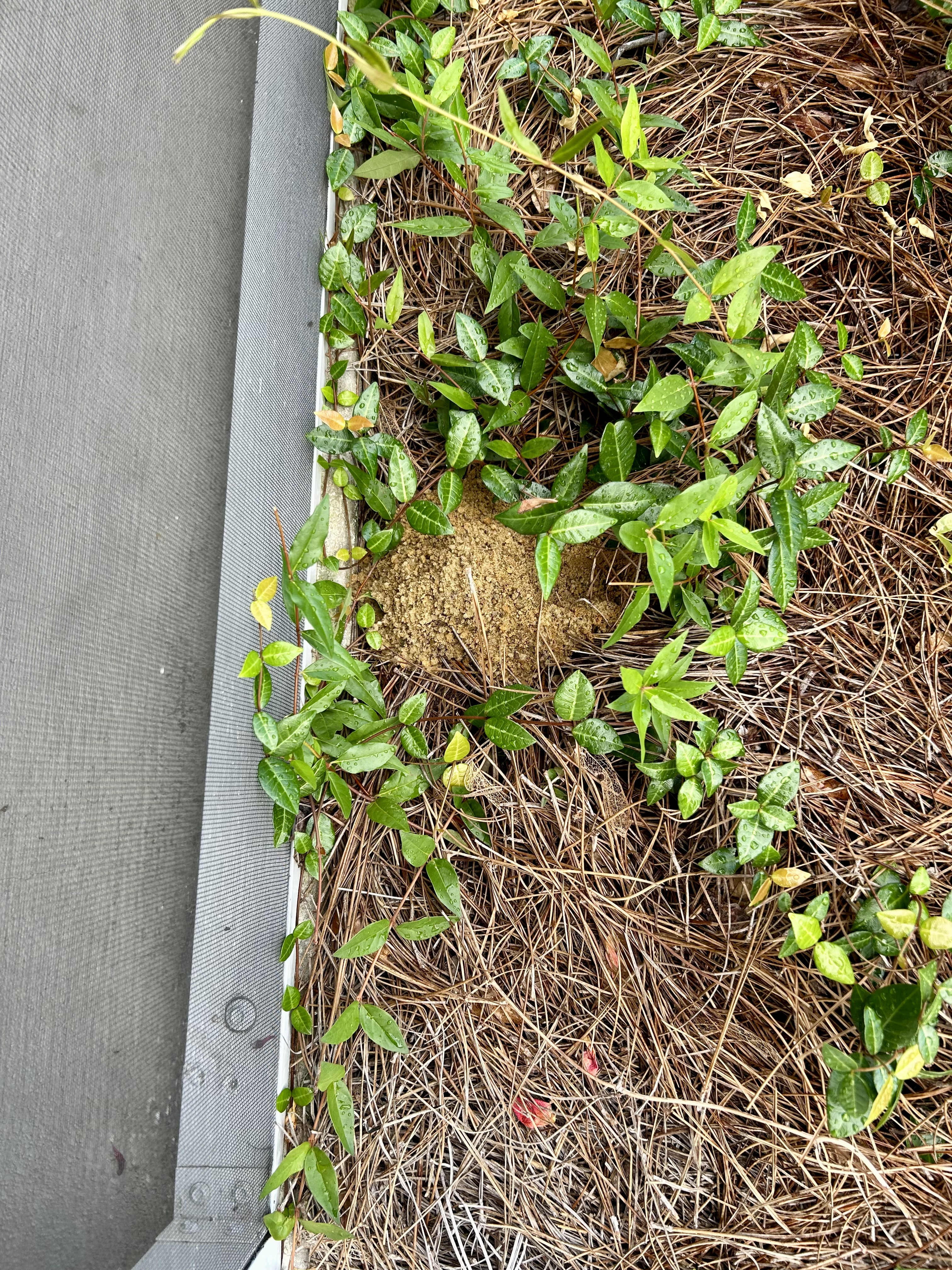
Here’s one of the dirt piles I found this morning–and look how well the Asian Jasmine (which is not a jasmine) ground cover is spreading now. That is a LOT of dirt for an insect to remove with her mouth and shovel backward with her legs.

The adults only fly around for about 2 months, and now that I know what they are, I’ve enjoyed watching their antics in my roses. I’m not worried about having them around. At the very least, their tunnels and underground nests will aerate my very very poor soil.

Please don’t kill these harmless creatures. Instead, enjoy the show and the other benefits they provide. You can’t miss them. They are HUGE.

https://njaes.rutgers.edu/fs040/#:~:text=Cicada%20Killer%20Wasps%20have%20a,the%20rear%20section%20(abdomen)

Bits and Pieces, June 25, 2024

Hello readers,

Where does the time fly to? It’s almost July.

We got rain last night–and a lot of thunder and lightening, so I have not had to use my new little water sprinklers yet. The rain gauge had 1 inch of water in it this morning. Yeah!

I’ve been sewing steadily in the afternoons, and I make myself quit at 7 pm to walk. Yesterday was very humid, but a nice breeze developed in the early evening so the walking wasn’t too bad. It was hot yesterday, but it is summer. We got spoiled with our coolish weather these past weeks.

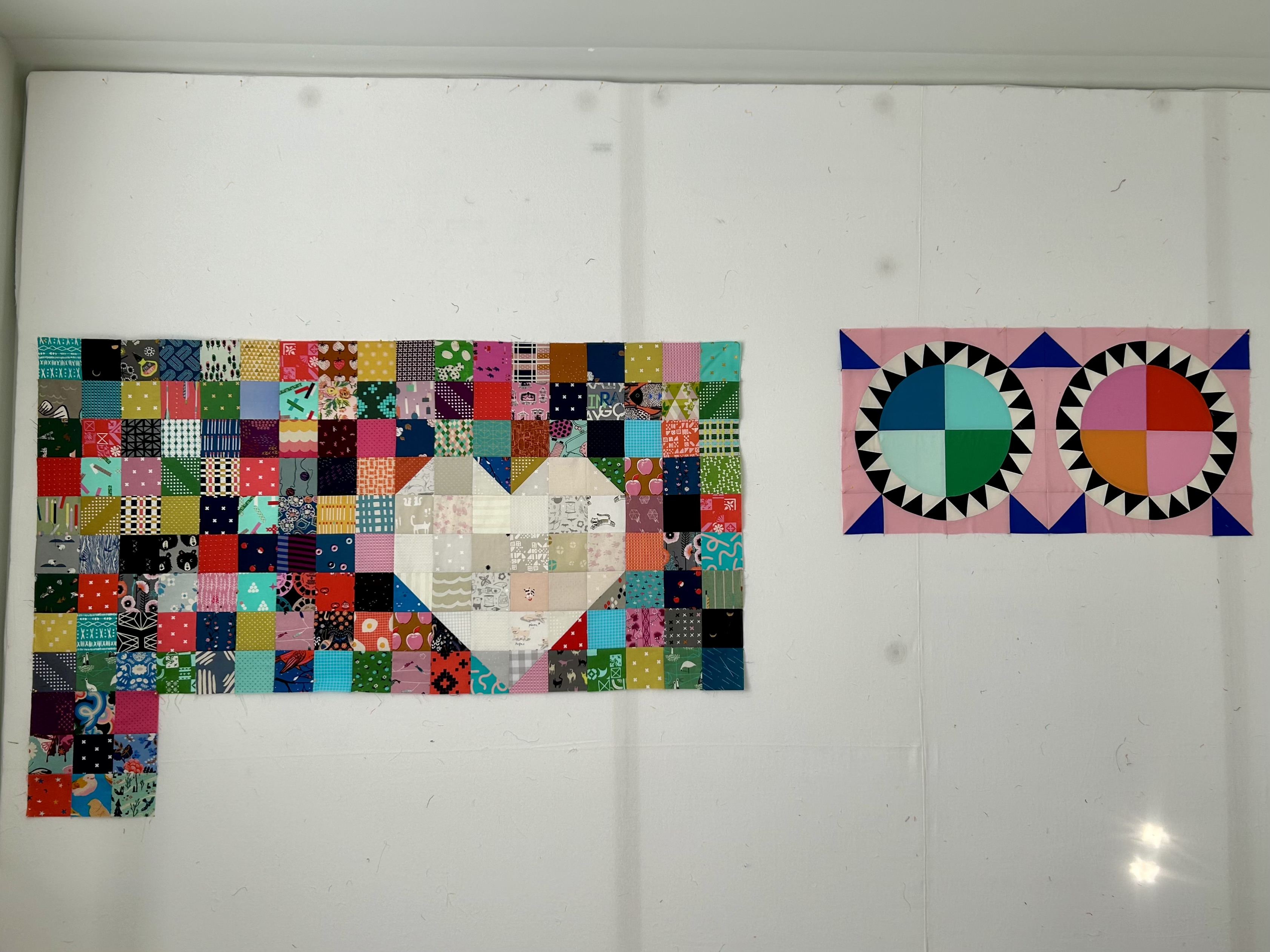
Here’s the design wall right now:

Yes, using the colored 3 1/2-inch squares of Cotton+Steel (original designers)/Ruby Star Society and making the star from neutrals is working out nicely. The neutral version with the red heart is ready for the longarm, with batting cut and backing panels cut, but the panels need to be lined up and joined–not to mention ironed.

Annabelle Wrigley’s “Prickly Pear” block from season 4 of The Color Collective, made with her fabrics, is a challenging block. Those two blocks (16 inches each finished) will repeat to make 4 across and 4 rows or 64 inches square. There are so many creative ways to organize how to lay out these blocks, but I’m going just plain.

The bright blue triangles on the background are creatively organized as well, which is bending my mind as when the spatial genes were passed out, I didn’t get any. Right now the most frustrating part is how to press each block. I ordered more fabric yesterday as I was lacking enough fabric for the curved triangle pieces and the field fabric to make the whole quilt. And I added a bit more of the blue just in case.

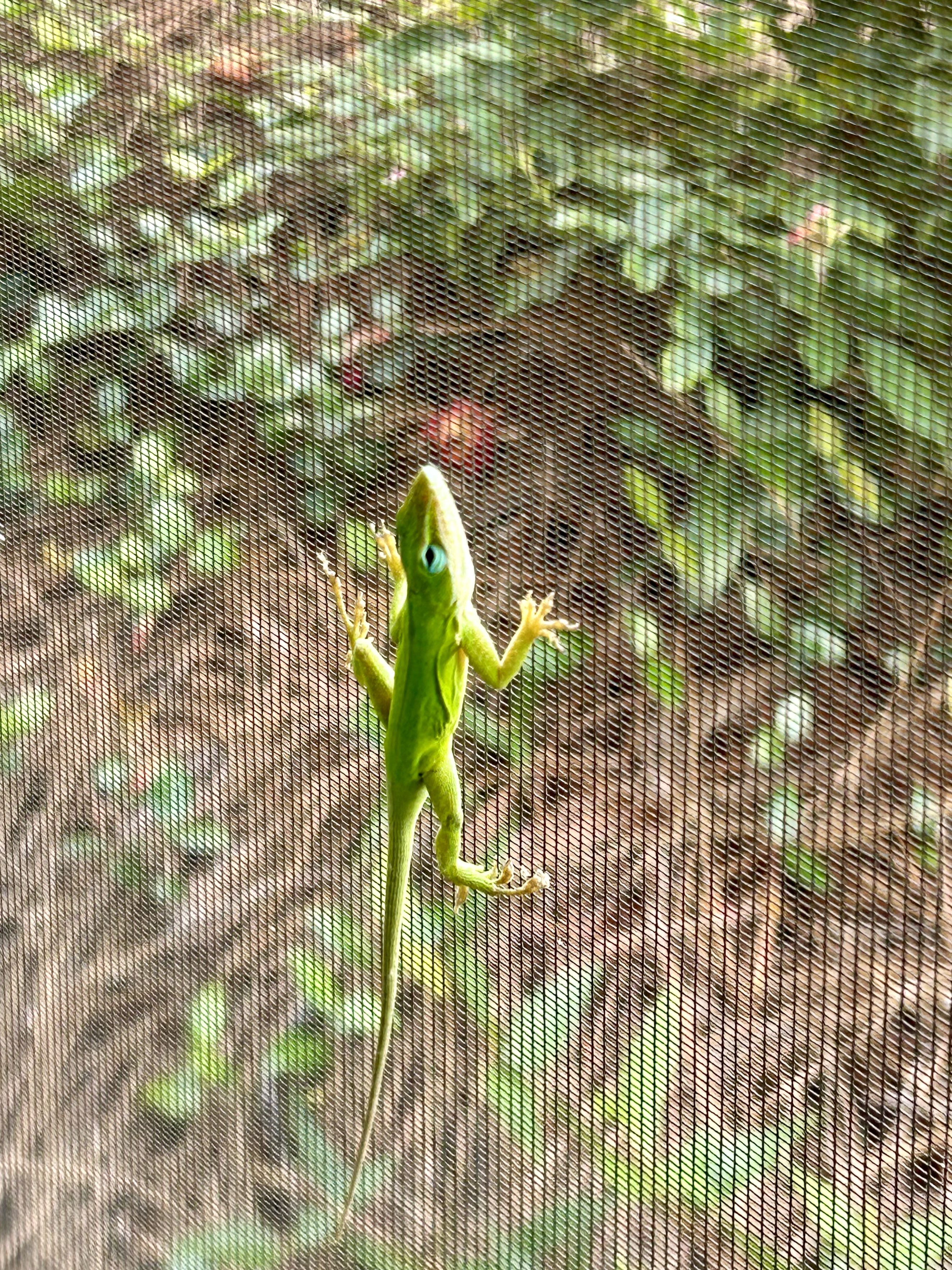
I had a visitor on the porch the other day: an Anole lizard, which is very common here. I’ve always loved this little lizard.

This creature can be tamed if captured apparently. I tried once as a young mother with children, but that anole didn’t like being captured. This lizard is also an insect eating machine, so I’ll happily leave him/her in the wild. This one can also change its colors from shades of brown to green. How fun is that? It isn’t camouflage though, just a mood thing.

Here’s a really fun link to more info about this cute lizard, with good pics that illustrate much about it. The pic of how a male blows out the bright orange pouch under its throat is especially interesting. I have seen one do that.

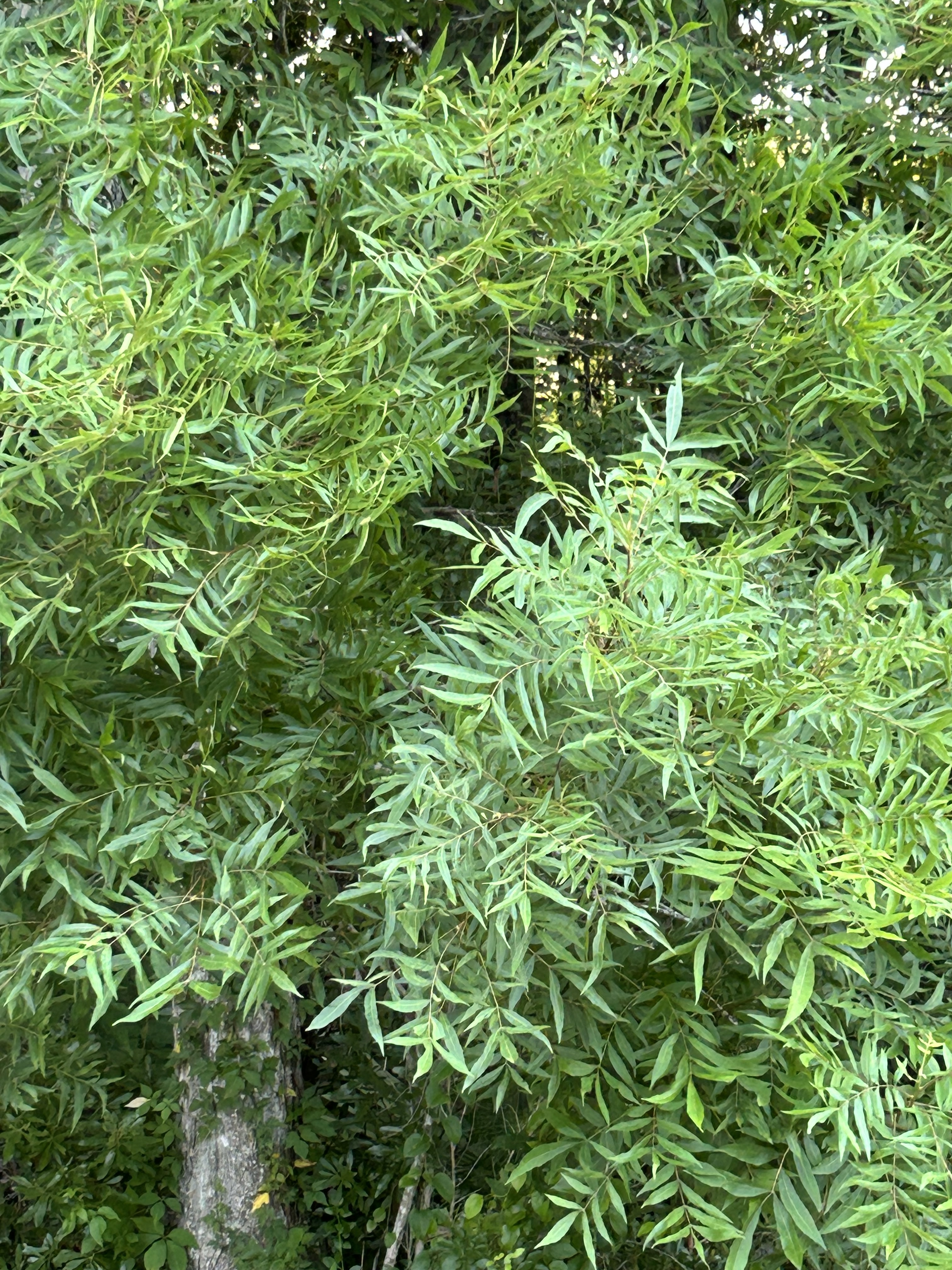
I passed this tree on a recent walk and did not recognize what it was. It was tall, with beautiful foliage. The closest I could come with on my phone app was that it was a water hickory, which is in the walnut family of trees. The other guess was a pecan, but I know those trees and this wasn’t one I’m pretty sure. Also it was in the wetland on the side of my path.

https://plants.ces.ncsu.edu/plants/carya-aquatica/

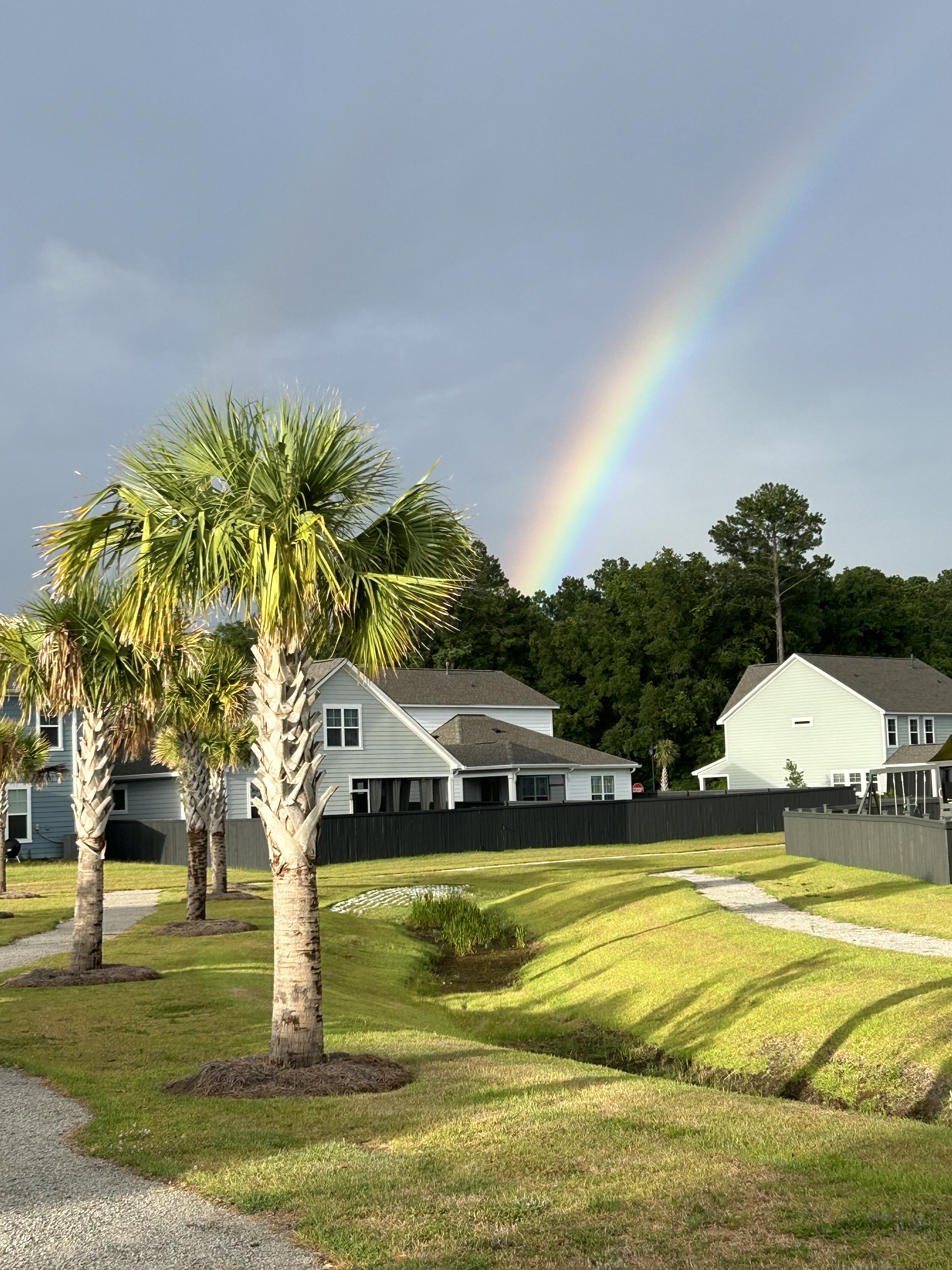
We were treated to a rainbow a few days back, but didn’t really get any rain from all the swirling clouds. Just a sprinkle for a bit.

The ditch is the intermittent stream that runs from the nearby wetland; it runs through our property. The mail kiosk is on the left of this picture.

OK folks, it’s time to get about the day. I dug out the big Lantana on the side of the house that wanted to be a tree yesterday and am replanting with two cone flowers (echinacea) and a yellow daisy (rudbeckia) I lucked into at Home Depot yesterday. (I did check with a local nursery before buying at Home Depot.) The roots from the Lantana had already reached a long way in all directions!!

An Adventure, With Scissors and Knives

Last week, I met Ken Woodley, owner of Steel on Stone Sharpening, after making an appointment with him and letting Waze take me to his shop in a little town west of me, off of highway 26.

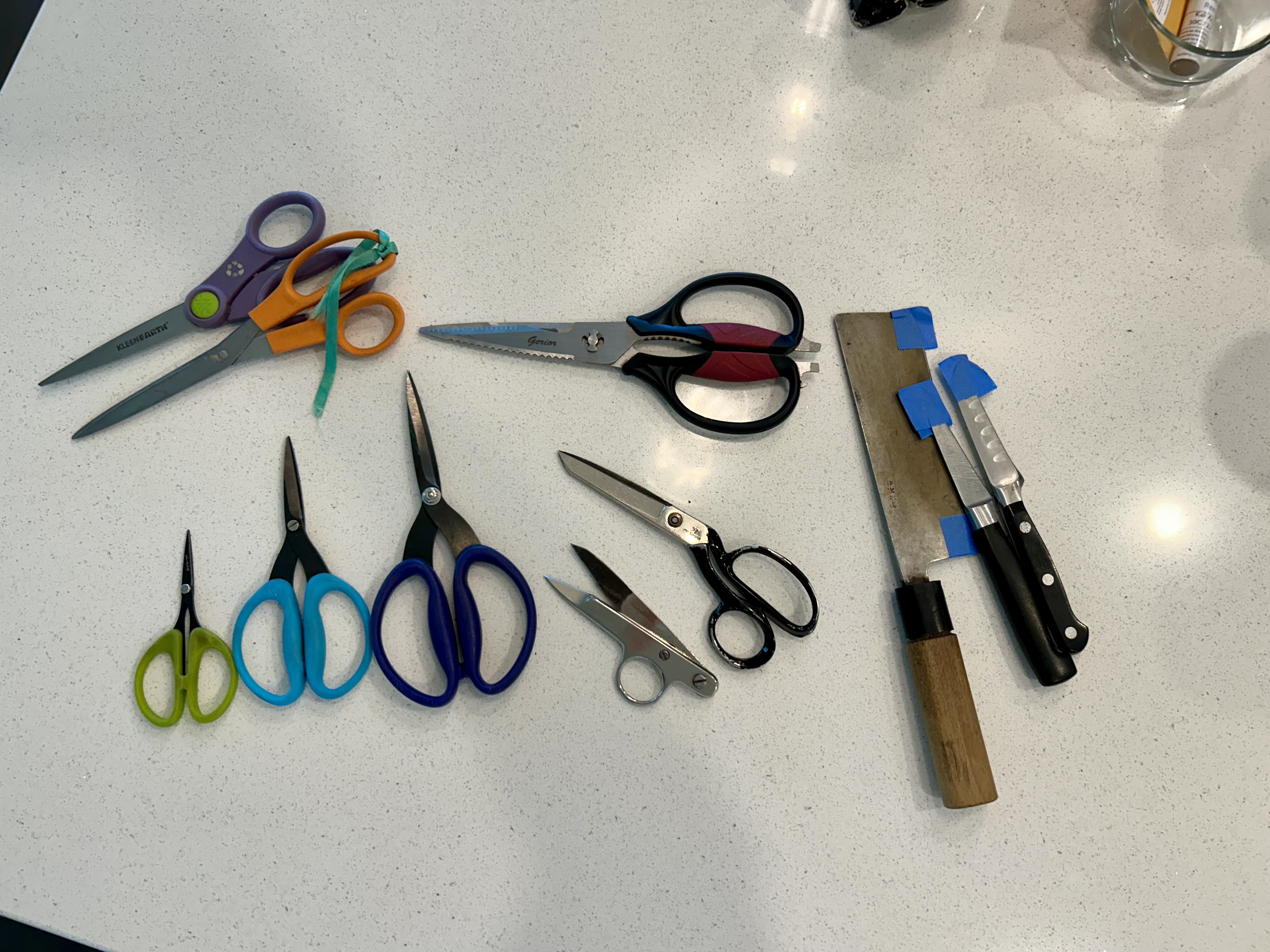
I rounded up ALL my scissors, which badly needed sharpening–and I took three knives along as well–the two little paring knives and the treasured Japanese knife a former Virginia neighbor (a WWII war bride) ordered for me from Japan.

Here’s Ken, methodically working through the pile of scissors and knives. He especially liked my kitchen scissors–as I do. I use them all the time, but it was getting hard to spatchcock a whole chicken as they were so dull. And my sewing scissors…oh my! They so needed attention.

I even took my cheap paper scissors to Ken–and he didn’t fuss at all.

Ken came to South Carolina from the Boston area, and he knew Maine well. So we had a delightful conversation about Maine.

Here are all my sharpened scissors and knives–now back home.

In Maine, someone who sharpens tools is called a “grinder.” Here, Ken told me, he is called a “cutler,” though he said the term “sharpener” is used more often.

Ken has all kinds of equipment to handle whatever comes to him. And he is so patient and thorough. He even sharpened my little snips and the small scissors I use with hand sewing (green handles)

Ken also travels to local farmers’ markets and quilt shows, and I got his card from the spring Cobblestone Quilters show about which I blogged.

The drive from Mt. Pleasant to Ken, up in North Charleston, wasn’t bad at all. It only took me about 30 minutes.

I’m sure I’ll visit Ken again in about a year, and I’m so happy to have found him. So are my scissors and the three knives I took to him.

*I’m not sure how I missed almost a week on the blog. I’ve been sewing, yes. And watering grass and outside flowers as it has been very dry and it is warmer now. It took me forever to figure out how to control the spike sprinkler that can do a full circle, but…she persevered. Our houses are close together and my yard is very small, which is fine, but watering does have to stay on my grass as neighbors are also watering. Plus, we pay for water/sewer here.

Chucktown Acres Farm and Store

I am never so happy as when I am on a farm.

And Saturday, I visited Chucktown Acres Farm and Store, which is about 30 minutes north of me and is right off of highway 17.

I have been buying their eggs at Local Jo’s Natural Foods. And, their ground beef mixed with organs. But I’ve wanted to go out to the farm and their store for some time.

There is a good website: chucktownacres.com. And you can sign up for the newsletter which keeps you up to date about farm products and practices. Here’s a blurb from the website:

“Chucktown Acres is a working, regenerative farm just outside of Charleston, SC. We raise grass fed/grass finished beef, forested pork, soy free eggs, and pasture-raised poultry. We are farmers who have a passion to grow bio-diverse food that heals our land and heals the people around us.”

The ride up was uneventful, and traffic was very light. A long drive leads one to the farm buildings and farm animals. As I got out the car, which I parked in the shade of big live oak trees, here’s the first thing I saw after passing the pasture of cows.

The sweet farm house was to the right:

And the store was in a long, low building facing the entrance drive:

The owners were warm and welcoming, as was the colorful sign on the building:

Inside, the first thing I saw was the eggs I wanted, eggs from free-range chickens who are NOT fed soy. I am loving these eggs which do not give me any reaction from my histamine intolerance. There are also eggs from the Storey farm which is on the land where my son and DIL have bought a building lot. And I bought one of the Storey frozen whole chickens which I roasted yesterday–and enjoyed chicken meat with a lot of taste and meat that didn’t dissolve in my mouth like the mass-produced commercial chickens bred to be enormous in a few months.

Inside are long freezers filled with farm meat products from this farm and others in the area and made products like pasta.

There is a refrigerator with raw milk and dairy products and fermented foods and items that need refrigeration.

On the weekend, when the store is open, there is freshly made sourdough bread:

The chickens are free range and are guarded by a friendly and special prize guard dog puppy: a Komondor.

The cows were resting in the shade.

The pigs ran to see me, grunting a deep grunt as they came, and when I offered no food, they retreated to doing the pig things they had been doing.

There was a purple Martin house, and I have not seen one of these in some years now.

I will leave you with this iconic picture, but know that I will be returning to this farm and store in the future.

It’s Friday!

And I have more bits and pieces to share.

MY IMPROV QUILT IS GETTING BINDING!

Here’s a sneak peak–I use a pillow to elevate hand work as it takes the stress off my arms and neck. The backing is AWESOME! It’s a Figo print. And it is PERFECT for this quilt.

I am loving how this quilt turned out. When it is finished, I’ll do a whole post on this “improv” process–which did involve a bit of trauma as the channel locks on my longarm decided not to work properly so I had to finish the quilting lines on my Janome 6700 surrounded by LOTS of tables and an ironing board. (Jimmy Hernandez from Carolina Quilt Studio in Greenville, NC, was already going to come here on Sunday for another client, so he’s going to take off my longarm’s wheels (it’s too tall–I have to stand on tip-toe some times), so he can show me how to tighten the channel locks–and believe me, quilting lines on the longarm was way, way more easy than on the domestic.)

The hand quilting (big stitch) on “Happy” is down to the LAST BLOCK (after 10 more minutes of sewing on the penultimate block–and then the border, which will go fast as it is easy quilting.

I’ve have had an ongoing project that will be a 30-inch wall hanging or pillow–the second of the 4 blocks is almost done but needs some tinkering to measure properly. I’m going to shorten the white strips as they are too wide–it is too much white–and that will give me some room to add a final dark border around the purple/green/orange piece–where I still have to make the last bottom piece. (Cathy Beemer has been teaching us how to do this work.)

I’ve started a lap quilt using as many of the 3 1/2-inch squares as I can from the bins holding the cut-up Cotton+Steel/Ruby Star Society squares. There is ONE red heart and the rest of the quilt is low-volume. Easy Peasy.

AND, I’m ironing the saved fabrics from season 4 of The Color Collective where guest designer Annabelle Wrigley gave us her “Prickly Pear” quilt. The fabrics are from her own collection of solids, Ruby + Bee.

Screenshot

So, gradually, I’m catching up with those Season 4 TCCollective project.

Holy Moly! Look at this HUGE moth that is now resting on my back screen door! She’s 3 1/2 inches or so if you count the wing length.

It is a Waved Sphinx Moth. She lays her eggs in the ground, and the caterpillars eat tree leaves and other vegetation. The adult moth may not eat. Scorpions eat the eggs if they find them, which is why the moth is sometimes called a “Scorpion Moth.”

Do we have scorpions here? Google, google–yes, there are scorpions here but they don’t seem to be a huge threat.

https://www.insectidentification.org/insect-description.php?identification=Waved-Sphinx-Moth#google_vignette

https://www.butterfliesandmoths.org/species/Ceratomia-undulosa

I will walk my mile in the early evening–I’ve only missed 3 days this month–two of which were due to rain. I love my mile walk.

There will be dinner on the porch today.

And the recycle truck came today as I misled the whole neighborhood about our 2-week pickup of recycling after the holiday!!! So, I’m super happy the system worked with me to get our recycle picked up!

Have a great weekend everyone!!