The Muhly Grass here has been blooming for about 2 months. I love it when the rising or setting sun lights it up.
The sun makes it glow.
I took these pics yesterday when I walk late afternoon.
The strands from this grass are used by the sweetgrass basket makers, so in some public places, the plants are seriously trimmed to supply fodder for the baskets. Stealthily, of course.
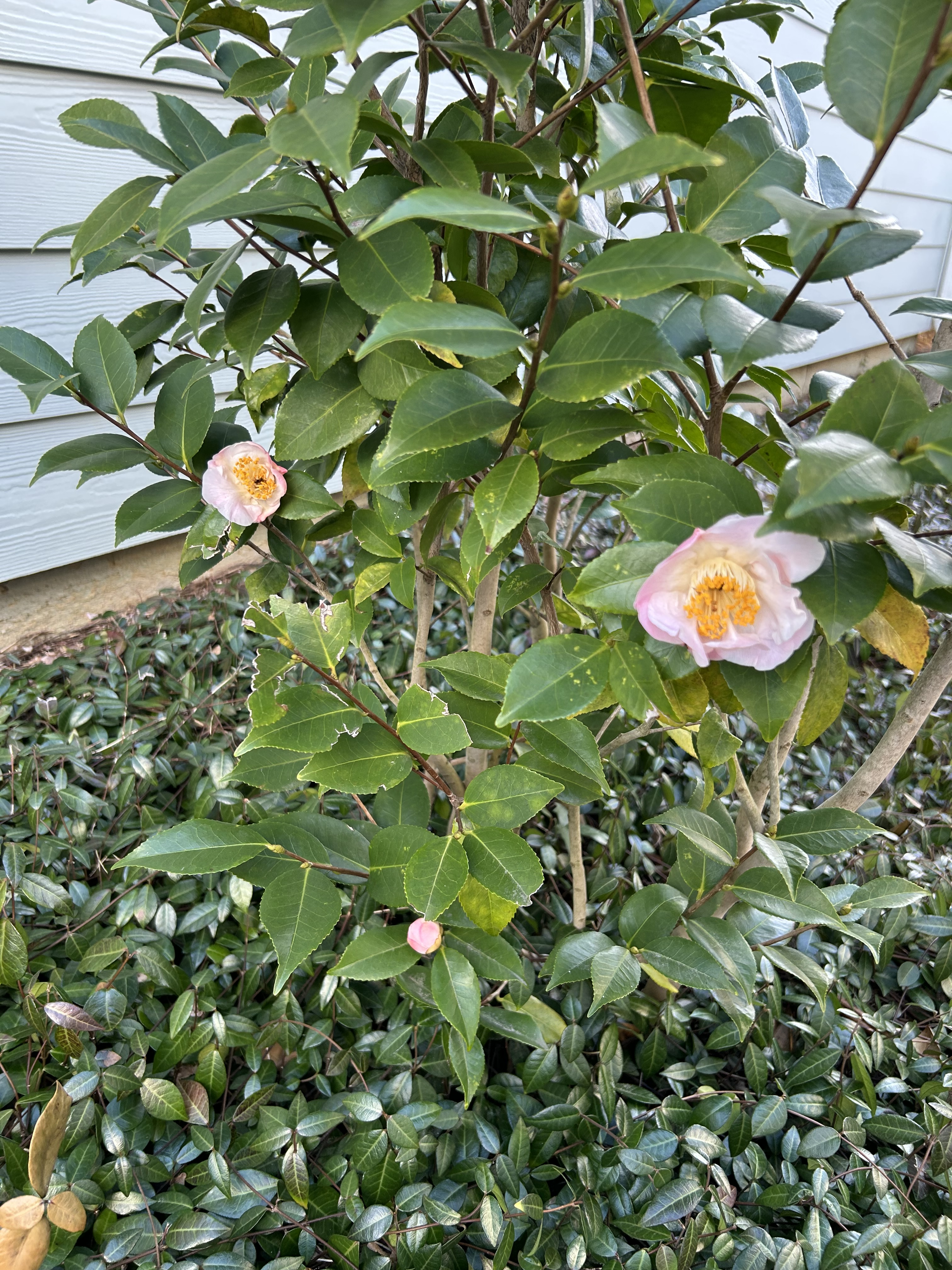
Yesterday I put protectors on the two camellia bushes as we were expecting temps in the 20s last night. Here in SC, our water heaters are OUTSIDE, attached to a house wall, and houses are either on the ground or on high supports. Either way, pipes are…exposed or on the ground. And they will freeze easily.
When I woke this morning, it was 28 degrees on my porch. It’s a good thing I dripped water upstairs and in two faucets downstairs.
I brought in the Kalancho plant, which is going to bloom again. And the geranium which is on its second year and going strong. The hibiscus on the porch took a hit. Time will tell.
It will be very cold again tonight. Cold for SC, that is.
Beloved neighbor and I saw this very interesting, very big bird while walking the other day. Neither one of us had a clue as to its identity. It was not alarmed by our presence, unlike the usually wary wading birds.
It continued to stroll slowly along the ditch, which is part of the elaborate system of flood management in the “Low Country.” Water in ditches like this one is channeled out to the coastal marshes. This bird’s strolling involved standing momentarily on its left leg while using its right foot to wiggle and scratch the botton of the ditch.
And:
Neither of us surfaced the word “stork” to identify this bird. We were more focused on heron, crane, ibis, egret, and so on. Note the bald dark head, the sturdy dark beak that turns a kind of tan at the end, the black legs, the black feathers at the tail and along the bottom of the folded wings.
It took me a little time, but I finally identified this fascinating bird. And I learned that the black on the wings is much more prominent that one might expect when they are folded.
Here’s some more info on “Wood Storks” from the Cornell Lab of Ornithology:
“Large, white Wood Storks wade through southeastern swamps and wetlands. Although this stork doesn’t bring babies, it is a good flier, soaring on thermals with neck and legs outstretched. This bald-headed wading bird stands just over 3 feet tall, towering above almost all other wetland birds. It slowly walks through wetlands with its long, hefty bill down in the water feeling for fish and crustaceans. This ungainly looking stork roosts and nests in colonies in trees above standing water.”
And for Cornell labs:
“Wood Storks occur only in a few areas in the United States, so to get a look at one, head to a wetland preserve or wildlife area along the coast in Florida, South Carolina, or Georgia. Wood Storks tend to be busily foraging with their head down and body held horizontally, but their large size should help them stand out amongst the other pale herons, ibises, and egrets in wetlands even if you can’t see their hefty bill. If they aren’t foraging in areas with standing water, check nearby trees for groups of roosting Wood Storks, or look up in the sky for soaring birds with black-and-white wings. They are mostly silent, but during the breeding season, sounds of begging chicks might help you find a colony.”
This Wood Stork was our gift of the day from…nature.
“Garnish” is the second month block in Tara Faughnan’s six-month Blocks3 online class.
Here’s what happened as I played with the block and with the palette Tara chose for this month. I am very partial to greens and oranges, so I was happy with this palette that was very much in one of my color comfort zones. (I love color.)
I hand quilted “Garnish” with the collection of 12-weight cotton threads I have amassed over the years of hand quilting. The center join of the “flower” made hand quilting tough in that area, but the rest was a joy.
The backing is “Spotted” by Brigitte Heitland (#1660 Moda), whose selvage came with the sweet message “Life is Art, Live Yours in Color.”
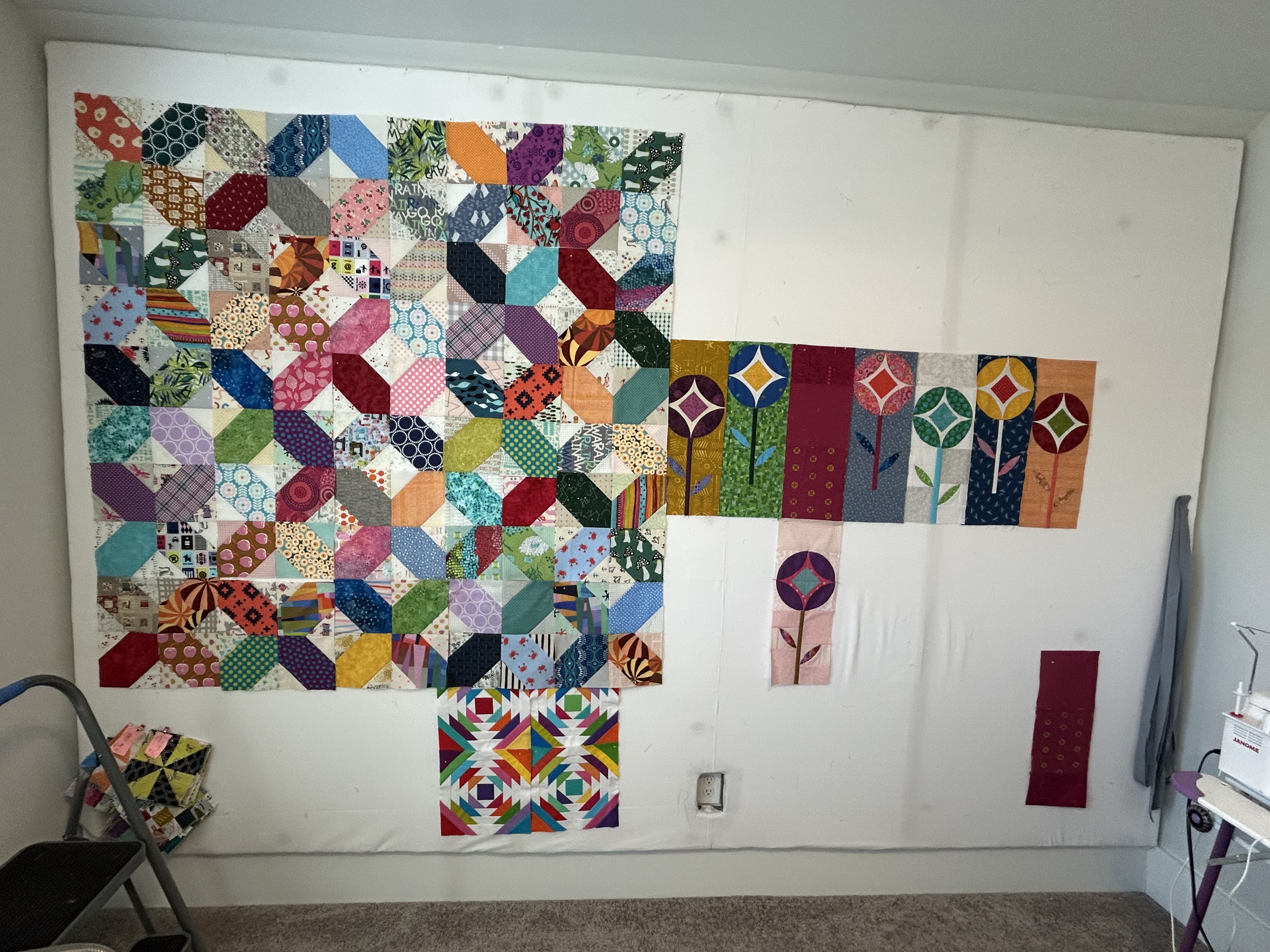
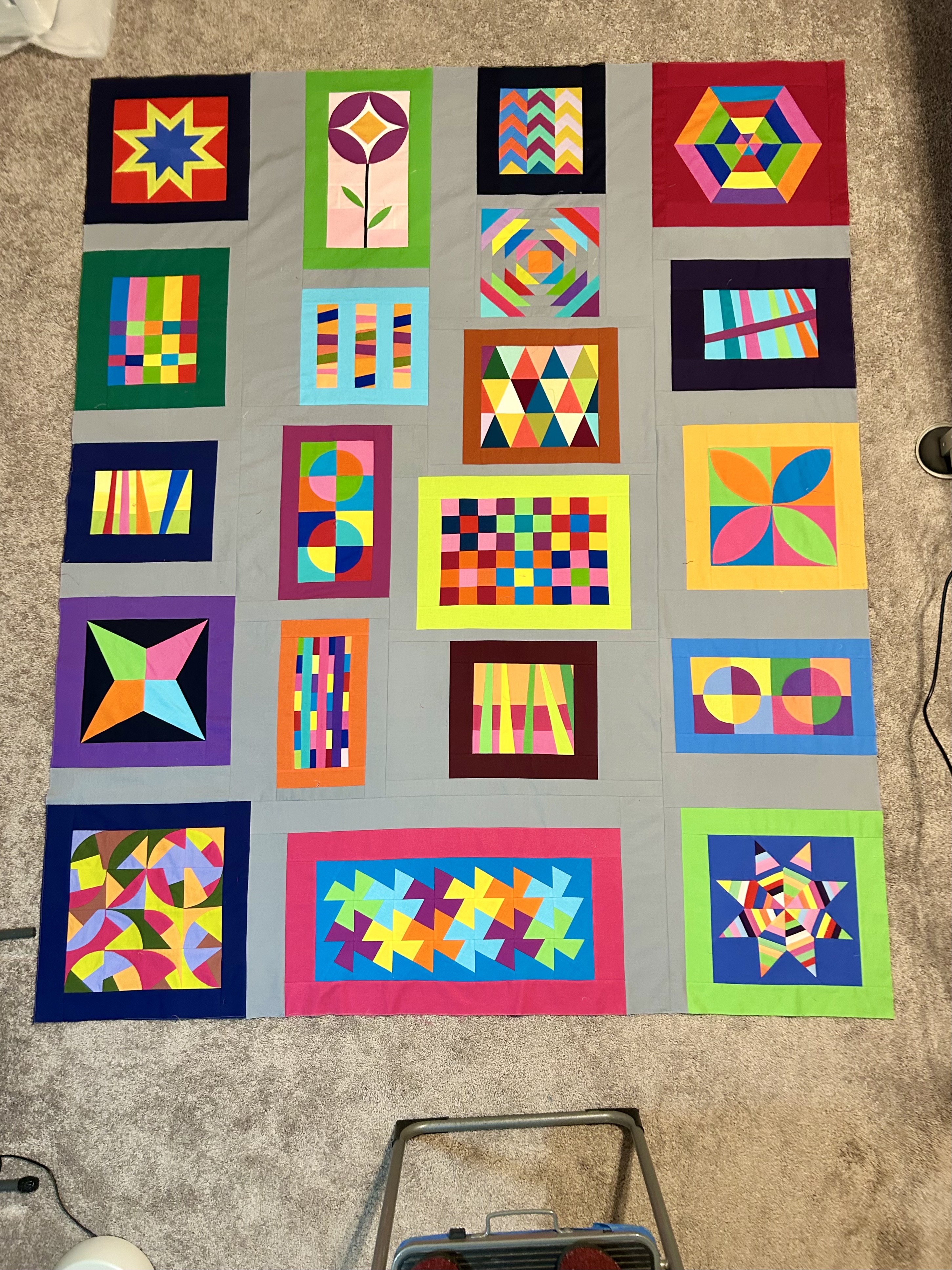
This block is a pickle quilt block form, and as usual Tara Faughnan gave us many options, like block sizes for instance, with which to play. My trial block is on the upper right of my developing improv quilt and was a 6-inch version, as I recall.
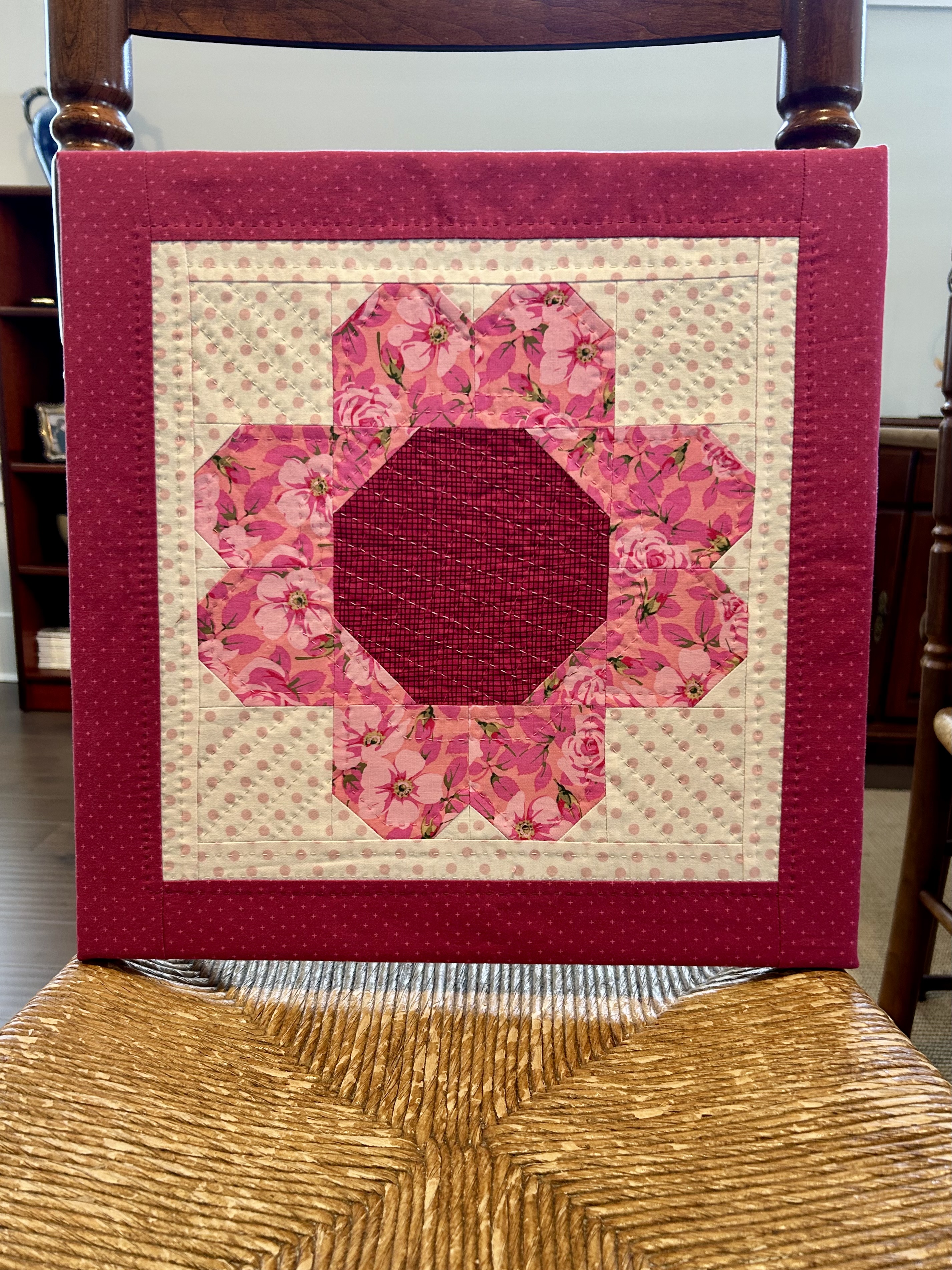
The form of this block that drew me strongly was the circle that formed as a secondary pattern. So I went on to make a stretched canvas version, which I hand quilted and hung in my quilt room. (Above a “Crosswalk” block, the first month block in Blocks3.
Like Tara Faughnan, I think a glue stick makes sewing curves so much easier. So this “Garnish” piece will need to be washed to remove the glue, which will make the piece wrinkly, of course. I don’t mind that look.
Month 3 in Blocks3 is a Star form, and I’m having fun with it now.
And MUCH has been accomplished in my quilting world.
“Under the Maple Tree” is off the longarm, trimmed, and ready for its binding. The texture is awesome for this quilt, with lot of “windy” pantograph swirls.
I may do her binding installation later today:
“Under the Maple Tree” has been (and continues to be) such a fun quilty journey. My thanks to Rachel LaBour (Stitched in Color blog) for this fall sewalong.
The third month in Tara Faughnan’s online Blocks 3 class is “Star Brite.” As usual, Tara gave us many ways to make this 10-inch block. I’ve made diamond stars before now–in an earlier Tara Faughan class with a big Lone Star block. But I’ve never made one of these blocks with an outside trimed edge. I started with this wider edge (the acid green color) form. Now I’ll try the narrower trimmed version she gave us and, maybe even, the “simple” form with no trim. AND, she gave us a scrappy version that I must try as well.
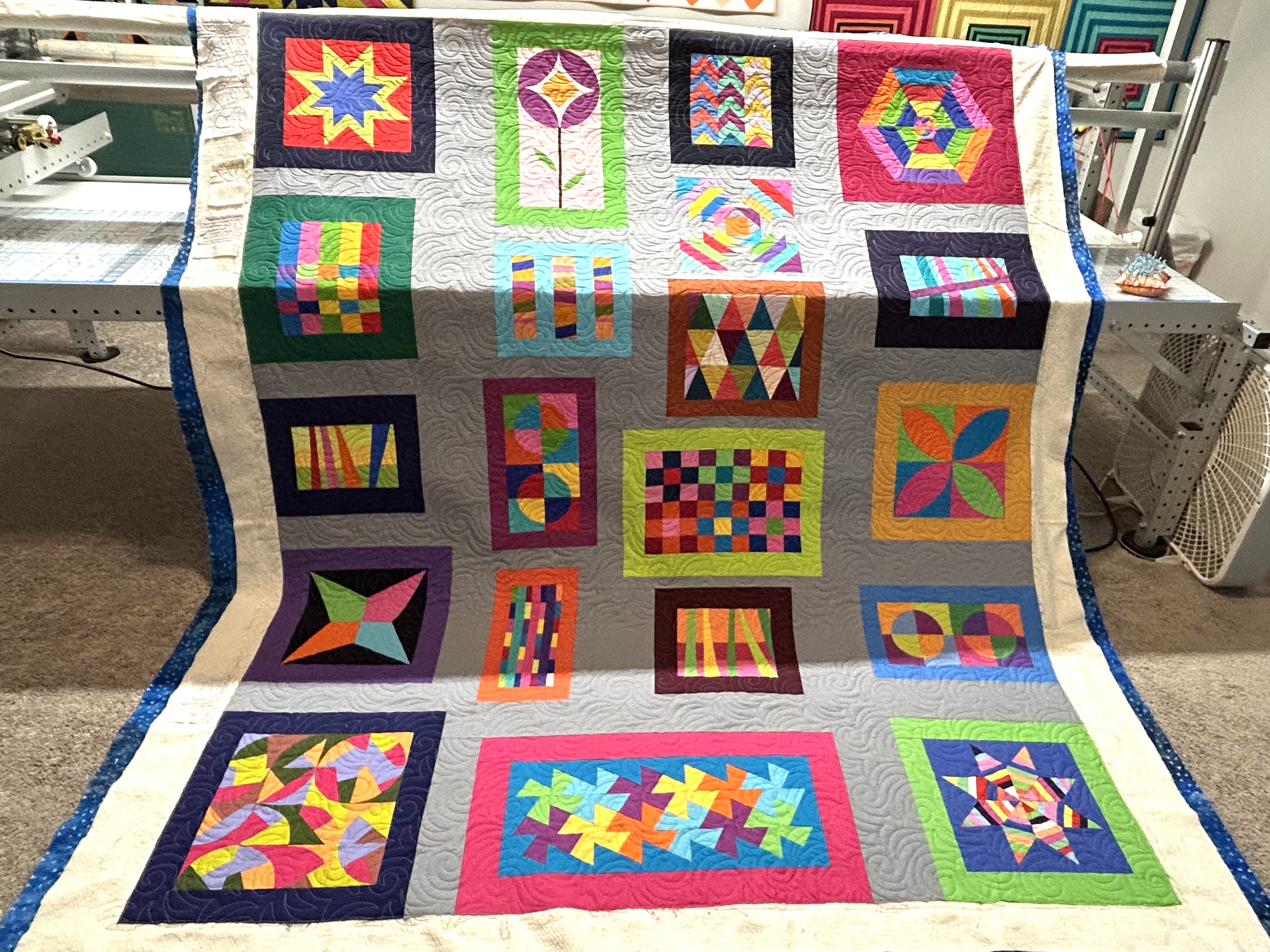
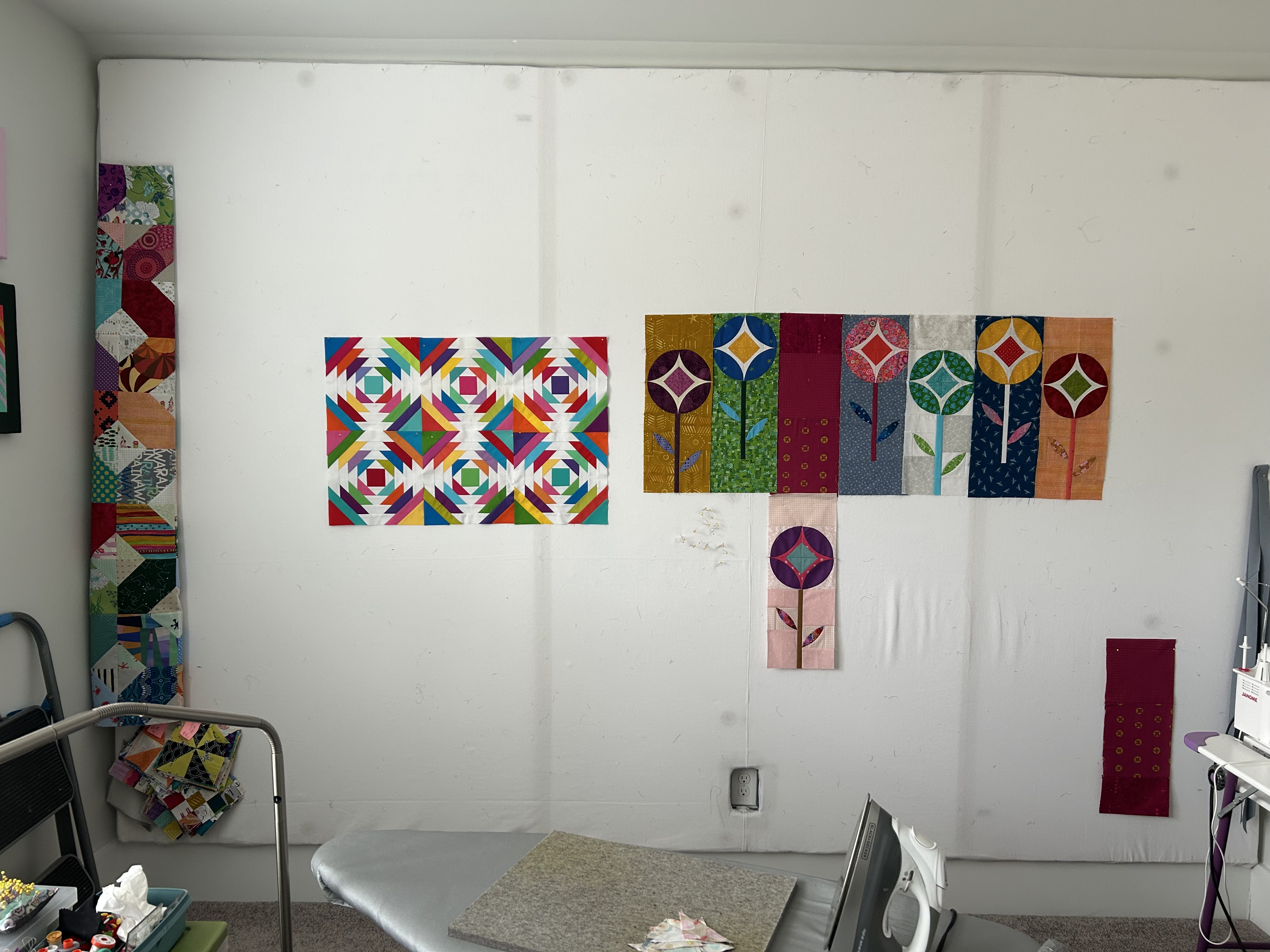
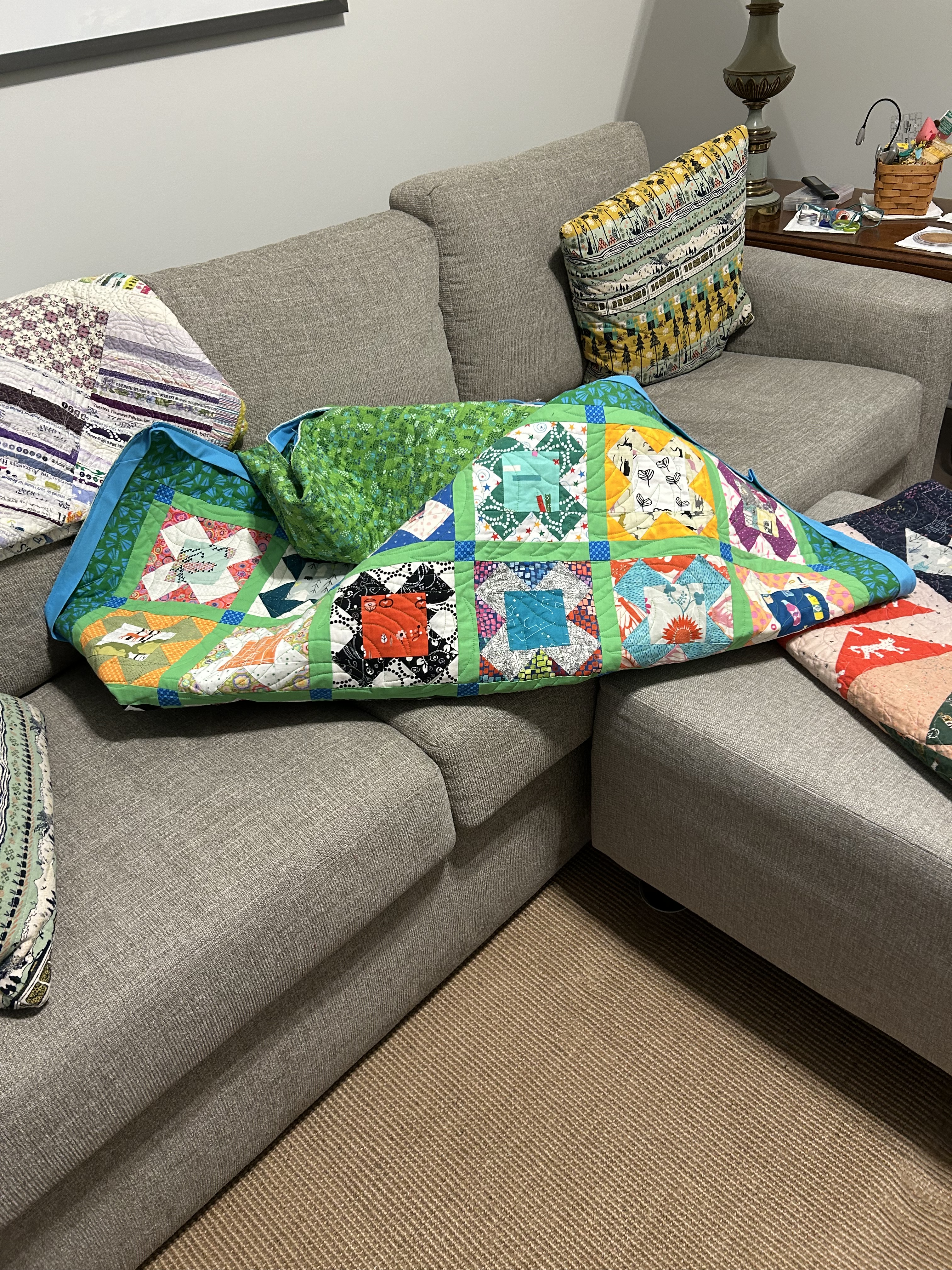
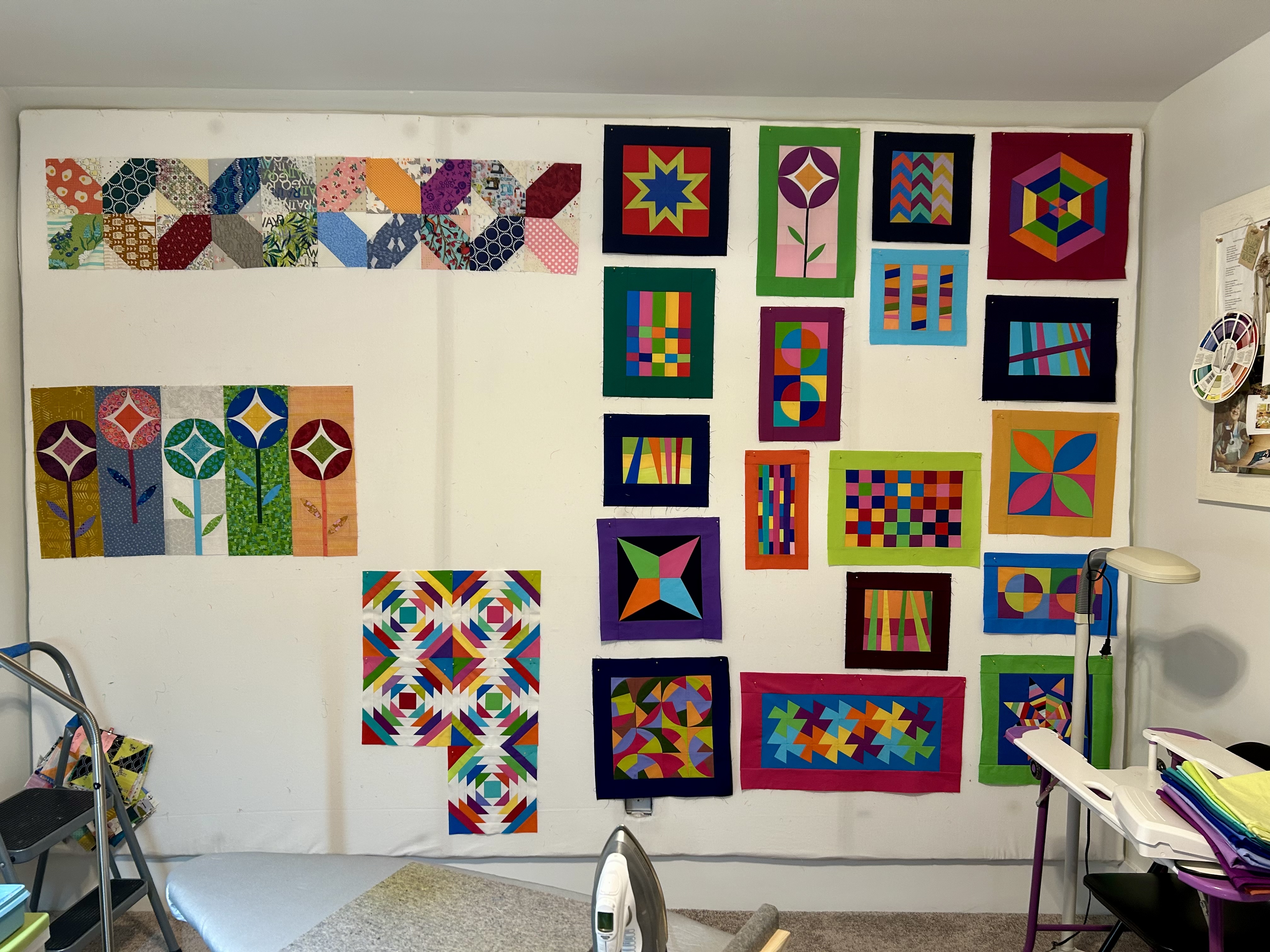
I knew I’d like to use this trial block to add to my growing improv quilt blocks. Here’s what I have now. You will find “Crosswalk” and “Garnish” blocks here as well.
I have two leader/ender projects happening. One is making 24 blocks for another donation quilt using 2-inch cut squares from that bin. I’m making Bonnie Hunter’s “Patches and Pinwheels”–a free pattern on her website. I already made one of these this fall.
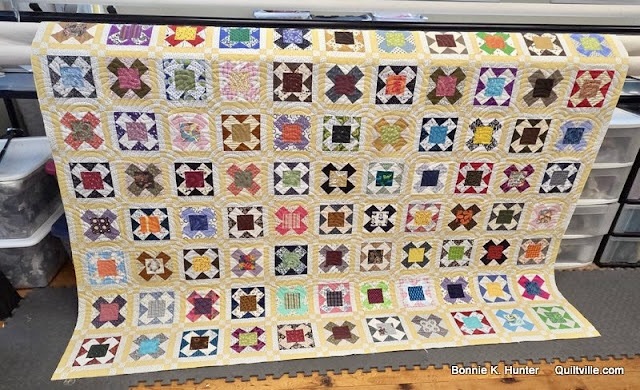
The other leader/ender is also a Bonnie Hunter block: the name is something like “X-Plus,” but it was published in a magazine, and I can’t find a link to it. But I was able to figure it out. This one will be a baby quilt donation.
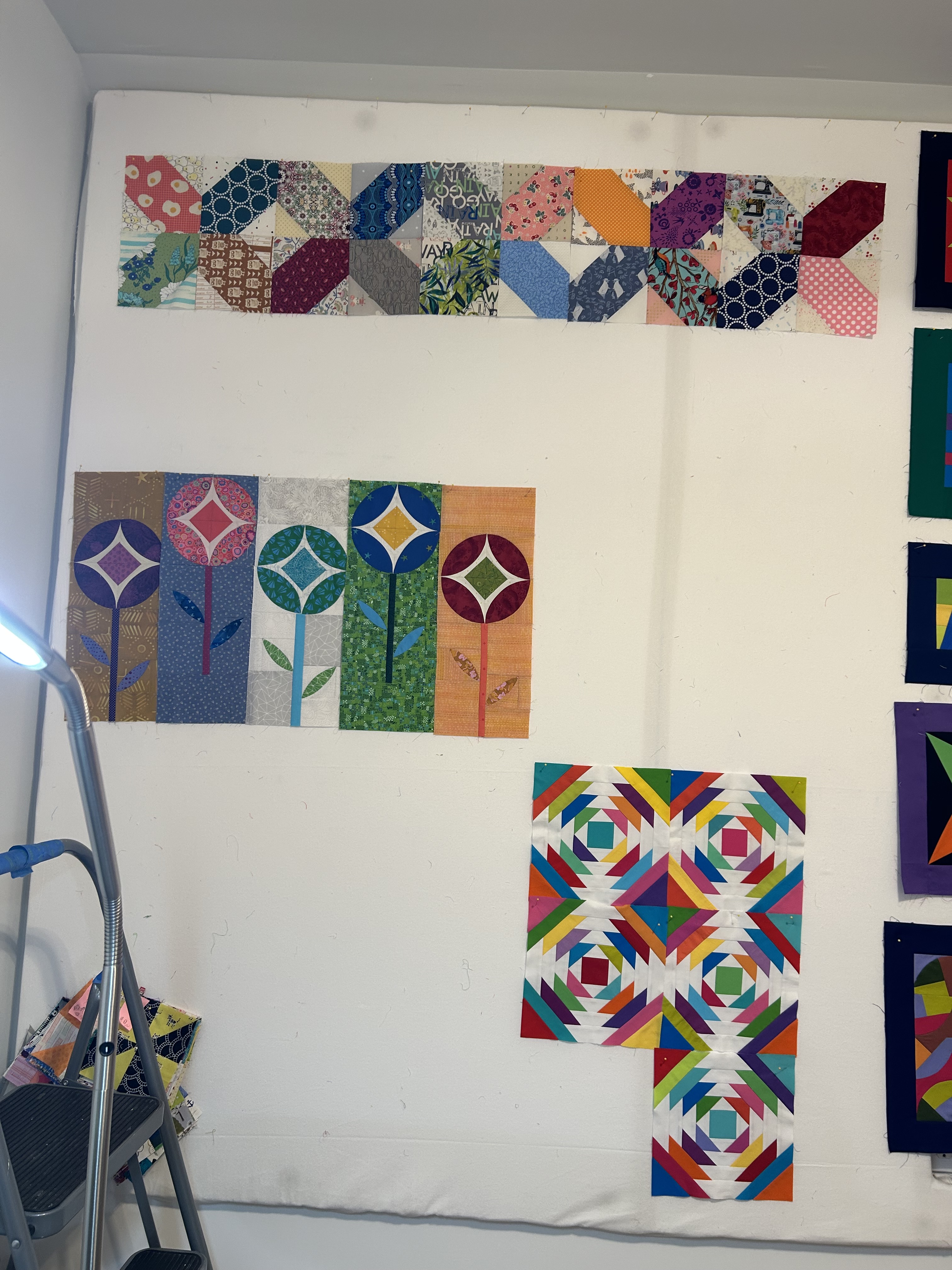
I put the “Garnish” piece I did on stretched canvas and hung it. So here’s “Garnish” and “Crosswalk” now hanging in my quilt room:
They are on the wall next to the design wall. “Kites 2” is ready to go on the longarm, and the backing, batting, and binding are all organized.
FINALLY, here’s the “Garnish” piece I’m hand quilting, a task that is almost finished–and then I’ll sew down the already installed binding.
I think this one will be a table decoration.
I think that is about SEVEN ongoing quilt projects. My goodness! And I have more ideas I want to start.
So, it is still overcast, and more rain is coming.
There will be more sewing today, and obviously, I’m happy with that news.
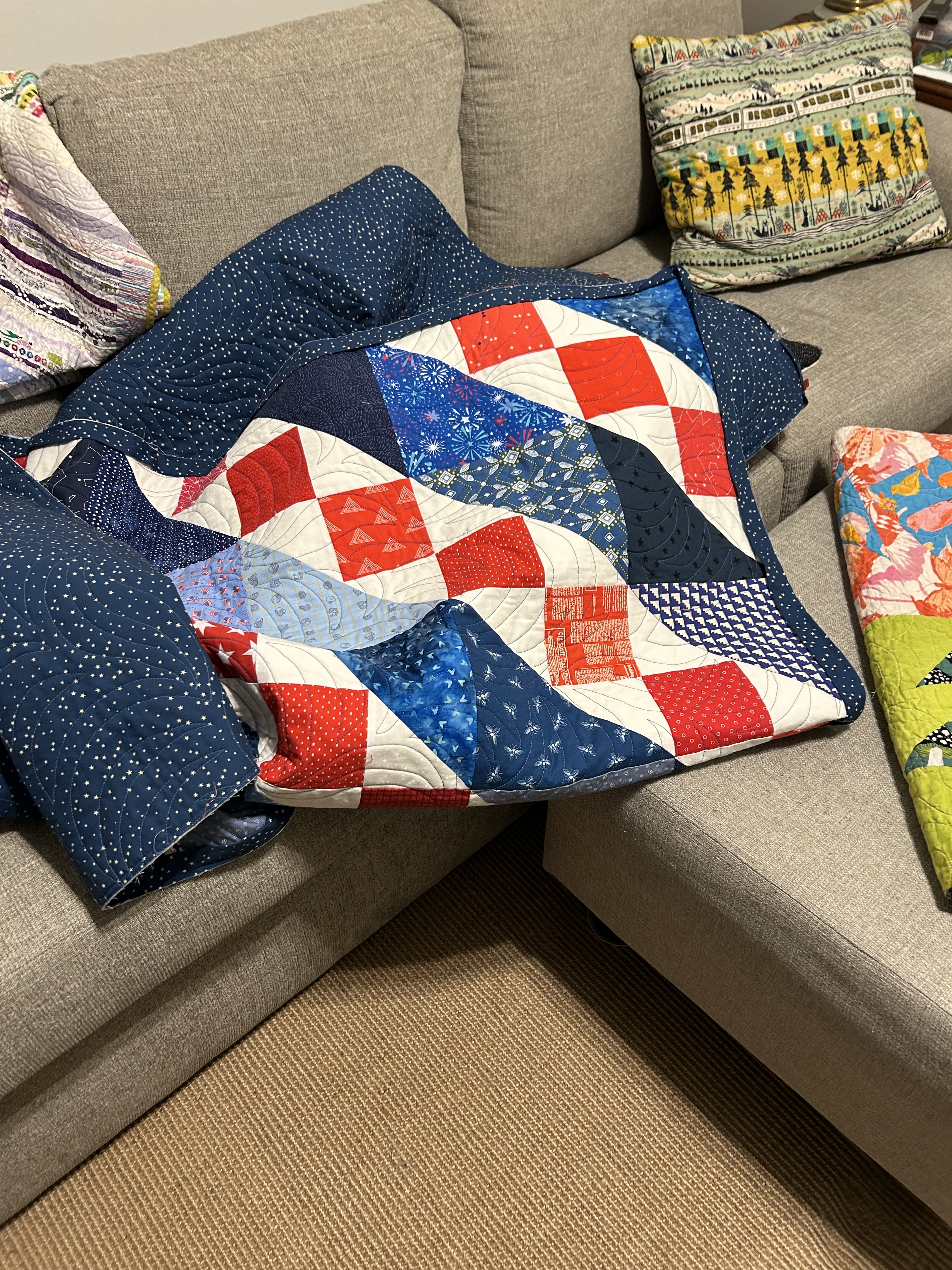
My Charleston Modern Quilt Guild issued a challenge in October to make a completed quilt using the three colors we got in an envelope. Everyone got two different colors, but we all got this Smoked Oyster color as one of the three. The challenge is due at our January 2026 meeting.
Here are the colors I found in my envelope. I spent nost of November thinking about what to make using these colors. I love all of them, but I didn’t want to make a Christmas-type quilt using just red and green. The real problem child here is that Smoked Oyster color. The challengers did say you only had to use each color ONCE, no matter how tiny a piece you used.
Eventually I found myself thinking about the kite ruler I have and a kite block. I trialed one layout idea for the improv quilt of solids that is growing on my design wall.
Could that oyster color work as a background? Maybe, but for a whole quilt? So I tried it out with this red daisy pattern. I liked the block but couldn’t see a way to make it all happen with this large a block (10 inches) with only the oyster color as a background. It shows light here, but it is actually a darker greyish tan color that is, yes, “smoky,” not clear.
The other day I used that trial block to make another hot pad for a hot dish coming out of the microwave or the oven. I made the one behind it three years ago, and I use it all the time and needed another one. The inside contains 2 layers of batting and one of Insul-Bright Thermal batting. The whole thing is super thick and a pain to sew and to bind. But…the result is so useful.
I can still see a quilt made with this layout and with a variety of neutral fabrics for the side pieces. And that will likely happen…
I eventually settled on putting the single kite block on point, as if the kites were flying in the wind. I tried making some blocks sit sideways or even upside down, especially at the edges or the bottom, as if they were turning in the wind, but that didn’t look coherent to me.
So, here’s what I have now:
The border triangles were made bigger, so today I’ll trim the sides and sew a “victory lap” seam around all the edges–as that prevents block separation when the quilt goes on the longarm.
My backdoor neighbors are a young couple who just had their first baby–a little girl. She is BEAUTIFUL. And the picture announcement they sent me shows a healthy baby.
When I realized they were expecting, I started a “girl” baby quilt, and along the way found this perfect fabric for it: Heather Ross’s “Girls in Trees” (“Studio Edit,” #409271).
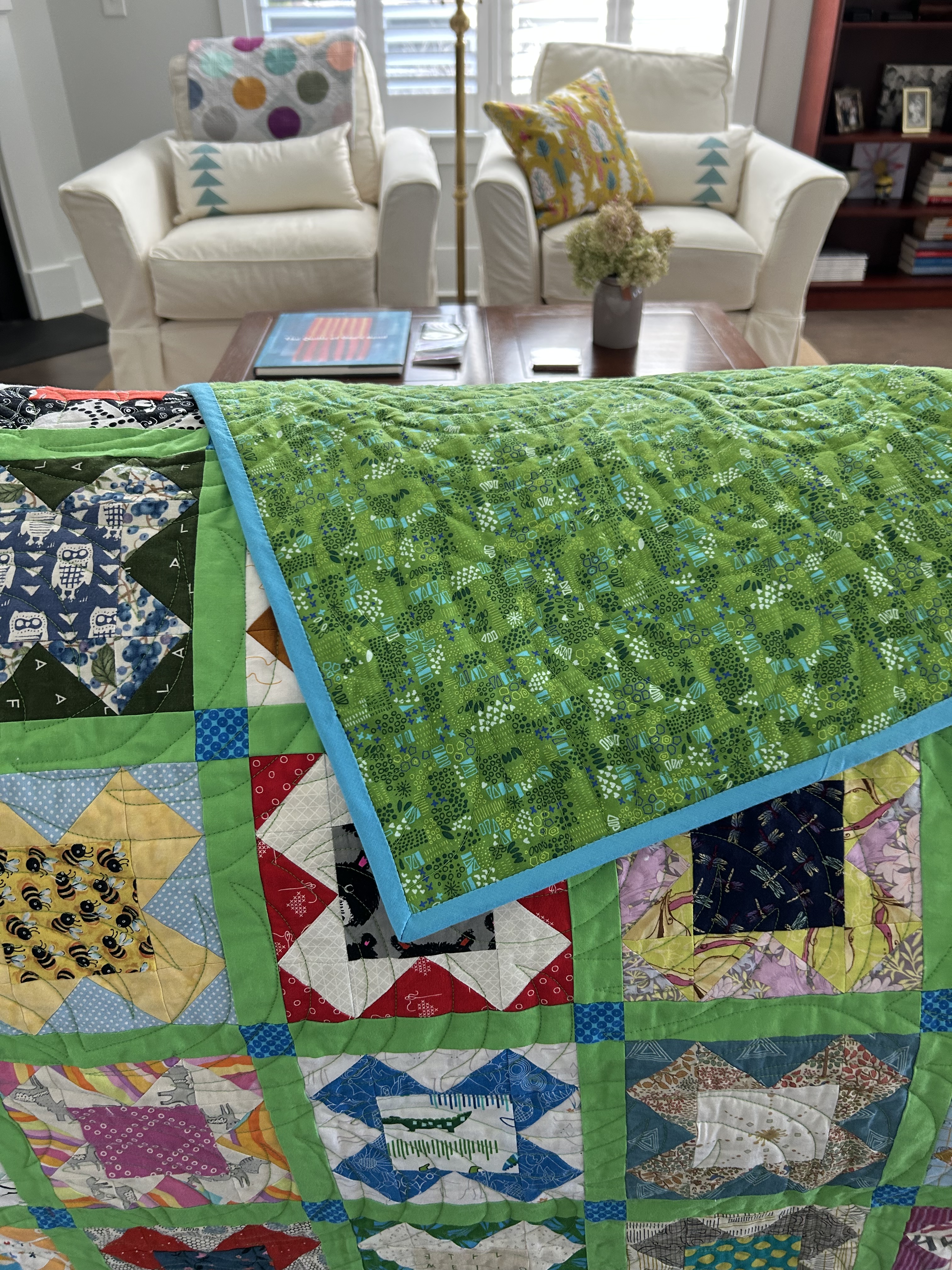
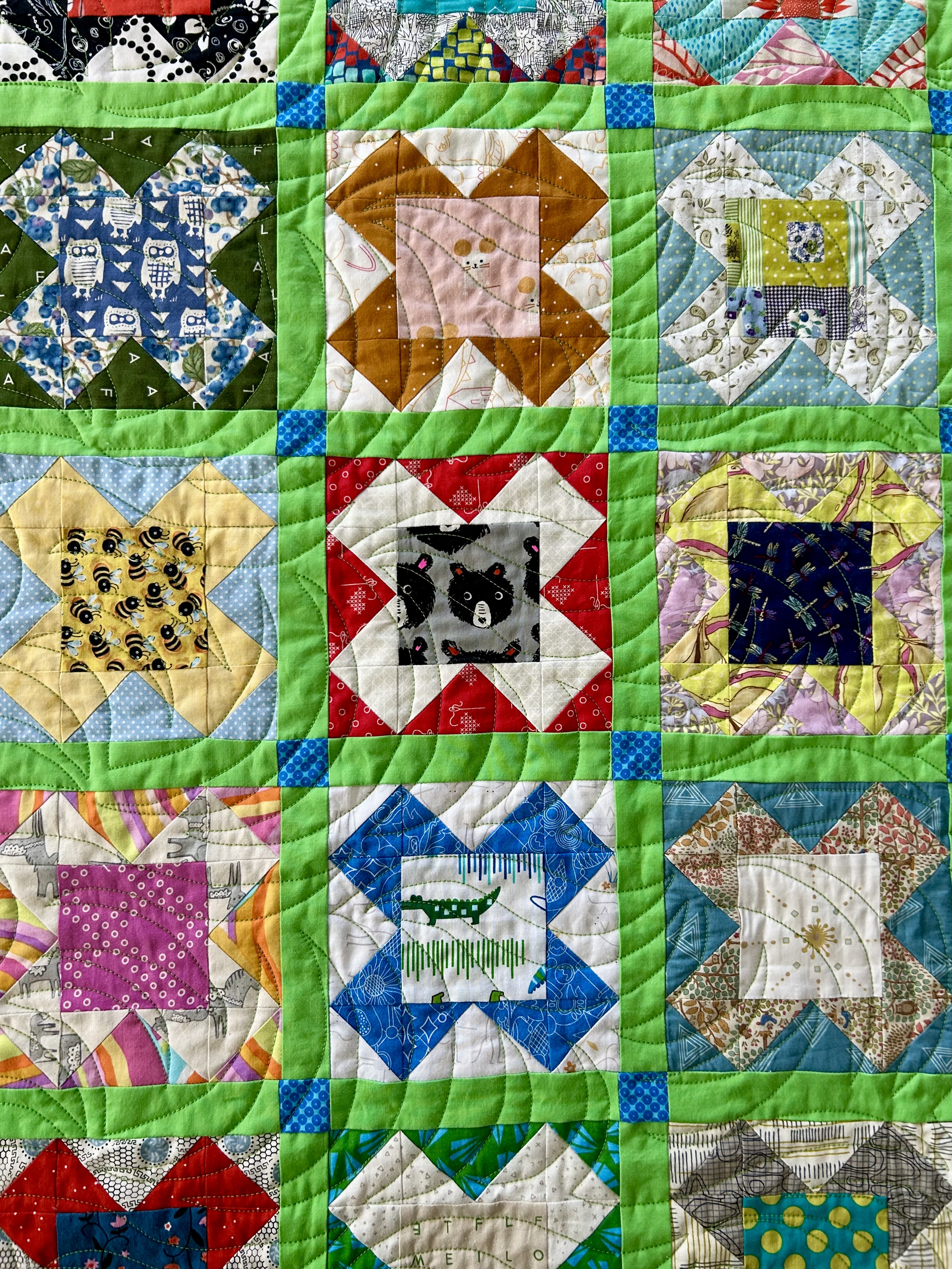
The block is Bonnie Hunter’s “Four Patch Fun,” which is her 2025 leader/ender block. It is free on her blog. I used the pantograph “TwoFold Feathers” by Hermione Agee and the Signature cotton thread “Petal.” The fabrics are all from my stash, and I used the same fabric for the sashing pieces as I had enough of it–and I love the animals it includes, especially the owl. I also like the striped binding cut on the bias.
Here’s a close-up of one of the blocks, so you can see I tried to include as many interesting animal and foliage images as I could–along with other images, like the bikes.
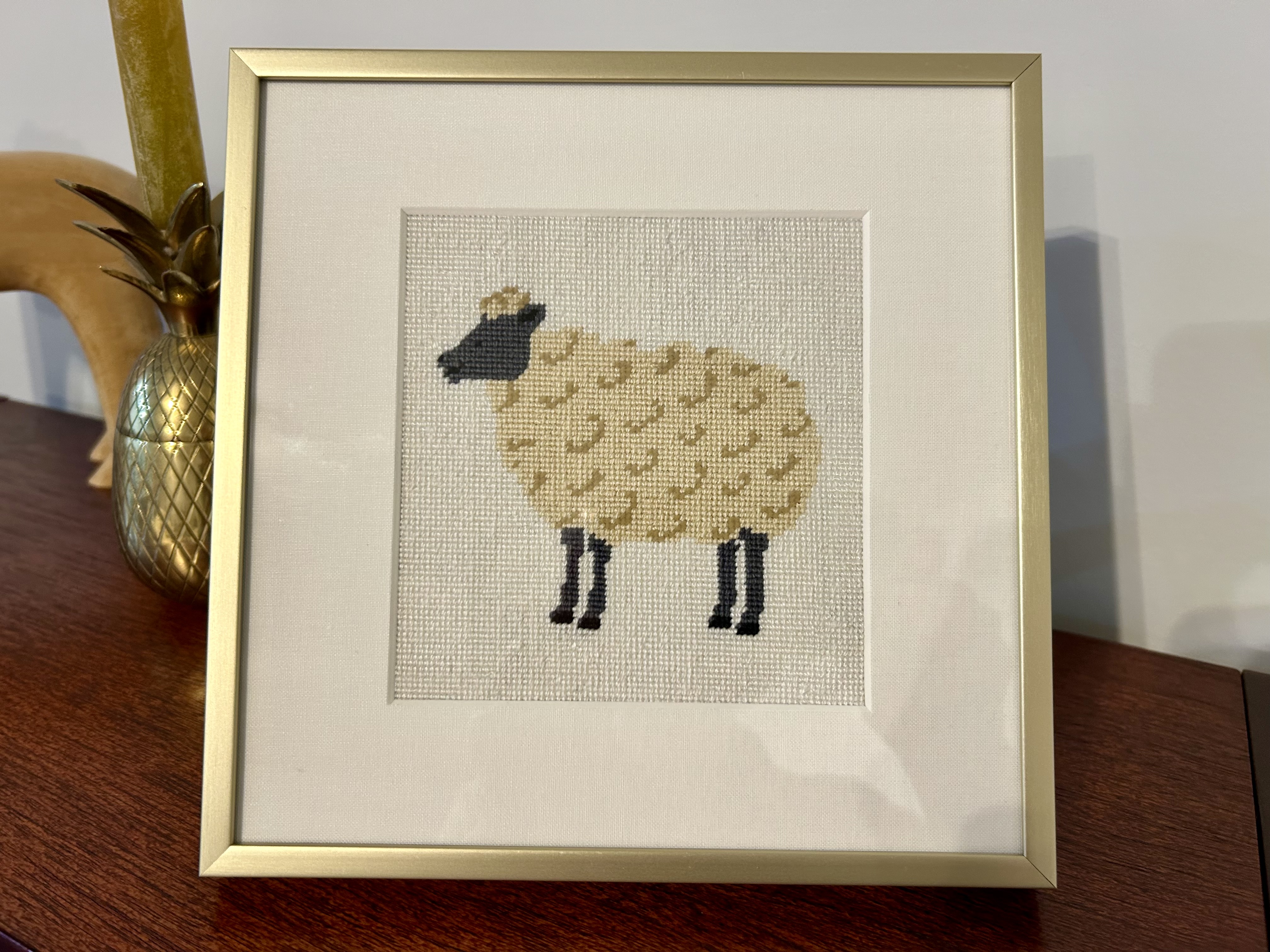
Sheep and the owl peeking out to say hello:
I make a quilt like this one to be loved and USED, and I hope that as this little girl grows older, she will notice all the things this quilt holds for her.
This low-growing camellia blooms in the fall and early winter. This winter is her second winter, and she is…happy.
The other camellia I planted is on the other side of the house and blooms later in the winter. There are buds… Last year it lost most of its buds in freezing weather, even though I put a protective cover on her. This one is a taller form. Camellias can get quite big and wide.
AND, here’s another smile.
These trimmed back trees along the path I often walk are LOADED with orange berries this year. More than I remember from the past two winters I have been here. They are probably some holly form, and they are all along this path.
Can you imagine if they weren’t trimmed so drastically? They would be…glorious.
“Garnish” is set up for hand-quilting. Yes, I put the binding on as well, as that task prevents the edges from fraying and the batting from shedding. I used Dream Cotton’s thinnest weight batting for hand quilting–Request.
My “Garnish” is one of many forms of this idea given to us by Tara Faughnan in the online Blocks3 class that is happening now and will last six months, with a new block idea every month–and a new palette.
Here’s another form of this block–which I will put on a stretched canvas when it is done. The batting is already glued to the canvas.
If I were going to use this form in a quilt I think I’d separate it with narrow sashing. Otherwise the flower form would dominate.
This piece is waiting for the “brass” color to arrive in the mail–12 wt. cotton thread–for that top right “pickle.” I order this thread from Red Rock thread online as our local stores don’t carry much 12-wt. cotton thread–which I love best for hand quilting. You can the smaller “petite” spools online for a reasonable price, so I have a good collection of colors. And many thread makers produce 12-wt thread now, so if one doesn’t have the “right” color, another might.
This afternoon my DIL and I are driving out into the country to pick up our local organic turkey. I will join her family (my younger son) for our meal, and the whole family will gather at the older son’s house for dessert. All the grands will be there, along with two grandmothers, one grandfather, and a possible boyfriend.
Have a great Thanksgiving if I don’t visit with you here before Thursday.
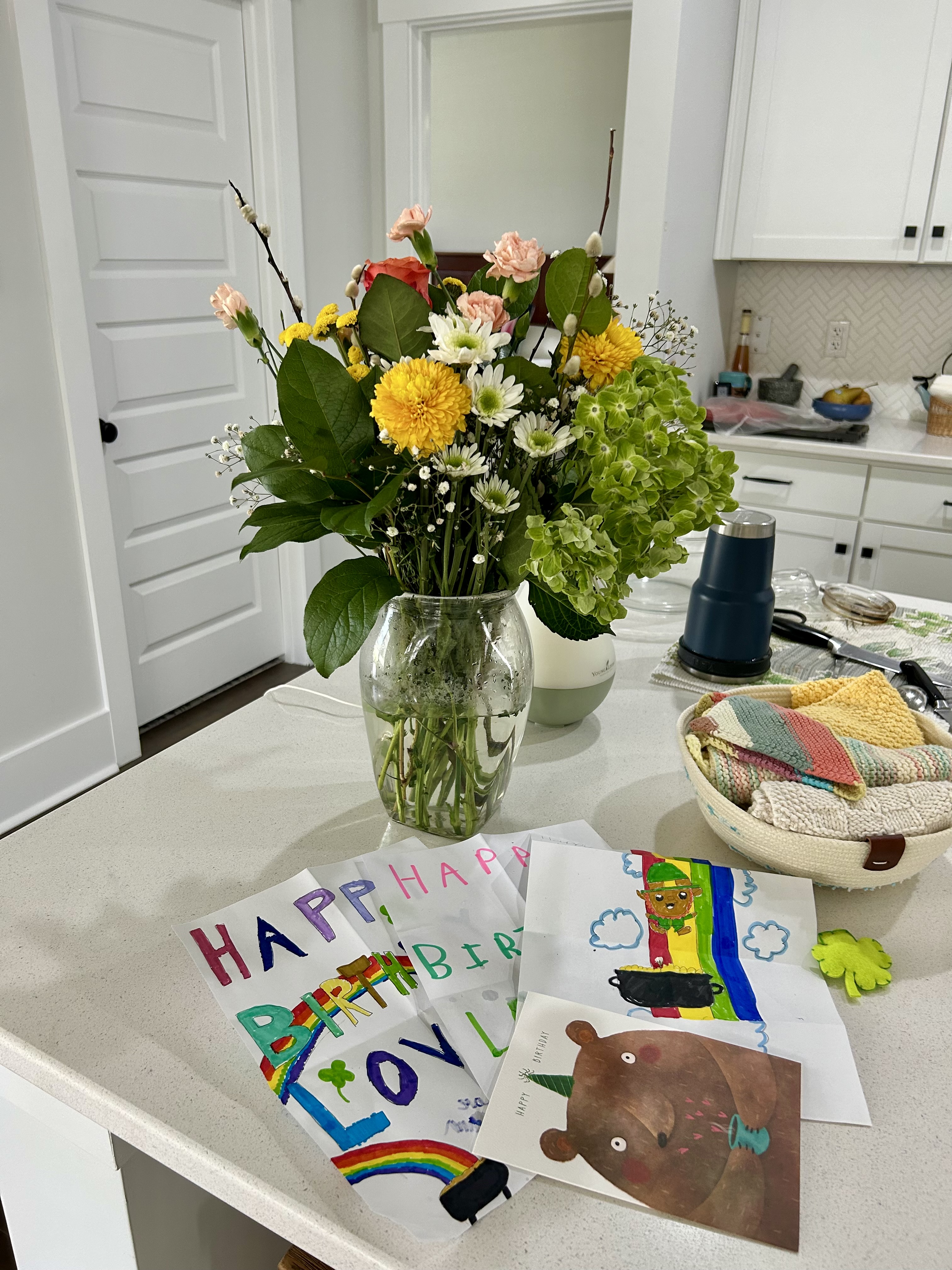
My neighbor spoils me on a daily basis. Look what she brought me the other day!
These falls colors are just so gorgeous, and I love the little bit of frilly white that breaks up the density of the fall colors.
For the past year, and maybe a bit more, we have shared “the traveling flower vase.” She started it! She gave me flowers, and I returned the vase with flowers in it for her. Now this vase goes back and forth between us. We each enjoy the flowers the other puts into the vase, and sometime after the flowers have faded, the one with the vase puts in new flowers and delivers it to the other.
It’s so much fun!
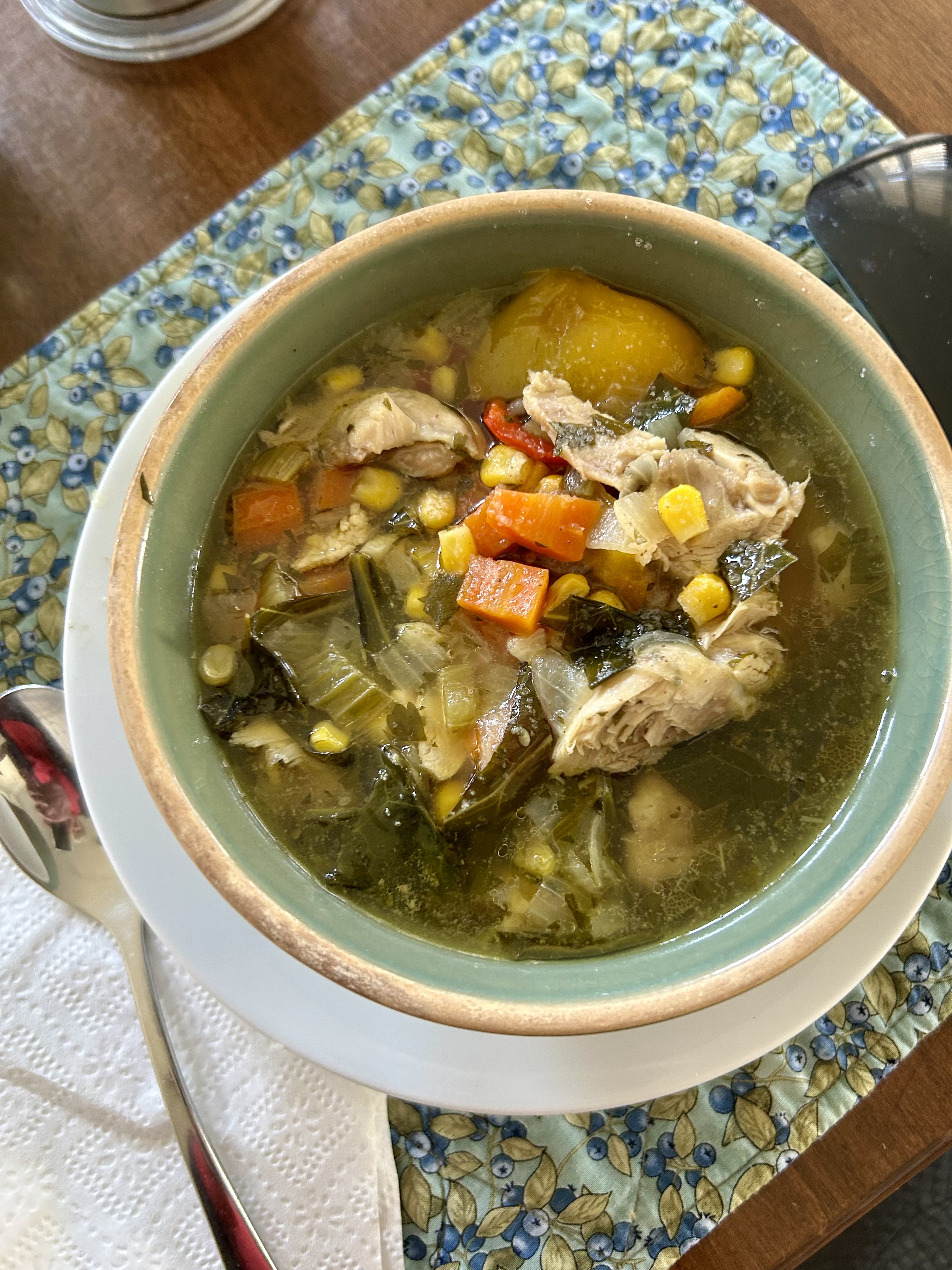
One of my favorite meals is best done in the fall when the butternut squash is nice and ripe. I cut one into cubes, add lots of chopped garlic and fresh rosemary, some REAL olive oil (not the kind with mixed seed oils added), and a bit of rough salt. I roast on a fairly high heat (375 or so) until the squarsh starts to carmelize a bit–which makes it so so sweet. I usually turn it all over once with a spatula as the bottom will burn if you don’t. Don’t cook it too long as you don’t want it to get mushy.
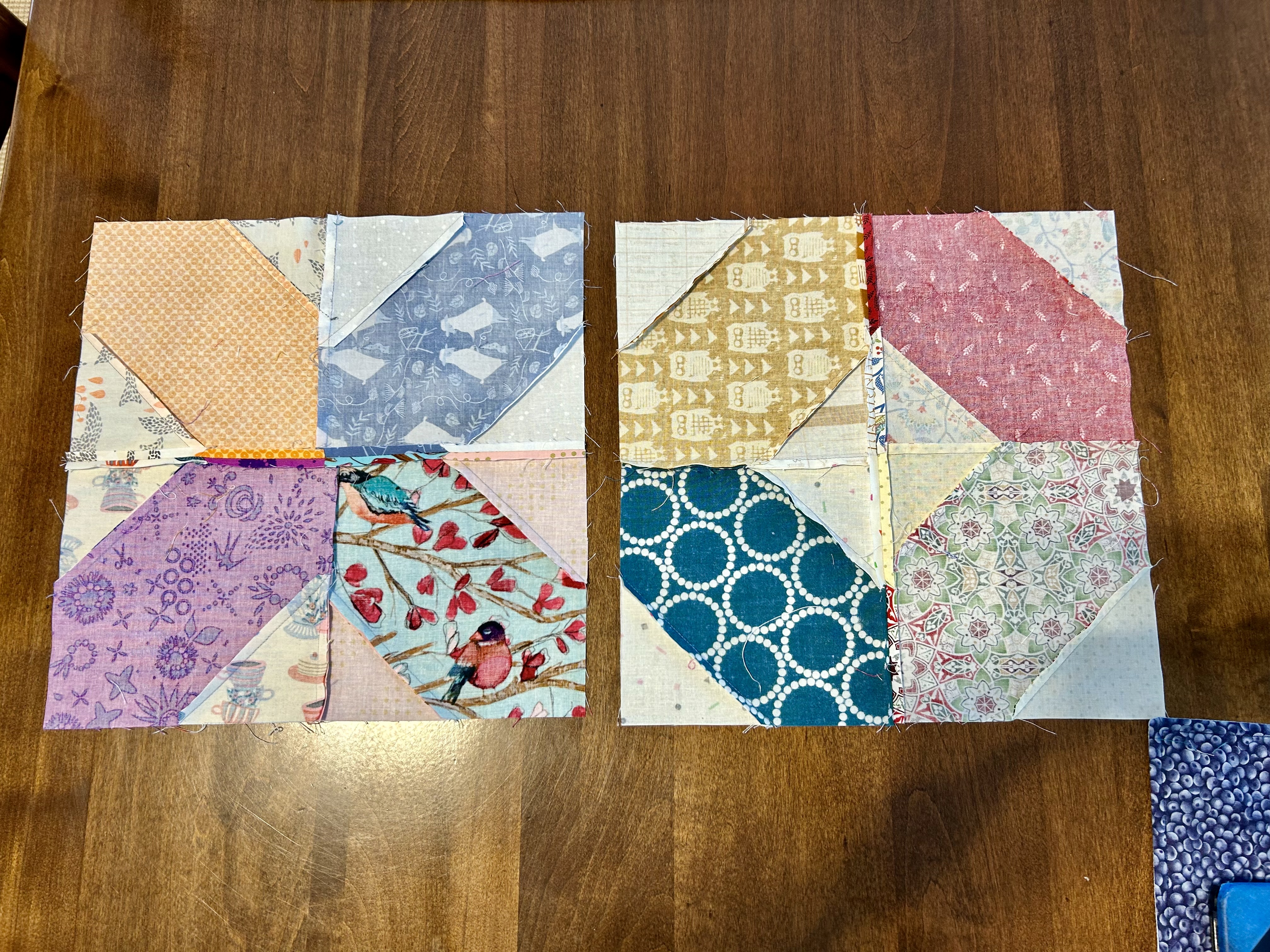
This month’s Tara Faughnan Blocks3 class is “Garnish,” a pickle dish quilt block form. Tara gave us extensive instructions on how to improv cut this block AND many templates of different sizes if we wanted to have a bit more precision.
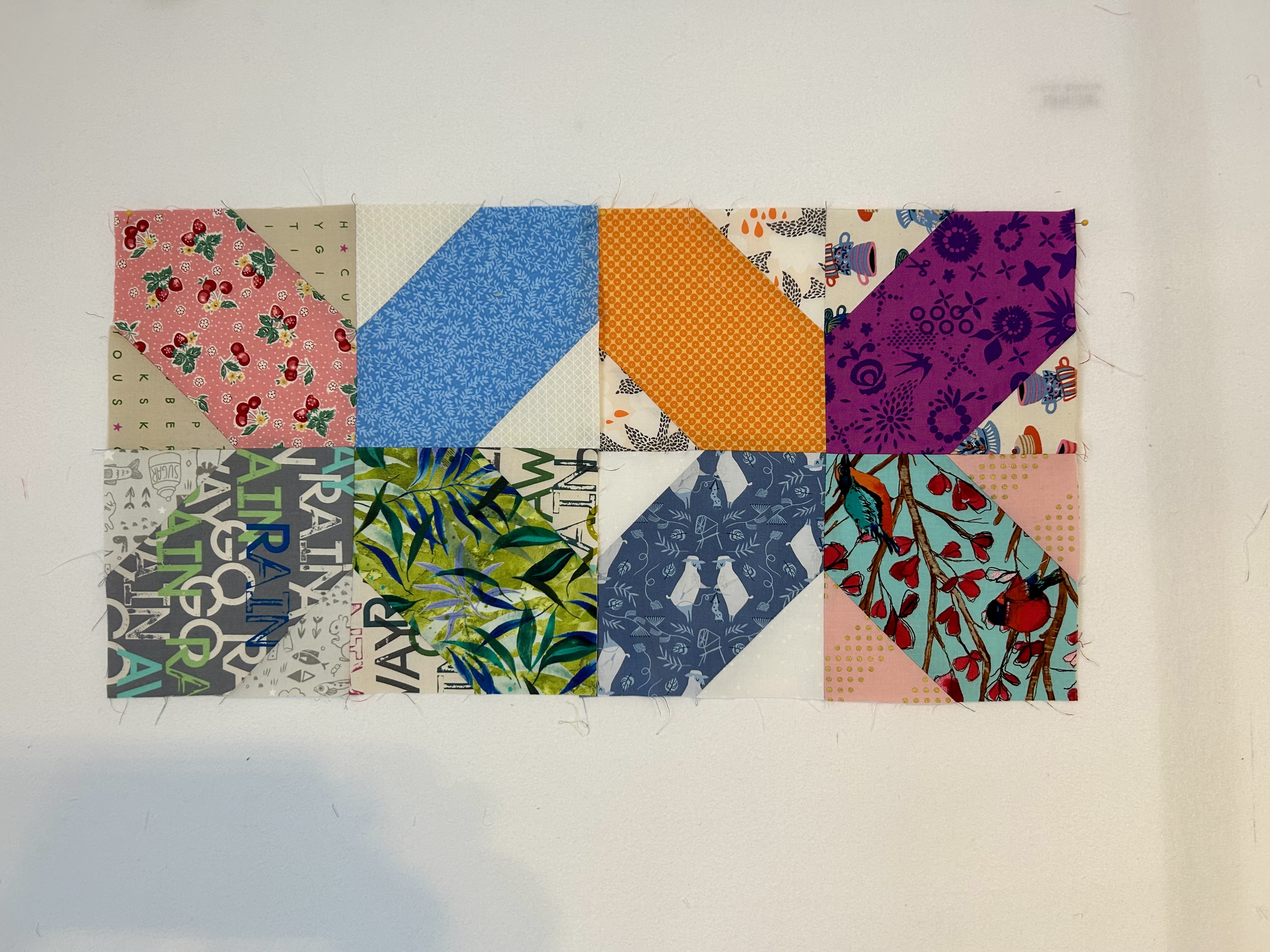
Here’s where I am now–with blocks ready to be sewn together. Each “flower” will finish at 8 inches, for a 32-inch square…something? A table topper maybe. I’m going to hand quilt it.
I could keep moving around blocks forever I think, but I’ll stop here. I love how the warm black is working with the other colors in this month’s palette.
What interests me also is the pattern where two big blocks come together and form a circle. So I made one of those which I’m now hand sewing and will put on stretched canvas if it comes out ok.
How did it get to be Friday already?
It’s still very dry, and I’m going to have to water the flower beds again, as I don’t see any real rain on the horizon. I’ve given up on the grass for this year.
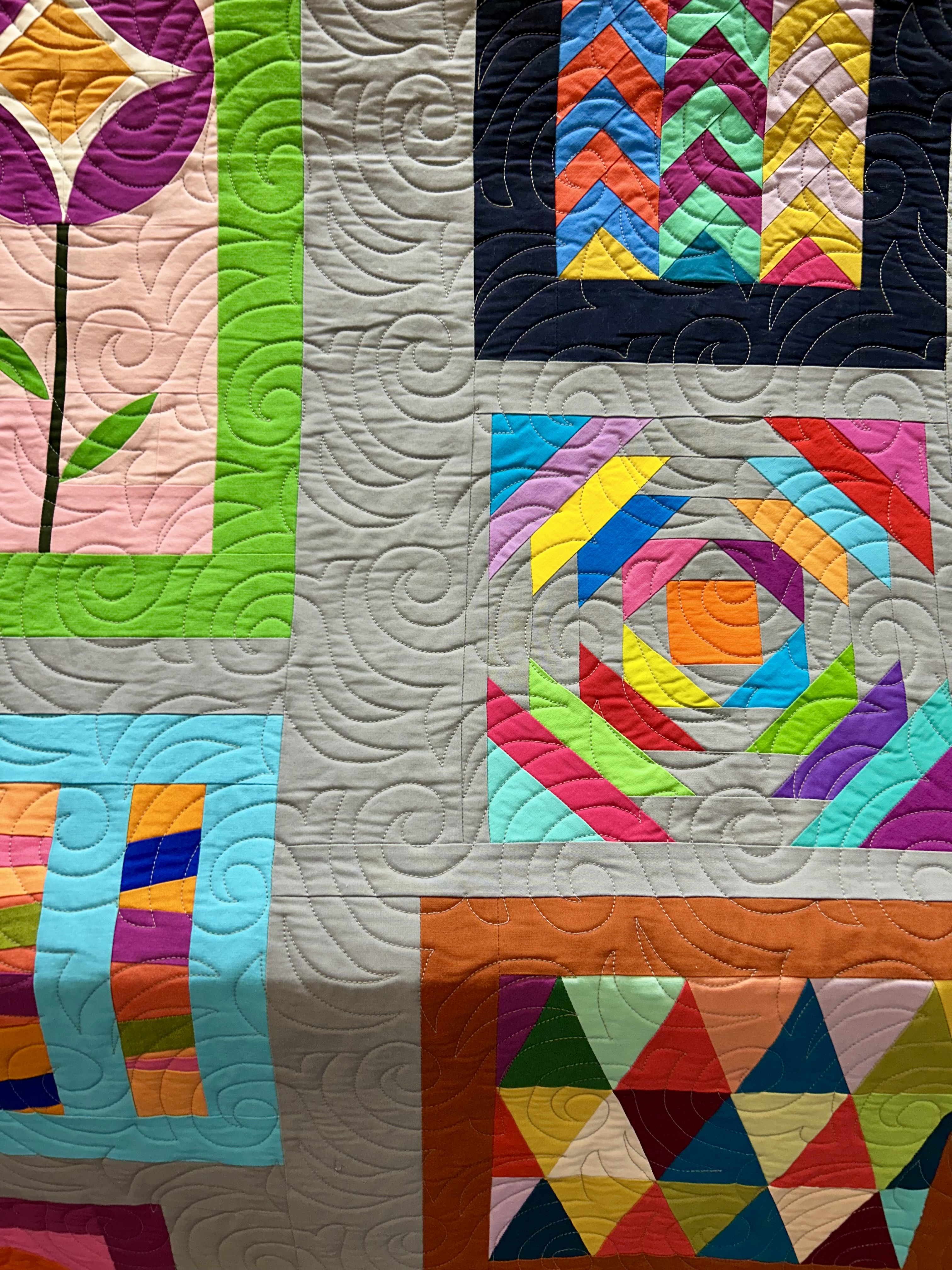
With “Under the Maple Tree” off the design wall, new projects are emerging–including this month’s Tara Faughnan Blocks3 block: “Garnish.” It’s “the curve month,” and the block is a “pickle” quilt block variant. As usual, Tara has given us many sizes with which to play if we want to do perfection sewing, but she has also walked us through making improv blocks.
Me, I’m using the templates she has provided. And I started with the 6-inch version to trial the block, which I added to my collection of quilt blocks made with solid fabrics on the design wall:
I went then to the 4-inch templates next and will stay there–maybe until I mostly use up this month’s fabrics.
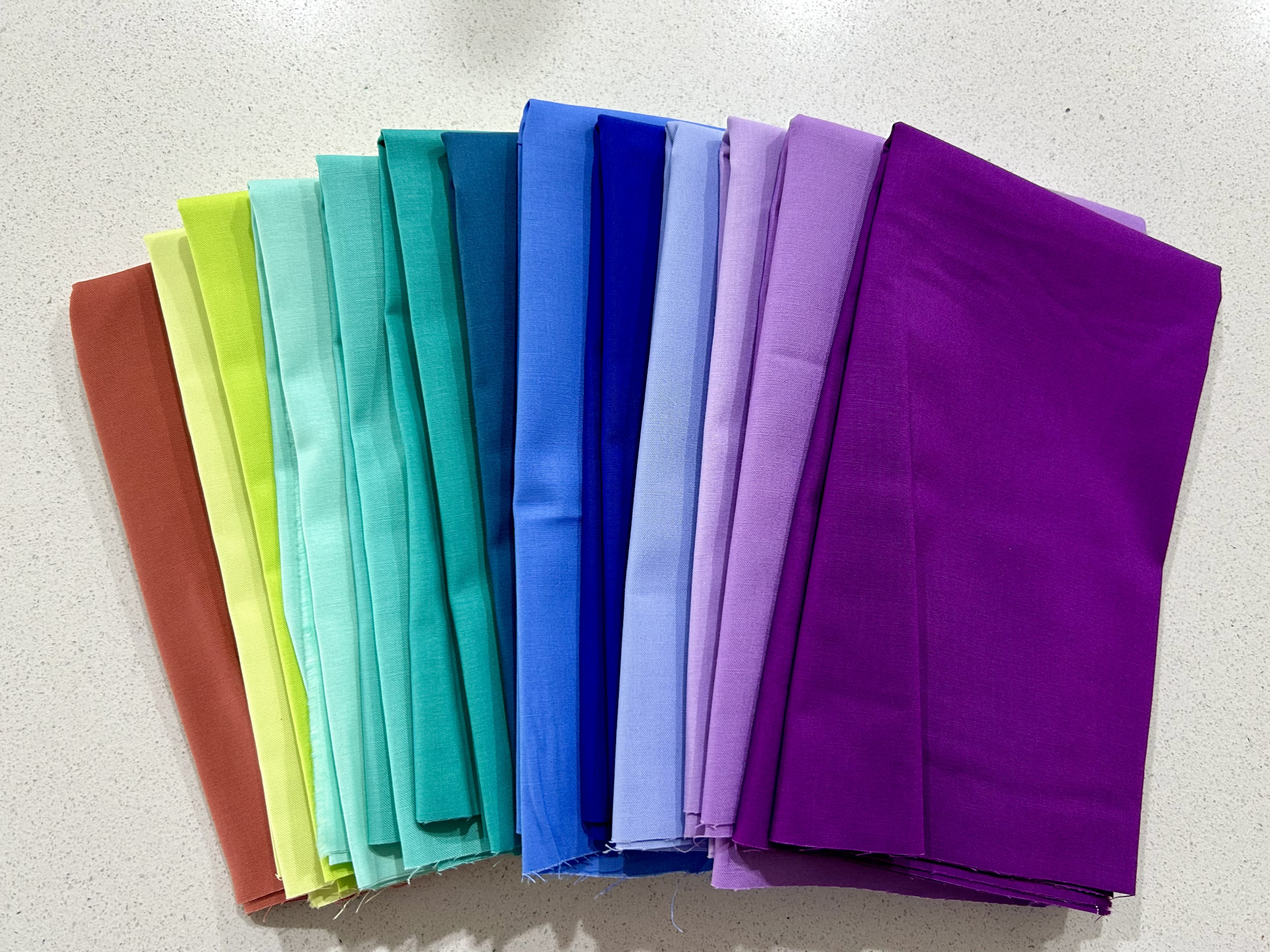
This month’s palette is really pretty, so I’m enjoying sewing with it. Having a palette selection of fabrics sent to you makes sewing decisions easy and immediately interesting. It is a treat.
Thanks to Tara’s many lessons over the years, I’m quite good with curves these days. These 4-inch blocks joined in a four-patch will each finish at 8 inches, so I’m thinking something that is 32 by 32–maybe a table topper that I can hand sew to quilt it. Of course, I’ll probaby move around blocks before sewing them all together.
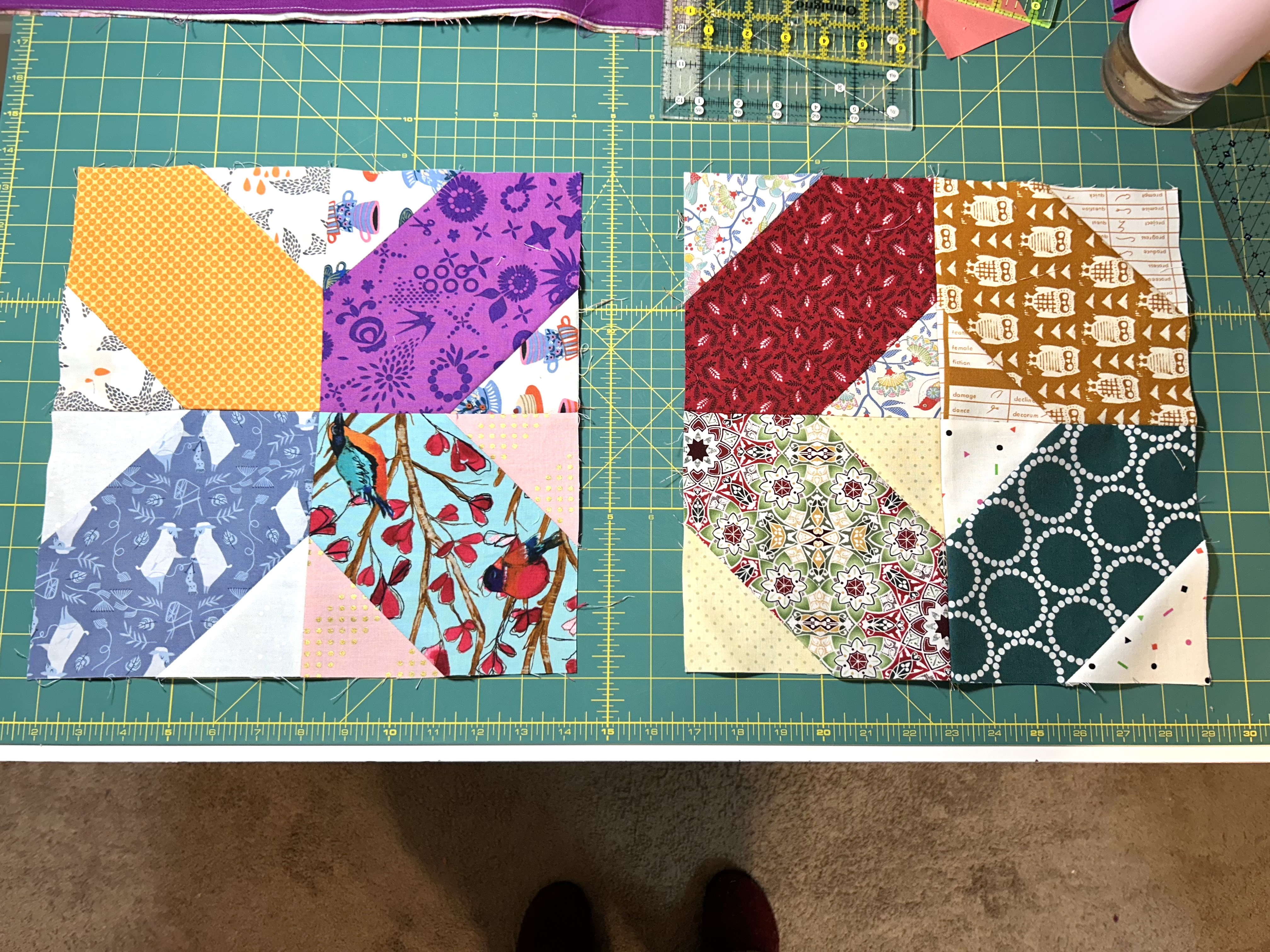
These little X-Plus blocks inspired by a Bonnie Hunter project may work out to be another donation quilt. Who knows? I don’t. The components are all from the 3.5-inch bins of squares and my stash strip bins (which I’ve organized by color now as they have gone down in size these past years). I’m not planning to make all the centers “fussy cut.” Some will just be light or dark.
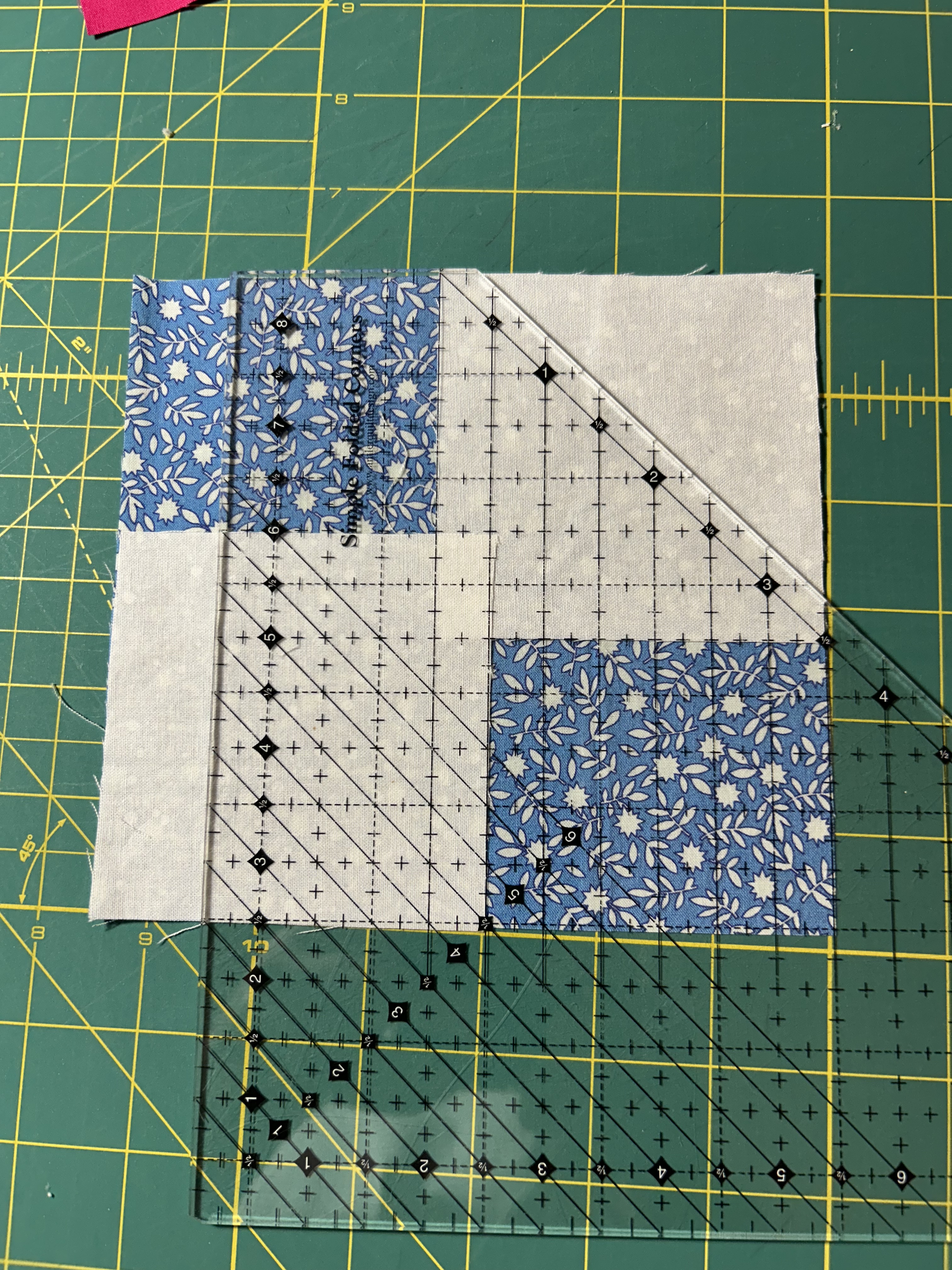
Note: the mini “folded corners” ruler is a real plus for making these flying geese blocks easier and quicker to make. I love the regular size of this ruler too. Maybe something with all flying geese is in my future…
Have a great week everyone! And enjoy your Sunday.
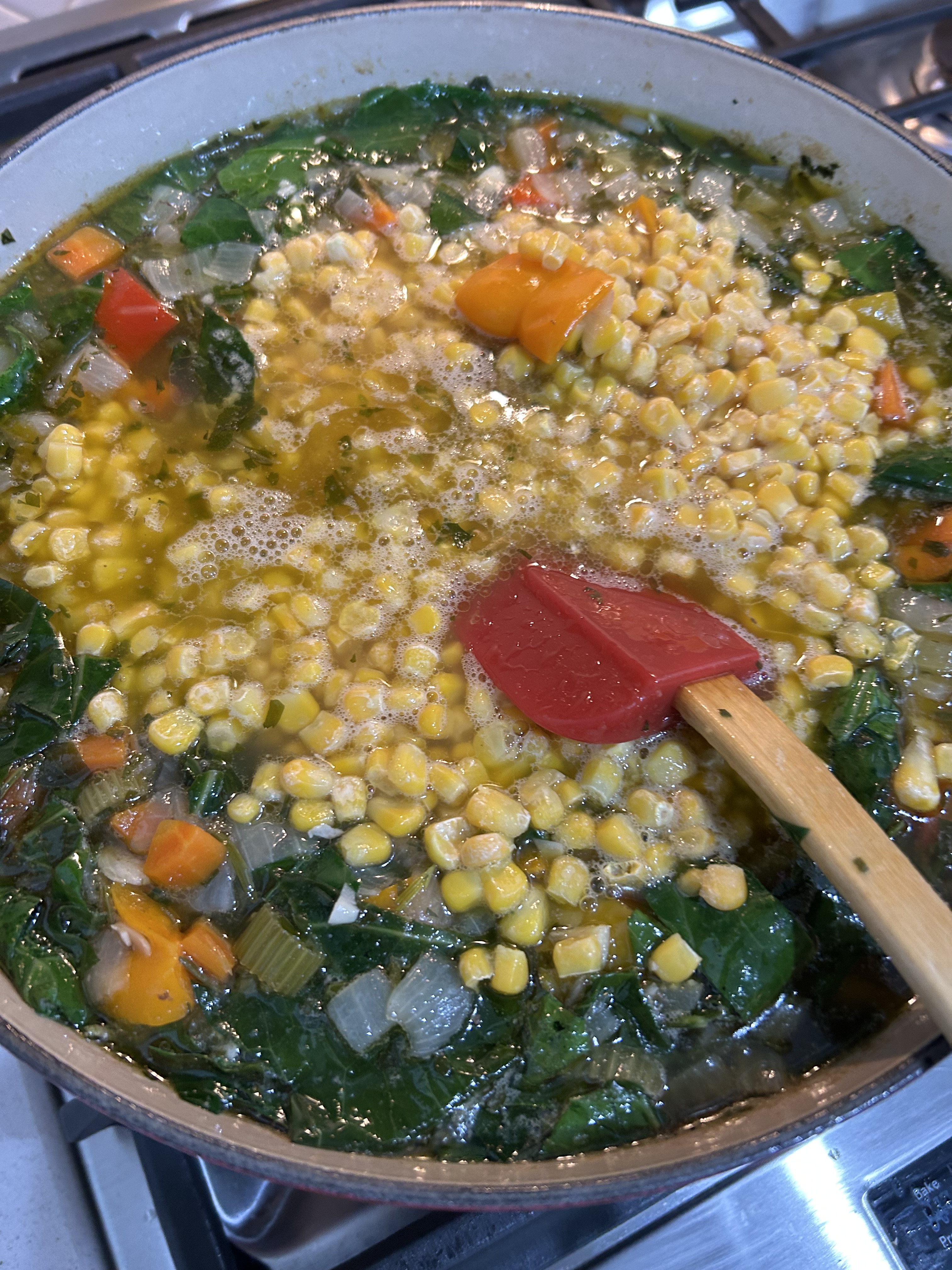
We’ve had temps dropping into the freezing area these past two nights, so it’s been time for me to seriously undertake the outside late fall cleanup chores. The red roses have survived the cold though, so I have not had the heart to cut them back.
Here’s what rosemary does in this climate: it makes bushes. Right now it is blooming, and the bees and hummingbirds have found it. But I think I’ll cut it back some after a hard freeze.
Still no rain though. But the walking has been delightful in these clear, sunny, cold days. Of course, if I were in Maine, I wouldn’t think this weather “cold” yet. I’d just put on socks and add a sweater layer. The wind here, though, was quite biting and strong for at least one day. And the trash cans, put outside the night before the weekly trash can pickup, had their tops opened with the night wind. We are all still picking up bits of trash that littered our front lawns.
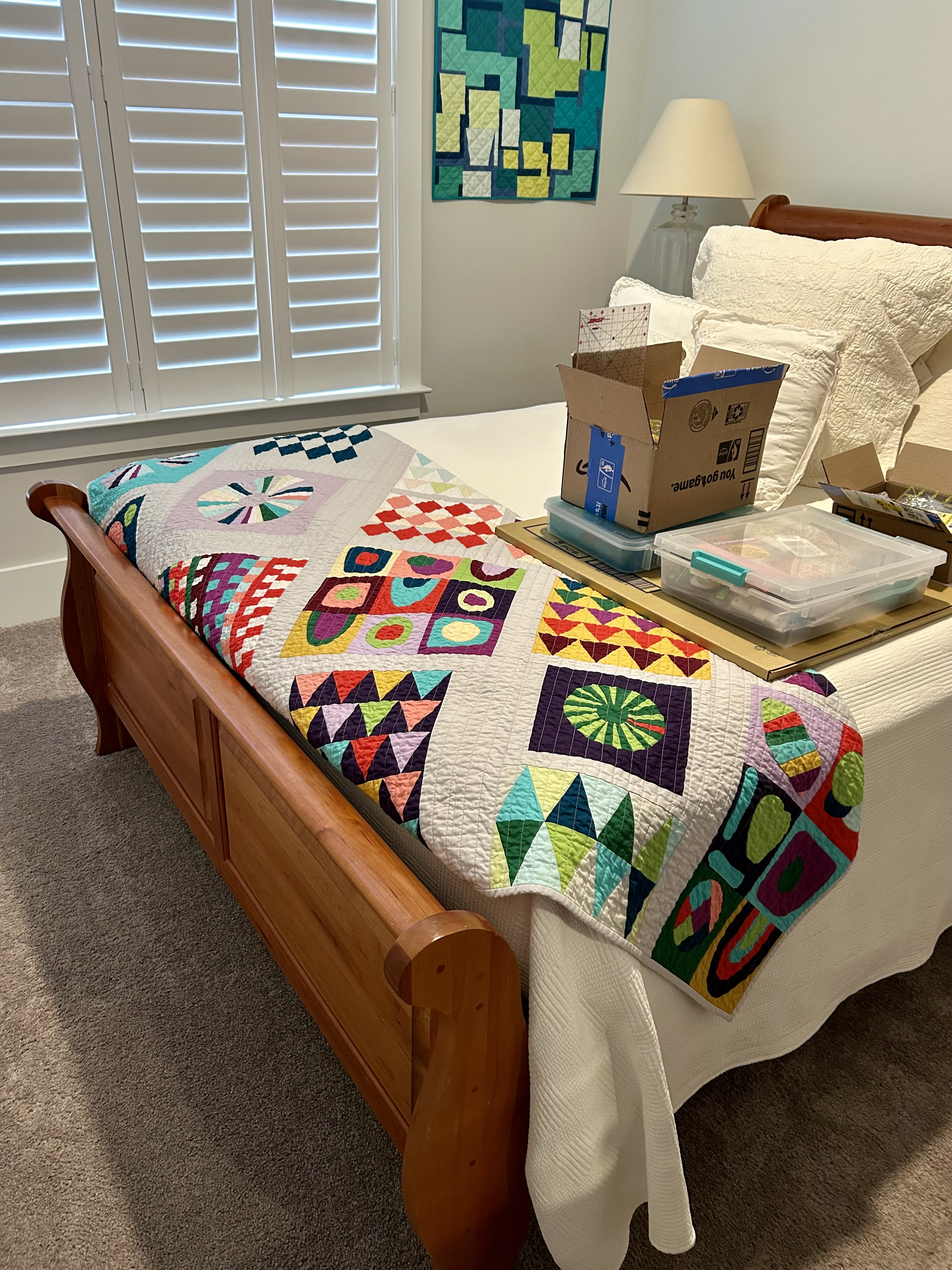
I finished the quilt top for “Under the Maple Tree,” a Rachel LaBour’s Stitched in Color blog sewalong. The perfect backing fabric finally got here–delayed due, perhaps, to the slowdown at the airports during the shutdown. It’s a Tilda fabric. Yesterday I found a fabric for the binding locally as I couldn’t find something I liked in my stash. This quilt was a lot of work, fun though that was, so I wanted the backing and binding to really “go” with this top. The leaf blocks are all from my scrap stash.
These blocks are sewn on point, and those little cute gold side pieces were a bear to get “just right.” I worried and worried during the final trimming, but it all came out well. (Thanks Rachel LaBour.)
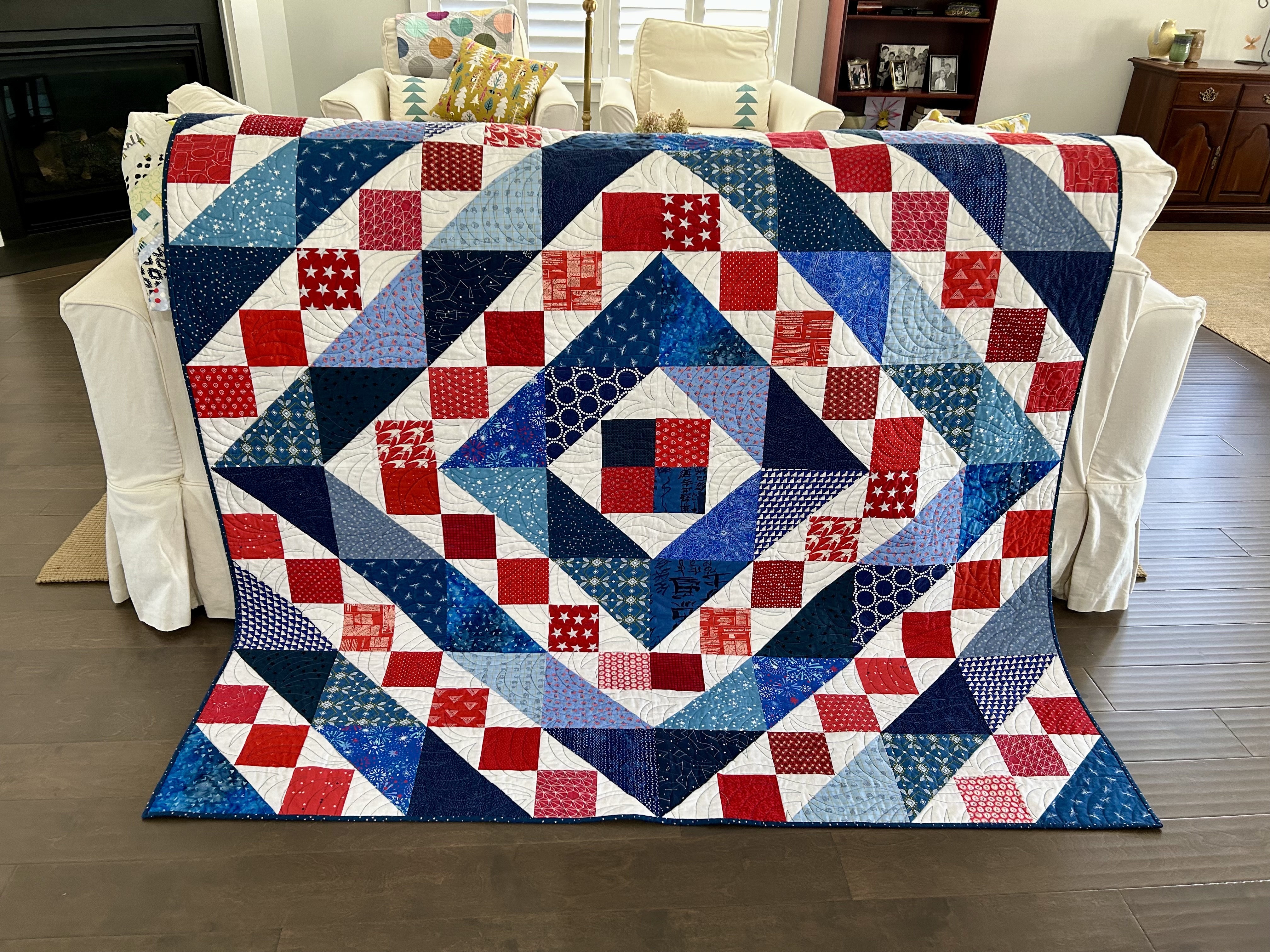
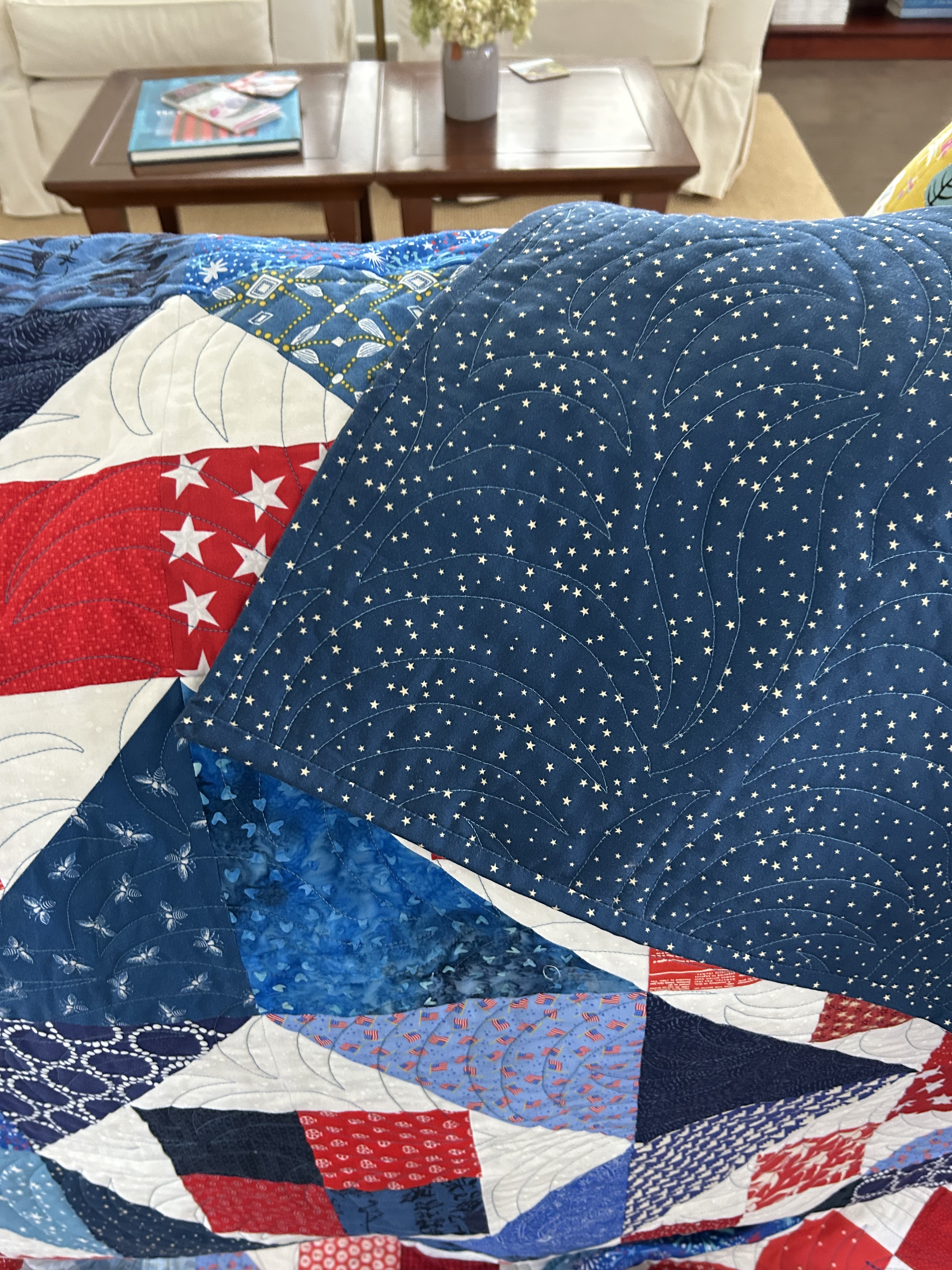
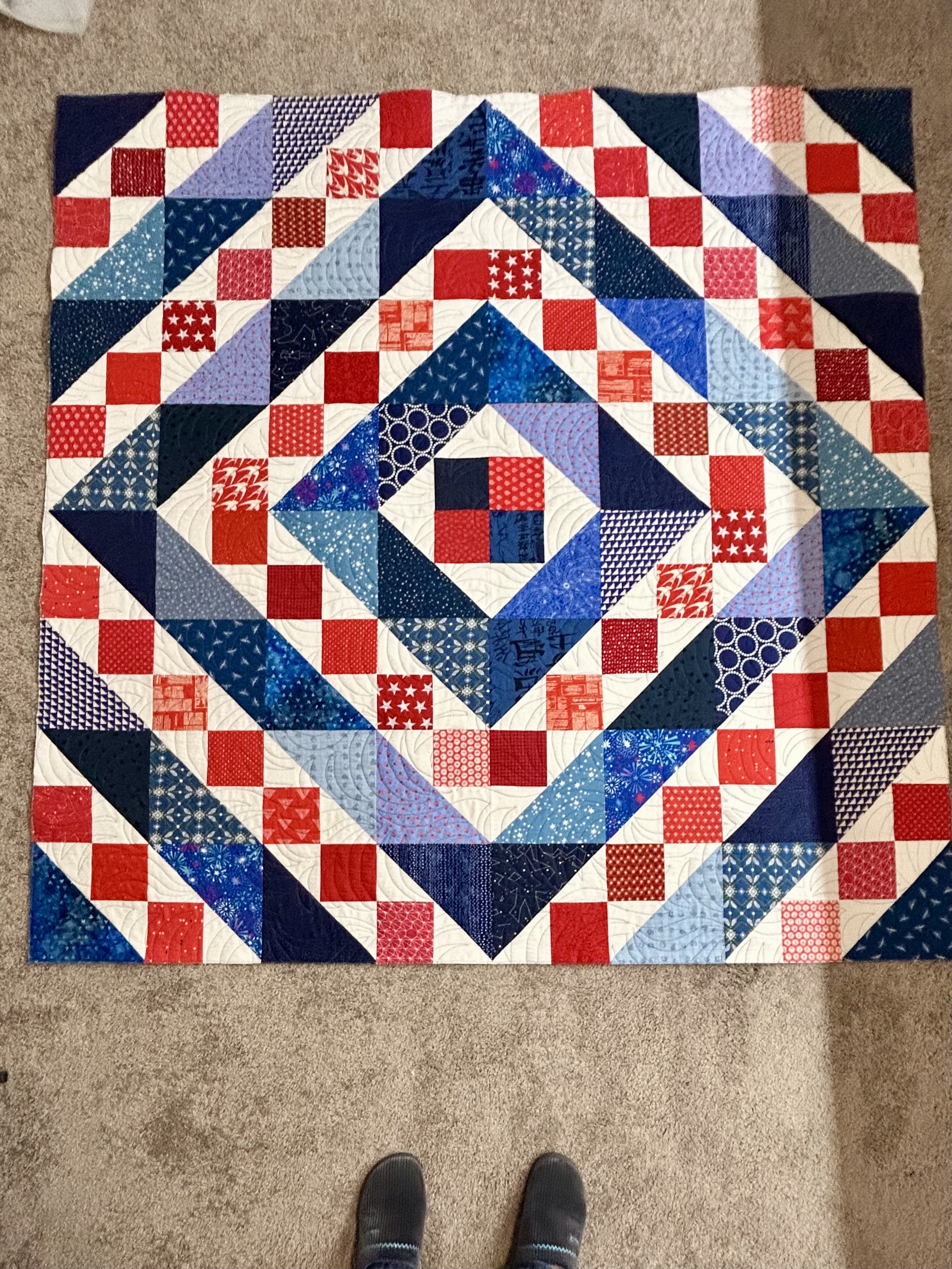
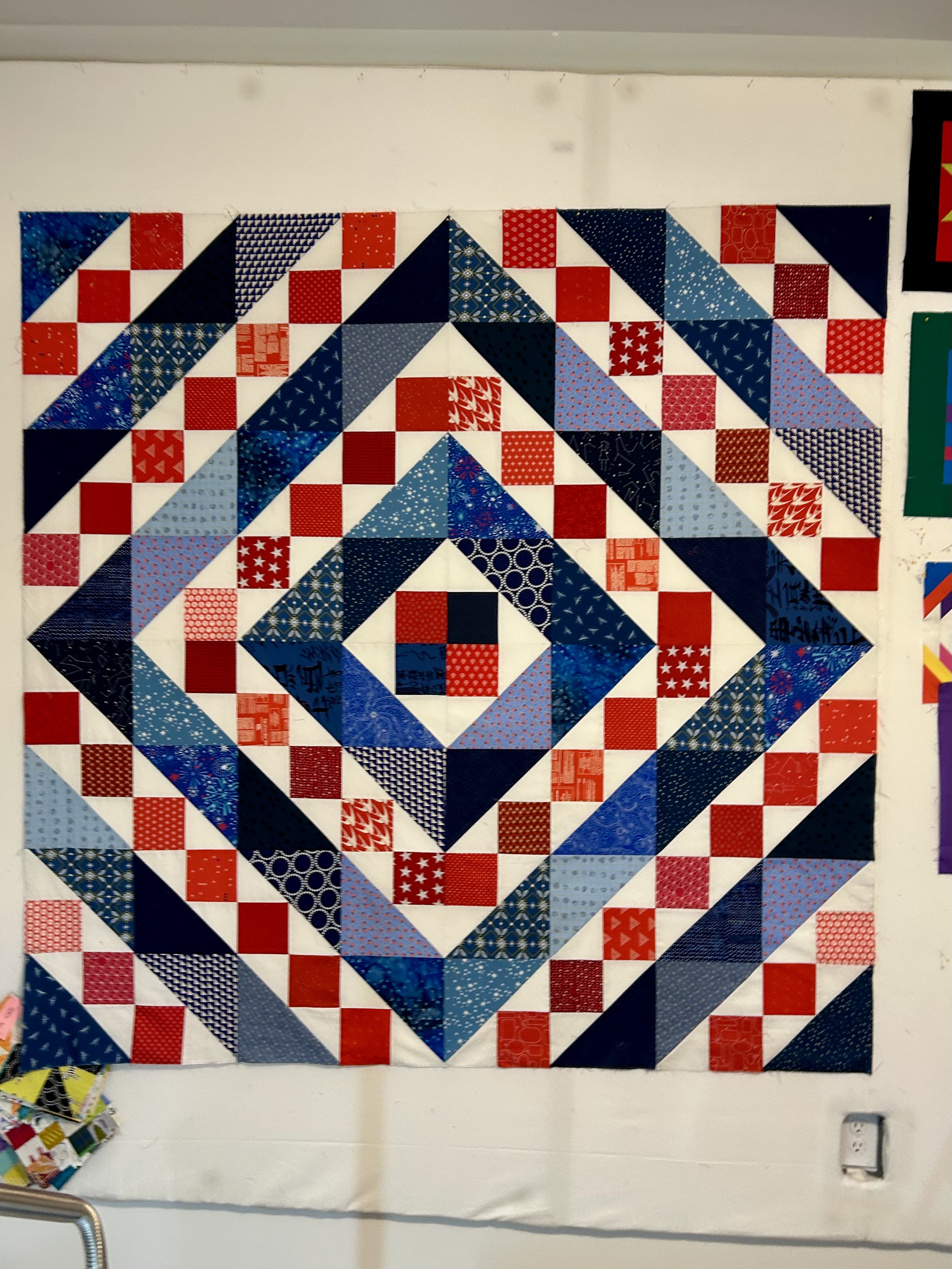
This little no-name donation baby quilt–made as a leader/ender with my 2-inch square bin and half-square triangles cut from scraps–is done. The pattern is from Bonnie Hunter’s free selection on her blog. It’s “Patches and Pinwheels.”
The on-point squares that form caught me by surprise. I didn’t see them coming. But I love how this secondary pattern makes this quilt so much more interesting. I’m still using those 2-inch squares to make four-patch blocks as leader/enders. So there may be another donation quilt from at least the “patches” part of this quilt down the road.