I spent HOURS yesterday watering plants and grass. It is so dry. My grass was trying to die–and this centipede grass is a water hog, for sure. It makes a mat like a rug that is 2 or more inches deep. My neighbors who have irrigation systems have grass that isn’t showing stress and browning, so I knew that mine browning was not due to fall/winter, but due to lack of water. So…watering had to happen. (My new little sprinklers are really helping as they have so many different, reliable settings that let me direct water to exactly where I want it to go.)
Here’s the last piece I’ll piece for this month’s “Hourglass” block in Tara Faughnan’s “Block 2” online class. I pretty much used up all the remaining blocks I had made and the scraps I had cut from this palette. (I just finished quilting the second half-rectangle triangle piece I did–the bright one. So now it needs facing or a binding.)
How fun is this? I’ll hand quilt it in some sort of incoherent wacky way to highlight the improv nature of this block. I also have a stack of potholders to sew–where I played with improv arrangements with this block. They’re fun. Pics when they are all done.
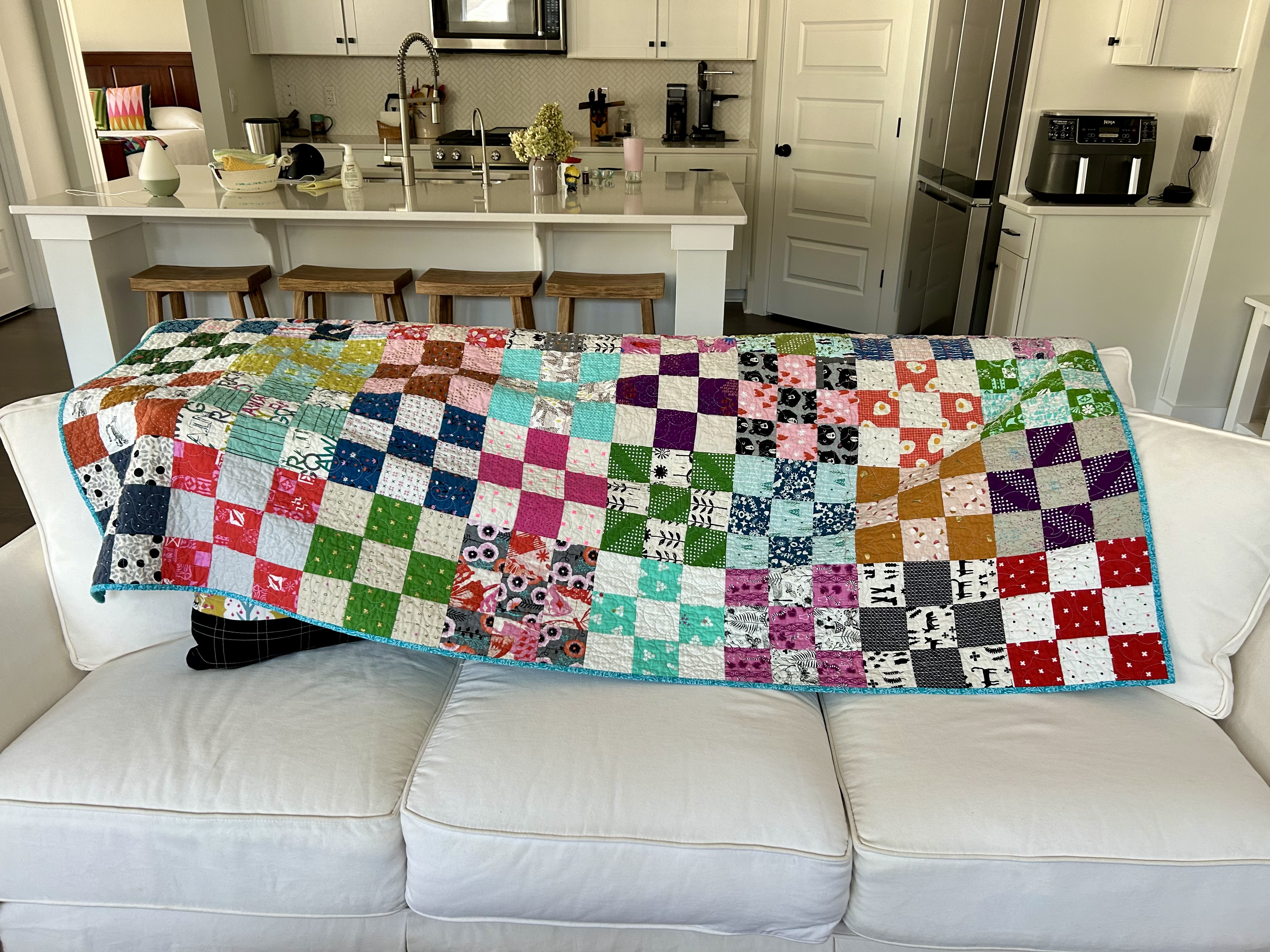
“Pot Pourri 4” is washed and ready to mail to a niece with a new baby girl. I like to hang a recently washed quilt over the sofa back to make sure all the moisture drys out before I mail it. And I’ll mail on Monday as I don’t like my quilts traveling on weekends.
I’ve grown very attached to this quilt–it is so lively and fun.
It is just a great scrappy quilt.
The Charleston Modern Quilt Group met this week. As always, the Show and Tell quilts were awesome. They are on that group’s open web site if you want to see more. But here is the latest from Cathy Beemer–another amazing quilt top.
I thought I was done piecing “Diamonds,” part 2 of my series with half-rectangle blocks. BUT, I realized I needed one more row as the width was 72, as planned, but the math escaped me for the length, which was only 64 inches!!! I put the top back on the design wall and thought about the issue for two days–and woke up yesterday with the best solution to extend the quilt. Yeah!!! Taking apart one row to add another inside the top was needed, and that is now done. I’m working on filling in that row. Our brains are amazing. Give them a problem to solve and give them time to solve it.
I bought my Halloween candy yesterday at Costco–which was totally jammed by people filling their carts to the brim. I guess I should have bought toilet paper. The final checkout man said the swarm was due to the dock strike AND people buying goods to donate to those in need after the hurricane. Heavens Knows there are LOTS of very needy hurricane survivors.
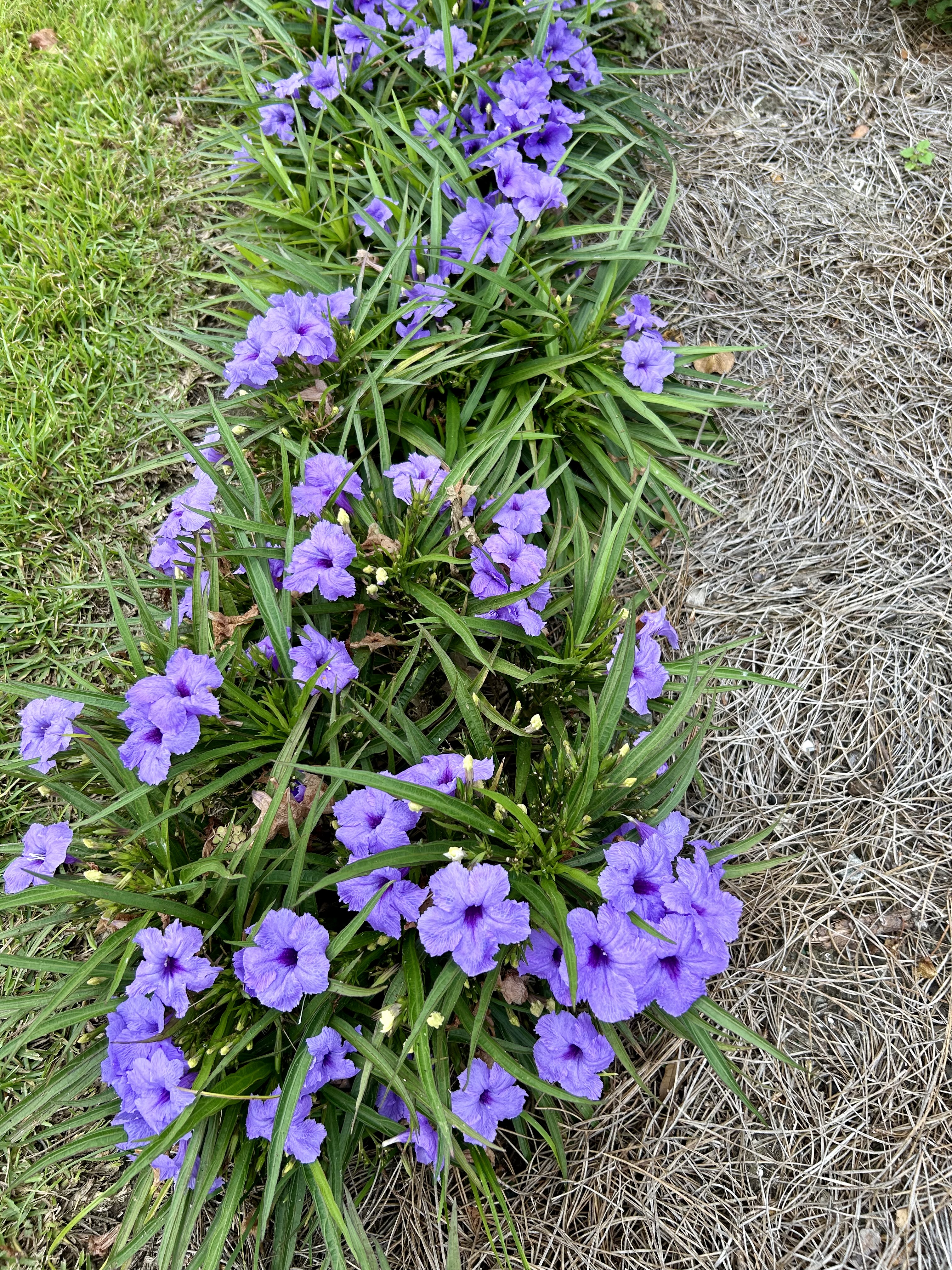
These dwarf Mexican petunia plants I planted last year are an unqualified success. They bloom for all but the coldest weather and are gradually filling in the areas that need filling in–like where I took out some Mondo grass on the driveway end of this bed.
Look at this gorgeous color–and this plant is VERY hearty.
These petunias come in white and pink too–a light pink. Every now and then one of these purple plants throws out a white or pink plant, so I dig it out and plant it elsewhere. Now I’m trying two of these offsprings in the big blue container on the screened porch that has struggled to grow…anything. The sun hits it directly in the afternoon.
The Mexican sage is, again, dancing in the wind. This plant, too, is new to me. It is especially fun to see through the tv room windows. It may be struggling with a bit of wet roots, due to the 24 inches of rain we got a while back. Three storms ago, was it? Or it is just turning leaves as it is cooler now and the light is different.
Look at these buds on the new camellia I planted last spring. Holy Moly! I can’t wait to see it bloom this winter. The other camellia, gift of Bryan and Corinne for my birthday last March, is on the other side of the house. It’s got buds too, but nothing like this little guy. The gift camellia is a different type of camellia and will be taller and much wider. This one in the picture will be lower and will spread sideways.
This beautiful White Heron (A Great Egret) let me take a good picture the other day while walking. S/he stood, not moving a muscle. I think creatures can sometimes tell if you pose a danger. (Note the black legs.)
Well, this is a fun project, highlighted in the weekly newsletter I get from Aurifil threads. It’s a leaf shaped potholder.
It’s made by Amira Ameruddin, known as amira_little mushroom cap on Instagram. She has a video showing how she made it.
I went out mid morning to water the roses and plants on the sunny side of the house as we have not had rain for some days now, and my phone chirped that the doorbell just rang.
The Drift roses I ordered had arrived, a day earlier than expected. The BIG tall boxes (about 3 feet tall) were on the front porch. But I was ready with sand and compost and set in to plant the roses immediately.
The roses were beautifully packaged, and the plants were so healthy and pretty. Each rose pot was covered with a plastic bag to conserve water, and there was packing around the top of each pot to keep the dirt inside. Plus, the plants had bamboo stakes set into the pots to keep the box from collapsing around them. (Please note that I tried my best for weeks to find these plants locally.)
The only problem I discovered was that the nursery sent White Drifts, not Popcorn Drifts. Both are white, so I shrugged and started planting. By noon I was dripping wet with sweat, hot, exhausted, and so dirty I hesitated to even come into my house. Each of the holes formerly occupied by the Encore azaleas that went to son Bryan’s shade had to be dug much deeper and wider and lined with the sand and compost.
The clay! The clay! It was just solid clay. And interestingly, the clay was damp, not dry, but we’ve not had rain in some days, so that’s the “bathtub” effect that was likely also impacting the Encores–along with the heat. Holes in clay like I have here creates a bowl that will hold water that will rot plant roots, especially after a lot of rain. So the holes for a plant have to be big and filled with sand to help at least a little with the drainage. Even too much compost can sit in the water and rot the roots.
One of my neighbors is Chinese, and her mother does not speak a word of English, except for counting 1 to 5 on her hands. She is a love, however, and often gives me big greetings, big hugs, and sometimes walks with me. At some point she came over with a broom and swept up all the planting dirt and debris on the driveway.
When I went to water the first rose planted, on the far right, a big frog hopped out of the middle of the plant and ran for cover in the liriope stand on the other side of the sidewalk. It was a hitchhiker from the Florida nursery who had nestled down in the center of the plant beneath the paper wound around the plant’s stem to keep the dirt in its pot.
Welcome Hitchhiker!
There are bugs here for you to eat!
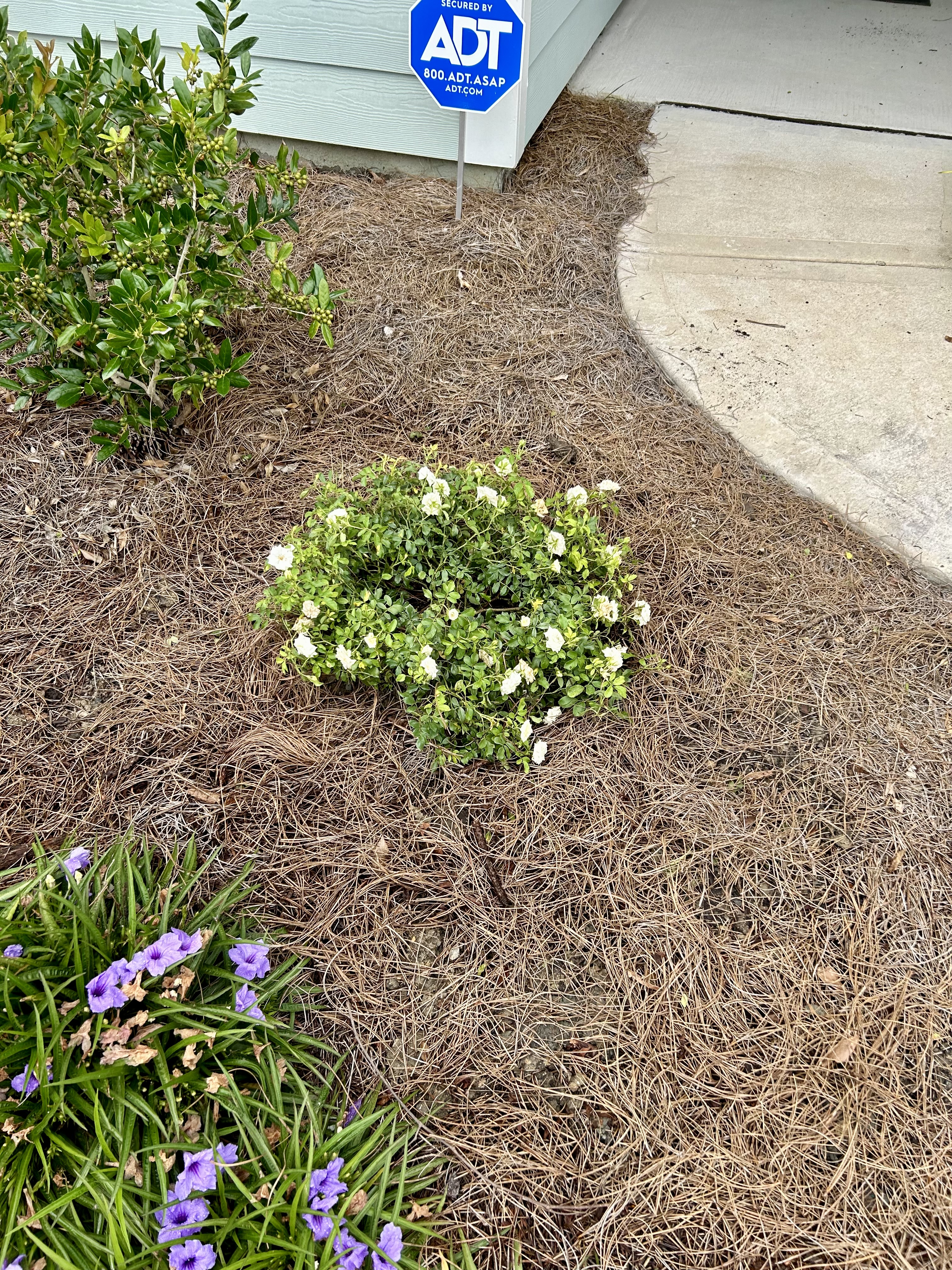
Here’s the hitchhiker’s plant:
These Drifts will spread out and repeatedly bloom for much of the year, stopping only in the colder winter months.
So, one problem solved, and for today, there are no outside jobs to do.
Remember when this sweet tree got planted last year?
Look at it now. It’s bigger and loaded with blooms.
Yep, it’s thriving. And look at the lush grass. It’s deep and thick and is like walking on a shag rug that is 3 inches thick, which I do often with bare feet. I hand weeded for emerging weeds the first year, but this year there are no weeds.
The “Encore” plants in the front, however, are NOT thriving. It’s too sunny and hot for them in that place. “Encores” are a cross between azaleas and rhododendrons–neither of which is happy with too much sun–though claims are made that the Encores are “sun tolerant.” Remember that I planted them last year and moved the struggling azaleas in that bed to the shady side of the house–where they are thriving. Encores will bloom off and on all summer and fall.
My neighbor’s Encores get a lot of afternoon sun and are thriving. But the front of my house gets the full impact of the summer sun well into mid-afternoon. And clearly, Encores do NOT work there. I have no space to move them to shadier sites in the garden, so they are going to go to Bryan and Corinne as soon as I dig them out. One has already died.
Eventually the Crepe Myrtle will provide more shade, but not for a few years. I’m going to replant with the “Drift” landscape roses like the little “Popcorn” rose I planted earlier in the summer. It is thriving in the hot sun in the back of the house. I’d like to get more of the “Popcorn” version, and Hidden Pond Nursery is going to try to order 5 of them for me. Otherwise, maybe the “Apricot” Drift rose that is known for its fragrance. Hidden Pond does carry the drift roses, so eventually I’ll get some that will work for me.
Drift roses are low to the ground and spread. They will be perfect for the front. Here’s a picture of my “Popcorn” rose in the back, surrounded by white perennial Lantana, which is also thriving. Drifts rebloom on a regular basis, and one does not have to deadhead them, but I do. And deheading is needed right now. But you can see all the new growth. The blooms open white and then start to turn a pale yellow at the centers. I love the name “Popcorn” for them.
And while I was outside with my phone, I took a picture of the “Limelight” hydrangea I planted last year. It, too, is thriving.
How fun is that?
(The herb garden is to the right of the “Limelight,” and that’s Rosemary growing tall. I almost lost it to a sucker fly insect in the early spring and used Neem oil and soap and water sprayed several times a day to stop them.)
Gardening is a practice of wins and losses. The wins are more fun.
Last Tuesday late afternoon we were about to get another thunderstorm, and I went out to move a plant on the screened back porch and saw a HUGE insect on the outside of a screen. What on earth?
All of you who follow this blog know that I had to immediately figure out that insect.
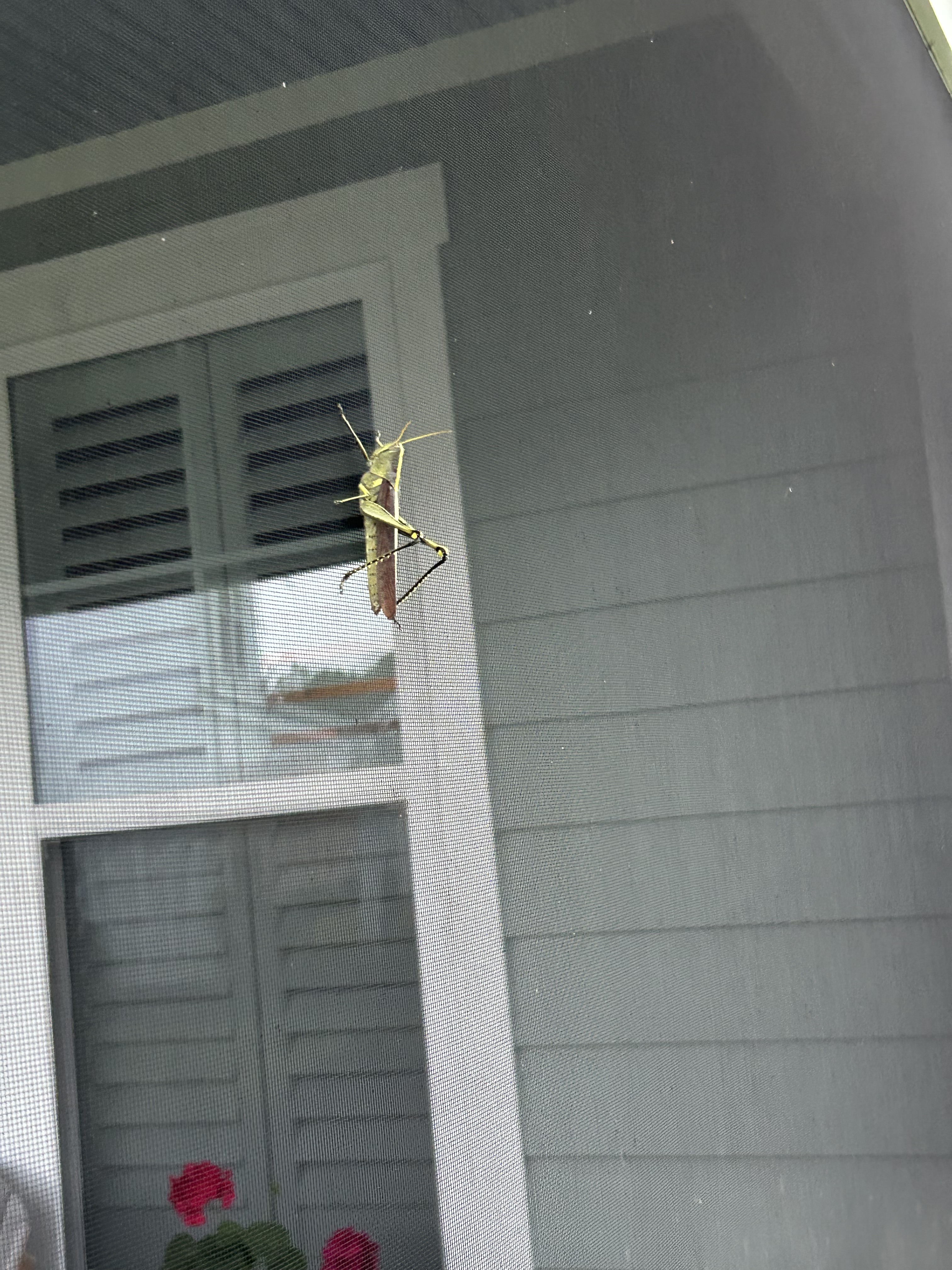
I’ve never seen a grasshopper like this HUGE creature. S/he is almost 3 inches long! With lightening from the storm already starting, I had to go outside to get pictures.
What on earth kind of grasshopper is this one?
Look at the gorgeous markings too. Huge back legs…
It’s an Eastern Lubber Grasshopper. What does “lubber” mean? Here’s a quote from the information link below:
“Lubber” is derived from an old English word “lobre” which means lazy or clumsy. This term has come to mean a big, clumsy, and stupid person, also known as a lout or lummox. In modern times, it is normally used only by seafarers, who term novices “landlubbers”.
Here’s a stock photo I found that shows the size of this huge creature in a human hand.
But don’t try to pick them up as one will spray a noxious toxic mixture at you–which is why it has few predators.
It can’t fly, so it lumbers along walking.
What kind of damage? Here’s a quote for the informational link below:
“Lubber grasshoppers are defoliators, consuming the leaf tissue of numerous plants. They climb readily, and because they are gregarious they can completely strip foliage from plants. More commonly, however, they will eat irregular holes in vegetation and then move on to another leaf or plant. Lubber grasshoppers are not as damaging as their size might suggest; they consume less food than smaller grasshoppers (Griffiths and Thompson 1952). Damage is commonly associated with areas that support weeds or semi-aquatic plants such as irrigation and drainage ditches, end edges of ponds. Grasshoppers developing initially in such areas will disperse to crops and residential areas, where they cause damage. Thus, as is the case with many grasshoppers, monitoring and treatment of areas where nymphal development occurs is recommended to prevent damage to economically important plants. Also helpful is to keep vegetation mowed, as short vegetation is less supportive of grasshoppers.”
We got 6 inches of rain Monday night and 3.5 inches in the late afternoon storm Tuesday. The grass and plants outside are now happy. But the ants aren’t, and that is another story to tell as they are coming inside my house.
PS: It’s Saturday morning now, and the grasshopper comes and goes on my back porch screen. Likely s/he came from the bio swale/stream that runs through our neighborhood or the wetlands above it. I don’t see any apparent damage to the roses though.
I saw an insect I didn’t know the other day on the red roses.
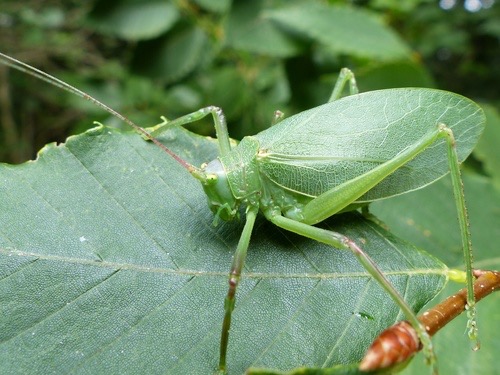
It was about 1/2 to 3/4- inch long, the color of a green apple, and had the longest front antennas I’ve ever seen. The antennas had to be over an inch long, seemed to be iridescent, and had tiny alternating bars of darker/lighter colors.
It didn’t take long to figure out what it was: a katydid, also known as a “bush cricket” in some places. It’s kin to grasshoppers too. It’s a jumper, with big hind legs. Yes, she/he jumped immediately when it saw me looking. And it did look like “a walking green leaf”–the description I found along the identification way.
Katydids are not worrisome pests in a garden as they only eat a tiny part of upper leaves on shrubs and trees. They are prey for a lot of other insects and birds. There are many types of katydids across the world, some do eat other insects and some can be much bigger. But the one I saw is common in tropical/warm climates like the southern United States.
Here’s an image I found:
I mentioned seeing a katydid in my roses to a neighbor, and he laughed and said, “What! You’ve never seen one? We used to try to catch them.”
If I had seen one as a child at my grandparents’ house in Georgia–and there was a big garden–I have no memory of it. Hummingbirds, yes, but not katydids.
The night-time calls from Katydids are VERY loud apparently–and their calls are very distinctive. They make the call by rubbing their wings together. (There is a link below where you can hear them–and I’m now wondering if part of what we have all been calling “frogs” is at least partly Katydids.
 A languid atmosphere, a lazy breeze,
With labored respiration, moves the wheat
From distant reaches, till the golden seas
Break in crisp whispers at my feet.


My book, neglected of an idle mind,
Hides for a moment from the eyes of men;
Or lightly opened by a critic wind,
Affrightedly reviews itself again.


Off through the haze that dances in the shine
The warm sun showers in the open glade,
The forest lies, a silhouette design
Dimmed through and through with shade.


A dreamy day; and tranquilly I lie
At anchor from all storms of mental strain;
With absent vision, gazing at the sky,
"Like one that hears it rain.
"

The Katydid, so boisterous last night,
Clinging, inverted, in uneasy poise,
Beneath a wheat-blade, has forgotten quite
If "Katy DID or DIDN'T" make a noise.


The twitter, sometimes, of a wayward bird
That checks the song abruptly at the sound,
And mildly, chiding echoes that have stirred,
Sink into silence, all the more profound.


And drowsily I hear the plaintive strain
Of some poor dove .
 .
 .
 Why, I can scarcely keep
My heavy eyelids--there it is again--
"Coo-coo!"--I mustn't--"Coo-coo!"--fall asleep!
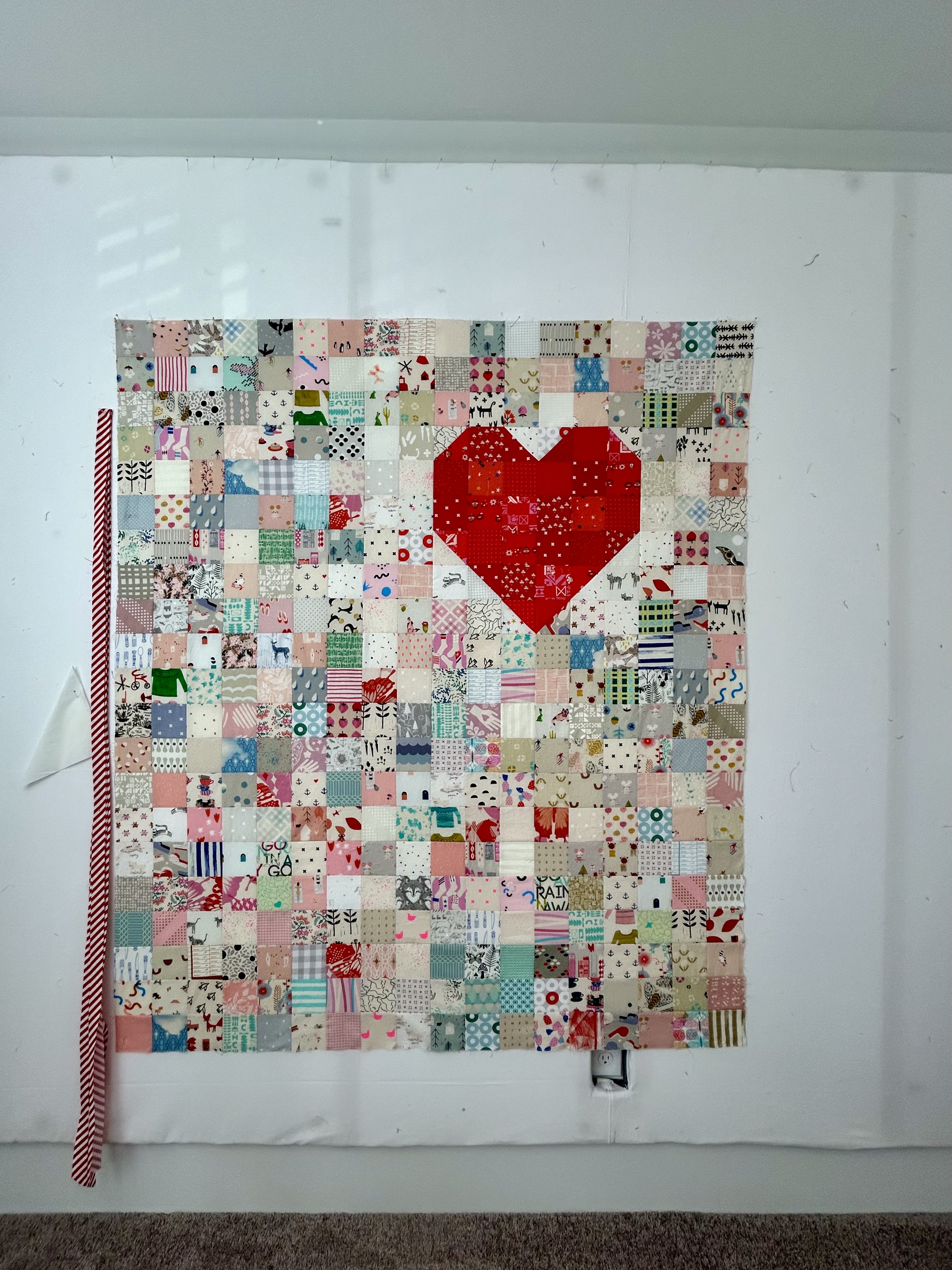
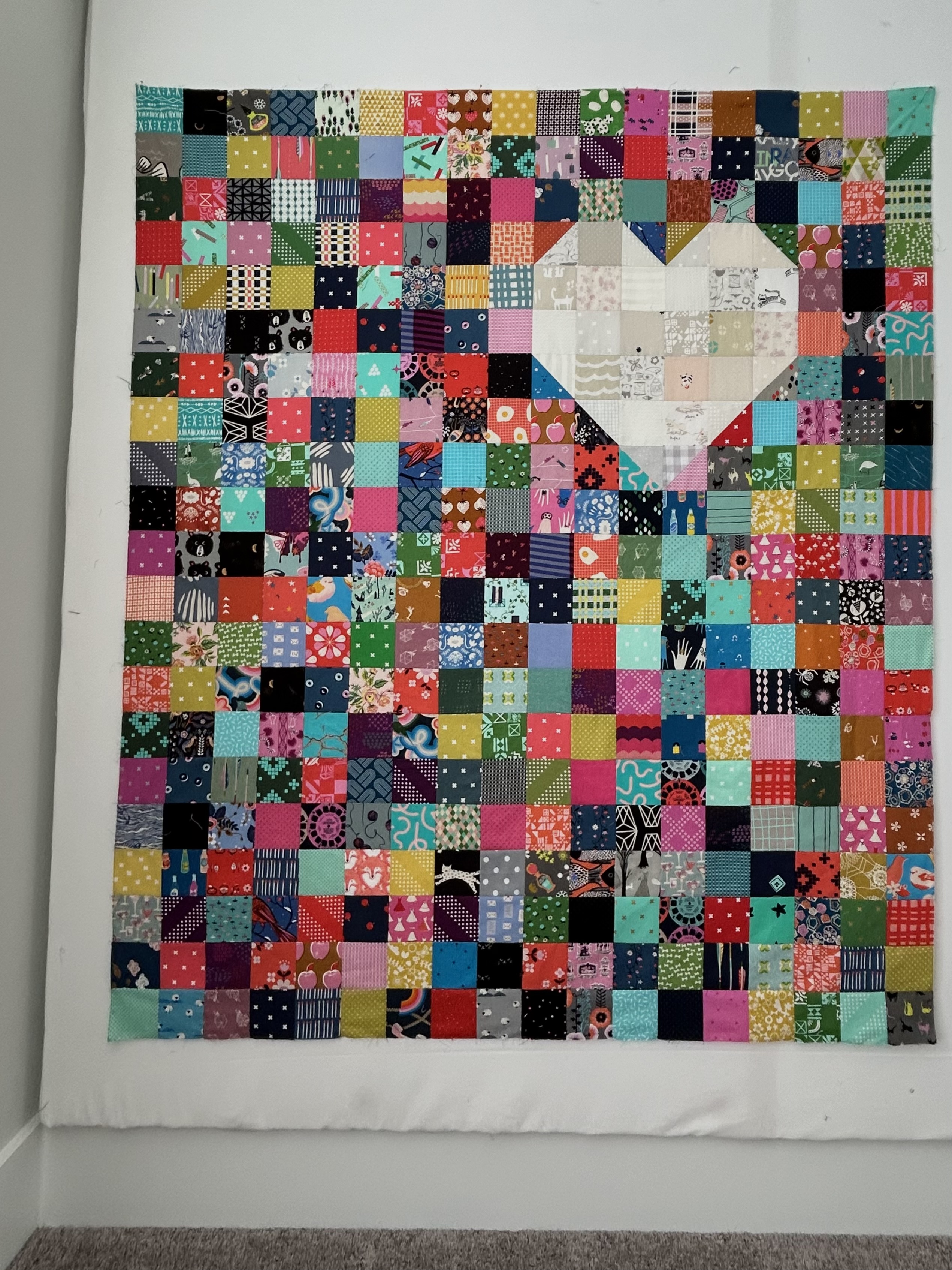
I finished the second “A Piece of My Heart” quilt top yesterday, and will measure it and organize a backing/binding today maybe.
Here are the two tops–made with the 3 1/2-inch squares of Cotton+Steel/Ruby Star Society fabrics I cut up about 5 years ago. I have lost count of all the quilts made from that fabric stash. It is probably nearing 20, if not a bit more. That might make a fun blog post one of these days.
And:
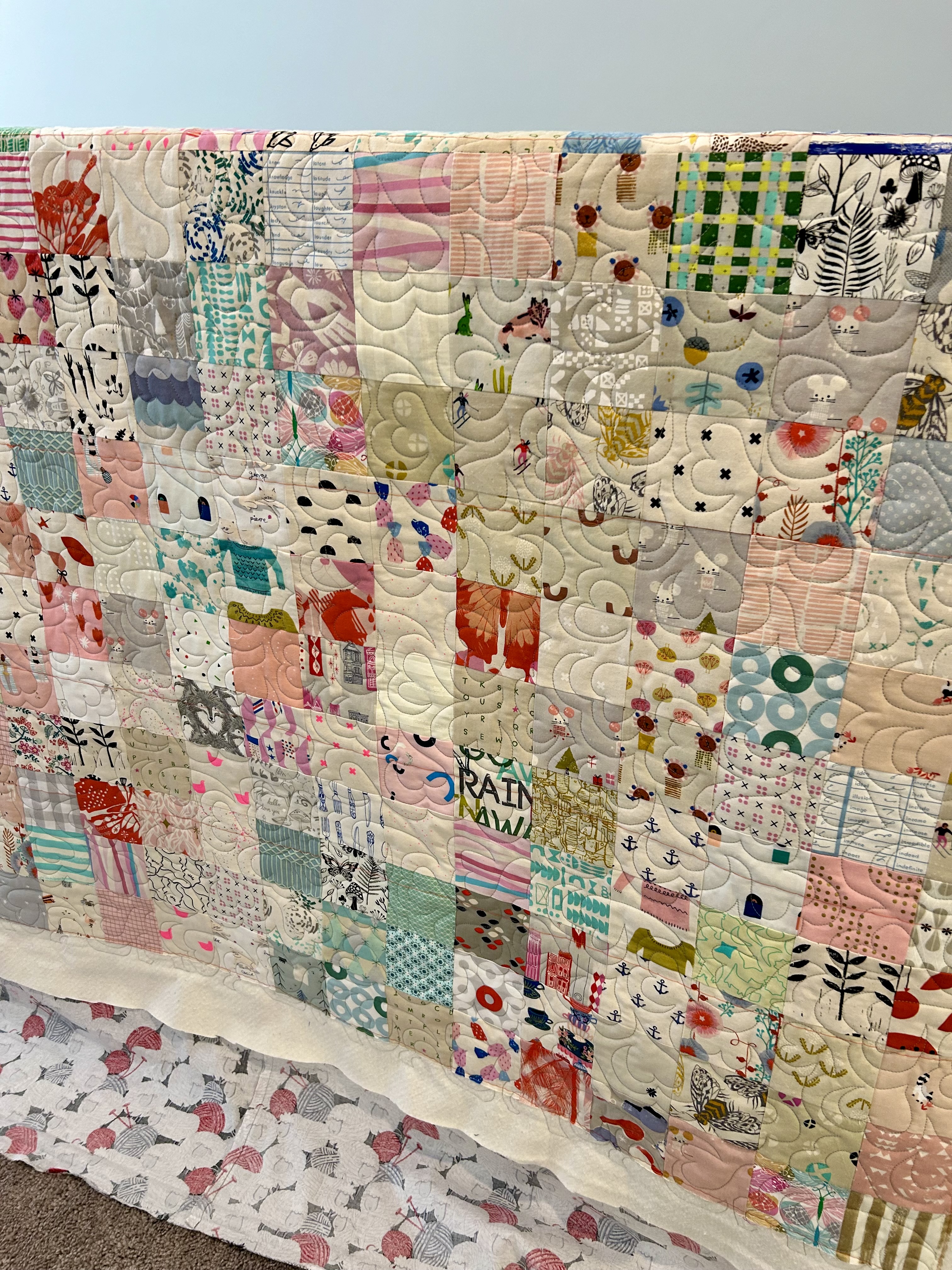
The neutral top is quilted now–with a heart pantograph that created lovely texture. This top is now trimmed and binding made. Note: Bonnie Hunter some time back said she trims with a SMALL square ruler. I’ve been trying that–using a 9.5 square–and that is really working well–much better than the big 24-inch square and a long ruler. I have much more control.
Aren’t these pretty flowers from my garden?
My two gardenia plants are NOT thriving. Their leaves turn yellow, drop off, and they grow new ones. Research says they need specific nutrients and to try a mixture that uses fish parts. I ordered some–and mixed it up and put it on them. We’ll see. The soil here (whine, whine) is mostly clay–it will take time and amendments to help it.
It has been cooler here this summer than last, but it will get hotter now likely. La Niña (cooler and dryer than her boyfriend El Niño) is shifting into place. Also the water vapor spewed into the atmosphere from a huge underwater volcano (Hunga-Tonga) a few years back is now dissipating. Water vapor is way, way more important to heat retention in the atmosphere than CO2 and is much, much more than CO2.
Anyway, I’ve really been enjoying my walks after 7 pm and can do a mile in short order. We have a frequent “sea breeze” here that is just delightful, and it appears in the evenings frequently.
It’s the biggest darn flying wasp-like critter I’ve ever seen. Some are close to almost 2 inches long. And they have set up shop in my red roses.
It took me some time the other morning to get some pictures–without risking being stung–and some time researching with pictures to figure this one out as there are other similar insects out there. One is now moving into South Carolina, and it is a problem.
It’s a Cicada Killer Wasp. And they are not true wasps or hornets as they don’t bite or sting.
Yes, the females are up to 1 1/2 to 1 3/4 inches long. The males are smaller, but are very active as they are “guarding” the underground nest the female digs for her eggs. Males aggressively patrolling a nest location can be scary if you don’t know anything about these highly colored insects and encounter one. All one sees is the size and the waspy colors.
This picture is of the smaller male on guard. He’s very active so it took me some time to get a resting picture.
Here you can see the distinctive yellow dot on the front of the face–and the dull red markings around the head and on the legs. There are three yellow bands on the lower body, on the upper part. The rest is black. The wings are stationary and lie flat when at rest.
The HUGE females are much harder to capture with my camera. She has what looks like a stinger protruding from her rear, but it is used to sting her only prey, a cicada that she ceaselessly hunts down as she uses it for food for her eggs. If one tries to capture her and brushes the stinger, it can leave a very mild sting, but that’s all. Research says that the sting is less than that of a mosquito bite. Mostly these insects eat sap and nectar.
Here’s a quote from the informative link below:
“Female adults often dig their tunnels in a backyard sandbox, a sand trap on the golf course or in a nice sandy picnic area outdoors. Lawns, gardens, flower beds and athletic fields are other preferred nesting sites. They excavate noticeable amounts of soil around their tunnel entrances and create unsightly mounds. Large soil particles are removed with mouth parts and then shoveled through their legs in a dog-like manner.”
I now remember that I saw these piles of dirt obviously excavated from my rose garden beds last year. At the time I was puzzled by what dug out the dirt. A frog maybe, I thought? I just put the dirt back with my trowel and called it a day.
But…
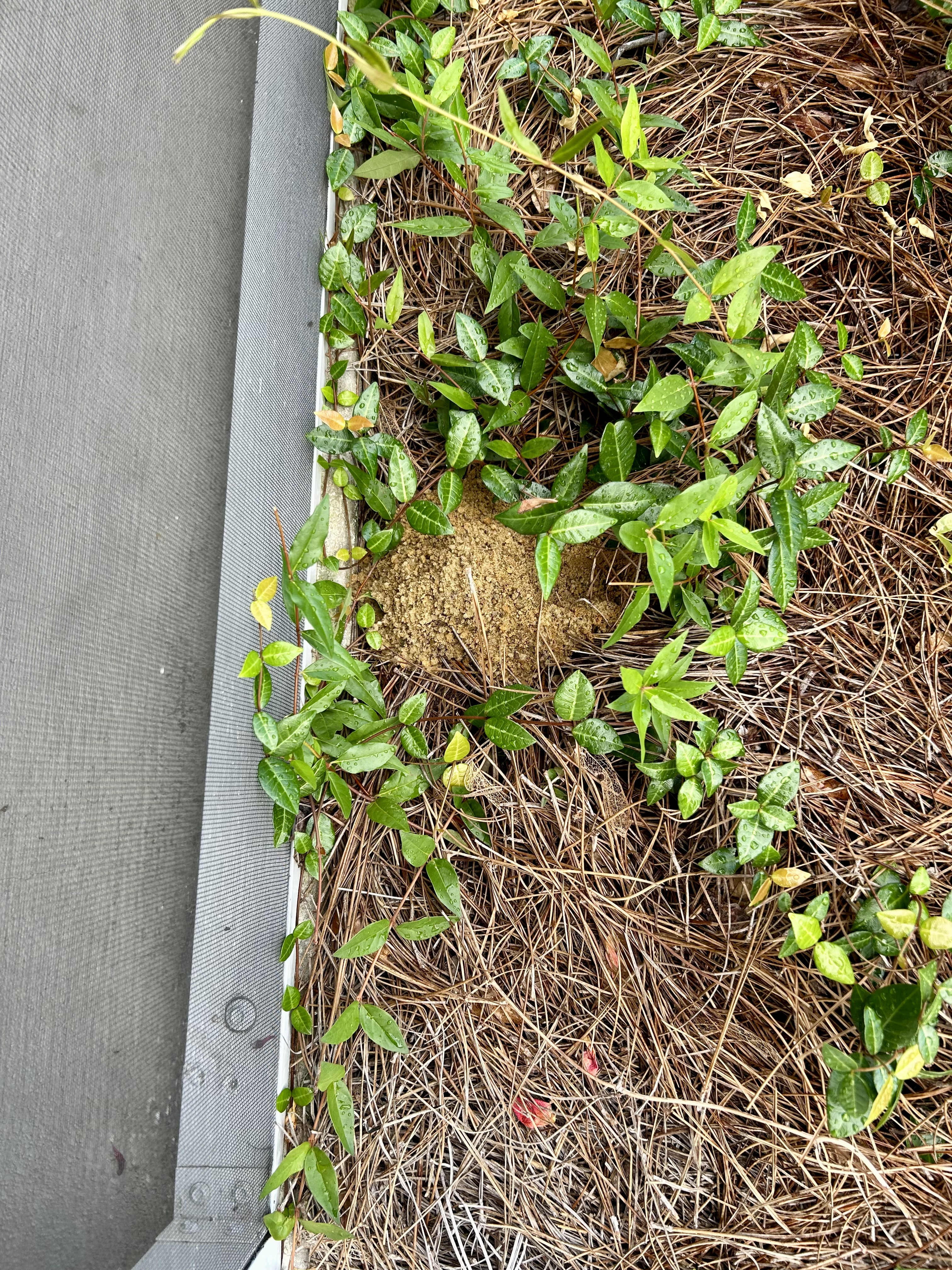
Here’s one of the dirt piles I found this morning–and look how well the Asian Jasmine (which is not a jasmine) ground cover is spreading now. That is a LOT of dirt for an insect to remove with her mouth and shovel backward with her legs.
The adults only fly around for about 2 months, and now that I know what they are, I’ve enjoyed watching their antics in my roses. I’m not worried about having them around. At the very least, their tunnels and underground nests will aerate my very very poor soil.
Please don’t kill these harmless creatures. Instead, enjoy the show and the other benefits they provide. You can’t miss them. They are HUGE.
It is Saturday morning, and I’m up early as the modern quilt group has a Sit and Sew this morning, starting at 9:30. It’s held monthly at a local wonderful quilt shop about 40 minutes from me: Five Eighth Seams. The store has a strong collection of quilt fabrics, but also garment fabrics. They also teach a lot of classes on how to make both quilts and garments. And they have a big sewing room with lots of tables and plugs for machines people bring.
Look at the Shasta Daisy! It not only came back, it is bigger and is blooming like crazy. Yesterday I deadheaded the spent blossoms and, yes, I’m picking off the June bugs that have shown up now–several times a day. I’d like to think I’m making a dent in them. That is Lantana on the right and a Russian sage on the left.
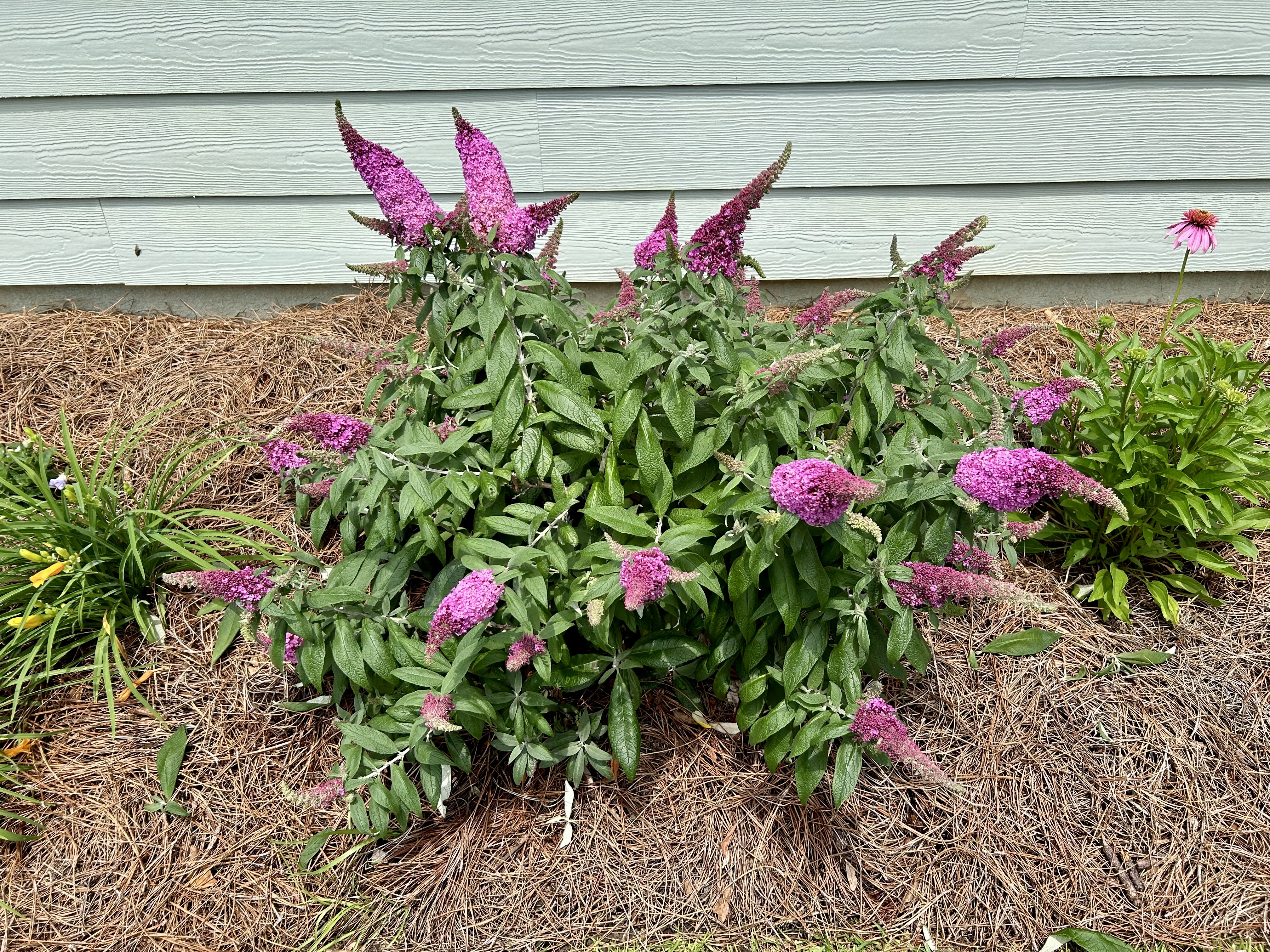
The dwarf butterfly bush is back in full force too, and this year its blossoms are way bigger. I filled a nearby hole in this long bed recently with a white butterfly bush which looks like it is now setting blooms.
So now I have a mixed grouping of flowers to bring inside as I trimmed back the red roses, and they are setting up again to bloom again soon.
I’m on THE LAST ROW of the quilt “Happy.” THE LAST ROW. But, yes, there is the border, but it will sew fast.















 Louisa Enright's Blog