Sunburned Azaleas

The five white azaleas out front have struggled with how the sun hits them all summer. They are badly sunburned–and now you can see them trying to “green up” their leaves as the angle and the intensity of the sun has moved into fall/winter coolness. These plants were a bad choice by the builder’s landscape sub, given the intensity of the summer sun and no shade until about 3 pm.

Today I got help from Andres Hernandez with moving and replacing these plants–which was a great relief as I did not want to dig and augment with sand and compost another five holes in the clay.

The azaleas will be much happier on this shady side of the house–and the Asiatic Jasmine will continue to grow up around them.

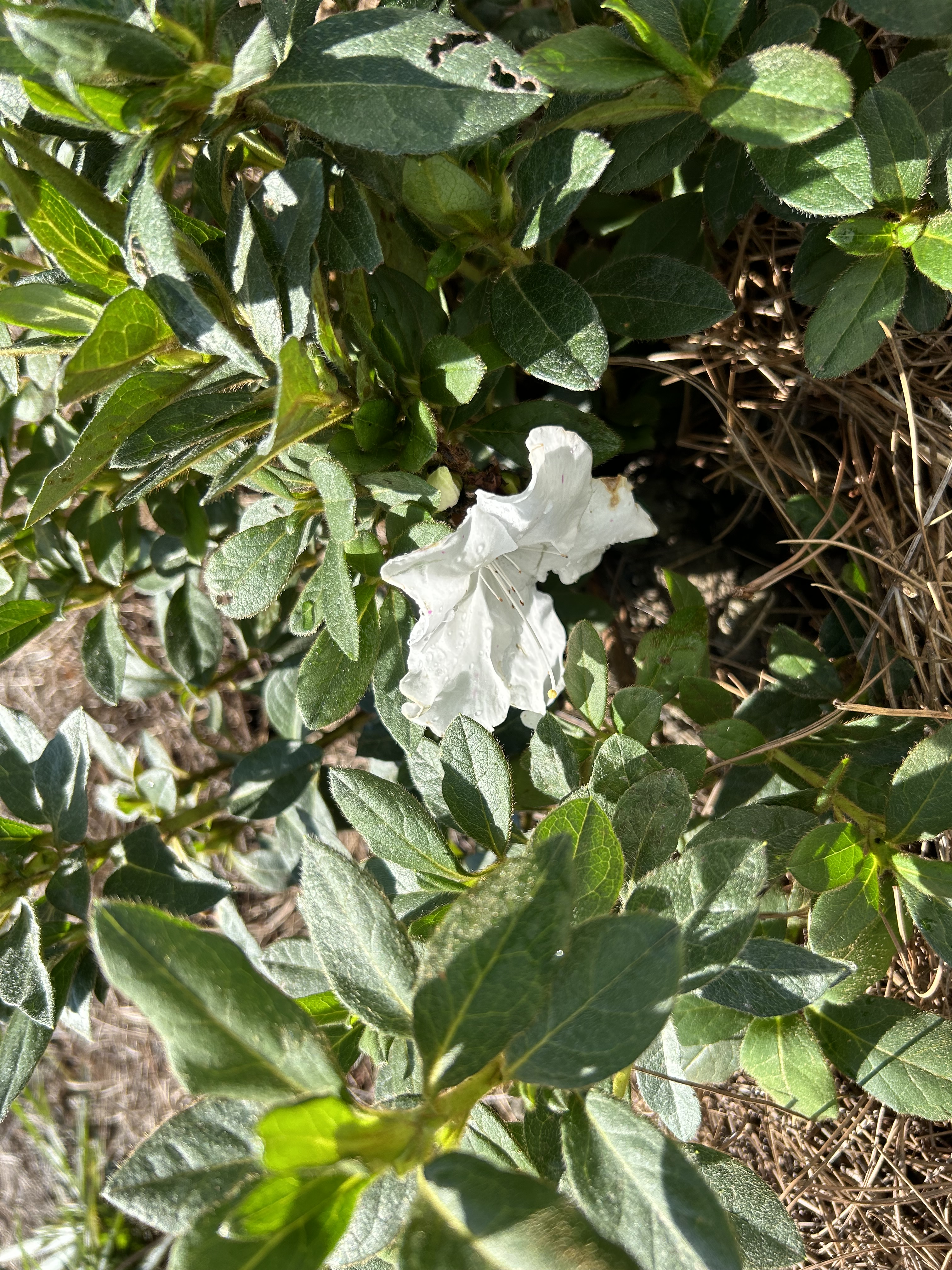
We replaced these azaleas with five white Encore azaleas–which are a cross between rhododendrons and azaleas, are much sturdier, and will bloom until it gets too cold.

Here’s one with a bloom intact:

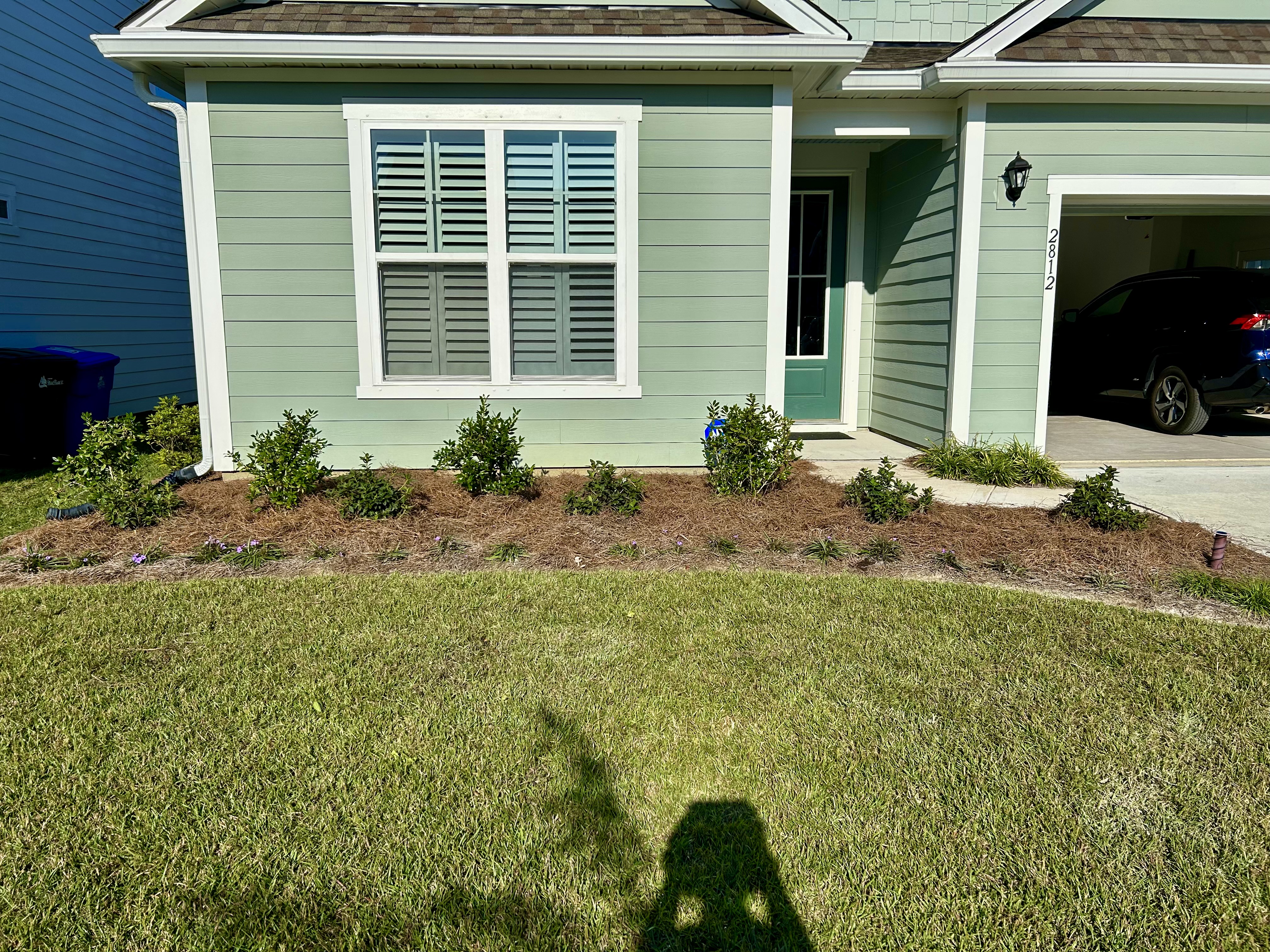
Here’s the front bed now. These new plants will get about 4 feet by 4 feet. We moved two of them in the middle forward to give the Chinese Holly more room, but the Encores will form a kind of understory to the hollies. BUT, I do not want this front bed to get too tall for the windows behind it.

It was a really nice morning–and I watered while Andres rehomed and planted. So now, it is about to RAIN. LOL, of course it is.

That Grass is Blooming PINK

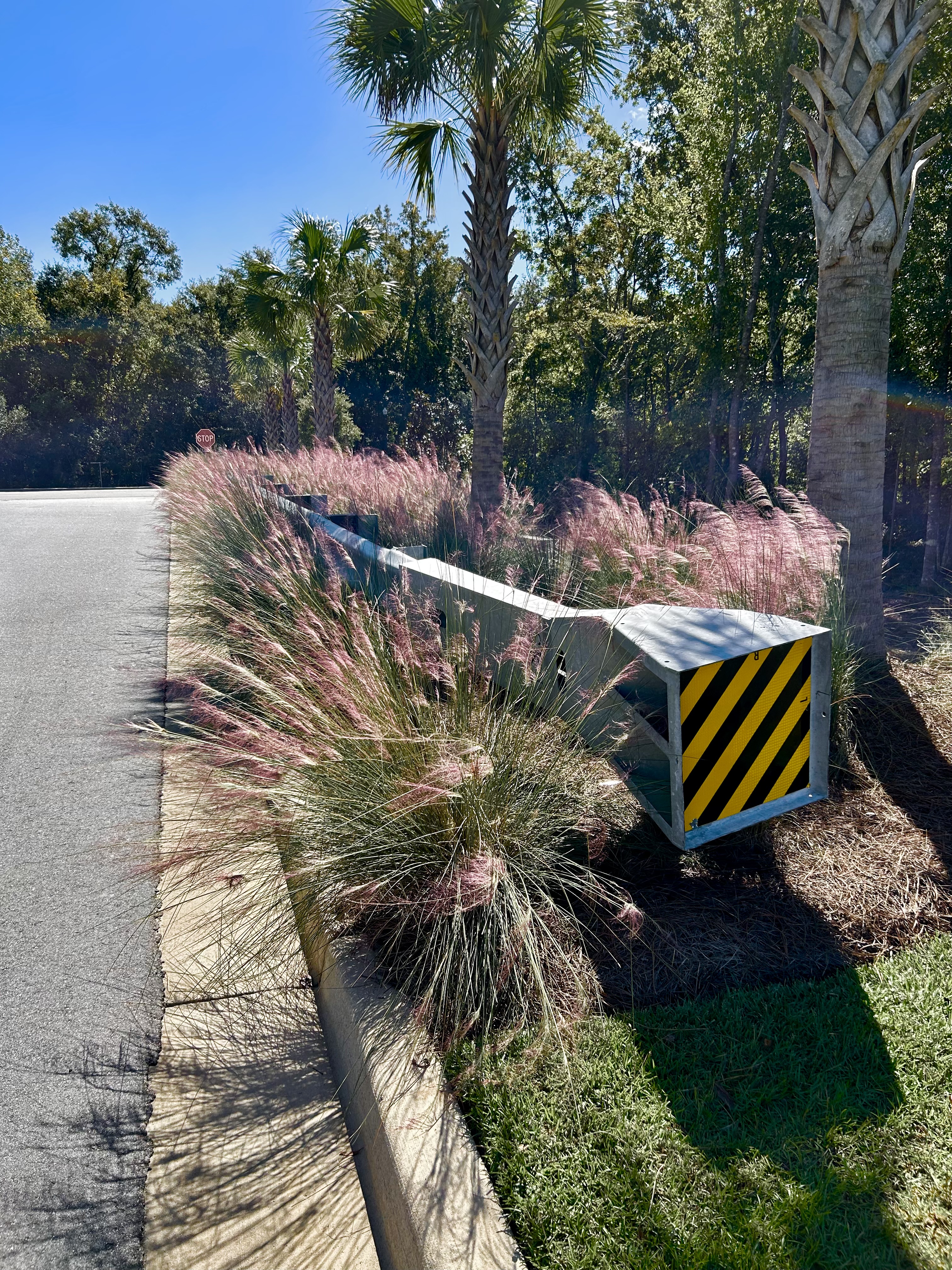
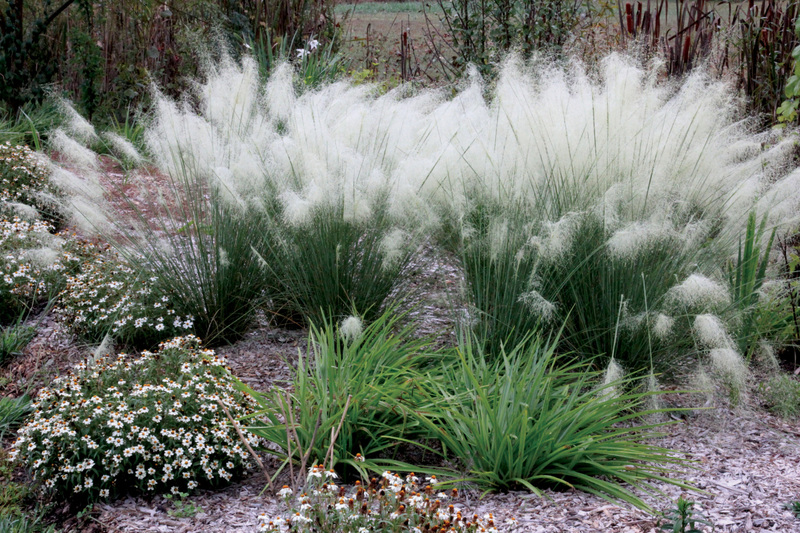
It is Muhly Grass, and I see it planted everywhere. It’s around homes, and it’s in islands in the middle of roads, and it’s in shopping area parking lots. It’s everywhere in this region. And it is a “sweetgrass” plant.

It also comes in a white version that I saw just the other day. Here is the pink variety along the entrance to my development.

When the sun catches the blooms, they glow. The white ones literally look like spot lights swaying in the wind.

All of these blooming grasses have delighted me over the years, and I had other blooming grasses, not the Muhly, in my Virginia and Maine gardens. Muhly “sweetgrass” is new to me.

The road outside of my development has palms and Muhly grass planted. But this Muhly grass won’t be blooming this year, and that’s because it’s being “harvested” by local people in the dark of the night for “sweetgrass basket” making, which is a big market here. The harvesters pick stems from the middle of a Muhly grass, leaving the outside stems intact.

Here is a link to more Muhly grass information from Clemson University, which has a big horticultural division.

https://www.clemson.edu/cafls/demo/plant_profiles/muhlenbergia-capillaris-pink-muhly-grass.html

Tami and Debbie Visit The Medway Community Garden

Saturday afternoon, DIL Tami and her mother Debbie visited the Medway Community Garden in Charleston. I was invited and couldn’t go, so Tami took pictures and the little video below of this pollinator garden.

A reminder, Tami is the Director and Co-Founder of The Bee Cause. She texted me with this message: “A beautiful afternoon at Medway Community Garden. The pollinators were plentiful in this beautiful pollinator habitat donated by The Bee Cause and installed by Charleston Parks Conservancy. We also got to meet and chat with the author of The Ark of Taste.” There was also a potluck supper.

A video of the garden.

And the new book:

From a review on the Slow Food USA web site: “The Ark of Taste is a living catalog of our food heritage and a movement to preserve gastronomic treasures passed down for generations—some rare, some endangered, all delicious. Created by Slow Food, the Ark illuminates the history, identity and taste of these unique food products, many of which were revived or saved from extinction by their Slow Food champions.”  

And: “The Ark of Taste book features the stories of how some of these American products almost didn’t reach our table, with recipes from Slow Food chefs and profiles of growers from around the country.”

https://slowfoodusa.org/ark-of-taste-book/

As you know from this blog, I have planted pollinator plants in my new garden. And Tami has been working hard in her garden in recent days. She is developing a space where she would like to plant a pollinator garden–and that space is near her bee hive.

On a very happy note, Tami recently harvested some honey from that hive, and she generously gave me 12 jars of that beautiful honey–which I am busily lapping up.

The dried blooms are from the Panicle Hydrangea “Limelight.” In Maine, these big blooms would turn a gorgeous deep red color; here with the heat, they just turn brown. I clipped these blooms when they were just starting to show flecks of red in the petals, but before they started to turn brown. I put them in this vase with no water and let them further dry out inside. They will hold their color through most of the winter.

Drying hydrangea blooms is tricky. I’ve found it best to wait until they are starting to dry on the plant before clipping them. And even then, they might shrivel up once inside.

A Mid-Week Update: September 2023

Good Morning!

It’s Wednesday, and I’ll be off to the Wando Library this morning to meet the Patchwork Gals, who meet there once a month. They are a “splinter” group of the regional Cobblestone Quilters group.

I actually went to the Wando library to “rent” more books yesterday morning. I can buy, for $1 each, books featured on a kiosk in the library. After I’m done, I return the books so they can be recirculated again. Here’s what I brought home yesterday.

I’m reading the Oysterville Sewing Circle, by Susan Wiggs. She’s a new author for me, and trying out new authors or revisiting ones I know is…fun.

And, here is my current book marker: a recent card from friend Betsy Maislen, who made this gorgeous “Hunter’s Star” quilt designed by Bonnie Hunter.

I started loading the “Summer Camp” mystery quilt on the longarm yesterday. The next step is to baste it before quilting it.

And I’m making progress with hand-quilting Traverse. I started in the middle and am nearing the end of one side. That gold bar below the green crosses is about half way.

I’m liking the use of thread colors that don’t stand out and the texture that is developing. AND, my stitches on the back are getting better as my hands learn Tara Faughnan’s method of quilting with a bigger needle, thicker threads, and without a hoop. (She has a good online class on hand quilting.)

I did finish the dark gold row above last night and am thinking about how to quilt that next big bar.

Back in Maine, when I had packed up all my quilting things for moving, I set up a little sewing area and started piecing 1 1/2 and 2-inch squares that I had cut from the Cotton+Steel/Ruby Star Society project. The 1 1/2 squares went into four-patch blocks, light and dark. So when “Summer Camp” came off the design wall (which I vacuumed yesterday), I got out the bin with the four patch blocks and started sewing some together to create an 8-inch block.

Yes, but maybe this way…if I have enough squares to do something like 3 by 3 rows. These are just pinned, not sewn. I can see one of the 2-inch 4-patches as the corner stones. But who knows?

Meanwhile, the Mexican sage plant burst into bloom. That plant is new to me. (It got thirsty before the recent rain, thus the yellow? Unless it is getting ready to go dormant as it is now fall?)

The blooms are quite awesome, aren’t they?

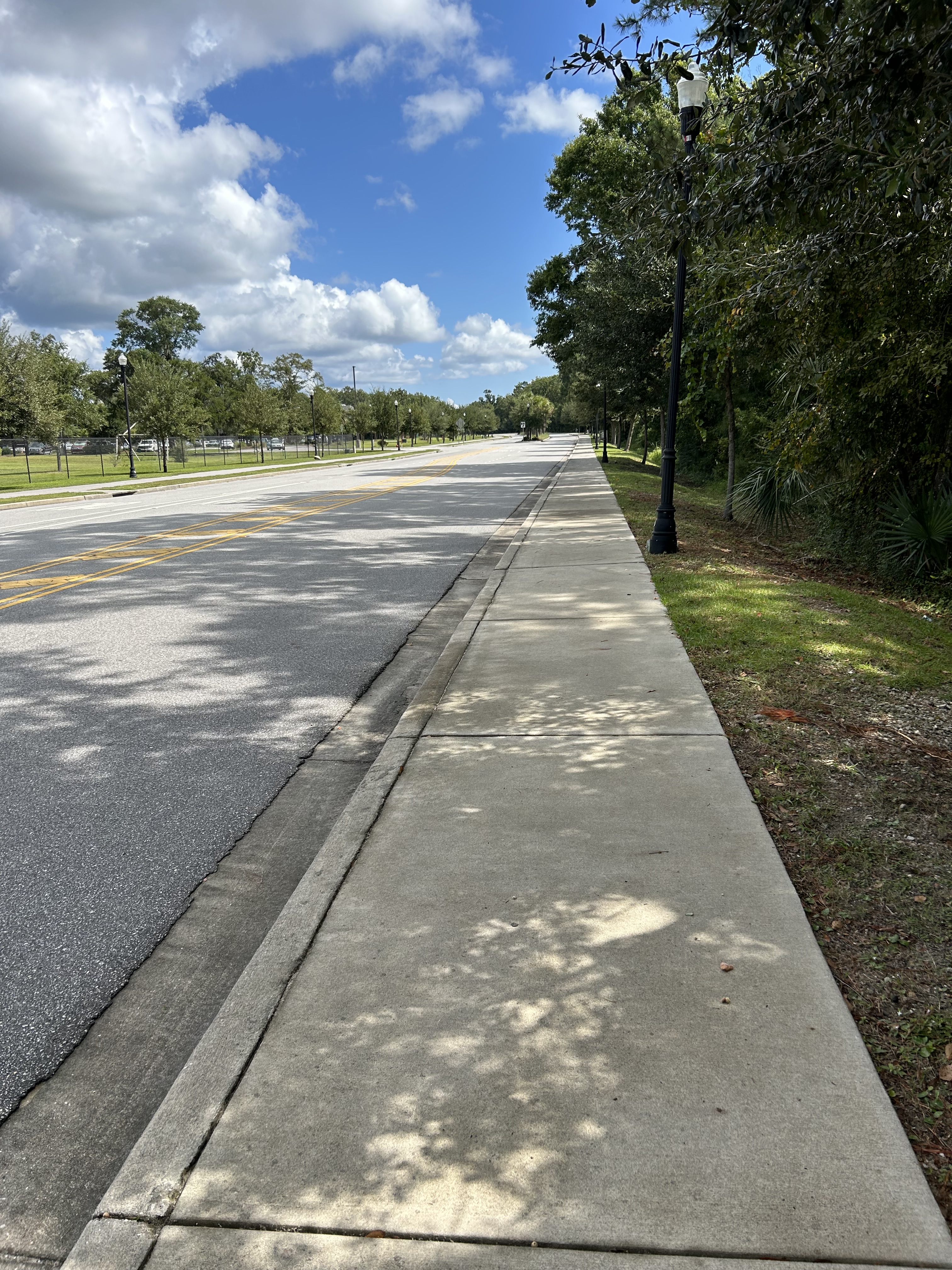
And with the cooler weather, I’ve been walking more–but on the shady side of this mostly quiet road that runs outside my development. There are two schools on the left side, and my development is ahead about 1/4 mile on an entry road to the left.

Enjoy your day today, everyone!

Big Mexican Petunias and Big Red Quilt Top Finished

Good morning!

It is a “murky” kind of Wednesday morning here today. And the temps are cooler. Maybe we will get a bit of rain. Maybe I will have dinner on the porch today.

On Monday morning, I took my grill propane tank to the local True Value hardware store to have it refilled.

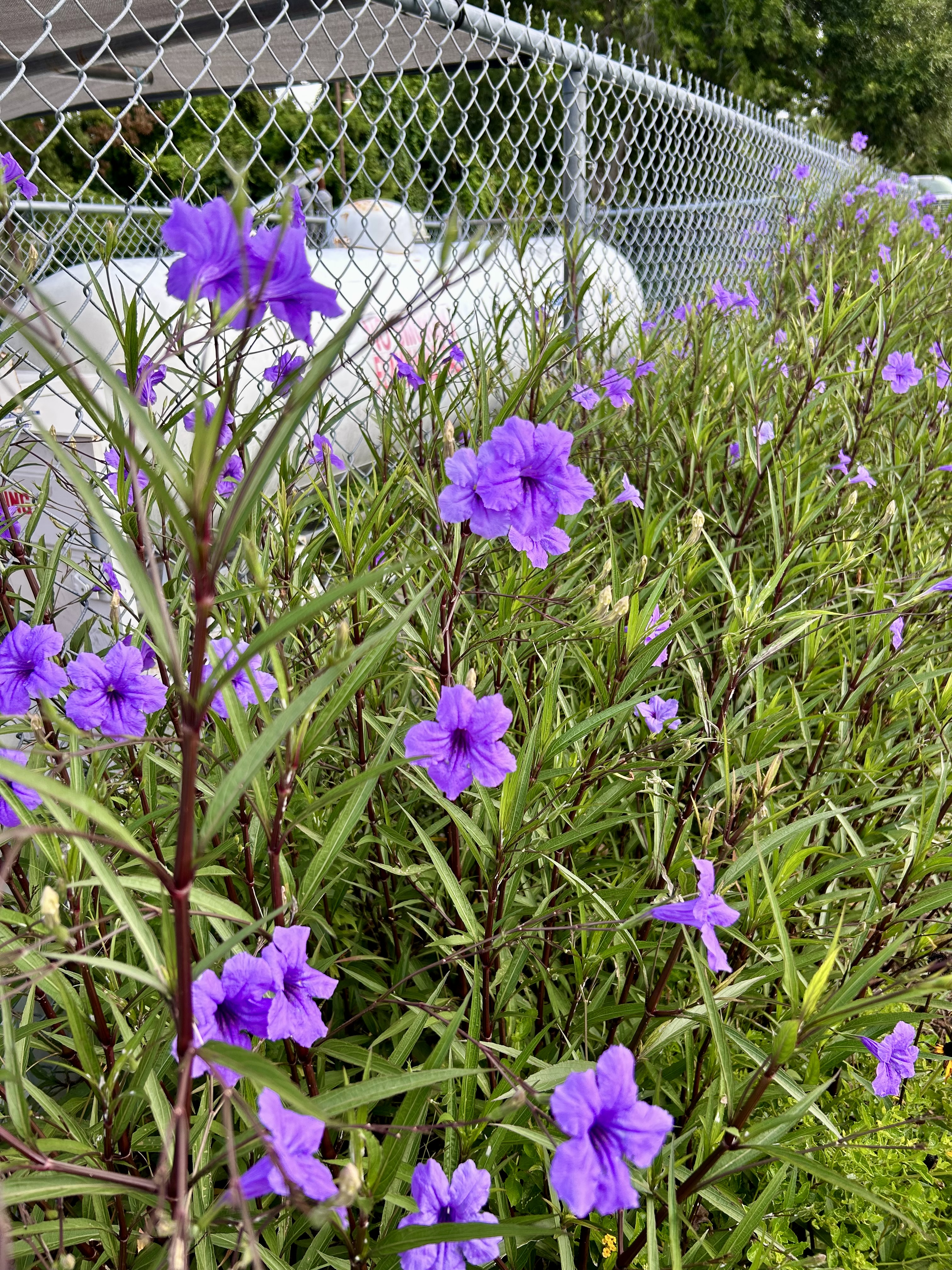
Look what is growing along the fence surrounding the propane station: full size Mexican Petunias. This plant is extremely hardy and aggressive.

My little dwarf version is thriving out front, and these are just the cutest little plants which bloom their hearts out. They will spread, yes, but I want them to fill up the bed where they are–as a sturdy and colorful border.

I finished the “big red” quilt top last night–I have not yet come up with a name I like. I really like the soft Kona Thistle sashing and will bind with it.

Here is a close-up. “Red Delight” maybe?

I finished the backing for “Bonanza,” the big half-square triangle quilt last night and will start loading this project on the longarm today likely. “Happy” (formerly known as “the quilt from hell”) is waiting to go on the longarm for hand-sewing basting.

Now, I am putting the “Summer Camp” mystery blocks from the Modern Quilt Society on the design wall and will leave them up there for a while as I know I’ll move those blocks around a lot before I commit to their final placement. Already I am moving the blocks around in the rows that are going up.

The hand-quilting on Traverse is going well–I’ve almost finished the green row with chartreuse squares. I’m liking the texture that is not trying to cover up the block patterns. And my hand quilting with Tara Faughnan’s method is getting way more reliable, so I don’t have to check the back so often.

And that’s all the news fit to share here for today!

Have a good one everyone.

The Bee Cause

DIL Tami Enright shared this informative interview on South Carolina ETV the other day.

I think some of you might enjoy it.

Tami is a co-founder of The Bee Cause and its Director. The Bee Cause now has hives in all 50 states and in some international countries.

In this video, Tami not explains the history of The Bee Cause but what we can each do in our lives to help create a habitat for bees. Small acts can make a difference.

No bees, no food.

A Crape Myrtle

I’ve been worried about this tree in my front yard–a willow oak planted by the developer.

These trees are hardy here, yes. But they will get HUGE and will dwarf the house, the front yard, the street and the neighborhood. Plus the roots that develop get huge and thick and can spread far and wide–disrupting…the street, the driveway, the house foundation (?), and so on. I am hearing some real horror stories.

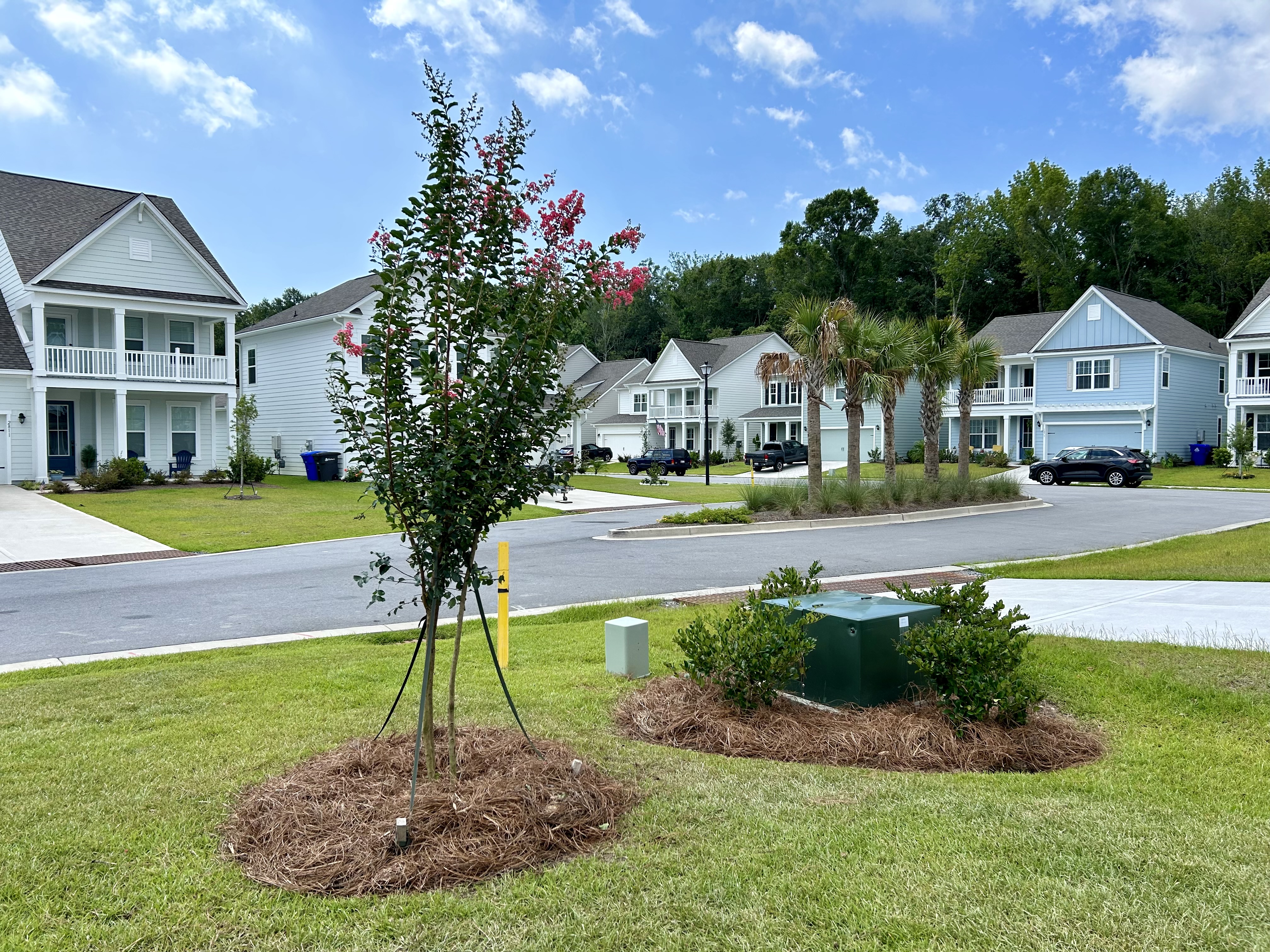
So, I contacted Estaben Hernandez (EstebanHernandez Luxury Painting). Estaben is also a carpenter, and his brother has a landscape business. These two guys are a part of a network of young men who are hard and willing workers. Estaben made taking out the willow oak and replacing it with a gorgeous Crape Myrtle an easy event. And I am so grateful. He and his guys chose a beautiful tree for me. (I wanted a watermelon pink color.) And the willow oak went to one of the guy’s brother’s house, where there was ample room for it.

I made a trip to Loews and got new pine straw for these two beds and put it down myself. The pine straw is light to move and easy to put down.

Now, all I have to do is pay attention to how much water this new tree is getting. And I already do that with the grass and the beds I have planted. (The roses are blooming like crazy again and are so cheerful. The flowers are smaller, but that’s due to the heat.)

I find myself following the afternoon thunderstorm possibilities–especially in the strong heat we have had recently. (It was 102 on my back porch one afternoon last week.) You would think this storm would have provided some good rain. Well, it did for some west of me. For sure. We didn’t get one drop out of these scary clouds.

But we did get a good rain a day Saturday evening. So I’m good on the watering for one more day. I usually water early evening, so the plants can take all the water in without the sun drying everything out too fast. The night temps are in the 80s, so leaves don’t stay wet long. Plus, the extreme heat would fry a plant’s leaves that were wet if I watered during the day. Early morning watering might be ok, but is not as ideal as early evening watering.

Today it is a bit cooler. High 80s and into the 90s mid to late afternoon. It is late July in the tropics–and August is coming. My house is cool–I run a dehumidifier upstairs in the afternoons–and floor fans on low to keep the air moving–and that helps a lot. High humidity makes everything feel hotter.

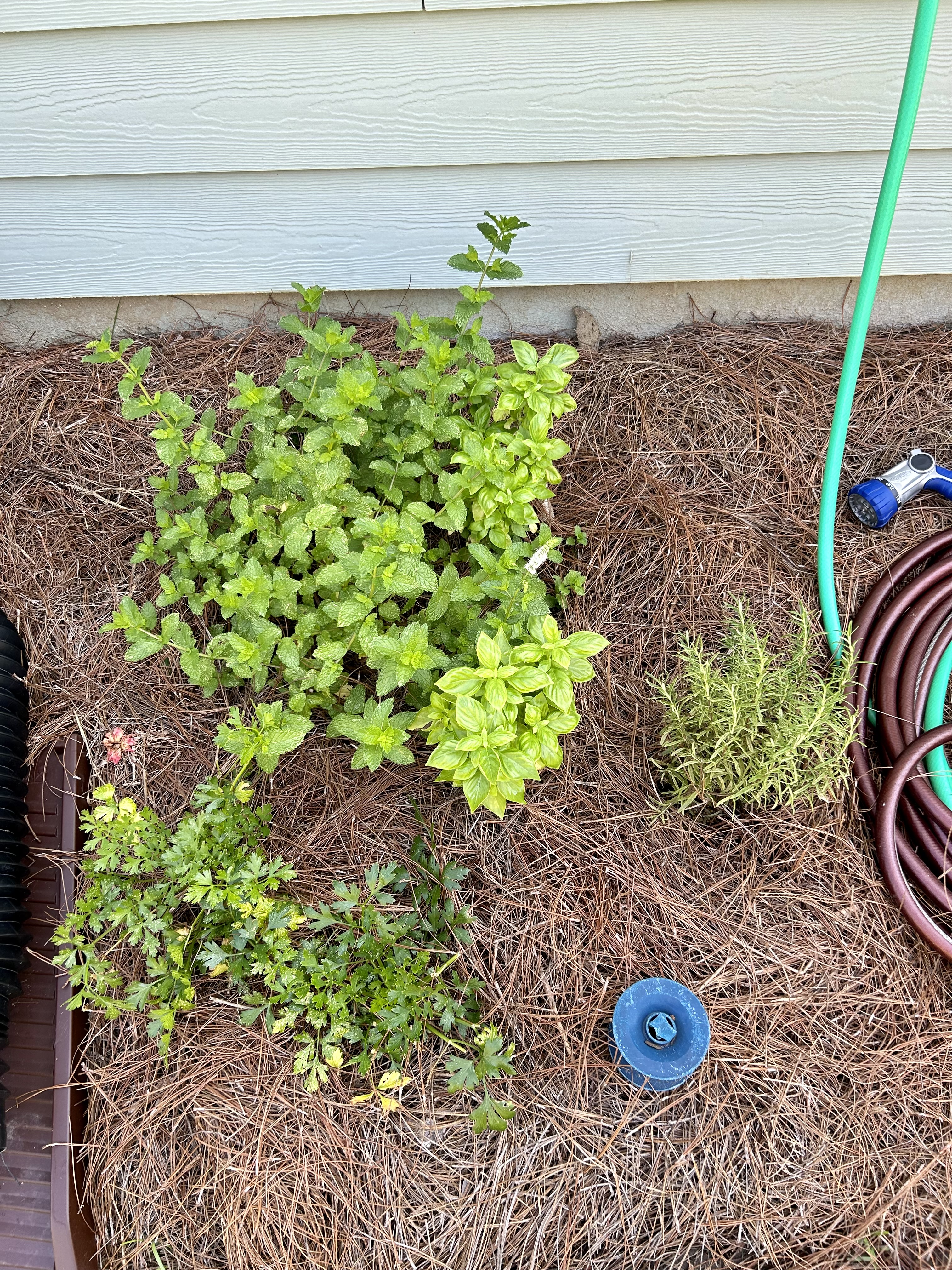
The Herbs

The first thing I planted when I got here was herbs.

The herbs are thriving!

In the bed by the screen door, I have rosemary, sage, two kinds of thyme, chives, and lavender.

I purchase fresh dill at the local grocery store–and it lasts for a good 10 days. Dill is harder to grow (for me anyway) for some reason.

I just moved the three rosemary plants from the big container on the porch to the outside as I thought they needed actual dirt.
The mint, basil, Italian parsley, and now one of the rosemary plants are around by the back hose–where it is easy to give them water. The yellow leaves are an indication that they need water and less heat. (It was 102 on my screened porch late yesterday afternoon.)

My grandmother’s mint is growing well on the other side of the house–at the end of the long bed there in a spot that is sunny for most of the day. It’s happy there.

I can’t imagine cooking without fresh herbs, especially in the summer.

A friend sent me this article about plants that repel bugs. I was amazed at how many of these plants are in my gardens here.

https://www.realsimple.com/home-organizing/gardening/outdoor/plants-that-repel-bugs

Here’s the big container pot on the porch now.

The Asiatic Jasmine (which is not jasmine) is spreading well. It will cover that bed by next summer I think. My grandmother’s mint is at the far end. Recall that my SIL in Maine had some mint from my Maine garden, and she mailed some to me about a month ago.

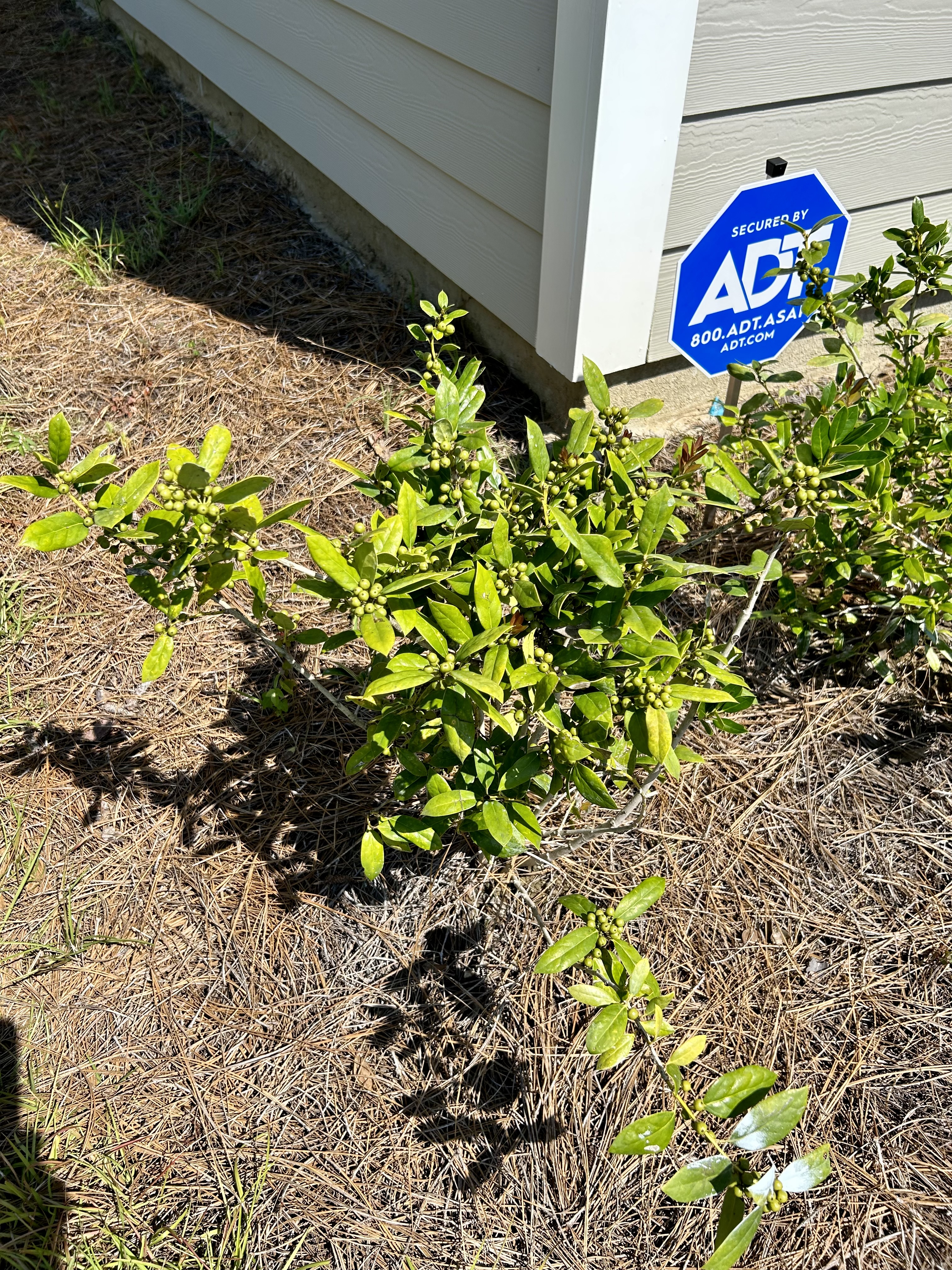
This plant was installed by the builder. It’s a Chinese Holly and is very hardy here. I have about 5 of these plants around the front of the house. This one has been loved. I’ve watered it and fertilized it.

Here’s one that was waiting for its house to be occupied by renters and has not had any care. I was interested in the difference between the two plants in color and in the presence of mold, or whatever that white stuff is.

Part of what sold my house in Maine was my beautiful gardens there. And the healthy habitat I had created. It’s too bad landlords don’t realize that an investment in plantings will help sell a home for more money.

The Dwarf Mexican Petunias Arrived

I was outside most of yesterday—the DWARF Mexican Petunia plants came, and I had to dig TWENTY holes, amend them, plant them, and water them.  I know you know that with the clay here, digging and amending involved the shovel, the Maddox, two bags of sand, 1 1/2 bags of compost/manure, bone meal, my heavy boots (to support my formerly sprained ankle which does get sore with the hard digging), the hose, yada, yada…. Each plant is healthy, but tiny, but I basically had to dig a trench down the front of the front bed to get the holes deep enough to amend them properly.  Then I had to put back the pine straw and fussy it back around the plants.  They look perky this morning.  

I think the front azaleas are struggling with the heat. They are, again, a pale color. I don’t want to fertilize them in this heat, but will spend more time watering them I think. The ones on the side of the house are a rich green color.

While the hose was out I spot watered the now dry patches in the grass and all the shrubs.  And went on to do the far side of the house and then went around back to water as well.  I kind of like the Zen of these watering moments—and walking neighbors stop to visit.

I started outside in the fairly early morning—having discovered while having my morning coffee that the plants had been on my doorstep since yesterday afternoon late.  I took them to the hose and soaked them.  They were beautifully packed for shipping.  It was HOT, so after an hour of digging, I was totally soaked with sweat and feeling the heat.  Likely temps had reached 90+.  The sun is on that front bed until mid-afternoon—so I went inside and showered to cool off.  I went back when the sun was on the back of the house so the front was shady.  There was still hard work to do, but there was shade and a strong breeze.  Coastal rain clouds raced by, but none stopped to give us some much-needed rain. 

A friend sent me a post this morning that described a huge solar spot/flare on the sun right now. Very huge–bigger than Earth. Apparently sun flares can impact our weather in negative and unpredictable ways.

I have not sewed upstairs for two days now, what with one thing and another. BUT, the third border is now on “the quilt from hell,” and the darker border is making that quilt sing. One more side to go.

The Mystery Plant And A Garden Update

I finally figured out what this plant is. I found a place to park the car near the nearby traffic rotary where it lives, walked over, and got some good pics. I was surprised to see that the plant also comes in white and a pale pink.

It’s a Dwarf Ruellia, or Mexican Petunia, which is not a petunia. The parent plant grows 3 feet tall and is very invasive. But the dwarf will spread, but is more easily controlled. And it is so darn cute. It is a perennial.

This dwarf plant will do sun or shade, and it can manage some cold winters. They will die back in cold weather, like a lot of perennials, and emerge in the spring.

I ordered 20 plants in the violet color, and they are now on the way here. I’m going to put them in the front bed, where they will make a nice border line and will be backed by the taller azaleas (white) that bloom in the early spring. I have the sand, compost, and fertilizer all ready for them.

Look at this fancy Cone Flower! I’ve never seen anything like it and couldn’t resist bringing it home when I started planting this bed. It’s thriving, and I hope it will come back next year. Sometimes fancy cone flowers are more fragile in terms of winter.

The Limelight hydrangea is covered with blooms. This plant will get much bigger and will fill the space around it. The blooms will turn rust red in the fall. And the viburnum to the left has flower heads and has doubled in size with new growth.

Lantana thrives here–and I found one I really like. There are perennial and annual forms of Lantana. This one is perennial. I cut it back regularly as it can get very rangy–and I do like to bring the cut pieces inside. The flowers last quite a while in a vase.

The Russian sage is happy. Time will tell about the daisy and the clay soil. But it has had two bloom flushes this year. I just deadheaded it again yesterday.

The vitex is also happy. This one can get big too, so I’ll trim it carefully to encourage sideways growth. I don’t want it to be a tree, but will let it be a tall shrub.

The dwarf Butterfly Bush is happy. I didn’t realize it was a dwarf when I bought it. If it doesn’t survive the winter, I’ll replace it with a standard size. The blooms are so pretty, but these blooms don’t last long in the house anyway. So I suppose it does not matter about the dwarf size that has no long stems involved.

I have three of the azalea/rhododendron hybrids that will bloom all summer and into the fall: this white one and two red/orange ones (different colors) scattered among other plants in this long bed. And they are all starting to bloom now. My back door neighbor has a long row of these plants down the size of her house, and they are starting to bloom too. Hers are a kind of deep rosy pink. What a find!

Here’s a long view of part of this bed–which is filled with blooming plants to encourage and support pollinators in this new neighborhood. And, yes, the roses continue to thrive and bring joy. I cut back the spikes they were sending up, and now they are branching out to the sides and are about to bloom in earnest again.

The grass is also thriving now and all the care and amendments are working. Whew! It is now covering remaining bare spots and is sending up seed stems every week. This grass is a real water hog though, so I keep an eye on the dryness. We’ve gotten good rain recently so I have not had to water. It is sitting on clay soil which turns to cement without water.

Walking on it is like walking on a deep, thick rug. And the apple green color is so pretty.