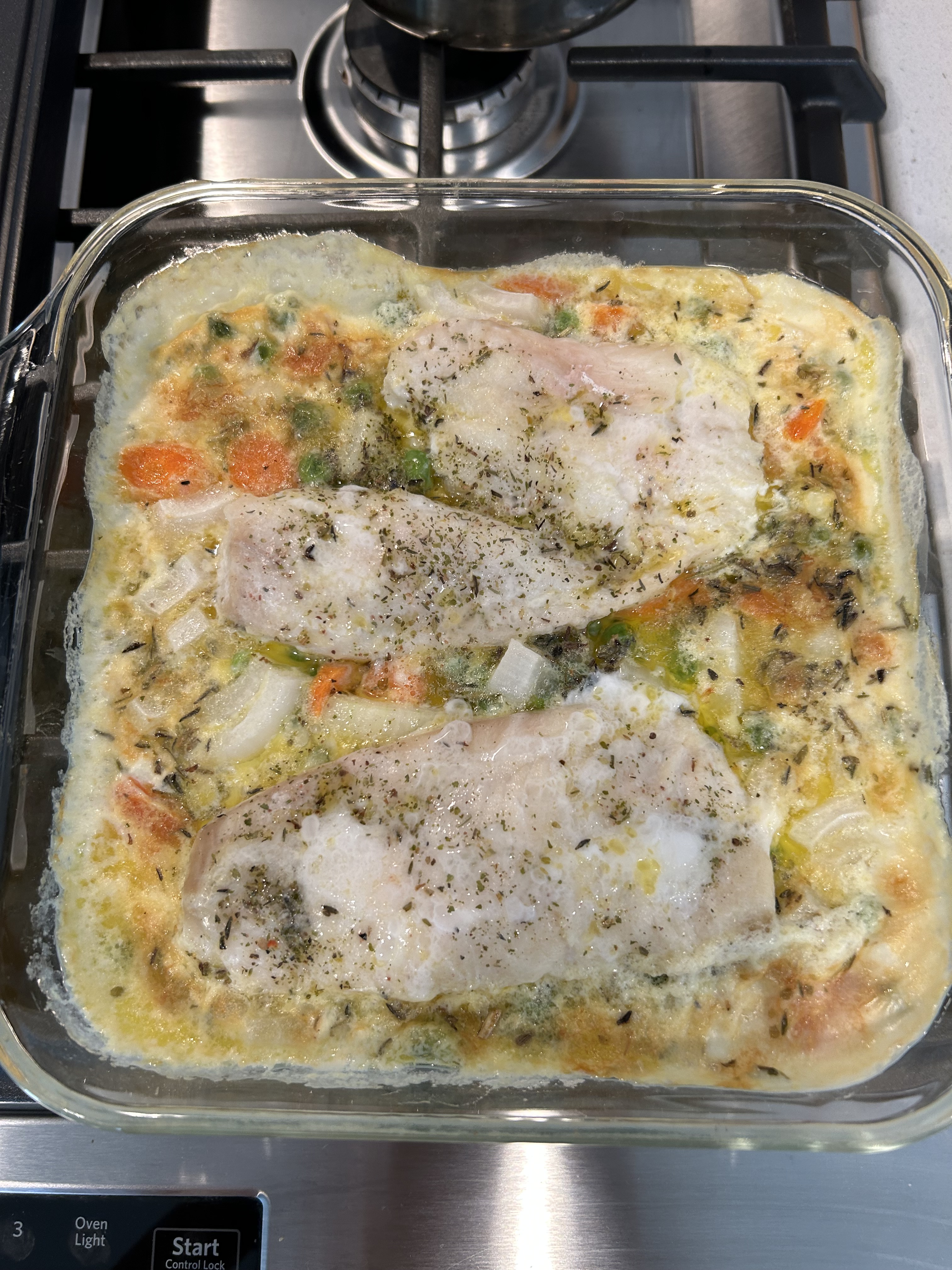
I tried the baked fish “chowder” again–but this time with a base of sliced Russet potatoes treated a bit like a scalloped recipe. Russets will hold up to baking without falling apart. I added a carrot sliced thin, alongside the frozen corn and peas from last time. I added, again, bits of sweet onion, but also some grated mozzarella cheese over my potato base just before adding the fish. You could add Swiss cheese, which is included in a classic scalloped potato dish. Or whatever cheese you want. Add herbs and salt, of course.
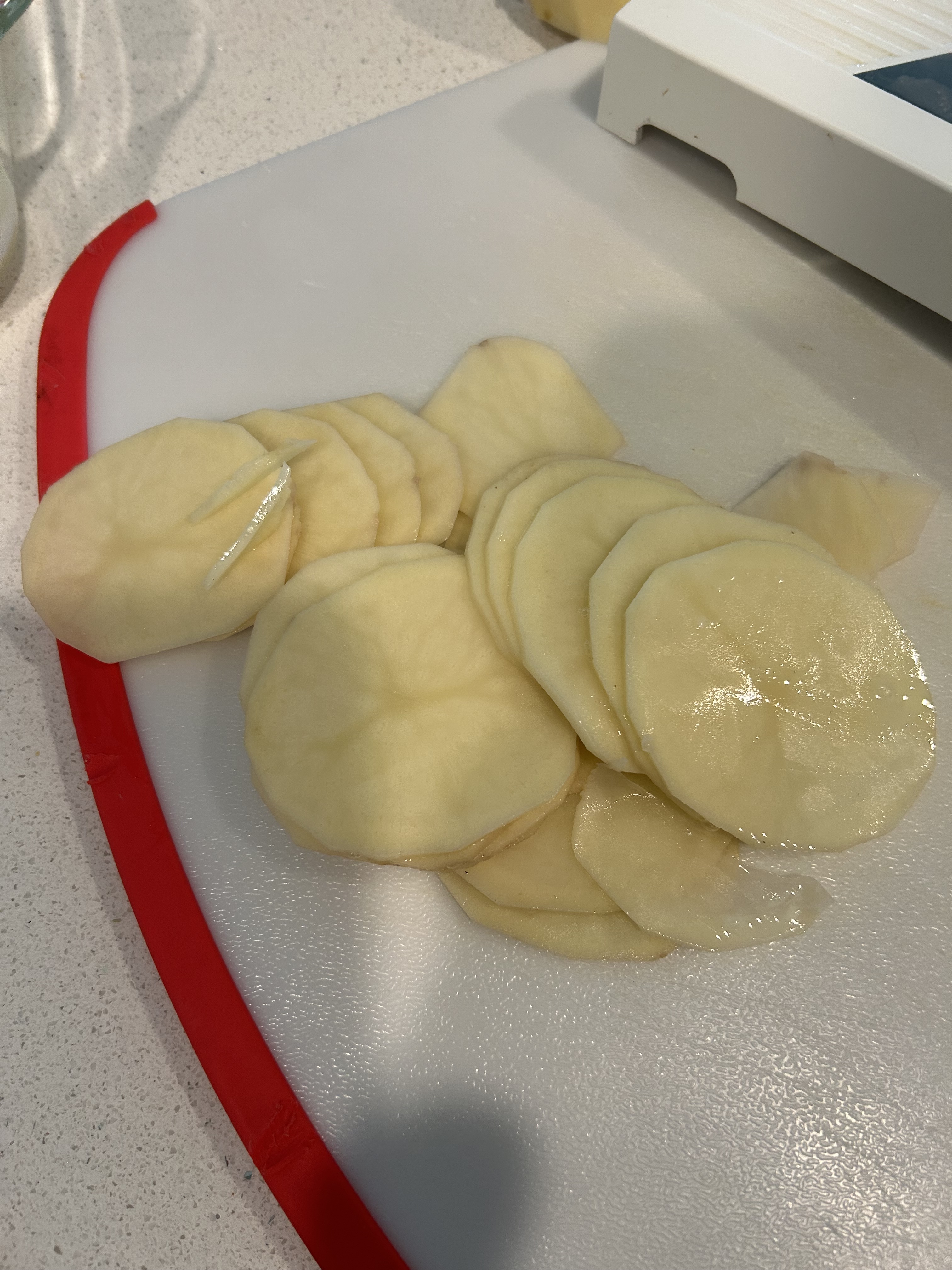
I sliced the one Russet potato with the mandolin to get really thin slices. And that was plenty for my square pan.
The trick is that the potatoes should be covered with a mixture of whole milk and cream or half and half. *** AND they need to cook by themselves for a good 30 minutes before adding the cheese and the fish. Remember that thin fish fillets will cook in about 15-20 minutes.
The fish will add liquid that will be needed, but add more of your milk mixture if it has cooked out enough that it won’t cover at least the bottom of the fish. Add the cheese to the top of the potatoes and put the fish on top. Add salt and herbs to the fish. Dot the fish with butter.
Again, it was a delicious meal. And by cooking two fillets, I had food for another meal that just needed to be reheated–and maybe a bit more milk added.
I have to be careful with fish with my Histamine Intolerance issue. Fish has to be VERY fresh, which I could get in Maine with freshly caught haddock or cod coming pretty much daily into the local markets. Here in SC, I’ve been buying freshly caught frozen cold-water white fish. That’s working out very well.
***Read labels though. If the salmon says “Atlantic” anywhere, it is farmed, or so I’m reading. The labels on the white fish should say it is wild caught and frozen on the boat. Farmed fish COULD be ok, if the fish are in a clean environment, are not overly crowded, and are fed healthy foods. All three of those conditions are currently poorly met by the fish farmers. For salmon, you want wild-caught and Alaska, probably, on the label. Yes, the fish situation is a problem as we’ve fished out the oceans now, and fish is a great protein.
The other day I defrosted two haddock filets, and something came up where I didn’t want to bake them alone or spend time making a chowder. So, I thought I’d try a “baked chowder” instead.
I layered some frozen peas and corn in a baking pan and added some fresh sweet onion and dried spices. Then I laid in the fillets, salted the mixture, and poured a mixture of cream and milk (raw for me) over the top. I may have dotted the fish with butter too.
And wow! It was delicious with a yummy sauce.
While the fish baked (30 minutes given the frozen veggies), I cooked some mixed brown rice to add to my dish. Actually I started it first as it takes about 40-45 minutes on very low heat to cook until tender. I am loving the smaller two burners on my gas oven that allow for this very slow cooking of rice and my espresso coffee pot.
This meal was delicious and dead easy to make.
If you wanted to peel and THINLY slice some potatoes as the base veggie (russets hold up best with a scalloped method)–you could put those in the bottom, salt them, and cover them with some whole milk/cream (and maybe cheese for you), and let them bake about 20 minutes before adding other ingredients (more milk/cream I’m sure) or the fish. I might be tempted to keep the corn and peas too. YOU could top everything with some grated Swiss cheese too.
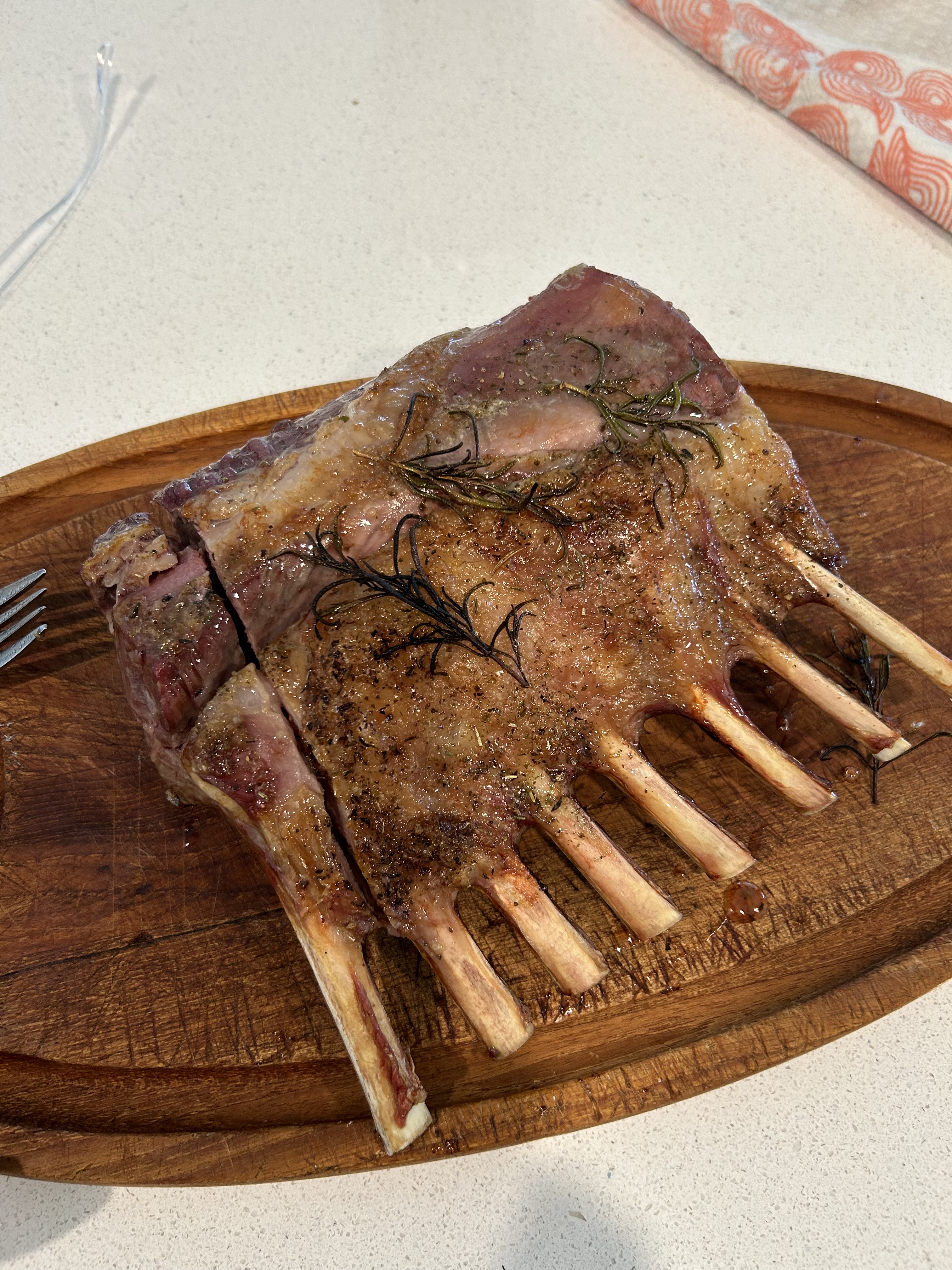
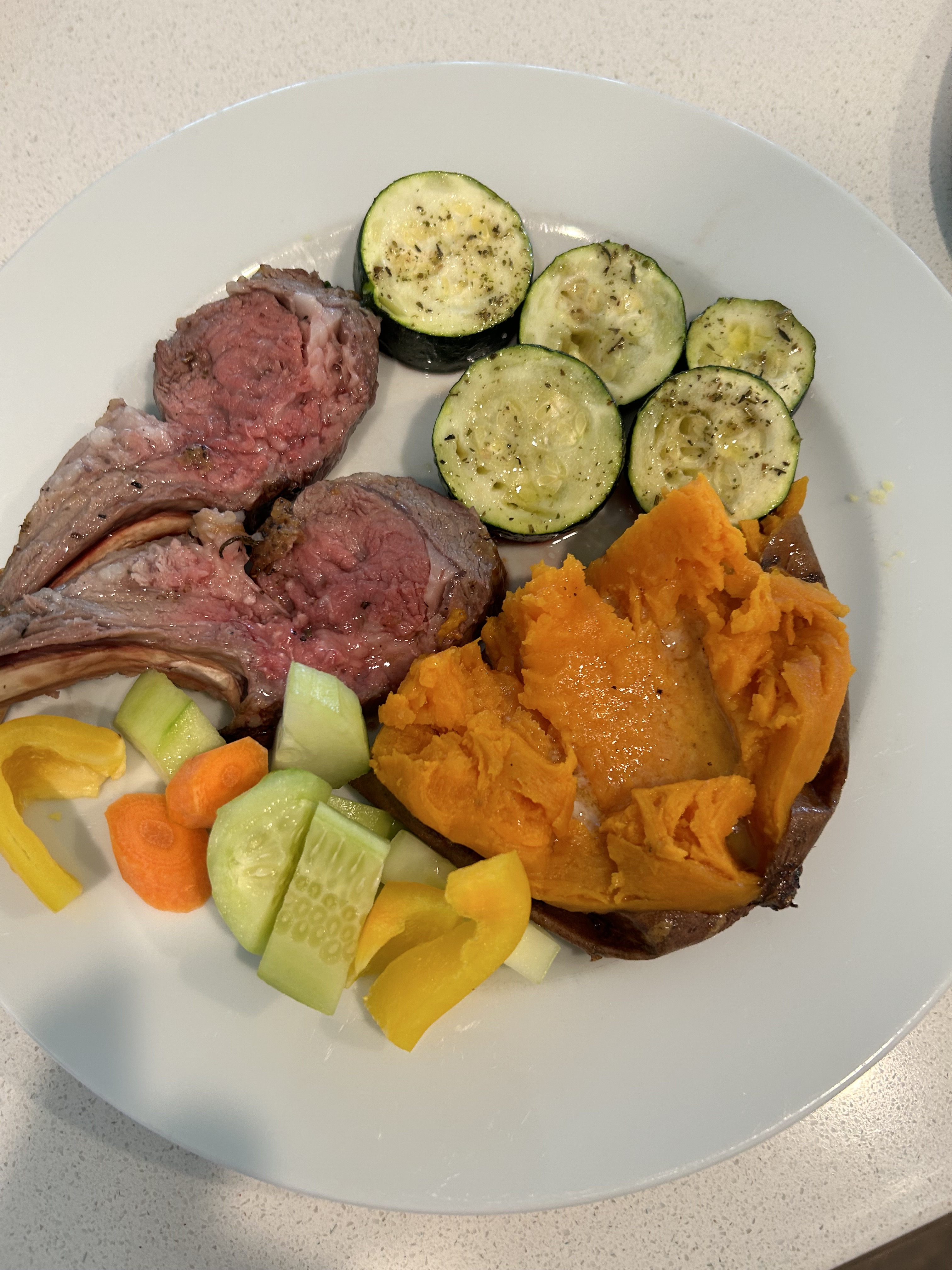
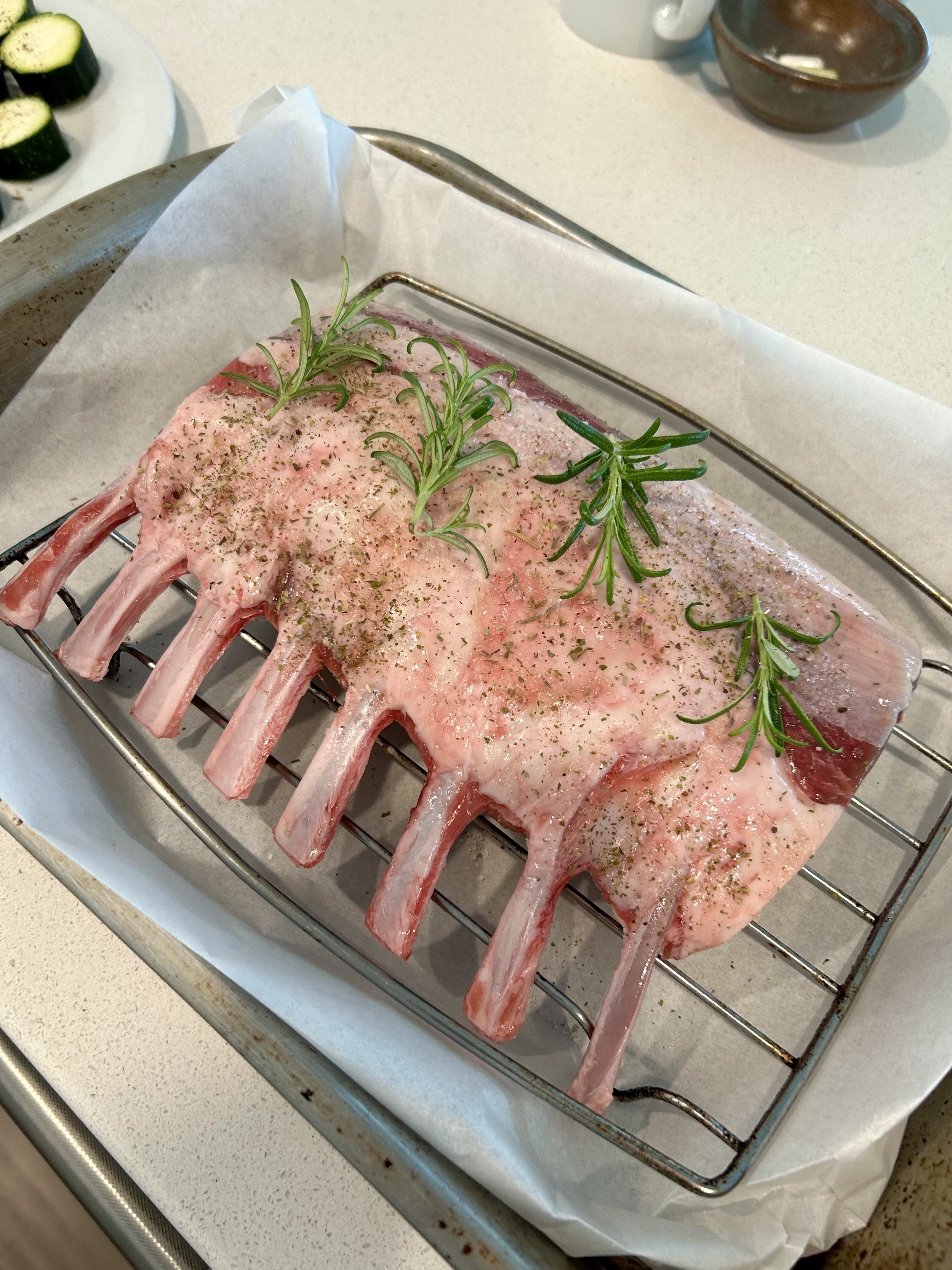
Here was my dinner yesterday–a roasted lamb rack, baked sweet potato (a half) with raw butter, roasted zucchini rounds, and some fresh veggies.
I started to cut off a chop before taking a picture.
Yes, I like my meat rare, and I like the fat and save it from the roasting pan. I cut off the meat from the bone, but chew the bones clean–that’s where the glycine is, for one thing. I should have put some fresh dill on the fresh veggies.
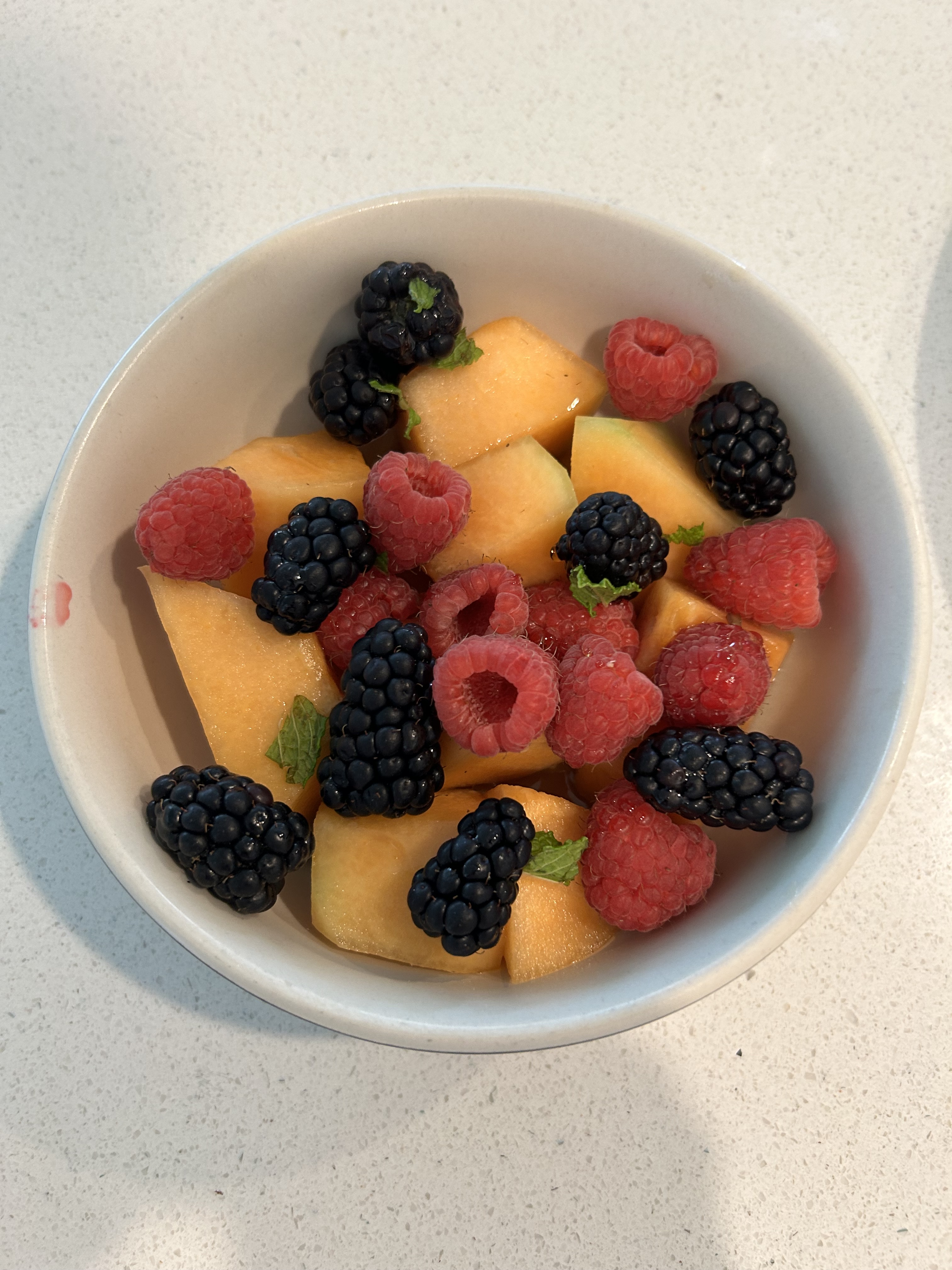
Then there was fresh fruit with a drizzle of maple syrup and bits of mint leaves from the herb garden, which is thriving.
You know, I thought I was buying organic fruit at Whole Foods, but I wasn’t. Note to self: check the actual package and not the signs above the fruit.
I’ve been busy these past few days–part of which involved buying and planting more plants. And more amendments, some of which like sand and compost are HEAVY. And I left the wheelbarrow in Maine and don’t want to buy another one as the planting here is almost done now.
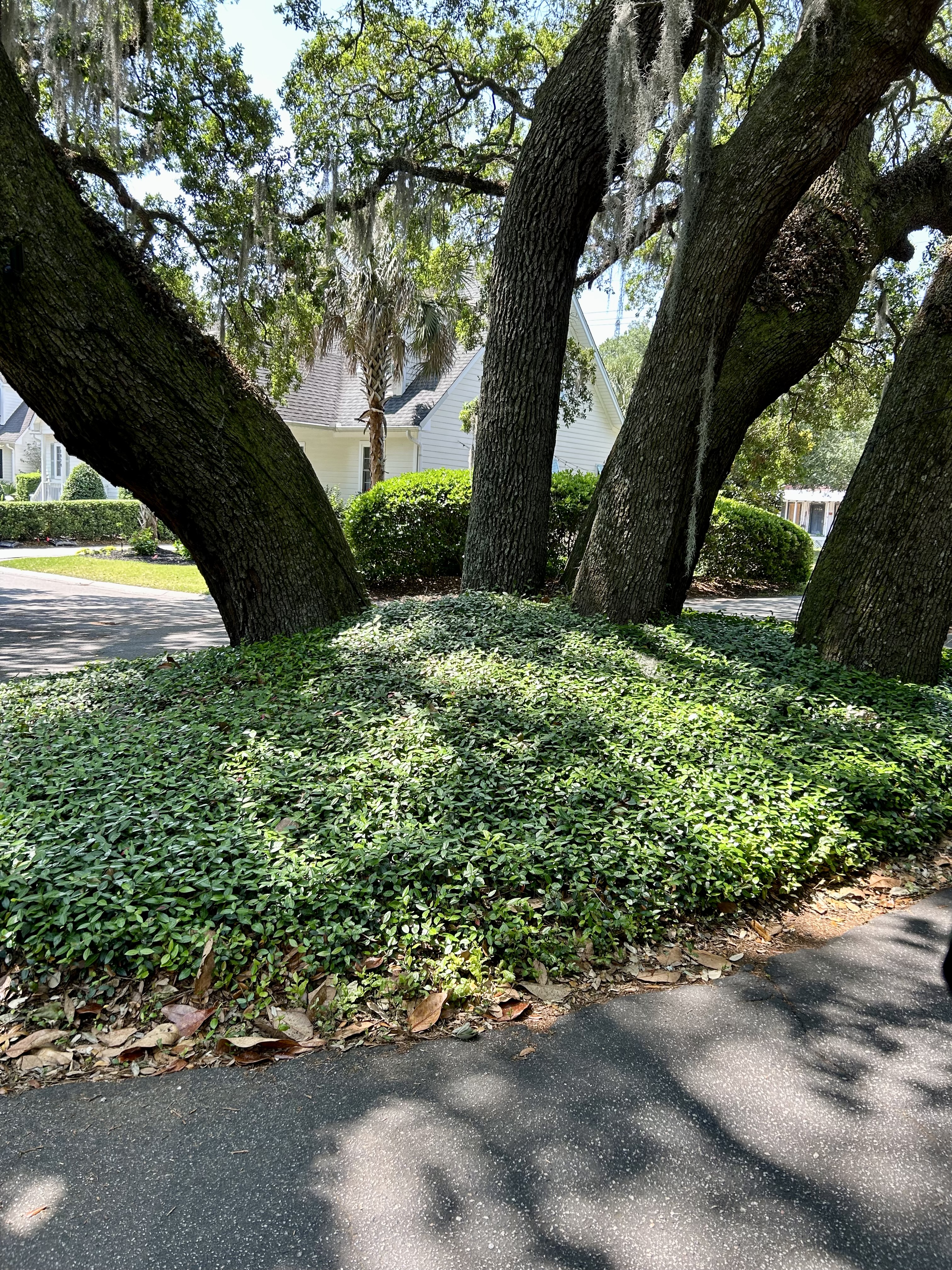
First, here’s a beautiful street island covered by the Asiatic Jasmine ground cover I’ve planted here. Those trees are live oaks, and you can see this ground cover thrives in their shade. And my AJ is spreading now in good form. It seems to be happy.
The plants I added to this sunny bed are all perennials or shrubs that thrive here–and they all bloom–so my garden will draw in pollinators. And for the past few days, I’ve seen a butterfly on the butterfly bush I planted last week.
Yes, I was very inspired by watching the live documentary in which DIL Tami Enright, director of The Bee Cause Project, participated this past week. I learned a lot, actually. And I decided I wanted everything I planted here to bloom and not just be plants that “hold down” places in the beds that surround the house.
I added Russian Sage, a Mexican sage (new to me), some pink dianthus nestled along the pine straw border, and a perennial lantana that is such a pretty color. (There are two forms of lantana here: annual and perennial. The annual plants I’ve seen here are either white or a vivid yellow. I have enough white and there is already yellow with the Stella D’Ora day-lilies. Besides, I lucked into finding this lantana which is exactly what I wanted. I trimmed it back a bit after I took this picture to encourage it to be less “leggy.”)
Last week, I planted in this long sunny bed a white Encore Azalea, Autumn Joy, that is some kind of Rhododendron Hybrid that will bloom spring through fall. How cool is that? It comes in other colors too.
At the far end of the bed is a “Flip-It” Chaste Tree/shrub that will get tall, die back in winter, and come back in the following spring. One keeps it as tall or short as one wants by trimming, depending on where it lives.
It is called a Chaste Tree as it has herbal properties that some claim can cause a loss of libido. It’s called Flip It because the underside of the leaves are the most beautiful soft lavender.
This vitex plant blooms with long purple spikes, so thrives in dry conditions. I didn’t add any compost to its planting hole, but did add a lot of sand for drainage and some fertilizer to give it a good start. This plant hates having wet roots–so time will tell if it can manage the clay here, augmented by sand for drainage.
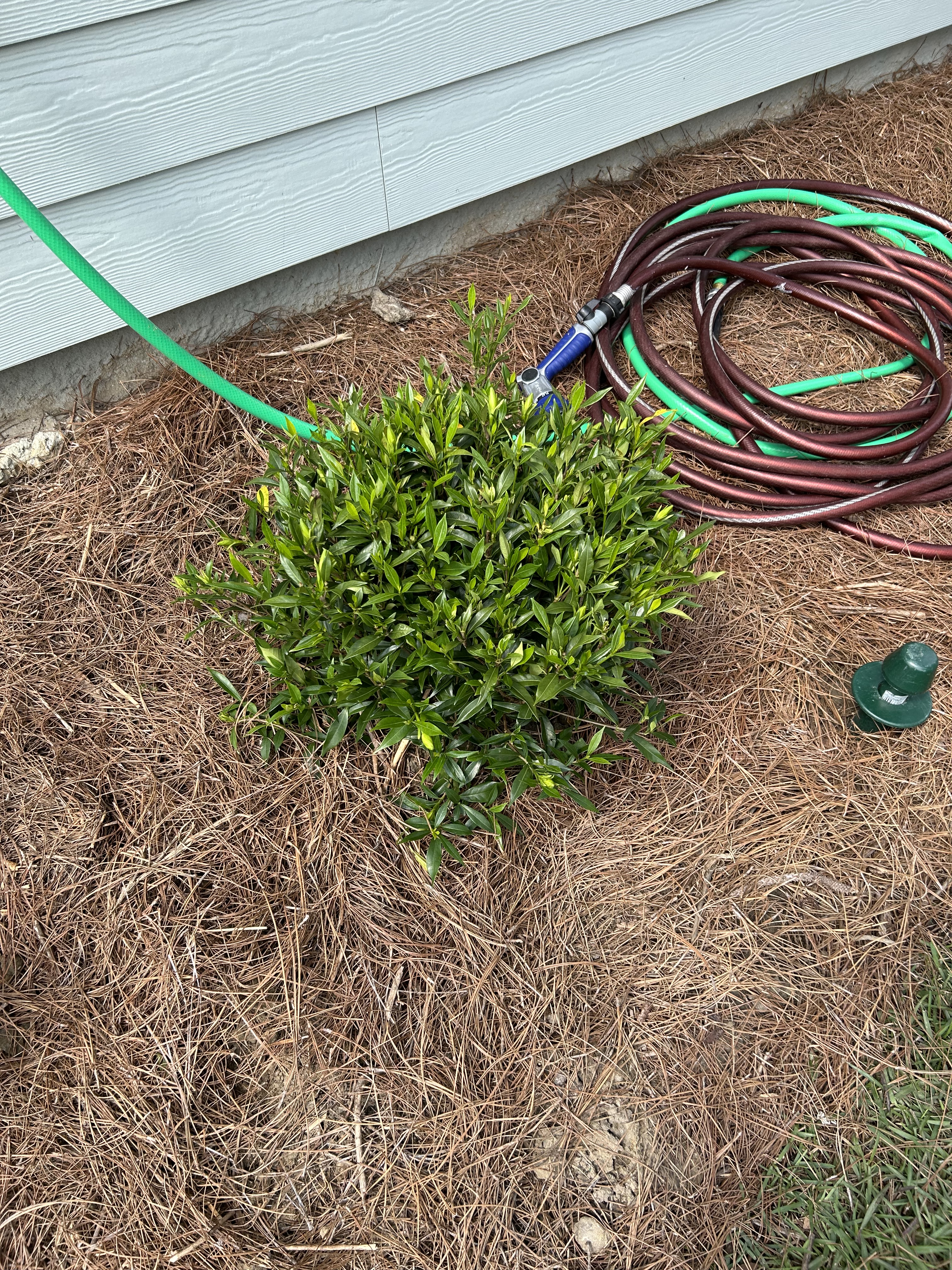
And on the far side of the house–the shade side–I planted a fragrant white “Frost Proof Gardenia” that will bloom spring and summer. I wanted a plant that would get big enough to form a kind of visual barrier to the equipment on that side of the house.
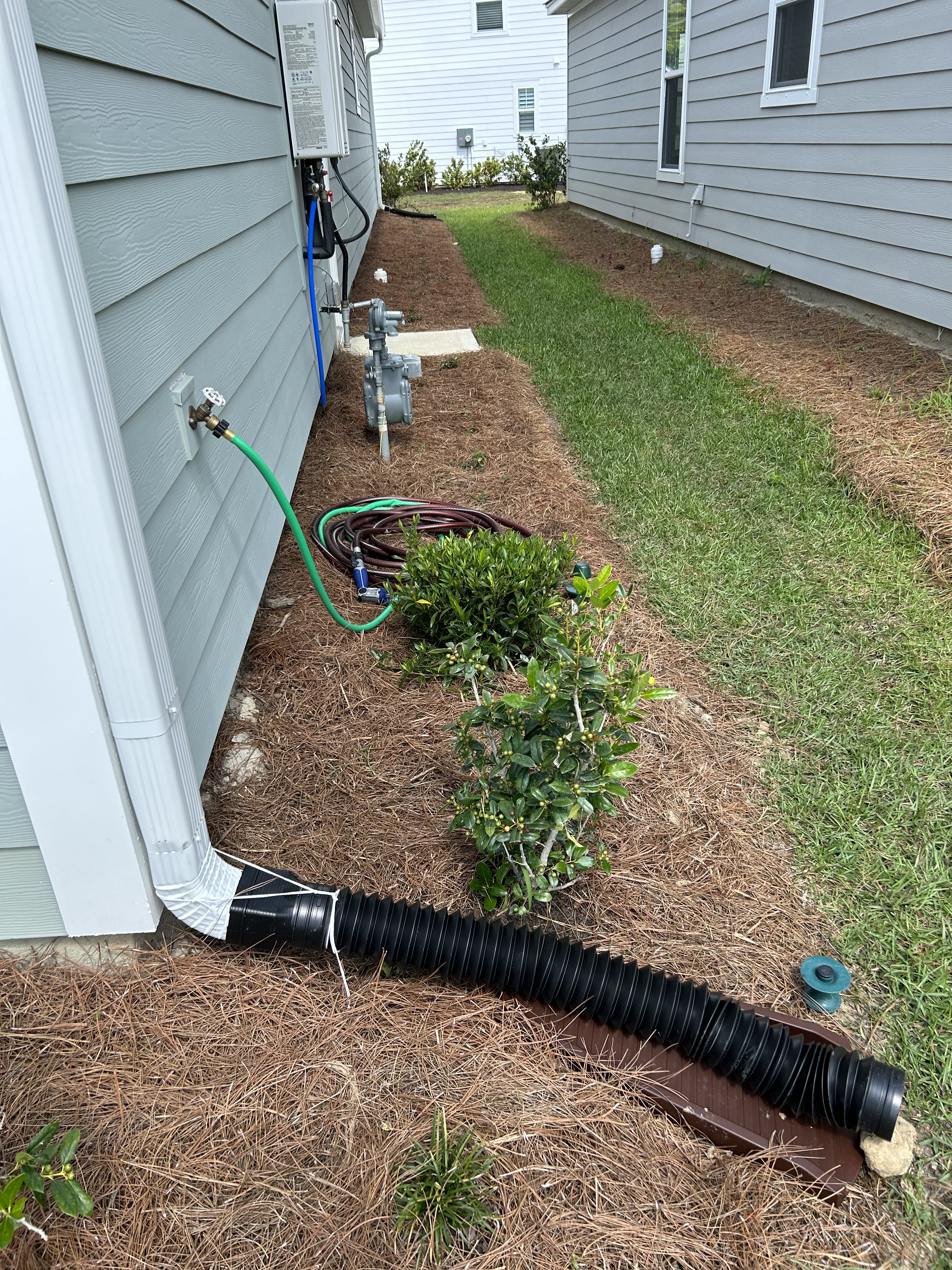
Here’s the long view. It’s hard to know yet how much these holly bushes will fill in at this corner. This gardenia will get about 2 feet tall and 3 feet wide. I’ll have to figure out something attractive on both sides of the house for the hoses. (A gas line runs along this bed to that piece of equipment, so I’m not comfortable doing more digging in this area.)
Digging all those holes–was made much easier by the purchase of this very heavy Maddox. I left a totally good Maddox in Maine. I had no idea I’d be digging holes in clay in SC!!! Or, trying to.
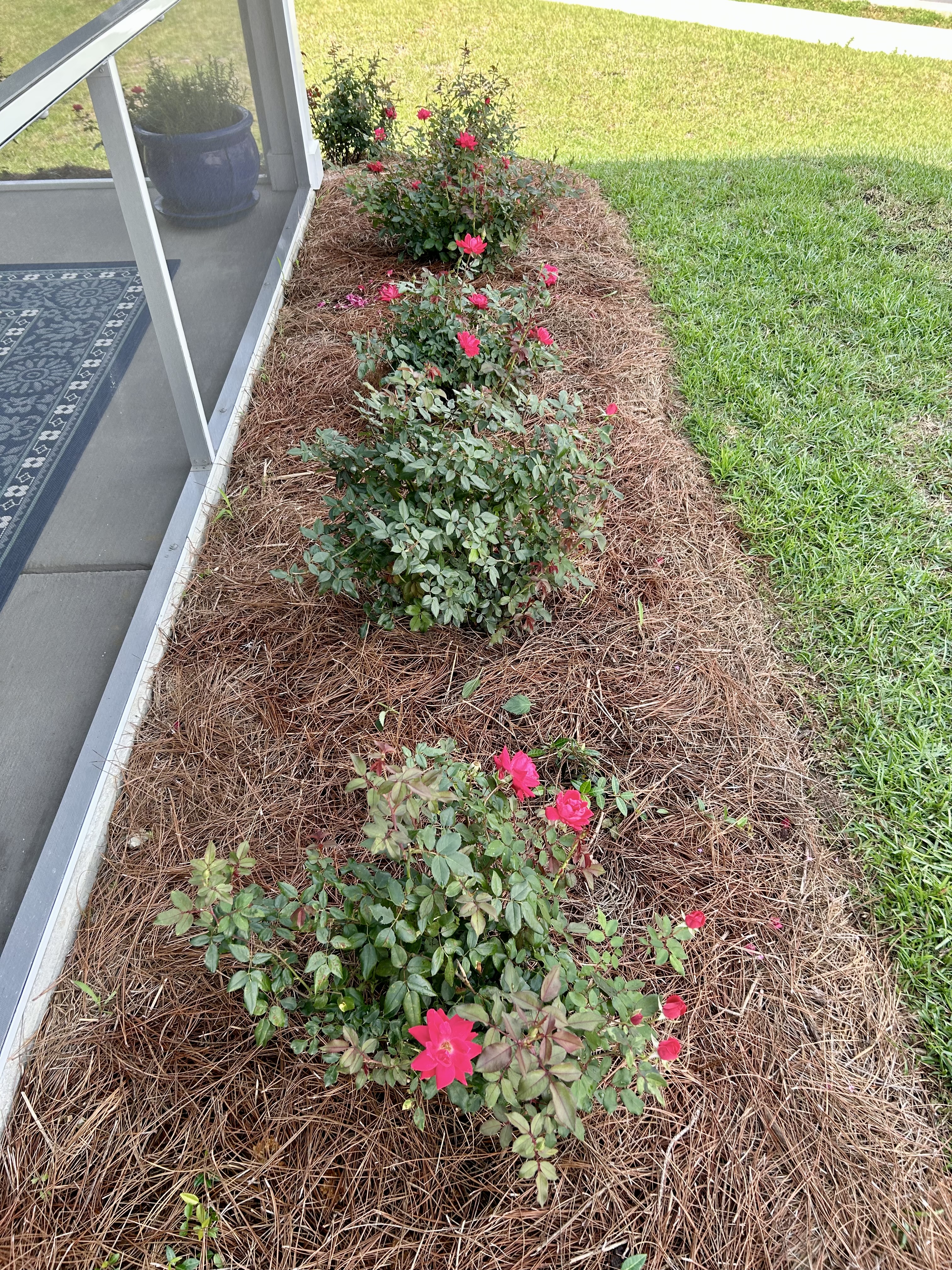
The roses do seem to be thriving. They have a lot of new growth and are starting to spread sideways. I’ve lightly trimmed the tops off and on so they will spread sideways. They are about to put out a new flush of flowers.
The grass is doing well mostly and is a healthy deep green color. There are some bald spots where the grass is just sitting down on clay. I’ve added some manure compost to some of those spots in the hope it will give them something to feed on in the sterile clay. There are pieces of the grass in those spots; it just needs a bit of help with the clay. And, apparently, lots of water.
Centipede grass is tricky, as I’ve said. But I’m hoping I’m learning to understand it better. It does not like competition, for one thing, so I’ve spent many hours after a heavy rain hand-pulling weeds in the early morning or late afternoon. I don’t mind that work; it gets me outside in the sun. I’ve filled several big grocery plastic bags with weeds–and the grass is showing the results now. Clearly, this grass LOVES water.
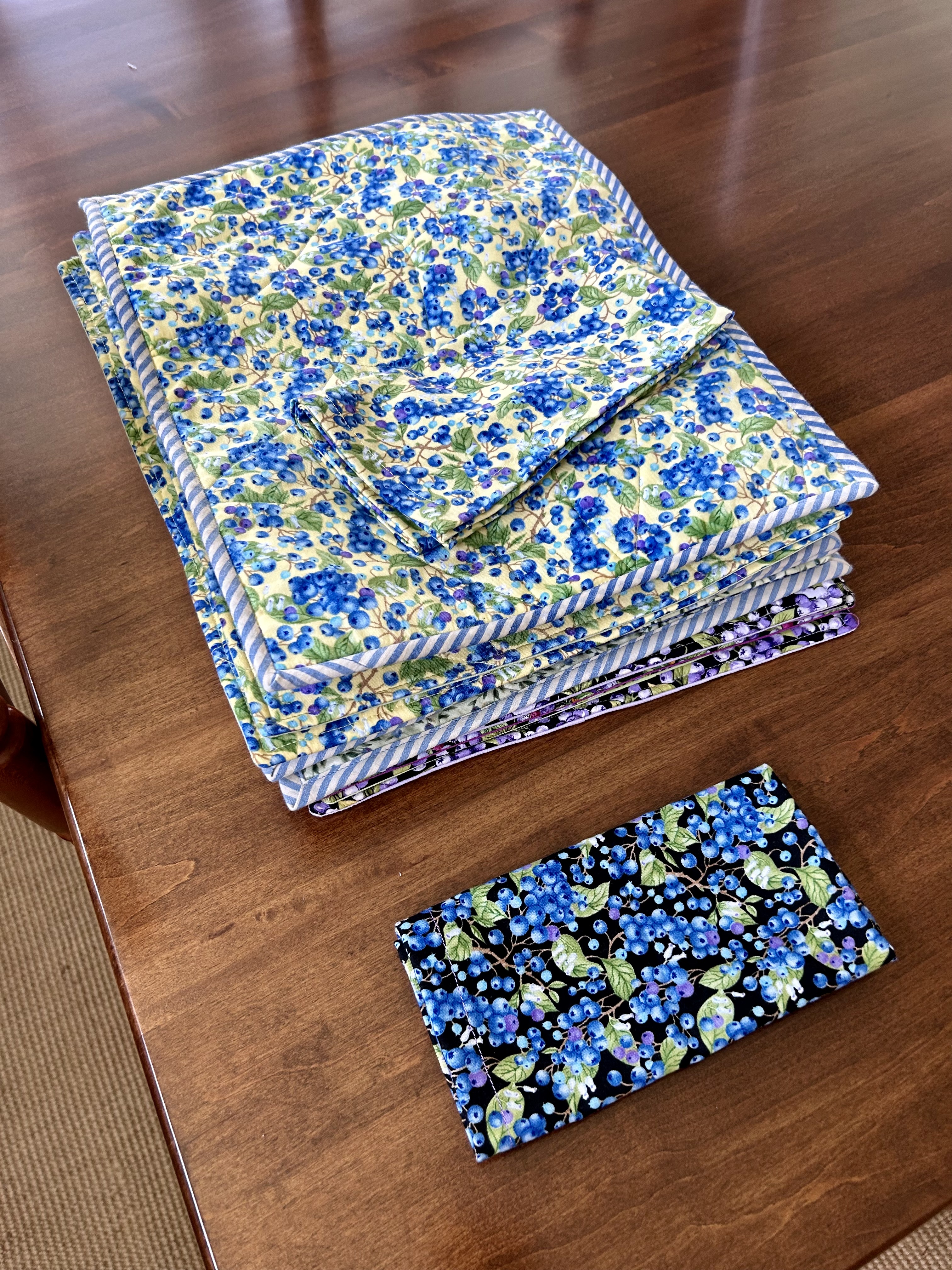
I’m taking a rest day today, for the most part. I’ll sew placemats after my dinner. The finished placemat pile is growing–I think I have six more to make. Each has its own napkin and most napkins are solids. The napkin to the side of the pile in an extra and is smaller–maybe it would be nice in a bread basket?
Dinner in a bit is lamb rack, baked sweet potato, roasted zucchini, some cut fresh veggies from yesterday, fruit for dessert (cantaloupe, raspberries, blackberries with a hint of maple syrup and mint from the garden), and an espresso with raw honey and raw cream–and time on the porch to read.
Have a great weekend! And thanks for reading this far, if you did!






 Louisa Enright's Blog