Turkey Tracks: Big Beautiful Bug, New Granddaughter Quilt

Turkey Tracks:  December 13, 2010

Big Beautiful Bug, New Granddaughter Quilt

Before leaving for Charleston for Thanksgiving, I wanted to complete our new granddaughter’s “welcome to this world” quilt.  She was due the first week of December–maybe even while we were in Charleston.  We were due to return December 6th.

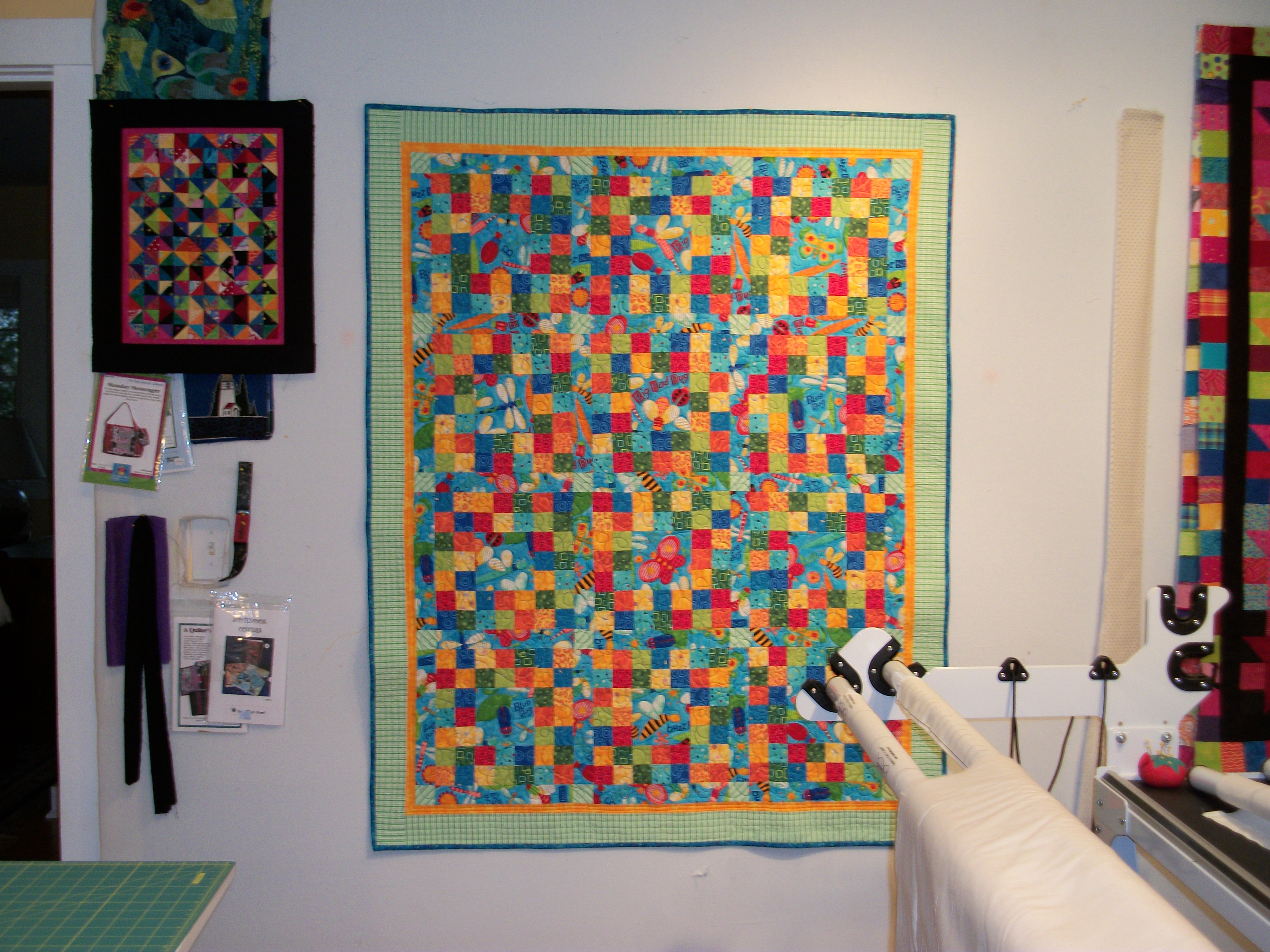
Corinne found what would be the backing fabric when she was here this summer, and we both loved it.  There was a limited amount, however, and all the internet fabric searches in the world did not turn up more of it.   For some odd reason, I never did get a picture of the back of the quilt–and the fabric before I cut some of it up for the front.  Here is a BIG picture of part of the front, and you can see the fussy-cut featured bug fabric, combined with lively, bright prints.

Here is border detail:

And, here is the finished quilt:

This is a pattern I clearly love.  I’ve used it three times now.  One for my great-niece Fiona Whittle, and once for my daughter-in-law, Tamara Kelly Enright.  Each quilt is uniquely different.

Turkey Tracks: Ask And You Shall Receive: Synchronicity

Turkey Tracks:  November 9, 2010

Explanation:   This entry is out of order.  In the flurry of getting ready to go to Charleston for Thanksgiving with our children and grandchildren, I didn’t publish this draft to the blog.  I wrote it after the November 8 entries about wild yeast breads and cooking with honey. 

Ask And You Shall Receive:  Synchronicity

Have you ever thought or voiced a need for something–some information perhaps–and within a few days it appeared?  This magic is called synchronicity.  Some kind of energy goes out into the world and, like magic, the universe/god/whatever delivers what you need.

So, yesterday I was writing about wild yeast and making my macaroon cookies with honey instead of maple syrup.  This morning I was reading Yes! magazine–the current copy Fall 2010–and ran across a two-page article called “Can You DIY?”   This article talks about how to sweeten with honey, how to capture wild yeast into a bread starter, how to darn a sock, how to save kale seeds (a four-season crop in mild climates), and how to refrigerate without electricity.  There are demonstration pictures, too.   Take a look?   http://www.yesmagazine.org/issues/a-resilient-community/can-you-diy

Yes! magazine can be read on-line, and you are free to use its articles however you wish.  It’s mission is to support its readers in building a just and sustainable world.  The quarterly issues are devoted to specific themes, like, for instance, this Fall 2010 issue:  “Ready For Anything:  Building Resilience Now For Hard Times Ahead.”  This issue features explanations about the Transition Movement, which is growing by leaps and bounds across the world as people are beginning we have to make radical, structural changes in how we are organizing and living our lives.

Turkey Tracks: The Best Eggs

Turkey Tracks:  December 12, 2010

Explanation:

Before Thanksgiving, I went into our local co-op–Good Tern–in Rockland, Maine, where I do the bulk of my weekly grocery shopping.   November, as you may know, is the egg low point of the year.  Since our wheaten Americaunas starting their yearly molt and since the Marans don’t lay in the winter, we’ve had no eggs for some weeks now.   On a shelf in the cooler were eggs from an industrial organic egg factory located in New England and selling eggs all the way into the southern states:  Pete and Gerry’s organic eggs.  These eggs were selling for $6!!! a dozen.  These folks have the most charming, caring stories about their operation in their egg packages–all of which is advertising hype and which is a perfect example of “buyer beware.”

 I tracked down a staff member and protested.  Why were expensive industrial eggs from tortured hens taking up limited space when we have many small local farmers producing superier, unlabeled organic eggs from pastured chickens, trying to make a living?  (One significant problem for many small farmers is the cost of getting and keeping official organic certification.)  The following week, two days before leaving for Charleston to spend Thanksgiving with our children and grandchildren, the manager explained that some members were asking for certified organic eggs and asked me to put in some sweat equity and write a education piece on why industrial organic eggs were not the best buy.  Here’s what I wrote for the coop newsletter, though I’m not sure I made their deadline since I had technical troubles sending messages in Charleston.

Here’s a picture my daughter-in-law Tami took and sent to me of eggs cracked open into a white bowl.  One yolk stands out with its vivid, pumpkin orange color against the other paler yellow yolks.  It’s the difference between a pastured layer and industrial “organic” yolks.

THE BEST EGGS

Choose, first, organic eggs.  But, understand that the term “organic” is no longer a guarantee for a healthy food.  With regard to eggs, within the term “organic,” there are other important factors to consider.

Despite cheerful, wishful advertising to the contrary, all industrial “organic” layer confined animal organizations (CAOs) have some significant problems that impact egg quality:  the health of the layers; the feed; and the indoor, inhumane, unhealthy overcrowding that is inherent within this model.  Commercial layers are units of production only.  They are mass produced in incubators for a system that needs them to lay as many eggs as possible, regardless of the season.  Hens are born with a finite number of eggs, and most hens can lay eggs continuously, except for molting once, for about two years.  Industrial hens are debeaked and forcibly molted by starvation for up to two weeks.

Organic feed does not contain agricultural chemicals and does not use genetically modified products, but those facts are about the only good thing about it.  The quality of commercially produced organic feed is very poor since our government has allowed the organic chicken industry to cut quality to the bone in an effort to reduce production costs.  But, those costs are not necessarily passed on to the consumer.  For instance, Pete and Gerry’s organic eggs—products of a CAO holding 130,000 birds and delivering eggs throughout New England and into the Southern states–are currently selling for about $6 a dozen.  The Country Hen eggs—another massive layer operation– charges $4 for six eggs, or $8 a dozen.  Our local, unlabeled organic eggs are about $4.50 a dozen.

All the commercial chicken feeds, including the organic feeds, are 90 percent corn and 10 percent soy, contain about 20 synthetic chemicals meant to substitute for real ingredients lacking in the mixture, and contain waste products (meal, oil) from other industrial processes.  The corn/soy ratio does not contain enough protein, so our  government allows the addition of a synthetic essential amino acid, methionine.  Highly processed soybean oil added to the mixture is already rancid and can be trans fat laden.  These feeds are mashes or pelletized mashes.

Government organic rules stopped the addition of unspeakable animal by-products into commercial organic chicken feeds, but rather than mandating a healthy protein source or a better grain/legume ratio, it allowed the cheap corn, soy, and methionine mixture.  Corn fattens, and while soy, which must be cooked, can provide protein if given in sufficient quantity, it has a dangerous antinutrient package that American industry has never been able to fully detoxify.  Thus, soy antinutrients slowly poison animals, which does not matter to industry because neither meat chickens or layers live that long.  But, what is all the soy in our industrial animal feeding systems doing to us?

Commercial chicken feeds are throwing off the omega 3 and 6 ratios in both eggs and meat.  Human diets should have a ratio of 1:1, or not more than 1:3.  The standard American diet today is giving most Americans an omega 3 to 6 ratio of 1:20-25.  This boosted omega 6 imbalance is not healthy and is likely part of why so many people have chronic illnesses.  It’s also why producers are claiming their eggs have “more omega 3s.”

Chickens are omnivores, not vegetarians.  To produce an egg with balanced omega 3 to 6 balances, chickens need to eat what they ate before industry, beginning in the 1950s, began to change their diet to allow lucrative industrial operations.  Chickens love green vegetation (grass, clover, greens), and the green matter is what gives a healthy egg its dark orange color.  Chickens like protein from insects and worms, and small flocks have always traditionally been given leftovers from the kitchen, which means chickens also eat meat, dairy, vegetables, and fruits.  Chickens choose grains and legumes only after the above foods are gone, so grain/legume mixtures should be supplements only, offered for free choice, and should include at least five different whole grains.

The Maine Poultry Growers Association (MPGA) says consumers need to know whether or not the layer spends time daily on pasture and that other descriptive terms, like “free range,” are meaningless.  MPGA notes that recent studies from Penn State University “found that eggs from chickens that ate grass and insects contained higher levels of omega-3 fat, and vitamins E, A, and in some cases D.”

In effect, industrial CAOs are a bad match with organic principles.  Chickens confined indoors for their lifetime in a barn containing thousands of other chickens and all their combined daily manure live marginal lives and are breathing in excessive amounts of ammonia.  When raised with industrial methods and fed an industrial diet, they cannot be very healthy.  Without ever getting to the ethics of what occurs in a CAO, it is easy to see that these chickens are not going to lay eggs that bear much resemblance to the eggs that have nurtured humans for centuries.  And, buying these eggs, even if they were reasonably priced with regard to their quality, is only going to perpetuate this soul-killing system.

So, the best egg is going to come from a local farmer whose chickens have access to pasture; are fed a variety of foods, to include organic whole grains; and are allowed to rest and recuperate during the winter season.  Second best eggs would come from a local farmer whose chickens have access to pasture and who are fed a commercial organic feed.  And, third-best eggs would come from a local farmer whose chickens are fed organic feed and who, hopefully, are not housed in small cages.

As consumers, we have to ask our local farmers to pasture their chickens and to feed them wholesome food.   We have to ask our local stores to carry these healthy eggs.  And, we need to understand and respect what chickens need.

Turkey Tracks: An Asset: Easy, Enzyme-Rich Sauerkraut

Turkey Tracks:  November 23, 2010

An  Asset:  Easy, Enzyme-Rich Sauerkraut


I like to have what I think of as “assets” in my kitchen.  If I have a bone broth, for instance, I have the makings of a soup lunch or dinner.  Salt-preserved lemons topped off with olive oil provide a tasty addition to everything from mashed potatoes to salad dressings to drizzles for baked fish.   Apple chutney is great alongside meat or inside an omelet and keeps for a long time.   I keep piima whole cream which operates like crème fraiche or sour cream and which can be used in tea or coffee to add a different kind of zing.  (Piima is a Finnish cultured milk product that is chock full of enzymes.)  Leftovers can be turned around in new ways for easy meals.  And, lacto-fermented vegetables keep for months in the refrigerator and add zip and enzymes to your plate, especially in the winter when local salad greens are scarce in Maine.  

Sally Fallon and Dr. Mary Enig, in Nourishing Traditions, write that the lactobacilli in fermented vegetables enhances digestion and promotes the growth of healthy flora throughout the intestine.  And, lacto-fermented vegetables have antibiotic and anticarciogenic substances.  Plus, eating enzyme-rich food takes pressure off your body to process what you eat.  My favorite lacto-fermented vegetable is sauerkraut.  I put about ¼ cup of sauerkraut on almost every plate we eat in the winter.  People used to lacto-ferment vegetables to preserve them before canning technology arrived.   

Not long ago I dropped the old half-gallon sauerkraut container, and it broke into a million pieces all over the kitchen floor.  It was full of fairly newly made sauerkraut.  So, after I cleaned up the mess, I set about making some more, and in the three days it took to make, we missed having this “asset” around quite a lot.

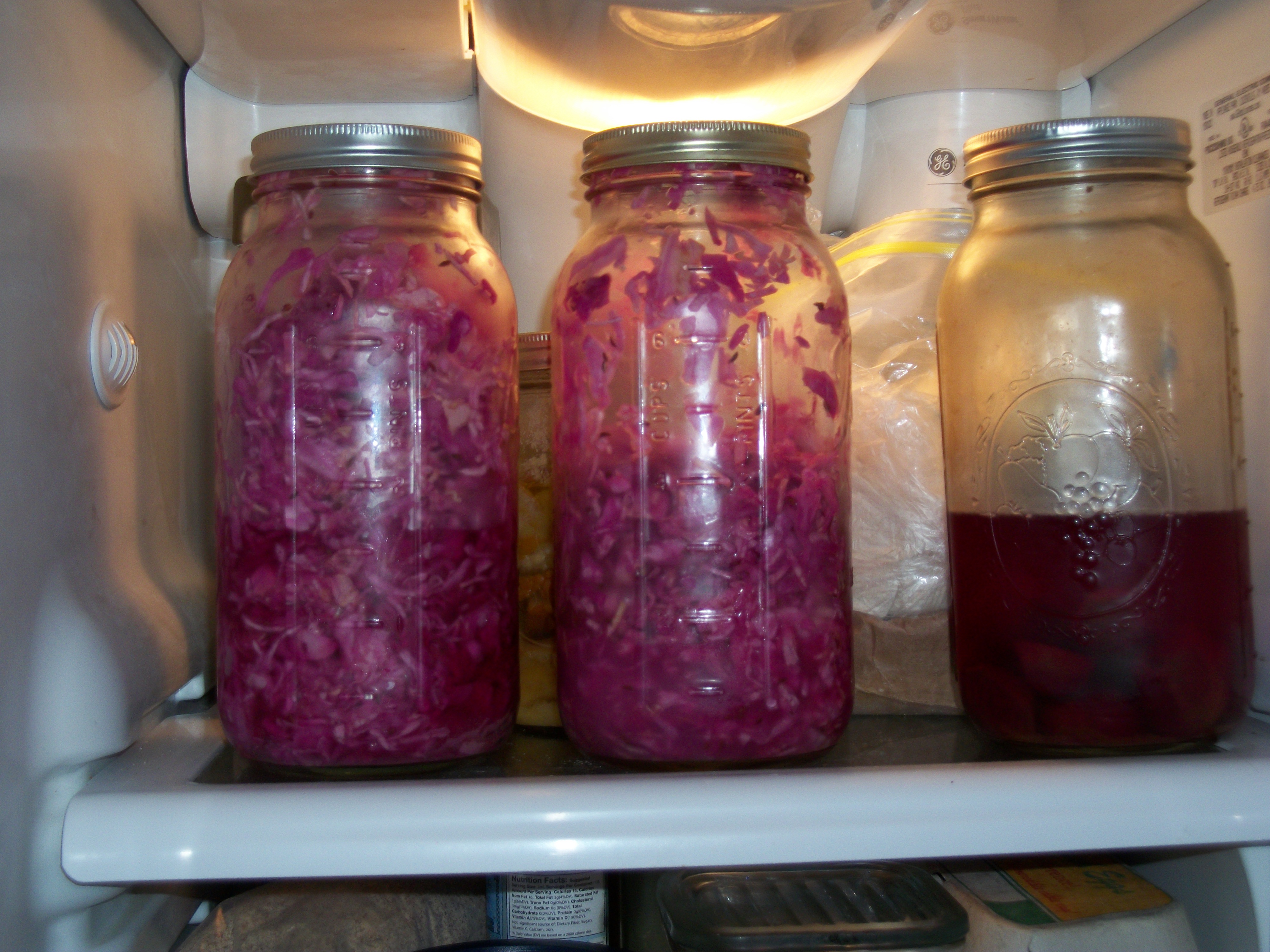
Here’s a picture of the two new half-gallon containers: 


I used a red cabbage and part of a green cabbage.  In a few days, the red cabbage will turn the new sauerkraut a rosy pink.  See?  It will get darker along the way, and it will keep for months, if we don’t eat it first.  That’s beet kvass on the right, another enzyme-rich, healthy product.


Here’s the recipe from Nourishing Traditions:

1 medium cabbage, cored and shredded.  I use the slicer on a food processor.

I Tablespoon caraway seeds

1 Tablespoon sea salt

4 Tablespoons *whey (or use 1 additional Tablespoon of salt).

 *Whey is the clear liquid that can be drained from good yogurt.  Most commercial yogurt now is so full of pectin and seaweed that it will not drain whey.  So, be aware that what you’re paying for isn’t a full-milk product, but a product adulterated with fillers—so the producer makes more money.

 I far prefer the whey to additional salt.  You can drain yogurt by putting a paper towel or two, or a coffee filter, into a colander and setting it over a bowl.  Put yogurt into the paper-covered well of the colander and set it over a deeper bowl.  You can put a plate over it if you like.  The whey drains off, leaving you with a delicious spreadable cheese you can flavor with herbs or drizzle with honey.  Don’t worry; this mixture won’t go bad at room temperature.

 I mix the sauerkraut ingredients in a big bowl and pound it a little with something a bit heavy:  a mallet, the handle end of a big spoon, or a mortar grinder.  When the cabbage starts to release its liquid, pack the cabbage into a clean Mason jar, making sure you leave about an inch of free space.  Keep the mixture at room temperature for about three days, turning it upside down to distribute the liquid once or twice a day.  (Don’t leave it upside down—just mix it up.)  You can eat it most anytime, but it’s best after about three days.  Refrigerate it and ENJOY!

Turkey Tracks: I Like My Bread

Turkey Tracks:  November 8, 2010

I Like My Bread

Take a look at what came out of my oven last night:


The loaf on the left is a wild yeast sourdough bread that is cranberry, pecan, and chocolate.  The one on the right has dried cherries and walnuts.  I froze the latter and ate a slice of the former for breakfast.  Yummo!

I’ve had this wild yeast sourdough starter for about 4 years now.  I forget quite how I started it–starters aren’t all that hard.  Sally Fallon and Mary Enig have recipes in Nourishing Traditions.  Any good bread book does, actually.  I never add commercial yeast to it.  It took a while to really get going, but now, you can see it’s popping up beautifully. 

I have developed a sponge method that takes about 2 days.  Sometimes, 3, like yesterday when the mixture sat covered on the counter bubbling for 2 days and picking up more yeast because I forgot it.  I feed the starter one day and pull off  half for next time.  Then I mix up a sponge and let it sit for a day.  Then I knead and bake.  It takes me 3 minutes to mix in more flour, 10 minutes to knead it, and it sits and rises for at least two hours, and bakes for an hour.  Clean-up is about 10 minutes.

My bread is probably very close to an older European bread.   It’s just wild yeast, flour, and water.  I don’t add salt as that draws moisture and makes it mold quicker.  Rather I slather it with salted butter or unsalted butter and REAL sea salt (grey, moist) sprinkled over the butter.  I can add fats, or sweeteners, or eggs, but I rarely do.  This time I added the dried fruit, nuts, and, as an adventure, the chocolate.  And, I only eat one piece a day at the most as I really control the amount of grains I eat.  This bread, too, is fermented with the sourdough starter, so the phytates, which can and do cause chronic illnesses, are managed.  Everyone used to soak grains, nuts, and seed before eating them, but we’ve forgotten how, and we’re eating a ton of grains these days–which is a big factor in all the chronic disease we have going on. 

My bread is best sliced and toasted.  It’s too heavy for sandwiches really.  And I’ve mostly given up sandwiches anyway.  Too much bread.  I just eat the innards of sandwiches. 

I’m looking forward to breakfast tomorrow!

Turkey Tracks: The Elegance of the Hedgehog

Turkey Tracks:  November 8, 2010

The Elegance of the Hedgehog

Muriel Barbery is a French professor of philosophy.  Her novel The Elegance of the Hedgehog has been enormously popular in her native France, England, and in America. 

I do not see why.

I believe the novel’s success to be partly due to a lack of critical reviews.  The reviews on-line are all laudatory.  So is the novel’s popularity due to some popular idea that this is a philosophical novel that produces cultural capital if one has read it because it does discuss various philosophical ideas along the way?   But, for me, Barbery’s philosophical stance in the novel is incoherent.  And, Barbery shocks the reader by killing her protagonist just when the three central characters have come together in an interesting way.  It’s as if Barbery does not know what to do with them once she’s set their stage.  And, I found it very difficult to capture the large cast in my head as I read.  I kept having to page back to see “who is that again?”

But, let’s look at how Barbery handles philosophy.  She, as is customary, divides the subject into two major camps:  idealism and materialism.  Idealism comes from the mind of the individual interacting with the world, as in Descartes “I think, therefore I am.”  And, phenomenology, a subset of idealism and the subject of a debunking discourse in the novel– is the belief that the real world in inaccessible  because all that exists is perception formed in the mind.   Materialism, on the other hand, believes that there are bones, dates, and observable constructs in the world.  Marx, for instance, is from the materialistic camp.  But, Barbery dismisses Marx on the first page of the novel.  Not all of materialism, but Marx, who writes of capital and its impact on class–a major subject in the novel as the main protagonist is a concierge in a fancy apartment filled with rich people. 

With idealism dismissed and Marx dismissed, what remains?  For Barbery it’s a particular material moment of viewing Beauty.   ART, thus, gives us the power to erase desire because we can look at beauty/art without wanting the objects portrayed in the art.  Further, the still life, or the objects within art, hold beauty in a timeless moment.  Barbery describes other such timeless beautiful moments of beauty in the novel.  So, all of materialism is reduced to beauty held in a moment seen only by the observant–like the petal of a flower falling that one of the protagonists sees. 

But, but, but–isn’t beauty in the eye of the beholder.  And, aren’t notions of beauty formed by one’s culture and by the context within which one lives?  History shows shifting notions of beauty.  Yet, a key scene that sketches out Barbery’s philosophy is when the concierge visits the apartment of a wealthy Japanese man and sees a western still life from several hundred years ago.  Together the two people–one Asian and one French–salivate over this very Western picture.  Would the Japanese man really have this notion of beauty?  Would the concierge really enjoy esoteric Japanese movies that display Japanese notions of beauty?  This is the great bourgeoise move that makes all people alike under the sun.  By drawing a notion of universal beauty that can be seen by all, Barbery erases the very real differences that exist between cultures, between ages.  What has followed that idea around the world has been a violence carried out by those with the power to do so.  The different are made to want the same things as the conqueror when their culture was/is very different. 

Aha, but maybe that’s where the popularity lies.  It’s the same old Western story told yet another way, isn’t it?  And, isn’t the viewing of ART actually a moment of idealism, not materialism.  Isn’t that moment mediated by the mind and the cultural knowledge of the mind?  So, what’s really going on here is an entrapment within the idealistic circuit which maintains the status quo of… class reality, for instance.

Yes, that’s it.

Turkey Tracks: October Book Club

Turkey Tracks:  November 8, 2010

October Book Club

It was my turn to host our book club.

We meet late afternoon for tea and discussion.  This month the book was The Elegance of the Hedgehog by Muriel Barbary,which I want to discuss in a separate entry.

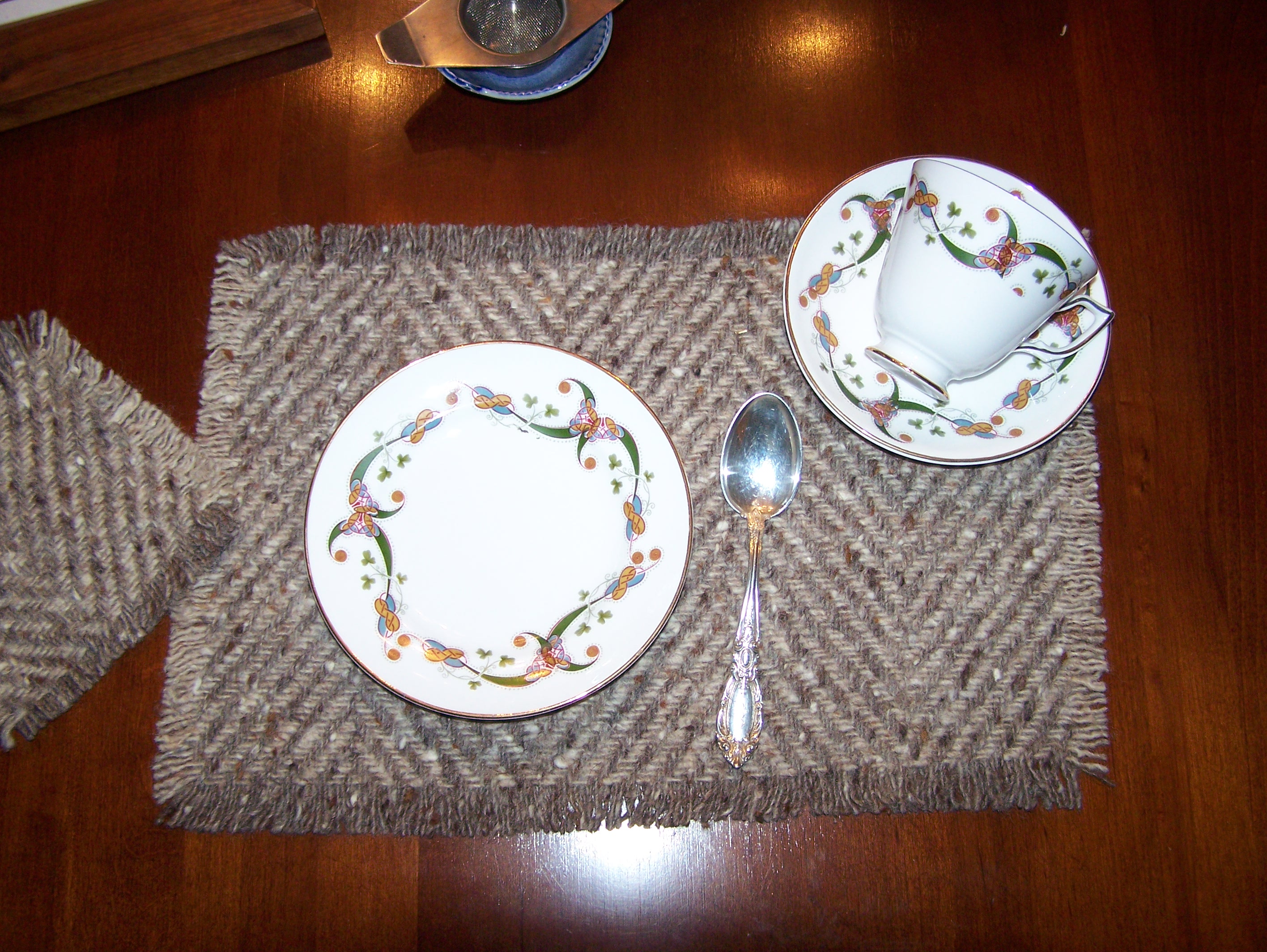
For some reason I was thinking about John’s mother.  Norah gave me so many pretty things over the years.  Among them this Royal Tara tea set:


The wool placemats and napkins were a wedding present 44 years ago.

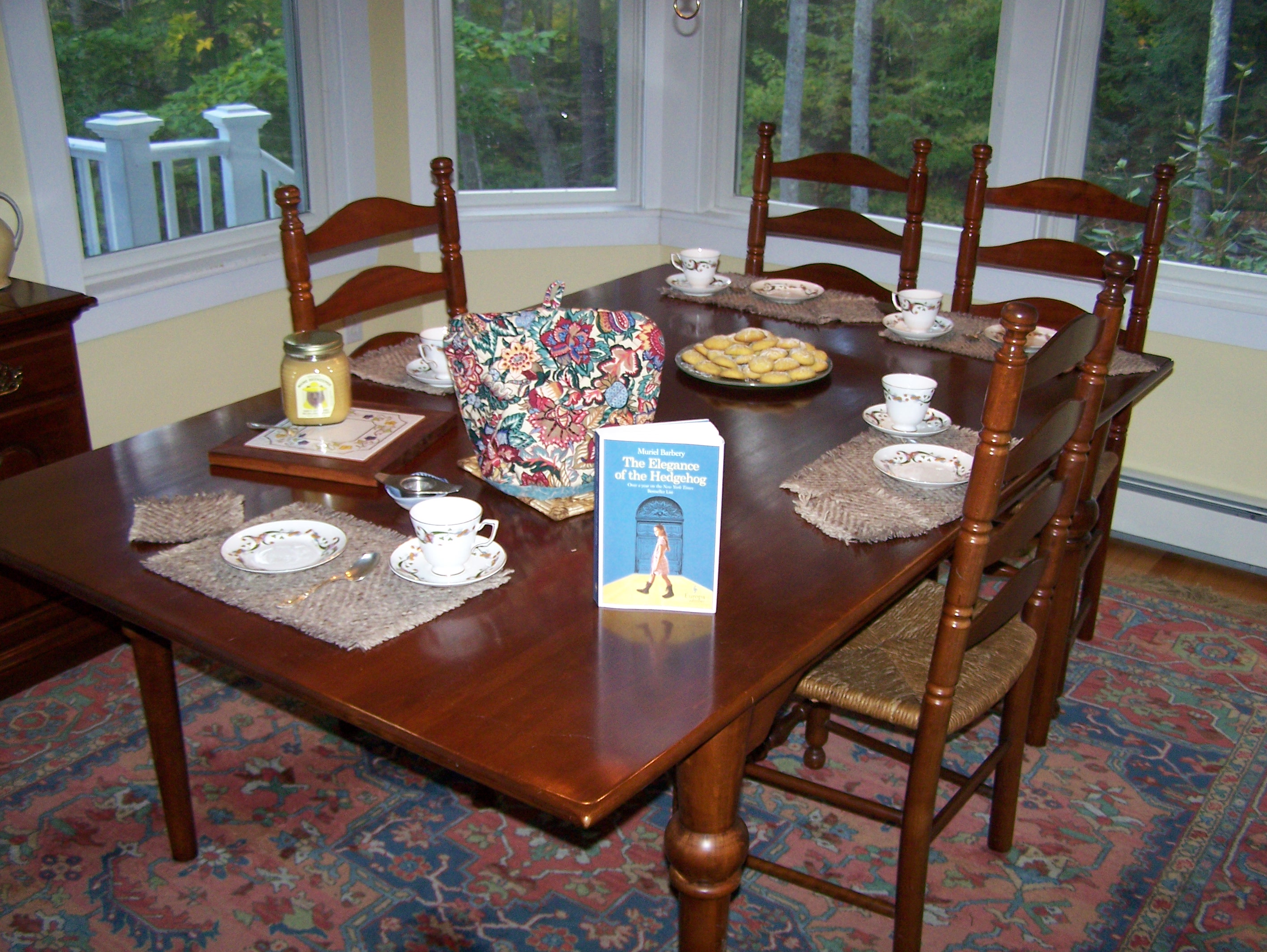
Here’s what the table looked like.  Not too fancy, but comfy feeling on a cool day.


I made two kinds of cookies.  A buttery saffron one from the Pensey’s Spices catalog that had just arrived:


They were quite good, but are still hanging around since we really don’t each much white flour and sugar.   Because of that I made macaroon cookies that are almost healthy.  They do not have any white flour, have healthy coconut meat, limited sweetener, and some good nuts and dried fruit.  It’s a recipe I’ve evolved from one in Sally Fallon Morell and Mary Enig’s book–a mainstay in my kitchen–Nourishing Traditions.   OK, so the chocolate isn’t great, but, there you have it, I love chocolate in the winter.  I don’t seem to have a thing for it in the summer.

Louisa’s Healthy Macaroons

Preheat the oven to 300 degrees and  line two cookie sheets with either the new silicon sheets or parchment paper.  (I’m afraid to ask if these silicon sheets are ok to use as they make baking cookies so easy.)

4 egg whites (I use the yolks in yogurt fruit smoothies)

pinch of sea salt (the wet grey kind with minerals intact, not the white dried kind in the grocery store)

 2 Tablespoons arrowroot

1/2 cup maple syrup or honey–or less (the honey cooks faster than the maple syrup)

1 teaspoon vanilla (Fallon/Enig call for 1 tablespoon, but I find this too much since I have added more ingredients and since I was using Penseys’ double vanilla)

2 cups dried, unsweetened coconut meat (I order on-line from Coconut on-line and get a BIG jar which lasts about a year)

Add extras:  nuts that have been soaked in salted water and dried in a dehydrator to remove the phytates, dried fruit, chocolate bits.  Good combos are pecans and apricots, dried cherries and chocolate and nuts.  I just chop a high-quality chocolate bar into chunks.  I probably add a good 2 cups of extras. 

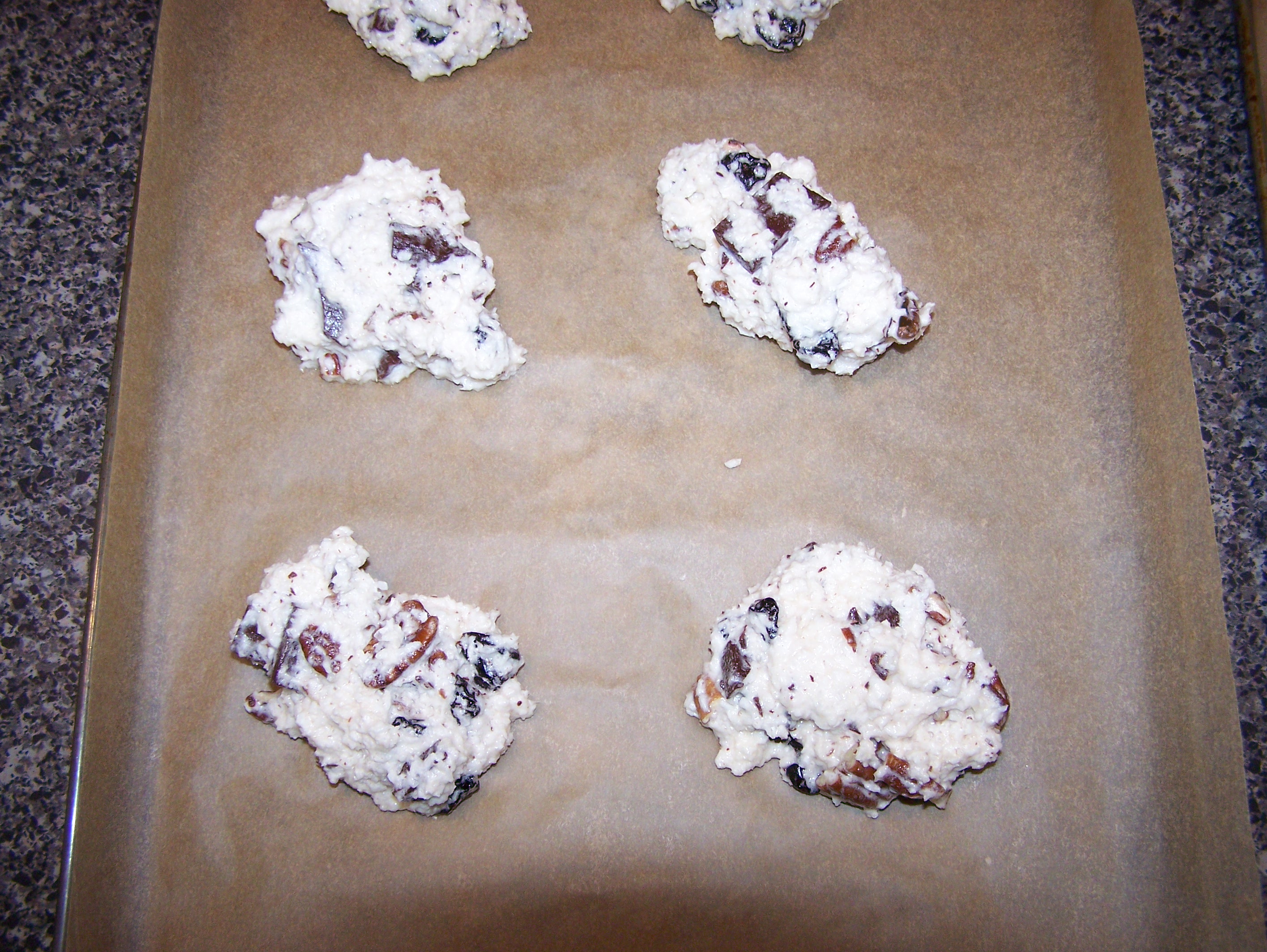
So, whip your egg whites and pinch of salt until you have firm peaks.  Add the arrowroot and sweetener and vanilla.  Add the coconut and mix with a big spoon.  Add the extras.  Do not overmix and break down the egg white mixture.

Put big gobs of the macaroon mixture onto the sheets.

Like this:

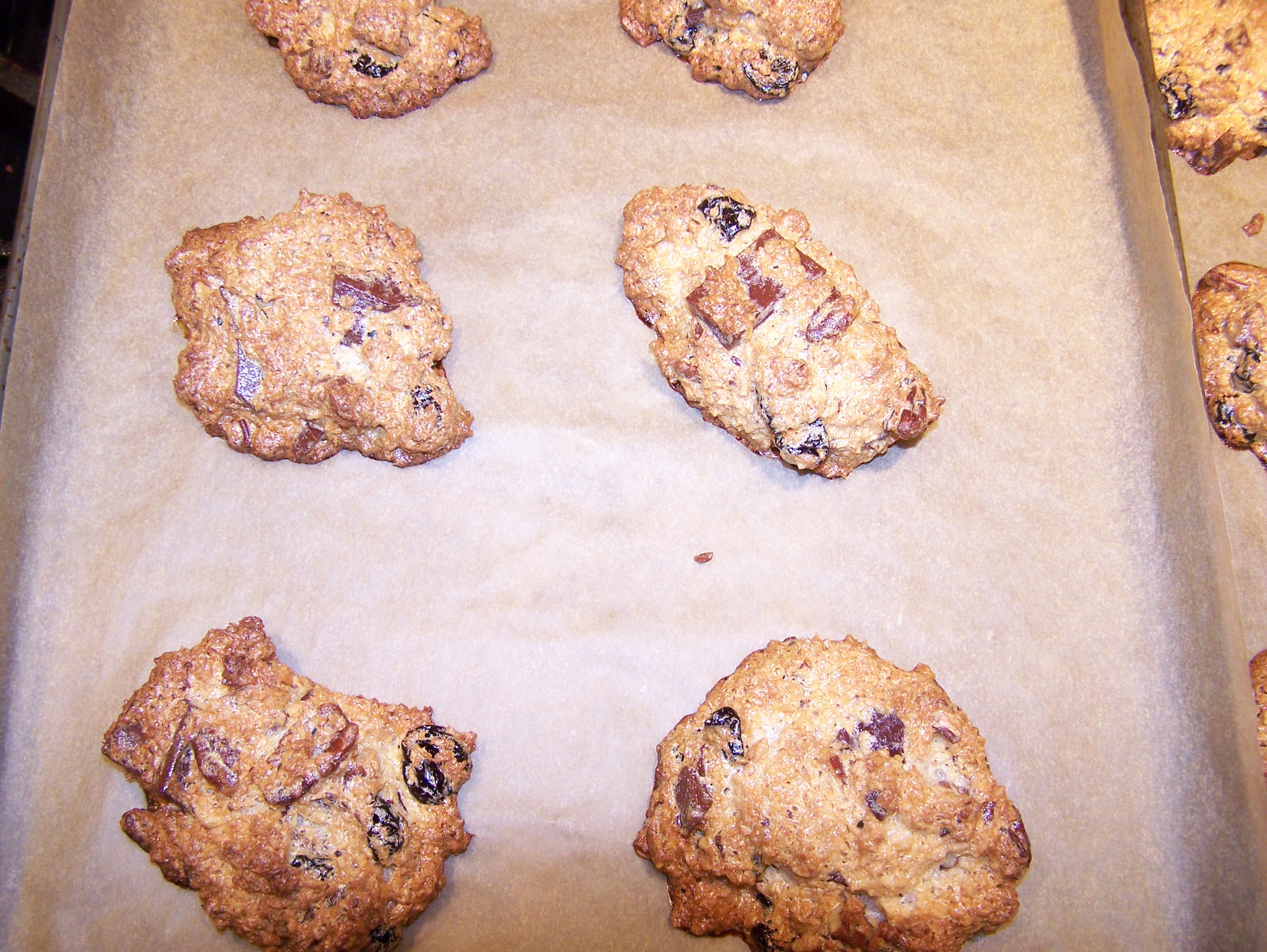
Bake at 300 degrees for 30 minutes and then turn down the oven to 200 and let the cookies dry out a bit for…about 30-40 minutes.  Taking them out early does not hurt them–they just get too sticky.  You want them to be nicely brown and a bit dry.  Here’s a picture of them done just right:

 ENJOY!!!   And put in an airtight container as they pick up humidity.

Turkey Tracks: John Buys Me A New Camera

Turkey Tracks:  November 8, 2010

John Buys Me A New Camera

My camera broke.  I can’t imagine why.  It just started eating batteries and, gradually, just stopped working.

No one dropped it.  Or, mistreated it.  It just…stopped.

That halted progress on my blog, of course.  I find text so much more interesting with pictures added.

John came to the rescue.  He bought me a new camera.  A slim little thing that is very powerful.  I love it already. 

He also spent hours fixing my computer when the new camera software caused the printer to stop working.

I find technology to be endlessly frustrating.  It can reduce me to tears and temper tamtrums.  And I feel like it wastes so much of my time since when things go wrong, it takes forever to sort everything out again.  I feel like I’ve missed several generations of learning with technology.  And nothing seems to be written down reliably so I can follow instructions.  My intuition is so NOT the intuition of technology.

Anyway, I’m all set to go again.  Thanks to John, who patiently comes to my rescue again and again.

Here’s a picture of–and thanks to–John with the new camera:

Turkey Tracks: New-Baby-Coming Projects

Turkey Tracks:   November 8, 2010

New-Baby-Coming Projects


We have a new granddaughter coming in early December.   We might even be in Charleston, SC, when she arrives.    

Anyway, when her mother Corinne and my son Bryan were here in the summer, Corinne and I took a day and picked out fabrics for some special projects.

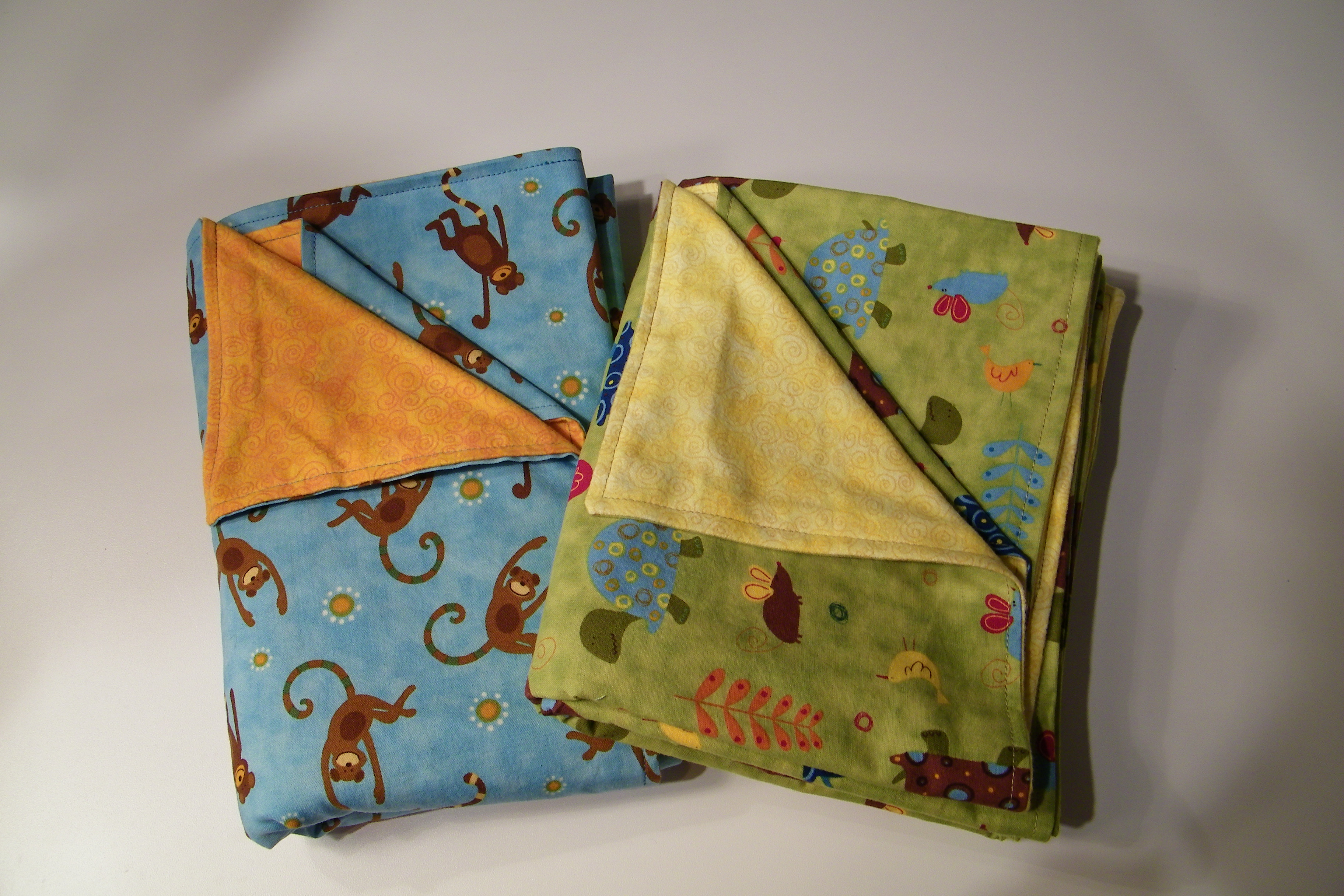
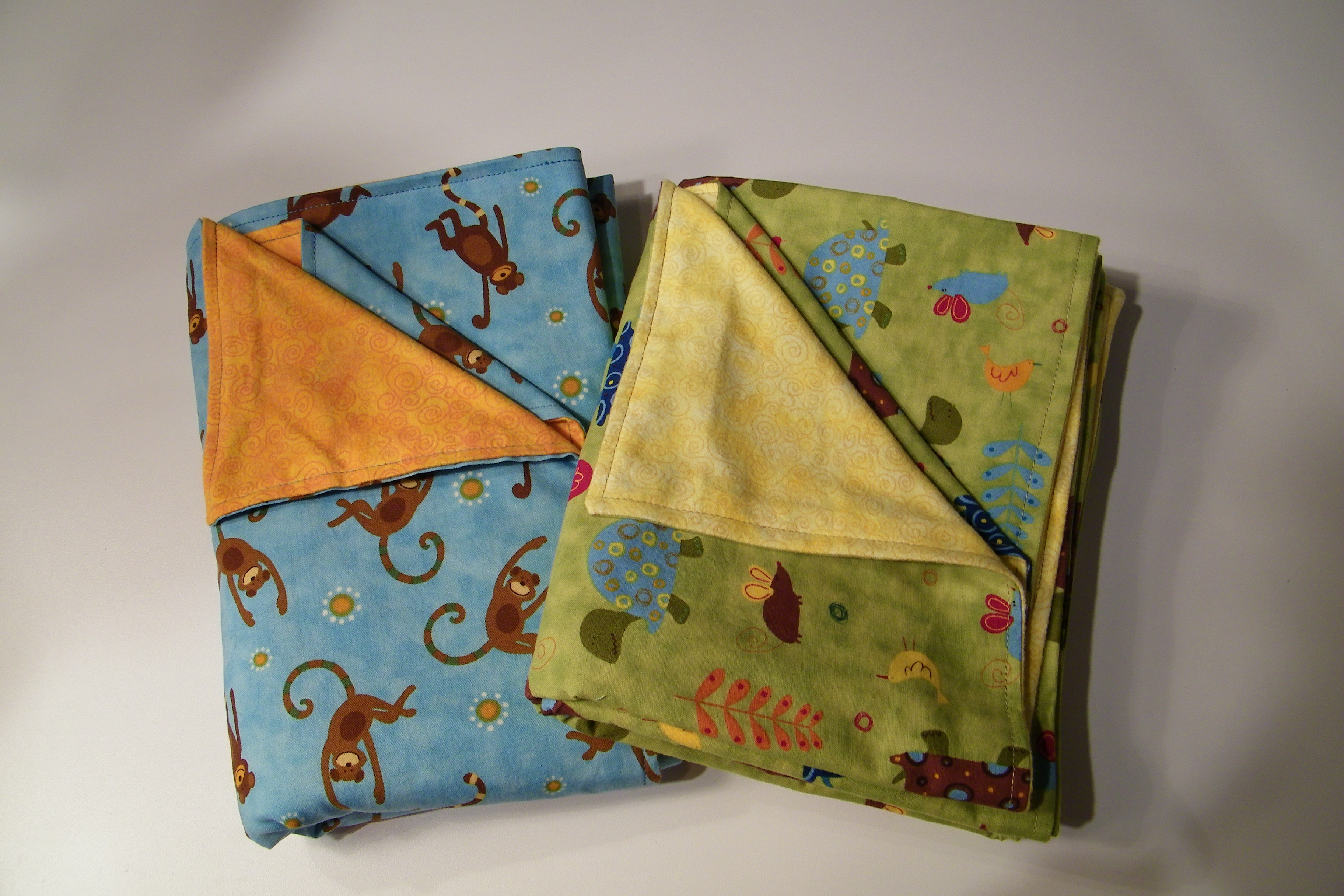
We picked out fabrics for two soft blankets:


These blankets are flannel on one side and a cotton fabric on the other.  Corinne loved all the bright, lively children’s prints on the market now and chose these two.  These blankets wash and wear beautifully and get used in countless ways.  I gave our other daughter-in-law two for each new child (for a total of 8!), and Tami put them under a baby’s head in a crib to catch spit-up (saving washing the whole sheet), on the changing table, on the floor, over a sleeping baby, and so forth. 

I buy 1 1/4 yards of each fabric, rip the selvages and edges to get straight grains, lay the two layers together right sides together, and trim where needed (the flannel piece is often larger), and sew around the edges (1/2-inch seam) leaving a turning space.  I trim down the corners and push them out.  Then, turn the fabrics right side out, iron, sew down the edges, and fold them prettily to show both layers. 

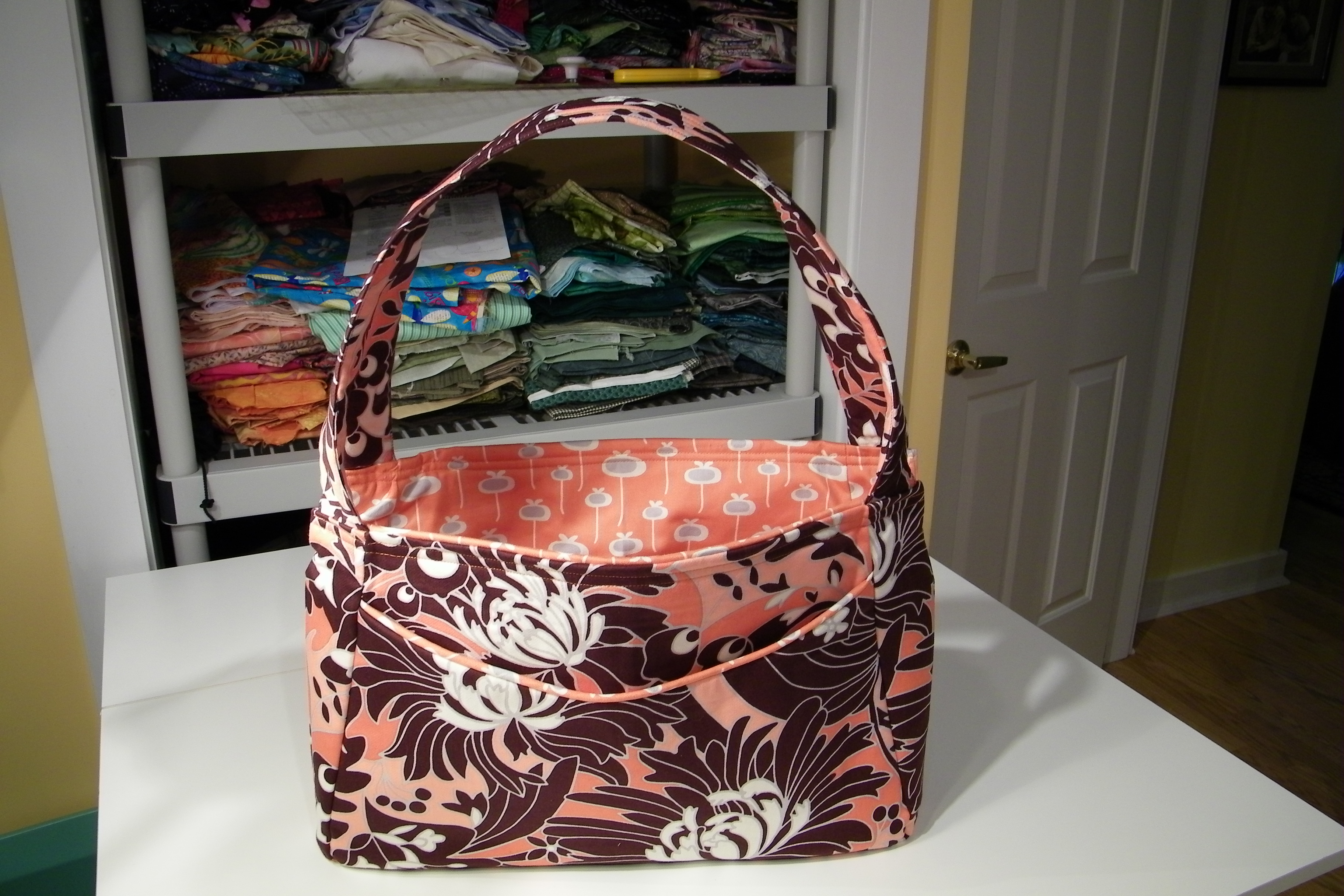
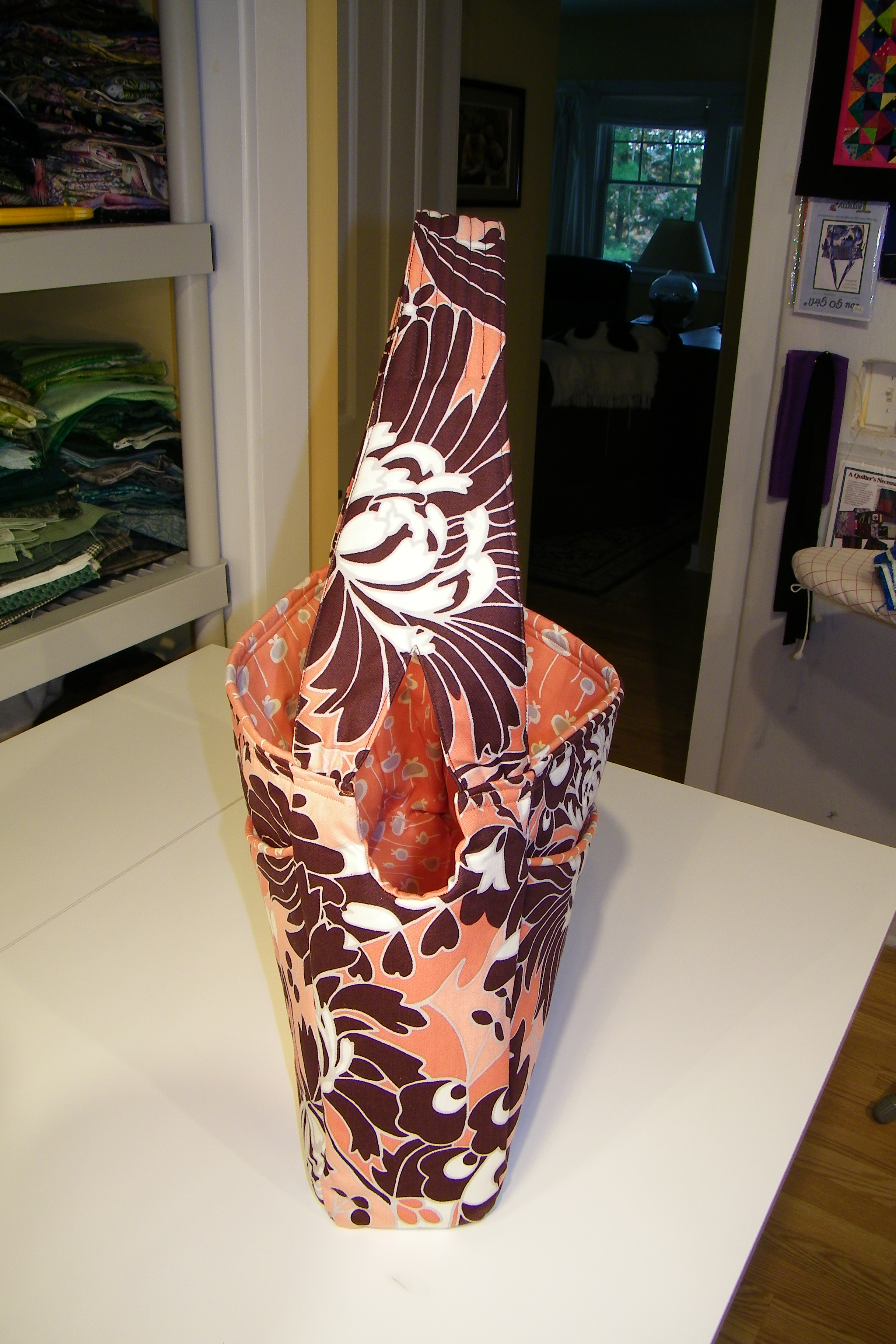
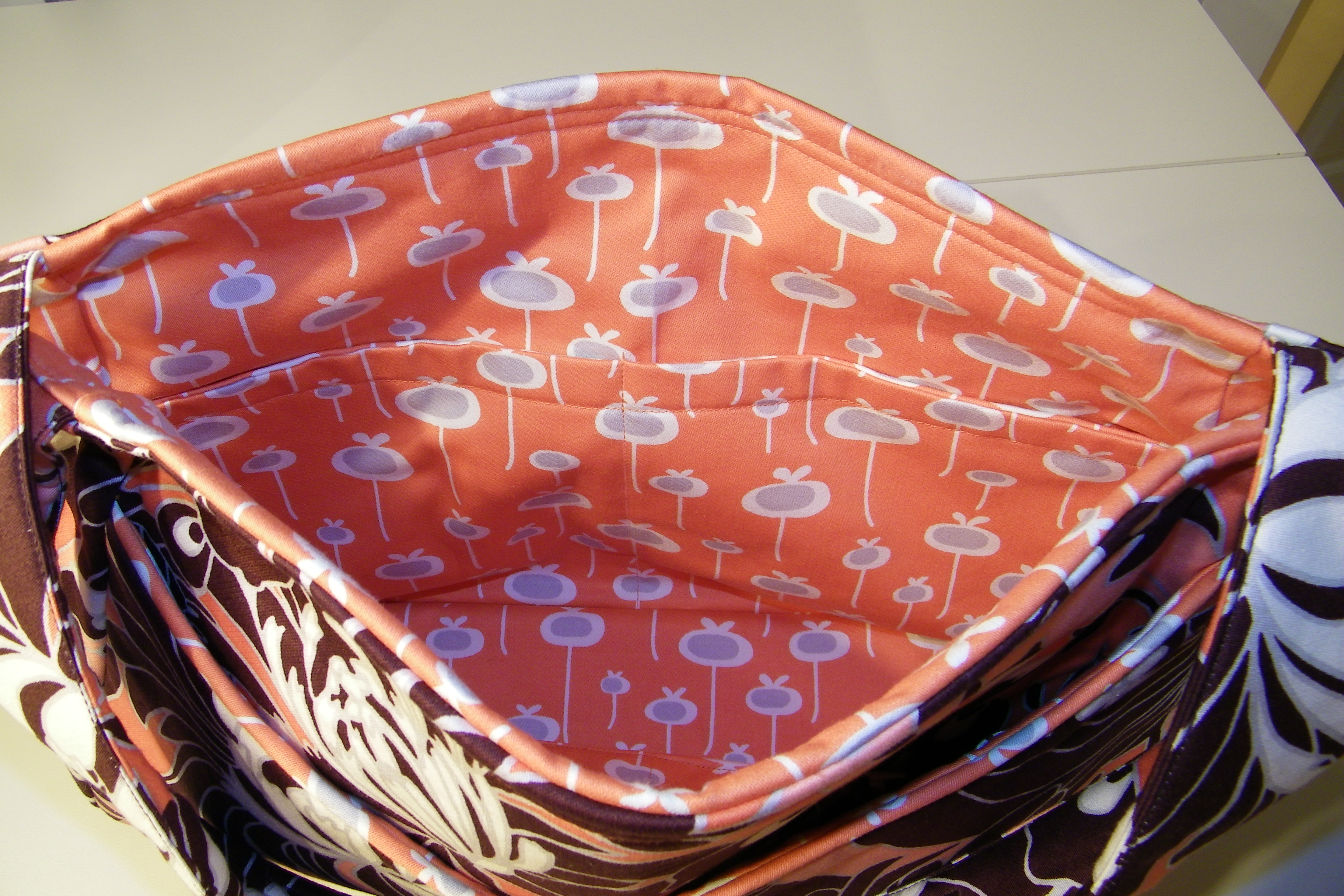
Corinne also picked out an Amy Butler pattern for a diaper bag and fabrics to make it.  Here’s what the finished product looks like.  There are big pockets on both sides and lots of pockets inside, which I divided on one side for bottles: 

Here is an end view of the handle detail:

And, one of the interior:

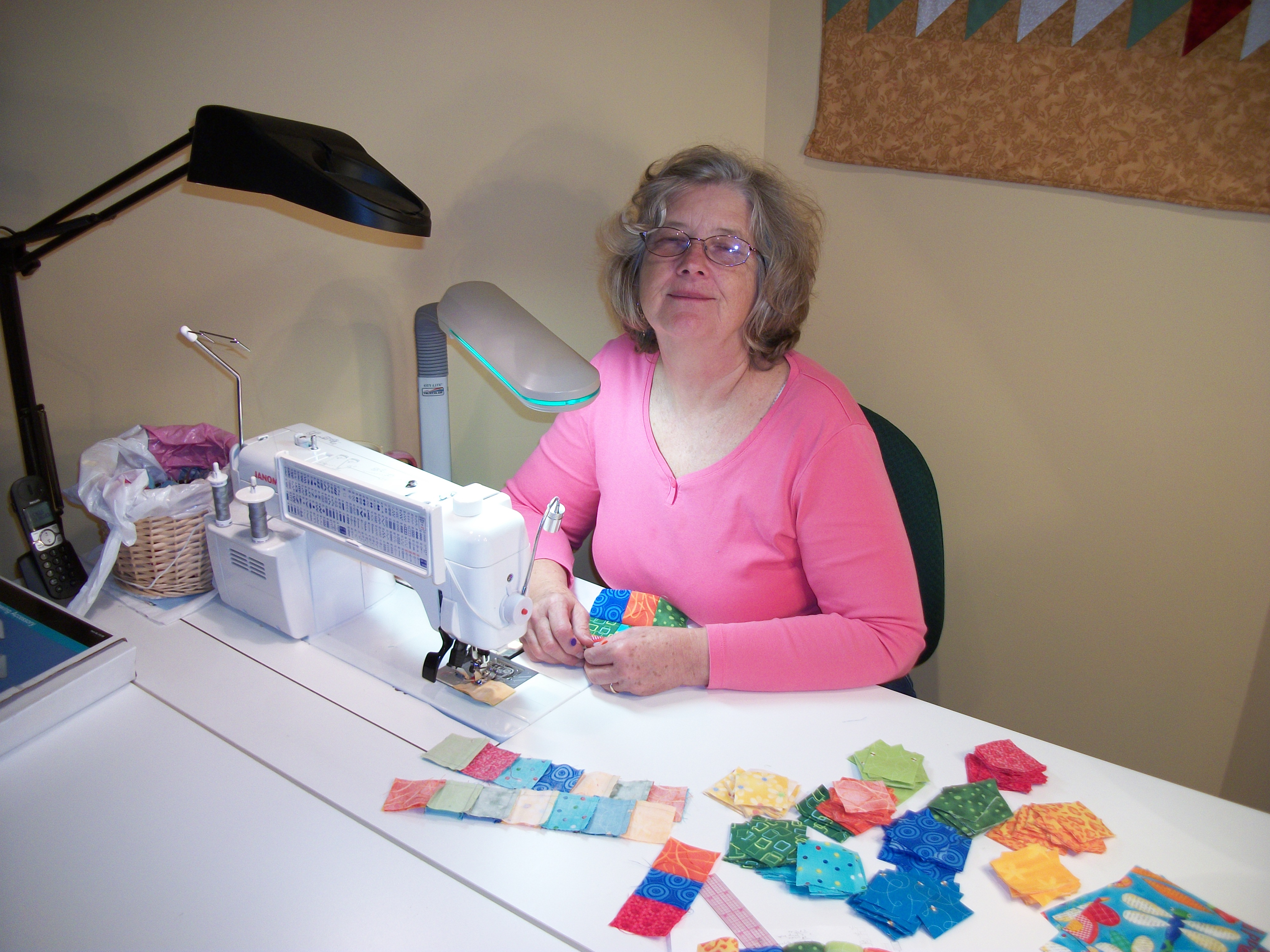
And, Corinne picked out an adorable bug fabric for the baby’s quilt backing.   She left the rest to me, and here I am, beginning work on the quilt for my new granddaughter:

And here’s a hint of what’s going on:

Turkey Tracks: Finished Rug

Turkey Tracks:  November 8, 2010

Finished Rug

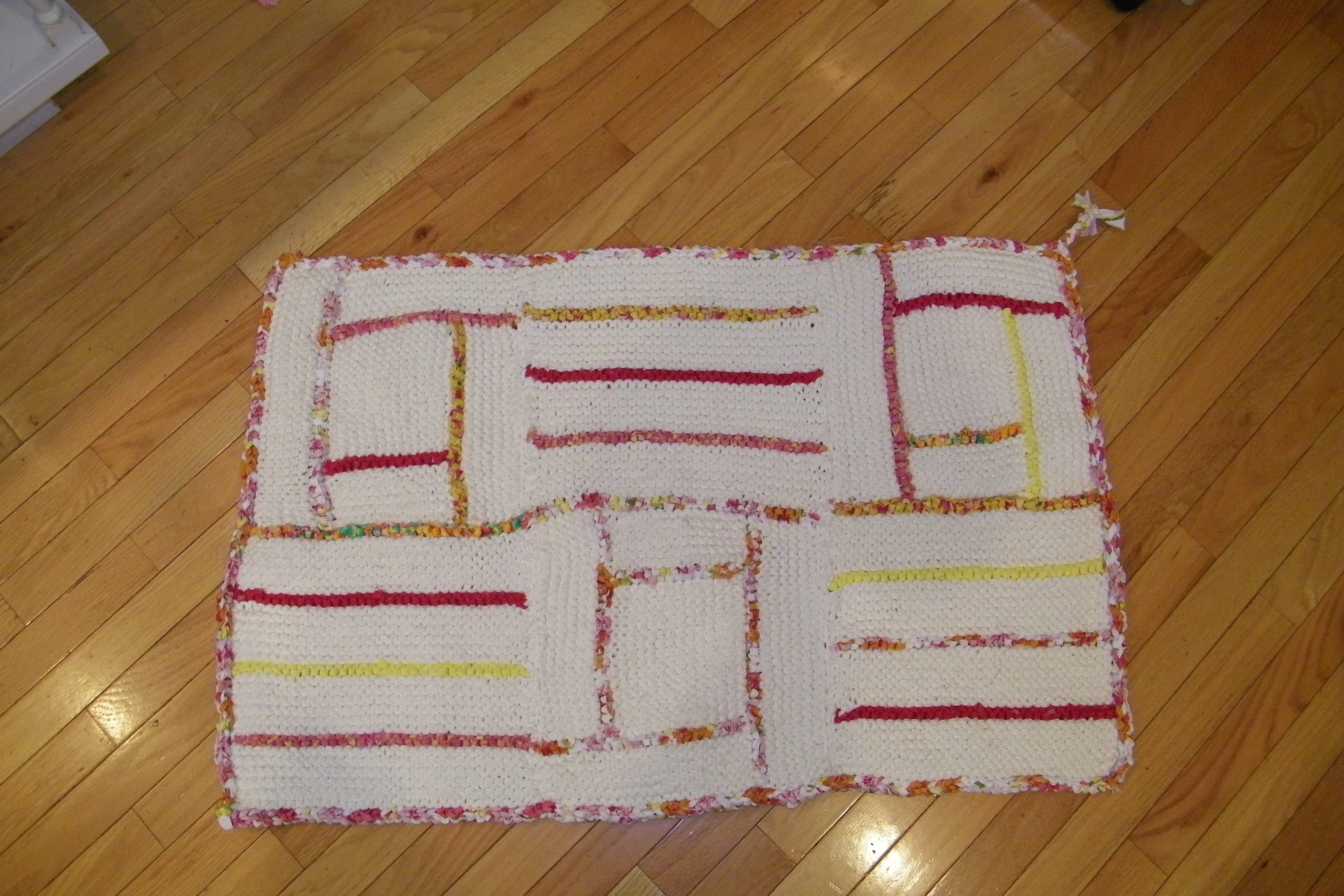
I finished the knitted rug I wrote about a few posts back.  It came out really pretty, don’t you think?  The colors are perfect for the kitchen–clear and bright.

I have enough cotton yarn and fabric left to make one more, which I likely will do.

I could have done a neater job on joining the three sections.  I need to review the mattress stitch again.  The joins are sturdy, however, and are not going to come apart.  Thank you Mason-Dixon quilters!