Turkey Tracks: Gundru

Turkey Tracks:  October 13, 2011

Gundru

Gundru, also known as kyurtse, is a traditional fermenting method from Tibet for greens.  The result is a strong, sharp, clean-tasting pickle that can be used on kale, radish greens, mustard green, collards, or any type of hardy green in the Brassica family–not on lettuce.  I first used it for kale, and I really love it.  Like sauerkraut, Gundru will be something I’ll be keeping in my kitchen most of the time and especially during the fall/winter/early spring seasons.

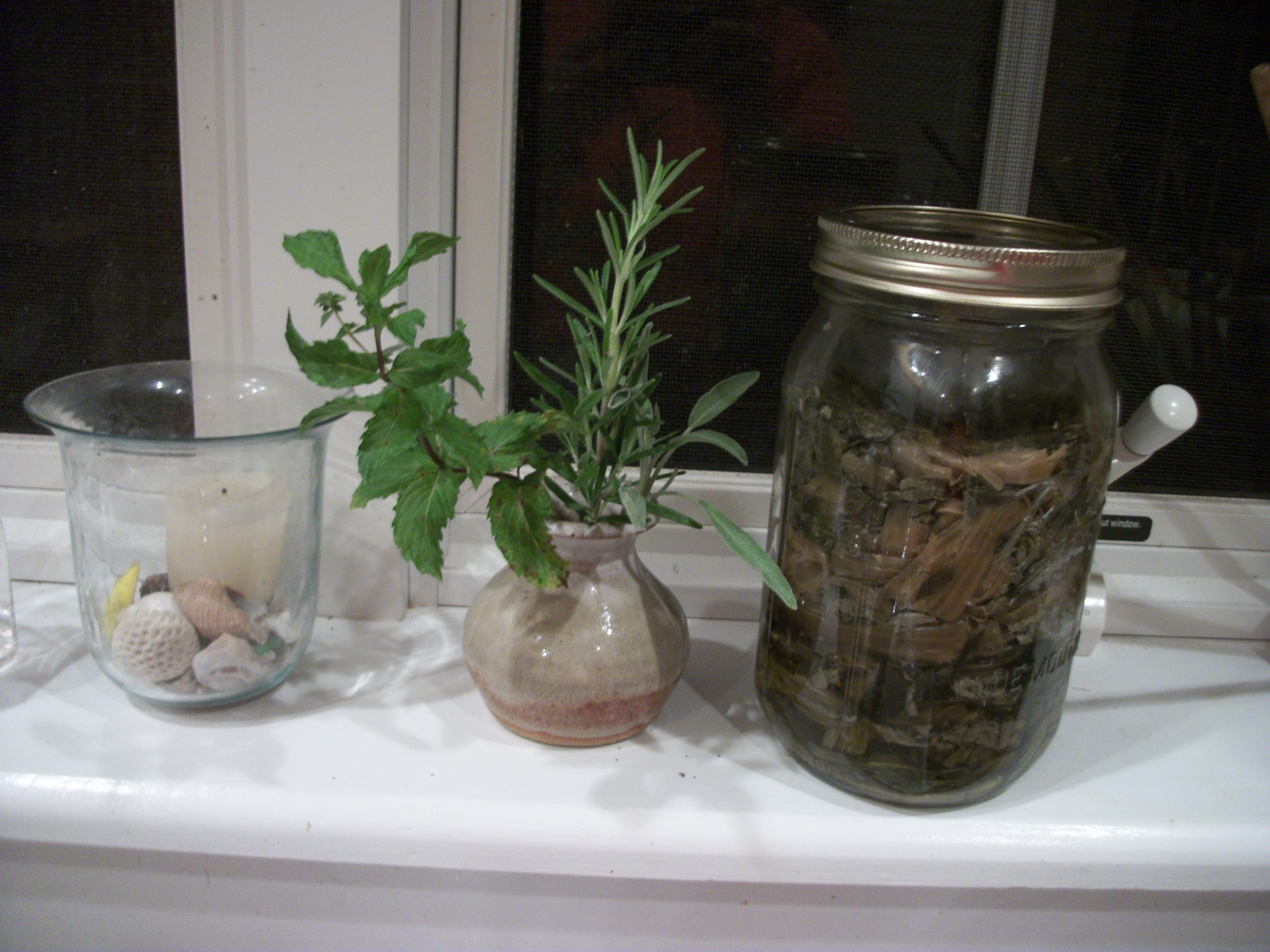
Here’s Gundru in a jar that I’ve fermented, opened, and eaten some of the contents.  After this step, I put the jar into the refrigerator as I don’t have enough liquid covering the kale.

Here’s a picture of Gundru cut up and ready to be put on a plate as a condiment:

Gundru is dead easy to make.

It takes A LOT of greens to stuff a quart Mason jar–Katz says the greens from about 8 plants, and I think that’s true.

Maybe let the greens wilt in the sun a little.  Wash them off.  For kale or collards, I’m going to try stemming them next time–my first attempt was with kale, and I do think the stem is very fibrous…   But, it also has a lot of juice.

Pound the wilted greens on a cutting board with a rolling pin or a mallet to crush them and release the juices.  (Something heavy to crush, but not, I would think, anything metal like a hammar.)  Stuff them into the quart jar–using pressure to force more and more greens into the jar.  Make sure you have liquid covering the leaves.  Put on the lid, put the jar in a plate, and let it ferment for 2-3 weeks.  You can leave it longer if you like.  The jar may overflow in the first fermenting action–thus the plate.  Next time I’m pouring my overflow back into the jar.

You can also dry Gundru after it’s ready.  I think I’d use my dehydrator.  But, you can dry the leaves outside too.  They must be really dry or they’ll mold.  Crumble them into soups/stews.

Turkey Tracks: Roasting Tomatoes

Turkey Tracks:  September 15, 2011

Roasting Tomatoes

September is the “red” month in Maine.

Or, in other words, September is when our tomatoes turn…red.

September is when my kitchen gets really interesting:

Those gorgeous yellow and Black Krill tomatoes on the left–and more red tomatoes–come from my neighbor Susan McBride of Golden Brook Farm.  The large red tomatoes to the right are ours; they’re Brandywines, and I think they are probably the best eating tomato in the whole world.

I’ve made a dense tomatoes sauce that I freeze in past years.  But, now that we don’t really eat pasta very much–too much of a carb hit–I looked around for a different way to preserve tomatoes for the winter–and, indeed, for early summer since our tomatoes take much longer to ripen.  Remember that summer doesn’t really arrive in Maine until July 4th!

Last year I made tomato soup and froze it, and it’s been so delicious all year.  And, I roasted tomatoes and put them into smaller jars.  It takes a LOT of tomatoes to fill a pint mason jar.   But, the flavor is dense and very rich.  So that’s what I decided to do with this year’s crop extras.

ROASTED TOMATOES

Start the oven at 375.

Put on a pot of water to boil–a large one if you have it.

Put a large bowl filled about half way with ice in  your sink.  Add some water, not too much as you don’t want to spill out the cold water when you put in the tomatoes.

When the water boils, drop in tomatoes to fill the pot, and after about a minute, lift each out and drop it into the ice water.

Let your pot reboil and add more tomatoes, etc., until all are done.   Meanwhile, take out the cold tomatoes, run a paring knife around the stem section to remove it, and slip off the skins.  Chuck up the tomato into a baking pan.

For about five pounds of tomatoes, add a chopped up onion, 4 to 5 cloves of garlic smashed and roughly cut, a couple of handfuls of basil, some salt, and a drizzle of really good cold-pressed, organic olive oil over the top–no more than 1/4 cup total.  Mix it all up with your hands–GENTLY.

Here’s what things look like at this stage:

Cook the tomatoes for about an hour, then stir gently.  Now you have to start checking on them about every 30 minutes.  And, when they start to “cook down,” more frequently.

The smell all over your house will be absolutely mouthwatering!

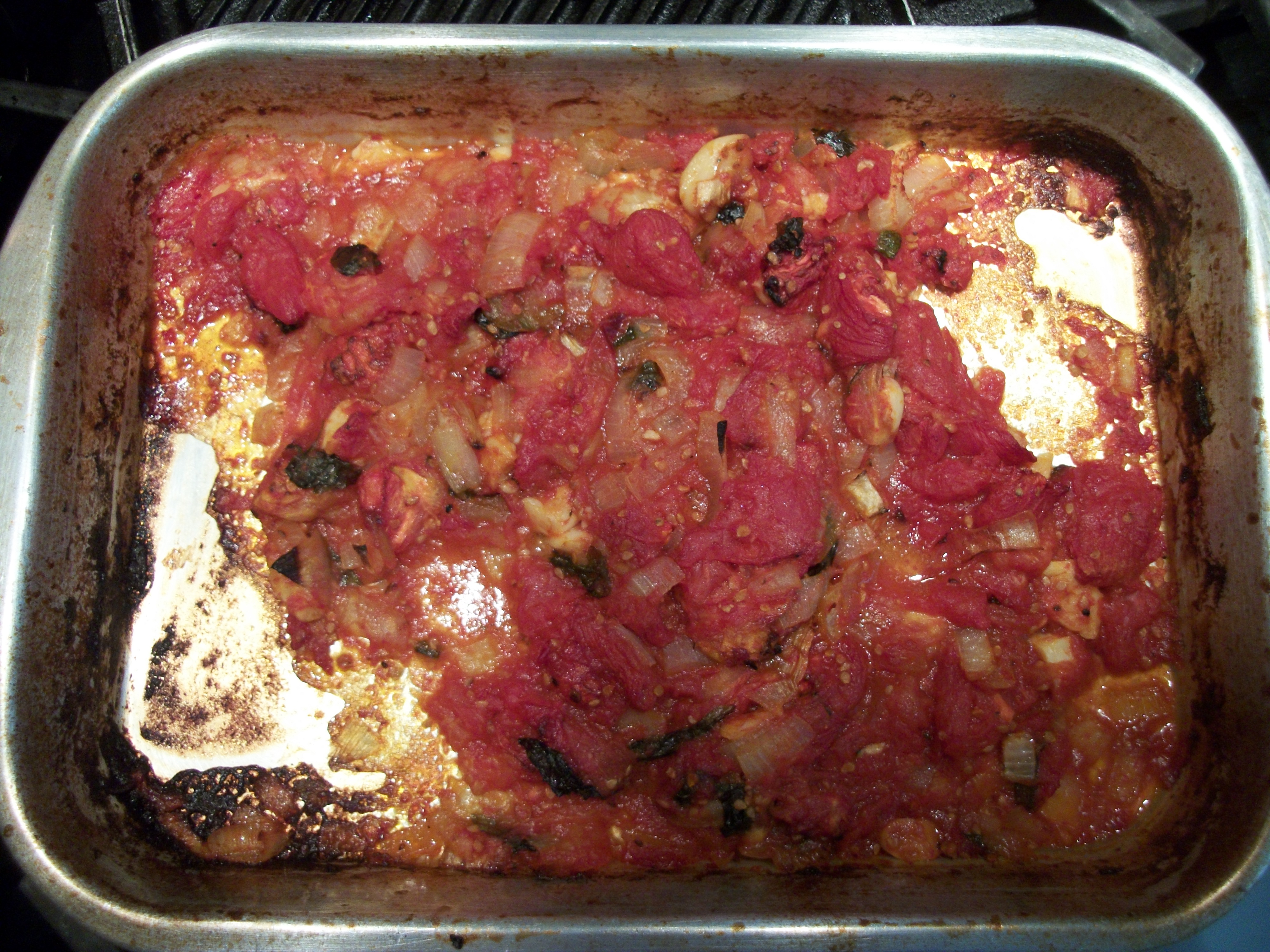
Here’s what they look like all finished up, which will take at least 2 hours total:

Load the tomatoes into pint mason jars–a canning ring funnel is a great help with hot food going into mason jars.  Be sure to leave at least an inch at the top for freezing expansion.  Cap the jars and put them upside down on a counter so they form a vacuum–you’ll see the cap is pulled down.  And, yes, you must freeze them.  You cannot can tomatoes cooked in oil–too dangerous.

Use these gorgeous tomatoes to enrich winter soups, to drizzle over meatloaf or stuffed peppers–saving a bit for some sauce on the side, or over pasta.

Enjoy!

Books, Documentaries, Reviews: My Read Pile September 2011

Books, Documentaries, Reviews:  September 2011

My Read Pile–September 2011

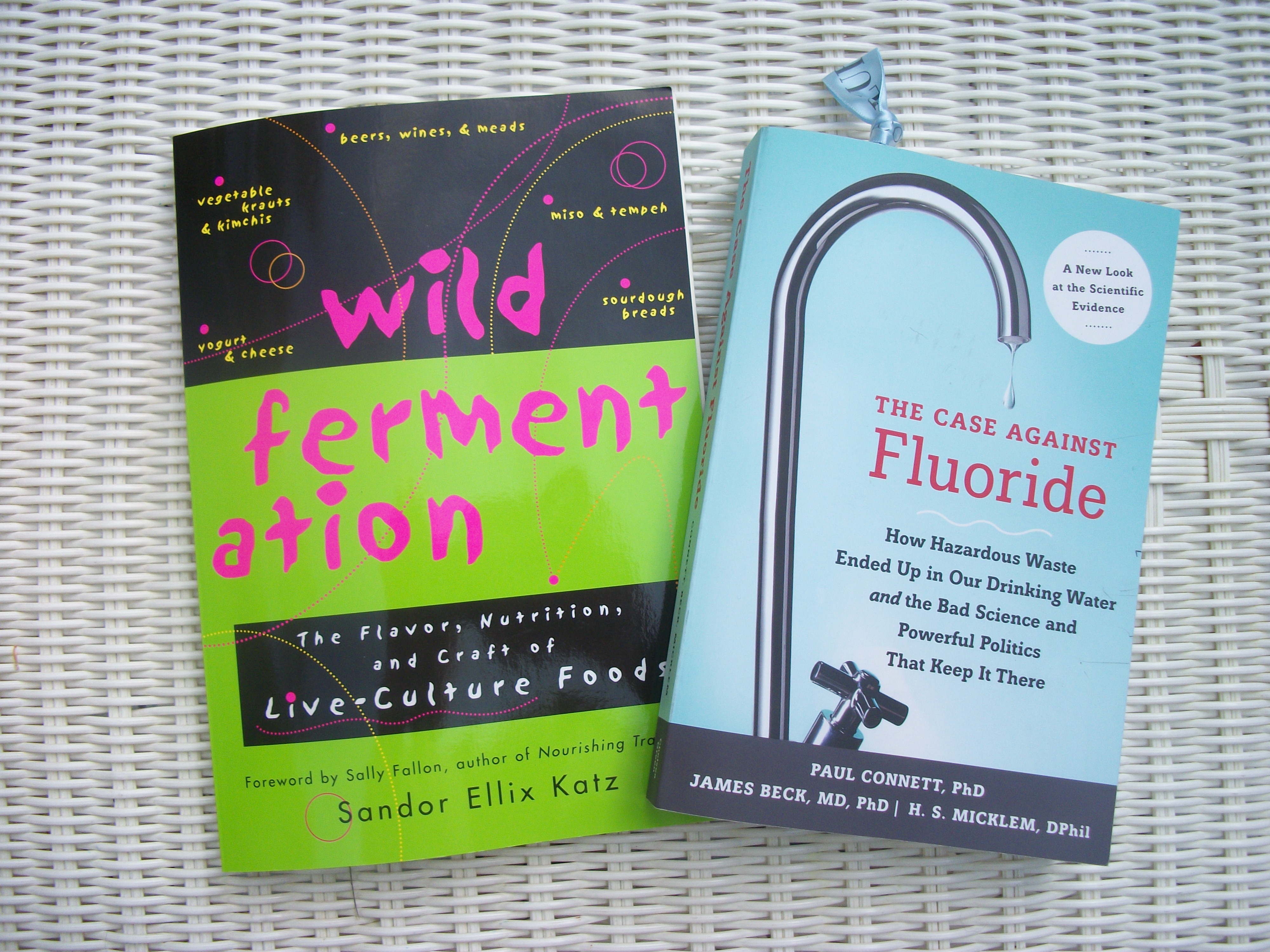
Just finished Sandor Ellix Katz’s WILD FERMENTATION.  LOVED IT!  I can’t think why I have not gotten it sooner.  I’ll be writing the next Mainely Tipping Points on it.  I sat down and read it straight through, and in hours had a cheese ball dripping whey and had a quart jar of kale fermenting.

THE CASE AGAINST FLUORIDE has been written by 3 MAJOR scientists who know what they’re talking about.  The EPA recently lowered the amount of fluoride allowed in municipal water systems.  And, most people get way too much fluoride already in tooth paste–especially children who SWALLOW it.  (Try telling a two-year old not to swallow tasty toothpaste!)  So, more on fluoride later, but meanwhile know that it is very dangerous, that it’s a waste product of industry, and that you should filter it out of your water.  Better still, read about it and try to get it out of your local system.  The time is right!

TOOTH PASTE RECIPE

By the way, the best recipe for toothpaste is just to mix baking soda with good sea salt–equal proportions.  But it in a jar and dip your wet toothbrush into it.  If you want some flavor, get some essential oil of peppermint and use one drop on the wet toothbrush.  Or, some essential lime oil, sweet orange, or one of the oils that are ok to put into your mouth if you rinse them out.  Peppermint essential oil has some nice anti-fungal properties, among other good effects.

Turkey Tracks: Vitamin B12 and My Favorite Dinner

Turkey Tracks:  August 25, 2011

Vitamin B12 and My Favorite Dinner

Without a doubt, this dinner is my favorite:  Grilled STEAK, fresh corn on the cob, a big salad, and a piece of dark chocolate with caramel crunch and sea salt.

I am my father’s daughter.

Only, my father took many drugs for allergies and asthma.  Also, he had a sweet tooth, which did not help with his gut flora and fauna.  He probably had an overgrowth of yeasts in this gut.  And, as he aged, he, like many, started having trouble with stomach acid–so he couldn’t digest his food well.  I remember him going around with Tums all the time.  BUT, the problem more often is LOW stomach acid, not the reverse.  (Keep hydrochloric acid–HCL–with pepsin on hand for when you have stomach rumbles and acid reflux.)  And when that happens, the body struggles to process food.  The gut becomes damaged, so one starts experiencing malabsorption, which leads to malnutrition.  My mother used to say “I feed him really well, and he eats, but he’s just getting thinner and thinner.”

Here’s a quote from “Could It Be Vitamin B12?,” by Sally M. Pacholok and Jeffrey J. Stuart, in the Sept/Oct issue of WELL BEING JOURNAL, pages 16-20:

“A far more common cause of B12 deficiency, especially in people over fifty, is a condition called atrophic gastritis, an inflammation and deterioration of the stomach lining.  Atrophic gastritis reduces the secretion of the stomach acid that is needed to separate vitamin B12 from protein–a problem often made worse by proton-pump inhibitors and antacids or other medications.  In addition, older people have smaller numbers of the cells that produce intrinsic factor” (18).  (Intrinsic factor is a protein produced in the stomach that is necessary to process B12.)

My dad started getting vitamin B shots, but the body can’t utilize B12 if other ingredients, like intrinsic factor,  are not also in place.  It’s a really complicated and delicate balance.  A lack of vitamin B12, in particular, causes dementia, which slipped up on my dad gradually.  He died not knowing who we were or who he was.

A really strong source of B12 is red meat.  Liver has especially high levels.  But you can also get some from poultry, fish, eggs, and dairy products.  Bi-valves apparently have high levels of B12 (clams, mussels, oysters).  B12 is  produced in the guts of animals, so you cannot get it from plants.  If you want to read more, here’s an article from the Weston A. Price Foundation web site on B12:    http://www.westonaprice.org/vitamins-and-minerals/vitamin-b12.

So, the corn on my plate came from Hope’s Edge CSA.  It’s such a treat when it comes in every year.  And, doesn’t it look pretty this year?  The lettuce, cukes, broccoli, onions, and beans came from our garden.  (I often put leftover veggies on the next day’s salad.)  Our lettuce, as the summer has been cool, has just lasted and lasted.  The carrots, beets, and tomatoes came from Hope’s Edge.  The salad dressing is homemade–good olive oil, some mustard, some fresh garlic, some fresh herbs, salt, pepper, and red wine vinegar.  The iced drink is Kombucha, a fermented fruity tea drink which is great to sip before eating as it starts activating digestive juices.  The chocolate is Fair Trade.  And the milk is, of course, REAL.

It was a perfect summer meal!

MUSTARD VINAGRETTE

In a small bowl, crush a clove of garlic with a fork.  If you add some salt, you can get a kind of paste while you mash.  Add herbs and pepper.  Add a tablespoon of Dijon-type mustard, add 2-3Tablespoons of red-wine vinegar.  Mix well.  Drizzle in olive oil while stirring with the fork–it will take about 3/4 cup for taste, and it will blend with the other ingredients so that it thickens.  You could add a raw egg for a richer version.  You can also just dump everything into a small jar (1 cup or more) and shake really well.

Turkey Tracks: Rugosa Rose Hip Jam

Turkey Tracks:  August 22, 2011

Rugosa Rose Hip Jam

I’ve been thinking about Rugosa Rose Hip Jam for the past…5 years or so.

When we moved to Maine, we bought a house on the side of a steep hill.  There’s an astonishing drop off–held in place by a large-boulder rock wall- to a small field below in the front yard, where our drainage field is located.   With visions of very young grandchildren tumbling down this death trap, we planted the slope with rugosa roses and bayberry.  Two years ago, we added another row of plants:  raspberries.

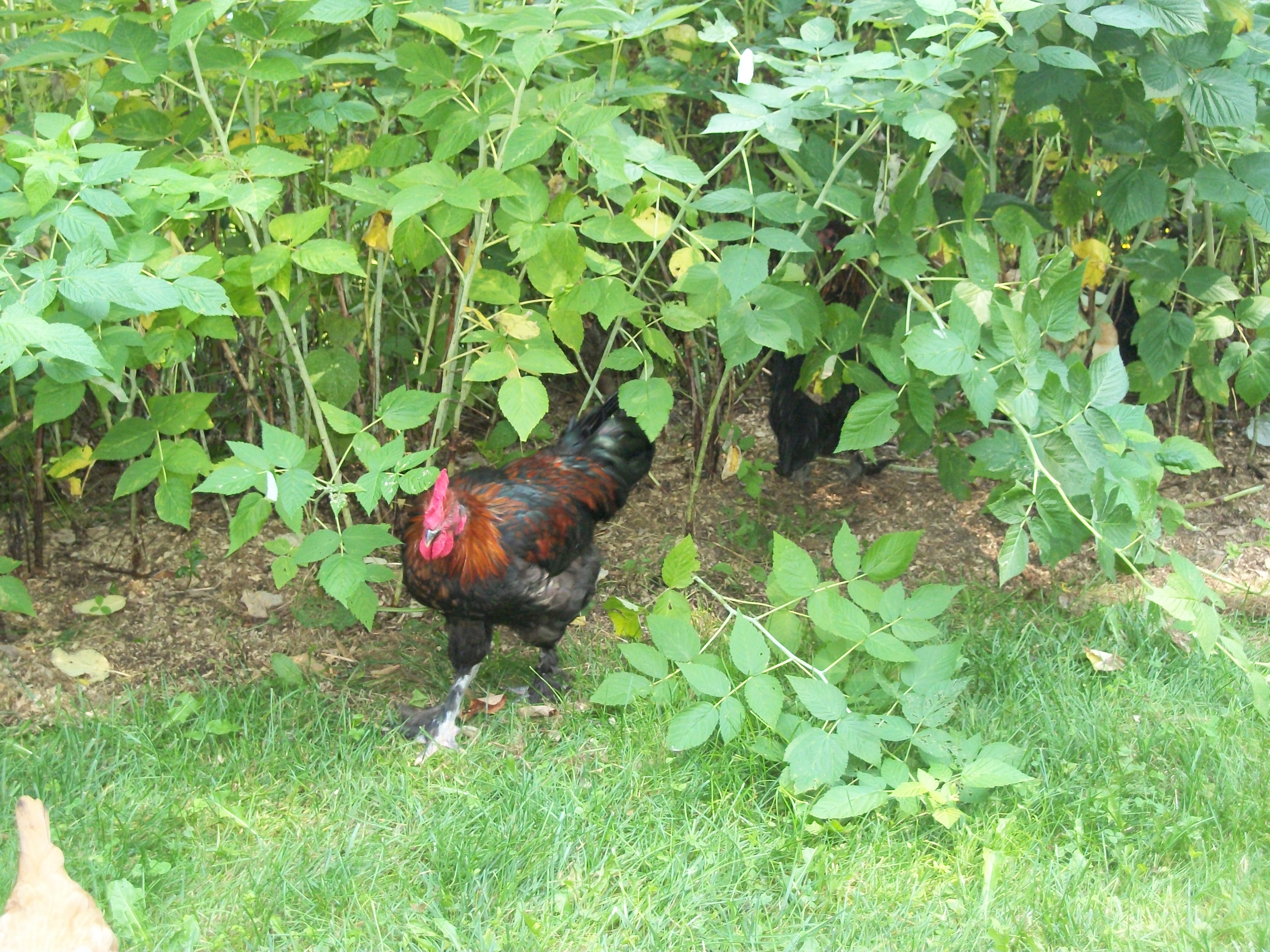
The whole slope is now impenetrable–we called it the chicken briar patch since the chickens love it so much.  They feel safe in there.  The raspberries are THRIVING on their attention, and since we’ve released the chickens from their summer pen, the June bug count has diminished significantly.

The rugosa’s hips began to catch my eye as the years passed.   For several years I thought one should wait until after the first frost as they’d be sweeter.  I read that in several places actually.  One year I collected the hips and dried them for winter nutritional teas–they’re full of vitamin C–but I never made any.  (I love my black tea with wild honey and real heavy cream too much.)  Also, it seemed to me that by the time the first frost came, the hips were all dried out and moldy looking.  Last year I got as far as finding information and recipes.

Did you know that roses are in the apple family?  I didn’t.

Here’s what some of the hips looked like on Sunday:
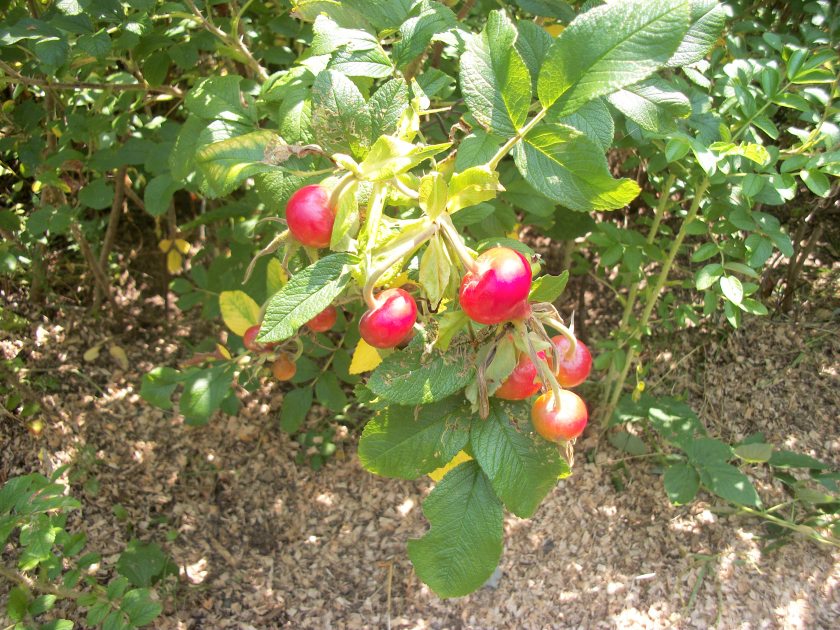
As you can see, a lot of them are as big as crab apples and are very red and ripe looking.   One simply must do SOMETHING with such luscious looking fruits.  So, I picked the ones that were ripe and refound the recipes.

Prepping the hips is VERY labor intensive.  You cut them in half and scrape out the seeds.  There are TONS of seeds.  I made cups of tea for John and me, and we sat outside and chatted while I prepped the hips.  It was a beautiful afternoon.

Here’s a picture of the prepped hips and the TONS of seeds and the very sharp paring knife with which I did not poke myself, though I came close a few times :

Penny joined us, as she usually does.  Miss Reynolds Georgia won’t give up her watch dog perch upstairs looking out the bedroom window.  She’s also sure it’s very dangerous outside the house–unless one is going to be taken for a ride in the car or if one has to pee:

I  cast the seeds out over the back hill/slope.  Who knows?  We have rugosas sprouting all over the place all the time here.

Rose Hip Jam

The next step is to put about an equal amount of water as one has hips and cook the two together until one has a mushy pulp.  That takes about 20-30 minutes.  I didn’t put enough water at first, and I noticed I was getting a kind of syrupy mixture.  Interesting.

Then, one has to decide what to do with the pulpy mixture.  I tried a food mill, but that didn’t work.  Too much thick pulp, too much loss.  I scraped everything into the Vita Mix, which is a very powerful blender/chopper, added a bit more water, and pulverized it all.  I had about 2 1/2 cups of pulp.

One then adds an equal amount of sugar, and I did (though I usually don’t) as I couldn’t imagine that this pulpy mass would taste nice.  I almost burned the mixture on the sides of the pans until I realized what was happening and scraped the sides down with a spatula.

Then, one cooks the mass until it begins to “jelly” according to directions.   Or, coats the spoon well.  The candy thermometer wasn’t especially helpful since the mass didn’t melt down like a berry jelly or jam does.   The mass began to coat the spoon and jell up on the plate, and it turned a deep pumpkin color that was lovely.  So, I jarred it up.

Here it is cooling:
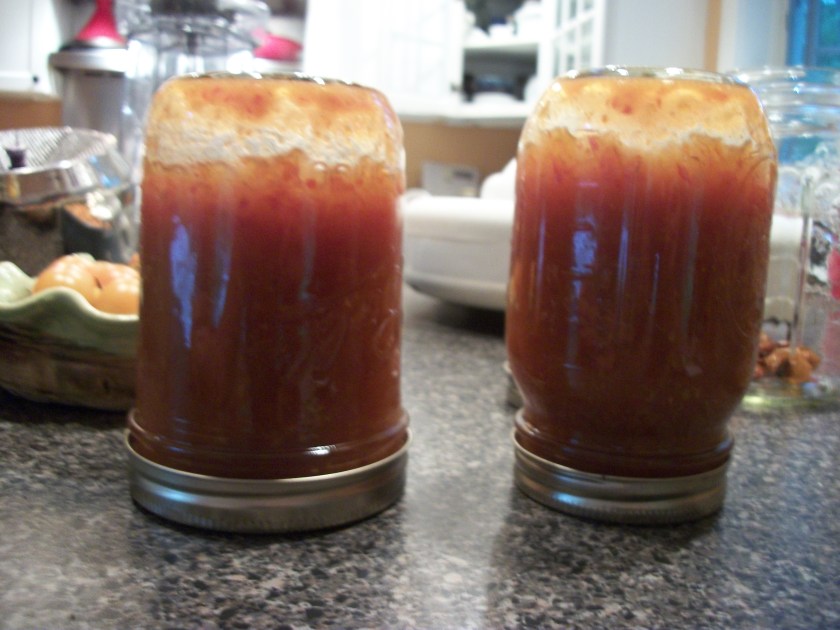
I don’t know what I expected Rose Hip Jelly/Jam to taste like.  I had imagined a clearer jelly for one thing.  And, maybe a lemony, sharp taste, subdued by the sugar.

Well!  It’s delicious.  It tastes a lot like apple butter, but it’s different too.  There is, after all, a subtle lemony taste in there.  Both texture and color are like that of a roasted pumpkin, but not the taste.  I can definitely see using it as a cake filling, which one of the recipes suggests.  I really like it, actually, and would definitely use it on morning toast, or on oatmeal porridge, or during afternoon tea spread on something tea-like.

So, I’ll keep my eye on the hips that are still ripening and make another batch in weeks to come.
Turkey Tracks: Drying Sun Gold Cherry Tomatoes

Turkey Tracks:  August 22, 2011

Drying Sun Gold Cherry Tomatoes

Last year for my birthday on March 17th, Margaret Rauenhorst gifted me with a quart Mason jar full of dried cherry tomatoes.

March 17th is just about the time everyone up here in the snowy north (Maine) gets really hungry for green growing things, like dandelion greens sprouting as the snow recedes.  We become filled with anticipation for what summer gardens will bring, especially as the new seed catalogs with all their glorious pictures arrived back in January.

We inhaled Margaret’s dried cherry tomatoes, each the size of a penny and tasting like dense, chewy candy.  We mostly put them on salads, made with greens grown in my neighbor’s new hoop house–Susan McBride Richmond of Golden Brook Farm.

I determined on the spot to plant a lot of cherry tomatoes to dry for next winter.  My favorites are Sun Golds, which are, sadly, hybrid plants.  (I like to plant heritage seeds.)   And, right now, out in the garden they are ripening, each like a tiny gold sunspot hiding in the green tomato leaves.  The best way to eat them, bar none, is to pick them off the vine and eat them as you stand there in the sunshine.  Or, the rain.  Or, the dusk, Or the fog.  Or, whenever and however you pause to savor something delicious!

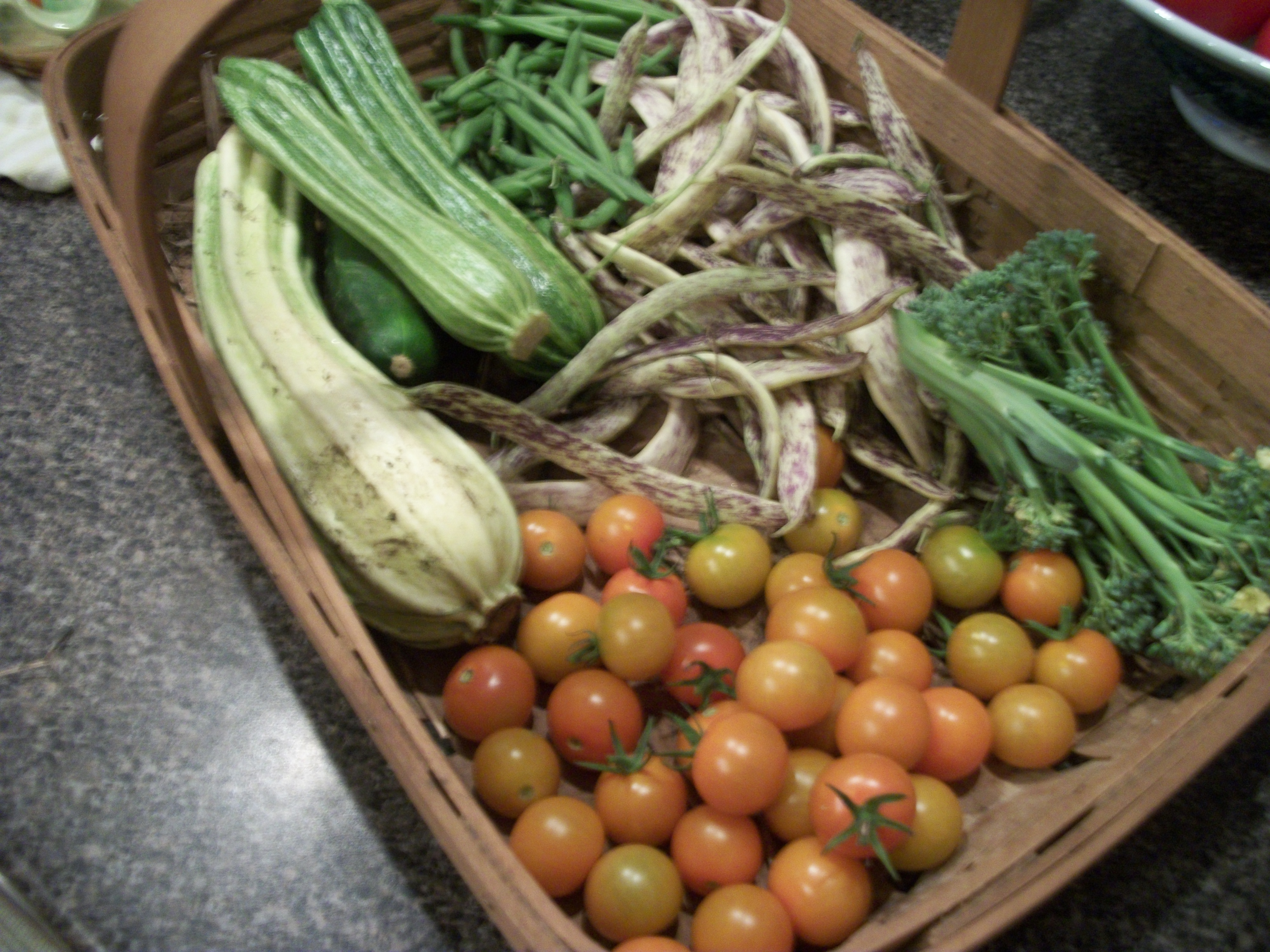
Here they are, filling up my harvesting/mushroom basket a few days ago.  They’re still a bit green, but will ripen to a deep gold color in the kitchen.  Cherry tomatoes are easy to grow and lend themselves to containers on an apartment balcony in a city.  They can be tucked away in an odd sunny corner of the yard, too.  (We had two days of rain, so we got a BIG zuke.)

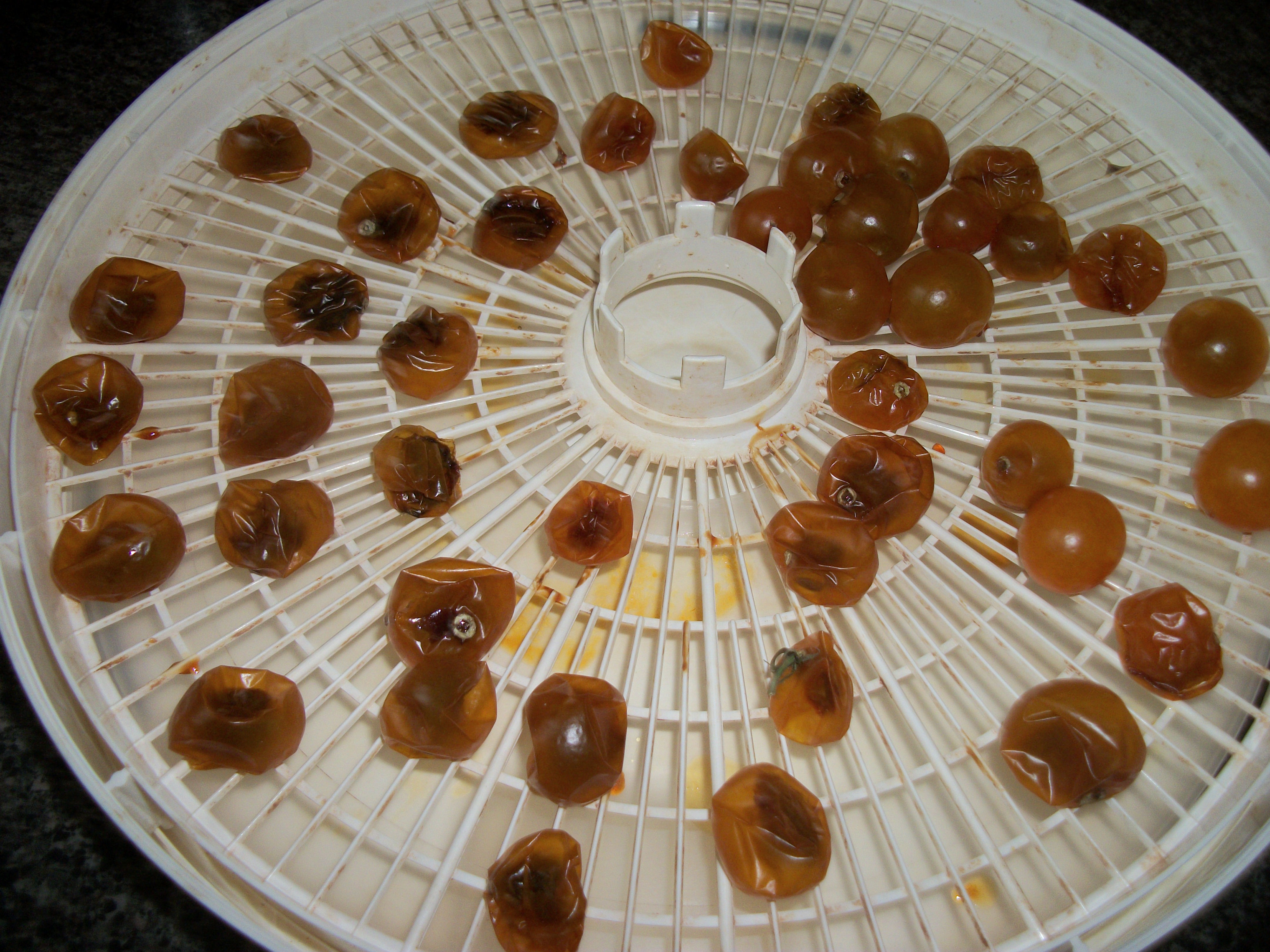
Drying them in the dehydrator has been a bit more involved than I had anticipated–in that it takes rather a long time for each one to dry out.  And, because they all ripen at differing times, I’ve been putting them in, one by one, rather than in whole groups.  In about 2 whole days and nights, I’ve only got about 10 dried enough to put in a Mason jar.  They’re somewhat sticky as they dry, and I don’t know if they will mold or not, so likely I’ll store them in the refrigerator so I don’t lose them–especially after all this energy has been expended!  Maybe I should be cutting them in half???

Here you can see my dehydrator working away with one tray inside.  (It came with…4 or 5 stackable trays and costs about $30.)  And, now, you can see the beautiful sunny gold of these tomatoes.

 And, now you can see what they look like drying inside the dyhydrator:

Aha!

I checked Barbara Kingsolver’s ANIMAL, VEGETABLE, MIRACLE, since I remembered a recipe in there for dried cherry tomatoes.  Camille Kingsolver does cut them in half and puts them skin side down on the tray.  And, here’s Camille Kingsolver’s recipe, found on page 295.  (For this or other recipes, you can go online to www.AnimalVegetableMiracle.com.)

 DRIED TOMATO PESTO

 Put the following ingredients in a food processor and process until smooth.  Add a little water if it seems sticky, but the mixture should be thick enough to spread on a slice of bread:

2 cups dried tomatoes, 1 cup coarsely chopped walnuts (crispy, please), 3/4 cup olive oil, 1/3 cut grated Parmesan cheese, 1/4 cup dried basil, 4 cloves garlic, 2 tablespoons balsamic or other good vinegar, 1/2 teaspoon salt.

BASIL OIL 

So, ok.  For the basil, I think I’d defrost and use some of my basil oil, taken from A YEAR IN MY KITCHEN, Skye Gyngell–which has been recently updated with American measurements (she’s British).  Basically, you put a LOT of basil in a food processor (3 bunches or more), 3-4 cloves of garlic, some salt, and start the processor.  Drizzle in olive oil until you have a smooth paste/sauce.  Freeze in those very small Mason jars (1/2 cup?) and enjoy all winter.  This oil is especially nice served alongside meat–grilled steak, roasted chicken, etc.

Turkey Tracks: New Bread Pans

Turkey Tracks:  August 15, 2011

New Bread Pans

I’ve had some metal bread pans for many years now.  But, they had some sort of black coating, and it began to flake off.  Substantially flake off.  So, I tossed them into the trash.

I tried to use my glass pans, but the bread tended to stick to them, even though I liberally coated them with coconut oil.  Also, the crust just wasn’t the same.

I went online to King Arthur flour since their web site is excellent.  But, though the price was right ($15.95), their bread pan was a mixture of recycled steel and ALUMINUM.  King Arthur, what are you thinking???  Aluminum is TOXIC.  I’ve thrown out all my aluminum cook ware.  I didn’t have much, actually, as aluminum is very thin and light.  I like heavier pots and pans.  Besides, Tami made me throw out the last Asian steamer I had where the lightness was an asset.  It was time.

So, I started googling other kinds of bread pans and came up with cast iron pans that looked lovely and were already seasoned.  Here’s the web site:

http://www.campchef.com/cast-iron-bread-pan.html.  The pans came promptly and were also around $15.

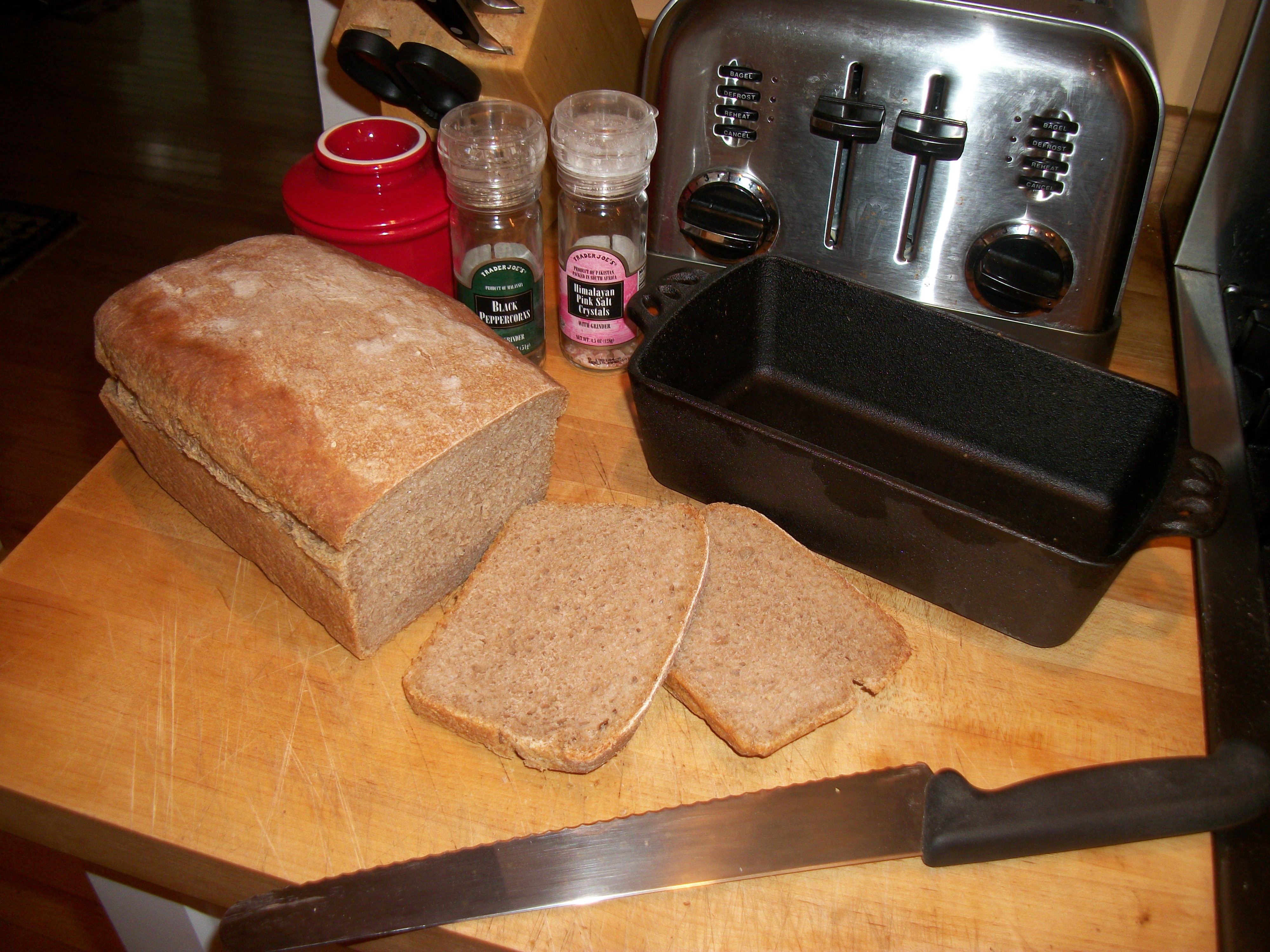
And, these pans baked beautifully!!!  Look at  that beautiful loaf of my wild yeast, sourdough bread!

Delicious!

Turkey Tracks: Blueberry Buckle

Turkey Tracks:  July 24, 2011

Blueberry Buckle

We’re still making desserts this summer from recipes in RUSTIC FRUIT DESSERTS, Julie Richardson and Cory Schreiber:  http://www.amazon.com/Rustic-Fruit-Desserts-Crumbles-Pandowdies/dp/1580089763.   (A book suggested by Tara Derr.)  We freeze about 20 pounds of ORGANIC wild Maine blueberries every August, which our wonderful CSA, Hope’s Edge, makes available to us.  I don’t know if you’ve ever had wild Maine blueberries.  They are much smaller than the big round ones most people can get in supermarkets.  And, they’re chock full of flavor.  Once you’ve had these little guys, the big blueberries seem utterly tasteless.  So, be warned!

Now, the “wild” Maine blueberries are anything but wild.  Yes, there are some wild blueberries at the edges of our woods.  But, commercial wild blueberries are a wild myth!  They’re heavily cultivated, actually.  And in the harvest year, which is every other year, the commercial (as in NOT organic) are heavily sprayed with all sorts of heinous and poisonous pesticides and herbicides that get into the watershed (atrazine compounds)–in Maine we have a LOT of watershed–just take a look at a map of  Maine–and that stay in the ground for up to 175 days, like the organophosphates often used as pesticides.  Organophosphates attack an insect’s nervous system.  And it remains a mystery to me why people think a compound that attacks nervous systems is NOT going to affect THEIR nervous systems–especially when it hangs around for 175 days on the ground, gets tracked into homes on shoes and clothes, and when it, often, gets INTO the plants and berries themselves and CANNOT be washed out.

Many of these chemicals kill bees and any other insect that gets in the spray, which, in turn, affects the bird population.  But, since commercial bees (poor things) are trucked in from across the country to pollinate the crop BEFORE it is sprayed, it’s our LOCAL bees and hives that are at risk.  (How dumb is that?)    And, many of these chemicals affect a human’s endocrine system (read reproductive ability), cause birth defects, cancer, and so on.  (How doubly dumb is that?)  The EPA is going to render a new verdict on atrazine in the near future, and it’s already been banned in Europe.

So, if you want to try a “wild” Maine blueberry–for heaven’s sake–buy organic ones.  Or come up here and pick some yourself!

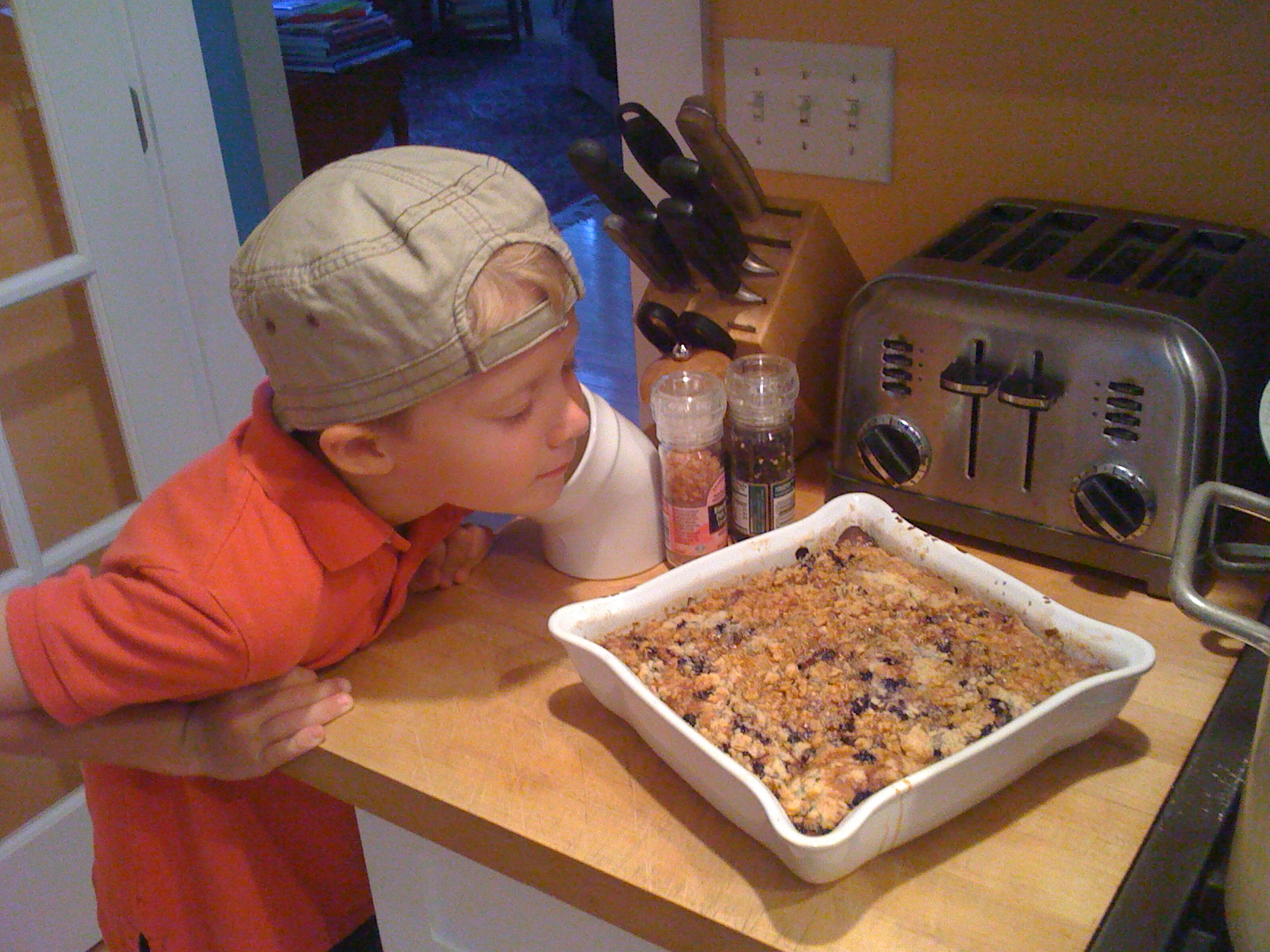
Anyway, since I usually make blueberry cobblers, making a blueberry buckle was an experiment.  So, far, it’s been voted the favorite dessert and has been repeated once more.  (It’s GREAT for breakfast too.)  It’s a rich cake, studded with blueberries and lemon, topped with a crunchy crumb topping, and drizzled with an intense lemon glaze when it’s still warm.  Here’s a picture:

Here’s a better one!

Interesting Information: Vanilla Ice Cream

Interesting Information:  July 9, 2011

Vanilla Ice Cream

COOKS ILLUSTRATED, May/June 2010, investigated vanilla ice cream.  Nationwide, there are nearly 40 brands of vanilla ice creamCI chose the eight top-selling brands and taste-tested those.  The winner was Ben & Jerry’s Vanilla.  Next came Haagen-Dazs, Wells blue Bunny, Breyers, Friendly’s, Blue Bell, and Turkey Hill.  Edy’s Grand Vanilla was not recommended.

The criteria included what kind of vanilla was used (natural or synthetic); the tricky business of using stabilizers like carob gum, guar gum, tara gum, and carrageenan (the winner uses two); how much air is pumped into the ice cream to expand volume; and what kind of sweetener is used.

Edy’s, for instance, is a big package with lots of air, while Ben & Jerry’s is a small package with lots of ice cream.  Between the two, Ben & Jerry’s is a POUND heavier than Edy’s, even in the smaller package.

And ice creams using corn syrup tasted “`unnaturally sweet,’ ”  no matter the sugar levels.

Testers discovered that “keeping it simple” produced the best vanilla ice cream:  cream, milk, sugar, eggs, real vanilla, and a minimum of emulsifiers made the best ice cream.

Homemade Vanilla Ice Cream

You can keep it even simpler:  get a pint of some real/raw heavy cream, add 2 or 3 egg yolks (keep the whites for macaroons or meringues) , some real vanilla extract, a tablespoon of healthy arrowroot for creaminess, some maple syrup or honey for sweetness, put it into one of those quart ice cream makers you keep frozen in the freezer, and you have delicious and healthy ice cream in about 20 minutes!

You can also make food processor ice cream out of cream or yogurt and frozen fruit.  That recipe is on the blog in July 2010.

Turkey Tracks: The Best Bouquet this Spring

Turkey Tracks:  June 26, 2011

The Best bouquet This Spring

The white-tipped radish are long, thin French Breakfast Radish.   The round ones are Cherry Belles.

We’ve been slicing the French Radishes in half, sprinkling salt over them (real sea salt that is just air dried), and eating them for breakfast with slices of cheese and a selection of meats (salami, prosciutto, liverwurst).  Yummo!

The Cherry Belles are a bit more peppery, and I usually slice them into our salads.  They’re also good in a stir fry or steamed, either sliced or just whole.

I cut the garlic scapes–it’s the garlic flower–on one kind of our garlic plants this year.  I didn’t know what garlic scapes were when I first came to Maine.  Garlic scapes are delicious! cut up and added to soups or stir-frys.  They come in just when the stored garlic is getting either dried out or moldy.  They have such a crisp, light garlic taste.

Here are the potato buckets BEFORE the last two days of rain.  You should see them now!