Turkey Tracks: Pomegranate Ploy, Clementine Bliss, and Bioregion Efforts

Turkey Tracks:  January 11, 2011

Pomegranate Ploy, Clementine Bliss, and Bioregion Efforts

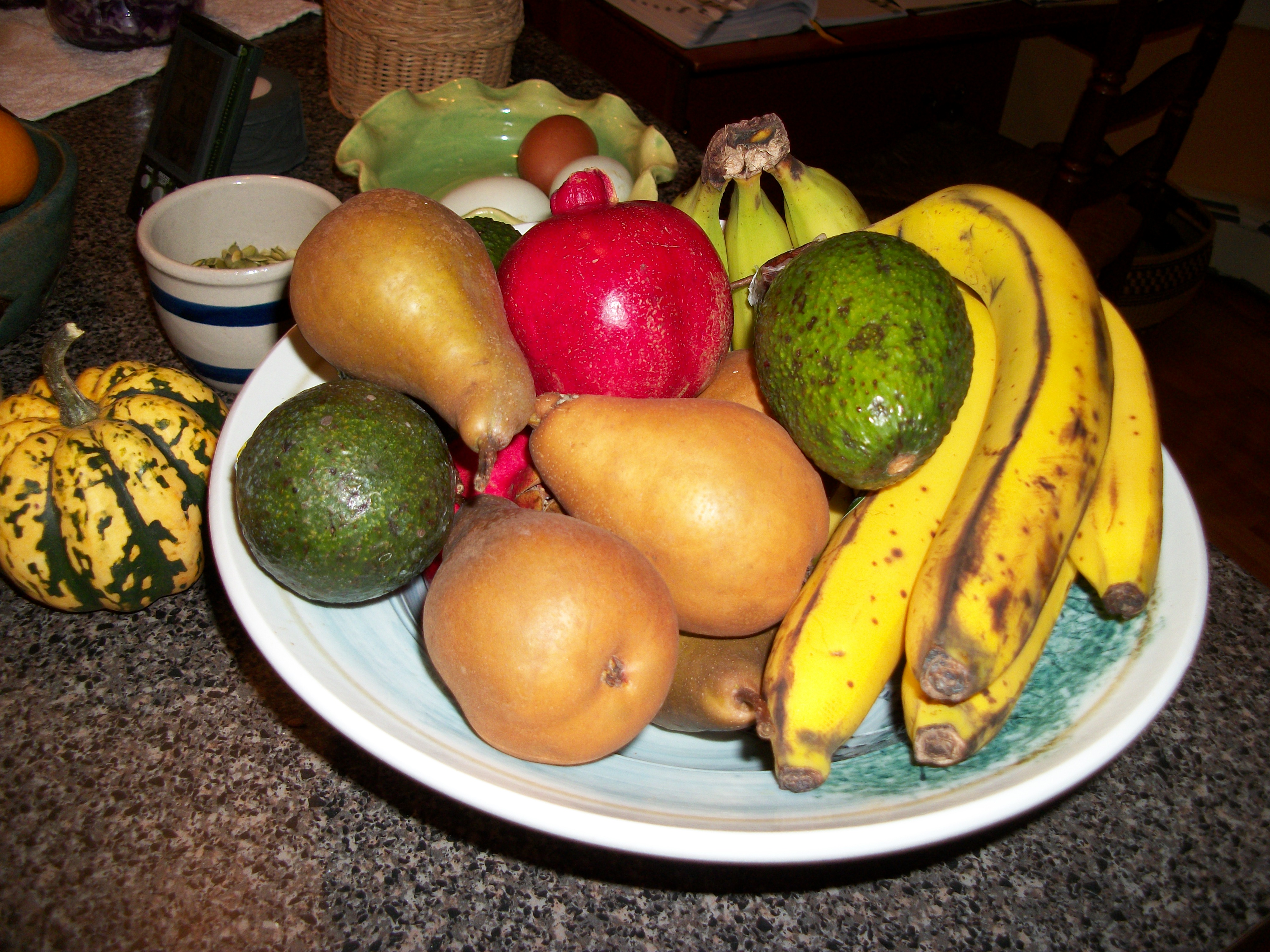
That big red fruit in the middle is a pomegranate.  It’s actually a berry with seeds.  It’s full of vitamins, minerals, and fiber.  The seeds are delicious.  About the only thing wrong with it is that the only place it can grow in the United States is California–which means I’m eating food out of my bioregion, shipped here from many miles away.   Actually, pomegranates are from a really hot-weather plant that grows in the tropics and in, I think, places like the Middle East and India.  Nevertheless, I buy one or two a year for the sheer pleasure of eating the seeds.  They pop in the mouth, releasing a juice that I love.

For years, I didn’t know how best to clean them.  It’s really easy when you know how.  Just cut them in half–top to bottom–and put the halves in a large bowl or pot filled with cool water.  Push the leathery back of the fruit into the center where the seeds are, while pulling at the sides.  The seeds will begin to pop out, and the rind and white fibrous bits inside will float to the top where you can skim them off.  When you’ve got all the seeds free and the debris scooped off, strain the seeds.  I often put them on a towel to soak up excess water.   They refrigerate well for some days, if they last that long.  Children love this whole process.    


Another fruit that is NOT in my bioregion is the clementine.  And, I love them to distraction.  They begin to appear in our market in mid-fall.  And I cannot seem to resist buying them.  They come in little wooden boxes that are a composter’s nightmare.  What a waste of wood and effort.  Here’s a  bowl of them on the kitchen counter:

And  here’s what happens to them in short order as both John and I eat them as if they were cheeries:


What else falls into the “out of my bioregion” conundrum?  Avocados.  Almonds.  Bananas.  (Enjoy those because industry reduced bananas down to one variety which now has a disease that will wipe them all out in a predicted number of years.  I forget exactly why–it has something to do with establishing root stock since the plant maybe does not grow via seeds–but there isn’t much of a viable solution to the problem.  Here’s a real important lesson about monoculture agriculture.)   Coconuts.  Dates.  Olive oil.  Lemons.  The pears in the fruit bowl came from Washington state.  As do a lot of the apples in the local, non-supermarket stores where I shop.  That’s a shame because Maine has really good apples.     

Mercy!

I am trying to improve how I can stick closer to my bioregion in the winter.  I freeze local fruit, and my freezers are full of it.  It’s so yummy in yogurt smoothies.  I freeze raw apple cider when I have room.  More and more of our farmers are raising winter greens in hoop houses now.  Even my cold frame is full of them.  Instead of olive and coconut oils, I can make better use of animal fats (chicken and duck fat, lard, tallow, and BUTTER!!!).  I put up fermented cabbage (sauerkraut) which makes a little raw-food salad on the plate for us.

Here’s what a recent dinner plate looked like:


The green beans and lemon came from away, of course.  I could have used my own frozen green beans, but we usually put them into soups.  The sauerkraut is from the jars I showed you in an earlier blog.  The butter on the beans, squash, and very-lean grass-fed sirloin steak is local and made from real cream (not pasteurized).  Our bodies need fat to process lean meat.  If you don’t supply the fat, your body will have to pull its own enzymes to process the lean meat, which robs the body of needed nutrients.  The squash was locally grown and was delicious.

So, I’ve gotten this meal at least half-way into my bioregion.  It’s a start.

What I absolutely refuse to buy is any produce coming from outside the United States.  Right now there are all sorts of fruits and vegetables in our markets from far-flung places like Israel and the Phillipines.  That carbon footprint is way to deep for me.  And, I’m highly suspicious about the quality of that food anyway.  That kind of food makes the Florida and West Coast food seem a little more appealing.  

But, in the end, I want to support our local farmers.  I want to create an interdependence in my own community as much as I can, because I do believe that the days are numbered when we can afford (in many more ways than just our pocketbooks) a food system that ships food all over the country and the world. 

Now I understand why my mother talked about the joy of getting an orange or some almonds in her Christmas stocking.       

Turkey Tracks: Elaine Gottschall’s Muffins

Turkey Tracks:  January 9, 2011

Elaine Gottschall’s Muffins

Since reading about the 1980 USDA food guide that changed the scientifically recommended guidelines for grains from 2 to 3 servings to 9 to 11 servings AND since realizing that my own food allergy problems are related to gut dysfunction, I censor grains in my diet.  I wrote about this USDA debacle in some of my Mainly Tipping Points essays which I have posted on this blog.  Along the way, other reading showed me a whole new way to get a bread-like product with ground nut “flours.”   

In the 1950s, Elaine Gottschall was, at first, a lay person with a seriously ill child when she discovered Dr. Sidney Haas’s work on gut dysfunction in the 1950s.  She adopted his Specific Carbohydrate Diet, now called the GAPS diet (Gut and Psychology Syndrome), and cured her child.  Dr. Natasha Campbell-McBride, among others, has discovered the connection with gut dysfunction and neurological disorders, like autism, ADD, ADHD, dyspraxia, dyslexia, depression, and schizophrenia, and is having a lot of success helping those impacted.  Dr. Joseph Mercola has a book called the NO GRAIN DIET.   

Anyway, this nut-muffin or nut bread recipe is from Gottschall’s book BREAKING THE VICIOUS CYCLE.  It’s delicious and very filling.   Two of these muffins hold me for hours. 

Use organic nuts if you can.  AND, you REALLY DO NEED paper muffin cups.  (Don’t use foil as it will be aluminum toxic.)  The recipe makes about a dozen muffins–more if you add bulky items like banana.

2 1/2 cups ground nuts.  (You can buy nuts already ground at co-ops and stores specializing in nutrient-dense whole foods.) 

 1/4 cup melted butter, or yogurt, or small amount of fruit juice, or pure apple butter (enough to moisten well)

1/2 cup (or less) honey

1/2 tsp. baking soda

1/8 tsp. salt

3 eggs

Additions:  1/3 cup dried fruit, and/or grated lemon/orange rind, and/or flavoring (almond, vanilla).  Fresh blueberries are nice.  For a banana version, add two mashed, ripe bananas and an extra egg.  For coconut, add dried/unsweetened coconut for part of the flour.

For nut bread, add one extra egg (4 eggs) and put into well-greased 1-quart baking dish.

Mix all together and bake at 375 degrees for 15-20 minutes. 

Gottschall’s book has many good recipes.  But, she wrote it at a time when we did not know how dangerous artificial sweeteners are.  Don’t use them.  Some of my essays cover artificial sweeteners as well. 


Turkey Tracks: Louise Bryan’s Fudge

Turkey Tracks:  December 27, 2010

Louise Bryan’s Fudge

Louise Phillips Bryan was my beloved grandmother.  My mother’s mother, she lived in Reynolds, Georgia, in a big old brick house that sat right across from the town square.  The Baptist Church sat on one corner of this square–and was across from Big House–and the Methodist Church sat on the opposite, diagonal corner.  The Bryan family was Baptist, only Grandmother, upon occasion, would declare that she was actually a Presbyterian.

From the time I was a tiny thing, I spent lots of time with her, especially after my sister Susan, four years my junior, was born.  At that time my father, who was in the Air Force, was stationed in Savannah, Georgia.  I remember him driving me half way to Reynolds and my Uncle Buddy meeting us and taking me the rest of the way home.  And, yes, Reynolds and my Grandmother was “home.”  (By the time I graduated from college, I had attended 14 schools that I can remember.)

Grandmother did not cook much.  She had a cook for breakfast and dinner (in the middle of the day) and who came back if the family needed her for a supper event like a back-yard steak cookout.  But, Grandmother made supper, and she cooked sweets, and made jams and jellies and canned tomatoes.  Life at Big House revolved around meals to a large extent.

Anyway, I learned to make her fudge probably around the time I was ten.  I’ve been making it ever since, and especially at Christmas.  So, I want to put down the recipe here so it does not get lost.  Right now, there is a tin of Grandmother’s fudge on the counter, the cake stand holds her Lane cake, and the cookie jar is full of pizzelles–just in case people stop in for tea.

Louise Bryan’s Fudge

The ingredients are simple.  The method is a bit tricky.  I’ll try to describe it as best I can, but you may have a few trials and errors before you master it.  They’ll all still taste good.  And, after all, that’s how I learned to do it when I was 10.  No one fussed at me when I failed.  They just let me alone in the kitchen.  Although, usually there was more than one person involved when fudge was being made.  My Aunt Martha, for instance, LOVED Grandmother’s fudge.  She was often an instigator for making it.  (Martha was just 10 years older than me and was married to my Uncle Buddy, aka Sydney Bryan.)  So, maybe, actually, the way I learned was in the company of family women.   Whatever, I learned in a relaxed way, which made me confident about my skills.

The recipe doubles quite well, and I usually make it doubled.  But, until you master it, maybe keep to the single recipe?

Heavily butter a large flat plate or pyrex pan so you are ready when it’s time to pour the fudge to let it set.

4 heaping Tablespoons of cocoa, 2 cups of sugar, 2/3 cup of milk, and 2-3 Tablespoons of white corn syrup.  (The corn syrup keeps the fudge smooth; it helps it to “make” without sugaring.)  You’ll also need 3 Tablespoons of butter and 1 tsp. vanilla.  If you’re using unsalted butter, add a pinch of salt.  Grandmother almost always put pecans in her fudge.  And, they are delicious in it.  (Soak them first in salted water overnight and dry them in a low oven or dehydrator until they are crispy to remove their phytates.)  Pecans are a staple nut in Georgia, and Grandmother had two trees in her back yard.  I don’t know how many to tell you–at least a cup chopped?

Dump everything BUT the butter and vanilla into a fairly large saucepan.  At least 1 1/2 quarts.  The fudge will rise up the pan as it boils down, so use a deep pot.

Stir only until the mixture comes together and begins to boil.  Don’t let it boil too hard.  But don’t let it just simmer either.  A slow rolling boil is best.  DON’T STIR IT.  If you do, it will sugar on you.

When it seems to be thicker, start testing it.  Dip a spoon into the mixture and let a few drops fall into a glass of cold water.  At first the fudge drops will shatter.  When they start to congeal, taste the drops.  The fudge is ready when the drops form threads and are chewy.  IMMEDIATELY turn off the heat, put in the vanilla (it will splatter and hiss) and add the butter.  Stir with a BIG SPOON vigorously to cool the mass.  When you start to see stir lines in the fudge pour it into the waiting pan.  This part is the really tricky part.  If you pour too soon, it won’t harden.  If you beat too long, it will “set” and you’ll have a pot full of congealed fudge.  Most people err on the side of pouring too runny.  And, the only thing I can tell you is that you might have to cook a few batches to get it for yourself.  It does make great cake icing poured off a bit runny.  And, I suppose you could roll it into balls with greased hands…???like a kind of taffy if you get it too runny.

When the fudge has “set” but is still warm, cut it into pieces and remove them to a tin or container you can close.  If you wait too long, it’s hard to get the pieces out of the pan.  The butter on the bottom hardens, too.

It’s dead simple once you understand when to stop cooking it and when to pour it off.  And, it’s DELICIOUS!

Turkey Tracks: Ask And You Shall Receive: Synchronicity

Turkey Tracks:  November 9, 2010

Explanation:   This entry is out of order.  In the flurry of getting ready to go to Charleston for Thanksgiving with our children and grandchildren, I didn’t publish this draft to the blog.  I wrote it after the November 8 entries about wild yeast breads and cooking with honey. 

Ask And You Shall Receive:  Synchronicity

Have you ever thought or voiced a need for something–some information perhaps–and within a few days it appeared?  This magic is called synchronicity.  Some kind of energy goes out into the world and, like magic, the universe/god/whatever delivers what you need.

So, yesterday I was writing about wild yeast and making my macaroon cookies with honey instead of maple syrup.  This morning I was reading Yes! magazine–the current copy Fall 2010–and ran across a two-page article called “Can You DIY?”   This article talks about how to sweeten with honey, how to capture wild yeast into a bread starter, how to darn a sock, how to save kale seeds (a four-season crop in mild climates), and how to refrigerate without electricity.  There are demonstration pictures, too.   Take a look?   http://www.yesmagazine.org/issues/a-resilient-community/can-you-diy

Yes! magazine can be read on-line, and you are free to use its articles however you wish.  It’s mission is to support its readers in building a just and sustainable world.  The quarterly issues are devoted to specific themes, like, for instance, this Fall 2010 issue:  “Ready For Anything:  Building Resilience Now For Hard Times Ahead.”  This issue features explanations about the Transition Movement, which is growing by leaps and bounds across the world as people are beginning we have to make radical, structural changes in how we are organizing and living our lives.

Turkey Tracks: An Asset: Easy, Enzyme-Rich Sauerkraut

Turkey Tracks:  November 23, 2010

An  Asset:  Easy, Enzyme-Rich Sauerkraut


I like to have what I think of as “assets” in my kitchen.  If I have a bone broth, for instance, I have the makings of a soup lunch or dinner.  Salt-preserved lemons topped off with olive oil provide a tasty addition to everything from mashed potatoes to salad dressings to drizzles for baked fish.   Apple chutney is great alongside meat or inside an omelet and keeps for a long time.   I keep piima whole cream which operates like crème fraiche or sour cream and which can be used in tea or coffee to add a different kind of zing.  (Piima is a Finnish cultured milk product that is chock full of enzymes.)  Leftovers can be turned around in new ways for easy meals.  And, lacto-fermented vegetables keep for months in the refrigerator and add zip and enzymes to your plate, especially in the winter when local salad greens are scarce in Maine.  

Sally Fallon and Dr. Mary Enig, in Nourishing Traditions, write that the lactobacilli in fermented vegetables enhances digestion and promotes the growth of healthy flora throughout the intestine.  And, lacto-fermented vegetables have antibiotic and anticarciogenic substances.  Plus, eating enzyme-rich food takes pressure off your body to process what you eat.  My favorite lacto-fermented vegetable is sauerkraut.  I put about ¼ cup of sauerkraut on almost every plate we eat in the winter.  People used to lacto-ferment vegetables to preserve them before canning technology arrived.   

Not long ago I dropped the old half-gallon sauerkraut container, and it broke into a million pieces all over the kitchen floor.  It was full of fairly newly made sauerkraut.  So, after I cleaned up the mess, I set about making some more, and in the three days it took to make, we missed having this “asset” around quite a lot.

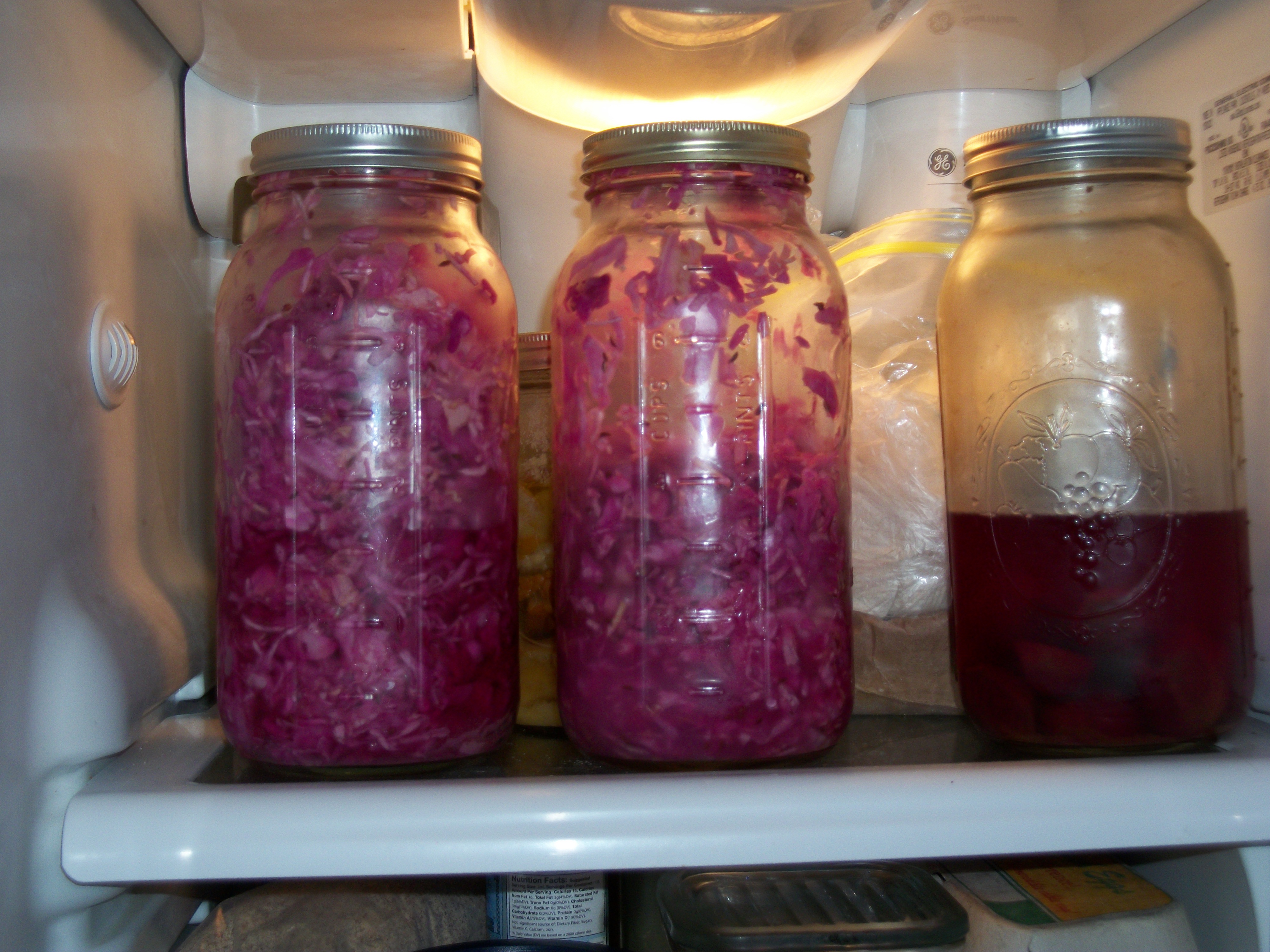
Here’s a picture of the two new half-gallon containers: 


I used a red cabbage and part of a green cabbage.  In a few days, the red cabbage will turn the new sauerkraut a rosy pink.  See?  It will get darker along the way, and it will keep for months, if we don’t eat it first.  That’s beet kvass on the right, another enzyme-rich, healthy product.


Here’s the recipe from Nourishing Traditions:

1 medium cabbage, cored and shredded.  I use the slicer on a food processor.

I Tablespoon caraway seeds

1 Tablespoon sea salt

4 Tablespoons *whey (or use 1 additional Tablespoon of salt).

 *Whey is the clear liquid that can be drained from good yogurt.  Most commercial yogurt now is so full of pectin and seaweed that it will not drain whey.  So, be aware that what you’re paying for isn’t a full-milk product, but a product adulterated with fillers—so the producer makes more money.

 I far prefer the whey to additional salt.  You can drain yogurt by putting a paper towel or two, or a coffee filter, into a colander and setting it over a bowl.  Put yogurt into the paper-covered well of the colander and set it over a deeper bowl.  You can put a plate over it if you like.  The whey drains off, leaving you with a delicious spreadable cheese you can flavor with herbs or drizzle with honey.  Don’t worry; this mixture won’t go bad at room temperature.

 I mix the sauerkraut ingredients in a big bowl and pound it a little with something a bit heavy:  a mallet, the handle end of a big spoon, or a mortar grinder.  When the cabbage starts to release its liquid, pack the cabbage into a clean Mason jar, making sure you leave about an inch of free space.  Keep the mixture at room temperature for about three days, turning it upside down to distribute the liquid once or twice a day.  (Don’t leave it upside down—just mix it up.)  You can eat it most anytime, but it’s best after about three days.  Refrigerate it and ENJOY!

Turkey Tracks: I Like My Bread

Turkey Tracks:  November 8, 2010

I Like My Bread

Take a look at what came out of my oven last night:


The loaf on the left is a wild yeast sourdough bread that is cranberry, pecan, and chocolate.  The one on the right has dried cherries and walnuts.  I froze the latter and ate a slice of the former for breakfast.  Yummo!

I’ve had this wild yeast sourdough starter for about 4 years now.  I forget quite how I started it–starters aren’t all that hard.  Sally Fallon and Mary Enig have recipes in Nourishing Traditions.  Any good bread book does, actually.  I never add commercial yeast to it.  It took a while to really get going, but now, you can see it’s popping up beautifully. 

I have developed a sponge method that takes about 2 days.  Sometimes, 3, like yesterday when the mixture sat covered on the counter bubbling for 2 days and picking up more yeast because I forgot it.  I feed the starter one day and pull off  half for next time.  Then I mix up a sponge and let it sit for a day.  Then I knead and bake.  It takes me 3 minutes to mix in more flour, 10 minutes to knead it, and it sits and rises for at least two hours, and bakes for an hour.  Clean-up is about 10 minutes.

My bread is probably very close to an older European bread.   It’s just wild yeast, flour, and water.  I don’t add salt as that draws moisture and makes it mold quicker.  Rather I slather it with salted butter or unsalted butter and REAL sea salt (grey, moist) sprinkled over the butter.  I can add fats, or sweeteners, or eggs, but I rarely do.  This time I added the dried fruit, nuts, and, as an adventure, the chocolate.  And, I only eat one piece a day at the most as I really control the amount of grains I eat.  This bread, too, is fermented with the sourdough starter, so the phytates, which can and do cause chronic illnesses, are managed.  Everyone used to soak grains, nuts, and seed before eating them, but we’ve forgotten how, and we’re eating a ton of grains these days–which is a big factor in all the chronic disease we have going on. 

My bread is best sliced and toasted.  It’s too heavy for sandwiches really.  And I’ve mostly given up sandwiches anyway.  Too much bread.  I just eat the innards of sandwiches. 

I’m looking forward to breakfast tomorrow!

Turkey Tracks: October Book Club

Turkey Tracks:  November 8, 2010

October Book Club

It was my turn to host our book club.

We meet late afternoon for tea and discussion.  This month the book was The Elegance of the Hedgehog by Muriel Barbary,which I want to discuss in a separate entry.

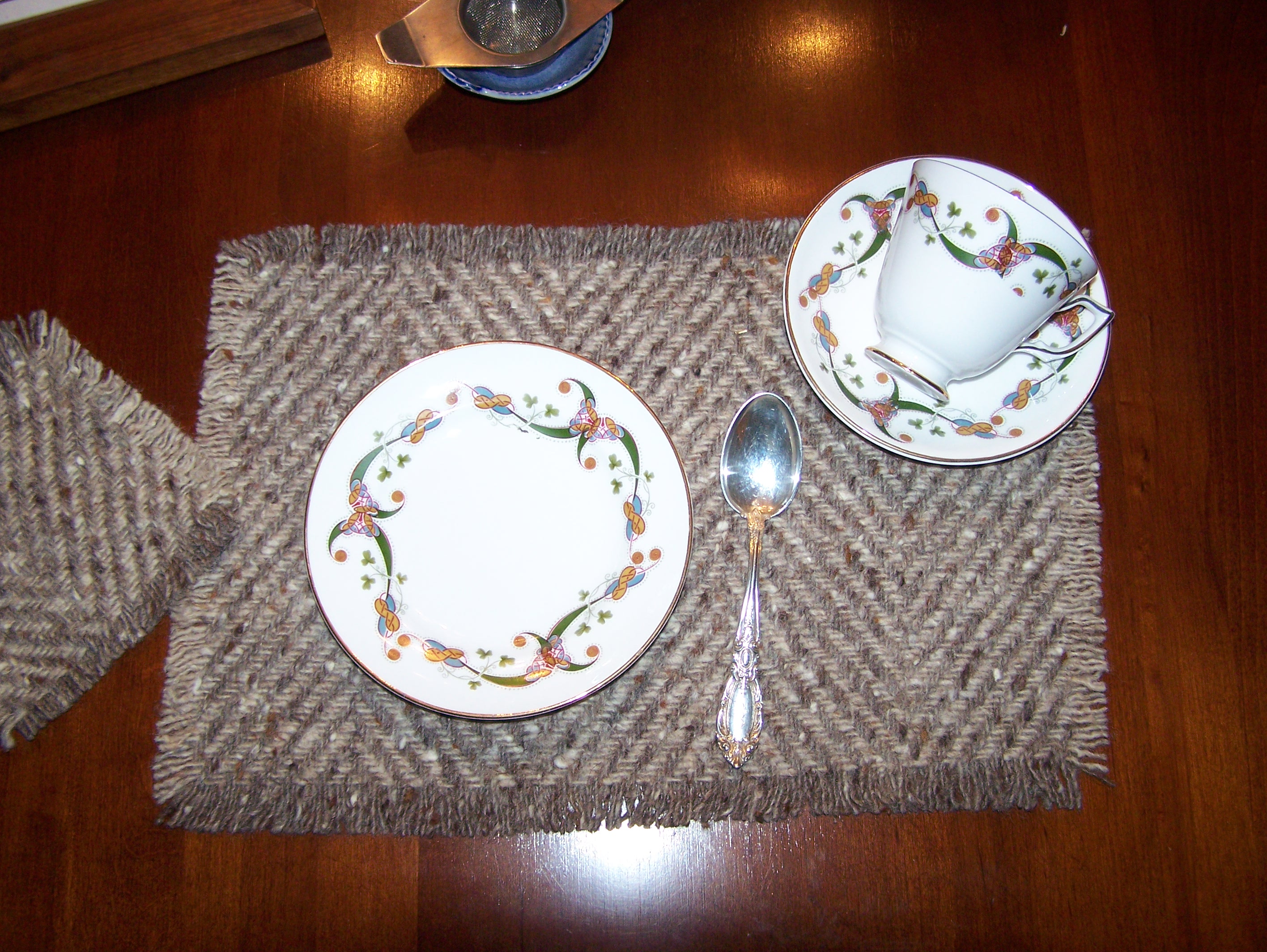
For some reason I was thinking about John’s mother.  Norah gave me so many pretty things over the years.  Among them this Royal Tara tea set:


The wool placemats and napkins were a wedding present 44 years ago.

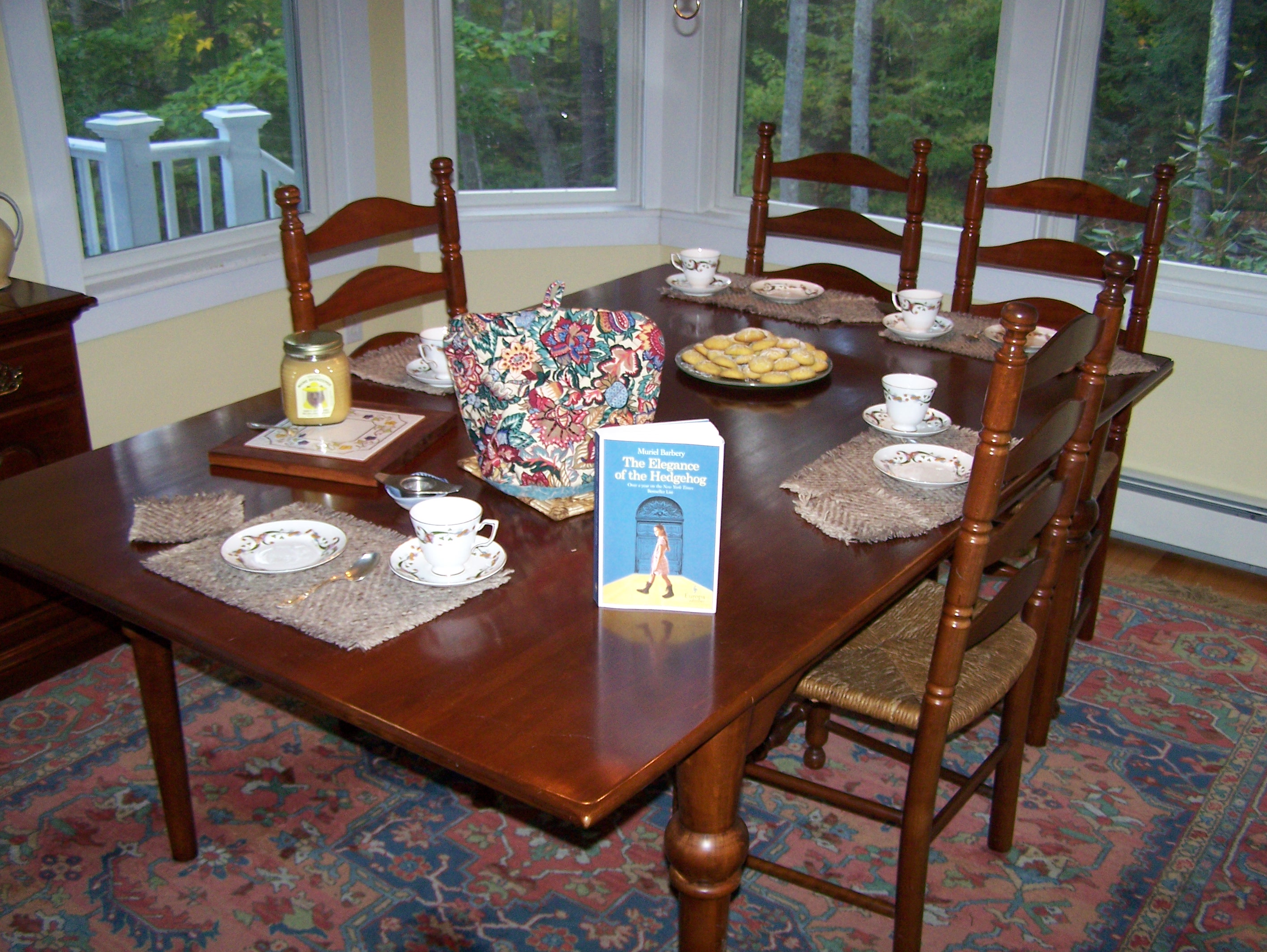
Here’s what the table looked like.  Not too fancy, but comfy feeling on a cool day.


I made two kinds of cookies.  A buttery saffron one from the Pensey’s Spices catalog that had just arrived:


They were quite good, but are still hanging around since we really don’t each much white flour and sugar.   Because of that I made macaroon cookies that are almost healthy.  They do not have any white flour, have healthy coconut meat, limited sweetener, and some good nuts and dried fruit.  It’s a recipe I’ve evolved from one in Sally Fallon Morell and Mary Enig’s book–a mainstay in my kitchen–Nourishing Traditions.   OK, so the chocolate isn’t great, but, there you have it, I love chocolate in the winter.  I don’t seem to have a thing for it in the summer.

Louisa’s Healthy Macaroons

Preheat the oven to 300 degrees and  line two cookie sheets with either the new silicon sheets or parchment paper.  (I’m afraid to ask if these silicon sheets are ok to use as they make baking cookies so easy.)

4 egg whites (I use the yolks in yogurt fruit smoothies)

pinch of sea salt (the wet grey kind with minerals intact, not the white dried kind in the grocery store)

 2 Tablespoons arrowroot

1/2 cup maple syrup or honey–or less (the honey cooks faster than the maple syrup)

1 teaspoon vanilla (Fallon/Enig call for 1 tablespoon, but I find this too much since I have added more ingredients and since I was using Penseys’ double vanilla)

2 cups dried, unsweetened coconut meat (I order on-line from Coconut on-line and get a BIG jar which lasts about a year)

Add extras:  nuts that have been soaked in salted water and dried in a dehydrator to remove the phytates, dried fruit, chocolate bits.  Good combos are pecans and apricots, dried cherries and chocolate and nuts.  I just chop a high-quality chocolate bar into chunks.  I probably add a good 2 cups of extras. 

So, whip your egg whites and pinch of salt until you have firm peaks.  Add the arrowroot and sweetener and vanilla.  Add the coconut and mix with a big spoon.  Add the extras.  Do not overmix and break down the egg white mixture.

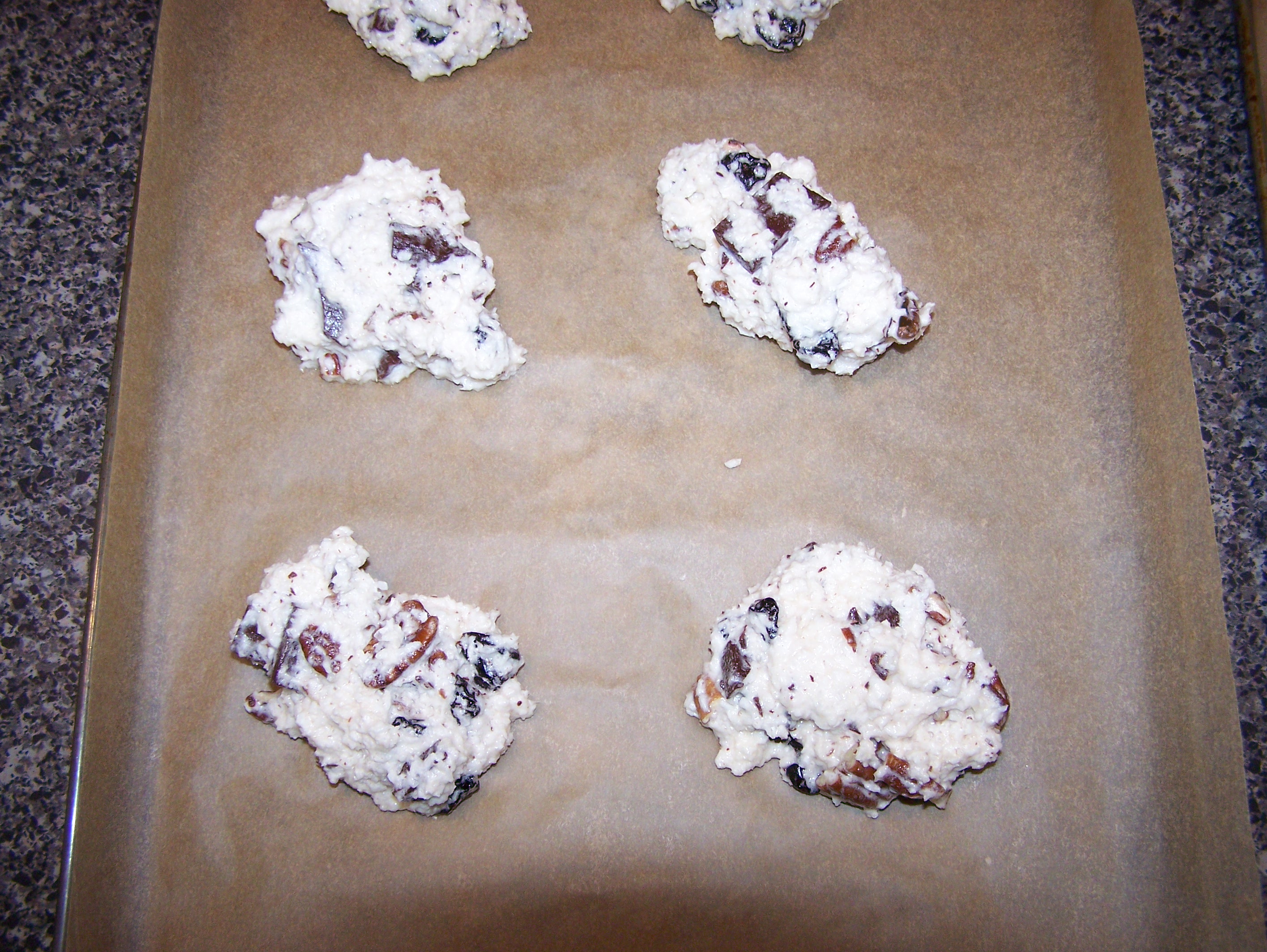
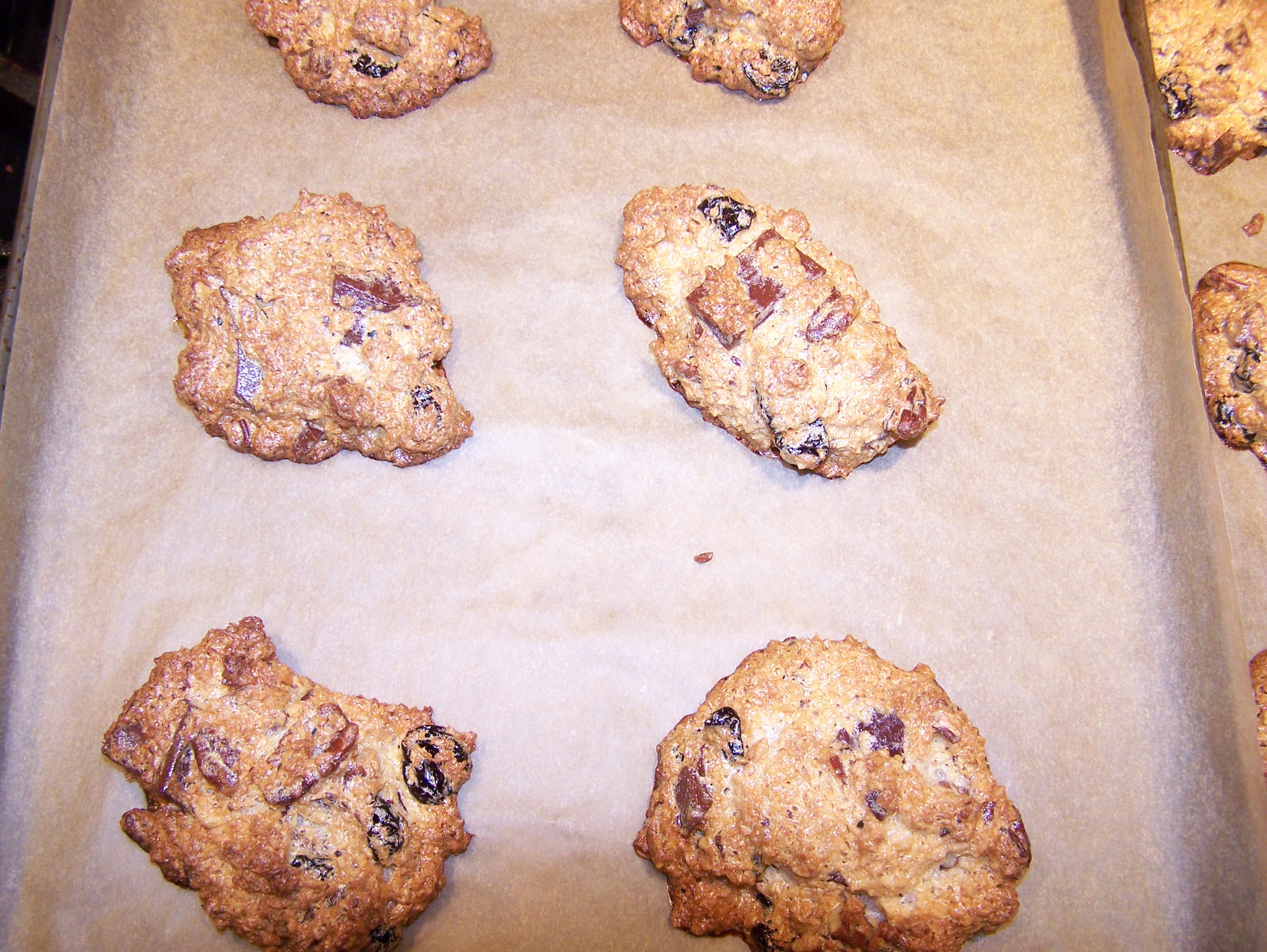
Put big gobs of the macaroon mixture onto the sheets.

Like this:

Bake at 300 degrees for 30 minutes and then turn down the oven to 200 and let the cookies dry out a bit for…about 30-40 minutes.  Taking them out early does not hurt them–they just get too sticky.  You want them to be nicely brown and a bit dry.  Here’s a picture of them done just right:

 ENJOY!!!   And put in an airtight container as they pick up humidity.

Turkey Tracks: Cider Pressing Potluck

Turkey Tracks:  September 30, 2010

Cider Pressing Potluck

Boy am I bummed!

We were invited to our neighbors’ annual Cider Pressing Potluck, and I did not take my camera.

What a mistake!

Chris Richmond and Susan McBride live just up Howe Hill from us, and it has been really fun to watch how they have added to their family (three children now) and slowly and patiently improved their house, barn, and land.  The farmhouse and barn are especially lovely in the way that old New England properties are.  The house has pumpkin pine flooring that is at least a foot wide and is the color of…pumpkin.  I envy them the barn, and they are just now finishing repairing the lower section–which has been a major project for them.  They have laying chickens, geese who are keen watchdogs, and, sometimes meat chickens and turkeys.  Susan is expanding the gardens every year and now has two hoop houses.  The second one came this summer and is large.  Already there are strips of green plants beneath the plastic roof.  I will be able to get winter greens from her, and I’m excited about that possibility since she embodies what I hope will happen more and more:  small growers will grow beautiful food for their neighbors and friends and enough of them will do it so that we don’t have to eat food shipped here from Florida and California.

There is an apple orchard on the uphill side of the farmhouse, and that’s where the cider pressing and potluck took place.  What a fun day they made for us!  The people who pressed the cider had made all their own equipment.  Truly, this kind of knowledge needs to be preserved, and it was so generous of them to share it with everyone who came to the potluck.  Here’s where my camera was sorely missed!  There were three  buckets where the apples got washed three times, a piece of simple equipment that gobbled up the apples and cut them into small pieces, a straining system with some kid of heavy cloth in a box that let some of the immediate juice come out, and a press where the boxed apples in fabric got…pressed.  The cider was delicious!

Yes, the cider was unpasteurized.  If you think drinking unpasteurized cider dangerous, here are some of my thoughts.  Real cider is a whole food that is filled with enzymes, nutrients, and, best of all, great flavor, especially if several varieties of apples are used.  It bears no relationship to the sugary hit you get with commercially made apple juice.  Of course, as with all foods, you have to trust that your cider presser is not using bad/rotten apples, has cleaned them properly, is not using anything but organic apples, and so forth.  We always try to save freezer space for at least a few quarts, and when I defrost them in the spring, the juice is like a spring tonic for us.

Consider, too, how so-called “safe” juice is made–a process approved by our FDA.  Let’s take orange juice as an example.  Industry puts the whole oranges into a machine so as to get as much oil as possible out of the skin.  But, commercial oranges are a heavily sprayed crop–most often sprayed with cholinesterase inhibitors and organophosphates, which are neurotoxins that cause degeneration of the brain and nervous system.  It amazes me that intelligent people can think they can eat/drink food sprayed with neurotoxins and not experience any damage.  Or, that the poisons magically go away in time.  They do not.  Also, there is a fungus in fruit that is resistant to both pressure and heat, so pasteurization does not kill it.  Raw fruit juices, as is also true of milk, contain enzymes that can sometimes destroy this kind of contaminant.  Some strains of E. coli are also resistant to pasteurization processes.  Additionally, treating juice with industrial process involving heat and great pressure can produce intermediate products that are mutagenic and cytotoxic.  In other words, treated juice can have cancer-causing compounds.  The sugar load of treated juice, without the natural enzymes and nutrients, is hard on teeth.  And, industry adds soy protein and pectin to keep juice looking cloudy and to prevent solids from settling.

Commercial orange juice is a highly-processed, adulterated product that you are drinking at your own risk.  Better to eat a whole orange.  Or, to drink fresh cider from a presser you trust.   Here’s a web site with more of this kind of information:  “Dirty Secrets of the Food Processing Industry”:  http://www.westonaprice.org/modern-foods/567-dirty-secrets-of-the-food-processing-industry.html

Susan and Chris had set up tables outside for the potluck, and soon the yard was filled with running, laughing children, adults drinking cider and eating delicious food–for everyone had brought special dishes.  I brought my favorite meatloaf.  Here’s a picture (taken by Tami) and my recipe, developed over 45 years of cooking:

Louisa’s Meatloaf

2 pounds of ground meat–if it’s very lean, add several tablespoons of fat (butter, coconut oil).  You can use combinations of meat if you like, like a bit of pork with beef or buffalo.  I don’t eat veal since I disapprove of how baby calves destined for veal are treated.  I also would use meat from organic, pastured animals.   Lamb meatloaf is also delicious!

a handful of rolled oats or cubed leftover bread to absorb juices

2 GOOD eggs

1/4 cup finely chopped onion

about 1 1/2 cups of a grated veggie to keep the mixture moist (carrots, zucchini, mushrooms)–or a combo–use what you have around or what is in season

1 cup of grated cheese–whatever you have on hand that needs using or what you especially like

A dash of cream or milk to help bind the ingredients

Seasons:  salt, pepper, herbs (chopped fresh herbs are lovely, especially thyme and/or Italian parsley.  A dried fresh mixture of Italian herbs or Provencal herbs (with lavender) are also nice.

A topping to be put on after shaping (below):       sliced tomatoes with some basil leaves in summer, or slices of zucchini with a good tomato sauce that does not have a lot of ingredients.  Meatloaf seems to ask for a tomato sauce of some kind.  I really try to stay away from cans because of the lining chemicals (phthalates and BPA), but here is where I might buy a small can of good-quality tomato sauce.  You could also use one of the good ketchups–not Heinz, etc.  Get one without a lot of “spices” (MSG) and with ingredients you know and understand.  Look in the health-store section of the store.

Don’t overmix.  With your hands just combine the ingredients.  I use something like an open 8X8 pan, or a more rectangular, bigger shape, and form the meatloaf into a football shape.  It cooks faster than trying to put it into a loaf pan.  Cook at 350 degrees for about an hour.  I also don’t worry if it’s a little pink in the middle as overcooking beef takes away many of its enzymes, nutrients, etc.

Let the meat cool for about 5-10 minutes before cutting–letting meat sit and cool a bit allows juices to stay in the meat and not flow out into the pan when you cut into it.  Also, the meat continue to cook, so pull it out at the pink stage so it does not overcook.

 ENJOY

(Cold meatloaf sandwiches are fabulous!)

Turkey Tracks: Cream of Tomato Soup

Turkey Tracks:  September 29, 2010

Cream of Tomato Soup

Late blight hit our tomatoes over the weekend.  I went out Sunday to harvest and realized that the long row of plants were all infected.  If you didn’t know, last year infected  tomato plants from nurseries grown down south and shipped north–mostly by the big box stores like Home Depot and Wal-Mart–wiped out the tomato harvest in New England.  Maine was no exception.  And, late blight also infects potatoes.  The spores from infected plants travel on air currents for as long a distance as forty miles. 

Given the fact that it rained here every day last summer for all of June, July, and the first of August last summer, my tomato plants did not grow and did get the blight.  I was able to harvest my potatoes, but the plants did have signs of the disease.  I carefully bagged all the plants and hoped for the best for this year.  We did not have a really cold winter, so I crossed my fingers.  Mostly, I think I got away with it as we’ve had a bumper crop of tomatoes before last Sunday–though many on the plants were still really green.  I think I need a small hoop house for the tomatoes.  I saw this one at the Common Ground Fair this year.  It’s called a giraffe hoop house, and it does not take up much space:


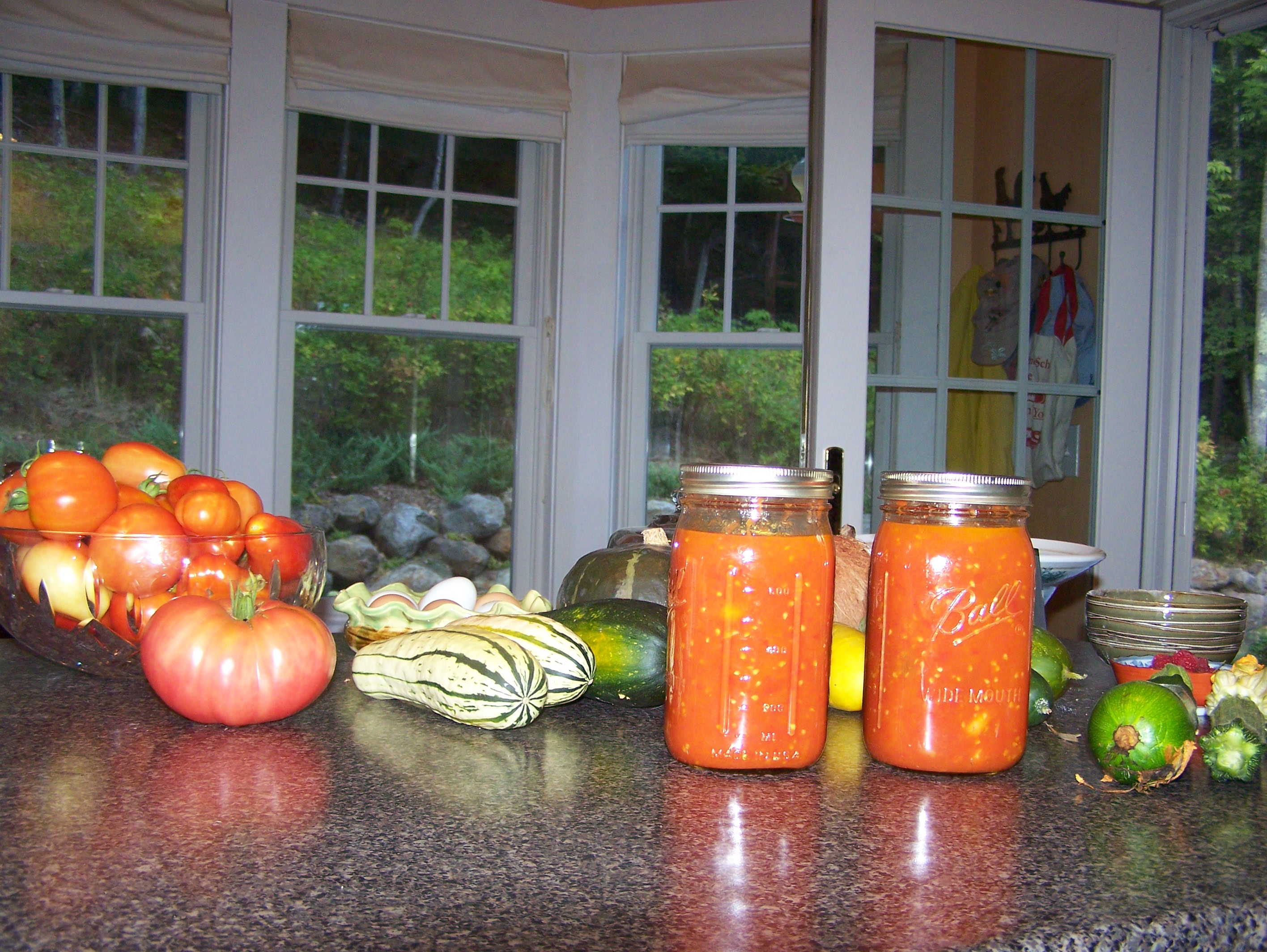
My potato plants seemed ok, though the harvest was light.  It’s been dry here this summer, and I was afraid to water too much as our well might go dry.  The tomatoes, as I’ve written, have been glorious!  I cannot complain.  But, I’ve spent a lot of time putting up sauce, and now I’m out of freezer space–especially since we just got our annual lamb for the freezer.  Thus, I started looking at other ways to use tomatoes.  And, voila!  I fell upon cream of tomato soup.  It’s dead easy and amazingly delicious!  I’ve combined recipes from several sources, so basically, I think it’s just mine.

Cream of Tomato Soup

Three or four pounds of ripe tomatoes–skinned, which is basically simple.  Just dip them in boiling water for 30 seconds or so, transfer them to cold water.  Use some ice if you have extra.  Take out the core with a small, sharp paring knife, slip off the skin, and drop the tomato into your pot.

Add 5 to 6 tablespoons of organic butter and some salt

Heat the whole mass, covered, until the tomatoes break down.  Cook, covered, for at least an hour.  Two is better.  There should be lots of liquid, but keep an eye on the pot so the liquid does not cook off.

Next, you have a choice.  I mix it up with a hand blender, which is an essential tool in my kitchen.  You could also put the hot soup into a blender and risk burning yourself.  You could mix it with a hand mixer.  You could strain it.  With the hand blender, I’m not straining out the seeds, but I don’t seem to notice them after I’ve used it. 

Next, you had heavy cream to the hot soup.  I am lucky to have local, organic raw cream.  Adding more dilutes the tomato taste, but makes the soup creamy.  Find the balance you like, season with additional salt if you like.

Eat and enjoy.  It’s beyond delicious if you’ve got good tomatoes! 

***

When we were done ripping out and bagging diseased plants on Sunday, we had two big boxes full of green tomatoes and beginning to ripen tomatoes.  We threw out the tomatoes that obviously were going to get late blight spots while ripening.   (Yukko!)  We wrapped the big Brandywines in newspaper and put them into a dark, cool closet.  We put the tomatoes that were tinged with color in the kitchen windows.  And, I cut up the green, hard paste tomatoes and put them into the dehydrator.  We’re going to have “dried green tomatoes” AND “fried green tomatoes.”  I plan to try adding them to soups and stews.  And, I’m going to try to reconstitute them and roast them with winter vegetables.  They should add a nice zing.

Roasting Green Tomatoes

One of my favorite food combos and recipes  in the fall is roasting green tomatoes cut into chunks, with dense sweet squash (like a buttercup) or sweet potatoes, with newly harvested small potatoes (like red or gold)   small, whole onions.   I toss them with olive oil, salt, and generous amounts of rosemary and/or thyme.  I’m pretty sure this combo comes from Anna Thomas’s THE VEGETARIAN EPICURE.  It doesn’t hurt to parboil the potatoes.  Roasting at 350 for about 45 minutes is about right.

Try it!  You’ll like it.     

I still have a pile of ripening tomatoes on the counter to process.  And, all the tomatoes in the kitchen windows, assuming they ripen without being ruined by late blight spots.  So, I’m not done with tomatoes yet. 

FEDCO sent our fall garlic yesterday–the planting of which is the last task in the garden.  Though the cold frame is loaded with seedlings just emerging.  And, oh yes, I have to clean this year’s garlic which is presently drying in the top of the garage.


Turkey Tracks: Bottled Sunshine

Turkey Tracks:  September 7, 2010

Bottled Sunshine

Fall is here.  The light is changing again, and it is unlikely we’ll feel like swimming any more with the arrival of cooler weather.  The trees have not really started to change much, though a few are tinged with color.  The beans and summer squashes are slowing down, but the tomatoes are coming in.  In Maine, September is the red month.

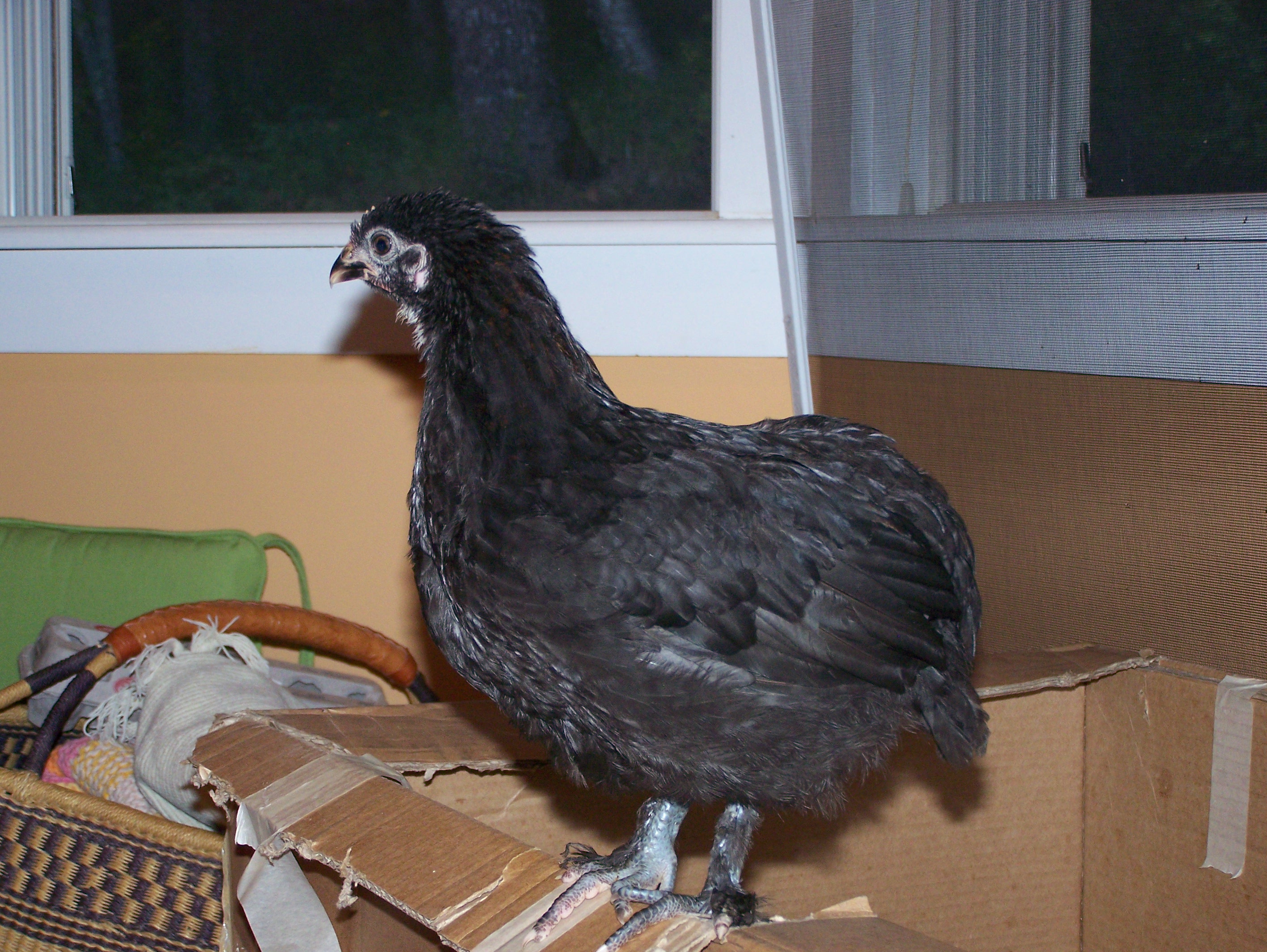
Our solo chickie, Orphan Annie is 2 months old this week.  Here she is, perched on her inside box, which she is rapidly outgrowing.  I put a screen over the top, and we are up to two books now to weight it down.  She was “OUT OUT” to be with us, but she is NOT reliable about pooping.


 She still looks like a female.  And, she scratches like one.  There are some little bumps where spurs might grow, so I have to get one of the big hens down and see if they have marks there.  I’m letting her loose more now with the big hens, as long as John or I are there to run interference.  The Wheatens are not aggressive with her, but her mother and the others are.  Especially if she is eating something they want.  She spends the day outside in a smaller pen that Rose lent me, and she hates it.  Maybe I’ll try penning her under the big coop later today.

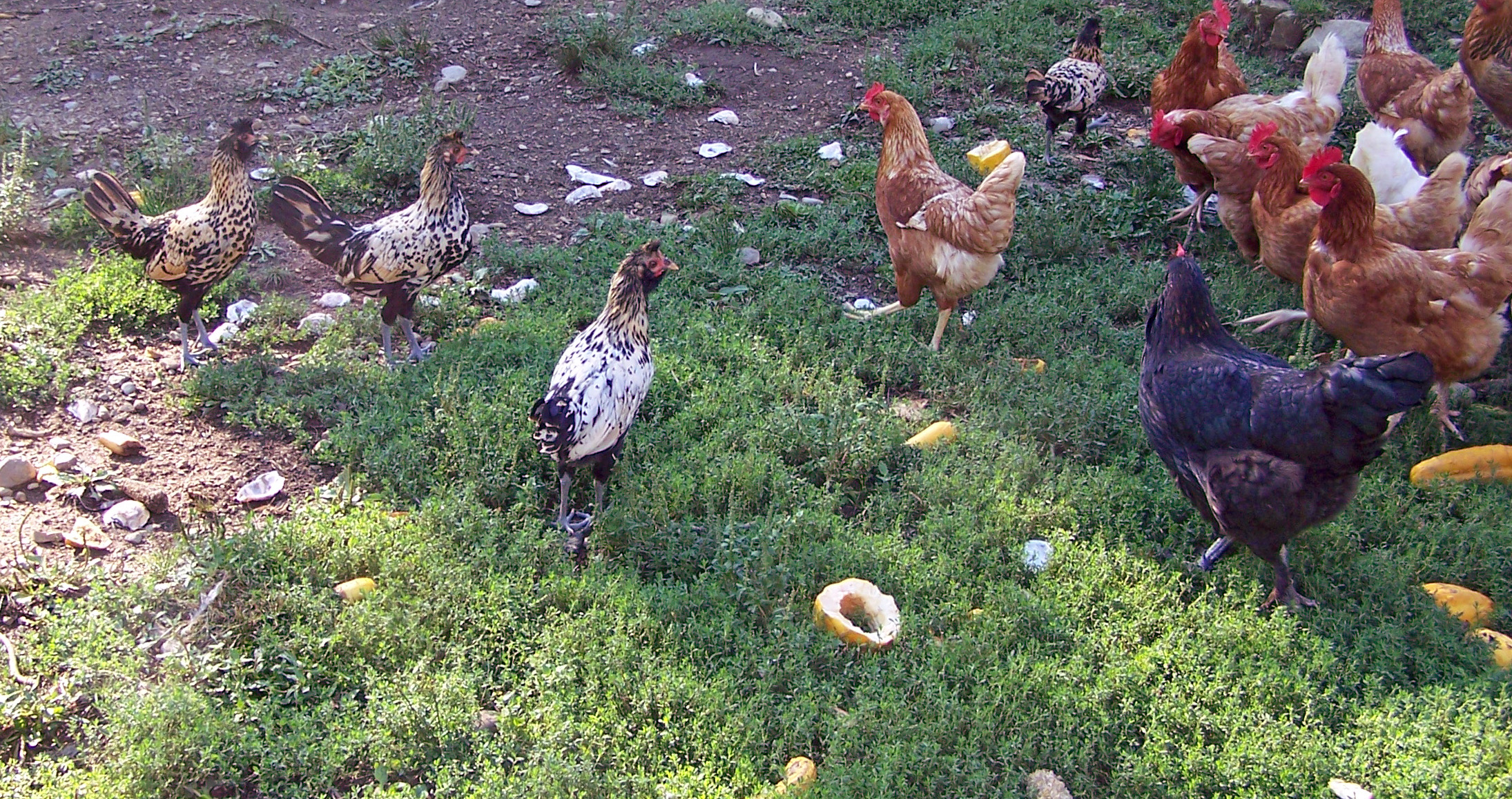
We visited Rose and Pete last Sunday.  I wanted to see how the Barbanter chicks were developing.  They are about 3 weeks older than Annie.  Rose has mixed them into her flock, but they have a protective mother–the large Copper Black Maran to the right.  There are 4 chicks:  the fourth is in the upper right part of the picture.  Look for the speckles.  The red hens are Red Sex-Links.  And, they are egg-laying machines and very sweet.  Their beaks have been cut though; I think I wrote about that in an earlier post.  They lay a dusty rose-brown egg.

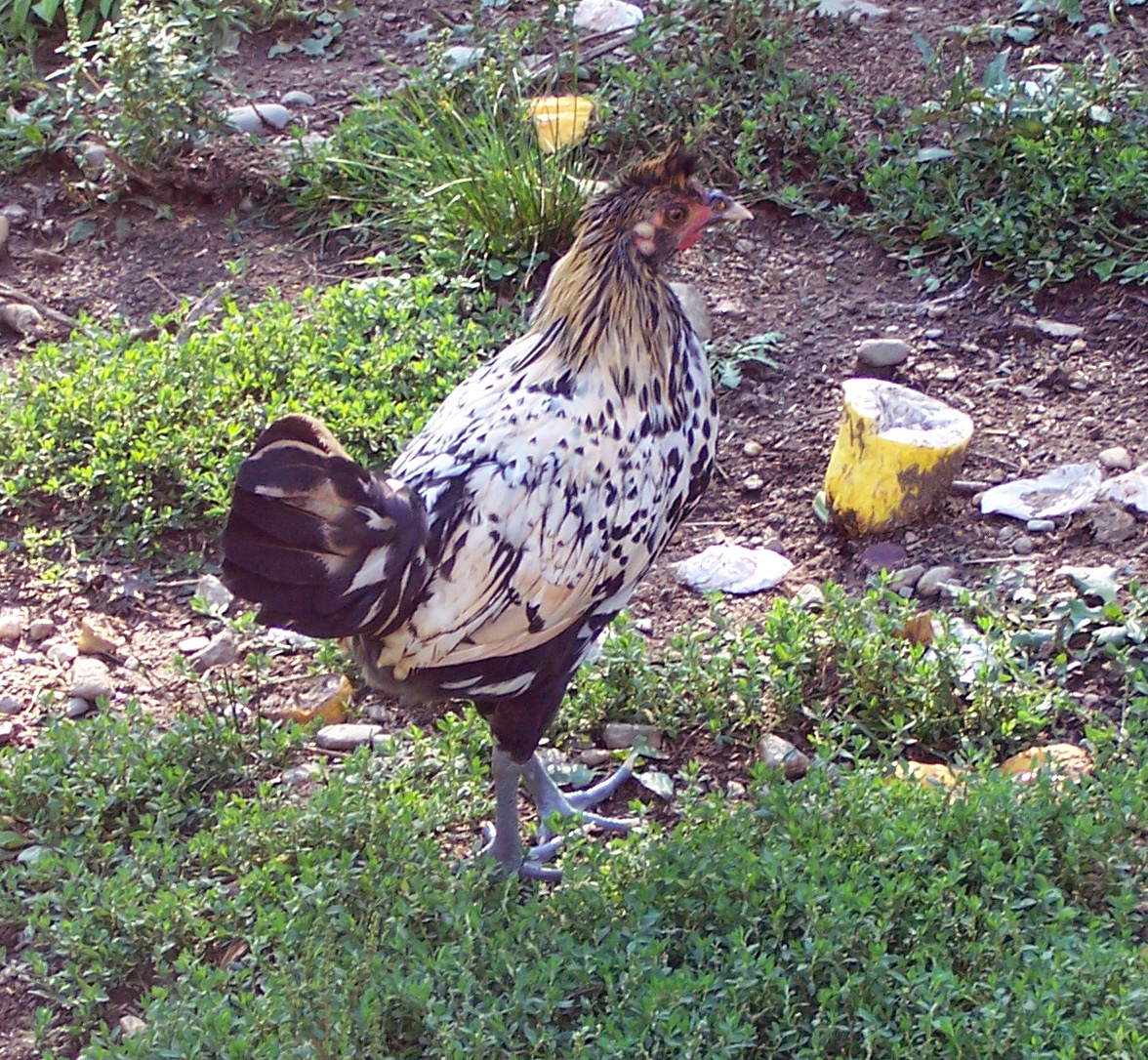
Rose and I first saw the Barbanters when we picked up the Marans and the Americaunas last March.  They are clean-legged and long and slender, with fluffy top-knots on their heads.  They lay a white egg, which in an egg box, can just bring the other colors alive.  Rose thinks one of these four chicks is a rooster.  Yeah!!  That means there will be more next spring… 

Here is a close-up of one of the chicks so you can see the coloring better.  The top knot is not yet fully developed.


I spent most of yesterday processing food.  I had enough tomatoes to make 2 quarts of sauce.  I have to freeze my sauce since it has oil in it.  The recipe mostly comes from Anna Thomas’s THE VEGETARIAN EPICURE. 

Tomato Sauce:  Bottled Sunshine

I scald the tomatoes, skin them, cut them into chunks and throw them into a WIDE stainless steel skillet that’s about 5 inches deep.  You want to spread out the sauce as much as possible.  I add a good 1/4 cup of REALLY GOOD olive oil, some salt (I only use minimally processed sea salt), and turn on the heat.  When the tomatoes have broken down, I add 5 or 6 garlic cloves–just smashed or cut into big pieces and a handful or two of fresh basil leaves.  Cook down the mixture until the excess water has cooked off and the olive oil is starting to pool on the top.  At the end, you have to stir more frequently.  Spoon into canning jars, turn upside down on the counter until cool, then freeze.  Remember to leave enough room for freezing expansion.  Now you have bottled some sunshine for a cold winter day. 


We don’t eat pasta very often, so it’s quite a treat to reheat one of these quarts, spoon it over penne pasta, and top it all off with freshly grated Parmesan cheese.  It’s a complete meal with some French bread to sop up the sauce and a salad.  But, perhaps a better use is to add one of the jars, especially pint jars, to a chicken bone-broth soup. 


Roast Chicken Bone Broth

Bones have disappeared from American supermarkets.  But, bones are full of fabulous minerals.  It’s one of the healthiest things you can make.  And, it’s dead easy.

I roast a chicken about once a week.  Remember that we raised our current chickens with Rose and Pete Thomas, and we got a slower-growing type that we didn’t slaughter until they were 12 weeks old.  That meant that their bones had fully developed–unlike chickens raised to be 4 to 5 pounds in 6 to 8 weeks.  Having seen this process first hand, I can tell you that raising a chicken to be that big in that period of time is so not ok on so many levels besides the obvious one involving what nutrients they possess. 

I use about a 3-inch high roasting pan, and I make a layer of chunked vegetables:  celery (not too much; it’s strong), onion (the more the sweeter), carrots, and garlic.  I salt it and drizzle fat over it.  I used to use olive oil, but I’m moving toward using coconut oil or rendered duck fat, or chicken fat since they take high heat better.  (I’m saving the olive oil for colder uses.)  Put the chicken on top–after drizzling it with salt and pepper inside and out.  You can put some lemon and herbs inside the cavity.  Use whatever seems good to you and what you have on hand.  Sometimes I sprinkle dried herbs over the top, though I vastly prefer fresh herbs.

After you’ve roasted the chicken and eaten your first meal, take the meat off the bones and put ALL the bones (yes, the ones you’ve gotten from people’s plates), the roasted veggies, and the juices into a bowl for overnight storage.  Put some water into the roasting pan and scrape up the dark bits and pour that into your bowl of bones.  The next day, or the day after that, put the bone mixture into a kettle, fill it with water, salt it, and simmer it for 6 to 8 hours or so.  Replenish water from time to time.  Pour off the liquid through a strainer.  Pick out the used-up meat bits and carrots for the dogs, and throw out the bones.  Let the broth cool before putting it in the refrigerator.

You’ll have enough for a delicious soup, for drinking as a hot drink, and/or to freeze. 

You know, the other thing that is missing from American supermarkets is something that Europeans take for granted.  When they buy a chicken, they get the head/neck and feet attached.  In other words, they buy the WHOLE bird.  We butchered our chickens this way, and let me tell you, the broth made with the neck, head, and feet added back in insanely delicious.  All the neck bones have so much good stuff in them, and the feet are full of gelatin that makes the broth chill out as thick as jello. 

Start asking for slower growing chickens from your LOCAL farmers (Silver Cross or, even better, Freedom Rangers, which are better foragers).  And, ask for the WHOLE carcass.  And USE IT ALL.  The cost of an organic chicken only seems prohibitive until you start using the whole thing.  John and I get–from about a 4 1/2 pound whole chicken–4 meat meals and 6 soup meals.  The cost of the chicken divided by 10 meals makes it seem more reasonable.  It’s definitely healthier, which subtracts from the cost of chronic illness.

Green Bean Overflow

We had at least 3 pounds of beans to process this week after picking up our food from Hope’s Edge, our CSA, and picking our own garden.  I have Dragon’s Tongue beans–the seeds were a gift from Mike and Tami last year.  They are a colorful, lavender and cream striped bean that is big, flat, and very nutty sweet.  I also have the old green, bush bean standby, Provider.  From Hope’s Edge, we got purple beans (they turn green when cooked), yellow beans, and a tender green bean.  Here’s a picture of a mixture of all these beans ready to be steamed.


 Aren’t they pretty?

But, it’s a LOT of beans.  So, after we eat some steamed and with fresh lemon juice and fresh butter, I freeze some in smaller packets.  They are not great to eat as they tend to get a bit mushy.  But, they are great in soups in the winter.  I throw them in a few minutes before the soup is ready, just to heat them through.  I save a few handfuls from the batch, refrigerate them, and use them to make a cold salad that’s quite delicious and that I discovered while combining leftovers with fresh produce.

Cold Green Bean Salad

Combine the cold beans with some freshly cut-up cucumber, some halved SWEET cherry tomatoes (we have Sun Gold here), and some garlicky, mustardy herbed vinaigrette.  The dressing is simple:  smash a garlic clove with some salt  in a mortar with a pestle or a bowl with the back of a spoon.  Add in some Dijon mustard (I’ve grow to love the extra bold kind)–say a tablespoon–some red-wine vinegar–say 3 tablespoons–and slowly stream in some REALLY GOOD (extra virgin, first cold pressed) olive oil while whisking with a whisk or a fork.  When the mixture thickens, taste it to see if you need more olive oil.  Add herbs–whatever you have–and pepper.

Zucchini

The zucchini are finally slowing down.  I’ve got at least one more pile to grate and freeze today.  Like the beans, small grated batches are good to throw into winter soups.  Grated zucchini can also be used to thicken a soup, much like the French use potato to thicken their vegetable soups.