Turkey Tracks: Half-Square Triangle Patterns

Turkey Tracks:  February 3, 2012

Half-Square Triangle Patterns

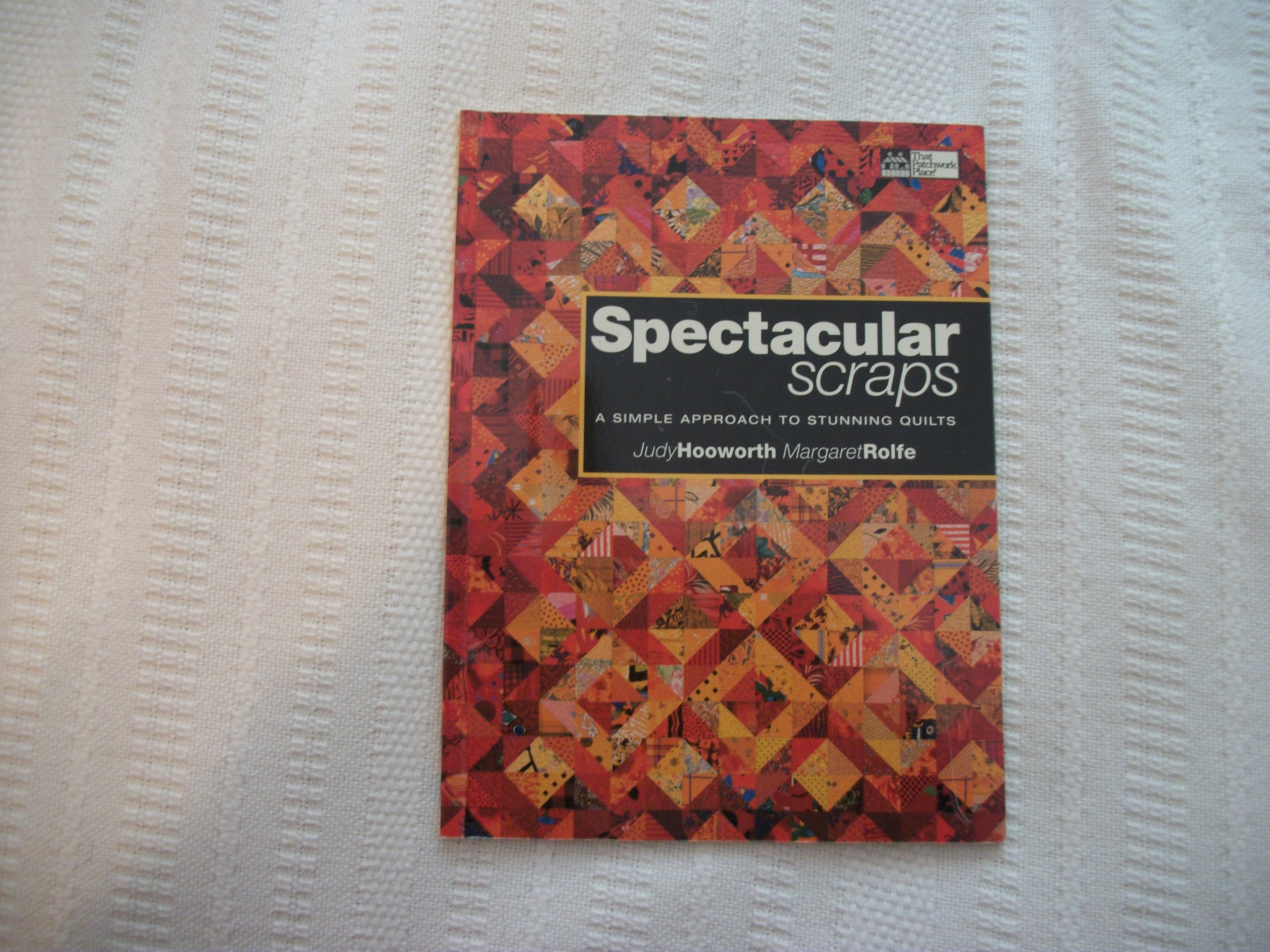
After I posted about using scraps to make my BLUE TANGO quilt, made from half-square triangle blocks, it occurred to me that I could have highlighted a terrific book that titilates the imagination about half-square triangle possibilities.  It’s SPECTACULAR SCRAPS by Judy Hooworth and Margaret Rolfe.  BLUE TANGO is a simple light/dark arrangement.  You can see from this book cover that you can take half-square triangles to much more complicated places.  And, below, see an idea for a “rainy day” design project for children.

Here’s a page from the book that shows some of the many, many ways to arrange light/dark half-square triangles.  BLUE TANGO was the first pattern under No 5.

Rainy-day design project for children:

For a rainy-day project with children that helps them “see” design possibilities, have them cut out 3 to 4-inch squares, draw a diagonal line, color in one side, and make some of these designs.  Perhaps they will want to paste their design to a poster board as an art piece?

Turkey Tracks: Yarn Road Trip

Turkey Tracks:  February 2, 2012

Yarn Road Trip

Giovanna McCarthy and I hit the road one day last week.  Our destination:  Romney Ridge Farm Yarn Company in Woolwich, Maine, which is about an hour south of Camden.

There is a history to this story.

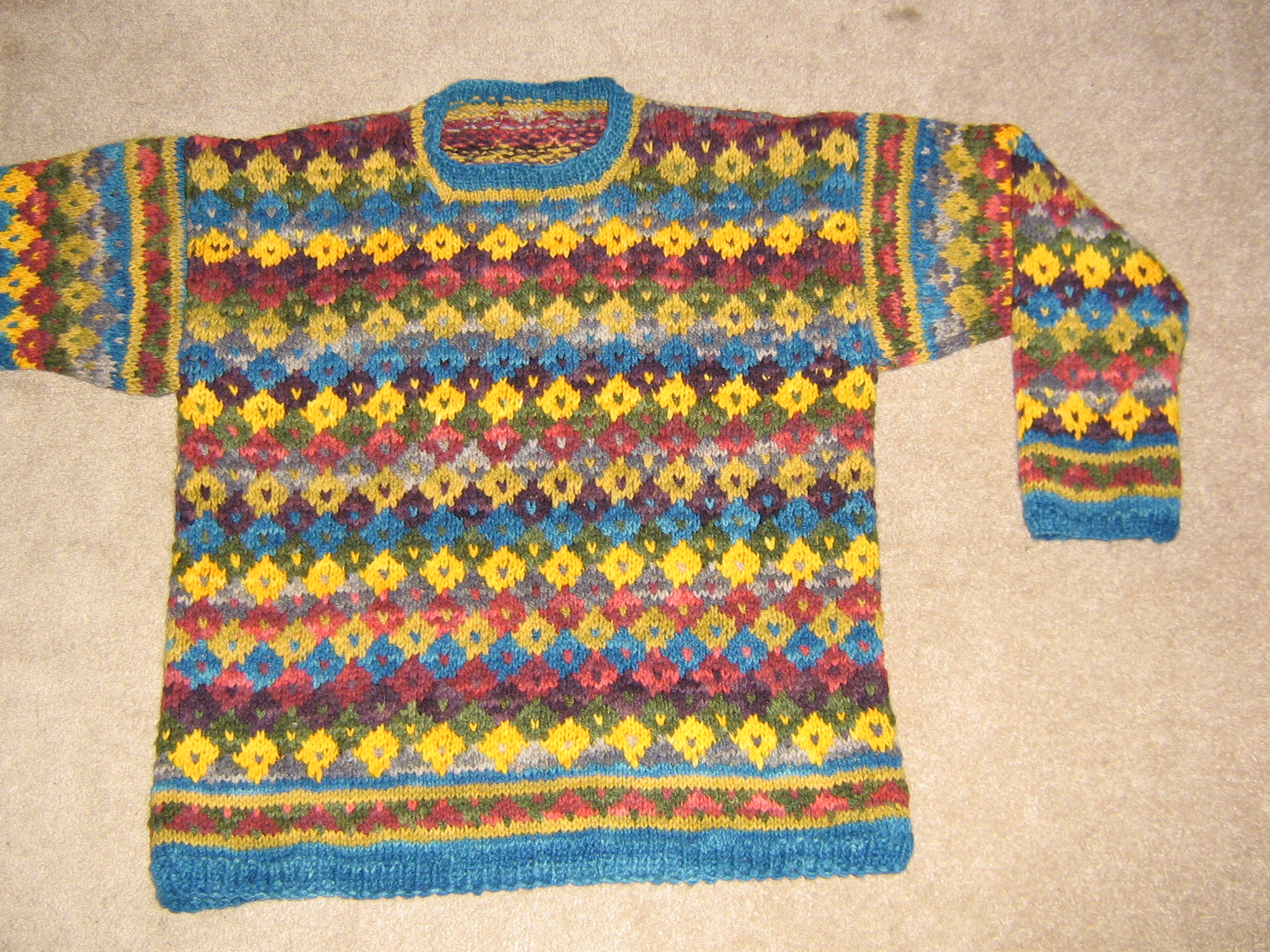
Last summer I met Kelly L. Corbett, the owner of Romney Ridge Farm Yarn Company, at MOFGA’s Common Ground Fair in September.  (MOFGA is the Maine Organic Farmers and Growers Association, and they have a spectacular fair each year.)  Kelly had asked Aloisia Pollock, a master knitter, to make a sweater showcasing Kelly’s yarns.  Here’s the sweater–which uses a method of carrying two colors to make the little diamonds.

When I got home from MOFGA I went into our new knitting store here in Camden:  The Cashmere Goat.  They LOVED the idea of carrying Kelly’s yarns and hosting a class taught by Aloisia Pollock to make her sweater–and they have a wonderful space to take such a class.  The three groups came together, and that class will be taught in early April 2012.  The sweater is now hanging in the store, alongside some of Kelly’s yarns.

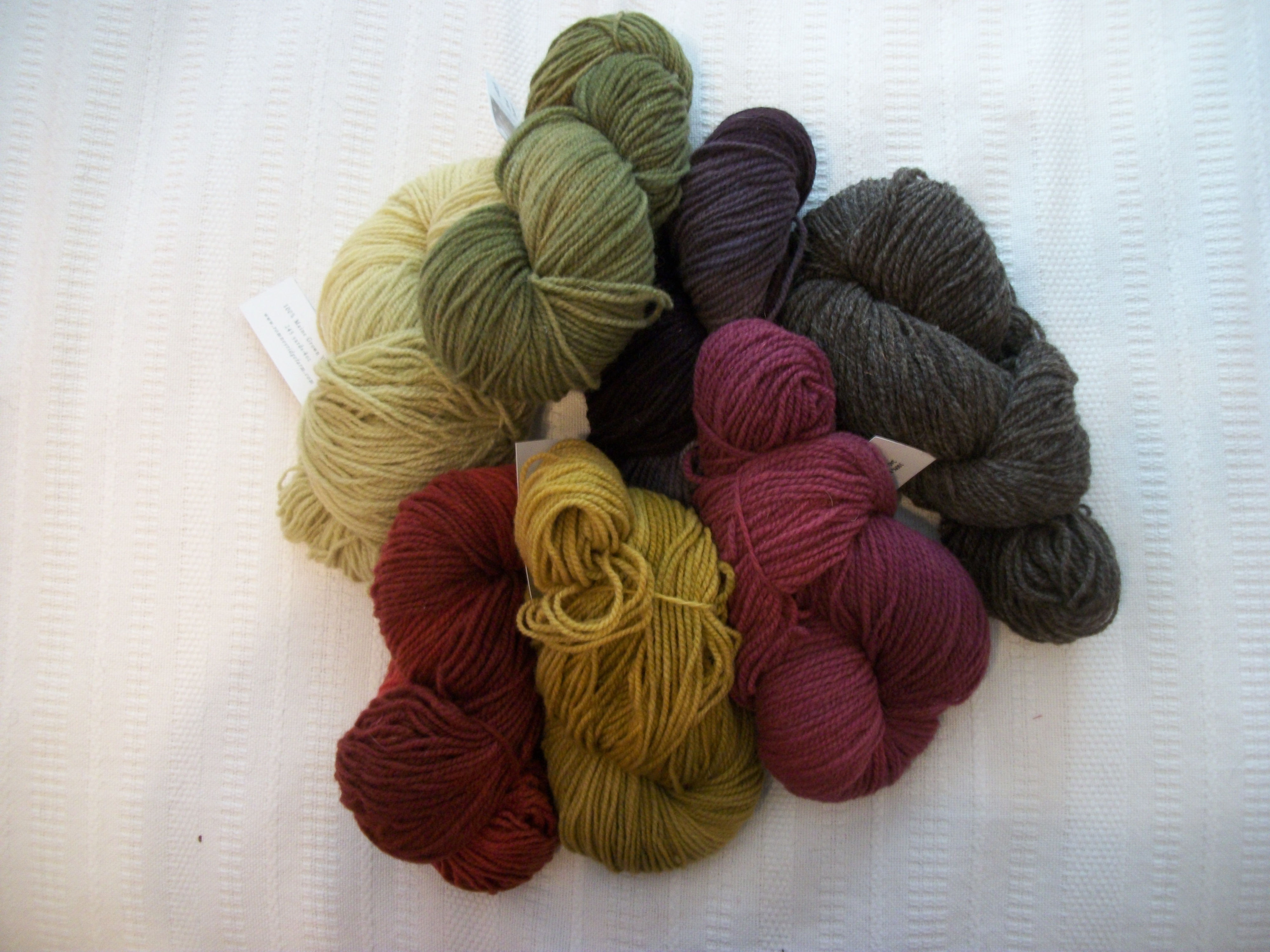
But, Giovanna and I wanted a larger yarn selection than The Cashmere Goat presently has, so we called Kelly and went down on a cold, wintry to pick out the 7 skeins we needed for this project.  We were blown away by all the colors, the possibilities.  Both of us were paralyzed for long moments.  Giovanna summed up what we were both thinking.  “How can I pick seven colors when I want every single one here!”

Here’s what I came home with–the yarn on the far right is the “natural” undyed color of the sheep’s wool.  And, the dark purple yarn above the mauve color isn’t showing up well in this picture:

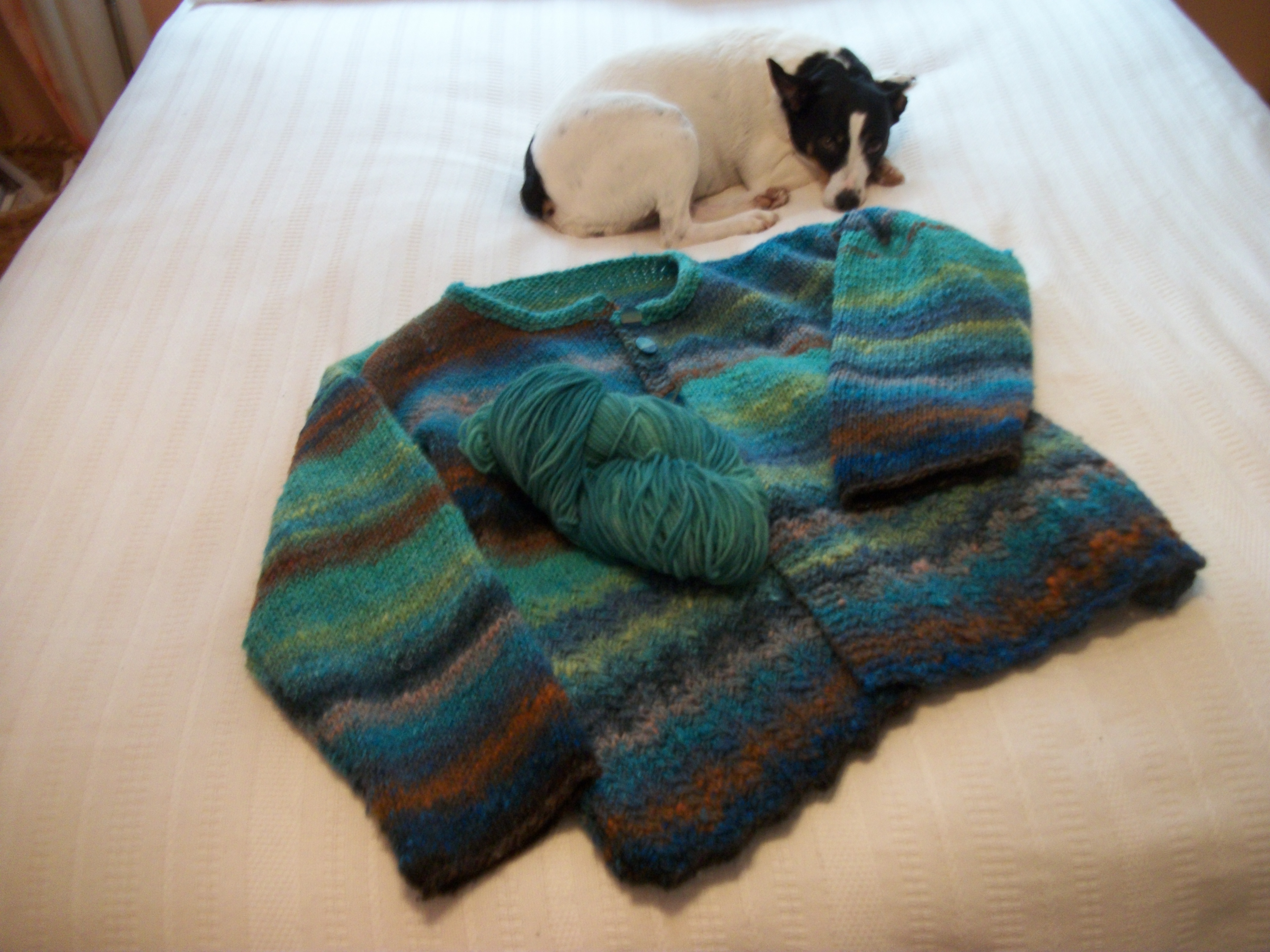
I also came home with a turquoise yarn I thought would make a great scarf for my black winter coat–AND that will go with my Noro sweater and hat:

Kelly’s farm shop is easy to get to from Route 1.  She’s just below Wiscasset.  Her web site is www.romneyridgefarm.com.  She has a blog as well on that site.

Aloisia Pollock lives in Jefferson and runs the Sunset Cabins on Damariscotta Lake–www.sunsetcabinsmaine.com.

The Cashmere Goat is at 20 Bayview Street in Camden–www.thecashmeregoatknit.com.

Giovanna and I are going down to see Aloisia next Wednesday, and we can hardly wait!

Turkey Tracks: Preserving Garlic

Turkey Tracks:  February 2, 2012

Preserving Garlic

Some of our garlic is starting to go soft and to mold–especially the really big bulbs.  It’s that time of year.

Last year, I jollied the bulbs along by putting them into the refrigerator.  I swore then that I’d take the time to clean them and do SOMETHING with them next year.  For those of you who don’t grow things, one plants garlic in the fall, it winters over in the ground, sprouts in the spring, grows all summer–giving you fresh garlic scapes just when you’re hungry for fresh garlic taste–and one harvests in the early fall when the plants start to turn brown.  After pulling up the bulbs, one dries them in a warm dry place, which makes the true, strong garlic taste develop.  After that, one cuts off the stalks and stores the bulbs.  They need cool, dry storage.

Also, EAT GARLIC!.  It has the most amazing chemical properties which can build up your immune system, drive off colds and infections, and keep you generally healthy.  It didn’t get the reputation for vampire protection for nothing!  If you start coming down with a cold, mash a fresh garlic clove into some butter, spread it over a cracker or something like that, and eat it.  Salt helps.  Three times a day.  You’ll notice that help is occurring almost right away.

So, this year, I brined a jar of garlic, which took care of about half of our crop.  You can see what I have left to do.  You can also see the dusky blue light outside my kitchen window

I used a recipe from NOURISHING TRADITIONS since it uses whey.

Brining Garlic

In a quart Mason jar, place the peeled cloves of about 12 heads of garlic.  (If you roll them under your hands or in a towel, the cloves break free easily–all except for the pesky little ones.)

Add 2 teaspoons of dried oregano (I used a savory herb mixture with a Mediterranean base), 2 teaspoons sea salt, 2 Tablespoons of whey.  If you don’t have whey (you drip it out of yogurt), use another 2 teaspoons of sea salt.  Add water to cover, but leave a good inch free at the top.  You’ll notice I have my jar sitting in a saucer to catch drips if the fermentation process gets going in earnest and bubbles start going over the top.

Leave the jar on the counter for about three days, turning it upside down and shaking it a few times a day to distribute the juices.  Then, put it in a cool place.

You can use the garlic like fresh.  The juice is great in salad dressings.  Or, I suspect, a little would jive up soups.

I’m also going to make some GARLIC ELIXIR–from a recipe in WELL BEING JOURNAL, Jan/Feb 2012.  They took it from Doug Oster’s TOMATOES, GARLIC, BASIL:  THE SIMPLE PLEASURES OF GROWING AND COOKING YOUR GARDEN’S MOST VERSATILE VEGGIES.  Sounds like a good book.

Garlic Elixir

1 cup of garlic cloves, peeled

1/4 cup parsley

1 teaspoon salt (sea salt please)

1 Tablespoon red wine vinegar

Olive oil (1/2 to 1 cup)

1 tsp. black pepper

1 Tablespoon lemon juice

optional:  chopped black olives or capers to taste

Process garlic and parsley in a blender until chopped fine– put optional ingredients in first before blending the garlic and parley if using.  Place in a mixing bowl.  Add salt, vinegar, pepper and lemon juice, stir in olive oil.  Place in a glass jar and cover with thin layer of olive oil.  Will store in refrigerator for up to a month.

Wow!  I’m guessing some of that added to salad dressing would make some fabulous salad dressing.  Wonder if one could freeze it…

Push the cloves do

xxx

Turkey Tracks: Using Dried Zucchini Slices

Turkey Tracks:  February 2, 2012

Using Dried Zucchini Slices

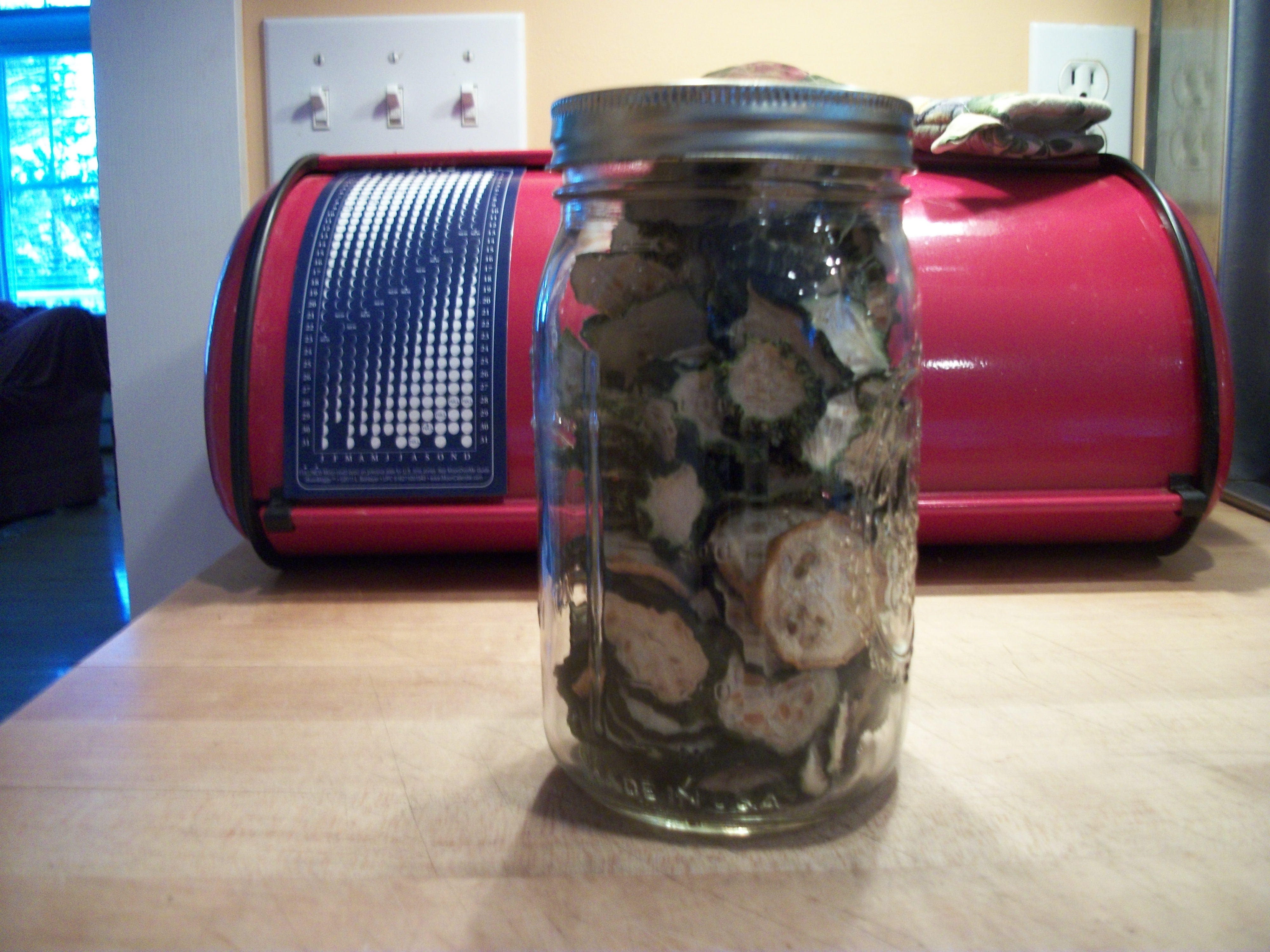
The zucchini slices I dried last summer have been a great success this winter.  Here’s a pic–with the 2012 Moon Maggy in the background I see.

To recap, when the glut of zukes comes in, I’ve tried to shred them and freeze them for winter soups or to put into the dog food.  But, the frozen shredded zukes develop this metallic taste.  And, the bits are positively slimy.  So, this past summer I tried slicing and drying them–having had great success drying halved small tomatoes.

One can just eat the zuke chips or use them in dips.  But, what we’re finding is that they are terrific thrown into soup in about the last five minutes to reconstitute.  They hold their shape and texture, are a delicious addition, and hold up to reheating soup.

Success!

We’re down to our last handful of tomatoes.  I dried a TON of them last summer before the late blight hit.  MORE next summer.

Mainely Tipping Points 39: SENOMYX’S PATENTED CHEMICAL FLAVOR ENHANCERS

Mainely Tipping Points 39

Feb. 1, 2012


SENOMYX’S PATENTED CHEMICAL FLAVOR ENHANCERS


Lee Burdett is a food and health blogger:  http://blog.wellfedfamily.net.  Her Summer 2011 WISE TRADITIONS article, “Senomyx:  The Brave New World of Flavor BioEngineering,” follows Sally Fallon Morell’s article “The Salt of the Earth,” discussed in Tipping Points 38.  Both writers are concerned with the substitution of chemicals for real food, and both articles can be found online at the Weston A. Price Foundation (WAPF) web site, which is linked on the right sidebar of this blog.  Morell and the WAPF are really worried about what a chemical substitution for real salt might do to the health of the general population.     

Senomyx, writes Burdett, is a ten-year old publicly traded high-tech research and development company based in San Diego.  Senomyx’s work is “closely related to the pharmaceutical industry….”  Indeed, “the majority of their corporate executives came from Pfizer, Novartis and Merck.”  And “their advisory board is populated by neurobiologists, neuropharmacologists and one Nobel prize-winning chemist.”  Synomyx “achieved an 85 percent increase in profits from 2009 to 2010.”

Why is any of this information important?  Because, explains Burdett, Synomyx is a “new player in the big food processing game.”  Synomyx has developed patented flavor enhancers by using what they call their “proprietary taste receptor-based assay systems.”  These systems allow Senomyx to test “an enormous volume of chemicals” and to determine if a particular chemical concoction is “effective or tasty.”  Once found, Synomyx patents the concoction. 

Synomyx has five flavors in various stages of completion, writes Burdett:  Savory Flavors, Sweet Taste, Salt Taste, Cooling Flavors, and Bitter Blockers.  Senomyx has already patented some savory flavor ingredients  and  some sweet flavor ingredients, including a sucralose enhancer.  The savory flavor ingredients were tested against monosodium glutamate (MSG) and inosine monophosphate (IMP)—which is “an expensive MSG enhancer.”  The sweet flavors were tested against various carbohydrate-based sugars and against artificial sweeteners.   Synomyx is working on  cooling flavors; bitter blockers, which will be used as additives in soy foods as they are “too bitter for most people to eat;” and on salty flavors. 

Synomyx, writes Burdett, has given the name SNMX-29 to “the protein they believe is the primary human salt taste receptor.  Now, they will use their “enormous flavor enhancing library to pinpoint which one stimulates SNMX-29 precisely the way sodium chloride does.”  And, “once this is achieved all that is left is for some company to buy the rights to insert that perfect salt enhancer into a food, replacing the need for much of the sodium currently used.”

Synomyx’s chemical flavors, writes Burdett, “stimulate your taste buds without them actually tasting anything.  This subterfuge fools your brain into thinking you have tasted an intensely sweet or savory (unami) flavor.  Much like MSG, these flavor enhancers operate on the neurological level to produce these reactions.  They bypass normal tasting processes and, because of their ability to react directly with the brain’s receptors, send signals directly to the location in your brain where specific flavors are registered.” 

Synomyx’s chemical flavors have not been tested for safety, explains Burdett, because very small amounts are used.  Thus, these chemicals “have not undergone the FDA’s usual safety approval process for food additives.”  But, science is discovering more and more that small amounts of chemicals are dangerous and that eating small amounts multiple times in a day does add up.    

In addition, the Flavor and Extract Manufacturers Association (FEMA)—which is an industry-funded organization—granted Senomyx’s MSG-enhancer Generally Recognized as Safe (GRAS) status in “less than eighteen months.”  So, this chemical has been patented and is “already in products on the market.”  Two sweet flavors and two Bitter Blockers have been given GRAS status by FEMA.  As these chemical flavors “are not actually ingredients but rather `enhancers,’ they are not required to be listed in a package’s ingredients except as `artificial flavors.’“  If you are buying packaged foods, likely you’re already eating them.     

The Ajinomoto Group (which mostly operates in China), Cadbury/Kraft, Campbell’s Soup, Firmenich (a Swiss perfume and flavoring company), Solae (soy-based foods), Nestlé, and PepsiCo—all of which have many trade names—are using Senomyx’s flavor enhancers.  For instance, writes Burdett, PepsiCo (which includes the Frito-Lay, Tropicana, Quaker, and Gatorade brands) “recently signed a four-year contract with Senomyx that included a thirty-million dollar up front payment from Pepsi to Senomyx to use their sweet enhancers.”

Burdett notes these sweet chemical flavors can replace 75 percent of sucralose and 50 percent of table sugar.  And, she notes that Synomyx CEO Kent Snyder has cited the need for Synomyx’s salt enhancement program “because salt reduction is such a high priority for food companies and the medical community `due to the association of high salt intake with cardiovascular disease.’ “ 

Yet, we know from Sally Fallon Morell’s article, “The Salt of the Earth,” that salt is “vital to health” and “there is no substitute for salt.”  We know that adequate sodium chloride “must be obtained from salt.”  We know that a 2010 government-funded study published in the “Journal of the American Medical Association” found that “even modest reductions in salt intake are associated with an increased risk of cardiovascular disease and death” and that “lower sodium is associated with higher mortality.”

As with all of these food issues, there is a history.  The salt wars, writes Morell, “began in 1972 when the National High Blood Pressure Education Program, a coalition of thirty-six medical organizations and six federal agencies essentially declared that salt was an unnecessary evil.”  Industry was, of course, involved in this erroneous view.  Morell cites the example of Kristin McNutt, who had been hired by the MSG Foundation .  (Decreasing salt increases consumption of artificial flavorings, like MSG.)  McNutt testified before the McGovern Committee hearings that resulted in the demonization of saturated fats and the promotion of highly processed, dangerous vegetable oils.  McNutt said the following in a lecture before the Society for Nutrition Education in the early 1980s:  “ `It’s just like what we did before the McGovern Committee hearings.  In order to get media attention, we said that salt causes high blood pressure.  We knew it wasn’t true but we had to get their attention.” 

Now, low-salt is part of an elaborate belief system supported by misguided groups like the Center for Science in the Public Interest (CSPI) and many of our government organizations, like the FDA and the USDA, whose 2010 guidelines lower salt intake, writes Morell, to below the “absolute requirement for salt.”  Industry, including the medical industry, will be the only beneficiary of these unscientific decisions.  And, the food industry stands to make even more money if it does not have to pay for actual sugar and salt.

Chemical flavors are pharmaceuticals and as such should be safety tested.  Certainly they should be properly listed on food labels.  Why aren’t they?  Michael Pollan in IN DEFENSE OF FOOD explains that in 1973, the FDA “simply repealed the 1938 rule concerning imitation foods.”  This action opened the regulatory door to all manner of faked food ingredients.  “All it would take now,” writes Pollan, “was a push from the McGovern’s Dietary Goals for hundreds of `traditional foods that everyone know’ to begin their long retreat from the supermarket shelves and for our eating to become more `scientific’ “(34-36). 

So, don’t be afraid of consuming real, Celtic-type salt.  Avoid packaged, processed foods, especially those with a long list of ingredients you can’t pronounce.  Cook, eat, and enjoy meals made from organic, locally grown, nutrient dense foods.  Buy a copy of NOURISHING TRADITIONS if you need help.  An hour making a soup or stew or roasting a chicken yields several nights of meals.  In addition to protecting and nourishing your health, your food will be delicious and fully satisfying.
 

Turkey Tracks: “Two Bits” quilt

Turkey Tracks:  January 29, 2012

“Two Bits” Quilt

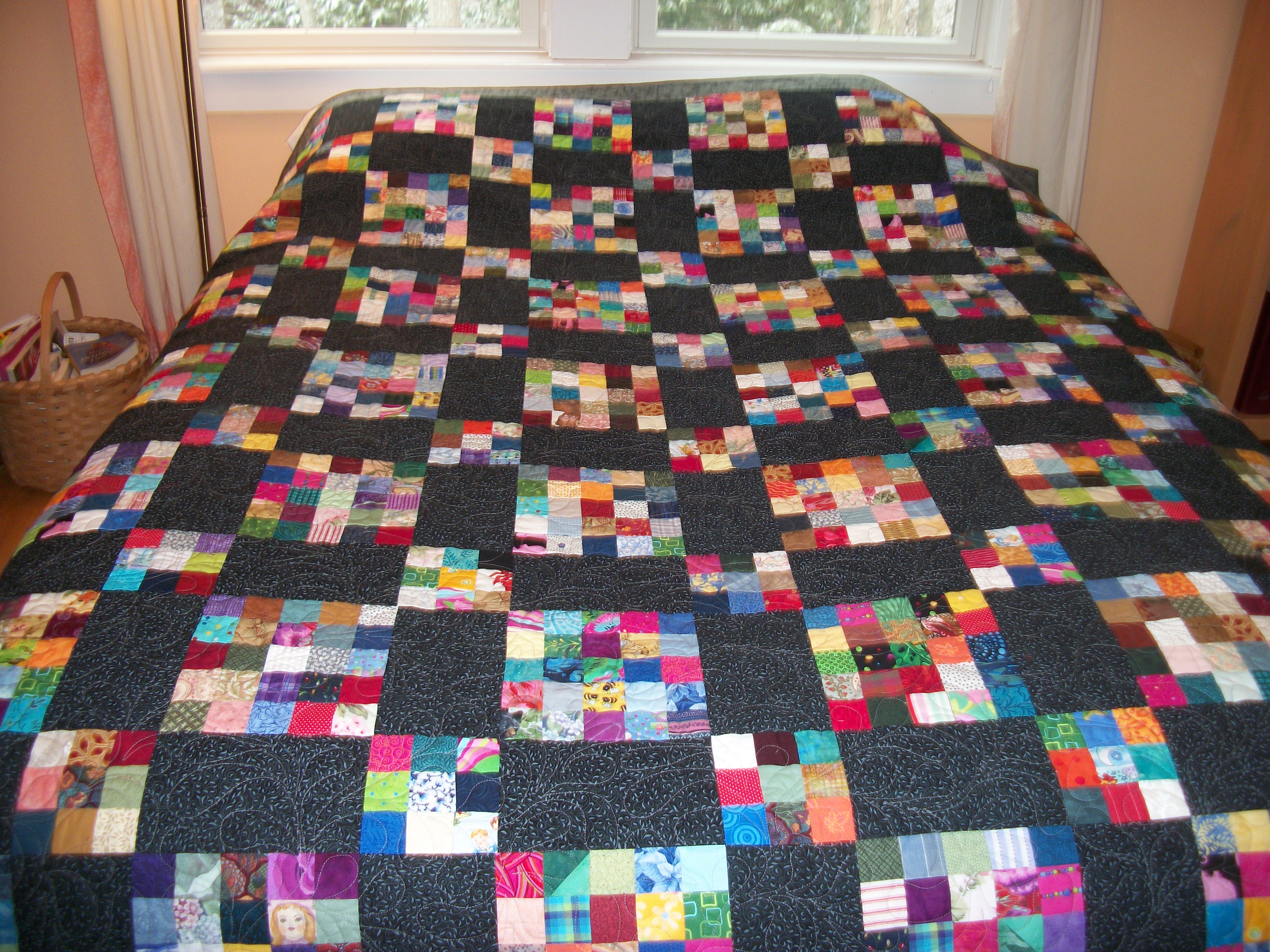
As I’ve been writing since early January, for over 10 years, when I finish a quilt I make myself cut up any leftover fabric pieces that are too small to fold and put into my stash.  I start with the largest square–up to 5 inches–and work down.  The smallest square I cut is two inches.  And, at the start of January, I had two and a-half bags of two-inch squares.

I had been seeing large blocks made from these small squares for some time–say a block of 25 (or 5 rows by 5 rows).   But, what color setting fabric to use?  I didn’t want to use a cream or white muslin.  That would be pretty, but too tame for me.  Then I saw a quilt in the December 2011 “American Patchwork and Quilting” by Miriam Kujac that used a soft black setting fabric and used, even, grey borders.  The small patches glowed with the soft black to set them off.  This quilt was a reproduction of an antique quilt that used a type of grey/black fabric called “Mourning” that was made from the 1800s on.  Kujac named her quilt “Mourning Glory” after that antique fabric.

Also, I liked the alternating rows of two different sized blocks Kujac used.

Here’s “Two Bits” at its beginning.  You can see some–but by no means all–of the other sacks of cut fabric.  There’s a huge bucket full of them off the end of my ironing board!  And, there are MANY more of the two-inch squares.  I think what’s in the pic is the contents of one bag.

Here’s the finished quilt.  The picture does not begin to do justice to this fabulous quilt!

I had a large piece of red (cranberries) fabric in my stash that was perfect for the backing:

I used a soft grey thread to quilt “Two Bits,” and a pantograph of feathers that were full of curves–to offset the straight lines of the quilt blocks.

Finally, here’s a picture of the grey borders and binding–all from my stash:

One of the fun–and sweet–things about using these squares is that I was–and am again now looking at these pictures–of all the other quilts I have worked on.  I deliberately placed blocks with faces–and there were a lot of faces of all sorts–directionally–so that they were all going the same way.  For those of you who have one of my quilts, look closely as you’re liable to see some fabric  you recognize.

“Two Bits” is now living at my sister’s house–Jamie  Philpott Howser–in Atlanta, Georgia.  She likes it too.

The leftover two-inch squares are mostly warm colors.   Hmmmmm.   Maybe a rich russet brown setting fabric???

Turkey Tracks: Delvino’s in Belfast

Turkey Tracks:  January 26, 2012

Delvino’s

Belfast, Maine

I didn’t know there was a new Italian restaurant in Belfast, Maine.  Neither did my book club whom I told late yesterday afternoon.  My lunch partner yesterday, the legendary long-arm quilter in our area, Joan Herrick, introduced me.  Delvino’s has been open for a year now.  Who knew?

Delvino’s is at 52 Main in Belfast.  For locals, it’s on lower Main, on the right as you go downhill to the water, near the inn, the kitchen store, and Coyote Moon.   The telephone number is 338-4565.  It’s open as follows:

Sunday 11-8:30 p.m.

Monday to Thursday 11:30-8:30 p.m.

Friday/Saturday 11:30-9 p.m.

Joan and I had a lovely lunch, complete with dessert and coffee.  All the food is fresh, homemade, and is quite good.  We shared bruchetta (I don’t think this is spelled right, but I’m in a hurry this morning) that came with lovely toasted baguette slices.  I had spinach and ham-stuffed ravioli with a roasted garlic cream sauce; Joan had gnocchi (ditto) in a cream pesto sauce.  Salad and nice bread came with the meal.  I had a flourless chocolate cake with raspberry sauce that was as rich as fudge.  And Joan had tiramisu that was as light as can be.  The coffee was great, and they even found me some honey with which to sweeten it.  The waitress was terrific, and we felt quite welcomed and spoiled.

The menu read really well–there were lots of non-pasta choices and a daily soup selection.

I highly recommend it.  I meant to take a picture, but it was—brrrr–cold with the wind off the water, and we rushed to the car afterwards.

Turkey Tracks: Ice Houses and An Eagle

Turkey Tracks:  January 26, 2012

Ice Houses and An Eagle

In deep winter, ice houses start appearing on our ponds.  Here’s Hosmer Pond, over by the Snow Bowl.  There are more ice houses on it than I remember in recent years.  What’s special about this picture, though, is the large lump to the right of the ice house in the middle of this picture.  It’s an eagle, who was eating something, probably some discarded bait.

We couldn’t quite believe it when we first passed.  My brain was saying “no, it’s some sort of big gull.”  I was driving, so I turned around and doubled back.  John got out of the car with his phone camera, and maybe he got better pictures.  I realized that I had my small camera in my purse (what good is a camera if it’s never with you?), so I held it out to him.  But, our presence began to spook the eagle, and it flew.  John tried to get those pics, but they didn’t come out.  The eagle’s white tail and huge wing span were spectacular up so close.

This snow has melted with our recent warm temps (50 degrees yesterday), so the whole pond is as shiny and smooth as glass–which the ice skaters love.

xxx

Turkey Tracks: Blue Hubbard Squash

Turkey Tracks:  January 23, 2012

Blue Hubbard Squash

I bought a Blue Hubbard squash in the late fall to roast for the winter.

Blue Hubbards are HUGE.  And they are legendary for being really, really delicious.

I tried to grow them last year, but it just wasn’t a good squash year in my garden.  I’ve already ordered the seeds to try again next year.

I put the squash next to other items in the kitchen so you could tell how big it it.  John had to take it to the garage and slice it into two parts with a saw.  The seeds are also supposed to be terrific, and I love to roast squash and pumpkin seeds, but I didn’t this time around.  Too much going on with everyone here for Christmas.  A missed opportunity I now regret.

Here it is cut in half.  It has beautifully orange flesh.

I put each half cut side down in a large pan coated lightly with coconut oil or olive oil and roasted about an hour.  You can tell from the smell when they are done.  And, you can check for sure by piercing with a sharp knife.

I scooped out the flesh and froze it in serving sizes for us.  And, of course we ate it that night.  I put it in a pot, heated it, mashed it, and added some cream, some butter, some maple syrup, some salt, and some cinnamon and nutmeg.  Delicious!

Add some eggs, and you’d have a great pie filling.

xxx