*I wrote this post last week, and this week has been so busy. I’m at the 11-month occupation of my new home, and the builder sends in various subs to fix things that got missed in the first inspection. Sometimes you don’t see things at first, but you do after living in a new home for almost a year. And there are things that range from the simple to the more problematic that need fixing or adjusting.
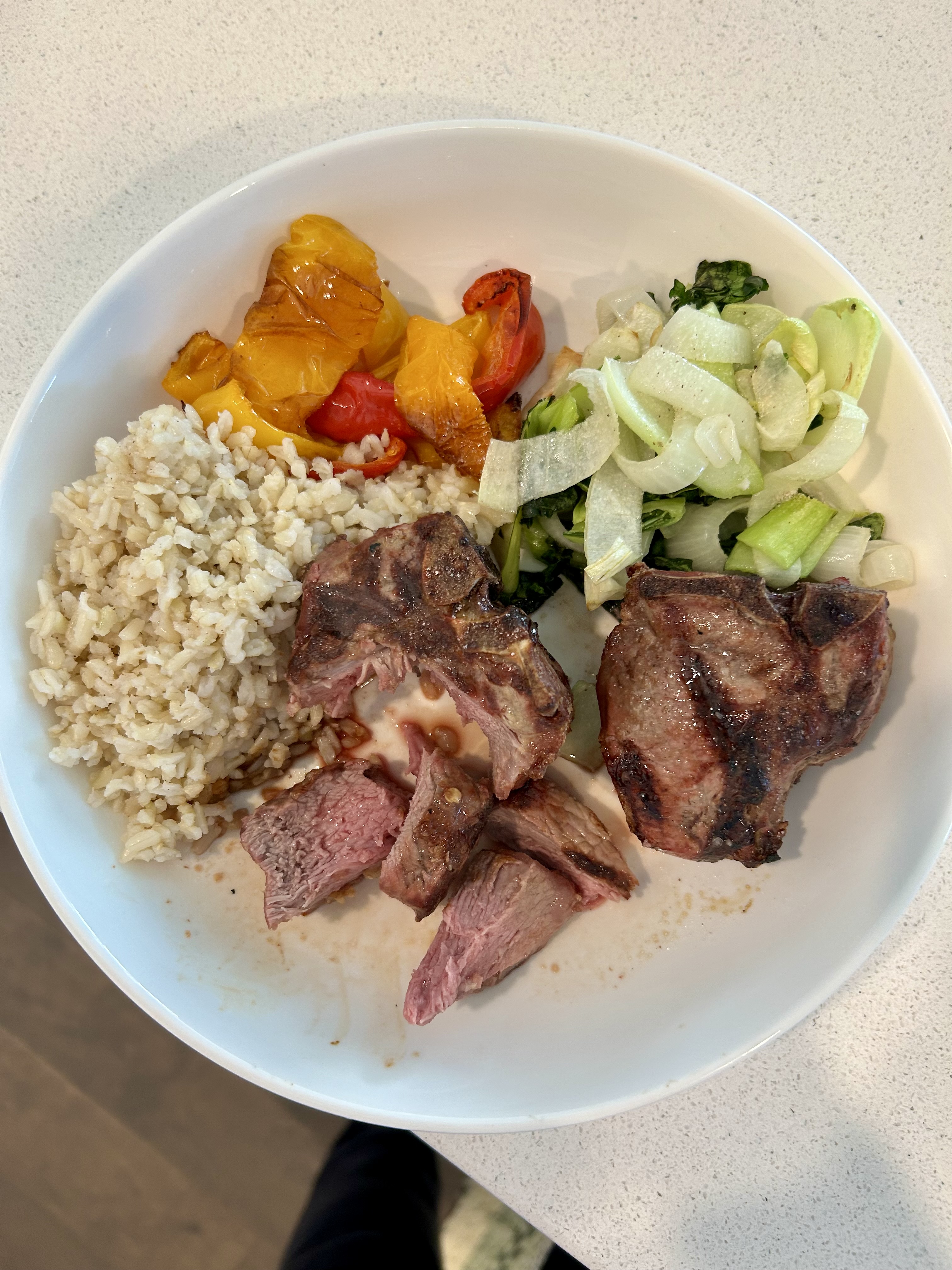
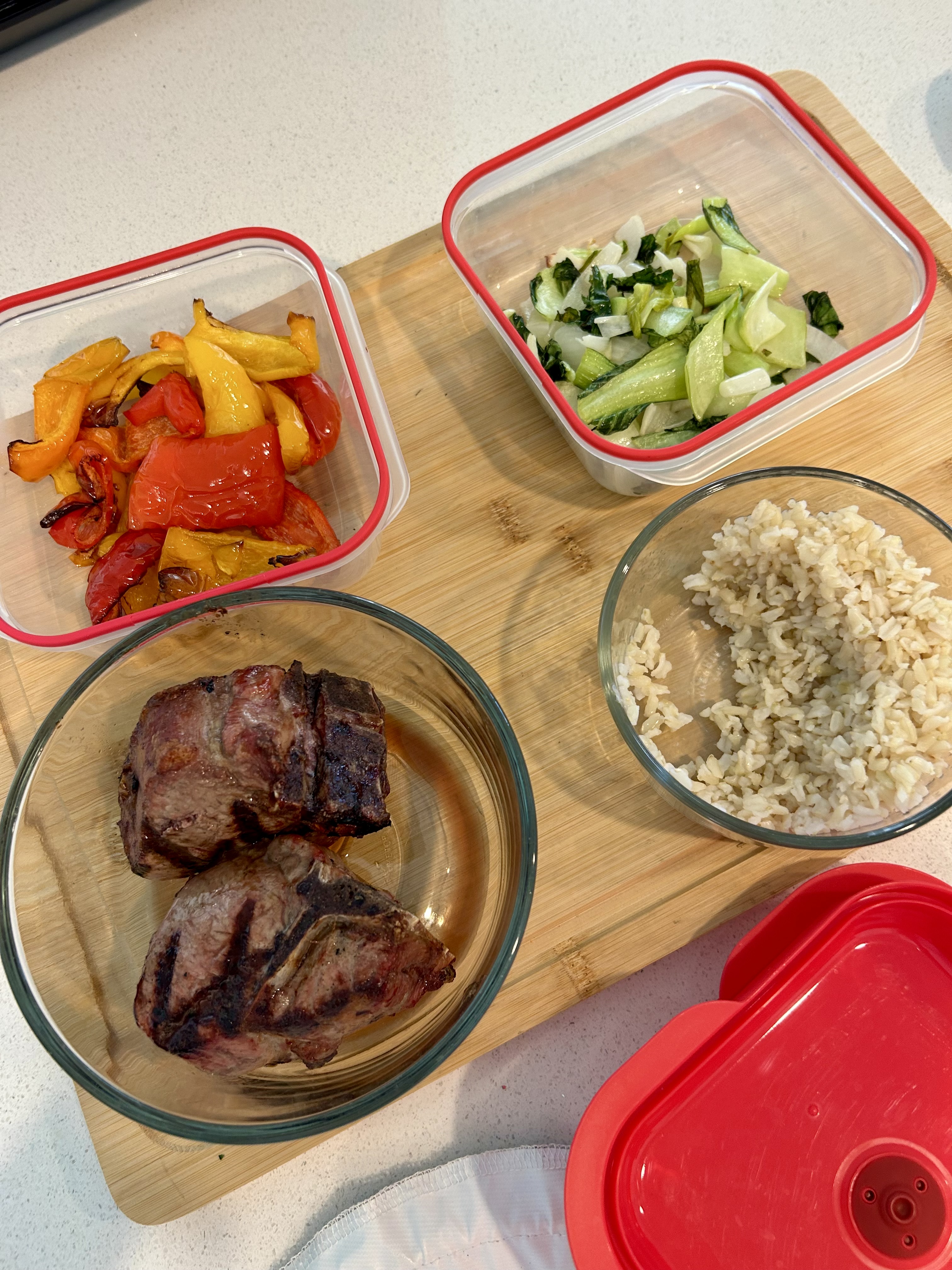
Grilled lamb chops, baby bok chop with onion and sweet peppers cooked in the air fryer, and rice I froze and defrosted.
Leftovers!
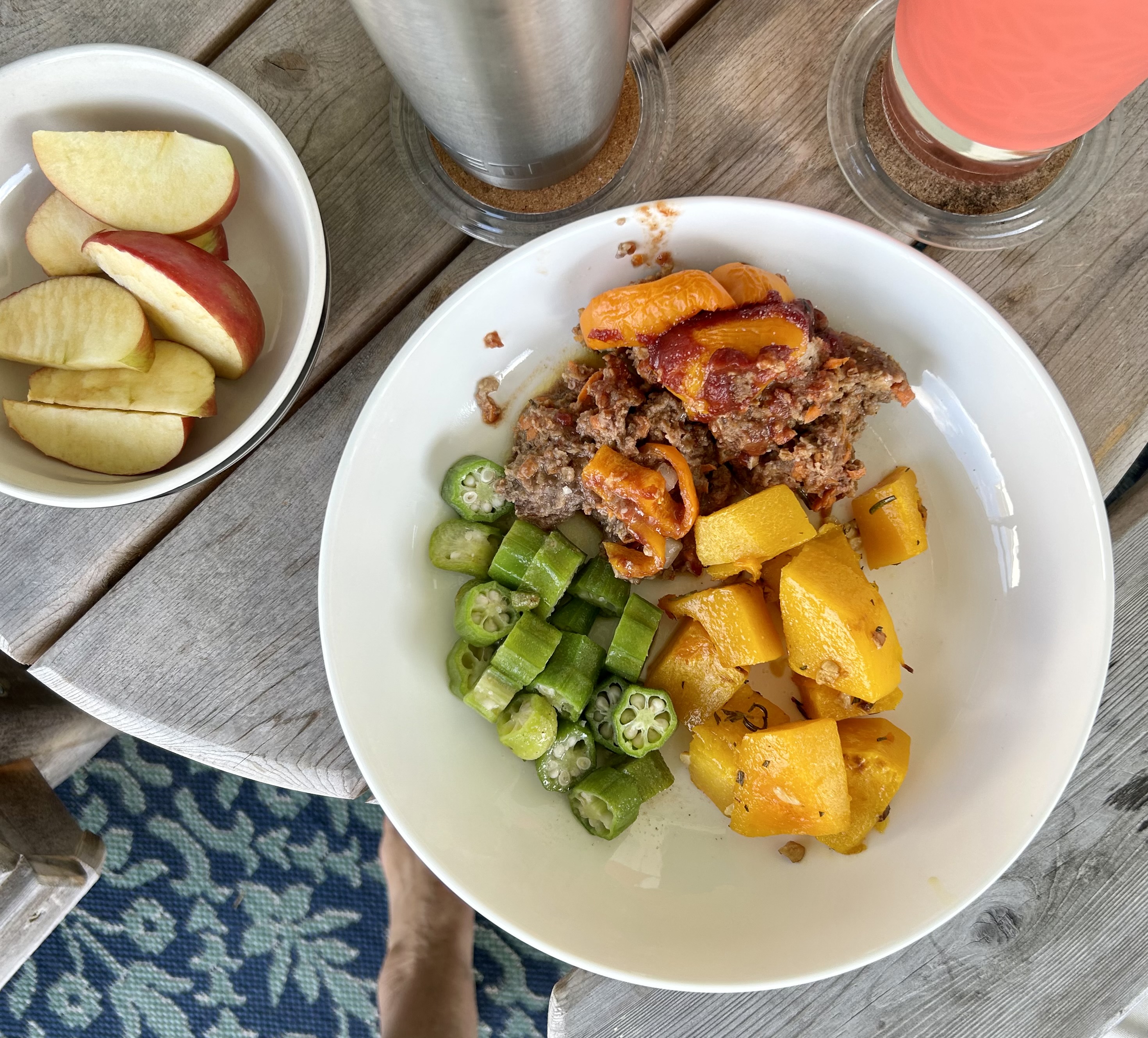
Meatloaf, okra with butter, and roasted butternut squash with fresh garlic and rosemary dressed with olive oil.
Here’s the herb garden these days. The tall plat on the right is lavender, and there is some chive between the sage and the lavender. The oregano is going wild, so I trimmed it back and am drying those stems in the kitchen. When dried, I’ll strip off the stems and save the leaves for winter use.
So…
That butternut squash…
Normally roasted it would have a dense candied sweetness to combine with the garlic, rosemary, and olive oil. I have always looked forward to this dish in the fall.
But this squash was absolutely tasteless. Likely it was picked green and had not had time yet to develop its sugars. It’s hard to tell before one cuts into one of these winter squashes. Maybe if I had held it longer it would have “ripened.” This squash is a good keeper. But I’ll pay more attention next time. An over-ripe one is too mushy. So, I guess it is a bit of a crap shoot.
And it was the second one I’ve seen in my flowering plants in the past week.
I was surprised as I would have thought the Monarchs would have headed west before they get to the South Carolina coast.
But as it turns out that there is a very, very interesting thing going on with the Monarchs in South Carolina: some here on the coast stay here all year, which is a conclusion made after years of study. Here is a quote from the article linked below from the South Carolina Division of Natural Resources:
“The recently published research indicates that monarch butterflies live year-round in South Carolina, relying on swamps in spring, summer and fall and sea islands in the winter. While these monarchs rely heavily on aquatic milkweed (Asclepias perennis) as a host plant for their eggs and caterpillars, they were also found to use swallow-wort (Pattalias palustre) – a viney relative of milkweed that grows near salt marshes and was previously unrecognized as an important host plant for monarchs.
“This research adds another layer of nuance to the fascinating story of the monarch butterfly,” said SCDNR associate marine scientist and first author Dr. Michael Kendrick.”
The Patchwork Gals met last Wednesday, and as always, the “Show and Tell” was awesome. The turnout for this meeting is strong, about 25-30 very talented women.
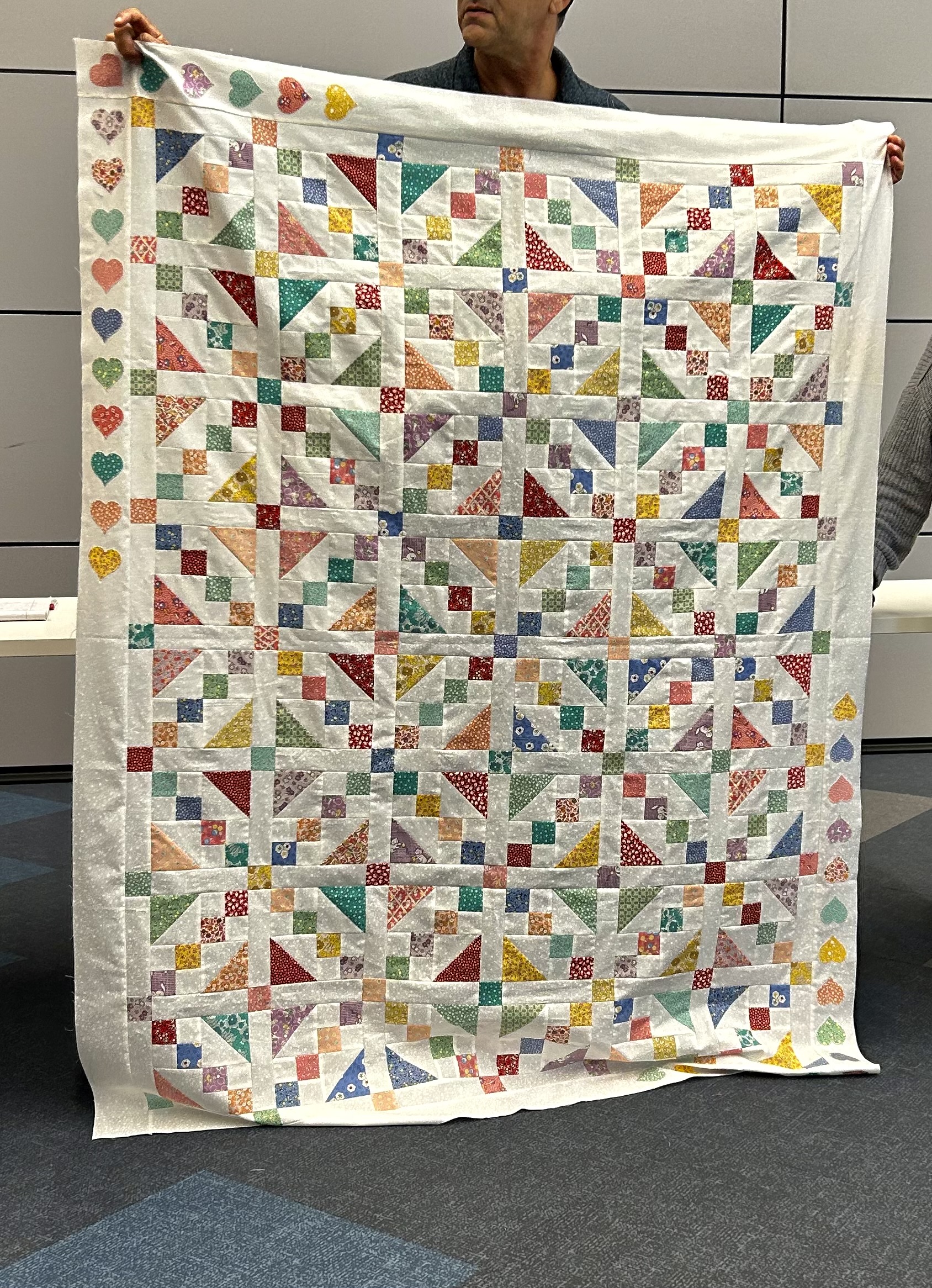
This group had been working on a “mystery” quilt for some months, and during this meeting, they started sharing. Each person made the quilt differently, of course. I could not get ALL of the versions, and there will be more next month, but I wanted to share these three. But know that every single quilt shown was so pretty.
I really loved the scrappy nature of this version. Of course, I love green, but even the sashing was scrappy.
This 2-color version in blue and white is dramatic and graphic. This version took the 4-patch into the outside borders, which extended the line of squares, which I very much liked.
This one is made of 1930 reproduction fabrics–and next on my list is to tackle a collection of those fabrics which has been residing in my stash for nearly 20 years. I had thought to make another churn dash quilt, but I am drawn to this type of scrappy “Jacobs Ladder” form. Maybe I’ll do this type of quilt, though it would mean separating the various 1930s prints. Who knows? I may also look to the Modern Quilt Society patterns for ideas for my collection of 1930s fabrics.
After the meeting, one of the women told me about the Charleston Modern Quilt Guild, which will meet next Tuesday night. This group of women is separate from Cobblestone and might belong to the Modern Quilt Guild organization. This group also sews together monthly on a Saturday. I’m going Tuesday night, for sure.
THE TUNIC
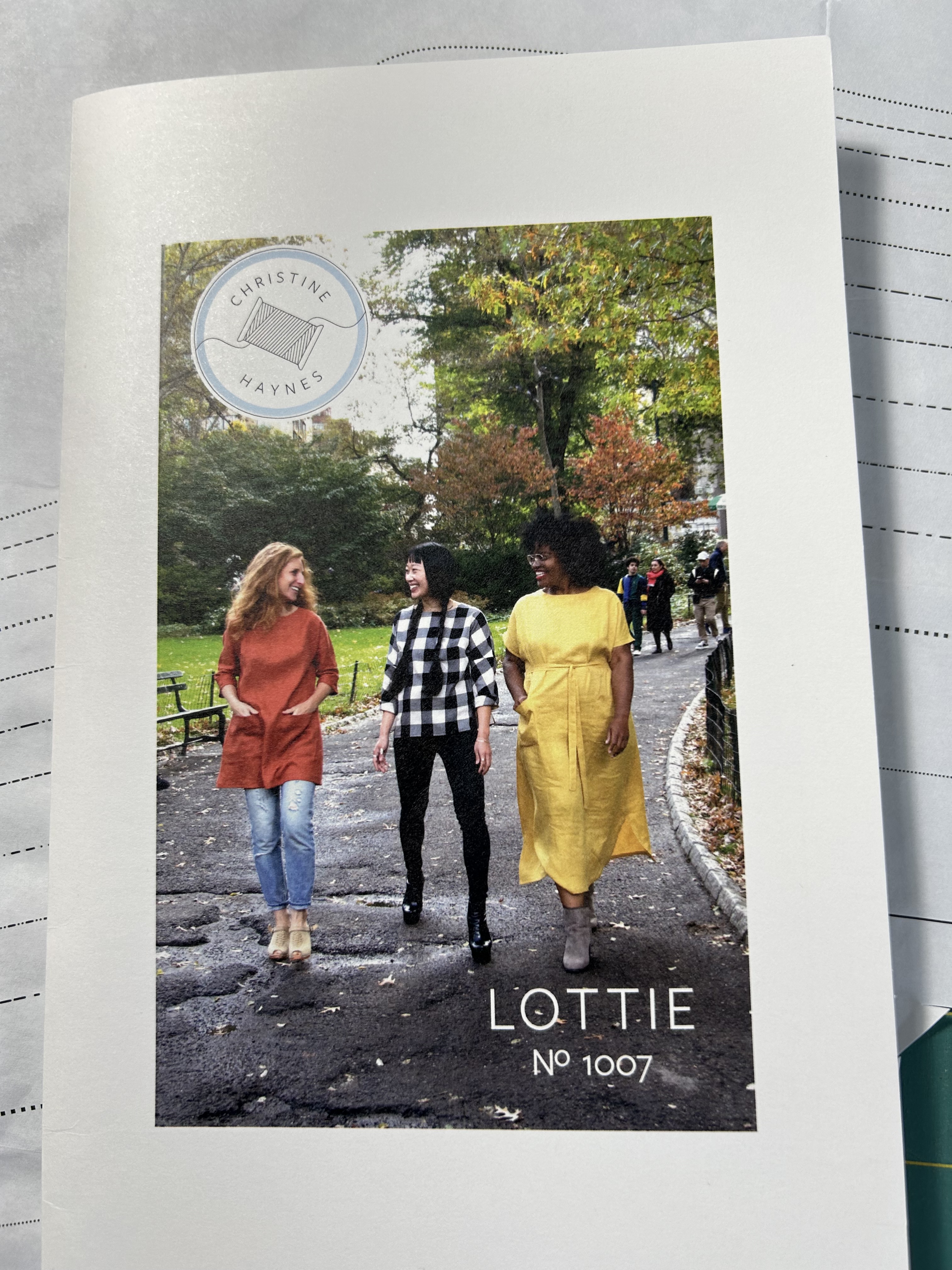
I’ve wanted to make this tunic for some time now. I acquired this pattern back in Maine, and some months back I got some cotton fabric to try it out. I wanted a longer tunic that covered my bum to wear over some luscious leggings that Tami gave me for Mother’s Day. They are a soft aqua color.
I had to order tracing paper as I could not find any locally. And last week I traced off the pattern and cut out the tunic.
It’s so, so cute! And it fits! I like the curved hem. I will layer this top with a t-shirt given my old-lady droopy skin arms.
Note that the back is longer than the front–and it curves very nicely over my bum.
Here’s the back.
And here it is with the color of the leggings.
Someone with better legs than I have now could wear this tunic over shorts.
Also, the cotton fabric above works great for the tunic, but I also think a lighter, more “drapey” fabric would work even better, like a lawn or a double gauze. And I’m wondering about an Essex linen, which is thicker but which drapes really well. Note that this pattern was “fiddly” to make, given the construction of the bodice piece and the side pockets. I liked a lot the easy construction of the bias binding armholes, however. It’s perhaps not a good pattern for novice garment makers.
I ordered this fabric in warmer weather, and it now feels too summery for our colder weather. So I ordered a darker color of flannel that I can wear with the leggings maybe. But I’ll be trying out a different pattern–and yesterday I traced it out and am ready to go when the fabric comes on Monday. I can always wear this other flannel top with my jeans or knit pants if I don’t like it with the aqua leggings.
Here’s the tunic I’ll make this next week–it’s the orange one in this picture.
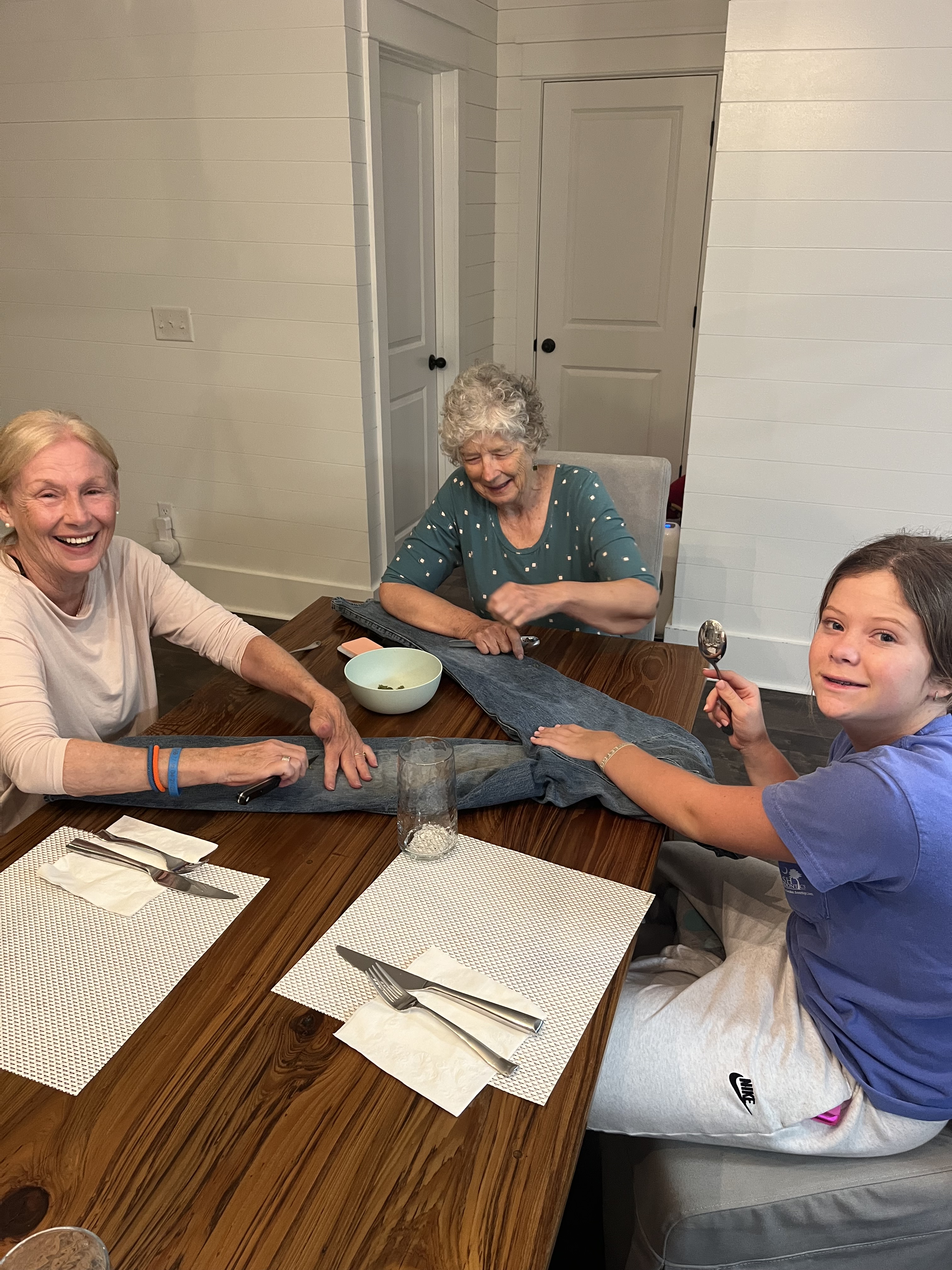
Last Sunday we gathered at Mike and Tami’s to celebrate Debbie’s birthday (Tami’s mother). Mike and Tami had been hard at work with various garden projects, which resulted in this kind of “beggar’s lice” sticking to their pants. And, to the dogs, which took some days to rectify once the seeds got wound up with the dogs’ hair.
“Beggar’s Lice” are seeds that a “weed” plant produces. The seeds have POWERFUL gripping power if one brushes up next to the host plant. I grew up with the name “Beggar’s Lice,” but there are other regional names for this seed. And, several plant species that produce this kind of seed.
While Michael was organizing our dinner, we women gathered to try to get the “lice” off of the various clothing items. Tami had already spent about three hours the night before trying to get the lice off a pair of her pants. (Debbie is on the left and granddaughter Mina, on the right.). We tried the flat edge of knives, spoons, and a carrot peeler to scrape off the seeds. It was easier to get them off the jeans than the knit-type fabric in the above picture.
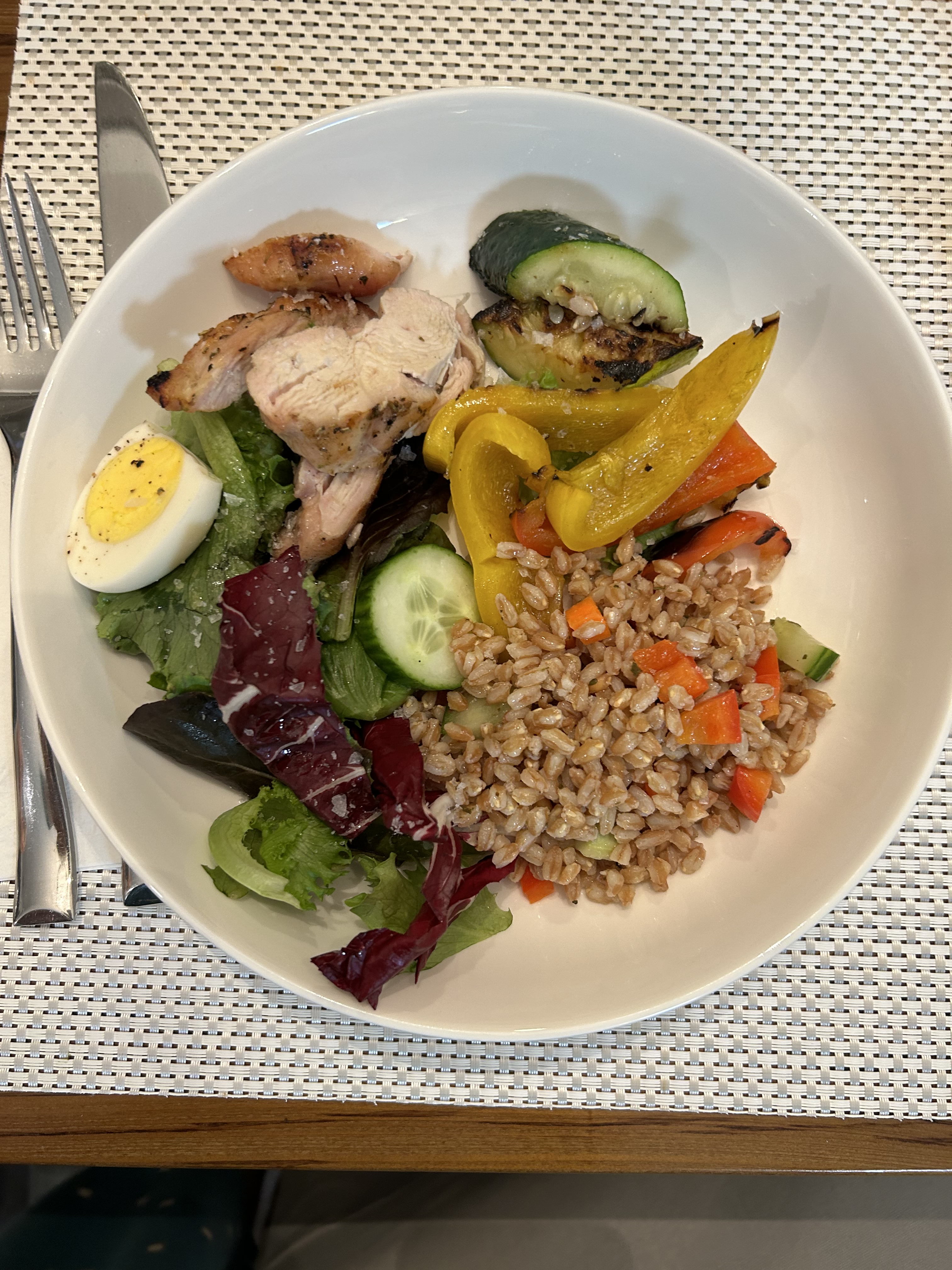
While we “persevered,” Mike made us a beautiful dinner. Here’s my bowl–which is missing the beautiful sliced heritage tomatoes dressed with minced herbs, avocados, and fresh mozzarella balls. Mike grilled the chicken breasts, zucchini, and sweet peppers. The grain salad is barley and contains more diced veggies. It was dressed with olive oil. (You could add an acid, like lemon juice or vinegar.) Mike’s salads are always fun: this one had radicchio included, which I love. And the hard boiled eggs are a colorful and nice inclusion.
I can say that we were “eating the rainbow” with this meal.
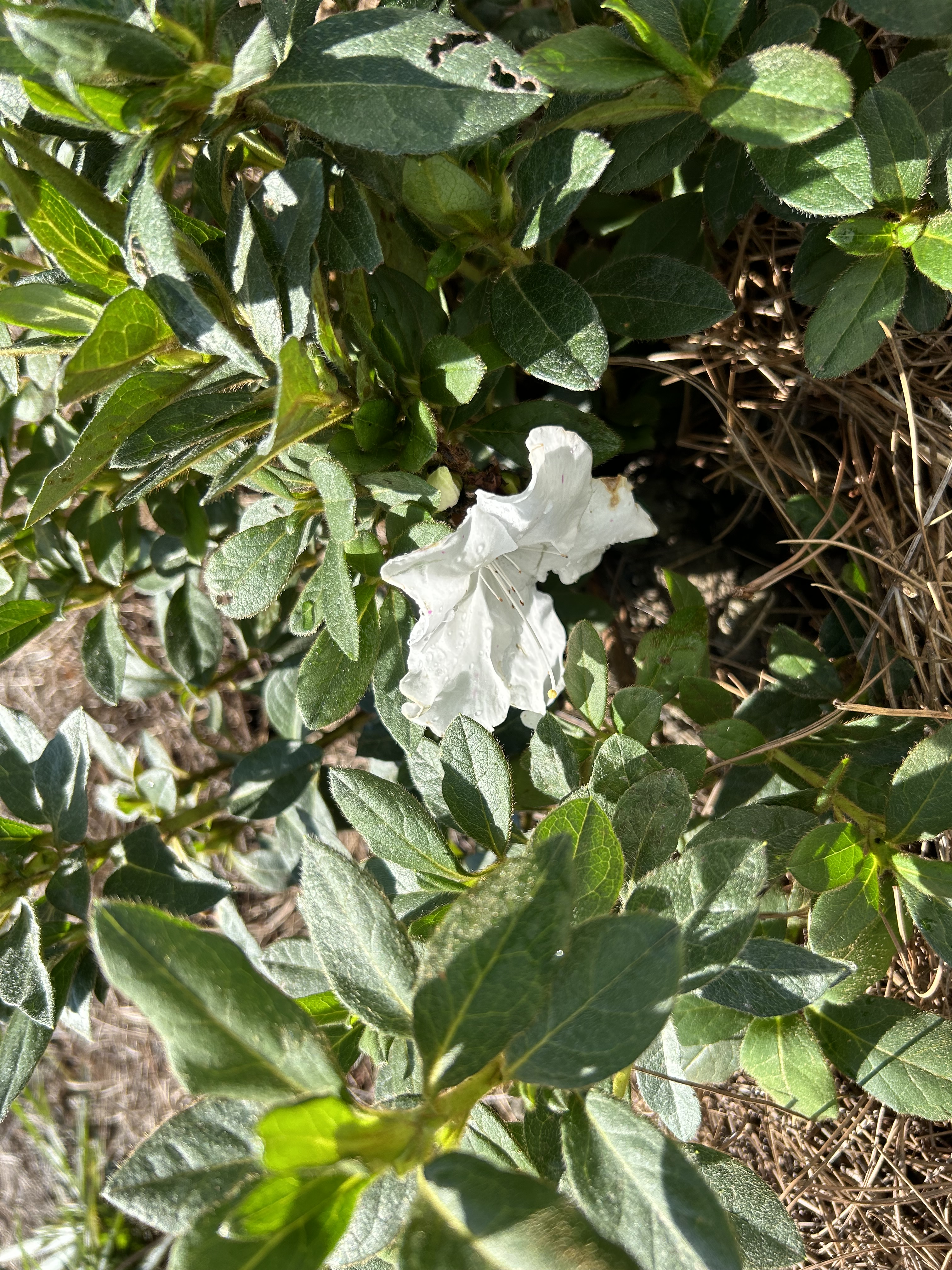
The five white azaleas out front have struggled with how the sun hits them all summer. They are badly sunburned–and now you can see them trying to “green up” their leaves as the angle and the intensity of the sun has moved into fall/winter coolness. These plants were a bad choice by the builder’s landscape sub, given the intensity of the summer sun and no shade until about 3 pm.
Today I got help from Andres Hernandez with moving and replacing these plants–which was a great relief as I did not want to dig and augment with sand and compost another five holes in the clay.
The azaleas will be much happier on this shady side of the house–and the Asiatic Jasmine will continue to grow up around them.
We replaced these azaleas with five white Encore azaleas–which are a cross between rhododendrons and azaleas, are much sturdier, and will bloom until it gets too cold.
Here’s one with a bloom intact:
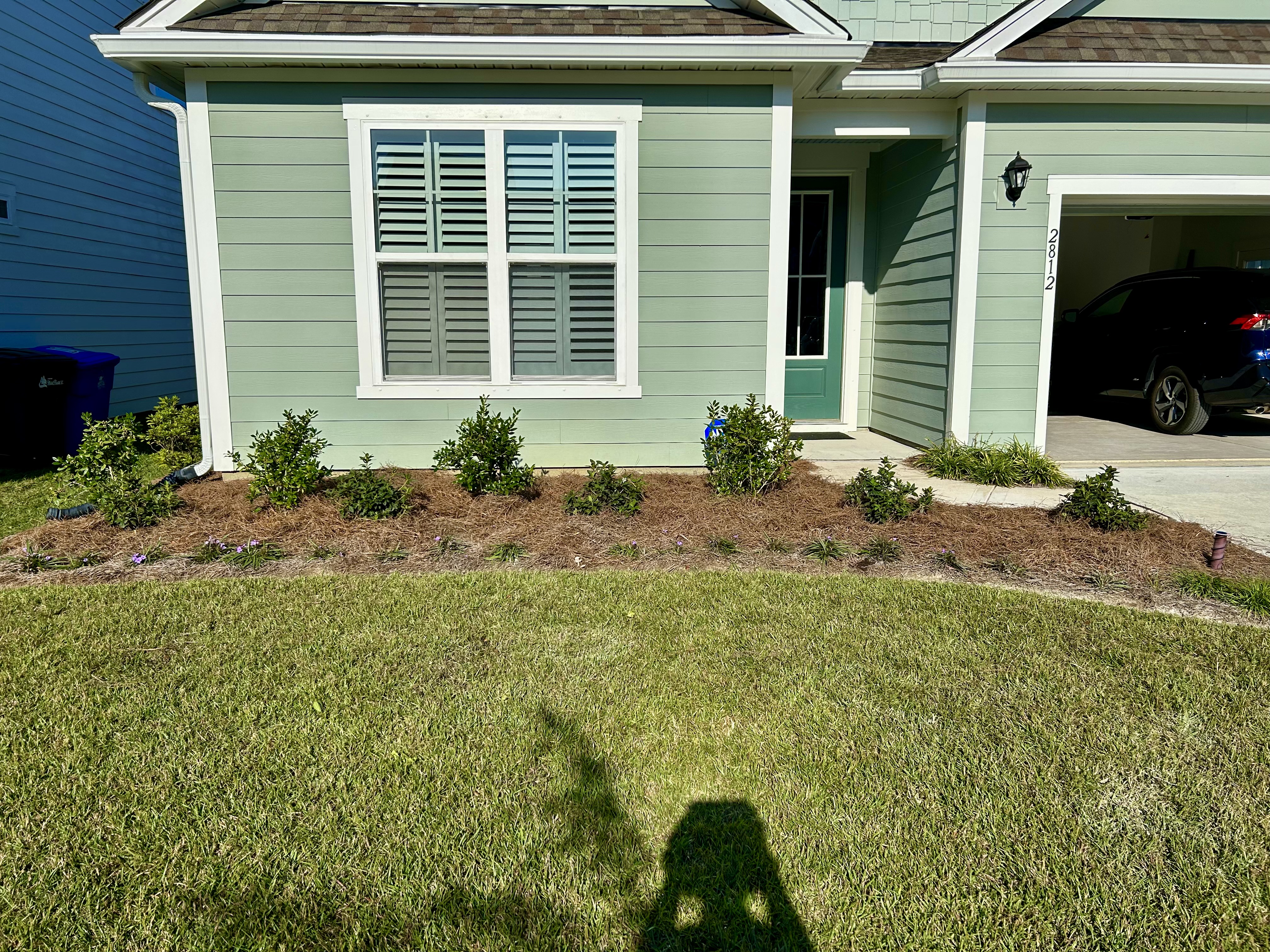
Here’s the front bed now. These new plants will get about 4 feet by 4 feet. We moved two of them in the middle forward to give the Chinese Holly more room, but the Encores will form a kind of understory to the hollies. BUT, I do not want this front bed to get too tall for the windows behind it.
It was a really nice morning–and I watered while Andres rehomed and planted. So now, it is about to RAIN. LOL, of course it is.
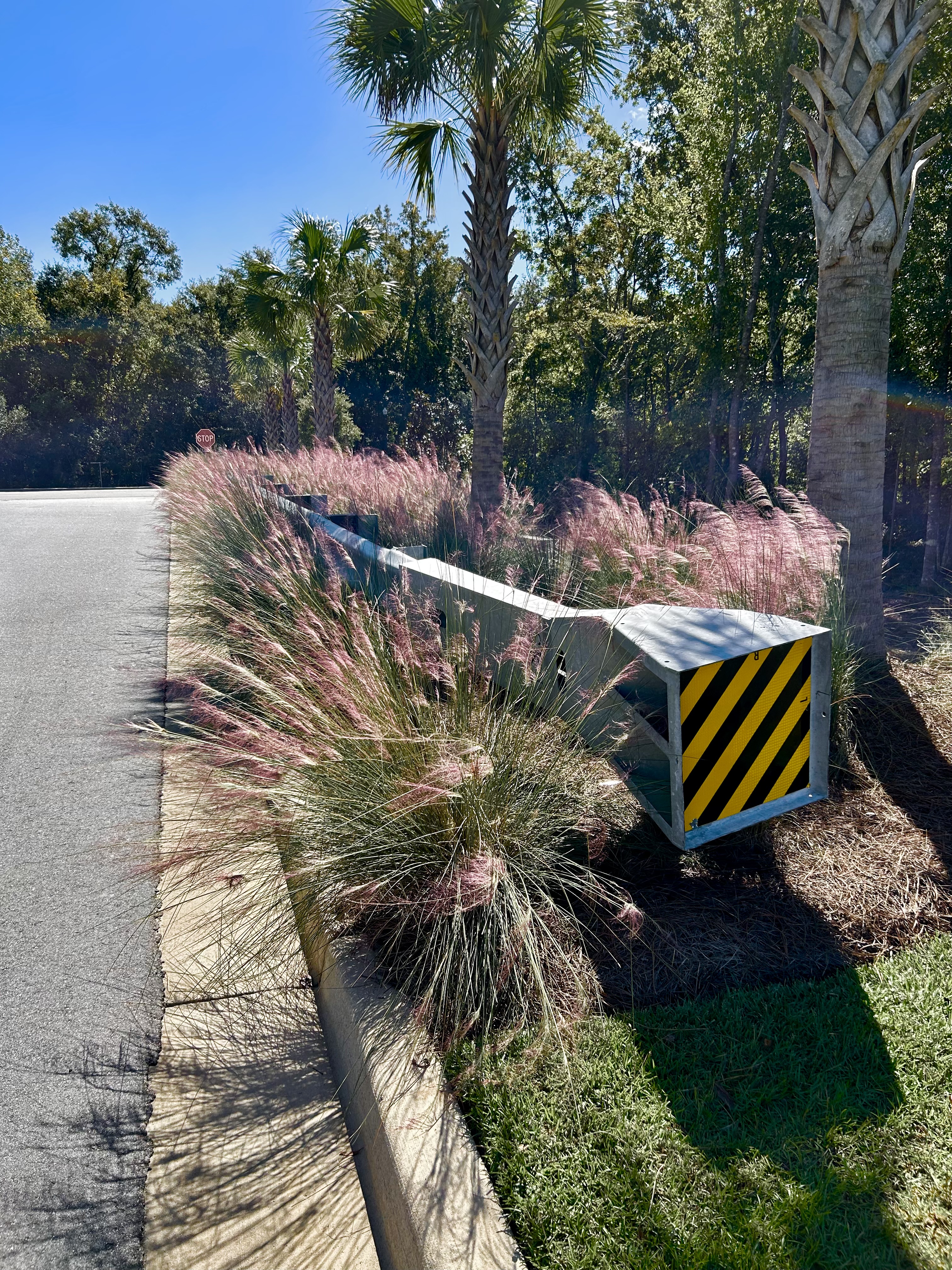
It is Muhly Grass, and I see it planted everywhere. It’s around homes, and it’s in islands in the middle of roads, and it’s in shopping area parking lots. It’s everywhere in this region. And it is a “sweetgrass” plant.
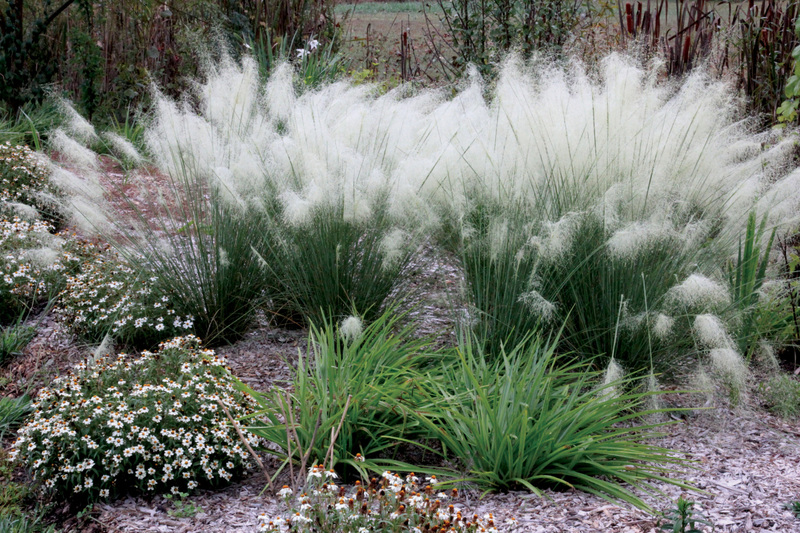
It also comes in a white version that I saw just the other day. Here is the pink variety along the entrance to my development.
When the sun catches the blooms, they glow. The white ones literally look like spot lights swaying in the wind.
All of these blooming grasses have delighted me over the years, and I had other blooming grasses, not the Muhly, in my Virginia and Maine gardens. Muhly “sweetgrass” is new to me.
The road outside of my development has palms and Muhly grass planted. But this Muhly grass won’t be blooming this year, and that’s because it’s being “harvested” by local people in the dark of the night for “sweetgrass basket” making, which is a big market here. The harvesters pick stems from the middle of a Muhly grass, leaving the outside stems intact.
Here is a link to more Muhly grass information from Clemson University, which has a big horticultural division.
I was down to a few choices: the leftover roast chicken, a small Delicata squash, a small zucchini, a few sweet peppers, a small head of radicchio, and a handful of the leftover roasted broccoli rabe.
Here’s what evolved…
…a chicken salad made while the air fryer cooked zucchini rounds, sweet peppers, and delicata squash rings. The chicken salad had the last of the broccoli rabe cut into small pieces, some diced onion and grated carrot, some dried herbs, and some homemade mayo. I put the chicken salad over some radicchio leaves.
Delicata squash are known for their candy sweetness. I cut mine in half, seeded it, then cut it into narrow rings. I left the skin on, but this squash was a bit old, so the skin was fairly tough, but it was easy to slide off the sweet, sweet meat. Mainly, I just ate the skin–good fiber, you know. Delicatas are not really good “keeper” squashes, so use them now if you can get them where you live.
Last night’s supper was a reprise of dinner. And today, for my noon dinner, I had these various dishes alongside some fresh asparagus quick cooked in the microwave and dabbed with some of the mayo. I sat on the porch and thoroughly enjoyed this meal.
I have enough of the salad to make a supper–alongside the asparagus. I’ll enjoy a bowl of fresh berries with a tiny bit of maple syrup.
And now I’m going upstairs to trace out the tunic pattern and, hopefully, to get it cut out.
Tomorrow the Patchwork Gals meet, and I’m looking forward to that meeting.
The online class I’m taking with designer Tara Faughnan kicked off October 1st with her improv block “Zipper.”
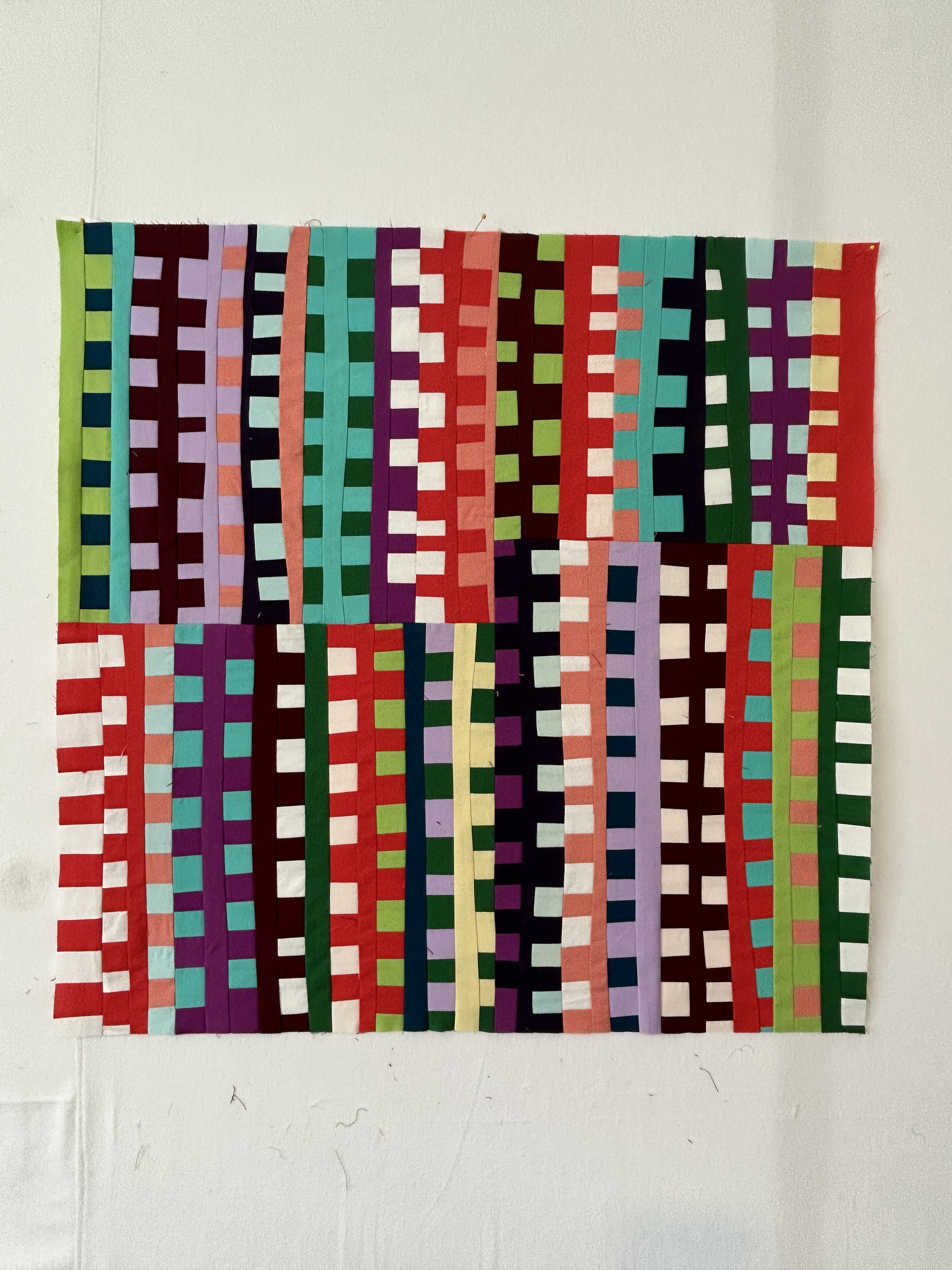
I immediately went down a rabbit hole, and here’s the outcome of many hours and some days of playing with fabric and “zipper” combinations.
Tara gave us a palette, but I wanted to pull my own palette, having had fun with that exercise with the “Summer Camp” mystery quilt. The guidance on the mystery palette was build your palette and trust it. I did add white and one more pale color along the way–as I wanted a more “sparkly” look. And, a deep mustard, but never used it. I found I had enough dark colors already for this project.
I am going to save this palette for November’s block–just in case I want to use this current piece as part of a quilt. It’s likely, however, to be a stand-alone little wallhanging–it’s about 27 inches wide–and the project may need some sliver trimming to make sure it is square–for which I’ll use a 24-inch ruler. I don’t really have a need for a big pillow, and I’d like to keep this project…around here. I’ll probably hang it somewhere upstairs in my studio.
If you want to see Tara’s beautiful Zipper projects, check them out on her Instagram page. It’s well worth the time. Meanwhile, the most astonishing blocks are showing up in our online community for this project. People are so, so creative.
Saturday afternoon, DIL Tami and her mother Debbie visited the Medway Community Garden in Charleston. I was invited and couldn’t go, so Tami took pictures and the little video below of this pollinator garden.
A reminder, Tami is the Director and Co-Founder of The Bee Cause. She texted me with this message: “A beautiful afternoon at Medway Community Garden. The pollinators were plentiful in this beautiful pollinator habitat donated by The Bee Cause and installed by Charleston Parks Conservancy. We also got to meet and chat with the author of The Ark of Taste.” There was also a potluck supper.
A video of the garden.
And the new book:
From a review on the Slow Food USA web site: “The Ark of Taste is a living catalog of our food heritage and a movement to preserve gastronomic treasures passed down for generations—some rare, some endangered, all delicious. Created by Slow Food, the Ark illuminates the history, identity and taste of these unique food products, many of which were revived or saved from extinction by their Slow Food champions.”
And: “The Ark of Taste book features the stories of how some of these American products almost didn’t reach our table, with recipes from Slow Food chefs and profiles of growers from around the country.”
As you know from this blog, I have planted pollinator plants in my new garden. And Tami has been working hard in her garden in recent days. She is developing a space where she would like to plant a pollinator garden–and that space is near her bee hive.
On a very happy note, Tami recently harvested some honey from that hive, and she generously gave me 12 jars of that beautiful honey–which I am busily lapping up.
The dried blooms are from the Panicle Hydrangea “Limelight.” In Maine, these big blooms would turn a gorgeous deep red color; here with the heat, they just turn brown. I clipped these blooms when they were just starting to show flecks of red in the petals, but before they started to turn brown. I put them in this vase with no water and let them further dry out inside. They will hold their color through most of the winter.
Drying hydrangea blooms is tricky. I’ve found it best to wait until they are starting to dry on the plant before clipping them. And even then, they might shrivel up once inside.
I took the above pic and the little video below from inside the house. I love the way this plant moves in the wind. It was “quiet” all summer, and then, overnight, it burst into bloom, and it has been blooming for weeks now.
AND I’m in love with the new air fryer.
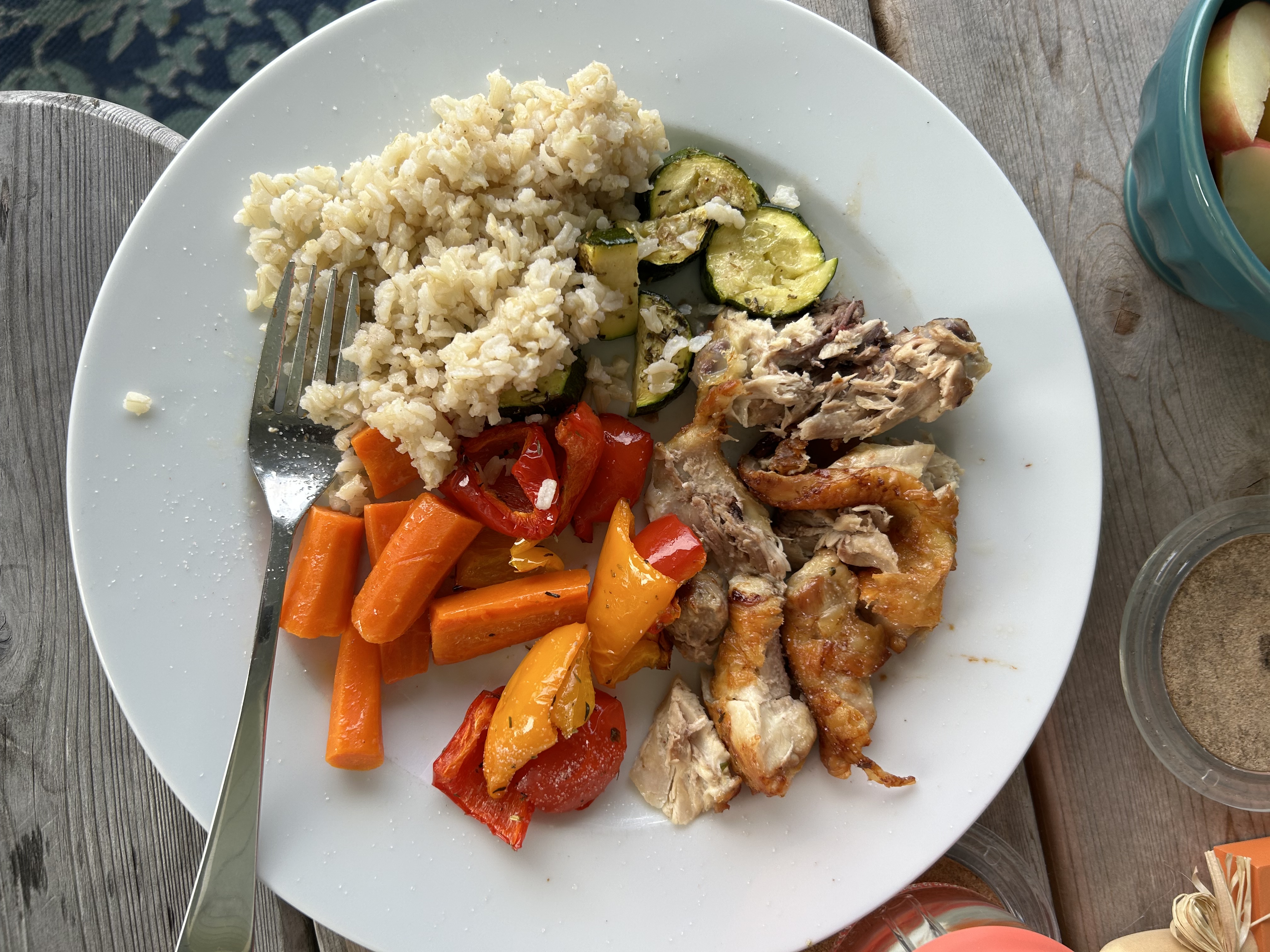
Look at the gorgeous brown, crisp skin on the chicken thighs below. And on the roasted zucchini squash and roasted sweet peppers. The chicken meat is so juicy and tender too.
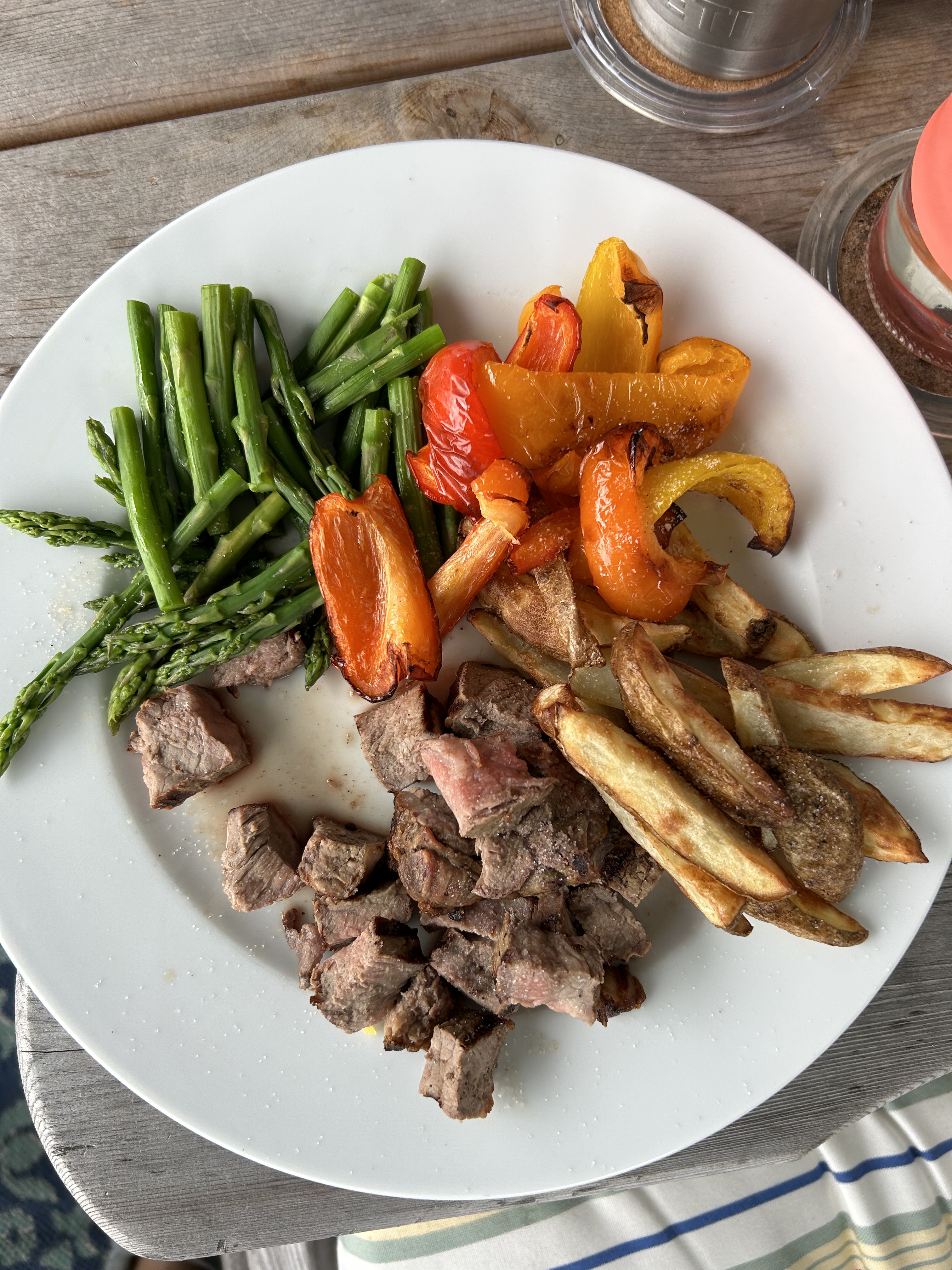
And look at the 15-minute, or less, French fries with their skins left on. Plus, more roasted peppers. That’s leftover grilled steak and asparagus cooked in the microwave. I only use a very tiny bit of soft duck fat to coat the fries.
AND, I’m in love with bowl suppers.
These bowls are very inexpensive on Amazon and are just the right size. The gentle slope of the bowl sides keeps thing INSIDE the bowl. As I often eat a meal on the porch or in the little tv room (at night), the sloped bowl is a good choice.
This meal was cooked in the new oven: roasted whole chicken, roasted sweet potatoes, roasted broccoli rabe, carrots in butter (stove top), warmed leftover asparagus and red peppers, and for dessert, raw apple and an espresso. It’s a feast–with great leftovers so I have time to do other things.
When I roast sweet potatoes, I cook several, smash them with butter, and freeze portions for future meals. I do the same for my sprouted brown rice: I cook the whole bag at one time.
I filter my water and use a glass and a glass straw. I have a glass for the car as well. I clean these glasses and straws daily. After researching when I moved here, I use “Clearly Filtered” to filter my water.
I have many things I am “in love” with, for sure. I’m feeling lucky this morning, and I’m grateful.














 Louisa Enright's Blog