A Crape Myrtle

I’ve been worried about this tree in my front yard–a willow oak planted by the developer.

These trees are hardy here, yes. But they will get HUGE and will dwarf the house, the front yard, the street and the neighborhood. Plus the roots that develop get huge and thick and can spread far and wide–disrupting…the street, the driveway, the house foundation (?), and so on. I am hearing some real horror stories.

So, I contacted Estaben Hernandez (EstebanHernandez Luxury Painting). Estaben is also a carpenter, and his brother has a landscape business. These two guys are a part of a network of young men who are hard and willing workers. Estaben made taking out the willow oak and replacing it with a gorgeous Crape Myrtle an easy event. And I am so grateful. He and his guys chose a beautiful tree for me. (I wanted a watermelon pink color.) And the willow oak went to one of the guy’s brother’s house, where there was ample room for it.

I made a trip to Loews and got new pine straw for these two beds and put it down myself. The pine straw is light to move and easy to put down.

Now, all I have to do is pay attention to how much water this new tree is getting. And I already do that with the grass and the beds I have planted. (The roses are blooming like crazy again and are so cheerful. The flowers are smaller, but that’s due to the heat.)

I find myself following the afternoon thunderstorm possibilities–especially in the strong heat we have had recently. (It was 102 on my back porch one afternoon last week.) You would think this storm would have provided some good rain. Well, it did for some west of me. For sure. We didn’t get one drop out of these scary clouds.

But we did get a good rain a day Saturday evening. So I’m good on the watering for one more day. I usually water early evening, so the plants can take all the water in without the sun drying everything out too fast. The night temps are in the 80s, so leaves don’t stay wet long. Plus, the extreme heat would fry a plant’s leaves that were wet if I watered during the day. Early morning watering might be ok, but is not as ideal as early evening watering.

Today it is a bit cooler. High 80s and into the 90s mid to late afternoon. It is late July in the tropics–and August is coming. My house is cool–I run a dehumidifier upstairs in the afternoons–and floor fans on low to keep the air moving–and that helps a lot. High humidity makes everything feel hotter.

Poaching Eggs in Water…Is Easy

And they result is that the eggs are so tender and velvety–so much better than the old poaching pans with which I grew up.

You need a regular, pot of water that you bring to a SIMMER ONLY. More than simmer makes the egg white come away from the egg. There should be no bubbles on the surface of the water. Some use a wide flat pan, especially with more than two eggs. The water has to be deep enough, so a wide flat pan might need a cover, with the heat turned off. (See the video below.)

And you need a utensil with holes to pick up the egg when it’s ready to your satisfaction. A flat spatula works well too.

Break your egg into a glass or a ramekin. Ramekins are shallower than this glass, but I just grabbed what was near. Use only one egg per glass/ramekin and don’t cook more than 4 at a time. You can reuse the same simmering water if you want more eggs.

Many add a teaspoon of WHITE vinegar to the water as it helps the whites stay put. I often don’t, but after looking at the video below, I’ll try the vinegar addition again.

Slide the egg gently, gently into the water. The video below uses a cover and a timer to cook the egg to soft boil–and turns off the heat. I just watch the egg so I can tell when it is done to the consistency I like. I can also spoon water over the top GENTLY if the top needs more heat. This pot is smaller; I would use a bigger pot for more eggs.

When done (either decided by eye or a covered pan with the heat turned off and a timer as in the video below), remove each egg gently. I like soft eggs with golden yolks that will run out on my salad. But harder boiled are lovely too.

I needed some protein for this supper salad, so the poached eggs were perfect. And, delicious.

A bit of practice makes perfect.

And this video is excellent to get you started.

A Little Cooking Goes a Long Way

And, this bit of easy cooking provided the bulk of two days of meals–given that I eat two meals a day: dinner at noon and something fairly light for supper at night.

Yesterday I wanted fish–which I have not had for some time now. I keep frozen wild-caught fillets in the freezer. And this time I had cod, which I defrosted early in the morning. You can flash defrost meat by putting it on an iron of some type–I have a griddle I use, but a skillet would work too. Just make sure you regrease whatever you use before storing it again. Today I thought I’d use a deeper, heavier pan to make my dish.

I layered the bottom with two small unpeeled potatoes (a little bigger than eggs maybe) into the bottom of the pan–thinly sliced. I added some diced sweet onion, carrot, red pepper, and some frozen corn. Salt and basil from the garden went in on top of the raw whole milk.

I heated the pan on the stove until the mixture was bubbly and put it in the hot oven COVERED for 20 minutes.

Meanwhile, I washed and chopped two baby bok choy. I love that vegetable and often flash stir fry it in a good fat with seasonings. I do not like it overcooked–the bigger stem pieces should be al dente.

I layered the bok choy on the top and put the fish fillets on top of the mixture. I added more salt and some butter on the fish. I covered the dish again and put it in the oven for 10 minutes and then uncovered it for 10 more minutes. My oven does not brown well, so I broiled the dish for about 5 minutes–keeping a close eye on it so I didn’t burn it. I wanted a little color, that’s all. The fish were done.

This method proved to be a great way to add fresh greens to a dish–and now I’m wondering about adding frozen broccoli crowns at this step.

I topped my dish with chopped parsley from the garden. And, yum!

While the fish was cooking, I put together a salad for supper. I could either top it with the other piece of fish or add some other protein. If I used the fish, I’d still have a nice chowder to eat–and I could always defrost another cod fillet and bake it for the salad or the chowder.

I wasn’t terribly hungry after the large and rich dinner at noon, so I just soft boiled some eggs in a pan of water–yes, I’ll do a future post on how I do this quick and easy task. These poached eggs are velvety soft, and you can make them as hard or soft as you like.

For dinner today, I’ll have the rest of my fish dish. But there is a lot of the “soup” to eat, so I’ll save some and add it to a soup I took from the freezer to have for supper. I’m always happy to have “assets” in my refrigerator or freezer. I’ll cut up an apple at supper to have something sweet.

And tomorrow I’ll need to visit the grocery store for more fresh veggies and fruits. But NOT today. Today is mine to enjoy without tasks I need to do.

A Meatloaf Twist

I am always looking for ways to use my beef gelatin.

Why not add just a tiny bit to the meatloaf I was making?

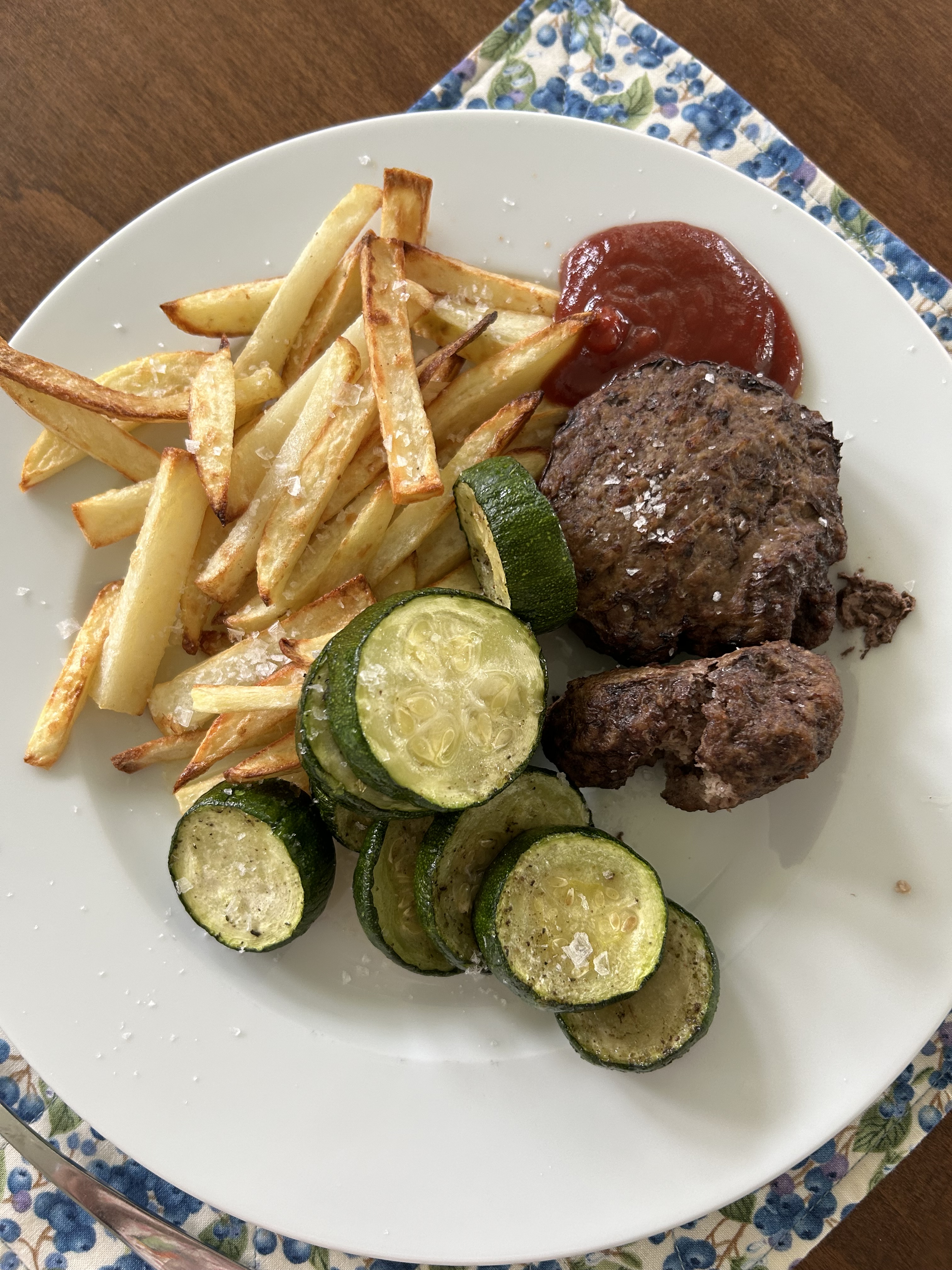
I’ve blogged about my basic meat loaf recipe many times now, probably, LOL, more than many want to read about again. But for the moment, I can’t find the last time I wrote about making meatloaf. Basically, I use ground hamburger or bison, to which I add an egg, some oatmeal, some good fat if the meat is too lean, some cream sometimes, some grated veggie (carrot, zucchini), some chopped onion, some cheese (mozzarella for me), some herbs, and salt.

I just sprinkled about a teaspoon or less of the gelatin over the egg and cream before I added all the other ingredients–so the gelatin would soften.

You all know that I cook with what I have on hand for the most part. This time I had half of a red pepper and some fresh basil from the garden.

I added some Annie’s Ketchup to the top as it is the only ketchup I can find that has a few ingredients. Ketchup is the closest I can get to tomatoes these days. I use it only on meatloaf and don’t add it too often.

Yummy!

The gelatin added a nice texture–but no flavor as it is flavorless. When cold, the loaf is very firm.

This one is a win-win.

*I don’t use ground chicken as these days it has added spices I can’t eat. Probably ground turkey does too, but I’m not sure about ground turkey anyway. Experimentation is often not a good idea for me, so…why mess with what is working and working well.

Tami’s Happy Bees

Daughter-in-Law Tami showed me this video of the hive in her back yard recently. And I saw the hive for myself last Sunday.

I’m really interested because I’m going to get some of the honey from this hive in the near future, yes, but also because beekeeping is a very big practice in my family and in this area.

Tami told me that some of the bees are outside the box for a variety of reasons: it’s hot and humid here now with temps in the mid to high 90s, the bees might be contemplating a swarm from the hive, and/or it is crowded inside the hive as there are now a lot of bees. The presence of bees outside the hive is called “bearding.”

Tami also said that it is very normal for bees in a hive that is this healthy to create a swarm and that beekeepers should let them carry out that intention if the bees want to swarm. Reducing the size of the hive by some bees swarming gives the remaining bees a chance to rest. It also gives them time to clear out the mites that can and do infest a hive. Mites, Tami, said are the number one danger to a bee hive. Mites set up and live in the empty little wax hexagon cells the bees have just created to store their honey.

There are FIVE “supers” (the narrow upper drawers) on this hive, which means that there are a lot of bees involved and that they have had to work hard to try to fill up each drawer as it is installed. She will harvest three drawers in the near future, especially if the bees swarm, as that will leave less real estate at mid-summer for the bees to try to fill with honey. The bees will need two supers of honey for the winter–more than that means they have to keep a lot of the hive warm all winter, which is also hard on the bees who need to rest in the winter.

Here’s the hive earlier in the year with three supers installed. The bottom thicker box is the brood box where the queen lives. (I think that’s right.)

Here’s a very bad picture of Tami. She is the co-founder and director of The Bee Cause, an organization that strives to preserve bees and to educate people about bees. The Bee Cause now also tries to educate people about the natural world and how humans interact and are impacted by the natural world–which includes the destruction of natural habitats. Bees, for instance, alongside other pollinators, pollinate most of the plant crops that humans rely on for food. If bees and other pollinators are killed by human practices, the end result will be a huge loss of the foods that humans need.

Here’s some recent honey from a beekeeper who works closely with Tami. This honey is the honey that I keep on hand all the time.

Honey is also a wonderful medicinal–both to eat and to use for wounds. But that is a tale for another day. And honey does not really go bad and can remain viable for thousands of years.

Honey and some maple syrup are my only sweetners.

And now you can understand that I am trying to do my part by planting plants that bloom and, therefore, nurture pollinators. And, also, why I am trying to create a healthy habitat around my house, as with the use of pine straw bedding that provides a home for many creatures and hand-weeding my new sodded grass until it gains enough purchase to thrive on its own–which it now has.

Finally, perhaps you can understand also why I am very sad at the amount of chemical use taking place in my new neighborhood and in this region–herbicides for the grass and “weeds” and insecticides for “the bugs.” Note that spraying Round-Up (glysophate) for weed control is very dangerous for people. We know that now. The data is very clear now. And indescriminate spraying for mosquitoes kills ALL the insects, bees included.

I am not against judicious use of chemicals when needed around a house. Chemicals that kill termites, for instance, can be put around the foundations or into traps set near a house’s foundation. And inside baiting for roaches is confined to specific spots. In Maine, we had to solve an infestation of carpenter ants and…ick…bedbugs brought in on our luggage. Both solutions were chemical.

The natural world has a power of its own, you know. And we violate it at our own peril. We are, perhaps, a self-solving problem for the natural world.

Grilled Flank Steak

Flank steak may be most favorite beef cut. It just has awesome flavor and is tender to eat. And, I don’t know, but there seem to be more of them in stores in the summer than the winter.

Yes, I like rare meat. More of the nutrients are preserved in rare meat than well done, and it is way more tender. You want to cut flank steak on an angle and in thin slices.

Store extra slices with the juice added to keep them from drying out. You can reheat them if you like by putting them into a heated oven and turning off the heat–let them sit, with juice, for about 5 minutes. You could cover them lightly.

Or, you can eat the meat cold.

Red meat is the only place one gets vitamin B12 IN A FORM THE BODY CAN USE. Red meat has been terribly demonized in the past few decades. Yes, CAFO meat has problems–but grass fed beef is more and more available in local grocery stores. Or from small farmers. I just do the best I can and sometimes just buy…a flank steak.

And, remember that lamb is a red meat. And, bison.

PS: that wooden cutting board was a wedding gift in 1966. I just wash it with soap and hand dry it after use.

The Herbs

The first thing I planted when I got here was herbs.

The herbs are thriving!

In the bed by the screen door, I have rosemary, sage, two kinds of thyme, chives, and lavender.

I purchase fresh dill at the local grocery store–and it lasts for a good 10 days. Dill is harder to grow (for me anyway) for some reason.

I just moved the three rosemary plants from the big container on the porch to the outside as I thought they needed actual dirt.

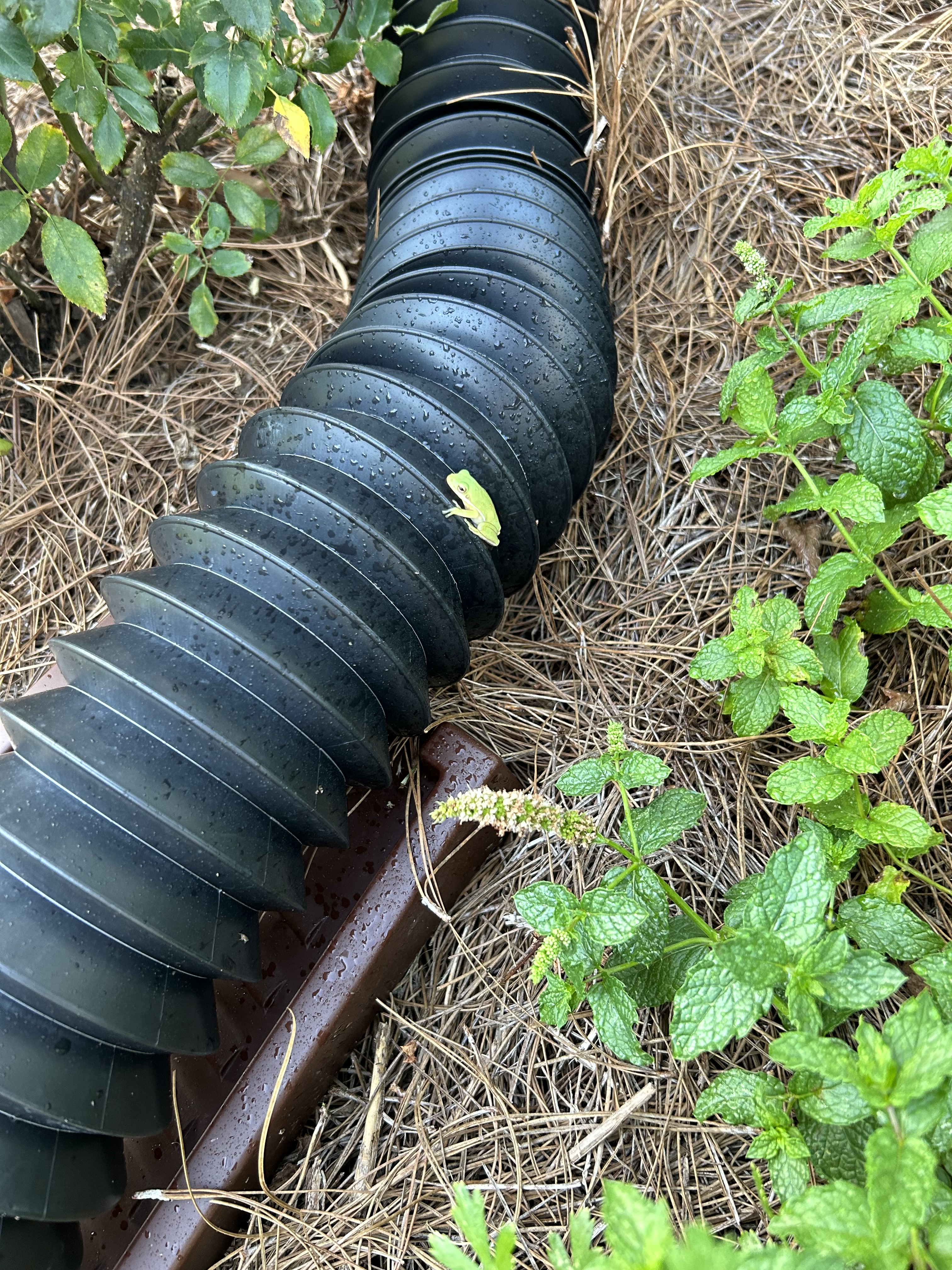
The mint, basil, Italian parsley, and now one of the rosemary plants are around by the back hose–where it is easy to give them water. The yellow leaves are an indication that they need water and less heat. (It was 102 on my screened porch late yesterday afternoon.)

My grandmother’s mint is growing well on the other side of the house–at the end of the long bed there in a spot that is sunny for most of the day. It’s happy there.

I can’t imagine cooking without fresh herbs, especially in the summer.

A friend sent me this article about plants that repel bugs. I was amazed at how many of these plants are in my gardens here.

https://www.realsimple.com/home-organizing/gardening/outdoor/plants-that-repel-bugs

Here’s the big container pot on the porch now.

The Asiatic Jasmine (which is not jasmine) is spreading well. It will cover that bed by next summer I think. My grandmother’s mint is at the far end. Recall that my SIL in Maine had some mint from my Maine garden, and she mailed some to me about a month ago.

This plant was installed by the builder. It’s a Chinese Holly and is very hardy here. I have about 5 of these plants around the front of the house. This one has been loved. I’ve watered it and fertilized it.

Here’s one that was waiting for its house to be occupied by renters and has not had any care. I was interested in the difference between the two plants in color and in the presence of mold, or whatever that white stuff is.

Part of what sold my house in Maine was my beautiful gardens there. And the healthy habitat I had created. It’s too bad landlords don’t realize that an investment in plantings will help sell a home for more money.

The Dwarf Mexican Petunias Arrived

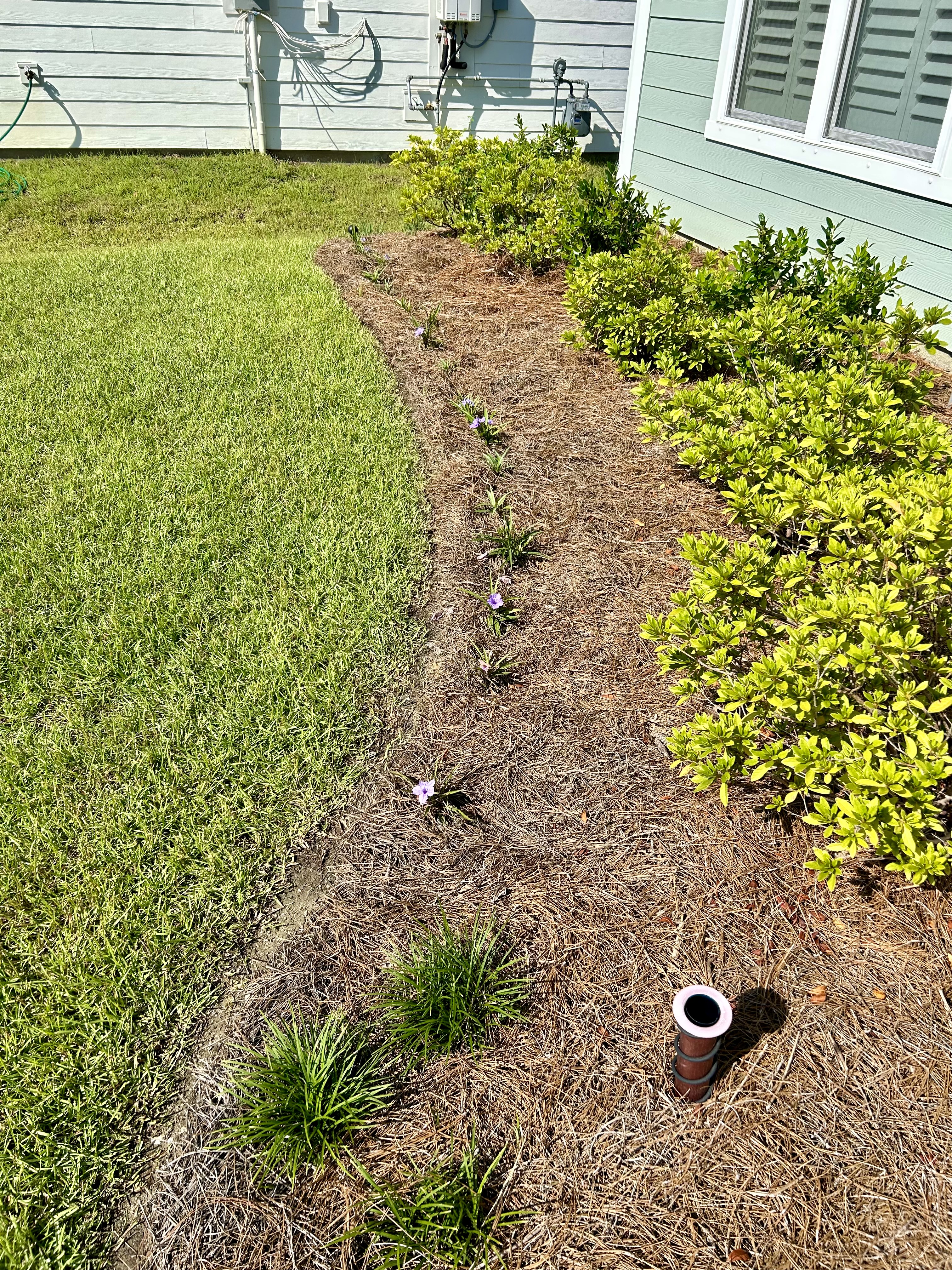
I was outside most of yesterday—the DWARF Mexican Petunia plants came, and I had to dig TWENTY holes, amend them, plant them, and water them.  I know you know that with the clay here, digging and amending involved the shovel, the Maddox, two bags of sand, 1 1/2 bags of compost/manure, bone meal, my heavy boots (to support my formerly sprained ankle which does get sore with the hard digging), the hose, yada, yada…. Each plant is healthy, but tiny, but I basically had to dig a trench down the front of the front bed to get the holes deep enough to amend them properly.  Then I had to put back the pine straw and fussy it back around the plants.  They look perky this morning.  

I think the front azaleas are struggling with the heat. They are, again, a pale color. I don’t want to fertilize them in this heat, but will spend more time watering them I think. The ones on the side of the house are a rich green color.

While the hose was out I spot watered the now dry patches in the grass and all the shrubs.  And went on to do the far side of the house and then went around back to water as well.  I kind of like the Zen of these watering moments—and walking neighbors stop to visit.

I started outside in the fairly early morning—having discovered while having my morning coffee that the plants had been on my doorstep since yesterday afternoon late.  I took them to the hose and soaked them.  They were beautifully packed for shipping.  It was HOT, so after an hour of digging, I was totally soaked with sweat and feeling the heat.  Likely temps had reached 90+.  The sun is on that front bed until mid-afternoon—so I went inside and showered to cool off.  I went back when the sun was on the back of the house so the front was shady.  There was still hard work to do, but there was shade and a strong breeze.  Coastal rain clouds raced by, but none stopped to give us some much-needed rain. 

A friend sent me a post this morning that described a huge solar spot/flare on the sun right now. Very huge–bigger than Earth. Apparently sun flares can impact our weather in negative and unpredictable ways.

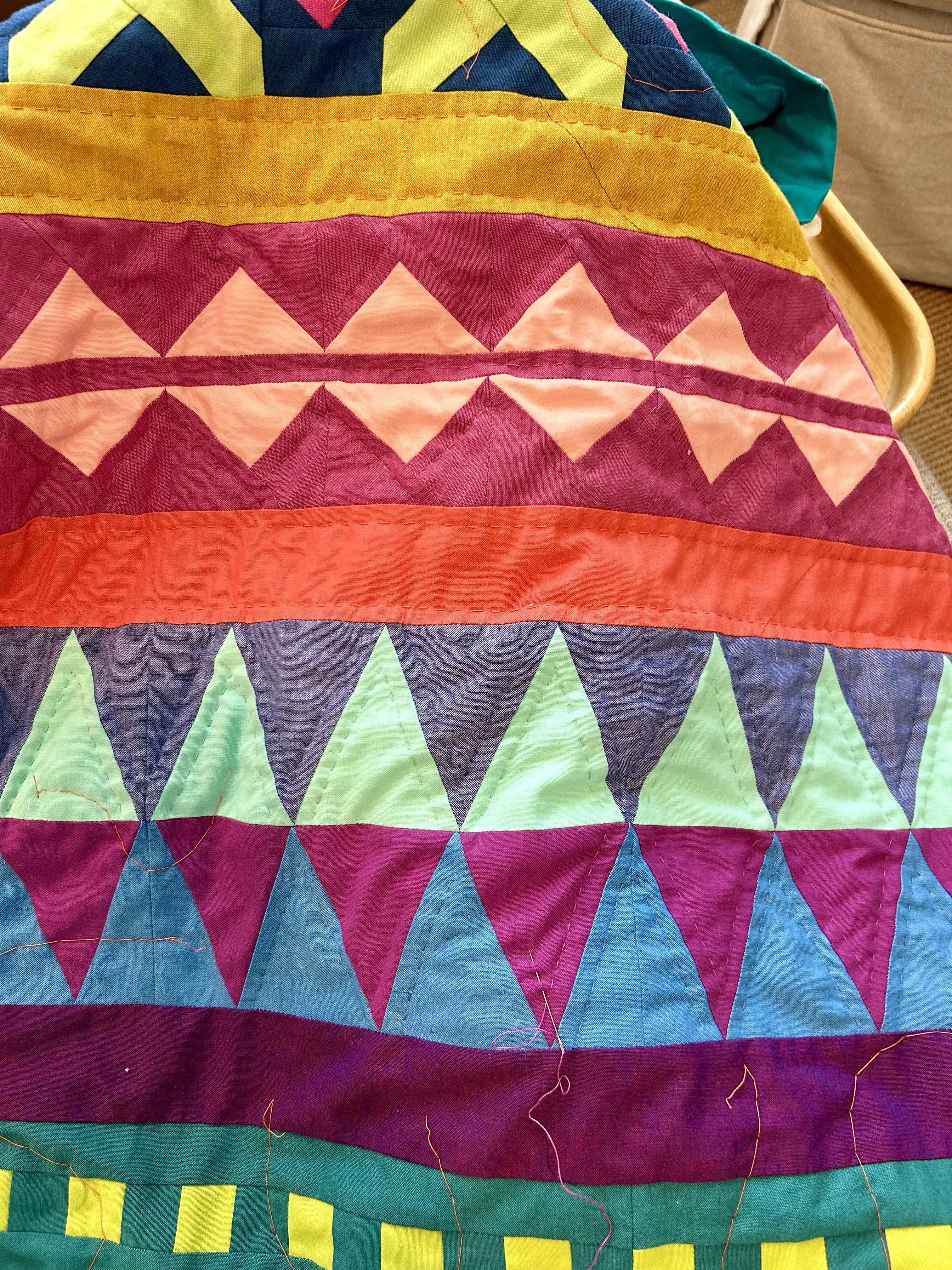
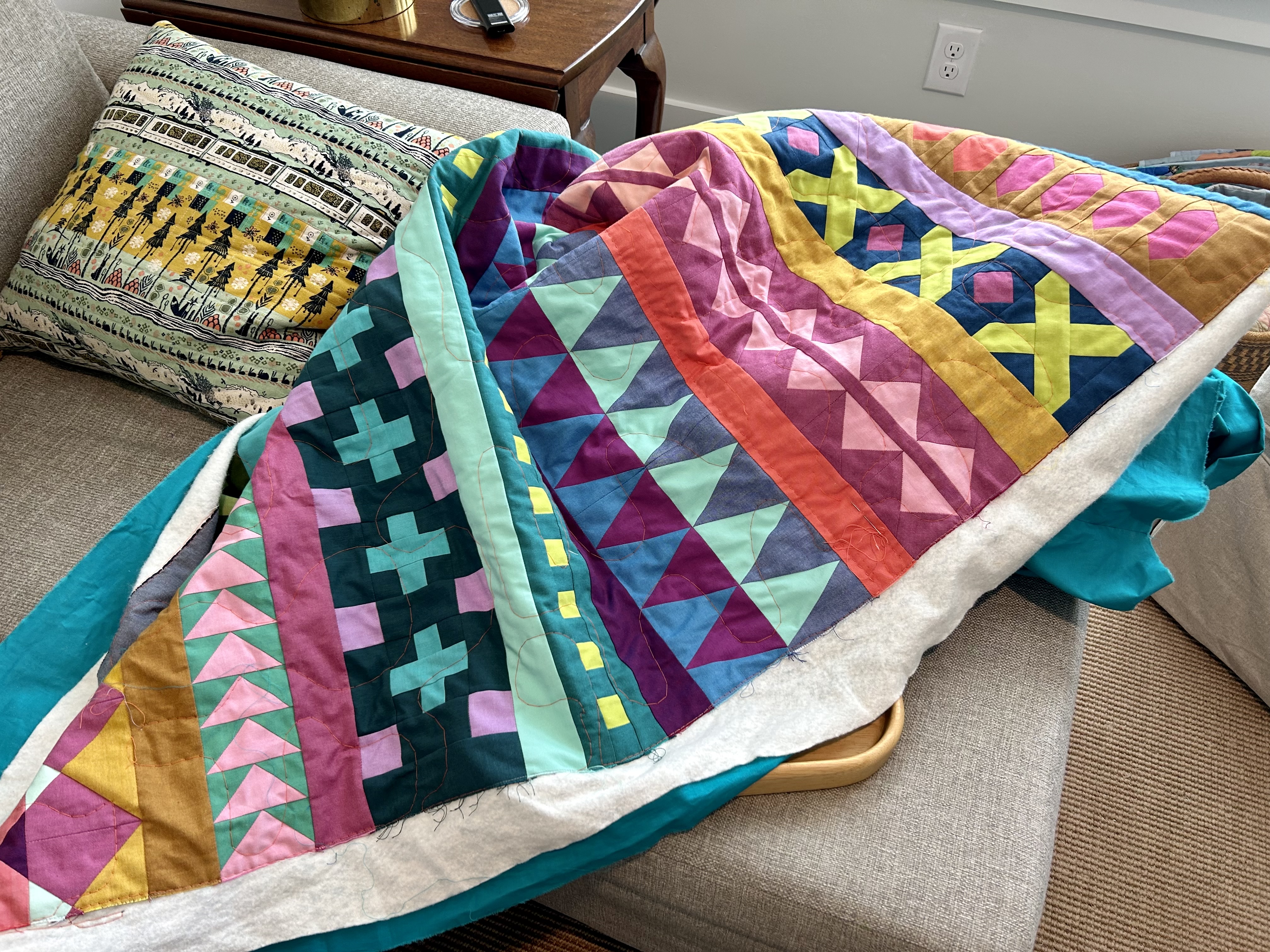
I have not sewed upstairs for two days now, what with one thing and another. BUT, the third border is now on “the quilt from hell,” and the darker border is making that quilt sing. One more side to go.

Emergency Lanterns/Flashlights

We lost power in the last bad early evening thunderstorm the other day.

Losing power in Maine happened all the time. I had a very effective and big generator there which came on automatically. The Maine house ran on propane, so it was fairly easy to add a generator to that system. I’m not sure how easy or necessary a generator would be here. Generators are also noisy. And the houses are close together. The electrical grid here is much better than Maine. This is the first time in this house that I have lost power–for about an hour. The outage covered a pretty big area apparently.

But, we have hurricanes here. And that season is coming.

When the power came back, the refrigerator power didn’t. Fortunately I found that it hadn’t and checked the fuse box. Yes, the outage had triggered the refrigerator electrical switch. Whew! I had just stocked up on freezer items, like meat. One neighbor had to reset her dryer at the electrical box.

So, a learning curve there. More importantly, I realized I was NOT prepared for power outages. My flashlights were old and not very powerful. I found candles, but didn’t have matches. (Movers won’t move matches.) Eventually I found a hand-held pistol type lighter that I must have bought early on here–like you’d use to light a stove top or a bbq grill. Or, a candle.

Later, a neighbor told me about emergency lanterns that pack a real punch. I ordered three and the two smaller ones have come. Upright this little guy becomes a lantern. Sideways, it can be a flashlight or can run a ring of red emergency lights. The bottom has magnets if you want to put it on something metal.

Here it is opened as a lantern. Yes, it throws a powerful light that is much better than a candle. And it is safer than a candle.

Here’s the top, with the flashlight portal.

This one can run on a rechargeable battery or with regular batteries. It comes with a cable that can recharge it or can be used to charge something like a phone.

The big one I’ve ordered can run for 150 hours on medium settings and a combo of the rechargeable battery and regular batteries. All three units can run as long as you replace batteries as needed.

I charged both of these two smaller units. And I went shopping for back-up batteries yesterday. I also bought a new flashlight and junked the old one that wasn’t working well. And I got a back-up hand-held pistol type lighter. The local grocery store does not sell matches. But I’m good with the pistol lighter.

I really like these emergency or camping lanterns. Fully charged, they can run until the rechargeable battery gives out. Then they can run on batteries. As I’m on the mainland, in a hurricane, I may get family from Isle of Palms here, so I want to be ready.

Rice Salad and Quilty Update

I was so hungry for rice the other day, and I had a package bought locally of a mix of rices. Organic, but not sprouted. I cooked the whole package and froze meal-size containers for later.

I control grains–though you would not know that with the amount of fresh corn I’ve been eating. All I have to do is walk past a rice package to put on weight. I just don’t handle rice carbs well it seems. But, of course, I love it.

I had roasted chicken on hand to use, so made this salad. I also love the tiny petite green peas and had some I had cooked on hand. Yes, another carb. I can’t do beans (which I also love) with the histamine intolerance, but peas are ok. The fresh herbs from the garden really increase flavor in a salad like this one. Ditto the really good Koroneiki olive oil.

I couldn’t find organic sprouted rice locally–not at Whole Foods or Trader Joe’s or the local grocery store (Harris Teeter). So I ordered some from Amazon.

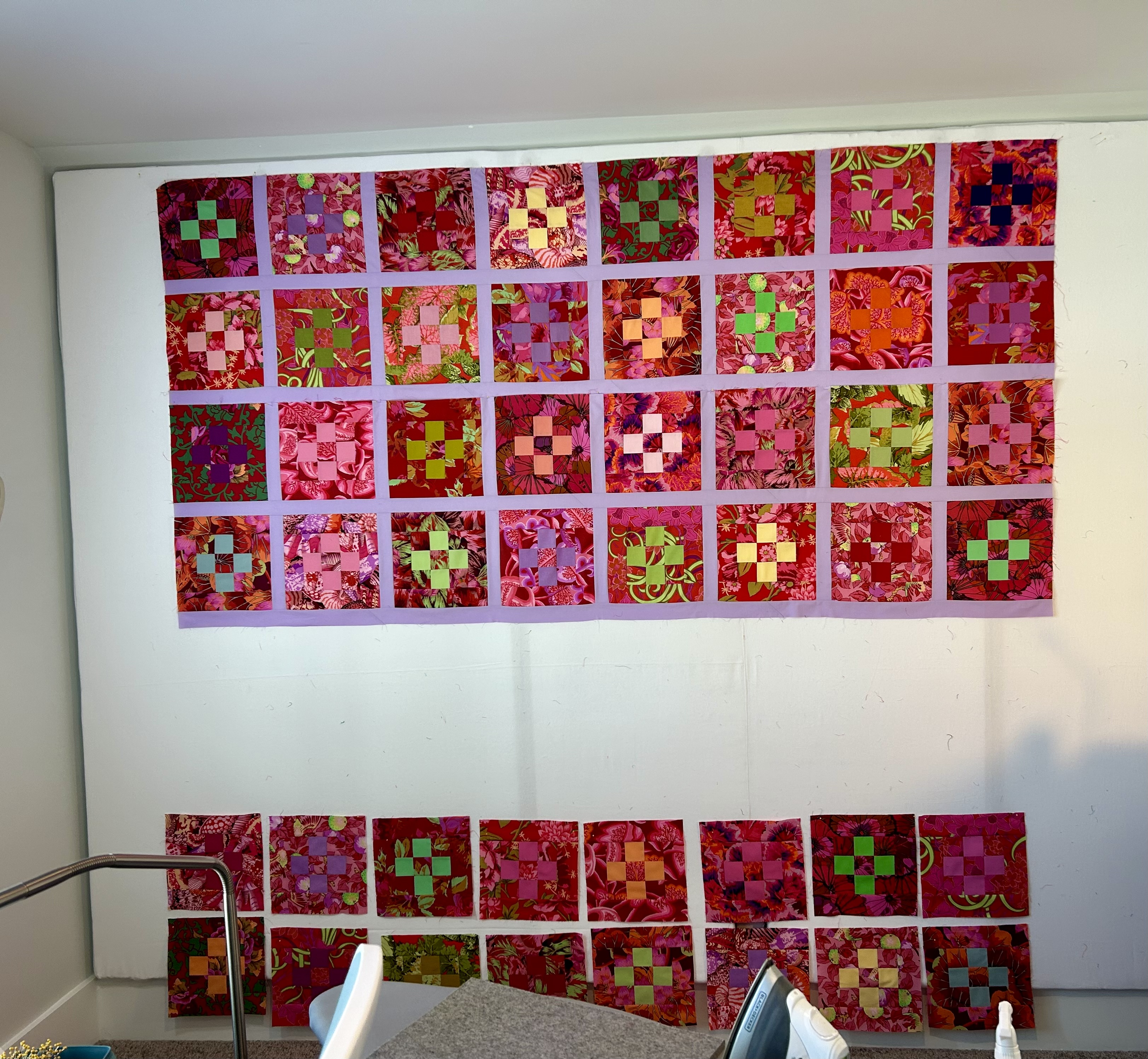
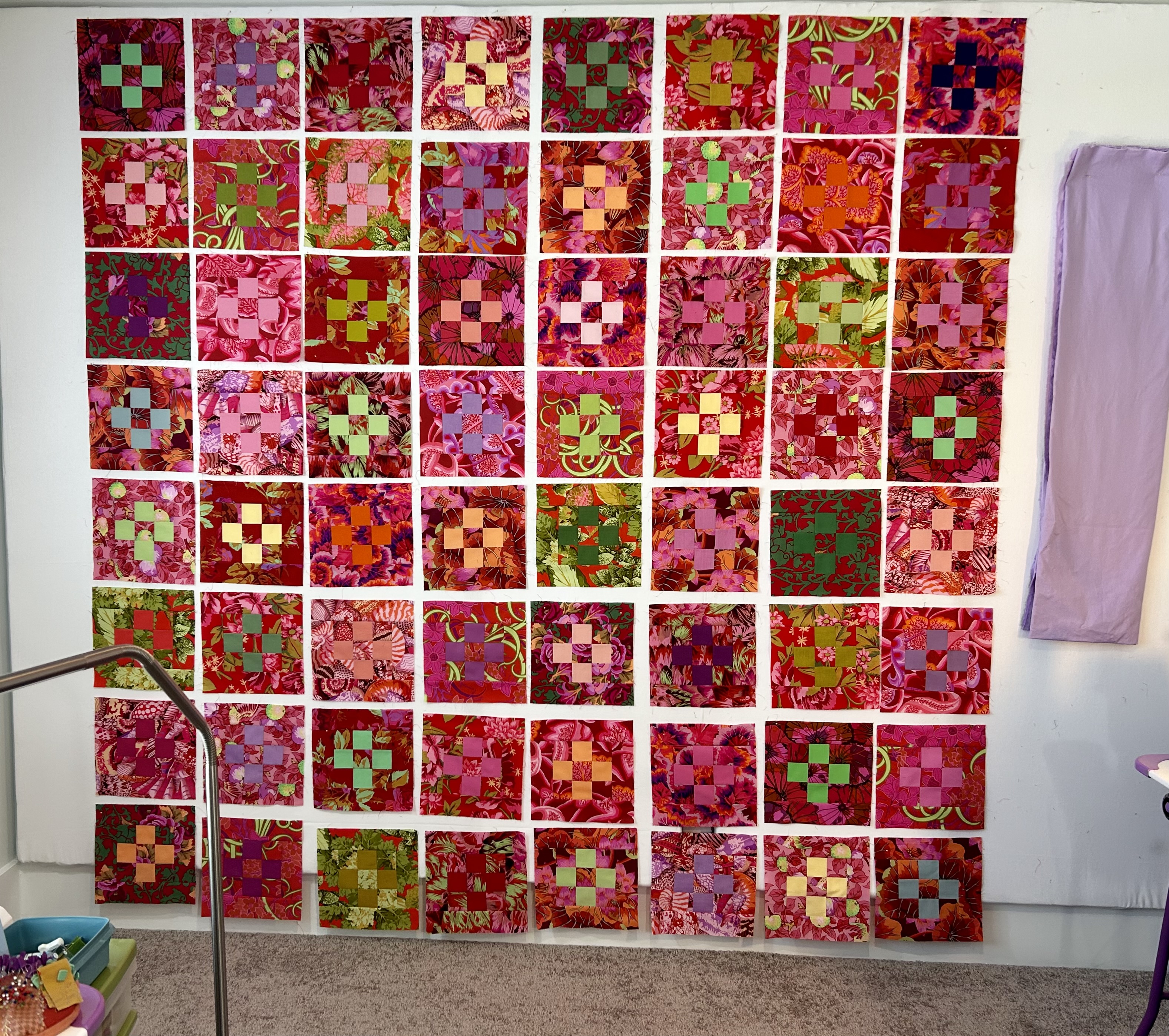
I had to put the 5th set (of 6) of mystery quilt blocks on the rug upstairs as the half-square triangle quilt has gobbled up all the design wall real estate. These blocks were fun to make.

Here’s the big gal. “Bonanza”? maybe. The top border is mostly pinned–and I have only sewn three of the blocks on the left of the border together. I stopped to make more and more and more needed half-square triangles for the rest of the border.

I have no idea about a backing or binding yet. And that’s ok.

I’m sewing on the 3rd border for “the quilt from hell.” Yeah! And I laid out the last border parts to make sure the colors were ok for where each piece would go–in terms of where they would fit in with the quilt itself.

My coffee is gone now, so I’m off to run errands before it gets too hot. And today I’ll sew! Yesterday was too busy, which is rare for me.