Turkey Tracks: June 19, 2010
Do Yourself a Favor:
Cook and Eat Dark Leafy Greens
Dark Leafy Greens are chock full of nutrients. I’m talking Lambs Quarters, Bok Choy, Collards, Turnip Greens, Mustard Greens, Chicory, Dandelion, Kale, Parsley, Dock, Endive, and Watercress. (Lamb Quarters and Dock are wild greens: for dock, see http://eatingmymoccasinsnow.blogspot.com/2009/04/dock-rumex-crispus.html; for lambs quarters see http://www.google.com/search?hl=en&rlz=&=&q=lamb+quarters,+image&um=1&ie=UTF-8&tbm=isch&source=og&sa=N&tab=wi&biw=1362&bih=669.
I’m leaving out spinach, chard, and beet greens because they have high levels of oxalic acid that can cause a number of unpleasant side effects: kidney stones and the reduction of the body’s absorption of calcium and iron among them. Though I love spinach and chard, I eat these greens sparingly and, pretty much, only in season.
I try to cook several batches of dark leafy greens in a week, and I cook enough of them at one time to have leftovers. Cold greens are delicious drizzled with a vinaigrette or a tahini or peanut dressing. But, my favorite leftover use is to use the greens inside an omelet–with added cheese. An omelet of goat cheese and cooked greens is great for breakfast, lunch, or dinner. And, the combination of greens, egg, and cheese is…delicious!
According to Rachel Albert-Matesz and Don Matesz, in their cookbook and guide, THE GARDEN OF EATING, kale has 250 percent more vitamin C than an orange, 4, 450 percent more Vitamin A, and more potassium, iron, phosphorus, calcium, and protein (308). Rachel A-M has a terrific web site, too: http://www.thehealthycookingcoach.com/. I highly recommend the cookbook. I’ve yet to cook something bad from it, and it has significantly expanded my ability to cook greens and to create satisfying meals without using grains. Her web site has the cheapest prices–it’s under $30.
These dark leafy greens need to be cooked. They don’t lose substantial nutrients, and cooking reduces some of the bitter compounds that can hinder digestion and absorption of nutrients. Think of cooking them for at least 10 minutes. This aspect of dark leafly greens makes me hesitate about juicing them, too.
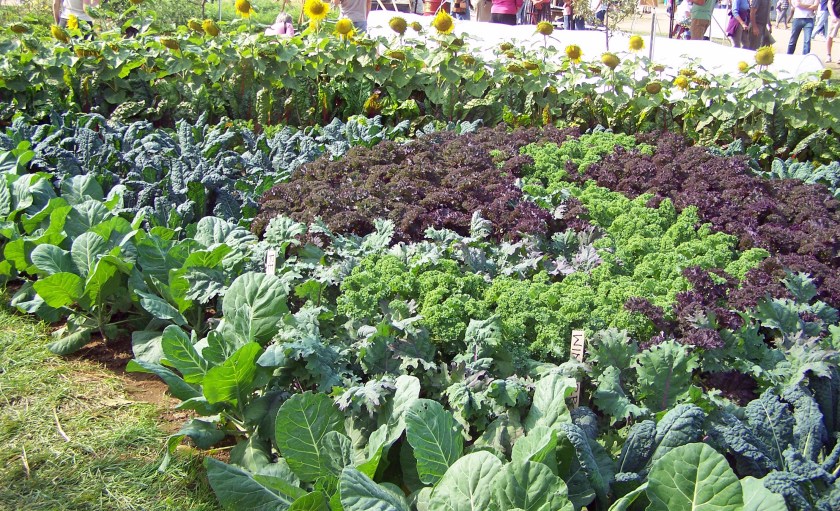
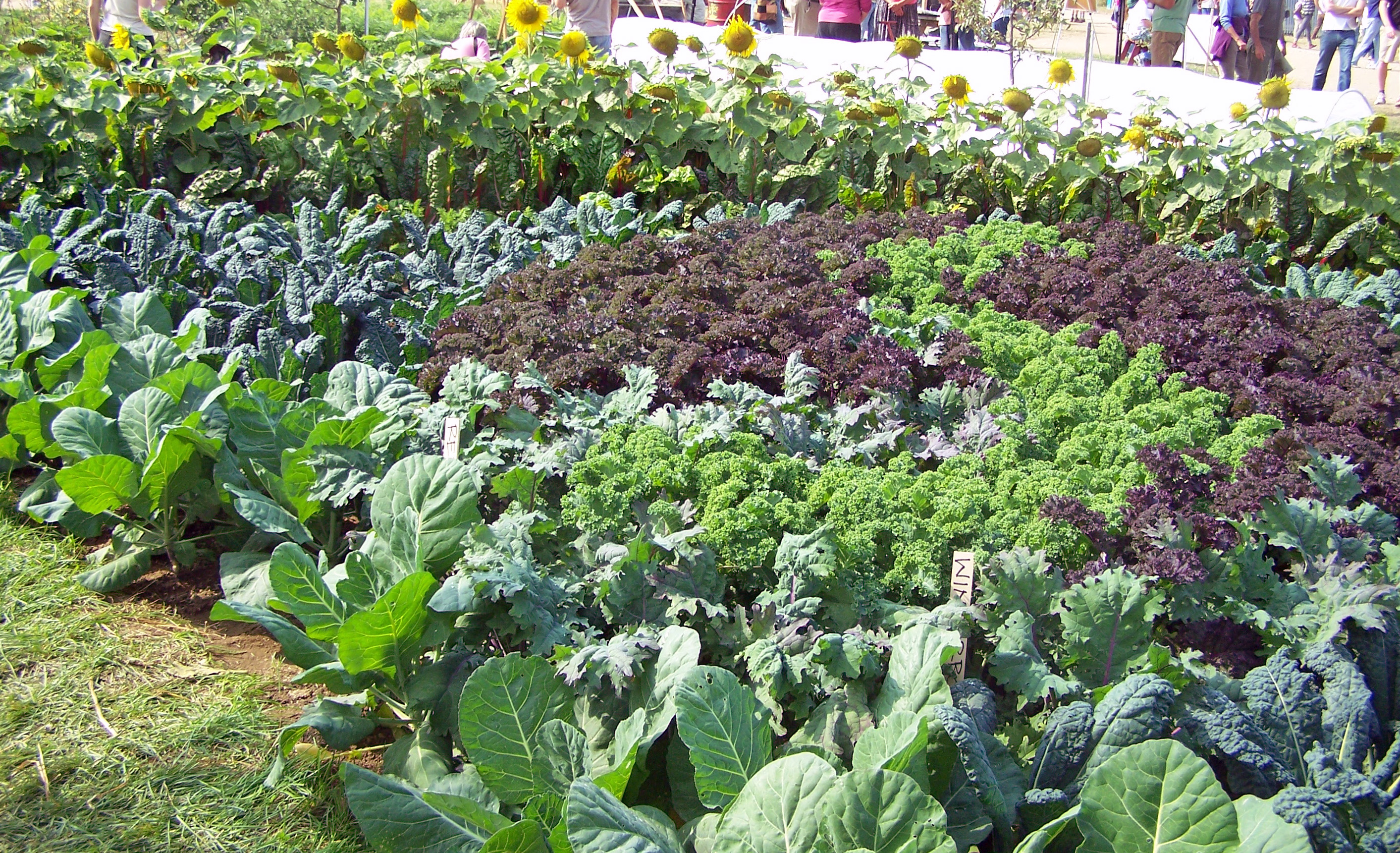
My favorite greens are kale and collards. Kale comes in various, beautiful forms, and each tastes slightly different. You might recall a picture I took of some kale forms at the Maine Organic Farmers’ and Growers (MOFGA) fair last year. Collards are in the foreground.
There are two principal ways to cook greens: boil whole leaves/stems or pan saute and steam greens in a large, covered frying pan or pot. I use both methods. I boil when I want to prep greens ahead. I particularly like kale boiled, chopped, and, later, sauteed in butter. In both cases, you need to strip or cut (collards) the leaf from the fibrous stem. Kale stems are more tender than collards. Rachel A-M cooks kale stems and chops them when tender and adds them back to the leaves. I’ll confess, usually I give the stems, which always have a few remaining bits of leaves, to the chickens as they take true delight in them.
For boiling, bring water to boil, drop in the whole leaves, and cook until tender–at the most from 5 to 10 minutes. Drain, immerse in cold ice water to preserve color, and chop. If you layer the leaves, then roll them, you can slice off strips. Turn the strips and cut off bite-sized pieces. Refrigerate for up to three days.
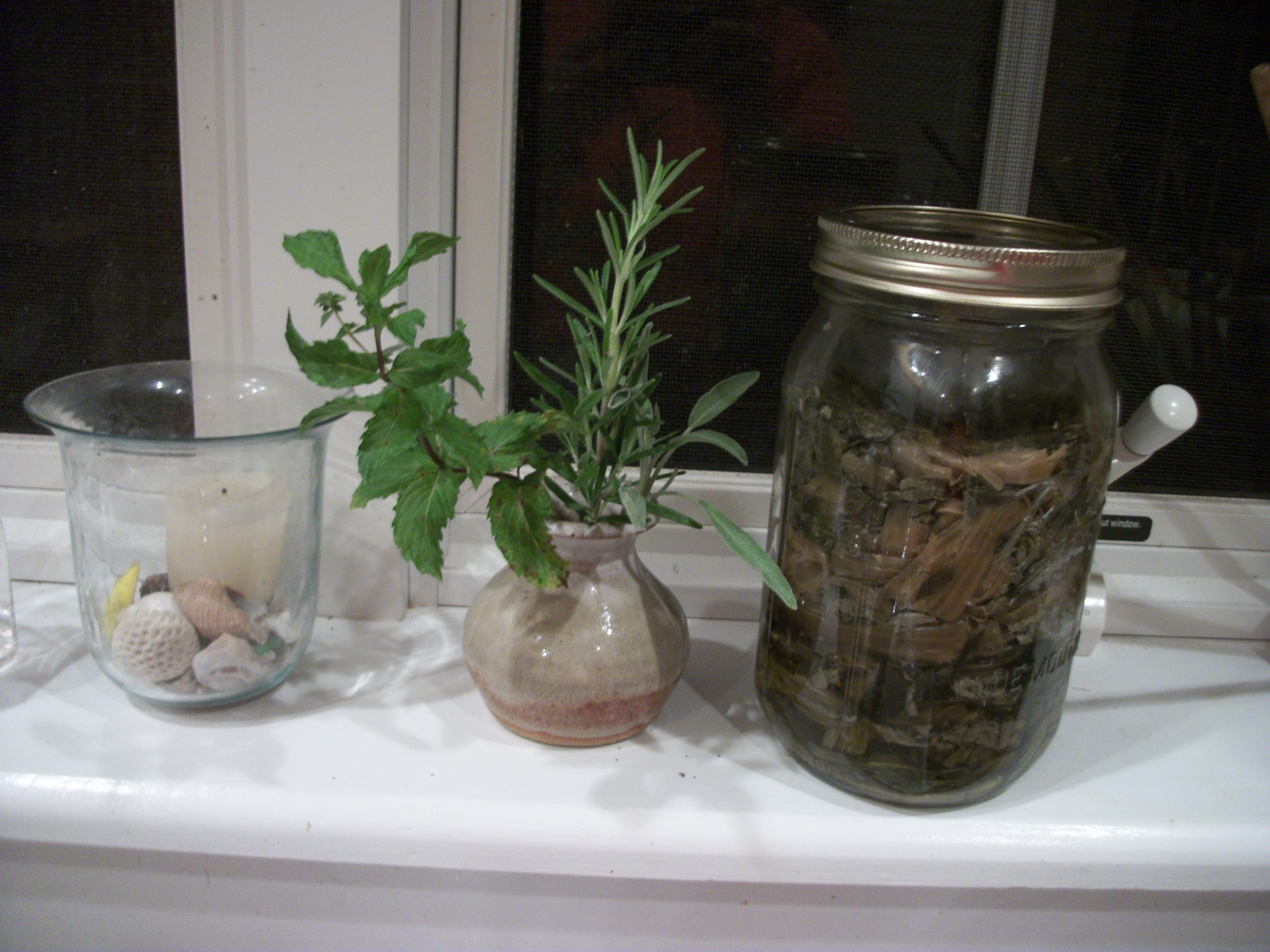
To pan saute, your imagination is the limit of fun combinations for additions. Start by stripping leaves from stems. Roll leaves and slice and cut, again, to make squares. Sometimes, though, I just roughly chop greens. Here’s a picture of two bunches of leafy green kale. When cooked, there will be enough for four servings. John and I eat one serving each hot and then we have an asset in the kitchen: cooked greens to be used in other ways, like an omelet. Or, eaten cold. The point I’m making is that greens COOK DOWN rather a lot, so buy enough.

Kale is tenderer than collards. And, collards, in particular, benefit from the addition of meat broth for liquid, or an extra chicken/turkey wing in the pan. When I make broth, I always pull off several small 1-cup Mason jars to use when cooking greens.
The basic method is to start by pan frying a chopped onion in good oil/fat. I use unrefined coconut oil, or duck fat, or saved bacon grease, depending upon what kind of flavors I want. Adding bits of flavoring meat, like pancetta or bacon, is nice at this stage. Add some chopped garlic just before you get ready to add the greens.
But, before that, consider what kind of SPICES you’d like to have running around the pan. Perhaps some combination of spices–cumin, cinnamon, coriander, turmeric, for instance. Curry powder? Put those kinds of spices into the pan and let them fry in the fat for a moment or two–with the garlic if you’re using it. Mustard is a nice addition. Any of the hot pepper spices, like paprika or red pepper. And nutmeg is lovely with greens. Thyme or sage is nice. Gingeroot is lovely.
You could throw in some sliced apples in the fall. Or, a handful of dried fruit in the winter. (Think of drizzling in some honey or maple syrup at the end if you go in this direction–with a bit of fruity vinegar to spark the tastes.)
A handful of cleaned seaweed (dulse, for instance) gives some heft and adds iodine, which I think about since I don’t eat grocery store salt.
Adding other vegetables is also nice: carrots, mushrooms, cauliflower, daikon radish, celery, bell pepper strips.
USE WHAT YOU HAVE IN THE KITCHEN.
When your veggies and spices are sweated out/mixed in, throw in the greens. If they have enough water from washing, you can begin to turn them with tongs until they wilt down. If you don’t have enough liquid, add water/bone broth (about a cup) to the pan–mopre for collards–wilt down the leaves, and cover and cook for 5-10 minutes. Collards will require longer cooking. Remove the lid and cook down any remaining liquid at high heat before serving.
ENJOY!


 Louisa Enright's Blog