Turkey Tracks: The Garden is In–June 2011

Turkey Tracks:  June Turkey Tracks:  June 15, 2011

The Garden is In–June 2011

The gardens are all planted.  Several days of rain has been terrific for all the seeds and little seedlings.  Since I took these pictures about a week ago, the beans (dragon’s tongue, haricot verte, and a dry climbing bean) and–hold on to your hats since they produce SO much–the zucchini are up.  So are the kale, the lettuce, the beets, and the radish.  I don’t see the Hubbard squash I planted next to the zukes in the front bed yet though.  And I forgot to check for the winter squashes along the driveway now that the sun is out.  The potatoes are sprouting in their tubs.  No sign yet of the carrots or the cukes.  Here are some pictures of what is now an early garden, but one that is GROWING hourly.
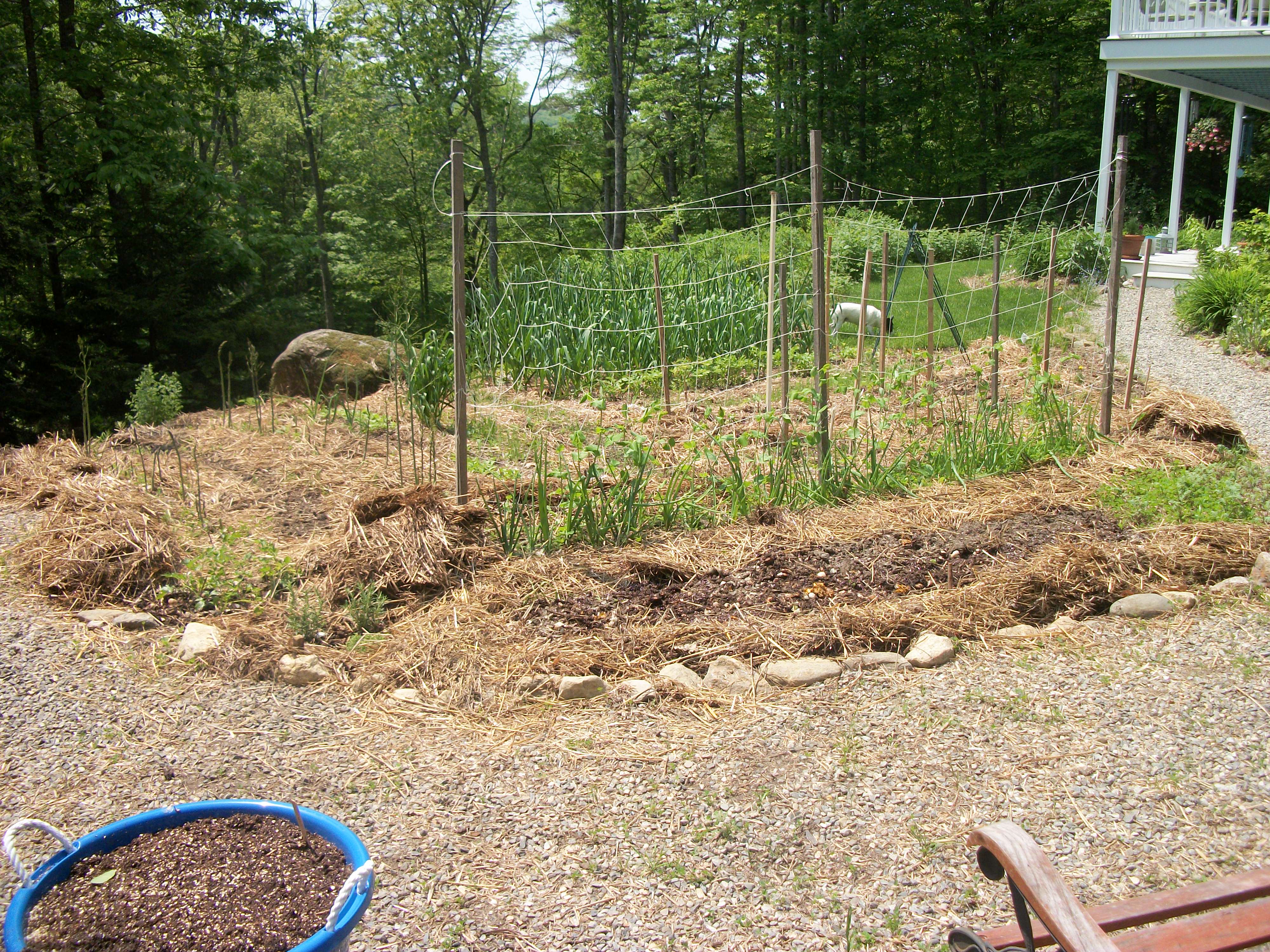
The asparagus, there on the left, has doubled in size now.  We got about 5 meals this year–its third year.  The peas on the trellis are now halfway up.  Way in the back you can see the very healthy garlic–planted last fall–fronted by La Ratte fingerling potatoes, which I planted in late April and am hoping to “grabble” (sneak some out early) when my children are here this summer and early fall.  La Rattes are beyond delicious!

I planted four kinds of onions.  Two kinds are a bedding onions which should get big and round.  I planted scallions, which are all up.  And the onion sets I put out last year did nothing-it was too dry last year–and when that happens we can’t water a lot or we’ll run out the well, especially if the house if full of family.  I put the sets out again–you can see some in front of the peas–and they’re doing really well.

The raspberries are starting their third year and are making a lovely border fronting rugosa roses and some struggling bayberry that lines the steep hill to the left.  (We were afraid of grandchildren falling off our hill.)  The raspberries are FULL of blossoms!  As are the strawberries, which are on a hill at the side of the house.
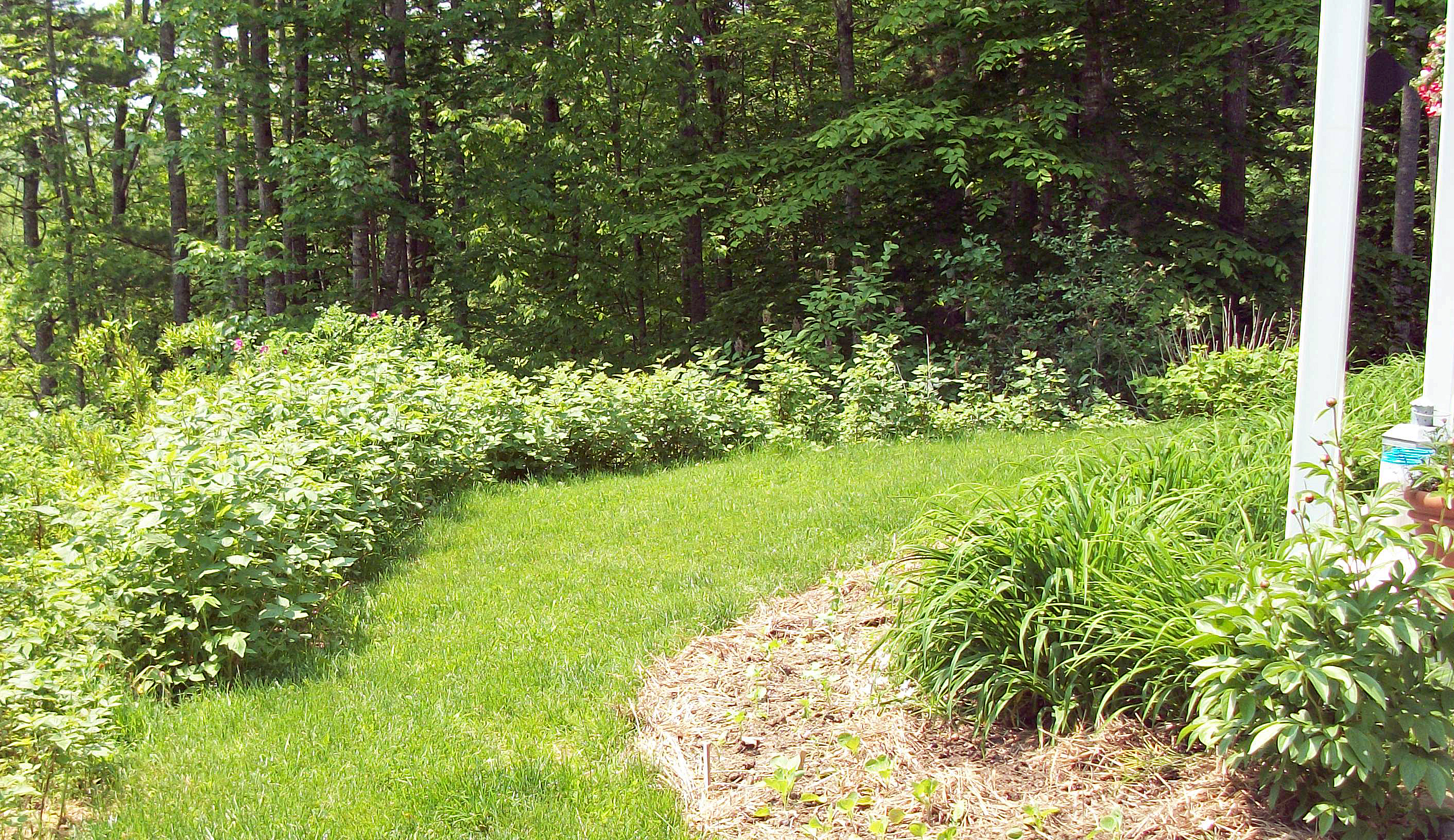
Our big experiment this year is planting potatoes in tubs–which we got at our local Renys (a terrific Maine store) for, I think, $4 each.  We’ll keep the dirt in them over the winter , augment it, and plant something else next year.  Maybe squash?  The potatoes are sprouting as of this morning.  There’s a selection of 5 kinds.  I put the extras in the front bed, behind the brassicas.  The dried bean vines are planted beneath the new white fencing John upgraded and painted this spring.  Doesn’t it look nice?

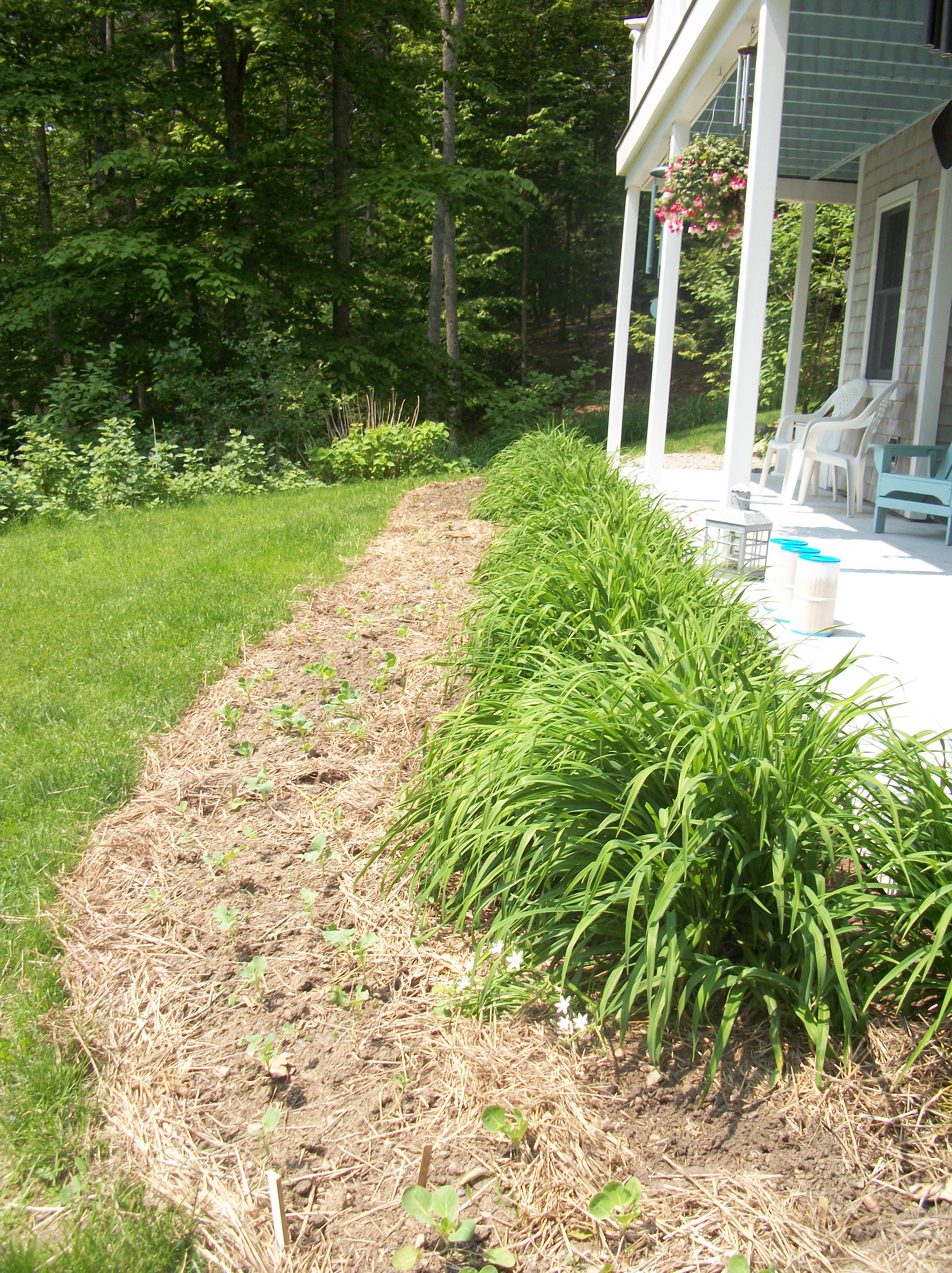
The front bed is planted with cabbage, Broccoli, Brussel Sprouts, zucchini, a Hubbard squash, leeks, extra potatoes, and, at the far end, I threw in some sunflower seeds.   In the foreground, peeking out from a daylily, are some white flowers–Star of Bethlehem–a flower my grandmother in Georgia brought up from the swamp, planted in her front hard–when I was a baby or earlier.  They now cover the front yard in the spring.   The daylilies are setting buds, and the wind chimes along the porch sing so sweetly in a soft breeze.   Beyond you can see how dense and dark the Maine woods get in the summer.  They are full of mystery and beckon one inside.  There’s an intermittent creek at the edge of the woods, and by now, Jack in the Pulpit will be blooming all along its edges.
So, there you have it, the 2011 garden.

Turkey Tracks: Rat Dogs Love to Roll…In Filth

Turkey Tracks:  June 13, 2011

Rat Dogs Love To Roll

In Filth

OK, they’re not really rat dogs.

They’re rat terriers.

Unless they’ve been over bred, they’re indomitable hunters and protectors.

They think they’re HUGE, and not much convinces them they’re not.

They love to roll in…whatever smelly awful thing they can find.  They’re always so sorry when their owners scream “no, no, go away, don’t get near me, you have to have a bath right now, why did you do it again, I just washed you yesterday, what were you thinking, come right now, no you cannot come in, stand right here until I find a towel…


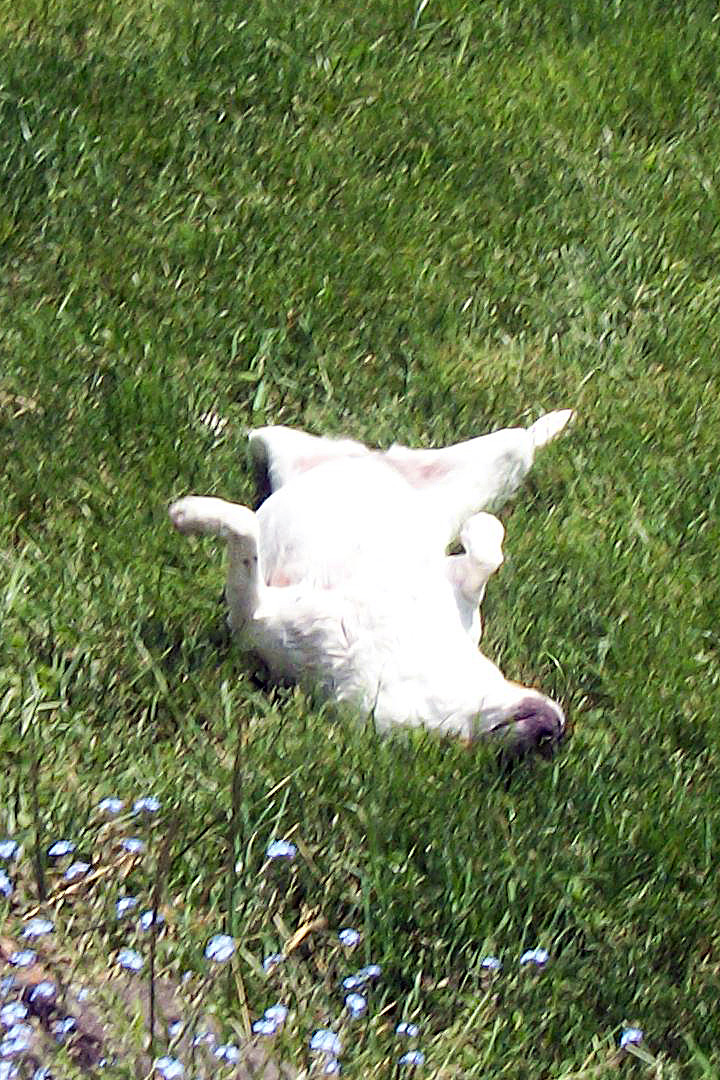
She doesn’t look dirty in this picture because it’s her other side that’s plastered with some sort of goop–which came from–I don’t even want to know.  At the very least, deer scat.

Once washed, a rat dog has to run and roll in the grass.  If left inside, the rolling and drying would take place on all the furniture and the carpets.

Miss Reynolds Georgia, who is a highly bred babe, has, so far this year, escaped rolling and the following bath.  She is refusing to go outside unless she has a DIRE NEED.  We think she either got bitten by the black flies or dive bombed by a big bird.  She has NOT FORGOTTEN.

Interesting Information: Homogenization of Milk and Cheese

Interesting Information:  June 13, 2011

Homogenization of Milk and Cheese

Steve Bemis is a retired corporate attorney who farms hay in Michigan for local farmers.  He is also a founding Board member of the Weston A. Price Foundation’s Farm-to-Consumer Legal Defense Fund–which works to insure greater access to local foods, especially raw milk.  In the Spring 2011 WAPF journal WISE TRADITIONS, Bemis poses an interesting theory about the real need for homogenization and pasteurization of milk (http://www.realmilk.com/cheese-is-serious.html).  The real reason, poses Bemis, might be the dairy industry’s incredibly profitable cheese business.

Let’s back up for a moment.  In my lifetime, one’s milk was delivered to the door in glass bottles.  One judged the milk by the cream line at the top of the bottle–clearly visible for all to see.  But, the dairy industry wanted that cream to make other products.  Ice cream, yes, but also cheese.

So, industry begin figuring out ways to get that cream.   How they did it was to, first, convince women that milk had to be pasteurized as real milk was unsafe–a claim never proven scientifically.  Second, they instituted, over time, a process of fractionalizing milk into parts and reconstituting some of the parts back into milk–minus all the cream.  (Whole milk might not have the whole amount of cream that came from the cow.)   Says Bemis:  “Milk, milkfat, skim milk powder and other fractions of milk are processed into cheese, butter, ice cream, yogurt, kefir, and other industrial component which are ubiquitous in processed and ultra-processed foods.”  Third, they successfully got the federal government to police this new terrain.  This is how industry works:  maximize profits any way possible, including gaming the information.

Processed, fractionalized milk was then homogenized, so no one could ever see the cream line again.  And, the glass bottles disappeared.  But, here’s where Bemis gets really interesting.  Once milk is homogenized, it “will go rancid within a matter of hours.”  Thus, the milk has to be pasteurized to keep it from going rancid.   “Hence,” writes Bemis, “once the dairy industry took the homogenizing step to follow the dollars, it had to pasteurize.”  Bemis continues:  “And the industry will have to stick with the gospel of pasteurizing, since their current economic structure requires it.”

Hmmmm….  Pasteurization came AFTER homogenization.  Pasteurization was NEVER about food safety.  It was about maximizing profits, fooling customers, and extending shelf life.

So, if you can’t get the whole, raw, living, healthy REAL milk, try to find a dairy that produces a cream line, even if the milk is pasteurized.  Homogenized milk is really, really processed.

Bemis then turns his attention to the cheese issue.  He asks an important question:  “Is contamination of raw milk a huge red herring keeping our eyes off a far more important reason for pasteurizing milk?”  Cheese is a keystone product for the dairy industry.  Cheese is a billion dollar business.  Cheese is probably why both the USDA and the FDA have launched even more intense, fear-based attacks against raw milk and against artisan cheese makers.

The good news, writes Bemis, is that “raw milk consumption continues to surge; FDA’s interstate ban is under legal attack, and FDA’s dogma is regularly being shown to be inconsistent, illogical and unscientific–an embarrassing and ever-deepening quandary in which the agency finds itself due to its steadfast refusal even to hold a dialogue on the subject.”

As for the USDA, one part of it promotes cheese consumption while another part (the new food guide) says its unhealthy.  How’s that for mixed agendas?  It’s time to locate any kind of government recommendations on how to eat somewhere other than the USDA and to put science back into the process.

Turkey Tracks: Chicken Update

Turkey Tracks:  June 8, 2011

Chicken Update

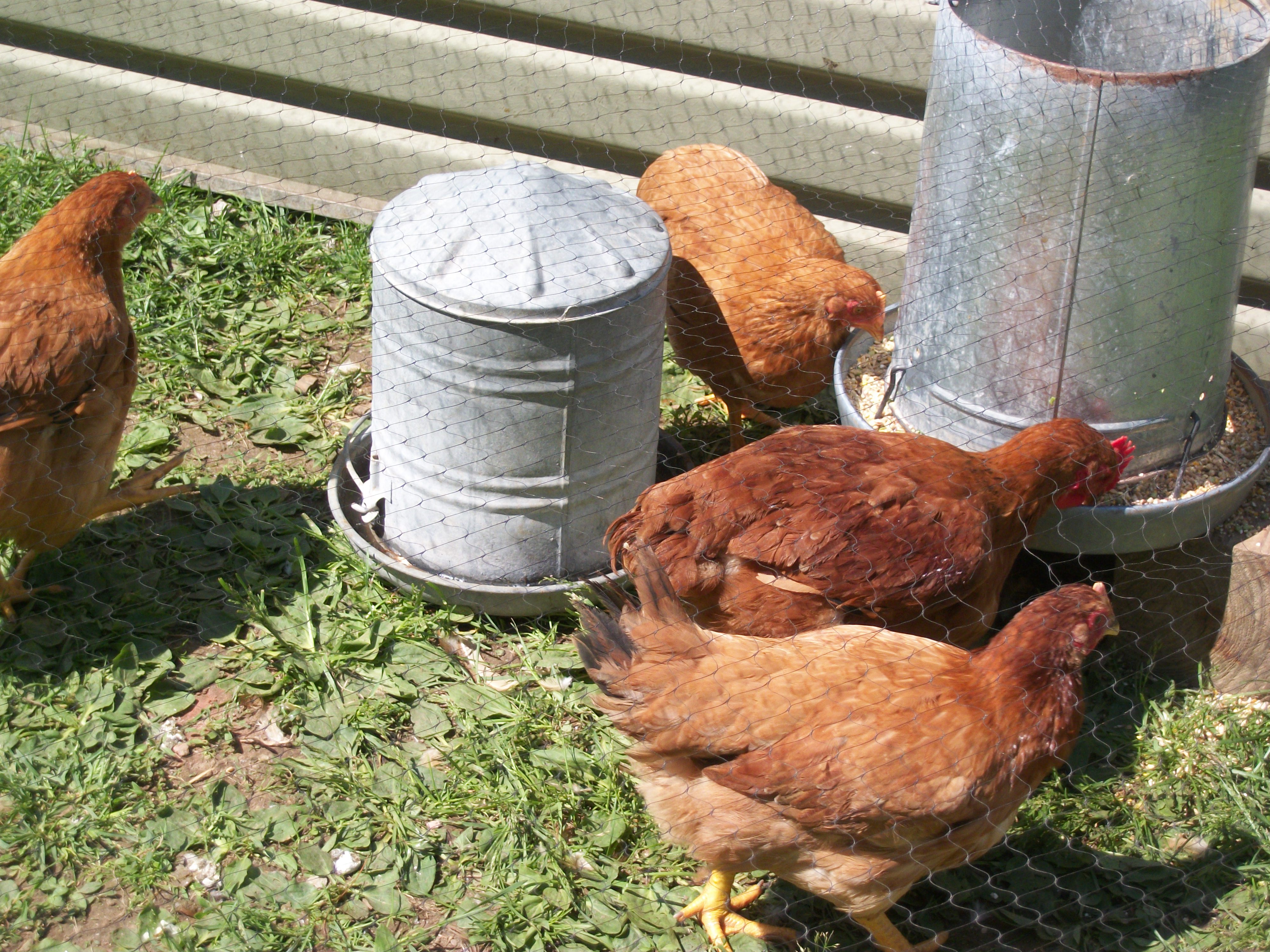
The Freedom Ranger chickens are 7 weeks old now.  We’ll slaughter some of them in 3 weeks time–at 10-11 weeks.  They’re beautiful, healthy birds.  The color variations are so interesting.  I’ll have a hard time choosing one of them to keep as a layer.  We can’t tell the hens from the roosters yet, though some of the roos are starting to try to crow.

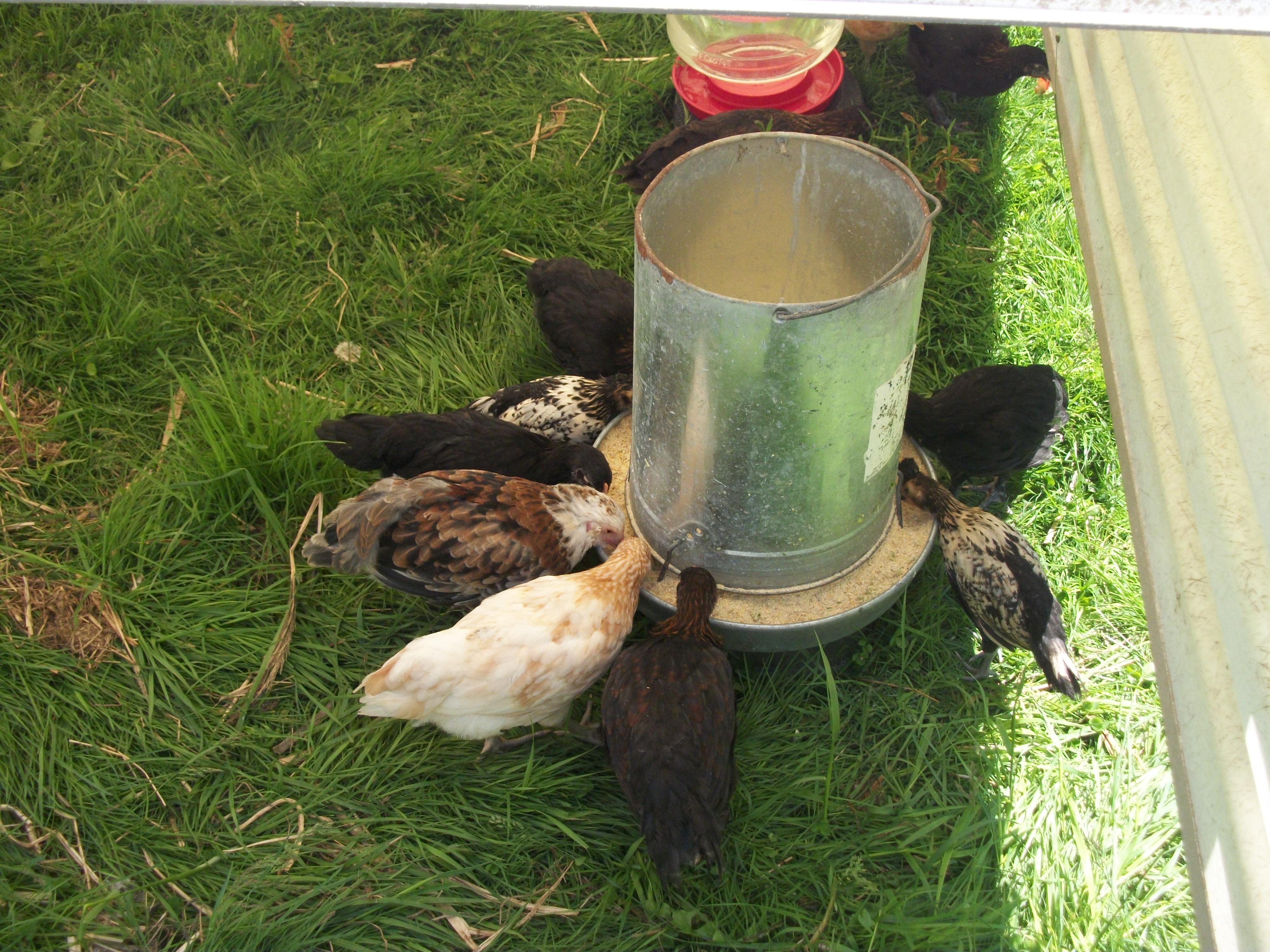
 HEre they are in the shade of their tractor.  Rose and Pete move them every day, so they always have fresh grass and a new set of bugs to catch.

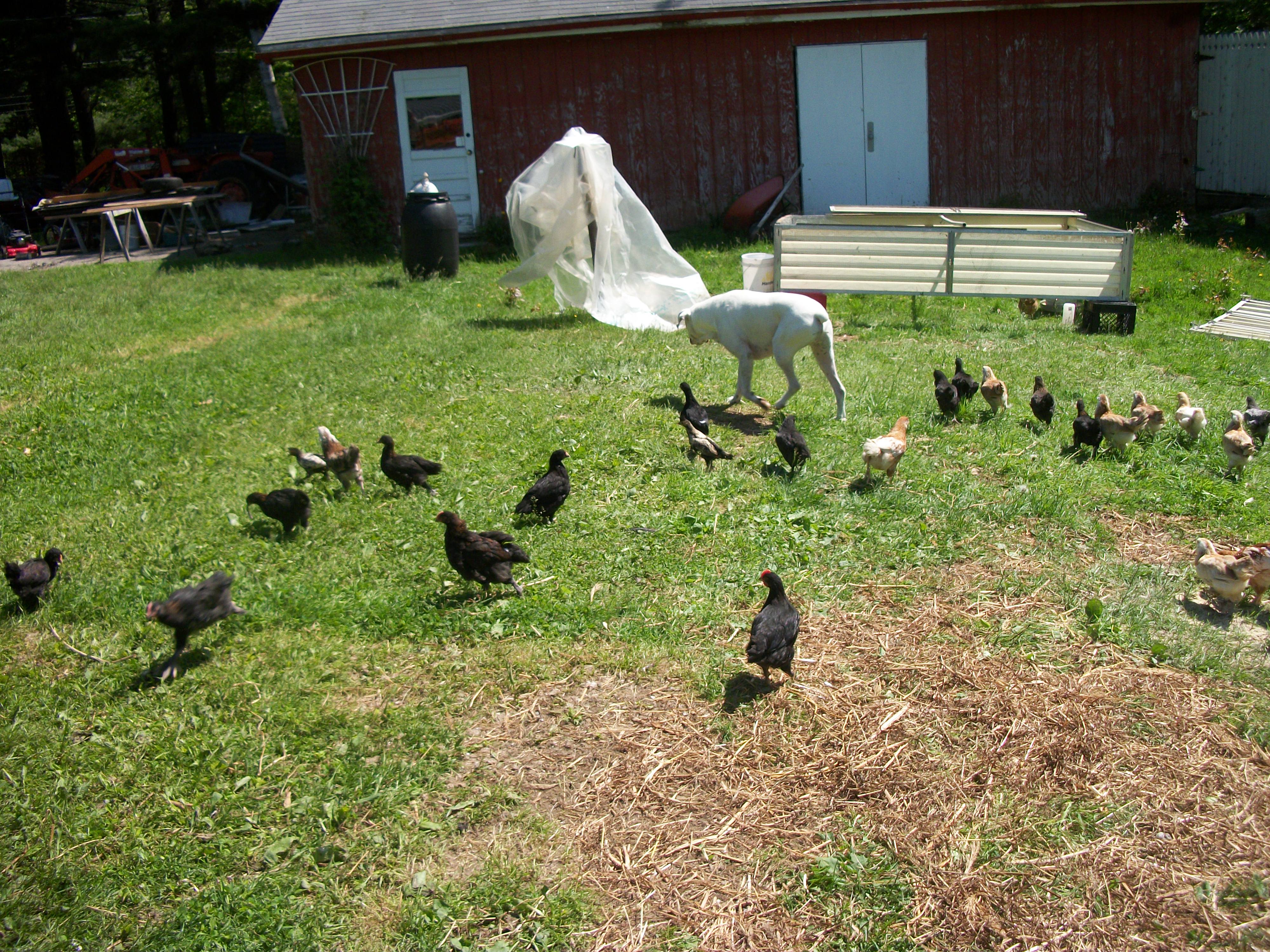
Here are the batch of Copper Black Marans, Wheaten Americaunas, two Barbanters, and backyarders.   We’re starting to see which of the CBMs will be roosters as their wing feathers are turning orange.  They are loose in Rose and Pete’s yard.  Below them to the right is a planting field, and behind them are some protective shrubs.  They run from their tractor–you can see the edge propped up in the back right of the picture–to the shrub.  They’re already looking for and eating bugs from the yard.   I just happened to catch mostly marans in this picture.

Here are some of the others.  The little speckled chicks are the two Barbanters.  They are a week or so behind the marans.  Look at the topknot on the one at the right.  Probably a rooster in the making.  The Wheatens and backyarders (all from blue eggs) are about 6 weeks old now.   You can see a purebred wheaten–the blondie in the front.  And that bigger backyarder is quite striking in that s/he has coloring like an eagle–with a white head.  There are 3 of them like that.   The maran in front will be a roo–see the copper coming in on his wings?

Oh what fun we are having this spring!