Turkey Tracks: More Socks

Turkey Tracks:  February 7, 2012

More Socks

Yes, I’m still knitting socks.

Here’s a pair given to daughter-in-law Corinne at Thanksgiving.  Though she lives in Charleston, she travels to Philadelphia and to Maine in the winter.

I particularly like this yarn because it has little glitter bits woven into the yarn.  It seems so festive:

Here’s a pair started in Charleston over Thanksgiving and given to daughter-in-law Tamara when she came to Maine for Christmas this year.  This yarn was so yummy to work with–I recall it had something added–aloe?  lanolin?:

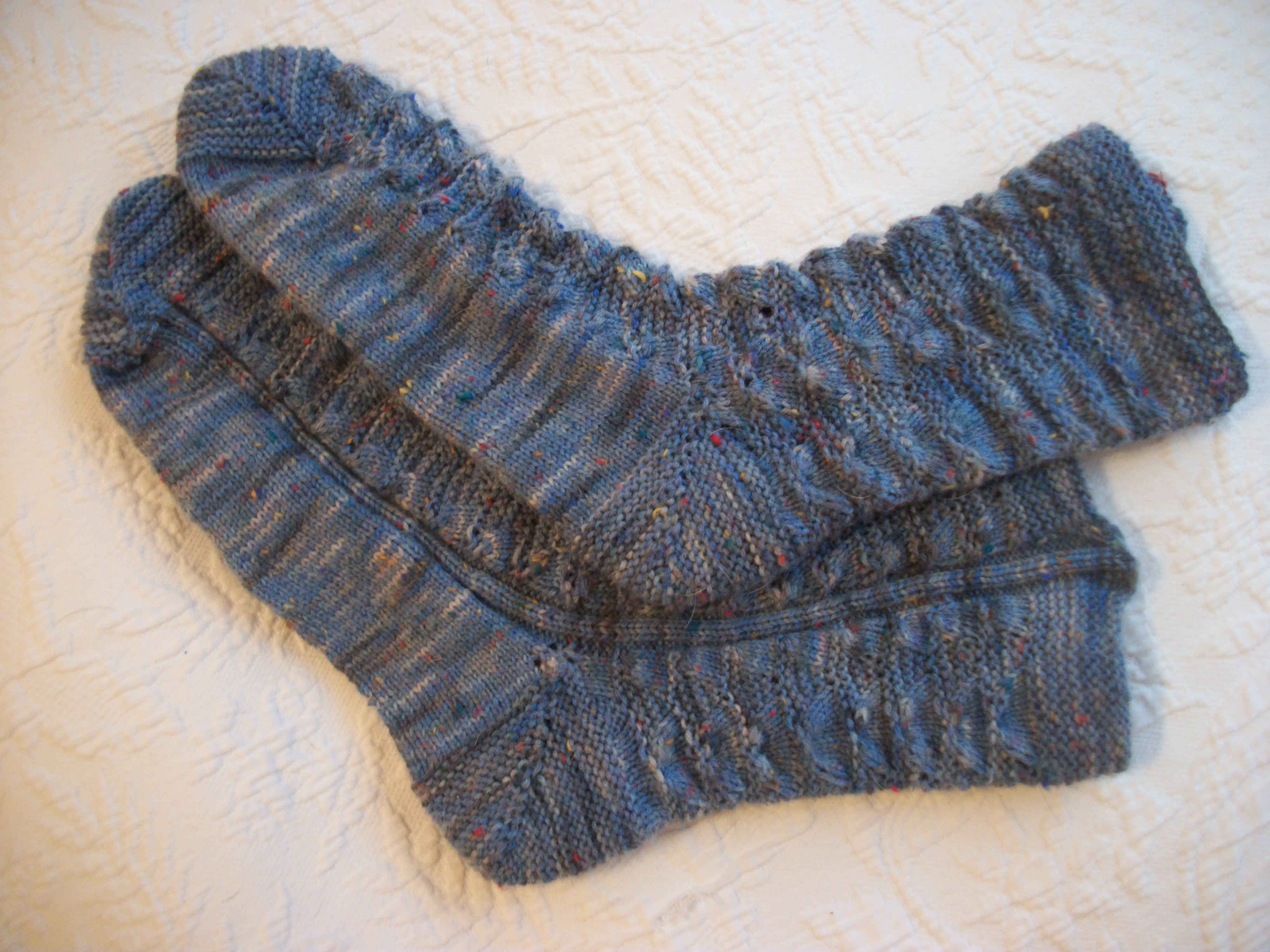
 And, here’s a pair I made for myself, using Cookie A’s pattern, “Lindsay.”  This one was a bit easier as it repeats consistently over 8 rows.  And, it had a short-row heel and toe, which was so fun to make.  My first time with a short-row.  The column that runs down the sock is only on the outside of each sock.  That’s the kind of detail about which Cookie A thinks.

Here’s what the pattern looks like when stretched out a bit:

These feel great on my feet.

Turkey Tracks: Valentine Roosts Outside

Turkey Tracks:  February 7, 2012

Valentine Roosts Outside

About two weeks ago, when I counted chicken heads in the coop prior to locking them up for the night, Valentine was missing.

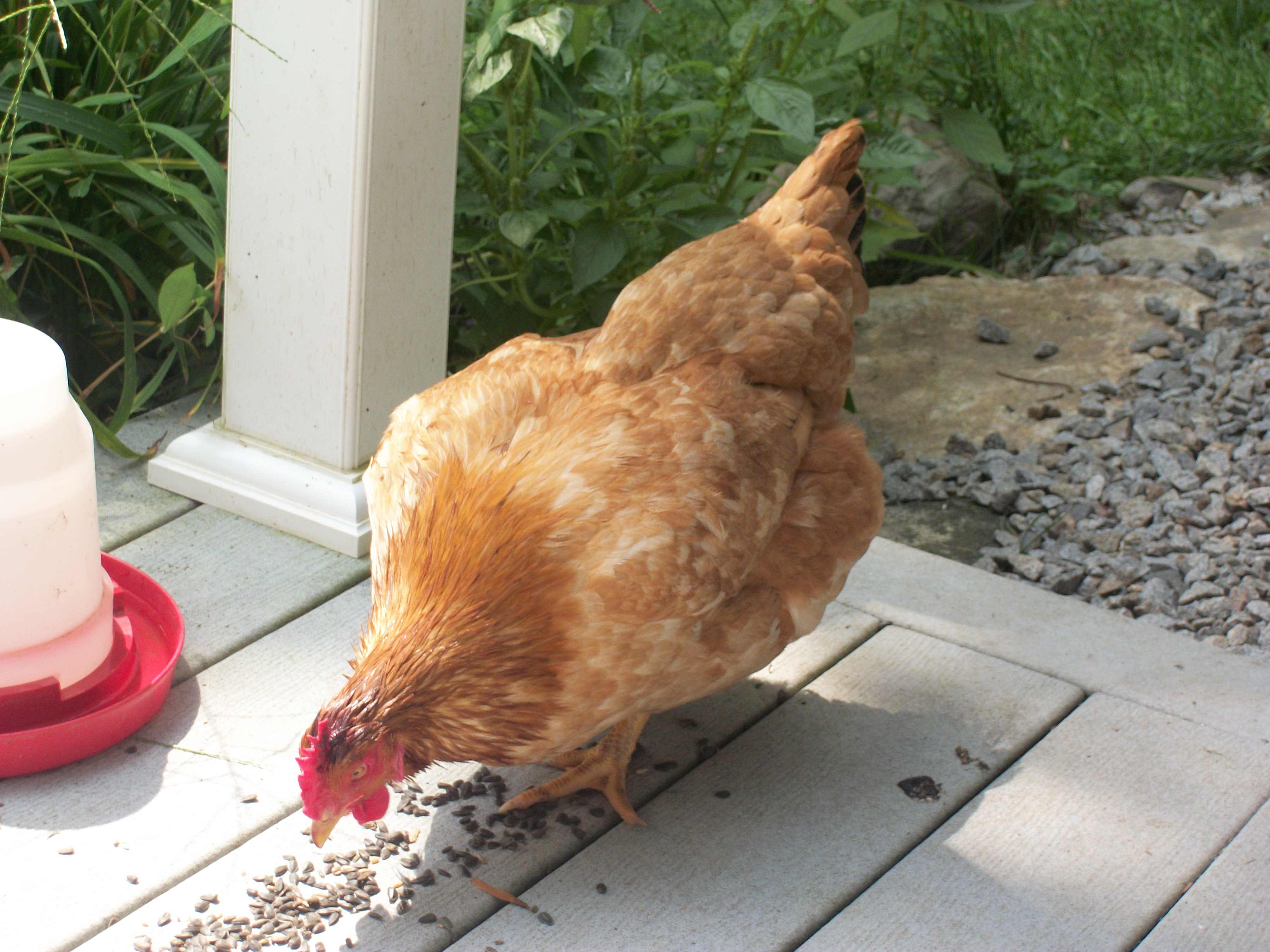
Valentine is a Freedom Ranger meat chicken.  But FRs also lay gorgeous, big eggs.  When Valentine first started laying, almost all her eggs were double-yoked.  Rose raised her last spring/summer, and I reached into the pen one day and pulled up the first hen I could lay hands on to bring home for our coop.  Valentine.

Here’s a picture of her late last summer.  Her head, back of her comb, is covered with antiseptic cream since she had some altercation or other with one of the other hens or the rooster.  She’s was so BIG at this stage that she scared the rooster–whom she tried to follow everywhere.  She’s too heavy to fly up on the coop  perch to roost with the other chickens:

Anyway, that night two weeks ago, she wandered up out of the dark just as I realized she was missing.  I picked her up and put her into the coop for the night.

Last night, she was nowhere to be found when I went out to lock up the hens.  It’s important to lock that coop down tight.  On several mornings now, I’ve had racoon tracks all over the fresh snow on the egg box cover.

I took a flashlight and looked all over the yard, in the garage (did she go in and we didn’t see her?), and down the driveway.  I looked everywhere every space I could possible think of into which a fat chicken who can’t fly might tuck herself.  No luck.  I was encouraged that I had not seen feathers anywhere.  When a chicken gets attacked, there are always a lot of feathers.  But, the flock has been spending a lot of time up on the warm hillside, where the snow has melted and the leaves show.  Feathers might not show up in the dark on the leaves…

I told John, and he immediately grabbed a flashlight and went out to look.

No luck either.

This morning as I was fixing all the animals some food, I saw Valentine stroll down the back path.  When I went out, food bowl in hand, she came running to me like a young chicken–wings out and clucking.  I put it on the ground for her.  She was starved.  And vocal.  After she had eaten a bit, she started telling me some long tale, and she followed me around, still talking, the whole time I was outside fluffing up the coop, changing out the water, and making sure the grain bowl had grains in it.

I can’t imagine where she slept.  I hope she does not do it again.  But, she is a…Freedom Ranger.

Turkey Tracks: “Grandma’s Hands”

Turkey Tracks:  February 6, 2012

Grandma’s Hands

I’ve been wanting to hear a song I used to remember called “Grandma’s Hands.”

I was pretty sure that the singer was Lacy J. Dalton.   But, that wasn’t right.

Sunday morning I decided to tackle the pile of garlic on my kitchen counter–see my earlier post on brining garlic so you don’t lose it.  And, I was thinking about how I could find “Grandmas’s Hands.”  Alongside musing that it’s kind of cool that one harvests garlic in the fall so one has it to ward off winter colds and so forth.

In the 1980s, we all made a lot of music tapes for our own use and for gifts.  Some of my favorite music is on those old, dried-out tapes now–many songs were taken from records that we left behind when we moved to Maine since records were outdated technology.  It suddenly occurred to me that I might find “Grandma’s Hands” on one of the old tapes, so I left the garlic and, sure enough, I still had the tapes.  They were crammed behind the CDs in the lower drawer of our music center.

I haven’t listened to much music lately since I have trouble hearing it.  But, my new hearing aids are wonderful, so I found the tape with “Grandma’s Hands”–and a whole lot of other songs I love–plopped it in.  It’s scratchy and old, but it played.  And I have renewed interest in getting an ipod and downloading these favorite songs to it.  I’ll get advice from my children now and get about doing this new project.  I can stream the ipod into my hearing aids and will have fabulous clarity of sound.

Turns out Barbara Streisand sang “Grandma’s Hands” on my tape.  And some google searches discovered that the song was written by Bill Withers.  Both artists have their versions on utube, so you can hear it if you like quite easily.

And, here’s a picture of this Grandma’s Hands–at rest:

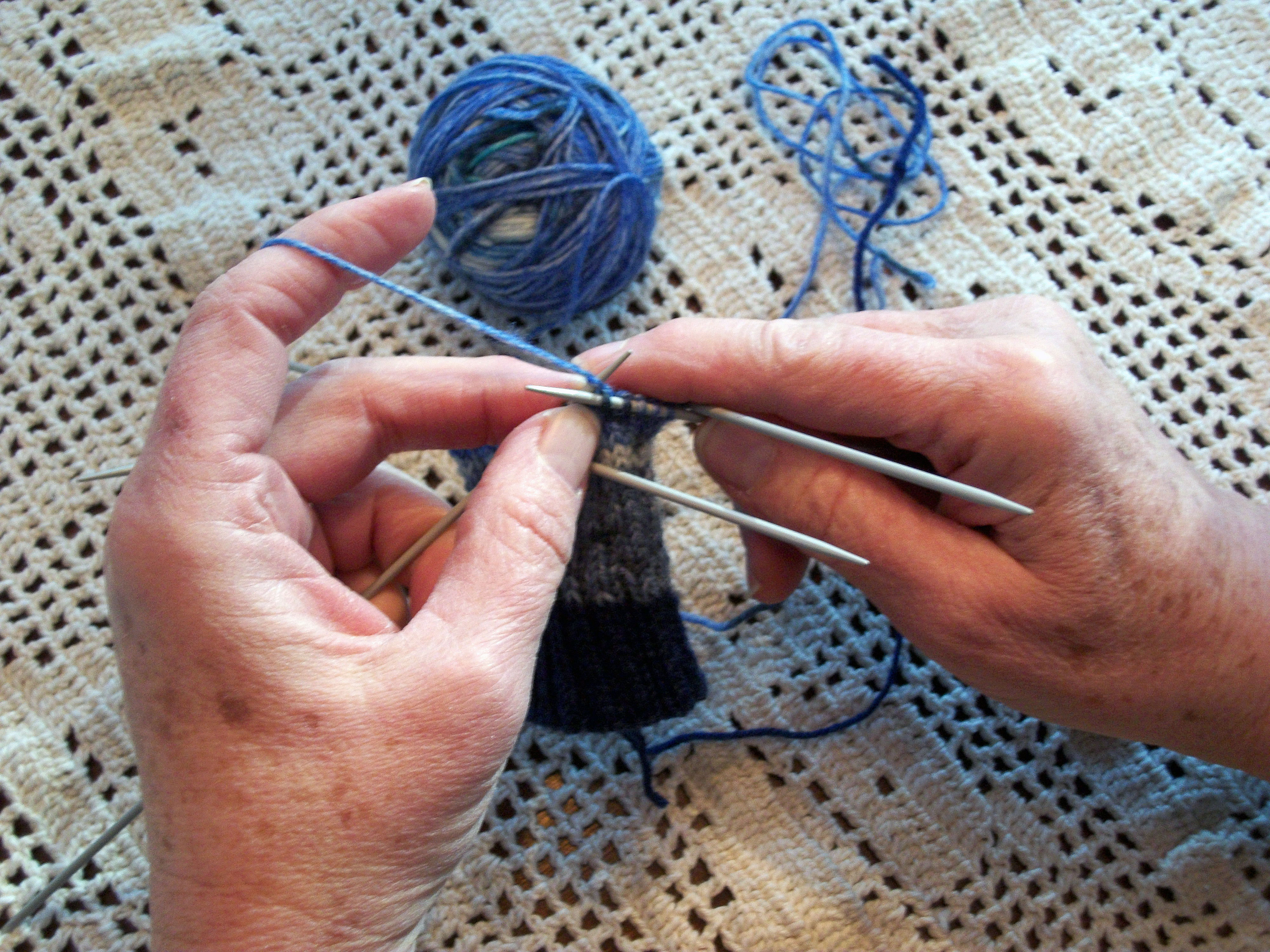
And, at work:

I am never so happy as when I am using my hands to do something–write, plant, weed, sew, knit, cook, paint.  My hands are such a huge part of my life.

PS:  The garlic pile produced–all together–four quarts of brined garlic and some leftovers to keep fresh for another week or so.

Turkey Tracks: Chickens in the Window

Turkey Tracks:  February 6, 2012

Chickens in the Window

Chickens are very social.

We are indoors a lot these days, winter being winter.  I love this time of quilting, knitting, cooking hearty foods.  It’s so restorative.

We’d get out more, but we’ve had a lot of ice with all the fluctuating temps melting the little bit of snow we have and then freezing it back into treacherous, mirror-like sheets of ice.  Two dear friends have already fallen and hit the back of their heads and are suffering with concussions and wrenched muscles.

Anyway, I can be working away at something in the quilt room or the laundry room, and I’ll get this feeling of being watched.  Sure enough, some of the chickens–or all of them–will be gathered in a window and looking at me.

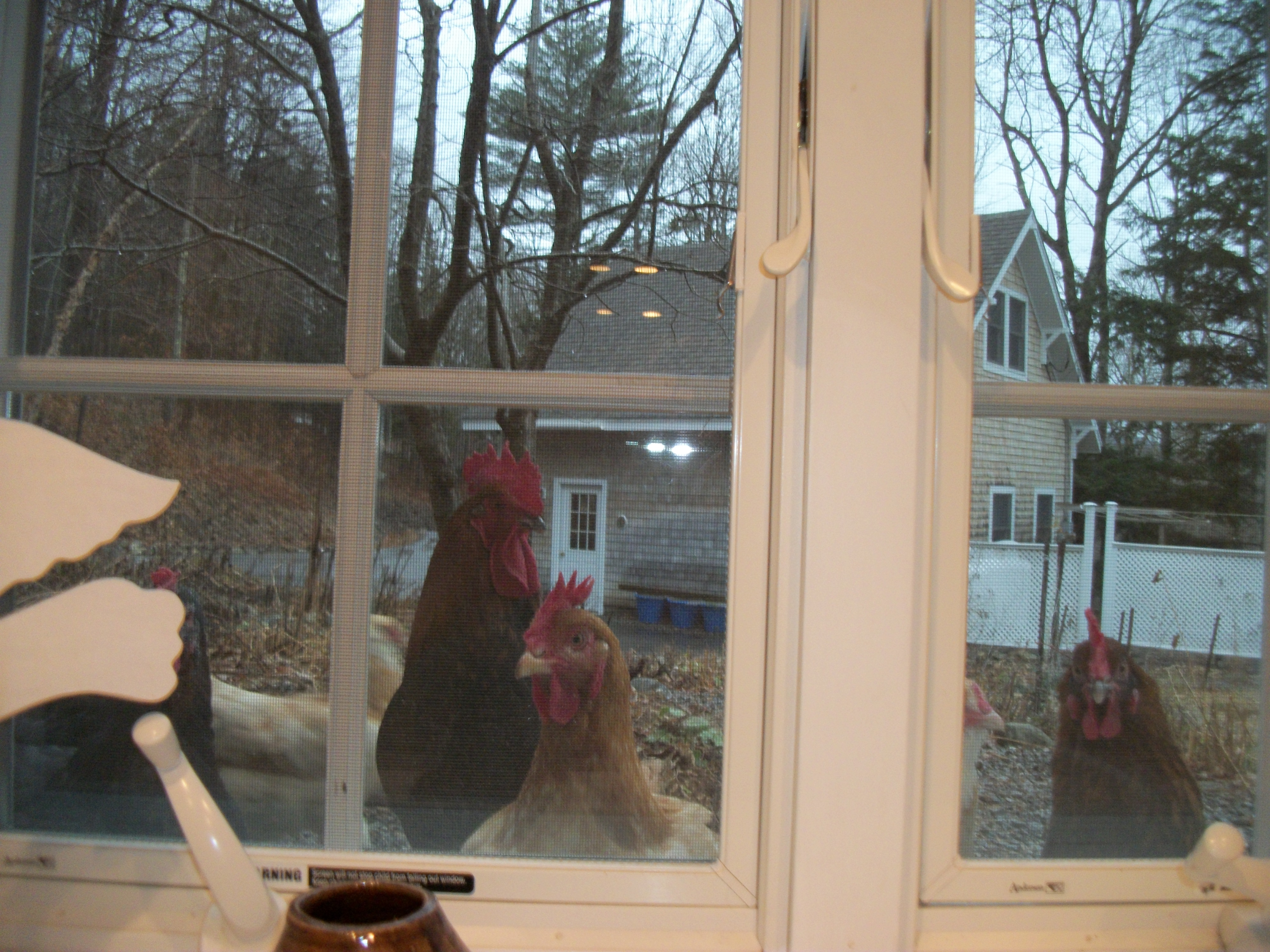
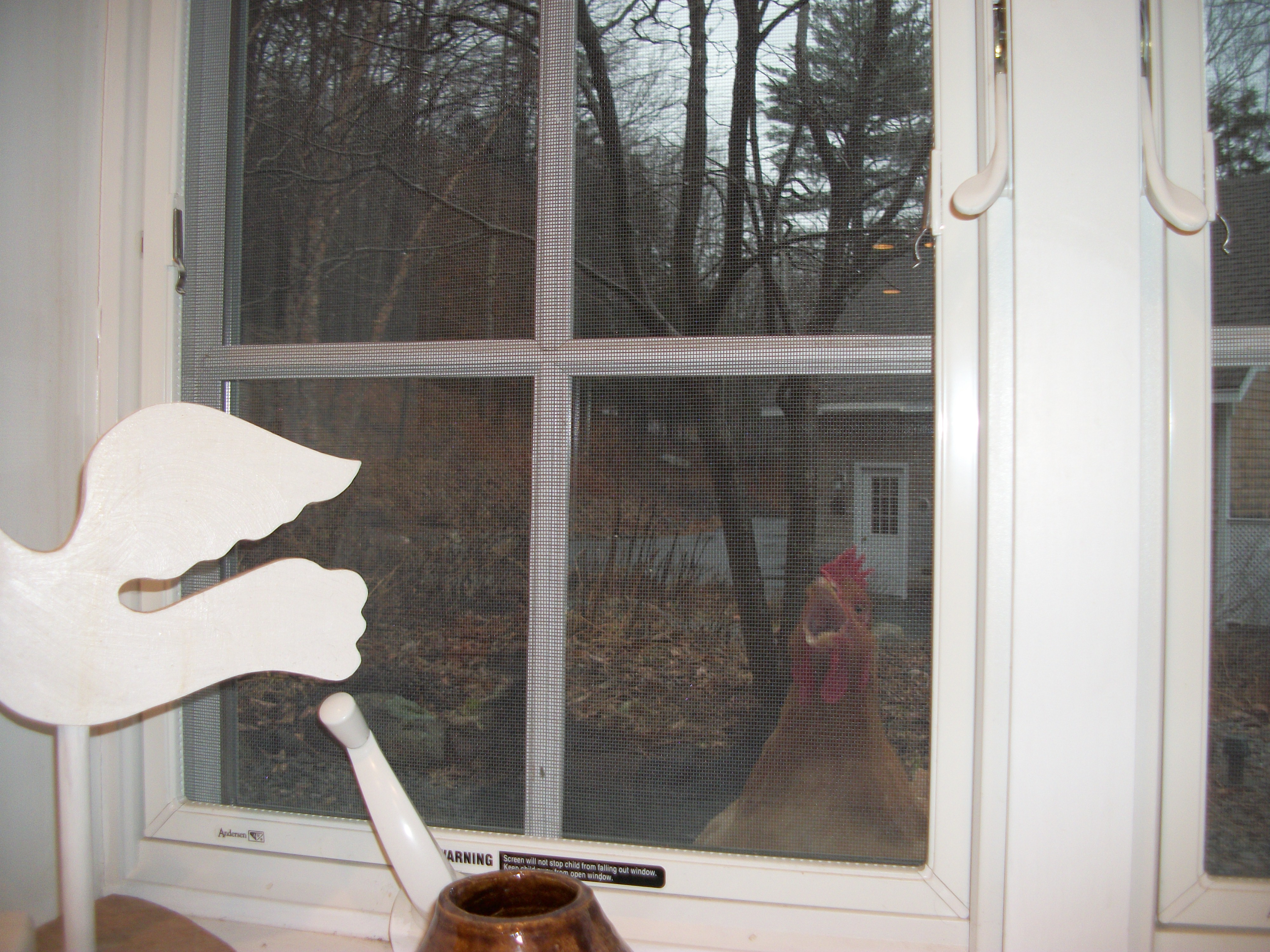
Here are some chickens in the window earlier in the winter–before we had snow:

That’s Pretty Pierre to the left, the roo; Valentine next to him, a Freedom Ranger, and Rosie, a Copper Black Maran hen with beautiful neck markings.

If you talk to them, they crane their heads and, often, talk back.

Here they are not long ago–at the front door.  John was so enchanted he took pictures and sent out a Facebook entry about “the girls coming to tea.”

Don’t let anyone tell you chickens are dumb.  They’re not.  They know exactly how to get you to come give them some sunflower seeds or millet.  They know they’re sitting ducks in the snow, so stay in their coop.  And they know what to eat and what isn’t so good for them.

I love my chickens!  Even when they poop on all the porches.

Books, Documentaries, Reviews: A HIDDEN WHOLENESS, Parker J. Palmer

Books, Documentaries, Reviews:  February 3, 2012

A HIDDEN WHOLENESS:  THE JOURNEY TOWARD AN UNDIVIDED LIFE:

Welcoming the Soul and Weaving Community in a Wounded World

by

Parker J. Palmer

Parker J. Palmer is a Quaker and is someone who suffered what was, apparently, really serious depression.  Gradually, he began to realize that his inner life was sharply divided from his outer, lived life–and that divide was making him sick.  Using practices from his Quaker heritage, he devised and recommends taking part in a guided (by a trained practitioner) “circles of trust” practice.  These circles are manned by trusted companions and can meet one time when someone needs to sort out a life problem or can form and meet  over a stated cycle, like four times a year.  The circles allow participants to be heard and to hear themselves, and from that practice, ways emerge to handle problems or worries.  Palmer would say that participants learn to speak their “truth.”  No one “fixes,” advises, etc.  Circle participants just listen.  Also, what occurs in the circle, stays in the circle, so only people with the integrity to keep this pact should take part.

Palmer is deeply interested in creating, nurturing, and maintaining viable communities, and he believes that to do that, we must be able to hear each other.  Here’s how Palmer describes what happens when we try to fix and advise (116-117):

  So what do we do in a circle of trust?  We…speak our own truth; we listen receptively to the truth of others; we ask each other honest, open questions instead of giving counsel; and we offer each other the healing and empowering gifts of silence and laughter.

This way of being together is so countercultural that it requires clear explanation, steady practice, and gentle but firm enforcement by a facilitator who can keep us from reverting to business as usual.  But once we have experienced it, we want to take this way of being into other relationships, from friendship and the family to the workplace and civic life.

If we are to embrace the spirit as well as the letter of the law that governs a circle of trust, we need to understand why the habit of fixing, saving advising, and setting each other straight has such a powerful grip on our lives.  There are times, of course, when that habit is benign, when what grips us is simple compassion.  You have a problem, you share it with me, and wanting to help, I offer you counsel in the hope that it will be useful.  So far, so good.

But the deeper your issue goes, the less likely it is that my advice will be of any real value.  I may know how to fix your car or help you write a paper, but I do not know how to salvage your failing career, repair your broken marriage, or save you from despair.  My answer to your depest difficulties merely reflects what I would do if I were you, which I am not.  And even if I were your psychospiritual clone,  my solution would be of little use to you unless it arose from within your soul and you claimed it as your own.

In the face of our deepest questions–the kind we are invited to explore in circles of trust–our habit of advising each other reveals its shadow side.  If the shadow could speak its logic, I think it would say something like this:  “If you take my advice, you will surely solve your problem.  If you take my advice but fail to solve your problem, you did not try hard enough.  If you fail to take my advice, I did the best I could.  So I am covered.  No matter how things come out, I no longer need to worry about you or your vexing problem.”

The shadow behind the “fixes” we offer for issues that we cannot fix is, ironically, the desire to hold each other at bay.  It is a strategy for abandoning each other while appearing to be concerned.  Perhaps this explains why one of the most common laments of our time is that “no one really sees me, hears me, or understands me.”  How can we understand another when instead of listening deeply, we rush to repair that person in order to escape further involvement?  The sense of isolation and invisibility that marks so many lives–not least the lives of young people, whom we constantly try to fix–is due in part to a mode of “helping” that allows us to dismiss each other.

When you speak to me about your deepest questions, you do not want to be fixed or saved:  you want to be seen and heard, to have your truth acknowledged and honored.  If your problem is soul-deep, your soul alone knows what you need to do about it, and my presumptuous advice will only drive your soul back into the woods.  So the best service I can render when you speak to me about such a struggle is to hold you faithfully in a space where you can listen to your inner teacher.

Palmer’s take on “fixing” is especially interesting to me as I come from a family of “fixers.”  And, have been a “fixer” myself.  Hmmmmm.  I don’t think “fixing” works too well.  I read this book before Christmas, and I’m still thinking about many of the things Palmer poses, especially the strong place he holds for developing community through nourishing the inner life, the soul, of each person–which works to heal the cultural divide we seem to have created between values that foster humanity and values that foster the market.

Turkey Tracks: Half-Square Triangle Patterns

Turkey Tracks:  February 3, 2012

Half-Square Triangle Patterns

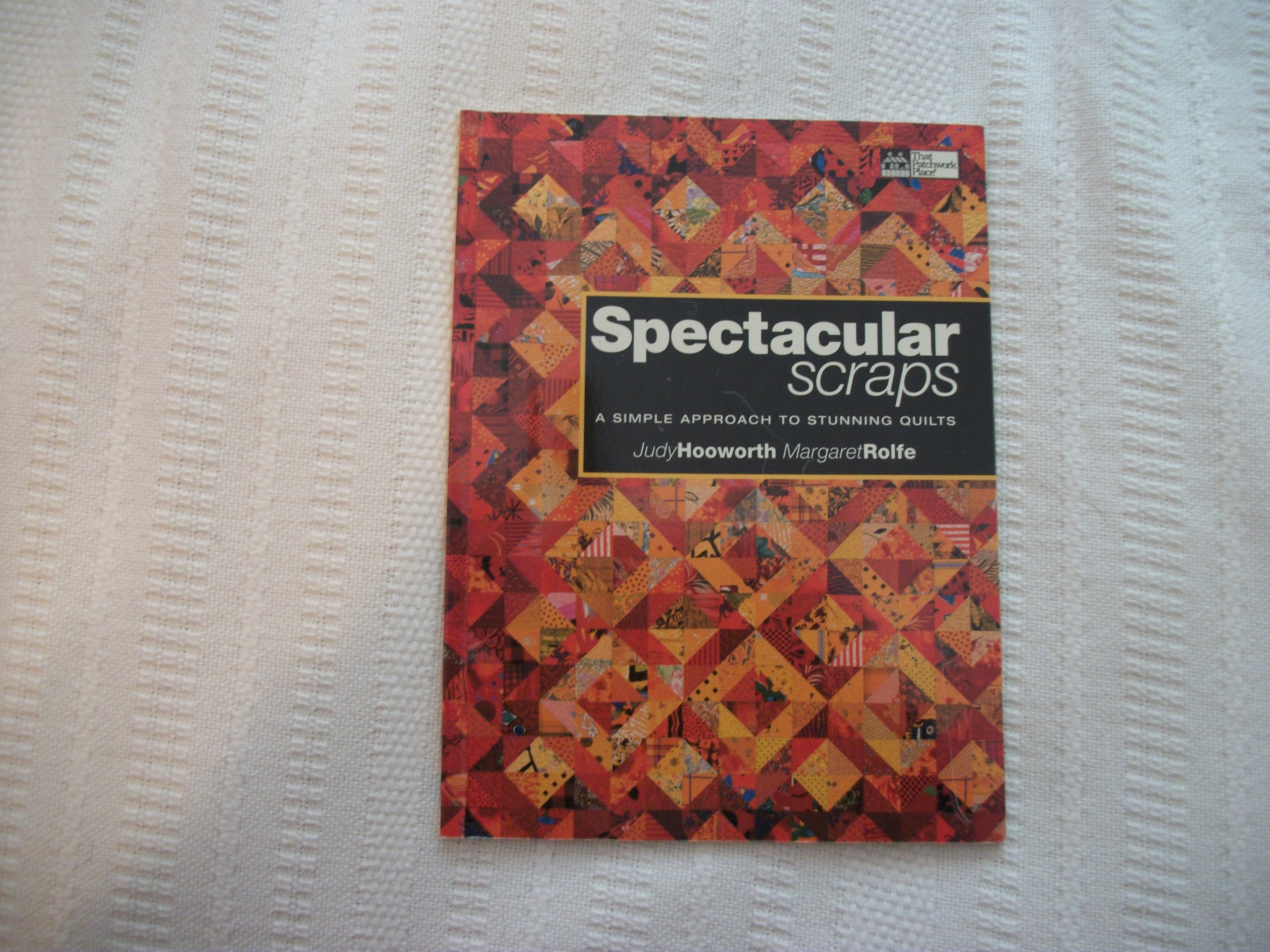
After I posted about using scraps to make my BLUE TANGO quilt, made from half-square triangle blocks, it occurred to me that I could have highlighted a terrific book that titilates the imagination about half-square triangle possibilities.  It’s SPECTACULAR SCRAPS by Judy Hooworth and Margaret Rolfe.  BLUE TANGO is a simple light/dark arrangement.  You can see from this book cover that you can take half-square triangles to much more complicated places.  And, below, see an idea for a “rainy day” design project for children.

Here’s a page from the book that shows some of the many, many ways to arrange light/dark half-square triangles.  BLUE TANGO was the first pattern under No 5.

Rainy-day design project for children:

For a rainy-day project with children that helps them “see” design possibilities, have them cut out 3 to 4-inch squares, draw a diagonal line, color in one side, and make some of these designs.  Perhaps they will want to paste their design to a poster board as an art piece?

Turkey Tracks: Yarn Road Trip

Turkey Tracks:  February 2, 2012

Yarn Road Trip

Giovanna McCarthy and I hit the road one day last week.  Our destination:  Romney Ridge Farm Yarn Company in Woolwich, Maine, which is about an hour south of Camden.

There is a history to this story.

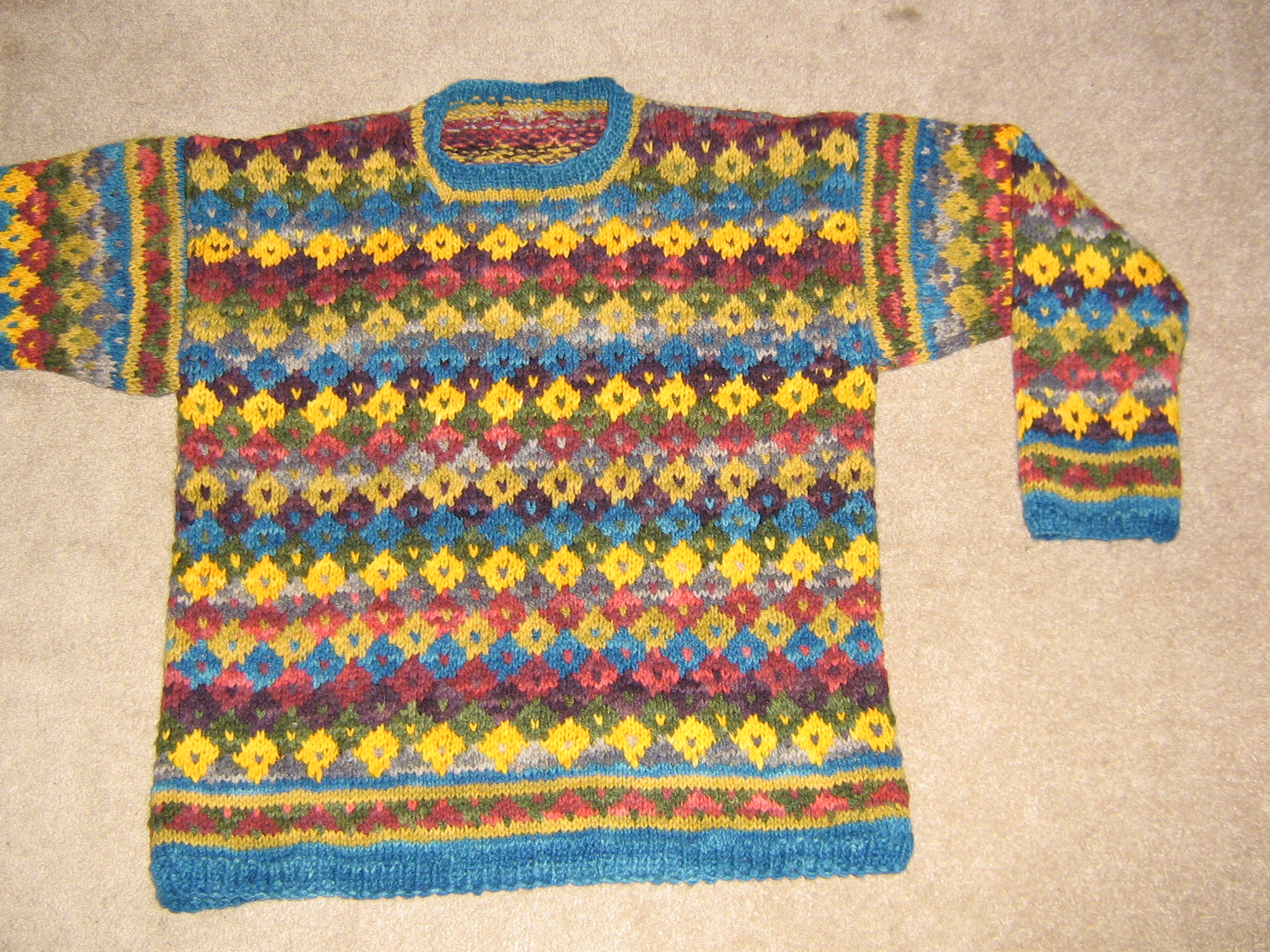
Last summer I met Kelly L. Corbett, the owner of Romney Ridge Farm Yarn Company, at MOFGA’s Common Ground Fair in September.  (MOFGA is the Maine Organic Farmers and Growers Association, and they have a spectacular fair each year.)  Kelly had asked Aloisia Pollock, a master knitter, to make a sweater showcasing Kelly’s yarns.  Here’s the sweater–which uses a method of carrying two colors to make the little diamonds.

When I got home from MOFGA I went into our new knitting store here in Camden:  The Cashmere Goat.  They LOVED the idea of carrying Kelly’s yarns and hosting a class taught by Aloisia Pollock to make her sweater–and they have a wonderful space to take such a class.  The three groups came together, and that class will be taught in early April 2012.  The sweater is now hanging in the store, alongside some of Kelly’s yarns.

But, Giovanna and I wanted a larger yarn selection than The Cashmere Goat presently has, so we called Kelly and went down on a cold, wintry to pick out the 7 skeins we needed for this project.  We were blown away by all the colors, the possibilities.  Both of us were paralyzed for long moments.  Giovanna summed up what we were both thinking.  “How can I pick seven colors when I want every single one here!”

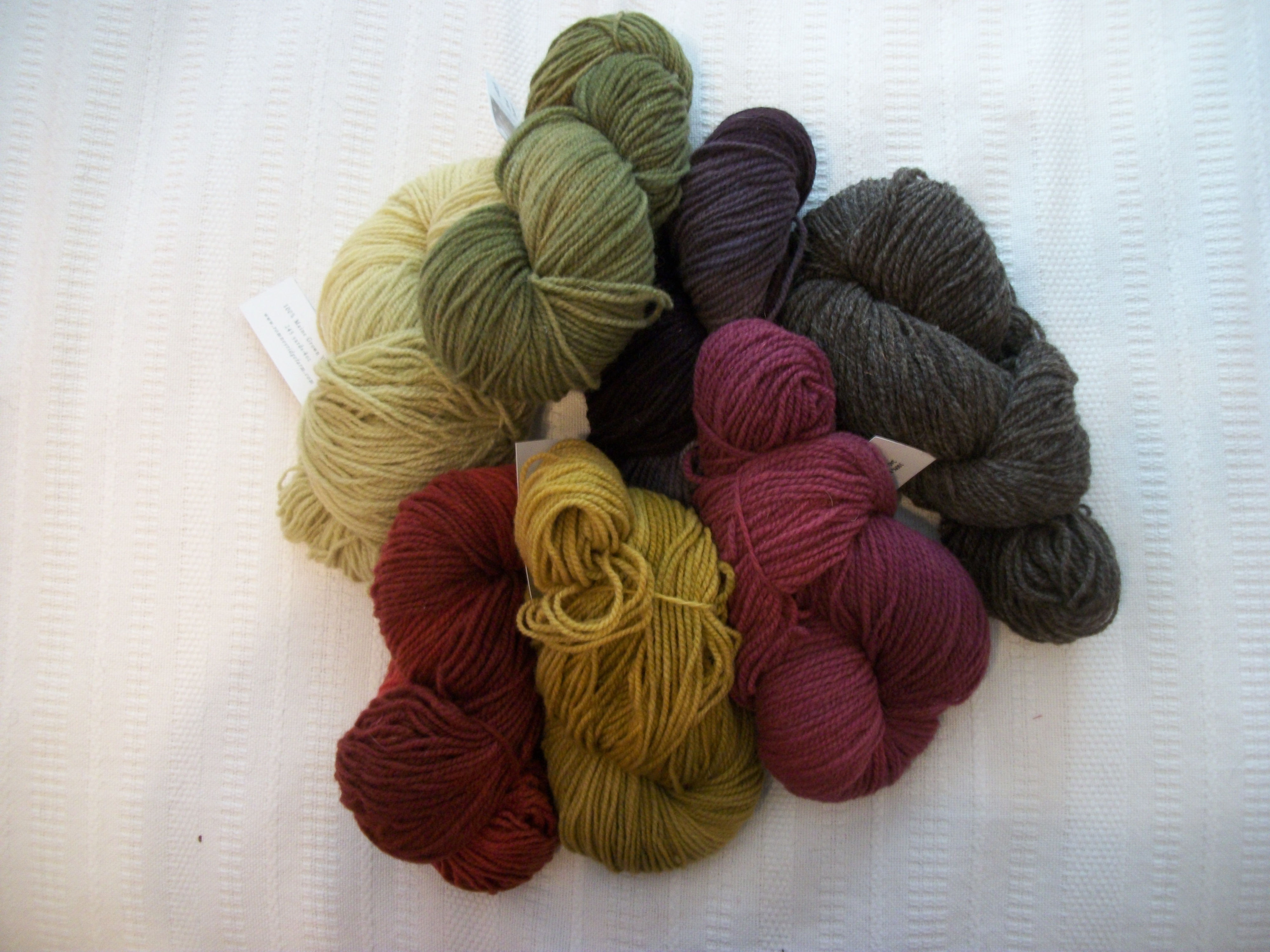
Here’s what I came home with–the yarn on the far right is the “natural” undyed color of the sheep’s wool.  And, the dark purple yarn above the mauve color isn’t showing up well in this picture:

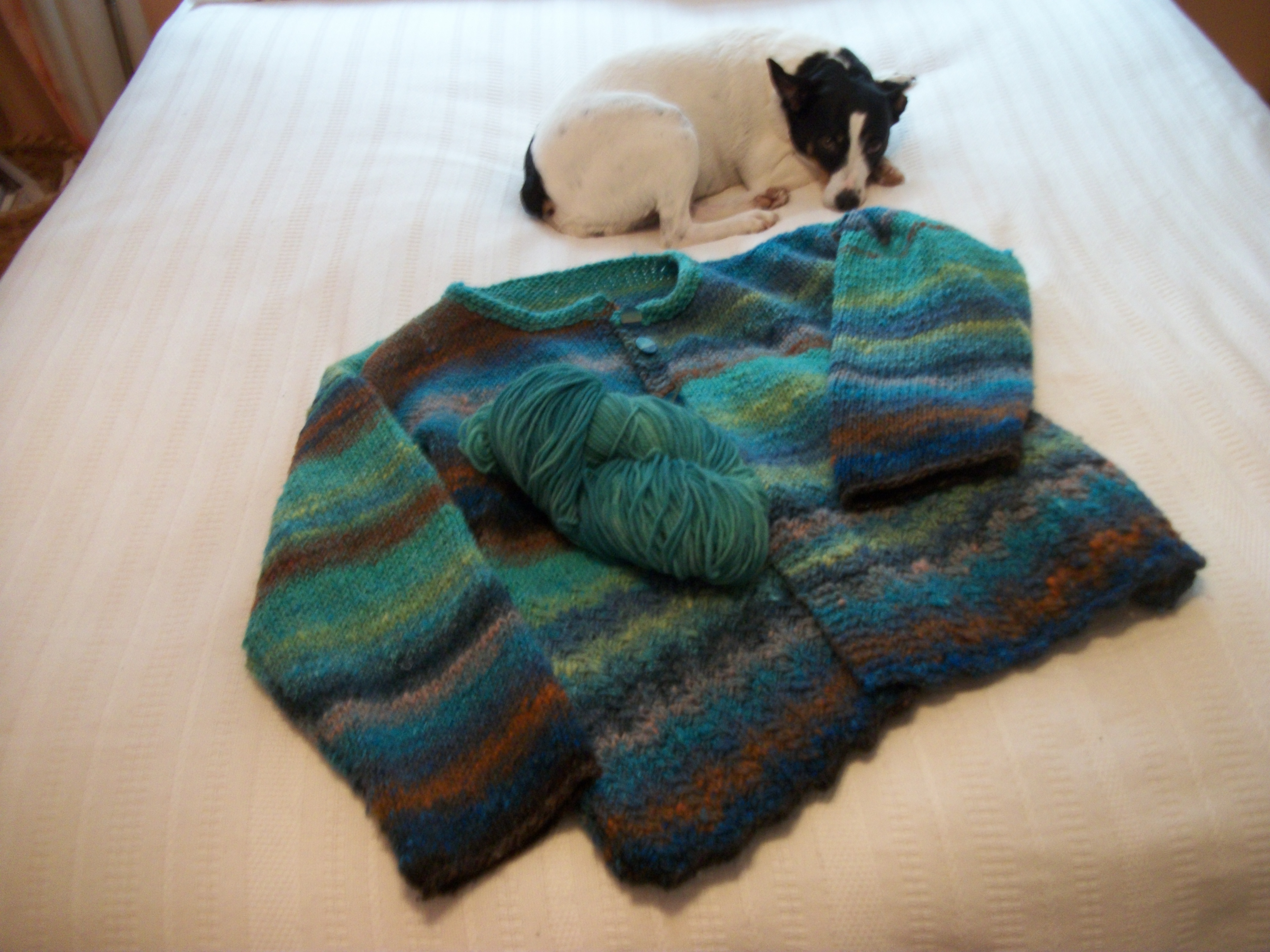
I also came home with a turquoise yarn I thought would make a great scarf for my black winter coat–AND that will go with my Noro sweater and hat:

Kelly’s farm shop is easy to get to from Route 1.  She’s just below Wiscasset.  Her web site is www.romneyridgefarm.com.  She has a blog as well on that site.

Aloisia Pollock lives in Jefferson and runs the Sunset Cabins on Damariscotta Lake–www.sunsetcabinsmaine.com.

The Cashmere Goat is at 20 Bayview Street in Camden–www.thecashmeregoatknit.com.

Giovanna and I are going down to see Aloisia next Wednesday, and we can hardly wait!

Turkey Tracks: Preserving Garlic

Turkey Tracks:  February 2, 2012

Preserving Garlic

Some of our garlic is starting to go soft and to mold–especially the really big bulbs.  It’s that time of year.

Last year, I jollied the bulbs along by putting them into the refrigerator.  I swore then that I’d take the time to clean them and do SOMETHING with them next year.  For those of you who don’t grow things, one plants garlic in the fall, it winters over in the ground, sprouts in the spring, grows all summer–giving you fresh garlic scapes just when you’re hungry for fresh garlic taste–and one harvests in the early fall when the plants start to turn brown.  After pulling up the bulbs, one dries them in a warm dry place, which makes the true, strong garlic taste develop.  After that, one cuts off the stalks and stores the bulbs.  They need cool, dry storage.

Also, EAT GARLIC!.  It has the most amazing chemical properties which can build up your immune system, drive off colds and infections, and keep you generally healthy.  It didn’t get the reputation for vampire protection for nothing!  If you start coming down with a cold, mash a fresh garlic clove into some butter, spread it over a cracker or something like that, and eat it.  Salt helps.  Three times a day.  You’ll notice that help is occurring almost right away.

So, this year, I brined a jar of garlic, which took care of about half of our crop.  You can see what I have left to do.  You can also see the dusky blue light outside my kitchen window

I used a recipe from NOURISHING TRADITIONS since it uses whey.

Brining Garlic

In a quart Mason jar, place the peeled cloves of about 12 heads of garlic.  (If you roll them under your hands or in a towel, the cloves break free easily–all except for the pesky little ones.)

Add 2 teaspoons of dried oregano (I used a savory herb mixture with a Mediterranean base), 2 teaspoons sea salt, 2 Tablespoons of whey.  If you don’t have whey (you drip it out of yogurt), use another 2 teaspoons of sea salt.  Add water to cover, but leave a good inch free at the top.  You’ll notice I have my jar sitting in a saucer to catch drips if the fermentation process gets going in earnest and bubbles start going over the top.

Leave the jar on the counter for about three days, turning it upside down and shaking it a few times a day to distribute the juices.  Then, put it in a cool place.

You can use the garlic like fresh.  The juice is great in salad dressings.  Or, I suspect, a little would jive up soups.

I’m also going to make some GARLIC ELIXIR–from a recipe in WELL BEING JOURNAL, Jan/Feb 2012.  They took it from Doug Oster’s TOMATOES, GARLIC, BASIL:  THE SIMPLE PLEASURES OF GROWING AND COOKING YOUR GARDEN’S MOST VERSATILE VEGGIES.  Sounds like a good book.

Garlic Elixir

1 cup of garlic cloves, peeled

1/4 cup parsley

1 teaspoon salt (sea salt please)

1 Tablespoon red wine vinegar

Olive oil (1/2 to 1 cup)

1 tsp. black pepper

1 Tablespoon lemon juice

optional:  chopped black olives or capers to taste

Process garlic and parsley in a blender until chopped fine– put optional ingredients in first before blending the garlic and parley if using.  Place in a mixing bowl.  Add salt, vinegar, pepper and lemon juice, stir in olive oil.  Place in a glass jar and cover with thin layer of olive oil.  Will store in refrigerator for up to a month.

Wow!  I’m guessing some of that added to salad dressing would make some fabulous salad dressing.  Wonder if one could freeze it…

Push the cloves do

xxx

Turkey Tracks: Using Dried Zucchini Slices

Turkey Tracks:  February 2, 2012

Using Dried Zucchini Slices

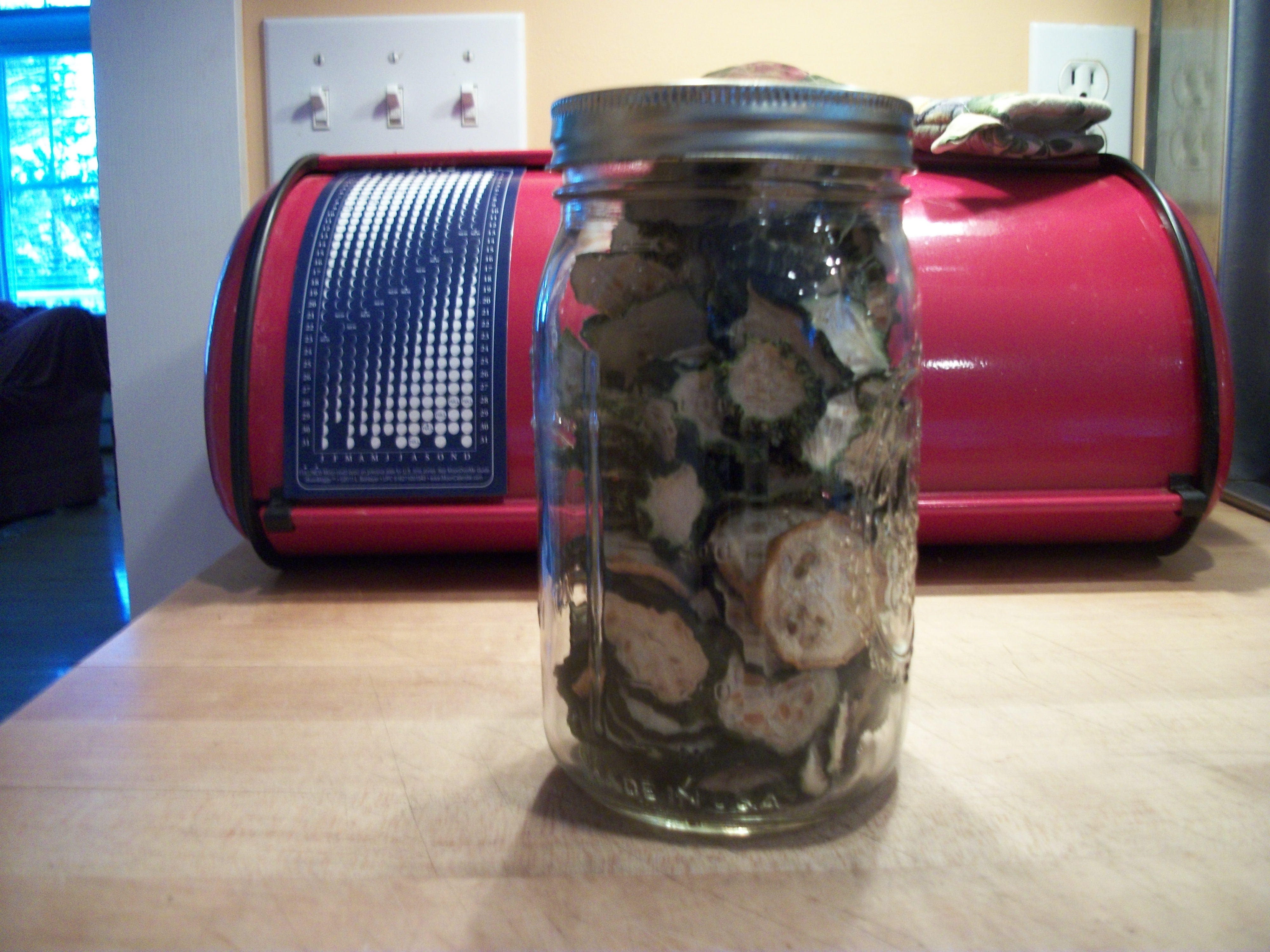
The zucchini slices I dried last summer have been a great success this winter.  Here’s a pic–with the 2012 Moon Maggy in the background I see.

To recap, when the glut of zukes comes in, I’ve tried to shred them and freeze them for winter soups or to put into the dog food.  But, the frozen shredded zukes develop this metallic taste.  And, the bits are positively slimy.  So, this past summer I tried slicing and drying them–having had great success drying halved small tomatoes.

One can just eat the zuke chips or use them in dips.  But, what we’re finding is that they are terrific thrown into soup in about the last five minutes to reconstitute.  They hold their shape and texture, are a delicious addition, and hold up to reheating soup.

Success!

We’re down to our last handful of tomatoes.  I dried a TON of them last summer before the late blight hit.  MORE next summer.