Interesting Information: “Buying and Selling of Homemade Food” by Cynthia Rosen

Interesting Information:  July 15, 2014

A Letter to the Editor of THE FREE PRESS


Here’s a letter to the editor in one of our local papers, THE FREE PRESS, from July 10, 2014.

The issue is “food safety” and how it is being used to kill small businesses–or, how our government is using food safety to stop all competitors to our Big Ag/Big Food industry.

I’ve written about this issue before.  These kinds of “food safety” laws are also being wielded all over Europe to run out small farmers, to stop farmers’ markets, to hobble produce growers, and so forth.

Maine has a lot of small farms.  We’re one of the few states that still does.  And Mainers are fiercely independent.  SMALL FARMS DO NOT OPERATE LIKE THOSE BIG COMMERCIAL FARMS IN ANY WAY.  We cannot hold them to the same rules that big, dirty farms should have.

So what does “freedom” really mean if we don’t have the choice to eat what we want.

This letter raises some really interesting points, and I hope you will consider them as there is such a slender line now between letting Big Food and Big Ag drive out all the small artisan food producers.  You can view other posts on this blog about this issue.  There is a Mainely Tipping Points Essay on the situation in Poland, many posts about raw milk, about Sandor Katz’s live lacto-fermented food, about how what we now call commercial yogurt, cheese, bread, kombuchu are but pale shadows of the real thing.  We have to stand up to this movement–as its sterile, processed food is killing us.


7/9/2014 10:33:00 AM

Buying and Selling of Homemade Food-

I was given homemade blueberry wine for my birthday. I shared with my friends and it was delicious. Another gave me a quart of homemade raw yogurt. Soon after, someone I know shared a butchered chicken from their backyard flock. My family ate fresh, local baked bird for dinner and enjoyed a pot of chicken soup from its carcass. Someone else makes scrumptious old-fashioned kraut and another makes out-of-this-world pies. What if I gave the wine-maker, the yogurt-maker, the chicken producer, the kraut and pie-makers something in trade? What if I wanted to give them some money? I don’t know how many folks realize that if I gave money for their homemade foods that they’d be breaking the law. How many understand it’s against the law to sell to me what they can give to me?

The government has decided we’re not allowed to trade with each other without permission and the courts agree. Dan Brown sold milk directly to folks who wanted his milk and Dan has been taken to court and found guilty because he wasn’t permitted by the government to do this. They say it’s about food safety. Then why isn’t it illegal to give homemade food away?

Most people find acceptance for government regulation when it’s about products on mass scale that change hands before getting to the consumer. What the government has made illegal, though, has no middle men. There is no chain of custody to track. There is only the producer and the consumer involved. What kind of arrogance treats me like a dimwit who cannot decide what to eat?! What kind of elitist garbage treats us as children that need permission to trade with each other?!

The state’s interference in private transactions is a violation of what is sacred. I accept no government authority over my GD-given natural right to feed and nurture myself. The continued decline of small diverse farms results in less food choices for us all. When the government makes immoral laws it is up to the people to reject them. I will get my food how I decide and more so from folks who are not state sanctioned; from folks I know and trust. I will trade what I want with whom I want. Natural law does not cease to exist just because man says so!

Cynthia Rosen, Washington


Turkey Tracks: Flower Pots and Arsenic in Well Water

Turkey Tracks:  July 11, 2014

Flower Pots and Arsenic in Well Water


I have well water.

I love it.  The taste is terrific.

But, the arsenic levels have always been borderline in our regular tests–and so I decided it was time to get it out.

I say borderline as the water is right at the edge of the state mandates.  BUT, those mandates are probably too high, and we know now that very small quantities of chemicals can have a big impact.  Also, the state levels are–and again this is an ongoing problem in this country–a political decision, not a scientific one.  Lower the mandate, and a lot of people would have to filter their water, which means lots of $$$$ and lost votes and charges of “big brother.”

The new system went in yesterday.  Good heavens!!  Look at this!!!

I could have chosen to get out “most” of the arsenic, but decided if I were going to do it, I’d get it all.  Getting it all required two separate filtering systems–one for each kind of arsenic.  (There are two different kinds of arsenic and each must be treated differently.)

IMG_0335


Haskell’s Water Treatment, Inc., were recommended by Mark’s Appliance as “they will do what you need and will not try to sell you what you don’t need.”  That’s a pretty good recommendation from people who would know.


* * *

The flower pots I planted are so pretty these days.

Take a look–see also the Annabelle hydrangeas, which are just turning white now.

IMG_0331


Annabelles die back totally into the dirt each winter, and it always amazes me that they come back from seemingly nothing to put on such a show.

Here’s the pot that sits on the wall that is, now, rotten and will be replaced in the next few weeks–with materials that will take our winter better.

IMG_0332


On the front porch, the Lantana in the pot on the right is gearing up.  I really like the pink-tinged ivy in the big pot too.  The raspberries in the background are just starting to produce fruit.


IMG_0333


Here’s a view down the front porch.  It’s so pretty.

IMG_0334

The day lilies are awesome this year.  (Thank you Tom Jackson Landscape.)

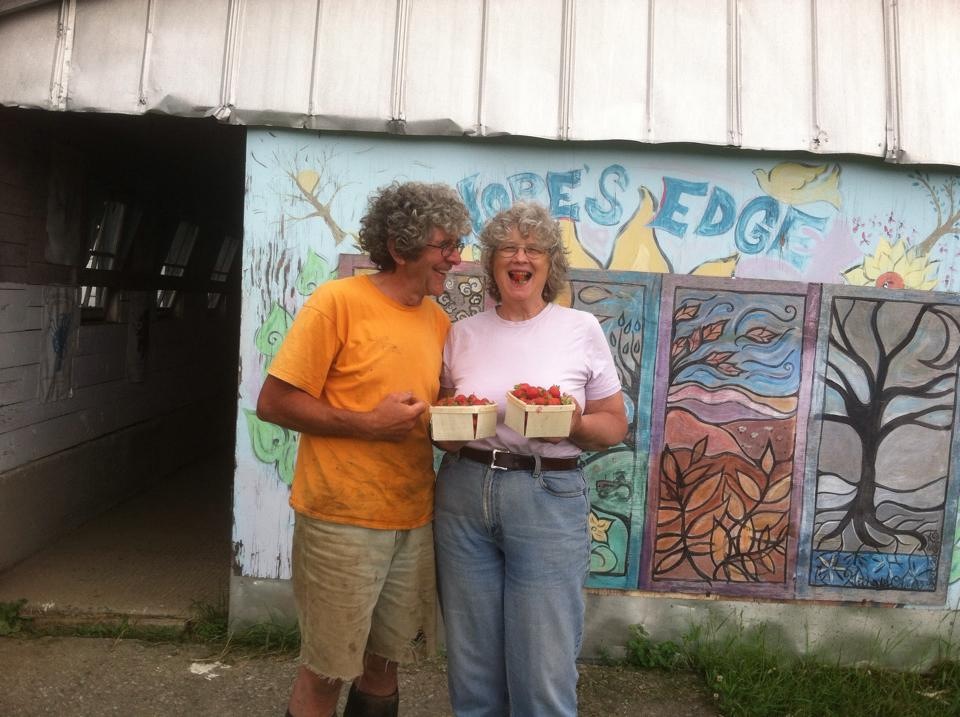
Hope’s Edge, my CSA, is in full swing.  Last week was the first strawberry week.  Here’s Farmer Tom laughing as I sample one of the strawberries I picked.

IMG_0327


There were enough strawberries left this week to get one more quart.  These are tiny and so incredibly sweet.  The smell and taste like some exotic perfume.

When I think that so few people any more will get to taste strawberries like these, I want to cry.  You have to know an organic farmer or grow your own with all the right amendments in place.

IMG_0337

My own home patch of strawberries had a banner year.  I think I picked the last of my berries yesterday.  I have at least six half-gallon bags frozen now.


The garlic scapes are lush this year.  I made a soup with some of the heads and chopped and froze the rest to add savoryness to soups and stews.

IMG_0324

I’m reading Kate Morton’s THE FORGOTTEN GARDEN at night.

I just finished the audio book MERLE’S DOOR, Ted Kerasote, and really enjoyed it.  If you are a dog lover or like to hear tales of living in places like Wyoming, with all its wilderness and grandeur, this is a book for you.

I just started an audio book called IN THE MOON OF RED PONIES, James Lee Burke.   Don’t ask me why.  It was available on the library audio books list.  The beginning is interesting…

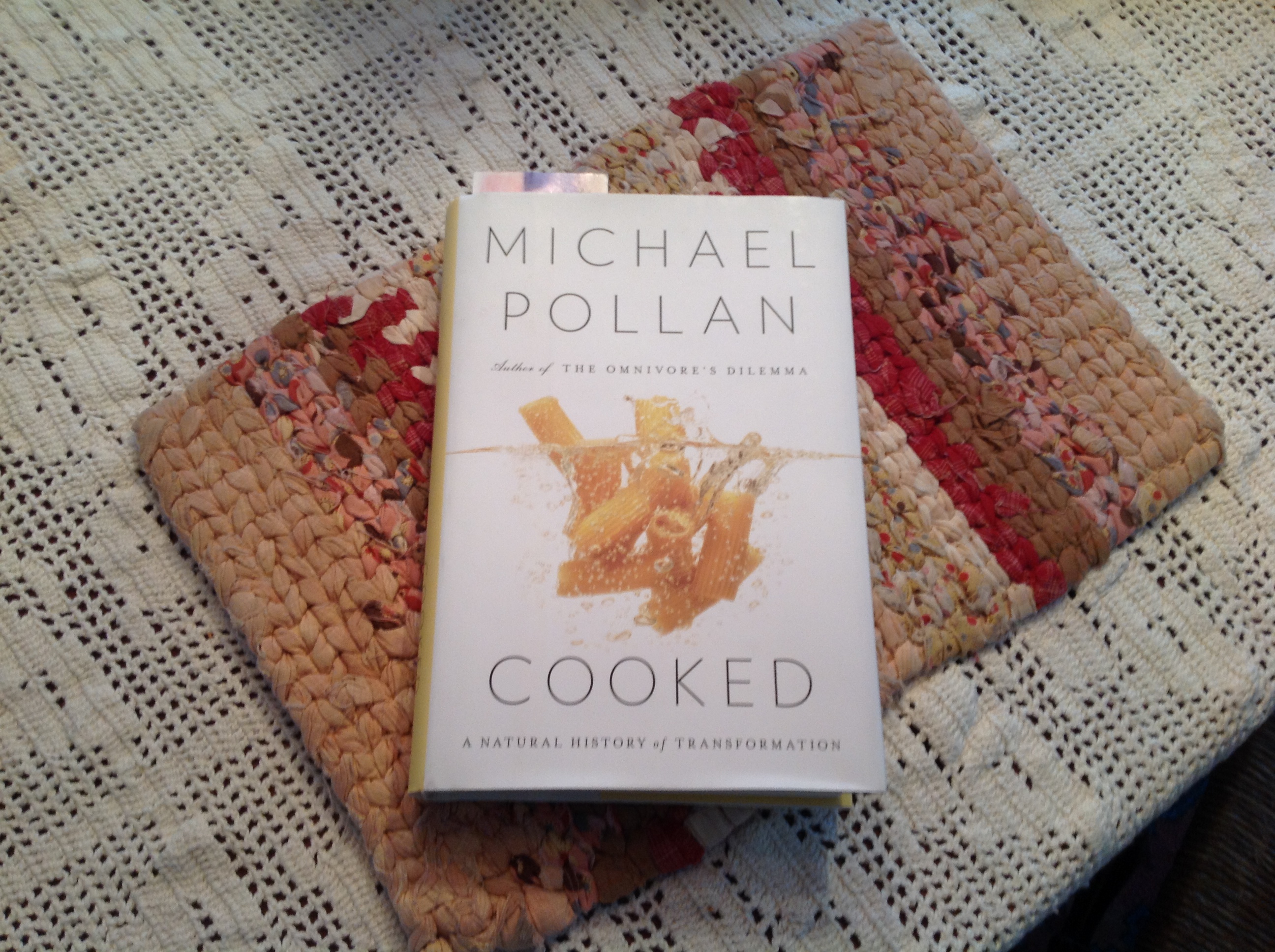
And, there’s Michael Pollen’s COOKED in the mornings.

Life is good these days…


Books, Documentaries, Reviews AND Interesting Information: No Time To Cook

Books, Documentaries, Reviews AND Interesting Information:  July 11, 2014

No Time To Cook


I’m so enjoying this summer.

In the mornings, I’m getting up early, feeding and releasing the chickens from their coop, feeding the dogs, making a big cup of tea, and sitting on my back deck with a book for at least an hour before really starting my day.

At night, before bed, I read fiction.  In these early morning hours, I am reading mostly nonfiction.  My current book is Michael Pollen’s Cooked, which I’m really enjoying in all kinds of ways.  I love the way Pollen THINKS about his subjects as it’s thinking that is informed by a lot of research of all kinds–to include spending time cooking.

IMG_0251

I’ve waded through the “fire” section–which is all about roasting meat over coals and all the implications of this very male form of cooking.  Think pit barbecue.

I’ve almost finished “water”–which involves stewing, souping, braising–or cooking in a pot with aromatics and liquids.  This “water” section also takes on the fact that we say we have no TIME to cook any more.  If buying food saves us thirty minutes a day, what are we doing with that time?

But wait!  Does buying food really save us thirty minutes?  Does going to a restaurant?

Americans work longer than any other industrial nation, writes Pollen.  Since 1967, we’ve added 167 hours, or the equivalent of a month’s full-time labor, to our work year.  With two parents involved, the amount is more like 400 hours.  Why?

This probably owes to the fact that, historically, the priority of the American labor movement has been to fight for money, whereas the European labor movement has fought harder for time–a shorter workweek, longer vacations.  Not surprisingly, in those countries where people still take home cooking seriously, as they do in much of Europe, they also have more time to devote to it (183).

And these people who cook are thinner, Pollen points out in a number of places in the book:  “the more time a nation devotes to food preparation at home, the lower its rate obesity” (191, 192).

So, we spend more time working.  We spend more time on the car.  We spend more time shopping.  We spend more time in front of screens (35 hours a week on average watching tv), surfing the Web (13 hours), and playing games on our smart phones.

Folks, WE HAVE TIME TO COOK good food.  It’s always already about the choices we are making, isn’t it?

We’re also doing a lot of what is called “secondary eating”–or eating while doing something else:  watching tv, driving, getting dressed, and so on.  We now spend 78 minutes a day in secondary eating and drinking (190).

Pollen and his family try an experiment:  Microwave Night.

He and his son go to the grocery store to pick out a dish for each person–three dishes (the third for his wife) and a dessert.  The total cost was $27.  (Pollen notes that he could have bought grass fed beef and veggies for a stew that would feed the family for two nights for the same amount of money.)  Their first obstacle is to buy food that has recognizable ingredients and isn’t full of hydrolyzed vegetable protein (soy).  Their second is realizing that some of their foods have packages that announce that they need to be cooked in the oven for best results and will take up to 45 minutes.

To make a longer story short, it takes an hour to microwave all the food–and at no time can they sit down together at the table as someone is always checking on the dishes in the microwave or their food isn’t ready yet, or is, but is getting cold.  Dinner time was a disaster in terms of family time.  The food also all tasted “remarkably similar”–no matter how exotically different–and much like what airline food used to taste like.

The next night, they ate a stew, visited over the table, and were relaxed and energized.  The stew had been in the refrigerator since Sunday–when it had been cooked for the week–a practice Pollen has worked into his schedule.

By the time the sweet smells of allspice, juniper, and clove began to fill the house, Isaac and Judith had gravitated to the kitchen; I never had to call them to dinner.  I brought the pot out to the table, and began serving everyone from it (200).

For the first time all day, it felt like we were all on the same page, and though it would be overstating things to credit that feeling entirely to the delicious braise, it would also be wrong to think that eating the same thing from the same pot, this weeknight communion of the casserole, had nothing to do with it, either (201)

So, I’m looking forward to the Air and Earth sections of Cooked.

And I remain certain that I will continue to “occupy my kitchen”–as I have all of my adult life.

Interesting Information: “Water Fluoridation Lowers IQ: Medication Without Consent”

Interesting Information:  July 10, 2014

“Water Fluoridation Lowers IQ:  Medication Without Consent”


Here’s a quote from this little sidebar article in the July/August 2014 issue of Well Being Journal (10, 12):

At present, 37 out of 43 studies, conducted in China, India, Iran, and Mexico, show water fluoridation lowers IQ in children.  Even the lowest level of fluoride assessed in these studies–1.8 part per million–lowered IQ.

So why is fluoride still being added to our water???

I’ve written at least three Mainely Tipping Points Essays on the high points of the issues involved in water fluoridation–using information from scientists with the credentials to evaluate this issue.  You can click on the Mainely Tipping Points Essays OR use the search button on the right side bar.

Books, Documentaries, Reviews: “Ingredients” Documentary Looks at the American Food System

Books, Documentaries, Reviews:  July 10, 2014

INGREDIENTS Documentary Looks at the American Food System


Dr. Joseph Mercola posted information on this new documentary a few weeks ago.

Here’s a quote from Mercola’s post:

The American food system is nearing a state of crisis. Ingredients is a documentary that explores the failings of the industrial food model, and how the local food movement is gaining momentum as a far better alternative. The film presents a refreshing look at food from the standpoint of sustainability, safety, flavor, nutrition, culture, and community.

This documentary takes us across the US from the urban food deserts of Harlem to the biodynamic farms of the Hudson River and Willamette Valleys, and into the kitchens of several celebrated chefs—culinary game-changers who are teaching us all how to eat better.

The current system, focused on cheap convenience foods, is costing Americans dearly. Most Westerners have lost their primal connection to food. Mealtimes used to be savored and shared with others.

Food preparation is now typically viewed as a chore that interferes with other “more important” activities. This detachment from food represents a cultural “disconnect” between humans and the earth, to the detriment of both. It’s time for radical changes to our modern food paradigm, which is the subject of this uplifting documentary.

This article discusses some of the costs to our so-called “cheap” food system, the industrial practice of Confined Animal Feedlot Operations (CAFOs), monocrop culture, and GE foods.  It also discusses the exciting movement to reconnect to farmers and real food grown locally.

There is a film trailer to watch on the site–and an interview with Joel Salatin of Polyface Farm.

Take a look?  And try to catch the movie in your future.  It’s free on Amazon Prime at the moment…


“Ingredients” Documentary Looks at the American Food System.


Interesting Information: Magnificent Magnesium Rescues The Heart

Interesting Information:  June 9, 2014

Magnificent Magnesium Rescues The Heart


So many people I know are taking blood pressure medicines.

And many of them are having additional problems as well.

I am wondering if the additional problems are connected to the BP med and/or to the other meds that seem to accompany the decision to take the BP med?


I ran across an article in the July/August 2014 issue of Well Being Journal that offers some interesting information about my question:  “Magnesium Balances Calcium and Rescues the Heart” by Scott E. Miners.

Basically, the article is a review of Carolyn Dean, M.D.’s book THE MAGNESIUM MIRACLE.

I googled Dean and discovered that she is both an MD and a Naturopath Doctor–so she sits astride the chasm that often lies between allopathic (mainstream medicine) and alternative medicine.   In addition, she worked with magnesium expert Mildred Seelig, MD.


Disclaimer:      Since posting this review, with the help of PhD nutritionist Judith Valentine, I did more research on Carolyn Dean.  (See judithvalentine.com)  Dean is really riding the coat tails of Mildred Seelig’s very valid and published work on magnesium.  Take a look at Selig’s publishing record:  http://www.mgwater.com/seelig.shtml.  It turns out that Dean lost her Canadian MD license.  Yes, she is operating out of the medical norm and is critical of today’s doctors and that’s always a problem for the medical police, but having said that, there is just too much “off” about Dean herself.  I ordered Dean’s picometer magnesium, for sale on her web site.  Maybe it’s ok.  She owns the company, which is now based in Hawaii.  (It’s unclear if California has also revoked her medical license.)  I have to tell you that Dean’s liquid magnesium tastes TERRIBLE.  My body just hates it, for whatever that’s worth.  For also whatever it’s worth, I’ve had no more leg cramps and none of the diarrhea that  some forms of magnesium that hang around in the gut can cause.  I think there is enough evidence that what Dean is saying about magnesium deficiency in Americans and the tremendous downsides to getting caught up in three to five medicines is probably accurate–so I am leaving the post here–but putting in this disclaimer.  And I have no idea about the quality of her magnesium product.  I also think WELL BEING JOURNAL needs to review their info on Dean’s work.

Dean thinks that about 80 percent of Americans are magnesium deficient.

Magnesium is the mineral that “activates” nerves and muscles, “including,” writes Miners, “the muscle cells in the heart.”  Further, “magnesium is important for maintaining optimal heart rhythm, blood pressure, muscle and nerve function, blood sugar regulation, and brain health.”  Signs of magnesium deficiency are “constipation and other digestive problems, irregularities in menstrual flow and reproductive health, muscle spasms, nocturnal leg cramps, and migraine headaches.”  And “loss of appetite, fatigue, numbness or tingling, and nausea.”

One idea I walked away with was the notion that blood tests don’t show magnesium deficiency because the body robs magnesium from other sites in the body to keep the blood level at about 1% magnesium.

Another idea was that one has to eat significant amounts of foods containing magnesium to get enough–and even then, the amount of magnesium in the foods can depend upon the soils in which the food grew.  With commercial farming, soil depletion is increasingly a problem.  The magnesium food list is seaweeds, leafy dark green vegetables like chard and kale, legumes, green beans, almonds, cashews, filberts, pumpkin seeds, and sesame seeds.

Dean says most magnesium supplements , especially magnesium oxide, are poorly absorbed.  Up to 96 percent stays in the digestive system, where it acts as a laxative, rather than getting to the cells where it is desperately needed.  Dean recommends picometer-sized forms of magnesium as that form can be totally absorbed at the cellular level.  Epsom salt soaking (magnesium sulfate) is another excellent way to get more magnesium into your system.  [And, more sulfur–see other blog posts on sulfur deficiency.]

DRUGS DEPLETE MAGNESIUM, says Dean–based on Seelig’s laboratory work with drugs and her own work since working with Seelig.  (Seelig tried to tell her drug company bosses that their drugs were depleting magnesium in bodies, but they “weren’t interested.”)

Dean details the following situation:   you are stressed when you see your doctor, so your BP might be high at that moment.  The doctor might put you on a diuretic–which drains your magnesium and potassium, which makes your blood pressure truly higher.  So now the doc will “worry that your calcium levels are going to rise, and will prescribe a calcium channel blocker.  Most doctors don’t know that magnesium is a natural calcium channel blocker.”  And, they’ll put you on a third drug, an angiotensin converting enzyme (ACE) inhibitor.  So now you’re on three drugs.

But the tale continues:

After two or three months, you come back and have blood taken to make sure the drugs aren’t hurting your liver….But all of a sudden your cholesterol is elevated; your blood sugar is elevated….The doctor says, “Oh, we caught your cholesterol.  We just caught your blood sugar.  We can put you on medications.”  Dean goes on to say that they didn’t catch these conditions; they caused them.  The more you reduce your magnesium, the more your cholesterol will go out of control.  She notes magnesium is important to balance an enzyme used in the manufacture of cholesterol in the body; magnesium helps to stabilize cholesterol.

Further, Dean notes that Statin drugs destroy an enzyme that magnesium needs.   And, that a sign of diabetes is low magnesium.

Miners notes that Dean writes that “doctors only recognize drug side effects 4 percent of the time because they do not want to believe they are harming their patients via their prescriptions.  More, drug intake also causes inflammation.”

And, isn’t this situation the HUGE elephant in the medical room these days?  Doctors are caught in what I’ve been calling a “kool-aid loop” of information crafted by the drug industry AND by the “standards of care” they are expected to follow.  It’s the rare doctor these days who is researching this information for themselves and trying to understand what is really happening in bodies.  Dean appears to be one of the rare ones.

Here’s what Dean says to do:  keep taking magnesium:

Take it in the various sources:  the picometer-sized magnesium, Epsom salts, and so on.  Take an oxide if you’re constipated…you may need the magnesium oxide, but take the others as well.

I would note that magnesium and calcium are “paired”–one effects the other.  Too much magnesium can block calcium.  But, my thinking is that if you are eating dairy products (cheese, yogurt, milk), nuts, seeds, homemade bone broth, and dark leafy vegetables, adding a quality source of magnesium to protect your heart might be a good idea.  I’m going to do it.


SO WHAT’S A GOOD BP TO HAVE?

I don’t have high blood pressure.  But I had always heard that 100 plus your age–over 90–was a reasonable BP, especially as you age.   Sherry A. Rogers, MD, an environmental doctor who has been a fairly prolific writer, has a book called THE HIGH BLOOD PRESSURE HOAX.  She quite seriously supports the more modern BP figure of 120 over 70.  BUT she advocates trying to figure out why the BP is high and counsels treating with diet and other lifestyle changes.  You can read a Weston A. Price book review at the following url if you want more information on this subject of BP measurements.

High Blood Pressure Hoax by Sherry A. Rogers