I’ve been busy with a BIG project outside–more on that later. But here we are with the start of another week. It has been beautiful weather here–cool, but temps will gradually rise now as July is our hottest month. And now we need rain again.
No sewing for the past 3 days–which is very unusual for me, as you know. But I’ve come inside every day tired and happy from all the physical work.
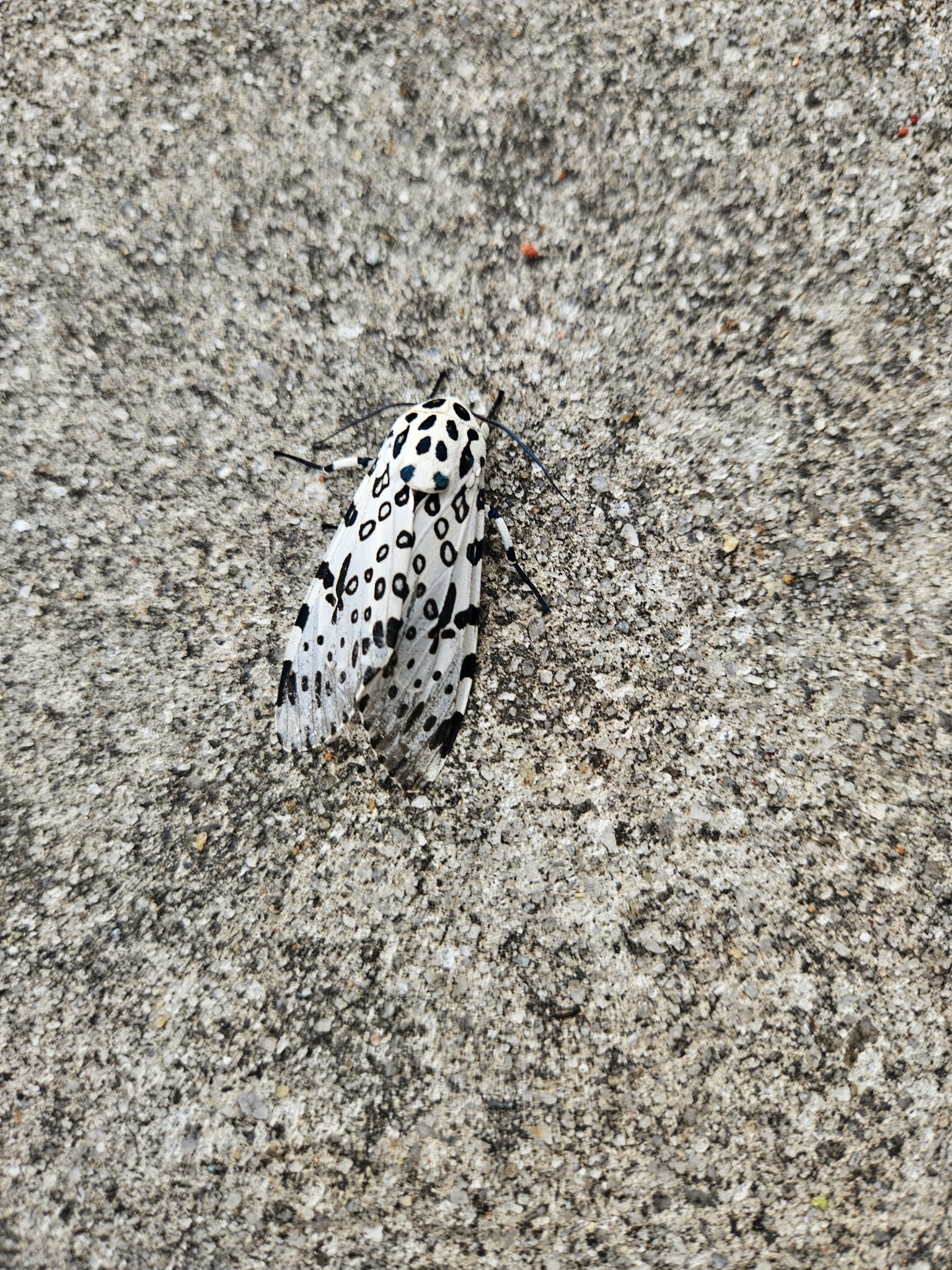
Beloved neighbor and I saw this very unusual moth on our morning walk about a week ago. Neither of us had ever seen one like this one. Beloved Neighbor took this picture.
It’s a Giant Leopard Moth.
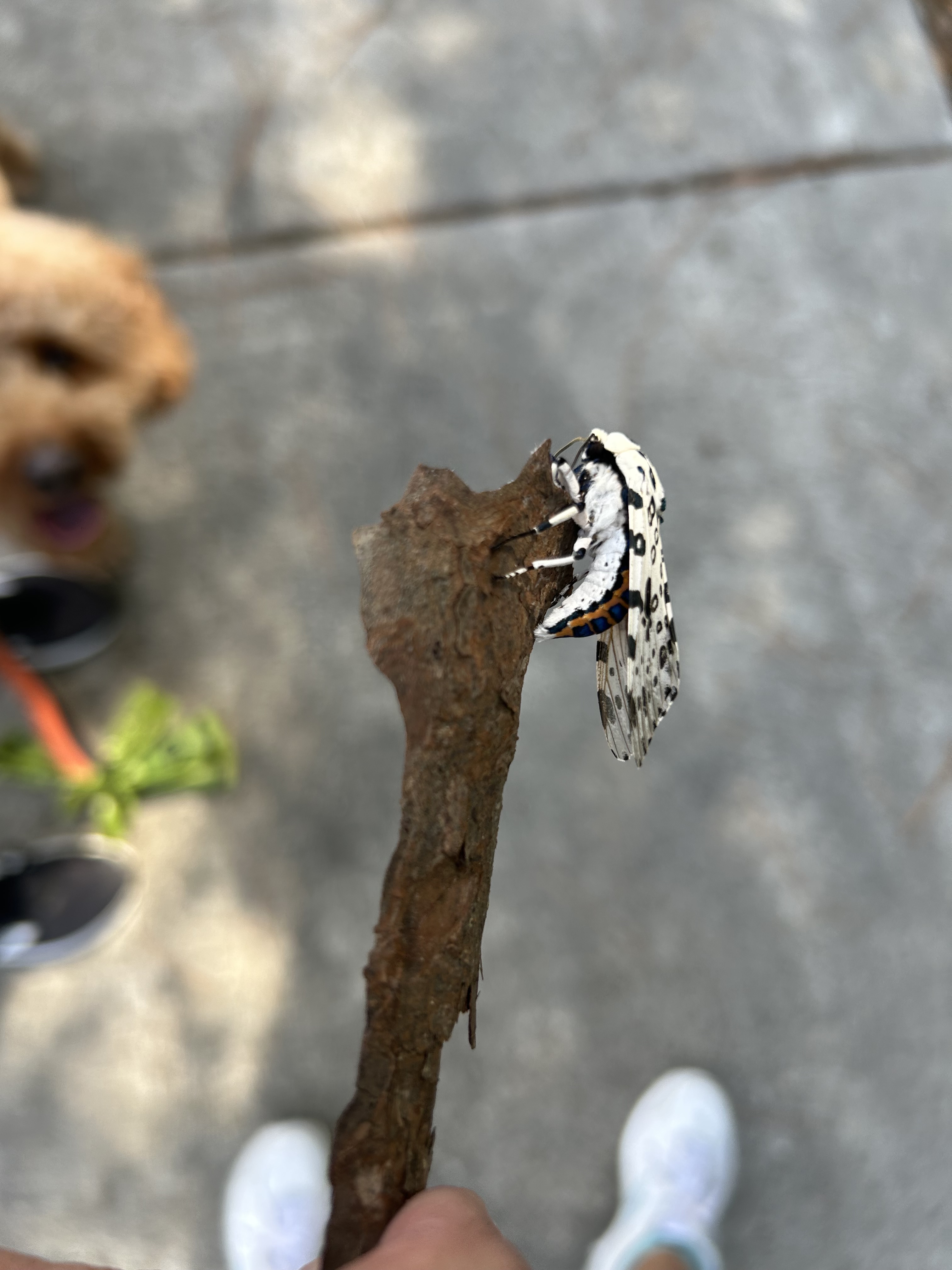
The underside is black with that rust-colored stripe. This one is small, so likely female. We think she was camouflaging on the grey of the sidewalk. But we moved her to the side anyway as we almost stepped on her.
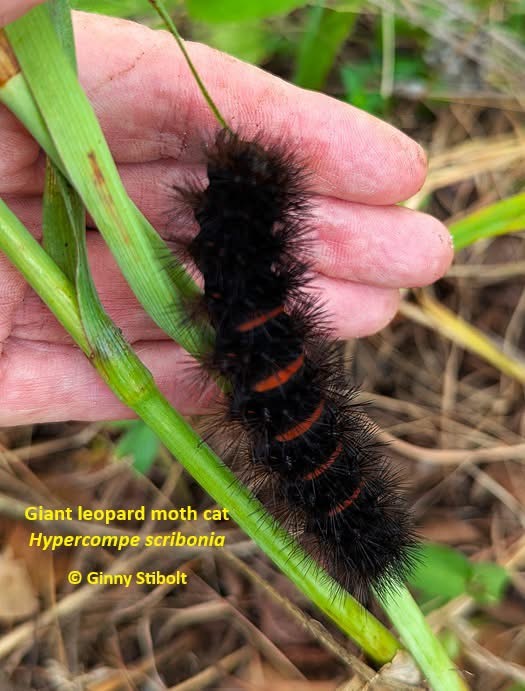
Here’s a picture I found of the caterpillar form.
And here’s a quote about this moth on wikipedia:
“This species has a notable sexual dimorphism in size, with the adult male reaching about 51 mm (2 in) in length, while the adult female grows up to 30 mm (1.2 in). The leopard moth requires two years to complete its round of life.[5]“
And:
“The giant leopard moth (Hypercompe scribonia) is a moth of the family Erebidae. They are distributed through North America from southern Ontario, and southern and eastern United States through New England, Mexico, and south to Colombia.[2][3] The obsolete name, Ecpantheria scribonia, is still occasionally encountered.
They are known to be attracted to bitter, unripe vegetables and broccoli flowers.
This moth species has a wingspan of 76 mm (3 in). Its wings are bright white with a pattern of neat black blotches, some solid and some hollow. The overside of the abdomen is dark blue with orange markings, while the underside is white with solid black spots, and males have a narrow yellow line on the sides. Their legs have black and white bands. Adult moths are strictly nocturnal and do not generally fly before nightfall.[4]“
AND, from AI overview about “what does it mean” to see this moth:
Seeing a Giant Leopard Moth (Hypercompe scribonia) is a lucky, entirely harmless encounter. Biologically, it means you are likely near a wooded area, meadow, or garden in North America, as this nocturnal insect relies on local host plants like dandelion, cherry, and willow. 
Culturally, encountering one of these striking creatures is often interpreted as a positive spiritual or symbolic omen.”
 Louisa Enright's Blog