Interesting Information: More FDA Shady Dealing With A New Vaccine For Babies

Interesting Information:  July 24, 2012

More FDA Shady Dealing With A New Vaccine For Babies

Here’s a quote from Dr. Joseph Mercola’s article–the link is below–on the FDA’s approval of a new combo vaccine for meningitis for babies.  Meningitis is a rare disease.

Ironically, on June 14, the FDA awarded GlaxoSmithKline (GSK) a license to sell MenHibrix, a new vaccine that combines two meningitis vaccines into one shot.  The FDA had rejected the license in 2010 and 2011 because, reportedly, the British drug company giant was having trouble proving the vaccine actually worked.

This time, FDA staff did not bother to ask for an opinion from the agency’s own vaccine advisory committee before giving GSL the green light to market MenHibrix in the U.S. for babies as young as 6 weeks old.  In a letter, FDA official Marion Gruber, PhD, told the company that:  “We did not refer your application to the additional VRBPAC [review] because our review of information submitted in you BLA, including the clinical study design and trial results, did not raise particular concerns or controversial issues which would have benefited from an advisory committee discussion.

Really?  Sounds like some FDA officials didn’t want Advisory Committee members to ask the drug company lots of questions about this new vaccine, just like the CDC and AAP (American Academy of Pediatrics) officials don’t want parents to ask lots of questions about ANY vaccine.

Mercola goes on to note that MenHibrix has “not yet been studied in combination with every one of the other vaccines already given to babies simultaneously.”  And, “even premature babies weighing less than four and a half pounds are subjected to the mindless one-size-fits all `no exceptions’ vaccine schedule.  Where is the solid scientific evidence that it is safe or effective to give eight or nine vaccines to an eight or nine pound newborn?”

Mercola also notes that there is no evidence proving that vaccinated children are any healthier than nonvaccinated children as no studies have been done.

The CDC will vote in October on whether or not to make this new vaccine optional or whether to add it to the already bloated vaccine schedule–in the process giving “another big pharmaceutical corporation a guaranteed, liability free market [underline mine] by adding four doses of an expensive new vaccine to the child vaccine schedule so parents can be forced to buy it and give it to their newborns–no questions asked and no choices allowed….”

A June  2012 study published in Pediatrics concluded that “about 10 percent of parents living in Portland, Oregon are making independent decisions about how many vaccines their babies should get and when they should get them.  Those parents are rejecting the CDC’s aggressive vaccination schedule promoted by the AAP that directs pediatricians to give 2- to 6-month-old babies between seven to nine vaccines on the same day, without exception.”

http://articles.mercola.com/sites/articles/archive/2012/07/24/new-vaccines-for-babies.aspx?e_cid=20120724_DNL_artNew_2

Interesting Information: “Vaccinations, The Ongoing Debate”

Interesting Information:  July 23, 2012

“Vaccinations, The Ongoing Debate”

Well, here’s a must read for everyone from young parents to grandparents.  Vaccinations are a very charged subject in our society and parents who are looking more deeply and asking questions are being called crazy or ill-informed or irresponsible.

Are they?

Leslie Manookian published this piece in The Weston A. Price Foundation’s journal, Wise Traditions, summer 2012 issue.  Manookian has made a film, THE GREATER GOOD, in which she has attempted to determine where the facts and hard science are with relation to vaccinations.  She notes that the “vaccine debate is a scientific debate,” or should be so, and is not “one between emotional parents and their doctors.”

The tagline from the film is the following:  “If you think you know everything about vaccines…think again.”

The School of Public Health at the University of Alabama, Birmingham, awarded the film its Koroni Award “for a documentary feature addressing an issue of importance to public health.”  The film was featured at the Amsterdam Film Festival, where it was awarded the Cinematic Vision Award.  The film was aired nationally on Current TV and has been shown at film festivals all over the world–where it has been “applauded by lay, medical, and film audiences alike….”

You can read Manookian’s article at http://www.westonaprice.org/childrens-health/vaccinations.

Here are some highlights:

Children today receive 26 doses of 9 vaccines by their first birthday.  In 1983, they received 11 doses of 4 vaccines.

By age 18, children today receive 70 doses of 16 vaccines.  In 1983, they received 23 doses of 8 vaccines.

Big Pharma has an estimated 200 vaccines in development for use across the population.  The CDC recommends an annual flu shot from cradle to grave.  There are many adult booster shots for childhood diseases and new vaccines like the shingles vaccine, which I recall reading only covered about 30 percent? of the potential to get shingles.  Flu shots still contain mercury.  “Many diseases vaccinated against today were considered fairly benign in past decades (flu, chicken pox, mumps, rubella) or quite rare (hepatitis A and B, meningitis).”

No one knows if vaccines are safe because no “large, long-term clinical study comparing the medium or long-term health outcomes of vaccinated and unvaccinated groups of people” has ever been done.

Children are given as many as TEN vaccines in one visit, but there are no safety studies evaluating the safety of simultaneous shots.

No study has been done to evaluate the “different ingredients of human infant vaccines taken individually or in combination.”  This list of ingredients can include, “but is not limited to” the following:  “mercury, aluminum, formaldehyde [a known carcinogen], cells from aborted fetuses, cells from monkey kidneys, chicken embryos, viruses, antibiotics, yeast, polysorbate 80 and detergents.

Most vaccine trial only last a few weeks, so long-term effects are not known.  Worse, Big Pharma is allowed “to use another vaccine or a liquid containing an adjuvant such as aluminum as the placebo”–so the “vaccine producer can say that the vaccines cause no more adverse reactions than a placebo.”

Mercury is still used in the manufacturing process and trace amounts remain.  Aluminum–a “demonstrated neurotoxin”–is used as an adjuvant (a substance added to vaccines to stimulate an immune response–without which the vaccine is useless).  Medical science’s “understanding about their mechanisms of action is still remarkably poor….[but] Experimental research…clearly shows that aluminum adjuvants have a potential to induce serious immunological disorders in humans.”

Much evidence exists now that vaccines are harming children, and Manookian discusses some of those peer-reviewed studies.  She includes the notion that ‘there is in fact peer-reviewed scientific evidence connecting both [mercury and vaccines] to autism.”  She notes that “research has also shown impaired immune function and autoimmune disease in humans following the administration of these same compounds [alluminum].”  Neurological damage, “including motor function deficits, cognitive impairment, and behavioral changes in mice given the aluminum in vaccines.”

What is most disturbing are the behavioral changes in vaccinated children. “Normal” reactions are considered to be “swelling, soreness, tenderness and a lump at the injection site, fever, fussiness, tiredness, and vomiting.”  But “no studies exist to determine what happens to the body’s systems and tissues when a vaccine is given.”  Manookian writes:   “In the making of the film and while conducting screenings, we have come across many parents who said their child had these `normal’ reactions after a round of vaccines but never was quite the same again and went on to develop a learning disability, allergies, ADHD, or another type of chronic disease.”

The National Childhood Vaccine Injury Act of 1986, signed by Ronald Reagan, “acknowledged tha vaccines can cause injury or death.”  “To date, the program has paid out more than two billion dollars and has about three billion dollars in reserves” as a tax is paid on each vaccine given.

It’s important to realize that “doctors are taught that vaccines are safe and effective; they are not taught how vaccines are studied, the components of vaccines, or the gaps in research.  Doctors are taught that decades of clinical use of vaccines have demonstrated their safety and that vaccine side effects are rare, but there are no large, long-term clinical trials comparing the health and well being of those vaccinated to those unvaccinated to back up these assumptions” (underlining is mine).   IN OTHER WORDS THIS “KNOWING” IS A BELIEF SYSTEM, CREATED BY BIG PHARMA, THAT IS SOLD TO DOCTORS AND PARENTS USING FEAR ABOUT CHILD SAFETY.  THERE IS NOT DATA BEHIND IT.  Plus, Big Pharma has ZERO LIABILITY for vaccines that cause harm.  You cannot sue them for damages.

What about the notion that vaccines have reduced infectious disease?  Bernard Guyer et al published in Pediatrics (December 2000) a history showing that “`nearly 90 percent of the decline in infectious disease mortality among U. S. children occurred before 1940, when few antibiotics or vaccines were available.”  Guyer et al’s consensus was that public health measures (water treatment, food safety. organized solid waste disposal, and public education about hygienic practices) were what made the difference.  “Moreover,” writes Manookian,” disease outbreaks regularly occur in fully vaccinated populations so vaccinations may not be as effective a preventative as generally believed.”

You should look deeper before making any decisions about vaccinations for yourself or your children.   You might be putting them at more danger than any disease they might catch would.

You should know that in California right now your child who is twelve or over can be vaccinated for a sexually transmitted disease by a school nurse without your consent or knowledge–since parents will have “no access to the child’s medical records that pertain to these shots”!!!!  How can that be in a country that touts freedom as its organizing principle???  This is a perfect example of the power of industry to work its will on a population.

One excellent book is Neil Z. Miller’s VACCINES, ARE THEY REALLY SAFE AND EFFECTIVE.”   This book was my first introduction to the idea that vaccines might be really dangerous.

Here’s an article by Dr. Mercola that came in the past few days about how the Merck mumps vaccine is not effective, how they knew it, and how the whole story, which appeared in the WALL STREET JOURNAL, has now been covered up.

http://articles.mercola.com/sites/articles/archive/2012/07/23/merck-vaccine-fraud-story-buried.aspx?e_cid=20120723_DNL_artNew_1

Here’s The People’s Chemist, Shane Ellison, on why the whole “herd” protection assumptions are nonsense.  Ellison can be flamboyant, but he’s a pretty solid scientist:      http://thepeopleschemist.com/blog/

I can tell you that if I had young children today I would not vaccinate them.  I’d take our chances, knowing I might lose them.  But, losing a child can happen just as easily with vaccines and with all of the other really dangerous things children do every day.  In the end, you can only protect children so much and overprotection is just as harmful to their development.

.
Interesting Information: Priming the Gall Bladder

Interesting Information:  July 22, 2012

Priming the Gall Bladder

Lori Lipinski has an article in the May/June 2012 issue of Well Being Journal that addresses the need of most Americans to enhance the health and performance of their gall bladders–which are not functioning optimally due to years of eating low-fat diets and/or bad fats, like all those highly processed vegetable oils and margarines and vegetable lards.

Lipinski states up front in the article that her clients who eat low-fat diets “are usually the most unhealthy.”

Good fats are butter, tallow, olive oil, and coconut and palm oils.  I would add lard from pigs raised in a healthy manner.

Lipinski writes that the “gallbladder is shaped like a little sack that sits alongside your liver.  The liver produces bile, a substance made from cholesterol that emulsifies fat and makes it easier to digest.  The gallbladder stores and concentrates bile, then secretes it into the small intestines when fats are present.  If you don’t eat fat, the gallbladder won’t get any exercise and can begin to atrophy.”

BUT, you cannot just suddenly start eating a lot of good fats as your gall bladder does need priming.  Plus, if you eat too much fat for your system to handle right now, you will throw up.  So go at increasing fat consumption gently and gradually.

Symptoms of a problem gall bladder include gas, a full or heavy feeling after meals, bloating, acid reflux, and “pain in the right side radiating into the right shoulder blade, and loose or light colored stools that float.”  (Light-colored stools indicate your body is not absorbing and using fat AND other nutrients as well, which is not a good thing.)

How to help your gall bladder?

First, don’t use antacid pills.  Your system needs more acid, not less, if you’re having issues.

Second, “enhance your digestion with raw apple cider vinegar.  Mix 1 teaspoon with 2-4 ounces water and drink with meals.  A nice acid environment in the stomach stimulates the gallbladder to do its job.”  Get the kind of living apple cider that includes the “mother,” not the dead kind good only for cleaning the house.

For additional support, Lapinski recommends Dr. Schulze’s formula to “cleanse the liver and gallbladder.”

Other helpful remedies “include Swedish Bitters, 1 teaspoon in water taken just after meals, and lacto-fermented foods such as sauerkraut and beet kvass.”  (Recipes are in NOURISHING TRADITIONS, Mary Enig and Sally Fallon Morell.

Lapinski, like Mary Enig and Sally Fallon Morell, in EAT FAT, LOSE FAT, notes that if you need to up your fat (and you do if you’ve been eating low-fat) start with UNREFINED coconut oil, which is easier to digest.  Enig and Morell suggest up to 6 tablespoons spread out over a day.  (Make a yummy yogurt smoothie and add gently melted coco oil and lots of egg yolks.)

If you do not have a gall bladder any longer, look into supplementing with bile salts to handle fat consumption.  I’m out of my depth with regard to how much fat one can eat without a gall bladder…

Don’t let a surgeon take out a gall bladder unless you try some diet measures first–like the GAPS diet.  Unless, of course, your gall bladder, like my dad’s became, is too sick, too infected, to fix with good food.  Try not to get to that place by changing how you eat now.

Books, Documentaries, Reviews: WHEAT BELLY

Books, Documentaries, Reviews:  July 21, 2012

WHEAT BELLY

by

William Davis, MD

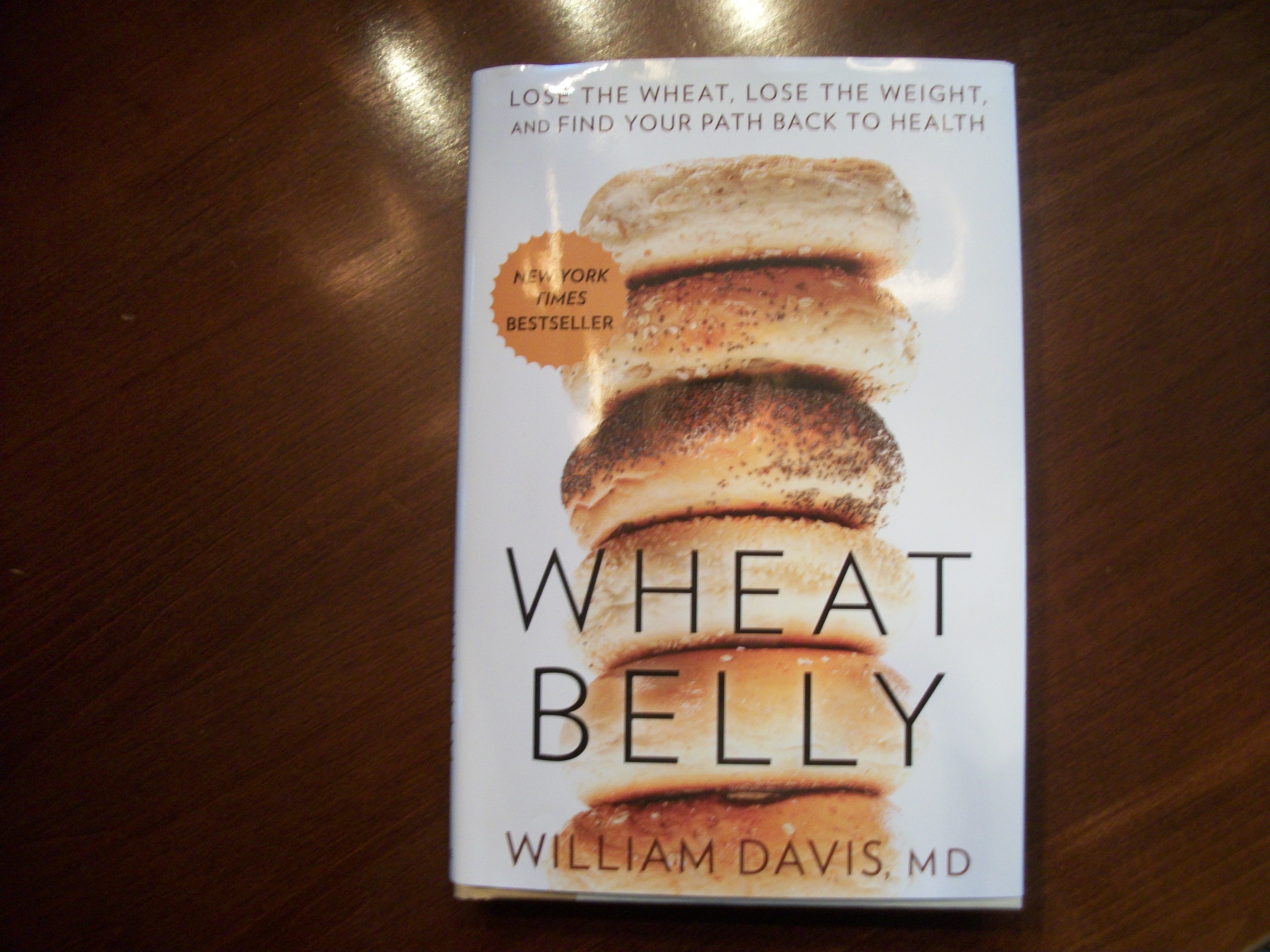
William Davis, MD, a preventive cardiologist in Wisconsin, published WHEAT BELLY in 2011.  The book became a New York Times best seller (No. 5) right away and continues to sell strongly.  Davis has put more than 2000 patients on a wheat-free regimen and claims he has seen “extraordinary” results in their health.  Many of these patients were really sick with a wide range of health problems, including neurological problems.

Davis defines a “wheat belly” as “the accumulation of fat that results from years of consuming foods that trigger insulin, the hormone of fat storage” (4).  This wheat belly fat is “visceral” fat that is “unique” in that “unlike fat in other body areas, it provokes inflammatory phenomena, distorts insulin responses, and issues abnormal metabolic signals to the best of the body.  In the unwitting wheat-bellied male, visceral fat also produces estrogen, creating “man breasts.”  Wheat consumption can “reach deep down into virtually every organ of the body, from the intestines, liver, heart, and thyroid gland all the way up to the brain” (4).  Wheat consumption “is the main cause of the obesity and diabetes crisis in the United States” (56).  And the fat of the wheat belly lies over organs that have, themselves, become abnormally fat, which makes the body struggle.

Davis argues that modern wheat is the root cause of much of the chronic health conditions people are experiencing today.  Modern wheat, he claims is NOT wheat at all–but “the transformed product of genetic research conducted during the latter half of the twentieth century.”  Two ancient forms of wheat were crossed hundreds of years ago, and that wheat has been eaten by humans without many of the health effects that today’s wheat produces.  (The Paleo diet folks would disagree with this premise on, I  think, good historical and medical grounds.)

Wheat has the rare, in the plant world, ability to transfer ALL of its genes when crossed–unlike other plants which might only transfer some of the genes from each parent.  When scientists started to breed wheat to increase its yields and to make it shorter (so it would not blow over as easily), they created a “law of unintended consequences”–in that they produced a product that is “hundreds, perhaps thousands, of genes apart from the original einkorn wheat that bred naturally” (22).  (Like modern corn, modern wheat cannot grow on its own in the wild.)

Assumptions were made:  “With wheat it was likewise assumed that variations in gluten content and structure, modifications of other enzymes and proteins, qualities that confer susceptibility of resistance to various plant diseases, would all make their way to humans without consequence” (25).

Modern wheat has a higher carbohydrate component than ancient wheat, which has more protein.  The specific carbohydrate in wheat is amylopectin A, which is so easily digestible in our bodies that eating “two slices of whole wheat bread is really little different ,and often worse, than drinking a can of sugar-sweetened soda or eating a sugary candy bar”–information that has been known since 1981 when the University of Toronto “launched the concept of the glycemic index” [GI] which compares “blood sugar effects of carbohydrates” (33-34).

Davis posits that many people today are dealing with what he calls “immune mediated gluten intolerance,” and celiac disease would be a subset of this condition.  Because this response can damage the gut so that it leaks food particles, the body forms antibodies that began to circulate in the blood stream.  If these antibodies lodge in particular organs, they can produce problems in that arena.  These antibodies can also breech the blood-brain barrier, so that some neurological conditions that seem like MS or Parkinson’s actually can be effects of this disorder.  This array of conditions has served to mislead doctors from the true cause of the problem:  immune mediated gluten intolerance caused by modern wheat.

Davis uses Denise Minger’s analysis of T. Colin Campbell’s THE CHINA STUDY to show the correlations between wheat and human disease.  Minger showed, by recrunching Campbell’s data, what Campbell missed because of his belief that consuming meat produces disease.  Minger’s analysis shows the “astronomical correlations wheat flour has with various diseases”–prompting Davis to ask if the “staff of life” is really the “staff of death” (160-165).

Davis discusses how addictive wheat is and how it is an appetite stimulant–along with many other seriously bad effects of wheat on the human body.  He illustrates his argument with case studies from his practice and with clinical studies.  The picture Davis draws of the downsides of wheat are much more involved, serious, and intense than I can repeat at length here.

So what grains have gluten?  Rye, barley, triticale, spelt, bulgar, and kamut share a genetic heritage with wheat.  Oats can cause some people problems as it “will cause blood sugar to skyrocket.”  Quinoa, millet, amaranth, teff, chia seed, and sorghum “are essentially carbohydrates without the immune or brain effects of wheat.  While not as undesirable as wheat, they do take a metabolic toll.”  Eat them in moderation only after weight has been normalized (212).  Avoid “gluten-free” foods as “the only other foods that have GIs as high as wheat products are dried, pulverized starches such as cornstarch, rice starch, potato starch, and tapioca starch”–all used heavily in “gluten-free” products (63).

There are critiques of WHEAT BELLY.  As near as I can tell, they are coming mostly from the Paleo folks.  The book’s cover pitches it as a “diet” book–“lose the wheat, lose the weight”–and the Paleo folks argue that cutting out wheat won’t do that trick and that eating wheat has far more dangerous implications.  The Paleo folks aren’t wrong, but Davis does a good job of showing that wheat consumption–especially in the amounts Americans are eating it–is very dangerous–and something Luise Light, who was hired by the USDA to create the 1980 food guide, cautioned against, saying we should only eat 2 to 3 servings of grains a day.  ( A serving is 1/2 cup, and women and children should only eat 2 servings.)

I can tell you that since I cut out wheat, I have lost my own “wheat belly.”  I can also tell you that like Davis, when I eat wheat, the impact on my body is immediate and not very nice.

So, do you have a “wheat belly”?  Most Americans I see out and about today do.  If so, you may want to take a longer look at what Davis has to say about losing the wheat and regaining your health.

Turkey Tracks: Scrappy Knitted Blanket Growing

Turkey Tracks:  July 16, 2012

Scrappy Knitted Blanket Growing

Believe it or not, I was already running out of leftover yarn to make the blanket of on-point squares I blogged about a few weeks back.  The biggest issue was not having a good choice of pretty colors.

I put out a call to some knitting friends, who responded very generously (and in some cases happily as they got rid of scrap yarn too and it went for a nice purpose).

Now I have lots of colors from which to choose!  Thanks everyone!

I’ll put up a picture of how this project is going soon–it’s slow as it takes about 40 minutes to make most of the squares–but fun as I love working with all the different colors and textures.  It’s like making a quilt out of yarn…

Turkey Tracks: I Have Some Socks For These Feet!

Turkey Tracks:  July 16, 2012

I Have Some Socks For These Feet!

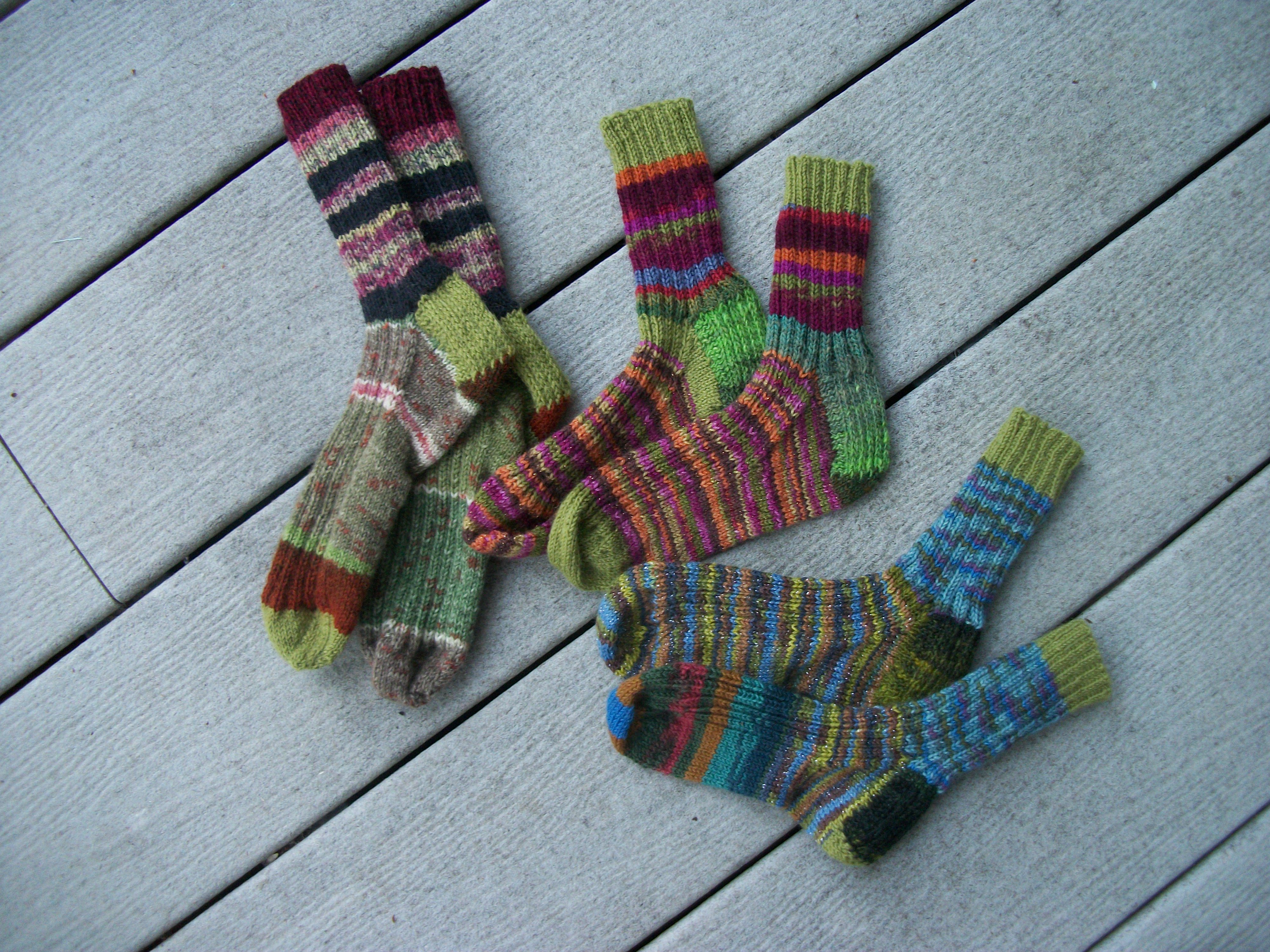
See?

Talula’s are the middle.  She liked the orange/green glitter yarn.  And, Wilhelmina liked the blue/green glitter yarn, so I crafted around those choices.  Bowen’s are less wild, which is fitting for a boy.

These socks will be birthday gifts–to be gifted in September when three of the five grandchildren have birthdays.  All three pairs have been made from leftover sock yarn.  Kelly Enright got a pair back in February for his birthday, as you may recall.  They’re here on the blog.

Let’s hope they will all fit by fall/winter.  These children are growing like weeds!

Turkey Tracks: Saturday Road Trip

Turkey Tracks:  July 9, 2012

 Saturday Road Trip

Last Saturday, John and I took a little road trip west of Camden.

Our primary destination was The Village Farm in Freedom, Maine–home of Prentice Grassi and Polly Shyka since about 2001.  See http://www.villagefarmfreedom.com/

For the past two years, we have raised our year’s supply of meat chickens with Pete and Rose Thomas–and slaughtered them all together.  But this year, Arabella, the wood-fired bread oven, is up and running.  Rose is fully occupied with making pizzas and breads of all kinds.  She is baking or getting ready to bake many hours every day, and Pete is buy cutting wood and filling in all over the farm.

So, I took on the job of researching where we could get healthy, non-Cornish chickens, preferably with the feet still in the mix.

That place turned out to be The Village Farm, so John and I headed out to pick up ten meat chickens–with the promise of being able to get more over the winter when the freezer gets depleted.  Best of all, these Red Bros (a cousin to Freedom Rangers) come with their feet in a separate packet.  And, Prentice and Polly raise them on grass in little tractors that are moved three times a day.

Freedom is about an hour west of us–in the vicinity of MOFGA’s Common Ground Fair Ground.  It’s beautiful country and a beautiful ride through rural Maine to get there.   We crossed the St. George River several times–this time of year it’s full of water rushing over stones and filled with pools where trout would live.  Our route is partly on the St. George River scenic by-way.

Along the way, we were amused at all the creativity we were seeing.  Here’s an example:


Gardens were starting to flesh out, and it was really fun to see how many people had vegetable gardens.  There are beautiful fields, glossy-coated animals, interesting houses, glorious barns, beautiful woods.  It’s such a joy!

We had no trouble finding The Village Farm.  Here’s the entrance sign–with some corn (probably sweet corn) planted beyond it:

The main farm buildings and house sit at the end of this longish road, which is bordered by vegetable fields on both sides.  Polly told me they have several commercial customers as well as CSA members.  And she told me that when she and Prentice bought the far in 2001, I think, that it was all commercial corn fields–just corn stubble and dirt.  Now it’s filled with green grass, grazing meat cows, chickens, and vegetables.   That’s a heartwarming story of land recovery, and I am so grateful that there are people in this world like Prentice and Polly who are willing to do this work–and indeed–love this work.  They are the future of America, if we are wise about helping them.

Once down the road we parked, and here’s the first thing we saw.  A lush, fenced enclosure with beautiful little white pet goats:

Here’s Polly bringing us our chickens.  That’s a rabbit hutch to the left.  And you can see three of the chicken tractors way down in the fields to the left–past the fruit trees.

Here’s Polly and Prentice–at the center of this amazing farm they have created:

After we left them, feeling richer because of our chickens and feeling energized by our visit, we traced our steps home–with a small detour.

Mainers who love ice-cream probably know about John’s Ice Cream.  It’s a little store on Route 3, just a few miles beyond Liberty and Lake St. George.  John’s ice cream is all hand-made from whole, rich ingredients.  There isn’t a chemical in it.  And, it tastes like ice cream should taste–a taste long forgotten now by most people who have not had  the real thing with which to compare what they are buying in their local grocery store–or, even, a local ice-cream stand.  Slow down and take a look at the labels, which show the chemical brew that ice cream has become.

Here’s the board of flavors we could chose from Saturday:

I had Rocky Road–chocolate oozing with marshmallow running through it–creamy and dreamy–and replete with big, fat, whole nuts.

John had Chocolate Orange Peel–a dense chocolate with big fat LONG candied orange peels embedded.

The Bay Wrap in Belfast carries a few of John’s Ice Cream flavors–about six I think.  And, you can take home hand-dipped quarts from John’s if you think ahead and bring some ice packs and a cooler.  We brought home peanut something or other.  John loves peanuts.

This ice cream was so rich that we weren’t hungry for lunch.  That’s not a really good thing, but once in a while, it’s a real treat.

I can see a future swim at Lake St. George, an ice cream at John’s, and a slow ride home enjoying the beautiful Maine countryside and the river rushing over stones, big and small and topped up with sunshine and shadows.

Interesting Information: “What Really Makes Us Fat”

Interesting Information:  July 6, 2012

“What Really Makes Us Fat”

Husband John reads The New York Times every Sunday.  It’s a national paper, and we are lucky to be able to get a national paper way up here in Mid-Coast Maine.  We don’t get The NYTs until mid-morning on Sunday, but we do get it delivered to our driveway–which did not happen until about a year ago.  Before that time, one had to go to a nearby market mid-morning on Sunday to get a copy.

I rarely have time to read the Sunday paper, so John brings me articles in which he knows I’ll be interested.

This Sunday he put Gary Taubes’ “What Really Makes Us Fat” at my place at the dining room table.

I’ve written about Taubes’ work in my essays.  He’s a careful researcher, and he’s telling a story that has a lot of scientific data behind it but which isn’t catching much fire in the mainstream understanding of how the body works with regard to obesity.  His work has pretty thoroughly debunked the “calorie is a calorie” and you-just-need-to-cut-back” theory of fat accumulation–showing that what kind of calorie one eats does matter rather a lot.

In “What Really Makes Us Fat,” Taubes cites a very recent article (last week) in The Journal of the American Medical Association detailing the results of a clinical trial by Dr. David Ludwig of Boston Children’s Hospital and his collaborators.  This study, writes Taubes, speaks to a fundamental issue–what causes obesity.

Ludwig’s team did something that has never been done before.  First, explains Taubes, they “took obese subjects and effectively semi-starved them until they’d lost 10 to 15 percent of their weight.  Such weight-reduced subjects are particularly susceptible to gaining the weight back.  Their energy expenditure drops precipitously and they burn fewer calories than people who naturally weigh the same.  This means they have to continually fight their hunger just to maintain their weight loss.”

Next, “Dr. Ludwig’s team then measured how many calories these weight-reduced subjects expended daily, and that’s how many they fed them.”  But, the subjects were “rotated through three very different diets, one month for each.  They ate the same amount of calories on all three, equal to what they were expending after their weight loss, but the nutrient composition of their diets was very different.”

One diet was low fat so was high in carbohydrates–it’s the “diet we’re all advised to eat:  whole grains, fruits, vegetables, lean sources of protein.”  One diet had a “low glycemic index:  fewer carbohydrates in total, and those that were included were slow to be digested–from beans, non-starchy vegetables and other minimally processed sources.”  The third diet was Atkins, which “is very low in carbohydrates and high in fat and protein.”

The “results were remarkable” write Taubes.  “Put most simply, the fewer carbohydrates consumed, the more energy these weight-reduced people expended.  On the very low-carbohydrate Atkins diet, there was virtually no metabolic adaptation to the weight loss.”

On the low-fat diets, participants “had to add an hour of moderate-intensity physical activity each day to expend as much energy as they would effortlessly on the very-low-carb diet.  If the physical activity made them hungrier–a likely assumption–maintaining weight on the low-fat, high-carb diet would be even harder.”

Taubes notes that if we consider the weight-reduced participants as being “pre-obese,” their reactions to foods tells us what can make us fatter.  This study showed that “the fewer carbohydrates we eat, the more easily we remain lean.  The more carbohydrates, the more difficult.  In other words, carbohydrates are fattening, and obesity is a fat-storage defect.  What matters, then, is the quantity and quality of carbohydrates we consume and their effect on insulin.”

Taubes notes that “from this perspective, the trial suggests that among the bad decisions we can make to maintain our weight is exactly what the government and medical organizations like the American Heart Association have been telling us to do:  eat low-fat, carbohydrate-rich diets, even if those diets include whole grains and fruits and vegetables.”

Taubes notes that these conclusions are controversial, and he calls for experiments to be “replicated by independent investigators.  We’ve been arguing about this for over a century.  Let’s put if to rest with more good science.   The public health implications are enormous.”

In his books, which I wrote about in my essays on this blog, Taubes discusses many ongoing clinical trials and numerous obesity clinics (like the one at Duke) which are showing that people lose weight and improve their health data on an Atkins-type diet.  Many other diets utilize parts of the Atkins approach–Paleo and GAPS among them.

Turkey Tracks: Flamboyant Fall Quilt

Turkey Tracks:  July 5, 2012

Flamboyant Fall Quilt

This contemporary bar quilt is another colorway of an earlier quilt:  “Bar None”–which is on this blog.

I started with Flamboyant Fall with bar strips of neutral rectangles–2 by 3 1/2–cut up and saved as I finished other quilts.  I cut up any leftover scrap that was not approximately the size of a fat quarter.  Bigger pieces went back into my stash.  About 2 years ago, I realized that I had bags and bags of pre-cut squares and rectangles, and I began to quilt with them.  I purchased a Handi-Quilter long-arm two years ago and that enabled my production rate to increase sharply.  This past winter, I made a real dent in the saved bags of pre-cut quilting fabric.

At first I thought this quilt would be really pretty with browns, golds, and creams–and here’s what I pulled from my stash to highlight the neutral rectangle “bars.”

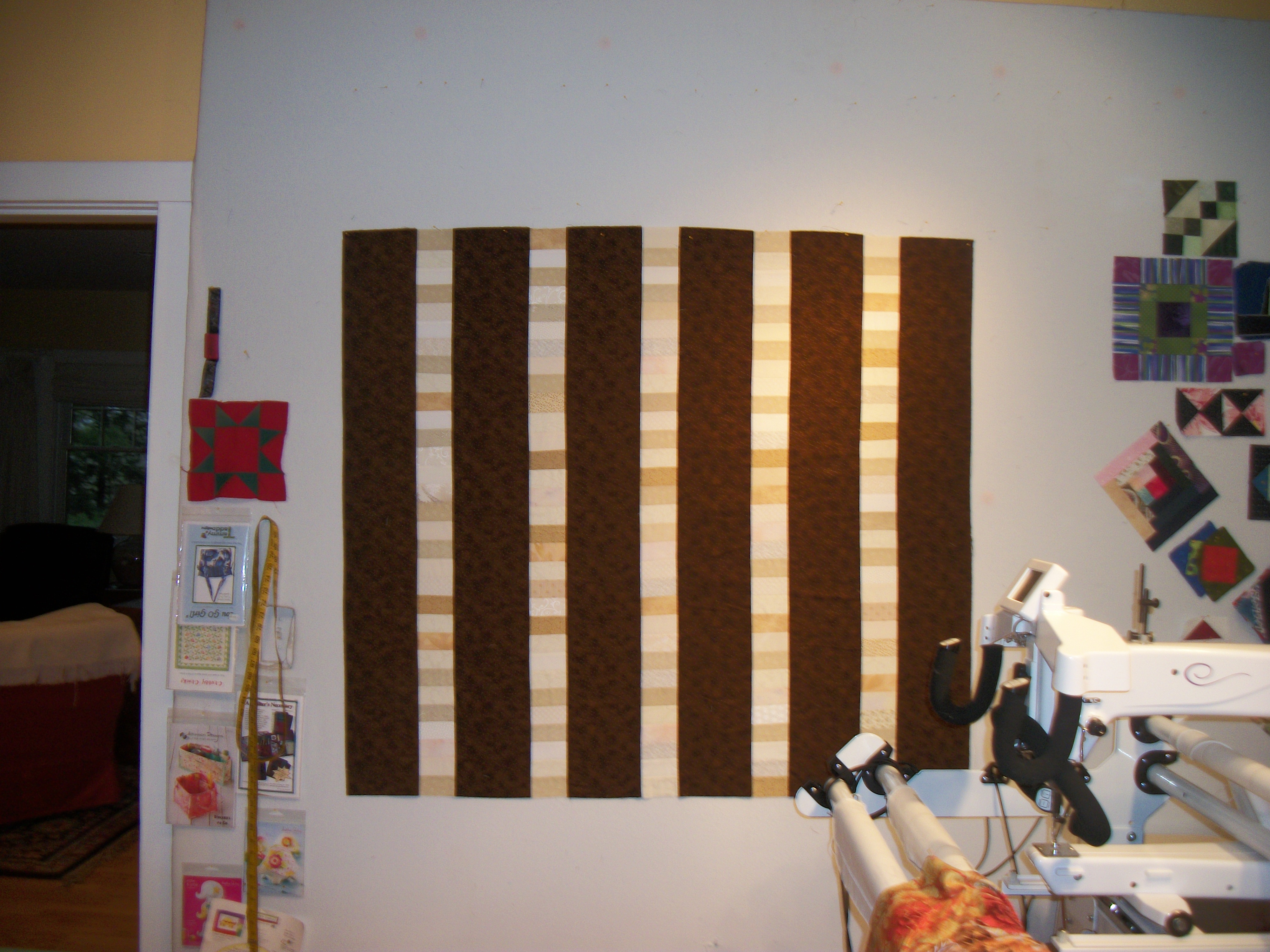
Here’s what the dark brown strips and the neutral bars look like on the design wall…

At this point, I headed off to Marge’s Mainely Sewing to get borders.  I had bought some lovely large fabrics for backing at a sale at Quit Diva’s in Rockland–one of which really wanted to be part of this quilt.  TAnd I did not have enough of the paisley to use in the quilt.  The plan for a mostly neutral quilt went right out the window.

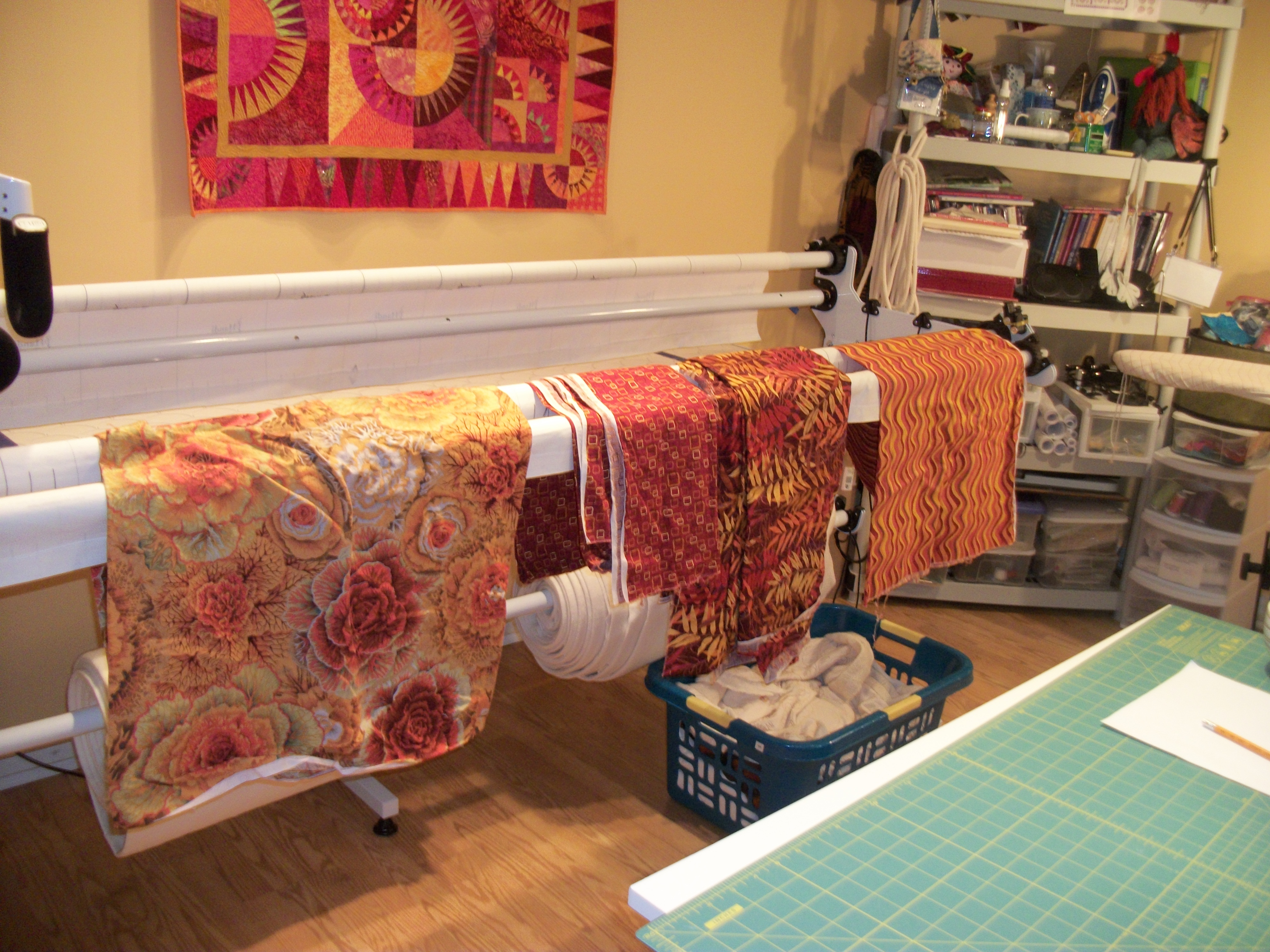
Here are the fabrics that came home with me–the backing is the third from the left–the fabric with the leaves.  Marge found the big Kaffe Fasset floral for me, and I loved it at first sight.  (The laundry basket is a dog bed for whichever dog is hanging out with me in the quilt room.)

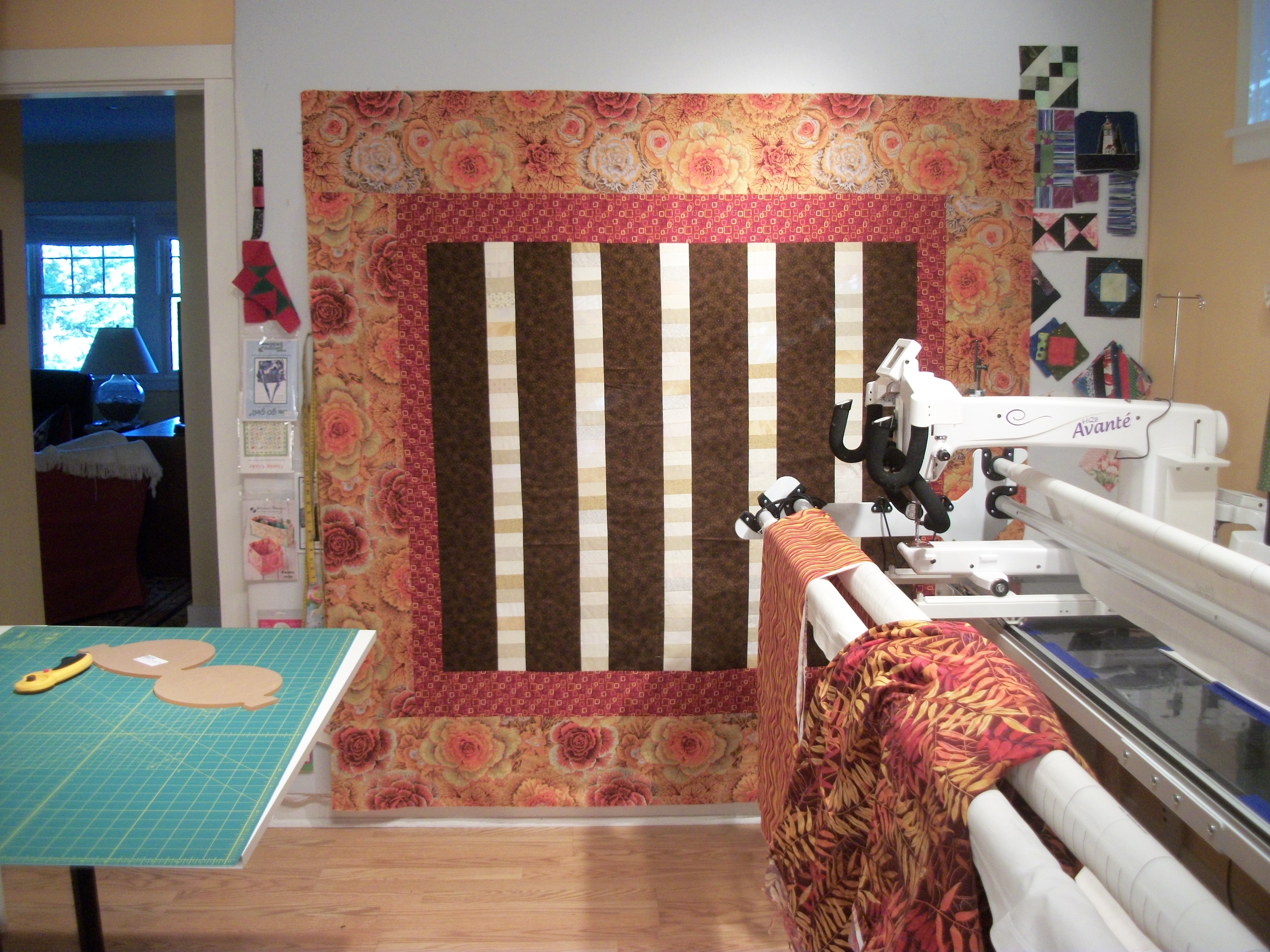
Here’s the top on the design wall–ready to be put on Lucy the longarm and quilted:

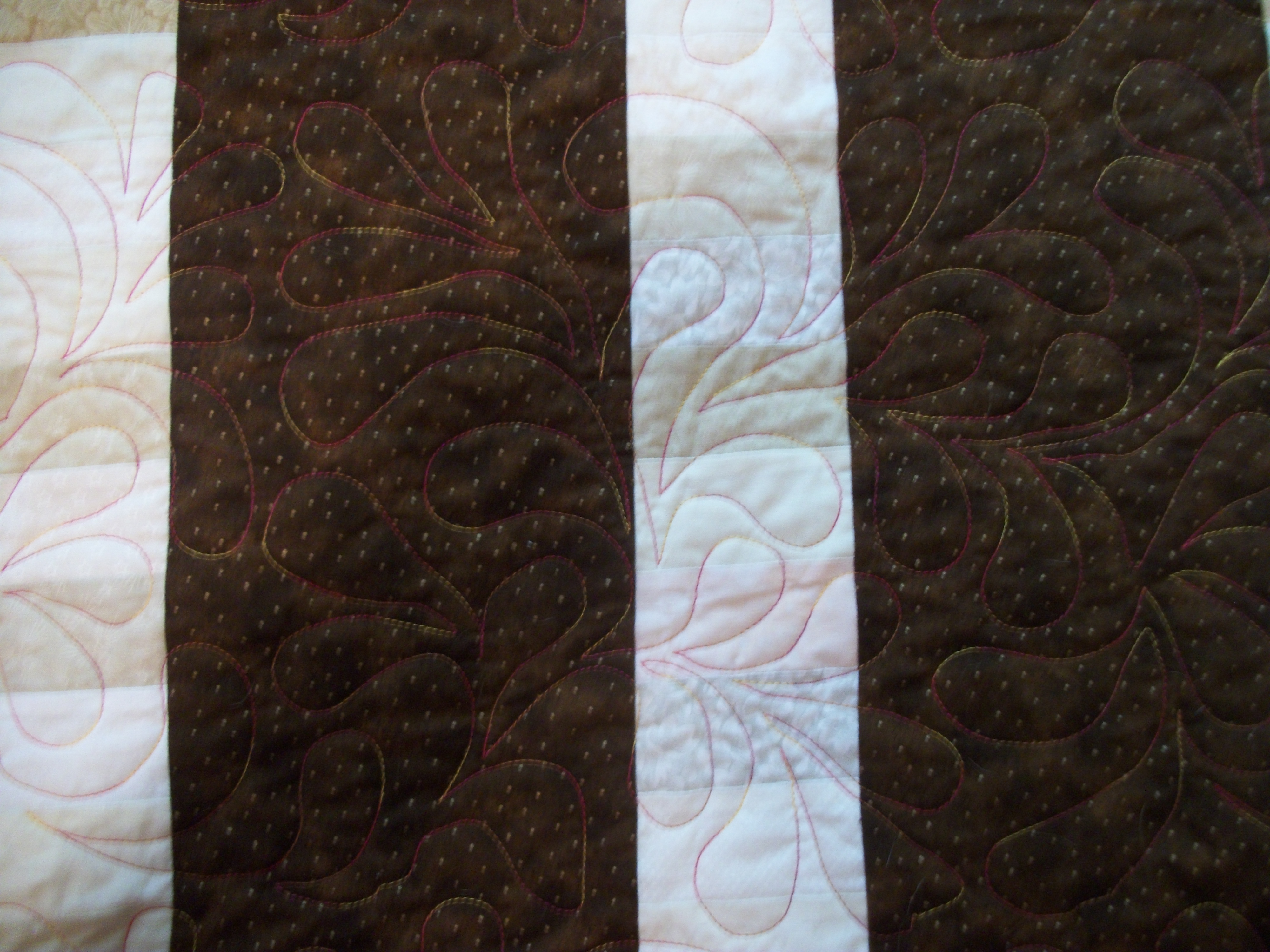
I quilted with a varigated thread that had all the colors of the quilts in it–all the golds, oranges, deep reds, and so forth.  This pic doesn’t do this thread justice, but you can at least see the pantograph pattern:

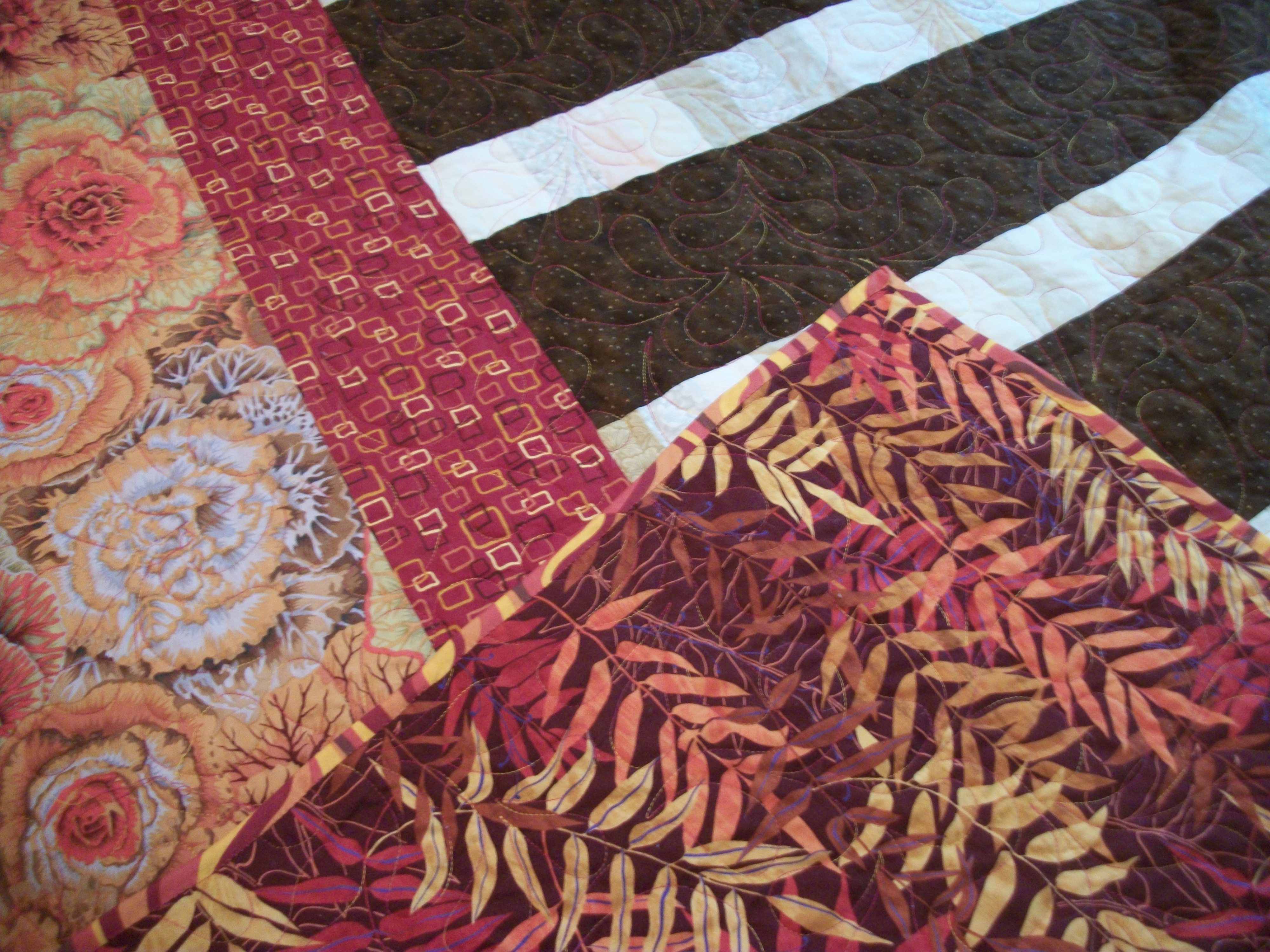
Here’s a good pic of the outer and inner borders.  Note how the inner border has the dark brown of the bars.  I love how the swirly fabric worked for the binding.  I cut all bindings on the bias these days, so that really made this fabric’s movement shine.

Look at how well the backing and the binding work with the quilt.

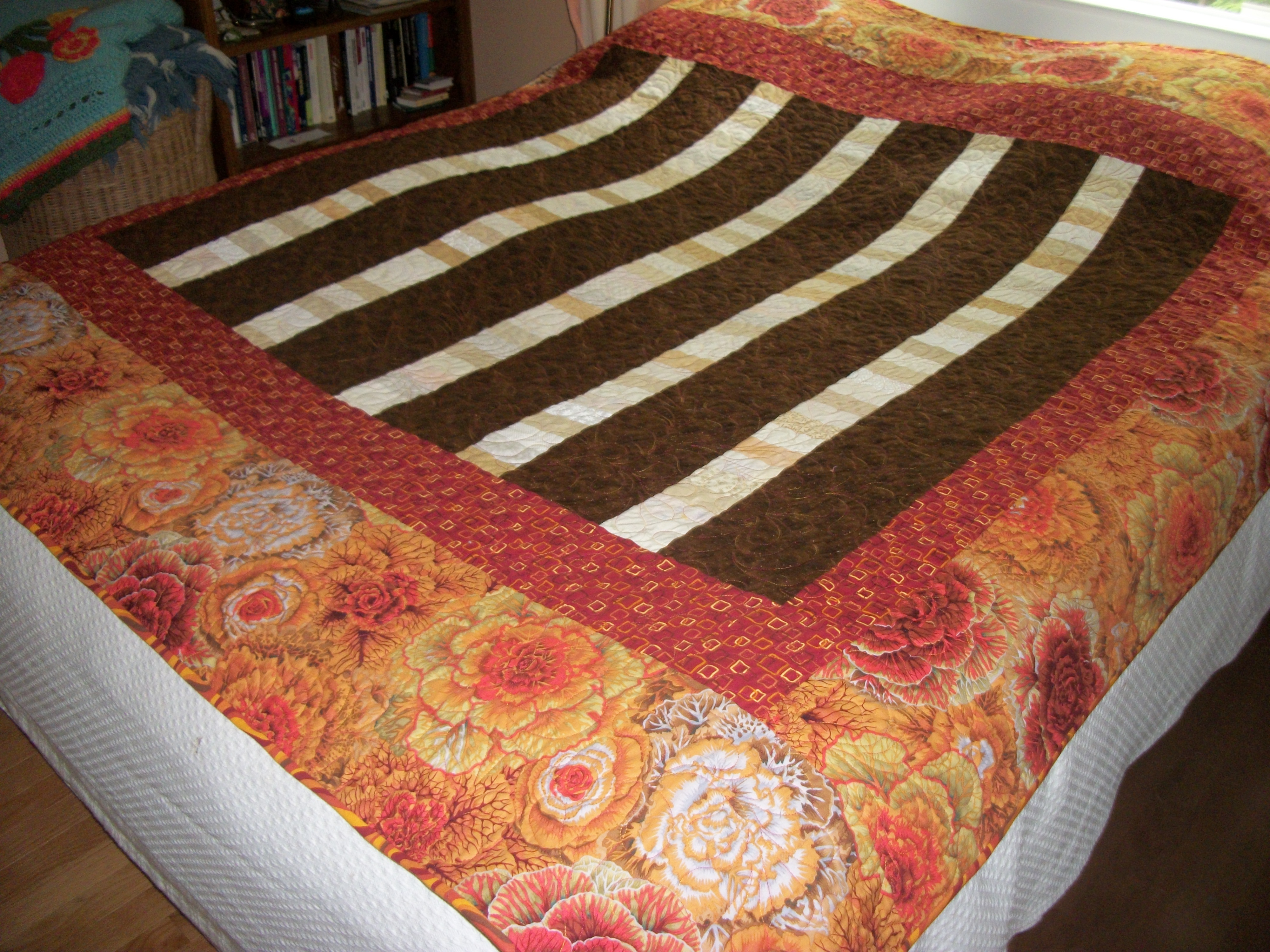
Here are two pics of the quilt on a low bed upstairs.  Neither do it justice.  One is faded and the other’s colors are a bit “off.”  But, here they are.

And:

Flamboyant Fall is both wild and controlled, what with the bars in the center.  I love the fabrics in this quilt.  I’m really pleased with how it came out.

Interesting Information: The China Study Myth

Interesting Information:  July 4, 2012

The China Study Myth:  Flaws in the Vegan Bible

T. Colin Campbell published THE CHINA STUDY in 2006.  Campbell is a “heavy hitter” in terms of credentials:  a PhD from Cornell, authorship of over three hundred scientific papers, and decades of research in the field of nutrition.

Campbell’s premise in THE CHINA STUDY is that ALL animal foods cause modern ailments like heart disease and cancer.  This idea came from a rat study done in India and rat studies Campbell did, from which he extrapolated his flawed conclusions.   The rat studies point to animal protein as being protective, not deadly.

THE CHINA STUDY rocked the nutritional world and about half a million copies have been sold so far.  Vegans call this book their “bible” and have taken to shutting down all questions about the health of their diet choices with “read THE CHINA STUDY.”  But, beware that only one chapter is actually devoted to the actual China study–a tipoff that belief system might well be at work in Campbell’s conclusions.

Chris Masterjohn, who is associated with the Weston A. Price Foundation (WAPF), critiqued Campbell’s work early on.  You can find his analysis on his blog and on the Weston A. Price foundation web site.  See, for instance “The Curious Case of Campbell’s Rats”–http://www.westonaprice.org/blogs/2010/09/22/the-curious-case-of-campbells-rats-does-protein-deficiency-prevent-cancer/  And, Denise Minger, a health writer, editor, researcher, and vegetarian for about a decade, started digging into Campbell’s data.  She concluded that THE CHINA STUDY is “more a work of fiction than a nutritional holy grail.”  And, that the book “is not a work of scientific vigor.”  And, “the book’s most widely repeated claims, particularly involving Campbell’s cancer research and the results of the China-Cornell-Oxford Project, are victims of selection bias, cherry picking, and the woefully misrepresented data.”

 Minger’s article “The China Study Myth:  Flaws in the Vegan Bible” was published in the spring 2012 “Wise Traditions,” the journal of the Weston A. Price Foundation–you can read it for yourself at http://www.westonaprice.org/vegetarianism-and-plant-foods/the-china-study-myth.  And if you harbor the notion that meat is unpure or bad for you and that vegetables are pure and good for you, I hope you take the time to do so.

It’s pretty clear, after reading Minger’s article and Masterjohn’s early analysis, that Campbell’s belief system got in the way of what his data was actually telling him.

Minger explains that Campbell’s now-famous rat study involved exposing “rats to very high levels of aflatoxin–a carcinogen produced by mold that grows on peanuts and corn–and then feeding them a diet containing varying levels of the milk protein casein.”  Rats eating low levels of casein remained tumorless, but rats fed higher levels developed tumors.  Only, the casein was separated from the rest of the components in milk, which “work synergistically” together in countless ways.  Certainly isolated casein can’t be generalized to all forms of animal protein–which Campbell does.  And, Minger notes that “an impressive number of studies shows that the other major milk protein whey, consistently suppresses tumor growth rather than promoting it….”

Campbell’s studies showed that wheat or soy protein did not produce cancer, even at high levels.  But, what he discovered but left out of his book is that “when wheat gluten is supplemented with lysine to make a complete protein, it behaves exactly like casein to promote tumor growth”–which shows that “animal protein doesn’t have some mystical ability to spur cancer by mere virtue of its origin in a sentient creature–just that a full spectrum of amino acids provide the right building blocks for growth, whether it be of malignant cells or healthy ones.”  Minger notes that, therefore, “theoretically, a meal of rice and beans would provide the same so-called cancer-promoting amino acids that animal protein does.”

Minger references Materjohn’s analysis–using the very Indian study that jumpstarted Campbell’s research–which showed that rats on a low-protein diet experienced increases in the acute toxicity of aflatoxin.  The high-protein diet for rats was at least keeping them alive.  Iin other words “when the aflatoxin dose is sky high, animals eating a low-protein diet don’t get cancer because their cells are too busy dying en masse, while animals eating a higher-protein diet are still consuming enough dietary building blocks for the growth of cells–whether healthy or cancerous.”  This fact highlights  a major problem with Campbell’s conclusions about plant-based diets and prompts Minger to write that “in a nutshell, the animal protein fear-mongering in THE CHINA STUDY stems from wildly misconstrued science.”

Campbell, writes Minger, cannot prove a relationship between animal protein and diseases because “that relationship does not exist.”  Indeed, with plant proteins “we find almost three times as many positive correlations with various cancers as we do with animal protein, including colon cancer, rectal cancer, and esophageal cancer.”  And, animal-food eaters in rural China “are getting less cardiovascular disease than their more vegetarian friends.”  In short, once again we see that plants are NOT nutrient dense and do not fully support abundant human health.

Minger goes on to show that “although wheat gets nary a mention in the China Study chapter, Campbell actually found that wheat consumption–in stark contrast to rice–was powerfully associated with higher insulin levels, higher triglycerides, coronary heart diseae, stroke and hypertensive heart disease within the China Study data–far more than any other food.”

Minger’s arguments, born of her in-depth analysis of Campbell’s data and his previous papers, is, obviously, much more detailed than I can repeat here.  Yet, the paper is easy to read.  And, it shows clearly that, once again, correlation has been used to target causation and that belief systems blind one to what science is actually telling us.

Minger writes a blog dedicated to revealing the bad science with regard to food issues (www.rawfoodsos.com), and her upcoming book DEATH BY FOOD PYRAMID will be published in late 2012.  I, for one, look forward to reading it.