Interesting Information: April 14, 2015
Chickenpox and Shingles
BOUGHT, the movie, is sharing some of its out-takes with those who signed up for getting further information.
This little video/interview discusses chickenpox and shingles.
Books, Documentaries, Reviews
Interesting Information: April 14, 2015
BOUGHT, the movie, is sharing some of its out-takes with those who signed up for getting further information.
This little video/interview discusses chickenpox and shingles.
Books/Recipes: April 14, 2015
The “nourishing” genre of food/cookbooks has been enriched by one: Sally Fallon Morell and Kaayla T. Daniel, PhD’s NOURISHING BROTH.
You may recall that Sally Fallon Morell wrote NOURISHING TRADITIONS with Dr. Mary Enig, who fought the good fight to show how dangerous trans fats and vegetable oils are and how good for you saturated fats from healthy animals are. And you may recall that Jennifer McGruther recently published NOURISHING KITCHEN and has a great web site that is a constant resource–as is the Weston A. Price Foundation’s web site.

So, you cannot read this blog for long without knowing I am a big fan of and great believer in real, homemade bone broths. Of course I ordered this new book anyway–and it is chock full of the science of bone broths, of why they are so good for us. And, of course, the book tells you all the ins and outs of making bone broths and how to use them in all sorts of soups, stews, sauces, gravies, and so forth.
After reading the book, I have been defrosting my stored bone broths and heating a cup full for breakfast–instead of drinking tea. I add raw milk and salt if needed, and am thinking of adding a beaten raw egg, such as you might find in a Chinese or Greek egg soup. I am finding I have no need for coffee/tea after this gorgeous drink–one that feels good right down to my toes. And look, ma, no sugar/honey in the morning. Many cultures drink a hot bone broth soup for breakfast–while we are eating and feeding our children a nutrient nightmare of sugared cereal. It didn’t take me but one morning to realize what I had been missing.
One of the many things that Morell and Daniel point out is that with the advent of fake bouillon cubes (which have no meat in them and are the beginning of the dangerous excitotoxin MSG), we lost the nourishment we were getting from bone broths that were the base of much of the food we ate. Bone broths build…bones. Bone broths are full of gelatin (if made right) and lots of minerals and good fats–all mixed up in a hearty hot broth.
So, in a restaurant, if you encounter a “homemade soup,” ask if the soup is made from bones/meat in the kitchen or if a “base” is used. Avoid the base soup as it is all made from fake products.
Here’s a little video of Kaayla T. Daniels talking about bone broths and bones:
Books: April 13, 2015
We met, we discussed, we chose…
There are 6 of us and each of us brings 5 book suggestions to the group–and the group chooses 2 of each member’s 5 books.
It works well…
Here’s our new list, which runs to April of 2016.
The Little Coffee Shop of Kabul, Deborah Rodriguez
From the author of the memoir Kabul Beauty School comes a fiction debut as compelling as real life: the story of a remarkable coffee shop in the heart of Afghanistan, and the men and women who meet there — thrown together by circumstance, bonded by secrets, and united in an extraordinary friendship.
The People of the Book, Geraldine Brooks
An ambitious, electrifying work that traces the harrowing journey of the famed Sarajevo Haggadah, a beautifully illuminated Hebrew manuscript created in fifteenth-century Spain.
Leaving Before the Rains Come, Alexandra Fuller
Memoir about the unravelling of a twenty-year marriage that began in Africa.
All the Light We Cannot See, Anthony Doerr
Tackles questions of survival, endurance, and moral obligations during war time. Called a “vastly entertaining feat of storytelling” in a NY Times book review.
Still Life with Breadcrumbs, Anna Quinlan
Brilliantly written, powerfully observed, a deeply moving and often very funny story of unexpected love.
Sparta, Roxana Robinson
Conrad is a Williams graduate who flies back home to the United States after four years in Iraq to face the weird vagaries of his homeland. At only 26, he sees American life with new eyes — or are they old eyes, those of a damaged warrior.
The Homesman, Glendon Swarthout
A haunting novel. A haunting movie. Many of the women on the prairie frontier go mad and have to be taken back to civilization–a journey of danger in many ways.
French Hats in Iran, Haydar Radjavi
Presents a series of mini-tales that features characters such as: the elderly father who works in the Tabriz bazaar and runs his household according to unbending religious precepts; the resourceful mother who finds ways to enjoy such forbidden frivolities as music; the female playmate who marries at the age of nine; and, more
Big Little Lies, Liane Moriarity
A brilliant take on ex-husbands and second wives, mothers and daughters, schoolyard scandal, and the dangerous little lies we tell ourselves just to survive.
The Sandalwood Tree, Elle Newmark
A sweeping story that expertly blends fiction and history as the author weaves together two stories which take place in two tumultuous times in Indian history. One story recounts the events of India’s First World War also known as the Sepoy Mutiny; the other takes place during the 1940’s as British rule was coming to an end in India.
Euphoria, Lilly King
The story of three young, gifted anthropologists in 1933 caught in a passionate love triangle that threatens theirs bonds, their careers, and ultimately their lives. Set between World War I and II and inspired by events in the life of revolutionary anthropologist Margaret Mead, Euphoria is an enthralling story passion, possession, exploration and sacrifice.
Wild From Lost to Found on the Pacific Crest Trail, Cheryl Strayed
Memoir. Movie. Powerfully captures the terrors and pleasures of one young woman forging ahead against all odds on a journey that maddened, strengthened, and ultimately healed her.
Documentaries/Interesting Information: March 10, 2015
I hope that many of you will take the time to view this very important movie.
Just go to the movie web site to access the free viewing.
Books and Interesting Information: March 9, 2015
Somewhere along my journey of learning about vaccines, I asked myself what vaccines might be worth getting.
Polio topped the list. Along with tetanus maybe.
The other diseases, I thought, would fare rather well being treated with today’s advanced medical abilities–assuming the infected person did not have significant other problems like being malnourished or having another debilitating disease like cancer. Later I decided that since tetanus has such specific conditions–a puncture wound that cuts off oxygen and allows the tetanus organism to flourish–I would take my chances. Surely I would know if I had a deep puncture wound and could get a booster if I thought it necessary.
Polio was the scary disease of my childhood. At one point in the 1950s, my mother left Barksdale Air Force Base in Shreveport, Louisiana, and took us home to her little hometown, Reynolds, Georgia. The feeling at the time was that urban areas were more dangerous than small towns in the rural south. And I still remember pictures of people in iron lungs.
Since then, I’ve learned that the subject of polio is not as clear cut as we might believe.
DISSOLVING ILLUSIONS: DISEASE, VACCINES, AND THE FORGOTTEN HISTORY by Suzanne Humphries and Roman Bystrianyk is reviewed by Martin Michener in the Wise Traditions Fall 2014 issue. Michener has a PhD and teaches biology, ecology, and farming as an adjunct professor.
Dissolving Illusions by Suzanne Humphries & Roman Bystrianyk | Weston A Price.
Reading the review is a really good place to get an idea of what is covered in this important book.
The book covers the history of 14 contagious diseases. The authors rarely interject opinion: they just assemble information and let reader’s make up their own minds. Michener writes that the book is really useful for parents who are trying to educate themselves and for doctors who need to slow down and review the history of vaccines as “cures” for diseases. Warning: this book is not an easy read. For an easier read download Tetyana Obukhanych’s VACCINE ILLUSION.
Michener’s review attempts to highlight the major points he walked away with. For starters, the describes the incredible intricacy of our immune systems and how little we actually know about how it works. Or, doesn’t:
It is staggeringly complex, comprising at least fifteen different cell-types that spew dozens of different molecules into the blood to communicate with one another and to do battle. Within each of those cell types sit tens of thousands of genes whose activity can be altered by age, exercise, infection, vaccination status, diet, stress, you name it. . . That’s an awful lot of moving parts. And we don’t know what the vast majority of them do, or should be doing. . . we can’t even be sure how to tell when the immune system’s not working right, let alone why not, because we don’t have good metrics of what a healthy human immune system looks like. Despite billions spent on immune stimulants in super-markets and drugstores last year, we don’t know what—if anything—those really do, or what “immune stimulant” even means.
As for polio–there is a history…one that involves redefining what polio is…which alters statistical data so that the real polio (and pesticide damage) is hidden. Here’s the Michener section on polio:
Dissolving Illusions next systematically takes us on the long journeys of improving illnesses for polio, whooping cough and measles. Graphs show most of the improving story, as diseases become less infectious and deadly. Approximately 98 percent of this improvement came before the corresponding vaccines were ever available, but that never daunted the enthusiasts from claiming full credit, post hoc, for improved conditions.
The whole polio story takes many particularly devious turns, where much, perhaps most, of the causes for paralysis were initially unrelated to the actual poliomyelitis virus. In 1954, on arrival of the Salk vaccine, the disease was immediately completely re-defined almost out of existence. Early polio medical treatment apparently was far more damaging than the disease, with anesthesia and rigid casts put on children, then allowing the children to scream in pain for up to several days. Through the considerable efforts of Sister Elizabeth Kenny, who administered almost the exact opposite treatments, it was later found and admitted that the early treatment caused the nervous control of their muscles to perish forever. Doctors who employed vitamin C and physical therapy reported zero paralyses.
There are so many causes for “polio” paralysis it would take a page to list them here, but only the virus is now recognized by the redefinition. Figure 12.4 on page 249 was used from Jim West’s article in this journal, “Pesticides and Polio” (http://www.westonaprice.org/health-topics/pesticides-and-polio-a-critique-of-scientificliterature/). From examining the figure, you may realize that much of the paralysis outbreak in the period between 1940 and 1955 was actually due to acute arsenic or DDT exposure from untested pesticides, mostly on farms. After the redefinition, including much more rigorous criteria for the diagnosis of “polio,” pesticide paralysis has continued, but it no longer had any effect on the records of “the new vaccine-cured polio” cases. Outside the U.S.A., where DDT is widely sold and used, any news of human paralysis simply threatens our precious export markets.
The horrible “iron lung” polio cases, rather than being solved by vaccine, were also cleanly swept under the definition rug. On p. 241 of Dissolving Illusions the authors make a rare summarizing statement: “Does the public have any idea that there are hundreds of cases of something that is now called transverse myelitis that would have historically been called polio and is now leaving children permanently dependent on a modern version of the iron lung?” Polio virus continues to infect today, but like the other illnesses has become almost benign.
So, what about pertussis, or whooping cough and vaccines?
One fascinating problem has been identified, described in connection with the problematic vaccination for pertussis (whooping cough). When a youngster first gets the wild infection, B. pertussis, the bacteria attach to bronchial cells and secrete a compound abbreviated as ACT, which fools the immune system into a false truce. After a few weeks of coughing, the system wakes up to the deception and forms a remembered response, which then completely heals the infection. Any future infection is met by this immunity, which typically lasts about thirty years. Enter the vaccine form of the bacterium, sans ACT. The immune system now develops a different, permanent set of responses, minus the knowledge of ACT. Now, every new infection with wild or vaccine-strain pertussis produces the same prolonged ACT phase, and, contrary to the contention of Mr. Bush, you do get fooled again and again. This is called Original Antigen Sin, or OAS, meaning the first time is all you get, to get it right. So what? Pertussis is now a mostly-undiagnosed adult disease, with adult carriers infecting everybody, endemically, instead of a once-will-do-it childhood disease.
I’ve ordered the book out of sheer curiosity and a desire to understand more of this complicated vaccine subject. Fortunately, my children “get” the vaccine problem now, so while the older grandchildren did get some vaccines, the younger ones have not. Fortunately, I don’t have to battle with schools about vaccines like my children do. If Senators Feinstein and Boxer of California have their way though, I may have to battle for my right as an adult to control what goes into my body. Feinstein and Boxer are spearheading a national vaccine law mandating that adults get boosters in what will be a government-dictated schedule. And that’s how the market increases its market share.
If you need more information on vaccines, at least read this review.
March 2, 2015
I spent a chunk of this morning slowing down enough to watch this documentary.
It’s excellent.
I wish I had watched and posted sooner as the free viewing is coming to an end.
As an American citizen, you owe it to yourself and to your country to watch this movie. What it is mostly about is the loss of our Democracy–through the power industry has acquired to control us. Part of this control is done through the control of information, through the misuse and abuse of science, through the colonization of our government and our legal system, through advertising campaigns meant to influence us, through the loss of our media as any meaningful entity that informs us, through the creation of mob hysteria around false issues…
We are now losing the ability to control our own bodies and what goes into them. The individual control of a person’s body is the most basic cornerstone of freedom. Our bodies have been “bought” to an astonishing degree–and industry is using its full power now to use the courts to enslave us further. Industry is now using our laws and court systems to get what it wants–which is more and more money.
We have to “wake up” now. We have to do it for ourselves and for our children. We have to start asking questions and to insist that those we trust with our well being start asking questions too.
We have to get the money out of the system…
Interesting Information/Books: February 23, 2015
Michael Pollan, in COOKED…
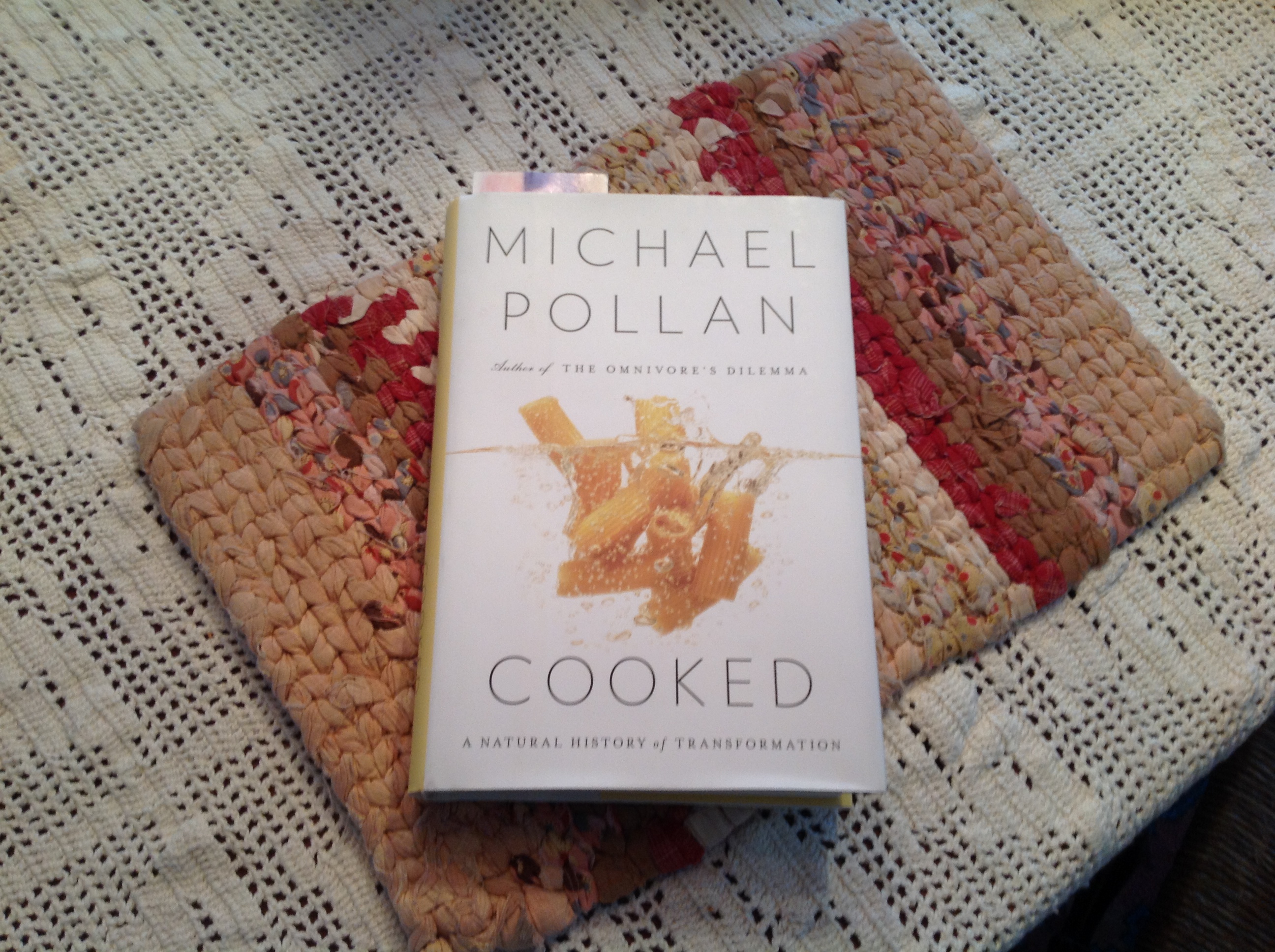
…explains that “commercial yeast is a purified monoculture of S. cerevisiae, raised on a diet of molasses, then washed, dried, and powdered. Like any monoculture, it does one thing predictably and well: Feed it enough sugars and it will promptly cough up large quantities of carbon dioxide” (218-219).
Commercial yeast is an INDUSTRIAL product and bears no resemblance to traditional sourdough cultures.
So, what’s wrong with that?
Nutritionally, commercial yeast is very limiting. Combine it with white flour, which is mostly just dead starches, and you’re eating something that fills you up, but provides very little in the way of nutrition.
Whole grains are much more biologically active and complex–think living cells–and much harder to control in an industrial setting (220-221).
A sourdough culture is a whole ecosystem, containing “at least twenty types of yeast and fifty different bacteria” (221).
Basically, baking with whole grains and a sourdough culture is all about “managing fermentation”–which can be tricky depending on the weather, the temperature, the strength and point of development of the sourdough culture, and when and how one feeds the sourdough culture. It’s a process that can only be done by a dedicated, skilled baker. The communities that are created in the traditional bread processes cannot be reduced to the “efficiency” that occurs in a factory.
Traditional whole grain sourdough bread can supply a lot of nutrition. It’s too bad that there is so little of it available to most of us today. It’s too bad that we’ve lost the taste of it in favor of the “white felt” we have instead.
Seek it out. Bake it yourself. Find substitutes for the factory bread as it’s not doing you any good at all.
Books and Interesting Information: January 22, 2015
I think the most exciting part of this book for me was the section on fermentation, called “Earth.” Fermentation undergirds so much of what we eat. Here are a few foods that are fermented: sourdough bread, beer/wine and other bubbly drinks, cheeses, fermented meats (like salami, for instance), all the lacto-fermented foods (like sauerkraut) and on and on. Sandor Katz has a great list that is much, much longer than I am recalling here.
As an aside, the breakdown of Pollan’s organizational schema here is that sourdough bread falls under the “Air” section, not the “Earth” section, but it’s still a ferment…
The most exciting section of “Earth” for me was when Pollan writes about the excitement scientists who are studying the microbiome of the human body have at their recent discoveries. Here’s how Pollan puts it:
The scientists working today on “microbial ecology” are as excited as any I’ve ever interviewed, convinced, as one of them put it, that they “stand on the verge of a paradigm shift in our understanding of health as well as our relationship to other species.” And fermentation–as it unfolds both inside and outside the body–is at the heart of this new understanding (322)
Here’s the shift:
In the decades since Louis Pasteur founded microbiology, medical research has focused mainly on bacteria’s role in causing disease. The bacteria that reside in and on our bodies were generally regarded as either harmless “commensals”–freeloaders, basically–or pathogens to be defended against. Scientists tended to study these bugs one at a time, rather than as communities. This was partly a deeply ingrained habit of reductive science, and partly a function of the available tools (322)
It is still astonishing to me how destructive this artifact of modernity–this focusing on parts rather than wholes–has been. The hubris involved in acting without fully understanding how the whole functions, how the parts relate to each other as well as to the whole, blows my mind. How can you know how something works if you can’t even see all its parts? Pollan continues:
Scientists naturally focused their attention on the bacteria they could see, which meant the handful of individual bugs that could be cultured in a petri dish. There, they found some good guys and some bad guys. But the general stance toward the bacteria we had discovered all around us was shaped by metaphors of war, and in that war, antibiotics became the weapons of choice (322-323).
And, I want to add, pesticides, herbicides, and anything that kills what got deemed as an enemy by THE MARKET, which has happily sold us its products for years and years now without any regard to unintended consequences of NOT FULLY UNDERSTANDING THE FUNCTIONING OF THE WHOLE. (Yes, I’m yelling because the consequences to humans, to our babies, to our earth are…nothing short of dire.)
Pollan continues:
But it turns out that the overwhelming majority of bacteria residing in the gut simply refuse to grow on a petri dish–a phenomenon now known among researchers as “the great plate anomalluy.” Without realizing it, they were practicing what is sometimes called parking-lot science–named for the human tendency to search for lost keys under the streetlights not because that’s where we lost them but because that is where we can best see. The petri dish was a streetlight. But when, in the early 2000s, researchers developed genetic “batch” sequencing techniques allowing them to catalog all the DNA in a sample of soil, say, or seawater or feces, science suddenly acquired a broad and powerful beam of light that could illuminate the entire parking lot. When it did, we discovered hundreds of new species in the human gukt doing all sorts of unexpected things (323).
We are, it seems, a kind of superorganism. And our health depends on the health of the microbial species within us.
To their surprise, microbiologists discovered that none of every ten cells in our bodies belong not to us, but to these microbial species (most of them residents of our gut), and that 99 percent of the DNA we’re carrying around belongs to those microbes. Some scientists, trained in evolutionary biology, began looking at the human individual in a humbling new light: as a kind of superorganism, a community of several hundred coevolved and interdependent species. War metaphors no longer made much sense. So the microbiologists began borrowing new metaphors from the ecologists (323).
The survival of these microbes depends on our health, writes Pollan, “so they do all sorts of things to keep their host–us–alive and well.” We can no longer think of ourselves as individuals, but as part of a community. Look at the word microbiome itself: micro bio me. Kill the microbes, kill yourself.
These guys are really smart, as Pollan notes:
One theory is that, because microbes can evolve so much more rapidly than the “higher animals” they can respond with much greater speed and agility to changes int eh environment–to threats as well as opportunities. Exquisitely reactive and fungible, bacteria can swap genes and pieces of DNA among themselves, picking t hem up and dropping them almost as if they were tools. This capability is especially handy when a new toxin or food source appears in the environment. The microbiota can swiftly find precisely the right gene needed to fight it–or eat it (325-326).
Feed your gut microbiome properly. Lacto-fermented foods are a good start to restoring gut health. There are recipes on this blog, and this food is easy to make and delicious.
Reviews: February 20, 2015
Here’s a real treat for you: Tracy Rothchild Lynch’s essay “Twenty.”
You may recall she is trying to spend this year writing about connections she’s making with people in her daily life.
She hit this one right out of the ball park in my humble estimation/opinion.
“Twenty One” isn’t bad either…
ENJOY!
Books: February 15, 2015
I just finished reading Nina Siegal’s THE ANATOMY LESSON.

I have mixed emotions about it, but recommend it with some reservations.
It’s derivative, of course. Picking a painting and creating a novel around it, as in THE GIRL WITH THE PEARL EARRING, apparently works quite well.
But, historical fiction ALWAYS ALREADY tells you more about what we, today/whenever, think than it does about the actual time. And Siegal falls grandly into this trap with the invention of a young woman who, inexplicably to my way of thinking, loves the man who becomes the subject of the “anatomy lesson.” Historical fiction ALWAYS ALREADY does a kind of violence to the people involved. We cannot possibly know their thoughts and feelings. We are too far removed and bring with us our own, deep cultural codes and behaviors. This novel is judging that era by our modern codes: for instance, the hanged man was himself abused, neglected, unloved, confused, and fell into thieving to survive. Underneath he’s really ok.
Let’s stop for a moment and take a look at the painting itself–done by Rembrandt in 1632.
The Anatomy Lesson of Dr. Nicolaes Tulp – Wikipedia, the free encyclopedia.
When Lauren Hillenbrand wrote SEABISCUIT and, later, UNBROKEN, she used a horse and a soldier to tell a much larger story about a particular time. She didn’t need to veer into fiction to create fabulous works. Siegal, though, muddies up this book with the romance between Flora and the condemned man (he is hanged) who becomes the subject of the “anatomy lesson.”
Having cautioned about historical fiction, I will say that Siegal DOES capture the flavor of this era–and that part of the book is most interesting.
For instance, people are digging into bodies to figure out how they work. And, they are trying to find out if a tarnished soul (the man in the anatomy lesson is a thief) shows itself in organs that are vile in some way. The man in the painting is a real man: Adriaen Adriaenszoon. His body is covered with whipping scars, brands, and his right hand has been severed–all as punishments for thieving. People of this era believed that if you punished the body sufficiently, you could change behavior. (The theorist who did such a grand job of reminding us of these “other” times and their very different relationship to the human body was Michel Foucault in DISCIPLINE AND PUNISH.)
Rembrandt is commissioned by Dr. Nicolaes Tulp to paint this “the anatomy lesson,” which was conducted in Amersterdam by Dr. Nicolaes Tulp and which is attended by all the important people who can come (read men) and is followed by a lavish banquet. There are political overtones to the event: put on a successful “lesson,” and you might get elected to be mayor of Amsterdam one day. Each person in the painting also has paid Rembrandt to put him into the work. This painting is very large–monumental some might say–and was meant to hang in the medical guild.
The painting becomes Rembrandt’s first really important painting. And here is where Siegal’s story becomes interesting–for she muses on how Rembrandt decides to deviate from paintings of anatomy lessons previous to this event–which are graphic and display bodies with open chest cavaties, etc. Rembrandt paints Adriaen fully restored–no scars, no stump with a missing hand. The light in the picture is directed onto the whole, clean body, not on Dr. Tulp. And, Siegal poses, this is the line between art and just painting what is there.
She’s probably right. The analysis of the painting is interesting. The descriptions of life in Amsterdam in 1632 is interesting, too. And Siegal’s writing is lovely.
 Louisa Enright's Blog